Persistent Chemotherapy-Induced Peripheral Neuropathy as a Chronic Cancer Pain Syndrome: Mechanisms, Therapeutic Limitations, and Future Directions

Simple Summary
Abstract
1. Introduction
2. Materials and Methods
3. Clinical Phenotype, Functional Consequences, and Assessment Challenges
3.1. Clinical Presentation
3.2. Functional Consequences and Survivorship Burden
3.3. Challenges in Assessment and Clinical Recognition
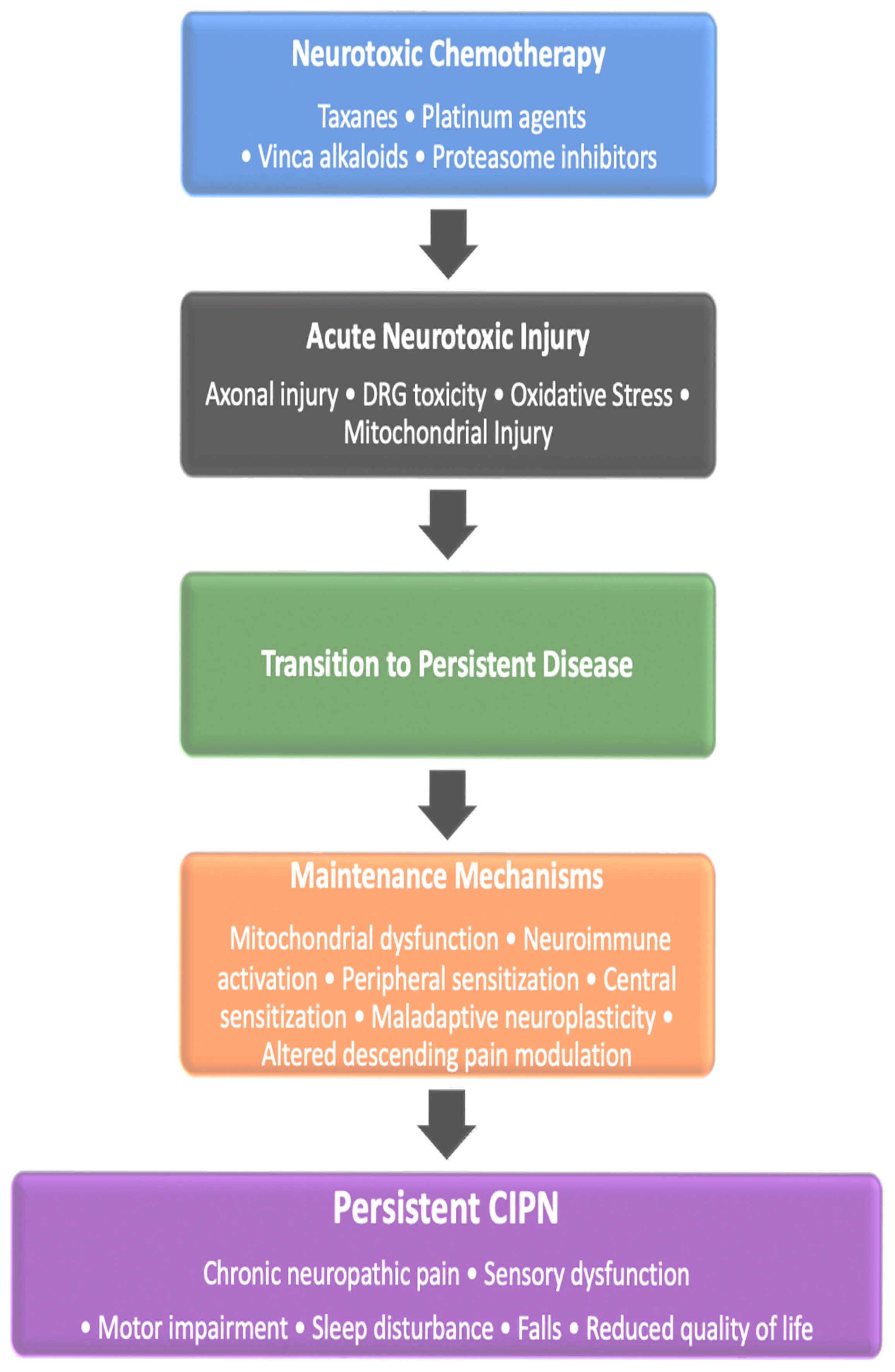
4. Biological Mechanisms of CIPN: From Nerve Injury to Chronic Pain
4.1. Mitochondrial Dysfunction and Oxidative Stress
4.2. Neuroinflammation and Neuroimmune Crosstalk
4.3. Axonal Injury, Dorsal Root Ganglion Toxicity, and Structural Damage
4.4. Nociceptor Sensitization, Ion Channels, and Pain Amplification
5. Therapeutic Limitations and Current Management Challenges
5.1. Pharmacologic Management: Limited Efficacy and Persistent Gaps
5.2. Non-Pharmacologic and Supportive Interventions
6. Future Directions and Emerging Therapeutic Paradigms
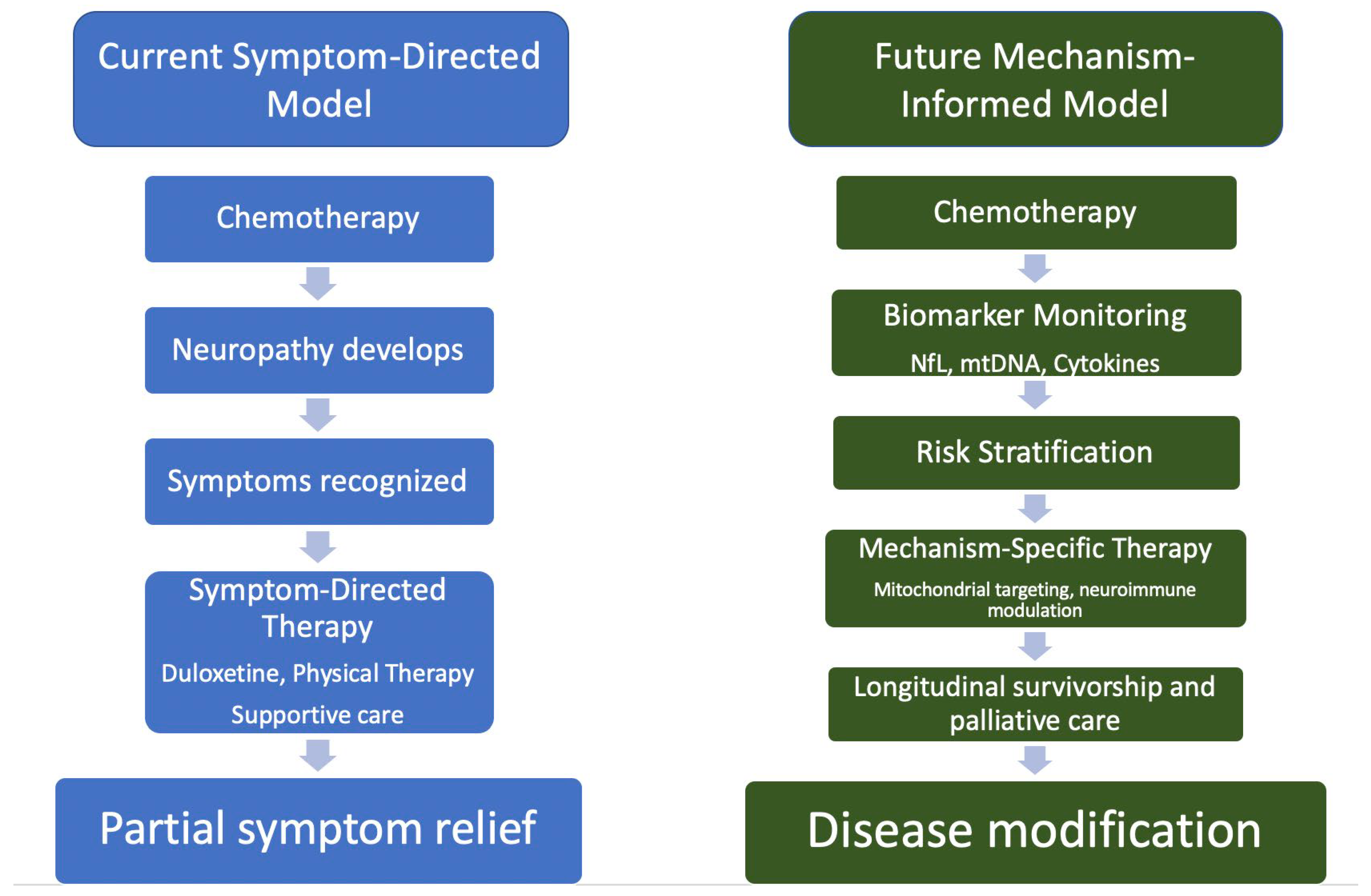
6.1. From Uniform Toxicity Models to Biologically Stratified CIPN
6.2. Rethinking Therapeutic Development and Longitudinal Care in CIPN
6.3. Key Clinical Messages
- Persistent CIPN should be recognized as a chronic neuropathic syndrome rather than solely a chemotherapy-related toxicity.
- Early recognition and chemotherapy dose modification remain the most effective strategies for limiting long-term neurologic toxicity.
- Duloxetine remains the only ASCO-guideline support pharmacologic therapy for established painful CIPN
- Multidisciplinary survivorship care, including rehabilitation and fall prevention, is essential for optimizing long-term functional outcomes.
- Emerging mechanism-informed and disease-modifying therapies remain investigational but represent promising future therapeutic directions.
7. Conclusions
Author Contributions
Funding
Data Availability Statement
Conflicts of Interest
References
- Yan, H.; Dan, Y.; Nana, L.; Dongqing, G.; Junming, Z.; Xin, C. Incidence and influencing factors of chemotherapy-induced peripheral neuropathy in cancer patients: A systematic review and meta-analysis. Front. Neurol. 2026, 17, 1672180. [Google Scholar] [CrossRef] [Scilit] [PubMed] [PubMed Central]
- Mauermann, M.L.; Staff, N.P. Peripheral Neuropathy: A Review. JAMA 2026, 335, 255–266. [Google Scholar] [CrossRef] [Scilit] [PubMed]
- Kerckhove, N.; Collin, A.; Condé, S.; Chaleteix, C.; Pezet, D.; Balayssac, D. Long-Term Effects, Pathophysiological Mechanisms, and Risk Factors of Chemotherapy-Induced Peripheral Neuropathies: A Comprehensive Literature Review. Front. Pharmacol. 2017, 8, 86. [Google Scholar] [CrossRef] [Scilit] [PubMed] [PubMed Central]
- Zhang, S. Chemotherapy-induced peripheral neuropathy and rehabilitation: A review. Semin. Oncol. 2021, 48, 193–207. [Google Scholar] [CrossRef] [Scilit] [PubMed]
- D’Souza, R.S.; Saini, C.; Hussain, N.; Javed, S.; Prokop, L.; Her, Y.F. Global estimates of prevalence of chronic painful neuropathy and moderate-to-severe neuropathy among patients with chemotherapy-induced peripheral neuropathy: A systematic review and meta-analysis of data from 29 countries between 2000 and 2024. Reg. Anesth. Pain Med. 2025, 51, rapm-2024-106229, Erratum in Reg. Anesth. Pain Med. 2026, 51, e1. https://doi.org/10.1136/rapm-2024-106229corr1. [Google Scholar] [CrossRef] [Scilit] [PubMed]
- Loprinzi, C.L.; Lacchetti, C.; Bleeker, J.; Cavaletti, G.; Chauhan, C.; Hertz, D.; Kelley, M.R.; Lavino, A.; Lustberg, M.B.; Paice, J.A.; et al. Prevention and Management of Chemotherapy-Induced Peripheral Neuropathy in Survivors of Adult Cancers: ASCO Guideline Update. J. Clin. Oncol. 2020, 38, 3325–3348. [Google Scholar] [CrossRef] [Scilit] [PubMed]
- Battaglini, E.; Goldstein, D.; Grimison, P.; McCullough, S.; Mendoza-Jones, P.; Park, S.B. Chemotherapy-Induced Peripheral Neurotoxicity in Cancer Survivors: Predictors of Long-Term Patient Outcomes. J. Natl. Compr. Cancer Netw. 2021, 19, 821–828. [Google Scholar] [CrossRef] [Scilit] [PubMed]
- Boekhoudt, N.D.; Mols, F.; Simons, C.; Querido, N.R.; Breukink, S.O.; Valkenburg-van lersel, L.; Janssen-Heijnen, M.L.G.; Keulen, E.; Weijenberg, M.P.; Bours, M.J.l. Longitudinal associations of chemotherapy-induced peripheral neuropathy with psychological distress and health-related quality of life in colorectal cancer survivors: A prospective cohort study. J. Cancer Surviv. 2025. [Google Scholar] [CrossRef] [Scilit] [PubMed]
- El-Shami, K.; Oeffinger, K.C.; Erb, N.L.; Willis, A.; Bretsch, J.K.; Pratt-Chapman, M.L.; Cannady, R.S.; Wong, S.L.; Rose, J.; Barbour, A.L.; et al. American Cancer Society Colorectal Cancer Survivorship Care Guidelines. CA Cancer J. Clin. 2015, 65, 428–455. [Google Scholar] [CrossRef] [Scilit] [PubMed] [PubMed Central]
- Colvin, L.A. Chemotherapy-induced peripheral neuropathy: Where are we now? Pain 2019, 160, S1–S10. [Google Scholar] [CrossRef] [Scilit] [PubMed] [PubMed Central]
- Emery, J.; Butow, P.; Lai-Kwon, J.; Nekhlyudov, L.; Rynderman, M.; Jefford, M. Management of common clinical problems experienced by survivors of cancer. Lancet 2022, 399, 1537–1550. [Google Scholar] [CrossRef] [Scilit] [PubMed]
- Makker, P.G.; Duffy, S.S.; Lees, J.G.; Perera, C.J.; Tonkin, R.S.; Butovsky, O.; Park, S.B.; Goldstein, D.; Moalem-Taylor, G. Characterisation of Immune and Neuroinflammatory Changes Associated with Chemotherapy-Induced Peripheral Neuropathy. PLoS ONE 2017, 12, e0170814. [Google Scholar] [CrossRef] [Scilit] [PubMed] [PubMed Central]
- Valente, S.; Roesch, E. Breast cancer survivorship. J. Surg. Oncol. 2024, 130, 8–15. [Google Scholar] [CrossRef] [Scilit] [PubMed]
- Zhi, W.; Dreyfus, N.; Dooley, A.; Piulson, L.; Li, Q.S.; Bao, T. Identifying patient characteristics associated with chemotherapy-induced peripheral neuropathy (CIPN) severity in a phase II clinical trial: A retrospective analysis. J. Clin. Oncol. 2022, 40, e24067. [Google Scholar] [CrossRef] [Scilit]
- Miltenburg, N.C.; Boogerd, W. Chemotherapy-induced neuropathy: A comprehensive survey. Cancer Treat. Rev. 2014, 40, 872–882. [Google Scholar] [CrossRef] [Scilit] [PubMed]
- D’Souza, R.S.; Alvarez, G.A.M.; Dombovy-Johnson, M.; Eller, J.; Abd-Elsayed, A. Evidence-Based Treatment of Pain in Chemotherapy-Induced Peripheral Neuropathy. Curr. Pain Headache Rep. 2023, 27, 99–116. [Google Scholar] [CrossRef] [Scilit] [PubMed]
- Shim, H.S.; Bae, C.; Wang, J.; Lee, K.H.; Hankerd, K.M.; Kim, H.K.; Chung, J.M.; La, J.H. Peripheral and central oxidative stress in chemotherapy-induced neuropathic pain. Mol. Pain 2019, 15, 1744806919840098. [Google Scholar] [CrossRef] [Scilit] [PubMed] [PubMed Central]
- Chen, X.; Gan, Y.; Au, N.P.B.; Ma, C.H.E. Current understanding of the molecular mechanisms of chemotherapy-induced peripheral neuropathy. Front. Mol. Neurosci. 2024, 17, 1345811. [Google Scholar] [CrossRef] [Scilit] [PubMed] [PubMed Central]
- Doyle, T.M.; Salvemini, D. Mini-Review: Mitochondrial dysfunction and chemotherapy-induced neuropathic pain. Neurosci. Lett. 2021, 760, 136087. [Google Scholar] [CrossRef] [Scilit] [PubMed] [PubMed Central]
- Janes, K.; Doyle, T.; Bryant, L.; Esposito, E.; Cuzzocrea, S.; Ryerse, J.; Bennett, G.J.; Salvemini, D. Bioenergetic deficits in peripheral nerve sensory axons during chemotherapy-induced neuropathic pain resulting from peroxynitrite-mediated post-translational nitration of mitochondrial superoxide dismutase. Pain 2013, 154, 2432–2440. [Google Scholar] [CrossRef] [Scilit] [PubMed] [PubMed Central]
- Du, J.; Sudlow, L.C.; Shahverdi, K.; Zhou, H.; Yuede, C.M.; Crock, L.W.; Hunter, D.A.; Golden, J.; Mollah, S.A.; Wood, M.D.; et al. Chronic Oxaliplatin Treatment Induces CIPN in Mice via Activation of the TXNIP Pathway. Mol. Neurobiol. 2025, 63, 92. [Google Scholar] [CrossRef] [Scilit] [PubMed]
- Dehghani, S.; Khorsandi, H.; Hosseinzadegan, R.; Rahimi, H.; Mottaghi, M.; Fallahpour, S.; Fazayel, S.M.A.; Bayat, A.; Namini, N.J.; Karimi, A.; et al. Neuroinflammatory Mechanisms and Therapeutic Targets in Oxaliplatin-Induced Peripheral Neuropathy: A Comprehensive Review. Neurotox. Res. 2025, 43, 52. [Google Scholar] [CrossRef] [Scilit] [PubMed]
- Cherchi, L.; Zippo, A.G.; Fantoni, L.; Carozzi, V.A.; Marmiroli, P. From peripheral neurotoxicity to central dysfunction: Linking neuropathic pain and cognition in chemotherapy-induced peripheral neuropathy. Rev. Neurosci. 2026. [Google Scholar] [CrossRef] [Scilit] [PubMed]
- Araldi, D.; Khomula, E.V.; Bonet, I.J.M.; Bogen, O.; Green, P.G.; Levine, J.D. Role of pattern recognition receptors in chemotherapy-induced neuropathic pain. Brain 2024, 147, 1025–1042. [Google Scholar] [CrossRef] [Scilit] [PubMed] [PubMed Central]
- Li, B.; Song, Z.; Zhang, M.; Zhang, R.; Xin, Q.; Zhang, W.; Li, M. A mechanistic framework for oxaliplatin-induced peripheral neuropathy: From neuronal vulnerability to neurotoxic persistence. Biochem. Biophys. Res. Commun. 2026, 821, 153849. [Google Scholar] [CrossRef] [Scilit] [PubMed]
- Pozzi, E.; Serra, M.P.; Boi, M.; Canta, A.; Chiorazzi, A.; Capelli, C.; Invernizzi, C.; Ballarini, E.; Rodriguez-Menendez, V.; Kraus, M.F.; et al. Molecular Characterization of Oxaliplatin-Induced Peripheral Neurotoxicity: The Complex Spectrum of Painful Manifestations. J. Peripher. Nerv. Syst. 2025, 30, e70078. [Google Scholar] [CrossRef] [Scilit] [PubMed] [PubMed Central]
- Malik, A.; Javed, S. Does Chemotherapy-Induced Peripheral Neuropathy Fall Within the Spectrum of Complex Regional Pain Syndrome? A Narrative Review. Curr. Pain Headache Rep. 2025, 29, 77. [Google Scholar] [CrossRef] [Scilit] [PubMed]
- Ma, J.; Kavelaars, A.; Dougherty, P.M.; Heijnen, C.J. Beyond symptomatic relief for chemotherapy-induced peripheral neuropathy: Targeting the source. Cancer 2018, 124, 2289–2298. [Google Scholar] [CrossRef] [Scilit] [PubMed] [PubMed Central]
- Lees, J.G.; Makker, P.G.; Tonkin, R.S.; Abdulla, M.; Park, S.B.; Goldstein, D.; Moalem-Taylor, G. Immune-mediated processes implicated in chemotherapy-induced peripheral neuropathy. Eur. J. Cancer 2017, 73, 22–29. [Google Scholar] [CrossRef] [Scilit] [PubMed]
- Velasco, R.; Marco, C.; Domingo-Domenech, E.; Stradella, A.; Santos, C.; Laquente, B.; Ferrer, G.; Argyriou, A.A.; Bruna, J. Plasma neurofilament light chain levels in chemotherapy-induced peripheral neurotoxicity according to type of anticancer drug. Eur. J. Neurol. 2024, 31, e16369. [Google Scholar] [CrossRef] [Scilit] [PubMed] [PubMed Central]
- Adra, J.; Giglio, D.; Karlsson, P.; Zetterberg, H.; Einbeigi, Z. Blood biomarkers for neuroaxonal injury and astrocytic activation in chemotherapy-induced peripheral neuropathy. Acta Oncol. 2024, 63, 636–641. [Google Scholar] [CrossRef] [Scilit] [PubMed] [PubMed Central]
- Araldi, D.; Staurengo-Ferrari, L.; Bogen, O.; Bonet, I.J.M.; Green, P.G.; Levine, J.D. Mu-Opioid Receptor (MOR) Dependence of Pain in Chemotherapy-Induced Peripheral Neuropathy. J. Neurosci. 2024, 44, e0243242024. [Google Scholar] [CrossRef] [Scilit] [PubMed] [PubMed Central]
- Kumaree, K.K.; Mohd Jaya, F.N.; Fong, Z.; Tencomnao, T.; Brimson, J.M.; Prasansuklab, A. Chemotherapy-induced peripheral neuropathy: Mechanisms of toxicity and potential natural compounds-based therapeutics. Food Chem. Toxicol. 2026, 215, 116163. [Google Scholar] [CrossRef] [Scilit] [PubMed]
- Trecarichi, A.; Duggett, N.A.; Granat, L.; Lo, S.; Malik, A.N.; Zuliani-Álvarez, L.; Flatters, S.J.L. Preclinical evidence for mitochondrial DNA as a potential blood biomarker for chemotherapy-induced peripheral neuropathy. PLoS ONE 2022, 17, e0262544. [Google Scholar] [CrossRef] [Scilit] [PubMed] [PubMed Central]
- Pin, F.; Couch, M.E.; Bonetto, A. Preservation of muscle mass as a strategy to reduce the toxic effects of cancer chemotherapy on body composition. Curr. Opin. Support. Palliat. Care 2018, 12, 420–426. [Google Scholar] [CrossRef] [Scilit] [PubMed] [PubMed Central]
- Jang, M.K.; Park, C.; Hong, S.; Li, H.; Rhee, E.; Doorenbos, A.Z. Skeletal Muscle Mass Change During Chemotherapy: A Systematic Review and Meta-analysis. Anticancer Res. 2020, 40, 2409–2418. [Google Scholar] [CrossRef] [Scilit] [PubMed]
- Davis, M.P.; Panikkar, R. Sarcopenia associated with chemotherapy and targeted agents for cancer therapy. Ann. Palliat. Med. 2019, 8, 86–101. [Google Scholar] [CrossRef] [Scilit] [PubMed]
- Hain, B.A.; Waning, D.L. Bone-Muscle Crosstalk: Musculoskeletal Complications of Chemotherapy. Curr. Osteoporos. Rep. 2022, 20, 433–441. [Google Scholar] [CrossRef] [Scilit] [PubMed]
- Cerrone, V.; Esposito, D.; Montedoro, M.; Andretta, V.; Leoni, M.L.G.; Cuomo, A.; Bimonte, S.; Cascella, M. Diagnosis of Chemotherapy-induced Peripheral Neurotoxicity: A Scoping Review. In Vivo 2025, 39, 3041–3059. [Google Scholar] [CrossRef] [Scilit] [PubMed] [PubMed Central]
- Kim, S.H.; Kim, K.H.; Hyun, J.W.; Kim, J.H.; Seo, S.S.; Kim, H.J.; Park, S.Y.; Lim, M.C. Blood neurofilament light chain as a biomarker for monitoring and predicting paclitaxel-induced peripheral neuropathy in patients with gynecological cancers. Front. Oncol. 2022, 12, 942960, Erratum in Front. Oncol. 2023, 13, 1279558. https://doi.org/10.3389/fonc.2023.1279558. [Google Scholar] [CrossRef] [Scilit] [PubMed] [PubMed Central]
- Tarasiuk, O.; Chiorazzi, A.; Argentini, A.; Ballarini, E.; Canta, A.; Carozzi, V.A.; Pozzi, E.; Alberti, P.; Fabbro, V.; Iseppon, F.; et al. Interleukin-6 as a keystone cytokine in experimental rat models of chemotherapy-induced peripheral neurotoxicity. Sci. Rep. 2026, 16, 5127. [Google Scholar] [CrossRef] [Scilit] [PubMed] [PubMed Central]
- National Comprehensive Cancer Network. NCCN Clinical Practice Guidelines in Oncology: Survivorship, Version 2.2024; National Comprehensive Cancer Network: Plymouth Meeting, PA, USA, 2024; Available online: https://www.nccn.org/professionals/physician_gls/pdf/survivorship.pdf (accessed on 20 May 2026).
- Runowicz, C.D.; Leach, C.R.; Henry, N.L.; Mackey, H.T.; Cowens-Alvarado, R.L.; Cannady, R.S.; Pratt-Chapman, M.L.; Edge, S.B.; Jacobs, L.A.; Hurria, A.; et al. American Cancer Society/American Society of Clinical Oncology Breast Cancer Survivorship Care Guideline. J. Clin. Oncol. 2016, 34, 611–635. [Google Scholar] [CrossRef] [Scilit]
- Salah, H.; Shaaban, A.H.; Abdelrahman, M.A.; Osama, H.; El-Kalaawy, A.M. Efficacy and Safety of Duloxetine with Gabapentin or Amitriptyline Versus Duloxetine Monotherapy in Chemotherapy-Induced Peripheral Neuropathy: Randomized Controlled Trial. Pharmaceuticals 2026, 19, 553. [Google Scholar] [CrossRef] [Scilit] [PubMed] [PubMed Central]
- Canta, A.; Pozzi, E.; Carozzi, V.A. Mitochondrial Dysfunction in Chemotherapy-Induced Peripheral Neuropathy (CIPN). Toxics 2015, 3, 198–223. [Google Scholar] [CrossRef] [Scilit] [PubMed] [PubMed Central]
- Han, Y.; Smith, M.T. Pathobiology of cancer chemotherapy-induced peripheral neuropathy (CIPN). Front. Pharmacol. 2013, 4, 156. [Google Scholar] [CrossRef] [Scilit] [PubMed]
- Schiess, M.C.; Silva, G.S.A.; Hösch, N.G.; Troitiño, V.C.; de Souza, M.M.; DeOcesano-Pereira, C.; Glaser, T.; Ulrich, H.; Chudzinski-Tavassi, A.M.; Bufalo, M.C.; et al. Paclitaxel impairs mitochondrial dynamics in human sensory-like neuron cells. Toxicol. Appl. Pharmacol. 2026, 508, 117715. [Google Scholar] [CrossRef] [Scilit] [PubMed]
- Bobylev, I.; Joshi, A.R.; Barham, M.; Neiss, W.F.; Lehmann, H.C. Depletion of Mitofusin-2 Causes Mitochondrial Damage in Cisplatin-Induced Neuropathy. Mol. Neurobiol. 2018, 55, 1227–1235. [Google Scholar] [CrossRef] [Scilit] [PubMed]
- Im, S.; Choi, S.M.; Kim, Y.Y.; Jeong, D.J.; Um, J.; Lee, K.; Yoo, E.; Cho, J.H.; Lee, J.H.; Yun, J. A novel isoquinoline mitophagy inducer ameliorates paclitaxel-induced peripheral neuropathy in Drosophila and mouse models. Sci. Rep. 2025, 15, 20960. [Google Scholar] [CrossRef] [Scilit] [PubMed]
- Zhao, G.; Zhang, T.; Li, J.; Li, L.; Chen, P.; Zhang, C.; Li, K.; Cui, C. Parkin-mediated mitophagy is a potential treatment for oxaliplatin-induced peripheral neuropathy. Am. J. Physiol. Cell Physiol. 2024, 326, C214–C228, Erratum in Am. J. Physiol. Cell Physiol. 2025, 329, C118. https://doi.org/10.1152/ajpcell.00276.2023_COR. [Google Scholar] [CrossRef] [Scilit] [PubMed] [PubMed Central]
- Li, Y.; Lustberg, M.B.; Hu, S. Emerging Pharmacological and Non-Pharmacological Therapeutics for Prevention and Treatment of Chemotherapy-Induced Peripheral Neuropathy. Cancers 2021, 13, 766. [Google Scholar] [CrossRef] [Scilit] [PubMed] [PubMed Central]
- Kawashiri, T.; Mine, K.; Kobayashi, D.; Inoue, M.; Ushio, S.; Uchida, M.; Egashira, N.; Shimazoe, T. Therapeutic Agents for Oxaliplatin-Induced Peripheral Neuropathy; Experimental and Clinical Evidence. Int. J. Mol. Sci. 2021, 22, 1393. [Google Scholar] [CrossRef] [Scilit] [PubMed] [PubMed Central]
- Dong, N.; Lin, T. Innate immunity in chemotherapy-induced peripheral neuropathy: Recent advances. Front. Pain Res. 2025, 6, 1642306. [Google Scholar] [CrossRef] [Scilit] [PubMed]
- Jia, R.; Wan, L.; Jin, L.; Tian, Q.; Chen, Y.; Zhu, X.; Zhang, M.; Zhang, Y.; Zong, L.; Wu, X.; et al. Fucoidan reduces NET accumulation and alleviates chemotherapy-induced peripheral neuropathy via the gut-blood-DRG axis. J. Neuroinflam. 2025, 22, 100. [Google Scholar] [CrossRef] [Scilit] [PubMed] [PubMed Central]
- Yang, Y.; Ma, X.; Ni, X.; Ruan, S.; Tang, L.; Ju, Z.; Wang, M.; Jia, R.; Chen, Y.; Liu, W.; et al. Fucoidan alleviates chemotherapy-induced peripheral neuropathy via activating the Gas6/MerTK signaling pathway to reduce neuroinflammation. J. Agric. Food Chem. 2025, 73, 31930–31941. [Google Scholar] [CrossRef] [Scilit] [PubMed]
- Mckiver, B.D.; Herz, S.M.; Patel, S.; Bryan, T.; Mann, J.; Poklis, J.L.; Bigbee, J.W.; Windle, J.J.; Salem, A.K.; Sarkar, D.; et al. Astrocyte elevated gene-1 (AEG-1) in myeloid cells is a key driver for the development of chemotherapy-induced peripheral neuropathy. Brain Behav. Immun. 2025, 127, 329–340. [Google Scholar] [CrossRef] [Scilit] [PubMed]
- Starkweather, A. Increased interleukin-6 activity associated with painful chemotherapy-induced peripheral neuropathy in women after breast cancer treatment. Nurse Res. Pract. 2010, 2010, 281531. [Google Scholar] [CrossRef] [Scilit] [PubMed]
- Cavaletti, G.; Marmiroli, P. Chemotherapy-induced peripheral neurotoxicity. Nat. Rev. Neurol. 2010, 6, 657–666. [Google Scholar] [CrossRef] [Scilit] [PubMed]
- Starobova, H.; Vetter, I. Pathophysiology of Chemotherapy-Induced Peripheral Neuropathy. Front. Mol. Neurosci. 2017, 10, 174. [Google Scholar] [CrossRef] [Scilit] [PubMed] [PubMed Central]
- McDonald, E.S.; Randon, K.R.; Knight, A.; Windebank, A.J. Cisplatin preferentially binds to DNA in dorsal root ganglion neurons in vitro and in vivo: A potential mechanism for neurotoxicity. Neurobiol. Dis. 2005, 18, 305–313. [Google Scholar] [CrossRef] [Scilit] [PubMed]
- Sisignano, M.; Baron, R.; Scholich, K.; Geisslinger, G. Mechanism-based treatment for chemotherapy-induced peripheral neuropathic pain. Nat. Rev. Neurol. 2014, 10, 694–707. [Google Scholar] [CrossRef] [Scilit] [PubMed]
- Argyriou, A.A.; Bruna, J.; Marmiroli, P.; Cavaletti, G. Chemotherapy-induced peripheral neurotoxicity (CIPN): An update. Crit. Rev. Oncol. Hematol. 2012, 82, 51–77. [Google Scholar] [CrossRef] [Scilit] [PubMed]
- Kim, Y.; Je, M.A.; Jeong, M.; Kwon, H.; Jang, A.; Kim, J.; Choi, G.E. Upregulation of NGF/TrkA-Related Proteins in Dorsal Root Ganglion of Paclitaxel-Induced Peripheral Neuropathy Animal Model. J. Pain Res. 2024, 17, 3919–3932. [Google Scholar] [CrossRef] [Scilit] [PubMed] [PubMed Central]
- Smith, E.M.; Pang, H.; Cirrincione, C.; Fleishman, S.; Paskett, E.D.; Ahles, T.; Bressler, L.R.; Fadul, C.E.; Knox, C.; Le-Lindqwister, N.; et al. Effect of duloxetine on pain, function, and quality of life among patients with chemotherapy-induced painful peripheral neuropathy: A randomized clinical trial. JAMA 2013, 309, 1359–1367. [Google Scholar] [CrossRef] [Scilit] [PubMed] [PubMed Central]
- Hershman, D.L.; Lacchetti, C.; Dworkin, R.H.; Lavoie Smith, E.M.; Bleeker, J.; Cavaletti, G.; Chauhan, C.; Gavin, P.; Lavino, A.; Lustberg, M.B.; et al. Prevention and management of chemotherapy-induced peripheral neuropathy in survivors of adult cancers: American Society of Clinical Oncology clinical practice guideline. J. Clin. Oncol. 2014, 32, 1941–1967. [Google Scholar] [CrossRef] [Scilit] [PubMed]
- Hou, S.; Huh, B.; Kim, H.K.; Kim, K.H.; Abdi, S. Treatment of Chemotherapy-Induced Peripheral Neuropathy: Systematic Review and Recommendations. Pain Physician 2018, 21, 571–592. [Google Scholar] [CrossRef] [Scilit] [PubMed]
- Wang, Z.; Zhao, B.; Li, Y.; Jing, J.; Suo, L.; Zhang, G. Comparison of the effects of 19 exercise interventions on symptoms, pain, balance, and muscular strength in patients with chemotherapy-induced peripheral neuropathy: A systematic review and network meta-analysis. Int. J. Nurs. Stud. 2025, 164, 105014. [Google Scholar] [CrossRef] [Scilit] [PubMed]
- Kleckner, I.R.; Dunne, R.F.; Asare, M.; Cole, C.; Fleming, F.; Fung, C.; Lin, P.J.; Mustian, K.M. Exercise for Toxicity Management in Cancer-A Narrative Review. Oncol. Hematol. Rev. 2018, 14, 28–37. [Google Scholar] [CrossRef] [Scilit] [PubMed] [PubMed Central]
- Zimmer, P.; Trebing, S.; Timmers-Trebing, U.; Schenk, A.; Paust, R.; Bloch, W.; Rudolph, R.; Streckmann, F.; Baumann, F.T. Eight-week, multimodal exercise counteracts a progress of chemotherapy-induced peripheral neuropathy and improves balance and strength in metastasized colorectal cancer patients: A randomized controlled trial. Support. Care Cancer 2018, 26, 615–624. [Google Scholar] [CrossRef] [Scilit] [PubMed]
- Hanai, A.; Ishiguro, H.; Sozu, T.; Tsuda, M.; Yano, I.; Nakagawa, T.; Imai, S.; Hamabe, Y.; Toi, M.; Arai, H.; et al. Effects of Cryotherapy on Objective and Subjective Symptoms of Paclitaxel-Induced Neuropathy: Prospective Self-Controlled Trial. J. Natl. Cancer Inst. 2018, 110, 141–148. [Google Scholar] [CrossRef] [Scilit] [PubMed] [PubMed Central]
- Hossain, M.F.; Kharel, M.; Rajib, M.H.; Khan, M.A.; Anwar, M.Y.; Lamsal, Y.; Aziz, S.N. The Safety and Efficacy of Cryotherapy in the Prevention of Paclitaxel-Induced Neuropathy: A Systematic Review. Cureus 2023, 15, e44026. [Google Scholar] [CrossRef] [Scilit] [PubMed] [PubMed Central]
- Shigematsu, H.; Hirata, T.; Nishina, M.; Yasui, D.; Ozaki, S. Cryotherapy for the prevention of weekly paclitaxel-induced peripheral adverse events in breast cancer patients. Support. Care Cancer 2020, 28, 5005–5011. [Google Scholar] [CrossRef] [Scilit] [PubMed] [PubMed Central]
- Sato, J.; Mori, M.; Nihei, S.; Kumagai, M.; Takeuchi, S.; Kashiwaba, M.; Kudo, K. The effectiveness of regional cooling for paclitaxel-induced peripheral neuropathy. J. Pharm. Health Care Sci. 2016, 2, 33. [Google Scholar] [CrossRef] [Scilit] [PubMed] [PubMed Central]
- Lu, W.; Giobbie-Hurder, A.; Freedman, R.A.; Shin, I.H.; Lin, N.U.; Partridge, A.H.; Rosenthal, D.S.; Ligibel, J.A. Acupuncture for Chemotherapy-Induced Peripheral Neuropathy in Breast Cancer Survivors: A Randomized Controlled Pilot Trial. Oncologist 2020, 25, 310–318. [Google Scholar] [CrossRef] [Scilit] [PubMed] [PubMed Central]
- Bao, T.; Patil, S.; Chen, C.; Zhi, I.; Li, Q.S.; Piulson, L.; Mao, J.J. Effect of Acupuncture vs Sham Procedure on Chemotherapy-Induced Peripheral Neuropathy Symptoms: A Randomized Clinical Trial. JAMA Netw. Open 2020, 3, e200681. [Google Scholar] [CrossRef] [Scilit] [PubMed]
- Smith, T.J.; Coyne, P.J.; Parker, G.L.; Dodson, P.; Ramakrishnan, V. Pilot trial of a patient-specific cutaneous electrostimulation device (MC5-A Calmare®) for chemotherapy-induced peripheral neuropathy. J. Pain Symptom Manag. 2010, 40, 883–891. [Google Scholar] [CrossRef] [Scilit] [PubMed] [PubMed Central]
- Majithia, N.; Smith, T.J.; Coyne, P.J.; Abdi, S.; Pachman, D.R.; Lachance, D.; Shelerud, R.; Cheville, A.; Basford, J.R.; Farley, D.; et al. Scrambler Therapy for the management of chronic pain. Support. Care Cancer 2016, 24, 2807–2814. [Google Scholar] [CrossRef] [Scilit] [PubMed] [PubMed Central]
- Stubblefield, M.D.; Burstein, H.J.; Burton, A.W.; Custodio, C.M.; Deng, G.E.; Ho, M.; Junck, L.; Morris, G.S.; Paice, J.A.; Tummala, S.; et al. NCCN task force report: Management of neuropathy in cancer. J. Natl. Compr. Cancer Netw. 2009, 7, S1–S26. [Google Scholar] [CrossRef] [Scilit] [PubMed]
- Winters-Stone, K.M.; Horak, F.; Jacobs, P.G.; Trubowitz, P.; Dieckmann, N.F.; Stoyles, S.; Faithfull, S. Falls, Functioning, and Disability Among Women With Persistent Symptoms of Chemotherapy-Induced Peripheral Neuropathy. J. Clin. Oncol. 2017, 35, 2604–2612. [Google Scholar] [CrossRef] [Scilit] [PubMed] [PubMed Central]



| Chemotherapy Class | Representative Agents | Predominant Mechanism | Clinical Diagnosis | Common Symptoms | Predominant Neuropathy Type |
|---|---|---|---|---|---|
| Taxanes | Paclitaxel, docetaxel | Microtubule stabilization; impaired axonal transport | Sensory neuropathy | Acute pain syndrome; numbness; paresthesias | Painful/Sensory (P/S) |
| Platinum agents | Oxaliplatin, cisplatin, carboplatin | Dorsal root ganglion toxicity; DNA damage; oxidative stress | Sensory neuropathy | Cold hypersensitivity; paresthesias; neuropathic pain | Painful/Sensory (P/S) |
| Vinca alkaloids | Vincristine, vinblastine | Microtubule disruption and impaired axonal transport | Sensorimotor neuropathy | Weakness; numbness; gait instability | Motor Sensory (M/S) |
| Proteasome inhibitors | Bortezomib, carfilzomib | Mitochondrial dysfunction, neuroinflammation | Painful sensory neuropathy | Burning pain; allodynia | Painful (P) |
| Immunomodulatory agents | Thalidomide, lenalidomide | Axonal degeneration | Sensory neuropathy | Numbness; gait instability | Sensory (S) |
| Therapeutic Strategy | Examples | Rationale | Clinical Status/Limitation |
|---|---|---|---|
| Guideline-supported pharmacologic therapy | Duloxetine | Descending serotonergic/noradrenergic pain modulation | Recommended for painful CIPN; benefit is modest and variable |
| Other neuropathic pain agents | Gabapentin, pregabalin, tricyclic antidepressants | Symptomatic neuropathic pain modulation | Frequently used; inconsistent CIPN-specific efficacy |
| Exercise and rehabilitation | Aerobic exercise, resistance training, balance training, PT/OT | Functional restoration, neuroplasticity, fall prevention | Growing supportive evidence; protocols remain heterogeneous |
| Preventive physical strategies | Cryotherapy, compression therapy | Reduced peripheral drug exposure during chemotherapy | Emerging prevention strategy; variable protocols and mixed evidence |
| Integrative/neuromodulatory therapies | Acupuncture, scrambler therapy, TENS | Peripheral and central pain modulation | Adjunctive/investigational; larger trials needed |
| Mitochondrial-targeted approaches | ALT001, salidroside | Mitophagy induction and mitochondrial quality control | Preclinical; not clinically validated |
| Neuroimmune/biomarker-guided approaches | Fucoidan, Gas6/MerTK targeting, NfL, mtDNA, cytokines, microRNAs | Neuroimmune modulation, risk stratification, biologic phenotyping | Translational/emerging; requires human validation |
Disclaimer/Publisher’s Note: The statements, opinions and data contained in all publications are solely those of the individual author(s) and contributor(s) and not of MDPI and/or the editor(s). MDPI and/or the editor(s) disclaim responsibility for any injury to people or property resulting from any ideas, methods, instructions or products referred to in the content. |
© 2026 by the authors. Licensee MDPI, Basel, Switzerland. This article is an open access article distributed under the terms and conditions of the Creative Commons Attribution (CC BY) license.
Share and Cite
Firestone, R.A.; Morrison, J. Persistent Chemotherapy-Induced Peripheral Neuropathy as a Chronic Cancer Pain Syndrome: Mechanisms, Therapeutic Limitations, and Future Directions. Cancers 2026, 18, 2330. https://doi.org/10.3390/cancers18142330
Firestone RA, Morrison J. Persistent Chemotherapy-Induced Peripheral Neuropathy as a Chronic Cancer Pain Syndrome: Mechanisms, Therapeutic Limitations, and Future Directions. Cancers. 2026; 18(14):2330. https://doi.org/10.3390/cancers18142330
Chicago/Turabian StyleFirestone, Reed Alexander, and Jamin Morrison. 2026. "Persistent Chemotherapy-Induced Peripheral Neuropathy as a Chronic Cancer Pain Syndrome: Mechanisms, Therapeutic Limitations, and Future Directions" Cancers 18, no. 14: 2330. https://doi.org/10.3390/cancers18142330
APA StyleFirestone, R. A., & Morrison, J. (2026). Persistent Chemotherapy-Induced Peripheral Neuropathy as a Chronic Cancer Pain Syndrome: Mechanisms, Therapeutic Limitations, and Future Directions. Cancers, 18(14), 2330. https://doi.org/10.3390/cancers18142330