Laparoscopy Prior to Laparotomy in Primary Debulking Surgery for Advanced Epithelial Ovarian Cancer in the U.S.: A National Cancer Database Analysis †


1
Department of Obstetrics & Gynecology, Maimonides Medical Center, 4803 10th Ave, Brooklyn, NY 11219, USA
2
Division of Gynecologic Oncology, Department of Obstetrics & Gynecology, Maimonides Medical Center, 4803 10th Ave, Brooklyn, NY 11219, USA
3
Department of Research Administration, Maimonides Medical Center, 4803 10th Ave, Brooklyn, NY 11219, USA
*
Author to whom correspondence should be addressed.
†
This article is a revised and expanded version of a paper entitled “Utilization of laparoscopy prior to laparotomy in primary debulking surgery for advanced epithelial ovarian cancer: A National Cancer Database Analysis,” which was presented at SGO’s Annual Meeting on Women’s Cancer 2025, Seattle, WA, 14–17 March 2025. https://www.gynecologiconcology-online.net/article/S0090-8258(25)00529-3/abstract (accessed on 12 May 2026).
Cancers 2026, 18(14), 2195; https://doi.org/10.3390/cancers18142195
Submission received: 12 May 2026
/
Revised: 19 June 2026
/
Accepted: 3 July 2026
/
Published: 8 July 2026
(This article belongs to the Special Issue Surgical Treatment and Postoperative Outcomes of Gynecological Cancers)
Simple Summary
Epithelial ovarian cancer is a devasting disease that is often diagnosed at late stages (III and IV). The standard of care for advanced epithelial cancer is either primary debulking surgery with adjuvant chemotherapy or neoadjuvant chemotherapy with interval debulking in select patients not fit for upfront surgery. Laparoscopy has been proposed as a method to triage patients to either primary debulking surgery or neoadjuvant chemotherapy. The use of laparoscopy has been linked to decreased suboptimal cytoreduction; however, the true extent of its impact remains unknown. Using a large national database, this study aims to identify primary debulking cases that were initiated with laparoscopy from 2010–2017 and to evaluate overall survival and other post-operative outcomes.
Abstract
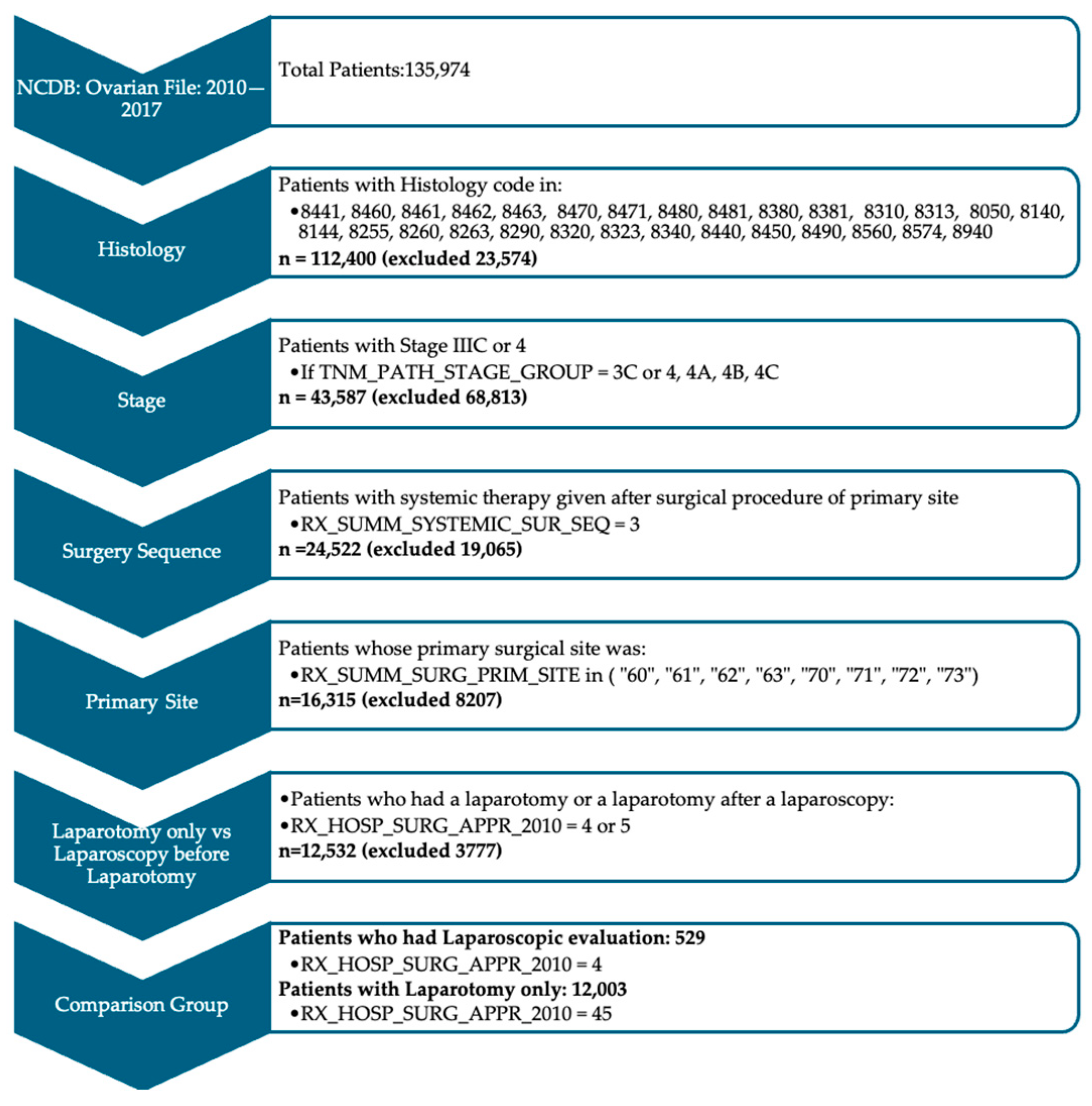
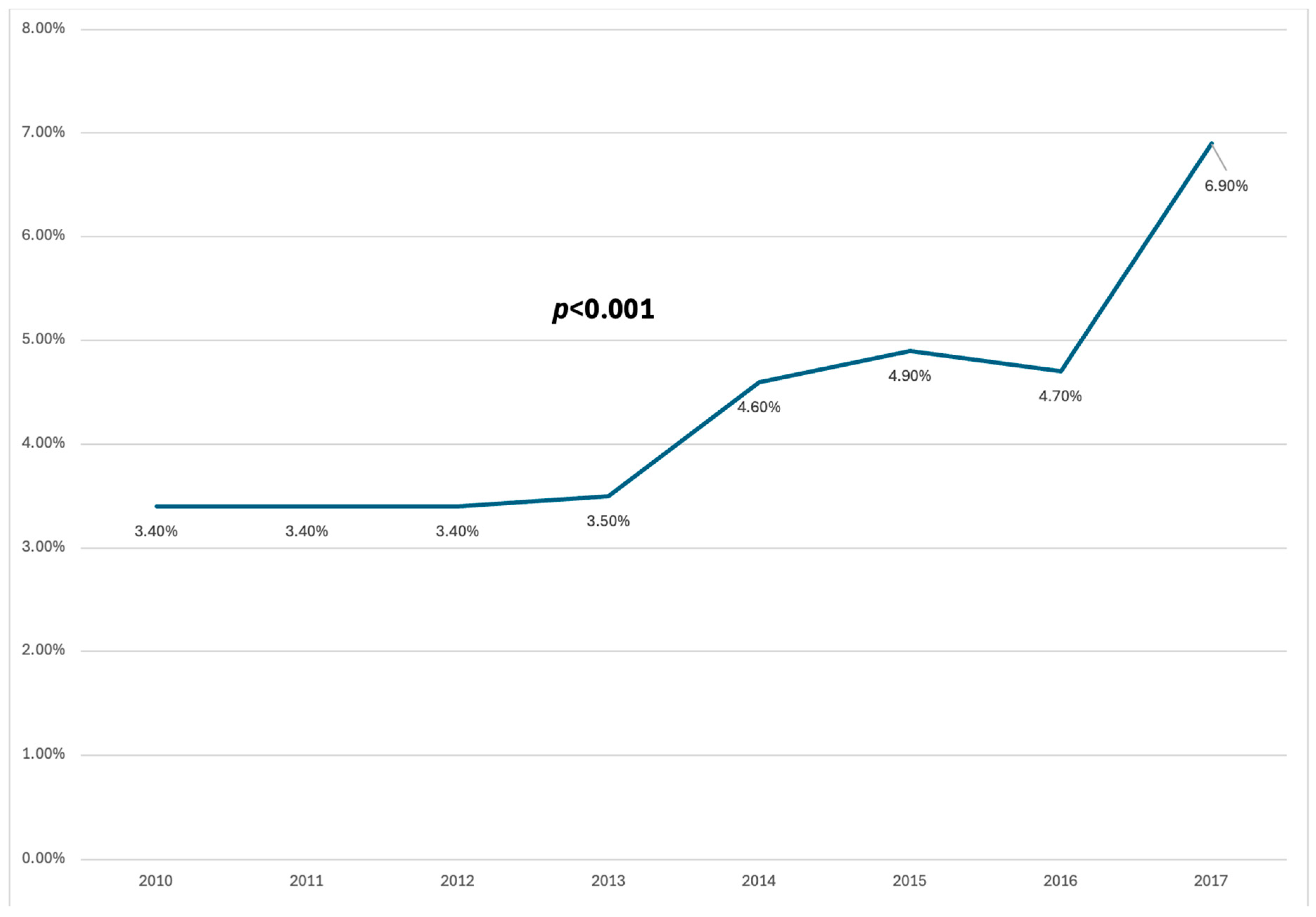
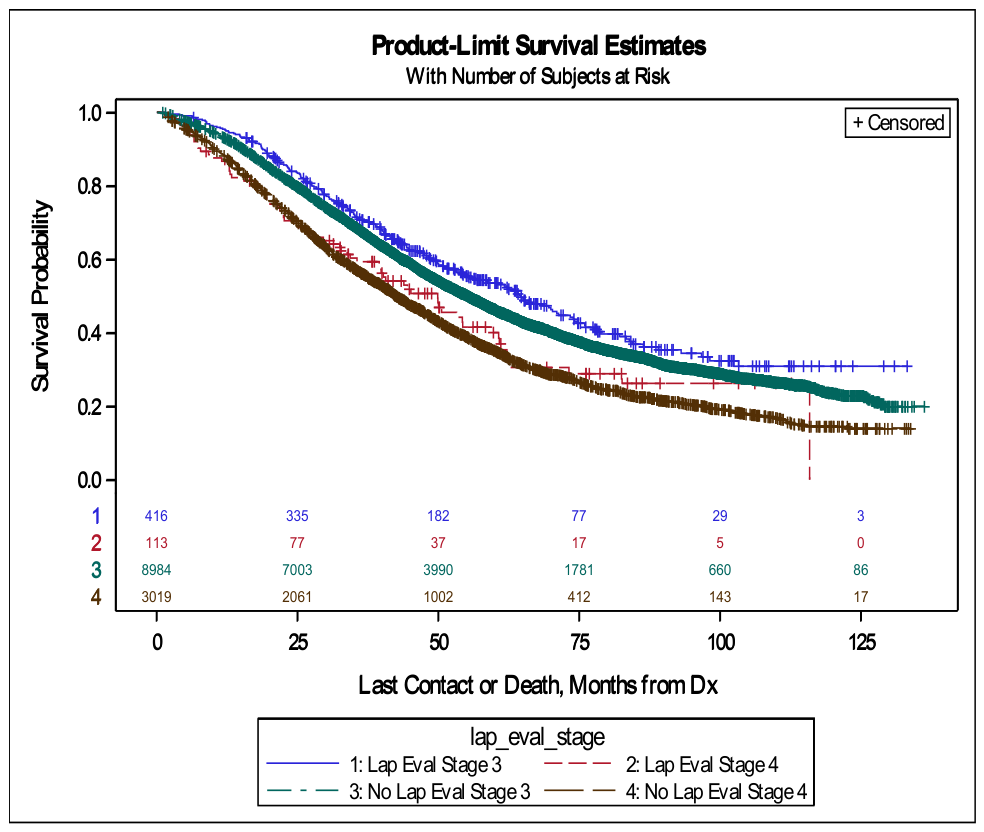
Objective: Previous studies have demonstrated that the use of laparoscopy prior to laparotomy for primary debulking surgery (PDS) in advanced ovarian cancer is linked to lower rates of suboptimal cytoreduction. However, its impact on overall survival remains uncertain. This study aimed to compare overall survival and surgical outcomes between PDS cases initiated with laparoscopy and those without. Methods: We identified patients in the National Cancer Database who underwent PDS for stage IIIC and IV epithelial ovarian cancer between 1 January 2010 and 31 December 2017. Patients were divided into two groups for analysis: cases that were initiated with laparoscopy and those that were not initiated with laparoscopy. The primary outcome was overall survival, while secondary outcomes included 90-day postoperative mortality, 30-day readmission rate, and length of hospital stay. Statistical analyses were performed using SPSS version 29.0. Results: Among 12,532 eligible patients, 529 cases (4.2%) were initiated laparoscopically. Laparoscopy utilization increased from 3.4% to 6.9% over the study period. Rates of complete gross resection were similar between groups. Postoperative outcomes, including 90-day mortality, 30-day readmission, and hospital stay, did not differ significantly. However, laparoscopy was associated with improved overall survival in patients who proceeded to PDS (60.8 vs. 51.6 months, p = 0.012). In stage-stratified analysis, a survival benefit was noted in stage IIIC (64.5 vs. 55.2 months, p = 0.026), but not in stage IV cases. Conclusions: Despite its increasing use, the overall rate of laparoscopy before PDS remains low. Laparoscopy prior to laparotomy is associated with improved overall survival in patients with stage IIIC epithelial ovarian cancer undergoing PDS.