Metabolomic Alterations Associated with Adjunctive Hydrogen Gas Inhalation During Concurrent Chemoradiotherapy in Locally Advanced Head and Neck Cancer: A Pilot Study

 ,
,  , ,
, ,
Simple Summary
Abstract
1. Introduction
2. Materials and Methods
2.1. Ethics
2.2. Study Subjects
2.3. H2 Gas Inhalation
2.4. Sample Preparation
2.5. Metabolomics Analysis
2.6. Data Processing and Statistical Analysis
3. Results
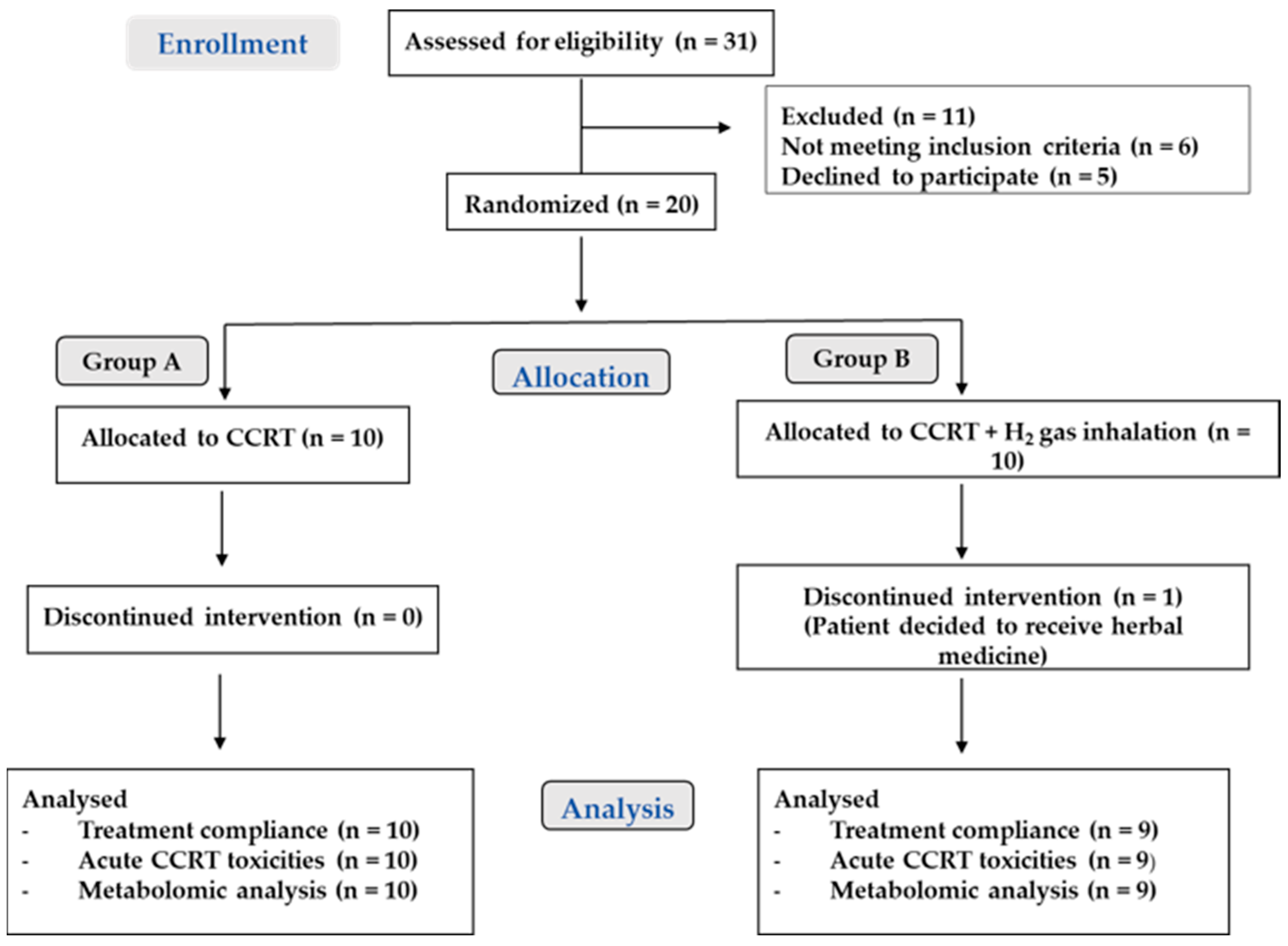
3.1. Characteristics of the Participants
3.2. Treatment Compliance and Overall Treatment Time
3.2.1. Acute Non-Hematologic Toxicities
3.2.2. Acute Hematologic Toxicities
3.3. Serum Metabolomic Profiling
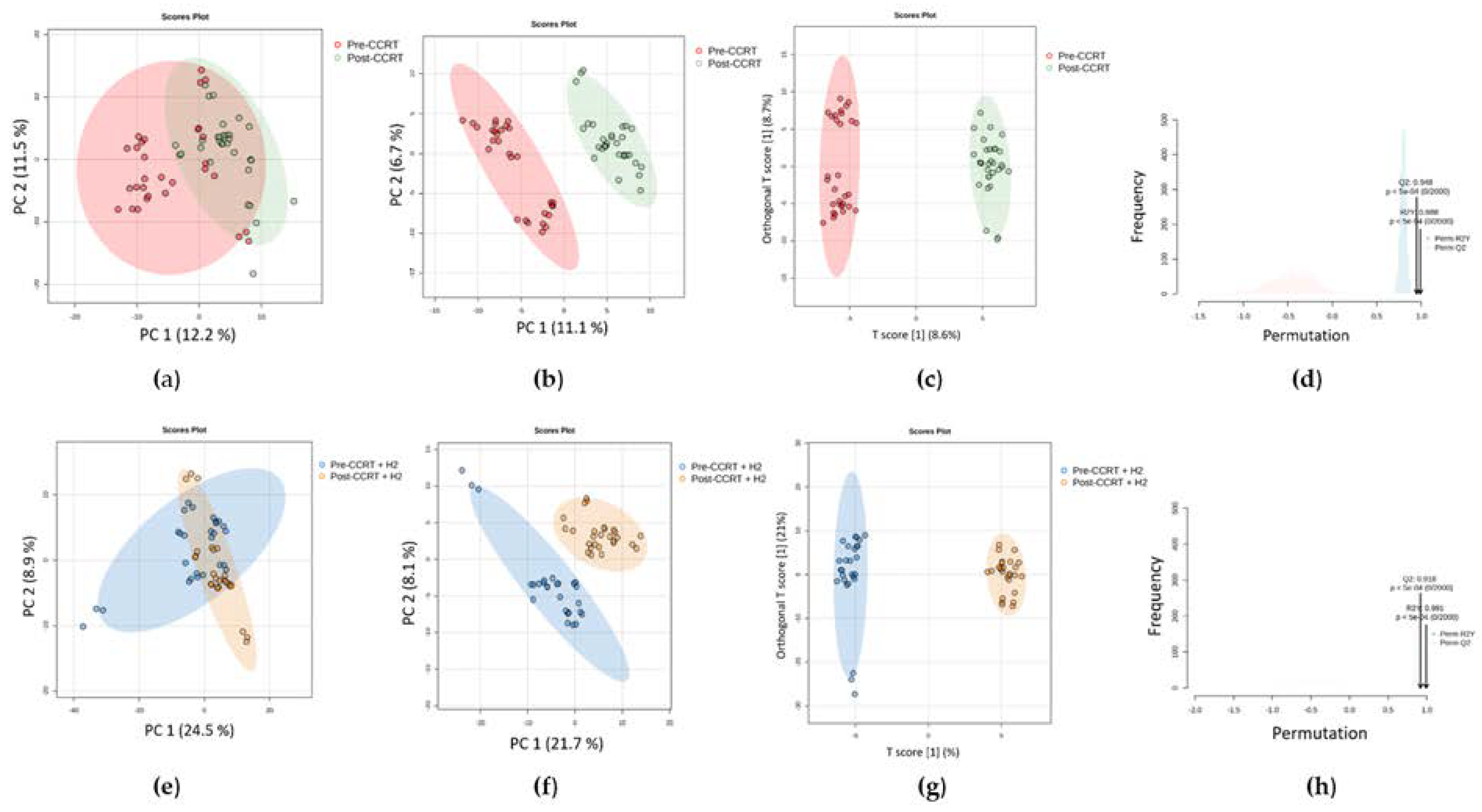
3.4. Multivariate Data Analysis
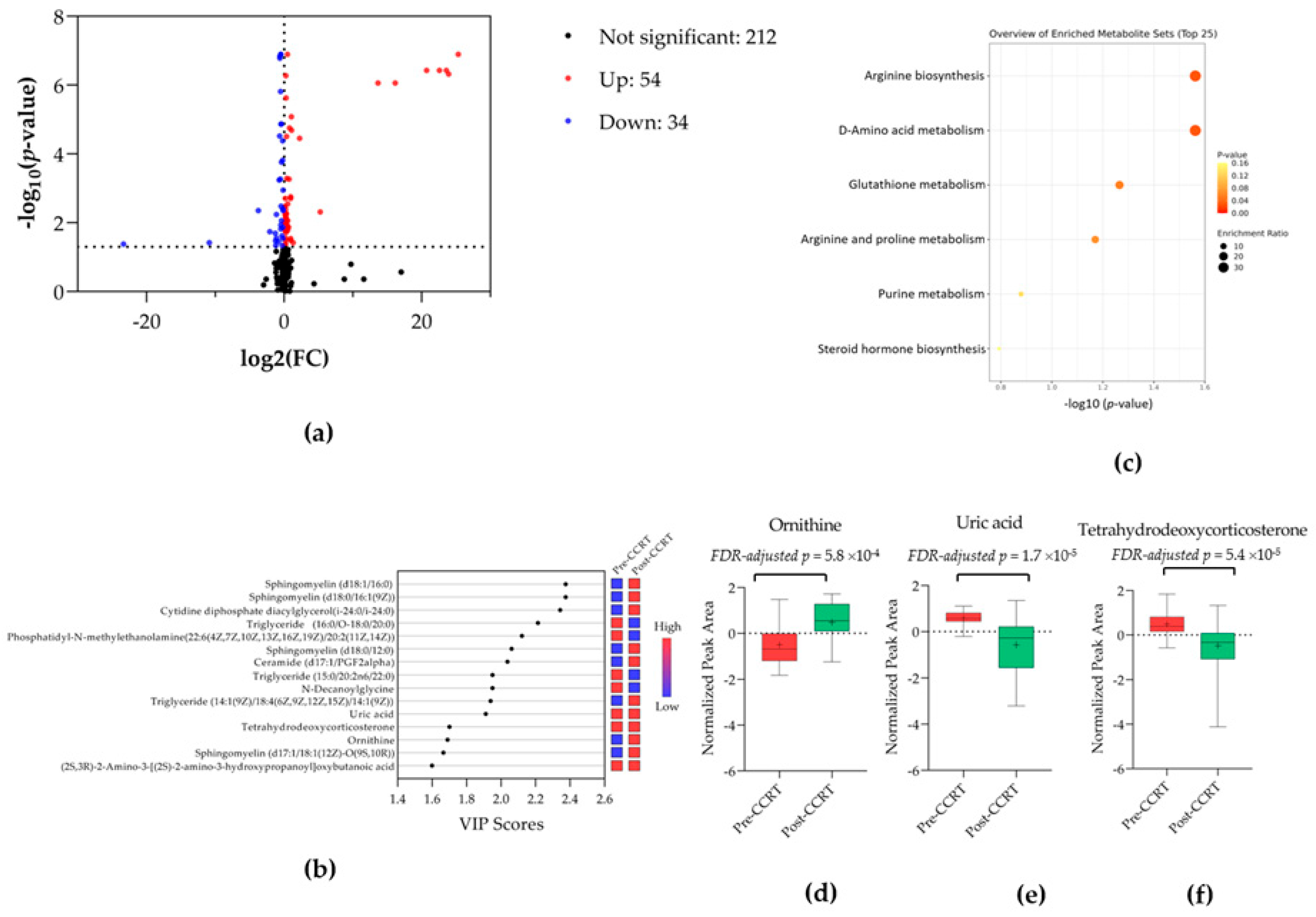
3.5. Differential Metabolites and Altered Metabolic Pathways Following CCRT in Patients with LAHNC
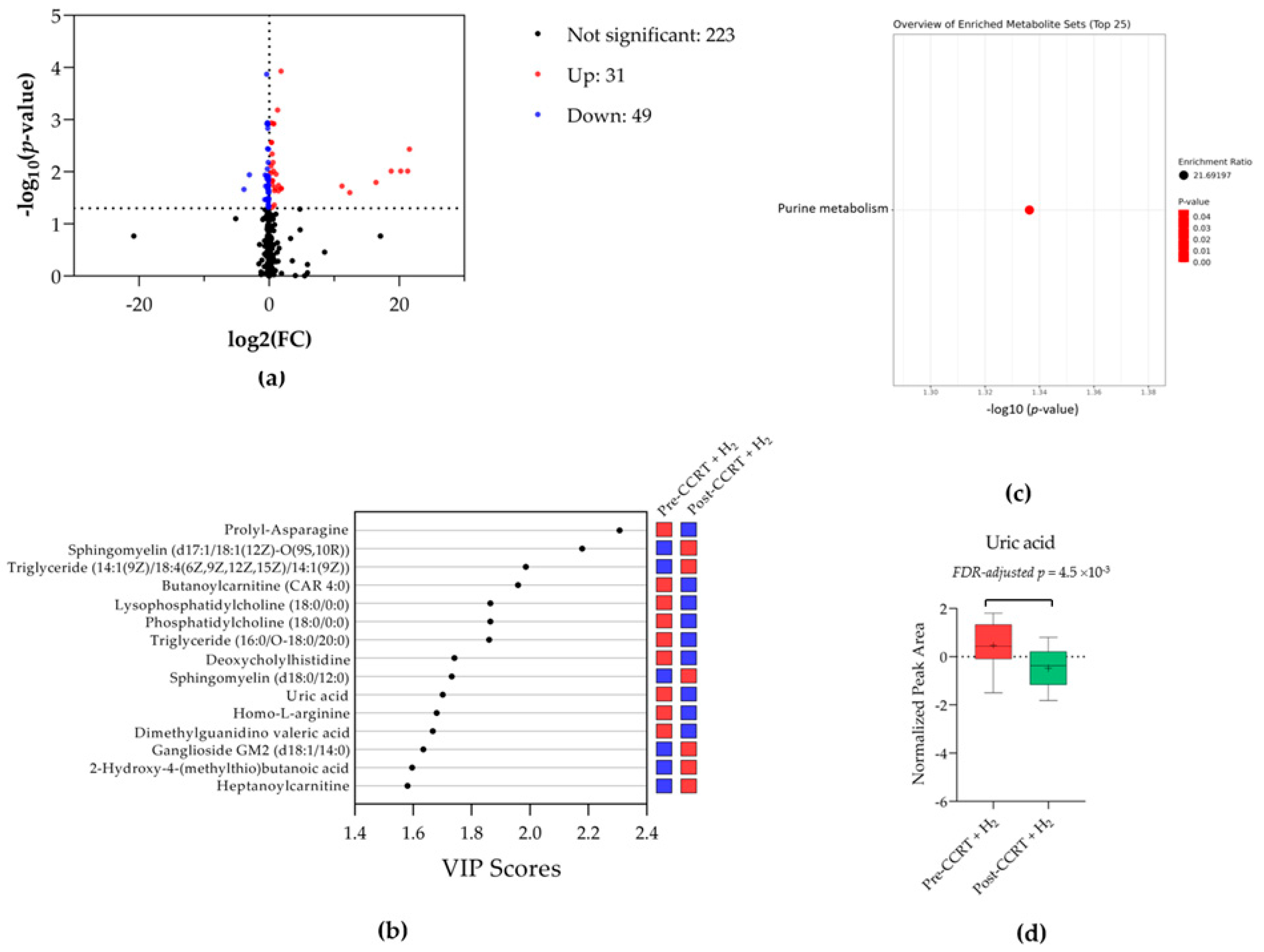
3.6. Differential Metabolites and Altered Metabolic Pathways Following CCRT Combined with Adjunctive H2 Gas Inhalation in Patients with LAHNC
3.7. Direct Comparison of Within-Subject Changes in Serum Uric Acid Between Treatment Groups
4. Discussion
5. Conclusions
Supplementary Materials
Author Contributions
Funding
Institutional Review Board Statement
Informed Consent Statement
Data Availability Statement
Acknowledgments
Conflicts of Interest
Abbreviations
| AUC | Area Under the Curve |
| CCRT | Concurrent Chemoradiotherapy |
| CCS | Collision Cross Section |
| CI | Confidence Interval |
| ECOG | Eastern Cooperative Oncology Group |
| ESI | Electrospray Ionization |
| FC | Fold Change |
| HMDB | Human Metabolome Database |
| HRMS | High-Resolution Mass Spectrometry |
| IM | Ion Mobility |
| IMRT | Intensity Modulated Radiotherapy |
| KEGG | Kyoto Encyclopedia of Genes and Genomes |
| LAHNC | Locally Advanced Head and Neck Cancer |
| LC | Liquid Chromatography |
| METLIN | Metabolite and Tandem Mass Spectrometry |
| MS | Mass Spectrometry |
| MSI | Metabolomics Standards Initiative |
| OPLS-DA | Orthogonal Partial Least Squares-Discriminate Analysis |
| PCA | Principal Component Analysis |
| PLS-DA | Partial Least Squares-Discriminate Analysis |
| QC | Quality Control |
| QTOF | Quadrupole Time-of-Flight |
| ROC | Receiver Operating Characteristic |
| ROS | Reactive Oxygen Species |
| RT | Radiotherapy |
| SD | Standard Deviation |
| SiMD | Siriraj Metabolomics Data Warehouse |
| TOF | Time-of-Flight |
| VIP | Variable Importance in the Projection |
| UHPLC | Ultra-High-Performance Liquid Chromatography |
References
- Messer, J.A.; Zuhour, R.; Mohamed, A.S.; Fuller, C.D.; van Dijk, L. Rates of toxicity for locally advanced head and neck cancer patients receiving concurrent chemoradiation in the modern era: A review. Int. J. Radiat. Oncol. Biol. Phys. 2020, 106, 1206. [Google Scholar] [CrossRef] [Scilit]
- Mihailović, M.; Milosević, V.; Grigorov, I.; Poznanović, G.; Ivanović-Matić, S.; Grdović, N.; Bogojević, D. The radioprotective effect of alpha2-macroglobulin: A morphological study of rat liver. Med. Sci. Monit. 2009, 15, 188–193. [Google Scholar]
- Buxton, G.V.; Greenstock, C.L.; Helman, W.P.; Ross, A.B. Critical review of rate constants for reactions of hydrated electrons, hydrogen atoms and hydroxyl radicals in aqueous solution. J. Phys. Chem. Ref. Data 1988, 17, 513–886. [Google Scholar] [CrossRef] [Scilit]
- Qian, L.; Cao, F.; Cui, J. Radioprotective effect of hydrogen in cultured cells and mice. Free Radic. Res. 2010, 44, 275–282. [Google Scholar] [CrossRef] [Scilit] [PubMed]
- Qian, L.; Li, B.; Cao, F.; Huang, Y.; Liu, S.; Cai, J.; Gao, F. Hydrogen-rich PBS protects cultured human cells from ionizing radiation-induced cellular damage. Nucl. Technol. Radiat. Prot. 2010, 25, 23–29. [Google Scholar]
- Cole, A.R.; Sperotto, F.; DiNardo, J.A.; Carlisle, S.; Rivkin, M.J.; Sleeper, L.A.; Kheir, J.N. Safety of prolonged inhalation of hydrogen gas in air in healthy adults. Crit. Care Explor. 2021, 3, e0543. [Google Scholar] [CrossRef] [Scilit]
- Hirano, S.-I.; Aoki, Y.; Li, X.-K.; Ichimaru, N.; Takahara, S.; Takefuji, Y. Protective effects of hydrogen gas inhalation on radiation-induced bone marrow damage in cancer patients: A retrospective observational study. Med. Gas Res. 2021, 11, 104–109. [Google Scholar] [PubMed]
- Chen, J.-B.; Kong, X.-F.; Lv, Y.-Y.; Qin, S.-C.; Sun, X.-J.; Mu, F.; Lu, T.-Y.; Xu, K.-C. Real world survey of hydrogen-controlled cancer: A follow-up report of 82 advanced cancer patients. Med. Gas Res. 2019, 9, 115–121. [Google Scholar] [CrossRef] [Scilit] [PubMed]
- Chitapanarux, I.; Onchan, W.; Chakrabandhu, S.; Muangwong, P.; Autsavapromporn, N.; Ariyanon, T.; Akagi, J.; Mizoo, A. Pilot feasibility and safety study of hydrogen gas inhalation in locally advanced head and neck cancer patients. Onco. Targets Ther. 2024, 17, 863–870. [Google Scholar] [CrossRef] [Scilit] [PubMed]
- Zhu, J. New metabolomic insights into cancer. Cancer J. 2024, 30, 301–306. [Google Scholar] [CrossRef] [Scilit] [PubMed]
- National Cancer Institute. Common Terminology Criteria for Adverse Events (CTCAE) Version 5.0; U.S. Department of Health and Human Services: Bethesda, MD, USA, 2017. Available online: https://dctd.cancer.gov/research/ctep-trials/for-sites/adverse-events/ctcae-v5-5x7.pdf (accessed on 18 May 2026).
- Pičmanová, M.; Moses, T.; Cortada-Garcia, J.; Barrett, G.; Florance, H.; Pandor, S.; Burgess, K. Rapid HILIC-Z ion mobility mass spectrometry (RHIMMS) method for untargeted metabolomics of complex biological samples. Metabolomics 2022, 18, 16. [Google Scholar] [CrossRef] [Scilit] [PubMed]
- Wishart, D.S.; Guo, A.; Oler, E.; Wang, F.; Anjum, A.; Peters, H.; Dizon, R.; Sayeeda, Z.; Tian, S.; Lee, B.L.; et al. HMDB 5.0: The Human Metabolome Database for 2022. Nucleic Acids Res. 2022, 50, D622–D631. [Google Scholar] [PubMed]
- Smith, C.A.; O’Maille, G.; Want, E.J.; Qin, C.; Trauger, S.A.; Brandon, T.R.; Custodio, D.E.; Abagyan, R.; Siuzdak, G. METLIN: A metabolite mass spectral database. Ther. Drug Monit. 2005, 27, 747–751. [Google Scholar] [CrossRef] [Scilit] [PubMed]
- Kurilung, A.; Limjiasahapong, S.; Kaewnarin, K.; Wisanpitayakorn, P.; Jariyasopit, N.; Wanichthanarak, K.; Sartyoungkul, S.; Wong, S.C.C.; Sathirapongsasuti, N.; Kitiyakara, C.; et al. Measurement of very low-molecular weight metabolites by traveling wave ion mobility and its use in human urine samples. J. Pharm. Anal. 2024, 14, 100921. [Google Scholar] [CrossRef] [Scilit] [PubMed]
- Autsavapromporn, N.; Duangya, A.; Klunklin, P.; Chitapanarux, I.; Kranrod, C.; Jaikang, C.; Monum, T.; Paemanee, A.; Tokonami, S. Serum biomarkers associated with health impacts of high residential radon exposure: A metabolomic pilot study. Sci. Rep. 2025, 15, 5099. [Google Scholar] [CrossRef] [Scilit] [PubMed]
- Kanehisa, M.; Goto, S. KEGG: Kyoto encyclopedia of genes and genomes. Nucleic Acids Res. 2000, 28, 27–30. [Google Scholar] [CrossRef] [Scilit] [PubMed]
- Kanehisa, M.; Furumichi, M.; Sato, Y.; Matsuura, Y.; Ishiguro-Watanabe, M. KEGG: Biological systems database as a model of the real world. Nucleic Acids Res. 2025, 53, D672–D677. [Google Scholar] [PubMed]
- Liu, B.; Bao, Y.; Ma, J.; Wang, X.; Feng, Y. Clinical efficacy of hydrogen therapy on acute radiation enteritis and inflammatory response in patients with cervical cancer undergoing concurrent chemoradiation therapy. Adv. Radiat. Oncol. 2025, 10, 101879. [Google Scholar] [CrossRef] [Scilit] [PubMed]
- Ohsawa, I.; Ishikawa, M.; Takahashi, K.; Watanabe, M.; Nishimaki, K.; Yamagata, K.; Katsura, K.; Katayama, Y.; Asoh, S.; Ohta, S. Hydrogen Acts as a Therapeutic Antioxidant by Selectively Reducing Cytotoxic Oxygen Radicals. Nat. Med. 2007, 13, 688–694. [Google Scholar] [CrossRef] [Scilit] [PubMed]
- Yamamoto, R.; Homma, K.; Suzuki, S.; Sano, M.; Sasaki, J. Hydrogen gas distribution in organs after inhalation: Real-time monitoring of tissue hydrogen concentration in rat. Sci. Rep. 2019, 9, 1255. [Google Scholar] [CrossRef] [Scilit] [PubMed]
- Tian, Y.; Zhang, Y.; Wang, Y.; Chen, Y.; Fan, W.; Zhou, J.; Qiao, J.; Wei, Y. Hydrogen, a novel therapeutic molecule, regulates oxidative stress, inflammation, and apoptosis. Front. Physiol. 2021, 12, 789507. [Google Scholar] [CrossRef] [Scilit] [PubMed]
- Wang, H.; Jia, H.; Gao, Y.; Zhang, H.; Fan, J.; Zhang, L.; Ren, F.; Yin, Y.; Cai, Y.; Zhu, J.; et al. Serum metabolic traits reveal therapeutic toxicities and responses of neoadjuvant chemoradiotherapy in patients with rectal cancer. Nat. Commun. 2022, 13, 7802. [Google Scholar] [CrossRef] [Scilit] [PubMed]
- Wang, T.; Gao, Y.; Liu, Z.; Du, P.; Tang, S.; Lai, Z.; Li, G. Serum metabolomics-based diagnostic biomarkers for colorectal cancer: Insights and multi-omics validation. Front. Endocrinol. 2025, 16, 1663938. [Google Scholar]
- Zhang, Y.; Yang, Q.; Peng, Q.; Tian, Z.; Lv, F.; Zeng, X.; Ji, Z. Impaired arginine/ornithine metabolism drives severe HFMD by promoting cytokine storm. Front. Immunol. 2024, 15, 1407035. [Google Scholar] [CrossRef] [Scilit] [PubMed]
- Wu, J.-Y.; Zeng, Y.; You, Y.-Y.; Chen, Q.-Y. Polyamine metabolism and anti-tumor immunity. Front. Immunol. 2025, 16, 1529337. [Google Scholar] [CrossRef] [Scilit] [PubMed]
- Holbert, C.E.; Casero, R.A., Jr.; Murray Stewart, T. Polyamines: The pivotal amines in influencing the tumor microenvironment. Discov. Oncol. 2024, 15, 227. [Google Scholar] [CrossRef] [Scilit]
- Muthukumaran, S.; Jaidev, J.; Umashankar, V.; Sulochana, K.N. Ornithine and its role in metabolic diseases: An appraisal. Biomed. Pharmacother. 2017, 86, 185–194. [Google Scholar] [CrossRef] [Scilit]
- Delmas, D.; Mialhe, A.; Cotte, A.K.; Connat, J.-L.; Bouyer, F.; Hermetet, F.; Aires, V. Lipid metabolism in cancer: Exploring phospholipids as potential biomarkers. Biomed. Pharmacother. 2025, 187, 118095. [Google Scholar] [CrossRef] [Scilit] [PubMed]
- Jin, H.-R.; Wang, J.; Wang, Z.-J.; Xi, M.-J.; Xia, B.-H.; Deng, K.; Yang, J.-L. Lipid metabolic reprogramming in tumor microenvironment: From mechanisms to therapeutics. J. Hematol. Oncol. 2023, 16, 103. [Google Scholar] [CrossRef] [Scilit] [PubMed]
- Kolesnick, R.; Fuks, Z. Radiation and ceramide-induced apoptosis. Oncogene 2003, 22, 5897–5906. [Google Scholar] [CrossRef] [Scilit] [PubMed]
- Gherghina, M.E.; Peride, I.; Tiglis, M.; Neagu, T.P.; Niculae, A.; Checheriță, I.A. Uric acid and oxidative stress—Relationship with cardiovascular, metabolic, and renal impairment. Int. J. Mol. Sci. 2022, 23, 3188. [Google Scholar] [CrossRef] [Scilit] [PubMed]
- Ames, B.N.; Cathcart, R.; Schwiers, E.; Hochstein, P. Uric acid provides an antioxidant defense in humans against oxidant- and radical-caused aging and cancer: A hypothesis. Proc. Natl. Acad. Sci. USA 1981, 78, 6858–6862. [Google Scholar] [CrossRef] [Scilit] [PubMed]
- Sautin, Y.Y.; Johnson, R.J. Uric acid: The oxidant-antioxidant paradox. Nucleosides Nucleotides Nucleic Acids 2008, 27, 608–619. [Google Scholar] [CrossRef] [Scilit] [PubMed]
- Furuhashi, M. New insights into purine metabolism in metabolic diseases: Role of xanthine oxidoreductase activity. Am. J. Physiol. Endocrinol. Metab. 2020, 319, E827–E834. [Google Scholar] [CrossRef] [Scilit] [PubMed]
- Yin, J.; Ren, W.; Huang, X.; Deng, J.; Li, T.; Yin, Y. Potential mechanisms connecting purine metabolism and cancer therapy. Front. Immunol. 2018, 9, 1697. [Google Scholar] [CrossRef] [Scilit] [PubMed]
- Ai, Y.; Hu, S.; Wang, Y. Purine and purinergic receptors in health and disease. MedComm 2023, 4, e359. [Google Scholar] [CrossRef] [Scilit] [PubMed]
- Battelli, M.G.; Bortolotti, M.; Polito, L.; Bolognesi, A. Xanthine oxidoreductase-derived reactive species: Physiological and pathological effects. Oxid. Med. Cell. Longev. 2016, 2016, 3527579. [Google Scholar] [PubMed]
- Glantzounis, G.K.; Tsimoyiannis, E.C.; Kappas, A.M.; Galaris, D.A. Uric acid and oxidative stress. Curr. Pharm. Des. 2005, 11, 4145–4151. [Google Scholar] [CrossRef] [Scilit] [PubMed]




| Variables | Group A (CCRT) (n = 10) | Group B (CCRT + H2) (n = 10) | p Value |
|---|---|---|---|
| Age | 0.54 | ||
| Median | 55.5 | 59 | |
| Range | 46–64 | 52–65 | |
| Sex | 0.61 | ||
| Male | 3 | 3 | |
| Female | 7 | 7 | |
| Primary tumor | 0.67 | ||
| Nasopharynx | 2 | 2 | |
| Oropharynx | 1 | 3 | |
| Hypopharynx | 3 | 1 | |
| Larynx | 0 | 1 | |
| Oral cavity | 3 | 2 | |
| Nasal cavity | 1 | 1 | |
| Stage | 0.47 | ||
| III | 1 | 3 | |
| IVA | 5 | 4 | |
| IVB | 4 | 3 | |
| Chemotherapy regimen | 0.26 | ||
| Cisplatin | 9 | 7 | |
| Carboplatin | 1 | 3 |
| Variables | Group A (CCRT) (n = 10) | Group B (CCRT + H2) (n = 9) | p Value |
|---|---|---|---|
| Delayed chemotherapy | 0.25 | ||
| No | 4 | 6 | |
| YES | 6 | 3 | |
| Overall treatment time; Median (Range) (days) | 51.5 (48–56) | 48.0 (48–49) | 0.15 |
| Dermatitis | 0.41 | ||
| Grade 1 | 6 | 7 | |
| Grade 2 | 4 | 2 | |
| Pharyngitis | 0.31 | ||
| Grade 1 | 7 | 8 | |
| Grade 2 | 3 | 1 | |
| Mucositis | 0.56 | ||
| Grade 1 | 5 | 4 | |
| Grade 2 | 4 | 5 | |
| Grade 3 | 1 | 0 | |
| Leucopenia | 0.29 | ||
| Grade 0 | 3 | 4 | |
| Grade 1 | 1 | 3 | |
| Grade 2 | 4 | 2 | |
| Grade 3 | 2 | 0 | |
| Neutropenia | 0.79 | ||
| Grade 0 | 3 | 4 | |
| Grade 1 | 4 | 4 | |
| Grade 2 | 2 | 1 | |
| Grade 3 | 1 | 0 | |
| Thrombocytopenia | 0.23 | ||
| Grade 0 | 8 | 8 | |
| Grade 1 | 2 | 0 | |
| Grade 2 | 0 | 1 | |
| Status at the last follow-up; (February 2026) | 0.51 | ||
| No evidence of disease | 7 | 8 | |
| Locoregional recurrence | 2 | 1 | |
| Distant metastasis | 0 | 0 | |
| Dead of disease | 1 | 0 |
| Metabolites | VIP | FC | FDR-Adjusted p | Direction | AUC | C1 | C2 | S1 | S2 |
|---|---|---|---|---|---|---|---|---|---|
| 1. Sphingomyelin (d18:0/16:1(9Z)) | 2.38 | 0.72 | 1.3 × 10⁻⁷ | Down | 0.92 | 0.82 | 0.97 | 0.87 | 0.87 |
| 2. Sphingomyelin (d18:1/16:0) | 2.38 | 0.72 | 1.3 × 10⁻⁷ | Down | 0.92 | 0.84 | 0.98 | 0.87 | 0.87 |
| 3. Cytidine diphosphate diacylglycerol(i-24:0/i-24:0) | 2.37 | 0.65 | 1.4 × 10⁻⁷ | Down | 0.87 | 0.76 | 0.95 | 0.87 | 0.77 |
| 4. Phosphatidyl-N-methylethanolamine(22:6(4Z,7Z,10Z,13Z,16Z,19Z)/20:2(11Z,14Z)) | 2.13 | 1.22 | 2.3 × 10⁻⁶ | Up | 0.85 | 0.74 | 0.94 | 0.81 | 0.87 |
| 5. Sphingomyelin (d18:0/12:0) | 2.08 | 0.73 | 1.4 × 10⁻⁷ | Down | 0.84 | 0.71 | 0.92 | 0.74 | 0.80 |
| 6. Ceramide (d17:1/PGF2alpha) | 2.06 | 0.74 | 1.4 × 10⁻⁷ | Down | 0.85 | 0.74 | 0.94 | 0.77 | 0.73 |
| 7. N-Decanoylglycine | 1.96 | 2.13 | 2.1 × 10⁻⁵ | Up | 0.85 | 0.74 | 0.93 | 0.90 | 0.77 |
| 8. Uric acid | 1.92 | 1.70 | 1.7 × 10⁻⁵ | Up | 0.87 | 0.77 | 0.96 | 0.81 | 0.87 |
| 9. Tetrahydrodeoxycorticosterone | 1.71 | 1.66 | 5.4 × 10⁻⁵ | Up | 0.79 | 0.65 | 0.89 | 0.77 | 0.77 |
| 10. Ornithine | 1.70 | 0.61 | 5.8 × 10⁻⁴ | Down | 0.78 | 0.66 | 0.89 | 0.81 | 0.83 |
| 11. Sphingomyelin (d17:1/18:1(12Z)-O(9S,10R)) | 1.66 | 0.69 | 5.4 × 10⁻⁴ | Down | 0.79 | 0.67 | 0.91 | 0.81 | 0.67 |
| 12. (2S,3R)-2-Amino-3-[(2S)-2-amino-3-hydroxypropanoyl]oxybutanoic acid | 1.62 | 1.30 | 5.1 × 10⁻⁴ | Up | 0.78 | 0.64 | 0.88 | 0.84 | 0.60 |
| 13. 5-amino-1-formylimidazole-4-carbonitrile | 1.56 | 1.92 | 1.8 × 10⁻³ | Up | 0.75 | 0.64 | 0.87 | 0.61 | 0.80 |
| 14. N(5)-Acetylornithine | 1.55 | 1.95 | 1.9 × 10⁻³ | Up | 0.77 | 0.65 | 0.87 | 0.61 | 0.80 |
| 15. Deoxycholylhistidine | 1.50 | 1.43 | 2.8 × 10⁻³ | Up | 0.73 | 0.60 | 0.83 | 0.84 | 0.60 |
| 16. Ganglioside GM2 (d18:1/14:0) | 1.46 | 0.46 | 6.0 × 10⁻³ | Down | 0.80 | 0.69 | 0.89 | 0.84 | 0.63 |
| 17. Lysophosphatidylcholine (18:0/0:0) | 1.43 | 1.20 | 7.3 × 10⁻³ | Up | 0.76 | 0.63 | 0.87 | 0.81 | 0.63 |
| 18. Phosphatidylcholine (18:0/0:0) | 1.43 | 1.20 | 7.3 × 10⁻³ | Up | 0.76 | 0.63 | 0.88 | 0.81 | 0.63 |
| 19. 3-Palmitoyl-sn-glycerol | 1.40 | 1.26 | 8.2 × 10⁻³ | Up | 0.80 | 0.68 | 0.90 | 0.87 | 0.73 |
| 20. L-Cystine | 1.36 | 0.77 | 9.0 × 10⁻³ | Down | 0.71 | 0.57 | 0.83 | 0.52 | 0.93 |
| 21. Phosphatidic Acid (20:4(6E,8Z,11Z,14Z)-OH(5S)/17:0) | 1.34 | 1.57 | 0.013 | Up | 0.70 | 0.57 | 0.83 | 0.61 | 0.70 |
| 22. 1-Methylhistidine | 1.34 | 1.36 | 0.012 | Up | 0.73 | 0.59 | 0.84 | 0.77 | 0.60 |
| 23. Creatinine | 1.34 | 1.27 | 9.8 × 10⁻³ | Up | 0.77 | 0.65 | 0.87 | 0.81 | 0.63 |
| 24. L-2-Amino-3-(1-pyrazolyl)propanoic acid | 1.23 | 1.22 | 0.019 | Up | 0.72 | 0.58 | 0.87 | 0.90 | 0.70 |
| 25. 8-Oxo-7,8-dihydrodeoxyguanine | 1.17 | 1.95 | 0.028 | Up | 0.72 | 0.57 | 0.83 | 0.52 | 0.90 |
| 26. N-(2-hydroxyhexadecanoyl)-4-hydroxy-15-methylhexadecasphinganine-1-phosphocholine | 1.17 | 0.80 | 2.4 × 10⁻³ | Down | 0.71 | 0.57 | 0.84 | 0.77 | 0.63 |
| 27. (5Z,8Z,11Z,14Z,17Z)-Icosa-5,8,11,14,17-pentaenoylcarnitine | 1.12 | 0.43 | 0.045 | Down | 0.81 | 0.69 | 0.90 | 0.74 | 0.87 |
| 28. Arabinosylhypoxanthine | 1.11 | 2.48 | 0.038 | Up | 0.73 | 0.58 | 0.85 | 0.68 | 0.70 |
| Pathways | Total | Hits | Hits Compound | p Value |
|---|---|---|---|---|
| 1. Arginine biosynthesis | 14 | 1 | Ornithine | 0.027 |
| 2. D-Amino acid metabolism | 14 | 1 | Ornithine | 0.027 |
| 3. Glutathione metabolism | 28 | 1 | Ornithine | 0.054 |
| 4. Arginine and proline metabolism | 35 | 1 | Ornithine | 0.067 |
| 5. Purine metabolism | 70 | 1 | Uric acid | 0.132 |
| 6. Steroid hormone biosynthesis | 86 | 1 | Tetrahydrodeoxycorticosterone | 0.161 |
| Metabolites | VIP | FC | FDR-Adjusted p | Direction | AUC | C1 | C2 | S1 | S2 |
|---|---|---|---|---|---|---|---|---|---|
| 1. Prolyl-Asparagine | 2.31 | 3.56 | 1.2 × 10⁻⁴ | Up | 0.88 | 0.78 | 0.95 | 0.78 | 0.85 |
| 2. Sphingomyelin (d17:1/18:1(12Z)-O(9S,10R)) | 2.18 | 0.76 | 1.3 × 10⁻⁵ | Down | 0.84 | 0.72 | 0.94 | 0.85 | 0.78 |
| 3. Triglyceride (14:1(9Z)/18:4(6Z,9Z,12Z,15Z)/14:1(9Z)) | 1.99 | 0.82 | 1.1 × 10⁻³ | Down | 0.83 | 0.69 | 0.94 | 0.85 | 0.89 |
| 4. Butanoylcarnitine (CAR 4:0) | 1.96 | 1.61 | 1.2 × 10⁻³ | Up | 0.82 | 0.69 | 0.93 | 0.78 | 0.89 |
| 5. Lysophosphatidylcholine (18:0/0:0) | 1.86 | 1.29 | 2.7 × 10⁻³ | Up | 0.83 | 0.71 | 0.93 | 0.70 | 0.89 |
| 6. Phosphatidylcholine (18:0/0:0) | 1.86 | 1.29 | 2.7 × 10⁻³ | Up | 0.83 | 0.70 | 0.93 | 0.70 | 0.89 |
| 7. Triglyceride (16:0/O-18:0/20:0) * | 1.86 | 3.1 × 10⁶ | 3.7 × 10⁻³ | Up | 0.70 | 0.61 | 0.80 | 1.00 | 0.41 |
| 8. Deoxycholylhistidine | 1.74 | 1.50 | 6.6 × 10⁻³ | Up | 0.76 | 0.61 | 0.89 | 0.85 | 0.67 |
| 9. Uric acid | 1.70 | 1.35 | 4.5 × 10⁻³ | Up | 0.79 | 0.66 | 0.90 | 0.74 | 0.70 |
| 10. Homo-L-arginine | 1.68 | 1.57 | 9.7 × 10⁻³ | Up | 0.78 | 0.66 | 0.89 | 0.85 | 0.56 |
| 11. Dimethylguanidino valeric acid | 1.66 | 2.06 | 0.011 | Up | 0.75 | 0.61 | 0.87 | 0.67 | 0.70 |
| 12. Heptanoylcarnitine | 1.58 | 0.68 | 0.018 | Down | 0.72 | 0.58 | 0.85 | 0.74 | 0.63 |
| 13. N-(2-Hydroxypropyl)valine | 1.57 | 1.37 | 0.015 | Up | 0.77 | 0.62 | 0.89 | 0.85 | 0.63 |
| 14. Acetyl-L-carnitine (CAR 2:0) | 1.48 | 3.57 | 0.021 | Up | 0.77 | 0.63 | 0.88 | 0.67 | 0.78 |
| 15. 1-Methylhistidine | 1.47 | 1.42 | 0.015 | Up | 0.76 | 0.62 | 0.88 | 0.78 | 0.67 |
| 16. L-Histidinol | 1.43 | 1.40 | 0.018 | Up | 0.76 | 0.61 | 0.89 | 0.78 | 0.67 |
| 17. 8-Oxo-7,8-dihydrodeoxyguanine | 1.42 | 2.66 | 0.023 | Up | 0.78 | 0.65 | 0.90 | 0.70 | 0.67 |
| 18. N(5)-Acetylornithine | 1.41 | 1.76 | 0.023 | Up | 0.77 | 0.62 | 0.89 | 0.70 | 0.96 |
| Parameter | Group A (CCRT) | Group B (CCRT + H2) | p Value |
|---|---|---|---|
| Δ Uric acid | 0.11 | ||
| Mean | −39,917.15 | −24,039.56 | |
| SD | 48,873.64 | 13,924.30 |
Disclaimer/Publisher’s Note: The statements, opinions and data contained in all publications are solely those of the individual author(s) and contributor(s) and not of MDPI and/or the editor(s). MDPI and/or the editor(s) disclaim responsibility for any injury to people or property resulting from any ideas, methods, instructions or products referred to in the content. |
© 2026 by the authors. Licensee MDPI, Basel, Switzerland. This article is an open access article distributed under the terms and conditions of the Creative Commons Attribution (CC BY) license.
Share and Cite
Chitapanarux, I.; Autsavapromporn, N.; Onchan, W.; Chakrabandhu, S.; Muangwong, P.; Duangya, A.; Lertsiriladakul, T.; Panya, A.; Paemanee, A. Metabolomic Alterations Associated with Adjunctive Hydrogen Gas Inhalation During Concurrent Chemoradiotherapy in Locally Advanced Head and Neck Cancer: A Pilot Study. Cancers 2026, 18, 2191. https://doi.org/10.3390/cancers18142191
Chitapanarux I, Autsavapromporn N, Onchan W, Chakrabandhu S, Muangwong P, Duangya A, Lertsiriladakul T, Panya A, Paemanee A. Metabolomic Alterations Associated with Adjunctive Hydrogen Gas Inhalation During Concurrent Chemoradiotherapy in Locally Advanced Head and Neck Cancer: A Pilot Study. Cancers. 2026; 18(14):2191. https://doi.org/10.3390/cancers18142191
Chicago/Turabian StyleChitapanarux, Imjai, Narongchai Autsavapromporn, Wimrak Onchan, Somvilai Chakrabandhu, Pooriwat Muangwong, Apidet Duangya, Tanin Lertsiriladakul, Atikorn Panya, and Atchara Paemanee. 2026. "Metabolomic Alterations Associated with Adjunctive Hydrogen Gas Inhalation During Concurrent Chemoradiotherapy in Locally Advanced Head and Neck Cancer: A Pilot Study" Cancers 18, no. 14: 2191. https://doi.org/10.3390/cancers18142191
APA StyleChitapanarux, I., Autsavapromporn, N., Onchan, W., Chakrabandhu, S., Muangwong, P., Duangya, A., Lertsiriladakul, T., Panya, A., & Paemanee, A. (2026). Metabolomic Alterations Associated with Adjunctive Hydrogen Gas Inhalation During Concurrent Chemoradiotherapy in Locally Advanced Head and Neck Cancer: A Pilot Study. Cancers, 18(14), 2191. https://doi.org/10.3390/cancers18142191