1. Introduction
Hyperbaric oxygen therapy delivers 100% oxygen at high pressure and has been historically used for the treatment of carbon monoxide poisoning, burns, decompression sickness, and crush injuries in order to improve oxygen delivery to the tissue [
1,
2,
3]. The U.S. Food and Drug Administration has cleared hyperbaric oxygen therapy devices for several indications related to infections, such as clostridial myositis and myonecrosis, sever flesh-eating bacterial infections and refractory osteomyelitis. Hyperbaric oxygen therapy has also been used anecdotally as adjunct treatment to anti-infective treatments and surgical debridement for severe or recalcitrant infections, such as necrotizing soft tissue infections, sinusitis and refractory osteomyelitis [
4,
5,
6,
7]. Theoretically, hyperbaric oxygen therapy exerts antimicrobial and immunomodulatory effects by inducing oxidative stress and the production of reactive oxygen species, thereby enhancing immune responses and promoting healing. It has been reported that hyperbaric oxygen therapy can suppress pro-inflammatory cytokines, decrease the CD4:CD8 T-cell ratio, clear neutrophils, and reduce pathogen burden locally. Hyperbaric oxygen therapy antimicrobial effects also generate less acidosis in tissues, help antifungal activities, enhance the activity of antimicrobial agents, and facilitate healing from infection [
1,
2].
In patients with hematologic malignancies, fungal, bacterial and viral infectious complications remain major causes of morbidity and mortality, often more difficult to manage than in the general population due to underlying treatment- and/or disease-related immunosuppression [
8,
9,
10]. Although hyperbaric oxygen therapy has been used as an adjunct to systemic anti-infective treatments and, when indicated, debridement surgery, published data reporting clinical evidence for its benefit remains sparce [
11,
12,
13,
14].
To that end, we conducted a retrospective study using 10-year data from a single, large tertiary cancer center to characterize the patterns of use and outcomes of patients with hematologic malignancies who received adjunct hyperbaric oxygen therapy for the treatment of infections.
3. Results
Fifty-five patients with hematologic malignancies were treated with hyperbaric oxygen therapy, and the median age of these patients was 51 years (range 18–86). Patient and disease characteristics are summarized in
Table 1.
Acute myeloid leukemia (AML) (30 patients, 55%) and acute lymphoblastic leukemia (ALL) (10 patients, 18%) were the most common hematologic malignancies. In total, 34 patients (61%) had active hematologic malignancies at initiation, 47 patients (85%) had received systemic chemotherapy within 90 days before initiating hyperbaric oxygen therapy, 24 patients (44%) had a history of allogeneic stem cell transplantation (SCT), with a median time from SCT to hyperbaric oxygen therapy of 151 days (range 27–1818), and 9 patients (16%) underwent SCT within 90 days before hyperbaric oxygen therapy initiation.
Indications for hyperbaric oxygen therapy included invasive fungal sinusitis (20 patients, 36%), BK virus-associated cystitis (17 patients, 31%), cellulitis (15 patients, 27%), complicated lung consolidation of an unknown pathogen (2 patients, 4%) and fungal endophthalmitis (1 patient, 2%). Among the 38 patients who had non-BK viral infections, 10 (26%) patients were identified as having disseminated infection at the time of initiation of hyperbaric oxygen therapy, and 29 patients (76%) had uncontrolled infection, defined as progression or no improvement of disease despite 7-day antifungal treatment and >96 h of antibiotic treatment [
16]. Nineteen of these patients (50%) had debridement surgery prior to initiation of hyperbaric oxygen therapy.
Thirty-five (64%) patients had IMD. Mucormycosis was the most common type of IMD (21 patients, 60%) and it was caused by Mucor species in 12 patients and Rhizopus in 9 patients (12 patients had sinusitis, 7 cellulitis and 2 pneumonia). Other types of IMD were Fusarium in 7 patients (20%; 3 patients had sinusitis, 3 cellulitis, 1 ophthalmitis), Aspergillus in 3 patients (9%; 2 patients had sinusitis, 1 cellulitis), and Scedosporium in 1 patient (3%; sinusitis), while suspected fungal infection without a pathogen identified accounted for the remaining cases of IMD in 3 patients (9%; 2 patients had sinusitis and 1 cellulitis).
Overall, 17 patients (31%) had BK-virus cystitis, 6 (35%) of them also had BK viremia at time of hyperbaric oxygen therapy initiation and 12 (71%) patients had received systemic therapy (consisting of intravenous cidofovir) against the BK virus before initiation of hyperbaric oxygen therapy. Moreover, 14 out of 17 patients with BK-virus cystitis had a prior history of SCT, and the median time from SCT in these patients was 77 days (range 27–222).
The three remaining patients that received hyperbaric oxygen therapy had bacterial cellulitis (all three in the toe area, and all three received intravenous antibiotics concomitantly with hyperbaric oxygen therapy).
The median number of hyperbaric oxygen therapy sessions per patient in the 55 patients studied was 10 (range 1–45), with a median treatment duration of hyperbaric oxygen therapy of 19 days (range 1–109). The duration of each session was approximately 60–90 min depending on the ability of the patient to tolerate the treatment, and hyperbaric oxygen therapy was administered via a hood or nose device in a Multiplace Chamber accredited by the Undersea Hyperbaric and Medical Society. Fifty-three patients (96%) received hyperbaric oxygen therapy in an inpatient setting, and two patients received it as outpatients. The median length of follow-up is 61.6 months (95% confidence interval (CI) 29.6–106.9 months).
Overall, 54 (98%) of the 55 patients were evaluable for response, and 32 (59%) patients demonstrated a clinical response, defined as either resolution or stabilization of the infection. Resolution of infection was observed in 15 patients (28%), and stabilization was documented in 17 patients (31%). One patient with bacterial cellulitis was not evaluable for response due the patient being lost to follow-up before sufficient information to assess response was available.
Among the 35 patients with IMDs, we reviewed each patient’s response of the infection and defined it in collaboration with infectious diseases experts according to EORTC criteria, and found that 11 patients (31%) achieved a complete response of their infection, 5 (14%) patients had a partial response, 6 (17%) patients had stable disease, and 13 (37%) patients experienced progression of their infection (
Table 2).
Response of infection (complete and partial response) in patients with IMD according to the mold type was Mucorales 10/21 patients (48%), Fusarium spp. 3/7 patients (43%), Aspergillus spp.—3/3 patients (100%) and Scedosporium—0/1 patient (0%).
Response of infection (complete and partial response) in patients with IMD who received surgical debridement prior to initiation of hyperbaric oxygen therapy was 11/19 patients (58%); responses consisted of complete response of infection in 7 patients (37%) and partial response of infection in 4 patients (21%).
Response of infection (complete and partial response) in patients with single-site IMD was found in 9/19 patients (47%), where responses consisted of a complete response of infection in 5 patients (26%) and partial response of infection in 4 patients (21%).
Among the 17 patients with BK virus-associated cystitis, 2 patients (12%) achieved complete clearance of BK viremia, clinical symptoms of cystitis and hematuria, 6 patients (35%) showed an improvement in hematuria only with a declining BK viral load, and 9 patients (53%) had persistent or worsening symptoms of cystitis and hematuria. The two evaluable patients with bacterial cellulitis responded with a resolution of the infection (
Table 2).
We reviewed the status of the hematologic malignancies at the time of hyperbaric oxygen therapy treatment and found that the 21 patients whose hematologic malignancies were in remission tended to have a higher response rate of their infection compared to patients whose hematological malignancy was not in remission (73% vs. 46% p = 0.057). Forty-seven patients (85%) were either receiving intensive chemotherapy at the time of hyperbaric oxygen therapy or underwent an SCT within 90 days of initiation of hyperbaric oxygen therapy, and we found that these two groups of patients had lower rates of infection stabilization (51% vs. 91%, p = 0.019) and infection resolution (21% vs. 55%, p = 0.054).
Among the 38 patients with non-BK virus-related infections, the diagnosis of AML as the underlying hematologic malignancy was associated with a marginally lower infection response rate of infection compared to patients with other types of hematologic malignancies (23% vs. 53%, p = 0.083). Similarly, patients receiving intensive chemotherapy at the time of hyperbaric oxygen therapy and/or SCT within 90 days of initiation of hyperbaric oxygen therapy exhibited a marginally lower infection response rate than those who were not receiving treatment for their hematologic malignancies (27% vs. 71%, p = 0.072).
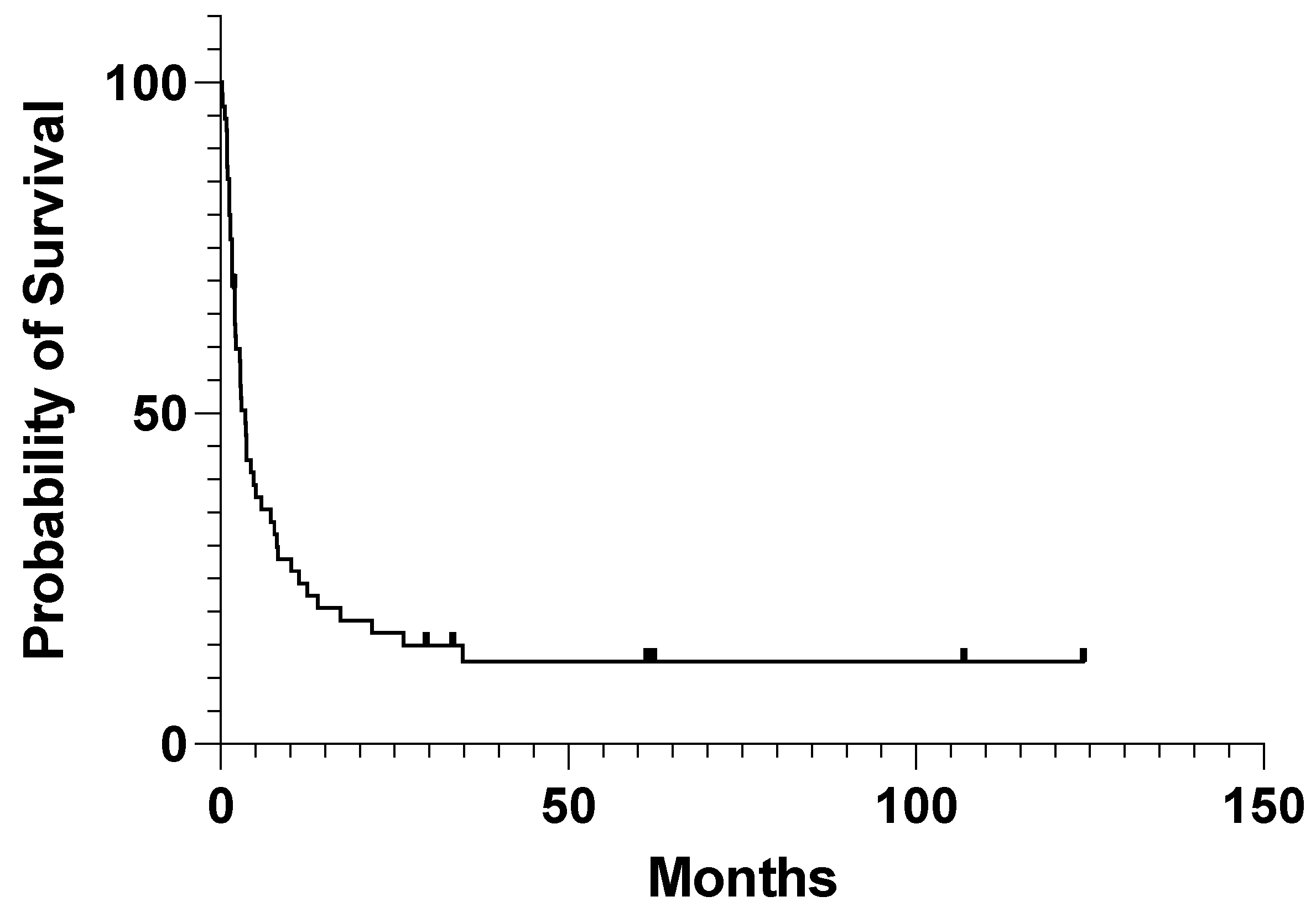
Notably, although a response of infection was observed in more than half of the patients receiving hyperbaric oxygen therapy, mortality among these patients remained high. Mortally rates in the study population were 15% at 30 days, 50% at 90 days, and 76% at 1 year. At the time of hospital discharge, 64% of the patients were discharged to home, 20% of the patients were transferred to the hospice and 13% of patients died during the hospitalization. Documentation of causes of death was available for 45 patients; both hematologic malignancy-related complications and infection-related complications were the most commonly indicating causes of death, each accounting for 58% of the cases and, therefore, making it difficult to determine the individual role of each component listed. The infection for which the individual patient was receiving hyperbaric oxygen therapy treatment was indicated as directly contributing to death or to a transition in goals of care toward hospice care in five patients (11%). The median OS was 3.5 months for the overall patient cohort (
Figure 1). Resolution of infection after hyperbaric oxygen therapy was associated with better survival compared to no resolution of infection (median survival in the 15 patients with resolution of infection was 14.0 months vs. 2.1 months in the patients without resolution of the infection, HR 0.28, 95% CI 0.13–0.57,
p = 0.001). Importantly, survival was significantly associated with the underlying hematologic malignancy status, and the 21 patients whose hematologic malignancy was in remission had a better OS than those patients with an active hematologic malignancy (8.1 months vs. 2.1 months, HR 0.47,
p = 0.017). The type of infection that was being treated with hyperbaric oxygen therapy (e.g., fungal sinusitis, BK cystitis, cellulitis) was not significantly associated with a difference in OS. There was no difference in survival associated with the various types of underlying hematologic malignancies. Similarly, neither the history of prior SCT nor the time since SCT (<1 year vs. ≥1 year or <90 days vs. ≥90 days) had a significant impact on survival. The presence of neutropenia at the time of initiation of hyperbaric oxygen therapy was not associated with a difference in survival. Importantly, hyperbaric oxygen therapy response with a resolution of infection (HR 0.28, 95% CI 0.14–0.60,
p = 0.001) or controlled infection with any type of response (HR 0.23, 95% CI 0.11–0.48,
p < 0.001) and the status of underlying hematologic malignancies (defined as remission or not, HR 0.42, 95% CI 0.22–0.80,
p = 0.008) were independently associated with improved survival. Notably, patients who responded to hyperbaric oxygen therapy and were in remission from the underlying hematologic malignancies had the best outcomes, with a median OS of 7.7 months (HR 0.11, 95% CI 0.05–0.26,
p < 0.001) (
Figure 1).
4. Discussion
Our retrospective study presents a large single-center experience evaluating hyperbaric oxygen therapy as adjuvant treatment to antimicrobial agents and surgical debridement in patients with hematologic malignancies and severe infections treated in a tertiary cancer center setting. Consistent with previously published smaller studies, our findings support the feasibility and potential adjunctive benefit of hyperbaric oxygen therapy to antimicrobial treatment and surgical debridement in selected patients with hematological malignancies suffering from refractory infections [
12,
17,
18,
19], as we found that hyperbaric oxygen therapy when given as part of a multimodality approach was associated with a response rate of infection of 59%. Most hyperbaric oxygen therapy recipients in our series were critically ill patients being treated in the inpatient setting, with a high proportion of them undergoing chemotherapy or having recently undergone SCT; still, despite the severely immunosuppressed status, we observed that infection resolution or stabilization was achieved in a substantial proportion of patients, and that a majority of them were discharged home. Nevertheless, it is important to acknowledge that long-term survival was poor in our patients, with a median survival duration of only 3.5 months, and 30-day, 90-day and 1-year mortality rates of 15%, 50% and 76% respectively. The observed survival results highlight the high-risk nature of the population studied and the substantial cancer- and infection-related mortality.
Our results are in agreement with previously published smaller series in underscoring the critical role played by the status of the underlying disease, particularly remission versus active hematologic malignancy, in determining survival. We observed that patients whose hematologic malignancy was in remission at the time of initiation of hyperbaric oxygen therapy were having significantly longer survival, suggesting that hyperbaric oxygen therapy may be most beneficial to these patients and that patients’ hematological recovery and degree of immune suppression are important factors to be considered when selecting patients to undergo hyperbaric oxygen therapy. Although limited by the small sample size and by the heterogeneity in the type of underlying hematological malignancy, our data supports the knowledge that the immune status influences hyperbaric oxygen therapy, with a trend observed toward a lower response rate among patients with a recent history of SCT, patients receiving intensive chemotherapy at the time of hyperbaric oxygen therapy and patients with evidence of relapsed and/or refractory underlying hematological malignancies.
We acknowledge that while this study was retrospective in nature and, therefore, not designed to establish causality, the observed associations suggest that hyperbaric oxygen therapy may serve as salvage or adjunctive therapy for the treatment of infections in selected patients with hematologic malignancies, particularly those patients whose hematological malignancy is in remission or patients that are showing evidence immune recovery. However, in order to provide a balanced opinion given the high resource demands and potential toxicities of hyperbaric oxygen therapy, especially in patients who are frail, hospitalized and undergoing treatment for their hematological malignancies, it is important to remind clinicians that careful patient selection is essential. Hyperbaric oxygen therapy-related adverse effects have been reported in various types of patient populations. The most common toxicities include barotrauma, oxygen toxicity, anxiety, and visual disturbances—and are reported to occur in up to 30% of patients and rise with additional sessions. These toxicities could have a significant impact on patients’ quality of life [
20]. It is important to note that the availability of hyperbaric chambers is limited to selected centers and specific geographical locations, and this may explain why reports on the use of hyperbaric oxygen therapy for the treatment of infections are rare and of small size. In our series, patients needed to be transported to a nearby facility, and coordination of care was complicated because of the need to identify an appropriate time for the therapy session, and to ascertain that the hyperbaric oxygen sessions did not conflict with scheduled antimicrobial infusion, chemotherapy infusion and other diagnostic testing. Additionally, it needs to be considered that the costs associated with the administration of a series of hyperbaric oxygen therapy sessions can be substantial and deserve appropriate consideration during the decision-making process. We performed a review of the available information and identified that Medicare estimates the cost to range from
$24,000 to
$50,000 annually, excluding indirect burdens such as transportation, nursing care and time dedicated by caregivers [
21].
We acknowledge that there are several limitations in this study, including its retrospective uncontrolled nature, single-center tertiary care setting, and small sample size, which limit the statistical power and generalizability of the findings. Furthermore, the patient population we selected, patients with hematological malignancies, is particularly challenging to study. In our population, the presence of several concurrent infections, the frequent occurrence of neutropenia and its duration and comorbidities introduce many competing risks that complicate the attribution of survival outcomes specifically to hyperbaric oxygen therapy. Response assessments were conducted through chart review, and the retrospective nature of the analysis made the attribution of response assessment to various interventions challenging, even if the evaluating team was multidisciplinary and included a hematologist/oncologist with expertise in the management of patients with hematological malignancies, along with a clinical pharmacist with both hematology/oncology and infectious disease training and infectious disease specialists. Additionally, heterogeneity in infection types, hematologic malignancies subtypes, and supportive care interventions present within the population we studied further complicated direct comparisons across patient groups.




 ,
,