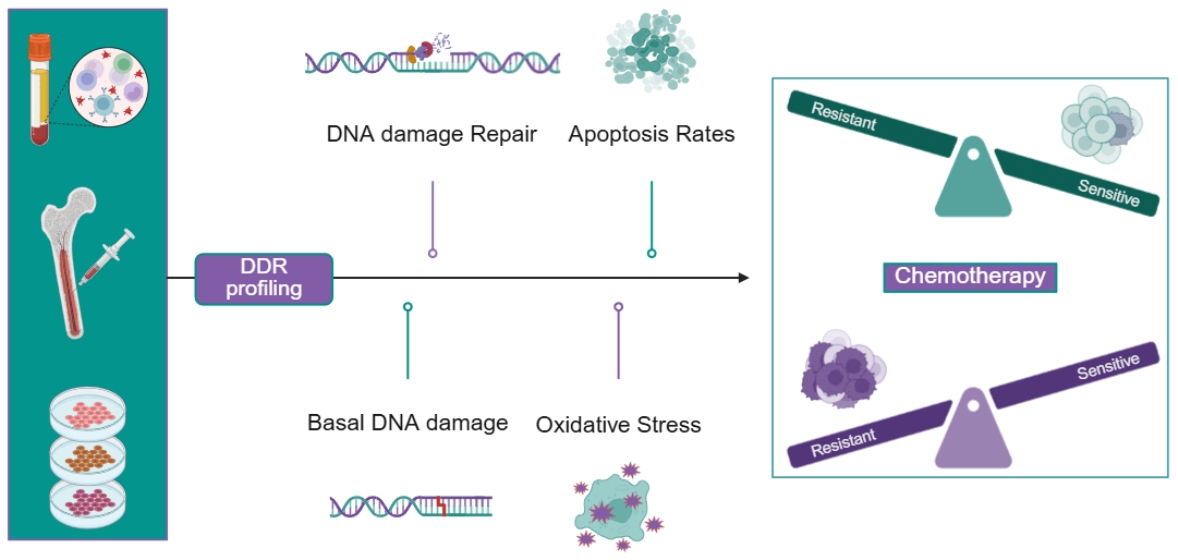
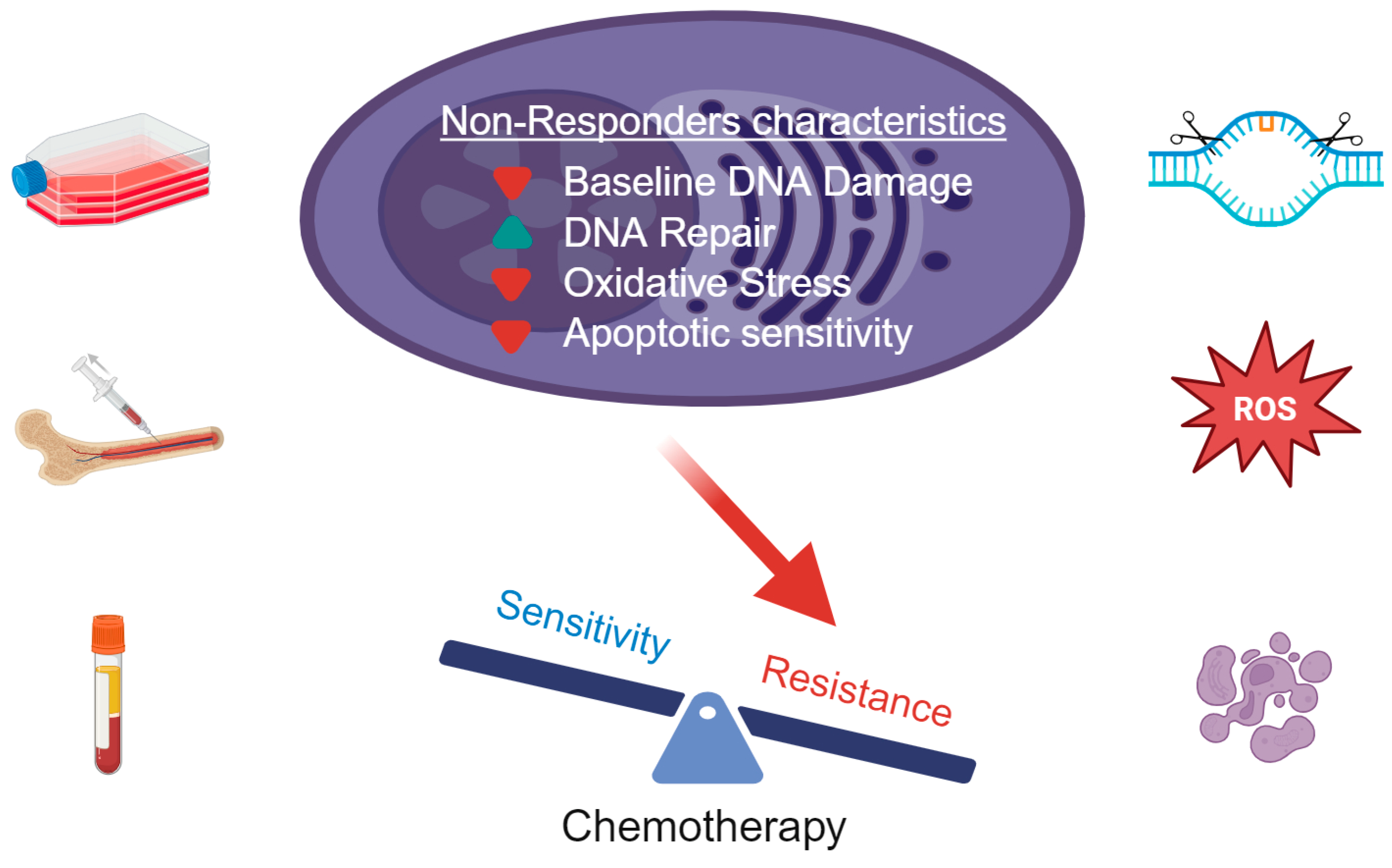
Breaking the Balance: Baseline Oxidative Stress and DNA Repair Capacity in Multiple Myeloma Therapy

 , , , ,
  and
and
Simple Summary
Abstract
1. Introduction
2. Materials and Methods
2.1. Patients
2.2. Alkaline Comet Assay
2.3. Nucleotide Excision Repair Measurement
2.4. Measurement of γH2AX Foci Formation/Removal
2.5. Assessment of Chromatin Condensation
2.6. Oxidative Stress and Apurinic/Apyrimidinic Sites
2.7. Measurement of Apoptotic Sensitivity
2.8. Expression of DDR-Associated Genes
2.9. Bioinformatic Analysis
2.10. Statistical Analysis
3. Results
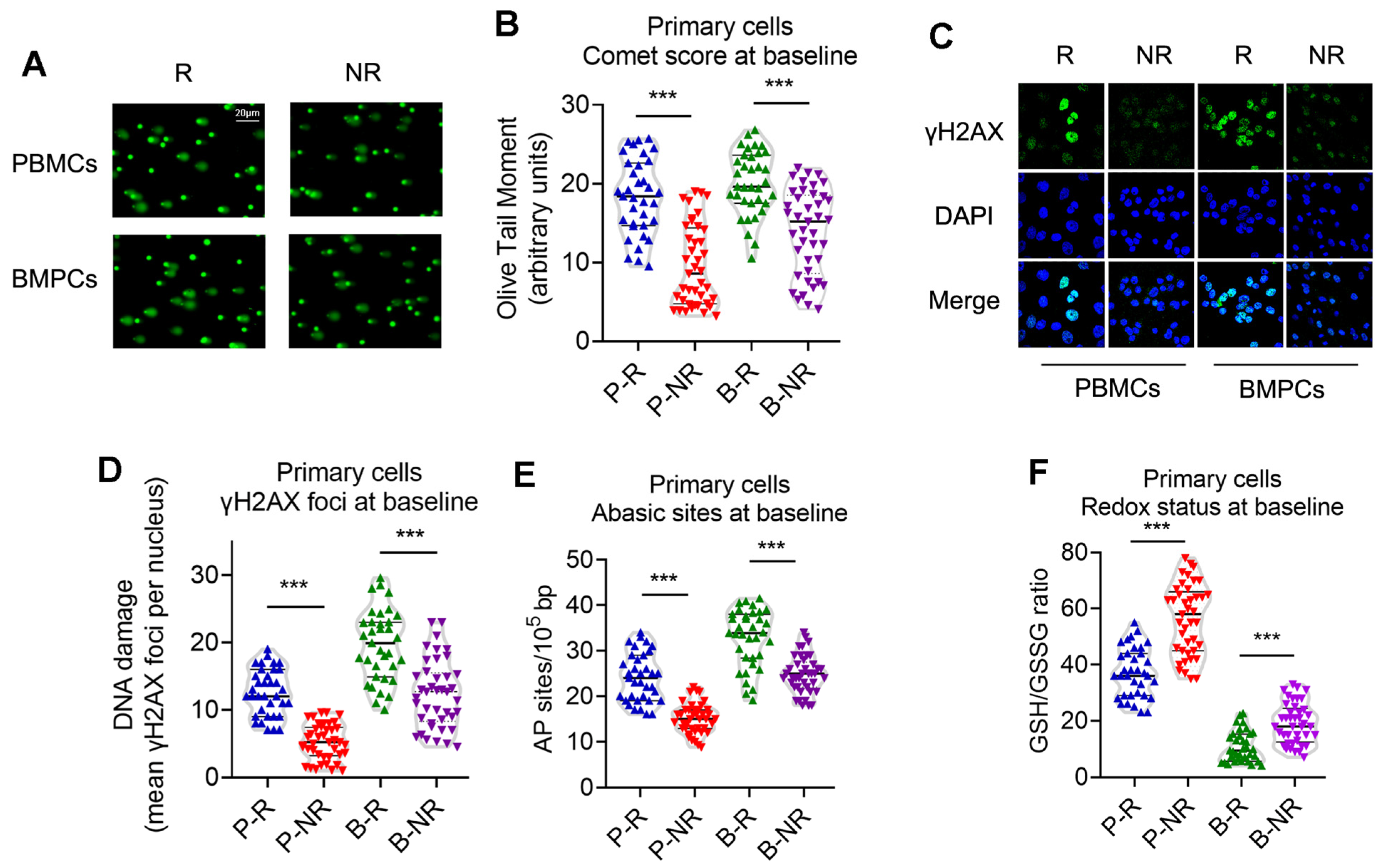
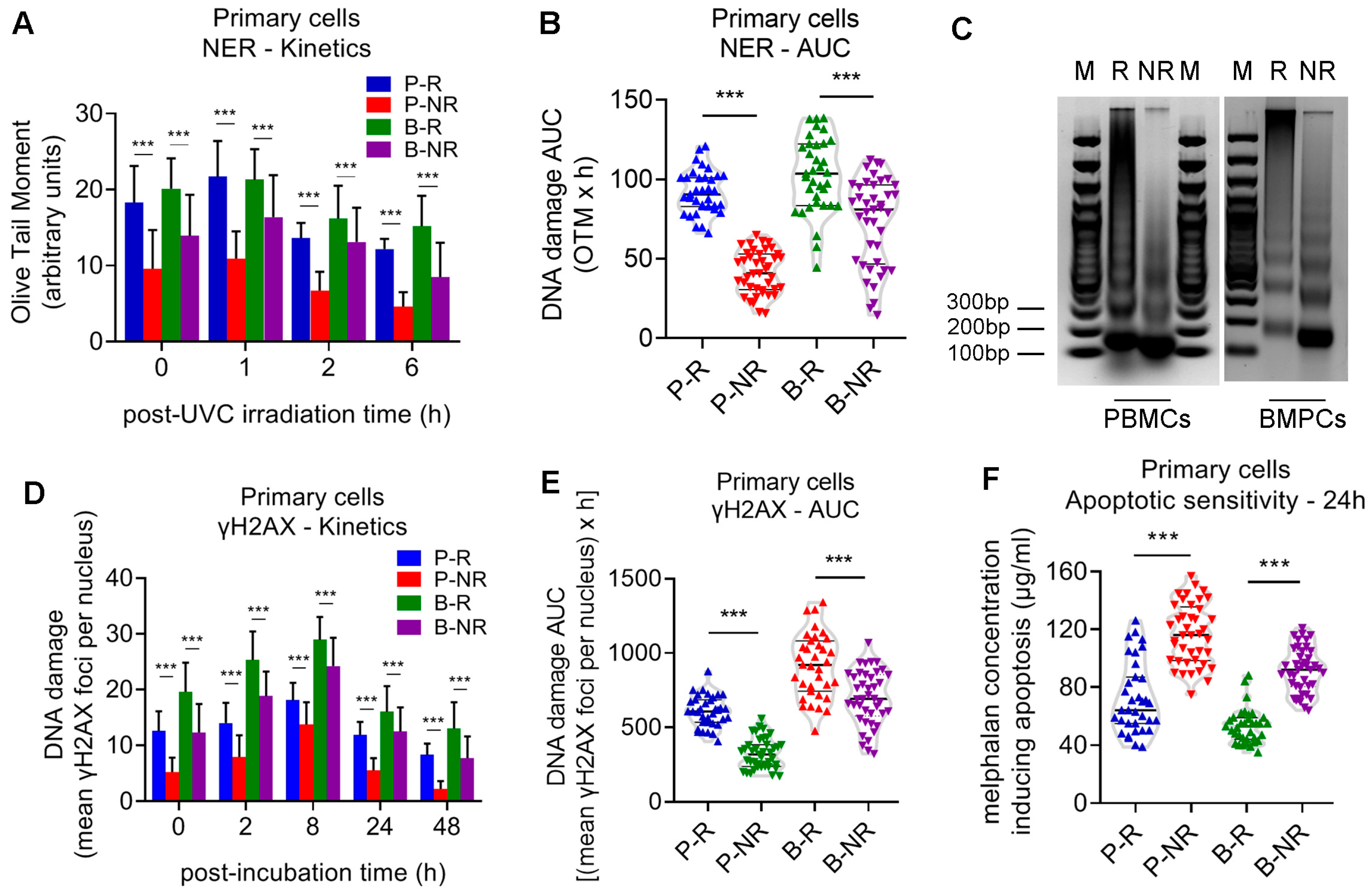
3.1. DDR-Related Signals in Primary Cells from MM Patients
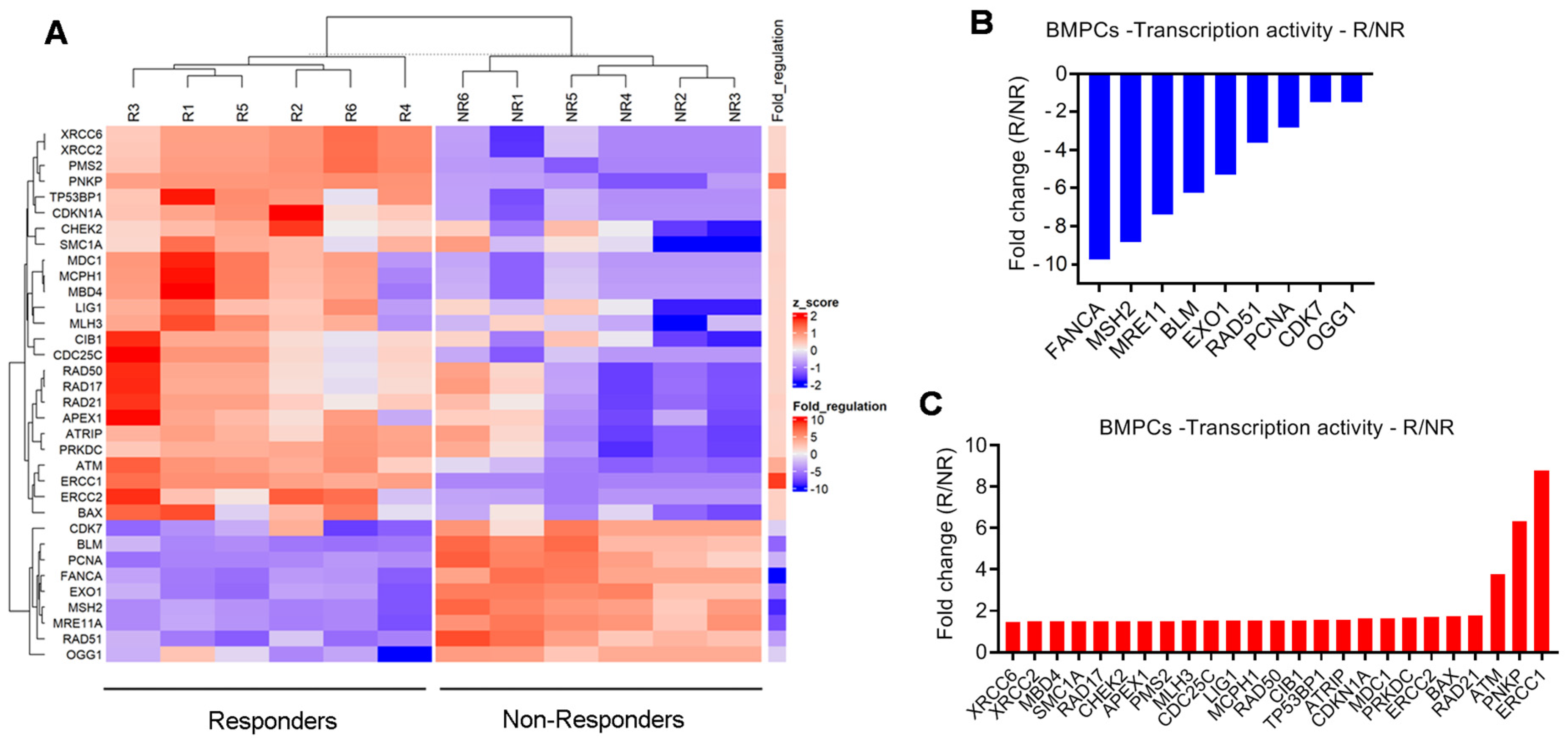
3.2. Expression of DDR-Associated Genes in BMPCs from MM Patients
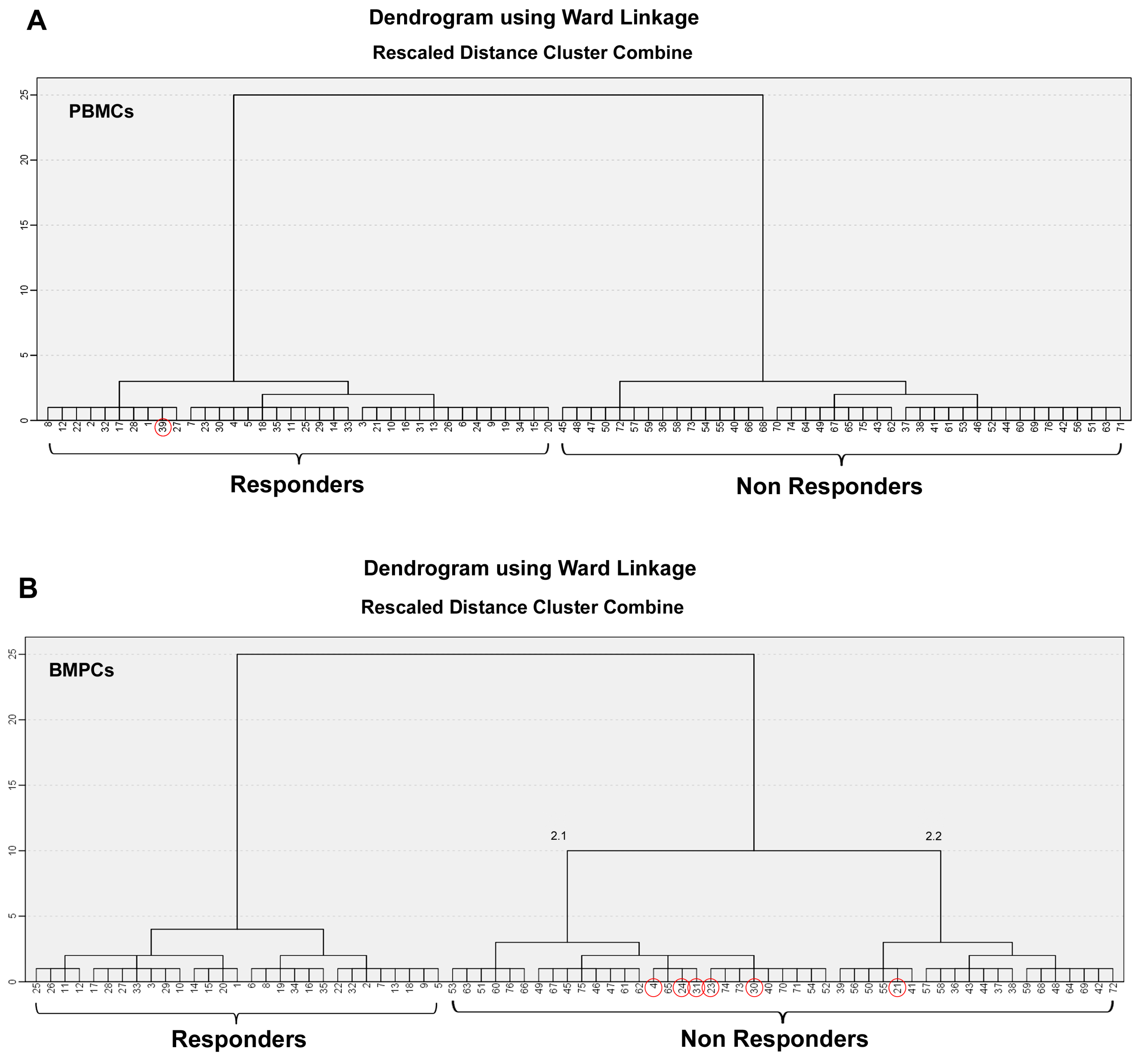
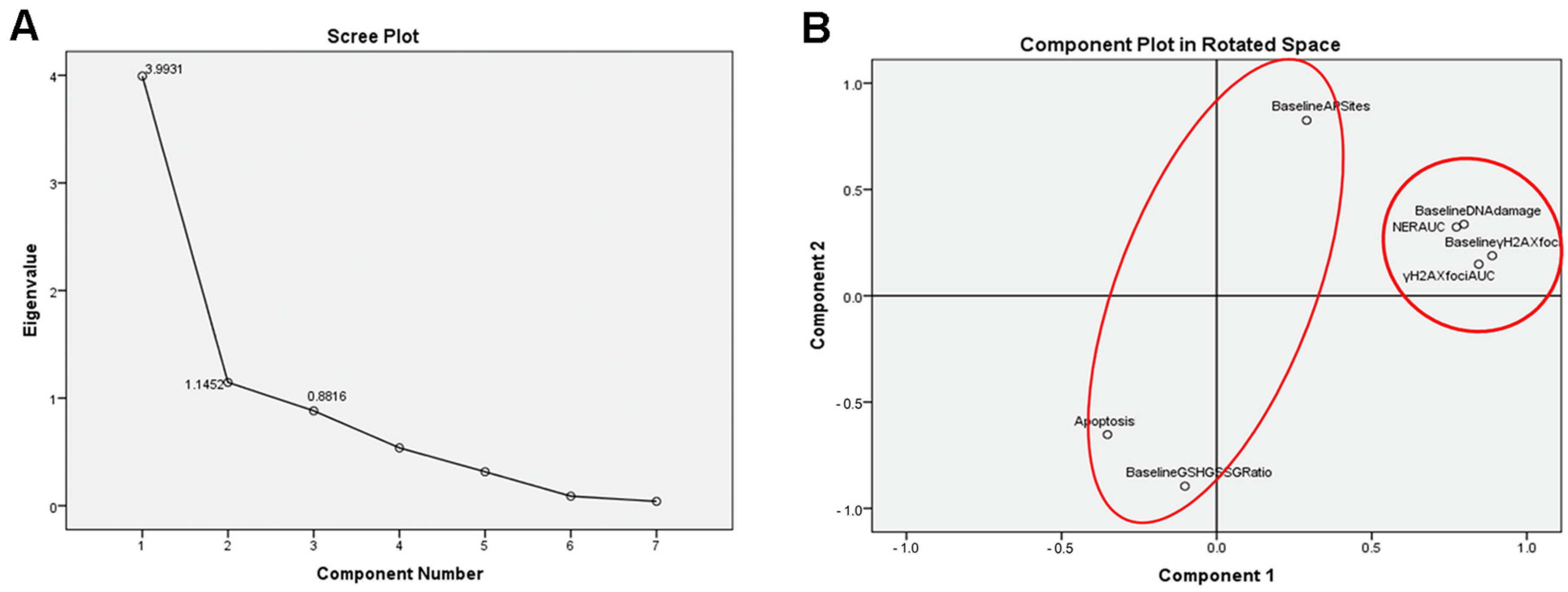
3.3. Statistical Analysis of DDR Parameters
4. Discussion
5. Conclusions
Supplementary Materials
Author Contributions
Funding
Institutional Review Board Statement
Informed Consent Statement
Data Availability Statement
Conflicts of Interest
References
- Malard, F.; Neri, P.; Bahlis, N.J.; Terpos, E.; Moukalled, N.; Hungria, V.T.M.; Manier, S.; Mohty, M. Multiple Myeloma. Nat. Rev. Dis. Prim. 2024, 10, 45. [Google Scholar] [CrossRef] [Scilit] [PubMed]
- Petrilla, C.; Galloway, J.; Kudalkar, R.; Ismael, A.; Cottini, F. Understanding DNA Damage Response and DNA Repair in Multiple Myeloma. Cancers 2023, 15, 4155. [Google Scholar] [CrossRef] [Scilit] [PubMed]
- Musto, P.; Engelhardt, M.; Caers, J.; Bolli, N.; Kaiser, M.; van de Donk, N.; Terpos, E.; Broijl, A.; de Larrea, C.F.; Gay, F.; et al. 2021 European Myeloma Network Review and Consensus Statement on Smoldering Multiple Myeloma: How to Distinguish (and Manage) Dr. Jekyll and Mr. Hyde. Haematol. 2021, 106, 2799–2812. [Google Scholar] [CrossRef] [Scilit] [PubMed]
- Tahiru, W.; Izarra Santamaria, A.; Hultdin, J.; Wu, W.Y.-Y.; Späth, F. Progression Patterns in Monoclonal Gammopathy of Undetermined Significance and Multiple Myeloma Outcome: A Cohort Study in 42 Patients. Exp. Hematol. Oncol. 2022, 11, 8. [Google Scholar] [CrossRef] [Scilit] [PubMed]
- Melotti, D.; Asher, S.; Troy-Barnes, E.; Nesr, G.; Wilson, W.; Camilleri, M.; Popat, R.; Xu, K.; Rabin, N.; Sive, J.; et al. Outcomes of Melphalan 140 Mg/M2 Followed by Autologous Stem Cell Transplantation in Multiple Myeloma Patients with Co-morbidities: Single-centre Experience. EJHaem 2024, 5, 1102–1106. [Google Scholar] [CrossRef] [Scilit] [PubMed]
- Esma, F.; Salvini, M.; Troia, R.; Boccadoro, M.; Larocca, A.; Pautasso, C. Melphalan Hydrochloride for the Treatment of Multiple Myeloma. Expert Opin. Pharmacother. 2017, 18, 1127–1136. [Google Scholar] [CrossRef] [Scilit] [PubMed]
- Gourzones, C.; Bellanger, C.; Lamure, S.; Gadacha, O.K.; De Paco, E.G.; Vincent, L.; Cartron, G.; Klein, B.; Moreaux, J. Antioxidant Defenses Confer Resistance to High Dose Melphalan in Multiple Myeloma Cells. Cancers 2019, 11, 439. [Google Scholar] [CrossRef] [Scilit] [PubMed]
- Poczta, A.; Rogalska, A.; Marczak, A. Treatment of Multiple Myeloma and the Role of Melphalan in the Era of Modern Therapies—Current Research and Clinical Approaches. J. Clin. Med. 2021, 10, 1841. [Google Scholar] [CrossRef] [Scilit] [PubMed]
- Dimopoulos, M.A.; Souliotis, V.L.; Anagnostopoulos, A.; Bamia, C.; Pouli, A.; Baltadakis, I.; Terpos, E.; Kyrtopoulos, S.A.; Sfikakis, P.P. Melphalan-Induced DNA Damage in Vitro as a Predictor for Clinical Outcome in Multiple Myeloma. Haematologica 2007, 92, 1505–1512. [Google Scholar] [CrossRef] [Scilit] [PubMed]
- Sousa, M.M.L.; Zub, K.A.; Aas, P.A.; Hanssen-Bauer, A.; Demirovic, A.; Sarno, A.; Tian, E.; Liabakk, N.B.; Slupphaug, G. An Inverse Switch in DNA Base Excision and Strand Break Repair Contributes to Melphalan Resistance in Multiple Myeloma Cells. PLoS ONE 2013, 8, e55493. [Google Scholar] [CrossRef] [Scilit] [PubMed]
- Allegra, A.; Petrarca, C.; Di Gioacchino, M.; Casciaro, M.; Musolino, C.; Gangemi, S. Modulation of Cellular Redox Parameters for Improving Therapeutic Responses in Multiple Myeloma. Antioxidants 2022, 11, 455. [Google Scholar] [CrossRef] [Scilit] [PubMed]
- Walters, D.K.; Wu, X.; Tschumper, R.C.; Arendt, B.K.; Huddleston, P.M.; Henderson, K.J.; Dispenzieri, A.; Jelinek, D.F. Evidence for Ongoing DNA Damage in Multiple Myeloma Cells as Revealed by Constitutive Phosphorylation of H2AX. Leukemia 2011, 25, 1344–1353. [Google Scholar] [CrossRef] [Scilit] [PubMed]
- Walker, B.A.; Mavrommatis, K.; Wardell, C.P.; Ashby, T.C.; Bauer, M.; Davies, F.E.; Rosenthal, A.; Wang, H.; Qu, P.; Hoering, A.; et al. Identification of Novel Mutational Drivers Reveals Oncogene Dependencies in Multiple Myeloma. Blood 2018, 132, 587–597. [Google Scholar] [CrossRef] [Scilit] [PubMed]
- Kumar, S.; Talluri, S.; Pal, J.; Yuan, X.; Lu, R.; Nanjappa, P.; Samur, M.K.; Munshi, N.C.; Shammas, M.A. Role of Apurinic/Apyrimidinic Nucleases in the Regulation of Homologous Recombination in Myeloma: Mechanisms and Translational Significance. Blood Cancer J. 2018, 8, 92. [Google Scholar] [CrossRef] [Scilit] [PubMed]
- Szalat, R.; Samur, M.K.; Fulciniti, M.; Lopez, M.; Nanjappa, P.; Cleynen, A.; Wen, K.; Kumar, S.; Perini, T.; Calkins, A.S.; et al. Nucleotide Excision Repair Is a Potential Therapeutic Target in Multiple Myeloma. Leukemia 2018, 32, 111–119. [Google Scholar] [CrossRef] [Scilit] [PubMed]
- van Kan, M.; Burns, K.E.; Helsby, N.A. A Systematic Review of Inter-Individual Differences in the DNA Repair Processes Involved in Melphalan Monoadduct Repair in Relation to Treatment Outcomes. Cancer Chemother. Pharmacol. 2021, 88, 755–769. [Google Scholar] [CrossRef] [Scilit] [PubMed]
- Samur, M.K.; Roncador, M.; Aktas Samur, A.; Fulciniti, M.; Bazarbachi, A.H.; Szalat, R.; Shammas, M.A.; Sperling, A.S.; Richardson, P.G.; Magrangeas, F.; et al. High-Dose Melphalan Treatment Significantly Increases Mutational Burden at Relapse in Multiple Myeloma. Blood 2023, 141, 1724–1736. [Google Scholar] [CrossRef] [Scilit] [PubMed]
- Rajkumar, S.V.; Dimopoulos, M.A.; Palumbo, A.; Blade, J.; Merlini, G.; Mateos, M.-V.; Kumar, S.; Hillengass, J.; Kastritis, E.; Richardson, P.; et al. International Myeloma Working Group Updated Criteria for the Diagnosis of Multiple Myeloma. Lancet Oncol. 2014, 15, e538–e548. [Google Scholar] [CrossRef] [Scilit] [PubMed]
- Kumar, S.; Paiva, B.; Anderson, K.C.; Durie, B.; Landgren, O.; Moreau, P.; Munshi, N.; Lonial, S.; Bladé, J.; Mateos, M.-V.; et al. International Myeloma Working Group Consensus Criteria for Response and Minimal Residual Disease Assessment in Multiple Myeloma. Lancet Oncol. 2016, 17, e328–e346. [Google Scholar] [CrossRef] [Scilit] [PubMed]
- Kravvariti, E.; Ntouros, P.A.; Vlachogiannis, N.I.; Pappa, M.; Souliotis, V.L.; Sfikakis, P.P. Geriatric Frailty Is Associated With Oxidative Stress, Accumulation, and Defective Repair of DNA Double-Strand Breaks Independently of Age and Comorbidities. J. Gerontol. A Biol. Sci. Med. Sci. 2023, 78, 603–610. [Google Scholar] [CrossRef] [Scilit] [PubMed]
- Papanikolaou, C.; Economopoulou, P.; Gavrielatou, N.; Mavroeidi, D.; Psyrri, A.; Souliotis, V.L. UVC-Induced Oxidative Stress and DNA Damage Repair Status in Head and Neck Squamous Cell Carcinoma Patients with Different Responses to Nivolumab Therapy. Biology 2025, 14, 195. [Google Scholar] [CrossRef] [Scilit] [PubMed]
- Mavroeidi, D.; Papanikolaou, C.; Deligianni, E.; Malamos, P.; Stamou, P.; Syrigos, K.N.; Souliotis, V.L. ATR Blockade Potentiates the Effects of Genotoxic Agents In Vitro and Promotes Antitumor Immunity in a Mouse Model of Non-Small Cell Lung Cancer. Cancers 2026, 18, 820. [Google Scholar] [CrossRef] [Scilit] [PubMed]
- Malamos, P.; Papanikolaou, C.; Deligianni, E.; Mavroeidi, D.; Koutoulogenis, K.; Gavriatopoulou, M.; Terpos, E.; Souliotis, V.L. DNA Damage Response and Redox Status in the Resistance of Multiple Myeloma Cells to Genotoxic Treatment. Int. J. Mol. Sci. 2025, 26, 10171. [Google Scholar] [CrossRef] [Scilit] [PubMed]
- Souliotis, V.L.; Dimopoulos, M.A.; Episkopou, H.G.; Kyrtopoulos, S.A.; Sfikakis, P.P. Preferential in Vivo DNA Repair of Melphalan-Induced Damage in Human Genes Is Greatly Affected by the Local Chromatin Structure. DNA Repair. 2006, 5, 972–985. [Google Scholar] [CrossRef] [Scilit] [PubMed]
- Livak, K.J.; Schmittgen, T.D. Analysis of Relative Gene Expression Data Using Real-Time Quantitative PCR and the 2−ΔΔCT Method. Methods 2001, 25, 402–408. [Google Scholar] [CrossRef] [Scilit] [PubMed]
- Wickham, H. Data Analysis. In ggplot2: Elegant Graphics for Data Analysis; Wickham, H., Ed.; Springer International Publishing: Cham, Switzerland, 2016; pp. 189–201. [Google Scholar] [CrossRef] [Scilit]
- Gu, Z.; Eils, R.; Schlesner, M. Complex Heatmaps Reveal Patterns and Correlations in Multidimensional Genomic Data. Bioinformatics 2016, 32, 2847–2849. [Google Scholar] [CrossRef] [Scilit] [PubMed]
- Kuleshov, M.V.; Jones, M.R.; Rouillard, A.D.; Fernandez, N.F.; Duan, Q.; Wang, Z.; Koplev, S.; Jenkins, S.L.; Jagodnik, K.M.; Lachmann, A.; et al. Enrichr: A Comprehensive Gene Set Enrichment Analysis Web Server 2016 Update. Nucleic Acids Res. 2016, 44, W90–W97. [Google Scholar] [CrossRef] [Scilit] [PubMed]
- Jassal, B.; Matthews, L.; Viteri, G.; Gong, C.; Lorente, P.; Fabregat, A.; Sidiropoulos, K.; Cook, J.; Gillespie, M.; Haw, R.; et al. The Reactome Pathway Knowledgebase. Nucleic Acids Res. 2020, 48, D498–D503. [Google Scholar] [CrossRef] [Scilit] [PubMed]
- Dizdaroglu, M. Oxidatively Induced DNA Damage: Mechanisms, Repair and Disease. Cancer Lett. 2012, 327, 26–47. [Google Scholar] [CrossRef] [Scilit] [PubMed]
- Schärer, O.D. Nucleotide Excision Repair in Eukaryotes. Cold Spring Harb. Perspect. Biol. 2013, 5, a012609. [Google Scholar] [CrossRef] [Scilit]
- Papanikolaou, C.; Economopoulou, P.; Spathis, A.; Kotsantis, I.; Gavrielatou, N.; Anastasiou, M.; Moutafi, M.; Kyriazoglou, A.; Foukas, G.-R.P.; Lelegiannis, I.M.; et al. Association of DNA Damage Response Signals and Oxidative Stress Status with Nivolumab Efficacy in Patients with Head and Neck Squamous Cell Carcinoma. Br. J. Cancer 2025, 133, 353–364. [Google Scholar] [CrossRef] [Scilit] [PubMed]
- Tubbs, A.; Nussenzweig, A. Endogenous DNA Damage as a Source of Genomic Instability in Cancer. Cell 2017, 168, 644–656. [Google Scholar] [CrossRef] [Scilit] [PubMed]
- Moon, J.; Kitty, I.; Renata, K.; Qin, S.; Zhao, F.; Kim, W. DNA Damage and Its Role in Cancer Therapeutics. Int. J. Mol. Sci. 2023, 24, 4741. [Google Scholar] [CrossRef] [Scilit] [PubMed]
- Darzynkiewicz, Z.; Traganos, F.; Wlodkowic, D. Impaired DNA Damage Response--an Achilles’ Heel Sensitizing Cancer to Chemotherapy and Radiotherapy. Eur. J. Pharmacol. 2009, 625, 143–150. [Google Scholar] [CrossRef] [Scilit] [PubMed]
- Hopkins, J.L.; Lan, L.; Zou, L. DNA Repair Defects in Cancer and Therapeutic Opportunities. Genes Dev. 2022, 36, 278–293. [Google Scholar] [CrossRef] [Scilit] [PubMed]
- Souliotis, V.L.; Vlachogiannis, N.I.; Pappa, M.; Argyriou, A.; Ntouros, P.A.; Sfikakis, P.P. DNA Damage Response and Oxidative Stress in Systemic Autoimmunity. Int. J. Mol. Sci. 2020, 21, 55. [Google Scholar] [CrossRef] [Scilit]
- Wang, J.; Lin, D.; Peng, H.; Huang, Y.; Huang, J.; Gu, J. Cancer-Derived Immunoglobulin G Promotes Tumor Cell Growth and Proliferation through Inducing Production of Reactive Oxygen Species. Cell Death Dis. 2013, 4, e945. [Google Scholar] [CrossRef] [Scilit] [PubMed]
- Gourzones-Dmitriev, C.; Kassambara, A.; Sahota, S.; Rème, T.; Moreaux, J.; Bourquard, P.; Hose, D.; Pasero, P.; Constantinou, A.; Klein, B. DNA Repair Pathways in Human Multiple Myeloma. Cell Cycle 2013, 12, 2760–2773. [Google Scholar] [CrossRef] [Scilit] [PubMed]
- Chen, Q.; Van der Sluis, P.C.; Boulware, D.; Hazlehurst, L.A.; Dalton, W.S. The FA/BRCA Pathway Is Involved in Melphalan-Induced DNA Interstrand Cross-Link Repair and Accounts for Melphalan Resistance in Multiple Myeloma Cells. Blood 2005, 106, 698–705. [Google Scholar] [CrossRef] [Scilit] [PubMed]
- Szalat, R.; Samur, M.K.; Cleynen, A.; Calkins, A.; Dreze, M.; Tai, Y.-T.; Minvielle, S.; Avet-Loiseau, H.; Anderson, K.C.; Fermand, J.-P.; et al. Dysregulated Nucleotide Excision Repair (NER) Is a New Target in Multiple Myeloma. Blood 2015, 126, 4187. [Google Scholar] [CrossRef] [Scilit]
- Wavelet-Vermuse, C.; Odnokoz, O.; Xue, Y.; Lu, X.; Cristofanilli, M.; Wan, Y. CDC20-Mediated hnRNPU Ubiquitination Regulates Chromatin Condensation and Anti-Cancer Drug Response. Cancers 2022, 14, 3732. [Google Scholar] [CrossRef] [Scilit] [PubMed]
- Mohan, C.; Das, C.; Tyler, J. Histone and Chromatin Dynamics Facilitating DNA Repair. DNA Repair 2021, 107, 103183. [Google Scholar] [CrossRef] [Scilit] [PubMed]
- Sharma, R.P.; Gavin, D.P.; Chase, K.A. Heterochromatin as an Incubator for Pathology and Treatment Non-Response: Implication for Neuropsychiatric Illness. Pharmacogenomics J. 2012, 12, 361–367. [Google Scholar] [CrossRef] [Scilit] [PubMed]
- Zheng, C.L.; Wang, N.J.; Chung, J.; Moslehi, H.; Sanborn, J.Z.; Hur, J.S.; Collisson, E.A.; Vemula, S.S.; Naujokas, A.; Chiotti, K.E.; et al. Transcription Restores DNA Repair to Heterochromatin, Determining Regional Mutation Rates in Cancer Genomes. Cell Rep. 2014, 9, 1228–1234. [Google Scholar] [CrossRef] [Scilit] [PubMed]
- Clapier, C.R.; Iwasa, J.; Cairns, B.R.; Peterson, C.L. Mechanisms of Action and Regulation of ATP-Dependent Chromatin-Remodelling Complexes. Nat. Rev. Mol. Cell Biol. 2017, 18, 407–422. [Google Scholar] [CrossRef] [Scilit] [PubMed]
- Srivastava, M.; Raghavan, S.C. DNA Double-Strand Break Repair Inhibitors as Cancer Therapeutics. Chem. Biol. 2015, 22, 17–29. [Google Scholar] [CrossRef] [Scilit] [PubMed]
- Gillyard, T.; Davis, J. DNA Double-Strand Breaks Repair in Cancer: A Path to Achieving Precision Medicine. Int. Rev. Cell Mol. Biol. 2021, 364, 111–137. [Google Scholar] [CrossRef] [Scilit] [PubMed]
- Ma, X.; Cheng, Z.; Guo, C. Insights into the DNA Damage Response and Tumor Drug Resistance. Cancer Biol. Med. 2025, 22, 197–204. [Google Scholar] [CrossRef] [Scilit] [PubMed]
- Trenner, A.; Sartori, A.A. Harnessing DNA Double-Strand Break Repair for Cancer Treatment. Front. Oncol. 2019, 9, 1388. [Google Scholar] [CrossRef] [Scilit] [PubMed]
- Shammas, M.A.; Shmookler Reis, R.J.; Koley, H.; Batchu, R.B.; Li, C.; Munshi, N.C. Dysfunctional Homologous Recombination Mediates Genomic Instability and Progression in Myeloma. Blood 2009, 113, 2290–2297. [Google Scholar] [CrossRef] [Scilit] [PubMed]
- Herrero, A.B.; Miguel, J.S.; Gutierrez, N.C. Deregulation of DNA Double-Strand Break Repair in Multiple Myeloma: Implications for Genome Stability. PLoS ONE 2015, 10, e0121581. [Google Scholar] [CrossRef] [Scilit] [PubMed]
- Burington, B.; Barlogie, B.; Zhan, F.; Crowley, J.; Shaughnessy, J.D. Tumor Cell Gene Expression Changes Following Short-Term in Vivo Exposure to Single Agent Chemotherapeutics Are Related to Survival in Multiple Myeloma. Clin. Cancer Res. 2008, 14, 4821–4829. [Google Scholar] [CrossRef] [Scilit] [PubMed]
- Alexandrakis, M.G.; Passam, F.H.; Pappa, C.A.; Dambaki, C.; Sfakiotaki, G.; Alegakis, A.K.; Kyriakou, D.S.; Stathopoulos, E. Expression of Proliferating Cell Nuclear Antigen (PCNA) in Multiple Myeloma: Its Relationship to Bone Marrow Microvessel Density and Other Factors of Disease Activity. Int. J. Immunopathol. Pharmacol. 2004, 17, 49–56. [Google Scholar] [CrossRef] [Scilit] [PubMed]
- Tessoulin, B.; Moreau-Aubry, A.; Descamps, G.; Gomez-Bougie, P.; Maïga, S.; Gaignard, A.; Chiron, D.; Ménoret, E.; Le Gouill, S.; Moreau, P.; et al. Whole-Exon Sequencing of Human Myeloma Cell Lines Shows Mutations Related to Myeloma Patients at Relapse with Major Hits in the DNA Regulation and Repair Pathways. J. Hematol. Oncol. 2018, 11, 137. [Google Scholar] [CrossRef] [Scilit] [PubMed]
- Viziteu, E.; Kassambara, A.; Pasero, P.; Klein, B.; Moreaux, J. RECQ Helicases Are Deregulated in Hematological Malignancies in Association with a Prognostic Value. Biomark. Res. 2016, 4, 3. [Google Scholar] [CrossRef] [Scilit] [PubMed]
- Maes, A.; Menu, E.; Veirman, K.D.; Maes, K.; Vand Erkerken, K.; De Bruyne, E. The Therapeutic Potential of Cell Cycle Targeting in Multiple Myeloma. Oncotarget 2017, 8, 90501–90520. [Google Scholar] [CrossRef] [Scilit] [PubMed]
- Kassambara, A.; Gourzones-Dmitriev, C.; Sahota, S.; Rème, T.; Moreaux, J.; Goldschmidt, H.; Constantinou, A.; Pasero, P.; Hose, D.; Klein, B. A DNA Repair Pathway Score Predicts Survival in Human Multiple Myeloma: The Potential for Therapeutic Strategy. Oncotarget 2014, 5, 2487–2498. [Google Scholar] [CrossRef] [Scilit] [PubMed]
- Alagpulinsa, D.; Szalat, R.E.; Poznansky, M.C.; Shmookler Reis, R.J. Genomic Instability in Multiple Myeloma. Trends Cancer 2020, 6, 858–873. [Google Scholar] [CrossRef] [Scilit] [PubMed]
- Ali, J.Y.H.; Fitieh, A.M.; Ismail, I.H. The Role of DNA Repair in Genomic Instability of Multiple Myeloma. Int. J. Mol. Sci. 2022, 23, 5688. [Google Scholar] [CrossRef] [Scilit] [PubMed]
- Dimopoulos, K.; Gimsing, P.; Grønbæk, K. The role of epigenetics in the biology of multiple myeloma. Blood Cancer J. 2014, 4, e207. [Google Scholar] [CrossRef] [Scilit] [PubMed]
- Alipoor, S.D.; Shrestha, M.; Liu, A.; Chang, H. Deciphering epigenetic crosstalk in multiple myeloma pathogenesis and treatment. Clin. Epigenet. 2026, 18, 117. [Google Scholar] [CrossRef] [Scilit] [PubMed]
- Carneiro, B.A.; El-Deiry, W.S. Targeting Apoptosis in Cancer Therapy. Nat. Rev. Clin. Oncol. 2020, 17, 395–417. [Google Scholar] [CrossRef] [Scilit] [PubMed]
- Mantri, S.; Doshi, G.M. Reactivating Apoptotic Pathways in Cancer: A Review of Novel Therapeutic Approaches. Eur. J. Pharmacol. 2025, 1003, 177965. [Google Scholar] [CrossRef] [Scilit] [PubMed]
- Hanahan, D. Hallmarks of Cancer: New Dimensions. Cancer Discov. 2022, 12, 31–46. [Google Scholar] [CrossRef] [Scilit] [PubMed]
- Röllig, C.; Knop, S.; Bornhäuser, M. Multiple myeloma. Lancet 2015, 385, 2197–2208. [Google Scholar] [CrossRef] [Scilit] [PubMed]
- Roccaro, A.M.; Sacco, A.; Maiso, P.; Azab, A.K.; Tai, Y.T.; Reagan, M.; Azab, F.; Flores, L.M.; Campigotto, F.; Weller, E.; et al. BM mesenchymal stromal cell-derived exosomes facilitate multiple myeloma progression. J. Clin. Investig. 2013, 123, 1542–1555. [Google Scholar] [CrossRef] [Scilit] [PubMed]
- Issa, J.P. Aging and epigenetic drift: A vicious cycle. J. Clin. Investig. 2014, 124, 24–29. [Google Scholar] [CrossRef] [Scilit] [PubMed]





| Characteristic | No. of Patients (% of Total) |
|---|---|
| Gender | |
| Female | 32 (42.1%) |
| Male | 44 (57.9%) |
| Age (years) | |
| Median | 64.3 |
| Range | 44 to 81 |
| Serum M-protein isotype | |
| Heavy chain | |
| IgA | 21 (27.6%) |
| IgG | 43 (56.5%) |
| IgM | 1 (1.3%) |
| None detected | 11 (14.4%) |
| Light chain | |
| Kappa light chain | 51 (67.1%) |
| Lambda light chain | 23 (30.3%) |
| None detected | 2 (2.6%) |
| ISS stage | |
| I | 31 (40.1%) |
| II | 26 (34.2%) |
| III | 19 (25.0%) |
| Cytogenetic risk a | |
| Standard | 59 (77.6%) |
| High | 17 (22.4%) |
| Response to HDM | |
| Responders | 35 (46.1%) |
| Non-responders | 41 (53.9%) |
| PBMCs | ||||||
|---|---|---|---|---|---|---|
| Baseline GSH/GSSG Ratio | Baseline AP-Sites | Baseline DNA Damage | NER (AUC) | Baseline γH2AX Foci | γH2AX Foci (AUC) | |
| Baseline AP-Sites | −0.647 ** | |||||
| Baseline DNA damage | −0.622 ** | 0.542 ** | ||||
| NER (AUC) | −0.684 ** | 0.663 ** | 0.901 ** | |||
| Baseline γH2AX foci | −0.563 ** | 0.495 ** | 0.660 ** | 0.776 ** | ||
| γH2AX foci (AUC) | −0.578 ** | 0.590 ** | 0.614 ** | 0.787 ** | 0.842 ** | |
| Apoptotic sensitivity | 0.578 ** | −0.551 ** | −0.553 ** | −0.667 ** | −0.600 ** | −0.652 ** |
| BMPCs | ||||||
| Baseline AP-Sites | −0.670 ** | |||||
| Baseline DNA damage | −0.372 ** | 0.470 ** | ||||
| NER (AUC) | −0.361 ** | 0.453 ** | 0.955 ** | |||
| Baseline γH2AX foci | −0.288 * | 0.437 ** | 0.591 ** | 0.564 ** | ||
| γH2AX foci (AUC) | −0.278 * | 0.401 ** | 0.513 ** | 0.459 ** | 0.906 ** | |
| Apoptotic sensitivity | 0.478 ** | −0.503 ** | −0.419 ** | −0.382 ** | −0.471 ** | −0.403 ** |
Disclaimer/Publisher’s Note: The statements, opinions and data contained in all publications are solely those of the individual author(s) and contributor(s) and not of MDPI and/or the editor(s). MDPI and/or the editor(s) disclaim responsibility for any injury to people or property resulting from any ideas, methods, instructions or products referred to in the content. |
© 2026 by the authors. Licensee MDPI, Basel, Switzerland. This article is an open access article distributed under the terms and conditions of the Creative Commons Attribution (CC BY) license.
Share and Cite
Malamos, P.; Deligianni, E.; Voutetakis, K.; Koutoulogenis, K.; Papadodima, O.; Terpos, E.; Souliotis, V.L. Breaking the Balance: Baseline Oxidative Stress and DNA Repair Capacity in Multiple Myeloma Therapy. Cancers 2026, 18, 1995. https://doi.org/10.3390/cancers18121995
Malamos P, Deligianni E, Voutetakis K, Koutoulogenis K, Papadodima O, Terpos E, Souliotis VL. Breaking the Balance: Baseline Oxidative Stress and DNA Repair Capacity in Multiple Myeloma Therapy. Cancers. 2026; 18(12):1995. https://doi.org/10.3390/cancers18121995
Chicago/Turabian StyleMalamos, Panagiotis, Elisavet Deligianni, Konstantinos Voutetakis, Konstantinos Koutoulogenis, Olga Papadodima, Evangelos Terpos, and Vassilis L. Souliotis. 2026. "Breaking the Balance: Baseline Oxidative Stress and DNA Repair Capacity in Multiple Myeloma Therapy" Cancers 18, no. 12: 1995. https://doi.org/10.3390/cancers18121995
APA StyleMalamos, P., Deligianni, E., Voutetakis, K., Koutoulogenis, K., Papadodima, O., Terpos, E., & Souliotis, V. L. (2026). Breaking the Balance: Baseline Oxidative Stress and DNA Repair Capacity in Multiple Myeloma Therapy. Cancers, 18(12), 1995. https://doi.org/10.3390/cancers18121995