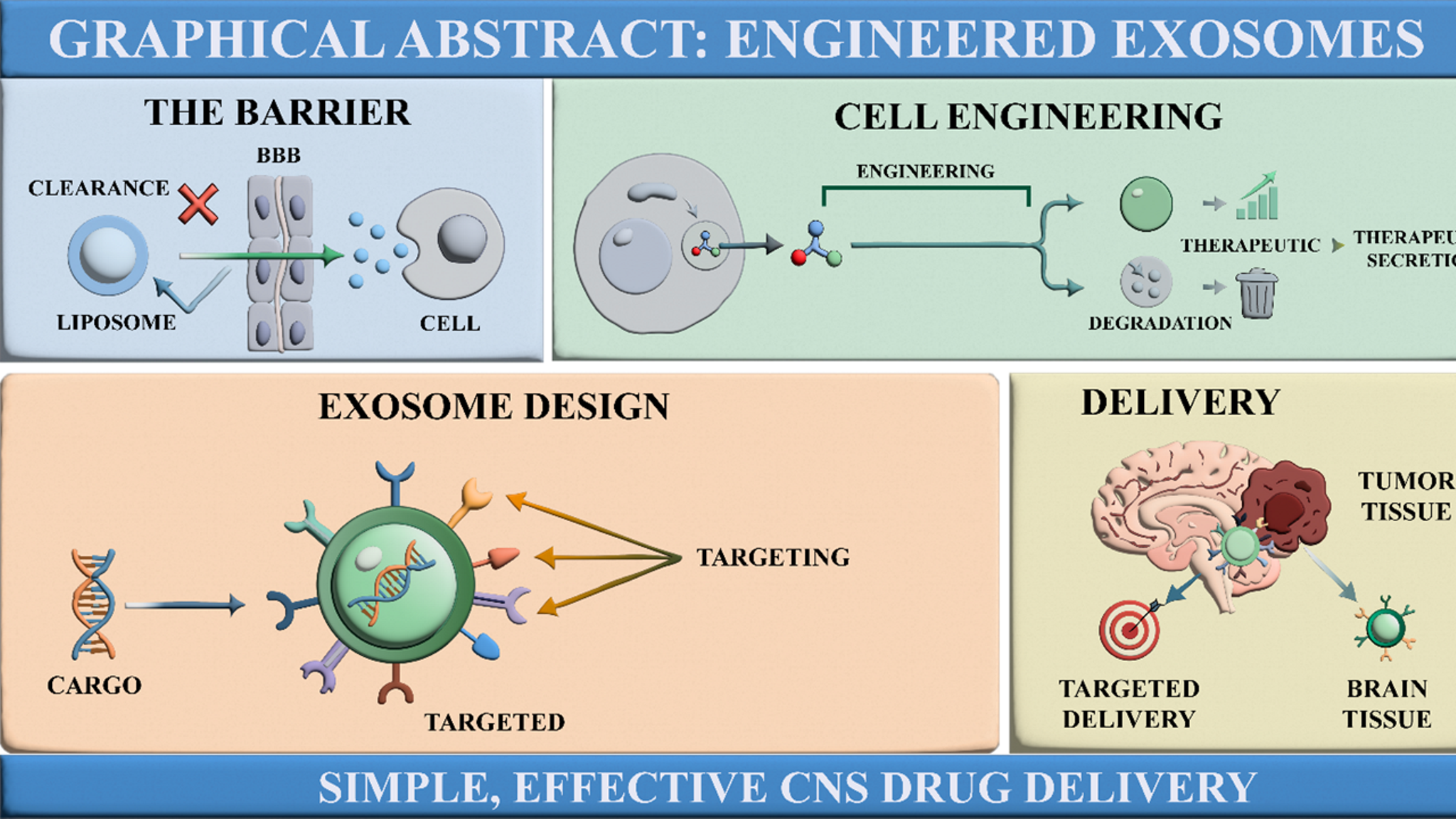
Engineered Exosomes in Precision Neuro-Oncology: Mechanisms, Therapeutics, and Translational Challenges


Simple Summary
Abstract
1. Introduction
2. Biological Barriers to Brain Drug Delivery
2.1. The Blood–Brain Barrier (BBB)
2.2. Endogenous Carriers
3. Exosomes as Natural Nanocarriers
3.1. Definition and Discovery
3.2. Biogenesis and Secretion
3.3. Exosome Release and Degradation
4. Engineering Exosomes for Therapeutics
4.1. Cargo Loading
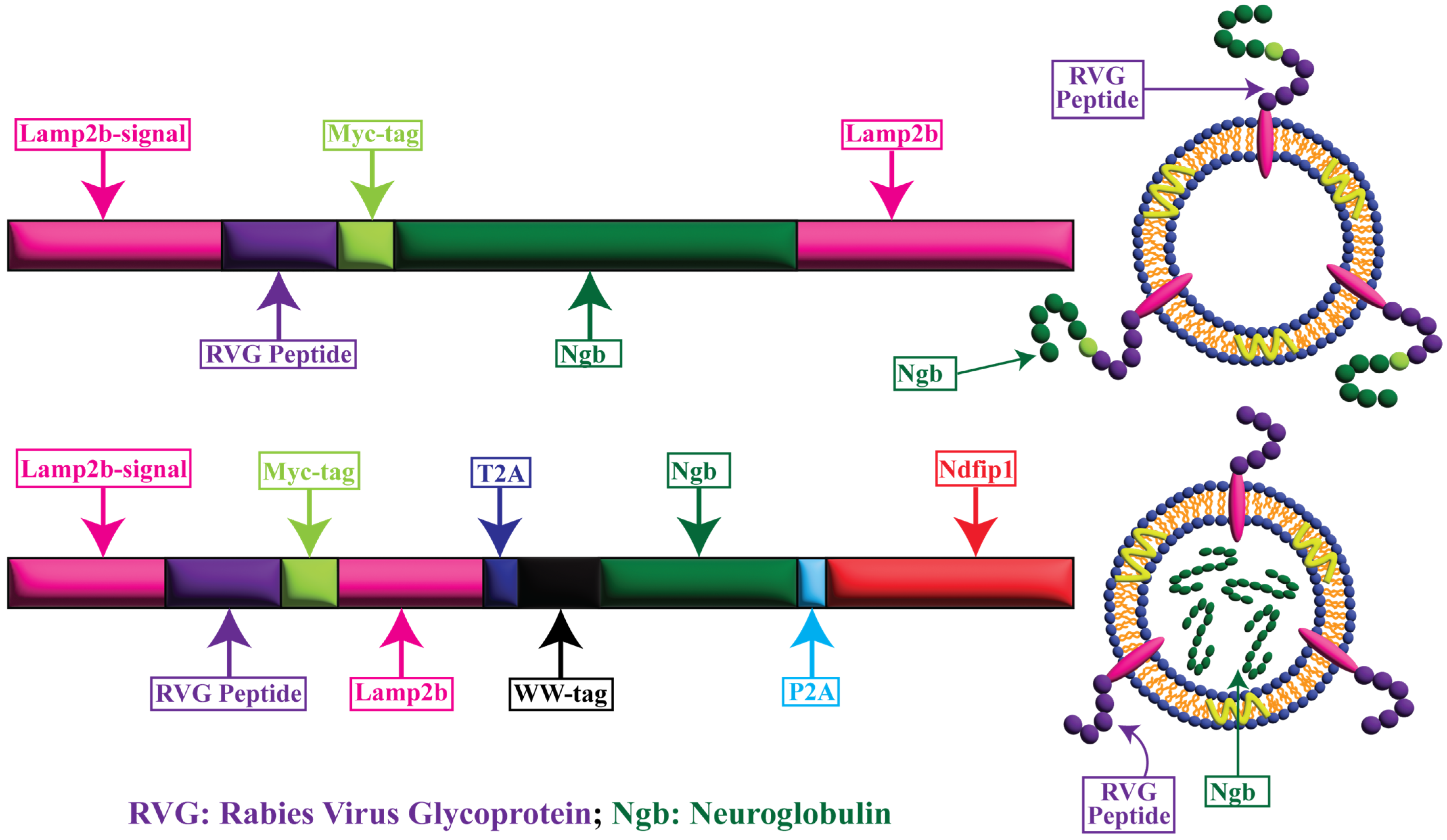
4.2. Surface Targeting
4.3. Therapeutic Payloads
4.4. Choosing the Right Cell Factory: Classification and Selection of Donor Cells
5. Exosomes in CNS Diseases
5.1. Exosomes in Brain Tumors
5.1.1. The Role of Exosomes on Glioblastoma
Delivery of Therapeutic Molecules
Engineered and Theragnostic Exosomes
Mechanistic and Translational Insights
5.1.2. The Role of Exosomes on Astrocytoma
5.1.3. Exosomes on Meningioma
5.1.4. Exosomes in Medulloblastoma
5.2. Stroke
5.3. Neurodegenerative Diseases
5.4. Translational Progress: Clinical Trial Status of Exosome Therapeutics in CNS Disorders and Neuro-Oncology

| Clinical Trial ID | Phase | Targeted Indication | Exosome Source | Therapeutic Cargo | Clinical Focus and Available Outcomes |
|---|---|---|---|---|---|
| NCT04202770 [172] | Not Applicable (Interventional, Open-Label) | Treatment-resistant depression, anxiety disorders, and neurodegenerative dementias | Allogeneic exosomes derived from healthy full-term cesarean-section amniotic fluid) | Native exosomal bioactive factors (growth factors, anti-inflammatory mediators); no specific engineered cargo reported | Designed to evaluate the safety, feasibility, and potential efficacy of intravenous exosome administration combined with transcranial focused ultrasound to enhance targeted delivery to the brain. Ultrasound targeting was directed to the subgenual cingulate (depression), amygdala (anxiety), or hippocampus (dementia). Primary outcomes included changes in Beck Depression Inventory (BDI-II), Beck Anxiety Inventory (BAI), Quick Dementia Rating Scale (QDRS), and Global Rating of Change (GRC) scores at 8 weeks. The trial was subsequently listed as suspended, and no peer-reviewed efficacy or final clinical outcome data have been reported on ClinicalTrials.gov. |
| NCT04573140 [173] | Phase I | Newly diagnosed adult glioblastoma (GBM) and pediatric high-grade glioma (pHGG) | Not applicable (RNA-loaded lipid particle vaccine; not exosome-based) | Autologous total tumor mRNA plus pp65 full-length lysosomal-associated membrane protein (LAMP) mRNA encapsulated in DOTAP lipid particles | First-in-human study designed to evaluate manufacturing feasibility, safety, and maximum tolerated dose (MTD) of personalized RNA-LP vaccines. The primary endpoints include successful vaccine manufacture, safety assessment, and dose escalation. As of the latest registry update, efficacy results and clinical outcomes have not yet been reported because the trial remains ongoing/recruiting. |
| NCT05559177 [174] | Early Phase I (open-label, dose-escalation) | Recurrent or metastatic bladder cancer refractory to conventional therapies | Personalized chimeric exosomal tumor vaccines generated from patient-derived bladder tumor cells fused with autologous antigen-presenting cells (dendritic cells or macrophages) | Native tumor antigens incorporated within chimeric exosomes designed to stimulate antitumor immune responses | First-in-human study evaluating the safety, tolerability, dose-limiting toxicity (DLT), maximum tolerated dose (MTD), and preliminary antitumor activity of chimeric exosomal tumor vaccines. Primary endpoints include clinical response rate, overall survival, and treatment-related adverse events. The study also aims to characterize immune activation and modulation of the tumor microenvironment. As of the latest ClinicalTrials.gov update, no efficacy or outcome results have been posted. |
| NCT03608631 [98] | Phase I (with planned Phase II expansion) | Metastatic pancreatic ductal adenocarcinoma (PDAC) harboring the KRASG12D mutation | Mesenchymal stromal cell (MSC)-derived exosomes (iExosomes) | KRASG12D-targeting siRNA loaded into MSC-derived exosomes | First-in-human clinical trial evaluating the safety, tolerability, dose-limiting toxicities (DLTs), maximum tolerated dose (MTD), pharmacodynamics, and preliminary antitumor activity of intravenously administered KRASG12D siRNA-loaded exosomes. Secondary endpoints include progression-free survival (PFS), overall survival (OS), target engagement, and assessment of KRAS pathway inhibition. The study remains active, and no peer-reviewed efficacy results or final clinical outcomes have yet been reported. |
| NCT05354141 [175] | Phase III | Moderate-to-severe Acute Respiratory Distress Syndrome (ARDS) | Bone marrow mesenchymal stem cell (MSC)-derived extracellular vesicles (ExoFlo®) | Native MSC-derived extracellular vesicle cargo containing endogenous regenerative, immunomodulatory, and anti-inflammatory bioactive molecules | Multicenter, randomized, double-blind, placebo-controlled trial evaluating the safety and efficacy of intravenous ExoFlo® in hospitalized patients with moderate-to-severe ARDS. The primary endpoint is 60-day all-cause mortality. Secondary endpoints include time to death, ventilator-free days, oxygen-free days, ICU-free days, and treatment-emergent serious adverse events. As of the latest ClinicalTrials.gov update (February 2026), the study remains active/recruiting, and no final efficacy results have been publicly reported. |
6. Advantages of Exosomes as a Targeted Drug Delivery System
7. Barriers to Clinical Translation and Emerging Strategies
7.1. Production, Scalability, and Standardization
7.1.1. Comparative Analysis of Industrial Purification Protocols and Scalability Standards
7.1.2. Ultracentrifugation (UC)
7.1.3. Tangential Flow Filtration (TFF)
7.1.4. Size-Exclusion Chromatography (SEC)
7.2. Cargo Loading Efficiency and Stability
7.3. Targeting Specificity and Biodistribution
7.4. Biological Variability, Safety, and Immunogenicity
7.5. Regulatory Challenges
7.6. Integrated Emerging Strategies and Future Directions
8. Conclusions
Author Contributions
Funding
Data Availability Statement
Conflicts of Interest
References
- Sipos, D.A.-O.; Raposa, B.A.-O.; Freihat, O.; Simon, M.; Mekis, N.; Cornacchione, P.A.-O.; Kovács, Á. Glioblastoma: Clinical Presentation, Multidisciplinary Management, and Long-Term Outcomes. Cancer 2025, 17, 146. [Google Scholar] [CrossRef] [PubMed]
- Yuzhalin, A. New experimental therapies for glioblastoma: A review of preclinical research. Acta Neuropathol. Commun. 2025, 13, 199. [Google Scholar] [CrossRef] [PubMed]
- Katta, M.; Mathew, B.; Chaturvedi, P.; Ludhiadch, A.; Munshi, A. Advanced molecular therapies for neurological diseases: Focus on stroke, alzheimer’s disease, and parkinson’s disease. Neurol. Sci. 2023, 44, 19–36. [Google Scholar] [CrossRef] [PubMed]
- Pathak, N.; Vimal, S.; Tandon, I.; Agrawal, L.; Hongyi, C.; Bhattacharyya, S. Neurodegenerative Disorders of Alzheimer, Parkinsonism, Amyotrophic Lateral Sclerosis and Multiple Sclerosis: An Early Diagnostic Approach for Precision Treatment. Metab. Brain Dis. 2022, 37, 67–104. [Google Scholar] [CrossRef]
- Kato, R.; Zhang, L.; Kinatukara, N.; Huang, R.; Asthana, A.; Weber, C.; Xia, M.; Xu, X.; Shah, P. Investigating blood-brain barrier penetration and neurotoxicity of natural products for central nervous system drug development. Sci. Rep. 2025, 15, 7431. [Google Scholar] [CrossRef]
- Rust, R.; Yin, H.; Buil, B.; Sagare, A.; Kisler, K. The blood-brain barrier: A help and a hindrance. Brain 2025, 148, 2262–2282. [Google Scholar] [CrossRef]
- Goutal, S.; Novell, A.; Leterrier, S.; Breuil, L.; Selingue, E.; Gerstenmayer, M.; Marie, S.; Saubaméa, B.; Caillé, F.; Langer, O.; et al. Imaging the impact of blood-brain barrier disruption induced by focused ultrasound on P-glycoprotein function. J. Control. Release 2023, 361, 483–492. [Google Scholar] [CrossRef]
- Zhou, X.; Azimi, M.; Handin, N.; Riselli, A.; Vora, B.; Chun, E.; Dang, Z.; Huang, E.; Yee, S.; Artursson, P.; et al. Proteomic profiling reveals age-related changes in transporter proteins in the human blood-brain barrier. Sci. Rep. 2025, 16, 1698. [Google Scholar] [CrossRef]
- Banks, D.; Lierz, S.; Cannon, R.; Korach, K. Nongenomic ERα-AMPK Signaling Regulates Sex-Dependent Bcrp Transport Activity at the Blood-Brain Barrier. Endocrinology 2024, 165, bqae081. [Google Scholar] [CrossRef]
- Wu, D.; Chen, Q.; Chen, X.; Han, F.; Chen, Z.; Wang, Y. The blood-brain barrier: Structure, regulation, and drug delivery. Signal Transduct. Target. Ther. 2023, 8, 217. [Google Scholar] [CrossRef]
- Vargas, R.; Martinez-Martinez, N.; Lizano-Barrantes, C.; Pacheco-Molina, J.A.; Garcia-Montoya, E.; Perez-Lozano, P.; Sune-Negre, J.M.; Sune, C.; Sune-Pou, M. Advancing through the blood-brain barrier: Mechanisms, challenges and drug delivery strategies. Admet Dmpk 2025, 13, 2988. [Google Scholar] [CrossRef]
- Li, J.; Bi, Z.; Chen, X.; Ming, T.; Qiu, B.; Li, F.; Feng, Z.; Ai, D.; Zhang, T.; Wang, J.; et al. A targeted vector for brain endothelial cell gene delivery and cerebrovascular malformation modelling. Nat. Biomed. Eng. 2025. [Google Scholar] [CrossRef]
- Kim, H.; Park, J.; Zhu, Y.; Wang, X.; Han, Y.; Zhang, D. Recent advances in extracellular vesicles for therapeutic cargo delivery. Exp. Mol. Med. 2024, 56, 836–849. [Google Scholar] [CrossRef] [PubMed]
- Zhao, M.; Li, Q.; Chai, Y.; Rong, R.; He, L.; Zhang, Y.; Cui, H.; Xu, H.; Zhang, X.; Wang, Z.; et al. An anti-CD19-exosome delivery system navigates the blood-brain barrier for targeting of central nervous system lymphoma. J. Nanobiotechnol. 2025, 23, 173. [Google Scholar] [CrossRef] [PubMed]
- Zhang, X.; Artz, N.; Steindler, D.; Hingtgen, S.; Satterlee, A. Exosomes: Traversing the blood-brain barrier and their therapeutic potential in brain cancer. Biochim. Biophys. Acta Rev. Cancer 2025, 1880, 189300. [Google Scholar] [CrossRef]
- Yang, Q.; Li, S.; Ou, H.; Zhang, Y.; Zhu, G.; Li, S.; Lei, L. Exosome-based delivery strategies for tumor therapy: An update on modification, loading, and clinical application. J. Nanobiotechnol. 2024, 22, 41. [Google Scholar] [CrossRef]
- Mehdizadeh, S.; Mamaghani, M.; Hassanikia, S.; Pilehvar, Y.; Ertas, Y. Exosome-powered neuropharmaceutics: Unlocking the blood-brain barrier for next-gen therapies. J. Nanobiotechnol. 2025, 23, 329. [Google Scholar] [CrossRef] [PubMed]
- Serrano, D.R.; Juste, F.; Anaya, B.J.; Ramirez, B.I.; Sánchez-Guirales, S.A.; Quispillo, J.M.; Hernandez, E.M.; Simon, J.A.; Trallero, J.M.; Serrano, C.; et al. Exosome-Based Drug Delivery: A Next-Generation Platform for Cancer, Infection, Neurological and Immunological Diseases, Gene Therapy and Regenerative Medicine. Pharmaceutics 2025, 17, 1336. [Google Scholar] [CrossRef]
- Sanadgol, N.; Abedi, M.; Hashemzaei, M.; Kamran, Z.; Khalseh, R.; Beyer, C.; Voelz, C. Exosomes as nanocarriers for brain-targeted delivery of therapeutic nucleic acids: Advances and challenges. J. Nanobiotechnol. 2025, 23, 453. [Google Scholar] [CrossRef]
- Jin, Y.; Zhang, Y.; Song, M.; Zhou, J.; Zhang, H.; Ding, Y. Engineered exosomes as precision tools for brain-targeted drug delivery and treatment of central nervous system diseases. Cell Biomater. 2026, 2, 100344. [Google Scholar] [CrossRef]
- Johnston, E.L.; Weber, J.F.; Sango, X.; Nisbet, I.T.; Haylock, D.N. Customised extracellular vesicle therapeutics for neurological conditions. Health Nanotechnol. 2025, 1, 7. [Google Scholar] [CrossRef]
- Lee, E.; Choi, D.; Lee, D.; Oh, J. Engineering Exosomes for CNS Disorders: Advances, Challenges, and Therapeutic Potential. Int. J. Mol. Sci. 2025, 26, 3137. [Google Scholar] [CrossRef]
- Shi, X.; He, W.; Gupta, A.; To, K.; Clark, L.; Mirle, N.; Wynn, T.; Wang, D.; Ganesh, A.; Zeng, H.; et al. Extracellular vesicles as drug and gene delivery vehicles in central nervous system diseases. Biomater. Sci. 2025, 13, 1161–1178. [Google Scholar] [CrossRef]
- Pfau, S.; Langen, U.; Fisher, T.; Prakash, I.; Nagpurwala, F.; Lozoya, R.; Lee, W.; Wu, Z.; Gu, C. Characteristics of blood-brain barrier heterogeneity between brain regions revealed by profiling vascular and perivascular cells. Nat. Neurosci. 2024, 27, 1892–1903. [Google Scholar] [CrossRef] [PubMed]
- Liu, S.; Jin, X.; Ge, Y.; Dong, J.; Liu, X.; Pei, X.; Wang, P.; Wang, B.; Chang, Y.; Yu, X. Advances in brain-targeted delivery strategies and natural product-mediated enhancement of blood-brain barrier permeability. J. Nanobiotechnol. 2025, 23, 382. [Google Scholar] [CrossRef] [PubMed]
- Tournier, N.; Langer, O. Imaging the Activity of Efflux Transporters at the Blood-Brain Barrier in Neurologic Diseases: Radiotracer Selection Criteria. J. Nucl. Med. 2025, 66, 676–680. [Google Scholar] [CrossRef] [PubMed]
- Liang, Y.; Yu, Y.; Liu, J.; Li, X.; Chen, X.; Zhou, H.; Guo, Z. Blood-brain barrier disruption and hemorrhagic transformation in acute stroke before endovascular reperfusion therapy. Front. Neurol. 2024, 15, 1349369. [Google Scholar] [CrossRef]
- Au, J.; Yeung, B.; Wientjes, M.; Lu, Z.; Wientjes, M. Delivery of cancer therapeutics to extracellular and intracellular targets: Determinants, barriers, challenges and opportunities. Adv. Drug Deliv. Rev. 2016, 97, 280–301. [Google Scholar] [CrossRef]
- Smyth, T.; Kullberg, M.; Malik, N.; Smith-Jones, P.; Graner, M.; Anchordoquy, T. Biodistribution and delivery efficiency of unmodified tumor-derived exosomes. J. Control. Release 2015, 199, 145–155. [Google Scholar] [CrossRef]
- Imai, T.; Takahashi, Y.; Nishikawa, M.; Kato, K.; Morishita, M.; Yamashita, T.; Matsumoto, A.; Charoenviriyakul, C.; Takakura, Y. Macrophage-dependent clearance of systemically administered B16BL6-derived exosomes from the blood circulation in mice. J. Extracell. Vesicles 2015, 4, 26238. [Google Scholar] [CrossRef]
- Zhang, H.; Lu, C.; Wu, L.; Li, J.; Huang, M.; Tao, X.; Wu, Y.; Jia, B. Exosomes derived from endothelial progenitor cells ameliorate LPS-induced brain microvascular endothelial cells injury by delivering miR-126a-5p. Sci. Rep. 2024, 14, 18469. [Google Scholar] [CrossRef] [PubMed]
- Wang, Y.; Huo, Y.; Zhao, C.; Liu, H.; Shao, Y.; Zhu, C.; An, L.; Chen, X.; Chen, Z. Engineered exosomes with enhanced stability and delivery efficiency for glioblastoma therapy. J. Control. Release 2024, 368, 170–183. [Google Scholar] [CrossRef] [PubMed]
- Zhou, W.; Wang, X.; Dong, Y.; Gao, P.; Zhao, X.; Wang, M.; Wu, X.; Shen, J.; Zhang, X.; Lu, Z.; et al. Stem cell-derived extracellular vesicles in the therapeutic intervention of Alzheimer’s Disease, Parkinson’s Disease, and stroke. Theranostics 2024, 14, 3358–3384. [Google Scholar] [CrossRef] [PubMed]
- Di Bella, M.A. Overview and Update on Extracellular Vesicles: Considerations on Exosomes and Their Application in Modern Medicine. Biology 2022, 11, 804. [Google Scholar] [CrossRef]
- Willms, E.; Johansson, H.; Mäger, I.; Lee, Y.; Blomberg, K.; Sadik, M.; Alaarg, A.; Smith, C.; Lehtiö, J.; Andaloussi, S.; et al. Cells release subpopulations of exosomes with distinct molecular and biological properties. Sci. Rep. 2016, 6, 22519. [Google Scholar] [CrossRef]
- Valadi, H.; Ekström, K.; Bossios, A.; Sjöstrand, M.; Lee, J.; Lötvall, J. Exosome-mediated transfer of mRNAs and microRNAs is a novel mechanism of genetic exchange between cells. Nat. Cell Biol. 2007, 9, 654–659. [Google Scholar] [CrossRef]
- von Lersner, A.; Fernandes, F.; Ozawa, P.; Jackson, M.; Masureel, M.; Ho, H.; Lima, S.; Vagner, T.; Sung, B.; Wehbe, M.; et al. Multiparametric Single-Vesicle Flow Cytometry Resolves Extracellular Vesicle Heterogeneity and Reveals Selective Regulation of Biogenesis and Cargo Distribution. ACS Nano 2024, 18, 10464–10484. [Google Scholar] [CrossRef]
- Batagov, A.; Kurochkin, I. Exosomes secreted by human cells transport largely mRNA fragments that are enriched in the 3′-untranslated regions. Biol. Direct 2013, 8, 12. [Google Scholar] [CrossRef]
- Chargaff, E.; West, R. The Biological Significance of the Thromboplastic Protein of Blood. J. Biol. Chem. 1946, 166, 189–197. [Google Scholar] [CrossRef]
- Harding, C.; Heuser, J.; Stahl, P. Receptor-Mediated Endocytosis of Transferrin and Recycling of the Transferrin Receptor in Rat Reticulocytes. J. Cell Biol. 1983, 97, 329–339. [Google Scholar] [CrossRef]
- Johnstone, R.; Adam, M.; Hammond, J.; Orr, L.; Turbide, C. Vesicle Formation During Reticulocyte Maturation—Association of Plasma-Membrane Activities with Released Vesicles (Exosomes). J. Biol. Chem. 1987, 262, 9412–9420. [Google Scholar] [CrossRef]
- Johnstone, R.; Bianchini, A.; Teng, K. Reticulocyte Maturation and Exosome Release—Transferrin Receptor Containing Exosomes Shows Multiple Plasma-Membrane Functions. Blood 1989, 74, 1844–1851. [Google Scholar] [CrossRef] [PubMed]
- Raposo, G.; Nijman, H.; Stoorvogel, W.; Leijendekker, R.; Harding, C.; Melief, C.; Geuze, H. B lymphocytes secrete antigen-presenting vesicles. J. Exp. Med. 1996, 183, 1161–1172. [Google Scholar] [CrossRef]
- Théry, C.; Witwer, K.; Aikawa, E.; Alcaraz, M.; Anderson, J.; Andriantsitohaina, R.; Antoniou, A.; Arab, T.; Archer, F.; Atkin-Smith, G.; et al. Minimal information for studies of extracellular vesicles 2018 (MISEV2018): A position statement of the International Society for Extracellular Vesicles and update of the MISEV2014 guidelines. J. Extracell. Vesicles 2018, 7, 1535750. [Google Scholar] [CrossRef] [PubMed]
- Mittelbrunn, M.; Gutiérrez-Vázquez, C.; Villarroya-Beltri, C.; González, S.; Sánchez-Cabo, F.; González, M.; Bernad, A.; Sánchez-Madrid, F. Unidirectional transfer of microRNA-loaded exosomes from T cells to antigen-presenting cells. Nat. Commun. 2011, 2, 282. [Google Scholar] [CrossRef]
- Alexander, M.; Hu, R.; Runtsch, M.; Kagele, D.; Mosbruger, T.; Tolmachova, T.; Seabra, M.; Round, J.; Ward, D.; O’Connell, R. Exosome-delivered microRNAs modulate the inflammatory response to endotoxin. Nat. Commun. 2015, 6, 7321. [Google Scholar] [CrossRef] [PubMed]
- Si, K.; Dai, Z.; Li, Z.; Ye, Z.; Ding, B.; Feng, S.; Sun, B.; Shen, Y.; Xiao, Z. Engineered exosome-mediated messenger RNA and single-chain variable fragment delivery for human chimeric antigen receptor T-cell engineering. Cytotherapy 2023, 25, 615–624. [Google Scholar] [CrossRef]
- Tsai, S.; Atai, N.; Cacciottolo, M.; Nice, J.; Salehi, A.; Guo, C.; Sedgwick, A.; Kanagavelu, S.; Gould, S. Exosome-mediated mRNA delivery in vivo is safe and can be used to induce SARS-CoV-2 immunity. J. Biol. Chem. 2021, 297, 101266. [Google Scholar] [CrossRef]
- Han, J.; Sul, J.; Lee, J.; Kim, E.; Kim, H.; Chae, M.; Lim, J.; Kim, J.; Kim, C.; Kim, J.; et al. Engineered exosomes with a photoinducible protein delivery system enable CRISPR-Cas-based epigenome editing in Alzheimer’s disease. Sci. Transl. Med. 2024, 16, eadi4830. [Google Scholar] [CrossRef]
- Rashid, M.; Borin, T.; Ara, R.; Angara, K.; Cai, J.; Achyut, B.; Liu, Y.; Arbab, A. Differential in vivo biodistribution of 131I-labeled exosomes from diverse cellular origins and its implication for theranostic application. Nanomed.-Nanotechnol. Biol. Med. 2019, 21, 102072. [Google Scholar] [CrossRef]
- Arya, S.; Collie, S.; Parent, C. The ins-and-outs of exosome biogenesis, secretion, and internalization. Trends Cell Biol. 2024, 34, 90–108. [Google Scholar] [CrossRef]
- Wei, D.; Zhan, W.; Gao, Y.; Huang, L.; Gong, R.; Wang, W.; Zhang, R.; Wu, Y.; Gao, S.; Kang, T. RAB31 marks and controls an ESCRT-independent exosome pathway. Cell Res. 2021, 31, 157–177. [Google Scholar] [CrossRef]
- Lee, Y.; Shin, K.; Jang, H.; Ryu, J.; Lee, C.; Yoon, J.; Seo, J.; Park, S.; Lee, S.; Je, A.; et al. GPR143 controls ESCRT-dependent exosome biogenesis and promotes cancer metastasis. Dev. Cell 2023, 58, 320–334.e8. [Google Scholar] [CrossRef]
- Qu, M.; Liu, X.; Wang, X.; Li, Z.; Zhou, L.; Li, H. Palmitoylation of vacuole membrane protein 1 promotes small extracellular vesicle secretion via interaction with ALIX and influences intercellular communication. Cell Commun. Signal. 2024, 22, 150. [Google Scholar] [CrossRef]
- Colombo, M.; Moita, C.; van Niel, G.; Kowal, J.; Vigneron, J.; Benaroch, P.; Manel, N.; Moita, L.; Théry, C.; Raposo, G. Analysis of ESCRT functions in exosome biogenesis, composition and secretion highlights the heterogeneity of extracellular vesicles. J. Cell Sci. 2013, 126, 5553–5565. [Google Scholar] [CrossRef]
- Ostrowski, M.; Carmo, N.; Krumeich, S.; Fanget, I.; Raposo, G.; Savina, A.; Moita, C.; Schauer, K.; Hume, A.; Freitas, R.; et al. Rab27a and Rab27b control different steps of the exosome secretion pathway. Nat. Cell Biol. 2010, 12, 19–30. [Google Scholar] [CrossRef]
- Messenger, S.; Woo, S.; Sun, Z.; Martin, T. A Ca2+-stimulated exosome release pathway in cancer cells is regulated by Munc13-4. J. Cell Biol. 2018, 217, 2877–2890. [Google Scholar] [CrossRef]
- Liu, C.; Liu, D.; Wang, S.; Gan, L.; Yang, X.; Ma, C. Identification of the SNARE complex that mediates the fusion of multivesicular bodies with the plasma membrane in exosome secretion. J. Extracell. Vesicles 2023, 12, e12356. [Google Scholar] [CrossRef]
- Liu, D.; Tao, K.; Wu, B.; Yu, Z.; Szczepaniak, M.; Rames, M.; Yang, C.; Svitkina, T.; Zhu, Y.; Xu, F.; et al. A phosphoinositide switch mediates exocyst recruitment to multivesicular endosomes for exosome secretion. Nat. Commun. 2023, 14, 6883. [Google Scholar] [CrossRef]
- Liang, W.; Sagar, S.; Ravindran, R.; Najor, R.; Quiles, J.; Chi, L.; Diao, R.; Woodall, B.; Leon, L.; Zumaya, E.; et al. Mitochondria are secreted in extracellular vesicles when lysosomal function is impaired. Nat. Commun. 2023, 14, 5031. [Google Scholar] [CrossRef]
- Shelke, G.; Williamson, C.; Jarnik, M.; Bonifacino, J. Inhibition of endolysosome fusion increases exosome secretion. J. Cell Biol. 2023, 222, e202209084. [Google Scholar] [CrossRef]
- Zhu, Z.; Zhai, Y.; Hao, Y.; Wang, Q.; Han, F.; Zheng, W.; Hong, J.; Cui, L.; Jin, W.; Ma, S.; et al. Specific anti-glioma targeted-delivery strategy of engineered small extracellular vesicles dual-functionalised by Angiopep-2 and TAT peptides. J. Extracell. Vesicles 2022, 11, e12255. [Google Scholar] [CrossRef]
- Zhou, Y.; Wang, L.; Chen, L.; Wu, W.; Yang, Z.; Wang, Y.; Wang, A.; Jiang, S.; Qin, X.; Ye, Z.; et al. Glioblastoma cell-derived exosomes functionalized with peptides as efficient nanocarriers for synergistic chemotherapy of glioblastoma with improved biosafety. Nano Res. 2023, 16, 13283–13293. [Google Scholar] [CrossRef]
- Alvarez-Erviti, L.; Seow, Y.; Yin, H.; Betts, C.; Lakhal, S.; Wood, M. Delivery of siRNA to the mouse brain by systemic injection of targeted exosomes. Nat. Biotechnol. 2011, 29, 341–345. [Google Scholar] [CrossRef]
- Kooijmans, S.; Stremersch, S.; Braeckmans, K.; de Smedt, S.; Hendrix, A.; Wood, M.; Schiffelers, R.; Raemdonck, K.; Vader, P. Electroporation-induced siRNA precipitation obscures the efficiency of siRNA loading into extracellular vesicles. J. Control. Release 2013, 172, 229–238. [Google Scholar] [CrossRef]
- Yim, N.; Ryu, S.; Choi, K.; Lee, K.; Lee, S.; Choi, H.; Kim, J.; Shaker, M.; Sun, W.; Park, J.; et al. Exosome engineering for efficient intracellular delivery of soluble proteins using optically reversible protein-protein interaction module. Nat. Commun. 2016, 7, 12277. [Google Scholar] [CrossRef]
- Kennedy, M.; Hughes, R.; Peteya, L.; Schwartz, J.; Ehlers, M.; Tucker, C. Rapid blue-light-mediated induction of protein interactions in living cells. Nat. Methods 2010, 7, 973–975. [Google Scholar] [CrossRef]
- Sterzenbach, U.; Putz, U.; Low, L.H.; Silke, J.; Tan, S.S.; Howitt, J. Engineered Exosomes as Vehicles for Biologically Active Proteins. Mol. Ther. 2017, 25, 1269–1278. [Google Scholar] [CrossRef]
- Aslan, C.; Kiaie, S.; Zolbanin, N.; Lotfinejad, P.; Ramezani, R.; Kashanchi, F.; Jafari, R. Exosomes for mRNA delivery: A novel biotherapeutic strategy with hurdles and hope. BMC Biotechnol. 2021, 21, 20. [Google Scholar] [CrossRef]
- Choi, H.; Kim, Y.; Mirzaaghasi, A.; Heo, J.; Kim, Y.; Shin, J.; Kim, S.; Kim, N.; Cho, E.; Yook, J.; et al. Exosome-based delivery of super-repressor IκBα relieves sepsis-associated organ damage and mortality. Sci. Adv. 2020, 6, eaaz6980. [Google Scholar] [CrossRef]
- Kojima, R.; Bojar, D.; Rizzi, G.; Hamri, G.; El-Baba, M.; Saxena, P.; Ausländer, S.; Tan, K.; Fussenegger, M. Designer exosomes produced by implanted cells intracerebrally deliver therapeutic cargo for Parkinson’s disease treatment. Nat. Commun. 2018, 9, 1305. [Google Scholar] [CrossRef]
- Kim, M.; Haney, M.; Zhao, Y.; Mahajan, V.; Deygen, I.; Klyachko, N.; Inskoe, E.; Piroyan, A.; Sokolsky, M.; Okolie, O.; et al. Development of exosome-encapsulated paclitaxel to overcome MDR in cancer cells. Nanomed.-Nanotechnol. Biol. Med. 2016, 12, 655–664. [Google Scholar] [CrossRef]
- Haney, M.; Klyachko, N.; Zhao, Y.; Gupta, R.; Plotnikova, E.; He, Z.; Patel, T.; Piroyan, A.; Sokolsky, M.; Kabanov, A.; et al. Exosomes as drug delivery vehicles for Parkinson’s disease therapy. J. Control. Release 2015, 207, 18–30. [Google Scholar] [CrossRef]
- Nordmeier, S.; Ke, W.; Afonin, K.; Portnoy, V. Exosome mediated delivery of functional nucleic acid nanoparticles (NANPs). Nanomed.-Nanotechnol. Biol. Med. 2020, 30, 102285. [Google Scholar] [CrossRef]
- Smyth, T.; Petrova, K.; Payton, N.; Persaud, I.; Redzic, J.; Gruner, M.; Smith-Jones, P.; Anchordoquy, T. Surface Functionalization of Exosomes Using Click Chemistry. Bioconjug. Chem. 2014, 25, 1777–1784. [Google Scholar] [CrossRef]
- Mentkowski, K.; Lang, J. Exosomes Engineered to Express a Cardiomyocyte Binding Peptide Demonstrate Improved Cardiac Retention in Vivo. Sci. Rep. 2019, 9, 10041. [Google Scholar] [CrossRef]
- Liu, Y.; Li, D.; Liu, Z.; Zhou, Y.; Chu, D.; Li, X.; Jiang, X.; Hou, D.; Chen, X.; Chen, Y.; et al. Targeted exosome-mediated delivery of opioid receptor Mu siRNA for the treatment of morphine relapse. Sci. Rep. 2015, 5, 17543. [Google Scholar] [CrossRef] [PubMed]
- Haroon, K.; Zheng, H.; Wu, S.; Liu, Z.; Tang, Y.; Yang, G.; Liu, Y.; Zhang, Z. Engineered exosomes mediated targeted delivery of neuroprotective peptide NR2B9c for the treatment of traumatic brain injury. Int. J. Pharm. 2024, 649, 123656. [Google Scholar] [CrossRef] [PubMed]
- Rashid, M.; Borin, T.; Ara, R.; Alptekin, A.; Liu, Y.; Arbab, A. Generation of Novel Diagnostic and Therapeutic Exosomes to Detect and Deplete Protumorigenic M2 Macrophages. Adv. Ther. 2020, 3, 1900209. [Google Scholar] [CrossRef] [PubMed]
- Selina, F.; Kelleher, J.; Bushra, A.; Kamat, P.; Bosomtwi, A.; Deak, F.; Dhandapani, K.; Frank, J.; Khan, M.; Arbab, A. Engineered Exosomes Carrying Rabies Viral Glycoprotein (RVG) and Neuroglobin (Ngb) Improved Stroke Outcome in Mouse Model of tMCAo. Stroke 2026, 57. [Google Scholar] [CrossRef]
- Alptekin, A.; Parvin, M.; Chowdhury, H.; Rashid, M.; Arbab, A. Engineered exosomes for studies in tumor immunology. Immunol. Rev. 2022, 312, 76–102. [Google Scholar] [CrossRef]
- Zou, J.; Shi, M.; Liu, X.; Jin, C.; Xing, X.; Qiu, L.; Tan, W. Aptamer-Functionalized Exosomes: Elucidating the Cellular Uptake Mechanism and the Potential for Cancer-Targeted Chemotherapy. Anal. Chem. 2019, 91, 2425–2430. [Google Scholar] [CrossRef]
- Si, Y.; Kim, S.; Zhang, E.; Tang, Y.; Jaskula-Sztul, R.; Markert, J.; Chen, H.; Zhou, L.; Liu, X. Targeted Exosomes for Drug Delivery: Biomanufacturing, Surface Tagging, and Validation. Biotechnol. J. 2020, 15, e1900163. [Google Scholar] [CrossRef]
- Ohno, S.-i.; Takanashi, M.; Sudo, K.; Ueda, S.; Ishikawa, A.; Matsuyama, N.; Fujita, K.; Mizutani, T.; Ohgi, T.; Ochiya, T.; et al. Systemically Injected Exosomes Targeted to EGFR Deliver Antitumor MicroRNA to Breast Cancer Cells. Mol. Ther. 2013, 21, 185–191. [Google Scholar] [CrossRef] [PubMed]
- Zeng, H.; Guo, S.; Ren, X.; Wu, Z.; Liu, S.; Yao, X. Current Strategies for Exosome Cargo Loading and Targeting Delivery. Cells 2023, 12, 1416. [Google Scholar] [CrossRef]
- Dou, J.; Wang, J.; Zhang, G.; Fu, X.; Zhang, Y.; Sun, F. Advances in hybrid exosome-liposome nanoparticles for enhanced cancer therapy. Colloids Surf. B Biointerfaces 2026, 259, 115317. [Google Scholar] [CrossRef] [PubMed]
- Wang, R.; Wang, X.; Zhao, H.; Li, N.; Li, J.; Zhang, H.; Di, L. Targeted delivery of hybrid nanovesicles for enhanced brain penetration to achieve synergistic therapy of glioma. J. Control. Release 2024, 365, 331–347. [Google Scholar] [CrossRef] [PubMed]
- Yang, Z.; Shi, J.; Xie, J.; Wang, Y.; Sun, J.; Liu, T.; Zhao, Y.; Zhao, X.; Wang, X.; Ma, Y.; et al. Large-scale generation of functional mRNA-encapsulating exosomes via cellular nanoporation. Nat. Biomed. Eng. 2020, 4, 69–83. [Google Scholar] [CrossRef]
- Lang, F.; Hossain, A.; Gumin, J.; Momin, E.; Shimizu, Y.; Ledbetter, D.; Shahar, T.; Yamashita, S.; Kerrigan, B.; Fueyo, J.; et al. Mesenchymal stem cells as natural biofactories for exosomes carrying miR-124a in the treatment of gliomas. Neuro-Oncol. 2018, 20, 380–390. [Google Scholar] [CrossRef]
- Katakowski, M.; Buller, B.; Zheng, X.; Lu, Y.; Rogers, T.; Osobamiro, O.; Shu, W.; Jiang, F.; Chopp, M. Exosomes from marrow stromal cells expressing miR-146b inhibit glioma growth. Cancer Lett. 2013, 335, 201–204. [Google Scholar] [CrossRef]
- Xin, H.; Li, Y.; Buller, B.; Katakowski, M.; Zhang, Y.; Wang, X.; Shang, X.; Zhang, Z.; Chopp, M. Exosome-Mediated Transfer of miR-133b from Multipotent Mesenchymal Stromal Cells to Neural Cells Contributes to Neurite Outgrowth. Stem Cells 2012, 30, 1556–1564. [Google Scholar] [CrossRef]
- Ebrahimkhani, S.; Vafaee, F.; Hallal, S.; Wei, H.; Lee, M.; Young, P.; Satgunaseelan, L.; Beadnall, H.; Barnett, M.; Shivalingam, B.; et al. Deep sequencing of circulating exosomal microRNA allows non-invasive glioblastoma diagnosis. npj Precis. Oncol. 2018, 2, 28. [Google Scholar] [CrossRef] [PubMed]
- Wu, Q.; Chen, S.; Xie, X.; Yan, H.; Feng, X.; Su, G.; Zhang, Z. Glioblastoma- derived exosomes (GBM-Exo) regulate microglial M2 polarization via the RAC1/AKT/NRF2 pathway. J. Neuro-Oncol. 2025, 172, 447–460. [Google Scholar] [CrossRef]
- Maybruck, B.; Pfannenstiel, L.; Diaz-Montero, M.; Gastman, B. Tumor-derived exosomes induce CD8+ T cell suppressors. J. Immunother. Cancer 2017, 5, 65. [Google Scholar] [CrossRef] [PubMed]
- Battke, C.; Ruiss, R.; Welsch, U.; Wimberger, P.; Lang, S.; Jochum, S.; Zeidler, R. Tumour exosomes inhibit binding of tumour-reactive antibodies to tumour cells and reduce ADCC. Cancer Immunol. Immunother. 2011, 60, 639–648. [Google Scholar] [CrossRef]
- Tao, B.; Du, R.; Zhang, X.; Jia, B.; Gao, Y.; Zhao, Y.; Liu, Y. Engineering CAR-NK cell derived exosome disguised nano-bombs for enhanced HER2 positive breast cancer brain metastasis therapy. J. Control. Release 2023, 363, 692–706. [Google Scholar] [CrossRef]
- Li, S.; Zhang, D.; Wang, Y.; Ismail, M.; He, W.; Zheng, M.; Shi, B.; Zou, Y. Tumor cell-derived engineered exosome enhances effective immunotherapy for orthotopic glioblastoma and its recurrences. Nano Today 2025, 63, 102748. [Google Scholar] [CrossRef]
- ClinicalTrials.gov. iExosomes in Treating Participants with Metastatic Pancreas Cancer with KrasG12D Mutation (NCT03608631). ClinicalTrials.gov NCT03608631 Record. 2021. Available online: https://clinicaltrials.gov/study/NCT03608631 (accessed on 1 June 2026).
- Nordin, J.Z.; Bostancioglu, R.B.; Corso, G.; El Andaloussi, S. Tangential Flow Filtration with or Without Subsequent Bind-Elute Size Exclusion Chromatography for Purification of Extracellular Vesicles. Methods Mol. Biol. 2019, 1953, 287–299. [Google Scholar] [CrossRef]
- Busatto, S.; Vilanilam, G.; Ticer, T.; Lin, W.; Dickson, D.; Shapiro, S.; Bergese, P.; Wolfram, J. Tangential Flow Filtration for Highly Efficient Concentration of Extracellular Vesicles from Large Volumes of Fluid. Cells 2018, 7, 273. [Google Scholar] [CrossRef]
- Skog, J.; Würdinger, T.; van Rijn, S.; Meijer, D.; Gainche, L.; Sena-Esteves, M.; Curry, W.; Carter, B.; Krichevsky, A.; Breakefield, X. Glioblastoma microvesicles transport RNA and proteins that promote tumour growth and provide diagnostic biomarkers. Nat. Cell Biol. 2008, 10, 1470–1476. [Google Scholar] [CrossRef]
- Mallawaaratchy, D.M.; Hallal, S.; Russell, B.; Ly, L.; Ebrahimkhani, S.; Wei, H.; Christopherson, R.I.; Buckland, M.E.; Kaufman, K.L. Comprehensive proteome profiling of glioblastoma-derived extracellular vesicles identifies markers for more aggressive disease. J. Neuro-Oncol. 2017, 131, 233–244. [Google Scholar] [CrossRef]
- Yang, C.; Wu, Y.; Wang, L.; Li, S.; Zhou, J.; Tan, Y.; Song, J.; Xing, H.; Yi, K.; Zhan, Q.; et al. Glioma-derived exosomes hijack the blood-brain barrier to facilitate nanocapsule delivery via LCN2. J. Control. Release 2022, 345, 537–548. [Google Scholar] [CrossRef] [PubMed]
- Tkach, M.; Théry, C. Communication by Extracellular Vesicles: Where We Are and Where We Need to Go. Cell 2016, 164, 1226–1232. [Google Scholar] [CrossRef] [PubMed]
- Purvis, I.; Velpula, K.; Guda, M.; Nguyen, D.; Tsung, A.; Asuthkar, S. B7-H3 in Medulloblastoma-Derived Exosomes; A Novel Tumorigenic Role. Int. J. Mol. Sci. 2020, 21, 7050. [Google Scholar] [CrossRef] [PubMed]
- Fu, S.; Tian, Z.; Liu, L.; Zhou, Z.; Liu, T.; Yang, Q.; Wang, Y. GelMA Hydrogel Loading circNEFM-Engineered Exosomes Inhibits Glioma Growth. ACS Biomater. Sci. Eng. 2025, 11, 6671–6683. [Google Scholar] [CrossRef]
- Morad, G.; Carman, C.V.; Hagedorn, E.J.; Perlin, J.R.; Zon, L.I.; Mustafaoglu, N.; Park, T.E.; Ingber, D.E.; Daisy, C.C.; Moses, M.A. Tumor-Derived Extracellular Vesicles Breach the Intact Blood-Brain Barrier via Transcytosis. ACS Nano 2019, 13, 13853–13865. [Google Scholar] [CrossRef]
- Manda, S.V.; Kataria, Y.; Tatireddy, B.R.; Ramakrishnan, B.; Ratnam, B.G.; Lath, R.; Ranjan, A.; Ray, A. Exosomes as a biomarker platform for detecting epidermal growth factor receptor–positive high-grade gliomas. J. Neurosurg. 2018, 128, 1091–1101. [Google Scholar] [CrossRef]
- Yang, J.; Zhang, M.; Zhang, X.; Zhou, Y.; Ma, T.; Liang, J.; Zhang, J. Glioblastoma-derived exosomes promote lipid accumulation and induce ferroptosis in dendritic cells via the NRF2/GPX4 pathway. Front. Immunol. 2024, 15, 1439191. [Google Scholar] [CrossRef]
- Chu, L.; Sun, Y.; Zhao, Y.; Wang, A.; Sun, Y.; Duan, X.; Li, N.; Xia, H.; Liu, W.; Sun, K. Exosome-mediated delivery platform of biomacromolecules into the brain: Cetuximab in combination with doxorubicin for glioblastoma therapy. Int. J. Pharm. 2024, 660, 124262. [Google Scholar] [CrossRef]
- Zhu, Q.; Ling, X.; Yang, Y.; Zhang, J.; Li, Q.; Niu, X.; Hu, G.; Chen, B.; Li, H.; Wang, Y.; et al. Embryonic Stem Cells-Derived Exosomes Endowed with Targeting Properties as Chemotherapeutics Delivery Vehicles for Glioblastoma Therapy. Adv. Sci. 2019, 6, 1801899. [Google Scholar] [CrossRef]
- Wang, J.; Tang, W.; Yang, M.; Yin, Y.; Li, H.; Hu, F.; Tang, L.; Ma, X.; Zhang, Y.; Wang, Y. Inflammatory tumor microenvironment responsive neutrophil exosomes-based drug delivery system for targeted glioma therapy. Biomaterials 2021, 273, 120784. [Google Scholar] [CrossRef]
- Lee, H.; Bae, K.; Baek, A.; Kwon, E.; Kim, Y.; Nam, S.; Lee, G.; Chang, Y. Glioblastoma-Derived Exosomes as Nanopharmaceutics for Improved Glioma Treatment. Pharmaceutics 2022, 14, 1002. [Google Scholar] [CrossRef]
- Ma, A.; Yang, Z.; He, Q.; Wang, W.; Ren, H.; Zhai, C.; Lan, J. Glyphosate targets FYN to regulate glycolysis and promote glioblastoma proliferation: A network toxicology study. Int. J. Biol. Macromol. 2025, 321, 146486. [Google Scholar] [CrossRef] [PubMed]
- Wang, S.; Zhang, D.; Zheng, M.; Zou, Y.; Shi, B. Natural Ginger-Derived Exosomes as Effective Therapeutics for Glioblastoma. Nano Lett. 2025, 25, 17194–17203. [Google Scholar] [CrossRef] [PubMed]
- Kim, G.; Kim, M.; Lee, Y.; Byun, J.; Hwang, D.; Lee, M. Systemic delivery of microRNA-21 antisense oligonucleotides to the brain using T7-peptide decorated exosomes. J. Control. Release 2020, 317, 273–281. [Google Scholar] [CrossRef]
- Liang, S.; Xu, H.; Ye, B. Membrane-Decorated Exosomes for Combination Drug Delivery and Improved Glioma Therapy. Langmuir 2022, 38, 299–308. [Google Scholar] [CrossRef] [PubMed]
- Yu, D.; Ding, Q.; Xiang, C.; Wang, D.; Hu, L.; Wang, J.; Qian, K.; Cheng, Z.; Li, Z. NIR-II Engineered Exosome Nanotheranostic Probes for “Oriented Blasting” in Orthotopic Glioblastoma. ACS Nano 2025, 19, 22900–22913. [Google Scholar] [CrossRef]
- Wagh, B.; Verma, N.; Setia, A.; Rani, K.; Randhave, N.V.; Kumar, V.; Vaishali; Malik, A.K.; Muthu, M.S. Concept of theranostic Exosomes: Potential diagnostic and therapeutic approaches for brain cancer therapy. J. Drug Deliv. Sci. Technol. 2025, 113, 107340. [Google Scholar] [CrossRef]
- Toomajian, V.; Tundo, A.; Ural, E.; Greeson, E.; Contag, C.; Makela, A. Magnetic Particle Imaging Reveals that Iron-Labeled Extracellular Vesicles Accumulate in Brains of Mice with Metastases. ACS Appl. Mater. Interfaces 2024, 16, 30860–30873. [Google Scholar] [CrossRef]
- Jia, G.; Han, Y.; An, Y.; Ding, Y.; He, C.; Wang, X.; Tang, Q. NRP-1 targeted and cargo-loaded exosomes facilitate simultaneous imaging and therapy of glioma in vitro and in vivo. Biomaterials 2018, 178, 302–316. [Google Scholar] [CrossRef]
- Zhao, J.; Cui, X.; Zhan, Q.; Zhang, K.; Su, D.; Yang, S.; Hong, B.; Wang, Q.; Ju, J.; Cheng, C.; et al. CRISPR-Cas9 library screening combined with an exosome-targeted delivery system addresses tumorigenesis/TMZ resistance in the mesenchymal subtype of glioblastoma. Theranostics 2024, 14, 2835–2855. [Google Scholar] [CrossRef]
- Fan, B.; Yang, S.; Wang, Y.; Zhang, C.; Yang, J.; Wang, L.; Lv, Z.; Shi, X.; Fan, Z.; Yang, J. Indocyanine green-loaded exosomes for image-guided glioma nano-therapy. J. Exp. Nanosci. 2022, 17, 187–196. [Google Scholar] [CrossRef]
- Wu, J.Y.; Li, Y.J.; Wang, J.; Hu, X.B.; Huang, S.; Luo, S.; Xiang, D.X. Multifunctional exosome-mimetics for targeted anti-glioblastoma therapy by manipulating protein corona. J. Nanobiotechnol. 2021, 19, 405. [Google Scholar] [CrossRef]
- Zhang, P.; Dong, B.; Zeng, E.; Wang, F.; Jiang, Y.; Li, D.; Liu, D. In Vivo Tracking of Multiple Tumor Exosomes Labeled by Phospholipid-Based Bioorthogonal Conjugation. Anal. Chem. 2018, 90, 11273–11279. [Google Scholar] [CrossRef]
- Gupta, D.; Liang, X.; Pavlova, S.; Wiklander, O.; Corso, G.; Zhao, Y.; Saher, O.; Bost, J.; Zickler, A.; Piffko, A.; et al. Quantification of extracellular vesicles in vitro and in vivo using sensitive bioluminescence imaging. J. Extracell. Vesicles 2020, 9, 1800222. [Google Scholar] [CrossRef]
- Lázaro-Ibáñez, E.; Faruqu, F.; Saleh, A.; Silva, A.; Wang, J.; Rak, J.; Al-Jamal, K.; Dekker, N. Selection of Fluorescent, Bioluminescent, and Radioactive Tracers to Accurately Reflect Extracellular Vesicle Biodistribution in Vivo. ACS Nano 2021, 15, 3212–3227. [Google Scholar] [CrossRef]
- Shi, S.; Li, T.; Wen, X.; Wu, S.; Xiong, C.; Zhao, J.; Lincha, V.; Chow, D.; Liu, Y.; Sood, A.; et al. Copper-64 Labeled PEGylated Exosomes for In Vivo Positron Emission Tomography and Enhanced Tumor Retention. Bioconjug. Chem. 2019, 30, 2675–2683. [Google Scholar] [CrossRef]
- Khan, A.; Man, F.; Faruqu, F.; Kim, J.; Al-Salemee, F.; Carrascal-Miniño, A.; Volpe, A.; Liam-Or, R.; Simpson, P.; Fruhwirth, G.; et al. PET Imaging of Small Extracellular Vesicles via [89Zr]Zr(oxinate)4 Direct Radiolabeling. Bioconjug. Chem. 2022, 33, 473–485. [Google Scholar] [CrossRef]
- Hwang, D.; Choi, H.; Jang, S.; Yoo, M.; Park, J.; Choi, N.; Oh, H.; Ha, S.; Lee, Y.; Jeong, J.; et al. Noninvasive imaging of radiolabeled exosome-mimetic nanovesicle using 99mTc-HMPAO. Sci. Rep. 2015, 5, 15636. [Google Scholar] [CrossRef]
- Romano, E.; Netti, P.; Torino, E. Exosomes in Gliomas: Biogenesis, Isolation, and Preliminary Applications in Nanomedicine. Pharmaceuticals 2020, 13, 319. [Google Scholar] [CrossRef]
- Haltom, A.R.; Hassen, W.E.; Hensel, J.; Kim, J.; Sugimoto, H.; Li, B.; McAndrews, K.M.; Conner, M.R.; Kirtley, M.L.; Luo, X.; et al. Engineered exosomes targeting MYC reverse the proneural-mesenchymal transition and extend survival of glioblastoma. Extracell. Vesicle 2022, 1, 100014. [Google Scholar] [CrossRef]
- Zou, Y.; Li, S.; Li, Y.; Zhang, D.; Zheng, M.; Shi, B. Glioblastoma Cell Derived Exosomes as a Potent Vaccine Platform Targeting Primary Brain Cancers and Brain Metastases. ACS Nano 2025, 19, 17309–17322. [Google Scholar] [CrossRef]
- Wiklander, O.P.; Nordin, J.Z.; O’Loughlin, A.; Gustafsson, Y.; Corso, G.; Mager, I.; Vader, P.; Lee, Y.; Sork, H.; Seow, Y.; et al. Extracellular vesicle in vivo biodistribution is determined by cell source, route of administration and targeting. J. Extracell. Vesicles 2015, 4, 26316. [Google Scholar] [CrossRef]
- Genc, S.; Pennisi, M.; Yeni, Y.; Yildirim, S.; Gattuso, G.; Altinoz, M.; Taghizadehghalehjoughi, A.; Bolat, I.; Tsatsakis, A.; Hacimüftüoglu, A.; et al. Potential Neurotoxic Effects of Glioblastoma-Derived Exosomes in Primary Cultures of Cerebellar Neurons via Oxidant Stress and Glutathione Depletion. Antioxidants 2022, 11, 1225. [Google Scholar] [CrossRef]
- Lin, Y.; Wu, J.; Gu, W.; Huang, Y.; Tong, Z.; Huang, L.; Tan, J. Exosome-Liposome Hybrid Nanoparticles Deliver CRISPR/Cas9 System in MSCs. Adv. Sci. 2018, 5, 1700611. [Google Scholar] [CrossRef]
- Yang, T.; Martin, P.; Fogarty, B.; Brown, A.; Schurman, K.; Phipps, R.; Yin, V.; Lockman, P.; Bai, S. Exosome Delivered Anticancer Drugs Across the Blood-Brain Barrier for Brain Cancer Therapy in Danio Rerio. Pharm. Res. 2015, 32, 2003–2014. [Google Scholar] [CrossRef]
- Hao, X.; Wang, S.; Wang, L.; Li, J.; Li, Y.; Liu, J. Exosomes as drug delivery systems in glioma immunotherapy. J. Nanobiotechnol. 2024, 22, 340. [Google Scholar] [CrossRef]
- McDonald, M.F.; Hossain, A.; Momin, E.N.; Hasan, I.; Singh, S.; Adachi, S.; Gumin, J.; Ledbetter, D.; Yang, J.; Long, L.; et al. Tumor-specific polycistronic miRNA delivered by engineered exosomes for the treatment of glioblastoma. Neuro Oncol. 2024, 26, 236–250. [Google Scholar] [CrossRef]
- Adamus, T.; Hung, C.; Yu, C.; Kang, E.; Hammad, M.; Flores, L.; Nechaev, S.; Zhang, Q.; Gonzaga, J.; Muthaiyah, K.; et al. Glioma-targeted delivery of exosome-encapsulated antisense oligonucleotides using neural stem cells. Mol. Ther.-Nucleic Acids 2022, 27, 611–620. [Google Scholar] [CrossRef]
- Baselga, M.; Iruzubieta, P.; Castiella, T.; Monzón, M.; Monleón, E.; Berga, C.; Schuhmacher, A.; Junquera, C. Spheresomes are the main extracellular vesicles in low-grade gliomas. Sci. Rep. 2023, 13, 11180. [Google Scholar] [CrossRef]
- Caponnetto, F.; Dalla, E.; Mangoni, D.; Piazza, S.; Radovic, S.; Ius, T.; Skrap, M.; Di Loreto, C.; Beltrami, A.P.; Manini, I.; et al. The miRNA Content of Exosomes Released from the Glioma Microenvironment Can Affect Malignant Progression. Biomedicines 2020, 8, 564. [Google Scholar] [CrossRef]
- Bao, Z.; Zhang, N.; Niu, W.; Mu, M.; Zhang, X.; Hu, S.; Niu, C. Exosomal miR-155-5p derived from glioma stem-like cells promotes mesenchymal transition via targeting ACOT12. Cell Death Dis. 2022, 13, 725. [Google Scholar] [CrossRef]
- Wang, Z.; Liao, F.; Wu, H.; Dai, J. Glioma stem cells-derived exosomal miR-26a promotes angiogenesis of microvessel endothelial cells in glioma. J. Exp. Clin. Cancer Res. 2019, 38, 201. [Google Scholar] [CrossRef]
- Zhang, C.; Song, J.; Lou, L.; Qi, X.; Zhao, L.; Fan, B.; Sun, G.; Lv, Z.; Fan, Z.; Jiao, B.; et al. Doxorubicin-loaded nanoparticle coated with endothelial cells-derived exosomes for immunogenic chemotherapy of glioblastoma. Bioeng. Transl. Med. 2021, 6, e10203. [Google Scholar] [CrossRef]
- Zhi, F.; Shao, N.; Li, B.; Xue, L.; Deng, D.; Xu, Y.; Lan, Q.; Peng, Y.; Yang, Y. A serum 6-miRNA panel as a novel non-invasive biomarker for meningioma. Sci. Rep. 2016, 6, 32067. [Google Scholar] [CrossRef]
- Ricklefs, F.; Maire, C.; Wollmann, K.; Dührsen, L.; Fita, K.; Sahm, F.; Herold-Mende, C.; von Deimling, A.; Kolbe, K.; Holz, M.; et al. Diagnostic potential of extracellular vesicles in meningioma patients. Neuro-Oncol. 2022, 24, 2078–2090. [Google Scholar] [CrossRef]
- Negroni, C.; Hilton, D.; Ercolano, E.; Adams, C.; Kurian, K.; Baiz, D.; Hanemann, C. GATA-4, a potential novel therapeutic target for high-grade meningioma, regulates miR-497, a potential novel circulating biomarker for high-grade meningioma. Ebiomedicine 2020, 59, 102941. [Google Scholar] [CrossRef]
- Fu, X.; Li, J.; Li, X.; Tan, Y.; Zhao, M.; Zhang, S.; Wu, X.; Xu, J. M2-Macrophage-Derived Exosomes Promote Meningioma Progression through TGF-β Signaling Pathway. J. Immunol. Res. 2022, 2022, 8326591. [Google Scholar] [CrossRef]
- Wang, J.; Landry, A.; Raleigh, D.; Sahm, F.; Walsh, K.; Goldbrunner, R.; Yefet, L.; Tonn, J.; Gui, C.; Ostrom, Q.; et al. Meningioma: International Consortium on Meningiomas consensus review on scientific advances and treatment paradigms for clinicians, researchers, and patients. Neuro-Oncol. 2024, 26, 1742–1780. [Google Scholar] [CrossRef]
- Kool, M.; Korshunov, A.; Remke, M.; Jones, D.; Schlanstein, M.; Northcott, P.; Cho, Y.; Koster, J.; Schouten-van Meeteren, A.; van Vuurden, D.; et al. Molecular subgroups of medulloblastoma: An international meta-analysis of transcriptome, genetic aberrations, and clinical data of WNT, SHH, Group 3, and Group 4 medulloblastomas. Acta Neuropathol. 2012, 123, 473–484. [Google Scholar] [CrossRef]
- Zapotocky, M.; Mata-Mbemba, D.; Sumerauer, D.; Liby, P.; Lassaletta, A.; Zamecnik, J.; Krskova, L.; Kyncl, M.; Stary, J.; Laughlin, S.; et al. Differential patterns of metastatic dissemination across medulloblastoma subgroups. J. Neurosurg.-Pediatr. 2018, 21, 145–152. [Google Scholar] [CrossRef]
- Zhu, L.; Wu, X.; Liu, X.; Zheng, D.; Li, H.; Yang, B.; Zhang, J.; Chang, Q. Aggressive Medulloblastoma-Derived Exosomal miRNAs Promote In Vitro Invasion and Migration of Tumor Cells via Ras/MAPK Pathway. J. Neuropathol. Exp. Neurol. 2020, 79, 734–745. [Google Scholar] [CrossRef]
- Epple, L.; Griffiths, S.; Dechkovskaia, A.; Dusto, N.; White, J.; Ouellette, R.; Anchordoquy, T.; Bemis, L.; Graner, M. Medulloblastoma Exosome Proteomics Yield Functional Roles for Extracellular Vesicles. PLoS ONE 2012, 7, e42064. [Google Scholar] [CrossRef]
- Liu, Y.; Peng, Y.; Song, C.; Liu, Z.; Yang, X.; Bian, S.; Xiao, X.; Li, H.; Wang, J.; Sun, Z.; et al. Tumor-associated macrophage-derived exosomes modulate the immunotherapeutic sensitivity of SHH-medulloblastoma by targeting m6A-modified FOXD1. Neuro-Oncol. 2025, 27, 3000–3015. [Google Scholar] [CrossRef]
- Reetz, L.; Ghanam, J.; Chetty, V.; Barthel, L.; Tippelt, S.; Fleischhack, G.; Böckmann, M.; Reinhardt, K.; Thakur, B. Cerebrospinal Fluid-Derived Small Extracellular Vesicles May Better Reflect Medulloblastoma Proteomes than Those from Blood Plasma. Int. J. Mol. Sci. 2025, 26, 9279. [Google Scholar] [CrossRef]
- Kim, J.; Choi, S.; Dan, K.; Koh, E.; Ha, S.; Phi, J.; Kim, K.; Han, D.; Kim, S. Proteomic profiling of cerebrospinal fluid reveals TKT as a potential biomarker for medulloblastoma. Sci. Rep. 2024, 14, 21053. [Google Scholar] [CrossRef]
- Do, A.; Chu, S.; Giang, L.; Huang, P.; Lin, Y.; Chang, C.; Wong, T.; Sung, S.; Hsieh, C. Delivery of LOXL1-AS1-siRNAs using targeting peptide-engineered extracellular vesicles with focused ultrasound to suppress medulloblastoma metastasis. J. Nanobiotechnol. 2025, 23, 460. [Google Scholar] [CrossRef]
- Chaudhry, K.; Geiger, A.; Dowlati, E.; Lang, H.; Sohai, D.; Hwang, E.; Lazarski, C.; Yvon, E.; Holdhoff, M.; Jones, R.; et al. Co-transducing B7H3 CAR-NK cells with the DNR preserves their cytolytic function against GBM in the presence of exogenous TGF-? Mol. Ther. Methods Clin. Dev. 2022, 27, 415–430. [Google Scholar] [CrossRef]
- Irisa, K.; Shichita, T. Neural repair mechanisms after ischemic stroke. Inflamm. Regen. 2025, 45, 7. [Google Scholar] [CrossRef]
- Song, Y.; Li, Z.; He, T.; Qu, M.; Jiang, L.; Li, W.; Shi, X.; Pan, J.; Zhang, L.; Wang, Y.; et al. M2 microglia-derived exosomes protect the mouse brain from ischemia-reperfusion injury via exosomal miR-124. Theranostics 2019, 9, 2910–2923. [Google Scholar] [CrossRef]
- Ke, J.; Ding, J.; Xu, Y.; Yu, C.; Hong, Y.; Li, S.; Meng, T.; Ping, Y.; Yuan, H.; Hu, F. Engineering microglial exosome-mediated microRNA-124-3p delivery for Alzheimer’s disease combinational therapy. Biomater. Sci. 2026, 14, 186–197. [Google Scholar] [CrossRef]
- Zhai, L.; Shen, H.; Sheng, Y.; Guan, Q. ADMSC Exo-MicroRNA-22 improve neurological function and neuroinflammation in mice with Alzheimer’s disease. J. Cell Mol. Med. 2021, 25, 7513–7523. [Google Scholar] [CrossRef]
- Lin, E.Y.; Hsu, S.X.; Wu, B.H.; Deng, Y.C.; Wuli, W.; Li, Y.S.; Lee, J.H.; Lin, S.Z.; Harn, H.J.; Chiou, T.W. Engineered Exosomes Containing microRNA-29b-2 and Targeting the Somatostatin Receptor Reduce Presenilin 1 Expression and Decrease the β-Amyloid Accumulation in the Brains of Mice with Alzheimer’s Disease. Int. J. Nanomed. 2024, 19, 4977–4994. [Google Scholar] [CrossRef]
- Lotfy, A.; AboQuella, N.; Wang, H. Mesenchymal stromal/stem cell (MSC)-derived exosomes in clinical trials. Stem Cell Res. Ther. 2023, 14, 66. [Google Scholar] [CrossRef] [PubMed]
- Isik, S.; Osman, S.; Yeman-Kiyak, B.; Shamshir, S.; Sanchez, N. Advances in Neurodegenerative Disease Therapy: Stem Cell Clinical Trials and Promise of Engineered Exosomes. CNS Neurosci. Ther. 2025, 31, e70577. [Google Scholar] [CrossRef] [PubMed]
- Mohan, S.; Khamjan, N.; Abdelwahab, S.; Taha, M.; Moshi, J.; Alshahrani, A. Clinical Frontiers of Exosome Research: A Comprehensive Analysis of Human Trials in Diagnostics, Therapeutics, and Regenerative Medicine. J. Pharmacol. Pharmacother. 2026, 16, 174–190. [Google Scholar] [CrossRef]
- Pittenger, M.; Discher, D.; Péault, B.; Phinney, D.; Hare, J.; Caplan, A. Mesenchymal stem cell perspective: Cell biology to clinical progress. npj Regen. Med. 2019, 4, 22. [Google Scholar] [CrossRef] [PubMed]
- Keshtkar, S.; Azarpira, N.; Ghahremani, M. Mesenchymal stem cell-derived extracellular vesicles: Novel frontiers in regenerative medicine. Stem Cell Res. Ther. 2018, 9, 63. [Google Scholar] [CrossRef]
- Durham, P.; Butnariu, A.; Alghorazi, R.; Pinton, G.; Krishna, V.; Dayton, P. Current clinical investigations of focused ultrasound blood-brain barrier disruption: A review. Neurotherapeutics 2024, 21, e00352. [Google Scholar] [CrossRef]
- Mead, B.; Kim, N.; Miller, G.; Hodges, D.; Mastorakos, P.; Klibanov, A.; Mandell, J.; Hirsh, J.; Suk, J.; Hanes, J.; et al. Novel Focused Ultrasound Gene Therapy Approach Noninvasively Restores Dopaminergic Neuron Function in a Rat Parkinson’s Disease Model. Nano Lett. 2017, 17, 3533–3542. [Google Scholar] [CrossRef]
- ClinicalTrials.gov. Focused Ultrasound Delivery of Exosomes for Treatment of Refractory Depression, Anxiety, and Neurodegenerative Dementias (NCT04202770). ClinicalTrials.gov NCT04202770 Record. 2019. Available online: https://www.clinicaltrials.gov/study/NCT04202770 (accessed on 1 June 2026).
- ClinicalTrials.gov. A Study of RNA-Lipid Particle (RNA-LP) Vaccines for Newly Diagnosed Pediatric High-Grade Gliomas (pHGG) and Adult Glioblastoma (GBM) (NCT04573140). 2021. Available online: https://www.clinicaltrials.gov/study/NCT04573140 (accessed on 1 June 2026).
- ClinicalTrials.gov. An Open, Dose-Escalation Clinical Study of Chimeric Exosomal Tumor Vaccines for Recurrent or Metastatic Bladder Cancer (NCT05559177). 2022. Available online: https://clinicaltrials.gov/study/NCT05559177 (accessed on 1 June 2026).
- Trial, C. Extracellular Vesicle Treatment for Acute Respiratory Distress Syndrome (ARDS) (Extinguish Ards) (NCT05354141). 2022. Available online: https://clinicaltrials.gov/study/NCT05354141 (accessed on 1 June 2026).
- Islam, A.W.; Rao, Z.K.; Wilkhoo, H.S.; Singh, B.; Hussain, S.; Kadam, S.R. Stem cell-derived exosomes as neurotherapeutic agents: Mechanisms of immunomodulation and neural regeneration in neurodegenerative disorders. Explor. Neuro Prot. Ther. 2026, 6, 1004137. [Google Scholar] [CrossRef]
- Rudge, C.; McClelland, R.; Chrzanowski, W.; Davis, R.L. The regulatory landscape for extracellular vesicle therapies: Australian context and future directions. Extracell. Vesicles Circ. Nucleic Acids 2026, 7, 292–301. [Google Scholar] [CrossRef] [PubMed]
- Adibkia, K.; Mahmoudi Gharehbaba, A. Exosomes: Redefining intercellular communication and the future of translational medicine. Bioimpacts 2026, 16, 33099. [Google Scholar] [CrossRef] [PubMed]
- Giantini-Larsen, A.M.; Pandey, A.; Garton, A.L.A.; Rampichini, M.; Winston, G.; Goldberg, J.L.; Magge, R.; Stieg, P.E.; Souweidane, M.M.; Ramakrishna, R. Therapeutic manipulation and bypass of the blood-brain barrier: Powerful tools in glioma treatment. Neurooncol. Adv. 2025, 7, vdae201. [Google Scholar] [CrossRef] [PubMed]
- Aheget, H.; Tristán-Manzano, M.; Mazini, L.; Cortijo-Gutierrez, M.; Galindo-Moreno, P.; Herrera, C.; Martin, F.; Marchal, J.; Benabdellah, K. Exosome: A New Player in Translational Nanomedicine. J. Clin. Med. 2020, 9, 2380. [Google Scholar] [CrossRef]
- Kamerkar, S.; LeBleu, V.; Sugimoto, H.; Yang, S.; Ruivo, C.; Melo, S.; Lee, J.; Kalluri, R. Exosomes facilitate therapeutic targeting of oncogenic KRAS in pancreatic cancer. Nature 2017, 546, 498–503. [Google Scholar] [CrossRef]
- Chen, C.; Liu, L.; Ma, F.; Wong, C.; Guo, X.; Chacko, J.; Farhoodi, H.; Zhang, S.; Zimak, J.; Ségaliny, A.; et al. Elucidation of Exosome Migration Across the Blood-Brain Barrier Model In Vitro. Cell. Mol. Bioeng. 2016, 9, 509–529. [Google Scholar] [CrossRef]
- Pi, F.; Binzel, D.; Lee, T.; Li, Z.; Sun, M.; Rychahou, P.; Li, H.; Haque, F.; Wang, S.; Croce, C.; et al. Nanoparticle orientation to control RNA loading and ligand display on extracellular vesicles for cancer regression. Nat. Nanotechnol. 2018, 13, 82–89. [Google Scholar] [CrossRef]
- Qu, M.; Lin, Q.; Huang, L.; Fu, Y.; Wang, L.; He, S.; Fu, Y.; Yang, S.; Zhang, Z.; Zhang, L.; et al. Dopamine-loaded blood exosomes targeted to brain for better treatment of Parkinson’s disease. J. Control. Release 2018, 287, 156–166. [Google Scholar] [CrossRef]
- Zhuang, X.; Xiang, X.; Grizzle, W.; Sun, D.; Zhang, S.; Axtell, R.; Ju, S.; Mu, J.; Zhang, L.; Steinman, L.; et al. Treatment of Brain Inflammatory Diseases by Delivering Exosome Encapsulated Anti-inflammatory Drugs from the Nasal Region to the Brain. Mol. Ther. 2011, 19, 1769–1779. [Google Scholar] [CrossRef]
- Prabhakar, U.; Maeda, H.; Jain, R.; Sevick-Muraca, E.; Zamboni, W.; Farokhzad, O.; Barry, S.; Gabizon, A.; Grodzinski, P.; Blakey, D. Challenges and Key Considerations of the Enhanced Permeability and Retention Effect for Nanomedicine Drug Delivery in Oncology. Cancer Res. 2013, 73, 2412–2417. [Google Scholar] [CrossRef]
- Welsh, J.; Goberdhan, D.; O’Driscoll, L.; Buzas, E.; Blenkiron, C.; Bussolati, B.; Cai, H.; Di Vizio, D.; Driedonks, T.; Erdbrügger, U.; et al. Minimal information for studies of extracellular vesicles (MISEV2023): From basic to advanced approaches. J. Extracell. Vesicles 2024, 13, e12404. [Google Scholar] [CrossRef]
- Mendt, M.; Kamerkar, S.; Sugimoto, H.; McAndrews, K.; Wu, C.; Gagea, M.; Yang, S.; Blanko, E.; Peng, Q.; Ma, X.; et al. Generation and testing of clinical-grade exosomes for pancreatic cancer. JCI Insight 2018, 3, e99263. [Google Scholar] [CrossRef]
- Watson, D.; Bayik, D.; Srivatsan, A.; Bergamaschi, C.; Valentin, A.; Niu, G.; Bear, J.; Monninger, M.; Sun, M.; Morales-Kastresana, A.; et al. Efficient production and enhanced tumor delivery of engineered extracellular vesicles. Biomaterials 2016, 105, 195–205. [Google Scholar] [CrossRef]
- Hettich, B.; Bader, J.; Leroux, J. Encapsulation of Hydrophilic Compounds in Small Extracellular Vesicles: Loading Capacity and Impact on Vesicle Functions. Adv. Healthc. Mater. 2022, 11, 2100047. [Google Scholar] [CrossRef]
- Ha, S.; Lee, D.; Lee, T.; Jiang, H.; Lee, H.; Seo, S.; Yang, J.; Park, S.; Park, S.; Shin, J.; et al. Machine learning-driven exosome-mimetic lipid nanoparticles for tumor-specific targeting. Nano Converg. 2026, 13, 2. [Google Scholar] [CrossRef]
- Kurtzberg, J.; Prockop, S.; Teira, P.; Bittencourt, H.; Lewis, V.; Chan, K.; Horn, B.; Yu, L.; Talano, J.; Nemecek, E.; et al. Allogeneic Human Mesenchymal Stem Cell Therapy (Remestemcel-L, Prochymal) as a Rescue Agent for Severe Refractory Acute Graft-versus-Host Disease in Pediatric Patients. Biol. Blood Marrow Transplant. 2014, 20, 229–235. [Google Scholar] [CrossRef] [PubMed]
- Panés, J.; García-Olmo, D.; Van Assche, G.; Colombel, J.; Reinisch, W.; Baumgart, D.; Dignass, A.; Nachury, M.; Ferrante, M.; Kazemi-Shirazi, L.; et al. Expanded allogeneic adipose-derived mesenchymal stem cells (Cx601) for complex perianal fistulas in Crohn’s disease: A phase 3 randomised, double-blind controlled trial. Lancet 2016, 388, 1281–1290. [Google Scholar] [CrossRef] [PubMed]
- Galipeau, J.; Krampera, M.; Barrett, J.; Dazzi, F.; Deans, R.; Debruijn, J.; Dominici, M.; Fibbe, W.; Gee, A.; Gimble, J.; et al. International Society for Cellular Therapy perspective on immune functional assays for mesenchymal stromal cells as potency release criterion for advanced phase clinical trials. Cytotherapy 2016, 18, 151–159. [Google Scholar] [CrossRef] [PubMed]


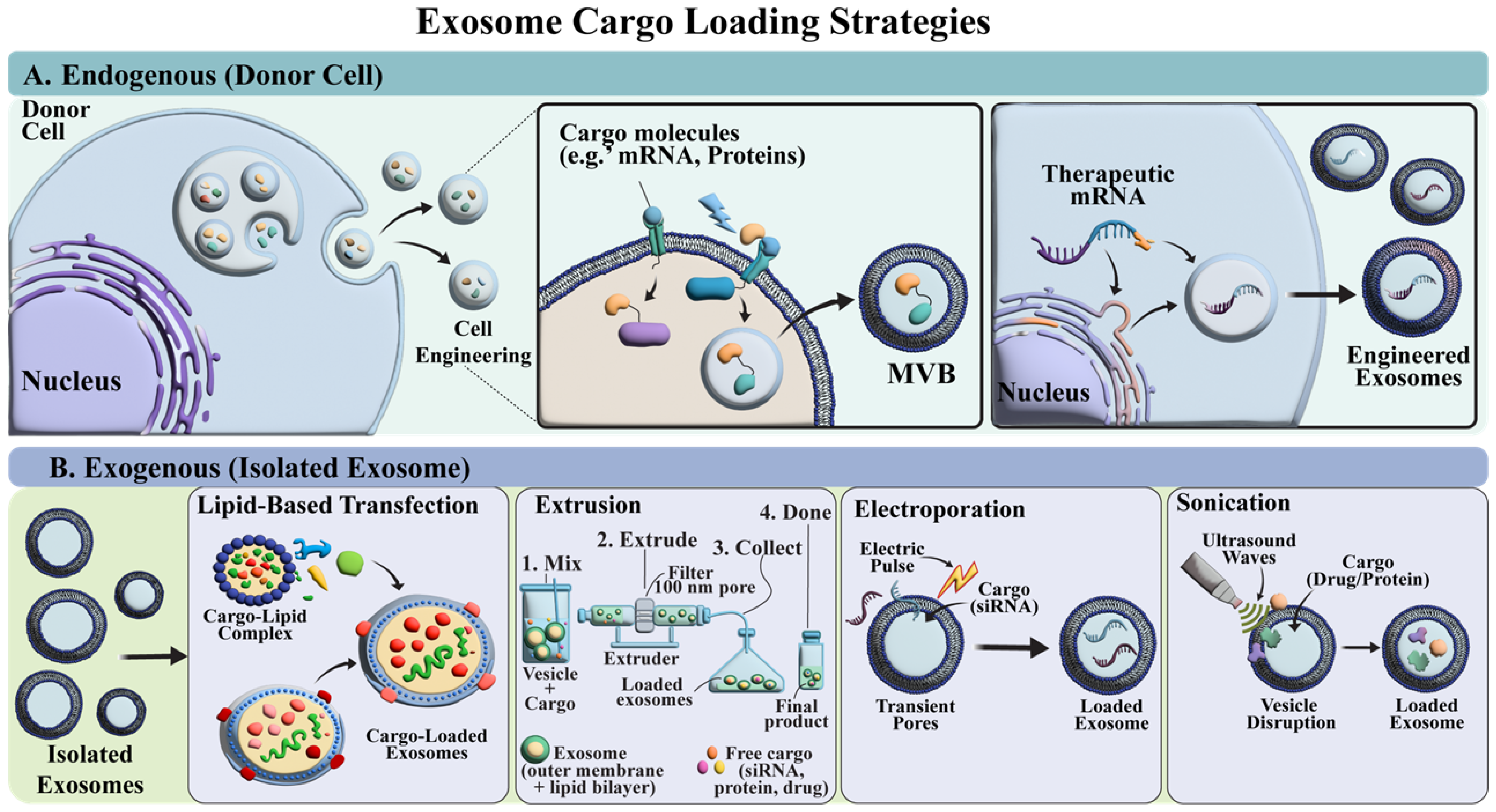
| Strategy Category | Method | Mechanism | Suitable Cargo | Key Advantages | Limitations | Representative Examples |
|---|---|---|---|---|---|---|
| Endogenous loading | Genetic engineering (EXPLOR, EXOtic) | Cargo incorporated during exosome biogenesis via protein or RNA sorting pathways | Proteins, mRNA | High specificity, stable incorporation | Requires donor-cell modification, lower yield | [66,71] |
| Exogenous loading | Electroporation | Temporary membrane permeabilization allows cargo entry | siRNA, miRNA | Simple, widely used | RNA aggregation, variable efficiency | [65] |
| Sonication | Mechanical disruption enhances membrane permeability | Small molecules, proteins | High loading efficiency | May affect vesicle integrity | [72] | |
| Extrusion | Vesicle deformation and reassembly with cargo | Proteins, drugs | Uniform size distribution | Structural alteration risk | [73] | |
| Lipid-based transfection | Fusion of lipid–cargo complexes with exosome membrane | RNA, DNA nanostructures | Preserves vesicle structure | Lower loading efficiency | [74] | |
| Surface functionalization | Genetic fusion | Targeting ligand displayed on exosome membrane proteins | Peptides | Specific targeting, biologically integrated | Limited control of ligand density | Lamp2b (exosomal membrane protein) + RVG peptide [64] Signal peptide + CD206-targeting peptide + Fc portion of mouse IgG2b + PDGFR transmembrane domain [79] |
| Click chemistry | Covalent attachment of ligands to membrane components | Peptides, aptamers | Precise and versatile modification | Stability and scalability concerns | [75,78] | |
| Antibody/aptamer conjugation | Receptor-specific binding to target cells | Antibodies, aptamers | High targeting specificity | Potential immunogenicity | [82,83] |
| Strategy/Study | Cargo Type | Targeting Mechanism | Model | Key Therapeutic Outcome |
|---|---|---|---|---|
| Cetuximab + Doxorubicin Exosomes [110] | Chemotherapeutics (cetuximab, doxorubicin) | Tumor targeting via intrinsic exosome tropism | Glioma-bearing rats | Enhanced BBB penetration, improved tumor cytotoxicity, prolonged survival |
| RGD-Modified Exosomes [62,111] | Small molecules/siRNA | RGD peptide fused to exosome membrane proteins | Orthotopic GBM mouse model | Increased tumor accumulation and reduced off-target toxicity |
| Glioblastoma-Derived Exosomes carrying Selumetinib [113] | Chemotherapy (selumetinib) | Innate tumor tropism | In vivo GBM xenograft | Efficient targeting without external ligands and improved therapeutic efficacy |
| Aptamer-Functionalized Exosomes [117] | Temozolomide + O6-benzylguanine | Angiopep-2 peptide and CD133 RNA aptamer | U87MG cells and GSC mouse model | BBB penetration, glioma stem cell targeting, reversal of drug resistance |
| CRISPR-Cas/RNA Delivery Exosomes [122] | CRISPR-Cas9, siRNA, TMZ, inhibitors | Engineered exosome targeting system | Patient-derived GBM cells and mouse models | Gene modulation and reversal of TMZ resistance in mesenchymal GBM |
| Theragnostic Exosomes [119,120] | Chemotherapy + imaging labels | Surface ligand functionalization | Preclinical GBM models | Simultaneous tumor imaging and therapy monitoring |
| T7 Peptide-Modified Exosomes [116] | AMO-21 (anti-miR-21 oligonucleotide) | T7 peptide targeting transferrin receptor | GBM cell lines and orthotopic mouse model | miR-21 inhibition and reduced tumor growth |
| Iron-Oxide Labeled Exosomes [110] | Imaging nanoparticles ± drugs | Magnetic labeling enabling tracking | Preclinical GBM models | Real-time biodistribution tracking using magnetic particle imaging |
| Exosome–Liposome Hybrid Nanovesicles [86] | Chemotherapeutics/nucleic acids | Hybrid membrane engineering | Orthotopic GBM models | Improved stability, drug loading efficiency, and tumor delivery |
| CAR-NK Cell-Derived Exosome “Nano-bombs” [96] | Cytotoxic proteins and immune modulators | Immune cell-derived exosome targeting | GBM mouse models | Enhanced immune-mediated tumor killing with reduced systemic toxicity |
| Cellular Nanoporation mRNA-Loaded Exosomes [88] | Therapeutic mRNA | High efficiency nanoporation loading | In vitro and in vivo GBM models | Increased protein expression and therapeutic delivery efficiency |
| Ferroptosis-Inducing Exosome Conjugates [115] | Ferroptosis-triggering agents | Surface-engineered targeting ligands | GBM preclinical models | Induced lipid peroxidation and tumor cell death |
| NIR-II Imaging Theragnostic Exosomes [88] | Chemotherapy + NIR-II fluorophores | Optical imaging-guided targeting | Orthotopic GBM models | Deep tissue imaging with precise therapy monitoring |
| siRNA-Loaded Targeted Exosomes [108] | Gene-silencing RNA | Ligand-mediated tumor targeting | GBM xenograft models | Downregulation of oncogenic pathways and reduced tumor growth |
| Stem-Cell Tropic Engineered Exosomes [107] | TMZ + resistance-modulating nucleic acids | Stem cell marker targeting ligands | Glioblastoma stem cell models | Overcame chemoresistance and improved therapeutic response |
| Fluorescent Theragnostic Exosome Platforms [114] | Drugs + fluorescent reporters | Surface functionalization | Preclinical GBM models | Concurrent treatment and visualization of treatment response |
| Purification Technology | Vesicle Integrity | Cargo Stability | Processing Throughput | Batch-to-Batch Consistency |
|---|---|---|---|---|
| Ultracentrifugation (UC) | Poor (High risk of rupture) | Moderate (Risk of leakage) | Low (Batch-limited) | Poor (High operator dependency) |
| Tangential Flow Filtration (TFF) | Excellent (Gentle fluidics) | High (Preserves payload) | Very High (Continuous) | High (Automated parameters) |
| Size-Exclusion Chromatography (SEC) | Excellent (No shear stress) | Excellent (No degradation) | Moderate (Volume-limited) | Excellent (Highly reproducible) |
| Challenge | Underlying Issue | Impact on Therapy | Current Strategies | Emerging Solutions |
|---|---|---|---|---|
| Scalability | Low yield, heterogeneity | Poor reproducibility | Ultracentrifugation, precipitation | Bioreactors, continuous production [20,85] |
| Cargo loading | Inefficient encapsulation | Reduced efficacy | Electroporation, sonication [65] | Programmable RNA loading, endogenous systems [66,85] |
| Targeting specificity | Off-target uptake | Reduced delivery efficiency | Ligand modification [75,82] | Multivalent targeting, AI-guided design [85] |
| Biological variability | Cell-source differences | Inconsistent behavior | Standardized culture | Autologous exosomes, improved characterization [18,19] |
| Safety | Unknown immunogenicity | Clinical risk | Preclinical testing | Immune “stealth” engineering [19] |
| Regulatory issues | Lack of guidelines | Delayed approval | Case-by-case evaluation | Standardized frameworks [17] |
Disclaimer/Publisher’s Note: The statements, opinions and data contained in all publications are solely those of the individual author(s) and contributor(s) and not of MDPI and/or the editor(s). MDPI and/or the editor(s) disclaim responsibility for any injury to people or property resulting from any ideas, methods, instructions or products referred to in the content. |
© 2026 by the authors. Licensee MDPI, Basel, Switzerland. This article is an open access article distributed under the terms and conditions of the Creative Commons Attribution (CC BY) license.
Share and Cite
Khan, N.H.; Bushra, M.A.; Selina, F.A.; Arbab, A.S. Engineered Exosomes in Precision Neuro-Oncology: Mechanisms, Therapeutics, and Translational Challenges. Cancers 2026, 18, 1923. https://doi.org/10.3390/cancers18121923
Khan NH, Bushra MA, Selina FA, Arbab AS. Engineered Exosomes in Precision Neuro-Oncology: Mechanisms, Therapeutics, and Translational Challenges. Cancers. 2026; 18(12):1923. https://doi.org/10.3390/cancers18121923
Chicago/Turabian StyleKhan, Nazmul H., Mst Anika Bushra, Fowzia Akter Selina, and Ali Syed Arbab. 2026. "Engineered Exosomes in Precision Neuro-Oncology: Mechanisms, Therapeutics, and Translational Challenges" Cancers 18, no. 12: 1923. https://doi.org/10.3390/cancers18121923
APA StyleKhan, N. H., Bushra, M. A., Selina, F. A., & Arbab, A. S. (2026). Engineered Exosomes in Precision Neuro-Oncology: Mechanisms, Therapeutics, and Translational Challenges. Cancers, 18(12), 1923. https://doi.org/10.3390/cancers18121923