Opposing Roles of CREPT and p15RS in Tumorigenesis via Differential Regulation of Wnt Signaling

 , ,
, ,
Simple Summary
Abstract
1. Introduction
2. Materials and Methods
2.1. Plasmid and Reagents
2.2. Cell Culture and Transfection
2.3. Cell Proliferation Assay
2.4. Colony Formation Assay
2.5. Serum Starvation and Stimulation
2.6. Immunofluorescence (IF) and Immunohistochemistry (IHC)
2.7. Luciferase Assay
2.8. Immunoprecipitation (IP) and Western Blotting (WB)
2.9. Prokaryotic Protein Purification and Dynamic Light Scattering (DLS) Assay
2.10. Cross-Linking Assay
2.11. RNA Isolation and Real-Time PCR (RT-PCR)
2.12. Software
3. Results
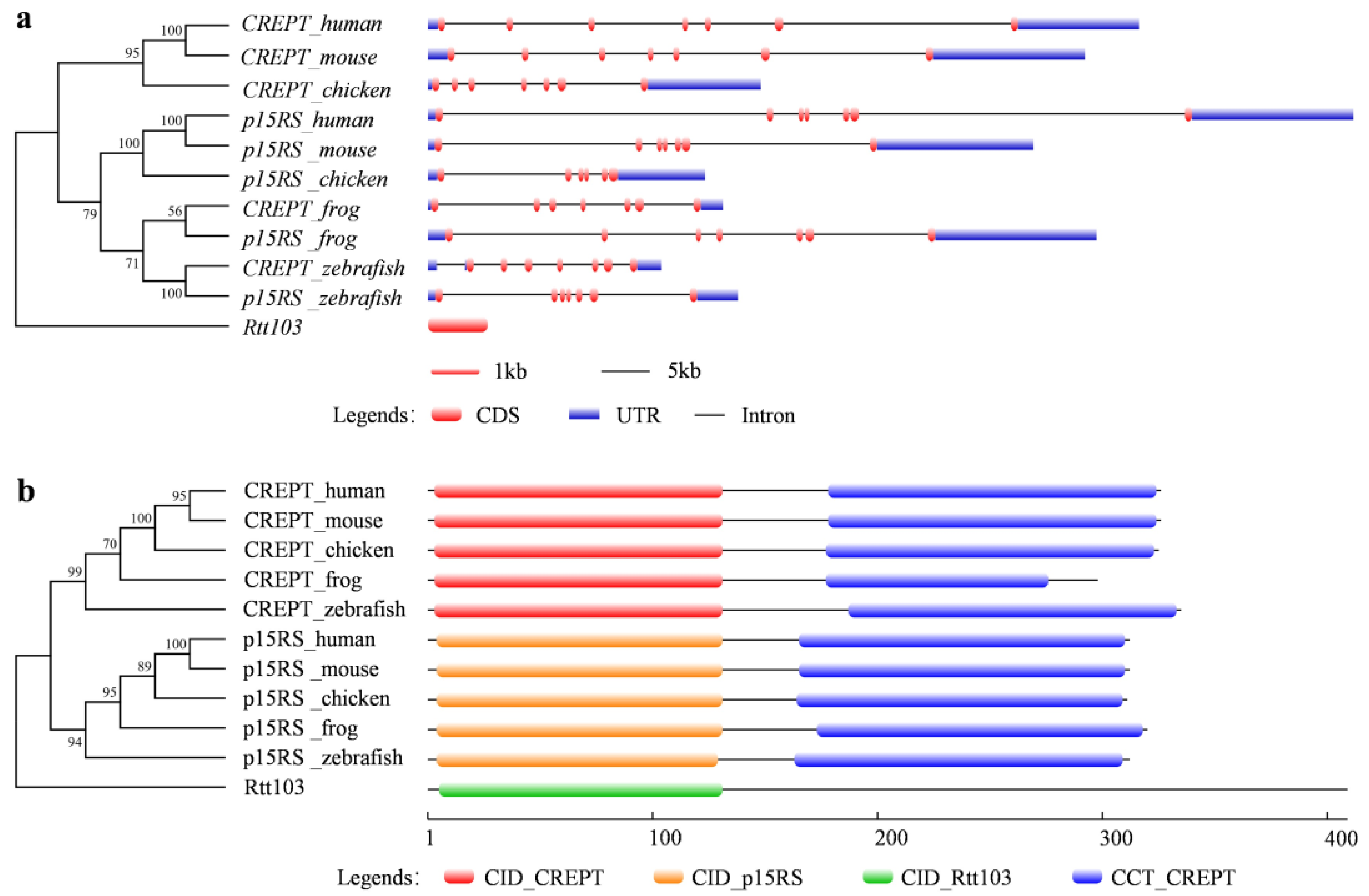
3.1. CREPT and p15RS Are Highly Related in Evolution
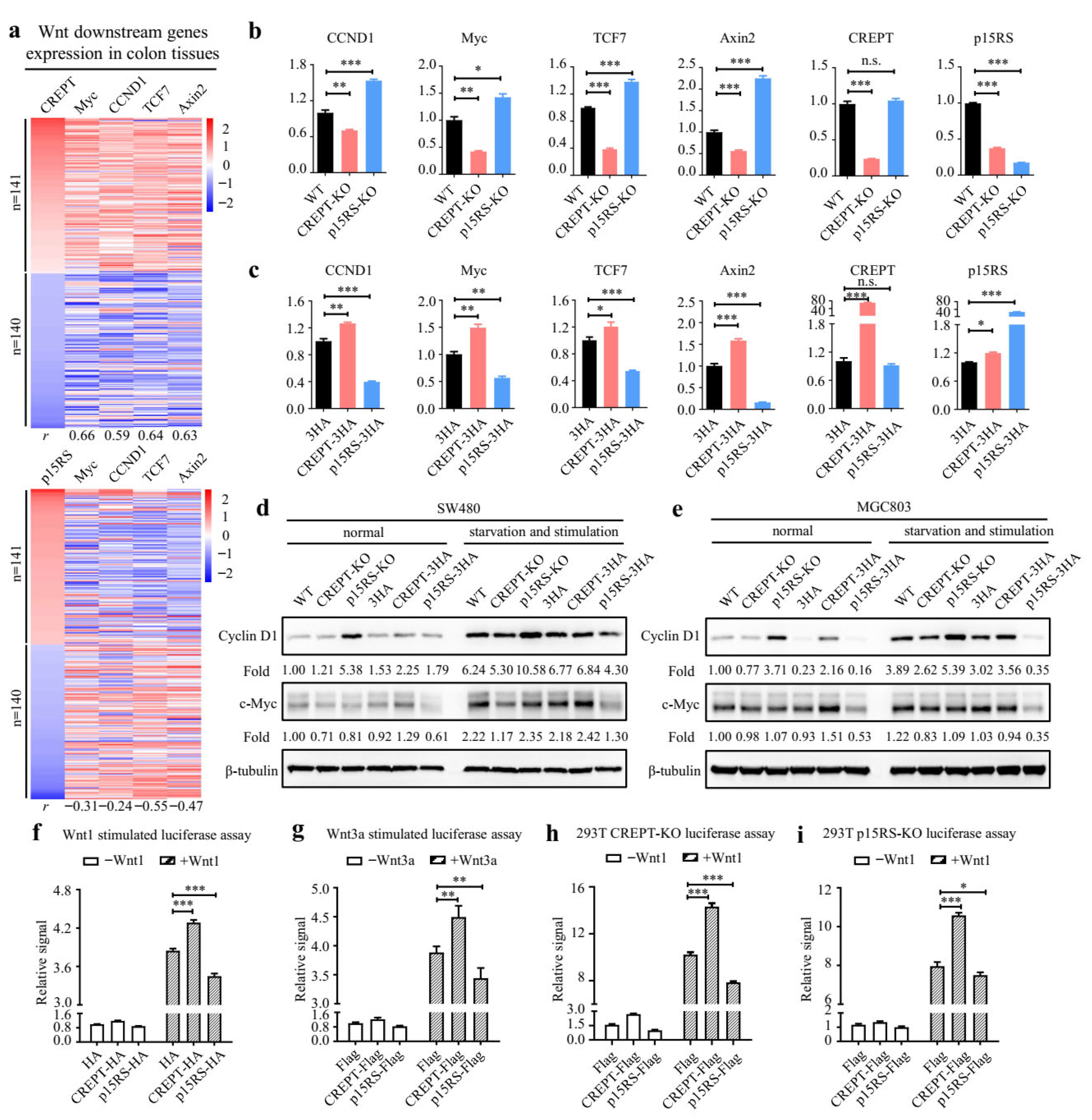
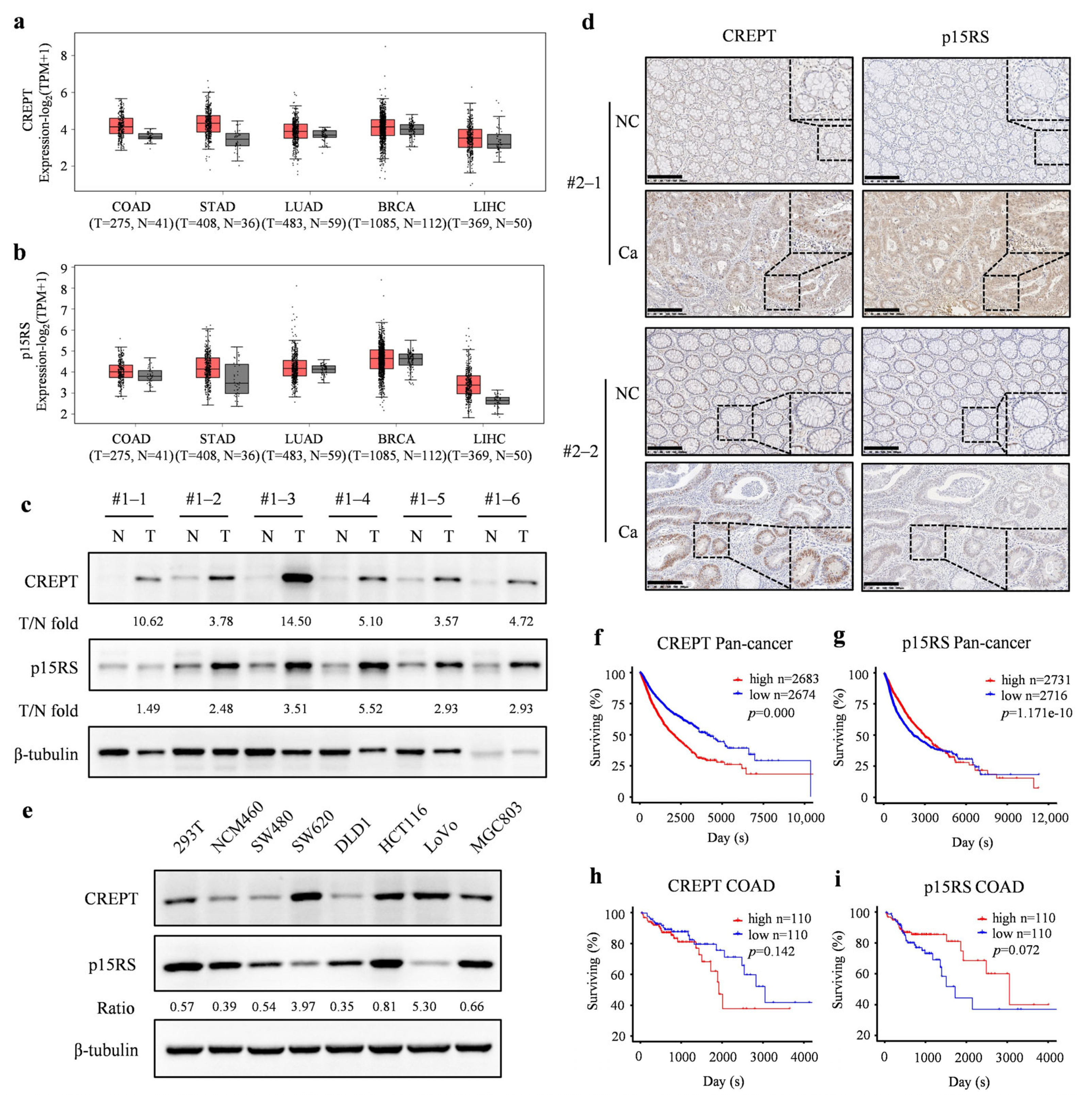
3.2. CREPT and p15RS Are Both Highly Expressed in Colon Cancer
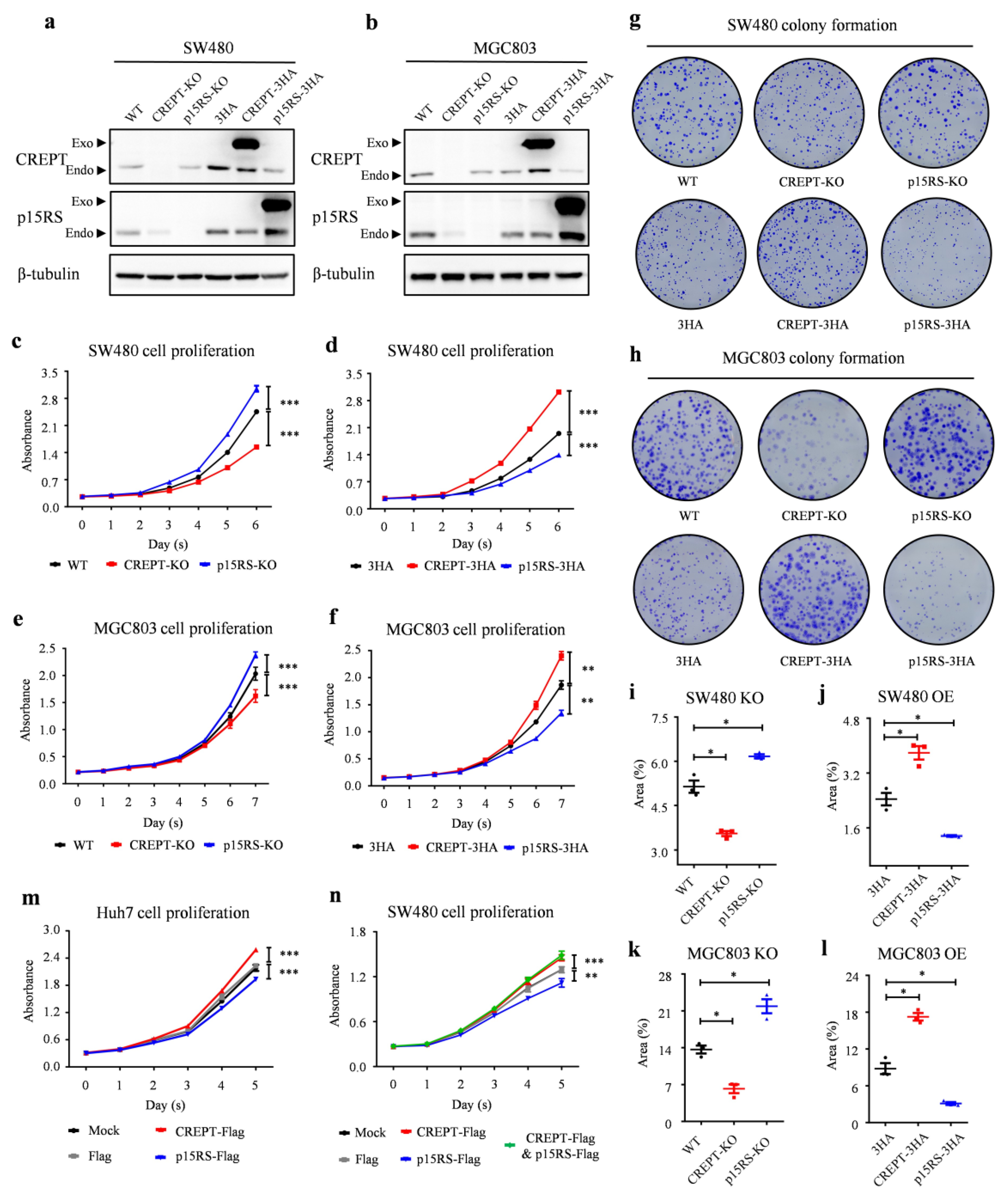
3.3. CREPT Promotes, but p15RS Inhibits Cell Proliferation and Clonogenicity
3.4. CREPT Enhances, but p15RS Inhibits Wnt/β-Catenin Signaling
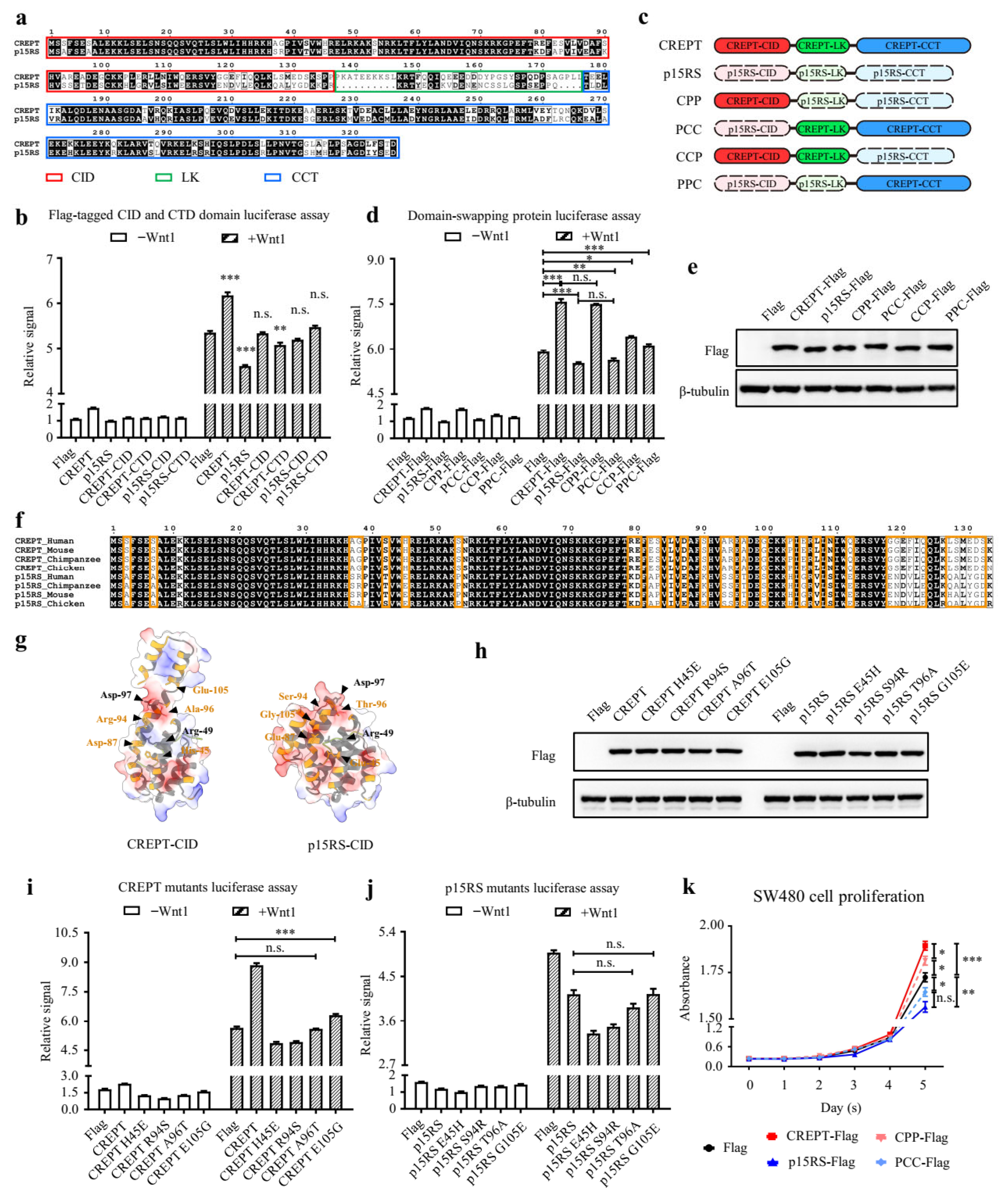
3.5. The CID Domain Is Crucial to the Function of CREPT and p15RS
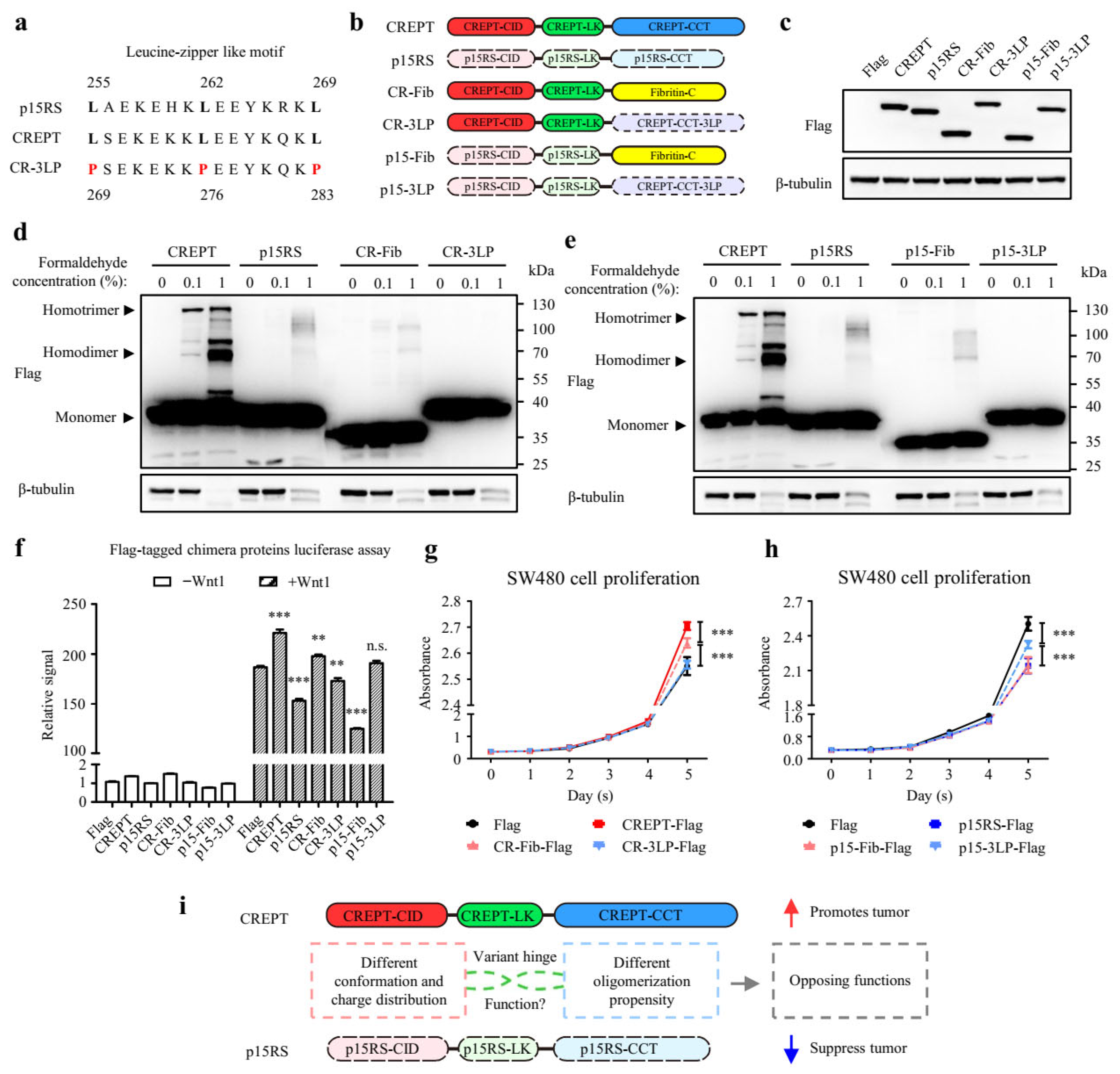
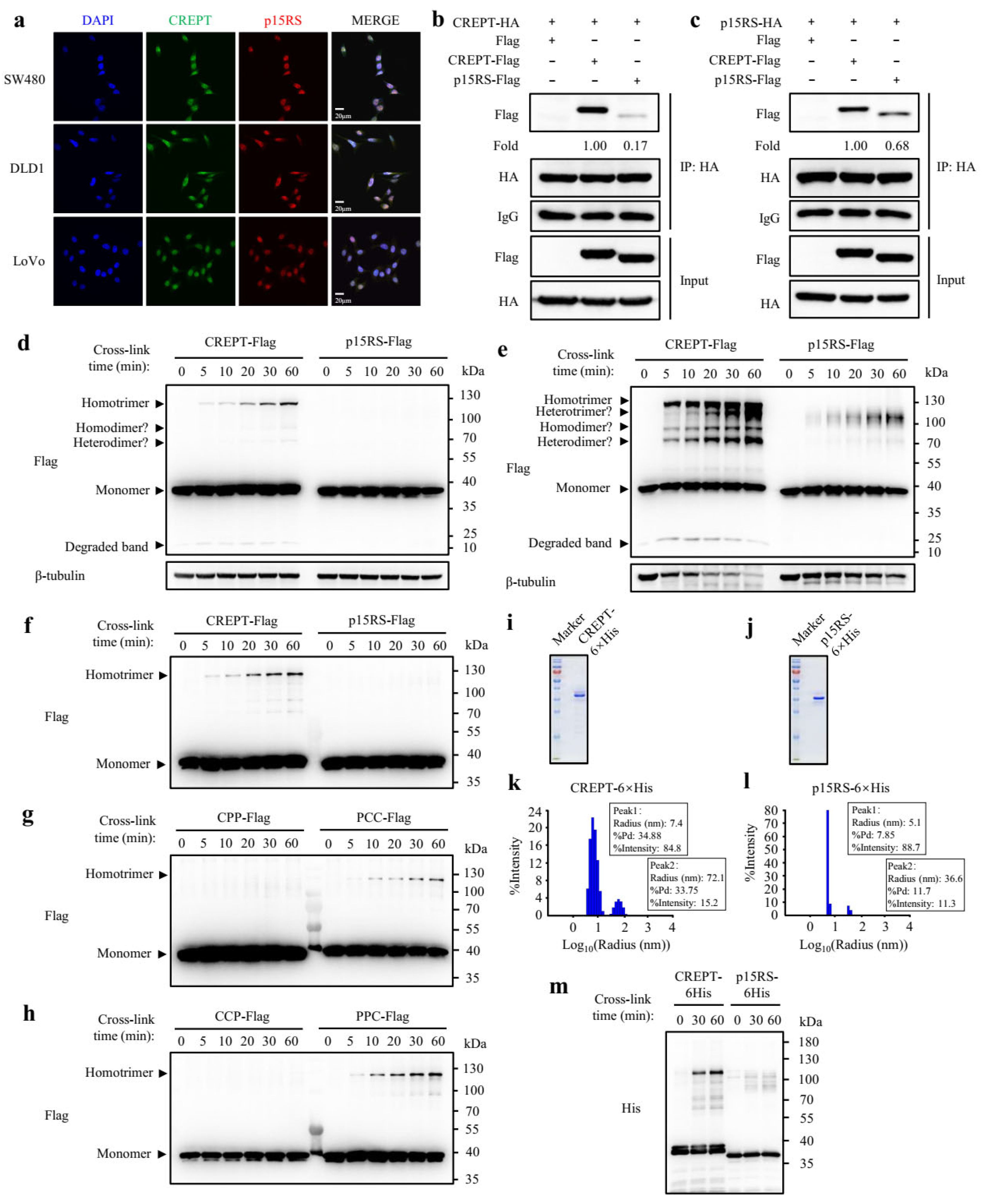
3.6. CREPT Exhibits a Higher Capacity for Oligomerization Compared to p15RS
3.7. Oligomerization Is Indispensable for the Function of CREPT and p15RS
4. Discussion
5. Conclusions
Supplementary Materials
Author Contributions
Funding
Institutional Review Board Statement
Informed Consent Statement
Data Availability Statement
Conflicts of Interest
References
- Kontomanolis, E.N.; Koutras, A.; Syllaios, A.; Schizas, D.; Mastoraki, A.; Garmpis, N.; Diakosavvas, M.; Angelou, K.; Tsatsaris, G.; Pagkalos, A.; et al. Role of Oncogenes and Tumor-suppressor Genes in Carcinogenesis: A Review. Anticancer Res. 2020, 40, 6009–6015. [Google Scholar] [CrossRef]
- Lee, E.Y.; Muller, W.J. Oncogenes and tumor suppressor genes. Cold Spring Harb. Perspect. Biol. 2010, 2, a003236. [Google Scholar] [CrossRef]
- Deng, T.; Karin, M. JunB differs from c-Jun in its DNA-binding and dimerization domains, and represses c-Jun by formation of inactive heterodimers. Genes Dev. 1993, 7, 479–490. [Google Scholar] [CrossRef] [PubMed]
- Eferl, R.; Wagner, E.F. AP-1: A double-edged sword in tumorigenesis. Nat. Rev. Cancer 2003, 3, 859–868. [Google Scholar] [CrossRef]
- Dötsch, V.; Bernassola, F.; Coutandin, D.; Candi, E.; Melino, G. p63 and p73, the ancestors of p53. Cold Spring Harb. Perspect. Biol. 2010, 2, a004887. [Google Scholar] [CrossRef]
- Mills, A.A. p63: Oncogene or tumor suppressor? Curr. Opin. Genet. Dev. 2006, 16, 38–44. [Google Scholar] [CrossRef] [PubMed]
- Hanahan, D.; Weinberg, R.A. Hallmarks of cancer: The next generation. Cell 2011, 144, 646–674. [Google Scholar] [CrossRef]
- Jackstadt, R.; Hodder, M.C.; Sansom, O.J. WNT and β-Catenin in Cancer: Genes and Therapy. Annu. Rev. Cancer Biol. 2020, 4, 177–196. [Google Scholar] [CrossRef]
- Nusse, R.; Clevers, H. Wnt/β-Catenin Signaling, Disease, and Emerging Therapeutic Modalities. Cell 2017, 169, 985–999. [Google Scholar] [CrossRef]
- Zhong, Z.A.; Michalski, M.N.; Stevens, P.D.; Sall, E.A.; Williams, B.O. Regulation of Wnt receptor activity: Implications for therapeutic development in colon cancer. J. Biol. Chem. 2021, 296, 100782. [Google Scholar] [CrossRef]
- Zhan, T.; Rindtorff, N.; Boutros, M. Wnt signaling in cancer. Oncogene 2017, 36, 1461–1473. [Google Scholar] [CrossRef]
- Brown, M.A.; Ried, T. Shifting the Focus of Signaling Abnormalities in Colon Cancer. Cancers 2022, 14, 784. [Google Scholar] [CrossRef]
- MacDonald, B.T.; Tamai, K.; He, X. Wnt/beta-catenin signaling: Components, mechanisms, and diseases. Dev. Cell 2009, 17, 9–26. [Google Scholar] [CrossRef]
- Kahn, M. Can we safely target the WNT pathway? Nat. Rev. Drug Discov. 2014, 13, 513–532. [Google Scholar] [CrossRef]
- Lu, D.; Wu, Y.; Wang, Y.; Ren, F.; Wang, D.; Su, F.; Zhang, Y.; Yang, X.; Jin, G.; Hao, X.; et al. CREPT accelerates tumorigenesis by regulating the transcription of cell-cycle-related genes. Cancer Cell 2012, 21, 92–104. [Google Scholar] [CrossRef]
- Siril, Y.J.; Kouketsu, A.; Saito, H.; Takahashi, T.; Kumamoto, H. Immunohistochemical expression levels of cyclin D1 and CREPT reflect the course and prognosis in oral precancerous lesions and squamous cell carcinoma. Int. J. Oral Maxillofac. Surg. 2022, 51, 27–32. [Google Scholar] [CrossRef]
- Zheng, G.; Li, W.; Zuo, B.; Guo, Z.; Xi, W.; Wei, M.; Chen, P.; Wen, W.; Yang, A.G. High expression of CREPT promotes tumor growth and is correlated with poor prognosis in colorectal cancer. Biochem. Biophys. Res. Commun. 2016, 480, 436–442. [Google Scholar] [CrossRef]
- Wang, Y.; Qiu, H.; Hu, W.; Li, S.; Yu, J. RPRD1B promotes tumor growth by accelerating the cell cycle in endometrial cancer. Oncol. Rep. 2014, 31, 1389–1395. [Google Scholar] [CrossRef] [PubMed]
- Ma, J.; Ren, Y.; Zhang, L.; Kong, X.; Wang, T.; Shi, Y.; Bu, R. Knocking-down of CREPT prohibits the progression of oral squamous cell carcinoma and suppresses cyclin D1 and c-Myc expression. PLoS ONE 2017, 12, e0174309. [Google Scholar] [CrossRef] [PubMed]
- Sun, M.; Si, G.; Sun, H.S.; Si, F.C. Inhibition of CREPT restrains gastric cancer growth by regulation of cycle arrest, migration and apoptosis via ROS-regulated p53 pathway. Biochem. Biophys. Res. Commun. 2018, 496, 1183–1190. [Google Scholar] [CrossRef] [PubMed]
- Jia, Y.; Yan, Q.; Zheng, Y.; Li, L.; Zhang, B.; Chang, Z.; Wang, Z.; Tang, H.; Qin, Y.; Guan, X.Y. Long non-coding RNA NEAT1 mediated RPRD1B stability facilitates fatty acid metabolism and lymph node metastasis via c-Jun/c-Fos/SREBP1 axis in gastric cancer. J. Exp. Clin. Cancer Res. CR 2022, 41, 287. [Google Scholar] [CrossRef]
- Li, J.; Xu, L.; Wang, J.; Wang, X.; Lin, Y.; Zou, A.Y.; Ren, F.; Wang, Y.; Li, J.; Chang, Z. CREPT is required for the metastasis of triple-negative breast cancer through a co-operational-chromatin loop-based gene regulation. Mol. Cancer 2025, 24, 170. [Google Scholar] [CrossRef]
- Zhang, Y.; Liu, C.; Duan, X.; Ren, F.; Li, S.; Jin, Z.; Wang, Y.; Feng, Y.; Liu, Z.; Chang, Z. CREPT/RPRD1B, a recently identified novel protein highly expressed in tumors, enhances the β-catenin·TCF4 transcriptional activity in response to Wnt signaling. J. Biol. Chem. 2014, 289, 22589–22599. [Google Scholar] [CrossRef] [PubMed]
- Jiang, J.; Yang, X.; He, X.; Ma, W.; Wang, J.; Zhou, Q.; Li, M.; Yu, S. MicroRNA-449b-5p suppresses the growth and invasion of breast cancer cells via inhibiting CREPT-mediated Wnt/β-catenin signaling. Chem.-Biol. Interact. 2019, 302, 74–82. [Google Scholar] [CrossRef]
- Li, M.; Ma, D.; Chang, Z. Current understanding of CREPT and p15RS, carboxy-terminal domain (CTD)-interacting proteins, in human cancers. Oncogene 2021, 40, 705–716. [Google Scholar] [CrossRef] [PubMed]
- Liu, J.; Liu, H.; Zhang, X.; Gao, P.; Wang, J.; Hu, Z. Identification and characterization of P15RS, a novel P15(INK4b) related gene on G1/S progression. Biochem. Biophys. Res. Commun. 2002, 299, 880–885. [Google Scholar] [CrossRef] [PubMed]
- Zhang, X.; Cao, Q.; Liu, X.; Liu, S.; Wang, J.; Sun, S.; Wang, O.; Tian, Z.; Liu, H.; Kuang, J.; et al. Cellular and molecular evidence for malignancy-inhibitory functions of p15RS. Cell Cycle 2012, 11, 1988–1998. [Google Scholar] [CrossRef]
- Ren, L.; Chen, H.; Song, J.; Chen, X.; Lin, C.; Zhang, X.; Hou, N.; Pan, J.; Zhou, Z.; Wang, L.; et al. MiR-454-3p-Mediated Wnt/β-catenin Signaling Antagonists Suppression Promotes Breast Cancer Metastasis. Theranostics 2019, 9, 449–465. [Google Scholar] [CrossRef]
- Chen, Q.Y.; Xu, K.X.; Huang, X.B.; Fan, D.H.; Chen, Y.J.; Li, Y.F.; Huang, Q.; Liu, Z.Y.; Zheng, H.L.; Huang, Z.N.; et al. Circ-0075305 hinders gastric cancer stem cells by indirectly disrupting TCF4-β-catenin complex and downregulation of SOX9. Commun. Biol. 2024, 7, 545. [Google Scholar] [CrossRef]
- Liu, C.; Zhang, Y.; Li, J.; Wang, Y.; Ren, F.; Zhou, Y.; Wu, Y.; Feng, Y.; Zhou, Y.; Su, F.; et al. p15RS/RPRD1A (p15INK4b-related sequence/regulation of nuclear pre-mRNA domain-containing protein 1A) interacts with HDAC2 in inhibition of the Wnt/β-catenin signaling pathway. J. Biol. Chem. 2015, 290, 9701–9713. [Google Scholar] [CrossRef]
- Feng, X.; Jiang, T.; Yang, C.; Pang, S.; Ding, Z.; Hu, H.; Wang, H.; Dong, L.; Yang, N. RPRD1A stabilizes NRF2 and aggravates HCC progression through competing with p62 for TRIM21 binding. Cell Death Dis. 2021, 13, 6. [Google Scholar] [CrossRef] [PubMed]
- Ni, Z.; Xu, C.; Guo, X.; Hunter, G.O.; Kuznetsova, O.V.; Tempel, W.; Marcon, E.; Zhong, G.; Guo, H.; Kuo, W.W.; et al. RPRD1A and RPRD1B are human RNA polymerase II C-terminal domain scaffolds for Ser5 dephosphorylation. Nat. Struct. Mol. Biol. 2014, 21, 686–695. [Google Scholar] [CrossRef] [PubMed]
- Ni, Z.; Olsen, J.B.; Guo, X.; Zhong, G.; Ruan, E.D.; Marcon, E.; Young, P.; Guo, H.; Li, J.; Moffat, J.; et al. Control of the RNA polymerase II phosphorylation state in promoter regions by CTD interaction domain-containing proteins RPRD1A and RPRD1B. Transcription 2011, 2, 237–242. [Google Scholar] [CrossRef] [PubMed]
- Moreno, R.Y.; Panina, S.B.; Zhang, Y.J. RPRD1B’s direct interaction with phosphorylated RNA polymerase II regulates polyadenylation of cell cycle genes and drives cancer progression. RSC Chem. Biol. 2025, 6, 423–437. [Google Scholar] [CrossRef]
- Ali, I.; Ruiz, D.G.; Ni, Z.; Johnson, J.R.; Zhang, H.; Li, P.C.; Khalid, M.M.; Conrad, R.J.; Guo, X.; Min, J.; et al. Crosstalk between RNA Pol II C-Terminal Domain Acetylation and Phosphorylation via RPRD Proteins. Mol. Cell 2019, 74, 1164–1174.e1164. [Google Scholar] [CrossRef]
- Winczura, K.; Ceylan, H.; Sledziowska, M.; Jones, M.; Fagarasan, H.; Wang, J.; Saponaro, M.; Arnold, R.; Hebenstreit, D.; Grzechnik, P. RPRD Proteins Control Transcription in Human Cells. bioRxiv 2021, 2021.2006.2020.449126. [Google Scholar] [CrossRef]
- Fan, X.; Zhao, J.; Ren, F.; Wang, Y.; Feng, Y.; Ding, L.; Zhao, L.; Shang, Y.; Li, J.; Ni, J.; et al. Dimerization of p15RS mediated by a leucine zipper-like motif is critical for its inhibitory role on Wnt signaling. J. Biol. Chem. 2018, 293, 7618–7628. [Google Scholar] [CrossRef]
- Kumar, S.; Stecher, G.; Tamura, K. MEGA7: Molecular Evolutionary Genetics Analysis Version 7.0 for Bigger Datasets. Mol. Biol. Evol. 2016, 33, 1870–1874. [Google Scholar] [CrossRef]
- Hu, B.; Jin, J.; Guo, A.Y.; Zhang, H.; Luo, J.; Gao, G. GSDS 2.0: An upgraded gene feature visualization server. Bioinformatics 2015, 31, 1296–1297. [Google Scholar] [CrossRef]
- Goddard, T.D.; Huang, C.C.; Meng, E.C.; Pettersen, E.F.; Couch, G.S.; Morris, J.H.; Ferrin, T.E. UCSF ChimeraX: Meeting modern challenges in visualization and analysis. Protein Sci. A Publ. Protein Soc. 2018, 27, 14–25. [Google Scholar] [CrossRef]
- Goldman, M.J.; Craft, B.; Hastie, M.; Repečka, K.; McDade, F.; Kamath, A.; Banerjee, A.; Luo, Y.; Rogers, D.; Brooks, A.N.; et al. Visualizing and interpreting cancer genomics data via the Xena platform. Nat. Biotechnol. 2020, 38, 675–678. [Google Scholar] [CrossRef] [PubMed]
- Anaya, J. OncoLnc: Linking TCGA survival data to mRNAs, miRNAs, and lncRNAs. PeerJ Comput. Sci. 2016, 2, e67. [Google Scholar] [CrossRef]
- Tang, Z.; Li, C.; Kang, B.; Gao, G.; Li, C.; Zhang, Z. GEPIA: A web server for cancer and normal gene expression profiling and interactive analyses. Nucleic Acids Res. 2017, 45, W98–W102. [Google Scholar] [CrossRef] [PubMed]
- Disoma, C.; Zhou, Y.; Li, S.; Peng, J.; Xia, Z. Wnt/β-catenin signaling in colorectal cancer: Is therapeutic targeting even possible? Biochimie 2022, 195, 39–53. [Google Scholar] [CrossRef]
- Marianayagam, N.J.; Sunde, M.; Matthews, J.M. The power of two: Protein dimerization in biology. Trends Biochem. Sci. 2004, 29, 618–625. [Google Scholar] [CrossRef]
- Tao, Y.; Strelkov, S.V.; Mesyanzhinov, V.V.; Rossmann, M.G. Structure of bacteriophage T4 fibritin: A segmented coiled coil and the role of the C-terminal domain. Structure 1997, 5, 789–798. [Google Scholar] [CrossRef]
- Jochum, W.; Passegué, E.; Wagner, E.F. AP-1 in mouse development and tumorigenesis. Oncogene 2001, 20, 2401–2412. [Google Scholar] [CrossRef]
- Park, S.; Cui, J.; Yu, W.; Wu, L.; Carmon, K.S.; Liu, Q.J. Differential activities and mechanisms of the four R-spondins in potentiating Wnt/β-catenin signaling. J. Biol. Chem. 2018, 293, 9759–9769. [Google Scholar] [CrossRef]
- Park, S.; Wu, L.; Tu, J.; Yu, W.; Toh, Y.; Carmon, K.S.; Liu, Q.J. Unlike LGR4, LGR5 potentiates Wnt-β-catenin signaling without sequestering E3 ligases. Sci. Signal. 2020, 13, eaaz4051. [Google Scholar] [CrossRef]
- Park, P.M.C.; Park, J.; Brown, J.; Hunkeler, M.; Roy Burman, S.S.; Donovan, K.A.; Yoon, H.; Nowak, R.P.; Słabicki, M.; Ebert, B.L.; et al. Polymerization of ZBTB transcription factors regulates chromatin occupancy. Mol. Cell 2024, 84, 2511–2524.e2518. [Google Scholar] [CrossRef]
- Ludwiczak, J.; Winski, A.; Szczepaniak, K.; Alva, V.; Dunin-Horkawicz, S. DeepCoil-a fast and accurate prediction of coiled-coil domains in protein sequences. Bioinformatics 2019, 35, 2790–2795. [Google Scholar] [CrossRef]
- Mei, K.; Jin, Z.; Ren, F.; Wang, Y.; Chang, Z.; Wang, X. Structural basis for the recognition of RNA polymerase II C-terminal domain by CREPT and p15RS. Sci. China Life Sci. 2014, 57, 97–106. [Google Scholar] [CrossRef]
- Ciani, B.; Bjelic, S.; Honnappa, S.; Jawhari, H.; Jaussi, R.; Payapilly, A.; Jowitt, T.; Steinmetz, M.O.; Kammerer, R.A. Molecular basis of coiled-coil oligomerization-state specificity. Proc. Natl. Acad. Sci. USA 2010, 107, 19850–19855. [Google Scholar] [CrossRef]




Disclaimer/Publisher’s Note: The statements, opinions and data contained in all publications are solely those of the individual author(s) and contributor(s) and not of MDPI and/or the editor(s). MDPI and/or the editor(s) disclaim responsibility for any injury to people or property resulting from any ideas, methods, instructions or products referred to in the content. |
© 2026 by the authors. Licensee MDPI, Basel, Switzerland. This article is an open access article distributed under the terms and conditions of the Creative Commons Attribution (CC BY) license.
Share and Cite
Zhou, D.; Li, J.; Ren, F.; Cao, Y.; Ning, B.; Wang, W.; Jia, B.; Li, G.-M.; Wang, Y.; Chang, Z. Opposing Roles of CREPT and p15RS in Tumorigenesis via Differential Regulation of Wnt Signaling. Cancers 2026, 18, 1911. https://doi.org/10.3390/cancers18121911
Zhou D, Li J, Ren F, Cao Y, Ning B, Wang W, Jia B, Li G-M, Wang Y, Chang Z. Opposing Roles of CREPT and p15RS in Tumorigenesis via Differential Regulation of Wnt Signaling. Cancers. 2026; 18(12):1911. https://doi.org/10.3390/cancers18121911
Chicago/Turabian StyleZhou, Dekang, Jun Li, Fangli Ren, Yajun Cao, Bobin Ning, Wenchen Wang, Baoqing Jia, Guo-Min Li, Yinyin Wang, and Zhijie Chang. 2026. "Opposing Roles of CREPT and p15RS in Tumorigenesis via Differential Regulation of Wnt Signaling" Cancers 18, no. 12: 1911. https://doi.org/10.3390/cancers18121911
APA StyleZhou, D., Li, J., Ren, F., Cao, Y., Ning, B., Wang, W., Jia, B., Li, G.-M., Wang, Y., & Chang, Z. (2026). Opposing Roles of CREPT and p15RS in Tumorigenesis via Differential Regulation of Wnt Signaling. Cancers, 18(12), 1911. https://doi.org/10.3390/cancers18121911