CX3CR1-Dependent Macrophages Drive Ovarian Cancer Progression Through MMP-2 and TGF-β Production
 , , , ,
Simple Summary
Abstract
1. Introduction
2. Materials and Methods
2.1. Reagents and Antibodies
2.2. Cell Culture
2.3. Cell Proliferation Assay
2.4. Cell Migration Assay
2.5. Human Ovarian Tissue Samples
2.6. Animals
2.7. In Vivo Tumor Generation
2.8. Immunohistochemistry
2.9. Histopathological and Immunohistochemical Analysis
2.10. Measurement of Macrophages
2.11. Double-Color Immunofluorescence Analysis
2.12. Real-Time RT-PCR Analysis
2.13. Flow Cytometric Analysis of ID8 Cells
2.14. Flow Cytometric Analysis of Peritoneal Macrophages Under the Physiological Conditions
2.15. Statistics and Reproducibility
3. Results
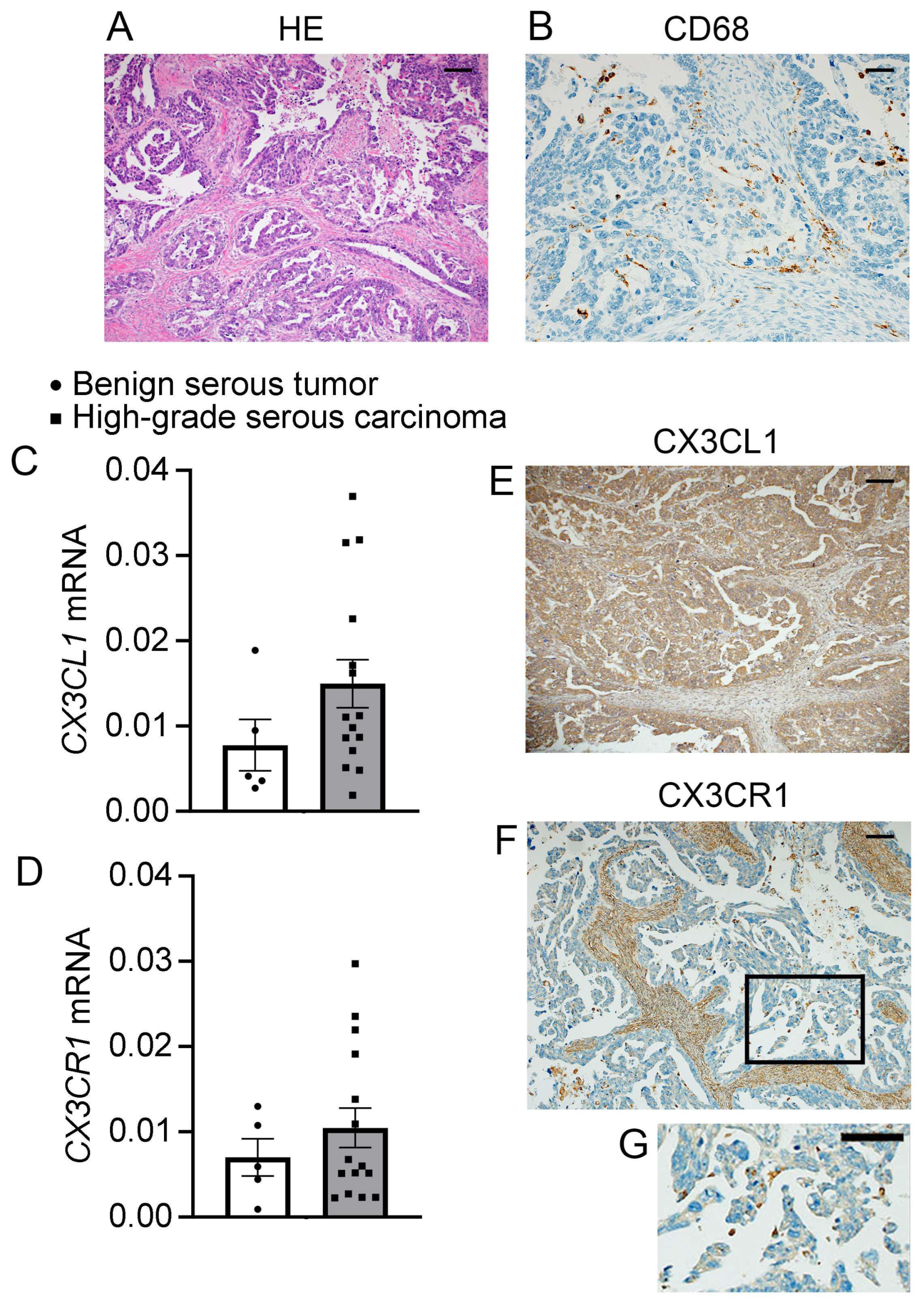
3.1. Detection of CX3CL1 and CX3CR1 in Healthy and Malignant Ovarian Tissue Samples
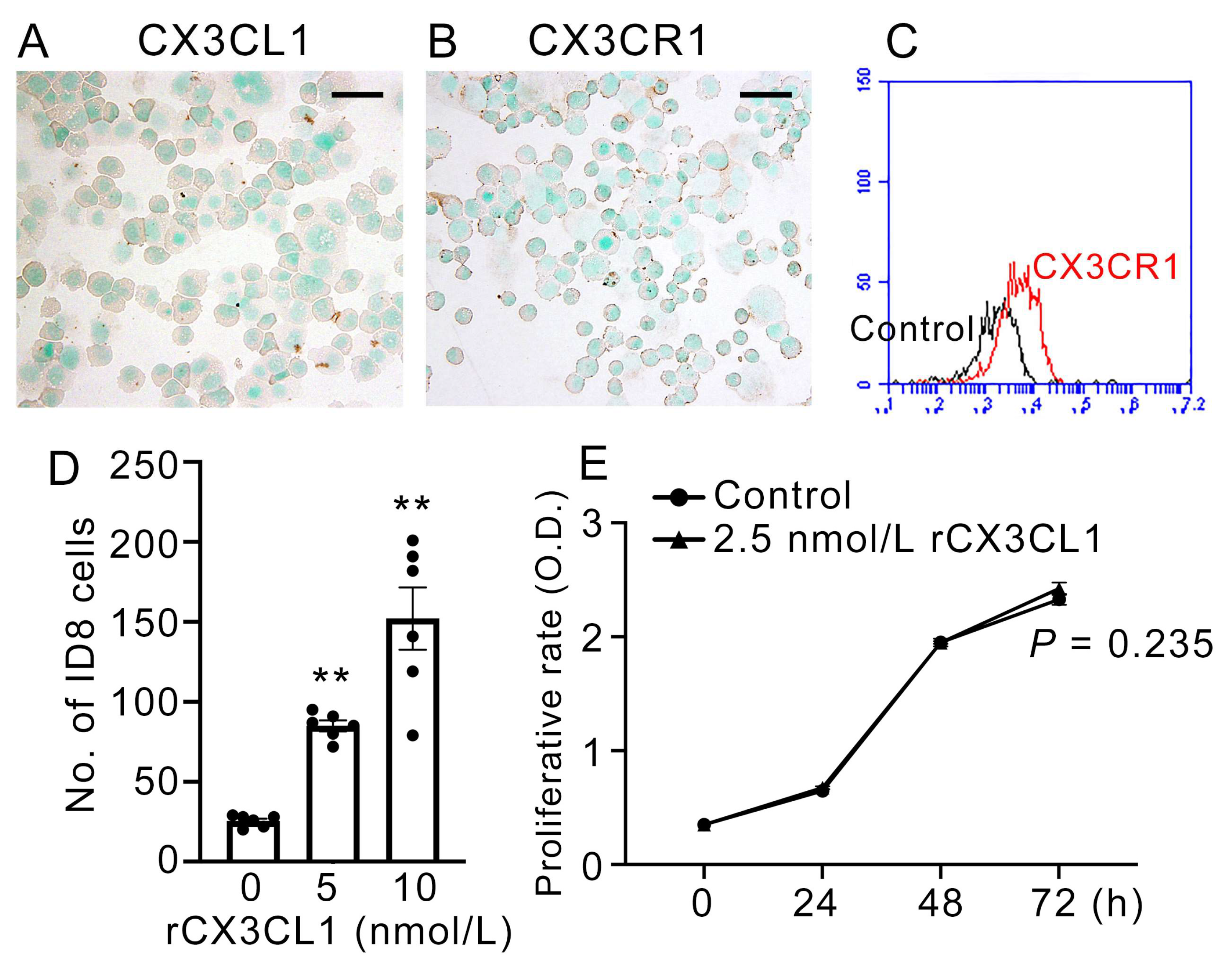
3.2. CX3CL1 Enhanced the Migration of ID8 Cells, but Not Their Proliferation
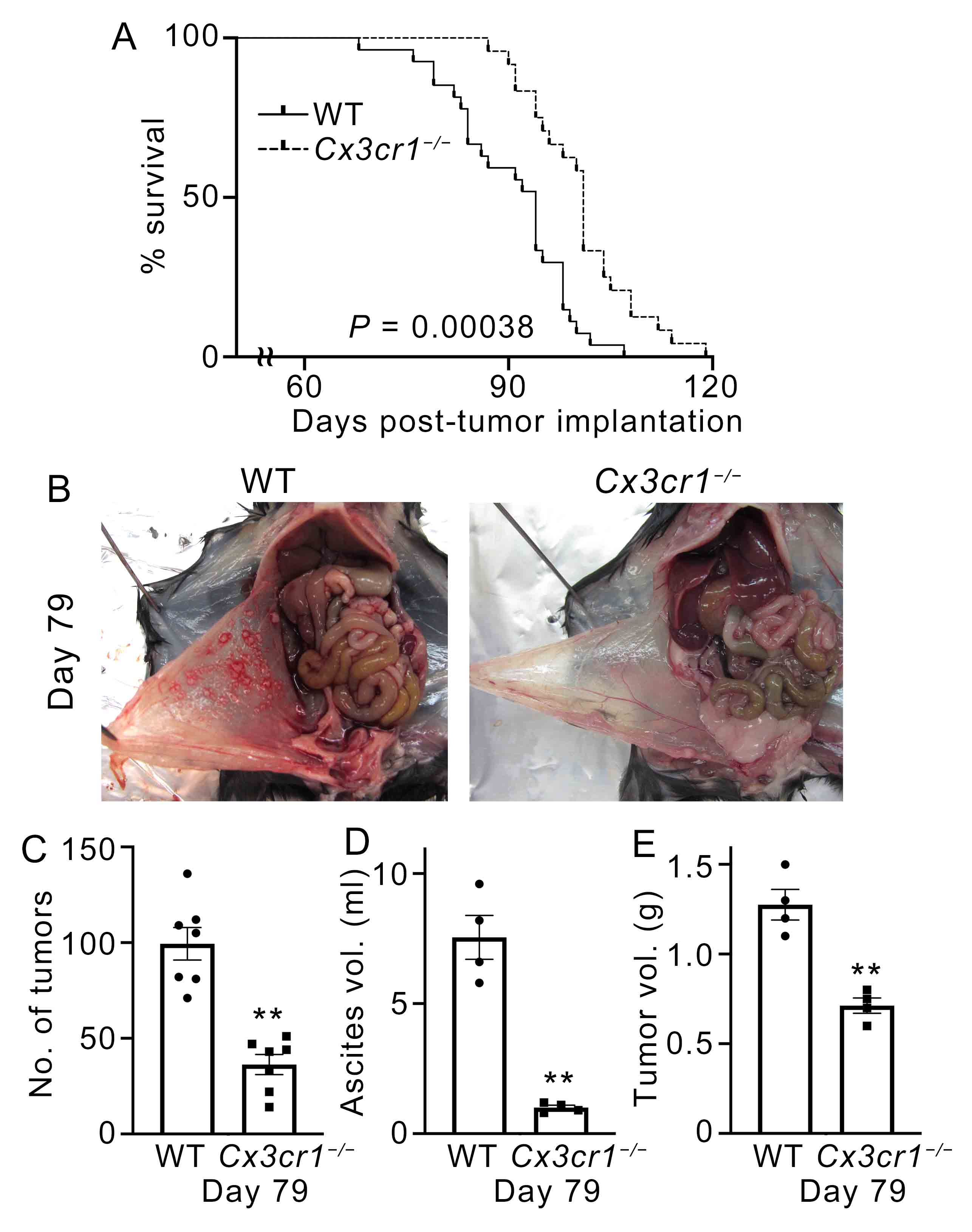
3.3. CX3CR1 Deletion Inhibited ID8-Inocluted Ovarian Tumor Growth and Progression
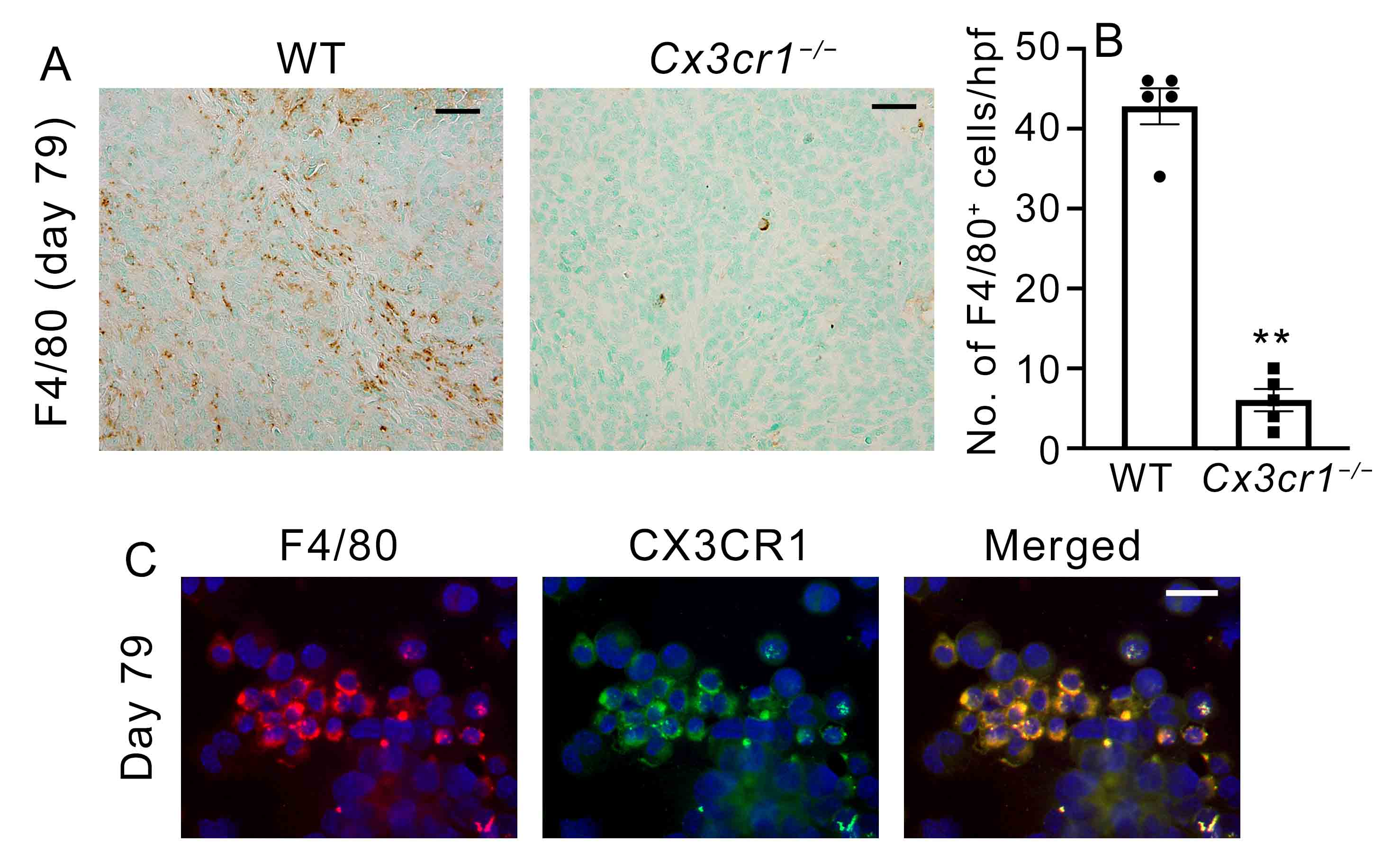
3.4. Accumulation of CX3CR1+ Macrophages in the Abdominal Cavity of WT Mice
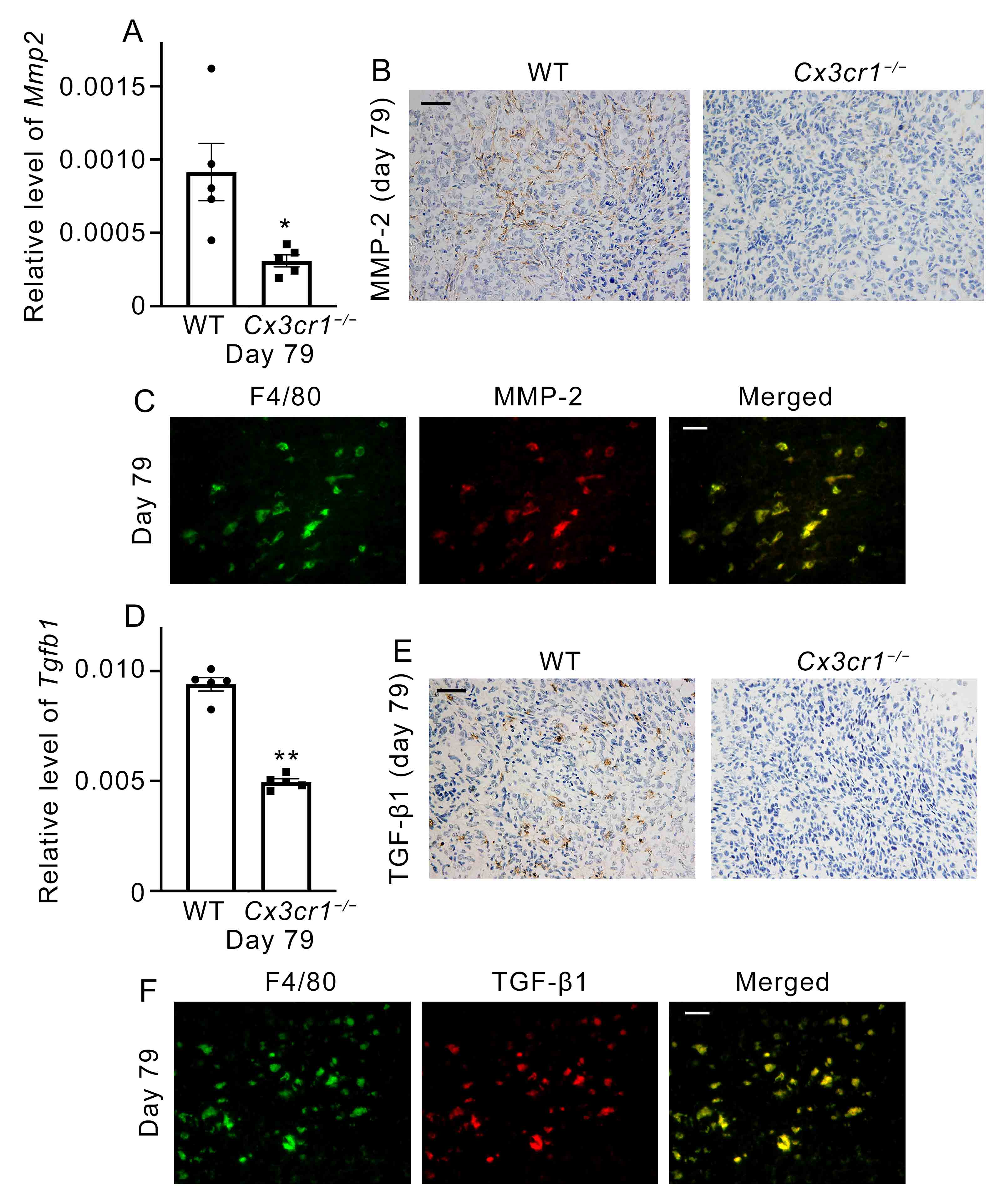
3.5. CX3CR1 Deficiency Reduced MMP-2 and TGF-β Expression
4. Discussion
5. Conclusions
Author Contributions
Funding
Institutional Review Board Statement
Informed Consent Statement
Data Availability Statement
Conflicts of Interest
Abbreviations
| CX3CL1 | Chemokine (CX3C motif) ligand 1 |
| CX3CR1 | CX3C motif chemokine receptor 1 |
| MMP | Matrix metalloprotease |
| TAM | Tumor-associated macrophage |
| TGF-β | Transforming growth factor-β |
| VEGF | Vascular endothelial growth factor |
| ECM | Extracellular matrix |
| mAbs | Monoclonal antibodies |
| RT-PCR | Reverse transcriptase-polymerase chain reaction |
| WT | Wild-type |
| PBS | Phosphate-buffered saline |
| BSA | Bovine serum albumin |
| TME | Tumor microenvironment |
References
- Nag, S.; Aggarwal, S.; Rauthan, A.; Warrier, N. Maintenance therapy for newly diagnosed epithelial ovarian cancer–a review. J. Ovarian Res. 2022, 15, 88. [Google Scholar] [CrossRef] [PubMed]
- González-Martín, A.; Pothuri, B.; Vergote, I.; DePont Christensen, R.; Graybill, W.; Mirza, M.R.; McCormick, C.; Lorusso, D.; Hoskins, P.; Freyer, G.; et al. Niraparib in patients with newly diagnosed advanced ovarian cancer. N. Engl. J. Med. 2019, 381, 2391–2402. [Google Scholar] [CrossRef] [PubMed]
- Matulonis, U.A.; Shapira-Frommer, R.; Santin, A.D.; Lisyanskaya, A.S.; Pignata, S.; Vergote, I.; Raspagliesi, F.; Sonke, G.S.; Birrer, M.; Provencher, D.M.; et al. Antitumor activity and safety of pembrolizumab in patients with advanced recurrent ovarian cancer: Results from the phase II KEYNOTE-100 study. Ann. Oncol. 2019, 30, 1080–1087. [Google Scholar] [CrossRef] [PubMed]
- Macciò, A.; Madeddu, C. Inflammation and ovarian cancer. Cytokine 2012, 58, 133–147. [Google Scholar] [CrossRef]
- Colombo, N.; Zsiros, E.; Parma, G.; Rulli, E.; Sebastianelli, A.; Bidzinski, M.; Gallardo, C.; Matanes, E.; Hasegawa, K.; Kose, F.; et al. Pembrolizumab plus weekly paclitaxel in platinum-resistant recurrent ovarian cancer (ENGOT-ov65/KEYNOTE-B96): A multicentre, randomised, double-blind, phase 3 study. Lancet 2026, 407, 1525–1537. [Google Scholar] [CrossRef]
- Novikova, M.V.; Khromova, N.V.; Kopnin, P.B. Components of the hepatocellular carcinoma microenvironment and their role in tumor progression. Biochemistry 2017, 82, 861–873. [Google Scholar] [CrossRef]
- Mantovani, A.; Allavena, P. The interaction of anticancer therapies with tumor-associated macrophages. J. Exp. Med. 2015, 212, 435–445. [Google Scholar] [CrossRef]
- Foss, C.A.; Wildes, F.; Mezzanzanica, D.; Podo, F.; Hung, C.-F.; Yadav, S.; Vidaver, M.-F.P. Imaging tumor and ascites-associated macrophages in a mouse model of metastatic ovarian cancer. EJNMMI Res. 2024, 14, 121. [Google Scholar] [CrossRef]
- Wang, J.; Li, D.; Cang, H.; Guo, B. Crosstalk between cancer and immune cells: Role of tumor-associated macrophages in the tumor microenvironment. Cancer Med. 2019, 8, 4709–4721. [Google Scholar] [CrossRef]
- Kim, M.; Rooper, L.; Xie, J.; Kajdacsy-Balla, A.A.; Barbolina, M.V. Fractalkine receptor CX3CR1 is expressed in epithelial ovarian carcinoma cells and required for motility and adhesion to peritoneal mesothelial cells. Mol. Cancer Res. 2012, 10, 11–24. [Google Scholar] [CrossRef]
- Zhang, M.; He, Y.; Sun, X.; Li, Q.; Wang, W.; Zhao, A.; Di, W. A high M1/M2 ratio of tumor-associated macrophages is associated with extended survival in ovarian cancer patients. J. Ovarian Res. 2014, 7, 19. [Google Scholar] [CrossRef]
- He, Y.-F.; Zhang, M.-Y.; Wu, X.; Sun, X.-J.; Xu, T.; He, Q.-Z.; Di, W. High MUC2 Expression in ovarian cancer is inversely associated with the M1/M2 ratio of tumor-associated macrophages and patient survival time. PLoS ONE 2013, 8, e79769. [Google Scholar] [CrossRef]
- Gordon, S.; Taylor, P.R. Monocyte and macrophage heterogeneity. Nat. Rev. Immunol. 2005, 5, 953–964. [Google Scholar] [CrossRef] [PubMed]
- Comito, G.; Giannoni, E.; Segura, C.P.; Barcellos-De-Souza, P.; Raspollini, M.R.; Baroni, G.; Lanciotti, M.; Serni, S.; Chiarugi, P. Cancer-associated fibroblasts and M2-polarized macrophages synergize during prostate carcinoma progression. Oncogene 2014, 33, 2423–2431. [Google Scholar] [CrossRef]
- Kurahara, H.; Shinchi, H.; Mataki, Y.; Maemura, K.; Noma, H.; Kubo, F.; Sakoda, M.; Ueno, S.; Natsugoe, S.; Takao, S. Significance of M2-polarized tumor-associated macrophage in pancreatic cancer. J. Surg. Res. 2011, 167, e211–e219. [Google Scholar] [CrossRef] [PubMed]
- Griffith, J.W.; Sokol, C.L.; Luster, A.D. Chemokines and chemokine receptors: Positioning cells for host defense and immunity. Annu. Rev. Immunol. 2014, 32, 659–702. [Google Scholar] [CrossRef] [PubMed]
- Imai, T.; Hieshima, K.; Haskell, C.; Baba, M.; Nagira, M.; Nishimura, M.; Kakizaki, M.; Takagi, S.; Nomiyama, H.; Schall, T.J.; et al. Identification and molecular characterization of fractalkine receptor CX3CR1, which mediates both leukocyte migration and adhesion. Cell 1997, 91, 521–530. [Google Scholar] [CrossRef]
- Gurler Main, H.; Xie, J.; Muralidhar, G.G.; Elfituri, O.; Xu, H.; Kajdacsy-Balla, A.A.; Barbolina, M.V. Emergent role of the fractalkine axis in dissemination of peritoneal metastasis from epithelial ovarian carcinoma. Oncogene 2017, 36, 3025–3036. [Google Scholar] [CrossRef]
- Gurler, H.; Macias, V.; Kajdacsy-Balla, A.A.; Barbolina, M.V. Examination of the fractalkine and fractalkine receptor expression in fallopian adenocarcinoma reveals differences when compared to ovarian carcinoma. Biomolecules 2015, 5, 3438–3447. [Google Scholar] [CrossRef]
- Ishida, Y.; Kuninaka, Y.; Yamamoto, Y.; Nosaka, M.; Kimura, A.; Furukawa, F.; Mukaida, N.; Kondo, T. Pivotal Involvement of the CX3CL1-CX3CR1 Axis for the Recruitment of M2 Tumor-Associated Macrophages in Skin Carcinogenesis. J. Investig. Dermatol. 2020, 140, 1951–1961.e6. [Google Scholar] [CrossRef]
- Hart, K.M.; Bak, S.P.; Alonso, A.; Berwin, B. Phenotypic and functional delineation of murine CX3CR1 monocyte-derived cells in ovarian cancer. Neoplasia 2009, 11, 564–573. [Google Scholar] [CrossRef]
- Lee, H.-W.; Choi, H.-J.; Ha, S.-J.; Lee, K.-T.; Kwon, Y.-G. Recruitment of monocytes/macrophages in different tumor microenvironments. Biochim. Biophys. Acta (BBA) Rev. Cancer 2013, 1835, 170–179. [Google Scholar] [CrossRef]
- Boutilier, A.J.; Elsawa, S.F. Macrophage polarization states in the tumor microenvironment. Int. J. Mol. Sci. 2021, 22, 6995. [Google Scholar] [CrossRef]
- Turner, N.; Grose, R. Fibroblast growth factor signalling: From development to cancer. Nat. Rev. Cancer 2010, 10, 116–129. [Google Scholar] [CrossRef] [PubMed]
- Ishida, Y.; Gao, J.-L.; Murphy, P.M. Chemokine receptor CX3CR1 mediates skin wound healing by promoting macrophage and fibroblast accumulation and function. J. Immunol. 2008, 180, 569–579. [Google Scholar] [CrossRef] [PubMed]
- Ishida, Y.; Kuninaka, Y.; Nosaka, M.; Kimura, A.; Taruya, A.; Furuta, M.; Mukaida, N.; Kondo, T. Prevention of CaCl2-induced aortic inflammation and subsequent aneurysm formation by the CCL3–CCR5 axis. Nat. Commun. 2020, 11, 5994. [Google Scholar] [CrossRef]
- Tardáguila, M.; Mira, E.; García-Cabezas, M.A.; Feijoo, A.M.; Quintela-Fandino, M.; Azcoitia, I.; Lira, S.A.; Mañes, S. CX3CL1 promotes breast cancer via transactivation of the EGF pathway. Cancer Res. 2013, 73, 4461–4473. [Google Scholar] [CrossRef] [PubMed]
- Sciumè, G.; Soriani, A.; Piccoli, M.; Frati, L.; Santoni, A.; Bernardini, G. CX3CR1/CX3CL1 axis negatively controls glioma cell invasion and is modulated by transforming growth factor-β1. Neuro-Oncology 2010, 12, 701–710. [Google Scholar] [CrossRef]
- Shen, F.; Zhang, Y.; Jernigan, D.L.; Feng, X.; Yan, J.; Garcia, F.U.; Meucci, O.; Salvino, J.M.; Fatatis, A. Novel small-molecule CX3CR1 antagonist impairs metastatic seeding and colonization of breast cancer cells. Mol. Cancer Res. 2016, 14, 518–527. [Google Scholar] [CrossRef]
- Ishida, Y.; Kimura, A.; Nosaka, M.; Kuninaka, Y.; Hemmi, H.; Sasaki, I.; Kaisho, T.; Mukaida, N.; Kondo, T. Essential involvement of the CX3CL1-CX3CR1 axis in bleomycin-induced pulmonary fibrosis via regulation of fibrocyte and M2 macrophage migration. Sci. Rep. 2017, 7, 16833. [Google Scholar] [CrossRef]
- Dvorak, H.F. Tumors: Wounds that do not heal. Similarities between tumor stroma generation and wound healing. N. Engl. J. Med. 1986, 315, 1650–1659. [Google Scholar] [CrossRef]
- Roby, K.F.; Taylor, C.C.; Sweetwood, J.P.; Cheng, Y.; Pace, J.L.; Tawfik, O.; Persons, D.L.; Smith, P.G.; Terranova, P.F. Development of a syngeneic mouse model for events related to ovarian cancer. Carcinogenesis 2000, 21, 585–591. [Google Scholar] [CrossRef]
- Loh, S.X.; Ekinci, Y.; Spray, L.; Jeyalan, V.; Olin, T.; Richardson, G.; Austin, D.; Alkhalil, M.; Spyridopoulos, I. Fractalkine Signalling (CX3CL1/CX3CR1 Axis) as an Emerging Target in Coronary Artery Disease. J. Clin. Med. 2023, 12, 4821. [Google Scholar] [CrossRef]
- Li, C.; Zhang, Z.; Cai, Q.; Zhao, Q.; Wu, H.; Li, J.; Liu, Y.; Zhao, X.; Liu, J.; Ping, Y.; et al. Peripheral CX3CR1+ T cells combined with PD-1 blockade therapy potentiates the anti-tumor efficacy for lung cancer. OncoImmunology 2024, 13, 2355684. [Google Scholar] [CrossRef]



| Variable | No. of Patients (%) | |
|---|---|---|
| Age at surgery, median (range) | 50 years (24–71 years) | |
| Histological subtype | ||
| High-grade serous carcinoma | 4 (26.7) | |
| Endometrioid carcinoma | 5 (33.3) | |
| Mucinous carcinoma | 4 (26.7) | |
| Clear cell carcinoma | 2 (13.3) | |
| FIGO Stage | ||
| I | 6 (40.0) | |
| II | 2 (13.3) | |
| III | 5 (33.3) | |
| IV | 2 (13.3) | |
| Neoadjuvant chemotherapy | ||
| Yes | 1 (6.7) | |
| No | 14 (93.3) | |
| Type of surgery | ||
| Primary debulking surgery | 11 (73.3) | |
| Interval debulking surgery | 3 (20.0) | |
| Exploratory laparotomy (diagnostic) | 1 (6.7) | |
| Residual disease after surgery | ||
| No gross residual disease (R0) | 12 (80.0) | |
| Gross residual disease | 3 (20.0) | |
| Recurrence status | ||
| Recurred | 6 (40.0) | |
| No recurrence | 9 (60.0) | |
| Vital status at 10 years | ||
| Alive | 10 (66.7) | |
| Dead | 4 (26.7 | |
| Lost to follow-up | 1 (6.7) | |
Disclaimer/Publisher’s Note: The statements, opinions and data contained in all publications are solely those of the individual author(s) and contributor(s) and not of MDPI and/or the editor(s). MDPI and/or the editor(s) disclaim responsibility for any injury to people or property resulting from any ideas, methods, instructions or products referred to in the content. |
© 2026 by the authors. Licensee MDPI, Basel, Switzerland. This article is an open access article distributed under the terms and conditions of the Creative Commons Attribution (CC BY) license.
Share and Cite
Tanizaki-Horiuchi, Y.; Ishida, Y.; Kobayashi, A.; Yahata, T.; Kuninaka, Y.; Toujima, S.; Nosaka, M.; Matsuki, R.; Kimura, A.; Mizoguchi, M.; et al. CX3CR1-Dependent Macrophages Drive Ovarian Cancer Progression Through MMP-2 and TGF-β Production. Cancers 2026, 18, 1855. https://doi.org/10.3390/cancers18111855
Tanizaki-Horiuchi Y, Ishida Y, Kobayashi A, Yahata T, Kuninaka Y, Toujima S, Nosaka M, Matsuki R, Kimura A, Mizoguchi M, et al. CX3CR1-Dependent Macrophages Drive Ovarian Cancer Progression Through MMP-2 and TGF-β Production. Cancers. 2026; 18(11):1855. https://doi.org/10.3390/cancers18111855
Chicago/Turabian StyleTanizaki-Horiuchi, Yuko, Yuko Ishida, Aya Kobayashi, Tamaki Yahata, Yumi Kuninaka, Saori Toujima, Mizuho Nosaka, Reiko Matsuki, Akihiko Kimura, Mika Mizoguchi, and et al. 2026. "CX3CR1-Dependent Macrophages Drive Ovarian Cancer Progression Through MMP-2 and TGF-β Production" Cancers 18, no. 11: 1855. https://doi.org/10.3390/cancers18111855
APA StyleTanizaki-Horiuchi, Y., Ishida, Y., Kobayashi, A., Yahata, T., Kuninaka, Y., Toujima, S., Nosaka, M., Matsuki, R., Kimura, A., Mizoguchi, M., Mukaida, N., Ino, K., & Kondo, T. (2026). CX3CR1-Dependent Macrophages Drive Ovarian Cancer Progression Through MMP-2 and TGF-β Production. Cancers, 18(11), 1855. https://doi.org/10.3390/cancers18111855