AI-Driven Design of High Affinity Biomolecule–Drug Conjugates for Gynecological Cancer Therapy: An Up-to-Date Narrative Review


Simple Summary
Abstract
1. Introduction
2. Data Foundations for AI-Driven Conjugate Design
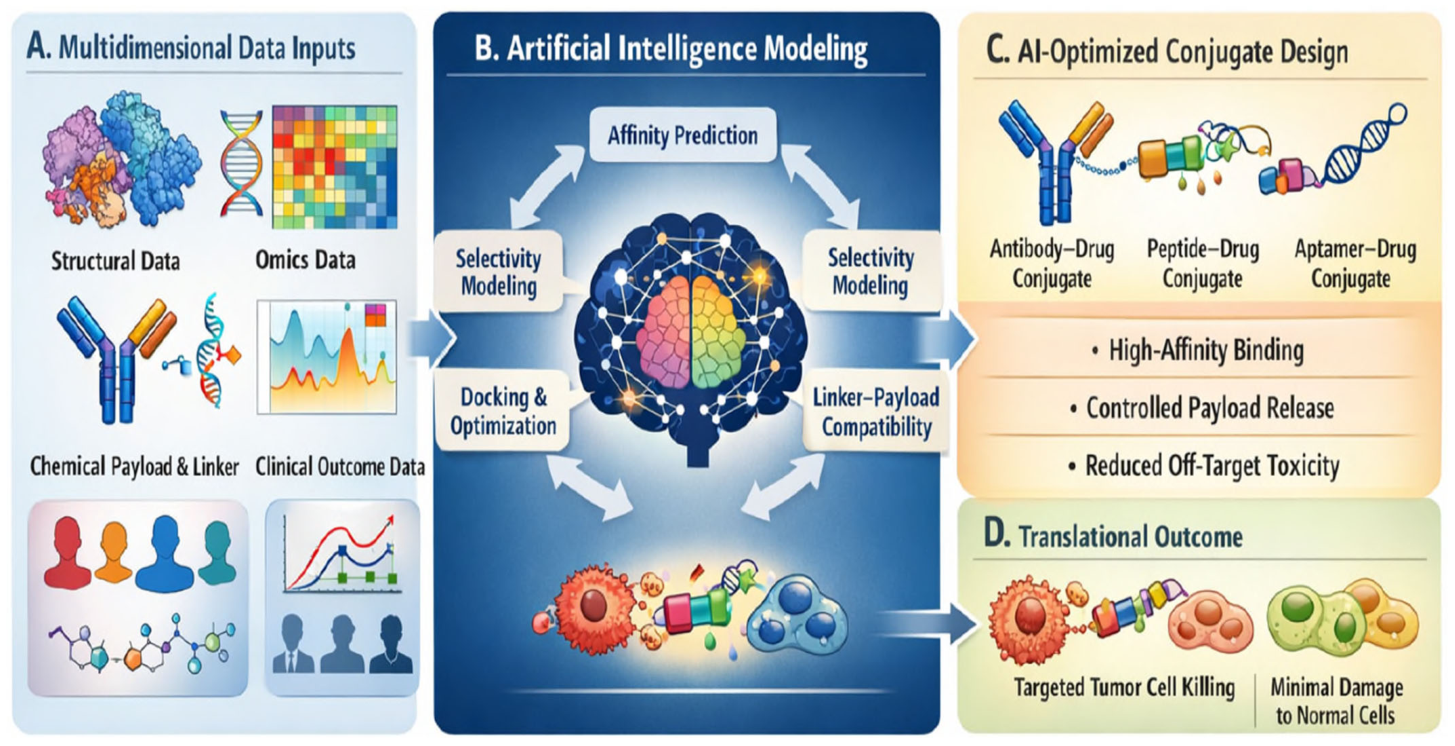
2.1. Structural and Biophysical Interaction Data
2.2. Omics Data for Target Contextualization
2.3. Chemical and Payload-Related Datasets
2.4. Clinical and Translational Outcome Data
2.5. Multimodal Data Integration and Systems-Level Modeling
2.6. Data Limitations and Standardization Requirement
3. Prediction of High-Affinity Biomolecule-Target Binding Using AI Models
3.1. Rule-Based Models for Data-Driven Learning
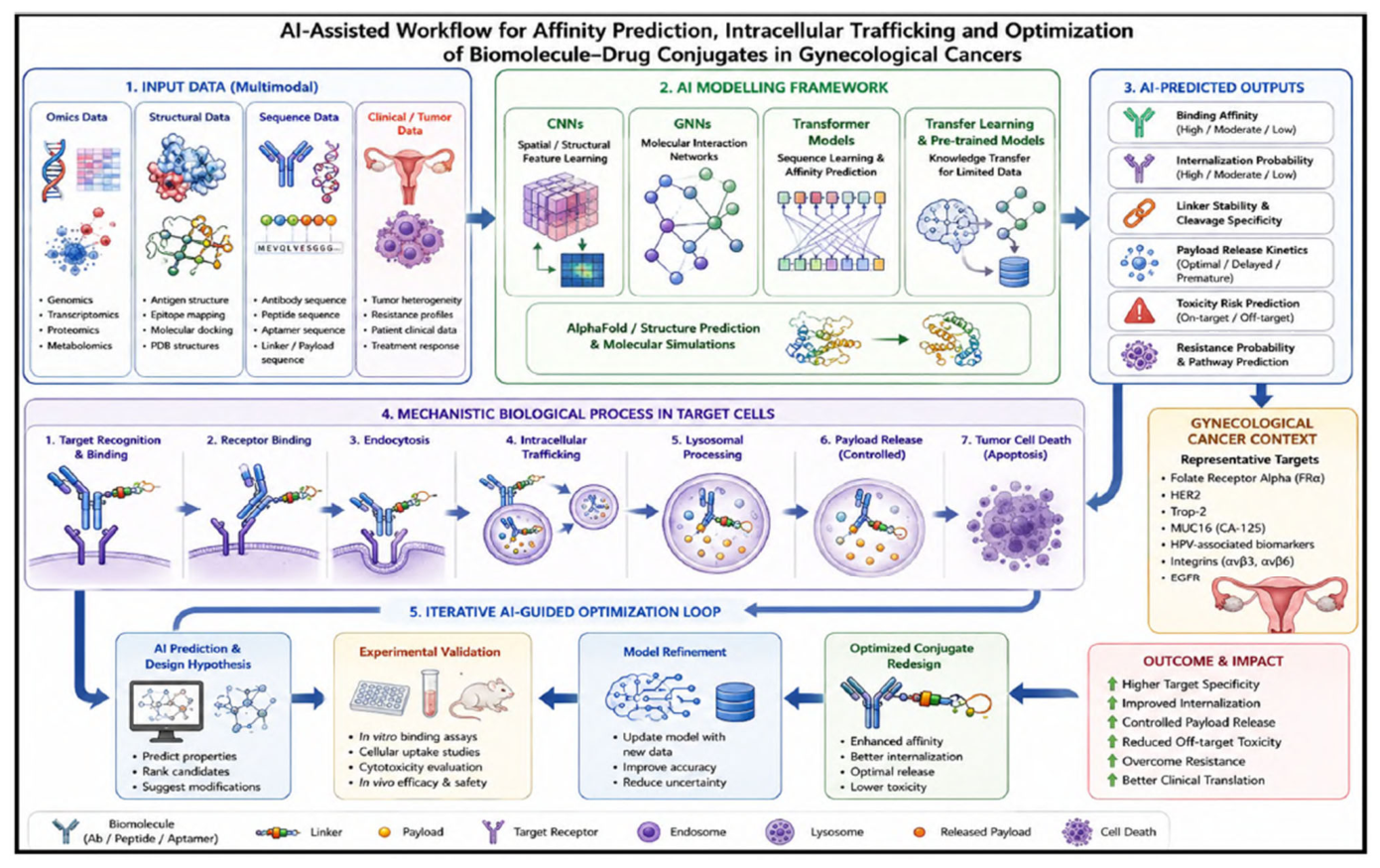
3.2. Affinity Prediction DL Architectures
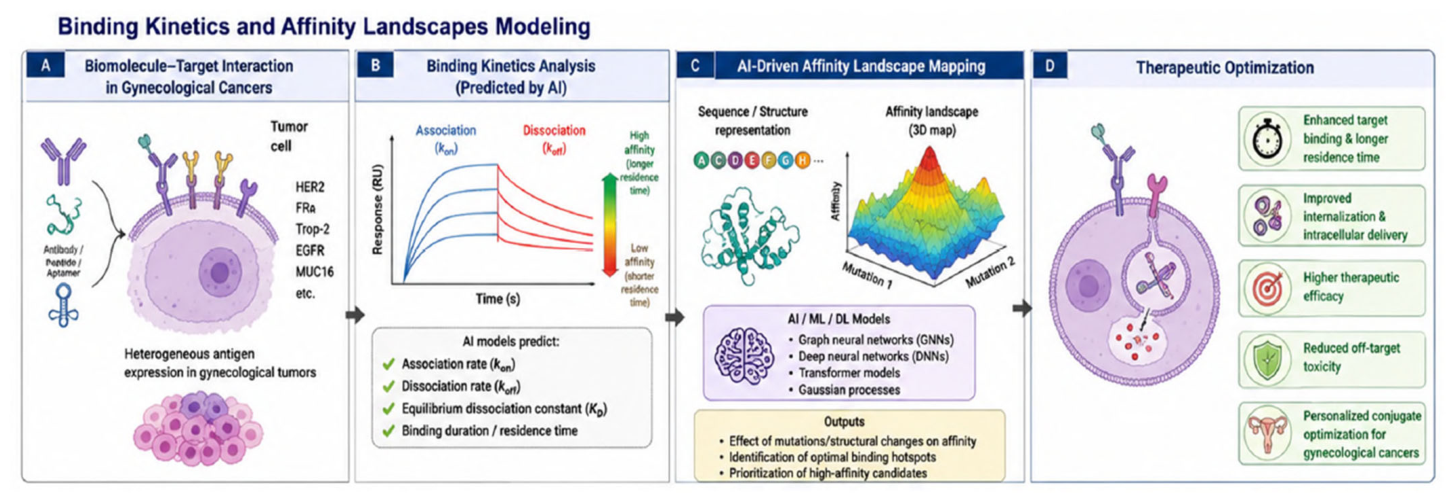
3.3. Binding Kinetics and Affinity Landscape Modeling
3.4. Predicting Selectivity and Off-Target Interactions
3.5. Transfer Learning and Learning with Limited Data
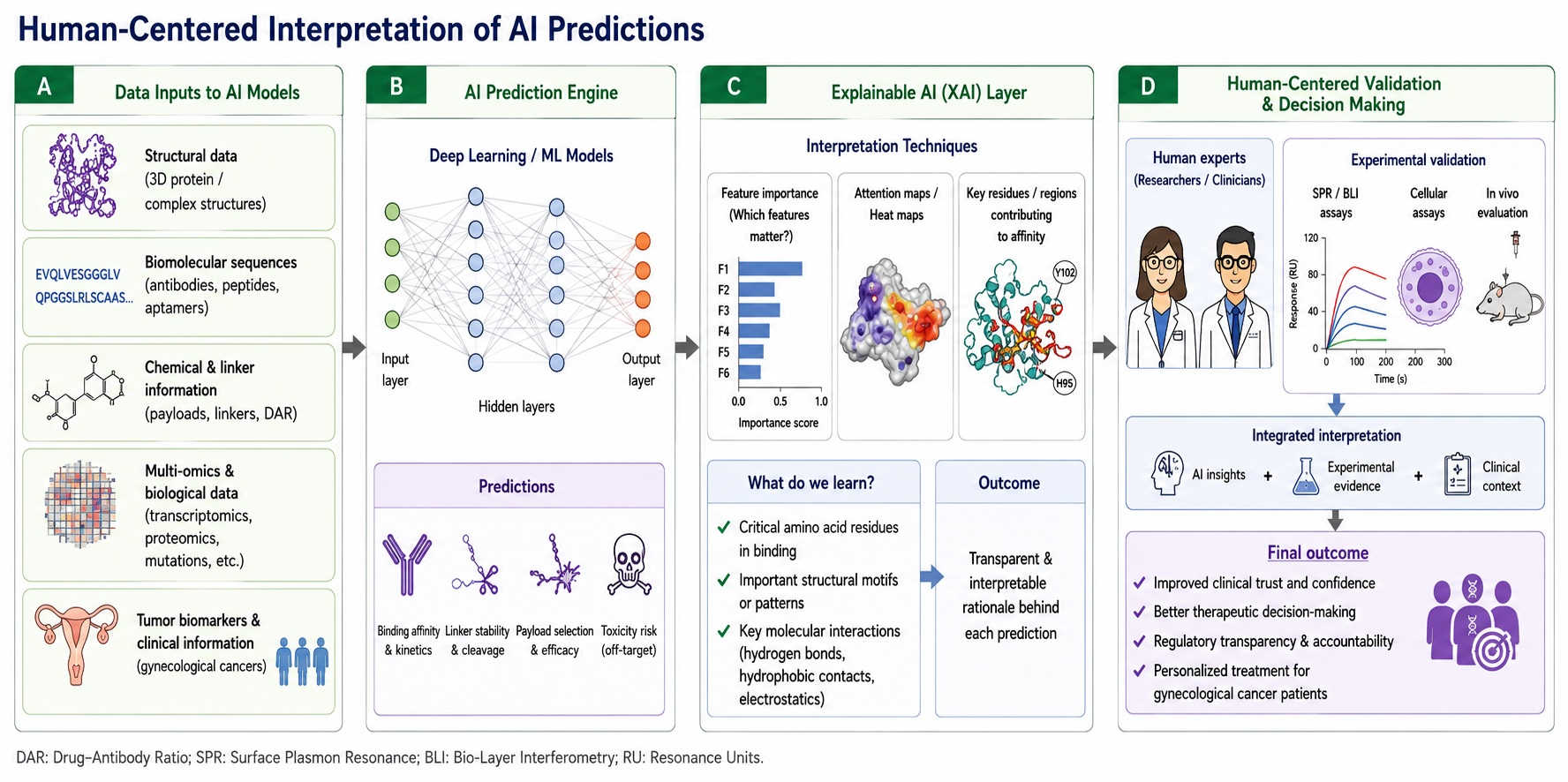
3.6. Human-Centered Interpretation of AI Predictions
3.7. Implications for Conjugate Design in Gynecological Cancers
4. AI-Assisted Structural Docking and Conjugate-Oriented Molecular Optimization
5. AI-Guided Linker and Payload Engineering for High-Precision Conjugates
5.1. AI-Driven Linker Design and Controlled Payload Release
5.2. Payload Selection, Compatibility, and Safety Optimization
5.3. Integrated Linker-Payload Co-Optimization Using AI
6. AI-Enabled Prediction of Cellular Internalization, Intracellular Trafficking, and Resistance Dynamics
6.1. Predicting Internalization Pathways and Endocytic Efficiency
6.2. Modeling Intracellular Trafficking and Payload Release
6.3. Anticipating Resistance Mechanisms and Adaptive Tumor Responses
7. Translational Challenges, Clinical Integration, and Regulatory Considerations for AI-Designed Conjugates
7.1. Bridging Computational Predictions with Experimental and Clinical Validation
7.2. Clinical Implementation and Patient Stratification
7.3. Regulatory and Ethical Considerations
8. Future Perspectives: AI as a Catalyst for Precision Conjugate Oncology in Gynecological Cancers
8.1. Toward Personalized and Adaptive Conjugate Therapies
8.2. Expanding Design Paradigms Through Multi-Targeting and Hybrid Systems
8.3. Building a Collaborative and Responsible AI Ecosystem
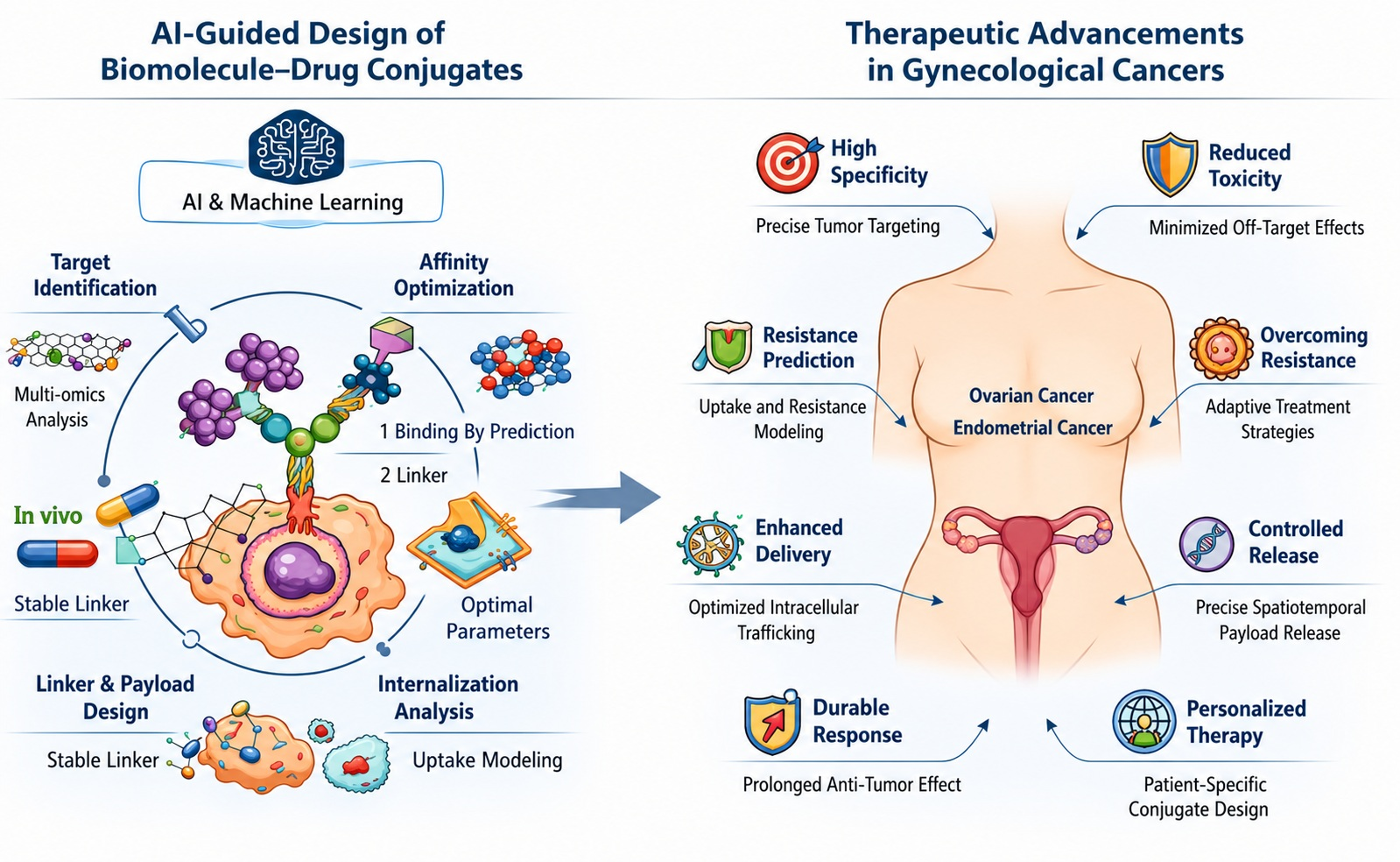
9. Conclusions
10. Clinical Impact of AI-Driven High-Affinity BDCs in Gynecological Cancer
- •
- Enhances precision oncology by enabling patient-specific design of BDCs, improving therapeutic efficacy while minimizing non-specific toxicity and preserving healthy reproductive tissues.
- •
- Accelerates clinical translation by reducing trial-and-error development, enabling faster identification of optimal candidates with better safety, stability, and efficacy profiles in gynecological cancers.
- •
- Improves treatment outcomes by predicting resistance mechanisms and optimizing intracellular delivery, leading to more durable responses and effective management of recurrent and heterogeneous tumors.
Author Contributions
Funding
Institutional Review Board Statement
Informed Consent Statement
Data Availability Statement
Acknowledgments
Conflicts of Interest
Abbreviations
| ADC | Antibody–Drug Conjugate |
| ADMET | Absorption, Distribution, Metabolism, Excretion, and Toxicity |
| AI | Artificial Intelligence |
| API | Active Pharmaceutical Ingredient |
| BDCs | Biomolecule–Drug Conjugates |
| CAR | Chimeric Antigen Receptor |
| CNN | Convolutional Neural Network |
| 3D-CRT | Three-Dimensional Conformal Radiotherapy |
| DL | Deep Learning |
| DNA | Deoxyribonucleic Acid |
| GNN | Graph Neural Network |
| ML | Machine Learning |
| MoA | Mechanism of Action |
| MUC16 | Mucin 16 |
| Omics | Genomics, Proteomics, Transcriptomics, etc. |
| OS | Overall Survival |
| PD | Pharmacodynamics |
| PDCs | Peptide–Drug Conjugates |
| PFS | Progression-Free Survival |
| PK | Pharmacokinetics |
| RNA | Ribonucleic Acid |
| RNN | Recurrent Neural Network |
| scFv | Single-chain Fragment Variable |
| SELEX | Systematic Evolution of Ligands by Exponential Enrichment |
| TME | Tumor Microenvironment |
| VEGF | Vascular Endothelial Growth Factor |
| VMAT | Volumetric Modulated Arc Therapy. |
References
- Shukla, S.; Shukla, A.K.; Ray, N.; Upadhyay, A.M.; Fahad, F.I.; Dutta, S.D.; Nagappan, A.; Mongre, R.K. Targeting pathways and mechanisms in gynecological cancer with antioxidant and anti-inflammatory phytochemical drugs. Onco 2025, 5, 24. [Google Scholar] [CrossRef]
- Balan, D.; Kampan, N.C.; Plebanski, M.; Abd Aziz, N.H. Unlocking ovarian cancer heterogeneity: Advancing immunotherapy through single-cell transcriptomics. Front. Oncol. 2024, 14, 1388663. [Google Scholar] [CrossRef] [PubMed]
- Wang, Y.; Zhu, N.; Liu, J.; Chen, F.; Song, Y.; Ma, Y.; Yang, Z.; Wang, D. Role of tumor microenvironment in ovarian cancer metastasis and clinical advancements. J. Transl. Med. 2025, 23, 539. [Google Scholar] [CrossRef]
- Krzyszczyk, P.; Acevedo, A.; Davidoff, E.J.; Timmins, L.M.; Marrero-Berrios, I.; Patel, M.; White, C.; Lowe, C.; Sherba, J.J.; Hartmanshenn, C.; et al. The growing role of precision and personalized medicine for cancer treatment. Technology 2018, 6, 79–100. [Google Scholar] [CrossRef]
- Yadav, J.; Gupta, S.; Venugopal, A.K.; Ghosh, A.; Gupta, I.J. 3D Conformal radiotherapy versus the conventional box technique for cervical cancer: A dosimetric observational study. Cureus 2025, 17, e89799. [Google Scholar] [CrossRef]
- Riccardi, F.; Dal Bo, M.; Macor, P.; Toffoli, G. A comprehensive overview on antibody-drug conjugates: From the conceptualization to cancer therapy. Front. Pharmacol. 2023, 14, 1274088. [Google Scholar] [CrossRef]
- Liolis, E.; Mulita, F.; Koutras, A.; Makatsoris, T.; Sivolapenko, G. Exploring bevacizumab’s role in gynecological cancers: An up-to-date narrative review focusing on ovarian cancer. Mater. Socio-Medica 2024, 36, 268–279. [Google Scholar] [CrossRef]
- Gupta, R.; Srivastava, D.; Sahu, M.; Tiwari, S.; Ambasta, R.K.; Kumar, P. Artificial intelligence to deep learning: Machine intelligence approach for drug discovery. Mol. Divers. 2021, 25, 1315–1360. [Google Scholar] [CrossRef] [PubMed]
- Garg, P.; Singhal, G.; Kulkarni, P.; Horne, D.; Salgia, R.; Singhal, S.S. Artificial intelligence-driven computational approaches in the development of anticancer drugs. Cancers 2024, 16, 3884. [Google Scholar] [CrossRef] [PubMed]
- Ahmad, B.; Ouahada, K.; Hamam, H. Machine learning for drug-target interaction prediction: A comprehensive review of models, challenges, and computational strategies. Comput. Struct. Biotechnol. J. 2026, 31, 316–345. [Google Scholar] [CrossRef]
- Long, R.; Zuo, H.; Tang, G.; Zhang, C.; Yue, X.; Yang, J.; Luo, X.; Deng, Y.; Qiu, J.; Li, J.; et al. Antibody-drug conjugates in cancer therapy: Applications and future advances. Front. Immunol. 2025, 16, 1516419. [Google Scholar] [CrossRef]
- Su, Z.; Xiao, D.; Xie, F.; Liu, L.; Wang, Y.; Fan, S.; Zhou, X.; Li, S. Antibody-drug conjugates: Recent advances in linker chemistry. Acta Pharm. Sin. B 2021, 11, 3889–3907. [Google Scholar] [CrossRef]
- Lu, Y.; Huang, W.; Li, Y.; Xu, Y.; Wei, Q.; Sha, C.; Guo, P. Leveraging artificial intelligence in antibody-drug conjugate development: From target identification to clinical translation in oncology. npj Precis. Onc. 2025, 9, 374. [Google Scholar] [CrossRef]
- Cui, J.; Yang, S.; Yi, L.; Xi, Q.; Yang, D.; Zuo, Y. Recent advances in deep learning for protein-protein interaction: A review. BioData Min. 2025, 18, 43. [Google Scholar] [CrossRef]
- Tan, P.; Li, S.; Huang, J.; Zhou, Z.; Hong, L. Harnessing deep learning to accelerate the development of antibodies and aptamers. Acta Pharm. Sin. B 2026, 16, 788–801. [Google Scholar] [CrossRef] [PubMed]
- Tang, J.; Gong, D.; Li, H.; Li, S. Artificial intelligence in biologic drug discovery: A review of methodological evolution and therapeutic applications. Acta Pharm. Sin. B 2026. [Google Scholar] [CrossRef]
- Sarkar, C.; Das, B.; Rawat, V.S.; Wahlang, J.B.; Nongpiur, A.; Tiewsoh, I.; Lyngdoh, N.M.; Das, D.; Bidarolli, M.; Sony, H.T. Artificial Intelligence and Machine Learning Technology Driven Modern Drug Discovery and Development. Int. J. Mol. Sci. 2023, 24, 2026. [Google Scholar] [CrossRef]
- Armstrong, G.B.; Graham, H.; Cheung, A.; Montaseri, H.; Burley, G.A.; Karagiannis, S.N.; Rattray, Z. Antibody-drug conjugates as multimodal therapies against hard-to-treat cancers. Adv. Drug Deliv. Rev. 2025, 224, 115648. [Google Scholar] [CrossRef]
- Qiu, X.; Li, H.; Ver Steeg, G.; Godzik, A. Advances in AI for protein structure prediction: Implications for cancer drug discovery and development. Biomolecules 2024, 14, 339. [Google Scholar] [CrossRef]
- Simon, B.D.; Ozyoruk, K.B.; Gelikman, D.G.; Harmon, S.A.; Türkbey, B. The future of multimodal artificial intelligence models for integrating imaging and clinical metadata: A narrative review. Diagn. Interv. Radiol. 2025, 31, 303–312. [Google Scholar] [CrossRef]
- Zhang, B.; Wan, Z.; Luo, Y.; Zhao, X.; Samayoa, J.; Zhao, W.; Wu, S. Multimodal integration strategies for clinical application in oncology. Front. Pharmacol. 2025, 16, 1609079. [Google Scholar] [CrossRef] [PubMed]
- Sobhani, N.; D’Angelo, A.; Pittacolo, M.; Mondani, G.; Generali, D. Future AI will most likely predict antibody-drug conjugate response in oncology: A review and expert opinion. Cancers 2024, 16, 3089. [Google Scholar] [CrossRef] [PubMed]
- Ocana, A.; Pandiella, A.; Privat, C.; Bravo, I.; Luengo-Oroz, M.; Amir, E.; Gyorffy, B. Integrating artificial intelligence in drug discovery and early drug development: A transformative approach. Biomark. Res. 2025, 13, 45. [Google Scholar] [CrossRef]
- Yang, R.; Zhang, L.; Bu, F.; Sun, F.; Cheng, B. AI-based prediction of protein-ligand binding affinity and discovery of potential natural product inhibitors against ERK2. BMC Chem. 2024, 18, 108. [Google Scholar] [CrossRef] [PubMed]
- Wang, H.; Meng, X.; Zhang, Y. Biomolecular interaction prediction: The era of AI. Adv. Sci. 2025, 12, e09501. [Google Scholar] [CrossRef] [PubMed]
- Rogers, A.W.; Vega-Ramon, F.; Lane, A.; Martin, P.; Zhang, D. Interpretable-AI-based model structural transfer learning to accelerate bioprocess model construction. Biotechnol. Bioeng. 2025, 122, 2819–2831. [Google Scholar] [CrossRef]
- Garg, P.; Salgia, R.; Singhal, S.S. Chemoresistance in gynecologic cancers: Mechanistic insights and emerging platforms to overcome drug failure. J. Ovarian Res. 2026, 19, 162. [Google Scholar] [CrossRef]
- Raghunathan, R.; Sethi, M.K.; Klein, J.A.; Zaia, J. Proteomics, glycomics, and glycoproteomics of matrisome molecules. Mol. Cell. Proteom. MCP 2019, 18, 2138–2148. [Google Scholar] [CrossRef]
- Hsu, C.Y.; Askar, S.; Alshkarchy, S.S.; Nayak, P.P.; Attabi, K.A.L.; Khan, M.A.; Mayan, J.A.; Sharma, M.K.; Islomov, S.; Soleimani Samarkhazan, H. AI-driven multi-omics integration in precision oncology: Bridging the data deluge to clinical decisions. Clin. Exp. Med. 2025, 26, 29. [Google Scholar] [CrossRef] [PubMed]
- Psilopatis, I.; Sipulina, N.; Stuebs, F.A.; Heindl, F.; Poeschke, P.; Bader, S.; Krueckel, A.; Fasching, P.A.; Beckmann, M.W.; Emons, J. The role of artificial intelligence in gynecologic oncology decision-making: A feasibility study. Gynecol. Obstet. Investig. 2025, 90, 483–491. [Google Scholar] [CrossRef]
- Fountzilas, E.; Pearce, T.; Baysal, M.A.; Chakraborty, A.; Tsimberidou, A.M. Convergence of evolving artificial intelligence and machine learning techniques in precision oncology. npj Digit. Med. 2025, 8, 75. [Google Scholar] [CrossRef]
- Weissler, E.H.; Naumann, T.; Andersson, T.; Ranganath, R.; Elemento, O.; Luo, Y.; Freitag, D.F.; Benoit, J.; Hughes, M.C.; Khan, F.; et al. The role of machine learning in clinical research: Transforming the future of evidence generation. Trials 2021, 22, 537. [Google Scholar] [CrossRef]
- Ching, T.; Himmelstein, D.S.; Beaulieu-Jones, B.K.; Kalinin, A.A.; Do, B.T.; Way, G.P.; Ferrero, E.; Agapow, P.M.; Zietz, M.; Hoffman, M.M.; et al. Opportunities and obstacles for deep learning in biology and medicine. J. R. Soc. Interface 2018, 15, 20170387. [Google Scholar] [CrossRef]
- Carini, C.; Seyhan, A.A. Tribulations and future opportunities for artificial intelligence in precision medicine. J. Transl. Med. 2024, 22, 411. [Google Scholar] [CrossRef] [PubMed]
- Silverstein, J.; Karlan, B.; Herrington, N.; Konecny, G. Antibody-drug conjugates as targeted therapy for treating gynecologic cancers: Update 2025. Curr. Opin. Obstet. Gynecol. 2025, 37, 5–15. [Google Scholar] [CrossRef] [PubMed]
- Esmaeilpour, D.; Hamblin, M.R.; Cheng, J.; Khosravi, A.; Liu, J.; Zarepour, A.; Zarrabi, A.; Sillanpää, M.; Nazarzadeh Zare, E.; Shen, J.; et al. Artificial intelligence driven protein design and sustainable nanomedicine for advanced theranostics. Bioact. Mater. 2026, 60, 425–455. [Google Scholar] [CrossRef]
- Hu, J.; Hu, S.; Xia, M.; Zheng, K.; Zhang, X. Drug-target binding affinity prediction based on power graph and word2vec. BMC Med. Genom. 2025, 18, 9. [Google Scholar] [CrossRef]
- Rejili, M. Clinical advances and challenges of antibody-mediated targeted drug delivery in breast cancer therapeutics. Discov. Onc. 2026, 17, 377. [Google Scholar] [CrossRef]
- Sun, B.; Loftus, A.; Kekenes-Huskey, P.M. Prediction of biomolecule kinetics using physics-based Brownian dynamics to data-driven machine learning methods. bioRxiv 2025. [Google Scholar] [CrossRef]
- Zhou, X.; Tao, W. Artificial intelligence in drug discovery from advanced molecular representation to pipeline applications. Front. Bioinform. 2026, 6, 1755843. [Google Scholar] [CrossRef] [PubMed]
- Chandra, A.; Tünnermann, L.; Löfstedt, T.; Gratz, R. Transformer-based deep learning for predicting protein properties in the life sciences. eLife 2023, 12, e82819. [Google Scholar] [CrossRef]
- Spassov, D.S. Binding Affinity Determination in Drug Design: Insights from Lock and Key, Induced Fit, Conformational Selection, and Inhibitor Trapping Models. Int. J. Mol. Sci. 2024, 25, 7124. [Google Scholar] [CrossRef] [PubMed]
- Kuzu, O.F.; Granerud, L.J.T.; Saatcioglu, F. Navigating the landscape of protein folding and proteostasis: From molecular chaperones to therapeutic innovations. Signal Transduct. Target. Ther. 2025, 10, 358. [Google Scholar] [CrossRef]
- Guo, L.; Zhang, S.; Chen, H.; Li, Y.; Liu, Y.; Liu, W.; Wang, Q.; Tang, Z.; Jiang, P.; Wang, J. Application of artificial intelligence in assisting treatment of gynecologic tumors: A systematic review. Vis. Comput. Ind. Biomed. Art 2025, 8, 23. [Google Scholar] [CrossRef]
- Zhang, Y.; Qin, Q. Prospects and challenges of deep learning in gynecologic malignancies. Front. Oncol. 2025, 15, 1592078. [Google Scholar] [CrossRef] [PubMed]
- Alum, E.U. AI-driven biomarker discovery: Enhancing precision in cancer diagnosis and prognosis. Discov. Oncol. 2025, 16, 313. [Google Scholar] [CrossRef] [PubMed]
- Alkhanbouli, R.; Matar Abdulla Almadhaani, H.; Alhosani, F.; Simsekler, M.C.E. The role of explainable artificial intelligence in disease prediction: A systematic literature review and future research directions. BMC Med. Inform. Decis. Mak. 2025, 25, 110. [Google Scholar] [CrossRef] [PubMed]
- Garg, P.; Mohanty, A.; Ramisetty, S.; Kulkarni, P.; Horne, D.; Pisick, E.; Salgia, R.; Singhal, S.S. Artificial intelligence and allied subsets in early detection and preclusion of gynecological cancers. Biochim. Biophys. Acta Rev. Cancer 2023, 1878, 189026. [Google Scholar] [CrossRef] [PubMed]
- Sobhani, N.; Kugeratski, F.G.; Venturini, S.; Roudi, R.; Nguyen, T.; D’Angelo, A.; Generali, D. AI-based cancer models in oncology: From diagnosis to ADC drug prediction. Cancers 2025, 17, 3419. [Google Scholar] [CrossRef]
- Su, D.; Zhang, D. Linker design impacts antibody-drug conjugate pharmacokinetics and efficacy via modulating the stability and payload release efficiency. Front. Pharmacol. 2021, 12, 687926. [Google Scholar] [CrossRef]
- Valsasina, B.; Orsini, P.; Terenghi, C.; Ocana, A. Present scenario and future landscape of payloads for ADCs: Focus on DNA-interacting agents. Pharmaceuticals 2024, 17, 1338. [Google Scholar] [CrossRef]
- Izzo, D.; Ascione, L.; Guidi, L.; Marsicano, R.M.; Koukoutzeli, C.; Trapani, D.; Curigliano, G. Innovative payloads for ADCs in cancer treatment: Moving beyond the selective delivery of chemotherapy. Ther. Adv. Med. Oncol. 2025, 17, 17588359241309461. [Google Scholar] [CrossRef]
- Hammood, M.; Craig, A.W.; Leyton, J.V. Impact of endocytosis mechanisms for the receptors targeted by the currently approved antibody-drug conjugates (ADCs)-a necessity for future ADC research and development. Pharmaceuticals 2021, 14, 674. [Google Scholar] [CrossRef]
- Kumar, A.; Ahmad, A.; Vyawahare, A.; Khan, R. Membrane trafficking and subcellular drug targeting pathways. Front. Pharmacol. 2020, 11, 629. [Google Scholar] [CrossRef]
- Garg, P.; Malhotra, J.; Kulkarni, P.; Horne, D.; Salgia, R.; Singhal, S.S. Emerging therapeutic strategies to overcome drug resistance in cancer cells. Cancers 2024, 16, 2478. [Google Scholar] [CrossRef]
- Ho, D.; Quake, S.R.; McCabe, E.R.B.; Chng, W.J.; Chow, E.K.; Ding, X.; Gelb, B.D.; Ginsburg, G.S.; Hassenstab, J.; Ho, C.M.; et al. Enabling technologies for personalized and precision medicine. Trends Biotechnol. 2020, 38, 497–518. [Google Scholar] [CrossRef] [PubMed]
- Dermawan, D.; Alotaiq, N. From lab to clinic: How artificial intelligence (AI) is reshaping drug discovery timelines and industry outcomes. Pharmaceuticals 2025, 18, 981. [Google Scholar] [CrossRef]
- Lekadir, K.; Frangi, A.F.; Porras, A.R.; Glocker, B.; Cintas, C.; Langlotz, C.P.; Weicken, E.; Asselbergs, F.W.; Prior, F.; Collins, G.S.; et al. FUTURE-AI: International consensus guideline for trustworthy and deployable artificial intelligence in healthcare. BMJ (Clin. Res. Ed.) 2025, 388, e081554. [Google Scholar] [CrossRef]
- Theocharopoulos, C.; Lialios, P.P.; Samarkos, M.; Gogas, H.; Ziogas, D.C. Antibody-drug conjugates: Functional principles and applications in oncology and beyond. Vaccines 2021, 9, 1111. [Google Scholar] [CrossRef]
- Tiwary, P.; Herron, L.; John, R.; Lee, S.; Sanwal, D.; Wang, R. Generative AI for computational chemistry: A roadmap to predicting emergent phenomena. Proc. Natl. Acad. Sci. USA 2025, 122, e2415655121. [Google Scholar] [CrossRef]
- Martarelli, N.; Capurro, M.; Mansour, G.; Jahromi, R.V.; Stella, A.; Rossi, R.; Longetti, E.; Bigerna, B.; Gentili, M.; Rosseto, A.; et al. Artificial Intelligence-Powered Molecular Docking and Steered Molecular Dynamics for Accurate scFv Selection of Anti-CD30 Chimeric Antigen Receptors. Int. J. Mol. Sci. 2024, 25, 7231. [Google Scholar] [CrossRef]
- de Almeida, V.M.; Soares, M.B.P.; Santos-Filho, O.A. Exploring experimental and in silico approaches for antibody-drug conjugates in oncology therapies. Pharmaceuticals 2025, 18, 1198. [Google Scholar] [CrossRef]
- Salo-Ahen, O.M.H.; Alanko, I.; Bhadane, R.; Bonvin, A.M.J.J.; Honorato, R.V.; Hossain, S.; Juffer, A.H.; Kabedev, A.; Lahtela-Kakkonen, M.; Larsen, A.S.; et al. Molecular dynamics simulations in drug discovery and pharmaceutical development. Processes 2021, 9, 71. [Google Scholar] [CrossRef]
- Serrano, D.R.; Luciano, F.C.; Anaya, B.J.; Ongoren, B.; Kara, A.; Molina, G.; Ramirez, B.I.; Sánchez-Guirales, S.A.; Simon, J.A.; Tomietto, G.; et al. Artificial Intelligence (AI) Applications in drug discovery and drug delivery: Revolutionizing personalized medicine. Pharmaceutics 2024, 16, 1328. [Google Scholar] [CrossRef]
- Noriega, H.A.; Wang, X.S. AI-driven innovation in antibody-drug conjugate design. Front. Drug Discov. 2025, 5, 1628789. [Google Scholar] [CrossRef]
- Sato, S.; Shoji, T.; Jo, A.; Otsuka, H.; Abe, M.; Tatsuki, S.; Chiba, Y.; Takatori, E.; Kaido, Y.; Nagasawa, T.; et al. Antibody-drug conjugates: The new treatment approaches for ovarian cancer. Cancers 2024, 16, 2545. [Google Scholar] [CrossRef]
- Alradwan, I.A.; Alnefaie, M.K.; Al Fayez, N.; Aodah, A.H.; Majrashi, M.A.; Alturki, M.; Fallatah, M.M.; Almughem, F.A.; Tawfik, E.A.; Alshehri, A.A. Strategic and chemical advances in antibody-drug conjugates. Pharmaceutics 2025, 17, 1164. [Google Scholar] [CrossRef]
- Zhou, M.; Huang, Z.; Ma, Z.; Chen, J.; Lin, S.; Yang, X.; Gong, Q.; Braunstein, Z.; Wei, Y.; Rao, X.; et al. The next frontier in antibody-drug conjugates: Challenges and opportunities in cancer and autoimmune therapy. Cancer Drug Resist. 2025, 8, 34. [Google Scholar] [CrossRef]
- Garg, P.; Krishna, M.; Kulkarni, P.; Horne, D.; Salgia, R.; Singhal, S.S. Machine learning models for predicting gynecological cancers: Advances, challenges, and future directions. Cancers 2025, 17, 2799. [Google Scholar] [CrossRef]
- Chahal, G.; Helbig, K.; Parton, R.; Monson, E. The biology of endosomal escape: Strategies for enhanced delivery of therapeutics. ACS Nano 2026, 20, 1789–1813. [Google Scholar] [CrossRef]
- Koshkimbayeva, G.; Amirkhanova, A.; Orazymbetova, A.; Nurakhova, A.; Maimakova, A.; Duisenbayeva, A.; Akhmad, N.; Abilova, A.; Abilbayeva, A.; Akhelova, S.; et al. Recent therapeutic advances in gynecologic oncology: Evolving roles of immunotherapy, antibody-drug conjugates, and clinical trial innovations. Front. Oncol. 2026, 15, 1697180. [Google Scholar] [CrossRef]
- Qi, C.; Wang, W.; Jiang, S.; Liu, Q.; Song, X.; Fang, H.; Wei, Z. Artificial Intelligence agents for biological research: A survey. Brief. Bioinform. 2026, 27, bbag075. [Google Scholar] [CrossRef]
- Pergialiotis, V.; Thomakos, N.; Lygizos, V.; Fanaki, M.; Varthaliti, A.; Vlachos, D.E.; Haidopoulos, D. Discrepancies between MDT recommendations and AI-generated decisions in gynecologic oncology: A retrospective comparative cohort study. Cancers 2026, 18, 452. [Google Scholar] [CrossRef] [PubMed]
- Martens, R.J.H.; van Doorn, W.; Leers, M.P.G.; Meex, S.J.R.; Helmich, F. Unraveling uncertainty: The impact of biological and analytical variation on the prediction uncertainty of categorical prediction models. J. Appl. Lab. Med. 2024, 10, 339–351. [Google Scholar] [CrossRef]
- Dewaker, V.; Morya, V.K.; Kim, Y.H.; Park, S.T.; Kim, H.S.; Koh, Y.H. Revolutionizing oncology: The role of Artificial Intelligence (AI) as an antibody design, and optimization tools. Biomark. Res. 2025, 13, 52. [Google Scholar] [CrossRef]
- Sharma, K.; Manchikanti, P. Regulation of artificial intelligence in drug discovery and health care. Biotechnol. Law. Rep. 2020, 39, 371–380. [Google Scholar] [CrossRef]
- Pham, T. Ethical and legal considerations in healthcare AI: Innovation and policy for safe and fair use. R. Soc. Open Sci. 2025, 12, 241873. [Google Scholar] [CrossRef]
- Bulić, L.; Brlek, P.; Hrvatin, N.; Brenner, E.; Škaro, V.; Projić, P.; Rogan, S.A.; Bebek, M.; Shah, P.; Primorac, D. AI-driven advances in precision oncology: Toward optimizing cancer diagnostics and personalized treatment. AI 2026, 7, 11. [Google Scholar] [CrossRef]
- Abdulmalek, S.; Nasir, A.; Jabbar, W.A.; Almuhaya, M.A.M.; Bairagi, A.K.; Khan, M.A.; Kee, S.H. IoT-based healthcare-monitoring system towards improving quality of life: A review. Healthcare 2022, 10, 1993. [Google Scholar] [CrossRef]
- Zonayed; Tasnim, R.; Jhara, S.S.; Mimona, M.A.; Hussein, M.R.; Mobarak, M.H.; Salma, U. Machine learning and IoT in healthcare: Recent advancements, challenges & future direction. Adv. Biomark. Sci. Technol. 2025, 7, 335–364. [Google Scholar] [CrossRef]
- Lantsman, T.; Matulonis, U.A. Antibody-drug conjugates in gynecologic oncology: Advances, challenges, and future directions. BioDrugs Clin. Immunother. Biopharm. Gene Ther. 2026, 40, 177–195. [Google Scholar] [CrossRef] [PubMed]
- Nouis, S.C.; Uren, V.; Jariwala, S. Evaluating accountability, transparency, and bias in AI-assisted healthcare decision- making: A qualitative study of healthcare professionals’ perspectives in the UK. BMC Med. Ethics 2025, 26, 89. [Google Scholar] [CrossRef]
- Cheng, C.H.; Shi, S.S. Artificial intelligence in cancer: Applications, challenges, and future perspectives. Mol. Cancer 2025, 24, 274. [Google Scholar] [CrossRef] [PubMed]
- McKee, M.; Wouters, O.J. The challenges of regulating artificial intelligence in healthcare comment on “clinical decision support and new regulatory frameworks for medical devices: Are we ready for it?—A viewpoint paper. Int. J. Health Policy Manag. 2023, 12, 7261. [Google Scholar] [CrossRef] [PubMed]




| Biomolecule Type | Typical Targets in Gynecological Cancers | AI Models Used | Representative AI Platforms/Datasets | Key Design Parameters Optimized | Functional Advantages | Representative Applications | Translational Status | References |
|---|---|---|---|---|---|---|---|---|
| Monoclonal antibodies (ADCs) | HER2, FRα, Trop-2, MUC16, EGFR | Deep neural networks, GNNs, AlphaFold-based structural prediction | AlphaFold, Protein Data Bank (PDB), BindingDB, DeepChem | Antigen–antibody affinity, epitope mapping, linker stability, drug–antibody ratio (DAR) | High specificity, prolonged circulation, strong internalization | Ovarian & endometrial cancer ADCs (e.g., FRα-targeted systems) | Several FDA-approved; next-generation AI-optimized ADCs in preclinical stage | [5,6,11,12,13] |
| Antibody fragments (Fab, scFv, nanobodies) | HER2-low tumors, stromal antigens | AI-guided protein engineering, sequence–structure modeling | Rosetta AI, AlphaFold-Multimer, SAbDab database | Binding kinetics, size reduction, penetration efficiency | Improved tumor penetration, reduced immunogenicity | AI-designed nanobody–drug conjugates | Preclinical | [14,15,16] |
| Peptide–drug conjugates (PDCs) | Integrins, LHRH receptor, folate receptor | ML, peptide–target docking algorithms | Peptide Atlas, Auto Dock, Deep Purpose | Peptide affinity, stability, enzymatic cleavage site selection | Small size, rapid internalization, low immunogenicity | Ovarian cancer-targeted PDCs | Preclinical–early clinical | [14,17,18] |
| Aptamer–drug conjugates (ApDCs) | EpCAM, nucleolin, VEGF | AI-based SELEX optimization, molecular dynamics simulations | SELEX datasets, RNA Composer, molecular dynamics simulation platforms | Aptamer folding stability, binding energy, serum stability | High specificity, easy synthesis, tunable chemistry | Cervical and ovarian cancer ApDCs | Preclinical | [15,19] |
| Protein scaffold-based conjugates | TME markers | AI-guided scaffold redesign | Rosetta, Protein MPNN, FoldX | Structural rigidity, binding orientation | Modular design, enhanced stability | Experimental systems | Exploratory | [16,19] |
| Multi-biomolecule conjugates | Dual antigens (HER2 + FRα) | Multi-task learning AI models | Multi-omics integration platforms, TCGA, ensemble AI frameworks | Dual-affinity balancing, payload synergy | Overcomes heterogeneity, reduces resistance | Dual-target gynecologic conjugates | Emerging | [20,21,22] |
| AI Methodology | Typical Input Data | Predicted Output | Application in Conjugate Design | Representative Use Case |
|---|---|---|---|---|
| Convolutional Neural Networks (CNNs) | 3D protein–ligand structural grids, docking poses | Binding affinity, spatial interaction patterns | Structural feature extraction for antigen–biomolecule binding prediction | ADC binding site optimization in ovarian cancer targets |
| Graph Neural Networks (GNNs) | Molecular graphs (atoms, bonds, interaction networks) | Affinity scores, molecular interaction fingerprints | Modeling biomolecule–target interaction topology and binding energy | FRα/HER2 targeting antibody optimization |
| Transformer-based models | Protein sequences, peptide libraries, SMILES strings | Sequence-based affinity prediction, binding probability | Context-aware sequence learning for biomolecule engineering | Cervical cancer HPV-related antigen targeting |
| Transfer Learning models | Pretrained protein–ligand datasets + limited cancer-specific data | Adapted predictive models for new targets | Enables model training in low-data gynecological cancers | Rare ovarian tumor antigen prediction |
| AlphaFold-assisted structural modeling | Amino acid sequences | 3D protein structures | Structural embedding for docking and affinity prediction | Endometrial cancer receptor modeling |
| Ensemble Learning models | Multi-omics + structural + chemical data | Integrated prediction of efficacy/toxicity | Multi-parameter conjugate optimization | Multi-target gynecological conjugates |
| Conjugate Development Stage | Conventional Approach | AI-Based Strategy | Key Algorithms/Models | Representative Tools/Datasets | Outcomes Improved | Impact on Gynecological Cancer Therapy | References |
|---|---|---|---|---|---|---|---|
| Target identification | Manual biomarker screening | Multi-omics AI integration | Random forest, DL, network biology | TCGA, GEO, cBioPortal | Accurate tumor-specific target discovery | Identification of novel ovarian and endometrial cancer antigens | [2,20,29] |
| Affinity prediction | In vitro binding assays | AI-predicted binding energy and kinetics | GNNs, molecular docking AI | AlphaFold, PDBbind, DeepChem | High-affinity selection before synthesis | Reduces experimental failure rate | [14,24,37] |
| Biomolecule engineering | Trial-and-error mutagenesis | AI-guided sequence optimization | Protein language models, transformer networks | ESM protein language models, Rosetta | Improved stability and specificity | Generation of next-generation antibodies and peptides | [14,15,16] |
| Linker design | Empirical chemistry-based approaches | AI-predicted cleavage specificity | Molecular dynamics + ML | Auto Dock, molecular dynamics simulation datasets | Controlled intracellular release | Reduced non-specific target toxicity | [12,50] |
| Payload selection | Limited cytotoxic screening | AI toxicity–efficacy prediction | QSAR, deep toxicity networks | QSAR databases, PubChem BioAssay | Optimal therapeutic window | Safer payloads for gynecological cancers | [51,52] |
| Internalization prediction | Cell-line screening | AI modeling of receptor trafficking | Systems biology ML | Cell imaging datasets, systems biology modeling platforms | Improved cellular uptake | Enhanced drug delivery efficiency | [53,54] |
| Resistance prediction | Post-treatment observation | AI-based resistance pathway modeling | Pathway AI, digital twins | Longitudinal transcriptomic datasets, digital twin frameworks | Early resistance detection | Personalized conjugate redesign | [13,55] |
| Tumor heterogeneity handling | Single-target design | AI-driven multi-target optimization | Ensemble learning models | Single-cell RNA-seq datasets, TCGA | Broader tumor coverage | Better response in heterogeneous ovarian tumors | [2,21,22] |
| Personalized conjugate design | Population-based therapy | Patient-specific AI modeling | Precision oncology AI | Precision oncology datasets, multi-omics repositories | Individualized conjugates | Personalized gynecological cancer therapy | [4,56] |
| Clinical translation support | Long trial cycles | AI-assisted trial stratification | Predictive analytics | Clinical trial registries, predictive analytics platforms | Faster clinical success | Reduced trial failure | [57,58] |
| Parameter | Conventional Chemotherapy | Traditional Targeted Conjugates | AI-Guided High-Affinity Biomolecule–Drug Conjugates | References |
|---|---|---|---|---|
| Target specificity | Non-selective cytotoxicity | Antigen-dependent but variable | Potential for affinity-optimized and context-specific targeting | [5,6,18] |
| Design strategy | Empirical, trial-based | Semi-rational molecular design | Data-driven and predictive AI-assisted modeling | [4,13,49] |
| Off-target toxicity | High systemic toxicity | Reduced but still present | Potential reduction through optimized binding and controlled release | [12,51] |
| Tumor heterogeneity handling | Limited capability | Restricted by single-target dependence | AI-assisted multi-parameter target adaptation and stratification | [2,21,22] |
| Resistance prediction | Primarily post-treatment observation | Limited predictive capability | Emerging AI-based prediction of resistance-associated pathways | [13,55] |
| Internalization efficiency | Uncontrolled | Variable and target-dependent | Computational optimization of uptake and intracellular trafficking | [53,54] |
| Payload release control | Non-specific systemic exposure | Linker-dependent release | AI-assisted prediction of spatiotemporal release behavior | [12,50] |
| Personalization potential | Minimal | Limited | Potential for patient-specific conjugate optimization | [4,56] |
| Clinical translation efficiency | Variable and often limited by toxicity | Moderate translational success | Emerging translational potential with limited prospective clinical validation | [57,58] |
| Development workflow | Sequential experimental screening | Iterative molecular optimization | AI-assisted virtual screening and multivariable optimization | [20,36] |
| Validation status | Clinically established | Clinically established in selected settings | Predominantly preclinical and early translational stage | [13,57,58] |
| Future scalability | Limited adaptability | Moderate scalability | Potentially scalable through continuous data-driven learning | [20,36] |
Disclaimer/Publisher’s Note: The statements, opinions and data contained in all publications are solely those of the individual author(s) and contributor(s) and not of MDPI and/or the editor(s). MDPI and/or the editor(s) disclaim responsibility for any injury to people or property resulting from any ideas, methods, instructions or products referred to in the content. |
© 2026 by the authors. Licensee MDPI, Basel, Switzerland. This article is an open access article distributed under the terms and conditions of the Creative Commons Attribution (CC BY) license.
Share and Cite
Garg, P.; Horne, D.; Salgia, R.; Singhal, S.S. AI-Driven Design of High Affinity Biomolecule–Drug Conjugates for Gynecological Cancer Therapy: An Up-to-Date Narrative Review. Cancers 2026, 18, 1856. https://doi.org/10.3390/cancers18111856
Garg P, Horne D, Salgia R, Singhal SS. AI-Driven Design of High Affinity Biomolecule–Drug Conjugates for Gynecological Cancer Therapy: An Up-to-Date Narrative Review. Cancers. 2026; 18(11):1856. https://doi.org/10.3390/cancers18111856
Chicago/Turabian StyleGarg, Pankaj, David Horne, Ravi Salgia, and Sharad S. Singhal. 2026. "AI-Driven Design of High Affinity Biomolecule–Drug Conjugates for Gynecological Cancer Therapy: An Up-to-Date Narrative Review" Cancers 18, no. 11: 1856. https://doi.org/10.3390/cancers18111856
APA StyleGarg, P., Horne, D., Salgia, R., & Singhal, S. S. (2026). AI-Driven Design of High Affinity Biomolecule–Drug Conjugates for Gynecological Cancer Therapy: An Up-to-Date Narrative Review. Cancers, 18(11), 1856. https://doi.org/10.3390/cancers18111856