Myeloid Malignancies Beyond the Cell: Targeting the Tumour Microenvironment with Next-Generation Immunotherapies

 , , and
Simple Summary
Abstract
1. Introduction
1.1. Challenges in Treatment of Myeloid Malignancies
1.2. Impact of Metabolism and Epigenetic Regulation of the TME on Myeloid Disorders
1.3. Alterations in Cytokine Milieu
1.4. Immune Cell Dysfunction
1.5. Stromal Cells
2. Immune Checkpoint Inhibitors: Progress and Challenges
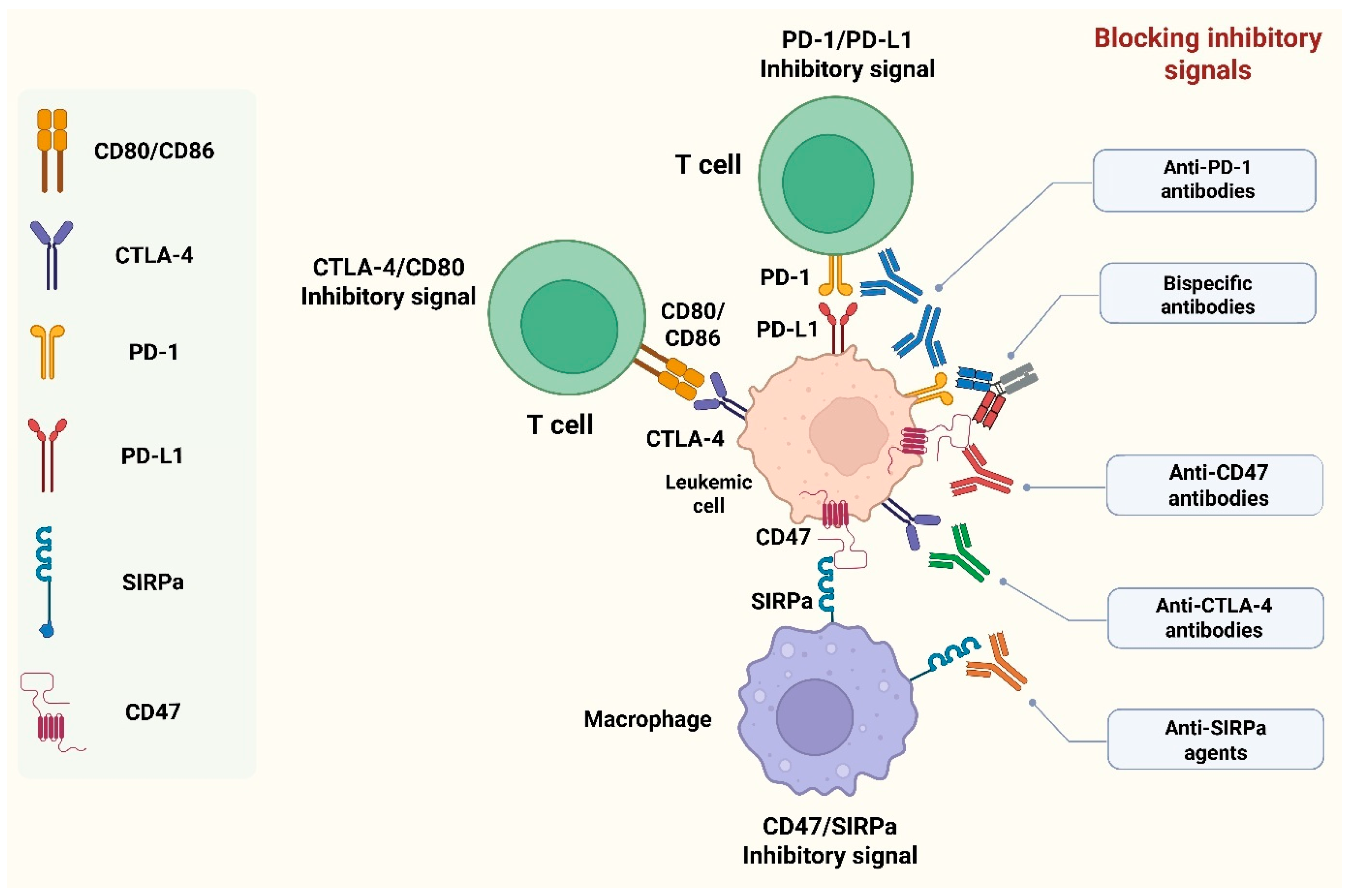
3. PD-1 and CTLA-4 in Myeloid Malignancies
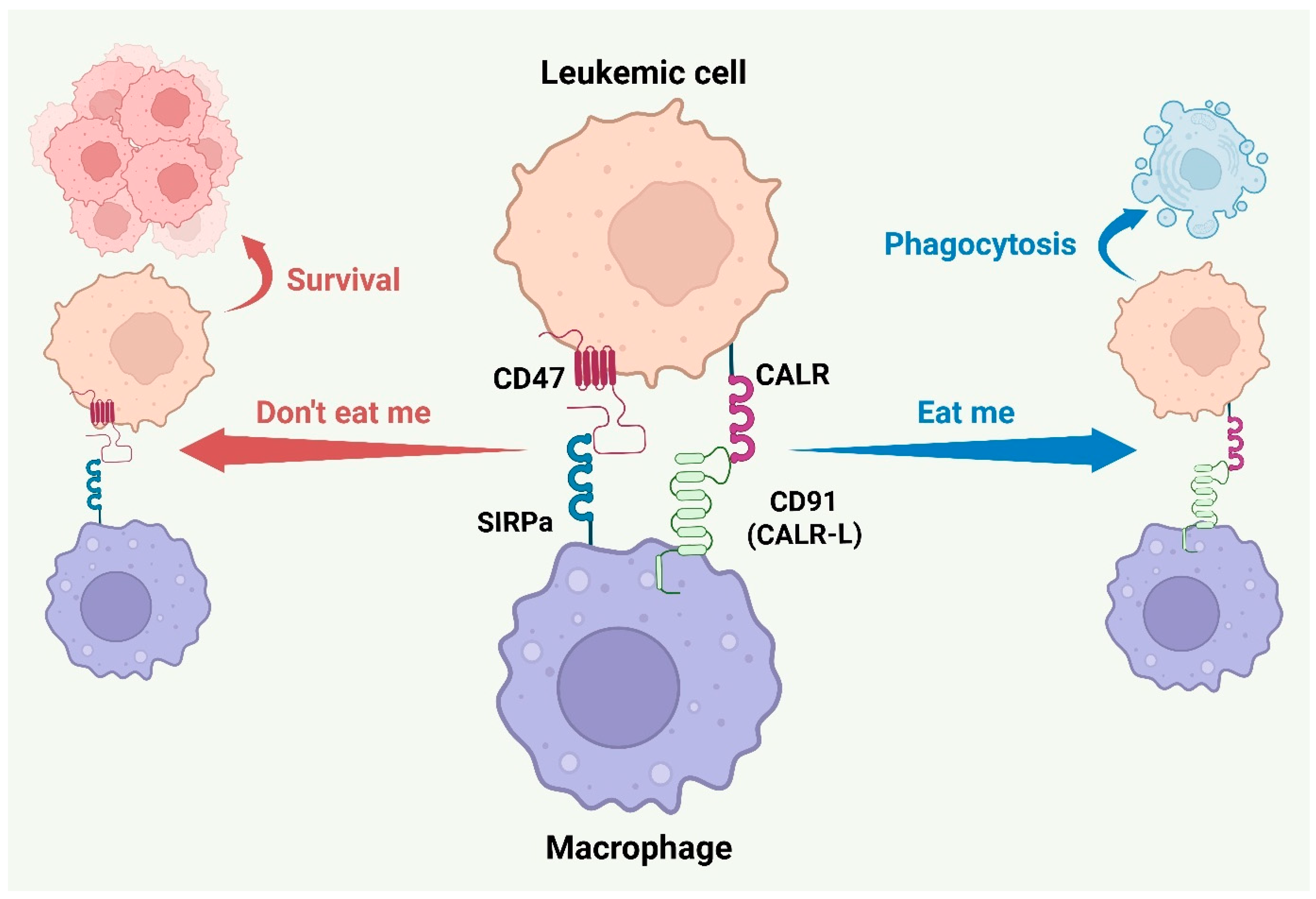
4. Targeting CD47-SIRPα Axis to Enhance Macrophage-Mediated Phagocytosis

| Agent | Drug Type | Target | Treatment Plan | Clinical Trials | Indication | Study Population | Study Status (Ref.) | NCT | Outcomes |
|---|---|---|---|---|---|---|---|---|---|
| Magrolimab (Hu5F9-G4) | CD47 mAb | CD47 | Magrolimab monotherapy | Phase I | AML | 19 | Completed [130] | NCT02678338 | AEs: Hb declined Increased transfusion requirements Invalid ABO blood typing |
| Letaplimab (IBI188) | CD47 mAb | CD47 | Letaplimab + AZA Letaplimab + Decitabine | Phase I/II | AML | 222 (Estimated) | Suspended | NCT04485052 | N/A |
| Letaplimab + AZA | Phase I | MDS | 93 | Suspended [131] | NCT04485065 | AEs: 49.5% decreased platelet count 44.1% anaemia 36.6% decreased neutrophil count 34.4% haemolysis 82.2% ORR including 31.1% CR 35.6% marrow CR 15.6% HI | |||
| Lemzoparlimab (TJ011133) | CD47 mAb | CD47 | Lemzoparlimab monotherapy | Phase I | AML | 5 | Completed [120] | NCT04202003 | AEs: thrombocytopenia in 2/5 pts, 1 with grade 1 and 1 with grade 3 positive anti-erythrocyte antibody in 2/5 pts |
| Lemzoparlimab + AZA | Phase II | MDS | 53 | Completed [121] | NCT04202003 | AEs: 60% decreased platelet count 53% decreased neutrophil count 40% anaemia 86.2% ORR including 31% CR 10% HI 44% marrow CR | |||
| Ligufalimab (AK117) | CD47 mAb | CD47 | Ligufalimab + AZA | Phase I | MDS | 72 | Active, not recruiting [132] | NCT04900350 | AEs: 30.6% anaemia 77.8% decreased neutrophil count 72.2% decreased white blood cell count 69.4% decreased platelet count 58.3% pyrexia ORR including 48.1% CR |
| Ligufalimab + AZA | Phase I/II | AML | 22 | Active, not recruiting [133] | NCT04980885 | AEs: 32.5% anaemia 70% decreased white blood cell count 55% decreased platelet count 52.2% pyrexia ORR including 55% CR 35% Stable disease | |||
| Ligufalimab + AZA Placebo + AZA | Phase II | MDS | 90 | Recruiting [134] | NCT06196203 | N/A | |||
| Urabrelimab (SRF231) | CD47 mAb | CD47 | Urabrelimab monotherapy | Phase I | Haematological cancer | 46 | Completed [135] | NCT03512340 | AEs: 2 pts showed febrile neutropenia, haemolysis |
| CC-90002 | CD47 mAb | CD47 | CC-90002 monotherapy | Phase I | AML/MDS | 24 | Terminated [136] | NCT02641002 | Serious AEs: 46% diarrhoea 39% thrombocytopenia 36% febrile neutropenia, elevated AST 32% anaemia: Elevated ALT 82% dependent RBC transfusion |
| Evorpacept (ALX148) | SIRPα/Fc fusion protein antibody | CD47 | Evorpacept + AZA | Phase I/II | MDS | 13 | Active, not recruiting [137] | NCT04417517 | AEs: 31% febrile neutropenia 23% pneumonia 23% anaemia 15% thrombocytopenia |
| Evorpacept + AZA + Venetoclax | Phase I/II | AML | 14 | Terminated [138] | NCT04755244 | AEs: 43% anaemia 36% elevated AST 29% decreased platelet count 21% pneumonia | |||
| Timdarpacept (IMM01) | SIRPα/Fc fusion protein antibody | CD47 | Timdarpacept + AZA | Phase I/II | MDS | 57 | Unknown status [139] | NCT05140811 | AEs: 78.9% leukopenia 66.7% thrombocytopenia 66.7% neutropenia 43.9% anaemia 15.8% infection 10.5% pneumonia 64.7% ORR including 29.4% CR, 15.7% marrow CR + HI, 5.9% HI, 13.7% marrow CR |
| TQB2928 | Blocking molecule | CD47/SIRPα | TQB2928 + AZA | Phase I | AML/MDS | 48 (Estimated) | Unknown status | NCT06008405 | N/A |
| AUR103 Calcium | Blocking molecule | CD47 | AUR103 Calcium | Phase I | AML, MDS, NHL | 27 (Estimated) | Recruiting | NCT05607199 | N/A |
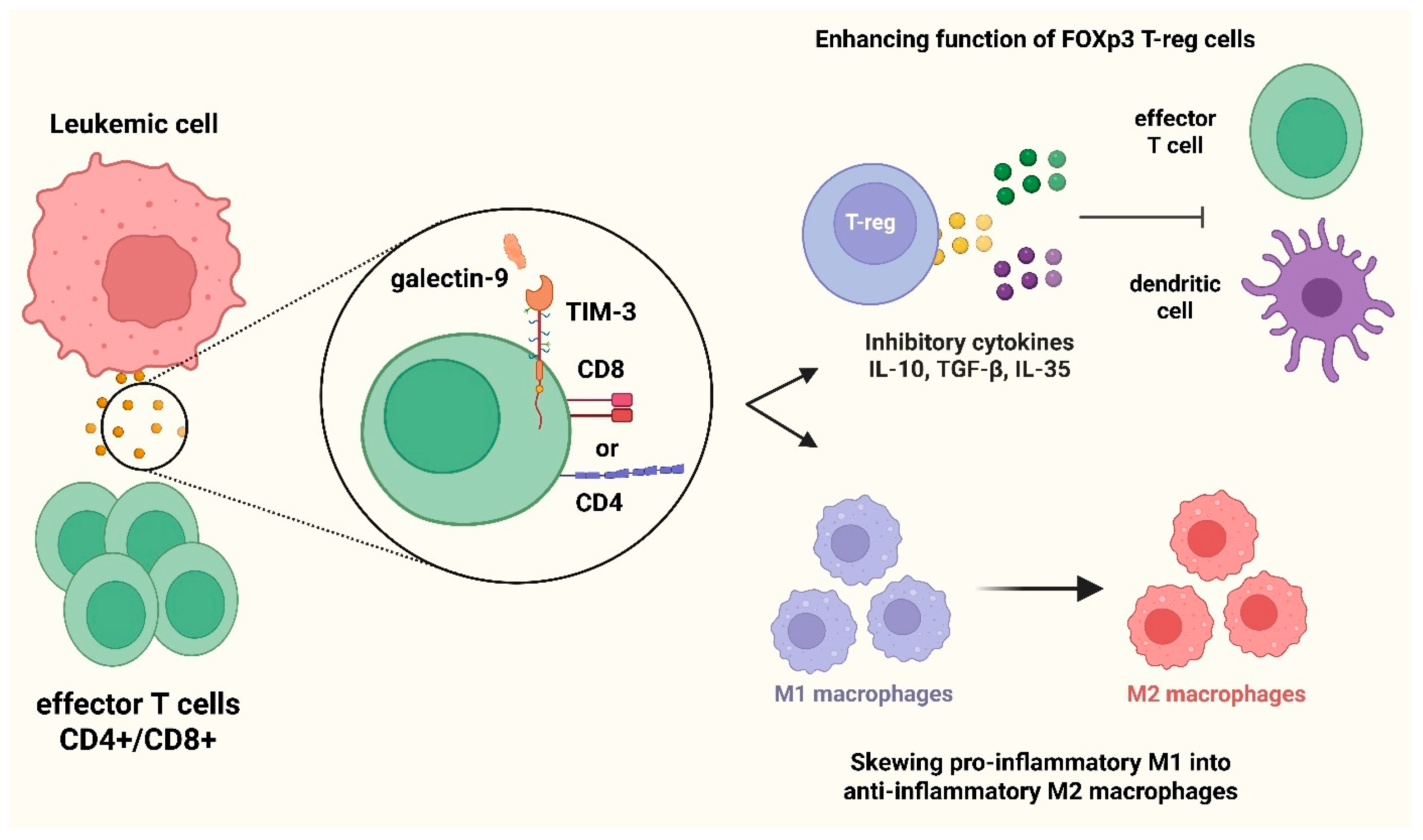
5. Targeting T Cell Activation Through Tim-3
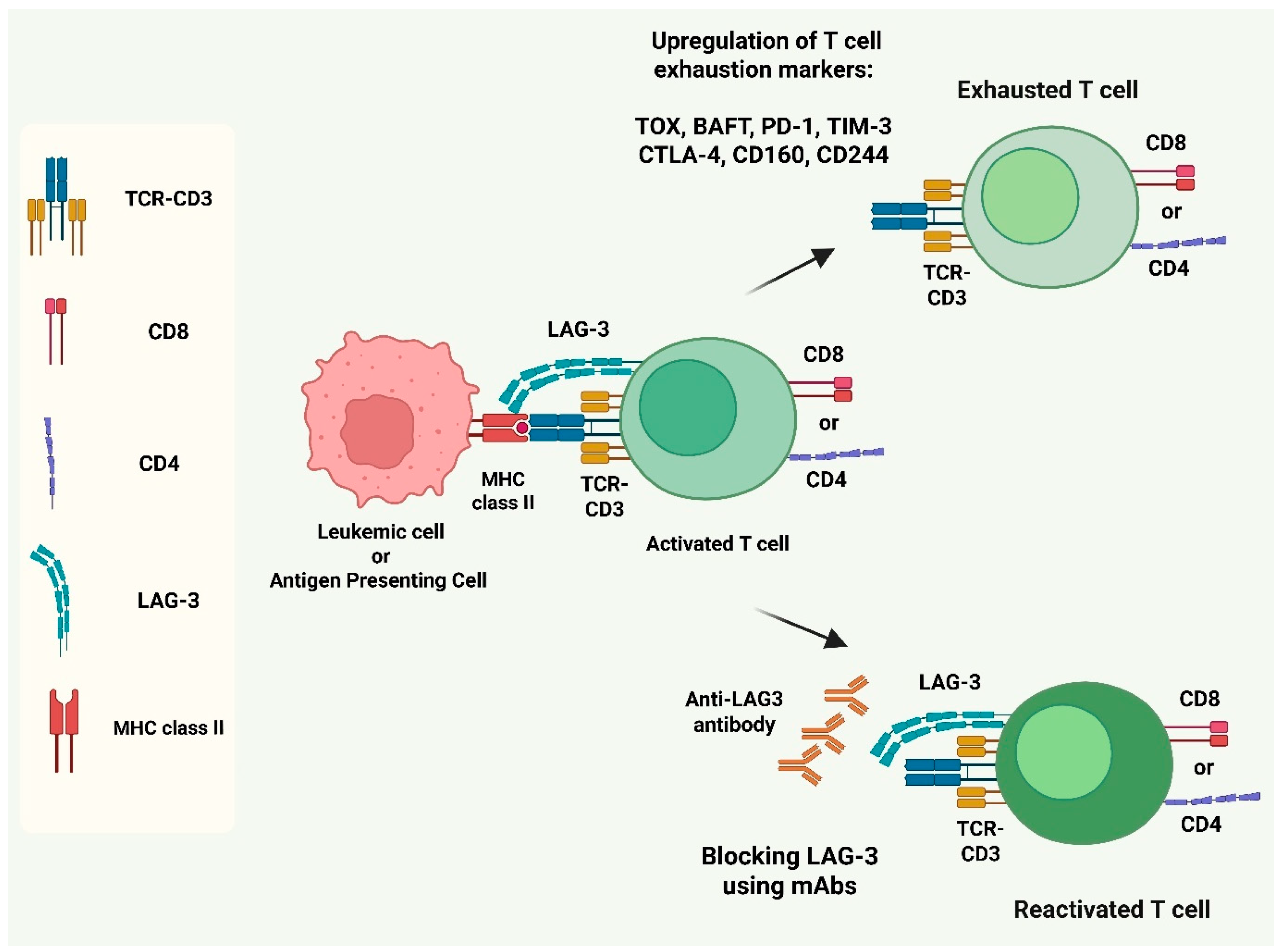
6. Lymphocyte Activation Gene-3 (LAG3)
7. Future Opportunities and Challenges in Immunotherapy
8. Conclusions
Author Contributions
Funding
Data Availability Statement
Acknowledgments
Conflicts of Interest
Abbreviations
| AML | Acute myeloid leukaemia |
| MDS | Myelodysplastic syndrome |
| MPN | Myeloproliferative neoplasms |
| TME | Tumour microenvironment |
| JAK2 | Janus kinase 2 |
| ET | Essential thrombocythemia |
| PV | Polycythemia vera |
| PMF | Primary myelofibrosis |
| ASXL1 | Additional sex combs-like protein 1 |
| TET2 | Tet methyl cytosine dioxygenase 2 |
| FLT3 | FMS-like receptor tyrosine kinase 3 |
| NPM1 | Nucleophosmin 1 |
| IPSS | International Prognostic Scoring System |
| HSCT | Hematopoietic stem cell transplantation |
| HMA | Hypomethylating agent |
| AZA | Azacytidine |
| LSC | Leukemic stem cell |
| TNF-α | Tumour necrosis factor-alpha |
| IL | Interleukin |
| NF-κB | Nuclear factor κ-light-chain-enhancer of activated B cell |
| CTL | Cytotoxic T Lymphocyte |
| Treg | T regulatory |
| Th | T-helper |
| MDSC | Myeloid-derived suppressor cell |
| NK | Natural killer |
| ICP | Immune checkpoint |
| CTLA-4 | T lymphocyte-associated antigen-4 |
| PD-1 | Programmed cell death protein 1 |
| LAG-3 | Lymphocyte-activation gene 3 |
| TIM-3 | T cell immunoglobulin and mucin domain 3 |
| ORR | Overall response rate |
| CALR | Calreticulin |
| ER | Endoplasmic reticulum |
| SIRPα | Signal regulatory protein alpha |
| Ig | Immunoglobulin |
| CR | Complete remission |
| ADCP | Antibody dependent cellular phagocytosis |
| TP53 | Tumour protein p53 |
| PBMC | Peripheral blood mononuclear cell |
| OXPHOS | Oxidative phosphorylation |
| ROS | Reactive oxygen species |
| FAO | Fatty acid oxidation |
| HIF-1α | Hypoxia-inducible factor 1-alpha |
| VEGF | Vascular endothelial growth factor |
| EGF | Epidermal growth factor |
| PFKFB3 | 6-phosphofructo-2-kinase/fructose-2,6-bisphosphatase 3 |
| EZH2 | Enhancer of Zeste Homolog 2 |
| HDAC | Histone deacetylases |
| DNMT3A | DNA methyltransferase 3A |
References
- Korn, C.; Méndez-Ferrer, S. Myeloid malignancies and the microenvironment. Blood J. Am. Soc. Hematol. 2017, 129, 811–822. [Google Scholar] [CrossRef]
- Visser, O.; Trama, A.; Maynadié, M.; Stiller, C.; Marcos-Gragera, R.; De Angelis, R.; Mallone, S.; Tereanu, C.; Allemani, C.; Ricardi, U. Incidence, survival and prevalence of myeloid malignancies in Europe. Eur. J. Cancer 2012, 48, 3257–3266. [Google Scholar] [CrossRef]
- Grabek, J.; Straube, J.; Bywater, M.; Lane, S.W. MPN: The molecular drivers of disease initiation, progression and transformation and their effect on treatment. Cells 2020, 9, 1901. [Google Scholar] [CrossRef]
- Sekeres, M.A.; Taylor, J. Diagnosis and treatment of myelodysplastic syndromes: A review. JAMA 2022, 328, 872–880. [Google Scholar] [CrossRef]
- De Kouchkovsky, I.; Abdul-Hay, M. Acute myeloid leukemia: A comprehensive review and 2016 update. Blood Cancer J. 2016, 6, e441. [Google Scholar] [CrossRef]
- Vardiman, J. The classification of MDS: From FAB to WHO and beyond. Leuk. Res. 2012, 36, 1453–1458. [Google Scholar] [CrossRef]
- Khoury, J.D.; Solary, E.; Abla, O.; Akkari, Y.; Alaggio, R.; Apperley, J.F.; Bejar, R.; Berti, E.; Busque, L.; Chan, J.K. The 5th edition of the World Health Organization classification of haematolymphoid tumours: Myeloid and histiocytic/dendritic neoplasms. Leukemia 2022, 36, 1703–1719. [Google Scholar] [CrossRef]
- Baumeister, J.; Chatain, N.; Sofias, A.M.; Lammers, T.; Koschmieder, S. Progression of myeloproliferative neoplasms (MPN): Diagnostic and therapeutic perspectives. Cells 2021, 10, 3551. [Google Scholar] [CrossRef]
- Tremblay, D.; Yacoub, A.; Hoffman, R. Overview of MPNs: History, Pathogenesis, Diagnostic Criteria, and Complications. Hematol./Oncol. Clin. N. Am. 2021, 35, 159. [Google Scholar] [CrossRef] [PubMed]
- Rasmussen, K.D.; Helin, K. Role of TET enzymes in DNA methylation, development, and cancer. Genes Dev. 2016, 30, 733–750. [Google Scholar] [CrossRef] [PubMed]
- Yang, F.-C.; Agosto-Peña, J. Epigenetic regulation by ASXL1 in myeloid malignancies. Int. J. Hematol. 2023, 117, 791–806. [Google Scholar] [CrossRef]
- Dunbar, A.J.; Rampal, R.K.; Levine, R. Leukemia secondary to myeloproliferative neoplasms. Blood J. Am. Soc. Hematol. 2020, 136, 61–70. [Google Scholar] [CrossRef] [PubMed]
- Forsberg, M.; Konopleva, M. AML treatment: Conventional chemotherapy and emerging novel agents. Trends Pharmacol. Sci. 2024, 45, 430–448. [Google Scholar] [CrossRef] [PubMed]
- Schmaelter, A.-K.; Labopin, M.; Socié, G.; Itälä-Remes, M.; Blaise, D.; Yakoub-Agha, I.; Forcade, E.; Cornelissen, J.; Ganser, A.; Beelen, D. Inferior outcome of allogeneic stem cell transplantation for secondary acute myeloid leukemia in first complete remission as compared to de novo acute myeloid leukemia. Blood Cancer J. 2020, 10, 26. [Google Scholar] [CrossRef]
- Dou, X.; Dan, C.; Zhang, D.; Zhou, H.; He, R.; Zhou, G.; Zhu, Y.; Fu, N.; Niu, B.; Xu, S. Genomic mutation patterns and prognostic value in de novo and secondary acute myeloid leukemia: A multicenter study from China. Int. J. Cancer 2024, 155, 2253–2264. [Google Scholar] [CrossRef]
- Greenberg, P.; Cox, C.; LeBeau, M.M.; Fenaux, P.; Morel, P.; Sanz, G.; Sanz, M.; Vallespi, T.; Hamblin, T.; Oscier, D. International scoring system for evaluating prognosis in myelodysplastic syndromes. Blood J. Am. Soc. Hematol. 1997, 89, 2079–2088. [Google Scholar] [CrossRef]
- Auger, N.; Douet-Guilbert, N.; Quessada, J.; Theisen, O.; Lafage-Pochitaloff, M.; Troadec, M.-B. Cytogenetics in the management of myelodysplastic neoplasms (myelodysplastic syndromes, MDS): Guidelines from the groupe francophone de cytogénétique hématologique (GFCH). Curr. Res. Transl. Med. 2023, 71, 103409. [Google Scholar] [CrossRef]
- Bewersdorf, J.P.; Sheth, A.H.; Vetsa, S.; Grimshaw, A.; Giri, S.; Podoltsev, N.A.; Gowda, L.; Tamari, R.; Tallman, M.S.; Rampal, R.K. Outcomes of allogeneic hematopoietic cell transplantation in patients with myelofibrosis—A systematic review and meta-analysis. Transplant. Cell. Ther. 2021, 27, 873.e1–873.e13. [Google Scholar] [CrossRef] [PubMed]
- Prem, S.; Atenafu, E.G.; Lam, W.; Law, A.; Michelis, F.V.; Kim, D.; Viswabandya, A.; Howard Lipton, J.; Mattsson, J.; Kumar, R. Allogeneic stem cell transplant in myelodysplastic syndrome-factors impacting survival. Eur. J. Haematol. 2020, 104, 116–124. [Google Scholar] [CrossRef]
- Bazinet, A.; Bravo, G.M. New approaches to myelodysplastic syndrome treatment. Curr. Treat. Options Oncol. 2022, 23, 668–687. [Google Scholar] [CrossRef]
- Getta, B.M.; Kishtagari, A.; Hilden, P.; Tallman, M.S.; Maloy, M.; Gonzales, P.; Castro-Malaspina, H.; Perales, M.-A.; Giralt, S.; Tamari, R. Allogeneic hematopoietic stem cell transplantation is underutilized in older patients with myelodysplastic syndromes. Biol. Blood Marrow Transplant. 2017, 23, 1078–1086. [Google Scholar] [CrossRef] [PubMed]
- Stomper, J.; Rotondo, J.C.; Greve, G.; Lübbert, M. Hypomethylating agents (HMA) for the treatment of acute myeloid leukemia and myelodysplastic syndromes: Mechanisms of resistance and novel HMA-based therapies. Leukemia 2021, 35, 1873–1889. [Google Scholar] [CrossRef]
- Lancman, G.; Brunner, A.; Hoffman, R.; Mascarenhas, J.; Hobbs, G. Outcomes and predictors of survival in blast phase myeloproliferative neoplasms. Leuk. Res. 2018, 70, 49–55. [Google Scholar] [CrossRef] [PubMed]
- Nasillo, V.; Riva, G.; Paolini, A.; Forghieri, F.; Roncati, L.; Lusenti, B.; Maccaferri, M.; Messerotti, A.; Pioli, V.; Gilioli, A. Inflammatory microenvironment and specific T cells in myeloproliferative neoplasms: Immunopathogenesis and novel immunotherapies. Int. J. Mol. Sci. 2021, 22, 1906. [Google Scholar] [CrossRef] [PubMed]
- Kouroukli, O.; Symeonidis, A.; Foukas, P.; Maragkou, M.-K.; Kourea, E.P. Bone marrow immune microenvironment in myelodysplastic syndromes. Cancers 2022, 14, 5656. [Google Scholar] [CrossRef]
- Finley, L.W. What is cancer metabolism? Cell 2023, 186, 1670–1688. [Google Scholar] [CrossRef]
- Lebelo, M.T.; Joubert, A.M.; Visagie, M.H. Warburg effect and its role in tumourigenesis. Arch. Pharmacal Res. 2019, 42, 833–847. [Google Scholar] [CrossRef]
- Zhou, H.; Xiang, W.; Zhou, G.; Rodrigues-Lima, F.; Guidez, F.; Wang, L. Metabolic dysregulation in myelodysplastic neoplasm: Impact on pathogenesis and potential therapeutic targets. Med. Oncol. 2024, 42, 23. [Google Scholar] [CrossRef]
- Masoud, G.N.; Li, W. HIF-1α pathway: Role, regulation and intervention for cancer therapy. Acta Pharm. Sin. B 2015, 5, 378–389. [Google Scholar] [CrossRef]
- Balaian, E.; Wobus, M.; Bornhäuser, M.; Chavakis, T.; Sockel, K. Myelodysplastic syndromes and metabolism. Int. J. Mol. Sci. 2021, 22, 11250. [Google Scholar] [CrossRef]
- Reddy, M.M.; Fernandes, M.S.; Deshpande, A.; Weisberg, E.; Inguilizian, H.V.; Abdel-Wahab, O.; Kung, A.L.; Levine, R.L.; Griffin, J.D.; Sattler, M. The JAK2V617F oncogene requires expression of inducible phosphofructokinase/fructose-bisphosphatase 3 for cell growth and increased metabolic activity. Leukemia 2012, 26, 481–489. [Google Scholar] [CrossRef]
- Gu, Z.; Liu, Y.; Cai, F.; Patrick, M.; Zmajkovic, J.; Cao, H.; Zhang, Y.; Tasdogan, A.; Chen, M.; Qi, L. Loss of EZH2 reprograms BCAA metabolism to drive leukemic transformation. Cancer Discov. 2019, 9, 1228–1247. [Google Scholar] [CrossRef]
- Zhao, S.; Xu, W.; Jiang, W.; Yu, W.; Lin, Y.; Zhang, T.; Yao, J.; Zhou, L.; Zeng, Y.; Li, H. Regulation of cellular metabolism by protein lysine acetylation. Science 2010, 327, 1000–1004. [Google Scholar] [CrossRef]
- Zhang, X.; Yang, X.; Ma, L.; Zhang, Y.; Wei, J. Immune dysregulation and potential targeted therapy in myelodysplastic syndrome. Ther. Adv. Hematol. 2023, 14, 20406207231183330. [Google Scholar] [CrossRef]
- Venney, D.; Mohd-Sarip, A.; Mills, K.I. The impact of epigenetic modifications in myeloid malignancies. Int. J. Mol. Sci. 2021, 22, 5013. [Google Scholar] [CrossRef]
- Shastri, A.; Will, B.; Steidl, U.; Verma, A. Stem and progenitor cell alterations in myelodysplastic syndromes. Blood J. Am. Soc. Hematol. 2017, 129, 1586–1594. [Google Scholar] [CrossRef] [PubMed]
- Barakos, G.P.; Hatzimichael, E. Microenvironmental features driving immune evasion in myelodysplastic syndromes and acute myeloid leukemia. Diseases 2022, 10, 33. [Google Scholar] [CrossRef] [PubMed]
- Gonzalez-Lugo, J.D.; Verma, A. Targeting inflammation in lower-risk MDS. Hematology 2022, 2022, 382–387. [Google Scholar] [CrossRef]
- Basiorka, A.A.; McGraw, K.L.; Eksioglu, E.A.; Chen, X.; Johnson, J.; Zhang, L.; Zhang, Q.; Irvine, B.A.; Cluzeau, T.; Sallman, D.A. The NLRP3 inflammasome functions as a driver of the myelodysplastic syndrome phenotype. Blood J. Am. Soc. Hematol. 2016, 128, 2960–2975. [Google Scholar] [CrossRef] [PubMed]
- Lynch, O.F.; Calvi, L.M. Immune dysfunction, cytokine disruption, and stromal changes in myelodysplastic syndrome: A review. Cells 2022, 11, 580. [Google Scholar] [CrossRef]
- Shi, X.; Zheng, Y.; Xu, L.; Cao, C.; Dong, B.; Chen, X. The inflammatory cytokine profile of myelodysplastic syndromes: A meta-analysis. Medicine 2019, 98, e15844. [Google Scholar] [CrossRef]
- Nilsson, A.R.; Hidalgo, I.; Bryder, D.; Pronk, C.J. Temporal dynamics of TNF-mediated changes in hematopoietic stem cell function and recovery. Iscience 2023, 26, 106341. [Google Scholar] [CrossRef]
- Ramachandra, N.; Gupta, M.; Schwartz, L.; Todorova, T.; Shastri, A.; Will, B.; Steidl, U.; Verma, A. Role of IL8 in myeloid malignancies. Leuk. Lymphoma 2023, 64, 1742–1751. [Google Scholar] [CrossRef] [PubMed]
- Camacho, V.; Kuznetsova, V.; Welner, R.S. Inflammatory cytokines shape an altered immune response during myeloid malignancies. Front. Immunol. 2021, 12, 772408. [Google Scholar] [CrossRef]
- Huang, B.; Lang, X.; Li, X. The role of IL-6/JAK2/STAT3 signaling pathway in cancers. Front. Oncol. 2022, 12, 1023177. [Google Scholar] [CrossRef] [PubMed]
- Han, X.; Yang, Q.; Lin, L.; Xu, C.; Zheng, C.; Chen, X.; Han, Y.; Li, M.; Cao, W.; Cao, K. Interleukin-17 enhances immunosuppression by mesenchymal stem cells. Cell Death Differ. 2014, 21, 1758–1768. [Google Scholar] [CrossRef]
- Ma, T.; Wang, H.; Hu, B.; Liu, Y.; Li, L. The interrelationship between interleukin-17 A and the immunomodulation of mesenchymal stromal cells. Stem Cell Res. Ther. 2025, 16, 480. [Google Scholar] [CrossRef]
- Wang, S.; Wang, J.; Wu, S.; Fu, Y.; Li, M. The central role of IL-17 in cancer stemness and immune evasion: A novel axis for overcoming immune checkpoint inhibitor resistance. Crit. Rev. Oncol./Hematol. 2025, 217, 104999. [Google Scholar] [CrossRef] [PubMed]
- Andersen, M.H.; Schrama, D.; Thor Straten, P.; Becker, J.C. Cytotoxic T cells. J. Investig. Dermatol. 2006, 126, 32–41. [Google Scholar] [CrossRef]
- Sand, K.; Theorell, J.; Bruserud, Ø.; Bryceson, Y.T.; Kittang, A.O. Reduced potency of cytotoxic T lymphocytes from patients with high-risk myelodysplastic syndromes. Cancer Immunol. Immunother. 2016, 65, 1135–1147. [Google Scholar] [CrossRef]
- Askenasy, N.; Kaminitz, A.; Yarkoni, S. Mechanisms of T regulatory cell function. Autoimmun. Rev. 2008, 7, 370–375. [Google Scholar] [CrossRef] [PubMed]
- Kordasti, S.Y.; Ingram, W.; Hayden, J.; Darling, D.; Barber, L.; Afzali, B.; Lombardi, G.; Wlodarski, M.W.; Maciejewski, J.P.; Farzaneh, F. CD4+CD25high Foxp3+ regulatory T cells in myelodysplastic syndrome (MDS). Blood J. Am. Soc. Hematol. 2007, 110, 847–850. [Google Scholar] [CrossRef]
- Rodriguez-Sevilla, J.J.; Colla, S. T-cell dysfunctions in myelodysplastic syndromes. Blood 2024, 143, 1329–1343. [Google Scholar] [CrossRef]
- Costantini, B.; Kordasti, S.Y.; Kulasekararaj, A.G.; Jiang, J.; Seidl, T.; Abellan, P.P.; Mohamedali, A.; Thomas, N.S.B.; Farzaneh, F.; Mufti, G.J. The effects of 5-azacytidine on the function and number of regulatory T cells and T-effectors in myelodysplastic syndrome. Haematologica 2013, 98, 1196. [Google Scholar] [CrossRef] [PubMed]
- Kaur, S.; Raggatt, L.J.; Batoon, L.; Hume, D.A.; Levesque, J.-P.; Pettit, A.R. Role of bone marrow macrophages in controlling homeostasis and repair in bone and bone marrow niches. Semin. Cell Dev. Biol. 2017, 61, 12–21. [Google Scholar] [CrossRef]
- Cencini, E.; Fabbri, A.; Sicuranza, A.; Gozzetti, A.; Bocchia, M. The role of tumor-associated macrophages in hematologic malignancies. Cancers 2021, 13, 3597. [Google Scholar] [CrossRef]
- Enderlin Vaz da Silva, Z.; Lehr, H.-A.; Velin, D. In vitro and in vivo repair activities of undifferentiated and classically and alternatively activated macrophages. Pathobiology 2014, 81, 86–93. [Google Scholar] [CrossRef] [PubMed]
- Feriotti, C.; Loures, F.V.; Frank de Araújo, E.; Costa, T.A.d.; Calich, V.L. Mannosyl-recognizing receptors induce an M1-like phenotype in macrophages of susceptible mice but an M2-like phenotype in mice resistant to a fungal infection. PLoS ONE 2013, 8, e54845. [Google Scholar] [CrossRef]
- Liu, J.; Geng, X.; Hou, J.; Wu, G. New insights into M1/M2 macrophages: Key modulators in cancer progression. Cancer Cell Int. 2021, 21, 389. [Google Scholar] [CrossRef] [PubMed]
- Zhao, H.-Y.; Zhang, Y.-Y.; Xing, T.; Tang, S.-Q.; Wen, Q.; Lyu, Z.-S.; Lv, M.; Wang, Y.; Xu, L.-P.; Zhang, X.-H. M2 macrophages, but not M1 macrophages, support megakaryopoiesis by upregulating PI3K-AKT pathway activity. Signal Transduct. Target. Ther. 2021, 6, 234. [Google Scholar] [CrossRef]
- Zhang, G.; Yang, L.; Han, Y.; Niu, H.; Yan, L.; Shao, Z.; Xing, L.; Wang, H. Abnormal macrophage polarization in patients with myelodysplastic syndrome. Mediat. Inflamm. 2021, 2021, 9913382. [Google Scholar] [CrossRef] [PubMed]
- Yang, F.; Wu, Z.; Yang, D.; Zhang, X.; Zhang, X.; Xu, Y. Characteristics of macrophages from myelodysplastic syndrome microenvironment. Exp. Cell Res. 2021, 408, 112837. [Google Scholar] [CrossRef]
- Xing, T.; Yao, W.L.; Zhao, H.Y.; Wang, J.; Zhang, Y.Y.; Lv, M.; Xu, L.P.; Zhang, X.H.; Huang, X.J.; Kong, Y. Bone marrow macrophages are involved in the ineffective hematopoiesis of myelodysplastic syndromes. J. Cell. Physiol. 2024, 239, e31129. [Google Scholar] [CrossRef]
- Li, T.; Liu, T.; Zhu, W.; Xie, S.; Zhao, Z.; Feng, B.; Guo, H.; Yang, R. Targeting MDSC for immune-checkpoint blockade in cancer immunotherapy: Current progress and new prospects. Clin. Med. Insights Oncol. 2021, 15, 11795549211035540. [Google Scholar] [CrossRef]
- Wang, J.-C.; Sun, L. PD-1/PD-L1, MDSC pathways, and checkpoint inhibitor therapy in Ph (-) myeloproliferative neoplasm: A review. Int. J. Mol. Sci. 2022, 23, 5837. [Google Scholar] [CrossRef] [PubMed]
- Ostrand-Rosenberg, S.; Sinha, P.; Beury, D.W.; Clements, V.K. Cross-talk between myeloid-derived suppressor cells (MDSC), macrophages, and dendritic cells enhances tumor-induced immune suppression. Semin. Cancer Biol. 2012, 22, 275–281. [Google Scholar] [CrossRef]
- Kittang, A.O.; Kordasti, S.; Sand, K.E.; Costantini, B.; Kramer, A.M.; Perezabellan, P.; Seidl, T.; Rye, K.P.; Hagen, K.M.; Kulasekararaj, A. Expansion of myeloid derived suppressor cells correlates with number of T regulatory cells and disease progression in myelodysplastic syndrome. Oncoimmunology 2016, 5, e1062208. [Google Scholar] [CrossRef]
- Chen, C.; Bandarchuk, A.; Wong, C.; Gotlieb, V.K.; Minhas, H.; Joseph, G.; Tribie, S.; Wang, J.-C. Monocytic myeloid-derived suppressor cells (Mo-MDSC) are increased but not M1 or M2 TAM macrophages in the bone marrow of patients with BCR-ABL negative myeloid neoplasm (MPN). Blood 2017, 130, 5266. [Google Scholar]
- Botta, C.; Maia, C.; Garcés, J.-J.; Termini, R.; Perez, C.; Manrique, I.; Burgos, L.; Zabaleta, A.; Alignani, D.; Sarvide, S. FlowCT for the analysis of large immunophenotypic data sets and biomarker discovery in cancer immunology. Blood Adv. 2022, 6, 690–703. [Google Scholar] [CrossRef]
- Verigou, E.; Chatzilygeroudi, T.; Lazaris, V.; de Lastic, A.-L.; Symeonidis, A. Immunophenotyping myelodysplastic neoplasms: The role of flow cytometry in the molecular classification era. Front. Oncol. 2024, 14, 1447001. [Google Scholar] [CrossRef]
- Shimasaki, N.; Jain, A.; Campana, D. NK cells for cancer immunotherapy. Nat. Rev. Drug Discov. 2020, 19, 200–218. [Google Scholar] [CrossRef] [PubMed]
- Gandhi, M.; Sharma, B.; Nair, S.; Vaidya, A.D. Current Insights into CAR T-Cell-Based Therapies for Myelodysplastic Syndrome. Pharm. Res. 2024, 41, 1757–1773. [Google Scholar] [CrossRef] [PubMed]
- Gaikwad, S.; Agrawal, M.Y.; Kaushik, I.; Ramachandran, S.; Srivastava, S.K. Immune checkpoint proteins: Signaling mechanisms and molecular interactions in cancer immunotherapy. Semin. Cancer Biol. 2022, 86, 137–150. [Google Scholar] [CrossRef]
- Peng, S.; Bao, Y. A narrative review of immune checkpoint mechanisms and current immune checkpoint therapy. Ann. Blood 2022, 7, 33. [Google Scholar] [CrossRef]
- Logtenberg, M.E.; Scheeren, F.A.; Schumacher, T.N. The CD47-SIRPα immune checkpoint. Immunity 2020, 52, 742–752. [Google Scholar] [CrossRef]
- Okazaki, T.; Honjo, T. PD-1 and PD-1 ligands: From discovery to clinical application. Int. Immunol. 2007, 19, 813–824. [Google Scholar] [CrossRef]
- Riella, L.V.; Paterson, A.M.; Sharpe, A.H.; Chandraker, A. Role of the PD-1 pathway in the immune response. Am. J. Transplant. 2012, 12, 2575–2587. [Google Scholar] [CrossRef]
- Buchbinder, E.I.; Desai, A. CTLA-4 and PD-1 pathways: Similarities, differences, and implications of their inhibition. Am. J. Clin. Oncol. 2016, 39, 98–106. [Google Scholar] [CrossRef]
- Han, Y.; Liu, D.; Li, L. PD-1/PD-L1 pathway: Current researches in cancer. Am. J. Cancer Res. 2020, 10, 727–742. [Google Scholar] [PubMed] [PubMed Central]
- Annibali, O.; Crescenzi, A.; Tomarchio, V.; Pagano, A.; Bianchi, A.; Grifoni, A.; Avvisati, G. PD-1/PD-L1 checkpoint in hematological malignancies. Leuk. Res. 2018, 67, 45–55. [Google Scholar] [CrossRef] [PubMed]
- Sampaio, L.R.; Viana, M.d.A.; Oliveira, V.S.d.; Ferreira, B.V.; Melo, M.M.L.; Oliveira, R.T.G.d.; Borges, D.d.P.; Magalhãesa, S.M.M.; Pinheiro, R.F. High PD-L1 expression is associated with unfavorable clinical features in myelodysplastic neoplasms. Hematol. Transfus. Cell Ther. 2024, 46, 146–152. [Google Scholar] [CrossRef]
- Yang, H.; Bueso-Ramos, C.; DiNardo, C.; Estecio, M.R.; Davanlou, M.; Geng, Q.-R.; Fang, Z.; Nguyen, M.; Pierce, S.; Wei, Y. Expression of PD-L1, PD-L2, PD-1 and CTLA4 in myelodysplastic syndromes is enhanced by treatment with hypomethylating agents. Leukemia 2014, 28, 1280–1288. [Google Scholar] [CrossRef]
- Ørskov, A.D.; Treppendahl, M.B.; Skovbo, A.; Holm, M.S.; Friis, L.S.; Hokland, M.; Grønbæk, K. Hypomethylation and up-regulation of PD-1 in T cells by azacytidine in MDS/AML patients: A rationale for combined targeting of PD-1 and DNA methylation. Oncotarget 2015, 6, 9612. [Google Scholar] [CrossRef]
- Khoja, L.; Butler, M.O.; Kang, S.P.; Ebbinghaus, S.; Joshua, A.M. Pembrolizumab. J. Immunother. Cancer 2015, 3, 36. [Google Scholar] [CrossRef]
- Garcia-Manero, G.; Tallman, M.S.; Martinelli, G.; Ribrag, V.; Yang, H.; Balakumaran, A.; Chlosta, S.; Zhang, Y.; Smith, B.D. Pembrolizumab, a PD-1 inhibitor, in patients with myelodysplastic syndrome (MDS) after failure of hypomethylating agent treatment. Blood 2016, 128, 345. [Google Scholar] [CrossRef]
- Chien, K.S.; Kim, K.; Nogueras-Gonzalez, G.M.; Borthakur, G.; Naqvi, K.; Daver, N.G.; Montalban-Bravo, G.; Cortes, J.E.; DiNardo, C.D.; Jabbour, E. Phase II study of azacitidine with pembrolizumab in patients with intermediate-1 or higher-risk myelodysplastic syndrome. Br. J. Haematol. 2021, 195, 378–387. [Google Scholar] [CrossRef] [PubMed]
- Masarova, L.; Kantarjian, H.; Ravandi, F.; Sharma, P.; Garcia-Manero, G.; Daver, N. Update on immunotherapy in AML and MDS: Monoclonal antibodies and checkpoint inhibitors paving the road for clinical practice. Immunotherapy 2018, 995, 97–116. [Google Scholar] [CrossRef]
- Brahmer, J.; Reckamp, K.L.; Baas, P.; Crinò, L.; Eberhardt, W.E.; Poddubskaya, E.; Antonia, S.; Pluzanski, A.; Vokes, E.E.; Holgado, E. Nivolumab versus docetaxel in advanced squamous-cell non–small-cell lung cancer. N. Engl. J. Med. 2015, 373, 123–135. [Google Scholar] [CrossRef]
- Assi, R.; Kantarjian, H.M.; Daver, N.G.; Garcia-Manero, G.; Benton, C.B.; Thompson, P.A.; Borthakur, G.; Kadia, T.M.; Alvarado, Y.; Jabbour, E.J. Results of a phase 2, open-label study of idarubicin (I), cytarabine (A) and nivolumab (Nivo) in patients with newly diagnosed acute myeloid leukemia (AML) and high-risk myelodysplastic syndrome (MDS). Blood 2018, 132, 905. [Google Scholar] [CrossRef]
- Garcia-Manero, G.; Daver, N.G.; Montalban-Bravo, G.; Jabbour, E.J.; DiNardo, C.D.; Kornblau, S.M.; Bose, P.; Alvarado, Y.; Ohanian, M.; Borthakur, G. A phase II study evaluating the combination of nivolumab (Nivo) or ipilimumab (Ipi) with azacitidine in Pts with previously treated or untreated myelodysplastic syndromes (MDS). Blood 2016, 128, 344. [Google Scholar] [CrossRef]
- Morita, K.; Kantarjian, H.M.; Bravo, G.M.; Sasaki, K.; Daver, N.; Jabbour, E.; Alvarado, Y.; Chien, K.S.; DiNardo, C.D.; Ravandi, F. A phase II study of double immune checkpoint inhibitor blockade with nivolumab and ipilimumab with or without azacitidine in patients with myelodysplastic syndrome (MDS). Blood 2020, 136, 7–9. [Google Scholar] [CrossRef]
- Ej, B. Integrin-associated protein (CD47) and its ligands. Trends Cell Biol. 2001, 11, 130–135. [Google Scholar] [CrossRef]
- Weiskopf, K. Cancer immunotherapy targeting the CD47/SIRPα axis. Eur. J. Cancer 2017, 76, 100–109. [Google Scholar] [CrossRef]
- Chao, M.P.; Alizadeh, A.A.; Tang, C.; Jan, M.; Weissman-Tsukamoto, R.; Zhao, F.; Park, C.Y.; Weissman, I.L.; Majeti, R. Therapeutic antibody targeting of CD47 eliminates human acute lymphoblastic leukemia. Cancer Res. 2011, 71, 1374–1384. [Google Scholar] [CrossRef]
- Zhao, H.-J.; Pa, F.; Shi, Y.-C.; Luo, X.; Ren, R.-R.; Peng, L.-H.; Yang, Y.-S. Prognostic significance of CD47 in human malignancies: A systematic review and meta-analysis. Transl. Cancer Res. 2018, 7. [Google Scholar] [CrossRef]
- Boasman, K.; Simmonds, M.J.; Rinaldi, C.R. Expression of CD47 and CALR in myeloproliferative neoplasms and myelodysplastic syndrome: Potential new therapeutical targets. Blood 2019, 134, 5031. [Google Scholar] [CrossRef]
- Chao, M.P.; Jaiswal, S.; Weissman-Tsukamoto, R.; Alizadeh, A.A.; Gentles, A.J.; Volkmer, J.; Weiskopf, K.; Willingham, S.B.; Raveh, T.; Park, C.Y. Calreticulin is the dominant pro-phagocytic signal on multiple human cancers and is counterbalanced by CD47. Sci. Transl. Med. 2010, 2, 63ra94. [Google Scholar] [CrossRef]
- Michalak, M.; Corbett, E.F.; Mesaeli, N.; Nakamura, K.; Opas, M. Calreticulin: One protein, one gene, many functions. Biochem. J. 1999, 344, 281–292. [Google Scholar] [CrossRef] [PubMed] [PubMed Central]
- Lu, Y.-C.; Weng, W.-C.; Lee, H. Functional roles of calreticulin in cancer biology. BioMed Res. Int. 2015, 2015, 526524. [Google Scholar] [CrossRef]
- Gardai, S.J.; McPhillips, K.A.; Frasch, S.C.; Janssen, W.J.; Starefeldt, A.; Murphy-Ullrich, J.E.; Bratton, D.L.; Oldenborg, P.-A.; Michalak, M.; Henson, P.M. Cell-surface calreticulin initiates clearance of viable or apoptotic cells through trans-activation of LRP on the phagocyte. Cell 2005, 123, 321–334. [Google Scholar] [CrossRef]
- Boasman, K.; Walker, C.L.; Simmonds, M.J.; Rinaldi, C.R. Alterations in calreticulin and CD47 expression dynamics in myeloid malignancies: Therapeutic and prognostic implications in myelodysplastic syndromes and myeloproliferative neoplasms. Haematologica 2026, 111, 1070–1074. [Google Scholar] [CrossRef]
- Feng, D.; Gip, P.; McKenna, K.M.; Zhao, F.; Mata, O.; Choi, T.S.; Duan, J.; Sompalli, K.; Majeti, R.; Weissman, I.L. Combination treatment with 5F9 and azacitidine enhances phagocytic elimination of acute myeloid leukemia. Blood 2018, 132, 2729. [Google Scholar] [CrossRef]
- Ansell, S.M.; Maris, M.B.; Lesokhin, A.M.; Chen, R.W.; Flinn, I.W.; Sawas, A.; Minden, M.D.; Villa, D.; Percival, M.-E.M.; Advani, A.S. Phase I study of the CD47 blocker TTI-621 in patients with relapsed or refractory hematologic malignancies. Clin. Cancer Res. 2021, 27, 2190–2199. [Google Scholar] [CrossRef]
- Wang, Y.; Yin, C.; Feng, L.; Wang, C.; Sheng, G. Ara-C and anti-CD47 antibody combination therapy eliminates acute monocytic leukemia THP-1 cells in vivo and in vitro. Genet Mol. Res. 2015, 14, 5630–5641. [Google Scholar] [CrossRef]
- Liu, J.; Wang, L.; Zhao, F.; Tseng, S.; Narayanan, C.; Shura, L.; Willingham, S.; Howard, M.; Prohaska, S.; Volkmer, J. Pre-clinical development of a humanized anti-CD47 antibody with anti-cancer therapeutic potential. PLoS ONE 2015, 10, e0137345. [Google Scholar] [CrossRef]
- Tseng, D.; Volkmer, J.-P.; Willingham, S.B.; Contreras-Trujillo, H.; Fathman, J.W.; Fernhoff, N.B.; Seita, J.; Inlay, M.A.; Weiskopf, K.; Miyanishi, M. Anti-CD47 antibody–mediated phagocytosis of cancer by macrophages primes an effective antitumor T-cell response. Proc. Natl. Acad. Sci. USA 2013, 110, 11103–11108. [Google Scholar] [CrossRef]
- Chao, M.P.; Tang, C.; Pachynski, R.K.; Chin, R.; Majeti, R.; Weissman, I.L. Extranodal dissemination of non-Hodgkin lymphoma requires CD47 and is inhibited by anti-CD47 antibody therapy. Blood J. Am. Soc. Hematol. 2011, 118, 4890–4901. [Google Scholar] [CrossRef]
- Sallman, D.A.; Donnellan, W.B.; Asch, A.S.; Lee, D.J.; Al Malki, M.; Marcucci, G.; Pollyea, D.A.; Kambhampati, S.; Komrokji, R.S.; Van Elk, J. The first-in-class anti-CD47 antibody Hu5F9-G4 is active and well tolerated alone or with azacitidine in AML and MDS patients: Initial phase 1b results. J. Clin. Oncol. 2019, 37, 7009. [Google Scholar] [CrossRef]
- Sallman, D.A.; Asch, A.S.; Al Malki, M.M.; Lee, D.J.; Donnellan, W.B.; Marcucci, G.; Kambhampati, S.; Daver, N.G.; Garcia-Manero, G.; Komrokji, R.S. The first-in-class anti-CD47 antibody magrolimab (5F9) in combination with azacitidine is effective in MDS and AML patients: Ongoing phase 1b results. Blood 2019, 134, 569. [Google Scholar] [CrossRef]
- Sallman, D.A.; Al Malki, M.; Asch, A.S.; Lee, D.J.; Kambhampati, S.; Donnellan, W.B.; Bradley, T.J.; Vyas, P.; Jeyakumar, D.; Marcucci, G. Tolerability and efficacy of the first-in-class anti-CD47 antibody magrolimab combined with azacitidine in MDS and AML patients: Phase Ib results. J. Clin. Oncol. 2020, 38, 7507. [Google Scholar] [CrossRef]
- Sallman, D.A.; Al Malki, M.M.; Asch, A.S.; Wang, E.S.; Jurcic, J.G.; Bradley, T.J.; Flinn, I.W.; Pollyea, D.A.; Kambhampati, S.; Tanaka, T.N. Magrolimab in combination with azacitidine in patients with higher-risk myelodysplastic syndromes: Final results of a phase Ib study. J. Clin. Oncol. 2023, 41, 2815–2826. [Google Scholar] [CrossRef]
- Gilead Sciences. Gilead to Discontinue Phase 3 ENHANCE Study of Magrolimab Plus Azacitidine in Higher-Risk MDS. Available online: https://www.gilead.com/news/news-details/2023/gilead-to-discontinue-phase-3-enhance-study-of-magrolimab-plus-azacitidine-in-higher-risk-mds (accessed on 21 May 2026).
- Garcia-Manero, G.; Daver, N.G.; Xu, J.; Chao, M.; Chung, T.; Tan, A.; Wang, V.; Wei, A.; Vyas, P.; Sallman, D.A. Magrolimab+ azacitidine versus azacitidine+ placebo in untreated higher risk (HR) myelodysplastic syndrome (MDS): The phase 3, randomized, ENHANCE study. J. Clin. Oncol. 2021, 39, TPS7055. [Google Scholar] [CrossRef]
- Rinaldi, C.R.; Boasman, K.; Simmonds, M. Effect of ruxolitinib and magrolimab on calreticulin in myelofibrosis CD34+ cells in vitro: Proof of concept for combination therapy. JCO Glob. Oncol. 2023, 9, 118. [Google Scholar] [CrossRef]
- Hassan, E.M.; McWhirter, S.; Walker, G.C.; Martinez-Rubi, Y.; Zou, S. Elimination of cancer cells in co-culture: Role of different nanocarriers in regulation of CD47 and calreticulin-induced phagocytosis. ACS Appl. Mater. Interfaces 2023, 15, 3791–3803. [Google Scholar] [CrossRef]
- Lindberg, F.P.; Lublin, D.M.; Telen, M.J.; Veile, R.A.; Miller, Y.E.; Donis-Keller, H.; Brown, E.J. Rh-related antigen CD47 is the signal-transducer integrin-associated protein. J. Biol. Chem. 1994, 269, 1567–1570. [Google Scholar] [CrossRef] [PubMed]
- Oldenborg, P.-A. CD47: A cell surface glycoprotein which regulates multiple functions of hematopoietic cells in health and disease. ISRN Hematol. 2013, 2013, 614619. [Google Scholar] [CrossRef] [PubMed]
- Advani, R.; Flinn, I.; Popplewell, L.; Forero, A.; Bartlett, N.L.; Ghosh, N.; Kline, J.; Roschewski, M.; LaCasce, A.; Collins, G.P. CD47 blockade by Hu5F9-G4 and rituximab in non-Hodgkin’s lymphoma. N. Engl. J. Med. 2018, 379, 1711–1721. [Google Scholar] [CrossRef]
- Wang, T.; Wang, S.-Q.; Du, Y.-X.; Sun, D.-D.; Liu, C.; Liu, S.; Sun, Y.-Y.; Wang, H.-L.; Zhang, C.-S.; Liu, H.-L. Gentulizumab, a novel anti-CD47 antibody with potent antitumor activity and demonstrates a favorable safety profile. J. Transl. Med. 2024, 22, 220. [Google Scholar] [CrossRef]
- Qi, J.; Li, J.; Jiang, B.; Jiang, B.; Liu, H.; Cao, X.; Zhang, M.; Meng, Y.; Ma, X.; Jia, Y. A phase I/IIa study of lemzoparlimab, a monoclonal antibody targeting CD47, in patients with relapsed and/or refractory acute myeloid leukemia (AML) and myelodysplastic syndrome (MDS): Initial phase I results. Blood 2020, 136, 30–31. [Google Scholar] [CrossRef]
- Xiao, Z.; Chang, C.; Li, Q.; Yan, X.; Qin, T.; Tong, H.; Dai, M.; He, Y.; Weng, J.; Li, J. 617O Lemzoparlimab, a differentiated anti-CD47 monoclonal antibody, in combination with azacitidine (AZA) in patients with newly diagnosed higher risk myelodysplastic syndrome (HR-MDS): Initial clinical results. Ann. Oncol. 2022, 33, S827. [Google Scholar] [CrossRef]
- Ramsey, H.E.; Gorska, A.E.; Smith, B.N.; Monteith, A.J.; Fuller, L.; Arrate, M.P.; Savona, M.R. TLR3 agonism augments CD47 inhibition in acute myeloid leukemia. Haematologica 2023, 109, 2111–2121. [Google Scholar] [CrossRef]
- Daver, N.G.; Stevens, D.A.; Hou, J.-Z.; Yamauchi, T.; Moshe, Y.; Fong, C.Y.; Marzocchetti, A.; Adamec, R.; Patel, M.; Lambert, S. Lemzoparlimab (lemzo) with venetoclax (ven) and/or azacitidine (aza) in patients (pts) with acute myeloid leukemia (AML) or myelodysplastic syndromes (MDS): A phase 1b dose escalation study. J. Clin. Oncol. 2022, 40, TPS7067. [Google Scholar] [CrossRef]
- Zhang, R.; Drobenaire, H.; Li, H.; Pizzarella, V.; Lin, H. A novel anti-human CD47 antibody prodrug as cancer therapeutics to lower on-target side effects. Cancer Res. 2021, 81, 1611. [Google Scholar] [CrossRef]
- Veillette, A.; Thibaudeau, E.; Latour, S. High expression of inhibitory receptor SHPS-1 and its association with protein-tyrosine phosphatase SHP-1 in macrophages. J. Biol. Chem. 1998, 273, 22719–22728. [Google Scholar] [CrossRef] [PubMed]
- Seiffert, M.; Cant, C.; Chen, Z.; Rappold, I.; Brugger, W.; Kanz, L.; Brown, E.J.; Ullrich, A.; Bühring, H.-J. Human signal-regulatory protein is expressed on normal, but not on subsets of leukemic myeloid cells and mediates cellular adhesion involving its counterreceptor CD47. Blood J. Am. Soc. Hematol. 1999, 94, 3633–3643. [Google Scholar] [CrossRef]
- Zhao, X.W.; Kuijpers, T.W.; van den Berg, T.K. Is targeting of CD47-SIRPα enough for treating hematopoietic malignancy? Blood J. Am. Soc. Hematol. 2012, 119, 4333–4334. [Google Scholar] [CrossRef]
- Wang, Y.; Ni, H.; Zhou, S.; He, K.; Gao, Y.; Wu, W.; Wu, M.; Wu, Z.; Qiu, X.; Zhou, Y. Tumor-selective blockade of CD47 signaling with a CD47/PD-L1 bispecific antibody for enhanced anti-tumor activity and limited toxicity. Cancer Immunol. Immunother. 2021, 70, 365–376. [Google Scholar] [CrossRef]
- Mirza, W.; Dadan, S.; Ahmad, E.; Junaid, A.; Satti, T.M. Clinical outcomes and safety of CD47-targeted immunotherapies across hematologic malignancies: A systematic review of monoclonal antibodies and fusion proteins in combination strategies. Clin. Exp. Med. 2025, 25, 360. [Google Scholar] [CrossRef]
- Brierley, C.; Staves, J.; Roberts, C.; Johnson, H.; Vyas, P.; Goodnough, L.; Murphy, M. The effects of monoclonal anti-CD47 on RBCs, compatibility testing, and transfusion requirements in refractory acute myeloid leukemia. Transfusion 2019, 59, 2248–2254. [Google Scholar] [CrossRef] [PubMed]
- Miao, M.; Wu, D.; Xie, S.; Hong, M.; Chang, C.; Yu, L.; Gao, S.; Li, Y.; Li, Y.; Zhu, Z. A phase 1b study to evaluate safety and efficacy of IBI188 in combination with azacitidine (AZA) as a first-line treatment in subjects with newly diagnosed higher risk myelodysplastic syndrome. Blood 2022, 140, 4045–4046. [Google Scholar] [CrossRef]
- Miao, M.; Teng, Q.; Wu, D.; Jiang, Z.; Jiang, S.; Li, F.; Liang, Y.; Wang, Z.M.; Li, B.; Xia, Y. Ak117 (Anti-cd47 monoclonal antibody) in combination with azacitidine for newly diagnosed higher risk myelodysplastic syndrome (Hr-mds): Ak117-103 phase 1b results. Blood 2023, 142, 1865. [Google Scholar] [CrossRef]
- Wang, H.; Zhang, Q.; Teng, Q.; Li, Z.; Liu, H.; Wang, Z.M.; Li, B.; Xia, Y.; Jin, J. A phase 1b study evaluating the safety and efficacy of ak117 (anti-CD47 monoclonal antibody) in combination with azacitidine in patients with treatment-naïve acute myeloid leukemia. Blood 2023, 142, 4280. [Google Scholar] [CrossRef]
- Zeidan, A.M.; Tong, H.; Xiao, Z.; Baratam, P.; Abboud, R.; Benton, C.B.; Zeidner, J.F.; Borate, U.; Chai-Ho, W.; Lu, Y. Trial in progress: A randomized, double-blind, placebo-controlled, multicenter phase 2 study of AK117/placebo in combination with azacitidine in patients with newly diagnosed higher-risk myelodysplastic syndromes (AK117-205). Blood 2024, 144, 6705. [Google Scholar] [CrossRef]
- Patnaik, A.; Spreafico, A.; Paterson, A.M.; Peluso, M.; Chung, J.-K.; Bowers, B.; Niforos, D.; O’Neill, A.M.; Beeram, M.; Iafolla, M. Results of a first-in-human phase I study of SRF231, a fully human, high-affinity anti-CD47 antibody. J. Clin. Oncol. 2020, 38, 3064. [Google Scholar] [CrossRef]
- Zeidan, A.M.; DeAngelo, D.J.; Palmer, J.M.; Seet, C.S.; Tallman, M.S.; Wei, X.; Li, Y.F.; Hock, N.; Burgess, M.R.; Hege, K. A phase I study of CC-90002, a monoclonal antibody targeting CD47, in patients with relapsed and/or refractory (R/R) acute myeloid leukemia (AML) and high-risk myelodysplastic syndromes (MDS): Final results. Blood 2019, 134, 1320. [Google Scholar] [CrossRef]
- Garcia-Manero, G.; Erba, H.P.; Sanikommu, S.R.; Altman, J.K.; Sayar, H.; Scott, B.L.; Fong, A.P.; Guan, S.; Jin, F.; Forgie, A.J. Evorpacept (ALX148), a CD47-blocking myeloid checkpoint inhibitor, in combination with azacitidine: A phase 1/2 study in patients with myelodysplastic syndrome (ASPEN-02). Blood 2021, 138, 2601. [Google Scholar] [CrossRef]
- Garcia-Manero, G.; Przespolewski, A.; Abaza, Y.; Byrne, M.; Fong, A.P.; Jin, F.; Forgie, A.J.; Tsiatis, A.C.; Guan, S.; Erba, H.P. Evorpacept (ALX148), a CD47-blocking myeloid checkpoint inhibitor, in combination with azacitidine and venetoclax in patients with acute myeloid leukemia (ASPEN-05): Results from phase 1a dose escalation part. Blood 2022, 40, 9046–9047. [Google Scholar] [CrossRef]
- Yang, W.; Gao, S.; Yan, X.; Guo, R.; Han, L.; Li, F.; Wang, Y.; Li, J.; Chang, C.; Yang, H. Latest results of a phase 2 study of IMM01 combined with azacitidine (AZA) as the first-line treatment in adults with higher risk myelodysplastic syndromes (MDS). J. Clin. Oncol. 2024, 42, 6510. [Google Scholar] [CrossRef]
- Zhao, L.; Cheng, S.; Fan, L.; Zhang, B.; Xu, S. TIM-3: An update on immunotherapy. Int. Immunopharmacol. 2021, 99, 107933. [Google Scholar] [CrossRef]
- Das, M.; Zhu, C.; Kuchroo, V.K. Tim-3 and its role in regulating anti-tumor immunity. Immunol. Rev. 2017, 276, 97–111. [Google Scholar] [CrossRef]
- Sakuishi, K.; Ngiow, S.F.; Sullivan, J.M.; Teng, M.W.; Kuchroo, V.K.; Smyth, M.J.; Anderson, A.C. TIM3+ FOXP3+ regulatory T cells are tissue-specific promoters of T-cell dysfunction in cancer. Oncoimmunology 2013, 2, e23849. [Google Scholar] [CrossRef]
- Tao, J.; Li, L.; Wang, Y.; Fu, R.; Wang, H.; Shao, Z. Increased TIM3+ CD8+ T cells in Myelodysplastic Syndrome patients displayed less perforin and granzyme B secretion and higher CD95 expression. Leuk. Res. 2016, 51, 49–55. [Google Scholar] [CrossRef]
- Kikushige, Y.; Miyamoto, T.; Yuda, J.; Jabbarzadeh-Tabrizi, S.; Shima, T.; Takayanagi, S.-i.; Niiro, H.; Yurino, A.; Miyawaki, K.; Takenaka, K. A TIM-3/Gal-9 autocrine stimulatory loop drives self-renewal of human myeloid leukemia stem cells and leukemic progression. Cell Stem Cell 2015, 17, 341–352. [Google Scholar] [CrossRef]
- Brunner, A.; Borate, U.; Esteve, J.; Porkka, K.; Knapper, S.; Vey, N.; Scholl, S.; Wermke, M.; Janssen, J.; Traer, E. AML-190: Anti-TIM-3 antibody MBG453 in combination with hypomethylating agents (HMAs) in patients with high-risk myelodysplastic syndrome (HR-MDS) and acute myeloid leukemia: A Phase 1 study. Clin. Lymphoma Myeloma Leuk. 2020, 20, S188–S189. [Google Scholar] [CrossRef]
- Zeidan, A.M.; Ando, K.; Rauzy, O.; Turgut, M.; Wang, M.-C.; Cairoli, R.; Hou, H.-A.; Kwong, Y.-L.; Arnan, M.; Meers, S. Sabatolimab plus hypomethylating agents in previously untreated patients with higher-risk myelodysplastic syndromes (STIMULUS-MDS1): A randomised, double-blind, placebo-controlled, phase 2 trial. Lancet Haematol. 2024, 11, e38–e50. [Google Scholar] [CrossRef] [PubMed]
- Schwartz, S.; Patel, N.; Longmire, T.; Jayaraman, P.; Jiang, X.; Lu, H.; Baker, L.; Velez, J.; Ramesh, R.; Wavreille, A.-S. Characterization of sabatolimab, a novel immunotherapy with immuno-myeloid activity directed against TIM-3 receptor. Immunother. Adv. 2022, 2, ltac019. [Google Scholar] [CrossRef]
- Huard, B.; Mastrangeli, R.; Prigent, P.; Bruniquel, D.; Donini, S.; El-Tayar, N.; Maigret, B.; Dréano, M.; Triebel, F. Characterization of the major histocompatibility complex class II binding site on LAG-3 protein. Proc. Natl. Acad. Sci. USA 1997, 94, 5744–5749. [Google Scholar] [CrossRef] [PubMed]
- Andrews, L.P.; Marciscano, A.E.; Drake, C.G.; Vignali, D.A. LAG 3 (CD 223) as a cancer immunotherapy target. Immunol. Rev. 2017, 276, 80–96. [Google Scholar] [CrossRef]
- Grosso, J.F.; Kelleher, C.C.; Harris, T.J.; Maris, C.H.; Hipkiss, E.L.; De Marzo, A.; Anders, R.; Netto, G.; Getnet, D.; Bruno, T.C. LAG-3 regulates CD8+ T cell accumulation and effector function in murine self-and tumor-tolerance systems. J. Clin. Investig. 2007, 117, 3383–3392. [Google Scholar] [CrossRef]
- Workman, C.J.; Dugger, K.J.; Vignali, D.A. Cutting edge: Molecular analysis of the negative regulatory function of lymphocyte activation gene-3. J. Immunol. 2002, 169, 5392–5395. [Google Scholar] [CrossRef]
- Zahm, C.D.; Moseman, J.E.; Delmastro, L.E.; Mcneel, G.D. PD-1 and LAG-3 blockade improve anti-tumor vaccine efficacy. Oncoimmunology 2021, 10, 1912892. [Google Scholar] [CrossRef] [PubMed]
- Lichtenegger, F.S.; Rothe, M.; Schnorfeil, F.M.; Deiser, K.; Krupka, C.; Augsberger, C.; Schlüter, M.; Neitz, J.; Subklewe, M. Targeting LAG-3 and PD-1 to enhance T cell activation by antigen-presenting cells. Front. Immunol. 2018, 9, 385. [Google Scholar] [CrossRef] [PubMed]
- Andrews, L.P.; Butler, S.C.; Cui, J.; Cillo, A.R.; Cardello, C.; Liu, C.; Brunazzi, E.A.; Baessler, A.; Xie, B.; Kunning, S.R. LAG-3 and PD-1 synergize on CD8+ T cells to drive T cell exhaustion and hinder autocrine IFN-γ-dependent anti-tumor immunity. Cell 2024, 187, 4355–4372.e4322. [Google Scholar] [CrossRef]
- Camisaschi, C.; Casati, C.; Rini, F.; Perego, M.; De Filippo, A.; Triebel, F.; Parmiani, G.; Belli, F.; Rivoltini, L.; Castelli, C. LAG-3 expression defines a subset of CD4+ CD25highFoxp3+ regulatory T cells that are expanded at tumor sites. J. Immunol. 2010, 184, 6545–6551. [Google Scholar] [CrossRef]
- Huang, C.-T.; Workman, C.J.; Flies, D.; Pan, X.; Marson, A.L.; Zhou, G.; Hipkiss, E.L.; Ravi, S.; Kowalski, J.; Levitsky, H.I. Role of LAG-3 in regulatory T cells. Immunity 2004, 21, 503–513. [Google Scholar] [CrossRef]
- Jung, S.-H.; Lee, S.-E.; Yun, S.; Min, D.-E.; Shin, Y.; Chung, Y.-J.; Lee, S.H. Different inflammatory, fibrotic, and immunological signatures between pre-fibrotic and overt primary myelofibrosis. Haematologica 2024, 110, 938. [Google Scholar] [CrossRef]
- Jiang, L.; Huang, X.; Zhou, X.; Ye, L.; Wang, L.; Mei, C.; Ma, L.; Xu, G.; Hu, C.; Zhou, Z. High Expressions of Checkpoint Receptors in T Cells Subsets of Myelodysplastic Syndromes Patients with TP53 Mutations. Blood 2023, 142, 4614. [Google Scholar] [CrossRef]
- El Dosoky, W.; Aref, S.; El Menshawy, N.; Ramez, A.; Abou Zaid, T.; Aref, M.; Atia, D. Prognostic effect of CTLA4/LAG3 Expression by T-Cells Subsets on Acute Myeloid Leukemia Patients. Asian Pac. J. Cancer Prev. APJCP 2024, 25, 1777. [Google Scholar] [CrossRef]
- Radwan, S.; Elleboudy, N.; Nabih, N.; Kamal, A. AML-273: The Immune checkpoints CTLA-4 and LAG-3 expression is up-regulated in acute myeloid leukemia. Clin. Lymphoma Myeloma Leuk. 2020, 20, S198. [Google Scholar] [CrossRef]
- Abdelhakim, H.; Cortez, L.M.; Li, M.; Braun, M.; Skikne, B.S.; Lin, T.L.; Dunavin, N.; Godwin, A.K. LAG3 inhibition decreases AML-induced immunosuppression and improves T cell-mediated killing. Blood 2019, 134, 3605. [Google Scholar] [CrossRef]
- Chen, C.; Liang, C.; Wang, S.; Chio, C.L.; Zhang, Y.; Zeng, C.; Chen, S.; Wang, C.; Li, Y. Expression patterns of immune checkpoints in acute myeloid leukemia. J. Hematol. Oncol. 2020, 13, 28. [Google Scholar] [CrossRef]
- Williams, P.; Basu, S.; Garcia-Manero, G.; Hourigan, C.S.; Oetjen, K.A.; Cortes, J.E.; Ravandi, F.; Jabbour, E.J.; Al-Hamal, Z.; Konopleva, M. The distribution of T-cell subsets and the expression of immune checkpoint receptors and ligands in patients with newly diagnosed and relapsed acute myeloid leukemia. Cancer 2019, 125, 1470–1481. [Google Scholar] [CrossRef]
- Kamrani, A.; Hosseinzadeh, R.; Shomali, N.; Heris, J.A.; Shahabi, P.; Mohammadinasab, R.; Sadeghvand, S.; Ghahremanzadeh, K.; Sadeghi, M.; Akbari, M. New immunotherapeutic approaches for cancer treatment. Pathol. -Res. Pract. 2023, 248, 154632. [Google Scholar] [CrossRef]
- Bell, H.N.; Zou, W. Beyond the barrier: Unraveling the mechanisms of immunotherapy resistance. Annu. Rev. Immunol. 2024, 42, 521–550. [Google Scholar] [CrossRef]
- Bai, R.; Chen, N.; Li, L.; Du, N.; Bai, L.; Lv, Z.; Tian, H.; Cui, J. Mechanisms of cancer resistance to immunotherapy. Front. Oncol. 2020, 10, 527366. [Google Scholar] [CrossRef]
- Sharma, P.; Hu-Lieskovan, S.; Wargo, J.A.; Ribas, A. Primary, adaptive, and acquired resistance to cancer immunotherapy. Cell 2017, 168, 707–723. [Google Scholar] [CrossRef]
- Sade-Feldman, M.; Jiao, Y.J.; Chen, J.H.; Rooney, M.S.; Barzily-Rokni, M.; Eliane, J.-P.; Bjorgaard, S.L.; Hammond, M.R.; Vitzthum, H.; Blackmon, S.M. Resistance to checkpoint blockade therapy through inactivation of antigen presentation. Nat. Commun. 2017, 8, 1136. [Google Scholar] [CrossRef]
- Wang, J.; Sun, J.; Liu, L.N.; Flies, D.B.; Nie, X.; Toki, M.; Zhang, J.; Song, C.; Zarr, M.; Zhou, X. Siglec-15 as an immune suppressor and potential target for normalization cancer immunotherapy. Nat. Med. 2019, 25, 656–666. [Google Scholar] [CrossRef]
- Peng, D.; Kryczek, I.; Nagarsheth, N.; Zhao, L.; Wei, S.; Wang, W.; Sun, Y.; Zhao, E.; Vatan, L.; Szeliga, W. Epigenetic silencing of TH1-type chemokines shapes tumour immunity and immunotherapy. Nature 2015, 527, 249–253. [Google Scholar] [CrossRef]


Disclaimer/Publisher’s Note: The statements, opinions and data contained in all publications are solely those of the individual author(s) and contributor(s) and not of MDPI and/or the editor(s). MDPI and/or the editor(s) disclaim responsibility for any injury to people or property resulting from any ideas, methods, instructions or products referred to in the content. |
© 2026 by the authors. Licensee MDPI, Basel, Switzerland. This article is an open access article distributed under the terms and conditions of the Creative Commons Attribution (CC BY) license.
Share and Cite
Amirian, N.; Squires, A.; Azanabor, L.; Walker, C.L.; Simmonds, M.J.; Rinaldi, C. Myeloid Malignancies Beyond the Cell: Targeting the Tumour Microenvironment with Next-Generation Immunotherapies. Cancers 2026, 18, 1808. https://doi.org/10.3390/cancers18111808
Amirian N, Squires A, Azanabor L, Walker CL, Simmonds MJ, Rinaldi C. Myeloid Malignancies Beyond the Cell: Targeting the Tumour Microenvironment with Next-Generation Immunotherapies. Cancers. 2026; 18(11):1808. https://doi.org/10.3390/cancers18111808
Chicago/Turabian StyleAmirian, Niloofar, Anya Squires, Lauretta Azanabor, Claire L. Walker, Matthew J. Simmonds, and Ciro Rinaldi. 2026. "Myeloid Malignancies Beyond the Cell: Targeting the Tumour Microenvironment with Next-Generation Immunotherapies" Cancers 18, no. 11: 1808. https://doi.org/10.3390/cancers18111808
APA StyleAmirian, N., Squires, A., Azanabor, L., Walker, C. L., Simmonds, M. J., & Rinaldi, C. (2026). Myeloid Malignancies Beyond the Cell: Targeting the Tumour Microenvironment with Next-Generation Immunotherapies. Cancers, 18(11), 1808. https://doi.org/10.3390/cancers18111808