Marrow Microenvironmental Pathobiology and Therapeutic Opportunities for TP53-Mutated Myelodysplastic Syndrome/Acute Myeloid Leukemia


Simple Summary
Abstract
1. Introduction
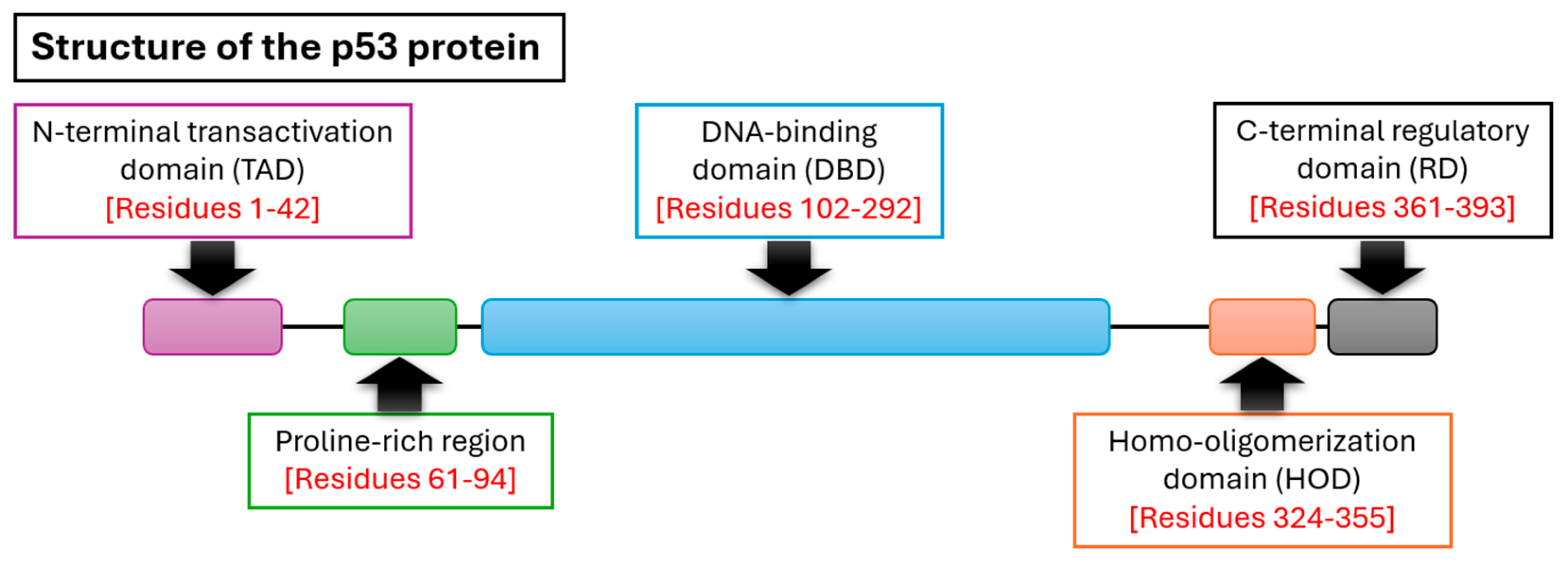
2. p53 Protein Function and Aberrancy with Mutation
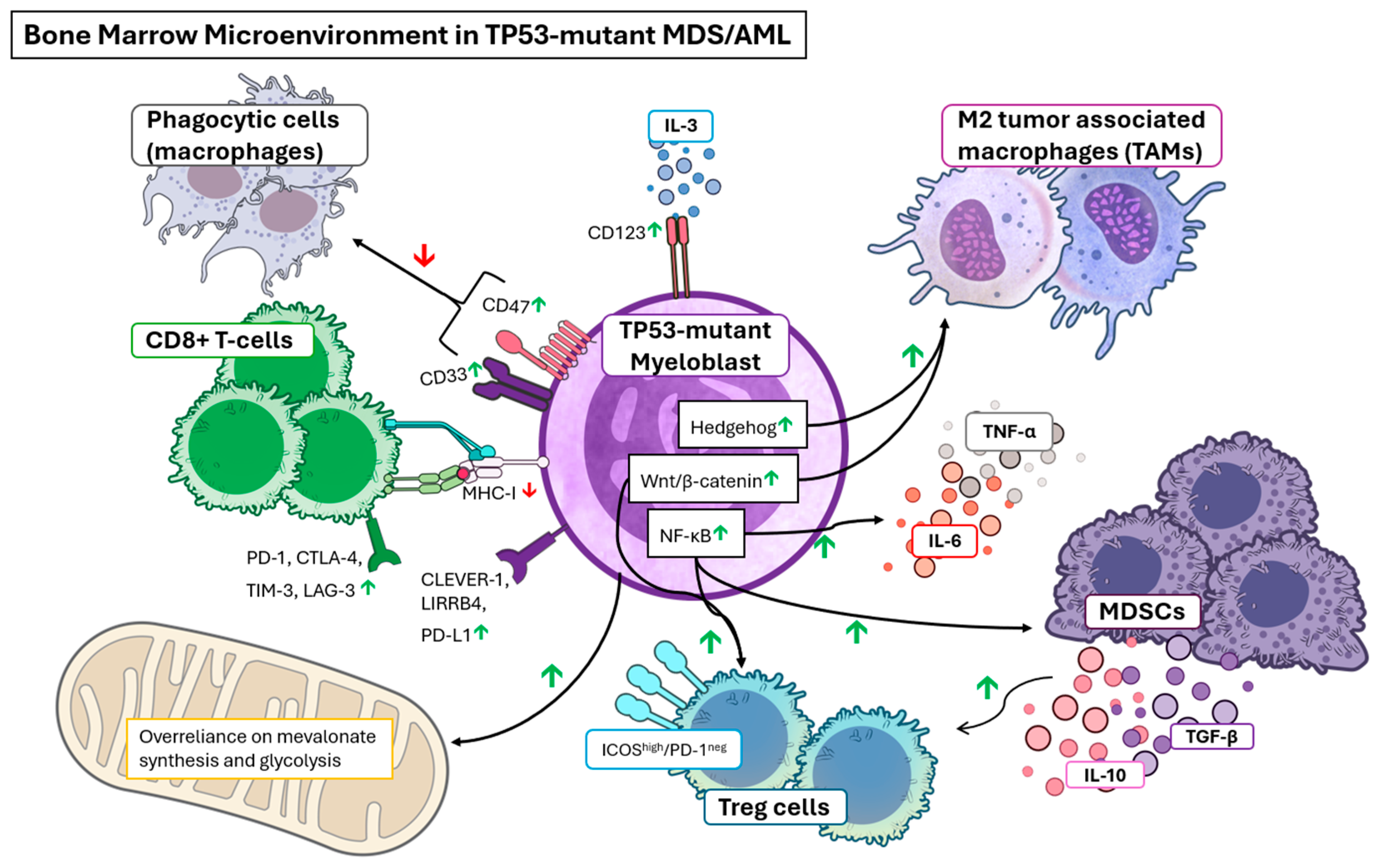
3. TP53-Mutated MDS/AML Marrow Microenvironmental Features and Therapeutic Implications
3.1. Leukemic Cell Modifications
3.1.1. Direct Effect of the Mutant p53 Protein
3.1.2. Inhibition of T-Cell Activation
3.1.3. Anti-Phagocytic Activity
3.1.4. Enhancing Leukemic Cell Proliferation
3.2. Abnormal Immune Cell Populations
3.3. Cytokine Signaling Pathways
3.4. Other Biological Pathways
4. Conclusions and Future Directions

Author Contributions
Funding
Institutional Review Board Statement
Informed Consent Statement
Data Availability Statement
Conflicts of Interest
Abbreviations
| BMME | Bone marrow microenvironment |
| AML | Acute myeloid leukemia |
| MDS | Myelodysplastic syndrome |
| CAR-T | Chimeric antigen receptor T-cell |
| BiTE | Bispecific T-cell engager |
| ADC | Antibody-drug conjugate |
| ICI | Immune checkpoint inhibitor |
| HPSC | Hematopoietic stem cell |
| MDSC | Myeloid-derived suppressor cell |
References
- Hernandez Borrero, L.J.; El-Deiry, W.S. Tumor suppressor p53: Biology, signaling pathways, and therapeutic targeting. Biochim. Biophys. Acta (BBA) Rev. Cancer 2021, 1876, 188556. [Google Scholar] [CrossRef] [Scilit]
- Lane, D.P. Cancer. p53, guardian of the genome. Nature 1992, 358, 15–16. [Google Scholar] [CrossRef] [Scilit]
- Blackford, A.N.; Jackson, S.P. ATM, ATR, and DNA-PK: The Trinity at the Heart of the DNA Damage Response. Mol. Cell 2017, 66, 801–817. [Google Scholar] [CrossRef] [Scilit]
- Zhang, H.; Xu, J.; Long, Y.; Maimaitijiang, A.; Su, Z.; Li, W.; Li, J. Unraveling the Guardian: P53’s Multifaceted Role in the DNA Damage Response and Tumor Treatment Strategies. Int. J. Mol. Sci. 2024, 25, 12928. [Google Scholar] [CrossRef] [Scilit]
- Shu, K.X.; Li, B.; Wu, L.X. The p53 network: P53 and its downstream genes. Colloids Surf. B Biointerfaces 2007, 55, 10–18. [Google Scholar] [CrossRef] [Scilit]
- Bykov, V.J.N.; Eriksson, S.E.; Bianchi, J.; Wiman, K.G. Targeting mutant p53 for efficient cancer therapy. Nat. Rev. Cancer 2018, 18, 89–102. [Google Scholar] [CrossRef] [Scilit]
- Carlsen, L.; Zhang, S.; Tian, X.; De La Cruz, A.; George, A.; Arnoff, T.E.; El-Deiry, W.S. The role of p53 in anti-tumor immunity and response to immunotherapy. Front. Mol. Biosci. 2023, 10, 1148389. [Google Scholar] [CrossRef] [Scilit]
- Chen, X.; Zhang, T.; Su, W.; Dou, Z.; Zhao, D.; Jin, X.; Lei, H.; Wang, J.; Xie, X.; Cheng, B.; et al. Mutant p53 in cancer: From molecular mechanism to therapeutic modulation. Cell Death Dis. 2022, 13, 974. [Google Scholar] [CrossRef] [Scilit]
- Jones, S.N.; Hancock, A.R.; Vogel, H.; Donehower, L.A.; Bradley, A. Overexpression of Mdm2 in mice reveals a p53-independent role for Mdm2 in tumorigenesis. Proc. Natl. Acad. Sci. USA 1998, 95, 15608–15612. [Google Scholar] [CrossRef] [Scilit]
- Haupt, Y.; Maya, R.; Kazaz, A.; Oren, M. Mdm2 promotes the rapid degradation of p53. Nature 1997, 387, 296–299. [Google Scholar] [CrossRef] [Scilit]
- Kandoth, C.; McLellan, M.D.; Vandin, F.; Ye, K.; Niu, B.; Lu, C.; Xie, M.; Zhang, Q.; McMichael, J.F.; Wyczalkowski, M.A.; et al. Mutational landscape and significance across 12 major cancer types. Nature 2013, 502, 333–339. [Google Scholar] [CrossRef] [Scilit]
- Olivier, M.; Hollstein, M.; Hainaut, P. TP53 mutations in human cancers: Origins, consequences, and clinical use. Cold Spring Harb. Perspect. Biol. 2010, 2, a001008. [Google Scholar] [CrossRef] [Scilit] [PubMed]
- Stratton, M.R.; Campbell, P.J.; Futreal, P.A. The cancer genome. Nature 2009, 458, 719–724. [Google Scholar] [CrossRef] [Scilit] [PubMed]
- Chiereghin, C.; Travaglino, E.; Zampini, M.; Saba, E.; Saitta, C.; Riva, E.; Bersanelli, M.; Della Porta, M.G. The Genetics of Myelodysplastic Syndromes: Clinical Relevance. Genes 2021, 12, 1144. [Google Scholar] [CrossRef] [Scilit]
- Molica, M.; Mazzone, C.; Niscola, P.; de Fabritiis, P. TP53 Mutations in Acute Myeloid Leukemia: Still a Daunting Challenge? Front. Oncol. 2020, 10, 610820. [Google Scholar] [CrossRef] [Scilit] [PubMed]
- Papaemmanuil, E.; Gerstung, M.; Bullinger, L.; Gaidzik, V.I.; Paschka, P.; Roberts, N.D.; Potter, N.E.; Heuser, M.; Thol, F.; Bolli, N.; et al. Genomic Classification and Prognosis in Acute Myeloid Leukemia. N. Engl. J. Med. 2016, 374, 2209–2221. [Google Scholar] [CrossRef] [Scilit]
- Saygin, C.; Godley, L.A. Genetics of Myelodysplastic Syndromes. Cancers 2021, 13, 3380. [Google Scholar] [CrossRef] [Scilit]
- Rucker, F.G.; Schlenk, R.F.; Bullinger, L.; Kayser, S.; Teleanu, V.; Kett, H.; Habdank, M.; Kugler, C.M.; Holzmann, K.; Gaidzik, V.I.; et al. TP53 alterations in acute myeloid leukemia with complex karyotype correlate with specific copy number alterations, monosomal karyotype, and dismal outcome. Blood 2012, 119, 2114–2121. [Google Scholar] [CrossRef] [Scilit]
- Santini, V.; Stahl, M.; Sallman, D.A. TP53 Mutations in Acute Leukemias and Myelodysplastic Syndromes: Insights and Treatment Updates. Am. Soc. Clin. Oncol. Educ. Book 2024, 44, e432650. [Google Scholar] [CrossRef] [Scilit]
- Shahzad, M.; Amin, M.K.; Daver, N.G.; Shah, M.V.; Hiwase, D.; Arber, D.A.; Kharfan-Dabaja, M.A.; Badar, T. What have we learned about TP53-mutated acute myeloid leukemia? Blood Cancer J. 2024, 14, 202. [Google Scholar] [CrossRef] [Scilit]
- Stengel, A.; Kern, W.; Haferlach, T.; Meggendorfer, M.; Fasan, A.; Haferlach, C. The impact of TP53 mutations and TP53 deletions on survival varies between AML, ALL, MDS and CLL: An analysis of 3307 cases. Leukemia 2017, 31, 705–711. [Google Scholar] [CrossRef] [Scilit] [PubMed]
- Wong, T.N.; Ramsingh, G.; Young, A.L.; Miller, C.A.; Touma, W.; Welch, J.S.; Lamprecht, T.L.; Shen, D.; Hundal, J.; Fulton, R.S.; et al. Role of TP53 mutations in the origin and evolution of therapy-related acute myeloid leukaemia. Nature 2015, 518, 552–555. [Google Scholar] [CrossRef] [Scilit] [PubMed]
- Yang, X.; Liang, Z.; Ji, L.; Liu, W.; Wang, B.; Li, Y.; Ou, J.; Cen, X.; Ren, H.; Wuchty, S.; et al. Comparative outcome and prognostic factor analysis among MDS/AML patients with TP53 mutations, snps, and wild type. Hum. Genom. 2025, 19, 98. [Google Scholar] [CrossRef] [Scilit] [PubMed]
- Park, S.; Kim, S.-A.; Lee, J.Y.; Byun, J.M.; Lee, J.-O.; Koh, Y.; Hong, J.; Lee, J.; Bang, S.-M.; Kim, I.; et al. Unraveling TP53-Mutated Acute Myeloid Leukemia: Clinical Insights and Genetic Profiles. Blood 2024, 144, 5944. [Google Scholar] [CrossRef] [Scilit]
- Sallman, D.A. Can we harmonize classification of TP53 mutant MDS/AML? Blood Adv. 2025, 9, 3381–3382. [Google Scholar] [CrossRef] [Scilit]
- Shah, M.V.; Hung, K.; Baranwal, A.; Kutyna, M.M.; Al-Kali, A.; Toop, C.; Greipp, P.; Brown, A.; Shah, S.; Khanna, S.; et al. Evidence-based risk stratification of myeloid neoplasms harboring TP53 mutations. Blood Adv. 2025, 9, 3370–3380. [Google Scholar] [CrossRef] [Scilit]
- Khoury, J.D.; Solary, E.; Abla, O.; Akkari, Y.; Alaggio, R.; Apperley, J.F.; Bejar, R.; Berti, E.; Busque, L.; Chan, J.K.C.; et al. The 5th edition of the World Health Organization Classification of Haematolymphoid Tumours: Myeloid and Histiocytic/Dendritic Neoplasms. Leukemia 2022, 36, 1703–1719. [Google Scholar] [CrossRef] [Scilit]
- Arber, D.A.; Orazi, A.; Hasserjian, R.P.; Borowitz, M.J.; Calvo, K.R.; Kvasnicka, H.M.; Wang, S.A.; Bagg, A.; Barbui, T.; Branford, S.; et al. International Consensus Classification of Myeloid Neoplasms and Acute Leukemias: Integrating morphologic, clinical, and genomic data. Blood 2022, 140, 1200–1228. [Google Scholar] [CrossRef] [Scilit]
- Dohner, H.; DiNardo, C.D.; Appelbaum, F.R.; Craddock, C.; Dombret, H.; Ebert, B.L.; Fenaux, P.; Godley, L.A.; Hasserjian, R.P.; Larson, R.A.; et al. Genetic risk classification for adults with AML receiving less-intensive therapies: The 2024 ELN recommendations. Blood 2024, 144, 2169–2173. [Google Scholar] [CrossRef] [Scilit]
- Dohner, H.; Wei, A.H.; Appelbaum, F.R.; Craddock, C.; DiNardo, C.D.; Dombret, H.; Ebert, B.L.; Fenaux, P.; Godley, L.A.; Hasserjian, R.P.; et al. Diagnosis and management of AML in adults: 2022 recommendations from an international expert panel on behalf of the ELN. Blood 2022, 140, 1345–1377. [Google Scholar] [CrossRef] [Scilit]
- Greenberg, P.L.; Stone, R.M.; Abaza, Y.; Al-Kali, A.; Anand, S.; Ball, B.; Bennett, J.M.; Borate, U.; Brunner, A.M.; Chai-Ho, W.; et al. NCCN Guidelines® Insights: Myelodysplastic Syndromes, Version 2.2025. J. Natl. Compr. Cancer Netw. 2025, 23, 66–75. [Google Scholar] [CrossRef] [Scilit] [PubMed]
- Morrison, S.J.; Scadden, D.T. The bone marrow niche for haematopoietic stem cells. Nature 2014, 505, 327–334. [Google Scholar] [CrossRef] [Scilit] [PubMed]
- Pinho, S.; Frenette, P.S. Haematopoietic stem cell activity and interactions with the niche. Nat. Rev. Mol. Cell Biol. 2019, 20, 303–320. [Google Scholar] [CrossRef] [Scilit] [PubMed]
- Schofield, R. The relationship between the spleen colony-forming cell and the haemopoietic stem cell. Blood Cells 1978, 4, 7–25. [Google Scholar]
- Seshadri, M.; Qu, C.K. Microenvironmental regulation of hematopoietic stem cells and its implications in leukemogenesis. Curr. Opin. Hematol. 2016, 23, 339–345. [Google Scholar] [CrossRef] [Scilit]
- Xu, H.; Li, Y.; Gao, Y. The role of immune cells settled in the bone marrow on adult hematopoietic stem cells. Cell. Mol. Life Sci. 2024, 81, 420. [Google Scholar] [CrossRef] [Scilit]
- Lucas, D. The Bone Marrow Microenvironment for Hematopoietic Stem Cells. In Stem Cell Microenvironments and Beyond; Birbrair, A., Ed.; Advances in Experimental Medicine and Biology; Springer: Cham, Switzerland, 2017; Volume 1041, pp. 5–18. [Google Scholar] [CrossRef] [Scilit]
- Arai, F.; Hirao, A.; Ohmura, M.; Sato, H.; Matsuoka, S.; Takubo, K.; Ito, K.; Koh, G.Y.; Suda, T. Tie2/angiopoietin-1 signaling regulates hematopoietic stem cell quiescence in the bone marrow niche. Cell 2004, 118, 149–161. [Google Scholar] [CrossRef] [Scilit]
- Barachini, S.; Montali, M.; Burzi, I.S.; Pardini, E.; Infirri, G.S.; Cassano, R.C.; Petrini, I. The role of the bone marrow microenvironment in leukemic stem cell resistance: Pathways of persistence and selection. Crit. Rev. Oncol. Hematol. 2025, 218, 105090. [Google Scholar] [CrossRef] [Scilit]
- Mempel, T.R.; Lill, J.K.; Altenburger, L.M. How chemokines organize the tumour microenvironment. Nat. Rev. Cancer 2024, 24, 28–50. [Google Scholar] [CrossRef] [Scilit]
- Kode, A.; Manavalan, J.S.; Mosialou, I.; Bhagat, G.; Rathinam, C.V.; Luo, N.; Khiabanian, H.; Lee, A.; Murty, V.V.; Friedman, R.; et al. Leukaemogenesis induced by an activating beta-catenin mutation in osteoblasts. Nature 2014, 506, 240–244. [Google Scholar] [CrossRef] [Scilit]
- Krause, D.S.; Fulzele, K.; Catic, A.; Sun, C.C.; Dombkowski, D.; Hurley, M.P.; Lezeau, S.; Attar, E.; Wu, J.Y.; Lin, H.Y.; et al. Differential regulation of myeloid leukemias by the bone marrow microenvironment. Nat. Med. 2013, 19, 1513–1517. [Google Scholar] [CrossRef] [Scilit]
- Raaijmakers, M.H.; Mukherjee, S.; Guo, S.; Zhang, S.; Kobayashi, T.; Schoonmaker, J.A.; Ebert, B.L.; Al-Shahrour, F.; Hasserjian, R.P.; Scadden, E.O.; et al. Bone progenitor dysfunction induces myelodysplasia and secondary leukaemia. Nature 2010, 464, 852–857. [Google Scholar] [CrossRef] [Scilit]
- Zambetti, N.A.; Ping, Z.; Chen, S.; Kenswil, K.J.G.; Mylona, M.A.; Sanders, M.A.; Hoogenboezem, R.M.; Bindels, E.M.J.; Adisty, M.N.; Van Strien, P.M.H.; et al. Mesenchymal Inflammation Drives Genotoxic Stress in Hematopoietic Stem Cells and Predicts Disease Evolution in Human Pre-leukemia. Cell Stem Cell 2016, 19, 613–627. [Google Scholar] [CrossRef] [Scilit]
- Badar, T.; Knutson, K.L.; Foran, J.; Gangat, N.; Pavelko, K.D.; Kaufmann, S.H.; Litzow, M.R.; Murthy, H.; Cogen, D.; Ushman, M.; et al. T-cell immune cluster analysis using CyTOF identifies unique subgroups of patients with acute myeloid leukemia. Blood Adv. 2025, 9, 239–243. [Google Scholar] [CrossRef] [Scilit]
- Sallman, D.A.; McLemore, A.F.; Aldrich, A.L.; Komrokji, R.S.; McGraw, K.L.; Dhawan, A.; Geyer, S.; Hou, H.A.; Eksioglu, E.A.; Sullivan, A.; et al. TP53 mutations in myelodysplastic syndromes and secondary AML confer an immunosuppressive phenotype. Blood 2020, 136, 2812–2823. [Google Scholar] [CrossRef] [Scilit]
- Raj, N.; Attardi, L.D. The Transactivation Domains of the p53 Protein. Cold Spring Harb. Perspect. Med. 2017, 7, a026047. [Google Scholar] [CrossRef] [Scilit]
- Nag, S.; Qin, J.; Srivenugopal, K.S.; Wang, M.; Zhang, R. The MDM2-p53 pathway revisited. J. Biomed. Res. 2013, 27, 254–271. [Google Scholar] [CrossRef] [Scilit] [PubMed]
- Zhang, Y.; Dutta, M. The multifunctional proline-rich domain of p53 tumor suppressor. Biochim. Biophys. Acta (BBA) Rev. Cancer 2025, 1880, 189326. [Google Scholar] [CrossRef] [Scilit]
- Bouaoun, L.; Sonkin, D.; Ardin, M.; Hollstein, M.; Byrnes, G.; Zavadil, J.; Olivier, M. TP53 Variations in Human Cancers: New Lessons from the IARC TP53 Database and Genomics Data. Hum. Mutat. 2016, 37, 865–876. [Google Scholar] [CrossRef] [Scilit] [PubMed]
- Pavletich, N.P.; Chambers, K.A.; Pabo, C.O. The DNA-binding domain of p53 contains the four conserved regions and the major mutation hot spots. Genes Dev. 1993, 7, 2556–2564. [Google Scholar] [CrossRef] [Scilit]
- Kamada, R.; Toguchi, Y.; Nomura, T.; Imagawa, T.; Sakaguchi, K. Tetramer formation of tumor suppressor protein p53: Structure, function, and applications. Biopolymers 2016, 106, 598–612. [Google Scholar] [CrossRef] [Scilit]
- Cho, Y.; Gorina, S.; Jeffrey, P.D.; Pavletich, N.P. Crystal structure of a p53 tumor suppressor-DNA complex: Understanding tumorigenic mutations. Science 1994, 265, 346–355. [Google Scholar] [CrossRef] [Scilit] [PubMed]
- D’Abramo, M.; Besker, N.; Desideri, A.; Levine, A.J.; Melino, G.; Chillemi, G. The p53 tetramer shows an induced-fit interaction of the C-terminal domain with the DNA-binding domain. Oncogene 2016, 35, 3272–3281. [Google Scholar] [CrossRef] [Scilit] [PubMed]
- Baugh, E.H.; Ke, H.; Levine, A.J.; Bonneau, R.A.; Chan, C.S. Why are there hotspot mutations in the TP53 gene in human cancers? Cell Death Differ. 2018, 25, 154–160. [Google Scholar] [CrossRef] [Scilit] [PubMed]
- Jambhekar, A.; Ackerman, E.E.; Alpay, B.A.; Lahav, G.; Lovitch, S.B. Comparison of TP53 mutations in myelodysplasia and acute leukemia suggests divergent roles in initiation and progression. Blood Neoplasia 2024, 1, 100004. [Google Scholar] [CrossRef] [Scilit]
- Kotler, E.; Shani, O.; Goldfeld, G.; Lotan-Pompan, M.; Tarcic, O.; Gershoni, A.; Hopf, T.A.; Marks, D.S.; Oren, M.; Segal, E. A Systematic p53 Mutation Library Links Differential Functional Impact to Cancer Mutation Pattern and Evolutionary Conservation. Mol. Cell 2018, 71, 873. [Google Scholar] [CrossRef] [Scilit]
- Boettcher, S.; Miller, P.G.; Sharma, R.; McConkey, M.; Leventhal, M.; Krivtsov, A.V.; Giacomelli, A.O.; Wong, W.; Kim, J.; Chao, S.; et al. A dominant-negative effect drives selection of TP53 missense mutations in myeloid malignancies. Science 2019, 365, 599–604. [Google Scholar] [CrossRef] [Scilit]
- Wang, Z.; Burigotto, M.; Ghetti, S.; Vaillant, F.; Tan, T.; Capaldo, B.D.; Palmieri, M.; Hirokawa, Y.; Tai, L.; Simpson, D.S.; et al. Loss-of-Function but Not Gain-of-Function Properties of Mutant TP53 Are Critical for the Proliferation, Survival, and Metastasis of a Broad Range of Cancer Cells. Cancer Discov. 2024, 14, 362–379. [Google Scholar] [CrossRef] [Scilit]
- Gencel-Augusto, J.; Lozano, G. p53 tetramerization: At the center of the dominant-negative effect of mutant p53. Genes Dev. 2020, 34, 1128–1146. [Google Scholar] [CrossRef] [Scilit]
- Chen, S.; Wang, Q.; Yu, H.; Capitano, M.L.; Vemula, S.; Nabinger, S.C.; Gao, R.; Yao, C.; Kobayashi, M.; Geng, Z.; et al. Mutant p53 drives clonal hematopoiesis through modulating epigenetic pathway. Nat. Commun. 2019, 10, 5649. [Google Scholar] [CrossRef] [Scilit]
- Steensma, D.P.; Bejar, R.; Jaiswal, S.; Lindsley, R.C.; Sekeres, M.A.; Hasserjian, R.P.; Ebert, B.L. Clonal hematopoiesis of indeterminate potential and its distinction from myelodysplastic syndromes. Blood 2015, 126, 9–16. [Google Scholar] [CrossRef] [Scilit] [PubMed]
- Yan, B.; Chen, Q.; Xu, J.; Li, W.; Xu, B.; Qiu, Y. Low-frequency TP53 hotspot mutation contributes to chemoresistance through clonal expansion in acute myeloid leukemia. Leukemia 2020, 34, 1816–1827. [Google Scholar] [CrossRef] [Scilit] [PubMed]
- Hientz, K.; Mohr, A.; Bhakta-Guha, D.; Efferth, T. The role of p53 in cancer drug resistance and targeted chemotherapy. Oncotarget 2017, 8, 8921–8946. [Google Scholar] [CrossRef] [Scilit] [PubMed]
- Prochazka, K.T.; Pregartner, G.; Rucker, F.G.; Heitzer, E.; Pabst, G.; Wolfler, A.; Zebisch, A.; Berghold, A.; Dohner, K.; Sill, H. Clinical implications of subclonal TP53 mutations in acute myeloid leukemia. Haematologica 2019, 104, 516–523. [Google Scholar] [CrossRef] [Scilit]
- Schimmer, R.R.; Kovtonyuk, L.V.; Klemm, N.; Fullin, J.; Stolz, S.M.; Mueller, J.; Caiado, F.; Kurppa, K.J.; Ebert, B.L.; Manz, M.G.; et al. TP53 mutations confer resistance to hypomethylating agents and BCL-2 inhibition in myeloid neoplasms. Blood Adv. 2022, 6, 3201–3206. [Google Scholar] [CrossRef] [Scilit]
- DiNardo, C.D.; Tiong, I.S.; Quaglieri, A.; MacRaild, S.; Loghavi, S.; Brown, F.C.; Thijssen, R.; Pomilio, G.; Ivey, A.; Salmon, J.M.; et al. Molecular patterns of response and treatment failure after frontline venetoclax combinations in older patients with AML. Blood 2020, 135, 791–803. [Google Scholar] [CrossRef] [Scilit]
- Garciaz, S.; Saillard, C.; Hicheri, Y.; Hospital, M.A.; Vey, N. Venetoclax in Acute Myeloid Leukemia: Molecular Basis, Evidences for Preclinical and Clinical Efficacy and Strategies to Target Resistance. Cancers 2021, 13, 5608. [Google Scholar] [CrossRef] [Scilit]
- Gurnari, C.; Pagliuca, S.; Visconte, V. Deciphering the Therapeutic Resistance in Acute Myeloid Leukemia. Int. J. Mol. Sci. 2020, 21, 8505. [Google Scholar] [CrossRef] [Scilit]
- Iwakuma, T.; Lozano, G. MDM2, an introduction. Mol. Cancer Res. 2003, 1, 993–1000. [Google Scholar]
- Konopleva, M.Y.; Rollig, C.; Cavenagh, J.; Deeren, D.; Girshova, L.; Krauter, J.; Martinelli, G.; Montesinos, P.; Schafer, J.A.; Ottmann, O.; et al. Idasanutlin plus cytarabine in relapsed or refractory acute myeloid leukemia: Results of the MIRROS trial. Blood Adv. 2022, 6, 4147–4156. [Google Scholar] [CrossRef] [Scilit]
- Kadia, T.M.; Benton, C.; Erba, H.P.; Gandhi, M.; Levy, M.Y.; Percival, M.-E.M.; Ulrickson, M.; Yimer, H.; Yu, M.; Chen, Z.; et al. Trial in Progress: Phase 1b/2 Study of Alrizomadlin (APG-115), Alone or Combined with 5-Azacitidine (AZA), in Patients with Relapsed/Refractory Acute Myeloid Leukemia (AML), Chronic Myelomonocytic Leukemia (CMML), or Myelodysplastic Syndrome (MDS). In Proceedings of the American Society of Hematology, New Orleans, LA, USA, 10–13 December 2022; pp. 11659–11660. [Google Scholar]
- Andreeff, M.; Kelly, K.R.; Yee, K.; Assouline, S.; Strair, R.; Popplewell, L.; Bowen, D.; Martinelli, G.; Drummond, M.W.; Vyas, P.; et al. Results of the Phase I Trial of RG7112, a Small-Molecule MDM2 Antagonist in Leukemia. Clin. Cancer Res. 2016, 22, 868–876. [Google Scholar] [CrossRef] [Scilit]
- Khanna, V.; Eslami, G.; Reyes, R.; Diep, R.; Fernandez-Pol, S.; Stehr, H.; Suarez, C.J.; Pinto, H.; Ford, J.M.; Zhang, T.Y.; et al. MDM2 inhibition is associated with the emergence of TP53-altered clonal hematopoiesis. NPJ Precis. Oncol. 2025, 9, 34. [Google Scholar] [CrossRef] [Scilit] [PubMed]
- Khurana, A.; Shafer, D.A. MDM2 antagonists as a novel treatment option for acute myeloid leukemia: Perspectives on the therapeutic potential of idasanutlin (RG7388). Onco Targets Ther. 2019, 12, 2903–2910. [Google Scholar] [CrossRef] [Scilit] [PubMed]
- Senapati, J.; Muftuoglu, M.; Ishizawa, J.; Abbas, H.A.; Loghavi, S.; Borthakur, G.; Yilmaz, M.; Issa, G.C.; Dara, S.I.; Basyal, M.; et al. A Phase I study of Milademetan (DS3032b) in combination with low dose cytarabine with or without venetoclax in acute myeloid leukemia: Clinical safety, efficacy, and correlative analysis. Blood Cancer J. 2023, 13, 101. [Google Scholar] [CrossRef] [Scilit] [PubMed]
- Hu, J.; Cao, J.; Topatana, W.; Juengpanich, S.; Li, S.; Zhang, B.; Shen, J.; Cai, L.; Cai, X.; Chen, M. Targeting mutant p53 for cancer therapy: Direct and indirect strategies. J. Hematol. Oncol. 2021, 14, 157. [Google Scholar] [CrossRef] [Scilit]
- Sallman, D.A.; DeZern, A.E.; Garcia-Manero, G.; Steensma, D.P.; Roboz, G.J.; Sekeres, M.A.; Cluzeau, T.; Sweet, K.L.; McLemore, A.; McGraw, K.L.; et al. Eprenetapopt (APR-246) and Azacitidine in TP53-Mutant Myelodysplastic Syndromes. J. Clin. Oncol. 2021, 39, 1584–1594. [Google Scholar] [CrossRef] [Scilit]
- Chen, S.; Wu, J.L.; Liang, Y.; Tang, Y.G.; Song, H.X.; Wu, L.L.; Xing, Y.F.; Yan, N.; Li, Y.T.; Wang, Z.Y.; et al. Arsenic Trioxide Rescues Structural p53 Mutations through a Cryptic Allosteric Site. Cancer Cell 2021, 39, 225–239.e8. [Google Scholar] [CrossRef] [Scilit]
- Zhu, G.; Fu, W.; Xu, L.; Zhang, Y.; Hu, J.; Hou, J.; Zhong, H. Arsenic Trioxide Combine with G-CSF Triggers Distinct TP53 Mutations Acute Myeloid Leukemia Cells Ferroptosis through TP53-SLC7A11-GPX4 Pathway. In Proceedings of the American Society of Hematology, San Diego, CA, USA, 9–12 December 2023; p. 5989. [Google Scholar]
- Wang, C.; Tan, J.Y.M.; Chitkara, N.; Bhatt, S. TP53 Mutation-Mediated Immune Evasion in Cancer: Mechanisms and Therapeutic Implications. Cancers 2024, 16, 3069. [Google Scholar] [CrossRef] [Scilit]
- Wang, J.; Lu, Q.; Chen, X.; Aifantis, I. Targeting MHC-I inhibitory pathways for cancer immunotherapy. Trends Immunol. 2024, 45, 177–187. [Google Scholar] [CrossRef] [Scilit]
- Christopher, M.J.; Petti, A.A.; Rettig, M.P.; Miller, C.A.; Chendamarai, E.; Duncavage, E.J.; Klco, J.M.; Helton, N.M.; O’Laughlin, M.; Fronick, C.C.; et al. Immune Escape of Relapsed AML Cells after Allogeneic Transplantation. N. Engl. J. Med. 2018, 379, 2330–2341. [Google Scholar] [CrossRef] [Scilit]
- Bretscher, P.; Cohn, M. A theory of self-nonself discrimination. Science 1970, 169, 1042–1049. [Google Scholar] [CrossRef] [Scilit] [PubMed]
- Shah, K.; Al-Haidari, A.; Sun, J.; Kazi, J.U. T cell receptor (TCR) signaling in health and disease. Signal Transduct. Target. Ther. 2021, 6, 412. [Google Scholar] [CrossRef] [Scilit] [PubMed]
- Burke, K.P.; Chaudhri, A.; Freeman, G.J.; Sharpe, A.H. The B7:CD28 family and friends: Unraveling coinhibitory interactions. Immunity 2024, 57, 223–244. [Google Scholar] [CrossRef] [Scilit] [PubMed]
- Esensten, J.H.; Helou, Y.A.; Chopra, G.; Weiss, A.; Bluestone, J.A. CD28 Costimulation: From Mechanism to Therapy. Immunity 2016, 44, 973–988. [Google Scholar] [CrossRef] [Scilit]
- Kim, G.R.; Choi, J.M. Current Understanding of Cytotoxic T Lymphocyte Antigen-4 (CTLA-4) Signaling in T-Cell Biology and Disease Therapy. Mol. Cells 2022, 45, 513–521. [Google Scholar] [CrossRef] [Scilit]
- Lin, X.; Kang, K.; Chen, P.; Zeng, Z.; Li, G.; Xiong, W.; Yi, M.; Xiang, B. Regulatory mechanisms of PD-1/PD-L1 in cancers. Mol. Cancer 2024, 23, 108. [Google Scholar] [CrossRef] [Scilit]
- Yang, H.; Bueso-Ramos, C.; DiNardo, C.; Estecio, M.R.; Davanlou, M.; Geng, Q.R.; Fang, Z.; Nguyen, M.; Pierce, S.; Wei, Y.; et al. Expression of PD-L1, PD-L2, PD-1 and CTLA4 in myelodysplastic syndromes is enhanced by treatment with hypomethylating agents. Leukemia 2014, 28, 1280–1288. [Google Scholar] [CrossRef] [Scilit]
- Zeidan, A.M.; Bewersdorf, J.P.; Hasle, V.; Shallis, R.M.; Thompson, E.; de Menezes, D.L.; Rose, S.; Boss, I.; Halene, S.; Haferlach, T.; et al. Integrated genetic, epigenetic, and immune landscape of TP53 mutant AML and higher risk MDS treated with azacitidine. Ther. Adv. Hematol. 2024, 15, 20406207241257904. [Google Scholar] [CrossRef] [Scilit]
- Gandhi, L.; Rodriguez-Abreu, D.; Gadgeel, S.; Esteban, E.; Felip, E.; De Angelis, F.; Domine, M.; Clingan, P.; Hochmair, M.J.; Powell, S.F.; et al. Pembrolizumab plus Chemotherapy in Metastatic Non-Small-Cell Lung Cancer. N. Engl. J. Med. 2018, 378, 2078–2092. [Google Scholar] [CrossRef] [Scilit]
- Wolchok, J.D.; Chiarion-Sileni, V.; Rutkowski, P.; Cowey, C.L.; Schadendorf, D.; Wagstaff, J.; Queirolo, P.; Dummer, R.; Butler, M.O.; Hill, A.G.; et al. Final, 10-Year Outcomes with Nivolumab plus Ipilimumab in Advanced Melanoma. N. Engl. J. Med. 2025, 392, 11–22. [Google Scholar] [CrossRef] [Scilit]
- Abaza, Y.; Zeidan, A.M. Immune Checkpoint Inhibition in Acute Myeloid Leukemia and Myelodysplastic Syndromes. Cells 2022, 11, 2249. [Google Scholar] [CrossRef] [Scilit]
- Zeidan, A.M.; Boddu, P.C.; Wood, B.L.; Zelterman, D.; Little, R.F.; Ivy, S.P.; Caldwell, A.; Sanchez-Espiridion, B.; Alatrash, G.; Sharon, E.; et al. Blast MRD AML-1 Trial: Blockade of PD-1 Added to Standard Therapy to Target Measurable Residual Disease in Acute Myeloid Leukemia (AML) 1-an Investigator-Initiated, CTEP-Sponsored, Randomized Phase 2 Study of the Anti-PD-1 Antibody Pembrolizumab in Combination with Conventional Intensive Chemotherapy (IC) As Frontline Therapy in Patients with Acute Myeloid Leukemia (AML). In Proceedings of the American Society of Hematology, San Diego, CA, USA, 5–8 December 2020; p. 15. [Google Scholar]
- Stempel, J.M.; Uy, G.L.; Dinner, S.N.; Gojo, I.; Reed, D.; Roy, R.; Byrd, K.P.; Yerrabothala, S.; Lai, C.E.; Doucette, K.; et al. Efficacy and Safety of Pembrolizumab Added to Azacitidine Plus Venetoclax for Patients with Acute Myeloid Leukemia: Results from an Investigator-Initiated, Multi-Center, CTEP-Sponsored Randomized, Phase II Trial (BLAST AML-2). In Proceedings of the American Society of Hematology, San Diego, CA, USA, 7–10 December 2024; p. 736. [Google Scholar]
- Assouline, S.; Michaelis, L.C.; Othus, M.; Hay, A.E.; Walter, R.B.; Jacoby, M.A.; Schroeder, M.A.; Uy, G.L.; Law, L.Y.; Cheema, F.; et al. A randomized phase II/III study of ‘novel therapeutics’ versus azacitidine in newly diagnosed patients with acute myeloid leukemia (AML), high-risk myelodysplastic syndrome (MDS), or chronic myelomonocytic leukemia (CMML), age 60 or older: A report of the comparison of azacitidine and nivolumab to azacitidine: SWOG S1612. Leuk. Lymphoma 2023, 64, 473–477. [Google Scholar] [CrossRef] [Scilit] [PubMed]
- Zeidan, A.M.; Boss, I.; Beach, C.L.; Copeland, W.B.; Thompson, E.; Fox, B.A.; Hasle, V.E.; Hellmann, A.; Taussig, D.C.; Tormo, M.; et al. A randomized phase 2 trial of azacitidine with or without durvalumab as first-line therapy for older patients with AML. Blood Adv. 2022, 6, 2219–2229. [Google Scholar] [CrossRef] [Scilit]
- Bouligny, I.M.; Montalban-Bravo, G.; Sasaki, K.; Daver, N.; Jabbour, E.; Alvarado, Y.; DiNardo, C.D.; Ravandi, F.; Borthakur, G.; Bose, P.; et al. A phase II trial of azacitidine with ipilimumab, nivolumab, or ipilimumab and nivolumab in previously untreated myelodysplastic syndrome. Haematologica 2025, 110, 1628–1633. [Google Scholar] [CrossRef] [Scilit] [PubMed]
- Wu, G.; Xu, Y.; Schultz, R.D.; Chen, H.; Xie, J.; Deng, M.; Liu, X.; Gui, X.; John, S.; Lu, Z.; et al. LILRB3 supports acute myeloid leukemia development and regulates T-cell antitumor immune responses through the TRAF2-cFLIP-NF-kappaB signaling axis. Nat. Cancer 2021, 2, 1170–1184. [Google Scholar] [CrossRef] [Scilit] [PubMed]
- Deng, M.; Gui, X.; Kim, J.; Xie, L.; Chen, W.; Li, Z.; He, L.; Chen, Y.; Chen, H.; Luo, W.; et al. LILRB4 signalling in leukaemia cells mediates T cell suppression and tumour infiltration. Nature 2018, 562, 605–609. [Google Scholar] [CrossRef] [Scilit]
- Aref, S.; El Agdar, M.; El Sebaie, A.; Abouzeid, T.; Sabry, M.; Ibrahim, L. Prognostic Value of CD200 Expression and Soluble CTLA-4 Concentrations in Intermediate and High-Risk Myelodysplastic Syndrome Patients. Asian Pac. J. Cancer Prev. 2020, 21, 2225–2230. [Google Scholar] [CrossRef] [Scilit]
- Bewersdorf, J.P.; Shallis, R.M.; Zeidan, A.M. Immune checkpoint inhibition in myeloid malignancies: Moving beyond the PD-1/PD-L1 and CTLA-4 pathways. Blood Rev. 2021, 45, 100709. [Google Scholar] [CrossRef] [Scilit]
- Rezaei, M.; Tan, J.; Zeng, C.; Li, Y.; Ganjalikhani-Hakemi, M. TIM-3 in Leukemia; Immune Response and Beyond. Front. Oncol. 2021, 11, 753677. [Google Scholar] [CrossRef] [Scilit]
- Sauer, N.; Szlasa, W.; Jonderko, L.; Oslizlo, M.; Kunachowicz, D.; Kulbacka, J.; Karlowicz-Bodalska, K. LAG-3 as a Potent Target for Novel Anticancer Therapies of a Wide Range of Tumors. Int. J. Mol. Sci. 2022, 23, 9958. [Google Scholar] [CrossRef] [Scilit]
- Aakko, S.; Ylitalo, A.; Kuusanmaki, H.; Rannikko, J.H.; Bjorkman, M.; Mandelin, J.; Heckman, C.A.; Kontro, M.; Hollmen, M. CLEVER-1 targeting antibody, bexmarilimab, supports HLA-DR expression and alters ex vivo responsiveness to azacitidine and venetoclax in myeloid malignancies. Sci. Rep. 2025, 15, 16775. [Google Scholar] [CrossRef] [Scilit]
- Xiang, X.; Wang, F.; Shen, Y.; Dai, S. CLEVER-1 blockade reprograms TAMs to overcome anti-PD-1 resistance in gastric cancer. J. Immunother. Cancer 2025, 13, e013145. [Google Scholar] [CrossRef] [Scilit]
- Zeidan, A.M.; Giagounidis, A.; Sekeres, M.A.; Xiao, Z.; Sanz, G.F.; Hoef, M.V.; Ma, F.; Hertle, S.; Santini, V. STIMULUS-MDS2 design and rationale: A phase III trial with the anti-TIM-3 sabatolimab (MBG453) + azacitidine in higher risk MDS and CMML-2. Future Oncol. 2023, 19, 631–642. [Google Scholar] [CrossRef] [Scilit] [PubMed]
- Buecklein, V.L.; Warm, M.; Spiekermann, K.; Schmidt, C.; Unterhalt, M.; Daver, N.; Subklewe, M. Trial in Progress: An Open-Label Phase II Study of Relatlimab with Nivolumab in Combination with 5-Azacytidine for the Treatment of Patients with Relapsed/Refractory and Elderly Patients with Newly Diagnosed Acute Myeloid Leukemia (AARON). In Proceedings of the American Society of Hematology, New Orleans, LA, USA, 10–13 December 2022; pp. 3227–3228. [Google Scholar]
- Mannis, G.N.; Aribi, A.; Dunavin, N.; Carraway, H.E.; Saultz, J.N.; Roboz, G.J.; Jonas, B.A.; Madanat, Y.F.; Garcia-Manero, G.; Jeyakumar, D.; et al. IO-202, a Novel Anti-LILRB4 Antibody, with Azacitidine for Hypomethylating Agent-Naive Chronic Myelomonocytic Leukemia: Phase 1b Expansion Cohort Results. In Proceedings of the American Society of Hematology, San Diego, CA, USA, 7–10 December 2024; p. 1008. [Google Scholar]
- Zhao, X.; Lv, M.; Wang, Y.; Ding, Y.-Y.; Zhou, Z.; Wang, J.; Zheng, H.; Zhao, X.; Lin, X.; Huang, X.J. LILRB4 Synthetic T-Cell Receptor and Antigen Receptor-T (STAR-T) for Refractory/Relapsed Acute Myeloid Leukemia: First-in-Human Phase I Clinical Trial. In Proceedings of the American Society of Hematology, San Diego, CA, USA, 7–10 December 2024; p. 4831. [Google Scholar]
- Zeidan, A.; Stein, A.S.; Rimpiläinen, J.; Pyörälä, M.; Siitonen, T.; Ball, B.; Myllymäki, M.; Zeidner, J.; Searle, E.; Witherall, R.; et al. Efficacy, molecular and translational analysis of TP53-mutated HR-MDS with bexmarilimab and azacitidine: Updated results from the bexmab Phase 1/2 study. In Proceedings of the American Society of Hematology, Orlando, FL, USA, 6–9 December 2025; p. 236. [Google Scholar]
- Logtenberg, M.E.W.; Scheeren, F.A.; Schumacher, T.N. The CD47-SIRPalpha Immune Checkpoint. Immunity 2020, 52, 742–752. [Google Scholar] [CrossRef] [Scilit] [PubMed]
- Matlung, H.L.; Szilagyi, K.; Barclay, N.A.; van den Berg, T.K. The CD47-SIRPalpha signaling axis as an innate immune checkpoint in cancer. Immunol. Rev. 2017, 276, 145–164. [Google Scholar] [CrossRef] [Scilit] [PubMed]
- Majeti, R.; Chao, M.P.; Alizadeh, A.A.; Pang, W.W.; Jaiswal, S.; Gibbs, K.D., Jr.; van Rooijen, N.; Weissman, I.L. CD47 is an adverse prognostic factor and therapeutic antibody target on human acute myeloid leukemia stem cells. Cell 2009, 138, 286–299. [Google Scholar] [CrossRef] [Scilit]
- Jaiswal, S.; Jamieson, C.H.; Pang, W.W.; Park, C.Y.; Chao, M.P.; Majeti, R.; Traver, D.; van Rooijen, N.; Weissman, I.L. CD47 is upregulated on circulating hematopoietic stem cells and leukemia cells to avoid phagocytosis. Cell 2009, 138, 271–285. [Google Scholar] [CrossRef] [Scilit]
- Marra, A.; Akarca, A.U.; Martino, G.; Ramsay, A.; Ascani, S.; Perriello, V.M.; O’Nions, J.; Wilson, A.J.; Gupta, R.; Childerhouse, A.; et al. CD47 expression in acute myeloid leukemia varies according to genotype. Haematologica 2023, 108, 3491–3495. [Google Scholar] [CrossRef] [Scilit]
- Daver, N.; Vyas, P.; Huls, G.; Dohner, H.; Maury, S.; Novak, J.; Papayannidis, C.; Martinez Chamorro, C.; Montesinos, P.; Niroula, R.; et al. The ENHANCE-3 study: Venetoclax and azacitidine plus magrolimab or placebo for untreated AML unfit for intensive therapy. Blood 2025, 146, 601–611. [Google Scholar] [CrossRef] [Scilit]
- Garcia-Manero, G.; Daver, N.G.; Xu, J.; Chao, M.; Chung, T.; Tan, A.; Wang, V.; Wei, A.; Vyas, P.; Sallman, D.A. Magrolimab + azacitidine versus azacitidine + placebo in untreated higher risk (HR) myelodysplastic syndrome (MDS): The phase 3, randomized, ENHANCE study. In Proceedings of the 2021 ASCO Annual Meeting I, Virtual, 4–8 June 2021. [Google Scholar]
- Zeidner, J.F.; Sallman, D.A.; Recher, C.; Daver, N.G.; Leung, A.Y.H.; Hiwase, D.K.; Subklewe, M.; Pabst, T.; Montesinos, P.; Larson, R.A.; et al. Magrolimab plus azacitidine vs physician’s choice for untreated TP53-mutated acute myeloid leukemia: The ENHANCE-2 study. Blood 2025, 146, 590–600. [Google Scholar] [CrossRef] [Scilit]
- Ehninger, A.; Kramer, M.; Rollig, C.; Thiede, C.; Bornhauser, M.; von Bonin, M.; Wermke, M.; Feldmann, A.; Bachmann, M.; Ehninger, G.; et al. Distribution and levels of cell surface expression of CD33 and CD123 in acute myeloid leukemia. Blood Cancer J. 2014, 4, e218. [Google Scholar] [CrossRef] [Scilit]
- Liu, J.; Tong, J.; Yang, H. Targeting CD33 for acute myeloid leukemia therapy. BMC Cancer 2022, 22, 24. [Google Scholar] [CrossRef] [Scilit]
- Appelbaum, F.R.; Bernstein, I.D. Gemtuzumab ozogamicin for acute myeloid leukemia. Blood 2017, 130, 2373–2376. [Google Scholar] [CrossRef] [Scilit] [PubMed]
- Castaigne, S.; Pautas, C.; Terre, C.; Raffoux, E.; Bordessoule, D.; Bastie, J.N.; Legrand, O.; Thomas, X.; Turlure, P.; Reman, O.; et al. Effect of gemtuzumab ozogamicin on survival of adult patients with de-novo acute myeloid leukaemia (ALFA-0701): A randomised, open-label, phase 3 study. Lancet 2012, 379, 1508–1516. [Google Scholar] [CrossRef] [Scilit] [PubMed]
- Tang, X.; Yang, L.; Li, Z.; Nalin, A.P.; Dai, H.; Xu, T.; Yin, J.; You, F.; Zhu, M.; Shen, W.; et al. First-in-man clinical trial of CAR NK-92 cells: Safety test of CD33-CAR NK-92 cells in patients with relapsed and refractory acute myeloid leukemia. Am. J. Cancer Res. 2018, 8, 1083–1089. [Google Scholar] [PubMed]
- Shah, N.N.; Azzi, J.; Cooper, B.; Deol, A.; DiPersio, J.F.; Koura, D.; Magenau, J.; McClune, B.; Muffly, L.S.; Mushtaq, M.U.; et al. Trial in Progress: Phase 1/2 Study of Donor-Derived Anti-CD33 Chimeric Antigen Receptor Expressing T Cells (VCAR33) in Patients with Relapsed or Refractory Acute Myeloid Leukemia after Allogeneic Hematopoietic Cell Transplantation. In Proceedings of the ASTCT and CIBMTR, San Antonio, TX, USA, 21–24 February 2024; pp. S225–S226. [Google Scholar]
- Lee, H.K.; Kim, S.; Kim, D.; Choi, S.; Lee, J.; Lee, S.; Choi, E.; Park, S.W.; Chun, K.; Lee, K. Abstract 382: TRX-214-1002, An antibody drug conjugate (ADC) targeting CD33 with a novel GSPT1 molecular glue for treatment of acute myeloid leukemia. In Proceedings of the American Association for Cancer Research, Chicago, IL, USA, 25–30 April 2025; p. 382. [Google Scholar]
- El Achi, H.; Dupont, E.; Paul, S.; Khoury, J.D. CD123 as a Biomarker in Hematolymphoid Malignancies: Principles of Detection and Targeted Therapies. Cancers 2020, 12, 3087. [Google Scholar] [CrossRef] [Scilit]
- Testa, U.; Pelosi, E.; Frankel, A. CD 123 is a membrane biomarker and a therapeutic target in hematologic malignancies. Biomark. Res. 2014, 2, 4. [Google Scholar] [CrossRef] [Scilit]
- Santos Azevedo, R.; Wang, S.A.; Daver, N.G.; Pemmaraju, N.; Kadia, T.M.; Issa, G.C.; Yilmaz, M.; Borthakur, G.; Jen, W.Y.; Short, N.J.; et al. CD123 expression and its correlation with mutation profile in acute myeloid leukemia. J. Clin. Oncol. 2025, 43, e18524. [Google Scholar] [CrossRef] [Scilit]
- Tiu, B.C.; Su, C.J.; Martin, E.C.S.; SOak, J.S.; Zhang, T.Y.; Mannis, G.N. Prognostic Significance of CD123 Expression in Acute Myeloid Leukemia Treated with Venetoclax and Hypomethylating Agents. Blood 2024, 144, 6104. [Google Scholar] [CrossRef] [Scilit]
- Montesinos, P.; Roboz, G.J.; Bulabois, C.E.; Subklewe, M.; Platzbecker, U.; Ofran, Y.; Papayannidis, C.; Wierzbowska, A.; Shin, H.J.; Doronin, V.; et al. Safety and efficacy of talacotuzumab plus decitabine or decitabine alone in patients with acute myeloid leukemia not eligible for chemotherapy: Results from a multicenter, randomized, phase 2/3 study. Leukemia 2021, 35, 62–74. [Google Scholar] [CrossRef] [Scilit]
- Garcia-Manero, G.; Diez-Campelo, M.; Vellenga, E.; Jacoby, M.A.; Merchan, B.; Breems, D.; Cortelezzi, A.; Doronin, V.; Gomez, V.; Beckers, M.; et al. Daratumumab in transfusion-dependent patients with low or intermediate-1 risk myelodysplastic syndromes. Am. J. Hematol. 2021, 96, E111–E114. [Google Scholar] [CrossRef] [Scilit]
- Kubasch, A.S.; Schulze, F.; Giagounidis, A.; Gotze, K.S.; Kronke, J.; Sockel, K.; Middeke, J.M.; Chermat, F.; Gloaguen, S.; Puttrich, M.; et al. Single agent talacotuzumab demonstrates limited efficacy but considerable toxicity in elderly high-risk MDS or AML patients failing hypomethylating agents. Leukemia 2020, 34, 1182–1186. [Google Scholar] [CrossRef] [Scilit] [PubMed]
- Uy, G.L.; Aldoss, I.; Foster, M.C.; Sayre, P.H.; Wieduwilt, M.J.; Advani, A.S.; Godwin, J.E.; Arellano, M.L.; Sweet, K.L.; Emadi, A.; et al. Flotetuzumab as salvage immunotherapy for refractory acute myeloid leukemia. Blood 2021, 137, 751–762. [Google Scholar] [CrossRef] [Scilit] [PubMed]
- Nguyen, D.; Ravandi, F.; Wang, S.A.; Jorgensen, J.L.; Wang, W.; Loghavi, S.; Lee, J.; Bachireddy, P.; DiNardo, C.D.; Chien, K.S.; et al. Updated Results from a Phase II Study of Vibecotamab, a CD3-CD123 Bispecific T-Cell Engaging Antibody, for MDS or CMML after Hypomethylating Failure and in MRD-Positive AML. In Proceedings of the American Society of Hematology, San Diego, CA, USA, 7–10 December 2024; p. 1007. [Google Scholar]
- Daver, N.; Pemmaraju, N.; Sekeres, M.A.; Fathi, A.T.; Lane, A.A.; Compagnoni, A.; Gupta, I.; Tosolini, A.; Garzon, J.; Kantarjian, H.M. Phase 2 Multicenter Trial of Tagraxofusp in Combination with Venetoclax and Azacitidine in Adults with Previously Untreated CD123+ Acute Myeloid Leukemia Ineligible for Intensive Chemotherapy. In Proceedings of the American Society of Hematology, San Diego, CA, USA, 7–10 December 2024; p. 4265.4261. [Google Scholar]
- Schmitt, N.; Siegler, J.J.; Beck, A.; Muller, T.; Kozlowska, I.; Sarlang, S.; Reusch, U.; Knackmuss, S.; Medina-Echeverz, J.; Koch, J.; et al. The bispecific innate cell engager AFM28 eliminates CD123+ leukemic stem and progenitor cells in AML and MDS. Nat. Commun. 2025, 16, 7793. [Google Scholar] [CrossRef] [Scilit] [PubMed]
- Daver, N.G.; Montesinos, P.; DeAngelo, D.J.; Wang, E.S.; Papadantonakis, N.; Todisco, E.; Sweet, K.L.; Pemmaraju, N.; Lane, A.A.; Torres-Minana, L.; et al. Pivekimab sunirine (IMGN632), a novel CD123-targeting antibody-drug conjugate, in relapsed or refractory acute myeloid leukaemia: A phase 1/2 study. Lancet Oncol. 2024, 25, 388–399. [Google Scholar] [CrossRef] [Scilit]
- Wermke, M.; Kraus, S.; Ehninger, A.; Bargou, R.C.; Goebeler, M.E.; Middeke, J.M.; Kreissig, C.; von Bonin, M.; Koedam, J.; Pehl, M.; et al. Proof of concept for a rapidly switchable universal CAR-T platform with UniCAR-T-CD123 in relapsed/refractory AML. Blood 2021, 137, 3145–3148. [Google Scholar] [CrossRef] [Scilit]
- Wu, H.; Shafiei, F.S.; Taghinejad, Z.; Maleknia, M.; Noormohamadi, H.; Raoufi, A.; Nouri, S.; Servatian, N.; Soleimani Samarkhazan, H. CAR-T and CAR-NK cell therapies in AML: Breaking barriers and charting the future. J. Transl. Med. 2025, 23, 1163. [Google Scholar] [CrossRef] [Scilit]
- Lowther, D.E.; Goods, B.A.; Lucca, L.E.; Lerner, B.A.; Raddassi, K.; van Dijk, D.; Hernandez, A.L.; Duan, X.; Gunel, M.; Coric, V.; et al. PD-1 marks dysfunctional regulatory T cells in malignant gliomas. JCI Insight 2016, 1, e85935. [Google Scholar] [CrossRef] [Scilit]
- Tu, J.F.; Ding, Y.H.; Ying, X.H.; Wu, F.Z.; Zhou, X.M.; Zhang, D.K.; Zou, H.; Ji, J.S. Regulatory T cells, especially ICOS+ FOXP3+ regulatory T cells, are increased in the hepatocellular carcinoma microenvironment and predict reduced survival. Sci. Rep. 2016, 6, 35056. [Google Scholar] [CrossRef] [Scilit]
- Vadakekolathu, J.; Altmann, H.; Wobus, M.; von Bonin, M.; Schmitz, M.; Baretton, G.B.; Zeiser, R.; Bornhauser, M.; Rutella, S. Spatially Resolved Transcriptomics Unveils Unique T-Cell Dysfunctional States and Prognostic Gene Expression Signatures in TP53-Mutated Acute Myeloid Leukemia. In Proceedings of the American Society of Hematology, San Diego, CA, USA, 9–12 December 2023; p. 291. [Google Scholar]
- Caiado, F.; Pietras, E.M.; Manz, M.G. Inflammation as a regulator of hematopoietic stem cell function in disease, aging, and clonal selection. J. Exp. Med. 2021, 218, e20201541. [Google Scholar] [CrossRef] [Scilit]
- Veglia, F.; Sanseviero, E.; Gabrilovich, D.I. Myeloid-derived suppressor cells in the era of increasing myeloid cell diversity. Nat. Rev. Immunol. 2021, 21, 485–498. [Google Scholar] [CrossRef] [Scilit]
- Mao, Y.; Poschke, I.; Wennerberg, E.; Pico de Coana, Y.; Egyhazi Brage, S.; Schultz, I.; Hansson, J.; Masucci, G.; Lundqvist, A.; Kiessling, R. Melanoma-educated CD14+ cells acquire a myeloid-derived suppressor cell phenotype through COX-2-dependent mechanisms. Cancer Res. 2013, 73, 3877–3887. [Google Scholar] [CrossRef] [Scilit]
- Movahedi, K.; Guilliams, M.; Van den Bossche, J.; Van den Bergh, R.; Gysemans, C.; Beschin, A.; De Baetselier, P.; Van Ginderachter, J.A. Identification of discrete tumor-induced myeloid-derived suppressor cell subpopulations with distinct T cell-suppressive activity. Blood 2008, 111, 4233–4244. [Google Scholar] [CrossRef] [Scilit] [PubMed]
- Nagaraj, S.; Nelson, A.; Youn, J.I.; Cheng, P.; Quiceno, D.; Gabrilovich, D.I. Antigen-specific CD4+ T cells regulate function of myeloid-derived suppressor cells in cancer via retrograde MHC class II signaling. Cancer Res. 2012, 72, 928–938. [Google Scholar] [CrossRef] [Scilit] [PubMed]
- Youn, J.I.; Nagaraj, S.; Collazo, M.; Gabrilovich, D.I. Subsets of myeloid-derived suppressor cells in tumor-bearing mice. J. Immunol. 2008, 181, 5791–5802. [Google Scholar] [CrossRef] [Scilit] [PubMed]
- Hu, C.E.; Gan, J.; Zhang, R.D.; Cheng, Y.R.; Huang, G.J. Up-regulated myeloid-derived suppressor cell contributes to hepatocellular carcinoma development by impairing dendritic cell function. Scand. J. Gastroenterol. 2011, 46, 156–164. [Google Scholar] [CrossRef] [Scilit]
- Li, H.; Han, Y.; Guo, Q.; Zhang, M.; Cao, X. Cancer-expanded myeloid-derived suppressor cells induce anergy of NK cells through membrane-bound TGF-beta 1. J. Immunol. 2009, 182, 240–249. [Google Scholar] [CrossRef] [Scilit]
- Lindau, D.; Gielen, P.; Kroesen, M.; Wesseling, P.; Adema, G.J. The immunosuppressive tumour network: Myeloid-derived suppressor cells, regulatory T cells and natural killer T cells. Immunology 2013, 138, 105–115. [Google Scholar] [CrossRef] [Scilit]
- Wu, Y.; Yi, M.; Niu, M.; Mei, Q.; Wu, K. Myeloid-derived suppressor cells: An emerging target for anticancer immunotherapy. Mol. Cancer 2022, 21, 184. [Google Scholar] [CrossRef] [Scilit]
- Alhajahjeh, A.; Stahl, M.; Kim, T.K.; Kewan, T.; Stempel, J.M.; Zeidan, A.M.; Bewersdorf, J.P. Contemporary understanding of myeloid-derived suppressor cells in the acute myeloid leukemia (AML) and myelodysplastic syndrome (MDS) tumor microenvironment. Expert Rev. Anticancer Ther. 2025, 25, 435–456. [Google Scholar] [CrossRef] [Scilit]
- Wang, H.; Tao, Q.; Wang, Z.; Zhang, Q.; Xiao, H.; Zhou, M.; Dong, Y.; Zhai, Z. Circulating Monocytic Myeloid-Derived Suppressor Cells Are Elevated and Associated with Poor Prognosis in Acute Myeloid Leukemia. J. Immunol. Res. 2020, 2020, 7363084. [Google Scholar] [CrossRef] [Scilit]
- Kapor, S.; Radojkovic, M.; Santibanez, J.F. Myeloid-derived suppressor cells: Implication in myeloid malignancies and immunotherapy. Acta Histochem. 2024, 126, 152183. [Google Scholar] [CrossRef] [Scilit] [PubMed]
- Weinhauser, I.; Pereira-Martins, D.A.; Almeida, L.Y.; Hilberink, J.R.; Silveira, D.R.A.; Quek, L.; Ortiz, C.; Araujo, C.L.; Bianco, T.M.; Lucena-Araujo, A.; et al. M2 macrophages drive leukemic transformation by imposing resistance to phagocytosis and improving mitochondrial metabolism. Sci. Adv. 2023, 9, eadf8522. [Google Scholar] [CrossRef] [Scilit] [PubMed]
- Xu, Z.J.; Gu, Y.; Wang, C.Z.; Jin, Y.; Wen, X.M.; Ma, J.C.; Tang, L.J.; Mao, Z.W.; Qian, J.; Lin, J. The M2 macrophage marker CD206: A novel prognostic indicator for acute myeloid leukemia. Oncoimmunology 2020, 9, 1683347. [Google Scholar] [CrossRef] [Scilit]
- Griffiths, E.A.; Gore, S.D.; Hooker, C.; McDevitt, M.A.; Karp, J.E.; Smith, B.D.; Mohammad, H.P.; Ye, Y.; Herman, J.G.; Carraway, H.E. Acute myeloid leukemia is characterized by Wnt pathway inhibitor promoter hypermethylation. Leuk. Lymphoma 2010, 51, 1711–1719. [Google Scholar] [CrossRef] [Scilit] [PubMed]
- Valencia, A.; Roman-Gomez, J.; Cervera, J.; Such, E.; Barragan, E.; Bolufer, P.; Moscardo, F.; Sanz, G.F.; Sanz, M.A. Wnt signaling pathway is epigenetically regulated by methylation of Wnt antagonists in acute myeloid leukemia. Leukemia 2009, 23, 1658–1666. [Google Scholar] [CrossRef] [Scilit]
- Jiang, X.; Mak, P.Y.; Mu, H.; Tao, W.; Mak, D.H.; Kornblau, S.; Zhang, Q.; Ruvolo, P.; Burks, J.K.; Zhang, W.; et al. Disruption of Wnt/beta-Catenin Exerts Antileukemia Activity and Synergizes with FLT3 Inhibition in FLT3-Mutant Acute Myeloid Leukemia. Clin. Cancer Res. 2018, 24, 2417–2429. [Google Scholar] [CrossRef] [Scilit]
- Gruszka, A.M.; Valli, D.; Alcalay, M. Wnt Signalling in Acute Myeloid Leukaemia. Cells 2019, 8, 1403. [Google Scholar] [CrossRef] [Scilit]
- Yuan, Y.; Wu, D.; Hou, Y.; Zhang, Y.; Tan, C.; Nie, X.; Zhao, Z.; Hou, J. Wnt signaling: Modulating tumor-associated macrophages and related immunotherapeutic insights. Biochem. Pharmacol. 2024, 223, 116154. [Google Scholar] [CrossRef] [Scilit]
- Mueller, J.; Schimmer, R.R.; Koch, C.; Schneiter, F.; Fullin, J.; Lysenko, V.; Pellegrino, C.; Klemm, N.; Russkamp, N.; Myburgh, R.; et al. Targeting the mevalonate or Wnt pathways to overcome CAR T-cell resistance in TP53-mutant AML cells. EMBO Mol. Med. 2024, 16, 445–474. [Google Scholar] [CrossRef] [Scilit]
- Wagstaff, M.; Coke, B.; Hodgkiss, G.R.; Morgan, R.G. Targeting beta-catenin in acute myeloid leukaemia: Past, present, and future perspectives. Biosci. Rep. 2022, 42, BSR20211841. [Google Scholar] [CrossRef] [Scilit] [PubMed]
- Jing, J.; Wu, Z.; Wang, J.; Luo, G.; Lin, H.; Fan, Y.; Zhou, C. Hedgehog signaling in tissue homeostasis, cancers, and targeted therapies. Signal Transduct. Target. Ther. 2023, 8, 315. [Google Scholar] [CrossRef] [Scilit] [PubMed]
- Lainez-Gonzalez, D.; Serrano-Lopez, J.; Alonso-Dominguez, J.M. Understanding the Hedgehog Signaling Pathway in Acute Myeloid Leukemia Stem Cells: A Necessary Step toward a Cure. Biology 2021, 10, 255. [Google Scholar] [CrossRef] [Scilit] [PubMed]
- Petty, A.J.; Dai, R.; Lapalombella, R.; Baiocchi, R.A.; Benson, D.M.; Li, Z.; Huang, X.; Yang, Y. Hedgehog-induced PD-L1 on tumor-associated macrophages is critical for suppression of tumor-infiltrating CD8+ T cell function. JCI Insight 2021, 6, e146707. [Google Scholar] [CrossRef] [Scilit]
- Petty, A.J.; Li, A.; Wang, X.; Dai, R.; Heyman, B.; Hsu, D.; Huang, X.; Yang, Y. Hedgehog signaling promotes tumor-associated macrophage polarization to suppress intratumoral CD8+ T cell recruitment. J. Clin. Investig. 2019, 129, 5151–5162. [Google Scholar] [CrossRef] [Scilit]
- Ching, K.A.; Huang, D.; Wang, K.; Ozeck, M.; Lira, P.; Gao, J.; Bienkowska, J.; Rejto, P.; Hardwick, J.; O’Brien, T.; et al. Abstract LB-215: Analysis of mutations associated with response to glasdegib in acute myeloid leukemia (AML) and myelodysplastic syndrome (MDS). In Proceedings of the American Association for Cancer Research, Chicago, IL, USA, 14–18 April 2018; p. LB-215. [Google Scholar]
- Vadakekolathu, J.; Lai, C.; Reeder, S.; Church, S.E.; Hood, T.; Lourdusamy, A.; Rettig, M.P.; Aldoss, I.; Advani, A.S.; Godwin, J.; et al. TP53 abnormalities correlate with immune infiltration and associate with response to flotetuzumab immunotherapy in AML. Blood Adv. 2020, 4, 5011–5024. [Google Scholar] [CrossRef] [Scilit]
- Sekeres, M.A.; Montesinos, P.; Novak, J.; Wang, J.; Jeyakumar, D.; Tomlinson, B.; Mayer, J.; Jou, E.; Robak, T.; Taussig, D.C.; et al. Glasdegib plus intensive or non-intensive chemotherapy for untreated acute myeloid leukemia: Results from the randomized, phase 3 BRIGHT AML 1019 trial. Leukemia 2023, 37, 2017–2026. [Google Scholar] [CrossRef] [Scilit]
- Di Francesco, B.; Verzella, D.; Capece, D.; Vecchiotti, D.; Di Vito Nolfi, M.; Flati, I.; Cornice, J.; Di Padova, M.; Angelucci, A.; Alesse, E.; et al. NF-kappaB: A Druggable Target in Acute Myeloid Leukemia. Cancers 2022, 14, 3557. [Google Scholar] [CrossRef] [Scilit]
- Carra, G.; Lingua, M.F.; Maffeo, B.; Taulli, R.; Morotti, A. P53 vs NF-κB: The role of nuclear factor-kappa B in the regulation of p53 activity and vice versa. Cell. Mol. Life Sci. 2020, 77, 4449–4458. [Google Scholar] [CrossRef] [Scilit]
- Haselager, M.; Thijssen, R.; West, C.; Young, L.; Van Kampen, R.; Willmore, E.; Mackay, S.; Kater, A.; Eldering, E. Regulation of Bcl-XL by non-canonical NF-kappaB in the context of CD40-induced drug resistance in CLL. Cell Death Differ. 2021, 28, 1658–1668. [Google Scholar] [CrossRef] [Scilit]
- Aplenc, R.; Meshinchi, S.; Sung, L.; Alonzo, T.; Choi, J.; Fisher, B.; Gerbing, R.; Hirsch, B.; Horton, T.; Kahwash, S.; et al. Bortezomib with standard chemotherapy for children with acute myeloid leukemia does not improve treatment outcomes: A report from the Children’s Oncology Group. Haematologica 2020, 105, 1879–1886. [Google Scholar] [CrossRef] [Scilit] [PubMed]
- Naji, N.S.; Pasca, S.; Chatzilygeroudi, T.; Toledano-Sanz, P.; Rimando, J.; An, Y.; Hemani, Y.; Perkins, B.; Zeng, X.; Talbot, C., Jr.; et al. C-C motif chemokine receptor-like 2 promotes the interferon-gamma signaling response in myeloid neoplasms with erythroid differentiation and mutated TP53. Haematologica 2025. Online ahead of print. [Google Scholar]
- Naji, N.S.; Ahmedna, T.; Peske, J.D.; Zeng, X.; Perkins, B.; Thompson, Z.; Nichakawade, T.D.; Lee, B.S.; Watson, E.; Chatzilygeroudi, T.; et al. A PBD-dimer containing antibody drug conjugate targeting CCRL2 for high-risk MDS/AML. bioRxiv 2025. [Google Scholar] [CrossRef] [Scilit]
- Wang, Y.; Liu, Y.; Bailey, C.; Zhang, H.; He, M.; Sun, D.; Zhang, P.; Parkin, B.; Baer, M.R.; Zheng, P.; et al. Therapeutic targeting of TP53-mutated acute myeloid leukemia by inhibiting HIF-1alpha with echinomycin. Oncogene 2020, 39, 3015–3027. [Google Scholar] [CrossRef] [Scilit]
- Roboz, G.J.; Ritchie, E.K.; Dault, Y.; Lam, L.; Marshall, D.C.; Cruz, N.M.; Hsu, H.C.; Hassane, D.C.; Christos, P.J.; Ippoliti, C.; et al. Phase I trial of plerixafor combined with decitabine in newly diagnosed older patients with acute myeloid leukemia. Haematologica 2018, 103, 1308–1316. [Google Scholar] [CrossRef] [Scilit]
- Xia, Z.; Tan, M.M.; Wong, W.W.; Dimitroulakos, J.; Minden, M.D.; Penn, L.Z. Blocking protein geranylgeranylation is essential for lovastatin-induced apoptosis of human acute myeloid leukemia cells. Leukemia 2001, 15, 1398–1407. [Google Scholar] [CrossRef] [Scilit]
- Noura, M.; Shoji, K.; Nobe, M.; Ishikawa, M.; Tanaka, M.; Okayama, A.; Adachi, S.; Matsuo, H. Statins induce monocytic differentiation in acute myeloid leukemia cells through the KLF4/DPYSL2A axis. FEBS Open Bio 2025, 15, 2021–2030. [Google Scholar] [CrossRef] [Scilit]
- Chiarella, E.; Nistico, C.; Di Vito, A.; Morrone, H.L.; Mesuraca, M. Targeting of Mevalonate-Isoprenoid Pathway in Acute Myeloid Leukemia Cells by Bisphosphonate Drugs. Biomedicines 2022, 10, 1146. [Google Scholar] [CrossRef] [Scilit]
- Skuli, S.J.; Bakayoko, A.; Kruidenier, M.; Manning, B.; Pammer, P.; Salimov, A.; Riley, O.; Brake-Silla, G.; Dopkin, D.; Bowman, M.; et al. Chemoresistance of TP53 mutant acute myeloid leukemia requires the mevalonate byproduct, geranylgeranyl pyrophosphate, for induction of an adaptive stress response. Leukemia 2025, 39, 2087–2098. [Google Scholar] [CrossRef] [Scilit]
- Afzal, A.; Fiala, M.A.; Jacoby, M.A.; Walter, M.J. Statin use in myelodysplastic syndromes is associated with a better survival and decreased progression to leukemia. Blood Adv. 2023, 7, 3838–3841. [Google Scholar] [CrossRef] [Scilit]
- Brem, E.A.; Shieh, K.; Juarez, D.; Buono, R.; Jeyakumar, D.; O’Brien, S.; Taylor, T.H.; Fruman, D.A. A phase 1 study adding pitavastatin to venetoclax therapy in AML and CLL/SLL: A mechanism-based drug repurposing strategy. Blood Neoplasia 2024, 1, 100036. [Google Scholar] [CrossRef] [Scilit] [PubMed]
- Warburg, O.; Wind, F.; Negelein, E. The Metabolism of Tumors in the Body. J. Gen. Physiol. 1927, 8, 519–530. [Google Scholar] [CrossRef] [Scilit] [PubMed]
- Chen, W.L.; Wang, J.H.; Zhao, A.H.; Xu, X.; Wang, Y.H.; Chen, T.L.; Li, J.M.; Mi, J.Q.; Zhu, Y.M.; Liu, Y.F.; et al. A distinct glucose metabolism signature of acute myeloid leukemia with prognostic value. Blood 2014, 124, 1645–1654. [Google Scholar] [CrossRef] [Scilit] [PubMed]
- Wang, Y.H.; Scadden, D.T. Targeting the Warburg effect for leukemia therapy: Magnitude matters. Mol. Cell. Oncol. 2015, 2, e981988. [Google Scholar] [CrossRef] [Scilit]
- Yang, Y.; Pu, J.; Yang, Y. Glycolysis and chemoresistance in acute myeloid leukemia. Heliyon 2024, 10, e35721. [Google Scholar] [CrossRef] [Scilit]
- Xu, Y.; Hino, C.; Baylink, D.J.; Xiao, J.; Reeves, M.E.; Zhong, J.F.; Mirshahidi, S.; Cao, H. Vitamin D activates FBP1 to block the Warburg effect and modulate blast metabolism in acute myeloid leukemia. Biomark. Res. 2022, 10, 16. [Google Scholar] [CrossRef] [Scilit]
- Benajiba, L.; Alexe, G.; Su, A.; Raffoux, E.; Soulier, J.; Hemann, M.T.; Hermine, O.; Itzykson, R.; Stegmaier, K.; Puissant, A. Creatine kinase pathway inhibition alters GSK3 and WNT signaling in EVI1-positive AML. Leukemia 2019, 33, 800–804. [Google Scholar] [CrossRef] [Scilit]
- Fenouille, N.; Bassil, C.F.; Ben-Sahra, I.; Benajiba, L.; Alexe, G.; Ramos, A.; Pikman, Y.; Conway, A.S.; Burgess, M.R.; Li, Q.; et al. The creatine kinase pathway is a metabolic vulnerability in EVI1-positive acute myeloid leukemia. Nat. Med. 2017, 23, 301–313. [Google Scholar] [CrossRef] [Scilit]
- National Institute of Allergy and Infectious Diseases. NIAID Visual & Medical Arts. Available online: https://bioart.niaid.nih.gov/ (accessed on 15 December 2025).


| Therapy Type | Target | Drug | Phase | Trial Number | Result |
|---|---|---|---|---|---|
| p53 “targeted” | MDM2 | Idasanutlin Alrizomadlin | Phase III Phase I/II | NCT02545283 NCT04358393 | Terminated, futility Recruiting |
| p53 “refolding” | Eprenetapopt APR-548 | Phase III Phase I | NCT03745716 NCT04638309 | Completed, no results Terminated, per sponsor | |
| Arsenic trioxide | Phase III | NCT03377725 | Withdrawn | ||
| Immune checkpoint inhibitors | PD-L1 | Pembrolizumab Nivolumab | Phase II Phase II Phase II/III | NCT04214249 NCT04284787 NCT03092674 | Completed, no results Terminated, mortality Terminated, mortality |
| PD-1 | Durvalumab | Phase II | NCT02775903 | Completed, no benefit | |
| CTLA-4 | Ipilimumab | Phase II | NCT02530463 | Completed | |
| TIM-3 | Sabatolimab | Phase III | NCT04266301 | Terminated, futility | |
| LAG-3 | Retlatimab | Phase I/II | NCT04913922 | Recruiting | |
| Clever-1 | Bexmarilimab | Phase I/II | NCT05428969 | Active, not recruiting | |
| LILRB4 | IO-202 STAR-T | Phase I Phase I | NCT04372433 NCT05548088 | Completed Completed | |
| Other cell -surface protein targets | CD47 | Magrolimab | Phase III Phase III Phase III | NCT04313881 NCT04778397 NCT05079230 | Terminated, futility |
| CD33 | GO CD33-GSPT1 CAR T-cells CAR NK-cells | Phase III Preclinical Phase I/II Preclinical | NCT00927498 N/A NCT05984199 N/A | FDA approved N/A Terminated, funding N/A | |
| CD123 CD123-CD3 CD123-CD16 | Talacotuzumab IMGN632 CAR T-cells CAR NK-cells Flotetuzumab Vibecotamab AFM28 | Phase II/III Phase I/II Phase I Phase I Phase I/II Phase II Preclinical | NCT02472145 NCT03386513 NCT04230265 NCT02944162 NCT02152956 NCT05285813 N/A | Completed, no benefit Active, not recruiting Active, not recruiting Safety data only Completed, no benefit Completed N/A | |
| Signal transduction pathways | Hedgehog | Glasdegib | Phase III | NCT03416179 | Completed, no benefit |
| Wnt | PRI-724 | Preclinical | N/A | N/A | |
| NF-kB | Bortezomib | Phase III | NCT01371981 | Completed, no benefit | |
| CCRL2 | Anti-CCRL2-PBD | Preclinical | N/A | N/A | |
| HIF-1α CXCR4 | Echinomycin Plerixafor | Preclinical Phase I | N/A NCT01352650 | N/A Completed | |
| Biologic pathways | HMG-CoA reductase | Pitavastatin HI-statins 1 | Phase I Phase II | NCT04512105 NCT05483010 | Safety data only Recruiting |
| Glycolysis | N/A | Preclinical | N/A | N/A |
Disclaimer/Publisher’s Note: The statements, opinions and data contained in all publications are solely those of the individual author(s) and contributor(s) and not of MDPI and/or the editor(s). MDPI and/or the editor(s) disclaim responsibility for any injury to people or property resulting from any ideas, methods, instructions or products referred to in the content. |
© 2026 by the authors. Licensee MDPI, Basel, Switzerland. This article is an open access article distributed under the terms and conditions of the Creative Commons Attribution (CC BY) license.
Share and Cite
Hunter, C.J.; Im, A.P.; Shallis, R.M. Marrow Microenvironmental Pathobiology and Therapeutic Opportunities for TP53-Mutated Myelodysplastic Syndrome/Acute Myeloid Leukemia. Cancers 2026, 18, 275. https://doi.org/10.3390/cancers18020275
Hunter CJ, Im AP, Shallis RM. Marrow Microenvironmental Pathobiology and Therapeutic Opportunities for TP53-Mutated Myelodysplastic Syndrome/Acute Myeloid Leukemia. Cancers. 2026; 18(2):275. https://doi.org/10.3390/cancers18020275
Chicago/Turabian StyleHunter, Cameron J., Annie P. Im, and Rory M. Shallis. 2026. "Marrow Microenvironmental Pathobiology and Therapeutic Opportunities for TP53-Mutated Myelodysplastic Syndrome/Acute Myeloid Leukemia" Cancers 18, no. 2: 275. https://doi.org/10.3390/cancers18020275
APA StyleHunter, C. J., Im, A. P., & Shallis, R. M. (2026). Marrow Microenvironmental Pathobiology and Therapeutic Opportunities for TP53-Mutated Myelodysplastic Syndrome/Acute Myeloid Leukemia. Cancers, 18(2), 275. https://doi.org/10.3390/cancers18020275