Article

Global Patterns and Temporal Trends in Ovarian and Uterine Cancer Mortality Attributable to High Body-Mass Index, 1990–2023


1
Faculty of Medicine, University of Belgrade, 11000 Belgrade, Serbia
2
Department of Physiology, Faculty of Medical Sciences, University of Kragujevac, 34000 Kragujevac, Serbia
3
Institute of Epidemiology, Military Medical Academy, 11000 Belgrade, Serbia
4
Department of Epidemiology, Faculty of Medical Sciences, University of Kragujevac, 34000 Kragujevac, Serbia
*
Author to whom correspondence should be addressed.
Cancers 2026, 18(1), 157; https://doi.org/10.3390/cancers18010157
Submission received: 10 December 2025 / Revised: 26 December 2025 / Accepted: 30 December 2025 / Published: 2 January 2026
(This article belongs to the Section Cancer Epidemiology and Prevention)

Simple Summary

Although several risk factors for ovarian and uterine cancers are well-documented, these diseases still represent major public health concerns for women worldwide, and the full complexity of the drivers of global mortality trends requires further clarification. The main goal of this study was to evaluate global mortality of ovarian and uterine cancer attributable to high body-mass index (BMI) in 1990–2023. A total of 7.7 million deaths from ovarian and uterine cancer together were recorded worldwide (5.1 million ovarian cancer deaths and 2.6 million uterine cancer deaths) in the period observed. Globally, the fraction of deaths from ovarian cancer attributable to high BMI in 2023 was 8.65%, whereas for uterine cancer it reached 33.33%. From 1990 to 2023, global trends in mortality from both ovarian and uterine cancer attributable to high BMI increased significantly, with an accelerated growth during 2020–2023, a period which corresponds to the COVID-19 pandemic.

Abstract

Background/Objectives: The risk factors for ovarian and uterine cancer remain insufficiently known. This study aimed to assess global trends in mortality from ovarian and uterine cancer attributable to high body-mass index (BMI) in 1990–2023. Methods: An observational epidemiological study was conducted. The age-standardized rates (ASRs) of mortality were retrieved from the Global Burden of Disease study. Trends were evaluated using joinpoint analysis. The Average Annual Percentage Change (AAPC, %), with a 95% Confidence Interval (CI), was calculated. Results: Globally, the trend in ASRs of ovarian cancer deaths attributable to high BMI increased significantly (AAPC = +0.4%, 95% CI = 0.3 to 0.5). The growth trend in South Asia (AAPC = +8.7%, 95% CI = 8.1 to 9.2) was 30 times greater than in Eastern Europe (AAPC = +0.3%, 95% CI = 0.1 to 0.5). Declining trends in mortality from ovarian cancer were observed only in Australasia (AAPC = −0.2%, 95% CI = −0.4 to −0.1), High-income North America (AAPC = −0.3%, 95% CI = −0.6 to −0.0), and Western Europe (AAPC = −0.7%, 95% CI = −0.8 to −0.6). For uterine cancer, the global trend of mortality also increased (AAPC = +0.1, 95% CI = 0.0 to 0.2), with the trend growing fastest in South Asia (AAPC = +4.2%, 95% CI = 4.0 to 4.4). Decreasing trends in mortality from uterine cancer due to high BMI were observed only in Central Asia (AAPC = −0.6%, 95% CI = −0.9 to −0.4), East Asia (AAPC = −2.2%, 95% CI = −2.6 to −1.8), and Southern Latin America (AAPC = −0.4%, 95% CI = −0.6 to −0.1). Additionally, an accelerated increase in mortality trends for both ovarian and uterine cancer attributable to high BMI was observed in 2020–2023, which corresponds to the period of the COVID-19 pandemic. Conclusions: Further analytical epidemiological studies are required to clarify the relationship between ovarian and uterine cancer and high BMI.

1. Introduction

According to 2022 estimates from the World Health Organization (WHO), ovarian cancer ranks as the 7th most frequently diagnosed malignancy, accounting for 3.4% of all female cancers in the world; it is also the 6th leading cause of cancer-related death, representing 4.8% of all female cancer deaths [1]. In 12 countries, including India, Pakistan, Indonesia, and Sudan, ovarian cancer is the 3rd most common cancer among females of all ages [1]. Moreover, in 20 countries across Asia (e.g., India, Indonesia, Pakistan, Malaysia, Sri Lanka), Europe (e.g., Ukraine, Georgia), and Africa (e.g., Sudan, Niger), the WHO estimates ovarian cancer as the 3rd leading cause of cancer-related death in females in 2022 [1]. Ovarian cancer is the most fatal type of gynecological cancer; while the 5-year relative survival for localized-stage disease is about 90.0%, the overall survival rate is approximately 50% [1,2,3].
At the same time, uterine cancer was the 6th most commonly diagnosed malignancy worldwide, accounting for more than 4.3% of all female cancers, and ranked as the 13th leading cause of cancer-related death, responsible for 2.2% of all female cancer deaths [1]. In four Caribbean countries (Jamaica, Trinidad and Tobago, the Bahamas, and Barbados) uterine cancer is the 2nd most common cancer among females of all ages and the 3rd most common cancer in females in countries in Eastern Europe (including Russian Federation, Ukraine, Belarus, Bulgaria, Slovakia, Lithuania, Latvia, Armenia, Moldova, Estonia) [1]. Moreover, uterine cancer was ranked as the 4th to 5th leading cause of cancer-related death in females in a number of Caribbean countries (such as Cuba, Jamaica, Barbados, Trinidad and Tobago, and the Bahamas) in 2022 [1]. The 5-year overall survival rates are approximately 70–80% across an age-, gender-, site-, stage-, histological type-, and socioeconomic status-related gradient [2,4]
In 2022, the global age-standardized rate (ASR) of incidence for ovarian cancer was 6.7 per 100,000 women, with the highest rate in the WHO Region of Europe (8.9 per 100,000) and the lowest rate in the WHO Region of Africa (5.0 per 100,000) [1]. The global ASR of mortality from ovarian cancer was 4.0 per 100,000 women, with the highest rate in the WHO Region of Europe (5.0 per 100,000) and the lowest rate in the WHO Western Pacific Region (2.9 per 100,000) in 2022.
The global ASR of incidence for uterine cancer was 8.4 per 100,000 women in 2022, with the highest rate in the WHO Region of Europe (14.9 per 100,000) and the lowest rate in the WHO Region of South-East Asia (3.1 per 100,000) [1]. The global ASR of mortality from uterine cancer was 1.7 per 100,000 women in 2022, with the highest rate in the WHO Region of Europe (2.8 per 100,000) and the lowest rate in the WHO South-East Asia Region (1.1 per 100,000).
Most deaths from ovarian and uterine cancer worldwide occur in older age, predominantly among postmenopausal women [1,5,6]. In contrast to developed countries, where the majority of newly diagnosed cases of ovarian and uterine cancer occur in the oldest age groups, developing countries (the Republic of Korea, China, and Lithuania) exhibit a plateau in incidence during middle age (at the age of 50–60 years) with a decline in incidence in the oldest age [1,7].
Substantial heterogeneity in incidence and mortality trends for both ovarian and uterine cancer has been observed across populations worldwide since the mid-20th century [1,8,9]. In 2015, the WHO and the United Nations established the Sustainable Development Goals, which include reducing the risk of premature mortality from non-communicable diseases (including cancer) by one third by 2030 (indicator 3.4.1) around the world [10]. However, some studies have reported an increased incidence of endometrial cancer and malignant ovarian tumors across all clinical stages during the coronavirus disease 2019 (COVID-19) pandemic, indicating that the COVID-19 pandemic influenced patients to postpone visits to the doctor, leading to delays in diagnosis [11,12]. Furthermore, recent projections indicate that the global burden of ovarian and uterine cancer incidence will continue to rise over the next 30–40 years, driven by population aging, population growth, and the increasing prevalence of risk factors [8,13,14].
Aside from older age, previous studies have reported conflicting results regarding the role of various factors in the etiology of ovarian and uterine cancer (e.g., genetic factors, family history, personal medical history, drug use, reproductive factors, smoking, social and economic factors, diet, etc.) [15,16,17,18,19,20,21]. The relationship between obesity and ovarian cancer risk is inconsistent: whereas some studies have demonstrated a positive relationship between ovarian cancer and obesity [22,23], others have not found any relationship [24,25]. Contrary to this, obesity is more strongly positively associated with the development of uterine cancer than with any other gynecological cancer types [26,27,28]. Nevertheless, an improved understanding of the relationship between obesity and the burden of ovarian and uterine cancer could increase awareness among women of the general population and emphasize the role of obesity in cancer risk, prevention, and treatment. Accordingly, this manuscript aimed to investigate global patterns and temporal trends in mortality from ovarian and uterine cancer attributable to high body-mass index (BMI) over the last few decades.

2. Materials and Methods

2.1. Study Design

In order to explore the global patterns in temporal trends in mortality from ovarian and uterine cancer attributable to high BMI in 1990–2023, an observational descriptive epidemiological study, with an ecological study design, was conducted.

2.2. Data Sources

Data on the incidence and mortality from ovarian and uterine cancer were obtained from the Global Burden of Disease (GBD) 2023 study database [29]. The GBD database provides comprehensive, comparable, and reliable estimates of incidence and mortality for ovarian and uterine cancer. The 2023 iteration of the study encompasses up-to-date data for 204 countries and territories, covering 292 causes of death, and quantifying risk-attributable burden for 88 risk factors. The GBD estimates are compiled from an extensive array of data sources, including vital registration systems, cancer registries, verbal autopsy records, census data, national health surveys, research studies, and government reports. By integrating these data and employing rigorous statistical modeling, the GBD study produces high-quality, consistent estimates of ovarian and uterine cancer burden globally, adhering to the Guidelines for Accurate and Transparent Reporting of Health Estimates [30].
Estimates for ovarian cancer were determined using the 10th revision of the International Classification of Diseases and Related Health Problems to classify cause of disease and death (ICD-10) site codes C56-C56.9, D27-D27.9, and D39.1 [31,32], and malignant neoplasms as defined by the 9th revision of the ICD codes 183, 183.0, 220, 220.0, 220.9, 236.2 [31,33]. For uterine cancer, estimates encompassed site codes C54-C54.9, D07.0, D26.1, D26.7, and D26.9, based on the ICD-10 [30,31], and malignant neoplasms as defined by the ICD-9 codes 182, 182.0, 182.1, 182.8, 233.2 [31,33].
Data related to human development indicators—including Gross Domestic Product (GDP), GDP per capita, and the Human Development Index (HDI)—were obtained from the United Nations Statistics Division National Accounts Main Aggregates Database [34]. In addition, information regarding the Socio-development Index (SDI) was retrieved from the GBD study [29].

2.3. Variables and Measures

Age-specific and age-standardized rates (expressed per 100,000 persons) were calculated for this study. The direct standardization method was employed using the GBD standard population as the reference population to produce age-standardized rates (ASRs) [35].
The current study presents patterns and trends in mortality from ovarian and uterine cancer on the global, regional (by 21 GBD regions), and national level (for 204 countries and territories). Due to the resulting volatile rate estimates, the results are presented but not taken into account in the comparison for countries/territories with fewer than 100,000 inhabitants (such as Andorra, American Samoa, Antigua and Barbuda, Cook Islands, Dominica, Greenland, Marshall Islands, Monaco, Nauru, Niue, Northern Mariana Islands, Palau, Saint Kitts and Nevis, San Marino, Tokelau, and Tuvalu).
The GBD comparative risk assessment (CRA) framework is developed to estimate the proportion of disease burden attributable to a given risk factor by comparing observed population exposure to a theoretical minimum risk exposure level (TMREL) [36]. Attributable burden is quantified using population attributable fractions, representing the proportion of disease burden that might be avoided if exposure to a risk factor is reduced to the TMREL. These estimates rely on systematic reviews of the literature and meta-regression techniques used to synthesize relative risks while adjusting for study-level differences and heterogeneity. In the GBD CRA, high body-mass index is recognized as a risk factor for ovarian and uterine cancer, with the TMREL defined as a BMI of 20–25 kg/m2; attributable burden reflects exposure above this range, commonly referred to as high BMI > 25 kg/m2.
The Socio-development Index (SDI) is a composite measure of three indicators: income per capita, average years of schooling in those aged 15 and older, and total fertility rate for females under the age of 25 [29].
The Human Development Index (HDI) serves as a composite metric designed to evaluate human progress across three dimensions—health (represented by life expectancy), education (reflected through literacy and school enrollment), and standard of living (measured by income) [34]. Both SDI and HDI values are quantified on a scale ranging from 0 to 1, with higher values denoting greater development of a country.

2.4. Statistical Analysis

Temporal trends in mortality from ovarian and uterine cancer were examined using Joinpoint regression analysis software (Version 4.9.0.0; National Cancer Institute, Bethesda, MD, USA—March 2021), following the methodology proposed by Kim et al. [37]. The joinpoint regression analysis evaluates the magnitude and direction of trends by detecting specific temporal points at which there was a significant change in the trend (termed “joinpoints”). The Monte Carlo permutation test was used for multiple comparisons (at 4499 randomly selected datasets) [37]. The Grid Search Method was used [38]. For each model, a minimum of zero joinpoints (one line segment) and a maximum of five joinpoints (six line segments) were allowed. The value that describes the linear trend within each segment is the Annual Percent Change (APC), with its corresponding 95% Confidence Interval (CI). As an overall measure of trend over the entire considered period, the Average Annual Percent Change (AAPC) with the corresponding 95% CI was calculated [39]. Temporal trends were described using the term “significant change” (increase or decrease), indicating that the slope of the trend was statistically significant (p < 0.05), and as “stable” when they had an APC/AAPC whose confidence interval (CI) overlapped zero. Trends were not evaluated separately for persons aged <20 years due to the absence of ovarian and uterine cancer deaths in this age group. Disparities in trends of ovarian and uterine cancer mortality attributable to high BMI by age group were evaluated using the comparability test (test of parallelism) [40].
Additionally, the association between the age-standardized rates (ASRs) of mortality from ovarian and uterine cancer attributable to high BMI and measures of socioeconomic development was evaluated using linear regression models. Also, the correlation between the ASRs of mortality from ovarian and uterine cancer attributable to high BMI and measures of socioeconomic development was quantified using the Pearson Correlation coefficient. Statistical significance was accepted at the level of p < 0.05; analyses were performed using the SPSS Software (version 20.0, Chicago, IL, USA).

2.5. Ethical Considerations

The study was conducted according to the guidelines of the Declaration of Helsinki, and it was approved by the Ethics Committee of the Faculty of Medical Sciences, University of Kragujevac (Ref. No.: No. 01-14321), on 30/11/2017. This study was conducted using aggregated and non-identifiable data from publicly available sources.

3. Results

A total of 19 million new cases of ovarian and uterine cancer combined were reported worldwide over the period 1990–2023 (7.8 million new cases of ovarian and 11.2 million new cases of uterine cancer); per year, the number of new cases ranged from 158,603 in 1990 to 338,615 in 2023 for ovarian cancer, and from 200,986 in 1990 to 522,661 in 2023 for uterine cancer (Figure 1). Over the same period, a total of 7.7 million deaths from ovarian and uterine cancer together were reported worldwide (5.1 million deaths from ovarian and 2.6 million deaths from uterine cancer); per year, the number of deaths ranged from 106,301 in 1990 to 220,979 in 2023 for ovarian cancer, and from 58,401 in 1990 to 108,592 in 2023 for uterine cancer.
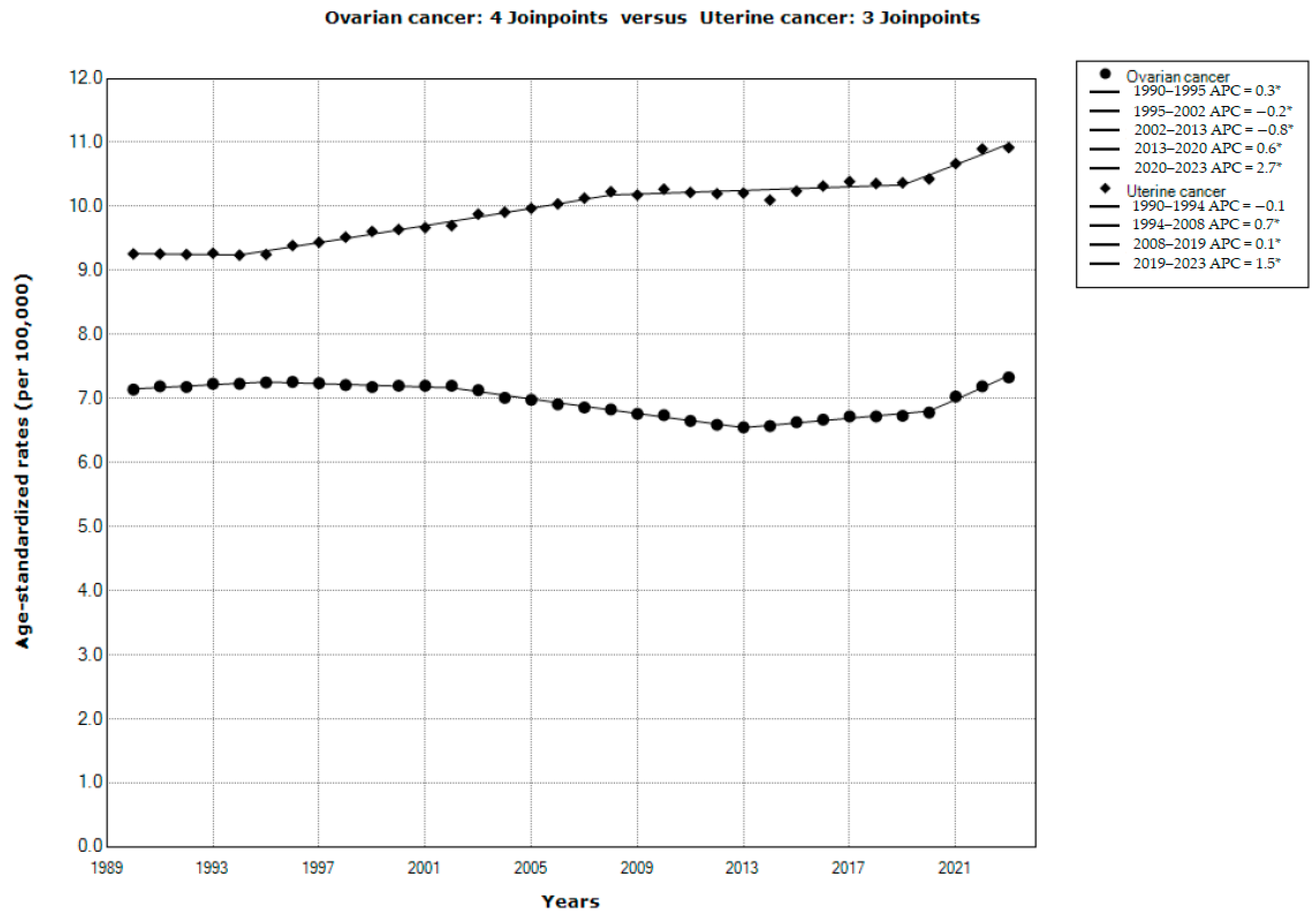
The results of the joinpoint regression analysis of the global trends in ovarian and uterine cancer incidence in the studied period, 1990–2023, are presented in Figure 2. A significant increase in incidence was observed both for uterine cancer (AAPC = +0.5%, 95% CI = 0.4 to 0.6) and for ovarian cancer (AAPC = +0.1%, 95% CI = 0.0 to 0.2). According to the comparability test, incidence trends for ovarian cancer and for uterine cancer were not parallel (Final selected model rejected parallelism, p < 0.001). There were four joinpoints in the incidence trend for ovarian cancer: incidence increased by +0.3% per year from 1990 to 1995, then significantly decreased (by −0.2% per year from 1995 to 2002, and by −0.8% per year from 2002 to 2013), followed by a significant increase by +0.6% per year from 2013 to 2020 and with an accelerated growth by +2.7% per year from 2020 until the end of the period in 2023. There were three joinpoints in the incidence trend for uterine cancer: incidence was stable (by −0.1% per year) from 1990 to 1994, followed by a significant increase from 1994 until the end of the period in 2023 (that is, by +0.7% per year from 1994 to 2008, by +0.1% per year from 2008 to 2019, and with accelerated growth by +1.5% per year from 2019 until the end of the period in 2023).
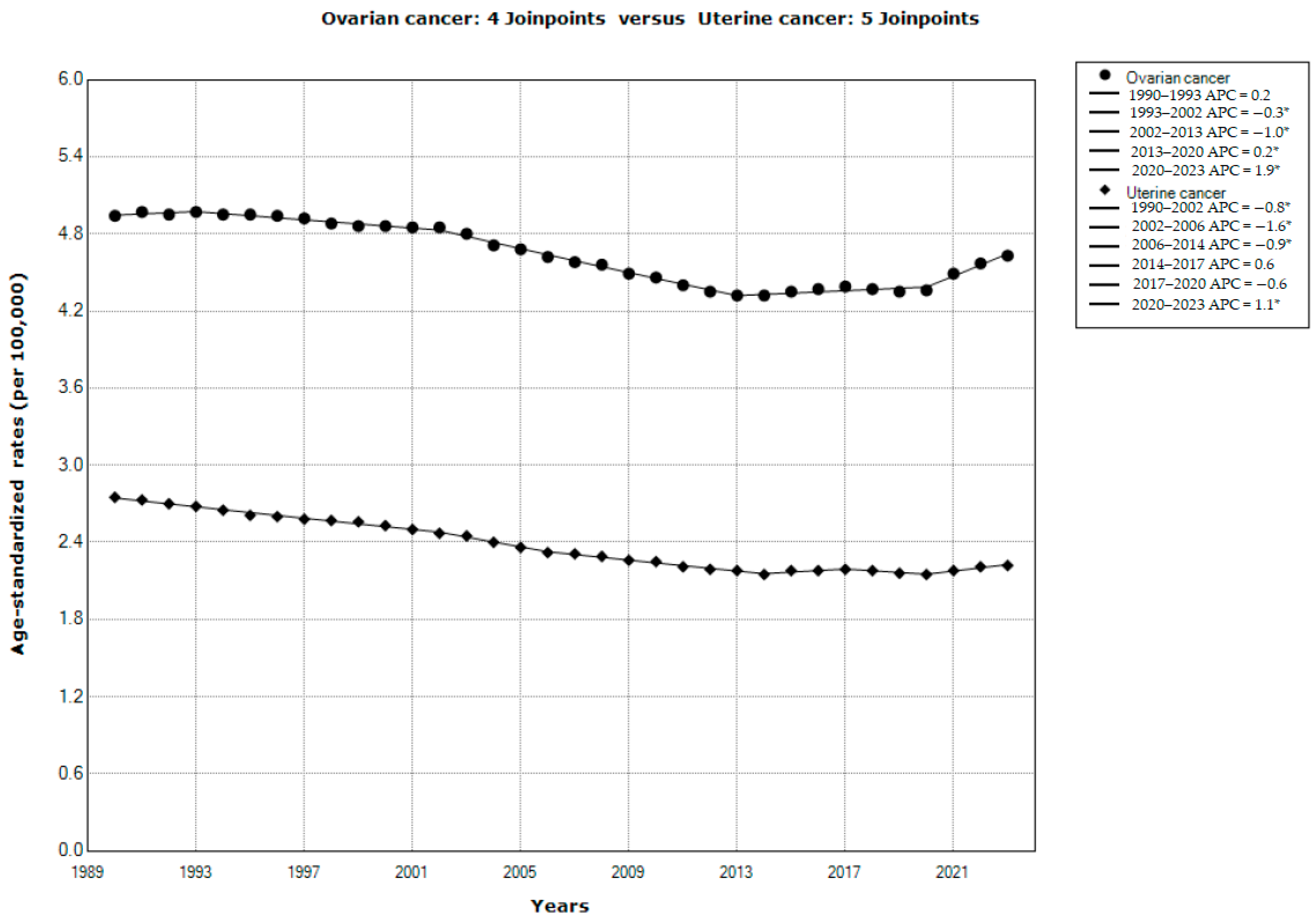
Results of the joinpoint regression analysis of the global trends in mortality of ovarian and uterine cancer in the studied period 1990–2023 are presented in Figure 3. A significant decrease in mortality was observed both for uterine cancer (AAPC = −0.6%, 95% CI = −0.8 to −0.5) and for ovarian cancer (AAPC = −0.2%, 95% CI = −0.3 to −0.1). According to the comparability test, mortality trends for ovarian cancer and for uterine cancer were not parallel (Final selected model rejected parallelism, p < 0.001). There were four joinpoints in the mortality trend for ovarian cancer: mortality was stable (by +0.2% per year) from 1990 to 1993, then decreased significantly from 1993 to 2013 (that is, by −0.3% per year from 1993 to 2002, and by −1.0% per year from 2002 to 2013), followed by an increase from 2013 to 2020 (that is, by +0.2% from 2012 to 2020), and then followed by an accelerated growth by +1.9% per year from 2020 until the end of the period in 2023. There were five joinpoints in the mortality trend for uterine cancer: mortality significantly decreased from 1990 to 2014 (that is, by −0.8% per year from 1990 to 2002, by −1.6% per year from 2002 to 2006, and by −0.9% per year from 2006 to 2014), followed by an insignificant increase by +0.6% per year from 2014 to 2017 and by an insignificant decrease by −0.6% per year from 2017 to 2020, and then followed by a significant increase by +1.1% per year from 2020 until the end of the period in 2023.
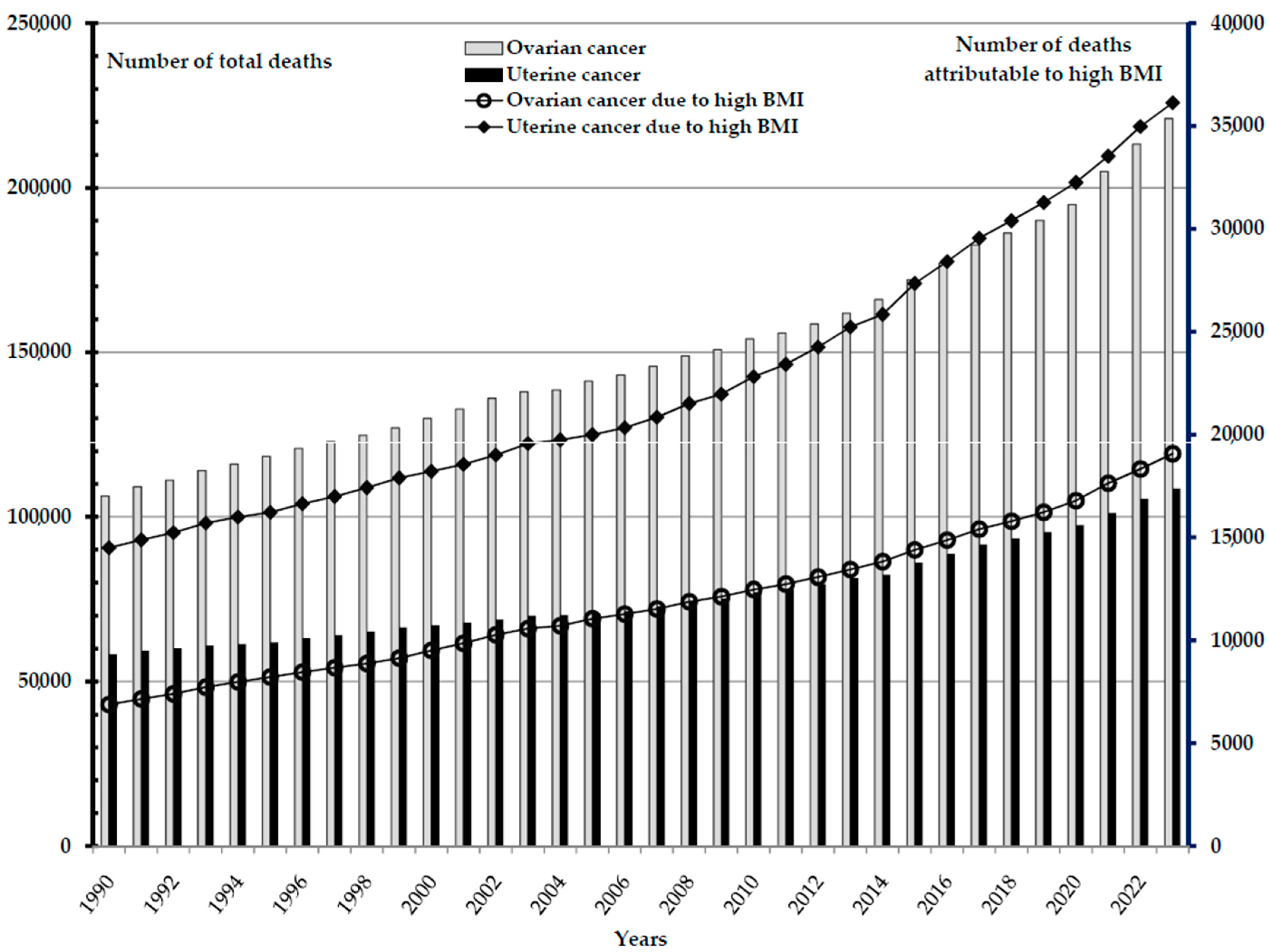
A total of 1.2 million deaths from ovarian and uterine cancer attributable to high BMI were reported worldwide in the studied period, 1990–2023 (0.4 million of ovarian cancer deaths and 0.8 million of uterine cancer deaths); per year, the number of deaths ranged from 21,000 in 1990 to 55,000 in 2023 (Figure 4). In 2023, the majority of uterine cancer deaths attributable to high BMI (5677; 15.7% of the total) were recorded in the United States of America, followed by the Russian Federation and China (equally about 3000; 8.3% of the total), and then Brazil and India (equally about 1400; 3.8% of the total). Most of the deaths from ovarian cancer attributable to high BMI (2300; 12.1% of the total) were recorded in the United States of America, followed by India, China, and Russia (equally about 1300; 6.8% of the total), and then by Pakistan (850; 4.5% of the total).
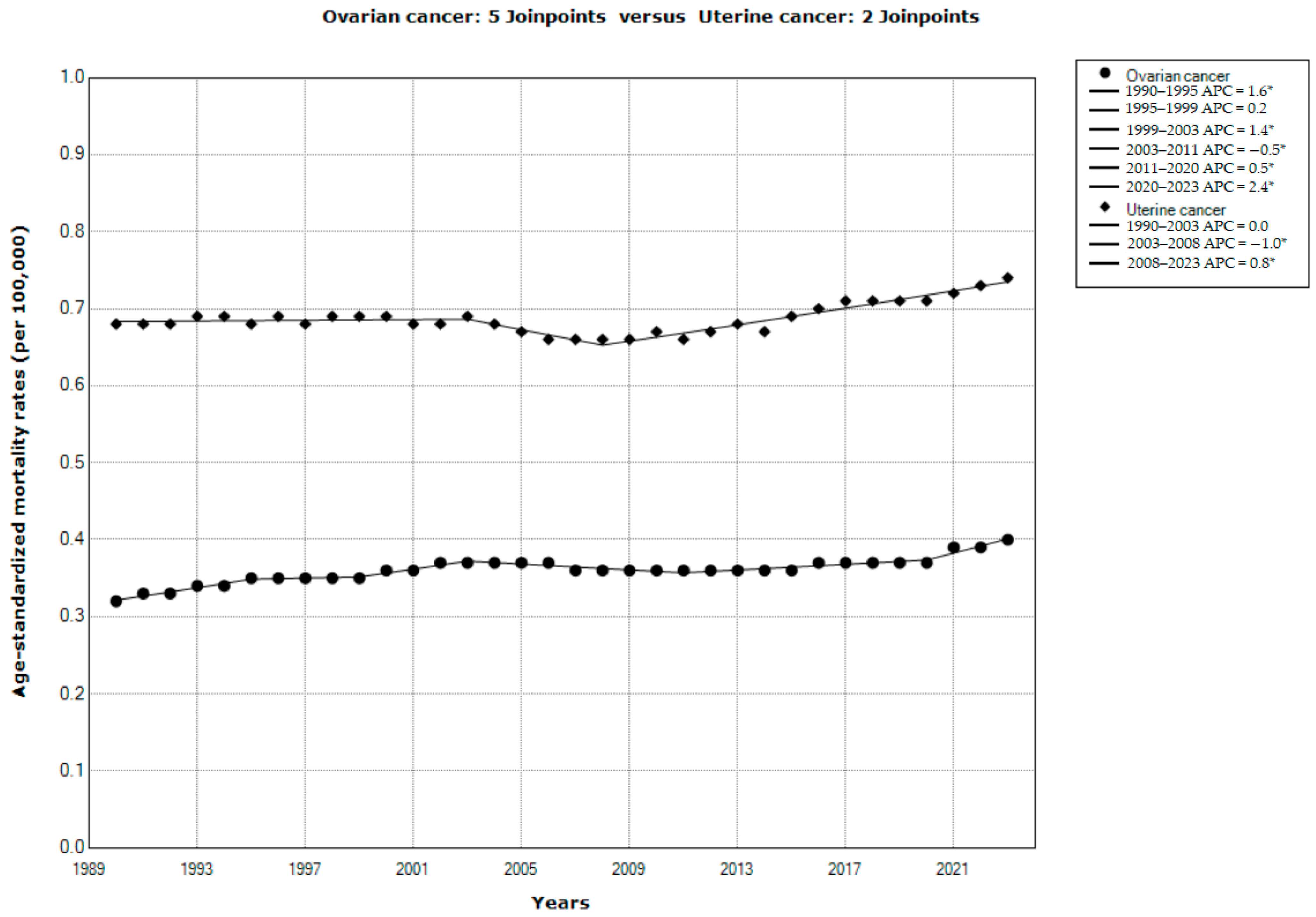
Results of the joinpoint regression analysis of the global trends in mortality from ovarian and uterine cancer attributable to high BMI in the studied period, 1990–2023, are presented in Figure 5. A significant increase in mortality was observed both for uterine cancer (AAPC = +0.2%, 95% CI = 0.1 to 0.4) and for ovarian cancer (AAPC = +0.7%, 95% CI = 0.4 to 0.9). According to the comparability test, global mortality trends for ovarian cancer and for uterine cancer attributable to high BMI were not parallel (Final selected model rejected parallelism, p < 0.001). There were five joinpoints in the mortality trend for ovarian cancer: mortality increased (by +1.6% per year) from 1990 to 1995, then was stable (by +0.2% per year) from 1995 to 1999, then significantly increased by +1.4% per year from 1999 to 2003, followed by a decrease by −0.5% per year from 2003 to 2011, and then significantly increased from 2011 until the end of the period in 2023 (that is, by +0.5% per year from 2011 to 2020, and with an accelerated growth by +2.4% per year from 2020 until the end of the period in 2023). There were two joinpoints in the mortality trend for uterine cancer: mortality was stable from 1990 to 2003, followed by a significant decrease by −1.0% per year from 2003 to 2008, and then significantly increased by +0.8% per year from 2008 until the end of the period in 2023.
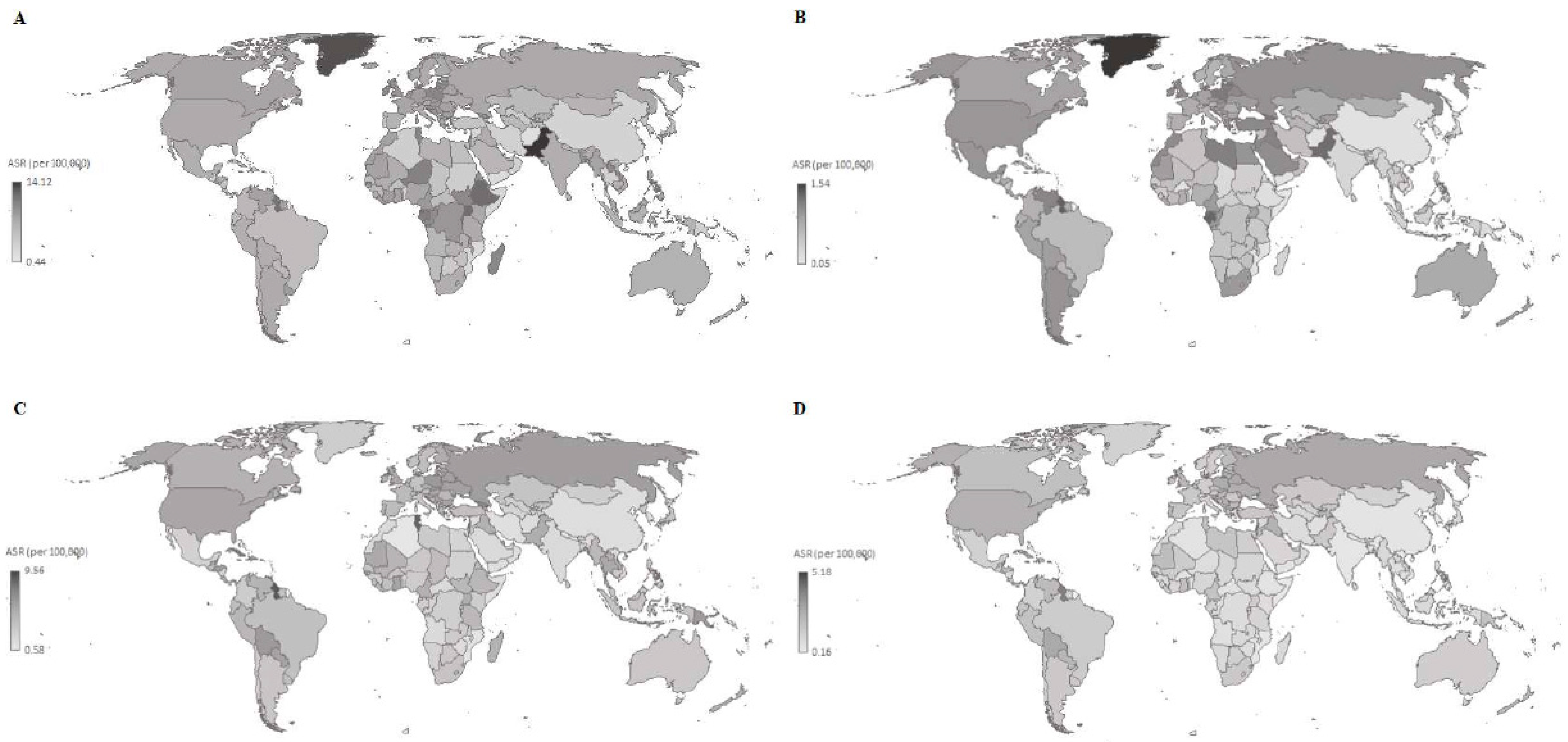
Globally, the ASR of mortality from ovarian cancer was 4.6 per 100,000 in 2023 (Figure 6). The highest ASRs were found in Pakistan (14.1 per 100.000) and Ethiopia, Uganda, and Guyana (equally about 10.0 per 100.000), while the lowest rates were observed in Afghanistan, Yemen, Mozambique, Syria, Gambia, Somalia, and China (equally ≤1.0 per 100,000). Globally, the ASR of mortality from ovarian cancer attributable to high BMI was 0.4 per 100,000 in 2023; the highest ASRs attributable to high BMI were found in the Bahamas, Guyana, Gabon, Pakistan, Latvia, Trinidad and Tobago, Barbados, Bermuda, and Poland (equally about 1.2 per 100.000), while the lowest rates were observed in Somalia, Vietnam, Burkina Faso, Mozambique, Yemen, Afghanistan, and China (equally ≤0.1 per 100,000).
Globally, the ASR of mortality from uterine cancer was 2.2 per 100,000 in 2023 (Figure 6). The highest ASRs were found in Guyana, Trinidad and Tobago, and Barbados (about 7.5 per 100.000), while the lowest rates were reported in Algeria, Mozambique, Nepal, Syria, the Republic of Korea, and Iran (equally ≤1.0 per 100,000). Globally, the ASR of mortality from uterine cancer attributable to high BMI was 0.7 per 100,000 in 2023; the highest ASRs attributable to high BMI were found in Guyana, Grenada, and Barbados (equally about 1.2 per 100.000), while the lowest rates were recorded in Nepal, Vietnam, Mozambique, and Somalia (equally ≤0.2 per 100,000).
From 1990 to 2023, the global trend in ASRs of ovarian cancer deaths attributable to high BMI significantly increased (AAPC = +0.4%, 95% CI = 0.3 to 0.5) (Table 1). The growth trend in South Asia (AAPC = +8.7%, 95% CI = 8.1 to 9.2) was 30 times faster than in Eastern Europe (AAPC = +0.3%, 95% CI = 0.1 to 0.5). Declining trends in mortality from ovarian cancer attributable to high BMI were observed only in Australasia (AAPC = −0.2%, 95% CI = −0.4 to −0.1), High-income North America (AAPC = −0.3%, 95% CI = −0.6 to −0.0), and Western Europe (AAPC = −0.7%, 95% CI = −0.8 to −0.6). The global trend in mortality from uterine cancer attributable to high BMI significantly increased (AAPC = +0.1, 95% CI = 0.0 to 0.2), with the trend growing fastest in South Asia (AAPC = +4.2%, 95% CI = 4.0 to 4.4). Declining trends in mortality from uterine cancer attributable to high BMI were observed only in Central Asia (AAPC = −0.6%, 95% CI = −0.9 to −0.4), East Asia (AAPC = −2.2%, 95% CI = −2.6 to −1.8), and Southern Latin America (AAPC = −0.4%, 95% CI = −0.6 to −0.1).
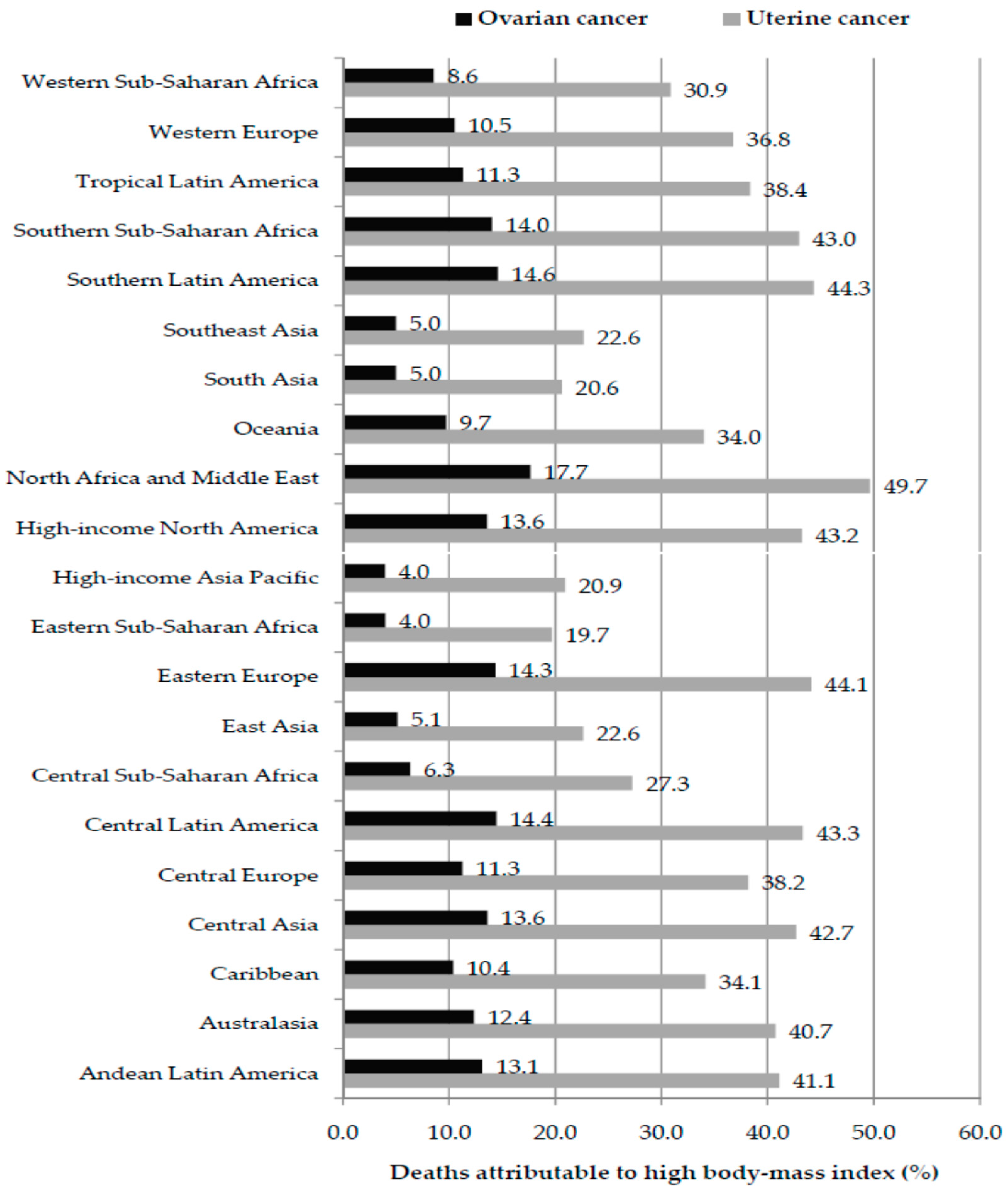
Globally, the fraction of deaths from ovarian cancer attributable to high BMI in 2023 was 8.65%, while for uterine cancer it was 33.33% (Figure 7). In both ovarian and uterine cancer, fractions of deaths attributable to high BMI were the highest in the GBD region of North Africa and Middle East (17.7% and 49.7%, respectively). Also, in both ovarian and uterine cancer, fractions of deaths attributable to high BMI were the lowest in the GBD region of Eastern Sub-Saharan Africa (4.0% and 19.7%, respectively). Large disparities (five-fold) in the fraction of ovarian cancer deaths attributable to high BMI were observed between the regions with the highest fraction (North Africa and Middle East, Latin America, Eastern Europe, and High-income North America) and regions with the lowest fraction (High-income Asia Pacific, Eastern Sub-Saharan Africa, East Asia, South Asia, and Southeast Asia). Disparities (two-fold) in the fraction of uterine cancer deaths attributable to high BMI were observed between the regions with the highest fraction (North Africa and Middle East, Latin America, Eastern Europe, and High-income North America) and regions with the lowest fraction (High-income Asia Pacific, East Asia, South Asia, Southeast Asia, and Eastern Sub-Saharan Africa).
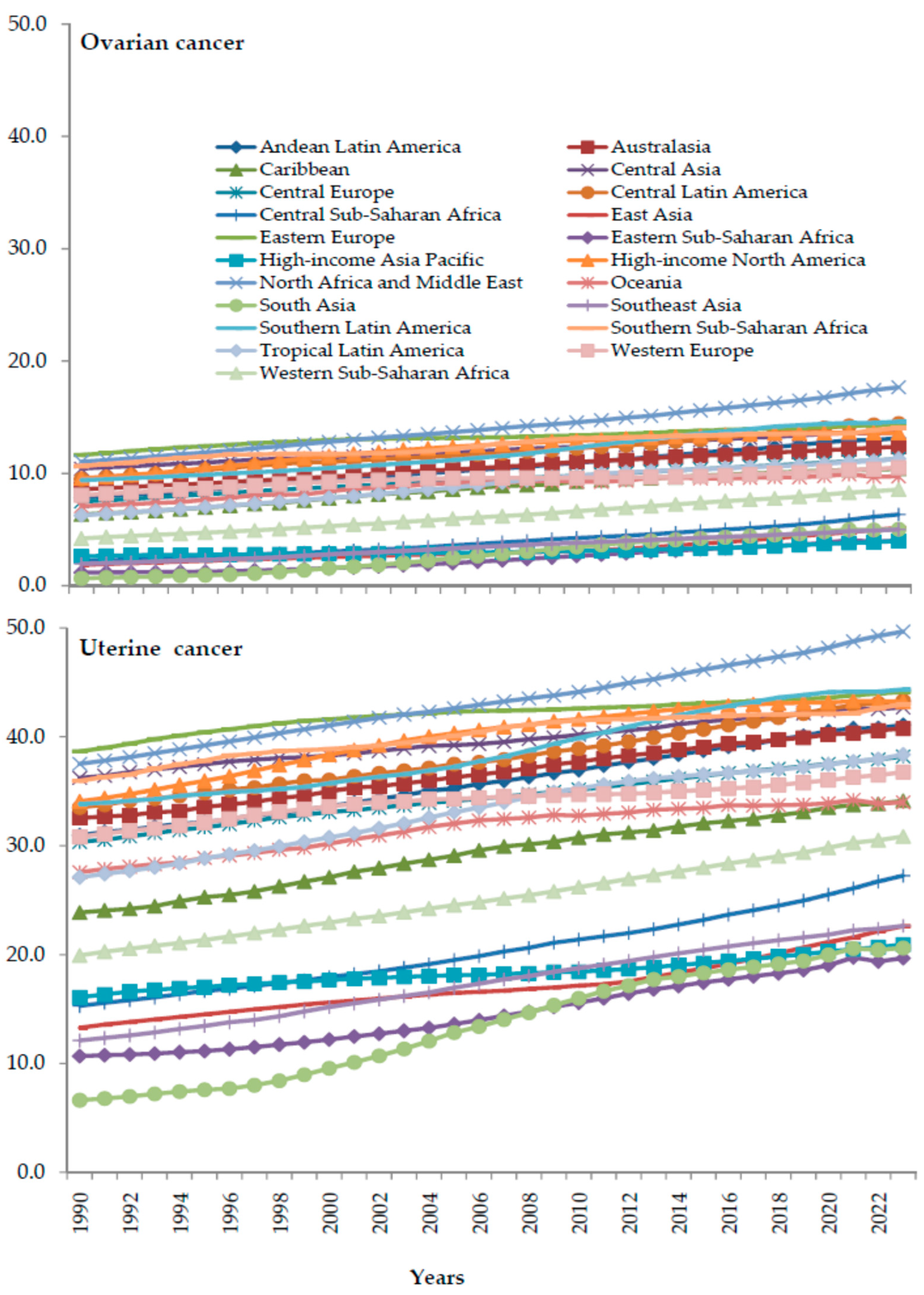
In both ovarian and uterine cancer, fractions (%) of deaths attributable to high BMI increased across all GBD regions from 1990 to 2023 (Figure 8). In both ovarian and uterine cancer, an increase in the fraction of deaths attributable to high BMI was greatest in the GBD region of Central Asia, especially from the 2000s to 2023.
Globally, across all age groups apart from the elderly (65–89 years), the ovarian cancer mortality rates attributable to high BMI showed a significant (p < 0.001) upward trend over the observed period 1990–2023, with the most rapid increase observed in the youngest age group (20–29 years) (Table 2). The mortality increased with age, and estimates for each age group were higher in 2023 than in 1990. The highest rates were observed in the 75–95-year age group in both 1990 and 2023.
Age-specific mortality rates for uterine cancer attributable to high BMI increased with age and were higher in all age groups in 2023 compared with 1990. The highest age-specific rates were observed in persons older than 75 years, with significantly upward trends, and the most rapid increase occurred in the oldest age group (95+ years). Globally, across all age groups below 75 years, the trends in age-specific mortality rates for uterine cancer attributable to high BMI remained stable from 1990 to 2023 (p > 0.05).
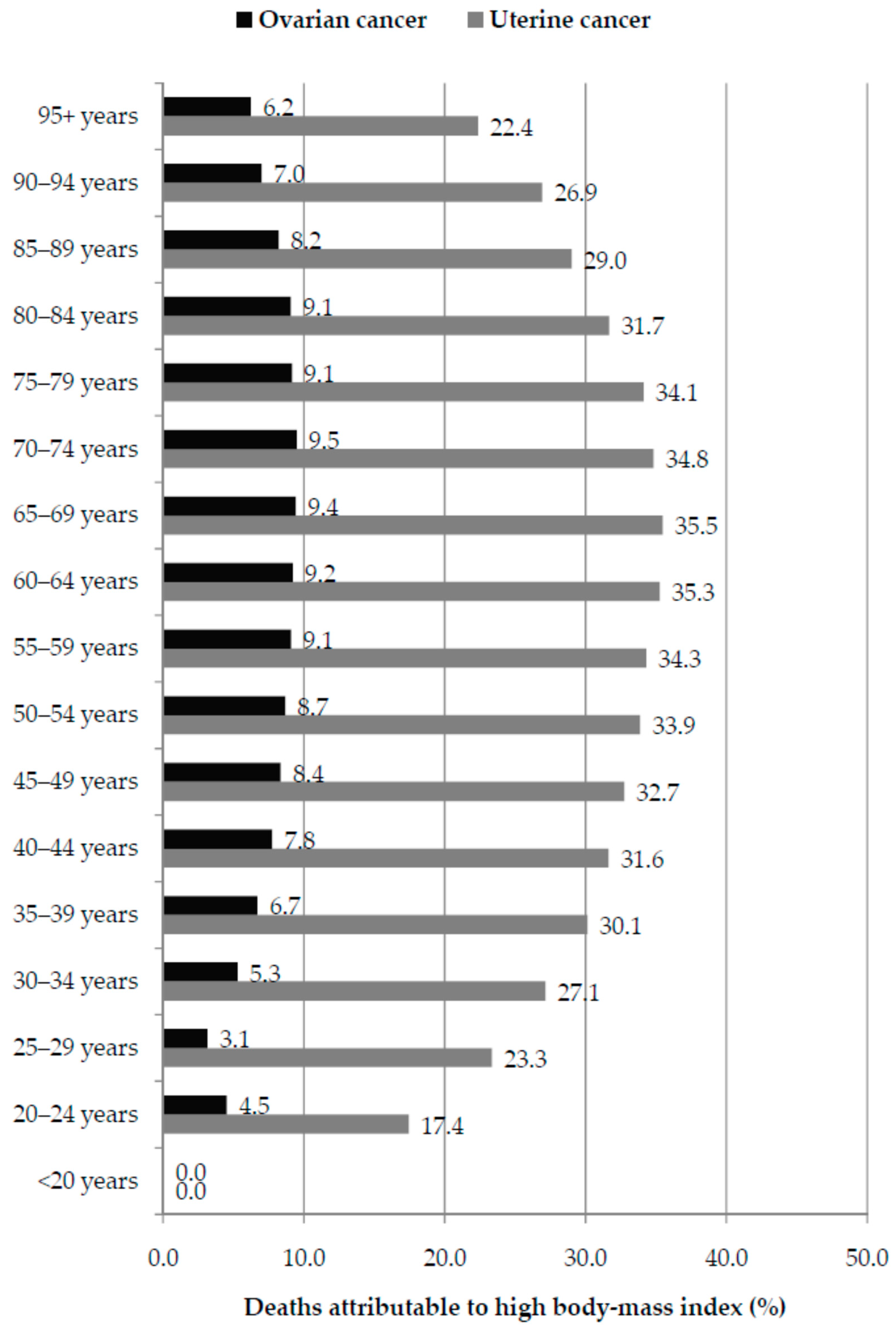
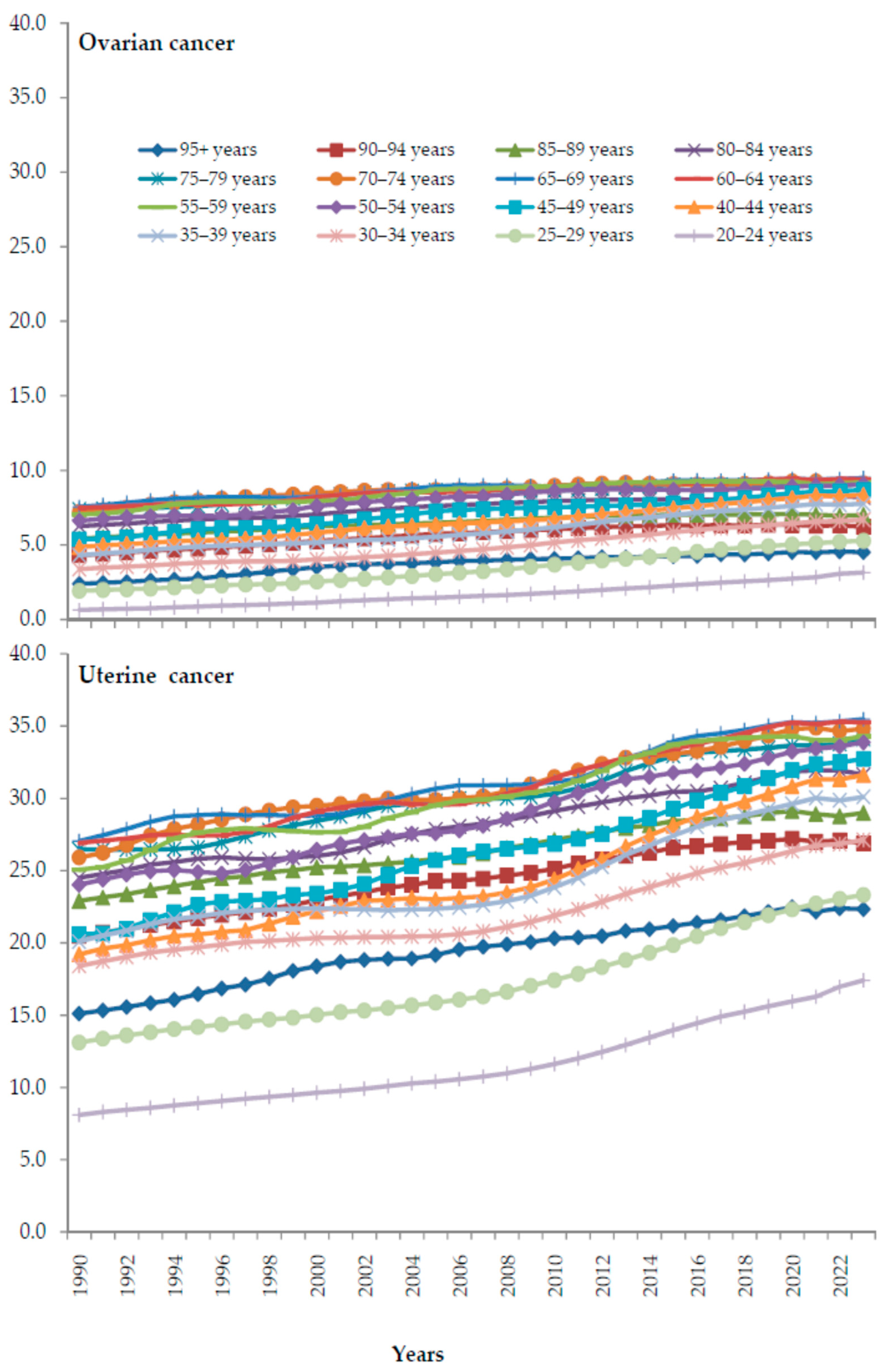
For uterine cancer, global fractions of deaths attributable to high BMI were the highest in those aged 60–64 and 65–69 (35.3% and 35.5%, respectively) (Figure 9). For ovarian cancer, global fractions of deaths attributable to high BMI were the highest in those aged 65–69 and 70–74 (9.4% and 9.5%, respectively) (Figure 9). In both ovarian and uterine cancer, fractions of deaths attributable to high BMI were the lowest in the youngest and oldest age groups.
In both ovarian and uterine cancer, fractions (%) of deaths attributable to high BMI increased in all age groups (20 and over) from 1990 to 2023 (Figure 10). In both ovarian and uterine cancer, an increase in the fraction of deaths attributable to high BMI was the fastest in age groups spanning 65–79 years.
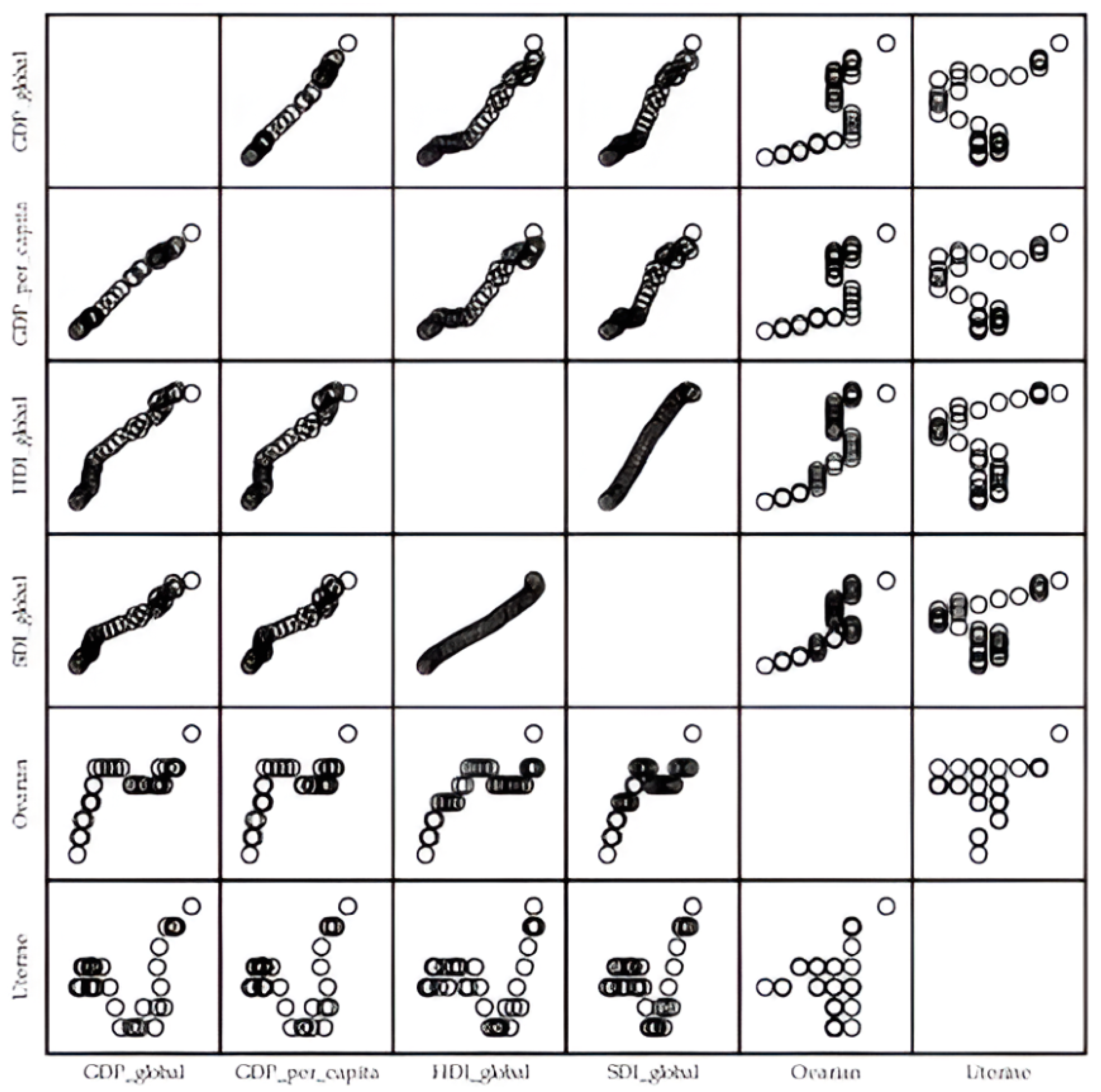
Linear regression analyses showed a significant positive association between the global age-standardized mortality rates (per 100,000) for ovarian cancer attributable to high BMI and global GDP, GDP per capita, HDI, and SDI in 1990–2023 (R2 = 0.595, p = 0.000; R2 = 0.569, p = 0.000; R2 = 0.656, p = 0.000; R2 = 0.694, p = 0.000, respectively) (Figure 11). Linear regression analyses showed a significant positive association between the global age-standardized mortality rates (per 100,000) for uterine cancer attributable to high BMI and global GDP, GDP per capita, HDI, and SDI in 1990–2023 (R2 = 0.231, p = 0.004; R2 = 0.173, p = 0.014; R2 = 0.157, p = 0.020; R2 = 0.245, p = 0.003, respectively).
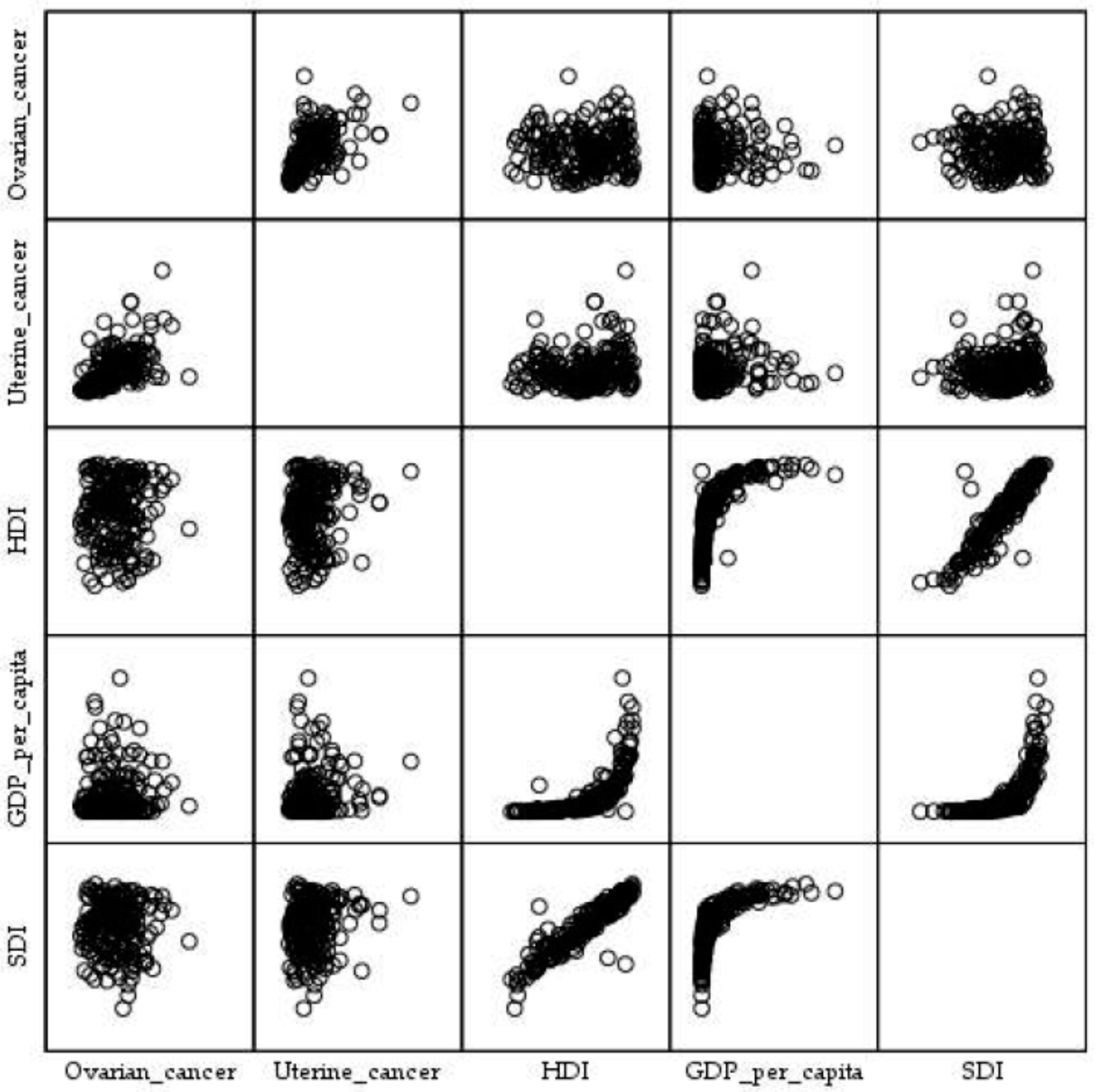
The Pearson correlation coefficient showed an absence of correlation between the age-standardized mortality rates (per 100,000) for ovarian cancer attributable to high BMI and HDI (r = 0.019; p = 0.795), GDP per capita (r = 0.009; p = 0.900), and SDI (r = 0.005; p = 0.940), by countries in 2023 (Figure 12).
The Pearson correlation coefficient showed an absence of correlation between the age-standardized mortality rates (per 100,000) for uterine cancer attributable to high BMI and GDP per capita (r = 0.085; p = 0.240), while a positive correlation was observed for HDI (r = 0.151; p = 0.037) and SDI (r = 0.158; p = 0.027), by countries in 2023.

4. Discussion

Marked discrepancies were observed in patterns and temporal trends of mortality from ovarian and uterine cancer attributable to high BMI worldwide. Notably, increasing trends in the burden of both ovarian and uterine cancer worldwide particularly accelerated during 2020–2023, corresponding to the COVID-19 pandemic period.
Apparent geographic differences in patterns and trends of mortality from ovarian and uterine cancer attributable to high BMI could be explained by different age structures across populations, demographic growth, variations in life expectancy, availability of healthcare services, improvements in cancer management, preventive measures, and practices of cancer certification and registration [2,5]. The notion that an increase in global burden of ovarian and uterine cancer may reflect aging and growth of the world population is supported by the results of the GBD 2021 study, which reported the proportion of people aged ≥70 being 6.3% of the total world population of 7.9 billion in 2021, up from 3.8% of the 5.3 billion in 1990 [29]. Apart from genetic factors, the burden of ovarian and uterine cancer could reflect many other factors like the frequency of autopsies, representation and heterogeneity of histological subtypes, certain environmental risks, obesity, etc. [41,42].
Obesity is considered a risk factor for ovarian [43] and uterine cancer [20]. Also, research shows that high BMI could have an effect on mortality from these cancers, but the evidence is heterogenous, which could explain noted discrepancies in ovarian and uterine cancer mortality attributable to high BMI worldwide. Studies have indicated a survival disadvantage in patients with ovarian cancer and high BMI [44], but results are inconsistent [45,46,47,48]. For uterine cancer, one evidence synthesis showed that high BMI was significantly associated with higher all-cause mortality [49], while others showed no impact on cancer-specific mortality [50,51]. For ovarian cancer and obesity, a large meta-analysis found no difference in overall or cancer-specific survival [51], while pooled data from 21 case–control studies showed disadvantage in overall survival and cancer-specific mortality [52].
Tumor histology could also explain the heterogenous evidence. One study found a significant association between ovarian cancer survival and high BMI only for the high-grade serous subtype [52]. A large study of global surveillance of cancer survival in 51 countries (CONCORD-2) reported that high-grade serous carcinoma made up over 70% of ovarian tumors in Oceania, North America, and Europe, compared to 66% and 56% in South America and Asia, respectively [53]. Other subtypes were registered more frequently in Asia than in North America (32.5% vs. 19.4%). Similar results were noted in a study of data from registries of the Cancer Incidence in Five Continents project [54]. For uterine cancer, increased mortality associated with high BMI was noted for both histological type I (the most common worldwide) and type II [55], but results were heterogenous [56]. The faster increase in uterine cancer mortality attributable to high BMI in South Asia may be associated with lifestyle changes due to westernization, rising obesity prevalence, changes in the age of menarche and menopause, and metabolic and hormonal changes, all of which can contribute both to the onset and progression of disease [57]. Contributing factors could also relate to healthcare access, surveillance of high-risk populations, and surgery wait time [58]. Regions with a decrease in ASRs of mortality from uterine cancer attributable to high BMI could have experienced improvements in diagnosis and treatment, with the introduction of clinical guidelines and new treatment modalities [58,59]. Still, predictions of mortality trends from uterine cancer attributable to metabolic risk factors showed that, despite declines in some regions, a stagnation in decline was noted, which highlights the need for timely action and continued preventive efforts for metabolic risk factors and early detection [60]. Also, the predicted decline in total fertility rate across these regions by 2050 and onward [61], changes in reproductive factors and their interplay with metabolic factors, along with the later onset of menstruation and earlier menopause [62], all point to the need for improved and continued disease monitoring.
Another possible explanation for the observed discrepancies could be the stage of disease. Namely, research suggests that obesity is linked with significantly worse ovarian cancer survival for localized disease (stages I/II), contrary to late-stage (IV) [45], while in endometrial cancer, high BMI was associated with an increased risk of death both in early stage and advanced disease (stages III and IV) [49,63]. Our findings of a significant positive association between the age-standardized mortality rates from ovarian cancer attributable to high BMI and GDP, GDP per capita, HDI, and SDI and findings that South Asia and Eastern Sub-Saharan Africa regions experienced the highest increase in ASR of mortality attributable to high BMI could be interpreted in the context of countries with higher level of development being associated with higher prevalence of obesity and better data quality. Furthermore, the increasing mortality attributable to high BMI in some lower-resource settings could possibly reflect delays in diagnosis; the complexity of treatment of a patient with cancer and obesity, which involves risks related to surgical treatment and chemotherapy dosages; and risks related to comorbidities [64,65]. Thus, some factors could be responsible for the observed differences in mortality attributable to high BMI regardless of predominant cancer subtypes in certain locations, but impairing survival via health-system weaknesses, including challenges in making a diagnosis and consequently diagnoses at late stages [66]. Nevertheless, the observed correlations between socioeconomic indicators and cancer mortality attributable to high BMI should be interpreted in the context of the applied ecological study design and further elucidated in analytical studies.
Research has shown different effects of obesity at early adulthood and in years prior to diagnosis, compared to obesity at diagnosis [50,67]. A meta-analysis found significantly lower survival in women with ovarian cancer who were obese in early adulthood and those obese 5 years prior to diagnosis [67]. Contrary to this, results of a large prospective study of post-menopausal women enrolled in the Women’s Health Initiative Study found that BMI from an average of 7 years prior to diagnosis was not associated with mortality [68]. For uterine cancer, research mostly indicates a significant positive association between mortality and high BMI measured ≥5 years prior to diagnosis [69,70,71], but there is always the question of distinguishing the association with incidence from that with mortality [72]. Pre-clinical research shows that obesity is associated with enhanced metastatic potential, poor response to treatment, and worse survival [73]. Thus, a longer duration of such metabolic influence on the tumor’s microenvironment could serve as a promoter of the tumor’s aggressiveness [74,75]. Notably, many of the locations with the highest ASR of mortality from ovarian and uterine cancer attributable to high BMI observed in this study experienced an increase in obesity prevalence over the 1990–2022 period or have had their double burden of underweight and obesity shift towards obesity dominance toward the end of this period [76]. The highest increase in ovarian and uterine cancer mortality attributable to high BMI was observed in South Asia, the region that has seen the sharpest increase in mortality from cancers attributable to high BMI [77]. This region is undergoing a transition from undernutrition to obesity due to the adoption of a Western lifestyle, a diet rich in sugar and fat, urbanization, and less physical activity [76,78], which might lead to women being obese at younger ages and a longer duration of obesity. Contrary to that, in Australasia, high-income North America, and Western Europe, a significant decrease in mortality from ovarian cancer attributable to high BMI was observed; these patterns may reflect established interventions for obesity control, as well as a more developed healthcare system. Nevertheless, obesity has mostly been increasing globally over the last decades, or at least remained high [76], thus the existing efforts aimed at obesity prevention and control should be continued and strengthened. The present study showed a significant increase in global trends in mortality from ovarian cancer attributable to high BMI across all age groups < 65 years, with the highest increases in younger age groups, while for uterine cancer decreases in ASRs of mortality attributable to high BMI were noted in regions which experienced improvements in early detection, diagnostics, in younger population’s disease awareness, and different socioeconomic and lifestyle changes [79,80,81].
For both ovarian and uterine cancer, a notable increase in deaths attributable to high BMI was observed towards the end of the considered period, which corresponds to the COVID-19 pandemic. Research has shown substantial disruptions in healthcare systems worldwide during the pandemic, including a significant reduction in screening, delays in diagnoses, reduced access to treatment, and a decline in treatment completion. The regular screening processes were disrupted, leading to delays in cancer diagnosis [82]. Many surgical and other treatment procedures suffered delays due to healthcare systems being redirected and strained with COVID-19 management [83]. Research indicates that longer wait times until treatment negatively impacted survival [84], with >6 weeks between the diagnosis and surgery for epithelial endometrial cancer being associated with significantly lower survival [85], and a waiting time of ≥4 weeks being associated with a significant decrease in survival for ovarian cancer. [86]. Additionally, surgical procedures in SARS-CoV-2 positive patients were recommended for a delay of at least 7 weeks after the infection [87]. According to a large international prospective cohort study, the pandemic lockdowns have caused almost three-quarters of surgical procedures for gynecological cancers to take 5 or more weeks from diagnosis to surgery [83]. The COVID-19 pandemic influenced healthcare delivery, cancer detection, and treatment, all of which represent a context that could plausibly influence mortality patterns. Whether or not the observed increase in ovarian and uterine cancer mortality attributable to high BMI during the pandemic period was pandemic-driven needs to be determined in future studies.
Ovarian cancer has a poor 5-year survival rate of 30–50% [88,89], with over half of new cases being diagnosed at a very advanced stage and about the same amount experiencing disease recurrence [90]. For uterine cancer, the 5-year survival rate is around 80% [1,2,4]. Thus, monitoring the trends of factors that could be associated with survival is crucial for targeted evidence-based preventive strategies. Global disparities in mortality from ovarian an uterine cancer attributable to high BMI should be considered in the context of possible explanations which could relate to the quality of data, presence of contributing comorbidities, means of BMI measurement (self-reported or verified), differences in BMI classification over time and the appropriateness of BMI as a measurement of visceral fat which would reflect the microenvironment that influences cancer development, progression and prognosis [91]. Some decreases in gynecologic cancer mortality rates attributable to high BMI seen in regions with high obesity prevalence could be explained with the obesity paradox phenomenon, where obese persons with cancer experience a survival improvement; despite some heterogenous findings at the individual study level [92,93], a recent meta-analysis specific to gynecologic cancers did not confirm a positive effect, and found a significant decrease of 44% in the survival of endometrial cancer in women with a high BMI [94]. Also, over the 1990–2023 period, a global increase in deaths attributable to high BMI for both ovarian and uterine cancer was the highest in age groups spanning 65–79 years, possibly related to comorbidities and longer duration of obesity in older women. This, alongside global population aging, underlines the need for enforcing policies that will improve obesity prevention and control, promote healthy eating habits, reduce the consumption of ultra-processed food, increase physical activity, and improve women’s awareness of ovarian and uterine cancer. Further research is needed to clarify the extent to which the accelerated growth in mortality from ovarian and uterine cancer attributable to high BMI observed at the end of the considered period may reflect the disruptions in healthcare systems during the COVID-19 pandemic or ongoing underlying trends. Also, the observed accelerated upward trends in ovarian and uterine cancer mortality attributable to high BMI in the 2020–2023 period, which corresponds to the period of the COVID-19 pandemic, highlight the importance of timely assessment and monitoring of long-term population health trends.

Strengths and Limitations of the Research

This study analyzed global patterns and temporal trends of mortality for ovarian and uterine cancer from 1990 to 2023, as well as the contribution of high BMI to mortality worldwide. Also, this study assessed the association of the mortality from ovarian and uterine cancer attributable to high BMI with indicators of human development in the world. In addition, joinpoint regression analysis allowed for the precise determination and interpretation of the direction and magnitude of changes in mortality trends over time. Finally, this study used data from the GBD 2023 database, which provides comprehensive, high-quality, and up-to-date mortality information for the entire world.
However, some limitations of this study should be considered. First, questions inevitably arise regarding the reliability, accuracy, and coverage of mortality statistics for ovarian and uterine cancer attributable to high BMI. Namely, regional variations in data quality may persist, reflecting varying capacities for collecting, registering, and reporting cancer mortality data across different levels of socio-economic development. Potential sources of bias in estimating trends in ovarian and uterine cancer mortality attributable to high BMI worldwide may include inconsistent availability and variable quality of information on prevalence of high BMI collected from some self-reported data (which may result in an underestimation of BMI) or obtained from samples not representative of the entire country, especially in developing or low-income countries where data on BMI are sometimes sparse. In addition, it should be noted that BMI does not necessarily reflect body composition and adiposity distribution. Furthermore, this study did not examine some potential covariates such as genetics, hormone therapy, reproductive history, personal medical history, diabetes mellitus, alcohol use, etc. Furthermore, stratification across different histological subtypes of ovarian and uterine cancer was not currently available within the GBD study, and future analyses with such data would enable a more granular assessment of epidemiological patterns. Finally, the epidemiological fallacy inherent in the design of an ecological study poses a large problem for this research. Consequently, the findings of this study regarding the correlation between the mortality from ovarian and uterine cancer and high BMI must be further evaluated in analytical epidemiological studies.

5. Conclusions

From 1990 to 2023, global trends in mortality from both ovarian and uterine cancer attributable to high BMI increased significantly, with accelerating growth observed during the 2020–2023 period, which corresponds to the COVID-19 pandemic. Almost all regions experienced unfavorable trends in mortality from ovarian and uterine cancer attributable to high BMI, with the increase being the highest in South Asia. Declining trends in mortality rates for ovarian cancer attributable to high BMI were observed only in the most developed areas, such as the regions of Australasia, High-income North America, and Western Europe, while for uterine cancer, only in developing areas, such as the regions of Central Asia, East Asia, and Southern Latin America. Mortality rates for both ovarian and uterine cancer attributable to high BMI increased with age and were higher in every age group in 2023 than in 1990. These findings highlight the significance of public health strategies for the prevention and management of ovarian and uterine cancer, particularly through programs of obesity prevention and control. Further analytical epidemiological studies are needed to clarify the relationship between high BMI and ovarian and uterine cancer.

Author Contributions

Conceptualization, I.I. and M.I.; methodology, I.I., S.L. and M.I.; software, I.I., V.J. and M.I.; validation, I.I. and M.I.; formal analysis, I.I. and M.I.; investigation, I.I., V.J. and M.I.; resources, I.I. and M.I.; data curation, I.I., V.J., S.L. and M.I.; writing—original draft preparation, I.I.; writing—review and editing, I.I., V.J., S.L. and M.I.; visualization, I.I. and M.I.; supervision, M.I.; project administration, M.I.; funding acquisition, I.I., V.J., S.L. and M.I. All authors have read and agreed to the published version of the manuscript.

Funding

This research did not receive any specific grant from funding agencies in the public, commercial, or not-for-profit sectors.

Institutional Review Board Statement

The study was conducted according to the guidelines of the Declaration of Helsinki and approved by the Ethics Committee of the Faculty of Medical Sciences, University of Kragujevac (ref. no.: 01-14321, 13 November 2017), entitled “Epidemiology of the most common health disorders”.

Informed Consent Statement

Not applicable, as our model-based analysis used aggregated data; patients were not involved in the research. The study was conducted using publicly available data.

Data Availability Statement

Data is contained within the article.

Acknowledgments

This study was conducted as a part of projects No 175042 supported by the Ministry of Education, Science and Technological Development, Republic of Serbia, 2011–2023, and No 451-03-137/2025-03/ 200110, 2024–2025, supported by the Ministry of Science, Technological Development and Innovation, Republic of Serbia.

Conflicts of Interest

The authors declare no conflicts of interest.

References

  1. Ferlay, J.; Ervik, M.; Lam, F.; Laversanne, M.; Colombet, M.; Mery, L.; Piñeros, M.; Znaor, A.; Soerjomataram, I.; Bray, F. Global Cancer Observatory: Cancer Today; International Agency for Research on Cancer: Lyon, France, 2024; Available online: https://gco.iarc.who.int/today (accessed on 13 November 2025).
  2. Bray, F.; Laversanne, M.; Sung, H.; Ferlay, J.; Siegel, R.L.; Soerjomataram, I.; Jemal, A. Global cancer statistics 2022: GLOBOCAN estimates of incidence and mortality worldwide for 36 cancers in 185 countries. CA Cancer J. Clin. 2024, 74, 229–263. [Google Scholar] [CrossRef]
  3. Maleki, Z.; Vali, M.; Nikbakht, H.A.; Hassanipour, S.; Kouhi, A.; Sedighi, S.; Farokhi, R.; Ghaem, H. Survival rate of ovarian cancer in Asian countries: A systematic review and meta-analysis. BMC Cancer 2023, 23, 558. [Google Scholar] [CrossRef]
  4. Caetano Dos Santos, F.L.; Wojciechowska, U.; Michalek, I.M.; Didkowska, J. Survival of patients with cancers of the female genital organs in Poland, 2000–2019. Sci. Rep. 2023, 13, 8473. [Google Scholar] [CrossRef]
  5. Momenimovahed, Z.; Tiznobaik, A.; Taheri, S.; Salehiniya, H. Ovarian cancer in the world: Epidemiology and risk factors. Int. J. Womens Health 2019, 11, 287–299. [Google Scholar] [CrossRef]
  6. Kotsopoulos, J.; Gronwald, J.; Karlan, B.; Rosen, B.; Huzarski, T.; Moller, P.; Lynch, H.T.; Singer, C.F.; Senter, L.; Neuhausen, S.L.; et al. Age-specific ovarian cancer risks among women with a BRCA1 or BRCA2 mutation. Gynecol. Oncol. 2018, 150, 85–91. [Google Scholar] [CrossRef]
  7. Liu, L.; Habeshian, T.S.; Zhang, J.; Peeri, N.C.; Du, M.; De Vivo, I.; Setiawan, V.W. Differential trends in rising endometrial cancer incidence by age, race, and ethnicity. JNCI Cancer Spectr. 2023, 7, pkad001. [Google Scholar] [CrossRef]
  8. Liang, Y.; Dai, X.; Chen, J.; Zeng, X.; Qing, X.; Huang, J.; Ren, L.; Zhang, X.; Zhang, W.; Ruan, X. Global burden and trends in pre- and post-menopausal gynecological cancer from 1990 to 2019, with projections to 2040: A cross-sectional study. Int. J. Surg. 2025, 111, 891–903. [Google Scholar] [CrossRef] [PubMed]
  9. Rodriguez, V.E.; Tanjasiri, S.P.; Ro, A.; Hoyt, M.A.; Bristow, R.E.; LeBrón, A.M.W. Trends in endometrial cancer incidence in the United States by race/ethnicity and age of onset from 2000 to 2019. Am. J. Epidemiol. 2025, 194, 103–113. [Google Scholar] [CrossRef] [PubMed]
  10. UN General Assembly. Transforming Our World: The 2030 Agenda for Sustainable Development, 21 October 2015, A/RES/70/1. Available online: http://www.refworld.org/docid/57b6e3e44.html (accessed on 13 November 2025).
  11. Komatsu, H.; Ikeda, Y.; Kawana, K.; Nagase, S.; Yoshino, K.; Yamagami, W.; Tokunaga, H.; Kato, K.; Kimura, T.; Aoki, D.; et al. Impact of COVID-19 on gynecological cancer incidence: A large cohort study in Japan. Int. J. Clin. Oncol. 2024, 29, 72–77. [Google Scholar] [CrossRef] [PubMed]
  12. Murakami, A.; Nomura, H.; Abe, A.; Fusegi, A.; Aoki, Y.; Omi, M.; Tanigawa, T.; Okamoto, S.; Yunokawa, M.; Kanao, H. Influence of COVID-19 on the clinical characteristics of patients with uterine cervical cancer in Japan: A single-center retrospective study. J. Obstet. Gynaecol. Res. 2024, 50, 2280–2285. [Google Scholar] [CrossRef]
  13. Lian, Y.; Luo, P. Mortality of Three Major Gynecological Cancers in the European Region: An Age-Period-Cohort Analysis from 1992 to 2021 and Predictions in a 25-Year Period. Ann. Glob. Health 2025, 91, 30. [Google Scholar] [CrossRef] [PubMed]
  14. Adisu, M.A.; Habtie, T.E.; Kitaw, T.A.; Gessesse, A.D.; Woreta, B.M.; Derso, Y.A.; Zemariam, A.B. The rising burden of female cancer in Ethiopia (2000–2021) and projections to 2040: Insights from the global burden of disease study. PLoS ONE 2025, 20, e0333787. [Google Scholar] [CrossRef]
  15. Tanha, K.; Mottaghi, A.; Nojomi, M.; Moradi, M.; Rajabzadeh, R.; Lotfi, S.; Janani, L. Investigation on factors associated with ovarian cancer: An umbrella review of systematic review and meta-analyses. J. Ovarian Res. 2021, 14, 153. [Google Scholar] [CrossRef]
  16. Jara-Rosales, S.; González-Stegmaier, R.; Rotarou, E.S.; Villarroel-Espíndola, F. Risk Factors for Ovarian Cancer in South America: A Literature Review. J. Pers. Med. 2024, 14, 992. [Google Scholar] [CrossRef]
  17. Huang, J.; Chan, W.C.; Ngai, C.H.; Lok, V.; Zhang, L.; Lucero-Prisno, D.E., 3rd; Xu, W.; Zheng, Z.J.; Elcarte, E.; Withers, M.; et al. Global incidence and mortality trends of corpus uteri cancer and associations with gross domestic product, human development index, lifestyle, and metabolic risk factors. Int. J. Gynaecol. Obstet. 2023, 162, 998–1009. [Google Scholar] [CrossRef]
  18. Bafligil, C.; Thompson, D.J.; Lophatananon, A.; Smith, M.J.; Ryan, N.A.; Naqvi, A.; Evans, D.G.; Crosbie, E.J. Association between genetic polymorphisms and endometrial cancer risk: A systematic review. J. Med. Genet. 2020, 57, 591–600. [Google Scholar] [CrossRef]
  19. Ali, A.T.; Al-Ani, O.; Al-Ani, F. Epidemiology and risk factors for ovarian cancer. Prz. Menopauzalny 2023, 22, 93–104. [Google Scholar] [CrossRef]
  20. Koskas, M.; Crosbie, E.J.; Fokdal, L.; McCluggage, W.G.; Mileshkin, L.; Mutch, D.G.; Amant, F. Cancer of the corpus uteri: A 2025 update. Int. J. Gynaecol. Obstet. 2025, 171, 60–77. [Google Scholar] [CrossRef] [PubMed]
  21. Yang, H.; Dai, H.; Li, L.; Wang, X.; Wang, P.; Song, F.; Zhang, B.; Chen, K. Age at menarche and epithelial ovarian cancer risk: A meta-analysis and Mendelian randomization study. Cancer Med. 2019, 8, 4012–4022. [Google Scholar] [CrossRef]
  22. Bandera, E.V.; Qin, B.; Moorman, P.G.; Alberg, A.J.; Barnholtz-Sloan, J.S.; Bondy, M.; Cote, M.L.; Funkhouser, E.; Peters, E.S.; Schwartz, A.G.; et al. Obesity, weight gain, and ovarian cancer risk in African American women. Int. J. Cancer 2016, 139, 593–600. [Google Scholar] [CrossRef] [PubMed]
  23. Ochs-Balcom, H.M.; Johnson, C.; Guertin, K.A.; Qin, B.; Beeghly-Fadiel, A.; Camacho, F.; Bethea, T.N.; Dempsey, L.F.; Rosenow, W.; Joslin, C.E.; et al. Racial differences in the association of body mass index and ovarian cancer risk in the OCWAA Consortium. Br. J. Cancer 2022, 127, 1983–1990. [Google Scholar] [CrossRef] [PubMed]
  24. Cao, A.; Esserman, D.A.; Cartmel, B.; Irwin, M.L.; Ferrucci, L.M. Association between diet quality and ovarian cancer risk and survival. J. Natl. Cancer Inst. 2024, 116, 1095–1104. [Google Scholar] [CrossRef]
  25. O’Connell, C.P.; Hong, H.G.; Abar, L.; Khandpur, N.; Steele, E.M.; Liao, L.M.; Sinha, R.; Trabert, B.; Loftfield, E. Ultraprocessed food intake and risk of ovarian and endometrial cancer in the NIH-AARP cohort: A prospective cohort analysis. Am. J. Clin. Nutr. 2025, 122, 513–522. [Google Scholar] [CrossRef]
  26. Heo, J.; Oh, H.; Song, Y.S.; Lee, Y.J.; Han, K.; Lee, M.K. Impact of Changes in Obesity and Abdominal Obesity on Endometrial Cancer Risk in Young Korean Women: A Nationwide Cohort Study. Cancer Epidemiol. Biomark. Prev. 2025, 34, 1794–1800. [Google Scholar] [CrossRef]
  27. Aune, D.; Navarro Rosenblatt, D.A.; Chan, D.S.; Vingeliene, S.; Abar, L.; Vieira, A.R.; Greenwood, D.C.; Bandera, E.V.; Norat, T. Anthropometric factors and endometrial cancer risk: A systematic review and dose-response meta-analysis of prospective studies. Ann. Oncol. 2015, 26, 1635–1648. [Google Scholar] [CrossRef]
  28. Cheng, Y.; Wang, Z.; Jia, X.; Zhou, R.; Wang, J. Association Between Abdominal Adipose Tissue Distribution and Risk of Endometrial Cancer: A Case-Control Study. Clin. Med. Insights Oncol. 2022, 16, 11795549221140776. [Google Scholar] [CrossRef] [PubMed]
  29. Institute for Health Metrics and Evaluation (IHME). GBD Results; IHME, University of Washington: Seattle, WA, USA, 2025; Available online: https://vizhub.healthdata.org/gbd-results/ (accessed on 27 November 2025).
  30. Stevens, G.A.; Alkema, L.; Black, R.E.; Boerma, J.T.; Collins, G.S.; Ezzati, M.; Grove, J.T.; Hogan, D.R.; Hogan, M.C.; Horton, R.; et al. Guidelines for Accurate and Transparent Health Estimates Reporting: The GATHER statement. Lancet 2016, 388, e19–e23. [Google Scholar] [CrossRef] [PubMed]
  31. Global Burden of Disease 2019 Cancer Collaboration; Kocarnik, J.M.; Compton, K.; Dean, F.E.; Fu, W.; Gaw, B.L.; Harvey, J.D.; Henrikson, H.J.; Lu, D.; Pennini, A.; et al. Cancer incidence, mortality, years of life lost, years lived with disability, and disability-adjusted life years for 29 cancer groups from 2010 to 2019: A systematic analysis for the Global Burden of Disease Study 2019. JAMA Oncol. 2022, 8, 420–444. [Google Scholar] [CrossRef]
  32. World Health Organization. International Classification of Disease and Related Health Problems: 10th Revision [Internet]; World Health Organization: Geneva, Switzerland, 2019; Available online: https://icd.who.int/browse10/2019/en (accessed on 13 August 2025).
  33. World Health Organization. International Classification of Disease: 9th Revision [Internet]; World Health Organization: Geneva, Switzerland, 2015; Available online: https://www.who.int/standards/classifications/classification-of-diseases (accessed on 13 August 2025).
  34. United Nations (UN). National Accounts Main Aggregates Database. Available online: https://unstats.un.org/unsd/snaama (accessed on 13 November 2025).
  35. GBD 2019 Demographics Collaborators. Global age-sex-specific fertility, mortality, healthy life expectancy (HALE), and population estimates in 204 countries and territories, 1950–2019: A comprehensive demographic analysis for the Global Burden of Disease Study 2019. Lancet 2020, 396, 1160–1203. [Google Scholar] [CrossRef]
  36. GBD 2021 Risk Factors Collaborators. Global burden and strength of evidence for 88 risk factors in 204 countries and 811 subnational locations, 1990–2021: A systematic analysis for the Global Burden of Disease Study 2021. Lancet 2024, 403, 2162–2203. [Google Scholar] [CrossRef]
  37. Kim, H.J.; Fay, M.P.; Feuer, E.J.; Midthune, D.N. Permutation tests for joinpoint regression with applications to cancer rates. Stat. Med. 2000, 19, 335–351. [Google Scholar] [CrossRef]
  38. Lerman, P.M. Fitting segmented regression models by grid search. Appl. Stat. 1980, 29, 77–84. [Google Scholar] [CrossRef]
  39. Clegg, L.X.; Hankey, B.F.; Tiwari, R.; Feuer, E.J.; Edwards, B.K. Estimating average annual per cent change in trend analysis. Stat. Med. 2009, 28, 3670–3682. [Google Scholar] [CrossRef] [PubMed]
  40. Kim, H.J.; Fay, M.P.; Yu, B.; Barrett, M.J.; Feuer, E.J. Comparability of segmented line regression models. Biometrics 2004, 60, 1005–1014. [Google Scholar] [CrossRef] [PubMed]
  41. Jiang, X.Y.; Zheng, L.; Xiong, M.; Wang, S.L.; Jin, Q.Q.; Yang, Y.T.; Fang, Y.X.; Hong, L.; Mei, J.; Zhou, S.G. Body Mass Index and Risk of Female Reproductive System Tumors Subtypes: A Meta-Analysis Using Mendelian Randomization. Technol. Cancer Res. Treat. 2024, 23, 15330338241277699. [Google Scholar] [CrossRef]
  42. Zhang, R.; Zhao, J.; Du, P.; Fan, S.; Wang, L.; Wang, L.; Fan, Y. Global burden and trends in ovarian cancer attributable to environmental risks and occupational risks in females aged 20–49 from 1990 to 2021, with projections to 2050: A cross-sectional study. BMC Public Health 2025, 25, 2547. [Google Scholar] [CrossRef]
  43. Park, I.S.; Kim, S.I.; Han, Y.; Yoo, J.; Seol, A.; Jo, H.; Lee, J.; Wang, W.; Han, K.; Song, Y.S. Risk of female-specific cancers according to obesity and menopausal status in 2•7 million Korean women: Similar trends between Korean and Western women. Lancet Reg. Health West. Pac. 2021, 11, 100146. [Google Scholar] [CrossRef]
  44. Yang, H.S.; Yoon, C.; Myung, S.K.; Park, S.M. Effect of obesity on survival of women with epithelial ovarian cancer: A systematic review and meta-analysis of observational studies. Int. J. Gynecol. Cancer 2011, 21, 1525–1532. [Google Scholar] [CrossRef]
  45. Bandera, E.V.; Lee, V.S.; Qin, B.; Rodriguez-Rodriguez, L.; Powell, C.B.; Kushi, L.H. Impact of body mass index on ovarian cancer survival varies by stage. Br. J. Cancer 2017, 117, 282–289. [Google Scholar] [CrossRef]
  46. Levin, G.; Brezinov, Y.; Tzur, Y.; Bar-Noy, T.; Brodeur, M.N.; Salvador, S.; Lau, S.; Gotlieb, W. Association between BMI and oncologic outcomes in epithelial ovarian cancer: A predictors-matched case-control study. Arch. Gynecol. Obstet. 2024, 310, 587–593. [Google Scholar] [CrossRef]
  47. Kotsopoulos, J.; Moody, J.R.; Fan, I.; Rosen, B.; Risch, H.A.; McLaughlin, J.R.; Sun, P.; Narod, S.A. Height, weight, BMI and ovarian cancer survival. Gynecol. Oncol. 2012, 127, 83–87. [Google Scholar] [CrossRef]
  48. Moysich, K.B.; Baker, J.A.; Menezes, R.J.; Jayaprakash, V.; Rodabaugh, K.J.; Odunsi, K.; Beehler, G.P.; McCann, S.E.; Villella, J.A. Usual adult body mass index is not predictive of ovarian cancer survival. Cancer Epidemiol. Biomark. Prev. 2007, 16, 626–628. [Google Scholar] [CrossRef]
  49. Secord, A.A.; Hasselblad, V.; Von Gruenigen, V.E.; Gehrig, P.A.; Modesitt, S.C.; Bae-Jump, V.; Havrilesky, L.J. Body mass index and mortality in endometrial cancer: A systematic review and meta-analysis. Gynecol. Oncol. 2016, 140, 184–190. [Google Scholar] [CrossRef]
  50. Kokts-Porietis, R.L.; Elmrayed, S.; Brenner, D.R.; Friedenreich, C.M. Obesity and mortality among endometrial cancer survivors: A systematic review and meta-analysis. Obes. Rev. 2021, 22, e13337. [Google Scholar] [CrossRef] [PubMed]
  51. Petrelli, F.; Cortellini, A.; Indini, A.; Tomasello, G.; Ghidini, M.; Nigro, O.; Salati, M.; Dottorini, L.; Iaculli, A.; Varricchio, A.; et al. Association of Obesity With Survival Outcomes in Patients With Cancer: A Systematic Review and Meta-analysis. JAMA Netw. Open 2021, 4, e213520. [Google Scholar] [CrossRef] [PubMed]
  52. Nagle, C.M.; Dixon, S.C.; Jensen, A.; Kjaer, S.K.; Modugno, F.; de Fazio, A.; Fereday, S.; Hung, J.; Johnatty, S.E.; Australian Ovarian Cancer Study Group; et al. Obesity and survival among women with ovarian cancer: Results from the Ovarian Cancer Association Consortium. Br. J. Cancer 2015, 113, 817–826. [Google Scholar] [CrossRef] [PubMed]
  53. Matz, M.; Coleman, M.P.; Sant, M.; Chirlaque, M.D.; Visser, O.; Gore, M.; Allemani, C.; The CONCORD Working Group. The histology of ovarian cancer: Worldwide distribution and implications for international survival comparisons (CONCORD-2). Gynecol. Oncol. 2017, 144, 405–413. [Google Scholar] [CrossRef]
  54. Wang, M.; Bi, Y.; Jin, Y.; Zheng, Z.J. Global Incidence of Ovarian Cancer According to Histologic Subtype: A Population-Based Cancer Registry Study. JCO Glob. Oncol. 2024, 10, e2300393. [Google Scholar] [CrossRef]
  55. Lindemann, K.; Cvancarova, M.; Eskild, A. Body mass index, diabetes and survival after diagnosis of endometrial cancer: A report from the HUNT-Survey. Gynecol. Oncol. 2015, 139, 476–480. [Google Scholar] [CrossRef]
  56. Kristensen, A.B.; Hare-Bruun, H.; Høgdall, C.K.; Rudnicki, M. Influence of Body Mass Index on Tumor Pathology and Survival in Uterine Cancer: A Danish Register Study. Int. J. Gynecol. Cancer 2017, 27, 281–288. [Google Scholar] [CrossRef]
  57. Beavis, A.L.; Smith, A.J.; Fader, A.N. Lifestyle changes and the risk of developing endometrial and ovarian cancers: Opportunities for prevention and management. Int. J. Womens Health 2016, 8, 151–167. [Google Scholar] [CrossRef]
  58. Vali, M.; Maleki, Z.; Jahani, M.A.; Nazemi, S.; Ghelichi-Ghojogh, M.; Hassanipour, S.; Javanian, M.; Nikbakht, H.A. A comprehensive systematic review and meta-analysis of uterine cancer in Asian countries. Casp. J. Intern. Med. 2025, 16, 215–224. [Google Scholar] [CrossRef]
  59. Yagi, A.; Ueda, Y.; Ikeda, S.; Miyoshi, A.; Nakagawa, S.; Hiramatsu, K.; Kobayashi, E.; Kimura, T.; Ito, Y.; Nakayama, T.; et al. Improved long-term survival of corpus cancer in Japan: A 40-year population-based analysis. Int. J. Cancer 2022, 150, 232–242. [Google Scholar] [CrossRef] [PubMed]
  60. Rath, S.; Khan, M.; Aziz, N.; Nabi, W.; Bhat, A. Assessing the contribution of metabolic risk factors to uterine cancer-related deaths and predictions until 2030 and 2050. J. Clin. Oncol. 2025, 43, e17642. [Google Scholar] [CrossRef]
  61. GBD 2021 Fertility and Forecasting Collaborators. Global fertility in 204 countries and territories, 1950–2021, with forecasts to 2100: A comprehensive demographic analysis for the Global Burden of Disease Study 2021. Lancet 2024, 403, 2057–2099. [Google Scholar] [CrossRef]
  62. Lortet-Tieulent, J.; Ferlay, J.; Bray, F.; Jemal, A. International Patterns and Trends in Endometrial Cancer Incidence, 1978–2013. J. Natl. Cancer Inst. 2018, 110, 354–361. [Google Scholar] [CrossRef]
  63. Modesitt, S.C.; Tian, C.; Kryscio, R.; Thigpen, J.T.; Randall, M.E.; Gallion, H.H.; Fleming, G.F.; Gynecologic Oncology Group. Impact of body mass index on treatment outcomes in endometrial cancer patients receiving doxorubicin and cisplatin: A Gynecologic Oncology Group study. Gynecol. Oncol. 2007, 105, 59–65. [Google Scholar] [CrossRef]
  64. Santoso, J.T.; Barton, G.; Riedley-Malone, S.; Wan, J.Y. Obesity and perioperative outcomes in endometrial cancer surgery. Arch. Gynecol. Obstet. 2012, 285, 1139–1144. [Google Scholar] [CrossRef] [PubMed]
  65. Tan, N.; Wu, Y.; Li, B.; Chen, W. Burden of female breast and five gynecological cancers in China and worldwide. Chin. Med. J. 2024, 137, 2190–2201. [Google Scholar] [CrossRef]
  66. Zouzoulas, D.; Karalis, T.; Sofianou, I.; Anthoulakis, C.; Tzika, K.; Zafrakas, M.; Timotheadou, E.; Grimbizis, G.; Tsolakidis, D. The Impact of Treatment Delay on Endometrial and Ovarian Cancer Patients: A Systematic Review. Cancers 2025, 17, 2076. [Google Scholar] [CrossRef]
  67. Bae, H.S.; Kim, H.J.; Hong, J.H.; Lee, J.K.; Lee, N.W.; Song, J.Y. Obesity and epithelial ovarian cancer survival: A systematic review and meta-analysis. J. Ovarian Res. 2014, 7, 41. [Google Scholar] [CrossRef]
  68. Zhou, Y.; Chlebowski, R.; LaMonte, M.J.; Bea, J.W.; Qi, L.; Wallace, R.; Lavasani, S.; Walsh, B.W.; Anderson, G.; Vitolins, M.; et al. Body mass index, physical activity, and mortality in women diagnosed with ovarian cancer: Results from the Women’s Health Initiative. Gynecol. Oncol. 2014, 133, 4–10. [Google Scholar] [CrossRef]
  69. Arem, H.; Chlebowski, R.; Stefanick, M.L.; Anderson, G.; Wactawski-Wende, J.; Sims, S.; Gunter, M.J.; Irwin, M.L. Body mass index, physical activity, and survival after endometrial cancer diagnosis: Results from the Women’s Health Initiative. Gynecol. Oncol. 2013, 128, 181–186. [Google Scholar] [CrossRef]
  70. Arem, H.; Park, Y.; Pelser, C.; Ballard-Barbash, R.; Irwin, M.L.; Hollenbeck, A.; Gierach, G.L.; Brinton, L.A.; Pfeiffer, R.M.; Matthews, C.E. Prediagnosis body mass index, physical activity, and mortality in endometrial cancer patients. J. Natl. Cancer Inst. 2013, 105, 342–349. [Google Scholar] [CrossRef]
  71. Chia, V.M.; Newcomb, P.A.; Trentham-Dietz, A.; Hampton, J.M. Obesity, diabetes, and other factors in relation to survival after endometrial cancer diagnosis. Int. J. Gynecol. Cancer 2007, 17, 441–446. [Google Scholar] [CrossRef]
  72. Cespedes Feliciano, E.M.; Prentice, R.L.; Aragaki, A.K.; Neuhouser, M.L.; Banack, H.R.; Kroenke, C.H.; Ho, G.Y.F.; Zaslavsky, O.; Strickler, H.D.; Cheng, T.D.; et al. Methodological considerations for disentangling a risk factor’s influence on disease incidence versus postdiagnosis survival: The example of obesity and breast and colorectal cancer mortality in the Women’s Health Initiative. Int. J. Cancer 2017, 141, 2281–2290. [Google Scholar] [CrossRef]
  73. Liu, Y.; Yang, J.; Hilliard, T.S.; Wang, Z.; Johnson, J.; Wang, W.; Harper, E.I.; Ott, C.; O’Brien, C.; Campbell, L.; et al. Host obesity alters the ovarian tumor immune microenvironment and impacts response to standard of care chemotherapy. J. Exp. Clin. Cancer Res. 2023, 42, 165. [Google Scholar] [CrossRef] [PubMed]
  74. Pati, S.; Irfan, W.; Jameel, A.; Ahmed, S.; Shahid, R.K. Obesity and Cancer: A Current Overview of Epidemiology, Pathogenesis, Outcomes, and Management. Cancers 2023, 15, 485. [Google Scholar] [CrossRef] [PubMed]
  75. Avgerinos, K.I.; Spyrou, N.; Mantzoros, C.S.; Dalamaga, M. Obesity and cancer risk: Emerging biological mechanisms and perspectives. Metabolism 2019, 92, 121–135. [Google Scholar] [CrossRef]
  76. NCD Risk Factor Collaboration (NCD-RisC). Worldwide trends in underweight and obesity from 1990 to 2022: A pooled analysis of 3663 population-representative studies with 222 million children, adolescents, and adults. Lancet 2024, 403, 1027–1050. [Google Scholar] [CrossRef] [PubMed]
  77. Huang, M.; Wang, L.; Lou, Y.; Qiu, Z.; Yu, S.; Xuan, F. Temporal trends in cancer mortality attributable to high BMI in Asia: An age-period-cohort analysis based on GBD 1992–2021. Front. Endocrinol. 2025, 16, 1691487. [Google Scholar] [CrossRef] [PubMed]
  78. Tham, K.W.; Abdul Ghani, R.; Cua, S.C.; Deerochanawong, C.; Fojas, M.; Hocking, S.; Lee, J.; Nam, T.Q.; Pathan, F.; Saboo, B.; et al. Obesity in South and Southeast Asia-A new consensus on care and management. Obes. Rev. 2023, 24, e13520. [Google Scholar] [CrossRef] [PubMed]
  79. Li, M.; Xu, S.; Yang, Q.; Zheng, Z.; Zhang, X.; Liu, H.; Cheng, Y.; Zou, Y.; Ye, H.; Wang, P. Epidemiological trends of gynecologic cancer burden in east Asian countries from 1990 to 2021 and projections to 2031. Int. J. Gynaecol. Obstet. 2026, 172, 255–262. [Google Scholar] [CrossRef]
  80. Sultana, S.; Parveen, R. Scenario of endometrial cancer in Asian countries:epidemiology, risk factors and challenges. Int. J. Community Med. Public Health 2025, 12, 2921–2931. [Google Scholar] [CrossRef]
  81. Strasser-Weippl, K.; Chavarri-Guerra, Y.; Villarreal-Garza, C.; Bychkovsky, B.L.; Debiasi, M.; Liedke, P.E.; Soto-Perez-de-Celis, E.; Dizon, D.; Cazap, E.; de Lima Lopes, G., Jr.; et al. Progress and remaining challenges for cancer control in Latin America and the Caribbean. Lancet Oncol. 2015, 16, 1405–1438. [Google Scholar] [CrossRef]
  82. Star, J.; Bandi, P.; Siegel, R.L.; Han, X.; Minihan, A.; Smith, R.A.; Jemal, A. Cancer Screening in the United States During the Second Year of the COVID-19 Pandemic. J. Clin. Oncol. 2023, 41, 4352–4359. [Google Scholar] [CrossRef]
  83. COVIDSurg Collaborative. Effect of COVID-19 pandemic lockdowns on planned cancer surgery for 15 tumour types in 61 countries: An international, prospective, cohort study. Lancet Oncol. 2021, 22, 1507–1517. [Google Scholar] [CrossRef] [PubMed]
  84. Elit, L.M.; O’Leary, E.M.; Pond, G.R.; Seow, H.Y. Impact of wait times on survival for women with uterine cancer. J. Clin. Oncol. 2014, 32, 27–33. [Google Scholar] [CrossRef]
  85. Strohl, A.E.; Feinglass, J.M.; Shahabi, S.; Simon, M.A. Surgical wait time: A new health indicator in women with endometrial cancer. Gynecol. Oncol. 2016, 141, 511–515. [Google Scholar] [CrossRef]
  86. Zhao, J.; Chen, R.; Zhang, Y.; Wang, Y.; Zhu, H. Impact of Treatment Delay on the Prognosis of Patients with Ovarian Cancer: A Population-based Study Using the Surveillance, Epidemiology, and End Results Database. J. Cancer 2024, 15, 473–483. [Google Scholar] [CrossRef]
  87. COVIDSurg Collaborative; GlobalSurg Collaborative. Timing of surgery following SARS-CoV-2 infection: An international prospective cohort study. Anaesthesia 2021, 76, 748–758. [Google Scholar] [CrossRef]
  88. Staley, S.A.; Tucker, K.R.; Clark, L.H. The Role of Obesity in the Development and Management of Gynecologic Cancer. Obstet. Gynecol. Surv. 2020, 75, 308–316. [Google Scholar] [CrossRef]
  89. Torre, L.A.; Trabert, B.; DeSantis, C.E.; Miller, K.D.; Samimi, G.; Runowicz, C.D.; Gaudet, M.M.; Jemal, A.; Siegel, R.L. Ovarian cancer statistics, 2018. CA Cancer J. Clin. 2018, 68, 284–296. [Google Scholar] [CrossRef]
  90. Arora, T.; Mullangi, S.; Vadakekut, E.S.; Lekkala, M.R. Epithelial Ovarian Cancer. 2024 May 6. In StatPearls [Internet]; StatPearls Publishing: Treasure Island, FL, USA, 2025. [Google Scholar] [PubMed]
  91. Suratkal, J.; D’Silva, T.; AlHilli, M. The role of diet, obesity and body composition in epithelial ovarian cancer development and progression: Mechanisms and therapeutic implications. Gynecol. Oncol. Rep. 2025, 58, 101718. [Google Scholar] [CrossRef] [PubMed]
  92. Paschou, S.A.; Andrikopoulou, A.; Mili, N.; Svarna, A.; Kaparelou, M.; Stefanaki, K.; Dedes, N.; Liatsou, E.; Thomakos, N.; Haidopoulos, D.; et al. Possible Prognostic Role of BMI Before Chemotherapy in the Outcomes of Women with Ovarian Cancer. Nutrients 2025, 17, 556. [Google Scholar] [CrossRef]
  93. Wichmann, I.A.; Cuello, M.A. Obesity and gynecological cancers: A toxic relationship. Int. J. Gynaecol. Obstet. 2021, 155, 123–134. [Google Scholar] [CrossRef] [PubMed]
  94. Pavone, M.; Goglia, M.; Taliento, C.; Lecointre, L.; Bizzarri, N.; Fanfani, F.; Fagotti, A.; Scambia, G.; Marescaux, J.; Querleu, D.; et al. Obesity paradox: Is a high body mass index positively influencing survival outcomes in gynecological cancers? A systematic review and meta-analysis. Int. J. Gynecol. Cancer 2024, 34, 1253–1262. [Google Scholar] [CrossRef] [PubMed]
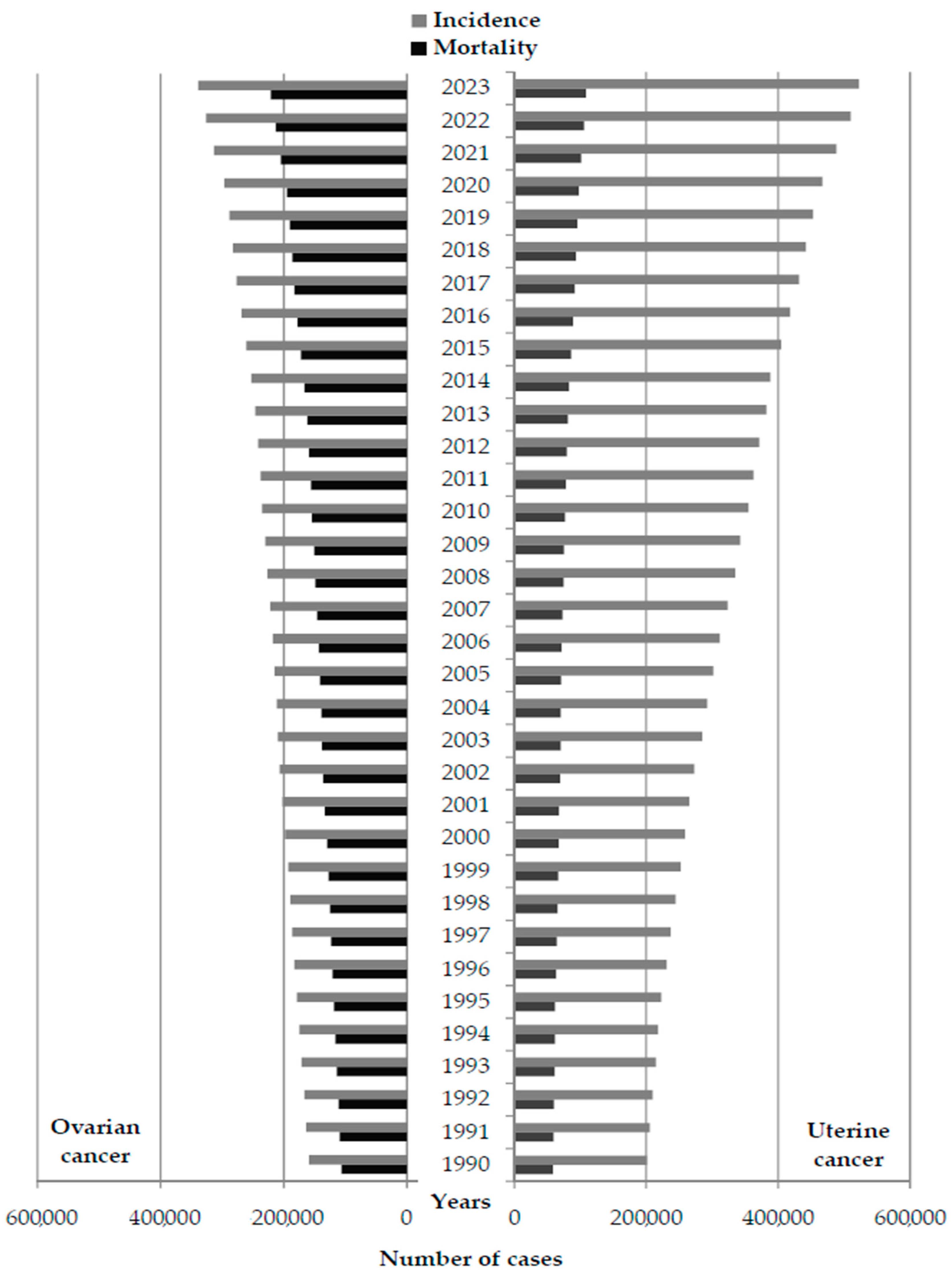
Figure 1. Number of new cases and deaths from ovarian and uterine cancer in the world, 1990–2023. Data source: Global Burden of Disease study [29].
Cancers 18 00157 g001
Figure 2. Joinpoint regression analysis of global trends in age-standardized rates of incidence of ovarian and uterine cancer, 1990–2023. * Statistically significant trend (p < 0.05). APC—annual percentage change. Data source: Global Burden of Disease study [29].
Cancers 18 00157 g002
Figure 3. Joinpoint regression analysis of global trends in age-standardized rates of mortality from ovarian and uterine cancer, 1990–2023. * Statistically significant trend (p < 0.05). APC—annual percentage change. Data source: Global Burden of Disease study [29].
Cancers 18 00157 g003
Figure 4. Ovarian and uterine cancer: number of total deaths and deaths attributable to high body-mass index (BMI), in the world, 1990–2023. Data source: Global Burden of Disease study [29].
Cancers 18 00157 g004
Figure 5. Joinpoint regression analysis of global trends in age-standardized rates of mortality from ovarian and uterine cancer attributable to high body-mass index, 1990–2023. * Statistically significant trend (p < 0.05). APC—annual percentage change. Data source: Global Burden of Disease study [29].
Cancers 18 00157 g005
Figure 6. Age-standardized rates (ASRs) of mortality from ovarian and uterine cancer across 204 countries/territories in 2023: (A) ASR for overall ovarian cancer, (B) ASRs of ovarian cancer attributable to high body-mass index, (C) ASRs for overall uterine cancer, (D) ASRs of uterine cancer attributable to high body-mass index. Data source: Global Burden of Disease study [29].
Cancers 18 00157 g006
Figure 7. Fraction (%) of deaths from ovarian and uterine cancer attributable to high body-mass index by GBD region, in 2023. Data source: Global Burden of Disease study [29].
Cancers 18 00157 g007
Figure 8. Fraction (%) of deaths from ovarian and uterine cancer attributable to high body-mass index by GBD region, in 1990–2023. Data source: Global Burden of Disease study [29].
Cancers 18 00157 g008
Figure 9. Global fraction (%) of deaths of ovarian and uterine cancer attributable to high body-mass index by age group, in 2023. Data source: Global Burden of Disease study [29].
Cancers 18 00157 g009
Figure 10. The global trends in fractions (%) of ovarian and uterine cancer deaths attributable to high body-mass index, by age group, from 1990 to 2023. Data source: Global Burden of Disease study [29].
Cancers 18 00157 g010
Figure 11. Association of the global age-standardized mortality rates (ASMR, per 100,000) for ovarian and uterine cancer attributable to high body-mass index with global Gross Domestic Product (GDP), GDP per capita, Human Development Index (HDI), and Sociodemographic Index (SDI), in 1990–2023. Data sources: Global Burden of Disease study [29] and United Nations [34].
Cancers 18 00157 g011
Figure 12. Correlation of the age-standardized mortality rates (ASMR, per 100,000) for ovarian and uterine cancer attributable to high body-mass index with Gross Domestic Product per capita (GDP per capita), Human Development Index (HDI), and Sociodemographic Index (SDI), by country in 2023. Data sources: Global Burden of Disease study [29] and United Nations [34].
Cancers 18 00157 g012
Table 1. Mortality trends of ovarian and uterine cancer attributable to high body mass index, by location, 1990–2023; a joinpoint regression analysis.
Ovarian Cancer Uterine Cancer
LocationsCount in 2023ASR
in 2023
AAPC (ASR)
(95% CI)
Count in 2023 ASR
in 2023
AAPC (ASR)
(95% CI)
Global19,0690.40 0.4 * (0.3 to 0.5)36,136 0.74 0.1 * (0.0 to 0.2)
GBD regions
Andean Latin America2090.614.2 * (3.6 to 4.8)4561.330.0 (−0.3 to 0.3)
Australasia1780.59−0.2 * (−0.4 to −0.1) 3111.000.9 * (0.7 to 1.1)
Caribbean1390.472.2 * (2.1 to 2.4)5531.851.9 * (1.7 to 2.1)
Central Asia2510.481.1 * (0.9 to 1.3)5391.05−0.6 * (−0.9 to −0.4)
Central Europe9390.751.7 * (1.4 to 1.9)20231.500.6 * (0.4 to 0.7)
Central Latin America9930.672.3 * (2.1 to 2.4)13650.931.1 * (0.7 to 1.5)
Central Sub-Saharan Africa1630.405.6 * (5.1 to 6.1)1690.453.4 * (3.1 to 3.7)
East Asia12950.111.2 * (0.7 to 1.6)31150.26−2.2 * (−2.6 to −1.8)
Eastern Europe16130.760.3 * (0.1 to 0.5)42831.880.3 * (0.1 to 0.5)
Eastern Sub-Saharan Africa3490.276.1 * (5.9 to 6.4)5470.483.1 * (2.9 to 3.3)
High-income Asia Pacific3160.150.9 * (0.7 to 1.1)9850.431.0 * (0.7 to 1.2)
High-income North America25680.73−0.3 * (−0.6 to −0.0)62151.691.7 * (1.6 to 1.9)
North Africa and Middle East15850.622.3 * (2.2 to 2.4)19730.811.1 * (1.0 to 1.2)
Oceania90.192.5 * (2.3 to 2.7)621.431.4 * (1.3 to 1.5)
South Asia24550.298.7 * (8.1 to 9.2)23970.294.2 * (4.0 to 4.4)
Southeast Asia9850.244.6 * (4.4 to 4.8)19760.492.8 * (2.7 to 2.8)
Southern Latin America3730.741.0 * (0.9 to 1.1)5411.01−0.4 * (−0.6 to −0.1)
Southern Sub-Saharan Africa2640.652.2 * (1.9 to 2.5)3740.961.7 * (1.4 to 2.0)
Tropical Latin America6360.431.9 * (1.7 to 2.1)14840.990.6 * (0.5 to 0.7)
Western Europe31310.61−0.7 * (−0.8 to −0.6)58841.060.7 * (0.6 to 0.8)
Western Sub-Saharan Africa6200.453.7 * (3.4 to 3.9)8830.742.1 * (1.8 to 2.3)
ASR—age-standardized rates (per 100,000). For full period (1990–2023) presented, AAPC—average annual percentage change; 95% CI—confidence interval; GBD—Global Burden of Disease. * Statistically significant trend (p < 0.05). Data source: Global Burden of Disease study [29].
Table 2. Global mortality from ovarian and uterine cancer attributable to high body mass index, by age group, 1990–2023; a joinpoint regression analysis.
Age (Years) **199020231990–2023
CountRate
(per 100,000)
CountRate
(per 100,000)
AAPC (%)95% CI
Ovarian cancer
20–24 70.00 53 0.02 5.0 * 4.7 to 5.3
25–29 240.01 130 0.04 4.0 * 3.8 to 4.3
30–34 60 0.03 282 0.10 3.0 * 2.7 to 3.4
35–39 115 0.07 449 0.16 2.3 * 1.9 to 2.6
40–44 219 0.16 790 0.31 1.6 * 1.3 to 2.0
45–49 360 0.32 1273 0.54 1.1 * 0.9 to 1.3
50–54 670 0.64 1897 0.84 0.6 * 0.5 to 0.7
55–59 830 0.90 2274 1.08 0.4 * 0.3 to 0.5
60–64 1069 1.30 2587 1.48 0.3 * 0.2 to 0.4
65–69 1104 1.66 2686 1.79 0.0 0.0 to 0.0
70–74 852 1.81 2377 2.00 −0.1 −0.2 to 0.1
75–79 808 2.21 1829 2.30 −0.0 −0.2 to 0.1
80–84 485 2.16 1308 2.45 0.2 −0.0 to 0.4
85–89 214 2.06 738 2.34 0.2 −0.0 to 0.5
90–94 61 1.93 313 2.36 0.7 * 0.4 to 1.0
95+ 9 1.09 81 1.82 1.6 * 1.3 to 2.0
Total/Age-standardized: 6887 0.32 19,069 0.40 0.4 *0.3 to 0.5
Uterine cancer
20–24 25 0.01 33 0.01 −0.1 −0.5 to 0.3
25–29 60 0.03 106 0.04 0.2 −0.2 to 0.5
30–34 130 0.07 246 0.08 −0.2 −0.5 to 0.1
35–39 239 0.14 430 0.15 −0.3 −0.5 to 0.0
40–44 341 0.24 771 0.30 0.1 −0.1 to 0.4
45–49 536 0.47 1358 0.58 0.2 −0.0 to 0.3
50–54 1019 0.97 2309 1.02 0.0 −0.1 to 0.1
55–59 1446 1.57 3348 1.60 −0.0 −0.1 to 0.1
60–64 2274 2.77 5062 2.89 0.1 −0.1 to 0.3
65–69 2485 3.74 5925 3.95 0.0 −0.1 to 0.2
70–74 1998 4.25 5658 4.77 0.1 −0.1 to 0.2
75–79 1898 5.19 4335 5.44 0.2 * 0.0 to 0.3
80–84 1232 5.49 3238 6.06 0.2 * 0.2 to 0.3
85–89 573 5.53 2018 6.41 0.4 * 0.3 to 0.5
90–94 197 6.23 980 7.38 0.7 * 0.6 to 0.8
95+ 43 5.34 318 7.11 1.1 * 1.0 to 1.2
Total/Age-standardized: 14,495 0.68 36,136 0.74 0.1 * 0.0 to 0.2
For full period (1990–2023) presented, AAPC—average annual percentage change; 95% CI—confidence interval. * Statistically significant trend (p < 0.05). ** Results are not shown for mortality in persons aged <20, because no case of death of ovarian and uterine cancer attributable to high body-mass index occurred in at least one year in the observed period. Data source: Global Burden of Disease study [29].
Disclaimer/Publisher’s Note: The statements, opinions and data contained in all publications are solely those of the individual author(s) and contributor(s) and not of MDPI and/or the editor(s). MDPI and/or the editor(s) disclaim responsibility for any injury to people or property resulting from any ideas, methods, instructions or products referred to in the content.