Low-Intensity Exercise Attenuates Immune Checkpoint Inhibitor-Induced Cardiotoxicity via Regulation of Metabolism and Autophagy


Simple Summary
Abstract
1. Introduction
2. Methods
2.1. Research Design
2.2. Immune Checkpoint Inhibitor Treatment
2.3. Low-Intensity Treadmill Exercise Protocol
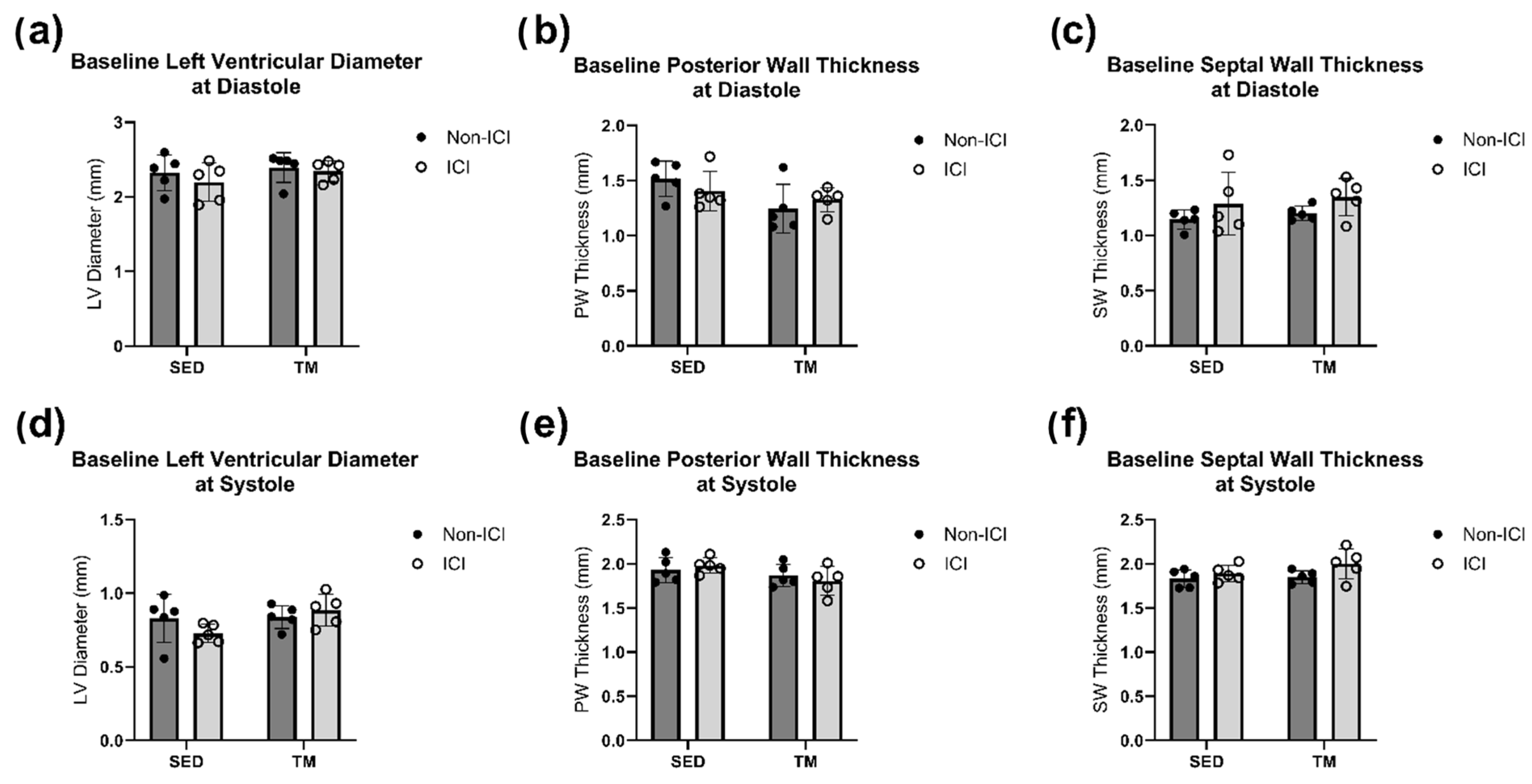
2.4. Cardiac Structure and Function
2.5. Sacrifice and Tissue Harvest
2.6. Western Blotting
2.7. Autophagy
2.8. Tumor Protocol
2.9. Statistical Analyses
3. Results
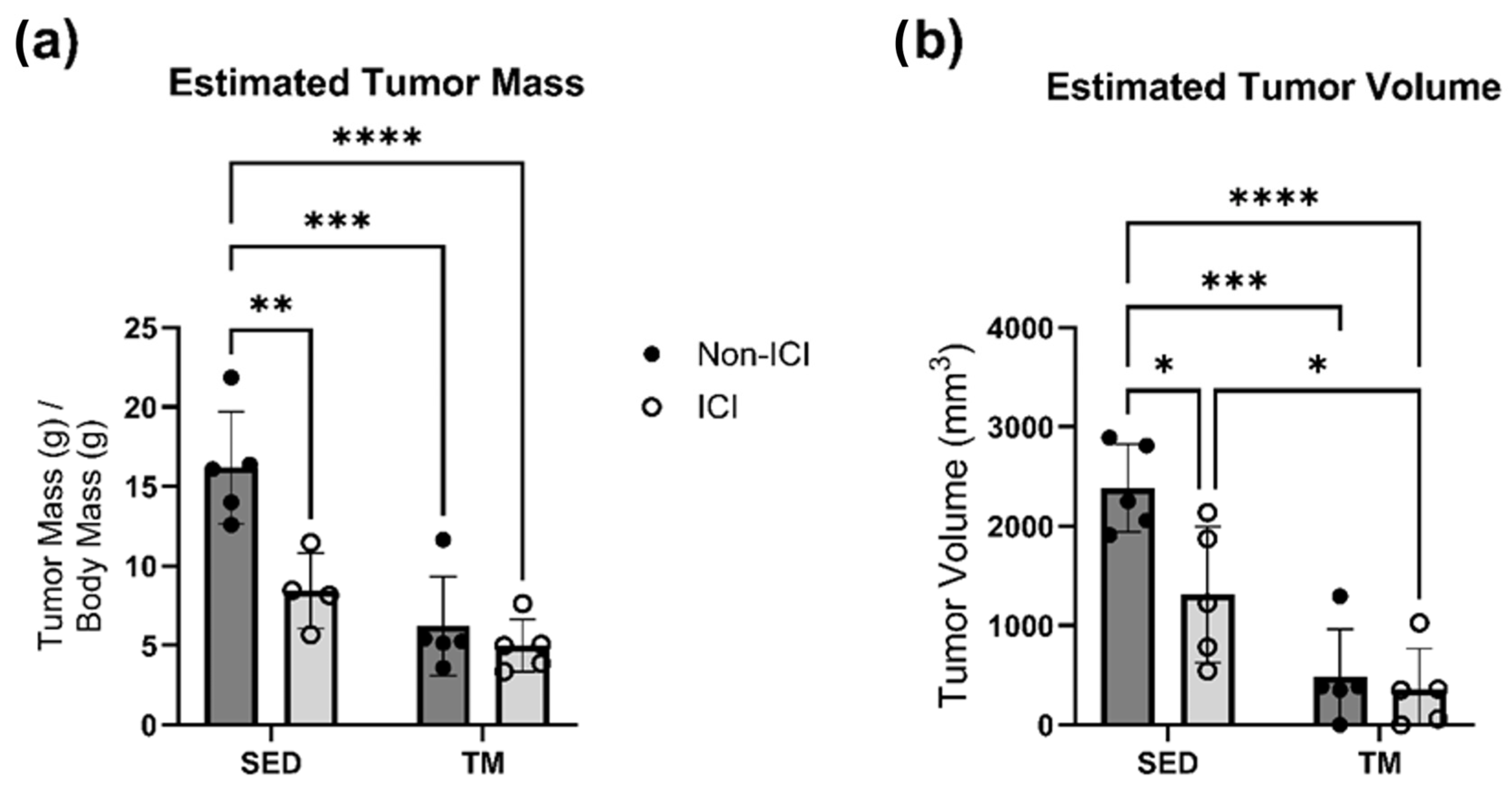
3.1. Efficacy of ICI and Low-Intensity Exercise Protocols
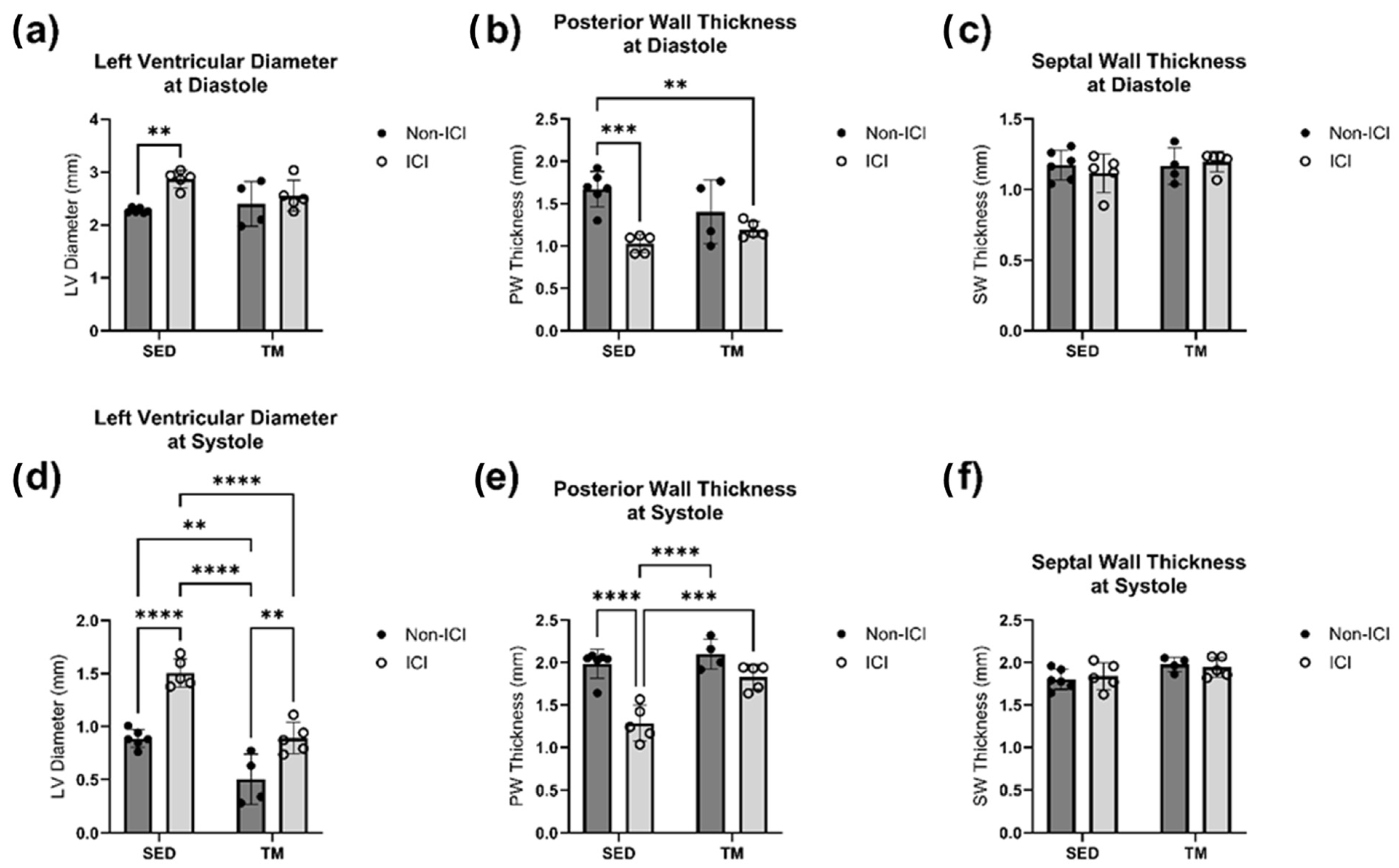
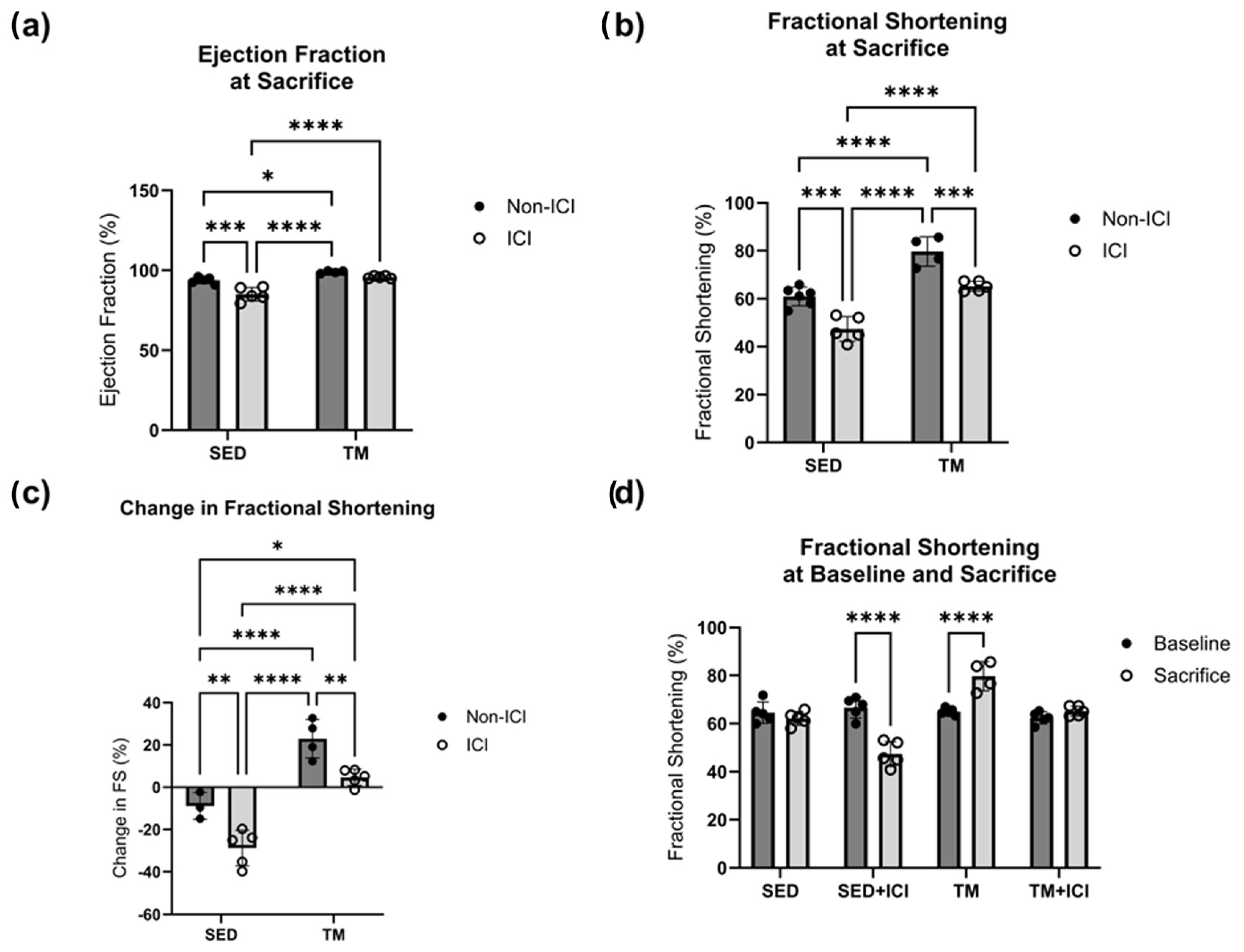
3.2. Low-Intensity Exercise Protects Against ICI Treatment-Induced Cardiac Remodeling and Dysfunction
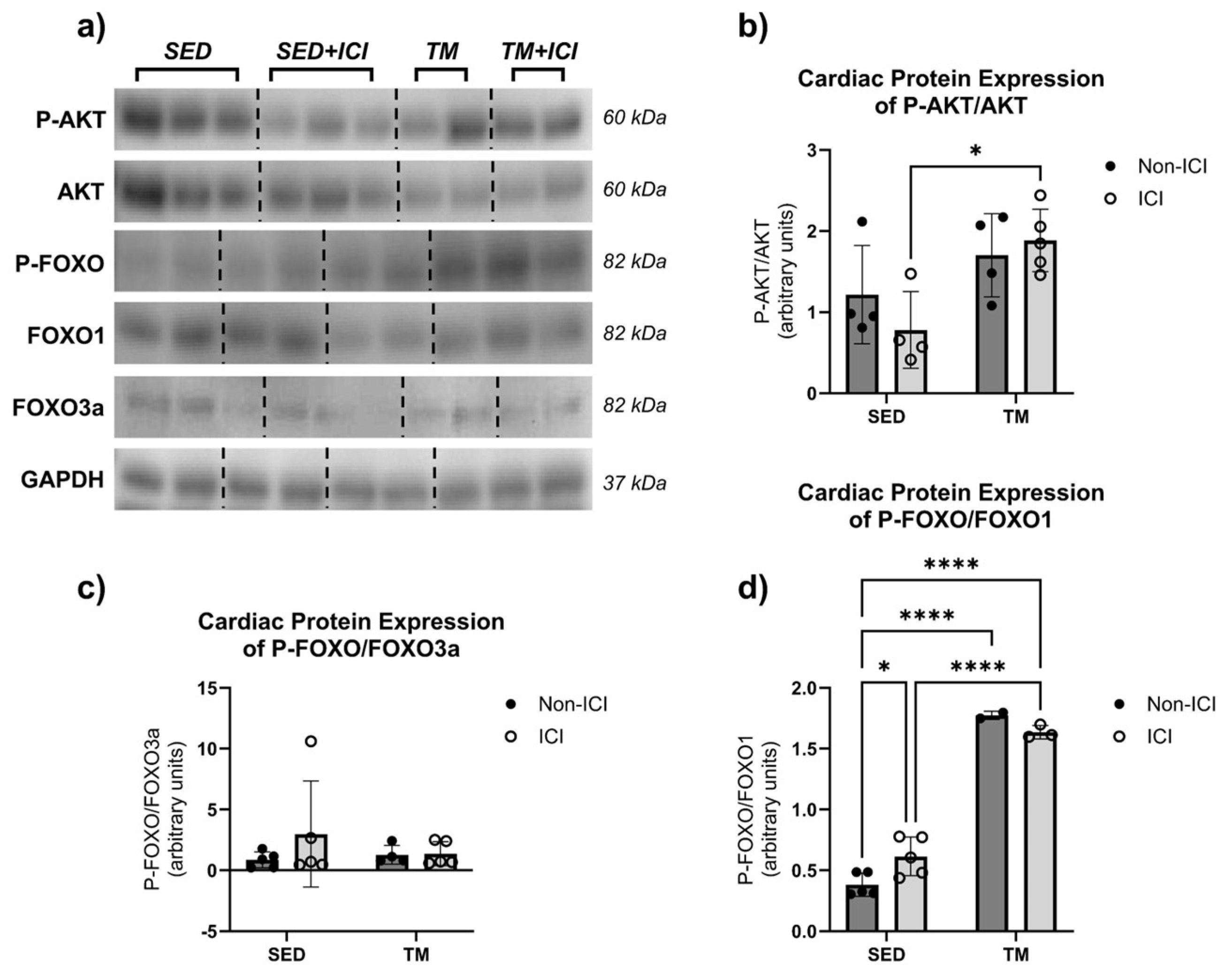
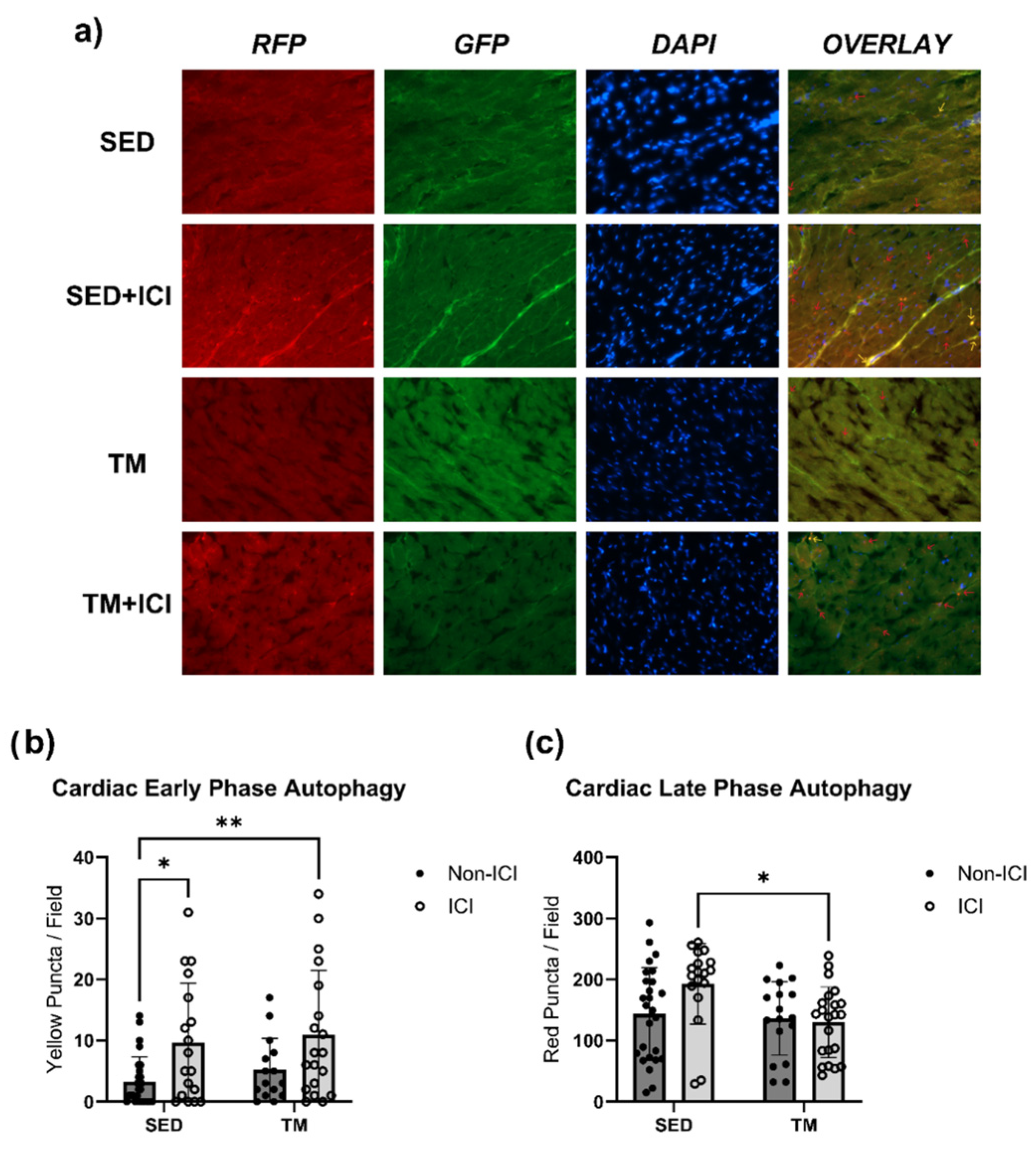
3.3. Low-Intensity Exercise Regulates ICI-Induced Metabolic and Autophagic Dysfunction
4. Discussion
5. Conclusions
Supplementary Materials
Author Contributions
Funding
Institutional Review Board Statement
Informed Consent Statement
Data Availability Statement
Conflicts of Interest
References
- McCluskey, K. Immunotherapy vs. Chemotherapy: What’s the Difference? Cancer Research Institute. Available online: https://www.cancerresearch.org/blog/difference-cancer-immunotherapy-and-chemotherapy (accessed on 17 October 2022).
- Garon, E.B.; Hellmann, M.D.; Rizvi, N.A.; Carcereny, E.; Leighl, N.B.; Ahn, M.-J.; Eder, J.P.; Balmanoukian, A.S.; Aggarwal, C.; Horn, L.; et al. Five-Year Overall Survival for Patients with Advanced Non–Small-Cell Lung Cancer Treated with Pembrolizumab: Results from the Phase I KEYNOTE-001 Study. J. Clin. Oncol. 2019, 37, 2518–2527. [Google Scholar] [CrossRef] [Scilit] [PubMed]
- Li, C.; Bhatti, S.A.; Ying, J. Immune Checkpoint Inhibitors—Associated Cardiotoxicity. Cancers 2022, 14, 1145. [Google Scholar] [CrossRef] [Scilit] [PubMed]
- Gergely, T.; Kucsera, D.; Toth, V.; Kovacs, T.; Sayour, N.; Drobni, Z.; Ruppert, M.; Petrovich, B.; Agg, B.; Onodi, Z.; et al. Characterization of immune checkpoint inhibitor-induced cardiotoxicity reveals interleukin-17A as a driver of cardiac dysfunction after anti-PD-1 treatment. Br. J. Pharmacol. 2022, 180, 740–761. [Google Scholar] [CrossRef] [Scilit]
- Parry, T.L.; Hayward, R. Exercise Protects Against Cancer-Induced Cardiac Cachexia. Med. Sci. Sports Exerc. 2018, 50, 1169–1176. [Google Scholar] [CrossRef] [Scilit]
- Kurz, E.; Hirsch, C.A.; Dalton, T.; Shadaloey, S.A.; Khodadadi-Jamayran, A.; Miller, G.; Pareek, S.; Rajaei, H.; Mohindroo, C.; Baydogan, S.; et al. Exercise-induced engagement of the IL-15/IL-15Rα axis promotes anti-tumor immunity in pancreatic cancer. Cancer Cell 2022, 40, 720–737.e5. [Google Scholar] [CrossRef] [Scilit]
- Martín-Ruiz, A.; Fiuza-Luces, C.; Rincón-Castanedo, C.; Fernández-Moreno, D.; Martínez-Martínez, E.; Martín-Acosta, P.; Coronado, M.J.; Franco-Luzón, L.; Ramírez, M.; Provencio, M.; et al. Benefits of exercise and immunotherapy in a murine model of human non–small-cell lung carcinoma. Exerc. Immunol. Rev. 2020, 26, 100–115. [Google Scholar]
- Allan, J.; Buss, L.A.; Draper, N.; Currie, M.J. Exercise in People with Cancer: A Spotlight on Energy Regulation and Cachexia. Front. Physiol. 2022, 13, 836804. [Google Scholar] [CrossRef] [Scilit]
- Parry, T.L.; Tichy, L.; Brantley, J.T. Cardioprotective effects of preconditioning exercise in the female tumor bearing mouse. Front. Cell Dev. Biol. 2022, 10, 950479. [Google Scholar] [CrossRef] [Scilit]
- Tichy, L.; Parry, T.L. The pathophysiology of cancer-mediated cardiac cachexia and novel treatment strategies: A narrative review. Cancer Med. 2023, 12, 17706–17717. [Google Scholar] [CrossRef] [Scilit]
- Rundqvist, H.; Veliça, P.; Barbieri, L.; Gameiro, P.A.; Bargiela, D.; Gojkovic, M.; Mijwel, S.; Reitzner, S.M.; Wulliman, D.; Ahlstedt, E.; et al. Cytotoxic T-cells mediate exercise-induced reductions in tumor growth. eLife 2020, 9, e59996. [Google Scholar] [CrossRef] [Scilit] [PubMed]
- El-Rayes, M.; Nardi Agmon, I.; Yu, C.; Osataphan, N.; Yu, H.A.; Hope, A.; Sacher, A.; Yu, A.F.; Abdel-Qadir, H.; Thavendiranathan, P. Lung Cancer and Cardiovascular Disease. JACC CardioOncol. 2025, 7, 325–344. [Google Scholar] [CrossRef] [Scilit] [PubMed]
- Verdicchio, C.; Freene, N.; Hollings, M.; Maiorana, A.; Briffa, T.; Gallagher, R.; Hendriks, J.M.; Abell, B.; Brown, A.; Colquhoun, D.; et al. A Clinical Guide for Assessment and Prescription of Exercise and Physical Activity in Cardiac Rehabilitation. A CSANZ Position Statement. Heart Lung Circ. 2023, 32, 1035–1048. [Google Scholar] [CrossRef] [Scilit] [PubMed]
- Wasley, D.; Gale, N.; Roberts, S.; Backx, K.; Nelson, A.; van Deursen, R.; Byrne, A. Patients with established cancer cachexia lack the motivation and self-efficacy to undertake regular structured exercise. Psychooncology 2018, 27, 458–464. [Google Scholar] [CrossRef] [Scilit]
- Gilchrist, S.C.; Howard, V.J.; Akinyemiju, T.; Judd, S.E.; Cushman, M.; Hooker, S.P.; Diaz, K.M. Association of Sedentary Behavior with Cancer Mortality in Middle-aged and Older US Adults. JAMA Oncol. 2020, 6, 1210–1217. [Google Scholar] [CrossRef] [Scilit]
- Phillips, S.M.; Dodd, K.W.; Steeves, J.; McClain, J.; Alfano, C.M.; McAuley, E. Physical Activity and Sedentary Behavior in Breast Cancer Survivors: New Insight into Activity Patterns and Potential Intervention Targets. Gynecol. Oncol. 2015, 138, 398–404. [Google Scholar] [CrossRef] [Scilit]
- Friedenreich, C.M.; Ryder-Burbidge, C.; McNeil, J. Physical activity, obesity and sedentary behavior in cancer etiology: Epidemiologic evidence and biologic mechanisms. Mol. Oncol. 2021, 15, 790–800. [Google Scholar] [CrossRef] [Scilit]
- Chicco, A.J.; Hydock, D.S.; Schneider, C.M.; Hayward, R. Low-intensity exercise training during doxorubicin treatment protects against cardiotoxicity. J. Appl. Physiol. 2006, 100, 519–527. [Google Scholar] [CrossRef] [Scilit] [PubMed]
- Gomes-Santos, I.L.; Jordão, C.P.; Passos, C.S.; Brum, P.C.; Oliveira, E.M.; Chammas, R.; Camargo, A.A.; Negrão, C.E. Exercise Training Preserves Myocardial Strain and Improves Exercise Tolerance in Doxorubicin-Induced Cardiotoxicity. Front. Cardiovasc. Med. 2021, 8, 605993. [Google Scholar] [CrossRef] [Scilit] [PubMed]
- Hydock, D.S.; Lien, C.-Y.; Jensen, B.T.; Parry, T.L.; Schneider, C.M.; Hayward, R. Rehabilitative exercise in a rat model of doxorubicin cardiotoxicity. Exp. Biol. Med. 2012, 237, 1483–1492. [Google Scholar] [CrossRef] [Scilit] [PubMed]
- Brumberger, Z.L.; Branch, M.E.; Klein, M.W.; Seals, A.; Shapiro, M.D.; Vasu, S. Cardiotoxicity risk factors with immune checkpoint inhibitors. Cardio-Oncology 2022, 8, 3. [Google Scholar] [CrossRef] [Scilit] [PubMed]
- Addison, D.; Branch, M.; Baik, A.H.; Fradley, M.G.; Okwuosa, T.; Reding, K.W.; Simpson, K.E.; Suero-Abreu, G.A.; Yang, E.H.; Yancy, C.W.; et al. Equity in Cardio-Oncology Care and Research: A Scientific Statement from the American Heart Association. Circulation 2023, 148, 297–308. [Google Scholar] [CrossRef] [Scilit]
- Fernández-Ruiz, I. Hormone therapy ameliorates ICI-related myocarditis in mice. Nat. Rev. Cardiol. 2023, 20, 4. [Google Scholar] [CrossRef] [Scilit] [PubMed]
- Bu, M.T.; Yuan, L.; Klee, A.N.; Freeman, G.J. A Comparison of Murine PD-1 and PD-L1 Monoclonal Antibodies. Monoclon. Antibodies Immunodiagn. Immunother. 2022, 41, 202–209. [Google Scholar] [CrossRef] [Scilit] [PubMed]
- Savage, H.; Pareek, S.; Lee, J.; Ballarò, R.; Conterno Minussi, D.; Hayek, K.; Sadullozoda, M.; Lochmann, B.S.; McQuade, J.L.; LaVoy, E.C.; et al. Aerobic Exercise Alters the Melanoma Microenvironment and Modulates ERK5 S496 Phosphorylation. Cancer Immunol. Res. 2023, 11, 1168–1183. [Google Scholar] [CrossRef] [Scilit]
- Foulkes, S.J.; Howden, E.J.; Haykowsky, M.J.; Antill, Y.; Salim, A.; Nightingale, S.S.; Loi, S.; Claus, P.; Janssens, K.; Mitchell, A.M.; et al. Exercise for the Prevention of Anthracycline-Induced Functional Disability and Cardiac Dysfunction: The BREXIT Study. Circulation 2023, 147, 532–545. [Google Scholar] [CrossRef] [Scilit]
- Kruger, N.J. The Bradford method for protein quantitation. Methods Mol. Biol. Clifton NJ 1994, 32, 9–15. [Google Scholar] [CrossRef] [Scilit]
- Xie, M.; Morales, C.R.; Lavandero, S.; Hill, J.A. Tuning flux: Autophagy as a target of heart disease therapy. Curr. Opin. Cardiol. 2011, 26, 216–222. [Google Scholar] [CrossRef] [Scilit]
- Pampliega, O.; Orhon, I.; Patel, B.; Sridhar, S.; Díaz-Carretero, A.; Beau, I.; Codogno, P.; Satir, B.H.; Satir, P.; Cuervo, A.M. Functional interaction between autophagy and ciliogenesis. Nature 2013, 502, 194–200. [Google Scholar] [CrossRef] [Scilit]
- Antunes, P.; Esteves, D.; Nunes, C.; Sampaio, F.; Ascensão, A.; Vilela, E.; Teixeira, M.; Amarelo, A.L.; Joaquim, A. Impact of exercise training on cardiotoxicity and cardiac health outcomes in women with breast cancer anthracycline chemotherapy: A study protocol for a randomized controlled trial. Trials 2019, 20, 433. [Google Scholar] [CrossRef] [Scilit]
- Ballarò, R.; Beltrà, M.; De Lucia, S.; Pin, F.; Ranjbar, K.; Hulmi, J.J.; Costelli, P.; Penna, F. Moderate exercise in mice improves cancer plus chemotherapy-induced muscle wasting and mitochondrial alterations. FASEB J. 2019, 33, 5482–5494. [Google Scholar] [CrossRef] [Scilit]
- Díaz-Balboa, E.; González-Salvado, V.; Rodríguez-Romero, B.; Martínez-Monzonís, A.; Pedreira-Pérez, M.; Palacios-Ozores, P.; López-López, R.; Peña-Gil, C.; González-Juanatey, J.R. A randomized trial to evaluate the impact of exercise-based cardiac rehabilitation for the prevention of chemotherapy-induced cardiotoxicity in patients with breast cancer: ONCORE study protocol. BMC Cardiovasc. Disord. 2021, 21, 165. [Google Scholar] [CrossRef] [Scilit]
- Schneider, C.; Ryffel, C.; Rabaglio, M.; Suter, T.M.; Campbell, K.L.; Eser, P.; Wilhelm, M. Supervised exercise training in patients with cancer during anthracycline-based chemotherapy to mitigate cardiotoxicity—A randomized controlled trial. medRxiv 2023, 2023.02.06.23285559. [Google Scholar] [CrossRef] [Scilit]
- Goldschmidt, S.; Schmidt, M.E.; Rosenberger, F.; Wiskemann, J.; Steindorf, K. Patterns and influencing factors of exercise attendance of breast cancer patients during neoadjuvant chemotherapy. Support. Care Cancer 2024, 32, 79. [Google Scholar] [CrossRef] [Scilit]
- Avancini, A.; Pala, V.; Trestini, I.; Tregnago, D.; Mariani, L.; Sieri, S.; Krogh, V.; Boresta, M.; Milella, M.; Pilotto, S.; et al. Exercise Levels and Preferences in Cancer Patients: A Cross-Sectional Study. Int. J. Environ. Res. Public Health 2020, 17, 5351. [Google Scholar] [CrossRef] [Scilit]
- Tichy, L.; Parry, T.L. Low-Intensity Exercise Protects Skeletal and Cardiac Muscle Against Cancer-Mediated Muscle Wasting via Regulation of Autophagy and Inflammation. JCSM Commun. 2025, 8, e103. [Google Scholar] [CrossRef] [Scilit]
- Naaktgeboren, W.R.; Binyam, D.; Stuiver, M.M.; Aaronson, N.K.; Teske, A.J.; van Harten, W.H.; Groen, W.G.; May, A.M. Efficacy of Physical Exercise to Offset Anthracycline-Induced Cardiotoxicity: A Systematic Review and Meta-Analysis of Clinical and Preclinical Studies. J. Am. Heart Assoc. 2021, 10, e021580. [Google Scholar] [CrossRef] [Scilit] [PubMed]
- Wang, F.; Chandra, J.; Kleinerman, E.S. Exercise intervention decreases acute and late doxorubicin-induced cardiotoxicity. Cancer Med. 2021, 10, 7572–7584. [Google Scholar] [CrossRef] [Scilit] [PubMed]
- Kang, D.-W.; Wilson, R.L.; Christopher, C.N.; Normann, A.J.; Barnes, O.; Lesansee, J.D.; Choi, G.; Dieli-Conwright, C.M. Exercise Cardio-Oncology: Exercise as a Potential Therapeutic Modality in the Management of Anthracycline-Induced Cardiotoxicity. Front. Cardiovasc. Med. 2022, 8, 805735. [Google Scholar] [CrossRef] [Scilit]
- Gaytan, S.L.; Lawan, A.; Chang, J.; Nurunnabi, M.; Bajpeyi, S.; Boyle, J.B.; Han, S.M.; Min, K. The beneficial role of exercise in preventing doxorubicin-induced cardiotoxicity. Front. Physiol. 2023, 14, 1133423. [Google Scholar] [CrossRef] [Scilit]
- Xia, P.; Chen, J.; Liu, Y.; Fletcher, M.; Jensen, B.C.; Cheng, Z. Doxorubicin induces cardiomyocyte apoptosis and atrophy through cyclin-dependent kinase 2–mediated activation of forkhead box O1. J. Biol. Chem. 2020, 295, 4265–4276. [Google Scholar] [CrossRef] [Scilit]
- Hui, R.C.-Y.; Francis, R.E.; Guest, S.K.; Costa, J.R.; Gomes, A.R.; Myatt, S.S.; Brosens, J.J.; Lam, E.W.-F. Doxorubicin activates FOXO3a to induce the expression of multidrug resistance gene ABCB1 (MDR1) in K562 leukemic cells. Mol. Cancer Ther. 2008, 7, 670–678. [Google Scholar] [CrossRef] [Scilit]
- Ho, K.-K.; McGuire, V.A.; Koo, C.-Y.; Muir, K.W.; de Olano, N.; Maifoshie, E.; Kelly, D.J.; McGovern, U.B.; Monteiro, L.J.; Gomes, A.R.; et al. Phosphorylation of FOXO3a on Ser-7 by p38 Promotes Its Nuclear Localization in Response to Doxorubicin. J. Biol. Chem. 2012, 287, 1545–1555. [Google Scholar] [CrossRef] [Scilit]
- Kwon, I.; Go, G.-W.; Lee, Y.; Kim, J.-H. Prolonged Endurance Exercise Adaptations Counteract Doxorubicin Chemotherapy-Induced Myotoxicity in Mice. Appl. Sci. 2022, 12, 3652. [Google Scholar] [CrossRef] [Scilit]
- Kavazis, A.N.; Smuder, A.J.; Powers, S.K. Effects of short-term endurance exercise training on acute doxorubicin-induced FoxO transcription in cardiac and skeletal muscle. J. Appl. Physiol. 2014, 117, 223–230. [Google Scholar] [CrossRef] [Scilit]
- Weeks, K.L.; Tham, Y.K.; Yildiz, S.G.; Alexander, Y.; Donner, D.G.; Kiriazis, H.; Harmawan, C.A.; Hsu, A.; Bernardo, B.C.; Matsumoto, A.; et al. FoxO1 is required for physiological cardiac hypertrophy induced by exercise but not by constitutively active PI3K. Am. J. Physiol. Heart Circ. Physiol. 2021, 320, H1470–H1485. [Google Scholar] [CrossRef] [Scilit]
- Shiojima, I.; Walsh, K. Regulation of cardiac growth and coronary angiogenesis by the Akt/PKB signaling pathway. Genes Dev. 2006, 20, 3347–3365. [Google Scholar] [CrossRef] [Scilit] [PubMed]
- Weeks, K.L.; Bernardo, B.C.; Ooi, J.Y.Y.; Patterson, N.L.; McMullen, J.R. The IGF1-PI3K-Akt Signaling Pathway in Mediating Exercise-Induced Cardiac Hypertrophy and Protection. In Exercise for Cardiovascular Disease Prevention and Treatment: From Molecular to Clinical, Part 2; Xiao, J., Ed.; Springer: Singapore, 2017; pp. 187–210. [Google Scholar] [CrossRef] [Scilit]
- Kim, Y.K.; Kim, S.J.; Yatani, A.; Huang, Y.; Castelli, G.; Vatner, D.E.; Liu, J.; Zhang, Q.; Diaz, G.; Zieba, R.; et al. Mechanism of enhanced cardiac function in mice with hypertrophy induced by overexpressed Akt. J. Biol. Chem. 2003, 48, 47622–47628. [Google Scholar] [CrossRef] [Scilit] [PubMed]
- Liao, J.; Li, Y.; Zeng, F.; Wu, Y. Regulation of mTOR Pathway in Exercise-induced Cardiac Hypertrophy. Int. J. Sports Med. 2015, 36, 343–350. [Google Scholar] [CrossRef] [Scilit] [PubMed]
- De Meyer, G.R.Y.; Martinet, W. Autophagy in the cardiovascular system. Biochim. Biophys. Acta BBA—Mol. Cell Res. 2009, 1793, 1485–1495. [Google Scholar] [CrossRef] [Scilit]
- Wang, L.; Wang, J.; Cretoiu, D.; Li, G.; Xiao, J. Exercise-mediated regulation of autophagy in the cardiovascular system. J. Sport Health Sci. 2020, 9, 203–210. [Google Scholar] [CrossRef] [Scilit]
- Yu, W.; Chen, C.; Cheng, J. The role and molecular mechanism of FoxO1 in mediating cardiac hypertrophy. ESC Heart Fail. 2020, 7, 3497–3504. [Google Scholar] [CrossRef] [Scilit] [PubMed]
- Cheng, Z. The FoxO–Autophagy Axis in Health and Disease. Trends Endocrinol. Metab. 2019, 30, 658–671. [Google Scholar] [CrossRef] [Scilit] [PubMed]



| Week 1 | Week 2 | Week 3 | Week 4 | |
|---|---|---|---|---|
| Incline (°) | 0 | 0 | 2 | 2 |
| Speed (m/min) | 10 | 10 | 10 | 10 |
| Duration (min) | 45 | 60 | 60 | 60 |
| Days per Week | 5 | 5 | 5 | 5 |
Disclaimer/Publisher’s Note: The statements, opinions and data contained in all publications are solely those of the individual author(s) and contributor(s) and not of MDPI and/or the editor(s). MDPI and/or the editor(s) disclaim responsibility for any injury to people or property resulting from any ideas, methods, instructions or products referred to in the content. |
© 2025 by the authors. Licensee MDPI, Basel, Switzerland. This article is an open access article distributed under the terms and conditions of the Creative Commons Attribution (CC BY) license.
Share and Cite
Tichy, L.; Parry, T.L. Low-Intensity Exercise Attenuates Immune Checkpoint Inhibitor-Induced Cardiotoxicity via Regulation of Metabolism and Autophagy. Cancers 2026, 18, 138. https://doi.org/10.3390/cancers18010138
Tichy L, Parry TL. Low-Intensity Exercise Attenuates Immune Checkpoint Inhibitor-Induced Cardiotoxicity via Regulation of Metabolism and Autophagy. Cancers. 2026; 18(1):138. https://doi.org/10.3390/cancers18010138
Chicago/Turabian StyleTichy, Louisa, and Traci L. Parry. 2026. "Low-Intensity Exercise Attenuates Immune Checkpoint Inhibitor-Induced Cardiotoxicity via Regulation of Metabolism and Autophagy" Cancers 18, no. 1: 138. https://doi.org/10.3390/cancers18010138
APA StyleTichy, L., & Parry, T. L. (2026). Low-Intensity Exercise Attenuates Immune Checkpoint Inhibitor-Induced Cardiotoxicity via Regulation of Metabolism and Autophagy. Cancers, 18(1), 138. https://doi.org/10.3390/cancers18010138