Physiotherapy in German Palliative Care—A Nationwide Survey Among Physiotherapists




1
Department of Anaesthesiology & Intensive Care Medicine, Faculty of Medicine, Philipps University of Marburg, 35043 Marburg, Germany
2
Department of Therapy Somatic, Klinikum Bremen-Ost, 28325 Bremen, Germany
3
Department of Dermatology and Allergology, Faculty of Medicine, Philipps University of Marburg, 35043 Marburg, Germany
4
Research Group Medical Ethics, Faculty of Medicine, Philipps University of Marburg, 35043 Marburg, Germany
*
Author to whom correspondence should be addressed.
Cancers 2025, 17(8), 1311; https://doi.org/10.3390/cancers17081311
Submission received: 25 February 2025
/
Revised: 4 April 2025
/
Accepted: 11 April 2025
/
Published: 13 April 2025
(This article belongs to the Special Issue Physiotherapy in Advanced Cancer and Palliative Care)
Simple Summary
This research paper presents the findings of a nationwide survey among physiotherapists in Germany, focusing on their roles, experiences and challenges in palliative care settings. This study highlights the tasks of physiotherapists in palliative care and identifies the need for targeted training. By providing a comprehensive overview of current practices and research needs in palliative physiotherapy, this study aims to enhance the understanding of their essential role and promote interdisciplinary collaboration. The findings are intended to help improve patient-centred care strategies in palliative settings.
Abstract
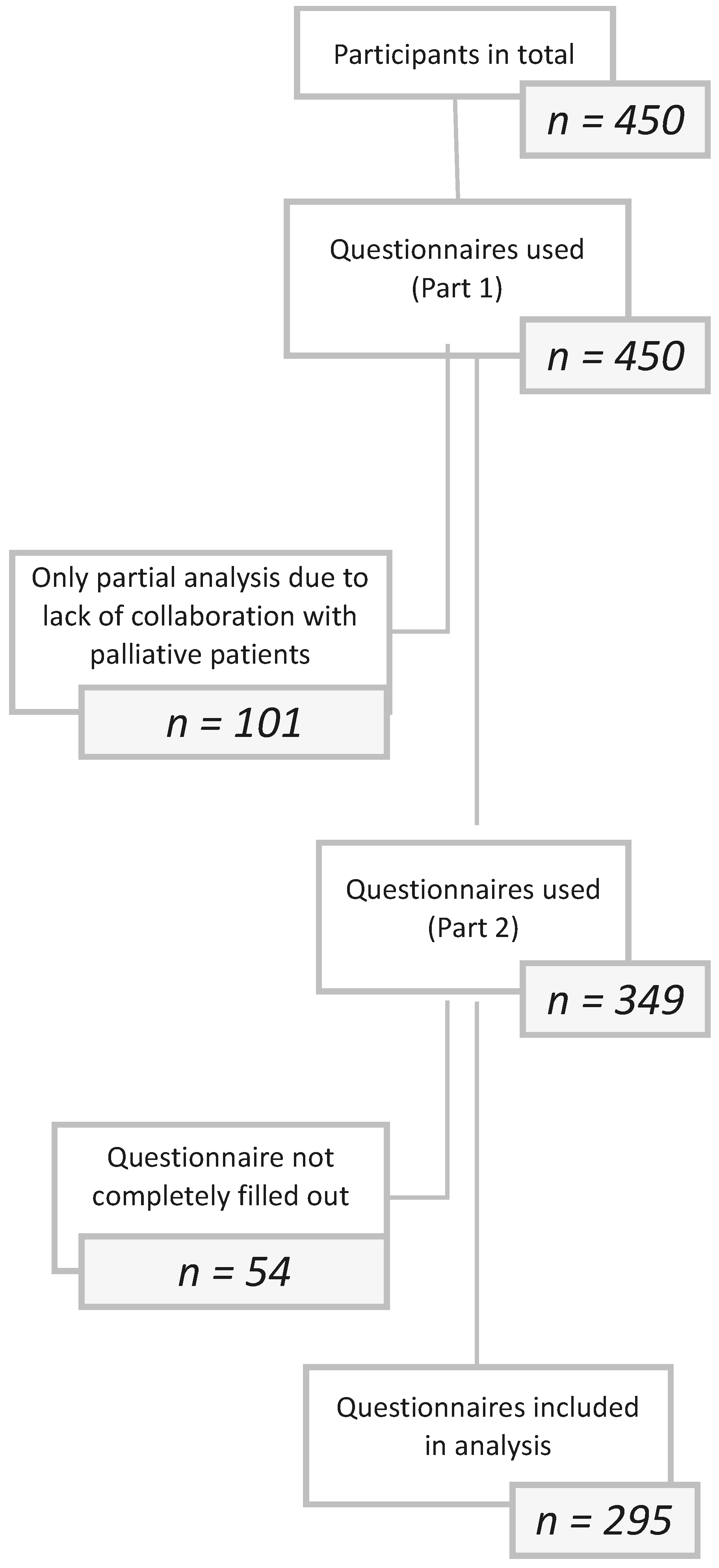
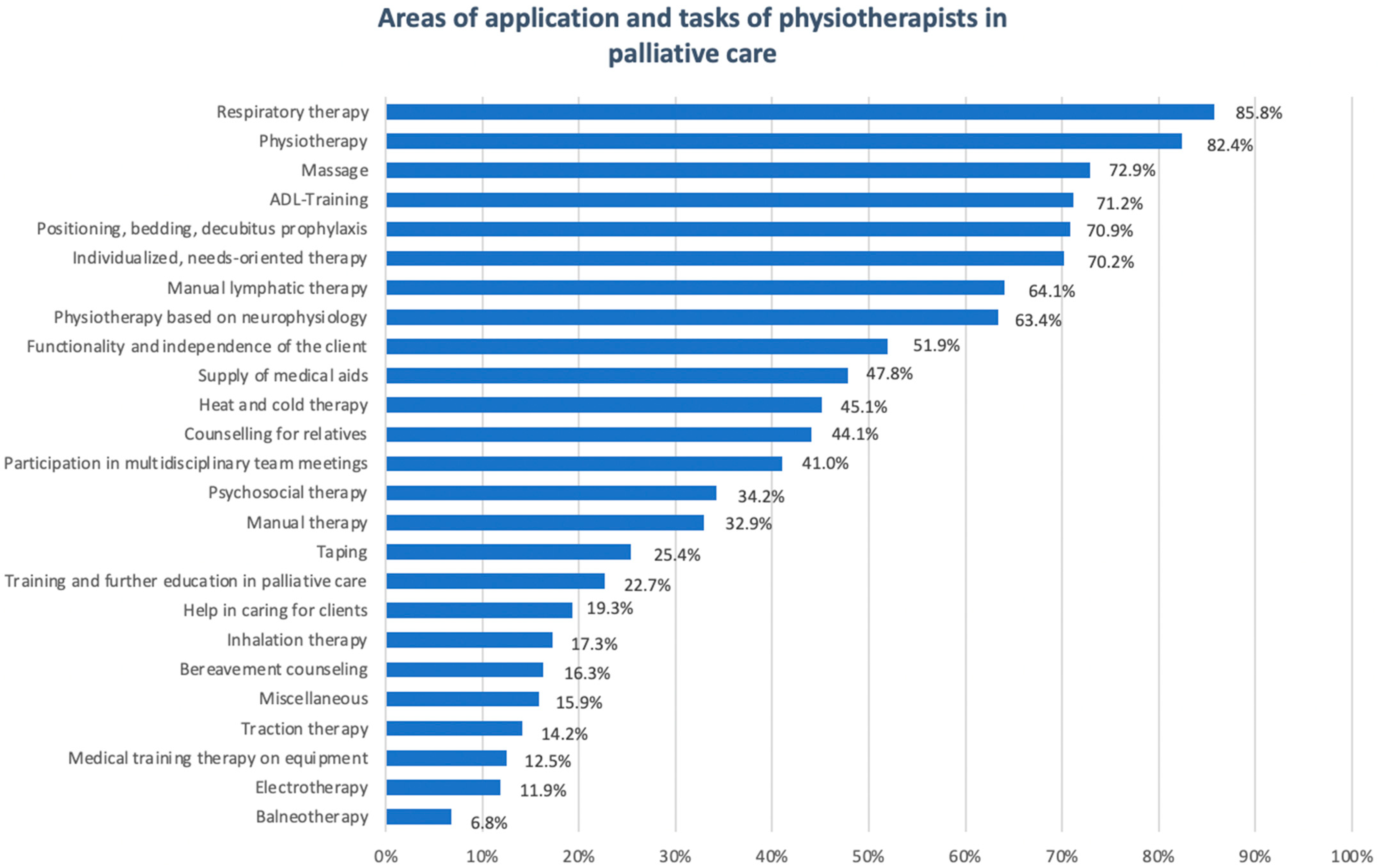
Objective: The aim of physiotherapy interventions for palliative care patients is to relieve pain, promote active movement and thereby improve quality of life and wellbeing. Physiotherapy is an important adjunct to medical and pharmacological treatments. The aim of this study is to identify the specific challenges, self-perceptions and therapeutic approaches of physiotherapists working in palliative care. Methods: An online survey of German physiotherapists was conducted using a 22-question questionnaire. The quantitative data were analysed descriptively (frequencies and percentages), and the qualitative responses were reviewed and grouped thematically. Results: A total of 450 valid responses were evaluated, of which 349 respondents worked in palliative care. The most common treatments for palliative care patients are respiratory therapy (85.8%), general physiotherapy measures (82.4%) and massages (72.9%). The analysis of the free-text responses identified five topics representing the work and challenges of physiotherapists in palliative care. A key issue identified is that the standard 20 min therapy session covered by health insurance is often insufficient to meet the individual needs and daily conditions of each patient. Physiotherapists with no previous experience of palliative care patients often require additional training and often feel inadequately prepared to work effectively with this patient population without appropriate further training. Many physiotherapists believe that they are involved in treatment too late. In addition, other healthcare professionals may not fully recognise the scope of their expertise. Conclusions: Physiotherapy in palliative care requires sensitivity, adaptability and sufficient time. Further training and early involvement are necessary to better address patients’ needs and harness the therapeutic potential of physiotherapists.
Keywords:
physiotherapy; palliative care; supportive therapy; end-of-life care