Hysteroscopy vs. Vabra in Endometrial Cancer Diagnosis: A Systematic Review of the Literature
by
 ,
,
Christopher Clark
1,*, 
Ambrogio Cazzolla
2,
Giuseppe Colonna
2,
Vera Loizzi
2,3,
Gennaro Cormio
2,4 and
Salvatore Lopez
2 
1
Division of Obstetrics and Gynecology, Department of Biomedical and Human Oncological Science, University of Bari “Aldo Moro”, 70124 Bari, Italy
2
S.C. Ginecologia Oncologica Clinicizzata, IRCCS Istituto Tumori “Giovanni Paolo II”, 70124 Bari, Italy
3
Dipartimento di Biomedicina Traslazionale e Neuroscienze (DiBraiN), University of Bari “Aldo Moro”, 70124 Bari, Italy
4
Dipartimento DIM, University of Bari “Aldo Moro”, 70124 Bari, Italy
*
Author to whom correspondence should be addressed.
Cancers 2025, 17(7), 1145; https://doi.org/10.3390/cancers17071145
Submission received: 8 February 2025
/
Revised: 27 March 2025
/
Accepted: 27 March 2025
/
Published: 28 March 2025
(This article belongs to the Section Cancer Causes, Screening and Diagnosis)
Simple Summary
Endometrial biopsy is one of the most important steps in diagnosing endometrial cancer, for it allows clinicians to differentiate this disease from other possible causes of abnormal uterine bleeding and to obtain critical information on both histological and molecular features of endometrial cancer. Moreover, a failed biopsy procedure or an inadequate biopsy specimen may delay patient treatment. Many options are available for this purpose in clinical practice, although the most commonly used ones are hysteroscopy and the vacuum biopsy technique, such as Pipelle and VABRA. This review focuses on comparing the diagnostic accuracy, complication rate, and cost-effectiveness of these techniques, aiming to provide the most up-to-date information on the topic and allow clinicians to perform evidence-oriented choices when referring a patient to endometrial biopsy procedures.
Abstract
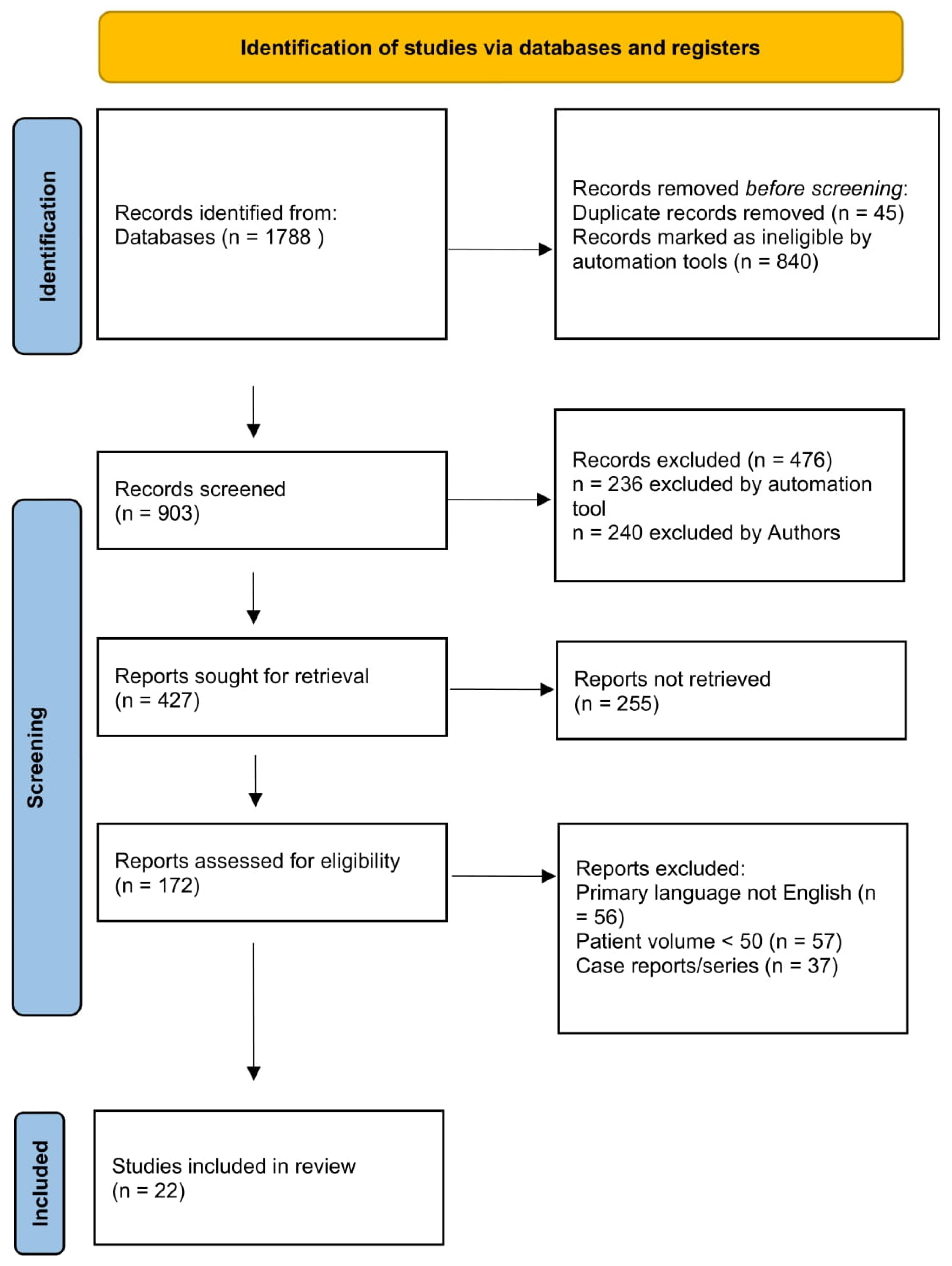
Introduction: Endometrial cancer is the most common malignancy of the female genital tract in high-income countries. A prompt diagnosis of this condition is of utmost importance in ensuring that patients receive the best treatment strategy. The new FIGO 2023 molecular classification of endometrial cancer radically changes the current landscape of this disease’s treatment and follow-up. Among the various diagnostic techniques used to identify endometrial lesions, hysteroscopy and vacuum biopsy techniques are the most employed in clinical practice. The aim of this systematic literature review is to compare the efficacy, sensitivity, specificity, and safety of these methods when employed to diagnose endometrial cancer, as well as to assess the feasibility of endometrial cancer molecular profiling on biopsy specimens. Methods: A systematic literature search of studies evaluating hysteroscopy and VABRA biopsy performance in diagnosing endometrial cancer was conducted using the main online databases (PubMed, EMBase, Cochrane Library). An additional literature search was conducted, focusing on the feasibility of endometrial cancer molecular profiling on hysteroscopic biopsy and VABRA samples, as well as on the diagnostic concordance of biopsy and final surgery specimens. Two authors performed the literature search independently, while other two authors assessed the retrieved publications’ risk of bias using Begg’s and Egger’s tests. Twenty-four studies were included in the final report. Results: Both techniques have shown high effectiveness in diagnosing endometrial cancer, although with important differences. Hysteroscopy provides direct visualization of the endometrium and allows clinicians to perform biopsies of suspicious lesions, but it also entails important limitations, as in the case of diffused lesions or technical difficulties, especially in nulliparous and elderly women. VABRA and other vacuum biopsy techniques, on the other hand, offer a wider sampling of endometrial tissue and are less operator-dependent but may be associated with a higher risk of failed diagnosis when compared to hysteroscopy. Discussion: Hysteroscopy, especially when combined with targeted biopsies, has been proven to be a valid technique, especially in pre-surgical diagnostic workup of early-stage endometrial cancer. Vacuum techniques, although less invasive and providing larger tissue samples, do not seem to be able to completely replace hysteroscopy in diagnosing endometrial cancer but remain a valid alternative in selected cases, especially when endometrial lesions prove harder to reach and/or to identify. They may also prove useful in low resource countries in which hysteroscopy is not widely available. Conclusions: Based on our findings, early assessment of endometrial cancer should be carried out through hysteroscopic evaluation and targeted endometrial biopsies, ideally including molecular assessment on biopsy specimens to further guide treatment decisions. Other biopsy techniques, such as vacuum-assisted biopsy, should be reserved for specific settings in which hysteroscopy is not readily available. The ideal diagnostic approach to endometrial cancer should take multiple factors into account, such as the location and extension of the disease, patient characteristics, clinical skills, and resource availability. Further studies are needed to assess the feasibility of molecular cancer profiling on biopsy specimens, as well as cost-containment strategies which would allow equal access to targeted treatment modalities for all endometrial cancer patients worldwide.