Metastatic Carcinomas at the Episiotomy Site: A Systematic Literature Review

 ,
,  , , , , , , ,
 , , ,
, , ,  ,
,  ,
,  , ,
, ,  , add
Show full author list
, add
Show full author list
Simple Summary
Abstract
1. Introduction
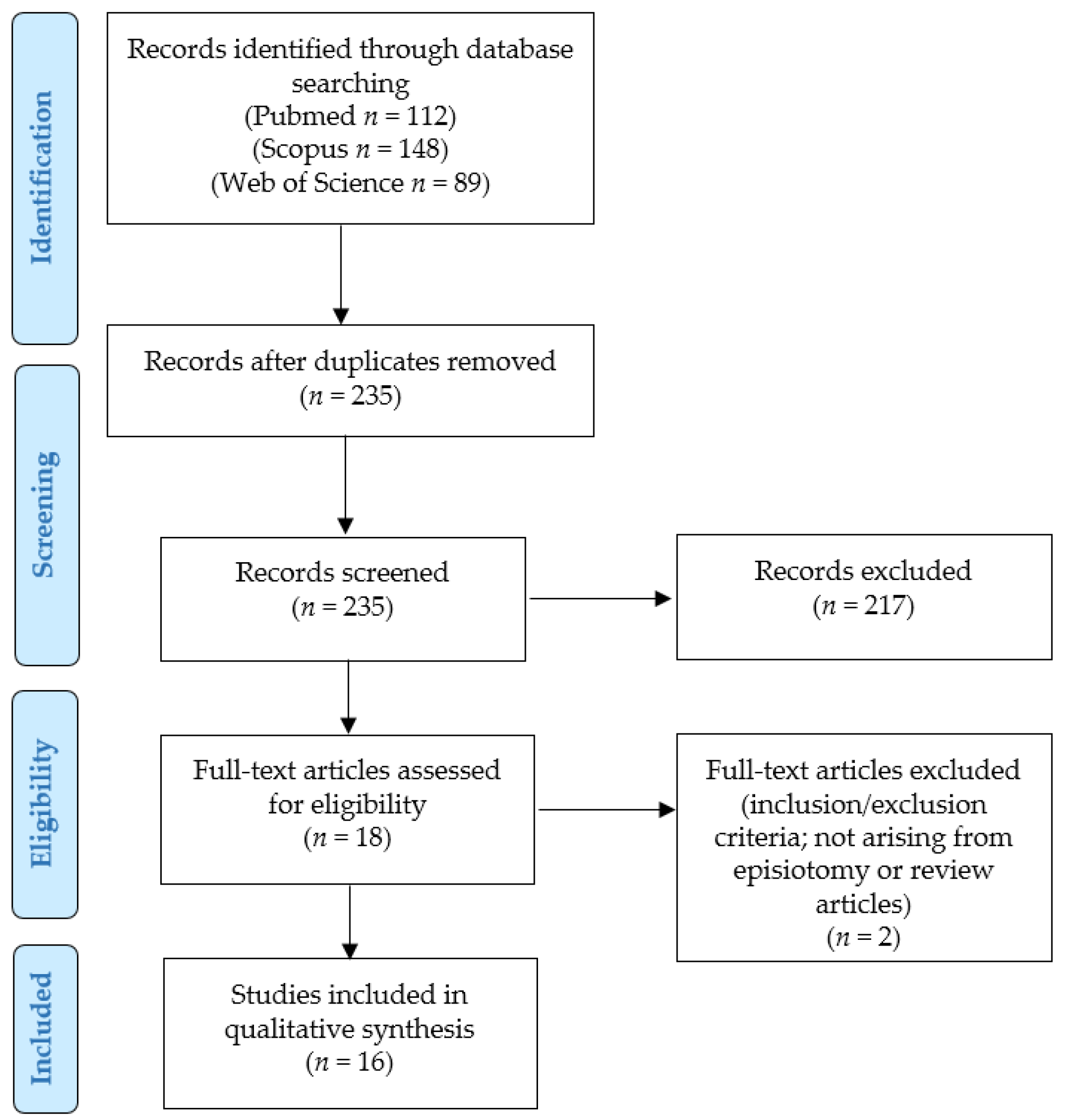
2. Materials and Methods
- Eligibility/inclusion criteria: studies describing metECs.
- Exclusion criteria: primary episiotomy tumors; tumors not metastasizing to the episiotomy site; unclear diagnosis; results not analyzable (too aggregated or scant data).
3. Results
3.1. Case Series: Diagnosis
3.2. Cervical Cancer Presentation
3.3. Tumor Stage and Primary Treatment
3.4. Episiotomy Metastases, Tumor Recurrences, and Follow-Up
3.5. Statistical Analysis
4. Discussion
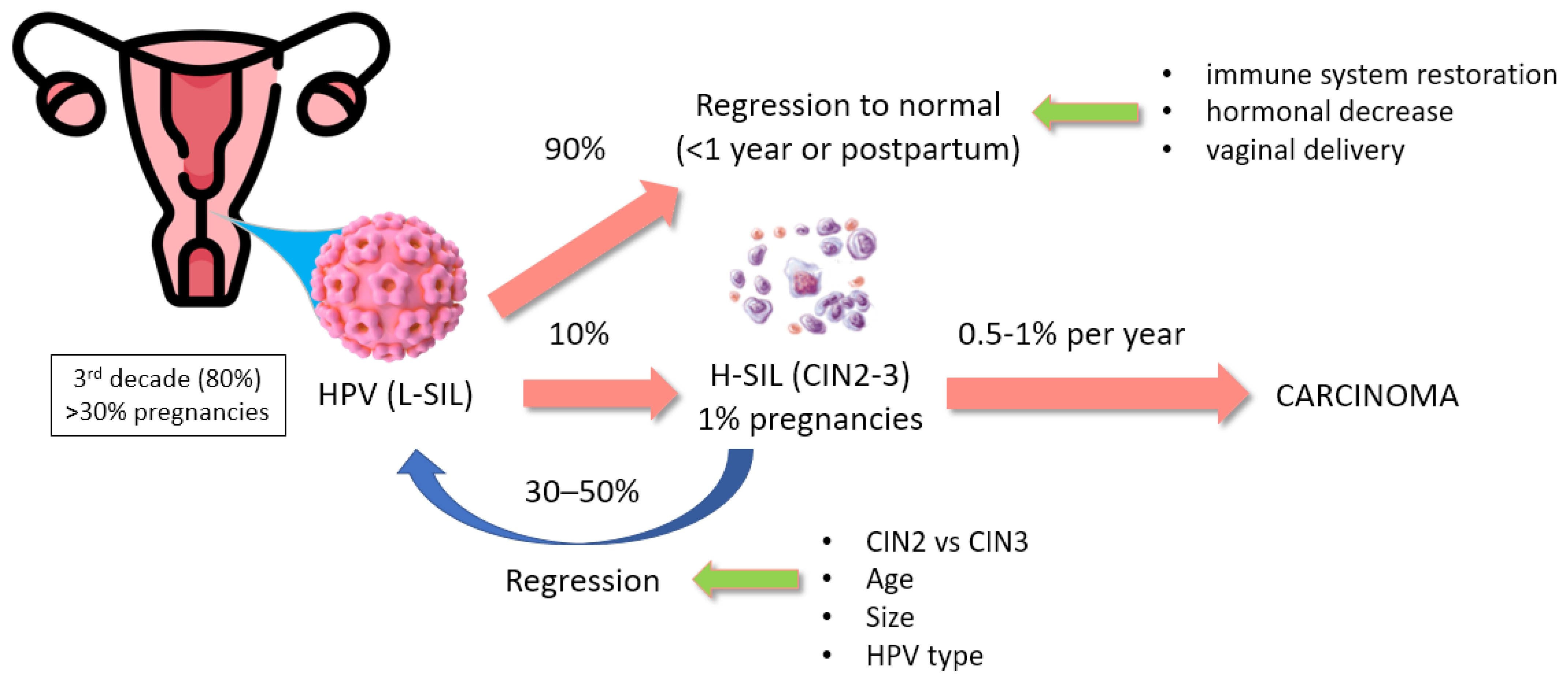
4.1. Cervical Cancer and Pregnancy: Overview and Risk Factors
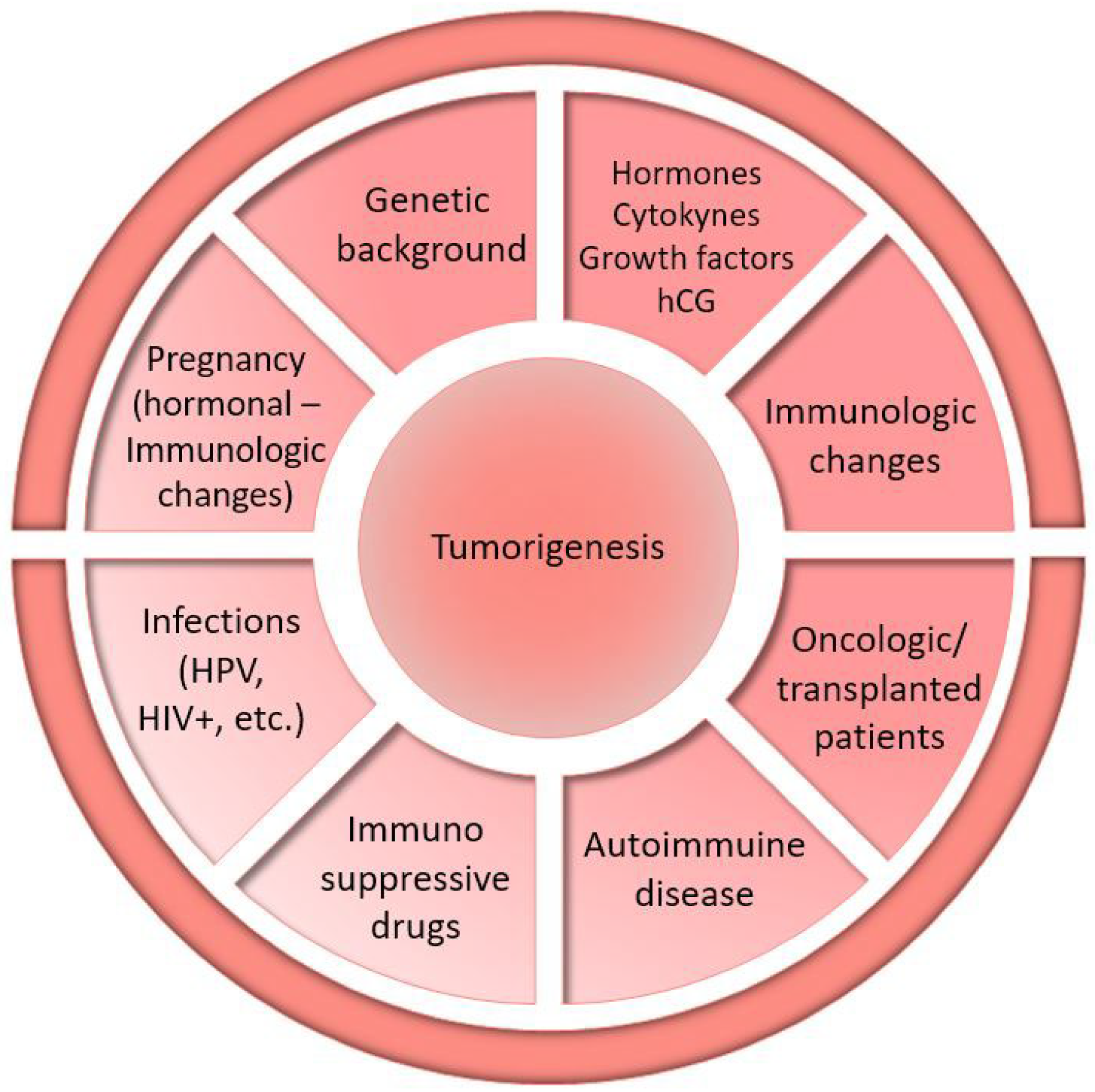
4.2. Cervical Cancer and Pregnancy: Possible Pathogenic Factors
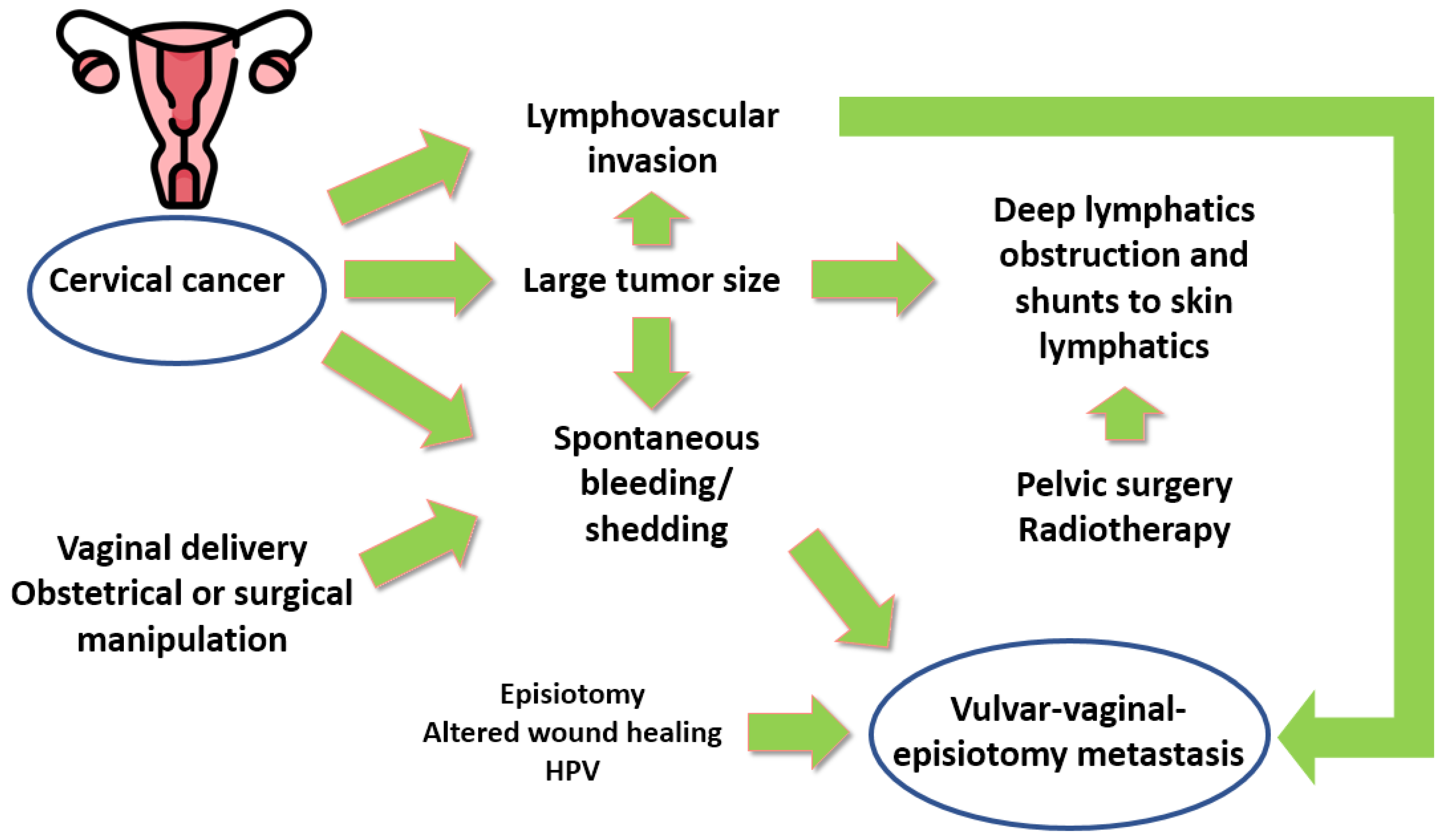
4.3. Episiotomy Metastases: Overview, Dissemination Pathways and Prognosis
4.4. Episiotomy Metastases: Differential Diagnoses
4.5. Strength and Limits of Our Study
4.6. CC Management in Pregnancy
5. Conclusions
- As only 21 cases were reported, the episiotomy site seems to be a rare metastatic site; all metECs were pregnancy-associated CCs diagnosed in pregnancy or <1 year postpartum.
- CC is the most common (72%) gynecologic cancer diagnosed in pregnancy, although its incidence is usually quite low (but variable as to the studied population).
- Pregnancy may promote CC development and progression, but its prognostic impact should be further studied. CC can metastasize to episiotomy by spontaneous tumor detachment and implant, vaginal delivery, or iatrogenic manipulation (obstetrical or surgical), but vascular dissemination can also occur. These pathways may imply different metastatic risk; assignment of the proper stage could be difficult.
- New episiotomy nodules (or pre-existing lesions increasing in size) should be carefully followed-up at short-term or biopsied; they may represent either benign lesions, PriCs, or metECs. Accurate clinical–radiological exams should identify and stage the primary tumor.
- Especially in pregnancy-related CC patients, accurate gynecological exams should be conducted to search for episiotomy metECs.
- Compared to PriCs, metECs occurred in younger (premenopausal) patients, were not associated with endometriosis, and demonstrated a slightly smaller size and a shorter mean time from episiotomy to episiotomy metastases, with a higher likelihood of a less favorable prognosis.
- Cervical screening programs should be encouraged. Oncologic and obstetric CC treatment depends on gestational age, the patient’s choice, tumor stage and size, life expectancy, and the lymph node status. Before the 22nd gestational week, cervical conization for HSIL/early invasive CC is recommended; later, it may be appropriate to postpone surgery to postpartum. Surgery is best performed during the early second trimester, with lower risk of miscarriage. Cesarean section ± concurrent radical hysterectomy and pelvic node dissection are indicated for stage I CCs.
- No treatment guidelines are available for metECs due to their rarity. The reported cases were variably treated (surgery and/or chemoradiation).
Author Contributions
Funding
Conflicts of Interest
References
- Thacker, S.B.; Banta, H.D. Benefits and risks of episiotomy: An interpretative review of the English language literature, 1860–1980. Obstet. Gynecol. Surv. 1983, 38, 322–338. [Google Scholar] [CrossRef]
- Carroli, G.; Mignini, L. Episiotomy for vaginal birth. Cochrane Database Syst. Rev. 2009, 1, CD000081. [Google Scholar] [CrossRef]
- Aragaw, F.M.; Belay, D.G.; Endalew, M.; Asratie, M.H.; Gashaw, M.; Tsega, N.T. Level of episiotomy practice and its disparity among primiparous and multiparous women in Ethiopia: A systematic review and meta-analysis. Front. Glob. Womens Health 2023, 4, 1153640. [Google Scholar] [CrossRef]
- Okeahialam, N.A.; Sultan, A.H.; Thakar, R. The prevention of perineal trauma during vaginal birth. Am. J. Obstet. Gynecol. 2024, 230, S991–S1004. [Google Scholar] [CrossRef]
- Shiono, P.; Klebanoff, M.; Carey, J.C. Midline episiotomies: More harm than good? Obstet. Gynecol. 1990, 75, 765–770. [Google Scholar]
- Kojima, N.; Yoshida, H.; Uehara, T.; Ushigusa, T.; Asami, Y.; Shiraishi, K.; Kato, T. Primary Clear Cell Adenocarcinoma of the Vulva: A Case Study with Mutation Analysis and Literature Review. Int. J. Surg. Pathol. 2019, 27, 792–797. [Google Scholar] [CrossRef] [PubMed]
- Kasahara, K.; Itatani, Y.; Kawada, K.; Takahashi, Y.; Yamamoto, T.; Hoshino, N.; Okada, T.; Oshima, N.; Hida, K.; Nishigori, T.; et al. Laparoscopic posterior pelvic exenteration for clear cell adenocarcinoma arising in an episiotomy scar. Asian J. Endosc. Surg. 2022, 15, 642–646. [Google Scholar] [CrossRef]
- Xu, S.; Wang, W.; Sun, L.P. Comparison of clear cell carcinoma and benign endometriosis in episiotomy scar-two cases report and literature review. BMC Womens Health 2020, 20, 11. [Google Scholar] [CrossRef] [PubMed]
- Barrena-Medel, N.; Diaz, L.; Pabon, M. Episiotomy-site clear cell carcinoma. Am. J. Obstet. Gynecol. 2021, 224, 225–226. [Google Scholar] [CrossRef] [PubMed]
- Han, L.; Zheng, A.; Wang, H. Clear cell carcinoma arising in previous episiotomy scar: A case report and review of the literature. J. Ovarian Res. 2016, 9, 1. [Google Scholar] [CrossRef] [PubMed][Green Version]
- Chene, G.; Darcha, C.; Dechelotte, P.; Mage, G.; Canis, M. Malignant degeneration of perineal endometriosis in episiotomy scar, case report and review of the literature. Int. J. Gynecol. Cancer 2007, 17, 709–714. [Google Scholar] [CrossRef]
- Kwon, Y.S.; Nam, J.H.; Choi, G. Clear cell adenocarcinoma arising in endometriosis of a previous episiotomy site. Obstet. Gynecol. 2008, 112, 475–477. [Google Scholar] [CrossRef]
- Todd, R.W.; Kehoe, S.; Gearty, J. A case of clear cell carcinoma arising in extragonadal endometriosis. Int. J. Gynecol. Cancer 2000, 10, 170–172. [Google Scholar] [CrossRef] [PubMed]
- Krasević, M.; Haller, H.; Iternicka, Z.; Valstelić, I.; Matejcić, N. Adenoid cystic carcinoma of Bartholin’s gland: A case report. Eur. J. Gynaecol. Oncol. 2001, 22, 213–214. [Google Scholar] [PubMed]
- Nagy, P. Episiotomia hegében endometriosis talaján kialakult méhnyálkahártya carcinoma [Endometrial carcinoma arising from endometriosis in the episiotomy scar]. Orv. Hetil. 2003, 144, 373–374. [Google Scholar]
- Hitti, I.F.; Glasberg, S.S.; Lubicz, S. Clear cell carcinoma arising in extraovarian endometriosis: Report of three cases and review of the literature. Gynecol. Oncol. 1990, 39, 314–320. [Google Scholar] [CrossRef] [PubMed]
- Van Dam, P.A.; Irvine, L.; Lowe, D.G.; Fisher, C.; Barton, D.P.; Shepherd, J.H. Carcinoma in episiotomy scars. Gynecol. Oncol. 1992, 44, 96–100. [Google Scholar] [CrossRef]
- Olah, K.S.J.; Clarke, F.; Kingston, R.; Neilson, J.P. Vulval carcinoma in an episiotomy scar—A rare cause of superficial dyspareunia. J. Obstet. Gynaecol. 1995, 15, 208. [Google Scholar] [CrossRef]
- Yarandi, F.; Aghili, M.; Ramhormozian, S.; Shirali, E. Endocervical adenocarcinoma implantation in episiotomy scar: A case report and review of the literature. J. Med. Case Rep. 2023, 17, 100. [Google Scholar] [CrossRef]
- Carocha, A.I.; Pedroso, C.; Correia, L.; Gomes, A.; Jorge, A.F. Glassy cell carcinoma of the cervix and metastasis in episiotomy scar: A case report. J. Low. Genit. Tract. Dis. 2015, 19, e31–e34. [Google Scholar] [CrossRef]
- Hafeez, I.; Lawenda, B.D.; Schilder, J.M.; Johnstone, P.A. Prolonged survival after episiotomy recurrence of cervical cancer complicating pregnancy. Eur. J. Gynaecol. Oncol. 2011, 32, 211–213. [Google Scholar]
- Neumann, G.; Rasmussen, K.L.; Petersen, L.K. Cervical adenosquamous carcinoma: Tumor implantation in an episiotomy scar. Obstet. Gynecol. 2007, 110, 467–469. [Google Scholar] [CrossRef]
- Baloglu, A.; Uysal, D.; Aslan, N.; Yigit, S. Advanced stage of cervical carcinoma undiagnosed during antenatal period in term pregnancy and concomitant metastasis on episiotomy scar during delivery: A case report and review of the literature. Int. J. Gynecol. Cancer 2007, 17, 1155–1159. [Google Scholar] [CrossRef]
- Heron, D.E.; Axtel, A.; Gerszten, K.; Amortegui, A.; Kelley, J.; Comerci, J.; Edwards, R.P. Villoglandular adenocarcinoma of the cervix recurrent in an episiotomy scar: A case report in a 32-year-old female. Int. J. Gynecol. Cancer 2005, 15, 366–371. [Google Scholar] [CrossRef] [PubMed]
- Goldman, N.A.; Goldberg, G.L. Late recurrence of squamous cell cervical cancer in an episiotomy site after vaginal delivery. Obstet. Gynecol. 2003, 101, 1127–1129. [Google Scholar] [CrossRef]
- Sood, A.K.; Sorosky, J.I.; Mayr, N.; Anderson, B.; Buller, R.E.; Niebyl, J. Cervical cancer diagnosed shortly after pregnancy: Prognostic variables and delivery routes. Obstet. Gynecol. 2000, 95, 832–838. [Google Scholar] [CrossRef] [PubMed]
- Jereczek, B.; Jassem, J.; Serkies, K. Implantation of a cervical carcinoma in the episiotomy site. A case report and review of the literature. Ital. J. Gynaecol. Obstet. 1996, 8, 80–83. [Google Scholar]
- Van den Broek, N.R.; Lopes, A.D.; Ansink, A.; Monaghan, J.M. “Microinvasive” adenocarcinoma of the cervix implanting in an episiotomy scar. Gynecol. Oncol. 1995, 59, 297–299. [Google Scholar] [CrossRef]
- Cliby, W.A.; Dodson, M.K.; Podratz, K.C. Cervical cancer complicated by pregnancy: Episiotomy site recurrences following vaginal delivery. Obstet. Gynecol. 1994, 84, 179–182. [Google Scholar]
- Khalil, A.M.; Khatib, R.A.; Mufarrij, A.A.; Tawil, A.N.; Issa, P.Y. Squamous cell carcinoma of the cervix implanting in the episiotomy site. Gynecol. Oncol. 1993, 51, 408–410. [Google Scholar] [CrossRef] [PubMed]
- Gordon, A.N.; Jensen, R.; Jones, H.W., 3rd. Squamous carcinoma of the cervix complicating pregnancy: Recurrence in episiotomy after vaginal delivery. Obstet. Gynecol. 1989, 73, 850–852. [Google Scholar]
- Copeland, L.J.; Saul, P.B.; Sneige, N. Cervical adenocarcinoma: Tumor implantation in the episiotomy sites of two patients. Gynecol. Oncol. 1987, 28, 230–235. [Google Scholar] [CrossRef]
- Burgess, S.P.; Waymont, B. Implantation of a cervical carcinoma in an episiotomy site. Case Rep. Br. J. Obstet. Gynaecol. 1987, 94, 598–599. [Google Scholar] [CrossRef]
- Hartmann, K.; Viswanathan, M.; Palmieri, R.; Gartlehner, G.; Thorp, J.; Lohr, K.N. Outcomes of routine episiotomy: A systematic review. JAMA 2005, 293, 2141–2148. [Google Scholar] [CrossRef]
- Jiang, H.; Qian, X.; Carroli, G.; Garner, P. Selective versus routine use of episiotomy for vaginal birth. Cochrane Database Syst. Rev. 2017, 2, CD000081. [Google Scholar] [CrossRef]
- Uustal, E.; Edqvist, M. Subclassification of second-degree tears at delivery: Creation and reported outcomes. BMC Pregnancy Childbirth 2025, 25, 272. [Google Scholar] [CrossRef]
- Risløkken, J.; Macedo, M.D.; Bø, K.; Ellström Engh, M.; Siafarikas, F. The severity of second-degree perineal tears and dyspareunia during one year postpartum: A prospective cohort study. AOGS 2025, 104, 968–975. [Google Scholar] [CrossRef]
- Arcieri, M.; Battello, G.; Graziano, A.; Alfarè Lovo, M.; Restaino, S.; D’Antonio, F.; Lucidi, A.; Segatti, M.; Comuzzi, M.; Barbui, E.; et al. The outcome of early perineal rehabilitation in obstetric anal sphincter injuries: A single-center experience. Arch. Gynecol. Obstet. 2025, 311, 1711–1719. [Google Scholar] [CrossRef] [PubMed]
- Edqvist, M.; Ajne, G.; Teleman, P.; Tegerstedt, G.; Rubertsson, C. Postpartum perineal pain and its association with sub-classified second-degree tears and perineal trauma-A follow-up of a randomized controlled trial. AOGS 2024, 103, 2314–2323. [Google Scholar] [CrossRef] [PubMed]
- Ramar, C.N.; Vadakekut, E.S.; Grimes, W.R. Perineal Lacerations. 11 August 2024. In StatPearls [Internet]; StatPearls Publishing: Treasure Island, FL, USA, 2025. [Google Scholar]
- Roman, M.P.; Aggarwal, S.; Doumouchtsis, S.K.; CHORUS, an International Collaboration for Harmonising Outcomes, Research and Standards in Urogynaecology and Women’s Health (i-chorus.org). A systematic review and meta-synthesis of qualitative studies on childbirth perineal trauma for the development of a Core Outcome Set. Eur. J. Obstet. Gynecol. Reprod. Biol. 2023, 290, 51–59. [Google Scholar] [CrossRef] [PubMed]
- Hoque, A.M.; Hoque, M.E.; Hal, G.V. Incidence, trends and risk factors for perineal injuries of low-risk pregnant women: Experience from a midwife run obstetric unit, South Africa. Afr. J. Reprod. Health 2021, 25, 52–62. [Google Scholar]
- Naidoo, T.D.; Moodley, J. Obstetric perineal injury: Risk factors and prevalence in a resource-constrained setting. Trop. Dr. 2015, 45, 252–254. [Google Scholar] [CrossRef]
- Dendini, M.; Aldossari, S.K.; AlQassab, H.A.; Aldraihem, O.O.; Almalki, A. Retrospective Case-Control Study of Extended Birth Perineal Tears and Risk Factors. Cureus 2024, 16, e57132. [Google Scholar] [CrossRef]
- Liljestrand, J. Episiotomy for Vaginal Birth: RHL Commentary (2003) The WHO Reproductive Health Library; World Health Organization: Geneva, Switzerland, 2016. [Google Scholar]
- Kozhimannil, K.B.; Karaca-Mandic, P.; Blauer-Peterson, C.J.; Shah, N.T.; Snowden, J.M. Uptake and Utilization of Practice Guidelines in Hospitals in the United States: The Case of Routine Episiotomy. Jt. Comm. J. Qual. Patient Saf. 2017, 43, 41–48. [Google Scholar] [CrossRef] [PubMed]
- Gabbe, S.G.; Niebyl, J.R.; Simpson, J.L.; Landon, M.B.; Galan, H.L.; Jauniaux, E.R.M.; Driscoll, D.A. Obstetrics: Normal and Problem Pregnancies, 6th ed.; Elsevier: Philadelphia, PA, USA, 2012. [Google Scholar]
- Peaceman, A.M. Operative Vaginal Birth: ACOG Practice Bulletin, Number 219. Obstet. Gynecol. 2020, 135, e149–e159. [Google Scholar]
- Izuka, E.; Dim, C.; Chigbu, C.; Obiora-Izuka, C. Prevalence and predictors of episiotomy among women at first birth in enugu, South-East Nigeria. Ann. Med. Health Sci. Res. 2014, 4, 928–932. [Google Scholar] [PubMed]
- Graham, I.D.; Carroli, G.; Davies, C.; Medves, J.M. Episiotomy rates around the world: An update. Birth 2005, 32, 219–223. [Google Scholar] [CrossRef]
- Palicelli, A.; Giaccherini, L.; Zanelli, M.; Bonasoni, M.P.; Gelli, M.C.; Bisagni, A.; Zanetti, E.; De Marco, L.; Torricelli, F.; Manzotti, G.; et al. How Can We Treat Vulvar Carcinoma in Pregnancy? A Systematic Review of the Literature. Cancers 2021, 13, 836. [Google Scholar] [CrossRef]
- Kallionpää, R.A.; Määttänen, J.; Leppävirta, J.; Peltonen, S.; Peltonen, J. Pregnancy and the Risk for Cancer in Neurofibromatosis 1. Genes Chromosomes Cancer 2025, 64, e70017. [Google Scholar] [CrossRef]
- Scheyda-Yoo, K.; Hofer, U.; Várnai-Händel, A.; Maus, M.K.; Dumoulin, F.L. Rapid growth and malignant transformation of a mucinous cystic neoplasm during pregnancy—A case report. Z. Gastroenterol. 2024, 62, 1048–1052. [Google Scholar] [PubMed]
- Liu, D.; Wei, H.; Huang, J.; Shen, H.; Wang, X.; Hu, C. Clear Cell Adenocarcinoma Arising from Endometriosis in Abdominal Wall Cesarean Section Scar: A Case Report and Literature Review. Int. J. Women’s Health 2023, 15, 25–32. [Google Scholar] [CrossRef]
- D’Agostino, C.; Surico, D.; Monga, G.; Palicelli, A. Pregnancy-related decidualization of subcutaneous endometriosis occurring in a post-caesarean section scar: Case study and review of the literature. Pathol. Res. Pract. 2019, 215, 828–831. [Google Scholar] [CrossRef]
- Palicelli, A.; Torricelli, F.; Tonni, G.; Bisagni, A.; Zanetti, E.; Zanelli, M.; Medina-Illueca, V.D.; Melli, B.; Zizzo, M.; Morini, A.; et al. Primary Carcinomas of the Episiotomy Scar Site: A Systematic Literature Review. Curr. Oncol. 2025, 32, 65. [Google Scholar] [CrossRef]
- van der Vange, N.; Weverling, G.J.; Ketting, B.W.; Ankum, W.M.; Samlal, R.; Lammes, F.B. The prognosis of cervical cancer associated with pregnancy: A matched cohort study. Obstet. Gynecol. 1995, 85, 1022–1026. [Google Scholar] [CrossRef] [PubMed]
- Lee, R.B.; Neglia, W.; Park, R.C. Cervical carcinoma in pregnancy. Obstet. Gynecol. 1981, 58, 584–589. [Google Scholar]
- Hacker, N.F.; Berek, J.S.; Lagasse, L.D.; Charles, E.H.; Savage, E.W.; Moore, J.G. Carcinoma of the cervix associated with pregnancy. Obstet. Gynecol. 1982, 59, 735–746. [Google Scholar] [PubMed]
- Bhatla, N.; Berek, J.S.; Cuello Fredes, M.; Denny, L.A.; Grenman, S.; Karunaratne, K.; Kehoe, S.T.; Konishi, I.; Olawaiye, A.B.; Prat, J.; et al. Revised FIGO staging for carcinoma of the cervix uteri. Int. J. Gynaecol. Obstet. 2019, 145, 129–135, Erratum in Int. J. Gynaecol. Obstet. 2019, 147, 279-280. https://doi.org/10.1002/ijgo.12969. [Google Scholar] [CrossRef] [PubMed]
- Olthof, E.P.; Mom, C.H.; van der Velden, J. More attention is needed for the corrigendum to the revised FIGO staging for carcinoma of the cervix uteri. Int. J. Gynecol. Cancer 2020, 30, 1850. [Google Scholar] [CrossRef]
- Li, K.P.; Ajebo, E.M.; Diamond, D.; Powell, M.; Belcher, M. Primary vulvar melanoma in an adolescent patient. Pediatr. Dermatol. 2023, 40, 749–750. [Google Scholar] [CrossRef]
- Dobrică, E.C.; Vâjâitu, C.; Condrat, C.E.; Crețoiu, D.; Popa, I.; Gaspar, B.S.; Suciu, N.; Crețoiu, S.M.; Varlas, V.N. Vulvar and Vaginal Melanomas-The Darker Shades of Gynecological Cancers. Biomedicines 2021, 9, 758. [Google Scholar] [CrossRef]
- Bhattacharyya, S.K.; Saha, S.P.; Mukherjee, G.; Samanta, J. Metastatic vulvo-vaginal choriocarcinoma mimicking a Bartholin cyst and vulvar hematoma-two unusual presentations. J. Turk. Ger. Gynecol. Assoc. 2012, 13, 218–220. [Google Scholar] [CrossRef] [PubMed]
- Boufettal, H. Vulva choriocarcinoma. Pan Afr. Med. J. 2016, 24, 328. [Google Scholar] [CrossRef]
- Onuigbo, W.I. Clinical awareness of vulvo-vagina metastaeses in choriocarcinoma: Case reports. Niger. Med. J. 1978, 8, 270–271. [Google Scholar]
- Boufettal, H.; Samouh, N. Vulva choriocarcinoma. Pan Afr. Med. J. 2016, 25, 225. [Google Scholar] [CrossRef]
- Mitrovic, S.L.j.; Arsenijevic, P.S.; Kljakic, D.; Djuric, J.M.; Milosavljevic, M.Z.; Protrka, Z.M.; Vojinovic, R.H. Gestational choriocarcinoma of the cervix. Arch. Iran. Med. 2014, 17, 783–785. [Google Scholar]
- Mandato, V.D.; Torricelli, F.; Mastrofilippo, V.; Palicelli, A.; Costagliola, L.; Aguzzoli, L. Primary Ovarian Leiomyosarcoma Is a Very Rare Entity: A Narrative Review of the Literature. Cancers 2023, 15, 2953. [Google Scholar] [CrossRef]
- Yang, J.; Guo, Q.; Yang, Y.; Zhang, J.; Lang, J.; Shi, H. Primary vulvar Ewing sarcoma/primitive neuroectodermal tumor: A report of one case and review of the literature. J. Pediatr. Adolesc. Gynecol. 2012, 25, e93–e97. [Google Scholar] [CrossRef]
- Koufopoulos, N.I.; Samaras, M.G.; Kotanidis, C.; Skarentzos, K.; Pouliakis, A.; Boutas, I.; Kontogeorgi, A.; Zanelli, M.; Palicelli, A.; Zizzo, M.; et al. Primary and Metastatic Pancreatic Ewing Sarcomas: A Case Report and Review of the Literature. Diagnostics 2024, 14, 2694. [Google Scholar] [CrossRef]
- Ferron, G.; Bataillon, G.; Martinez, A.; Chibon, F.; Valentin, T. Gynecological sarcomas, surgical management: Primary, metastatic, and recurrent disease. Int. J. Gynecol. Cancer 2024, 34, 393–402. [Google Scholar] [CrossRef] [PubMed]
- Rekhi, B.; Bhatia, S.; Shetty, O.; Maheshwari, A. Poorly differentiated biphasic synovial sarcoma of the vulva, displaying SS18::SSX1 fusion and weak to absent (mosaic) INI1/SMARCB1 immunostaining: A rare case with literature review. Indian J. Pathol. Microbiol. 2024, 67, 396–400. [Google Scholar] [CrossRef] [PubMed]
- Sharma, A.E.; Wepy, C.B.; Chapel, D.B.; Maccio, L.; Irshaid, L.; Al-Ibraheemi, A.; Dickson, B.C.; Nucci, M.R.; Crum, C.P.; Fletcher, C.D.M.; et al. Ewing sarcoma of the female genital tract: Clinicopathologic analysis of 21 cases with an emphasis on the differential diagnosis of gynecologic round cell, spindle, and epithelioid neoplasms. Am. J. Surg. Pathol. 2024, 48, 972–984. [Google Scholar] [CrossRef]
- Nongo, B.H.; Isah, D.A.; Ahmed, A.B.; Abdul, O.A. Vaginal endometrial stroma sarcoma: A case report of a rare disease. J. West Afr. Coll. Surg. 2024, 14, 233–237. [Google Scholar] [CrossRef]
- Ong, A.C.; Lim, T.Y.; Tan, T.C.; Wang, S.; Raju, G.C. Proximal epithelioid sarcoma of the vulva: A case report and review of current medical literature. J. Obstet. Gynaecol. Res. 2012, 38, 1032–1035. [Google Scholar] [CrossRef]
- Palicelli, A.; Ardighieri, L.; Broggi, G.; Caltabiano, R.; Melli, B.; Gelli, M.C.; Zanelli, M.; Bonasoni, M.P.; Asaturova, A.; Zizzo, M.; et al. Lipoleiomyomas of the Uterine Cervix: A New Series including the First Recurrent Case and the First Systematic Literature Review. J. Pers. Med. 2022, 12, 1852. [Google Scholar] [CrossRef] [PubMed]
- Caldana, P.L. Su di un caso di metastasi vulvare da sarcoma parotideo. Pathologica 1968, 60, 275–278. [Google Scholar] [PubMed]
- Available online: https://seer.cancer.gov/statfacts/html/cervix.html (accessed on 4 June 2025).
- WHO Classification of Tumours Editorial Board. Female Genital Tumours: WHO Classification of Tumours, 5th ed.; IARC: Lyon, France, 2020; Volume 4. [Google Scholar]
- Zhang, S.; Xu, H.; Zhang, L.; Qiao, Y. Cervical cancer: Epidemiology, risk factors and screening. Chin. J. Cancer Res. 2020, 32, 720–728. [Google Scholar] [CrossRef] [PubMed]
- Rueckert, S.; Oestreich, K.; Gallwas, J.; Kolben, T.; Ditsch, N.; Starrach, T.; Blume, C.; Dannecker, C.; Kolben, T.M. Cervical dysplasia during pregnancy—Effects on oncological and psychological outcome: A case control study. Eur. J. Gynaecol. Oncol. 2018, 39, 399–403. [Google Scholar]
- Martimbeau, P.W.; Kjorstad, K.E.; Iversen, T. Stage IB carcinoma of the cervix, the Norwegian Radium hospital. II. Results when pelvic nodes are involved. Obstet. Gynecol. 1982, 60, 215–218. [Google Scholar]
- Cheng, X.; Cai, S.; Li, Z.; Tang, M.; Xue, M.; Zang, R. The prognosis of women with stage IB1-IIB node-positive cervical carcinoma after radical surgery. World J. Surg. Oncol. 2004, 2, 47. [Google Scholar] [CrossRef]
- Smith, L.H.; Dalrymple, J.L.; Leiserowitz, G.S.; Danielsen, B.; Gilbert, W.M. Obstetrical deliveries associated with maternal malignancy in California, 1992 through 1997. Am. J. Obstet. Gynecol. 2001, 184, 1504. [Google Scholar] [CrossRef]
- Demeter, A.; Sziller, I.; Csapó, Z.; Szánthó, A.; Papp, Z. Outcome of pregnancies after cold-knife conization of the uterine cervix during pregnancy. Eur. J. Gynaecol. Oncol. 2002, 23, 207. [Google Scholar]
- Duggan, B.; Muderspach, L.I.; Roman, L.D.; Curtin, J.P.; d’Ablaing, G., 3rd; Morrow, C.P. Cervical cancer in pregnancy: Reporting on planned delay in therapy. Obstet. Gynecol. 1993, 82, 598–602. [Google Scholar]
- Williams, T.J.; Brack, C.B. Carcinoma of the cervix in pregnancy. Cancer 1964, 17, 1486–1491. [Google Scholar] [CrossRef] [PubMed]
- Jones, H.W.; Seegar, J.G. Novak’s Textbook of Gynecology, 10th ed. Williams and Wilkins: Baltimore, MD, USA, 1981.
- Baltzer, J.; Regenbrecht, M.D.; Kopcke, W.; Zander, J. Carcinoma of the cervix and pregnancy. Int. J. Gynaecol. Obstet. 1990, 31, 317–323. [Google Scholar] [CrossRef] [PubMed]
- Goff, B.A.; Paley, P.J.; Wui-Jin, K.; Petersdorf, S.H.; Douglas, J.G.; Greer, B.F. Cancer in the pregnant patient. In Principles and Practice of Gynecologic Oncology; Hoskins, W.J., Perez, C.A., Young, R.C., Eds.; Lippincott-Raven: Philadelphia, PA, USA, 1999; pp. 501–528. [Google Scholar]
- Makepeace, L.M.; Spirtos, A.N.; Nambiar, A.; Rodriguez, A.N.; Duryea, E.; Spong, C.Y.; Lea, J. Prognosis of cervical cancer when diagnosed during pregnancy. Gynecol. Oncol. Rep. 2023, 48, 30–31. [Google Scholar] [CrossRef]
- Han, S.N.; Mhallem, G.M.; Van Calsteren, K.; Amant, F. Cervical cancer in pregnant women: Treat, wait or interrupt? Assessment of current clinical guidelines, innovations and controversies. Ther. Adv. Med. Oncol. 2013, 5, 211–219. [Google Scholar]
- Al-Halal, H.; Kezouh, A.; Abenhaim, H. Incidence and obstetrical outcomes of cervical intraepithelial neoplasia and cervical cancer in pregnancy: A population-based study on 8.8 million births. Arch. Gynecol. Obstet. 2012, 287, 245–250. [Google Scholar] [CrossRef] [PubMed]
- Takushi, M.; Moromizato, H.; Sakumoto, K.; Kanazawa, K. Management of invasive carcinoma of the uterine cervix associated with pregnancy: Outcome of intentional delay in treatment. Gynecol. Oncol. 2002, 87, 185–189. [Google Scholar] [CrossRef]
- Amant, F.; Berveiller, P.; Boere, I.; Cardonick, E.; Fruscio, R.; Fumagalli, M.; Halaska, M.J.; Hasenburg, A.; Johansson, A.L.V.; Lambertini, M.; et al. Gynecologic cancers in pregnancy: Guidelines based on a third international consensus meeting. Ann. Oncol. 2019, 30, 1601–1612. [Google Scholar] [CrossRef]
- Ichimura, S.; Ohara, K.; Kono, M.; Mizutani, K.; Kitamura, Y.; Saga, I.; Kanai, R.; Akiyama, T.; Toda, M.; Kohno, M.; et al. Molecular investigation of brain tumors progressing during pregnancy or postpartum period: The association between tumor type, their receptors, and the timing of presentation. Clin. Neurol. Neurosurg. 2021, 207, 106720. [Google Scholar] [CrossRef]
- Holtan, S.G.; Creedon, D.J.; Haluska, P.; Markovic, S.N. Cancer and pregnancy: Parallels in growth, invasion, and immune modulation and implications for cancer therapeutic agents. Mayo Clin. Proc. 2009, 84, 985–1000. [Google Scholar] [CrossRef] [PubMed]
- Muralidhara, P.; Sood, V.; Vinayak Ashok, V.; Bansal, K. Pregnancy and tumour: The parallels and differences in regulatory T cells. Front. Immunol. 2022, 13, 866937. [Google Scholar] [CrossRef]
- Fruscio, R.; Trozzi, R.; Galimberti, S.; LeJeune, C.; Van Calsteren, K.; Delle Marchette, M.; Cardonick, E.; Mascilini, F.; Halaska, M.; Peters, I.; et al. Epithelial ovarian cancer and borderline tumors during pregnancy: A report from the International Network on Cancer, Infertility, and Pregnancy. Int. J. Gynecol. Cancer 2025, 35, 100053. [Google Scholar] [CrossRef]
- Leibetseder, A.; Mair, M.J.; Serra, A.S.; Spiro, Z.; Aichholzer, M.; Widhalm, G.; Eckert, F.; Wöhrer, A.; Helbok, R.; Weis, S.; et al. Association of pregnancy with tumour progression in patients with glioma. Eur. J. Cancer 2025, 218, 115259. [Google Scholar] [CrossRef]
- Rakoczy, K.; Kaczor, J.; Sołtyk, A.; Jonderko, L.; Sędzik, M.; Lizon, J.; Lewandowska, A.; Saczko, M.; Kulbacka, J. Pregnancy, abortion, and birth control methods’ complicity with breast cancer occurrence. Mol. Cell. Endocrinol. 2024, 590, 112264. [Google Scholar] [CrossRef] [PubMed]
- Zeitler, C.; Fuderer, L.; Schmitz, K.; Arora, R.; Dammerer, D. Pheochromocytoma Turned Malignant During Pregnancy in a Patient With Neurofibromatosis Type I—A Case Report and Systematic Review of the Current Literature. Anticancer Res. 2022, 42, 4647–4656. [Google Scholar] [CrossRef]
- Troisi, R.; Bjørge, T.; Gissler, M.; Grotmol, T.; Kitahara, C.M.; Myrtveit Saether, S.M.; Ording, A.G.; Sköld, C.; Sørensen, H.T.; Trabert, B.; et al. The role of pregnancy, perinatal factors and hormones in maternal cancer risk: A review of the evidence. J. Intern. Med. 2018, 283, 430–445. [Google Scholar] [CrossRef]
- Slepicka, P.F.; Cyrill, S.L.; Dos Santos, C.O. Pregnancy and Breast Cancer: Pathways to Understand Risk and Prevention. Trends Mol. Med. 2019, 25, 866–881. [Google Scholar] [CrossRef]
- Johansson, A.L.; Andersson, T.M.; Hsieh, C.C.; Cnattingius, S.; Dickman, P.W.; Lambe, M. Family history and risk of pregnancy-associated breast cancer (PABC). Breast Cancer Res. Treat. 2015, 151, 209–217. [Google Scholar] [CrossRef]
- Nichols, H.B.; Schoemaker, M.J.; Cai, J.; Xu, J.; Wright, L.B.; Brook, M.N.; Jones, M.E.; Adami, H.O.; Baglietto, L.; Bertrand, K.A.; et al. Breast Cancer Risk After Recent Childbirth: A Pooled Analysis of 15 Prospective Studies. Ann. Intern. Med. 2019, 170, 22–30. [Google Scholar] [CrossRef] [PubMed]
- Van Calsteren, K.; Heyns, L.; De Smet, F.; Van Eycken, L.; Gziri, M.M.; Van Gemert, W.; Halaska, M.; Vergote, I.; Ottevanger, N.; Amant, F. Cancer during pregnancy: An analysis of 215 patients emphasizing the obstetrical and the neonatal outcomes. J. Clin. Oncol. 2010, 28, 683–689. [Google Scholar] [CrossRef]
- Lee, Y.Y.; Roberts, C.L.; Dobbins, T.; Stavrou, E.; Black, K.; Morris, J.; Young, J. Incidence and outcomes of pregnancy-associated cancer in Australia, 1994–2008: A population-based linkage study. BJOG 2012, 119, 1572–1582. [Google Scholar] [CrossRef]
- Suelmann, B.B.M.; van Dooijeweert, C.; van der Wall, E.; Linn, S.; van Diest, P.J. Pregnancy-associated breast cancer: Nationwide Dutch study confirms a discriminatory aggressive histopathologic profile. Breast Cancer Res. Treat. 2021, 186, 699–704. [Google Scholar] [CrossRef] [PubMed]
- Kamper-Jørgensen, M.; Biggar, R.J.; Tjønneland, A.; Hjalgrim, H.; Kroman, N.; Rostgaard, K.; Stamper, C.L.; Olsen, A.; Andersen, A.M.; Gadi, V.K. Opposite effects of microchimerism on breast and colon cancer. Eur. J. Cancer 2012, 48, 2227–2235. [Google Scholar] [CrossRef] [PubMed]
- Racicot, K.; Kwon, J.Y.; Aldo, P.; Silasi, M.; Mor, G. Understanding the complexity of the immune system during pregnancy. Am. J. Reprod. Immunol. 2014, 72, 107–116. [Google Scholar] [CrossRef]
- Aghaeepour, N.; Ganio, E.A.; Mcilwain, D.; Tsai, A.S.; Tingle, M.; Van Gassen, S.; Gaudilliere, D.K.; Baca, Q.; McNeil, L.; Okada, R.; et al. An immune clock of human pregnancy. Sci. Immunol. 2017, 2, eaan2946. [Google Scholar] [CrossRef]
- Lo, Y.M.; Lo, E.S.; Watson, N.; Noakes, L.; Sargent, I.L.; Thilaganathan, B.; Wainscoat, J.S. Two-way cell traffic between mother and fetus: Biologic and clinical implications. Blood 1996, 88, 4390–4395. [Google Scholar] [CrossRef] [PubMed]
- Cellich, P.P.; Nayyar, R.; Wong, E. Acinic cell carcinoma of the parotid gland in pregnancy: An approach to cancer in pregnancy. BMJ Case Rep. 2018, 2018, bcr2018224320. [Google Scholar] [CrossRef]
- Al-Zaher, N.N.; Obeid, A.A. Acinic cell carcinoma in pregnancy: A case report and review of the literature. J. Med. Case Rep. 2011, 5, 91. [Google Scholar] [CrossRef]
- Prabhu, R.V.; Dinkar, A.; Spadigam, A.; Prabhu, V. Low-grade papillary adenocarcinoma of minor salivary glands in pregnancy. Indian J. Cancer 2015, 52, 644–645. [Google Scholar] [CrossRef]
- Atabo, A.; Bradley, P.J. Management principles of head and neck cancers during pregnancy: A review and case series. Oral Oncol. 2008, 44, 236–241. [Google Scholar] [CrossRef]
- Palluch, F.; Lehmann, M.; Volz, J.; Upile, T.; Sudhoff, H. The rapid growth of a pleomorphic adenoma of the parotid gland in the third trimester of pregnancy. J. Med. Case Rep. 2011, 5, 141. [Google Scholar] [CrossRef]
- Rafizadeh, S.M.; Ghadimi, H.; Zarei Vesal, N.; Nozarian, Z.; Nikdel, M. Unexpected recurrence and rapid progression of lacrimal gland adenoid cystic carcinoma during pregnancy: A case report. Orbit 2023, 42, 645–649. [Google Scholar] [CrossRef]
- Tao, H.; Sano, Y.; Yamane, M.; Toyooka, S.; Oto, T.; Date, H. Bronchial mucoepidermoid carcinoma with recurrent hemoptysis in a pregnant woman: Report of a case. Surg. Today 2008, 38, 850–852. [Google Scholar] [CrossRef]
- Meda, S.; Reginald, B.A.; Reddy, B.S. Immunohistochemical study of the expression of human chorionic gonadotropin-β in salivary gland tumors. J. Cancer Res. Ther. 2018, 14, 952–956. [Google Scholar] [CrossRef]
- Bergamini, C.; Cavalieri, S.; Sanguineti, G.; Farneti, A.; Licitra, L. Treatment of HER2+ metastatic salivary ductal carcinoma in a pregnant woman: A case report. Oxf. Med. Case Rep. 2019, 2019, omz102. [Google Scholar] [CrossRef] [PubMed]
- Palicelli, A. Intraductal carcinomas of the salivary glands: Systematic review and classification of 93 published cases. APMIS 2020, 128, 191–200. [Google Scholar] [CrossRef]
- Palicelli, A.; Barbieri, P.; Mariani, N.; Re, P.; Galla, S.; Sorrentino, R.; Locatelli, F.; Salfi, N.; Valente, G. Unicystic high-grade intraductal carcinoma of the parotid gland: Cytological and histological description with clinic-pathologic review of the literature. APMIS 2018, 126, 771–776. [Google Scholar] [CrossRef] [PubMed]
- Palicelli, A. What do we know about the cytological features of pure intraductal carcinomas of the salivary glands? Cytopathology 2020, 31, 185–192. [Google Scholar] [CrossRef] [PubMed]
- Behtash, N.; Karimi Zarchi, M.; Modares Gilani, M.; Ghaemmaghami, F.; Mousavi, A.; Ghotbizadeh, F. Ovarian carcinoma associated with pregnancy: A clinicopathologic analysis of 23 cases and review of the literature. BMC Pregnancy Childbirth 2008, 8, 3. [Google Scholar] [CrossRef]
- Mierzyński, R.; Dłuski, D.F.; Gogacz, M.; Golubka, I.; Leszczyńska-Gorzelak, B. Pregnancy complicated by ovarian planoepithelial carcinoma arising in mature cystic teratoma. J. Obstet. Gynaecol. 2019, 39, 408–409. [Google Scholar] [CrossRef]
- Dgani, R.; Shoham, Z.; Atar, E.; Zosmer, A.; Lancet, M. Ovarian carcinoma during pregnancy: A study of 23 cases in Israel between the years 1960 and 1984. Gynecol. Oncol. 1989, 33, 326–331. [Google Scholar] [CrossRef]
- Jorgensen, J.R.; Brewer, M.A.; Runowicz, C.D. Ovarian cancer in pregnancy. Semin. Perinatol. 2025, 49, 152043. [Google Scholar] [CrossRef] [PubMed]
- Gezginç, K.; Karataylı, R.; Yazıcı, F.; Acar, A.; Celik, C.; Capar, M. Ovarian cancer during pregnancy. Int. J. Gynaecol. Obstet. 2011, 115, 140–143. [Google Scholar] [CrossRef]
- Jiang, X.; Ye, Z.; Yu, W.; Fang, Q.; Jiang, Y. Chemotherapy for ovarian cancer during pregnancy: A systematic review and meta-analysis of case reports and series. J. Obstet. Gynaecol. Res. 2021, 47, 3425–3436. [Google Scholar] [CrossRef]
- Pei, Y.; Gou, Y.; Li, N.; Yang, X.; Han, X.; Huiling, L. Efficacy and Safety of Platinum-Based Chemotherapy for Ovarian Cancer During Pregnancy: A Systematic Review and Meta-Analysis. Oncol. Ther. 2022, 10, 55–73. [Google Scholar] [CrossRef] [PubMed]
- Liao, Q.; Deng, D.; Xie, Q.; Gong, X.; Meng, X.; Xia, Y.; Ai, J.; Li, K. Clinical characteristics, pregnancy outcomes and ovarian function of pregnancy-associated breast cancer patients: A retrospective age-matched study. BMC Cancer 2022, 22, 152. [Google Scholar] [CrossRef]
- Aggarwal, P.; Kehoe, S. Ovarian tumours in pregnancy: A literature review. Eur. J. Obstet. Gynecol. Reprod. Biol. 2011, 155, 119–124. [Google Scholar] [CrossRef] [PubMed]
- Bignardi, T.; Condous, G. The management of ovarian pathology in pregnancy. Best Pract. Res. Clin. Obstet. Gynaecol. 2009, 23, 539–548. [Google Scholar] [CrossRef]
- Ratanasrithong, P.; Benjapibal, M. Pregnancy outcomes after conservative surgery for early-stage ovarian neoplasms. Asian Pac. J. Cancer Prev. 2017, 18, 2083–2087. [Google Scholar]
- Kaiser, H.E.; Nawab, E.; Nasir, A.; Chmielarczyk, W.; Krenn, M. Neoplasms during the progression of pregnancy. Vivo 2000, 14, 277–285. [Google Scholar]
- Ueda, M.; Ueki, M. Ovarian tumors associated with pregnancy. Int. J. Gynecol. Obstet. 1996, 55, 59–65. [Google Scholar] [CrossRef]
- Li, Z.; Wang, J.; Chen, Q. Struma ovarii and peritoneal strumosis during pregnancy. BMC Pregnancy Childbirth 2021, 21, 347. [Google Scholar] [CrossRef] [PubMed]
- Dumachița-Șargu, G.; Socolov, R.; Balan, T.A.; Gafițanu, D.; Akad, M.; Balan, R.A. Struma Ovarii during Pregnancy. Diagnostics 2024, 14, 1172. [Google Scholar] [CrossRef]
- Donato, S.; Simões, H.; Leite, V. Malignant Struma Ovarii with Concurrent Thyroid Cancer: Outcomes during and after Pregnancy. Eur. Thyroid. J. 2021, 10, 523–527. [Google Scholar] [CrossRef]
- Asaturova, A.; Magnaeva, A.; Tregubova, A.; Kometova, V.; Karamurzin, Y.; Martynov, S.; Lipatenkova, Y.; Adamyan, L.; Palicelli, A. Malignant Clinical Course of “Proliferative” Ovarian Struma: Diagnostic Challenges and Treatment Pitfalls. Diagnostics 2022, 12, 1411. [Google Scholar] [CrossRef]
- Horowitz, N.A.; Al Wahad, A.A.; Bettman, N.P.; Ringelstein-Harlev, S.; Brenner, B.; Katz, T. Acceleration of non-Hodgkin lymphoma progression during pregnancy in a murine model. Leuk. Lymphoma 2024, 65, 1370–1373. [Google Scholar] [CrossRef] [PubMed]
- Avilés, A.; Nambo, M.J.; Neri, N. Treatment of Early Stages Hodgkin Lymphoma During Pregnancy. Mediterr. J. Hematol. Infect. Dis. 2018, 10, e2018006. [Google Scholar] [CrossRef]
- Pohlman, B.; Macklis, R.M. Lymphoma and pregnancy. Semin. Oncol. 2000, 27, 657–666. [Google Scholar]
- Gao, D.L.; Fu, Q.Q.; Zhang, T.T.; Sun, L.; Pan, Y.; Zhai, Q.L. Occurrence of lymphoma in non-gonadal organ during pregnancy: A report on four cases and literature review. Cancer Biol. Med. 2016, 13, 399–403. [Google Scholar] [CrossRef] [PubMed][Green Version]
- Evens, A.M.; Advani, R.; Press, O.W.; Lossos, I.S.; Vose, J.M.; Hernandez-Ilizaliturri, F.J.; Robinson, B.K.; Otis, S.; Nadav Dagan, L.; Abdallah, R.; et al. Lymphoma occurring during pregnancy: Antenatal therapy, complications, and maternal survival in a multicenter analysis. J. Clin. Oncol. 2013, 31, 4132–4139. [Google Scholar] [CrossRef] [PubMed]
- Jurczyszyn, A.; Olszewska-Szopa, M.; Vesole, A.S.; Vesole, D.H.; Siegel, D.S.; Richardson, P.G.; Paba-Prada, C.; Callander, N.S.; Huras, H.; Skotnicki, A.B. Multiple Myeloma in Pregnancy—A Review of the Literature and a Case Series. Clin. Lymphoma Myeloma Leuk. 2016, 16, e39–e45. [Google Scholar] [CrossRef]
- Steiner-Salz, D.; Yahalom, J.; Samuelov, A.; Polliack, A. Non-Hodgkin’s lymphoma associated with pregnancy. A report of six cases, with a review of the literature. Cancer 1985, 56, 2087–2091. [Google Scholar] [CrossRef]
- Maggen, C.; Dierickx, D.; Lugtenburg, P.; Laenen, A.; Cardonick, E.; Shmakov, R.G.; Bellido, M.; Cabrera-Garcia, A.; Gziri, M.M.; Halaska, M.J.; et al. Obstetric and maternal outcomes in patients diagnosed with Hodgkin lymphoma during pregnancy: A multicentre, retrospective, cohort study. Lancet Haematol. 2019, 6, e551–e561. [Google Scholar] [CrossRef]
- Kato, M.; Ichimura, K.; Hayami, Y.; Iida, S.; Wakita, A.; Ueda, R.; Nakamura, S. Pregnancy-associated cytotoxic lymphoma: A report of 4 cases. Int. J. Hematol. 2001, 74, 186–192. [Google Scholar] [CrossRef] [PubMed]
- Haas, J.F. Pregnancy in association with a newly diagnosed cancer: A population-based epidemiologic assessment. Int. J. Cancer 1984, 34, 229–235. [Google Scholar] [CrossRef]
- Kościelecka, K.; Kubik-Machura, D.; Kuć, A.; Furmanek, F.; Męcik-Kronenberg, T. Melanoma During Pregnancy as a Complicated Medical Problem. Obstet. Gynecol. Surv. 2023, 78, 115–123. [Google Scholar] [CrossRef]
- Prithviraj, P.; Anaka, M.; McKeown, S.J.; Permezel, M.; Walkiewicz, M.; Cebon, J.; Behren, A.; Jayachandran, A. Pregnancy associated plasma protein-A links pregnancy and melanoma progression by promoting cellular migration and invasion. Oncotarget 2015, 6, 15953–15965. [Google Scholar] [CrossRef]
- Likhvantseva, V.G.; Ovanesyan, V.E. The effect of sex hormones and pregnancy on development and progression of uveal melanoma. Vestn. Oftalmol. 2022, 138, 110–117. [Google Scholar] [CrossRef] [PubMed]
- Pelczar, P.; Kosteczko, P.; Wieczorek, E.; Kwieciński, M.; Kozłowska, A.; Gil-Kulik, P. Melanoma in Pregnancy-Diagnosis, Treatment, and Consequences for Fetal Development and the Maintenance of Pregnancy. Cancers 2024, 16, 2173. [Google Scholar] [CrossRef]
- Janik, M.E.; Bełkot, K.; Przybyło, M. Is oestrogen an important player in melanoma progression? Contemp. Oncol. 2014, 18, 302–306. [Google Scholar] [CrossRef]
- Erfurt-Berge, C.; Kaempgen, E. Melanom und Schwangerschaft. Hautarzt 2010, 61, 1040–1045. [Google Scholar] [CrossRef] [PubMed]
- Daryanani, D.; Plukker, J.T.; De Hullu, J.A.; Kuiper, H.; Nap, R.E.; Hoekstra, H.J. Pregnancy and early-stage melanoma. Cancer 2003, 97, 2248–2253. [Google Scholar] [CrossRef] [PubMed]
- Miller, M.; Schoenfield, L.; Abdel-Rahman, M.; Cebulla, C.M. Is Uveal Melanoma a Hormonally Sensitive Cancer? A Review of the Impact of Sex Hormones and Pregnancy on Uveal Melanoma. Ocul. Oncol. Pathol. 2021, 7, 239–250. [Google Scholar] [CrossRef] [PubMed]
- Broggi, G.; Angelico, G.; Farina, J.; Tinnirello, G.; Barresi, V.; Zanelli, M.; Palicelli, A.; Certo, F.; Barbagallo, G.; Magro, G.; et al. Tumor-associated microenvironment, PD-L1 expression and their relationship with immunotherapy in glioblastoma, IDH-wild type: A comprehensive review with emphasis on the implications for neuropathologists. Pathol. Res. Pract. 2024, 254, 155144. [Google Scholar] [CrossRef]
- Slingluff, C.L., Jr.; Seigler, H.F. Malignant melanoma and pregnancy. Ann. Plast. Surg. 1992, 28, 95–99. [Google Scholar] [CrossRef]
- Khosrotehrani, K.; Nguyen Huu, S.; Prignon, A.; Avril, M.F.; Boitier, F.; Oster, M.; Mortier, L.; Richard, M.A.; Maubec, E.; Kerob, D.; et al. Pregnancy promotes melanoma metastasis through enhanced lymphangiogenesis. Am. J. Pathol. 2011, 178, 1870–1880. [Google Scholar] [CrossRef]
- de Giorgi, V.; Gori, A.; Grazzini, M.; Rossari, S.; Scarfì, F.; Corciova, S.; Verdelli, A.; Lotti, T.; Massi, D. Estrogens, estrogen receptors and melanoma. Expert. Rev. Anticancer Ther. 2011, 11, 739–747. [Google Scholar] [CrossRef]
- Nguyen, B.; Venet, D.; Azim, H.A., Jr.; Brown, D.; Desmedt, C.; Lambertini, M.; Majjaj, S.; Pruneri, G.; Peccatori, F.; Piccart, M.; et al. Breast cancer diagnosed during pregnancy is associated with enrichment of non-silent mutations, mismatch repair deficiency signature and mucin mutations. NPJ Breast Cancer 2018, 4, 23. [Google Scholar] [CrossRef]
- Broggi, G.; Failla, M.; Russo, A.; Longo, A.; Palicelli, A.; Zanelli, M.; Lombardo, C.; Loreto, C.; Merolla, F.; Di Crescenzo, R.M.; et al. Immunohistochemical expression of PRAME is a marker of poor prognosis in uveal melanoma: A clinico-pathologic and immunohistochemical study on a series of 85 cases. Pathol. Res. Pract. 2023, 247, 154543. [Google Scholar] [CrossRef] [PubMed]
- Patrichi, G.; Beleaua, M.; Patrichi, A.; Molnar, C.; Molnar, C.; Palicelli, A.; Maloberti, T.; de Biase, D.; Soslow, R.; Stolnicu, S. Late Recurrence of a Growing Teratoma Syndrome-Like Lesion in a 54-Year-Old Female Patient: A Follow-Up Case Report. Int. J. Surg. Pathol. 2025, 33, 1165–1168. [Google Scholar] [CrossRef]
- Matsushita, H.; Arai, K.; Fukase, M.; Takayanagi, T.; Ikarashi, H. Growing teratoma syndrome of the ovary after fertility-sparing surgery and successful pregnancy. Gynecol. Obstet. Investig. 2010, 69, 221–223. [Google Scholar] [CrossRef] [PubMed]
- Bonasoni, M.P.; Comitini, G.; Barbieri, V.; Palicelli, A.; Salfi, N.; Pilu, G. Fetal Presentation of Mediastinal Immature Teratoma: Ultrasound, Autopsy and Cytogenetic Findings. Diagnostics 2021, 11, 1543. [Google Scholar] [CrossRef] [PubMed]
- Mamoon, N.; Mushtaq, S.; Akhter, N.; Aslam, A.; Chaudary, A.; Rashid, M. Immature teratoma of the vulva with an inguinal lymph node metastasis: Report of a case and review of literature. Int. J. Gynecol. Pathol. 2010, 29, 197–200. [Google Scholar] [CrossRef] [PubMed]
- Pirgon, O.; Atabek, M.E.; Suleymanoglu, S. Genital prolapse in a newborn following resection of sacrococcygeal teratoma. J. Pediatr. Adolesc. Gynecol. 2009, 22, e96–e98. [Google Scholar] [CrossRef]
- Ravishankar, S.; Malpica, A.; Ramalingam, P.; Euscher, E.D. Yolk Sac Tumor in Extragonadal Pelvic Sites: Still a Diagnostic Challenge. Am. J. Surg. Pathol. 2017, 41, 1–11. [Google Scholar] [CrossRef]
- Basgul, A.; Gokaslan, H.; Kavak, Z.N.; Eren, F.T.; Bozkurt, N. Primary yolk sac tumor (endodermal sinus tumor) of the vulva: Case report and review of the literature. Eur. J. Gynaecol. Oncol. 2006, 27, 395–398. [Google Scholar]
- Morris, J.A.; Campbell, P.; Xu, L.; O’Sullivan, A.J. Cushing Syndrome due to Adrenocortical Carcinoma During Pregnancy. JCEM Case Rep. 2023, 1, luad118. [Google Scholar] [CrossRef]
- Qiang, X.; Li, Y.; Bai, Q.; Huang, J.; Ma, X.; Wang, W. Adrenocortical pheochromocytoma diagnosed during pregnancy: A case report. BMC Pregnancy Childbirth 2023, 23, 527. [Google Scholar] [CrossRef]
- Kong, W.; Qu, Q.; Zhang, S. Recurrent paraganglioma of the vulva: A rare case report and review of the literature. Front. Oncol. 2022, 12, 961666. [Google Scholar] [CrossRef]
- Liu, Y.Q.; Yue, J.Q. Paraganglioma of the vulva: A case report and review of the literature. Int. J. Clin. Exp. Pathol. 2013, 6, 2247–2250. [Google Scholar] [PubMed]
- Nuciforo, P.G.; Fraggetta, F.; Fasani, R.; Braidotti, P.; Nuciforo, G. Neuroendocrine carcinoma of the vulva with paraganglioma-like features. Histopathology 2004, 44, 304–306. [Google Scholar] [CrossRef] [PubMed]
- Melli, B.; Cusenza, V.Y.; Martinelli, S.; Castiglione, F.; Fornaciari, L.; Palicelli, A.; Braglia, L.; Farnetti, E.; Negro, A.; Rosato, S.; et al. Clinical exome next-generation sequencing panel for hereditary pheochromocytoma and paraganglioma diagnosis. Exp. Ther. Med. 2024, 29, 34. [Google Scholar] [CrossRef]
- Nocarová, L.; Ondruš, D. Cervical cancer in pregnancy. Klin. Onkol. 2020, 33, 268–273. [Google Scholar] [CrossRef]
- Perrone, A.M.; Bovicelli, A.; D’Andrilli, G.; Borghese, G.; Giordano, A.; De Iaco, P. Cervical cancer in pregnancy: Analysis of the literature and innovative approaches. J. Cell. Physiol. 2019, 234, 14975–14990. [Google Scholar] [CrossRef]
- Salani, R.; Billingsley, C.C.; Crafton, S.M. Cancer and pregnancy: An overview for obstetricians and gynecologists. Am. J. Obstet. Gynecol. 2014, 211, 7–14. [Google Scholar] [CrossRef]
- Thompson, E.F.; Hoang, L.; Höhn, A.K.; Palicelli, A.; Talia, K.L.; Tchrakian, N.; Senz, J.; Rusike, R.; Jordan, S.; Jamieson, A.; et al. Molecular subclassification of vulvar squamous cell carcinoma: Reproducibility and prognostic significance of a novel surgical technique. Int. J. Gynecol. Cancer 2022, 32, 977–985. [Google Scholar] [CrossRef] [PubMed]
- Akinlotan, M.; Bolin, J.N.; Helduser, J.; Ojinnaka, C.; Lichorad, A.; McClellan, D. Cervical Cancer Screening Barriers and Risk Factor Knowledge Among Uninsured Women. J. Community Health 2017, 42, 770–778. [Google Scholar] [CrossRef]
- Zhao, S.; Huang, L.; Basu, P.; Domingo, E.J.; Supakarapongkul, W.; Ling, W.Y.; Ocviyanti, D.; Rezhake, R.; Qiao, Y.; Tay, E.H.; et al. Cervical cancer burden, status of implementation and challenges of cervical cancer screening in Association of Southeast Asian Nations (ASEAN) countries. Cancer Lett. 2022, 525, 22–32. [Google Scholar] [CrossRef]
- Makhubo, M.T.; Naidoo, T.D. Healthcare worker compliance with cervical cancer screening guidelines. An audit at district and regional level of care in the Pietermaritzburg Metropolitan area of KwaZulu-Natal. S. Afr. J. HIV Med. 2020, 21, 1104. [Google Scholar] [CrossRef]
- Kuroki, L.M.; Massad, L.S.; Woolfolk, C.; Thompson, T.; McQueen, A.; Kreuter, M.W. Cervical cancer risk and screening among women seeking assistance with basic needs. Am. J. Obstet. Gynecol. 2021, 224, 368.e1–368.e8. [Google Scholar] [CrossRef]
- Farajimakin, O. Barriers to Cervical Cancer Screening: A Systematic Review. Cureus 2024, 16, e65555. [Google Scholar] [CrossRef] [PubMed]
- Rizzo, G.; Aloisio, F.; Bacigalupi, A.; Mappa, I.; Słodki, M.; Makatsarya, A.; D’Antonio, F. Women’s compliance with ultrasound in labor: A prospective observational study. J. Matern. Fetal Neonatal Med. 2021, 34, 1454–1458. [Google Scholar] [CrossRef] [PubMed]
- Usha Kiran, T.S.; Jayawickrama, N.S. Who are the women who default from colposcopy clinics? J. Obstet. Gynaecol. 2002, 22, 537–539. [Google Scholar] [CrossRef]
- Serati, M.; Uccella, S.; Laterza, R.M.; Salvatore, S.; Beretta, P.; Riva, C.; Bolis, P.F. Natural history of cervical intraepithelial neoplasia during pregnancy. Acta Obstet. Gynecol. Scand. 2008, 87, 1296–1300. [Google Scholar] [CrossRef]
- Jones, W.B.; Shingleton, H.M.; Russell, A.; Fremgen, A.M.; Clive, R.E.; Winchester, D.P.; Chmiel, J.S. Cervical carcinoma and pregnancy. A national patterns of care study of the American College of Surgeons. Cancer 1996, 77, 1479–1488. [Google Scholar] [CrossRef]
- Morice, P.; Narducci, F.; Mathevet, P.; Marret, H.; Darai, E.; Querleu, D.; French Working Group on Gynecological Cancers in Pregnancy; Société Française d’Oncologie Gynécologique (SFOG); Société Française de Chirurgie Pelvienne (SFCP); Collège National des Gynécologues Obstétriciens Français (CNGOF). French recommendations on the management of invasive cervical cancer during pregnancy. Int. J. Gynecol. Cancer 2009, 19, 1638–1641. [Google Scholar] [CrossRef] [PubMed]
- Han, S.N.; Kesic, V.I.; Van Calsteren, K.; Petkovic, S.; Amant, F.; ESGO ‘Cancer in Pregnancy’ Task Force. Cancer in pregnancy: A survey of current clinical practice. Eur. J. Obstet. Gynecol. Reprod. Biol. 2013, 167, 18–23. [Google Scholar] [CrossRef]
- Hendriks, E.; MacNaughton, H.; MacKenzie, M.C. First Trimester Bleeding: Evaluation and Management. Am. Fam. Physician 2019, 99, 166–174. [Google Scholar]
- Everett, C. Incidence and outcome of bleeding before the 20th week of pregnancy: Prospective study from general practice. BMJ 1997, 315, 32–34. [Google Scholar] [CrossRef]
- Thorstensen, K.A. Midwifery management of first trimester bleeding and early pregnancy loss. J. Midwifery Women’s Health 2000, 45, 481–497. [Google Scholar] [CrossRef] [PubMed]
- Matar, M.; Yared, G.; Massaad, C.; Ghazal, K. Vaginal bleeding during pregnancy: A retrospective cohort study assessing maternal and perinatal outcomes. J. Int. Med. Res. 2025, 53, 3000605251315349. [Google Scholar] [CrossRef] [PubMed]
- Magann, E.F.; Cummings, J.E.; Niederhauser, A.; Rodriguez-Thompson, D.; McCormack, R.; Chauhan, S.P. Antepartum bleeding of unknown origin in the second half of pregnancy: A review. Obstet. Gynecol. Surv. 2005, 60, 741–745. [Google Scholar] [CrossRef]
- Fleury, A.C.; Birsner, M.L.; Fader, A.N. Management of the abnormal Papanicolaou smear and colposcopy in pregnancy: An evidenced-based review. Minerva Ginecol. 2012, 64, 137–148. [Google Scholar]
- Baldauf, J.J.; Dreyfus, M.; Ritter, J.; Philippe, E. Colposcopy and directed biopsy reliability during pregnancy: A cohort study. Eur. J. Obstet. Gynecol. Reprod. Biol. 1995, 62, 31–36. [Google Scholar] [CrossRef]
- Baldauf, J.J.; Dreyfus, M.; Ritter, J. Benefits and risks of directed biopsy in pregnancy. J. Low. Genit. Tract. Dis. 1997, 1, 214–220. [Google Scholar] [CrossRef] [PubMed]
- Yamazaki, H.; Mitamura, T.; Ihira, K.; Endo, D.; Sakurai, M.; Konno, Y.; Watari, H. The difficulty to diagnose cervical cancer developing in the perinatal period with the first-trimester cytology: A retrospective study. J. Obstet. Gynaecol. Res. 2021, 47, 3303–3309. [Google Scholar] [CrossRef]
- Balan, T.A.; Balan, R.A.; Socolov, D.; Gheorghiță, V.R.; Buțureanu, T.A.; Păvăleanu, I.; Coșovanu, E.T.; Căruntu, I.D. Pregnancy-Related Precancerous Cervical Lesions: Pathogenesis, Diagnosis, Evolution, and Impact upon Gestation and Fertility. J. Clin. Med. 2024, 13, 6718. [Google Scholar] [CrossRef]
- Chen, S.J.; Liu, Y.L.; Sytwu, H.K. Immunologic regulation in pregnancy: From mechanism to therapeutic strategy for immunomodulation. Clin. Dev. Immunol. 2012, 2012, 258391. [Google Scholar] [CrossRef]
- Zhang, X.; Nothnick, W.B. The role and regulation of the uterine matrix metalloproteinase system in menstruating and non-menstruating species. Front. Biosci. 2005, 10, 353–366. [Google Scholar] [CrossRef]
- Zhang, G.; Miyake, M.; Lawton, A.; Goodison, S.; Rosser, C.J. Matrix metalloproteinase-10 promotes tumor progression through regulation of angiogenic and apoptotic pathways in cervical tumors. BMC Cancer 2014, 14, 310. [Google Scholar] [CrossRef]
- Zemlickis, D.; Lishner, M.; Degendorfer, P.; Panzarella, T.; Sutcliffe, S.B.; Koren, G. Maternal and fetal outcome after invasive cervical cancer in pregnancy. J. Clin. Oncol. 1991, 9, 1956Y61. [Google Scholar] [CrossRef]
- Hopkins, M.P.; Morley, G.W. The prognosis and management of cervical cancer associated with pregnancy. Obstet. Gynecol. 1992, 80, 9–13. [Google Scholar] [CrossRef]
- Lee, J.M.; Lee, K.B.; Kim, Y.T.; Ryu, H.S.; Kim, Y.T.; Cho, C.H.; Namkoong, S.E.; Lee, K.H.; Choi, H.S.; Kim, K.T. Cervical cancer associated with pregnancy: Results of a multicenter retrospective Korean study (KGOG-1006). Am. J. Obstet. Gynecol. 2008, 198, 92. [Google Scholar] [CrossRef]
- Creasman, W.T.; Rutledge, F.N.; Fletcher, G.H. Carcinoma of the cervix associated with pregnancy. Obstet. Gynecol. 1970, 36, 495–501. [Google Scholar] [PubMed]
- Donegan, W.L. Cancer and pregnancy. CA Cancer J. Clin. 1983, 33, 194–214. [Google Scholar] [CrossRef]
- Sood, A.K.; Sorosky, J.I.; Krogman, S.; Anderson, B.; Benda, J.; Buller, R.E. Surgical management of cervical cancer complicating pregnancy: A case-control study. Gynecol. Oncol. 1996, 64, 294–298. [Google Scholar] [CrossRef] [PubMed]
- Sood, A.K.; Sorosky, J.I.; Mayr, N.; Krogman, S.; Anderson, B.; Buller, R.E.; Hussey, D.H. Radiotherapeutic management of cervical carcinoma that complicates pregnancy. Cancer 1997, 80, 1073–1078. [Google Scholar] [CrossRef]
- Mruzek, H.; Kacperczyk-Bartnik, J.; Dańska-Bidzińska, A.; Ciebiera, M.; Grabowska-Derlatka, L.; Derlatka, P. Early-Stage and Locally Advanced Cervical Cancer during Pregnancy: Clinical Presentation, Diagnosis and Treatment. Medicina 2024, 60, 1700. [Google Scholar] [CrossRef]
- Coppola, A.; Sorosky, J.; Casper, R.; Anderson, B.; Buller, R.E. The clinical course of cervical carcinoma in situ diagnosed during pregnancy. Gynecol. Oncol. 1997, 67, 162–165. [Google Scholar] [CrossRef]
- van Praagh, I.G.L.; Harvey, M.H.; Vernon, C.P. Carcinoma of the cervix associated with pregnancy. J. Obstet. Gynaecol. Br. Commonw. 1965, 72, 75–80. [Google Scholar] [CrossRef]
- Bosch, A.; Marcial, V.A. Carcinoma of the uterine cervix associated with pregnancy. Am. J. Roentgenol. 1966, 96, 92–99. [Google Scholar] [CrossRef] [PubMed]
- Nagelhout, G.; Ebisch, R.M.; Van Der Hel, O.; Meerkerk, G.J.; Magnée, T.; De Bruijn, T.; Van Straaten, B. Is smoking an independent risk factor for developing cervical intra-epithelial neoplasia and cervical cancer? A systematic review and meta-analysis. Expert. Rev. Anticancer Ther. 2021, 21, 781–794. [Google Scholar] [CrossRef]
- Sugawara, Y.; Tsuji, I.; Mizoue, T.; Inoue, M.; Sawada, N.; Matsuo, K.; Ito, H.; Naito, M.; Nagata, C.; Kitamura, Y.; et al. Cigarette smoking and cervical cancer risk: An evaluation based on a systematic review and meta-analysis among Japanese women. Jpn. J. Clin. Oncol. 2019, 49, 77–86. [Google Scholar] [CrossRef]
- Kuokkanen, S.; Geraci, S.; Akerman, M.; Pal, L. Pregnancy outcomes are compromised in obese women with PCOS after transfer of a single frozen-thawed euploid embryo. Fertil. Steril. Mar. 2025; in press. [Google Scholar] [CrossRef]
- Jungles, K.M.; Green, M.D. Fat fuels the fire in cervical cancer. Cancer Res. 2022, 82, 4513–4514. [Google Scholar] [CrossRef]
- Wichmann, I.A.; Cuello, M.A. Obesity and gynecological cancers: A toxic relationship. Int. J. Gynecol. Obstet. 2021, 155 (Suppl. S1), 123–134. [Google Scholar] [CrossRef] [PubMed]
- Cohn, D.E.; Swisher, E.M.; Herzog, T.J.; Rader, J.S.; Mutch, D.G. Radical hysterectomy for cervical cancer in obese women. Obstet. Gynecol. 2000, 96, 727–731. [Google Scholar] [CrossRef]
- Brunes, M.; Johannesson, U.; Häbel, H.; Söderberg, M.W.; Ek, M. Effects of obesity on peri- and postoperative outcomes in patients undergoing robotic versus conventional hysterectomy. J. Minim. Invasive Gynecol. 2021, 28, 228–236. [Google Scholar] [CrossRef]
- Clarke, M.A.; Befano, B.; Wentzensen, N.; Cheung, L.C.; Egemen, D.; Castle, P.E.; Schiffman, M.; Goldhoff, P.E.; Seo, T.S.; Suh-Burgmann, E.J.; et al. Associations of obesity with post-treatment risks of cervical precancer and cancer. Am. J. Obstet. Gynecol. 2024, 233, 40.e1–40.e16. [Google Scholar] [CrossRef]
- Jiang, X.Y.; Zheng, L.; Xiong, M.; Wang, S.L.; Jin, Q.Q.; Yang, Y.T.; Fang, Y.X.; Hong, L.; Mei, J.; Zhou, S.G. Body mass index and risk of female reproductive system tumors subtypes: A meta-analysis using mendelian randomization. Technol. Cancer Res. Treat. 2024, 23, 15330338241277699. [Google Scholar] [CrossRef] [PubMed]
- Ji, C.; Liu, S.; Wang, C.; Chen, J.; Wang, J.; Zhang, X.; Ma, J.; Cai, M. Relationship between visceral obesity and prognosis in patients with stage IVB cervical cancer receiving radiotherapy and chemotherapy. Cancer Pathog. Ther. 2023, 2, 180–186. [Google Scholar] [CrossRef] [PubMed]
- Urbute, A.; Frederiksen, K.; Thomsen, L.T.; Kesmodel, U.S.; Kjaer, S.K. Overweight and obesity as risk factors for cervical cancer and detection of precancers among screened women: A nationwide, population-based cohort study. Gynecol. Oncol. 2024, 181, 20–27. [Google Scholar] [CrossRef]
- Urbute, A.; Kjaer, S.K.; Kesmodel, U.S.; Frederiksen, K.; Thomsen, L.T. Women with obesity participate less in cervical cancer screening and are more likely to have unsatisfactory smears: Results from a nationwide Danish cohort study. Prev. Med. 2022, 159, 107072. [Google Scholar] [CrossRef]
- Rouzier, R.; Haddad, B.; Dubernard, G.; Dubois, P.; Paniel, B.J. Inguinofemoral dissection for carcinoma of the vulva: Effect of modifications of extent and technique on morbidity and survival. J. Am. Coll. Surg. 2003, 196, 442–450. [Google Scholar] [CrossRef]
- Kirschner, C.V.; Yordan, E.L.; De Geest, K.; Wilbanks, G.D. Smoking, obesity, and survival in squamous cell carcinoma of the vulva. Gynecol Oncol. 1995, 56, 79–84. [Google Scholar] [CrossRef] [PubMed]
- Ansink, A.C.; Heintz, A.P. Epidemiology and etiology of squamous cell carcinoma of the vulva. Eur. J. Obstet. Gynecol. Reprod. Biol. 1993, 48, 111–115. [Google Scholar] [CrossRef]
- Liu, S.; Song, B.; Liu, D.; Zheng, C.; Wu, X.; Wei, Z.; Chen, X. Effects of labor induction in obesity with delayed pregnancy: A retrospective study based on Chinese obese primipara. Front. Endocrinol. 2023, 13, 1055098. [Google Scholar] [CrossRef]
- Zizzo, M.; Morini, A.; Zanelli, M.; Grasselli, C.; Sanguedolce, F.; Wong, S.L.; Nyandoro, M.G.; Palicelli, A.; Broggi, G.; Koufopoulos, N.I.; et al. Impact of Obesity on Short-Term Outcomes in Patients Undergoing Retroperitoneal Laparoscopic/Retroperitoneoscopic Adrenalectomy for Benign or Malignant Adrenal Diseases: A Meta-Analysis. Medicina 2025, 61, 106. [Google Scholar] [CrossRef]
- Zizzo, M.; Morini, A.; Zanelli, M.; Grasselli, C.; Sanguedolce, F.; Palicelli, A.; Broggi, G.; Koufopoulos, N.I.; Mangone, L.; Nardecchia, M.; et al. Short-term outcomes in obese and non-obese patients undergoing transperitoneal laparoscopic adrenalectomy for benign or malignant adrenal diseases: An updated systematic review and meta-analysis. Chin. Clin. Oncol. 2024, 13, 67. [Google Scholar] [CrossRef]
- Harper, D.M.; Paczos, T.; Ridder, R.; Huh, W.K. p16/ki-67 dual stain triage of individuals positive for HPV to detect cervical precancerous lesions. Int. J. Cancer 2025, 156, 2257–2264. [Google Scholar] [CrossRef]
- Mailath-Pokorny, M.; Schwameis, R.; Grimm, C.; Reinthaller, A.; Polterauer, S. Natural history of cervical intraepithelial neoplasia in pregnancy: Postpartum histopathologic outcome and review of the literature. BMC Pregnancy Childbirth 2016, 16, 74. [Google Scholar] [CrossRef]
- Uberti-Foppa, C.; Origoni, M.; Maillard, M.; Ferrari, D.; Ciuffreda, D.; Mastrorilli, E.; Lazzarin, A.; Lillo, F. Evaluation of the detection of human papillomavirus genotypes in cervical specimens by hybrid capture as screening for precancerous lesions in HIV-positive women. J. Med. Virol. 1998, 56, 133–137. [Google Scholar] [CrossRef]
- Origoni, M.; Stefani, C.; Gelardi, C.; Carminati, G.; Salvatore, S.; Candiani, M. Worsening immunodeficiency correlates with increasing frequency of HPV-correlated cervical intraepithelial lesions in HIV-infected women. Int. J. Gynaecol. Obstet. 2012, 24, 174–180. [Google Scholar]
- Seresini, S.; Origoni, M.; Caputo, L.; Lillo, F.; Longhi, R.; Vantini, S.; Paganoni, A.M.; Protti, M.P. CD4+ T cells against human papillomavirus-18 E7 in patients with high-grade cervical lesions associate with the absence of the virus in the cervix. Immunology 2010, 131, 89–98. [Google Scholar] [CrossRef]
- Seresini, S.; Origoni, M.; Lillo, F.; Caputo, L.; Paganoni, A.M.; Vantini, S.; Longhi, R.; Taccagni, G.; Ferrari, A.; Doglioni, C.; et al. IFN-gamma produced by human papilloma virus-18 E6-specific CD4+ T cells predicts the clinical outcome after surgery in patients with high-grade cervical lesions. J. Immunol. 2007, 179, 7176–7183. [Google Scholar] [CrossRef]
- Origoni, M.; Stefani, C.; Dell’Antonio, G.; Carminati, G.; Parma, M.; Candiani, M. Cervical Human Papillomavirus in transplanted Italian women: A long-term prospective follow-up study. J. Clin. Virol. 2011, 51, 250–254. [Google Scholar] [CrossRef]
- Ho, G.Y.; Bierman, R.; Beardsley, L.; Chang, C.J.; Burk, R.D. Natural history of cervicovaginal papillomavirus infection in young women. N. Engl. J. Med. 1998, 338, 423–428. [Google Scholar] [CrossRef]
- Romero, R.; Theis, K.R.; Gomez-Lopez, N.; Winters, A.D.; Panzer, J.J.; Lin, H.; Galaz, J.; Greenberg, J.M.; Shaffer, Z.; Kracht, D.J.; et al. The Vaginal Microbiota of Pregnant Women Varies with Gestational Age, Maternal Age, and Parity. Microbiol. Spectr. 2023, 11, e0342922. [Google Scholar] [CrossRef]
- Bénard, E.A.; Carceller, A.M.; Mayrand, M.H.; Lacroix, J.; Niyibizi, J.; Laporte, L.; Comète, E.; Coutlée, F.; Trottier, H.; HERITAGE study group. Viral Load of Human Papillomavirus (HPV) during pregnancy and its association with HPV vertical transmission. J. Med. Virol. 2025, 97, e70221. [Google Scholar] [CrossRef]
- Schiffman, M.; Castle, P.E. Human Papillomavirus: Epidemiology and Public Health. Arch. Pathol. Lab. Med. 2003, 127, 8, 930–934. [Google Scholar] [CrossRef]
- Goggin, F.C.P.; Defay, F.; Lambert, G.; Mathieu-Chartier, S.; Gilca, V.; Sauvageau, C. Virus du Papillome Humain, Santé Sexuelle et Reproductive Rapport de Recherche, D’étude ou D’analyse Inspq.qc.ca; Institut National de Santé Publique du Québec (INSPQ): Quebec, QC, Canada, 2016. [Google Scholar]
- Bruni, L.; Diaz, M.; Castellsagué, X.; Ferrer, E.; Bosch, F.X.; de Sanjosé, S. Cervical human papillomavirus prevalence in 5 continents: Meta-analysis of 1 million women with normal cytological findings. J. Infect. Dis. 2010, 202, 1789–1799. [Google Scholar] [CrossRef]
- Mavilia, M.G.; Wu, G.Y. Mechanisms and prevention of vertical transmission in chronic viral hepatitis. J. Clin. Transl. Hepatol. 2017, 5, 119–129. [Google Scholar] [CrossRef]
- Khayargoli, P.; Mayrand, M.H.; Niyibizi, J.; Audibert, F.; Laporte, L.; Lacaille, J.; Carceller, A.M.; Lacroix, J.; Comète, É.; Coutlée, F.; et al. Association between Human Papillomavirus 16 viral load in pregnancy and preterm birth. Viruses 2024, 16, 298. [Google Scholar] [CrossRef]
- Datir, S.G.; Jaiswal, A. Cervical cancer and its association with pregnancy. Cureus 2024, 16, e62144. [Google Scholar] [CrossRef]
- Gomez, Y.; Balaya, V.; Lepigeon, K.; Mathevet, P.; Jacot-Guillarmod, M. Predictive Factors Involved in Postpartum Regressions of Cytological/Histological Cervical High-Grade Dysplasia Diagnosed during Pregnancy. J. Clin. Med. 2021, 10, 5319. [Google Scholar] [CrossRef]
- Jensen, K.E.; Schmiedel, S.; Norrild, B.; Frederiksen, K.; Iftner, T.; Kjaer, S.K. Parity as a cofactor for high-grade cervical disease among women with persistent human papillomavirus infection: A 13-year follow-up. Br. J. Cancer 2013, 108, 234–239. [Google Scholar] [CrossRef]
- Luhn, P.; Walker, J.; Schiffman, M.; Zuna, R.E.; Dunn, S.T.; Gold, M.A.; Smith, K.; Mathews, C.; Allen, R.A.; Zhang, R.; et al. The role of co-factors in the progression from human papillomavirus infection to cervical cancer. Gynecol. Oncol. 2013, 128, 265–270. [Google Scholar] [CrossRef]
- Origoni, M.; Salvatore, S.; Perino, A.; Cucinella, G.; Candiani, M. Cervical Intraepithelial Neoplasia (CIN) in pregnancy: The state of the art. Eur. Rev. Med. Pharmacol. Sci. 2014, 18, 851–860. [Google Scholar]
- Barber, H.R.K.; Brunschwig, A. Gynecologic cancer complicating pregnancy. Am. J. Obstet. Gynecol. 1963, 85, 156–164. [Google Scholar] [CrossRef]
- Bracic, T.; Reich, O.; Taumberger, N.; Tamussino, K.; Trutnovsky, G. Does mode of delivery impact the course of cervical dysplasia in pregnancy? A review of 219 cases. Eur. J. Obstet. Gynecol. Reprod. Biol. 2022, 274, 13–18. [Google Scholar] [CrossRef]
- Mitsuhashi, A.; Sekiya, S. Loop electrosurgical excision procedure (LEEP) during first trimester of pregnancy. Int. J. Gynaecol. Obstet. 2000, 71, 237–239. [Google Scholar] [CrossRef]
- Korenaga, T.K.; Tewari, K.S. Gynecologic cancer in pregnancy. Gynecol. Oncol. 2020, 157, 799–809. [Google Scholar] [CrossRef]
- Siristatidis, C.; Vitoratos, N.; Michailidis, E.; Syciotis, C.; Panagiotopoulos, N.; Kassanos, D.; Salamalekis, E. The role of the mode of delivery in the alteration of intrapartum pathological cervical cytologic findings during the postpartum period. Eur. J. Gynaecol. Oncol. 2002, 23, 358–360. [Google Scholar]
- Grimm, D.; Lang, I.; Prieske, K.; Jaeger, A.; Müller, V.; Kuerti, S.; Burandt, E.; Lezius, S.; Schmalfeldt, B.; Woelber, L. Course of cervical intraepithelial neoplasia diagnosed during pregnancy. Arch. Gynecol. Obstet. 2020, 301, 1503–1512. [Google Scholar] [CrossRef]
- Sun, L.; Herkanaidu, P.K.; Mohur, P.; Ramudoo, J. Effect of Pregnancy on HPV Infection and on its Mode of Management. Med. J. Obstet. Gynecol. 2017, 5, 1099. [Google Scholar]
- Burd, E.M. Human papillomavirus and cervical cancer. Clin. Microbiol. Rev. 2003, 16, 1–17. [Google Scholar] [CrossRef]
- Sun, H.; Wang, H.; Liu, Y.; Xu, H.; Chen, P.; Sun, X.; Li, M.; Li, P.; Li, K.; Zheng, L.; et al. Comparison of the SureX® HPV genotyping test with the Digene Hybrid Capture® 2 test in cervical cancer screening. Front. Oncol. 2025, 15, 1627935. [Google Scholar] [CrossRef]
- Contreras, S.P.; Lagos, A.Q.; Soto, J.H.; Vergara, C.R.; de la Barra Vivallos, T.; Islas, E.E.; Heredia, S.M. Impact of HPV detection and p16-Ki67 expression on prognosis in anal cancer patients. Rev. Esp. Patol. 2025, 58, 100806. [Google Scholar] [CrossRef]
- Querney, J.; Mendez, A.; Skinner, J.; Wihlidal, J.; Ramazani, F.; Biron, V.; Côté, D. Prognostic role of p16 overexpression in sinonasal squamous cell carcinoma: A retrospective analysis of Alberta patients. World J. Otorhinolaryngol. Head Neck Surg. 2024, 11, 52–56. [Google Scholar] [CrossRef]
- Zhou, J.; Tang, M.; Lin, C.; Chen, W. The Value of P16 Protein Detection in the Screening for High-Grade Squamous Intraepithelial and Higher Lesions of the Cervix by the Combined Detection of HR-HPV and TCT. Diagn. Cytopathol. 2025, 3, 283–289. [Google Scholar] [CrossRef]
- Shin, E.; Choi, J.; Hung, T.K.W.; Poon, C.; Riaz, N.; Yu, Y.; Kang, J.J. Prognosis of p16 and Human Papillomavirus Discordant Oropharyngeal Cancers and the Exploration of Using Natural Language Processing to Analyze Free-Text Pathology Reports. JCO Clin. Cancer Inform. 2025, 9, e2400177. [Google Scholar] [CrossRef]
- Sherief, P.A.; Madhavan Nair, L.; Ravikumar, R.; Sara George, P.; Cessal Thommachan, K.; Rafi, M.S.L.; Anantharaman, D.; M, R.P.; Ramadas, K. Prevalence of HPV positivity and the correlation between P16INK4A expression and HPV DNA positivity in carcinoma oropharynx and their correlation with survival outcomes: A retrospective study from a tertiary cancer centre in south India. Cureus 2025, 17, e77162. [Google Scholar] [CrossRef]
- Mills, A.M.; Pinto, A. The Role of Predictive and Prognostic Biomarkers in Lower Female Genital Tract Pathology: PD-L1, MMR, HER2, p16, p53, and Beyond. Adv. Anat. Pathol. 2025, 32, 30–43. [Google Scholar] [CrossRef]
- Xing, Z.; Danhua, S.; Xiaobo, Z. Diagnostic validity of p16, E-cadherin, cyclin D1, p53, and HPV E6/E7 mRNA in CIN 3-like squamous cell carcinoma of the cervix. Front. Oncol. 2024, 14, 1354838. [Google Scholar] [CrossRef]
- Dai, Y.; Chen, T.; Li, X.; Zhang, C.; Li, T.; Zhao, Y.; Wang, Y.; Chen, S.; Yu, L.; Jiang, M.; et al. Evaluation of the clinical performance of p16/Ki-67 dual-staining cytology for cervical lesion detection in premenopausal and postmenopausal Chinese women. J. Cancer Res. Clin. Oncol. 2023, 149, 10645–10658. [Google Scholar] [CrossRef]
- Csizmár, S.; Výbohová, D.; Mešt’anová, V.; Krajňáková, B.; Kajo, K.; Kunertová, L.; Adamkov, M. Expression of fascin in association with p16 and Ki-67 in cervical lesions: Immunohistochemical study. Pol. J. Pathol. 2022, 73, 208–214. [Google Scholar] [CrossRef]
- Aromseree, S.; Wongjumpa, W.; Ekalaksananan, T.; Temtanakitpaisan, A.; Kleebkaow, P.; Srisathaporn, S.; Tongchai, P.; Pientong, C. P16/Ki-67 Dual Staining in Positive Human Papillomavirus DNA Testing for Predictive Diagnosis of Abnormal Cervical Lesions in Northeastern Thai Women. Asian Pac. J. Cancer Prev. 2022, 23, 3405–3411. [Google Scholar] [CrossRef]
- Liu, Y.; McCluggage, W.G.; Darragh, T.M.; Farhat, N.; Blakely, M.; Sigel, K.; Zheng, W.; Westra, W.H.; Gaisa, M.M. p16 Immunoreactivity correlates with morphologic diagnosis of HPV-associated anal intraepithelial neoplasia: A study of 1000 biopsies. Am. J. Surg. Pathol. 2021, 45, 1573–1578. [Google Scholar] [CrossRef]
- Frankart, A.J.; Criss, B.E.; McKillip, K.D.; Wise-Draper, T.; Takiar, V.; Kharofa, J. Assessing the Reliability and Positive Predictive Value of p16 as a Surrogate for Human Papillomavirus-Mediated E6/7 mRNA Expression in Squamous Cell Carcinoma of the Anal Canal. Dis. Colon Rectum. 2021, 64, 459–465. [Google Scholar] [CrossRef]
- Chiesa-Vottero, A.G.; Malpica, A.; Deavers, M.T.; Broaddus, R.; Nuovo, G.J.; Silva, E.G. Immunohistochemical overexpression of p16 and p53 in uterine serous carcinoma and ovarian high-grade serous carcinoma. Int. J. Gynecol. Pathol. 2007, 26, 328–333. [Google Scholar] [CrossRef] [PubMed]
- Beirne, J.P.; McArt, D.G.; James, J.A.; Salto-Tellez, M.; Maxwell, P.; McCluggage, W.G. p16 as a prognostic indicator in ovarian/tubal high-grade serous carcinoma. Histopathology 2016, 68, 615–618. [Google Scholar] [CrossRef] [PubMed]
- De Leo, A.; Santini, D.; Ceccarelli, C.; Santandrea, G.; Palicelli, A.; Acquaviva, G.; Chiarucci, F.; Rosini, F.; Ravegnini, G.; Pession, A.; et al. What Is New on Ovarian Carcinoma: Integrated Morphologic and Molecular Analysis Following the New 2020 World Health Organization Classification of Female Genital Tumors. Diagnostics 2021, 11, 697. [Google Scholar] [CrossRef] [PubMed]
- Kobelyatskaya, A.; Tregubova, A.; Palicelli, A.; Badlaeva, A.; Asaturova, A. OVsignGenes: A Gene Expression-Based Neural Network Model Estimated Molecular Subtype of High-Grade Serous Ovarian Carcinoma. Cancers 2024, 16, 3951. [Google Scholar] [CrossRef]
- Phillips, V.; Kelly, P.; McCluggage, W.G. Increased p16 expression in high-grade serous and undifferentiated carcinoma compared with other morphologic types of ovarian carcinoma. Int. J. Gynecol. Pathol. 2009, 28, 179–186. [Google Scholar] [CrossRef]
- Marinaş, M.C.; Mogoş, D.G.; Simionescu, C.E.; Stepan, A.; Tănase, F. The study of p53 and p16 immunoexpression in serous borderline and malignant ovarian tumors. Rom. J. Morphol. Embryol. 2012, 53, 1021–1025. [Google Scholar]
- Badlaeva, A.; Tregubova, A.; Palicelli, A.; Asaturova, A. Eosinophilic Cells in Ovarian Borderline Serous Tumors as a Predictor of BRAF Mutation. Cancers 2024, 16, 2322. [Google Scholar] [CrossRef]
- O’Neill, C.J.; McCluggage, W.G. p16 expression in the female genital tract and its value in diagnosis. Adv. Anat. Pathol. 2006, 13, 8–15. [Google Scholar] [CrossRef]
- Koufopoulos, N.I.; Pouliakis, A.; Samaras, M.G.; Kotanidis, C.; Boutas, I.; Kontogeorgi, A.; Dimas, D.; Sitara, K.; Zacharatou, A.; Ieronimaki, A.I.; et al. Malignant Brenner Tumor of the Ovary: A Systematic Review of the Literature. Cancers 2024, 16, 1106. [Google Scholar] [CrossRef]
- Ribeiro, E.A.; Maleki, Z. p16 immunostaining in cytology specimens: Its application, expression, interpretation, and challenges. J. Am. Soc. Cytopathol. 2021, 10, 414–422. [Google Scholar] [CrossRef]
- Cabitza, E.; Pirola, M.; Baldessari, C.; Bernardelli, G.; Zunarelli, E.; Pipitone, S.; Vitale, M.G.; Nasso, C.; Molinaro, E.; Oltrecolli, M.; et al. Cerebellar metastasis of ovarian cancer: A case report. J. Med. Case Rep. 2023, 17, 553. [Google Scholar] [CrossRef]
- Oliva, E.; Soslow, R.A. High-Grade Endometrial Carcinomas. Surg. Pathol. Clin. 2011, 4, 199–241. [Google Scholar] [CrossRef]
- Koufopoulos, N.; Pouliakis, A.; Boutas, I.; Samaras, M.G.; Kontogeorgi, A.; Dimas, D.; Sitara, K.; Zacharatou, A.; Zanelli, M.; Palicelli, A. Axillary Lymph Node Metastasis from Ovarian Carcinoma: A Systematic Review of the Literature. J. Pers. Med. 2023, 13, 1532. [Google Scholar] [CrossRef]
- Bates, M.; Mohamed, B.M.; Lewis, F.; O’Toole, S.; O’Leary, J.J. Biomarkers in high grade serous ovarian cancer. Biochim Biophys Acta Rev Cancer 2024, 1879, 189224. [Google Scholar] [CrossRef]
- Yemelyanova, A.; Ji, H.; Shih, I.e.M.; Wang, T.L.; Wu, L.S.; Ronnett, B.M. Utility of p16 expression for distinction of uterine serous carcinomas from endometrial endometrioid and endocervical adenocarcinomas: Immunohistochemical analysis of 201 cases. Am. J. Surg. Pathol. 2009, 33, 1504–1514. [Google Scholar] [CrossRef]
- Santandrea, G.; Piana, S.; Valli, R.; Zanelli, M.; Gasparini, E.; De Leo, A.; Mandato, V.D.; Palicelli, A. Immunohistochemical Biomarkers as a Surrogate of Molecular Analysis in Ovarian Carcinomas: A Review of the Literature. Diagnostics 2021, 11, 199. [Google Scholar] [CrossRef]
- Wing-Cheuk Wong, R.; Palicelli, A.; Hoang, L.; Singh, N. Interpretation of p16, p53 and mismatch repair protein immunohistochemistry in gynaecological neoplasia. Diagn. Histopathol. 2020, 26, 257–277. [Google Scholar] [CrossRef]
- Sachdeva, S.; Suresh, P.K.; Basavaiah, S.H.; Sahu, K.K.; Sreeram, S.; Kini, H.; Kini, J.R.; Pinto, A.C. p16 expression in urothelial carcinoma: Experience from a tertiary care center in coastal South India. J. Cancer Res. Ther. 2023, 19, 1330–1334. [Google Scholar] [CrossRef]
- Steinestel, J.; Cronauer, M.V.; Müller, J.; Al Ghazal, A.; Skowronek, P.; Arndt, A.; Kraft, K.; Schrader, M.; Schrader, A.J.; Steinestel, K. Overexpression of p16(INK4a) in urothelial carcinoma in situ is a marker for MAPK-mediated epithelial-mesenchymal transition but is not related to human papillomavirus infection. PLoS ONE 2013, 8, e65189. [Google Scholar] [CrossRef]
- Jackson, C.L.; Chen, L.; Hardy, C.S.; Ren, K.Y.; Visram, K.; Bratti, V.F.; Johnstone, J.; Sjödahl, G.; Siemens, D.R.; Gooding, R.J.; et al. Diagnostic and prognostic implications of a three-antibody molecular subtyping algorithm for non-muscle invasive bladder cancer. J. Pathol. Clin. Res. 2022, 8, 143–154. [Google Scholar] [CrossRef]
- Sanguedolce, F.; Falagario, U.G.; Zanelli, M.; Palicelli, A.; Zizzo, M.; Ascani, S.; Tortorella, S.; Mancini, V.; Cormio, A.; Carrieri, G.; et al. Clinicopathological Features and Survival Analysis in Molecular Subtypes of Muscle-Invasive Bladder Cancer. Int. J. Mol. Sci. 2023, 24, 6610. [Google Scholar] [CrossRef]
- Sanguedolce, F.; Zanelli, M.; Palicelli, A.; Ascani, S.; Zizzo, M.; Cocco, G.; Björnebo, L.; Lantz, A.; Landriscina, M.; Conteduca, V.; et al. Are We Ready to Implement Molecular Subtyping of Bladder Cancer in Clinical Practice? Part 2: Subtypes and Divergent Differentiation. Int. J. Mol. Sci. 2022, 23, 7844. [Google Scholar] [CrossRef]
- Sanguedolce, F.; Zanelli, M.; Palicelli, A.; Ascani, S.; Zizzo, M.; Cocco, G.; Björnebo, L.; Lantz, A.; Falagario, U.G.; Cormio, L.; et al. Are We Ready to Implement Molecular Subtyping of Bladder Cancer in Clinical Practice? Part 1: General Issues and Marker Expression. Int. J. Mol. Sci. 2022, 23, 7819. [Google Scholar] [CrossRef]
- Hammam, O.; Magdy, M.; Badawy, M.; Osili, K.A.; Kholy, A.E.; LeitHy, T.E. Expression of MDM2 mRNA, MDM2, P53 and P16 Proteins in Urothelial Lesions in the View of the WHO 4th Edition Guidelines as a Molecular Insight towards Personalized Medicine. Open Access Maced. J. Med. Sci. 2017, 5, 578–586. [Google Scholar] [CrossRef]
- Buza, N.; Cohen, P.J.; Hui, P.; Parkash, V. Inverse p16 and p63 expression in small cell carcinoma and high-grade urothelial cell carcinoma of the urinary bladder. Int. J. Surg. Pathol. 2010, 18, 94–102. [Google Scholar] [CrossRef]
- Nakazawa, K.; Murata, S.; Yuminamochi, T.; Ishii, Y.; Ohno, S.; Nakazawa, T.; Kondo, T.; Katoh, R. p16(INK4a) expression analysis as an ancillary tool for cytologic diagnosis of urothelial carcinoma. Am. J. Clin. Pathol. 2009, 132, 776–784. [Google Scholar] [CrossRef]
- Olkhov-Mitsel, E.; Hodgson, A.; Liu, S.K.; Vesprini, D.; Xu, B.; Downes, M.R. Three-antibody classifier for muscle invasive urothelial carcinoma and its correlation with p53 expression. J. Clin. Pathol. 2022, 75, 766–771. [Google Scholar] [CrossRef]
- Sanguedolce, F.; Cormio, A.; Zanelli, M.; Palicelli, A.; Zizzo, M.; Falagario, U.G.; Mazzucchelli, R.; Galosi, A.B.; Carrieri, G.; Cormio, L. Diagnostic workout of glandular malignant lesions of the bladder according to the 5th WHO classification. Crit. Rev. Clin. Lab. Sci. 2025, 62, 301–312. [Google Scholar] [CrossRef]
- De Wispelaere, N.; Rico, S.D.; Bauer, M.; Luebke, A.M.; Kluth, M.; Büscheck, F.; Hube-Magg, C.; Höflmayer, D.; Gorbokon, N.; Weidemann, S.; et al. High prevalence of p16 staining in malignant tumors. PLoS ONE 2022, 17, e0262877, Erratum in PLoS ONE 2025, 20, e0318271. [Google Scholar] [CrossRef]
- Kjær, S.K.; Frederiksen, K.; Rasmussen, C.L.; Thomsen, L.T.; Madsen, E.M.; Franzmann, M.B.; Kjær, A.K.; Larsen, L.G.; Salinas, N.V.; Schledermann, D.; et al. Prognostic impact of p16 and high-risk HPV DNA in ~1300 patients with vulvar cancer. Int. J. Cancer 2025, 157, 1354–1362. [Google Scholar] [CrossRef]
- Lam, A.K.; Ong, K.; Giv, M.J.; Ho, Y.H. p16 expression in colorectal adenocarcinoma: Marker of aggressiveness and morphological types. Pathology 2008, 40, 580–585. [Google Scholar] [CrossRef]
- Tada, T.; Watanabe, T.; Kazama, S.; Kanazawa, T.; Hata, K.; Komuro, Y.; Nagawa, H. Reduced p16 expression correlates with lymphatic invasion in colorectal cancers. Hepatogastroenterology 2003, 50, 1756–1760. [Google Scholar]
- Powell, A.; Hodgson, A.; Cohen, P.A.; Rabban, J.T.; Park, K.J.; McCluggage, W.G.; Gilks, C.B.; Singh, N.; Oliva, E.; Contributors from the International Society of Gynecological Pathologists (ISGyP) Endocervical Adenocarcinoma Project. Improved Risk Prediction in Human Papillomavirus-Associated Endocervical Adenocarcinoma Through Assessment of Binary Silva Pattern-based Classification: An International Multicenter Retrospective Observational Study Led by the International Society of Gynecological Pathologists (ISGyP). Int. J. Gynecol. Pathol. 2024, 43, 436–446. [Google Scholar] [CrossRef]
- Chen, M.; Han, L.; Wang, Y.; Chen, Y.; Zheng, A. Association between Silva pattern-based classification and endocervical adenocarcinoma: A systematic review and meta-analysis. Int. J. Gynecol. Cancer 2024, 34, 1704–1710. [Google Scholar] [CrossRef]
- Zeng, C.; Wu, J.K.; Lu, X. Clinicopathological features and immunophenotype of Silva pattern system in endocervical adenocarcinoma. Int. J. Exp. Pathol. 2023, 104, 140–150. [Google Scholar] [CrossRef]
- Li, X.; Pang, S.; Shen, Y.; Qu, P. Using Silva pattern system to predict prognosis and plan treatment of invasive endocervical adenocarcinoma: A single-center retrospective analysis. BMC Women’s Health 2022, 22, 488. [Google Scholar] [CrossRef]
- Stolnicu, S.; Hoang, L.; Almadani, N.; De Brot, L.; Baiocchi, G.; Bovolim, G.; Brito, M.J.; Karpathiou, G.; Ieni, A.; Guerra, E.; et al. Clinical correlation of lymphovascular invasion and Silva pattern of invasion in early-stage endocervical adenocarcinoma: Proposed binary Silva classification system. Pathology 2022, 54, 548–554. [Google Scholar] [CrossRef]
- Smith, L.H.; Danielsen, B.; Allen, M.E.; Cress, R. Cancer associated with obstetric delivery: Results of linkage with the California cancer registry. Am. J. Obstet. Gynecol. 2003, 189, 1128–1135. [Google Scholar] [CrossRef]
- Wingo, P.A.; Tong, T.; Bolden, S. Cancer statistics. CA Cancer J. Clin. 1995, 45, 8. [Google Scholar]
- Nguyen, C.; Montz, F.J.; Bristow, R.E. Management of stage I cervical cancer in pregnancy. Obstet. Gynecol. Surv. 2000, 55, 633. [Google Scholar] [CrossRef]
- Creasman, W.T. Cancer and pregnancy. Ann. N. Y Acad. Sci. 2001, 943, 281. [Google Scholar] [CrossRef]
- Zhen, S.; Lu, S.; Zhang, Q.; Tian, X. Progress in diagnosis and treatment of pregnancy complicated with cervical cancer. J. Pract. Med. 2018, 25, 400–402. [Google Scholar]
- Brady, H.; Doubleday, M.; Gayo-Fung, L.M.; Hickman, M.; Khammungkhune, S.; Kois, A.; Lipps, S.; Pierce, S.; Richard, N.; Shevlin, G.; et al. Differential response of estrogen receptors alpha and beta to SP500263, a novel potent selective estrogen receptor modulator. Mol. Pharmacol. 2002, 61, 562–568. [Google Scholar] [CrossRef]
- Auborn, K.J.; Woodworth, C.; DiPaolo, J.A.; Bradlow, H.L. The interaction between HPV infection and estrogen metabolism in cervical carcinogenesis. Int. J. Cancer 1991, 49, 867–869. [Google Scholar] [CrossRef]
- Matos, A.; Castelão, C.; Pereira da Silva, A.; Alho, I.; Bicho, M.; Medeiros, R.; Bicho, M.C. Epistatic Interaction of CYP1A1 and COMT Polymorphisms in Cervical Cancer. Oxid. Med. Cell. Longev. 2016, 2016, 2769804. [Google Scholar] [CrossRef]
- Ramachandran, B. Functional association of oestrogen receptors with HPV infection in cervical carcinogenesis. Endocr. Relat. Cancer 2017, 24, R99–R108. [Google Scholar] [CrossRef]
- Kanda, N.; Watanabe, S. 17beta-estradiol stimulates the growth of human keratinocytes by inducing cyclin D2 expression. J. Investig. Dermatol. 2004, 123, 319–328. [Google Scholar] [CrossRef]
- Kanda, N.; Watanabe, S. 17beta-estradiol inhibits oxidative stress-induced apoptosis in keratinocytes by promoting Bcl-2 expression. J. Investig. Dermatol. 2003, 121, 1500–1509. [Google Scholar] [CrossRef]
- Sanches, M.M.; Travassos, A.R.; Soares-de-Almeida, L. A Relação Entre a Imunodepressão e o Desenvolvimento de Cancro Cutâneo. Acta Med. Port. 2017, 30, 69–72. [Google Scholar] [CrossRef][Green Version]
- Molina, T.J.; Le Tourneau, A.; Damotte, D.; Diebold, J.; Audouin, J. Pathologie hématologique et immunodépression en dehors de l’infection VIH: Modification de la séméiologie histopathologique. Ann. Pathol. 2008, 28, S120–S121. [Google Scholar] [CrossRef]
- Zanelli, M.; Sanguedolce, F.; Zizzo, M.; Ricci, S.; Bisagni, A.; Palicelli, A.; Fragliasso, V.; Donati, B.; Broggi, G.; Boutas, I.; et al. A Diagnostic Approach in Large B-Cell Lymphomas According to the Fifth World Health Organization and International Consensus Classifications and a Practical Algorithm in Routine Practice. Int. J. Mol. Sci. 2024, 25, 13213. [Google Scholar] [CrossRef]
- McGee-Avila, J.K.; Argirion, I.; Engels, E.A.; O’Brien, T.R.; Horner, M.J.; Qiao, B.; Monterosso, A.; Luo, Q.; Shiels, M.S. Risk of hepatocellular carcinoma in people with HIV in the United States, 2001–2019. J. Natl. Cancer Inst. 2024, 116, 61–68. [Google Scholar] [CrossRef]
- Zhang, E.R.; Pfeiffer, R.M.; Austin, A.; Clarke, M.A.; Hayes, J.; Horner, M.J.; Monterosso, A.; Pawlish, K.S.; Engels, E.A.; Shiels, M.S. Impact of HIV on Anal Squamous Cell Carcinoma Rates in the United States, 2001–2015. J. Natl. Cancer Inst. 2022, 114, 1246–1252. [Google Scholar] [CrossRef]
- Zanelli, M.; Sanguedolce, F.; Zizzo, M.; Palicelli, A.; Bassi, M.C.; Santandrea, G.; Martino, G.; Soriano, A.; Caprera, C.; Corsi, M.; et al. Primary effusion lymphoma occurring in the setting of transplanted patients: A systematic review of a rare, life-threatening post-transplantation occurrence. BMC Cancer 2021, 21, 468. [Google Scholar] [CrossRef]
- Zhu, Z.; Zhang, Y.; Wang, H.; Jiang, T.; Zhang, M.; Zhang, Y.; Su, B.; Tian, Y. Renal Cell Carcinoma Associated with HIV/AIDS: A Review of the Epidemiology, Risk Factors, Diagnosis, and Treatment. Front. Oncol. 2022, 12, 872438. [Google Scholar] [CrossRef]
- Hernández-Ramírez, R.U.; Qin, L.; Lin, H.; Leyden, W.; Neugebauer, R.S.; Althoff, K.N.; Achenbach, C.J.; Hessol, N.A.; D’Souza, G.; Gebo, K.A.; et al. Association of immunosuppression and HIV viraemia with non-Hodgkin lymphoma risk overall and by subtype in people living with HIV in Canada and the USA: A multicentre cohort study. Lancet HIV 2019, 6, e240–e249. [Google Scholar] [CrossRef]
- Brower, V. Clues emerge on how HIV increases lymphoma risk. J. Natl. Cancer Inst. 2010, 102, 1002–1004. [Google Scholar] [CrossRef]
- Mohosho, M.M. HIV prevalence in patients with cervical carcinoma: A cohort study at a secondary hospital in South Africa. Medicine 2021, 100, e27030. [Google Scholar] [CrossRef]
- Mahale, P.; Herr, M.M.; Engels, E.A.; Pfeiffer, R.M.; Shiels, M.S. Autoimmune conditions and primary central nervous system lymphoma risk among older adults. Br. J. Haematol. 2020, 188, 516–521. [Google Scholar] [CrossRef]
- Celada-Sendino, M.; Fernández-Cadenas, F.; Carballo-Folgoso, L.; Flórez-Díez, P. Anal squamous cell carcinoma in HIV patients with HPV-16 condylomas: A serious complication in immunocompromised patients. Rev. Esp. Enferm. Dig. 2022, 114, 507–508. [Google Scholar] [CrossRef]
- Verhoef, J. Transient immunodepression. J. Antimicrob. Chemother. 1990, 26 (Suppl. C), 23–29. [Google Scholar] [CrossRef]
- Quéreux, C.; Hourdequin, P.; Saniez, D.; Rémy, G. Pathologie du col et immunodépression. Contracept. Fertil. Sex. 1994, 22, 771–776. [Google Scholar]
- Tiwari, D.; Bose, P.D.; Sultana, R.; Das, C.R.; Bose, S. Preterm delivery and associated negative pregnancy outcome—A tale of faulty progesterone receptor signalling pathway and linked derailed immunomodulation: A study from Northeast India. J. Reprod. Immunol. 2016, 118, 76–84. [Google Scholar] [CrossRef]
- Zhao, H.; Ozen, M.; Wong, R.J.; Stevenson, D.K. Heme oxygenase-1 in pregnancy and cancer: Similarities in cellular invasion, cytoprotection, angiogenesis, and immunomodulation. Front. Pharmacol. 2015, 5, 295. [Google Scholar] [CrossRef]
- Hyder, S.M.; Stancel, G.M. Regulation of angiogenic growth factors in the female reproductive tract by estrogens and progestins. Mol. Endocrinol. 1999, 13, 806–811. [Google Scholar] [CrossRef]
- Nicheperovich, A.; Schuster-Böckler, B.; Ní Leathlobhair, M. Gestational trophoblastic disease: Understanding the molecular mechanisms of placental tumours. Dis. Model. Mech. 2025, 18, DMM052010. [Google Scholar] [CrossRef]
- Gupta, N.; Graham, L.; Carpenter, M.; Gandhi, G.Y. A Case of Metastatic Choriocarcinoma-Related Paraneoplastic Thyroid Storm. JCEM Case Rep. 2024, 2, luae019. [Google Scholar] [CrossRef]
- Tong, C.V.; Chai, W.L. Choriocarcinoma as a cause of hyperthyroidism. QJM Int. J. Med. 2017, 110, 187. [Google Scholar] [CrossRef]
- Subang, M.L.L.; Konig, M.; Staats, P.N.; Lamos, E.M.; Munir, K.M.; Malek, R.M. Third-Trimester intraplacental choriocarcinoma presenting with respiratory failure and hyperthyroidism. AACE Clin. Case Rep. 2016, 2, e233–e236. [Google Scholar] [CrossRef]
- Saleem, M.; Sethi, S.M.; Ali, A.; Kiran, Z. Metastatic choriocarcinoma in a young woman presenting as thyroid storm: A case report. J. Med. Case Rep. 2021, 15, 519. [Google Scholar] [CrossRef]
- Meister, L.H.; Hauck, P.R.; Graf, H.; Carvalho, G.A. Hyperthyroidism due to secretion of human chorionic gonadotropin in a patient with metastatic choriocarcinoma. Arq. Bras. Endocrinol. Metabol. 2005, 49, 319–322. [Google Scholar] [CrossRef]
- Fang, Y.; Chen, H.; Chen, Q.; Wang, C.; Liang, L. Compound hemizygous variants in SERPINA7 gene cause thyroxine-binding globulin deficiency. Mol. Genet. Genom. Med. 2021, 9, e1571. [Google Scholar] [CrossRef]
- Moore-Maxwell, C.A.; Robboy, S.J. Placental site trophoblastic tumor arising from antecedent molar pregnancy. Gynecol. Oncol. 2004, 92, 708–712. [Google Scholar] [CrossRef]
- Hershman, J.M. Physiological and pathological aspects of the effect of human chorionic gonadotropin on the thyroid. Best Pract. Res. Clin. Endocrinol. Metab. 2004, 18, 249–265. [Google Scholar] [CrossRef]
- Kumar, P.; Magon, N. Hormones in pregnancy. Niger. Med. J. 2012, 53, 179–183. [Google Scholar]
- Refetoff, S. Thyroid Hormone Serum Transport Proteins. 10 March 2023. In Endotext [Internet]; Feingold, K.R., Anawalt, B., Blackman, M.R., Boyce, A., Chrousos, G., Corpas, E., de Herder, W.W., et al., Eds.; MDText.com, Inc.: South Dartmouth, MA, USA, 2000. [Google Scholar]
- Szkudlinski, M.W. New Frontier in Glycoprotein Hormones and Their Receptors Structure-Function. Front. Endocrinol. 2015, 6, 155. [Google Scholar] [CrossRef]
- Ząbczyńska, M.; Kozłowska, K.; Pocheć, E. Glycosylation in the Thyroid Gland: Vital Aspects of Glycoprotein Function in Thyrocyte Physiology and Thyroid Disorders. Int. J. Mol. Sci. 2018, 19, 2792. [Google Scholar] [CrossRef]
- Betz, D.; Fane, K. Human Chorionic Gonadotropin. 14 August 2023. In StatPearls [Internet]; StatPearls Publishing: Treasure Island, FL, USA, 2025. [Google Scholar]
- Voigt, W.; Maher, G.; Wolf, H.-H.; Schmoll, H.J. Human chorionic gonadotropin-induced hyperthyroidism in germ cell cancer—A case presentation and review of the literature. Oncol. Res. Treat. 2007, 30, 330–334. [Google Scholar] [CrossRef]
- Derakhshani, P.; Klotz, T.; Heidenreich, A.; Engelmann, U. Diffuse metastasized testicular teratoma and paraneoplastic thyreotoxicosis. Case report and literature review. Urol. Int. 1999, 63, 265–267. [Google Scholar] [CrossRef]
- Oosting, S.F.; de Haas, E.C.; Links, T.P.; de Bruin, D.; Sluiter, W.J.; de Jong, I.J.; Hoekstra, H.J.; Sleijfer, D.T.; Gietema, J.A. Prevalence of paraneoplastic hyperthyroidism in patients with metastatic non-seminomatous germ-cell tumors. Ann. Oncol. 2010, 21, 104–108. [Google Scholar] [CrossRef]
- Yoshimura, M.; Pekary, A.E.; Pang, X.P.; Berg, L.; Goodwin, T.M.; Hershman, J.M. Thyrotropic activity of basic isoelectric forms of human chorionic gonadotropin extracted from hydatidiform mole tissues. J. Clin. Endocrinol. Metab. 1994, 78, 862–866. [Google Scholar]
- Glinoer, D.; Lemone, M. Goiter and pregnancy: A new insight into an old problem. Thyroid 1992, 2, 65–70. [Google Scholar] [CrossRef] [PubMed]
- Glinoer, D. Thyroid hyperfunction during pregnancy. Thyroid 1998, 8, 859–864. [Google Scholar] [CrossRef]
- Goodwin, T.M.; Montoro, M.; Mestman, J.H.; Pekary, A.E.; Hershman, J.M. The role of chorionic gonadotropin in transient hyperthyroidism of hyperemesis gravidarum. J. Clin. Endocrinol. Metab. 1992, 75, 1333–1337. [Google Scholar]
- Walkington, L.; Webster, J.; Hancock, B.W.; Everard, J.; Coleman, R.E. Hyperthyroidism and human chorionic gonadotrophin production in gestational trophoblastic disease. Br. J. Cancer 2011, 104, 1665–1669. [Google Scholar] [CrossRef]
- Sotello, D.; Rivas, A.M.; Test, V.J.; Lado-Abeal, J. Choriocarcinoma presenting with thyrotoxicosis. Bayl. Univ. Med. Cent. Proc. 2016, 29, 42–43. [Google Scholar] [CrossRef]
- Glinoer, D. The regulation of thyroid function in pregnancy: Pathways of endocrine adaptation from physiology to pathology. Endocr. Rev. 1997, 18, 404–433. [Google Scholar] [CrossRef]
- Khomphaiboonkij, U.; Termsarasab, C. Can Pretreatment Serum Beta-hCG be Used for Predicting Thyrotoxicosis in Gestational Trophoblastic Disease? Asian Pac. J. Cancer Prev. 2021, 22, 3461–3465. [Google Scholar] [CrossRef]
- Yeo, C.P.; Khoo, D.H.; Eng, P.H.; Tan, H.K.; Yo, S.L.; Jacob, E. Prevalence of gestational thyrotoxicosis in Asian women evaluated in the 8th to 14th weeks of pregnancy: Correlations with total and free beta human chorionic gonadotrophin. Clin. Endocrinol. 2001, 55, 391–398. [Google Scholar] [CrossRef] [PubMed]
- Chivukula, K.K.; Toro-Tobón, D.; Motazedi, B.; Goyal, R. Thyroid storm as an early presentation of hCG-producing metastatic choriocarcinoma: A case report and review of the literature. BMJ Case Rep. 2021, 14, e242868. [Google Scholar] [CrossRef] [PubMed]
- Zygmunt, M.; Herr, F.; Münstedt, K.; Lang, U.; Liang, O.D. Angiogenesis and vasculogenesis in pregnancy. Eur. J. Obstet. Gynecol. Reprod. Biol. 2003, 110 (Suppl. S1), S10–S18. [Google Scholar] [CrossRef] [PubMed]
- Zygmunt, M.; Herr, F.; Keller-Schönwetter, S.; Kunzi-Rapp, K.; Rao, C.V.; Lang, U.; Preissner, K.T. Human chorionic gonadotropin (hCG) is an angiogenetic factor for uterine endothelial cells in vitro. J. Clin. Endocrinol. Metab. 2002, 87, 5290–5296. [Google Scholar] [CrossRef]
- Badlaeva, A.; Tregubova, A.; Asaturova, A.; Melli, B.; Cusenza, V.Y.; Palicelli, A. Hyperthyroidism Associated with Gestational Trophoblastic Neoplasia: Systematic Literature Review and Pathways Analysis. Cancers 2025, 17, 1398. [Google Scholar] [CrossRef]
- Beharee, N.; Shi, Z.; Wu, D.; Wang, J. Diagnosis and treatment of cervical cancer in pregnant women. Cancer Med. 2019, 8, 5425–5430. [Google Scholar] [CrossRef]
- Meihao, O.G. The effect of pregnancy with cervical cancer on mother and child and the principle of diagnosis and treatment. Adv. Mod. Obstet. Gynecol. 2008, 17, 64–66. [Google Scholar]
- Hannigan, E.V. Cervical cancer in pregnancy. Clin. Obstet. Gynecol. 1990, 33, 837–845. [Google Scholar] [CrossRef] [PubMed]
- Chen, Y.; Wan, G.; Li, Z.; Liu, X.; Zhao, Y.; Zou, L.; Liu, W. Endothelial progenitor cells in pregnancy-related diseases. Clin. Sci. 2023, 137, 1699–1719. [Google Scholar] [CrossRef]
- Fagiani, E.; Lorentz, P.; Bill, R.; Pavotbawan, K.; Kopfstein, L.; Christofori, G. VEGF receptor-2-specific signaling mediated by VEGF-E induces hemangioma-like lesions in normal and in malignant tissue. Angiogenesis 2016, 19, 339–358. [Google Scholar] [CrossRef]
- Laakkonen, J.P.; Lähteenvuo, J.; Jauhiainen, S.; Heikura, T.; Ylä-Herttuala, S. Beyond endothelial cells: Vascular endothelial growth factors in heart, vascular anomalies and placenta. Vasc. Pharmacol. 2019, 112, 91–101. [Google Scholar] [CrossRef] [PubMed]
- Chang, E.I.; Chang, E.I.; Thangarajah, H.; Hamou, C.; Gurtner, G.C. Hypoxia, hormones, and endothelial progenitor cells in hemangioma. Lymphat. Res. Biol. 2007, 5, 237–243. [Google Scholar] [CrossRef]
- Webb, S.D.; Bonasoni, M.P.; Palicelli, A.; Comitini, G.; Heller, D.S. Mixed chorangioma and leiomyoma of the placenta, with a brief review of nontrophoblastic placental lesions. Pediatr. Dev. Pathol. 2022, 25, 316–320. [Google Scholar] [CrossRef] [PubMed]
- Folkman, J.; Klagsbrun, M. Angiogenic factors. Science 1987, 235, 442–447. [Google Scholar] [CrossRef]
- Reynolds, L.P.; Killilea, S.D.; Redmer, D.A. Angiogenesis in the female reproductive system. Fed. Am. Soc. Exp. Biol. J. 1992, 6, 886–892. [Google Scholar] [CrossRef]
- Torry, R.J. Rongish angiogenesis in the uterus: Potential regulation and relation to tumor angiogenesis. Am. J. Reprod. Immunol. 1992, 27, 171–179. [Google Scholar] [CrossRef]
- Zygmunt, M.; Mazzuca, D.; Han, V. Human chorionic gonadotropin (hCG) induces VEGF expression in vitro. Placenta 2000, 31, A23. [Google Scholar]
- Rizzi, A.; Benagiano, V.; Ribatti, D. Angiogenesis versus arteriogenesis. Rom. J. Morphol. Embryol. 2017, 58, 15–19. [Google Scholar]
- Herr, F.; Liang, O.D.; Herrero, J.; Lang, U.; Preissner, K.T.; Han, V.K.; Zygmunt, M. Possible angiogenic roles of insulin-like growth factor II and its receptors in uterine vascular adaptation to pregnancy. J. Clin. Endocrinol. Metab. 2003, 88, 4811–4817. [Google Scholar] [CrossRef]
- O’Connell, M.P.; Jenkins, D.M.; Curtain, A.W.; Hughes, P.A.; Doyle, J. Benign cervical leiomyoma leading to disseminated fatal malignancy. Gynecol. Oncol. 1996, 62, 119–122. [Google Scholar] [CrossRef] [PubMed]
- Sheu, B.C.; Lien, H.C.; Ho, H.N.; Lin, H.H.; Chow, S.N.; Huang, S.C.; Hsu, S.M. Increased expression and activation of gelatinolytic matrix metalloproteinases is associated with the progression and recurrence of human cervical cancer. Cancer Research 2003, 63, 6537–6542. [Google Scholar] [PubMed]
- Mahendroo, M. Cervical remodeling in term and preterm birth: Insights from an animal model. Reproduction 2012, 143, 429–438. [Google Scholar] [CrossRef]
- Ito, T.K.; Ishii, G.; Chiba, H.; Ochiai, A. The VEGF angiogenic switch of fibroblasts is regulated by MMP-7 from cancer cells. Oncogene 2007, 26, 7194–7203. [Google Scholar] [CrossRef]
- Read, C.P.; Word, R.A.; Ruscheinsky, M.A.; Timmons, B.C.; Mahendroo, M.S. Cervical remodeling during pregnancy and parturition: Molecular characterization of the softening phase in mice. Reproduction 2007, 13, 4327–4340. [Google Scholar] [CrossRef] [PubMed]
- Mandic, A.; Maricic, S.; Malenkovic, G.; Stojic, I.; Gutic, B. Neoadjuvant chemotherapy in locally advanced cervical cancer in pregnancy-Review of the literature. J. BUON 2020, 25, 597–604. [Google Scholar]
- Rosas, I.O.; Richards, T.J.; Konishi, K.; Zhang, Y.; Gibson, K.; Lokshin, A.E.; Lindell, K.O.; Cisneros, J.; Macdonald, S.D.; Pardo, A.; et al. MMP1 and MMP7 as potential peripheral blood biomarkers in idiopathic pulmonary fibrosis. PLoS Med. 2008, 5, e93. [Google Scholar] [CrossRef]
- Amabebe, E.; Ogidi, H.; Anumba, D.O. Matrix metalloproteinase-induced cervical extracellular matrix remodelling in pregnancy and cervical cancer. Reprod. Fertil. 2022, 3, R177–R191. [Google Scholar] [CrossRef] [PubMed]
- Quintero-Fabián, S.; Arreola, R.; Becerril-Villanueva, E.; Torres-Romero, J.C.; Arana-Argáez, V.; Lara-Riegos, J.; Ramírez-Camacho, M.A.; Alvarez-Sánchez, M.E. Role of matrix metalloproteinases in angiogenesis and cancer. Front. Oncol. 2019, 9, 1370. [Google Scholar] [CrossRef]
- Chen, W.; Huang, S.; Shi, K.; Yi, L.; Liu, Y.; Liu, W. Prognostic role of matrix metalloproteinases in cervical cancer: A meta-analysis. Cancer Control 2021, 28, 10732748211033743. [Google Scholar] [CrossRef]
- Geng, J.; Huang, C.; Jiang, S. Roles and regulation of the matrix metalloproteinase system in parturition. Mol. Reprod. Dev. 2016, 83, 276–286. [Google Scholar] [CrossRef] [PubMed]
- Word, R.A.; Li, X.H.; Hnat, M.; Carrick, K. Dynamics of cervical remodeling during pregnancy and parturition: Mechanisms and current concepts. Semin. Reprod. Med. 2007, 25, 69–79. [Google Scholar] [CrossRef]
- Ye, S. Putative targeting of matrix metalloproteinase-8 in atherosclerosis. Pharmacol. Ther. 2005, 147, 111–122. [Google Scholar] [CrossRef]
- Timmons, B.; Akins, M.; Mahendroo, M. Cervical remodeling during pregnancy and parturition. Trends Endocrinol. Metab. 2010, 21, 353–361. [Google Scholar] [CrossRef]
- Vazquez-Ortiz, G.; Pina-Sanchez, P.; Vazquez, K.; Duenas, A.; Taja, L.; Mendoza, P.; Garcia, J.A.; Salcedo, M. Overexpression of cathepsin F, matrix metalloproteinases 11 and 12 in cervical cancer. BMC Cancer 2005, 5, 68. [Google Scholar]
- Zhu, L.; Zheng, X.; Du, Y.; Xing, Y.; Xu, K.; Cui, L. Matrix metalloproteinase-7 may serve as a novel biomarker for cervical cancer. Onco Targets Ther. 2018, 11, 4207–4220. [Google Scholar] [CrossRef]
- Libra, M.; Scalisi, A.; Vella, N.; Clementi, S.; Sorio, R.; Stivala, F.; Spandidos, D.A.; Mazzarino, C. Uterine cervical carcinoma: Role of matrix metalloproteinases (review). Int. J. Oncol. 2009, 34, 897–903. [Google Scholar] [CrossRef]
- Hart, I.R. “Seed and soil” revisited: Mechanisms of site-specific metastasis. Cancer Metastasis Rev. 1982, 1, 5–16. [Google Scholar] [CrossRef] [PubMed]
- Greenlee, R.M.; Chervenak, F.A.; Tovell, H.M. Incisional recur-rence of a cervical carcinoma. Report of a case. JAMA 1981, 246, 69. [Google Scholar] [CrossRef]
- Abdullah, A.; Seagle, B.L.; Bautista, E.; Hansra, B.S.; Samuelson, R.; Shahabi, S. Vulvar metastasis of an early-stage well-differentiated endometrial cancer after minimally invasive surgery. J. Minim. Invasive Gynecol. 2014, 21, 708–711. [Google Scholar] [CrossRef]
- Snyder, R.R.; Hammond, T.L.; Hankins, G.D. Human papillomavirus associated with poor healing of episiotomy repairs. Obstet. Gynecol. 1990, 76, 664–667. [Google Scholar]
- Hino, Y.; Yamada, Y.; Miura, S.; Okada, F.; Uchiyama, T.; Mabuchi, S. Clitoral metastasis from uterine cervical cancer: A case report and review of the literature. Gynecol. Oncol. Rep. 2020, 33, 100591. [Google Scholar] [CrossRef] [PubMed]
- Deng, Z.; Li, W.; Tang, X.; Zhao, B.; Li, J.; Rang, Z.; Yang, G.; Liu, W.; Cui, F. Vulvar skin metastasis from cervical adenocarcinoma. Am. J. Dermatopathol. 2024, 46, 852–854. [Google Scholar] [CrossRef] [PubMed]
- Liao, Z.L.; Wang, K.N.; Zhang, J.W. Case report: Vulvar metastasis after lung metastasis in cervical squamous cell carcinoma, a case report and literature review. Int. J. Surg. Case Rep. 2025, 127, 110816. [Google Scholar] [CrossRef] [PubMed]
- Agarwal, U.; Dahiya, P.; Chauhan, A.; Sangwan, K.; Purwar, P. Scalp metastasis in carcinoma of the uterine cervix—A rare entity. Gynecol. Oncol. Dec. 2002, 87, 310–312. [Google Scholar] [CrossRef] [PubMed]
- Srivastava, K.; Singh, S.; Srivastava, M.; Srivastava, A.N. Incisional skin metastasis of a squamous cell cervical carcinoma 3.5 years after radical treatment—A case report. Int. J. Gynecol. Cancer 2005, 15, 1183–1186. [Google Scholar] [CrossRef]
- Deka, D.; Gupta, N.; Bahadur, A.; Dadhwal, V.; Mittal, S. Umbilical surgical scar and vulval metastasis secondary to advanced cervical squamous cell carcinoma: A report of two cases. Arch. Gynecol. Obstet. 2010, 281, 761–764. [Google Scholar] [CrossRef] [PubMed]
- Grabiec, M.; Walentowicz, M.; Marszałek, A. Multiple skin metastases to vulva from carcinoma of the cervical stump. Ginekol. Pol. 2010, 81, 140–143. [Google Scholar]
- Kim, W.J.; Park, H.J.; Kim, H.S.; Kim, S.H.; Ko, H.C.; Kim, B.S.; Kim, M.B. Vulval metastasis from squamous cell carcinoma of the cervix clinically presenting as lymphangioma circumscriptum. Ann. Dermatol. 2011, 23 (Suppl. S1), S64–S67. [Google Scholar] [CrossRef]
- Richmond, N.A.; Viera, M.H.; Velazquez-Vega, J.; Kerdel, F.A. Cutaneous metastasis of cervical adenocarcinoma to the vulva. Dermatol. Online J. 2013, 19, 18172. [Google Scholar] [CrossRef]
- Naswa, S.; Marfatia, Y.S. Metastatic fungating ulcerative growth on vulva as a presenting feature of carcinoma cervix: A rare case report. Indian J. Dermatol. 2015, 60, 600–602. [Google Scholar] [CrossRef]
- Zcan, H.C.; Mustafa, A.; Bozdağ, Z.; Sucu, S.; Uğur, M.G.; Balat, Ö. Early vulvar and umbilical incisional scar recurrence of cervical squamous cell carcinoma: Earlier than usually expected. Turk. J. Obstet. Gynecol. 2017, 14, 141–144. [Google Scholar]
- Burbano, J.; Salazar-González, A.; Echeverri, C.; Rendón, G.; Gaviria, M.; Pareja, R. Cutaneous lymphangitic carcinomatosis: A rare metastasis from cervical cancer. Gynecol. Oncol. Rep. 2018, 26, 1–3. [Google Scholar] [CrossRef]
- Yamashita, H.; Okuma, K.; Nakagawa, K. Iatrogenic vulvar skin metastases after interstitial radiotherapy for recurrent cervical cancer. J. Dermatol. 2009, 36, 663–665. [Google Scholar] [CrossRef] [PubMed]
- Olawaiye, A.B.; Cotler, J.; Cuello, M.A.; Bhatla, N.; Okamoto, A.; Wilailak, S.; Purandare, C.N.; Lindeque, G.; Berek, J.S.; Kehoe, S. FIGO staging for carcinoma of the vulva: 2021 revision. Int. J. Gynaecol. Obstet. 2021, 155, 43–47. [Google Scholar] [CrossRef]
- Temkin, S.M.; Hellman, M.; Lee, Y.C.; Abulafia, O. Surgical resection of vulvar metastases of endometrial cancer: A presentation of two cases. J. Low. Genit. Tract. Dis. 2007, 11, 118–121. [Google Scholar] [CrossRef] [PubMed]
- Fulcher, A.S.; O’Sullivan, S.G.; Segreti, E.M.; Kavanagh, B.D. Recurrent cervical carcinoma: Typical and atypical manifestations. Radiographics 1999, 19, S103–S116, quiz S264–S265. [Google Scholar] [CrossRef]
- Güngördük, K.; Kocaer, M.; Gülseren, V.; Özdemir, A.I.; Gokcu, M.; Güngördük, O.; Sancı, M. Management of Isolated Vaginal Metastasis in Squamous Cell Cervical Cancer: 23 Years’ Experience at a Single Center. Oncol. Res. Treat. 2016, 39, 616–621. [Google Scholar] [CrossRef]
- Chen, N.J. Vagina invasion by cervical carcinoma. Acta Med. Okayama 1984, 38, 305–313. [Google Scholar]
- Chow, Z.; Fabian, D. Cervical cancer with vaginal recurrence and prior pelvic radiation. Int. J. Radiat. Oncol. Biol. Phys. 2024, 118, 886–887. [Google Scholar] [CrossRef]
- Abe, A.; Matoda, M.; Okamoto, S.; Kondo, E.; Kato, K.; Omatsu, K.; Umayahara, K.; Utsugi, K.; Takeshima, N. Resection of the vaginal vault for vaginal recurrence of cervical cancer after hysterectomy and brachytherapy. World J. Surg. Oncol. 2015, 13, 137. [Google Scholar] [CrossRef]
- Benedet, J.L.; Bender, H.; Jones, H., 3rd; Ngan, H.Y.; Pecorelli, S. FIGO staging classifications and clinical practice guidelines in the management of gynecologic cancers. FIGO Committee on Gynecologic Oncology. Int. J. Gynaecol. Obstet. 2000, 70, 209–262. [Google Scholar]
- Mathew, G.; Watson, D.I.; Ellis, T.; De Young, N.; Rofe, A.M.; Jamieson, G.G. The effect of laparoscopy on the movement of tumor cells and metastasis to surgical wounds. Surg. Endosc. 1997, 11, 1163–1166. [Google Scholar] [CrossRef] [PubMed]
- Goldfarb, M.; Brower, S.; Schwaitzberg, S.D. Minimally invasive surgery and cancer: Controversies. Part 1. Surg. Endosc. 2010, 24, 304–334. [Google Scholar] [CrossRef][Green Version]
- Vasuki, S.; Durgalakshmi, J.; Latha, J. Cutaneous metastases presenting as genital ulcer disease. Indian J. Sex. Transm. Dis. 2014, 35, 43–45. [Google Scholar] [CrossRef]
- Behtash, N.; Mehrdad, N.; Shamshirsaz, A.; Hashemi, R.; Amouzegar Hashemi, F. Umblical metastasis in cervical cancer. Arch. Gynecol. Obstet. 2008, 278, 489–491. [Google Scholar] [CrossRef] [PubMed]
- Behtash, N.; Ghaemmaghami, F.; Yarandi, F.; Ardalan, F.A.; Khanafshar, N. Cutaneous metastasis from carcinoma of the cervix at the drain site. Gynecol. Oncol. 2002, 85, 209–211. [Google Scholar] [CrossRef]
- Khurana, R.; Singh, S. Isolated cutaneous metastasis to thigh from cancer cervix—Fourteen years after curative radiotherapy. Internet J. Gynecol. Obstet. 2009, 11, 1. [Google Scholar]
- Ayyamperumal, A.; Tharini, G.; Ravindran, V.; Parveen, B. Cutaneous manifestations of internal malignancy. Indian J. Dermatol. 2012, 57, 260–264. [Google Scholar] [CrossRef]
- Nakayama, K.; Teshima, H.; Hirai, Y.; Hasumi, K.; Masubuchi, K. Stump recurrence after radical hysterectomy for patients with uterine cervical cancer. Nihon Sanka Fujinka Gakkai Zasshi. 1990, 42, 241–245. (In Japanese) [Google Scholar]
- Van Calsteren, K.; Vergote, I.; Amant, F. Cervical neoplasia during pregnancy: Diagnosis, management and prognosis. Best Pract. Res. Clin. Obstet. Gynaecol. 2005, 19, 611Y30. [Google Scholar] [CrossRef] [PubMed]
- Stenson, R.; Jacobs, A.J.; Janney, C.G.; Schmidt, D.A. Incisional recurrence of a squamous cell cervical carcinoma following operative staging. Gynecol. Oncol. 1990, 39, 232–235. [Google Scholar] [CrossRef] [PubMed]
- Bhatla, N.; Aoki, D.; Sharma, D.N.; Sankaranarayanan, R. Cancer of the cervix uteri: 2021 update. Int. J. Gynaecol. Obstet. 2021, 155 (Suppl. S1), 28–44. [Google Scholar] [CrossRef]
- Nomden, C.N.; Pötter, R.; de Leeuw, A.A.C.; Tanderup, K.; Lindegaard, J.C.; Schmid, M.P.; Fortin, I.; Haie-Meder, C.; Mahantshetty, U.; Hoskin, P.; et al. Nodal failure after chemo-radiation and MRI guided brachytherapy in cervical cancer: Patterns of failure in the EMBRACE study cohort. Radiother. Oncol. 2019, 134, 185–190. [Google Scholar] [CrossRef]
- Wright, J.D.; Matsuo, K.; Huang, Y.; Tergas, A.I.; Hou, J.Y.; Khoury-Collado, F.; St Clair, C.M.; Ananth, C.V.; Neugut, A.I.; Hershman, D.L. Prognostic Performance of the 2018 International Federation of Gynecology and Obstetrics Cervical Cancer Staging Guidelines. Obstet. Gynecol. 2019, 134, 49–57. [Google Scholar] [CrossRef]
- Liu, C.; Ran, X.; Wang, Z.; Zhang, K. Efficacy and safety of PD-1 inhibitor combined with concurrent chemoradiotherapy in locally advanced cervical cancer with pelvic and/or para-aortic lymph node metastases: A retrospective cohort study. Chin. Clin. Oncol. 2023, 12, 38. [Google Scholar] [CrossRef]
- Guo, T.; Zhao, Y.; Zeng, J.; Li, J.; Tang, E.; Wu, L. Examined lymph node counts affected the staging and survival in cervical cancer: A retrospective study using the SEER and Chinese cohort. Ann. Med. 2025, 57, 2459821. [Google Scholar] [CrossRef] [PubMed]
- Wang, Y.; Liu, X.; Liu, J.; Liu, L.; Ma, Y. Should all cervical cancer patients with positive lymph node receive definitive radiotherapy: A population-based comparative study. Arch. Gynecol. Obstet. 2025, 311, 123–134. [Google Scholar] [CrossRef]
- Charkviani, L.; Charkviani, T.; Natenadze, N.; Tsitsishvili, Z. Cervical carcinoma and pregnancy. Clin. Exp. Obstet. Gynecol. 2003, 30, 19–22. [Google Scholar] [PubMed]
- Xia, T.; Gao, Y.; Wu, B.; Yang, Y. Clinical analysis of twenty cases of cervical cancer associated with pregnancy. J. Cancer Res. Clin. Oncol. 2015, 141, 1633–1637. [Google Scholar] [CrossRef] [PubMed]
- Mikuta, J.J. Invasive carcinoma of the cervix in pregnancy. South. Med. J. 1967, 60, 843–847. [Google Scholar] [CrossRef]
- Mandato, V.D.; Mastrofilippo, V.; Palicelli, A.; Silvotti, M.; Serra, S.; Giaccherini, L.; Aguzzoli, L. Solitary vulvar metastasis from early-stage endometrial cancer: Case report and literature review. Medicine 2021, 100, e25863. [Google Scholar] [CrossRef]
- Kipnis, P.; Ramanathan, D.; Hoehn, R.; Jethwa, A.R.; Karakla, D.W.; Rohr, B.; Sutter, C.M.; Mark, J.R.; Khaja, S.F.; Li, S.; et al. Tumor seeding across specialties: A systematic review. Front. Oncol. 2024, 14, 1464767. [Google Scholar] [CrossRef]
- Imachi, M.; Tsukamoto, N.; Kinoshita, S.; Nakano, H. Skin metastasis from carcinoma of the uterine cervix. Gynecol. Oncol. 1993, 48, 349–354. [Google Scholar] [CrossRef]
- Agrawal, A.; Yau, A.; Magliocco, A.; Chu, P. Cutaneous metastatic disease in cervical cancer: A case report. J. Obstet. Gynaecol. Can. 2010, 32, 467. [Google Scholar] [CrossRef]
- Sim, J.H.; Lee, J.S.; Jang, D.M.; Kim, H.J.; Lee, S.W.; Cho, H.S.; Choi, W.J. Effects of Perioperative Inflammatory Response in Cervical Cancer: Laparoscopic versus Open Surgery. J. Clin. Med. 2021, 10, 4198. [Google Scholar] [CrossRef]
- Bohlin, K.S.; Brännström, M.; Dahm-Kähler, P. Gynecological cancer during pregnancy-From a gyne-oncological perspective. Acta Obstet. Gynecol. Scand. 2024, 103, 761–766. [Google Scholar] [CrossRef] [PubMed]
- Urabe, Y.; Tanaka, H.; Nakahara, H.; Tanino, F.; Yamashita, K.; Akabane, S.; Ishikawa, A.; Shimomura, M.; Ohdan, H.; Oka, S. A case of colon cancer implanted on endoscopic resection ulcer certified by cancer genomic testing. Clin. J. Gastroenterol. 2024, 17, 1047–1052. [Google Scholar] [CrossRef]
- Yamashina, T.; Shimatani, M.; Matsumoto, H.; Orino, M.; Kano, M.; Saito, N.; Horitani, S.; Mitsuyama, T.; Takeo, M.; Yuba, T. Tumor cell implantation from an oral advanced cancer at the rectal endoscopic submucosal dissection site: A case report and literature review. J. Anus Rectum Colon 2024, 8, 417–422. [Google Scholar] [CrossRef] [PubMed]
- Raskov, H.; Orhan, A.; Salanti, A.; Gögenur, I. Premetastatic niches, exosomes and circulating tumor cells: Early mechanisms of tumor dissemination and the relation to surgery. Int. J. Cancer 2020, 146, 3244–3255. [Google Scholar] [CrossRef] [PubMed]
- Sharma, D.N.; Chawla, S.; Chander, S.; Gairola, M.; Thulkar, S.; Singh, M.K. Cervical carcinoma recurring in an abdominal wall incision. Clin. Oncol. (R. Coll. Radiol.) 2000, 12, 354–356. [Google Scholar] [CrossRef]
- Sultana, A. A rare case of squamous cell carcinoma of the cervix with incisional site recurrence. Cureus 2022, 14, e21447. [Google Scholar] [CrossRef] [PubMed]
- Peng, J.; Dong, R.; Jiao, J.; Liu, M.; Zhang, X.; Bu, H.; Dong, P.; Zhao, S.; Xing, N.; Feng, S.; et al. Enhanced recovery after surgery impact on the systemic inflammatory response of patients following gynecological oncology surgery: A prospective randomized study. Cancer Manag. Res. 2021, 13, 4383–4392. [Google Scholar] [CrossRef]
- Pilka, R.; Marek, R.; Adam, T.; Kudela, M.; Ondrová, D.; Neubert, D.; Hambálek, J.; Maděrka, M.; Solichová, D.; Krčmová, L.K.; et al. Systemic inflammatory response after open, laparoscopic and robotic surgery in endometrial cancer patients. Anticancer Res. 2016, 36, 2909–2922. [Google Scholar] [PubMed]
- Dehner, L.P. Metastatic and secondary tumors of the vulva. Obstet. Gynecol. 1973, 42, 47–57. [Google Scholar]
- Giordano, G.; Gnetti, L.; Melpignano, M. Endometrial carcinoma metastatic to the vulva: A case report and review of the literature. Pathol. Res. Pract. 2005, 201, 751–756. [Google Scholar] [CrossRef]
- Wimmer, J.L.; Coffey, D.M.; Kaplan, A.L.; Ayala, A.G.; Ro, J.Y. Tumor-to-tumor metastasis with endometrial carcinoma metastatic to squamous cell carcinoma of vulva: The first reported case. Arch. Pathol. Lab. Med. 2013, 137, 1825–1828. [Google Scholar] [CrossRef] [PubMed]
- Fakor, F.; Hajizadeh Falah, H.; Khajeh Jahromi, S. Endometrial carcinoma metastatic to the clitoris: A case report and review of the literature. Acta Med. Iran. 2013, 51, 652–654. [Google Scholar] [PubMed]
- Rottenstreich, M.; Armon, S.; Beller, U.; Rosengarten, O.; Vernea, F.; Reichman, O. Recurrence of endometrial carcinoma presenting as vulvar lesions. Int. J. Gynaecol. Obstet. 2019, 145, 123–124. [Google Scholar] [CrossRef]
- Bader, A.A.; Bjelic-Radisic, V.; Tamussino, K.F.; Pristauz, G.; Winter, R. Recurrence in a Schuchardt incision after Schauta-Amreich radical vaginal hysterectomy for cervical cancer. Int. J. Gynecol. Cancer 2006, 16, 1479–1481. [Google Scholar] [CrossRef]
- Barter, J.F.; Hatch, K.D.; Orr, J.W., Jr.; Shingleton, H.M. Isolated abdominal wound recurrence of an endometrial adenocarcinoma confined to a polyp. Gynecol. Oncol. 1986, 25, 372–375. [Google Scholar] [CrossRef]
- Curtis, M.G.; Hopkins, M.P.; Cross, B.; Tantri, M.D.; Jenison, E.L.; Rehmus, E. Wound seeding associated with endometrial cancer. Gynecol. Oncol. 1994, 52, 413–415. [Google Scholar] [CrossRef]
- Stolnicu, S.; Terinte, C.; Ioanid, N.; Silva, E. Presence of tumor cells in the vagina during surgical treatment could be the source of vaginal recurrence in patients with endometrial carcinoma—A pilot prospective study. Ann. Diagn. Pathol. 2020, 46, 151503. [Google Scholar] [CrossRef]
- Suzuki, S. Risk factors for intrapartum anorectal mucosal lacerations and rectovaginal fistula: A retrospective comparative study. JMA J. 2024, 7, 269–273. [Google Scholar] [CrossRef]
- Thiele, H.; Wesch, G.; Nüsser, C.J. Surgical therapy of enterovaginal fistulae following gynecologic primary procedures. Langenbecks Arch. Chir. 1982, 357, 35–40. [Google Scholar] [CrossRef]
- Zizzo, M.; Tumiati, D.; Bassi, M.C.; Zanelli, M.; Sanguedolce, F.; Porpiglia, F.; Fiori, C.; Campobasso, D.; Castro Ruiz, C.; Bergamaschi, F.A.; et al. Management of colovesical fistula: A systematic review. Minerva Urol. Nephrol. 2022, 74, 400–408. [Google Scholar] [CrossRef]
- Howard, D.; DeLancey, J.O.; Burney, R.E. Fistula-in-ano after episiotomy. Obstet. Gynecol. 1999, 93, 800–802. [Google Scholar]
- Barranger, E.; Haddad, B.; Paniel, B.J. Fistula in ano as a rare complication of mediolateral episiotomy: Report of three cases. Am. J. Obstet. Gynecol. 2000, 182, 733–734. [Google Scholar] [CrossRef]
- Favero, G.; Chiantera, V.; Oleszczuk, A.; Gallotta, V.; Hertel, H.; Herrmann, J.; Marnitz, S.; Köhler, C.; Schneider, A. Invasive cervical cancer during pregnancy: Laparoscopic nodal evaluation before oncologic treatment delay. Gynecol. Oncol. 2010, 118, 123–127. [Google Scholar] [CrossRef]
- Atia, W.A.; Tidbury, P.J. Persistent episiotomy granulation polyps; a polysymptomatic clinical entity. Acta Obstet. Gynecol. Scand. 1995, 74, 361–366. [Google Scholar] [CrossRef]
- Mateoiu, C.; Palicelli, A.; Maloberti, T.; De Biase, D.; De Leo, A.; Lindh, M.; Bohlin, K.S.; Stolnicu, S. Primary vulvar adenocarcinoma of intestinal type: Report of two cases showing molecular similarity with colorectal adenocarcinoma. Pathol. Res. Pract. 2024, 255, 155181. [Google Scholar] [CrossRef] [PubMed]
- Soper, D.E. Clostridial myonecrosis arising from an episiotomy. Obstet. Gynecol. 1986, 68 (Suppl. 3), 26S–28S. [Google Scholar] [PubMed]
- Ramin, S.M.; Ramus, R.M.; Little, B.B.; Gilstrap, L.C., 3rd. Early repair of episiotomy dehiscence associated with infection. Am. J. Obstet. Gynecol. 1992, 167, 1104–1107. [Google Scholar] [CrossRef] [PubMed]
- Şahin, N.; Solak, A.; Karaarslan, S.; Doruk, S. Sarcoidosis of the vagina treated with methotrexate. Climacteric 2016, 19, 308–310. [Google Scholar] [CrossRef]
- Aoun, F.; El Rassy, E.; Kourie, H.R.; Hawaux, E.; van Velthoven, R. Vulvar metastasis from bladder Cancer. Case Rep. Obstet. Gynecol. 2015, 2015, 324634. [Google Scholar] [CrossRef] [PubMed]
- Tang, T.Y.; Wang, T.Y. A vulvar mass as the first presentation in colorectal carcinoma: An unusual site of metastasis masquerading a primary Cancer. Taiwan J. Obstet. Gynecol. 2018, 57, 157–160. [Google Scholar] [CrossRef]
- Gandhi, A.K.; Roy, S.; Mridha, A.R.; Sharma, D.N. Vulvar metastasis from carcinoma breast unveiling distant metastasis: Exploring an unusual metastatic pattern. J. Egypt. Natl. Cancer Inst. 2015, 27, 243–246. [Google Scholar] [CrossRef]
- Kajtezovic, S.; Walker, A.R.; Hjalmarsson, B.; Bell, S.G.; Everett, E.; Wong, C. Management of secondary Paget’s disease of the vulva associated with transitional cell carcinoma. J. Cancer Res. Clin. Oncol. 2022, 148, 1697–1702. [Google Scholar] [CrossRef] [PubMed]
- Kim, N.R.; Cho, H.Y.; Baek, J.H.; Jeong, J.; Ha, S.Y.; Seok, J.Y.; Park, S.W.; Sym, S.J.; Lee, K.C.; Chung, D.H. Rare Case of Anal Canal Signet Ring Cell Carcinoma Associated with Perianal and Vulvar Pagetoid Spread. J. Pathol. Transl. Med. 2016, 50, 231–237. [Google Scholar] [CrossRef][Green Version]
- Ahmed, W.; Beasley, W.H. Carcinoma of stomach with a metastasis in the clitoris. J. Pak. Med. Assoc. 1979, 29, 62–63. [Google Scholar]
- Matak, M.; Lisica-Šikić, N.; Matak, L. Cutaneous vulvar metastasis in a patient with rectal adenocarcinoma. Int. J. Dermatol. 2022, 61, e168–e169. [Google Scholar] [CrossRef] [PubMed]
- Olmes, G.L.; Breitbach, G.P.; Tepikin, A.; Nistor, A.; Solomayer, E.F.; Hamoud, B.H. A Metastasis of Ovarian Cancer in the Bartholin Gland: A Case Report with Systematic Literature Review. Reprod. Sci. 2024, 31, 550–554. [Google Scholar] [CrossRef]
- Zanelli, M.; Sanguedolce, F.; Zizzo, M.; Fragliasso, V.; Broggi, G.; Palicelli, A.; Loscocco, G.G.; Cresta, C.; Caprera, C.; Corsi, M.; et al. Skin Involvement by Hematological Neoplasms with Blastic Morphology: Lymphoblastic Lymphoma, Blastoid Variant of Mantle Cell Lymphoma and Differential Diagnoses. Cancers 2023, 15, 3928. [Google Scholar] [CrossRef]
- Beyhan, E.; Ergül, N.; Bektaş, S.; Erol, Ö.; Çermik, T.F. Solitary Vulvar Involvement of Ovarian Non-Hodgkin Lymphoma Mimicking Bartholin’s Abscess on 18F-FDG PET/CT. Clin. Nucl. Med. 2021, 46, 255–257. [Google Scholar] [CrossRef]
- Zanelli, M.; Palicelli, A.; Sanguedolce, F.; Zizzo, M.; Filosa, A.; Ricci, L.; Cresta, C.; Martino, G.; Bisagni, A.; Zanetti, E.; et al. Cutaneous Involvement in Diseases with Plasma Cell Differentiation: Diagnostic Approach. Curr. Oncol. 2022, 29, 3026–3043. [Google Scholar] [CrossRef]
- Zanelli, M.; Ricci, S.; Sanguedolce, F.; Palicelli, A.; Farnetti, E.; Tafuni, A.; Zizzo, M.; Valli, R.; Celis, M.I.A.; Cavazza, A.; et al. Cutaneous Localization of Classic Hodgkin Lymphoma Associated with Mycosis Fungoides: Report of a Rare Event and Review of the Literature. Life 2021, 11, 1069. [Google Scholar] [CrossRef] [PubMed]
- Yang, E.J.; Howitt, B.E.; Fletcher, C.D.M.; Nucci, M.R. Solitary fibrous tumour of the female genital tract: A clinicopathological analysis of 25 cases. Histopathology 2018, 72, 749–759. [Google Scholar] [CrossRef]
- Ardighieri, L.; Palicelli, A.; Ferrari, F.; Ragnoli, M.; Ghini, I.; Bugatti, M.; Bercich, L.; Sartori, E.; Odicino, F.E. Risk Assessment in Solitary Fibrous Tumor of the Uterine Corpus: Report of a Case and Systematic Review of the Literature. Int. J. Surg. Pathol. 2022, 30, 177–183. [Google Scholar] [CrossRef]
- Heller, A.; Breitner, D.; Cracchiolo, B.; Heller, D.S. Metastatic Neoplasms to the Vulva—A Review. J. Low. Genit. Tract Dis. 2022, 26, 152–155. [Google Scholar] [CrossRef] [PubMed]
- Sand, F.L.; Thomsen, S.F. Skin diseases of the vulva: Infectious diseases. J. Obstet. Gynaecol. 2017, 37, 840–848. [Google Scholar] [CrossRef] [PubMed]
- Horta, H.M. Linfogranuloma venéreo, elefantäase da vulva e gravidez. Rev. Gynecol. Obstet. 1951, 45, 568–572. [Google Scholar]
- Pund, E.R.; Lacy, G.R., Jr. Lymphogranuloma venereum (inguinale), a precipitating cause of carcinoma; statistical analysis of one hundred and thirty-five cases of carcinoma of penis, vulva and anorectum. Am. Surg. 1951, 17, 711–718. [Google Scholar]
- Mason, W.A. Granuloma Inguinale, Complicated with Syphiloma of Vulva and Chancroidal Infection: Report of a Case. J. Natl. Med. Assoc. 1939, 31, 210–212. [Google Scholar]
- Kuratsune, K.; Tanaka, Y.; Shiki, Y. Syphilis of the vulva. AJOG Glob. Rep. 2023, 3, 100237. [Google Scholar] [CrossRef]
- Robillard, J.; Rivard, C.; Labbé, A.C. Vulvar condyloma lata as a first presentation of syphilis. Can. Med. Assoc. J. 2023, 195, E748. [Google Scholar] [CrossRef]
- Sárdy, M.; Wollenberg, A.; Niedermeier, A.; Flaig, M.J. Genital Ulcers Associated with Epstein-Barr Virus Infection (Ulcus Vulvae Acutum). Acta Derm. Venereol. 2010, 91, 55–59. [Google Scholar] [CrossRef] [PubMed]
- Naher, H.; Gissmann, L.; Freese, U.K.; Petzoldt, D.; Helfrich, S. Subclinical Epstein-Barr virus infection of both the male and female genital tract—Indication for sexual transmission. J. Investig. Dermatol. 1992, 98, 791–793. [Google Scholar] [CrossRef]
- Taylor, Y.; Melvin, W.T.; Sewell, H.F.; Flannelly, G.; Walker, F. Prevalence of EpsteinBarr virus in the cervix. J. Clin. Pathol. 1994, 47, 92–93. [Google Scholar] [CrossRef] [PubMed][Green Version]
- Portnoy, J.; Ahronheim, G.A.; Ghibu, F.; Clecner, B.; Joncas, J.H. Recovery of Epstein-Barr virus from genital ulcers. N. Engl. J. Med. 1984, 311, 966–967. [Google Scholar] [CrossRef]
- Halvorsen, J.A.; Brevig, T.; Aas, T.; Skar, A.G.; Slevolden, E.M.; Moi, H. Genital ulcers as initial manifestation of Epstein-Barr virus infection: Two new cases and a review of the literature. Acta Derm. Venereol. 2006, 86, 439–442. [Google Scholar] [CrossRef]
- Bento, M.L.; de Matos, L.V.; Ribeiro, L.A.; Gomes, O.; Nogueira, F.; Esteves, G.; Valle, S.; Martins, H.; Raposo, J. Necrotizing fasciitis of the vulva due to carbapenem-resistant Enterobacteriaceae as a complication of acute myeloid leukemia treatment: A case report. J. Med. Case Rep. 2022, 16, 148. [Google Scholar] [CrossRef]
- Pinsky, B.A.; Baron, E.J.; Janda, J.M.; Banaei, N. Bartholin’s abscess caused by hypermucoviscous Klebsiella pneumoniae. J. Med. Microbiol. 2009, 58 Pt 5, 671–673. [Google Scholar] [CrossRef] [PubMed]
- Anderson, T.R.; Carletto, E.; Barreto-Nadal, V.; Langston, E.; Jones, M. Intersecting Pathologies: Vulvar Cancer Complicated by a Fusobacterium necrophorum Infection. Cureus 2024, 16, e73420. [Google Scholar] [CrossRef]
- Chow, A.W.; Marshall, J.R.; Guze, L.B. Anaerobic infections of the female genital tract: Prospects and perspectives. Obstet. Gynecol. Surv. 1975, 30, 477–494. [Google Scholar] [CrossRef]
- Mastrobattista, J.M.; Parisi, V.M. Vertical transmission of a Citrobacter infection. Am. J. Perinatol. 1997, 14, 465–467. [Google Scholar] [CrossRef]
- Bakir, A.; Cendek, B.D.; Usluca, S.; Aral, M.; Korkut, G.; Morkoc, M.; Yagiz, G.C.; Kurkcu, M.F.; Sapmaz, M.A.; Polat, M.; et al. Detection of sexually transmitted infection agents in pregnant women using multiplex polymerase chain reaction method. BMC Pregnancy Childbirth 2025, 25, 307. [Google Scholar] [CrossRef] [PubMed]
- Bonasoni, M.P.; Comitini, G.; Pati, M.; Bardaro, M.; Russello, G.; Carretto, E.; Dalla Dea, G.; Palicelli, A.; Bernardelli, G.; Chesi, E.; et al. Fulminant Sepsis and Perinatal Death at 23 Weeks Due to Fusobacterium nucleatum. Fetal Pediatr. Pathol. 2023, 42, 456–463. [Google Scholar] [CrossRef] [PubMed]
- Bonasoni, M.P.; Comitini, G.; Pati, M.; Russello, G.; Vizzini, L.; Bardaro, M.; Pini, P.; Marrollo, R.; Palicelli, A.; Dalla Dea, G.; et al. Second Trimester Fetal Loss Due to Citrobacter koseri Infection: A Rare Cause of Preterm Premature Rupture of Membranes (PPROM). Diagnostics 2022, 12, 159. [Google Scholar] [CrossRef]
- Bonasoni, M.P.; Palicelli, A.; Dalla Dea, G.; Comitini, G.; Nardini, P.; Vizzini, L.; Russello, G.; Bardaro, M.; Carretto, E. Klebsiella pneumoniae Chorioamnionitis: An Underrecognized Cause of Preterm Premature Rupture of Membranes in the Second Trimester. Microorganisms 2021, 9, 96. [Google Scholar] [CrossRef] [PubMed]
- Bonasoni, M.P.; Palicelli, A.; Dalla Dea, G.; Comitini, G.; Pazzola, G.; Russello, G.; Bertoldi, G.; Bardaro, M.; Zuelli, C.; Carretto, E. Kingella kingae Intrauterine Infection: An Unusual Cause of Chorioamnionitis and Miscarriage in a Patient with Undifferentiated Connective Tissue Disease. Diagnostics 2021, 11, 243. [Google Scholar] [CrossRef]
- Gore-Langton, G.R.; Madanitsa, M.; Barsosio, H.C.; Minja, D.T.R.; Mosha, J.; Kavishe, R.A.; Mtove, G.; Gesase, S.; Msemo, O.A.; Kariuki, S.; et al. Prevalence and risk factors of curable sexually transmitted and reproductive tract infections and malaria co-infection among pregnant women at antenatal care booking in Kenya, Malawi and Tanzania: A cross-sectional study of randomised controlled trial data. BMJ Public Health 2024, 2, e000501. [Google Scholar] [CrossRef]
- Naseem, M.; Khan, S.; Alshaya, D.S.; Shah, T.A.; Noreen, S.; Rehman, F.U.; Attia, K.A.; Sultana, N. ToRCH pathogens-induced histopathological changes in placental tissues and associated post obstetric complications. Acta Trop. 2025, 261, 107466. [Google Scholar] [CrossRef]
- Fatah, H.R. Association between TORCH infection and lupus anticoagulant antibody in pregnant women with recurrent abortion. Cell. Mol. Biol. 2023, 69, 162–166. [Google Scholar] [CrossRef]
- Castilho, J.L.; Fonseca, F.F.; Kim, A.; Jalil, E.; Tu, S.; Beber, A.M.B.; Benzaken, A.S.; Veloso, V.G.; Grinsztejn, B.; Shepherd, B.E.; et al. Prenatal syphilis and adverse pregnancy outcomes in women with HIV receiving ART in Brazil: A population-based study. Lancet Reg. Health Am. 2024, 39, 100894. [Google Scholar] [CrossRef]
- Papadatou, V.; Tologkos, S.; Deftereou, T.; Alexiadis, T.; Pagonopoulou, O.; Alexiadi, C.A.; Bakatselou, P.; Oglou, S.T.C.; Tripsianis, G.; Mitrakas, A.; et al. Viral-induced inflammation can lead to adverse pregnancy outcomes. Folia Med. 2023, 65, 744–752. [Google Scholar] [CrossRef]
- Barinov, S.V.; Tirskaya, Y.I.; Kadsyna, T.V.; Lazareva, O.V.; Medyannikova, I.V.; Tshulovski, Y.I. Pregnancy and delivery in women with a high risk of infection in pregnancy. J. Matern. Fetal Neonatal Med. 2022, 35, 2122–2127. [Google Scholar] [CrossRef]
- Leigh, R.; Nyirjesy, P. Genitourinary manifestations of Epstein-Barr virus infections. Curr. Infect. Dis. Rep. 2009, 11, 449–456. [Google Scholar] [CrossRef] [PubMed]
- Li, W.; Duan, X.; Chen, X.; Zhan, M.; Peng, H.; Meng, Y.; Li, X.; Li, X.Y.; Pang, G.; Dou, X. Immunotherapeutic approaches in EBV-associated nasopharyngeal carcinoma. Front. Immunol. 2023, 13, 1079515. [Google Scholar] [CrossRef] [PubMed]
- Saito, M.; Kono, K. Landscape of EBV-positive gastric cancer. Gastric Cancer 2021, 24, 983–989. [Google Scholar] [CrossRef]
- Zanelli, M.; Sanguedolce, F.; Palicelli, A.; Zizzo, M.; Martino, G.; Caprera, C.; Fragliasso, V.; Soriano, A.; Valle, L.; Ricci, S.; et al. EBV-Driven Lymphoproliferative Disorders and Lymphomas of the Gastrointestinal Tract: A Spectrum of Entities with a Common Denominator (Part 2). Cancers 2021, 13, 4527. [Google Scholar] [CrossRef]
- Zanelli, M.; Sanguedolce, F.; Palicelli, A.; Zizzo, M.; Martino, G.; Caprera, C.; Fragliasso, V.; Soriano, A.; Valle, L.; Ricci, S.; et al. EBV-Driven Lymphoproliferative Disorders and Lymphomas of the Gastrointestinal Tract: A Spectrum of Entities with a Common Denominator (Part 1). Cancers 2021, 13, 4578. [Google Scholar] [CrossRef]
- Zanelli, M.; Sanguedolce, F.; Palicelli, A.; Zizzo, M.; Martino, G.; Caprera, C.; Fragliasso, V.; Soriano, A.; Gozzi, F.; Cimino, L.; et al. EBV-Driven Lymphoproliferative Disorders and Lymphomas of the Gastrointestinal Tract: A Spectrum of Entities with a Common Denominator (Part 3). Cancers 2021, 13, 6021. [Google Scholar] [CrossRef] [PubMed]
- Assanasen, T.; Wannakrairot, P.; Keelawat, S.; Ruangvejvorachai, P.; Pramprayoon, N. Extranodal malignant lymphoma of the upper aerodigestive tract: Prevalence of Epstien-Barr virus (EBV) infection in King Chulalongkorn Memorial Hospital. J. Med. Assoc. Thai. 2005, 88 (Suppl. S4), S266–S273. [Google Scholar]
- Zanelli, M.; Parente, P.; Sanguedolce, F.; Zizzo, M.; Palicelli, A.; Bisagni, A.; Carosi, I.; Trombetta, D.; Mastracci, L.; Ricci, L.; et al. Intravascular NK/T-Cell Lymphoma: What We Know about This Diagnostically Challenging, Aggressive Disease. Cancers 2022, 14, 5458. [Google Scholar] [CrossRef]
- Au-Yeung, R.; Loong, F.; Kwong, Y.L. CD3+/CD56+ EBV+ neoplasms in the nose and upper aerodigestive tract: Potential misdiagnosis of plasma cell malignancies as NK/T cell lymphoma. Ann. Hematol. 2021, 100, 1101–1104. [Google Scholar] [CrossRef] [PubMed]
- Zanelli, M.; Sanguedolce, F.; Zizzo, M.; Palicelli, A.; Pellegrini, D.; Farinacci, S.; Soriano, A.; Froio, E.; Cormio, L.; Carrieri, G.; et al. Primary Diffuse Large B-Cell Lymphoma of the Urinary Bladder: Update on a Rare Disease and Potential Diagnostic Pitfalls. Curr. Oncol. 2022, 29, 956–968. [Google Scholar] [CrossRef] [PubMed]
- Purtilo, D.T.; Sakamoto, K. Reactivation of Epstein-Barr virus in pregnant women: Social factors, and immune competence as determinants of lymphoproliferative diseases—A hypothesis. Med. Hypotheses 1982, 8, 401–408. [Google Scholar] [CrossRef]
- Avgil, M.; Diav-Citrin, O.; Shechtman, S.; Arnon, J.; Wajnberg, R.; Ornoy, A. Epstein-Barr virus infection in pregnancy—a prospective controlled study. Reprod. Toxicol. 2008, 25, 468–471. [Google Scholar] [CrossRef]
- Tseng, L.H.; Tseng, C.J.; Soong, Y.K.; Hsueh, S.; Pao, C.C. Evidence of Epstein-Barr virus in lymphoepithelioma-like carcinoma of the uterine cervix: A case report. Chang. Yi Xue Za Zhi 1998, 21, 184–188. [Google Scholar]
- Tseng, C.J.; Pao, C.C.; Tseng, L.H.; Chang, C.T.; Lai, C.H.; Soong, Y.K.; Hsueh, S.; JyuJen, H. Lymphoepithelioma-like carcinoma of the cervix: Association with Epstein-Barr virus and human papillomavirus. Cancer 1997, 80, 91–97. [Google Scholar] [CrossRef]
- Bösmüller, H.; Haitchi-Petnehazy, S.; Gruber, C.; Roithmeier, F.; Stummvoll, W.; Webersinke, G. Lymphoepithelioma-like carcinoma of the vulva, an underrecognized entity? Case report with a single inguinal micrometastasis detected by sentinel node technique. Diagn. Pathol. 2011, 6, 4. [Google Scholar] [CrossRef]
- Bais, A.G.; Kooi, S.; Teune, T.M.; Ewing, P.C.; Ansink, A.C. Lymphoepithelioma-like carcinoma of the uterine cervix: Absence of Epstein-Barr virus, but presence of a multiple human papillomavirus infection. Gynecol. Oncol. 2005, 97, 716–718. [Google Scholar] [CrossRef]
- Chao, A.; Tsai, C.N.; Hsueh, S.; Lee, L.Y.; Chen, T.C.; Huang, S.L.; Chao, F.Y.; Lai, C.H. Does Epstein-Barr virus play a role in lymphoepithelioma-like carcinoma of the uterine cervix? Int. J. Gynecol. Pathol. 2009, 28, 279–285. [Google Scholar] [CrossRef]
- Kohrenhagen, N.; Eck, M.; Höller, S.; Dietl, J. Lymphoepithelioma-like carcinoma of the uterine cervix: Absence of Epstein-Barr virus and highrisk human papilloma virus infection. Arch. Gynecol. Obstet. 2008, 277, 175–178. [Google Scholar] [CrossRef]
- Noel, J.; Lespagnard, L.; Fayt, I.; Verhest, A.; Dargent, J. Evidence of human papilloma virus infection but lack of Epstein-Barr virus in Lymphoepithelioma-like carcinoma of uterine cervix: Report of two cases and review of the literature. Hum. Pathol. 2001, 32, 135–138. [Google Scholar] [CrossRef] [PubMed]
- Cheung, A.N.; Khoo, U.S.; Kwong, K.Y.; Srivastava, G.; Collins, R.J. Epstein-Barr virus in carcinoma of the vulva. J. Clin. Pathol. 1993, 46, 849–851. [Google Scholar] [CrossRef] [PubMed]
- Niu, W.; Heller, D.S.; D’Cruz, C. Lymphoepithelioma-like carcinoma of the vulva. J. Low. Genit. Tract Dis. 2003, 7, 184–186. [Google Scholar] [CrossRef]
- Zaiem, F.; Deirawan, H.; Kherallah, R.; Fehmi, O.; Jang, H.; Kim, S.; Bandyopadhyay, S.; Ali-Fehmi, R. Accuracy and Reproducibility of Frozen Section Diagnosis in Ovarian Tumors. Arch. Pathol. Lab. Med. 2022, 146, 626–631. [Google Scholar] [CrossRef]
- Mandato, V.D.; Torricelli, F.; Mastrofilippo, V.; Palicelli, A.; Ciarlini, G.; Pirillo, D.; Annunziata, G.; Aguzzoli, L. Accuracy of preoperative endometrial biopsy and intraoperative frozen section in predicting the final pathological diagnosis of endometrial cancer. Surg. Oncol. 2020, 35, 229–235. [Google Scholar] [CrossRef]
- Torricelli, F.; Sauta, E.; Manicardi, V.; Mandato, V.D.; Palicelli, A.; Ciarrocchi, A.; Manzotti, G. An Innovative Drug Repurposing Approach to Restrain Endometrial Cancer Metastatization. Cells 2023, 12, 794. [Google Scholar] [CrossRef] [PubMed]
- Bouhafa, T.; Kanab, R.; Bouayed, N.; Masbah, O.; Elmazghi, A.; Mellas, N.; Hassouni, K. Small cell neuroendocrine carcinoma of the vulva. Gynecol. Obstet. Fertil. 2014, 42, 877–879. [Google Scholar] [CrossRef]
- Dinh, T.T.; Parker, E.U.; Gangadhar, K.; Mansoori, B.; Dyer, B.A. Management of locally advanced mesonephric carcinoma of the cervix in the setting of Mullerian Duct anomaly spectrum and unilateral renal agenesis: A case report and review of the literature. Brachytherapy 2021, 20, 1180–1186. [Google Scholar] [CrossRef]
- Ardighieri, L.; Palicelli, A.; Ferrari, F.; Bugatti, M.; Drera, E.; Sartori, E.; Odicino, F. Endometrial Carcinomas with Intestinal-Type Metaplasia/Differentiation: Does Mismatch Repair System Defects Matter? Case Report and Systematic Review of the Literature. J. Clin. Med. 2020, 9, 2552. [Google Scholar] [CrossRef]
- Patrichi, G.; Patrichi, A.; Palicelli, A.; Maloberti, T.; de Biase, D.; Soslow, R.; Stolnicu, S. High-grade Endometrial Endometrioid Carcinoma: A Case Report of Complete Transdifferentiation to Pilomatrix-like Carcinoma. Int. J. Surg. Pathol. 2025, 33, 1536–1540. [Google Scholar] [CrossRef]
- Musangile, F.Y.; Matsuzaki, I.; Okodo, M.; Shirasaki, A.; Mikasa, Y.; Iwamoto, R.; Takahashi, Y.; Kojima, F.; Murata, S.I. Detection of HPV infection in urothelial carcinoma using RNAscope: Clinicopathological characterization. Cancer Med. 2021, 10, 5534–5544. [Google Scholar] [CrossRef]
- Page, M.J.; McKenzie, J.E.; Bossuyt, P.M.; Boutron, I.; Hoffmann, T.C.; Mulrow, C.D.; Shamseer, L.; Tetzlaff, J.M.; Akl, E.A.; Brennan, S.E.; et al. The PRISMA 2020 statement: An updated guideline for reporting systematic reviews. Br. Med. J. 2021, 372, n71. [Google Scholar] [CrossRef]
- Young, C.; Horton, R. Putting clinical trials into context. Lancet 2005, 366, 107–108. [Google Scholar] [CrossRef]
- Turetta, C.; Mazzeo, R.; Capalbo, G.; Miano, S.; Fruscio, R.; Di Donato, V.; Falcone, F.; Mangili, G.; Pignata, S.; Palaia, I. Management of primary and recurrent Bartholin’s gland carcinoma: A systematic review on behalf of MITO Rare Cancer Group. Tumori 2024, 110, 96–108. [Google Scholar] [CrossRef] [PubMed]
- Connor, L.; Dean, J.; McNett, M.; Tydings, D.M.; Shrout, A.; Gorsuch, P.F.; Hole, A.; Moore, L.; Brown, R.; Melnyk, B.M.; et al. Evidence-based practice improves patient outcomes and healthcare system return on investment: Findings from a scoping review. Worldviews Evid. Based Nurs. 2023, 20, 6–15. [Google Scholar] [CrossRef]
- Pillay, B.; Wootten, A.C.; Crowe, H.; Corcoran, N.; Tran, B.; Bowden, P.; Crowe, J.; Costello, A.J. The impact of multidisciplinary team meetings on patient assessment, management and outcomes in oncology settings: A systematic review of the literature. Cancer Treat. Rev. 2016, 42, 56–72. [Google Scholar] [CrossRef]
- Dogan, A.; Hilal, Z.; Krentel, H.; Cetin, C.; Hefler, L.A.; Grimm, C.; Tempfer, C.B. Paget’s Disease of the Vulva Treated with Imiquimod: Case Report and Systematic Review of the Literature. Gynecol. Obstet. Investig. 2017, 82, 1–7. [Google Scholar] [CrossRef]
- Te Grootenhuis, N.C.; Pouwer, A.W.; de Bock, G.H.; Hollema, H.; Bulten, J.; van der Zee, A.G.J.; de Hullu, J.A.; Oonk, M.H.M. Prognostic factors for local recurrence of squamous cell carcinoma of the vulva: A systematic review. Gynecol. Oncol. 2018, 148, 622–631. [Google Scholar] [CrossRef] [PubMed]
- Leis, M.; Singh, A.; Li, C.; Ahluwalia, R.; Fleming, P.; Lynde, C.W. Risk of Vulvar Squamous Cell Carcinoma in Lichen Sclerosus and Lichen Planus: A Systematic Review. J. Obstet. Gynaecol. Can. 2022, 44, 182–192. [Google Scholar] [CrossRef] [PubMed]
- Vega-Retuerta, N.; Sánchez-Parente, S.; Segura-Jiménez, V. Effectiveness of multidisciplinary approaches including exercise to treat non-specific chronic low back pain: A systematic review and meta-analysis across multiple regions. Prev. Med. 2025, 199, 108381. [Google Scholar] [CrossRef]
- Ernst, E.; Canter, P.H. A systematic review of systematic reviews of spinal manipulation. J. R. Soc. Med. 2006, 99, 192–196. [Google Scholar] [CrossRef] [PubMed][Green Version]
- Olivadese, R.; Ramponi, A.; Boldorini, R.; Dalla Dea, G.; Palicelli, A. Mitotically Active Cellular Fibroma of the Ovary Recurring After the Longest Interval of Time (16 yr): A Challenging Case with Systematic Literature Review. Int. J. Gynecol. Pathol. 2021, 40, 441–447. [Google Scholar] [CrossRef]
- Edey, K.A.; Allan, E.; Murdoch, J.B.; Cooper, S.; Bryant, A. Interventions for the treatment of Paget’s disease of the vulva. Cochrane Database Syst. Rev. 2019, 6, CD009245. [Google Scholar] [CrossRef] [PubMed]
- Karseladze, A.I.; Asaturova, A.V.; Kiseleva, I.A.; Badlaeva, A.S.; Tregubova, A.V.; Zaretsky, A.R.; Uvarova, E.V.; Zanelli, M.; Palicelli, A. Androgen Insensitivity Syndrome with Bilateral Gonadal Sertoli Cell Lesions, Sertoli-Leydig Cell Tumor, and Paratesticular Leiomyoma: A Case Report and First Systematic Literature Review. J. Clin. Med. 2024, 13, 929. [Google Scholar] [CrossRef] [PubMed]
- Jull, G.; Moore, A. Systematic reviews in review. Musculoskelet. Sci. Pract. 2020, 46, 102135. [Google Scholar] [CrossRef]
- Crowther, M.; Lim, W.; Crowther, M.A. Systematic review and meta-analysis methodology. Blood 2010, 116, 3140–3146. [Google Scholar] [CrossRef]
- van der Velden, K.; Ansink, A. Primary groin irradiation vs. primary groin surgery for early vulvar cancer. Cochrane Database Syst. Rev. 2001, 4, CD002224, Erratum in Cochrane Database Syst. Rev. 2011, 5, CD002224. https://doi.org/10.1002/14651858.CD002224.pub2. [Google Scholar] [CrossRef]
- Hughes, E.G. Systematic literature review and meta-analysis. Semin. Reprod. Endocrinol. 1996, 14, 161–169. [Google Scholar] [CrossRef]
- Palicelli, A.; Croci, S.; Bisagni, A.; Zanetti, E.; De Biase, D.; Melli, B.; Sanguedolce, F.; Ragazzi, M.; Zanelli, M.; Chaux, A.; et al. What Do We Have to Know about PD-L1 Expression in Prostate Cancer? A Systematic Literature Review (Part 6): Correlation of PD-L1 Expression with the Status of Mismatch Repair System, BRCA, PTEN, and Other Genes. Biomedicines 2022, 10, 236. [Google Scholar] [CrossRef]
- Motahari-Nezhad, H.; Fgaier, M.; Mahdi Abid, M.; Péntek, M.; Gulácsi, L.; Zrubka, Z. Digital Biomarker-Based Studies: Scoping Review of Systematic Reviews. JMIR Mhealth Uhealth 2022, 10, e35722. [Google Scholar] [CrossRef]
- Disanto, M.G.; Mercalli, F.; Palicelli, A.; Arnulfo, A.; Boldorini, R. A unique case of bilateral ovarian splenosis and review of the literature. APMIS 2017, 125, 844–848. [Google Scholar] [CrossRef]
- Varse, F.; Janani, L.; Moradi, Y.; Solaymani-Dodaran, M.; Baradaran, H.R.; Rimaz, S. Challenges in the design, conduct, analysis, and reporting in randomized clinical trial studies: A systematic review. Med. J. Islam. Repub. Iran. 2019, 33, 37. [Google Scholar] [CrossRef]
- Zizzo, M.; Dorma, M.P.F.; Zanelli, M.; Sanguedolce, F.; Bassi, M.C.; Palicelli, A.; Ascani, S.; Giunta, A. Long-Term Outcomes of Surgical Resection of Pathologically Confirmed Isolated Para-Aortic Lymph Node Metastases in Colorectal Cancer: A Systematic Review. Cancers 2022, 14, 661. [Google Scholar] [CrossRef] [PubMed]
- Palicelli, A.; Boldorini, R.; Campisi, P.; Disanto, M.G.; Gatti, L.; Portigliotti, L.; Tosoni, A.; Rivasi, F. Tungiasis in Italy: An imported case of Tunga penetrans and review of the literature. Pathol. Res. Pract. 2016, 212, 475–483. [Google Scholar] [CrossRef]
- Ambrosetti, F.; Palicelli, A.; Bulfamante, G.; Rivasi, F. Langer mesomelic dysplasia in early fetuses: Two cases and a literature review. Fetal Pediatr. Pathol. 2014, 33, 71–83. [Google Scholar] [CrossRef] [PubMed]
- Baudard, M.; Yavchitz, A.; Ravaud, P.; Perrodeau, E.; Boutron, I. Impact of searching clinical trial registries in systematic reviews of pharmaceutical treatments: Methodological systematic review and reanalysis of meta-analyses. Br. Med. J. 2017, 356, j448. [Google Scholar] [CrossRef] [PubMed]
- Cima, L.; Pagliuca, F.; Torresani, E.; Polonia, A.; Eloy, C.; Dhanasekeran, V.; Mannan, R.; Gamba Torrez, S.; Mirabassi, N.; Cassisa, A.; et al. Decline of case reports in pathology and their renewal in the digital age: An analysis of publication trends over four decades. J. Clin. Pathol. 2023, 76, 76–81. [Google Scholar] [CrossRef]
- Trimbos, J.B.; Hellebrekers, B.W.; Kenter, G.G.; Peters, L.A.; Zwinderman, K.H. The long learning curve of gynaecological cancer surgery: An argument for centralisation. BJOG 2000, 107, 19–23. [Google Scholar] [CrossRef]
- Trimbos, J.B.; Adema, B.; Peters, A.A.; Kenter, G.G.; Snijders-Keilholz, A. Morbidity and results of 100 radical hysterectomies performed in an oncology center. Ned. Tijdschr. Geneeskd. 1992, 136, 323–327. [Google Scholar]
- Hermsdorf, J.; Retzke, U.; Kob, D.; Herrmann, K. Decreasing urologic complications by the centralized therapy of cervix cancer. Zentralbl Gynakol. 1988, 110, 90–94. [Google Scholar]
- Dolly, D.; Mihai, A.; Rimel, B.J.; Fogg, L.; Rotmensch, J.; Guirguis, A.; Yordan, E.; Dewdney, S. A Delay from Diagnosis to Treatment Is Associated with a Decreased Overall Survival for Patients with Endometrial Cancer. Front. Oncol. 2016, 6, 31. [Google Scholar] [CrossRef]
- Mandato, V.D.; Palicelli, A.; Torricelli, F.; Mastrofilippo, V.; Leone, C.; Dicarlo, V.; Tafuni, A.; Santandrea, G.; Annunziata, G.; Generali, M.; et al. Should Endometrial Cancer Treat. Be Centralized? Biology 2022, 11, 768. [Google Scholar] [CrossRef]
- Chan, J.K.; Gardner, A.B.; Taylor, K.; Blansit, K.; Thompson, C.A.; Brooks, R.; Yu, X.; Kapp, D.S. The centralization of robotic surgery in high-volume centers for endometrial cancer patients—A study of 6560 cases in the U.S. Gynecol. Oncol. 2015, 138, 128–132. [Google Scholar] [CrossRef] [PubMed]
- Peccatori, F.A.; Azim, H.A., Jr.; Orecchia, R.; Hoekstra, H.J.; Pavlidis, N.; Kesic, V.; Pentheroudakis, G.; ESMO Guidelines Working Group. Cancer, pregnancy and fertility: ESMO Clinical Practice Guidelines for diagnosis, treatment and follow-up. Ann. Oncol. 2013, 24 (Suppl. S6), vi160–vi170. [Google Scholar]
- Kornovski, Y.; Ivanova, Y.; Kostov, S.; Slavchev, S.; Yordanov, A. Gynaecological oncologic diseases and pregnancy. Wiad. Lek. 2021, 74, 1984–1987. [Google Scholar] [CrossRef] [PubMed]
- Kuczborska, K.; Kacperczyk-Bartnik, J.; Wolska, M.; Pluta, M.; Bartnik, P.; Dobrowolska-Redo, A.; Romejko-Wolniewicz, E. Secondary cervical cancer prevention in routine prenatal care-coverage, results and lessons for the future. Ginekol. Pol. 2019, 90, 396–402. [Google Scholar] [CrossRef]
- Suchońska, B.; Gajewska, M.; Madej, A.; Wielgoś, M. Cervical intraepithelial neoplasia during pregnancy. Indian J. Cancer 2020, 57, 31–35. [Google Scholar] [CrossRef] [PubMed]
- Morice, P.; Uzan, C.; Gouy, S.; Verschraegen, C.; Haie-Meder, C. Gynaecological cancers in pregnancy. Lancet 2012, 379, 558–569. [Google Scholar] [CrossRef]
- Gu, L.; Hu, Y.; Wei, Y.; Hong, Z.; Zhang, Y.; Lin, J.; Qiu, L.; Di, W. Optimising cervical cancer screening during pregnancy: A study of liquid-based cytology and HPV DNA co-test. Epidemiol. Infect. 2024, 152, e25. [Google Scholar] [CrossRef]
- Gourley, C.; Monaghan, H.; Beattie, G.; Court, S.; Love, C.; Gabra, H. Intra-uterine death resulting from placental metastases in adenocarcinoma of unknown primary. Clin. Oncol. (R. Coll. Radiol.) 2002, 14, 213–216. [Google Scholar] [CrossRef]
- Kochman, A.T.; Rabczyński, J.K.; Baranowski, W.; Pałczyński, B.; Kowalski, P. Metastases to the products of conception from a maternal bronchial carcinoma. A case report and review of literature. Pol. J. Pathol. 2001, 52, 137–140. [Google Scholar] [PubMed]
- Oh, C.S.; Sher, E.F.; Bieber, A.K. Melanoma in pregnancy. Semin. Perinatol. 2025, 49, 152040. [Google Scholar] [CrossRef]
- Kudo, R.; Matsumoto, K.; Ishiguro, T.; Sekizuka, T.; Nishijima, K.; Enomoto, T.; Yoshihara, K. Appendiceal cancer in pregnancy and circulating tumor cells detection in the umbilical cord. Heliyon 2025, 11, e42411. [Google Scholar] [CrossRef] [PubMed]
- Khazzaka, A.; Rassy, E.; Sleiman, Z.; Boussios, S.; Pavlidis, N. Systematic review of fetal and placental metastases among pregnant patients with cancer. Cancer Treat. Rev. 2022, 104, 102356. [Google Scholar] [CrossRef]
- Eltorky, M.; Khare, V.K.; Osborne, P.; Shanklin, D.R. Placental metastasis from maternal carcinoma. A report of three cases. J. Reprod. Med. 1995, 40, 399–403. [Google Scholar]
- Read, E.J., Jr.; Platzer, P.B. Placental metastasis from maternal carcinoma of the lung. Obstet. Gynecol. 1981, 58, 387–391. [Google Scholar]
- Glanc, P. Fetal and placental metastases associated with maternal cancers. Abdom. Radiol. 2023, 48, 1784–1792. [Google Scholar] [CrossRef]
- Perret-Court, A.; Fernandez, C.; Monestier, S.; Millet, V.; Tasei, A.M. Placental metastasis of melanoma: A new case and literature review. Ann. Pathol. 2010, 30, 143–146. [Google Scholar] [CrossRef] [PubMed]
- Lai, J.K.; Panasci, L.; Patey, N.G.; Wang, H. Placental metastasis from maternal NUT carcinoma: Diagnostic pitfalls and challenges. BMJ Case Rep. 2024, 17, e259538. [Google Scholar] [CrossRef]
- Potter, J.F. Metastasis of maternal cancer to placenta and fetus. Am. J. Obstet. Gynecol. 1969, 105, 105–645. [Google Scholar] [CrossRef]
- Potter, J.F.; Schoeneman, M. Metastasis of maternal cancer to the placenta and fetus. Cancer 1970, 25, 380–388. [Google Scholar] [CrossRef]
- Burmeister, C.A.; Khan, S.F.; Schäfer, G.; Mbatani, N.; Adams, T.; Moodley, J.; Prince, S. Cervical cancer therapies: Current challenges and future perspectives. Tumour Virus Res. 2022, 13, 200238. [Google Scholar] [CrossRef]
- Available online: https://www.nccn.org/professionals/physician_gls/pdf/cervical.pdf (accessed on 4 June 2025).
- de Haan, J.; Verheecke, M.; Van Calsteren, K.; Van Calster, B.; Shmakov, R.G.; Mhallem Gziri, M.; Halaska, M.J.; Fruscio, R.; Lok, C.A.R.; Boere, I.A.; et al. Oncological management and obstetric and neonatal outcomes for women diagnosed with cancer during pregnancy: A 20-year international cohort study of 1170 patients. Lancet Oncol. 2018, 19, 337–346. [Google Scholar] [CrossRef]
- Fukushima, K.; Ogawa, S.; Tsukimori, K.; Kobayashi, H.; Wake, N. Can we diagnose invasive cervical cancer during pregnancy as precise as in nonpregnant women? maternal and perinatal outcome in pregnancies complicated with cervical cancers. Int. J. Gynecol. Cancer 2009, 19, 1439–1445. [Google Scholar] [CrossRef]
- Swenson, R.E.; Goff, B.A.; Koh, W.-J. Cancer in the pregnant patient. In Principles and Practice of Gynecologic Oncology, 4th ed; Hoskins, W.J., Perez, C.A., Young, R.C., Eds.; Lippincott Williams & Wilkins: Philadelphia, PA, USA, 2004; pp. 1279–1311. [Google Scholar]
- Sadler, L.; Sykes, P. How little is known about cervical cancer in pregnancy? Ann. Oncol. 2005, 16, 341–343. [Google Scholar] [CrossRef]
- Sood, A.K.; Sorosky, J.I. Invasive cervical cancer complicating pregnancy. How to manage the dilemma. Obstet. Gynecol. Clin. N. Am. 1998, 25, 343–352. [Google Scholar] [CrossRef] [PubMed]
- van de Nieuwenhof, H.P.; van Ham, M.A.; Lotgering, F.K.; Massuger, L.F. First case of vaginal radical trachelectomy in a pregnant patient. Int. J. Gynecol. Cancer 2008, 18, 1381–1385. [Google Scholar] [CrossRef] [PubMed]
- Ben-Arie, A.; Levy, R.; Lavie, O.; Edwards, C.; Kaplan, A. Conservative treatment of stage IA2 squamous cell carcinoma of the cervix during pregnancy. Obstet. Gynecol. 2004, 104, 1129–1131. [Google Scholar] [CrossRef]
- Gurney, E.P.; Blank, S.V. Postpartum radical trachelectomy for IB1 squamous cell carcinoma of the cervix diagnosed in pregnancy. Am. J. Obstet. Gynecol. 2009, 201, e8–e10. [Google Scholar] [CrossRef] [PubMed]
- Abu-Rustum, N.R.; Tal, M.N.; DeLair, D.; Shih, K.; Sonoda, Y. Radical abdominal trachelectomy for stage IB1 cervical cancer at 15-week gestation. Gynecol. Oncol. 2010, 116, 151–152. [Google Scholar] [CrossRef]
- Azim, H.A., Jr.; Peccatori, F.A.; Pavlidis, N. Treatment of the pregnant mother with cancer: A systematic review on the use of cytotoxic, endocrine, targeted agents and immunotherapy during pregnancy. Part I: Solid tumors. Cancer Treat. Rev. 2010, 36, 101–109. [Google Scholar] [CrossRef]
- Meric-Bernstam, F.; Makker, V.; Oaknin, A.; Oh, D.Y.; Banerjee, S.; González-Martín, A.; Jung, K.H.; Ługowska, I.; Manso, L.; Manzano, A.; et al. Efficacy and Safety of Trastuzumab Deruxtecan in Patients with HER2-Expressing Solid Tumors: Primary Results From the DESTINY-PanTumor02 Phase II Trial. J. Clin. Oncol. 2024, 42, 47–58. [Google Scholar] [CrossRef]
- Marabelle, A.; Le, D.T.; Ascierto, P.A.; Di Giacomo, A.M.; De Jesus-Acosta, A.; Delord, J.P.; Geva, R.; Gottfried, M.; Penel, N.; Hansen, A.R.; et al. Efficacy of pembrolizumab in patients with noncolorectal high microsatellite instability/mismatch repair-deficient cancer: Results from the phase 2 KEYNOTE-158 study. J. Clin. Oncol. 2020, 38, 1–10. [Google Scholar] [CrossRef] [PubMed]
- Minion, L.E.; Tewari, K.S. Cervical cancer—State of science: From angiogenesis blockade to checkpoint inhibition. Gynecol. Oncol. 2018, 148, 609–621. [Google Scholar] [CrossRef]
- Chung, H.C.; Schellens, J.H.; Delord, J.-P.; Perets, R.; Italiano, A.; Shapira-Frommer, R.; Manzuk, L.; Piha-Paul, S.A.; Wang, J.; Zeigenfuss, S.; et al. Pembrolizumab treatment of advanced cervical cancer: Updated results from the phase 2 KEYNOTE-158 study. J. Clin. Oncol. 2018, 36 (Suppl. S15), 5522. [Google Scholar] [CrossRef]
- Merino, D.M.; McShane, L.M.; Fabrizio, D.; Funari, V.; Chen, S.J.; White, J.R.; Wenz, P.; Baden, J.; Barrett, J.C.; Chaudhary, R.; et al. Establishing guidelines to harmonize tumor mutational burden (TMB): In silico assessment of variation in TMB quantification across diagnostic platforms: Phase I of the Friends of Cancer Research TMB Harmonization Project. J. Immunother. Cancer 2020, 8, e000147. [Google Scholar] [CrossRef]
- Sanguedolce, F.; Zanelli, M.; Palicelli, A.; Bisagni, A.; Zizzo, M.; Ascani, S.; Pedicillo, M.C.; Cormio, A.; Falagario, U.G.; Carrieri, G.; et al. HER2 Expression in Bladder Cancer: A Focused View on Its Diagnostic, Prognostic, and Predictive Role. Int. J. Mol. Sci. 2023, 24, 3720. [Google Scholar] [CrossRef] [PubMed]
- Tuninetti, V.; Pace, L.; Ghisoni, E.; Quarà, V.; Arezzo, F.; Palicelli, A.; Mandato, V.D.; Geuna, E.; Cormio, G.; Biglia, N.; et al. Retrospective Analysis of the Correlation of MSI-h/dMMR Status and Response to Therapy for Endometrial Cancer: RAME Study, a Multicenter Experience. Cancers 2023, 15, 3639. [Google Scholar] [CrossRef]
- Tang, D.; Fu, P.; Zhao, L.H. HER2 amplification and PD-L1 expression in invasive stratified mucin-producing carcinoma of the cervix: A clinicopathological analysis of eighteen cases. Zhonghua Bing Li Xue Za Zhi 2024, 53, 1018–1023. [Google Scholar]
- Qiu, H.; Wang, M.; Wang, D.; Wang, Y.; Su, N.; Yan, S.; Han, L.; Guo, R. Efficacy of PD-1/PD-L1 blockade immunotherapy in recurrent/metastatic high-grade neuroendocrine carcinoma of the cervix: A retrospective study. Heliyon 2024, 10, e37503. [Google Scholar] [CrossRef]
- Cimic, A.; Vranic, S.; Arguello, D.; Contreras, E.; Gatalica, Z.; Swensen, J. Molecular Profiling Reveals Limited Targetable Biomarkers in Neuroendocrine Carcinoma of the Cervix. Appl. Immunohistochem. Mol. Morphol. 2021, 29, 299–304. [Google Scholar] [CrossRef] [PubMed]
- Anju, G.; Rao, M.; Elhence, P.A.; Nalwa, A.; Singh, P.; Yadav, G.; Goel, A.D.; Thiruvengadam, D. Expression of Programmed Death Ligand 1 [PD-L1] and Mismatch Repair Status in Squamous Cell Carcinomas of Cervix. J. Obstet. Gynaecol. India 2024, 74, 319–325. [Google Scholar] [CrossRef]
- File, B.; Hari, A. Discrepancy in PD-L1 expression between primary and metastatic tumors in two patients with recurrent cervical cancer. Gynecol. Oncol. Rep. 2024, 55, 101484. [Google Scholar] [CrossRef]
- Chen, L.; Yang, F.; Feng, T.; Wu, S.; Li, K.; Pang, J.; Shi, X.; Liang, Z. PD-L1, Mismatch Repair Protein, and NTRK Immunohistochemical Expression in Cervical Small Cell Neuroendocrine Carcinoma. Front. Oncol. 2021, 11, 752453. [Google Scholar] [CrossRef]
- Tewari, K.S. Immune Checkpoint Blockade in PD-L1-Positive Platinum-Refractory Cervical Carcinoma. J. Clin. Oncol. 2019, 37, 1449–1454. [Google Scholar] [CrossRef]
- Reddy, O.L.; Shintaku, P.I.; Moatamed, N.A. Programmed death-ligand 1 (PD-L1) is expressed in a significant number of the uterine cervical carcinomas. Diagn. Pathol. 2017, 12, 45. [Google Scholar] [CrossRef]
- Mandal, J.; Jamaiyar, A.; Pathak, S. Role of HER-2/Neu Expression in Premalignant and Malignant Lesions of the Uterine Cervix: A Pathological Study. Cureus 2025, 17, e78211. [Google Scholar] [CrossRef]
- Varshney, S.; Maheshwari, V.; Aijaz, M.; Alam, K. Role and significance of HER-2/neu as a biomarker in the premalignant and malignant lesions of uterine cervix. Ann. Diagn. Pathol. 2020, 45, 151443. [Google Scholar] [CrossRef]
- Protrka, Z.; Arsenijević, S.; Arsenijević, P.; Mitrović, S.; Stanković, V.; Milosavljević, M.; Nedović, J.; Kastratović, T.; Durić, J. Prognostic significance of co-overexpression of bcl-2 and c-erbB-2/neu in uterine cervix carcinomas and premalignant lesions. Med. Glas 2012, 9, 248–255. [Google Scholar]
- Gupta, N.; Singh, S.; Marwah, N.; Kumar, S.; Chabra, S.; Sen, R. HER-2/neu expression in lesions of uterine cervix: Is it reliable and consistent? Indian J. Pathol. Microbiol. 2009, 52, 482–485. [Google Scholar] [CrossRef] [PubMed]
- Miyama, Y.; Kato, T.; Sato, M.; Yabuno, A.; Hasegawa, K.; Yasuda, M. Cervical lymphoepithelioma-like carcinoma with deficient mismatch repair and loss of SMARCA4/BRG1: A case report and five related cases. Diagn. Pathol. 2024, 19, 6. [Google Scholar] [CrossRef]
- Bulutay, P.; Eren, Ö.C.; Özen, Ö.; Haberal, A.N.; Kapucuoğlu, N. Clear cell carcinoma of the uterine cervix; an unusual HPV-independent tumor: Clinicopathological features, PD-L1 expression, and mismatch repair protein deficiency status of 16 cases. Turk. J. Obstet. Gynecol. 2023, 20, 164–173. [Google Scholar] [CrossRef]
- Mukonoweshuro, P.; McCluggage, W.G. Clear cell carcinoma of the cervix with choriocarcinomatous differentiation: Report of an extremely rare phenomenon associated with mismatch repair protein abnormality. Int. J. Gynecol. Pathol. 2017, 36, 323–327. [Google Scholar] [CrossRef]
- Ciavattini, A.; Piccioni, M.; Tranquilli, A.L.; Filosa, A.; Pieramici, T.; Goteri, G. Immunohistochemical expression of DNA mismatch repair (MMR) system proteins (hMLH1, hMSH2) in cervical preinvasive and invasive lesions. Pathol. Res. Pract. 2005, 201, 21–25. [Google Scholar] [CrossRef]
- Jiménez, P.; Cantón, J.; Concha, A.; Torres, L.M.; Abril, E.; Real, L.M.; García, A.; Garrido, F.; Ruiz-Cabello, F. Microsatellite instability in cervical intraepithelial neoplasia. J. Exp. Clin. Cancer Res. 1998, 17, 361–366. [Google Scholar]
- Albrektsen, G.; Heuch, I.; Hansen, S.; Kvåle, G. Breast cancer risk by age at birth, time since birth and time intervals between births: Exploring interaction effects. Br. J. Cancer 2005, 92, 167–175. [Google Scholar] [CrossRef] [PubMed]
- Dai, S.; Jia, R.; Zhang, X.; Fang, Q.; Huang, L. The PD-1/PD-Ls pathway and autoimmune diseases. Cell. Immunol. 2014, 290, 72–79. [Google Scholar] [CrossRef] [PubMed]
- Patsoukis, N.; Wang, Q.; Strauss, L.; Boussiotis, V.A. Revisiting the PD-1 pathway. Sci. Adv. 2020, 6, eabd2712. [Google Scholar] [CrossRef]
- Aguilar, E.J.; Ricciuti, B.; Gainor, J.F.; Kehl, K.L.; Kravets, S.; Dahlberg, S.; Nishino, M.; Sholl, L.M.; Adeni, A.; Subegdjo, S.; et al. Outcomes to first-line pembrolizumab in patients with non-small-cell lung cancer and very high PD-L1 expression. Ann. Oncol. 2019, 30, 1653–1659. [Google Scholar] [CrossRef] [PubMed]
- Foy, J.P.; Karabajakian, A.; Ortiz-Cuaran, S.; Boussageon, M.; Michon, L.; Bouaoud, J.; Fekiri, D.; Robert, M.; Baffert, K.A.; Hervé, G.; et al. Immunologically active phenotype by gene expression profiling is associated with clinical benefit from PD-1/PD-L1 inhibitors in real-world head and neck and lung cancer patients. Eur. J. Cancer 2022, 174, 287–298. [Google Scholar] [CrossRef]
- Germanà, E.; Pepe, L.; Pizzimenti, C.; Ballato, M.; Pierconti, F.; Tuccari, G.; Ieni, A.; Giuffrè, G.; Fadda, G.; Fiorentino, V.; et al. Programmed Cell Death Ligand 1 (PD-L1) immunohistochemical expression in advanced urothelial bladder carcinoma: An updated review with clinical and pathological implications. Int. J. Mol. Sci. 2024, 25, 6750. [Google Scholar] [CrossRef]
- Rhea, L.P.; Mendez-Marti, S.; Kim, D.; Aragon-Ching, J.B. Role of immunotherapy in bladder cancer. Cancer Treat. Res. Commun. 2021, 26, 100296. [Google Scholar] [CrossRef] [PubMed]
- Maiorano, B.A.; Di Maio, M.; Cerbone, L.; Maiello, E.; Procopio, G.; Roviello, G.; MeetURO Group. Significance of PD-L1 in metastatic urothelial carcinoma treated with immune checkpoint inhibitors: A systematic review and meta-analysis. JAMA Netw. Open. 2024, 7, e241215. [Google Scholar] [CrossRef] [PubMed]
- Palicelli, A.; Croci, S.; Bisagni, A.; Zanetti, E.; De Biase, D.; Melli, B.; Sanguedolce, F.; Ragazzi, M.; Zanelli, M.; Chaux, A.; et al. What Do We Have to Know about PD-L1 Expression in Prostate Cancer? A Systematic Literature Review. Part 5: Epigenetic Regulation of PD-L1. Int. J. Mol. Sci. 2021, 22, 12314. [Google Scholar] [CrossRef]
- Motzer, R.J.; Schmidinger, M.; Eto, M.; Suarez, C.; Figlin, R.; Liu, Y.; Perini, R.; Zhang, Y.; Heng, D.Y. LITESPARK-011: Belzutifan plus lenvatinib vs cabozantinib in advanced renal cell carcinoma after anti-PD-1/PD-L1 therapy. Future Oncol. 2023, 19, 113–121. [Google Scholar] [CrossRef]
- Paver, E.C.; Cooper, W.A.; Colebatch, A.J.; Ferguson, P.M.; Hill, S.K.; Lum, T.; Shin, J.S.; O’Toole, S.; Anderson, L.; Scolyer, R.A.; et al. Programmed death ligand-1 (PD-L1) as a predictive marker for immunotherapy in solid tumours: A guide to immunohistochemistry implementation and interpretation. Pathology 2021, 53, 141–156. [Google Scholar] [CrossRef]
- Palicelli, A.; Bonacini, M.; Croci, S.; Magi-Galluzzi, C.; Cañete-Portillo, S.; Chaux, A.; Bisagni, A.; Zanetti, E.; De Biase, D.; Melli, B.; et al. What Do We Have to Know about PD-L1 Expression in Prostate Cancer? A Systematic Literature Review. Part 1: Focus on Immunohistochemical Results with Discussion of Pre-Analytical and Interpretation Variables. Cells 2021, 10, 3166. [Google Scholar] [CrossRef]
- Palicelli, A.; Bonacini, M.; Croci, S.; Magi-Galluzzi, C.; Cañete-Portillo, S.; Chaux, A.; Bisagni, A.; Zanetti, E.; De Biase, D.; Melli, B.; et al. What Do We Have to Know about PD-L1 Expression in Prostate Cancer? A Systematic Literature Review. Part 2: Clinic-Pathologic Correlations. Cells 2021, 10, 3165. [Google Scholar] [CrossRef]
- Kato, R.; Obara, W. Anti-PD-1/PD-L1 therapy for renal cell carcinoma: Challenges in the development of predictive biomarkers. Expert. Rev. Anticancer Ther. 2022, 22, 667–669. [Google Scholar] [CrossRef] [PubMed]
- Habibi, M.A.; Mirjani, M.S.; Ahmadvand, M.H.; Delbari, P.; Eftekhar, M.S.; Ghazizadeh, Y.; Ghezel, M.A.; Rad, R.H.; Vakili, K.G.; Lotfi, S.; et al. Anti-PD-1/PD-L1 inhibitor therapy for melanoma brain metastases: A systematic review and meta-analysis. Neurosurg. Rev. 2024, 47, 434. [Google Scholar] [CrossRef]
- Frydenlund, N.; Mahalingam, M. PD-L1 and immune escape: Insights from melanoma and other lineage-unrelated malignancies. Hum. Pathol. 2017, 66, 13–33. [Google Scholar] [CrossRef]
- Gentzler, R.; Hall, R.; Kunk, P.R.; Gaughan, E.; Dillon, P.; Slingluff, C.L., Jr.; Rahma, O.E. Beyond melanoma: Inhibiting the PD-1/PD-L1 pathway in solid tumors. Immunotherapy 2016, 8, 583–600. [Google Scholar] [CrossRef] [PubMed]
- Zanelli, M.; Fragliasso, V.; Parente, P.; Bisagni, A.; Sanguedolce, F.; Zizzo, M.; Broggi, G.; Ricci, S.; Palicelli, A.; Foroni, M.; et al. Programmed Death Ligand 1 (PD-L1) Expression in Lymphomas: State of the Art. Int. J. Mol. Sci. 2024, 25, 6447. [Google Scholar] [CrossRef] [PubMed]
- Sanguedolce, F.; Falagario, U.G.; Zanelli, M.; Palicelli, A.; Zizzo, M.; Busetto, G.M.; Cormio, A.; Carrieri, G.; Cormio, L. Integrating the PD-L1 Prognostic Biomarker in Non-Muscle Invasive Bladder Cancer in Clinical Practice-A Comprehensive Review on State-of-the-Art Advances and Critical Issues. J. Clin. Med. 2024, 13, 2182. [Google Scholar] [CrossRef]
- Koufopoulos, N.; Ieronimaki, A.I.; Zacharatou, A.; Gouloumis, A.R.; Leventakou, D.; Boutas, I.; Dimas, D.T.; Kontogeorgi, A.; Sitara, K.; Khaldi, L.; et al. A Case of Prostatic Signet-Ring Cell-like Carcinoma with Pagetoid Spread and Intraductal Carcinoma and Long-Term Survival: PD-L1 and Mismatch Repair System Proteins (MMR) Immunohistochemical Evaluation with Systematic Literature Review. J. Pers. Med. 2023, 13, 1016. [Google Scholar] [CrossRef] [PubMed]
- Ramnaraign, B.H.; Lee, J.H.; Ali, A.; Rogers, S.C.; Fabregas, J.C.; Thomas, R.M.; Allegra, C.J.; Sahin, I.; DeRemer, D.L.; George, T.J.; et al. Atezolizumab plus tivozanib for immunologically cold tumor types: The IMMCO-1 trial. Future Oncol. 2022, 18, 3815–3822, Epub ahead of print. [Google Scholar] [CrossRef]
- Lin, K.X.; Istl, A.C.; Quan, D.; Skaro, A.; Tang, E.; Zheng, X. PD-1 and PD-L1 inhibitors in cold colorectal cancer: Challenges and strategies. Cancer Immunol. Immunother. 2023, 72, 3875–3893. [Google Scholar] [CrossRef]
- Khosravi, G.R.; Mostafavi, S.; Bastan, S.; Ebrahimi, N.; Gharibvand, R.S.; Eskandari, N. Immunologic tumor microenvironment modulators for turning cold tumors hot. Cancer Commun. 2024, 44, 521–553. [Google Scholar] [CrossRef]
- Zhou, F.; Li, X.; Xue, X.; Li, S.; Fan, G.; Cai, Y.; Chang, Z.; Qu, J.; Liu, R. A Novel Tri-Functional Liposome Re-Educates “Cold Tumor” and Abrogates Tumor Growth by Synergizing Autophagy Inhibition and PD-L1 Blockade. Adv. Healthc. Mater. 2023, 12, e2202757. [Google Scholar] [CrossRef]
- Palicelli, A.; Bonacini, M.; Croci, S.; Bisagni, A.; Zanetti, E.; De Biase, D.; Sanguedolce, F.; Ragazzi, M.; Zanelli, M.; Chaux, A.; et al. What Do We Have to Know about PD-L1 Expression in Prostate Cancer? A Systematic Literature Review. Part 7: PD-L1 Expression in Liquid Biopsy. J. Pers. Med. 2021, 11, 1312. [Google Scholar] [CrossRef]
- Palicelli, A.; Croci, S.; Bisagni, A.; Zanetti, E.; De Biase, D.; Melli, B.; Sanguedolce, F.; Ragazzi, M.; Zanelli, M.; Chaux, A.; et al. What Do We Have to Know about PD-L1 Expression in Prostate Cancer? A Systematic Literature Review. Part 3: PD-L1, Intracellular Signaling Pathways and Tumor Microenvironment. Int. J. Mol. Sci. 2021, 22, 12330. [Google Scholar] [CrossRef]
- Shi, W.; Liu, N.; Liu, Z.; Yang, Y.; Zeng, Q.; Wang, Y.; Song, L.; Hu, F.; Fu, J.; Chen, J.; et al. Next-generation anti-PD-L1/IL-15 immunocytokine elicits superior antitumor immunity in cold tumors with minimal toxicity. Cell Rep. Med. 2024, 5, 101531. [Google Scholar] [CrossRef]
- Palicelli, A.; Croci, S.; Bisagni, A.; Zanetti, E.; De Biase, D.; Melli, B.; Sanguedolce, F.; Ragazzi, M.; Zanelli, M.; Chaux, A.; et al. What Do We Have to Know about PD-L1 Expression in Prostate Cancer? A Systematic Literature Review. Part 4: Experimental Treatments in Pre-Clinical Studies (Cell Lines and Mouse Models). Int. J. Mol. Sci. 2021, 22, 12297. [Google Scholar] [CrossRef]
- Colombo, N.; Dubot, C.; Lorusso, D.; Caceres, M.V.; Hasegawa, K.; Shapira-Frommer, R.; Tewari, K.S.; Salman, P.; Usta, E.H.; Yañez, E.; et al. Pembrolizumab for persistent, recurrent, or metastatic cervical cancer. N. Engl. J. Med. 2021, 385, 1856–1867. [Google Scholar] [CrossRef] [PubMed]
- Monk, B.J.; Colombo, N.; Tewari, K.S.; Dubot, C.; Caceres, M.V.; Hasegawa, K.; Shapira-Frommer, R.; Salman, P.; Yañez, E.; Gümüş, M.; et al. First-Line pembrolizumab + chemotherapy versus placebo + chemotherapy for persistent, recurrent, or metastatic cervical cancer: Final overall survival results of KEYNOTE-826. J. Clin. Oncol. 2023, 41, 5505–5511. [Google Scholar] [CrossRef]
- Frenel, J.S.; Le Tourneau, C.; O’Neil, B.; Ott, P.A.; Piha-Paul, S.A.; Gomez-Roca, C.; van Brummelen, E.M.J.; Rugo, H.S.; Thomas, S.; Saraf, S.; et al. Safety and Efficacy of Pembrolizumab in Advanced, Programmed Death Ligand 1-Positive Cervical Cancer: Results From the Phase Ib KEYNOTE-028 Trial. J. Clin. Oncol. 2017, 35, 4035–4041. [Google Scholar] [CrossRef]
- Maio, M.; Ascierto, P.A.; Manzyuk, L.; Motola-Kuba, D.; Penel, N.; Cassier, P.A.; Bariani, G.M.; De Jesus Acosta, A.; Doi, T.; Longo, F.; et al. Pembrolizumab in microsatellite instability high or mismatch repair deficient cancers: Updated analysis from the phase II KEYNOTE-158 study. Ann. Oncol. 2022, 33, 929–938. [Google Scholar] [CrossRef] [PubMed]
- Chung, H.C.; Ros, W.; Delord, J.P.; Perets, R.; Italiano, A.; Shapira-Frommer, R.; Manzuk, L.; Piha-Paul, S.A.; Xu, L.; Zeigenfuss, S.; et al. Efficacy and Safety of Pembrolizumab in Previously Treated Advanced Cervical Cancer: Results From the Phase II KEYNOTE-158 Study. J. Clin. Oncol. 2019, 37, 1470–1478. [Google Scholar] [CrossRef]
- Oaknin, A.; Monk, B.; Polastro, L.; de Melo, A.C.; Kim, H.S.; Kim, Y.M.; Lisyanskaya, A.S.; Samouëlian, V.; Lorusso, D.; Damian, F.B.; et al. 519MO Phase III EMPOWERCervical 1/GOG-3016/ENGOT-cx9 trial of cemiplimab in recurrent or metastatic (R/M) cervical cancer: Long-term survival analysis. Ann. Oncol. 2022, 33, S781. [Google Scholar] [CrossRef]



| Case | Age | Parity | Pap Smear | Histological Diagnosis |
|---|---|---|---|---|
| 1 [19] | 38 | G1P1 | AGC, HPV16+ test (5 mo a.d.:) | ADC, Gr2 (usual type) |
| 2 [20] | 34 | G1P1 | ADC (2 mo a.d.) | ASC, Gr3 (glassy cell carcinoma) |
| 3 [21] | 35 | G3P3A3 | NR | ASC, Gr2 |
| 4 [22] | 35 | G2P1 | autolyzed atypical epithelial cells (no malignant cells) (10 mo pre) | ASC, Gr3 |
| 5 [23] | 36 | G4P2A2 | NR | SCC, Gr3 |
| 6 [24] | 32 | G3, P2002 | AGC (7 mo pre); normal (4 mo pre) | ADC, Gr1 (villoglandular) (§, *) |
| 7 [25] | 35 | multiparous | normal (early pregnancy, 35 weeks b.p.) | SCC, Gr2 (§) |
| 8 [26] | NR | NR | NR (SCC or ADC) | |
| 9 [27] | 26 | G3P2 | normal (early pregnancy and at 25 GW) | SCC, Gr1 |
| 10 [28] | 29 | G1 | moderate dyskeratosis (17 GW) (previous year: normal) | ADC, Gr2-3 (§, *, °) |
| 11 [29] (case 1) | 37 | NR | H-SIL (pre) | SCC, Gr3 |
| 12 [29] (case 2) | 31 | NR | NR | SCC, Gr3 |
| 13 [29] (case 3) | 21 | NR | NR | SCC, Gr3 |
| 14 [29] (case 4) | 34 | NR | NR | SCC, Gr3 |
| 15 [30] | 32 | G6P5A1 | NR | SCC, Gr3 |
| 16 [17] (case 2) | 29 | G2P2 | class IV (6 weeks a.d.) | SCC, Gr3 |
| 17 [17] (case 3) | 30 | G4P2 | normal (pre and 9 weeks a.d.) | ADC, Gr3 |
| 18 [31] | 24 | P2002 | normal (7 mo pre) | SCC |
| 19 [32] (case 1) | 32 | G4P2A2 | normal (pre) | ADC, Gr3 |
| 20 [32] (case 2) | 32 | G4P1A2 | normal (pre) | ADC, Gr2 (*) |
| 21 [33] | 33 | G1P1 | occasional malignant cells (7 mo a.d.:) | SCC, Gr3 (°) |
| Case | CCD | ETD | CCD-ETD (mo) | CCD-PT (mo) | Delivery-PT (mo) | Last Delivery-ETD (mo) |
|---|---|---|---|---|---|---|
| 1 [19] | PD (§) | SR | 5 | NR | NR | 12 |
| 2 [20] | PD | P ($), DR | 2 | 2 | 4 | 4 |
| 3 [21] | DD | SR | NR | NR | NR | 5 |
| 4 [22] | DD (%) | DR | NR | 0.75 | 0.75 | 1.25 |
| 5 [23] | PD (°) | P (°) | 8 | NR | NR | 8 |
| 6 [24] | DD (*) | SR | NR | 1 | 1 | 45 |
| 7 [25] | PD (*) | SR | 0.25 | NR | NR | 66 |
| 8 [26] | NR | SR | NR | NR | NR | 5 |
| 9 [27] | PD | P (&) | 2 (&) | NR | 2 | 1 |
| 10 [28] | PD (*) | SR | 3 | NR | 3 | 4.25 |
| 11 [29] | DD | SR | NR | NR | 0.5–2 | 2.25 |
| 12 [29] | DD (*) | SR | NR | NR | 0.5–2 | 3 |
| 13 [29] | DD | SR | NR | NR | 0.5–2 | 24 |
| 14 [29] | PD | SR | 1.25 | NR | 0.5–2 | 2.25 |
| 15 [30] | PD | SR | 2 | NR | NR | 5 |
| 16 [17] | PD | SR | 1.5 | 4.5 | 6 | 7.5 |
| 17 [17] | PD (°) | P (°) | 2.25 | 1 | 3.75 | 6.25 |
| 18 [31] | DD | SR | NR | 11 days | 11 days | 1.25 |
| 19 [32] | PD | SR | 3 | NR | NR | NR |
| 20 [32] | DD (*) | DR | NR | NR | NR | NR |
| 21 [33] | PD | SR | 7 | 3 | 10 | 30 |
| Case | CC Size (cm) | Episiotomy Tumor Size (cm) | FIGO Stage | Primary Treatment | Recurrence | Follow-Up (mo) |
|---|---|---|---|---|---|---|
| 1 [19] | 1.7 | 2.5 | 1b1 | RH + BS + PELD(bi) | Episiotomy/perineum/vagina (right posterior), near external anal sphincter/puborectalis muscles (7 mo) | NED, 55 |
| 2 [20] | 3 | P: 5; R1: 5.5; R2: 9.8 | 3a/4 ($) | TAH + ENE + PELD(bi) | (1) Episiotomy/perineum (imaging re-evaluation after surgery); (2) large right inguinal LNs, vulva/perivulvar soft tissue (positive LN-FNAC, 2 mo later) | DOD, 9 |
| 3 [21] | NR | NR | 1b | RH + RT | Episiotomy/perineum (5 mo) | NED, 120 |
| 4 [22] | 5 | R1: 6; R2: NR | 1b3 | Excision (CC) + TAH + PELD(bi) + ChT/RT | (1) Episiotomy and near OEU (18 days); (2) episiotomy and between OEU and clitoris, bilateral inguinal LNs, widespread intra-abdominal, sigma (obstruction, sigmoidostomy) (3.25 mo later) | DOD, 8 |
| 5 [23] | 6 | P: 4 | 3a/4 ($) | ChT(&)/RT | no | NED, 12 |
| 6 [24] | 3 (*) | 2 | 1a1 | Polipectomy; TAH + PELD/PALD | (1) Episiotomy/perineum/left hemipelvis (positive FNAC) (44 mo); (2) left obturator LN (3 mo later) | NED, 48 |
| 7 [25] | 4 (*) | 5 | 1b (probable) | RH + PELD/PALD | Episiotomy (midline)/rectovaginal septum (66 mo) | NED, 120 |
| 8 [26] | NR | NR | 2° | RT | Episiotomy (5 mo) | DOD, >5 |
| 9 [27] | NR | P: 4 | 3a/4 ($) | RT/BT, ChT (°, &) | Peri | DOD, 12 |
| 10 [28] | 0.5 (*) | 1.5 | 1a1 | CB; TAH + PELD | (1) Episiotomy (6 weeks); (2) bilateral inguinal LNs, para-aortic LNs, liver, left lung base (2 mo later) | DOD, 16 |
| 11 [29] | NR | NR | 1b/4b ($) | RH + PELD(bi) | Episiotomy (9 weeks) | DOD, 6 |
| 12 [29] | NR | NR | 1b | RH + PELD(bi) (°) | Episiotomy (24 mo) | NED, 36 |
| 13 [29] | NR | NR | 3c1 | RH + PELD(bi) | Episiotomy (3 mo) | DOD, 36 |
| 14 [29] | NR | NR | 3c1 | RH + PELD(bi) | Episiotomy, pelvis (1 mo) | DOD, 6 |
| 15 [30] | NR | 4 | 3b | RT + BT | Episiotomy (3 mo) | DOD, 7 |
| 16 [17] | 7 | P: 0.5 | 3a/4 ($) | VP + ENE + ChT (&) + RT + BT | No | AWD, NR |
| 17 [17] | 2 | 0.5 | 1b1 | TAH + BSO + PELD(bi) (°) | Episiotomy (3 mo) | NED, 120 |
| 18 [31] | 2 | 4 | 1b1 | RH + PELD(bi) | Episiotomy/posterior fourchette (1 mo) | NED, 42 |
| 19 [32] | 1 | 1 | 1b1 | RH + BSO + PELD | Episiotomy | NED, 60 |
| 20 [32] | 1 | R1: 1; R2: 0.7 | 1b1 | RH + PELD | (1) Episiotomy/lower rectovaginal septum (11 mo); (2) Episiotomy/perineum, pelvis, inguinal LNs (6 weeks later) | NED, 22 |
| 21 [33] | NR | 4 | 1b | CB; RT/BT | Episiotomy/perirectal fat above the anorectal junction (20 mo) | AWD, 22 |
| Case | Treament of Recurrence/PD (°) | Response to Therapy/Side Effects |
|---|---|---|
| 1 [19] | RT, ChT (CP 40 mg/m2, weekly), BT | CR |
| 2 [20] | (1) ChT (CP 65 mg/5 cycles), RT; (2) ChT (CP/TPC) | (1, 2) PD |
| 3 [21] | Pelvic LN dissection (no tumor), RT, ChT (5-FU/MMC, 5 cycles), WE (no tumor) | CR. Post-ChT/RT side effects (<3 mo): dysparenunia, postcoital bleeding, rectoaginal fibrosis, proctitis, persistent perineal ulcer/necrosis, persistent tenesmus/rectal bleeding (*); after 10 years, recurrent perineal cellulitis and obstructive uropathy (bladder dysfunction, bilateral hydronephrosis, hydroureters, marked postvoid residual volumes) |
| 4 [22] | (1) WE (20 days after hysterectomy; unclear surgical margins), RT, ChT (CP 50 mg/kg, 1.25 mo), BT; (2) palliative ChT, sigmoidostomy | PR |
| 6 [24] | (1) RT (2) bi-SLN, bilateral groin LN dissection, partial radical vulvectomy (advancement of rhomboid flap) (free surgical margins) | CR |
| 7 [25] | Excision (surgical margins: NR), RT, BT | CR. Post-RT vaginal stenosis |
| 8 [26] | RT | NR |
| 9 [27] | RT | PD. Good analgetic effect. Post-RT mucositis. Post-ChT stomatitis, leukopenia, alopecia |
| 10 [28] | (1) WE (lymphovascular invasion close to free margins), BT; (2) ChT (bleomycin, ifosfamide, CP, 4 courses), RT | (1) CR; (2) PD. Post-ChT peripheral vasculitis, lethargy, dyspnea |
| 11 [29] | ChT (MTX/VBL/A/CP) | NR |
| 12 [29] | Follow-up (9 mo), ChT (MTX/VBL/A/CP), WE, RT | NR |
| 13 [29] | RT, exenteration | NR |
| 14 [29] | WE, RT | NR |
| 15 [30] | ChT (CP/5-FU/A, 5 cycles), RT | PR |
| 17 [17] | WE (unclear margins), RT, BT, WE (after 10 years, resection at the same site for suspected recurrence, but no residual tumor) | CR |
| 18 [31] | WE (unclear margins), RT, BT (§) | CR. Post-RT chronic ulcer (§), rectal stricture |
| 19 [32] | Excision (rectovaginal septum nodule), RT, BT | CR. Post-RT vaginal stenosis (vaginoplasty and split-thickness skin graft) |
| 20 [32] | (1) WE (free margins); (2) excision (episiotomy nodules), RT | CR |
| 21 [33] | Incomplete excision; abdomino-perineal (rectal)/posterolateral vaginal wall/episiotomy residual tumor resection (extraperitoneal end colostomy in left iliac fossa) (surgical margins status: unclear, probably free) | PR |
| PriCs (n = 13 Cases) | metECs (n = 21 Cases) | |
|---|---|---|
| Histotype | 2 (15%) SCC 1 (~8%) ACCBG 8 (62%) CCC 1 (~8%) EC 1 (~8%) SC (*) | 21 (100%) SCC |
| Mean age (years) | 50 (range: 31–70) | 32 (range: 21–38) |
| Multiparity | 6 (46%) | 12 (75%) |
| Premenopausal | 5 (39%) | 21 (100%) |
| Peri-postmenopausal | 5 (61%) | 0 (0%) |
| Mean size (cm) | 4.6 (range: 1–10) | 3 (range: 0.5–6) |
| Endometriosis | 8 (62%) | 0 (0%) |
| HPV infection status | NR | 1 (5%) HPV + 20 (95%) NR (probably HPV-related) |
| Mean time from episiotomy to first episiotomy tumor (months) | 21 (range: 3–30) | 12 (range: 12–792) |
| Lymph node metastases | 3 (23%) pN+, 4 (31%) pN0 | 2 pN+, 6 pN0/pNx |
| Distant metastases | 0 (0%) | Extra-episiotomy distant metastases were not clearly reported at presentation, maybe except for a case with unclear timing of lung metastases (presentation vs. recurrence) |
| Available follow-up data (months) | 13 (100%) (range: 5–30; mean, 12) | 21 (100%) (range, 6–120; mean, 40) |
| Recurrence rate | 3 (23%) | 19 (90%) |
| Time to recurrence | 2 PD, 1 recurrence after 6 months | 18 days to 66 months (mean, 12 months |
| Status at last follow-up (months) | 11 (85%) NED (ERH: 5–15; mean, 7.8; EIC: 11–13; mean, 12) 2 (15%) DOD (1 CCC, 1 EC) (12–30) | 9 (42%) DOD (6–36; mean, 12.5) 10 (48%) NED (12–120; mean, 63.5) 2 (10%) AWD |
Disclaimer/Publisher’s Note: The statements, opinions and data contained in all publications are solely those of the individual author(s) and contributor(s) and not of MDPI and/or the editor(s). MDPI and/or the editor(s) disclaim responsibility for any injury to people or property resulting from any ideas, methods, instructions or products referred to in the content. |
© 2025 by the authors. Licensee MDPI, Basel, Switzerland. This article is an open access article distributed under the terms and conditions of the Creative Commons Attribution (CC BY) license (https://creativecommons.org/licenses/by/4.0/).
Share and Cite
Palicelli, A.; Tonni, G.; Torricelli, F.; Melli, B.; Cusenza, V.Y.; Martinelli, S.; Zanetti, E.; Bisagni, A.; Zanelli, M.; Bonasoni, M.P.; et al. Metastatic Carcinomas at the Episiotomy Site: A Systematic Literature Review. Cancers 2025, 17, 2801. https://doi.org/10.3390/cancers17172801
Palicelli A, Tonni G, Torricelli F, Melli B, Cusenza VY, Martinelli S, Zanetti E, Bisagni A, Zanelli M, Bonasoni MP, et al. Metastatic Carcinomas at the Episiotomy Site: A Systematic Literature Review. Cancers. 2025; 17(17):2801. https://doi.org/10.3390/cancers17172801
Chicago/Turabian StylePalicelli, Andrea, Gabriele Tonni, Federica Torricelli, Beatrice Melli, Vincenza Ylenia Cusenza, Sandra Martinelli, Eleonora Zanetti, Alessandra Bisagni, Magda Zanelli, Maria Paola Bonasoni, and et al. 2025. "Metastatic Carcinomas at the Episiotomy Site: A Systematic Literature Review" Cancers 17, no. 17: 2801. https://doi.org/10.3390/cancers17172801
APA StylePalicelli, A., Tonni, G., Torricelli, F., Melli, B., Cusenza, V. Y., Martinelli, S., Zanetti, E., Bisagni, A., Zanelli, M., Bonasoni, M. P., Rossi, T., Mangone, L., Medina-Illueca, V. D., Zizzo, M., Morini, A., Broggi, G., Caltabiano, R., Salzano, S., Sanguedolce, F., ... Mandato, V. D. (2025). Metastatic Carcinomas at the Episiotomy Site: A Systematic Literature Review. Cancers, 17(17), 2801. https://doi.org/10.3390/cancers17172801