Unlocking the Therapeutic Potential of DNA-PKcs in Cancer: Comprehensive Insights into Mechanisms and Clinical Applications

Simple Summary
Abstract
1. Introduction
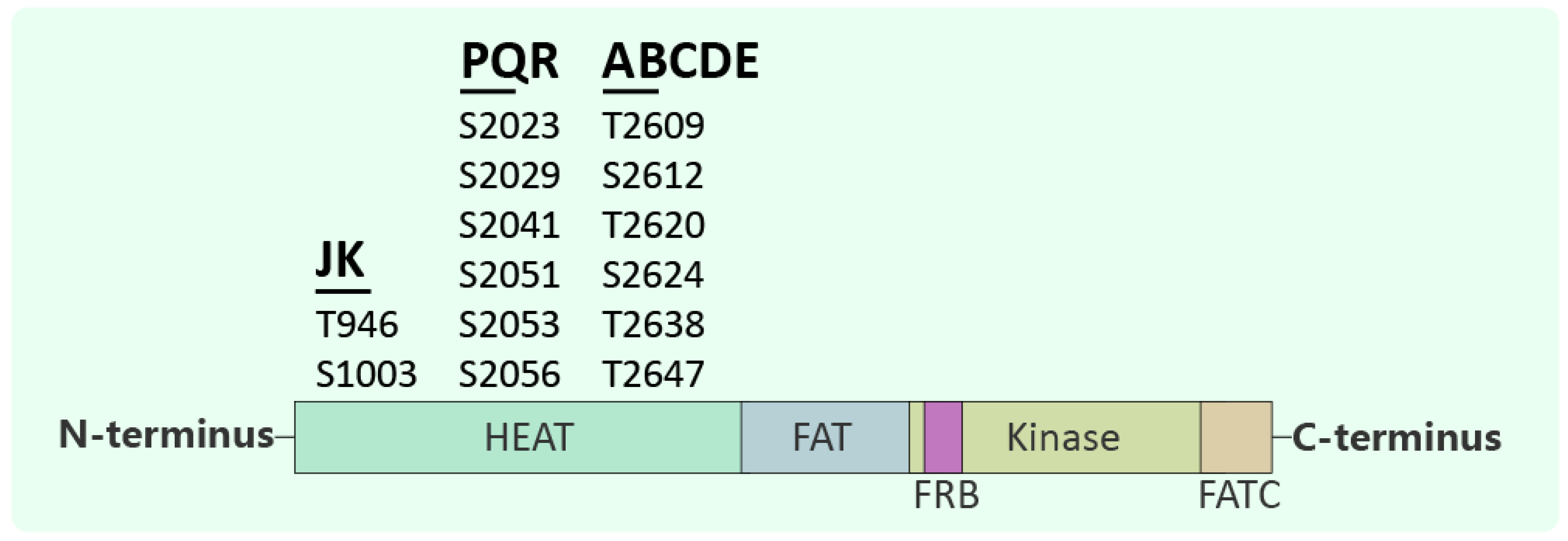
2. The Structure of DNA-PKcs
3. The Function of DNA-PKcs in Tumor Biology
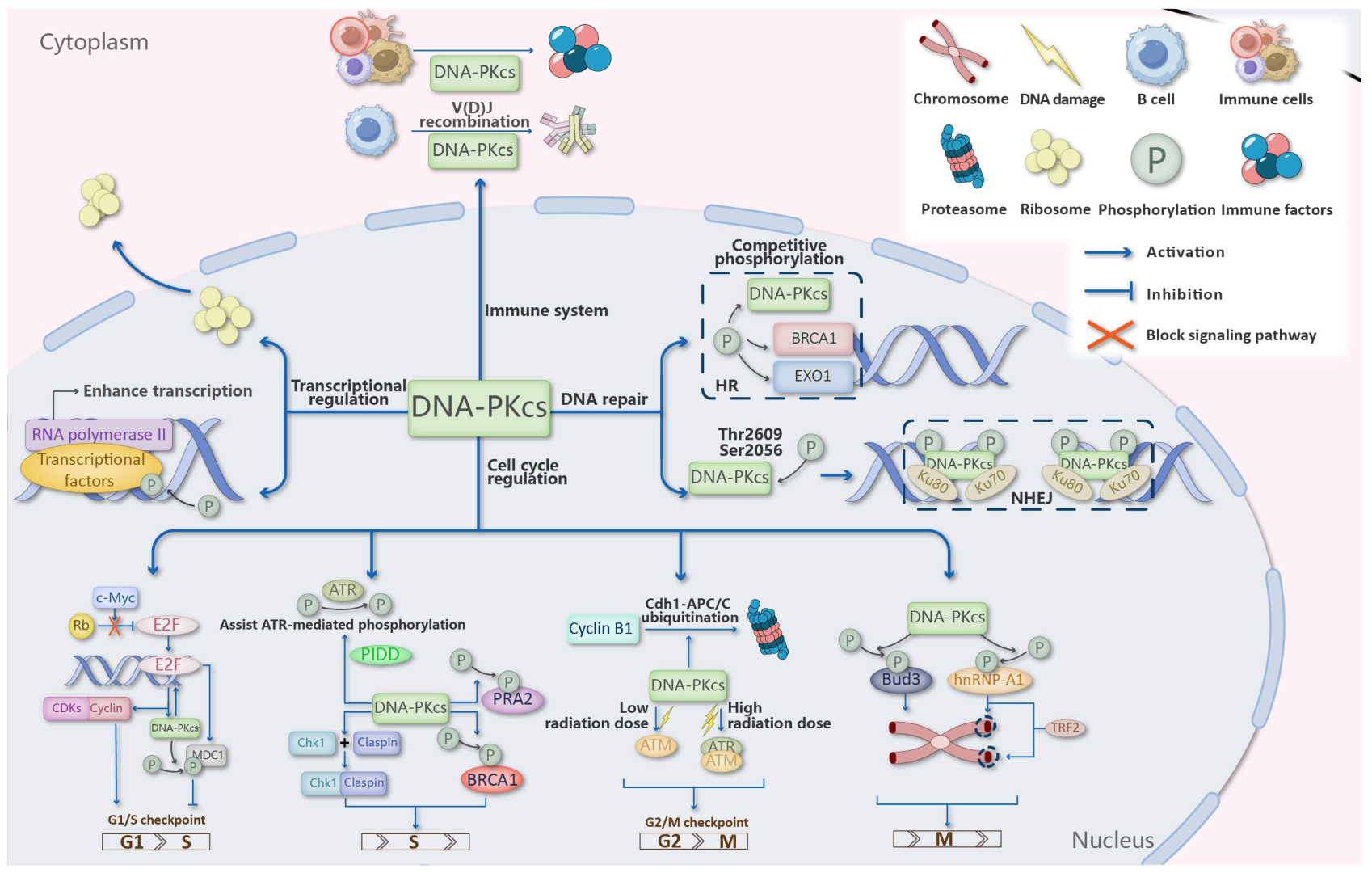
3.1. The Classical Function of DNA-PKcs
3.2. Cell Cycle Regulation by DNA-PKcs
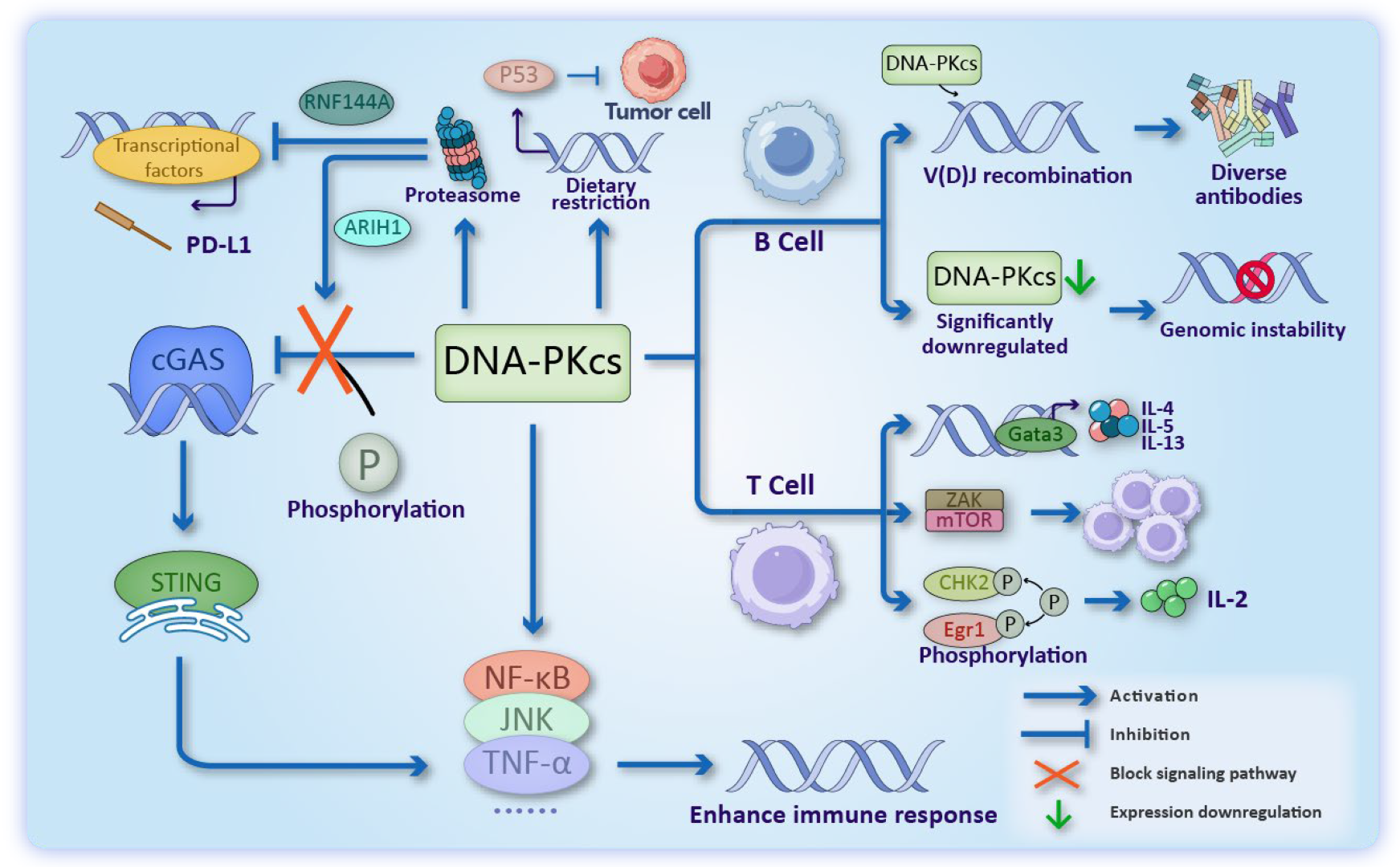
3.3. DNA-PKcs in Tumor Immunogenicity
3.4. Transcriptional Regulation by DNA-PKcs
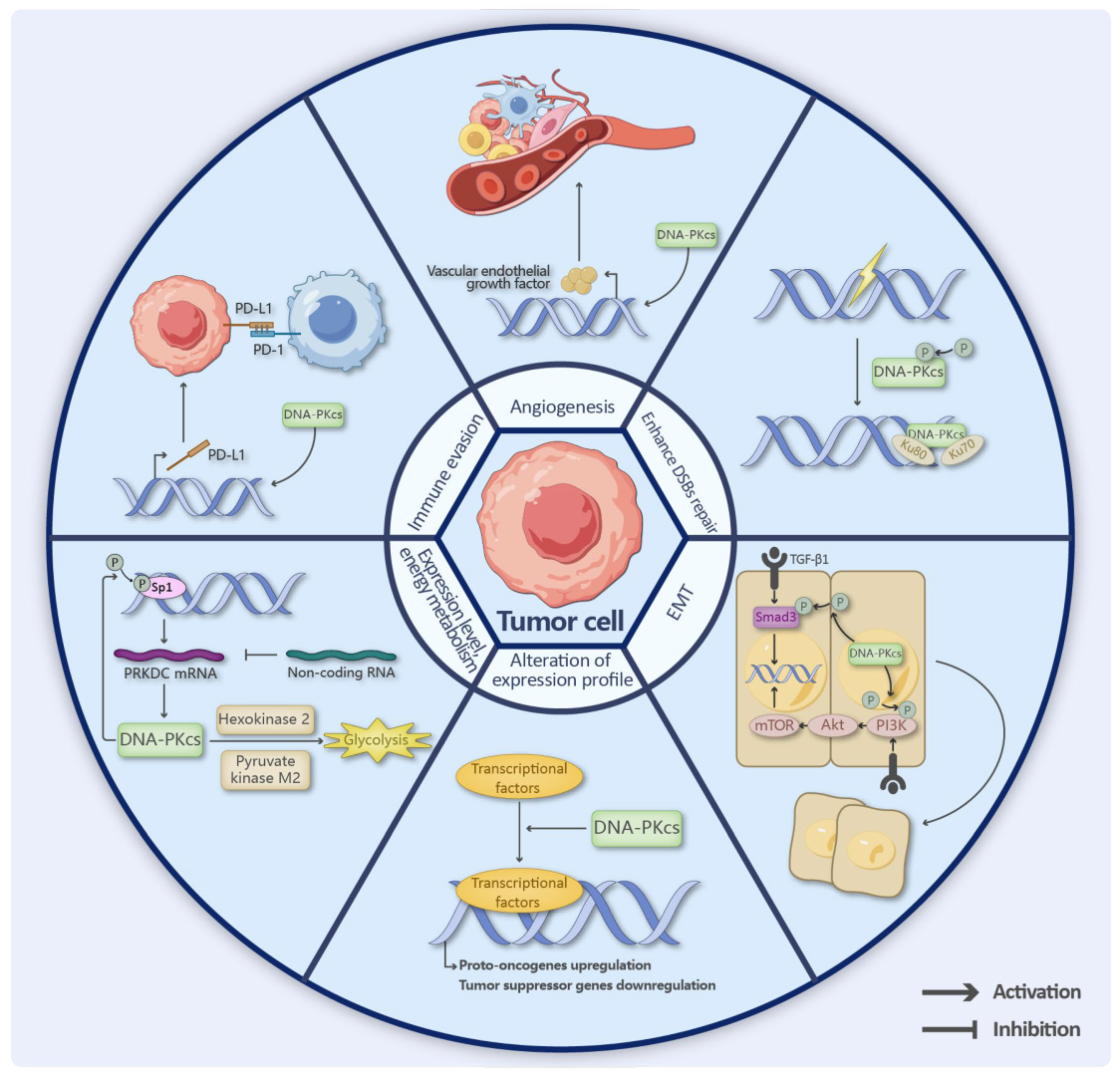
3.5. Elevated DNA-PKcs Levels as a Driver of Tumor Progression
4. Therapeutic Strategies Targeting DNA-PKcs
4.1. Current Landscape of DNA-PKcs Inhibitors
4.1.1. Peposertib
4.1.2. CC-115
4.1.3. XRD-0394
4.1.4. AZD7648
4.1.5. M9831 (VX-984)
4.1.6. AsiDNA
4.2. Combination Therapies Targeting DNA-PKcs (Table 2)
4.2.1. DNA-PKcs Inhibitors and Radiotherapy

| Combination Type | Mechanism | Drugs/Therapies Involved | Research Progress | Key Findings |
|---|---|---|---|---|
| Radiotherapy | Disrupt DNA repair mechanisms to enhance radiosensitivity | Radiotherapy | Preclinical animal studies | Enhances Radiotherapy efficacy; expands radiation-based therapy potential; opens TME-targeted avenues. |
| Regulate the expression of VEGF and HIF-1α to prevent cancer cell metastasis | Radiotherapy | Preclinical animal studies | ||
| PARP inhibitors or topoisomerase I inhibitors enhance radiosensitivity | PARP inhibitors or topoisomerase I inhibitors, Radiotherapy | NCT05002140, Phase I | ||
| Disrupt DNA repair mechanisms to enhance radiosensitivity | Radionuclide therapy | NCT04071236, Phase I, Phase II; NCT04750954, Phase I | ||
| Chemotherapy | Induce DNA replication stress and impair damage repair pathways | Temozolomide | Preclinical animal studies | Multi-targeted; synergistic anti-tumor effects; potential to improve outcomes. |
| Competitive receptor binding blocks oncogenic signaling | Neratinib | |||
| Inhibit androgen receptor signaling in prostate cancer | Enzalutamide | |||
| Weaken DNA repair ability to induce synthetic lethality | PARP inhibitors (Niraparib/Olaparib) | |||
| Immunotherapy | DNA-PKcs overcomes PD-1/PD-L1 resistance by reprogramming TME and regulates PD-L1 expression. | Radionuclide therapy, Avelumab | NCT04071236, Phase I, Phase II | Strong mechanistic basis; synergizes with checkpoint blockade; overcome resistance potentially; potential immunotoxicity. |
| Radiotherapy, Avelumab | NCT04068194, Phase I, Phase II | |||
| Novel DNA-PKcs Inhibitor | Activating DNA-PK/p53/p21 pathway protects normal cells and enhances cancer cell death. Combined with PARP inhibitors, it induces synthetic lethality in cancer cells. | Olaparib | NCT05700669, Phase I, Phase II | Spares normal tissues, promotes their repair; low resistance propensity; synergizes with PARP inhibitors. |
| Monotherapy | NCT03579628, Phase I |
4.2.2. DNA-PKcs Inhibitors and Chemotherapy
4.2.3. DNA-PKcs Inhibitors and Immunotherapy
4.2.4. Novel DNA-PKcs Inhibitors
4.3. Factors Influencing the Efficacy of DNA-PKcs Targeted Therapies
5. Conclusions
Author Contributions
Funding
Conflicts of Interest
References
- Yue, X.; Bai, C.; Xie, D.; Ma, T.; Zhou, P.K. DNA-PKcs: A Multi-Faceted Player in DNA Damage Response. Front. Genet. 2020, 11, 607428. [Google Scholar] [CrossRef]
- Wang, Y.H.; Guo, Z.; An, L.; Zhou, Y.; Xu, H.; Xiong, J.; Liu, Z.Q.; Chen, X.P.; Zhou, H.H.; Li, X.; et al. LINC-PINT impedes DNA repair and enhances radiotherapeutic response by targeting DNA-PKcs in nasopharyngeal cancer. Cell Death Dis. 2021, 12, 454. [Google Scholar] [CrossRef]
- Liu, R.; Yu, X.; Chen, X.; Zhong, H.; Liang, C.; Xu, X.; Xu, W.; Cheng, Y.; Wang, W.; Yu, L.; et al. Individual factors define the overall effects of dietary genistein exposure on breast cancer patients. Nutr. Res. 2019, 67, 1–16. [Google Scholar] [CrossRef]
- Rui, R.; Zhou, L.; He, S. Cancer immunotherapies: Advances and bottlenecks. Front. Immunol. 2023, 14, 1212476. [Google Scholar] [CrossRef]
- Ruiz-Ceamanos, A.; Spence, C.; Navarra, J. Individual Differences in Chemosensory Perception Amongst Cancer Patients Undergoing Chemotherapy: A Narrative Review. Nutr. Cancer 2022, 74, 1927–1941. [Google Scholar] [CrossRef]
- Sancar, A.; Lindsey-Boltz, L.A.; Unsal-Kacmaz, K.; Linn, S. Molecular mechanisms of mammalian DNA repair and the DNA damage checkpoints. Annu. Rev. Biochem. 2004, 73, 39–85. [Google Scholar] [CrossRef]
- Schirrmacher, V. From chemotherapy to biological therapy: A review of novel concepts to reduce the side effects of systemic cancer treatment (Review). Int. J. Oncol. 2019, 54, 407–419. [Google Scholar] [CrossRef]
- Lees-Miller, S.P.; Beattie, T.L.; Tainer, J.A. Noncoding RNA joins Ku and DNA-PKcs for DNA-break resistance in breast cancer. Nat. Struct. Mol. Biol. 2016, 23, 509–510. [Google Scholar] [CrossRef]
- Kidane, D.; Chae, W.J.; Czochor, J.; Eckert, K.A.; Glazer, P.M.; Bothwell, A.L.; Sweasy, J.B. Interplay between DNA repair and inflammation, and the link to cancer. Crit. Rev. Biochem. Mol. Biol. 2014, 49, 116–139. [Google Scholar] [CrossRef]
- Lee, Y.T.; Tan, Y.J.; Oon, C.E. Molecular targeted therapy: Treating cancer with specificity. Eur. J. Pharmacol. 2018, 834, 188–196. [Google Scholar] [CrossRef]
- Dilalla, V.; Chaput, G.; Williams, T.; Sultanem, K. Radiotherapy side effects: Integrating a survivorship clinical lens to better serve patients. Curr. Oncol. 2020, 27, 107–112. [Google Scholar] [CrossRef]
- Dagogo-Jack, I.; Shaw, A.T. Tumour heterogeneity and resistance to cancer therapies. Nat. Rev. Clin. Oncol. 2018, 15, 81–94. [Google Scholar] [CrossRef]
- Chang, H.H.Y.; Pannunzio, N.R.; Adachi, N.; Lieber, M.R. Non-homologous DNA end joining and alternative pathways to double-strand break repair. Nat. Rev. Mol. Cell Biol. 2017, 18, 495–506. [Google Scholar] [CrossRef]
- Falck, J.; Coates, J.; Jackson, S.P. Conserved modes of recruitment of ATM, ATR and DNA-PKcs to sites of DNA damage. Nature 2005, 434, 605–611. [Google Scholar] [CrossRef]
- Douglas, P.; Sapkota, G.P.; Morrice, N.; Yu, Y.; Goodarzi, A.A.; Merkle, D.; Meek, K.; Alessi, D.R.; Lees-Miller, S.P. Identification of in vitro and in vivo phosphorylation sites in the catalytic subunit of the DNA-dependent protein kinase. Biochem. J. 2002, 368, 243–251. [Google Scholar] [CrossRef]
- Sibanda, B.L.; Chirgadze, D.Y.; Blundell, T.L. Crystal structure of DNA-PKcs reveals a large open-ring cradle comprised of HEAT repeats. Nature 2010, 463, 118–121. [Google Scholar] [CrossRef]
- Gupta, S.; Meek, K. The leucine rich region of DNA-PKcs contributes to its innate DNA affinity. Nucleic Acids Res. 2005, 33, 6972–6981. [Google Scholar] [CrossRef]
- Baretic, D.; Maia de Oliveira, T.; Niess, M.; Wan, P.; Pollard, H.; Johnson, C.M.; Truman, C.; McCall, E.; Fisher, D.; Williams, R.; et al. Structural insights into the critical DNA damage sensors DNA-PKcs, ATM and ATR. Prog. Biophys. Mol. Biol. 2019, 147, 4–16. [Google Scholar] [CrossRef]
- Chen, S.; Vogt, A.; Lee, L.; Naila, T.; McKeown, R.; Tomkinson, A.E.; Lees-Miller, S.P.; He, Y. Cryo-EM visualization of DNA-PKcs structural intermediates in NHEJ. Sci. Adv. 2023, 9, eadg2838. [Google Scholar] [CrossRef]
- Sharif, H.; Li, Y.; Dong, Y.; Dong, L.; Wang, W.L.; Mao, Y.; Wu, H. Cryo-EM structure of the DNA-PK holoenzyme. Proc. Natl. Acad. Sci. USA 2017, 114, 7367–7372. [Google Scholar] [CrossRef]
- Jiang, W.; Crowe, J.L.; Liu, X.; Nakajima, S.; Wang, Y.; Li, C.; Lee, B.J.; Dubois, R.L.; Liu, C.; Yu, X.; et al. Differential phosphorylation of DNA-PKcs regulates the interplay between end-processing and end-ligation during nonhomologous end-joining. Mol. Cell 2015, 58, 172–185. [Google Scholar] [CrossRef]
- Liu, L.; Chen, X.; Li, J.; Wang, H.; Buehl, C.J.; Goff, N.J.; Meek, K.; Yang, W.; Gellert, M. Autophosphorylation transforms DNA-PK from protecting to processing DNA ends. Mol. Cell 2022, 82, 177–189.e4. [Google Scholar] [CrossRef] [PubMed]
- Walker, J.R.; Corpina, R.A.; Goldberg, J. Structure of the Ku heterodimer bound to DNA and its implications for double-strand break repair. Nature 2001, 412, 607–614. [Google Scholar] [CrossRef]
- Spagnolo, L.; Rivera-Calzada, A.; Pearl, L.H.; Llorca, O. Three-dimensional structure of the human DNA-PKcs/Ku70/Ku80 complex assembled on DNA and its implications for DNA DSB repair. Mol. Cell 2006, 22, 511–519. [Google Scholar] [CrossRef]
- Lieber, M.R. The mechanism of double-strand DNA break repair by the nonhomologous DNA end-joining pathway. Annu. Rev. Biochem. 2010, 79, 181–211. [Google Scholar] [CrossRef]
- Uematsu, N.; Weterings, E.; Yano, K.; Morotomi-Yano, K.; Jakob, B.; Taucher-Scholz, G.; Mari, P.O.; van Gent, D.C.; Chen, B.P.; Chen, D.J. Autophosphorylation of DNA-PKCS regulates its dynamics at DNA double-strand breaks. J. Cell Biol. 2007, 177, 219–229. [Google Scholar] [CrossRef]
- Dobbs, T.A.; Tainer, J.A.; Lees-Miller, S.P. A structural model for regulation of NHEJ by DNA-PKcs autophosphorylation. DNA Repair. 2010, 9, 1307–1314. [Google Scholar] [CrossRef]
- Reddy, Y.V.; Ding, Q.; Lees-Miller, S.P.; Meek, K.; Ramsden, D.A. Non-homologous end joining requires that the DNA-PK complex undergo an autophosphorylation-dependent rearrangement at DNA ends. J. Biol. Chem. 2004, 279, 39408–39413. [Google Scholar] [CrossRef]
- Lu, H.; Saha, J.; Beckmann, P.J.; Hendrickson, E.A.; Davis, A.J. DNA-PKcs promotes chromatin decondensation to facilitate initiation of the DNA damage response. Nucleic Acids Res. 2019, 47, 9467–9479. [Google Scholar] [CrossRef]
- Rivera-Calzada, A.; Spagnolo, L.; Pearl, L.H.; Llorca, O. Structural model of full-length human Ku70-Ku80 heterodimer and its recognition of DNA and DNA-PKcs. EMBO Rep. 2007, 8, 56–62. [Google Scholar] [CrossRef]
- Goodarzi, A.A.; Yu, Y.; Riballo, E.; Douglas, P.; Walker, S.A.; Ye, R.; Harer, C.; Marchetti, C.; Morrice, N.; Jeggo, P.A.; et al. DNA-PK autophosphorylation facilitates Artemis endonuclease activity. EMBO J. 2006, 25, 3880–3889. [Google Scholar] [CrossRef]
- Schatz, D.G.; Swanson, P.C. V(D)J recombination: Mechanisms of initiation. Annu. Rev. Genet. 2011, 45, 167–202. [Google Scholar] [CrossRef]
- Malu, S.; Malshetty, V.; Francis, D.; Cortes, P. Role of non-homologous end joining in V(D)J recombination. Immunol. Res. 2012, 54, 233–246. [Google Scholar] [CrossRef]
- Ru, H.; Chambers, M.G.; Fu, T.M.; Tong, A.B.; Liao, M.; Wu, H. Molecular Mechanism of V(D)J Recombination from Synaptic RAG1-RAG2 Complex Structures. Cell 2015, 163, 1138–1152. [Google Scholar] [CrossRef]
- Malu, S.; De Ioannes, P.; Kozlov, M.; Greene, M.; Francis, D.; Hanna, M.; Pena, J.; Escalante, C.R.; Kurosawa, A.; Erdjument-Bromage, H.; et al. Artemis C-terminal region facilitates V(D)J recombination through its interactions with DNA Ligase IV and DNA-PKcs. J. Exp. Med. 2012, 209, 955–963. [Google Scholar] [CrossRef]
- Vu, D.D.; Bonucci, A.; Breniere, M.; Cisneros-Aguirre, M.; Pelupessy, P.; Wang, Z.; Carlier, L.; Bouvignies, G.; Cortes, P.; Aggarwal, A.K.; et al. Multivalent interactions of the disordered regions of XLF and XRCC4 foster robust cellular NHEJ and drive the formation of ligation-boosting condensates in vitro. Nat. Struct. Mol. Biol. 2024, 31, 1732–1744. [Google Scholar] [CrossRef]
- Xie, Y.; Liu, Y.K.; Guo, Z.P.; Guan, H.; Liu, X.D.; Xie, D.F.; Jiang, Y.G.; Ma, T.; Zhou, P.K. RBX1 prompts degradation of EXO1 to limit the homologous recombination pathway of DNA double-strand break repair in G1 phase. Cell Death Differ. 2020, 27, 1383–1397. [Google Scholar] [CrossRef] [PubMed]
- Liaw, H.; Lee, D.; Myung, K. DNA-PK-dependent RPA2 hyperphosphorylation facilitates DNA repair and suppresses sister chromatid exchange. PLoS ONE 2011, 6, e21424. [Google Scholar] [CrossRef]
- Lu, H.; Guan, J.; Wang, S.Y.; Li, G.M.; Bohr, V.A.; Davis, A.J. DNA-PKcs-dependent phosphorylation of RECQL4 promotes NHEJ by stabilizing the NHEJ machinery at DNA double-strand breaks. Nucleic Acids Res. 2022, 50, 5635–5651. [Google Scholar] [CrossRef]
- Justice, J.L.; Reed, T.J.; Phelan, B.; Greco, T.M.; Hutton, J.E.; Cristea, I.M. DNA-PK and ATM drive phosphorylation signatures that antagonistically regulate cytokine responses to herpesvirus infection or DNA damage. Cell Syst. 2024, 15, 339–361.e8. [Google Scholar] [CrossRef]
- Hammarsten, O.; DeFazio, L.G.; Chu, G. Activation of DNA-dependent protein kinase by single-stranded DNA ends. J. Biol. Chem. 2000, 275, 1541–1550. [Google Scholar] [CrossRef]
- Zhou, Y.; Lee, J.H.; Jiang, W.; Crowe, J.L.; Zha, S.; Paull, T.T. Regulation of the DNA Damage Response by DNA-PKcs Inhibitory Phosphorylation of ATM. Mol. Cell 2017, 65, 91–104. [Google Scholar] [CrossRef] [PubMed]
- Lou, Z.; Chen, B.P.; Asaithamby, A.; Minter-Dykhouse, K.; Chen, D.J.; Chen, J. MDC1 regulates DNA-PK autophosphorylation in response to DNA damage. J. Biol. Chem. 2004, 279, 46359–46362. [Google Scholar] [CrossRef]
- Shang, Z.F.; Tan, W.; Liu, X.D.; Yu, L.; Li, B.; Li, M.; Song, M.; Wang, Y.; Xiao, B.B.; Zhong, C.G.; et al. DNA-PKcs Negatively Regulates Cyclin B1 Protein Stability through Facilitating Its Ubiquitination Mediated by Cdh1-APC/C Pathway. Int. J. Biol. Sci. 2015, 11, 1026–1035. [Google Scholar] [CrossRef]
- Wang, C.Y.; Huang, E.Y.; Huang, S.C.; Chung, B.C. DNA-PK/Chk2 induces centrosome amplification during prolonged replication stress. Oncogene 2015, 34, 1263–1269. [Google Scholar] [CrossRef]
- An, J.; Yang, D.Y.; Xu, Q.Z.; Zhang, S.M.; Huo, Y.Y.; Shang, Z.F.; Wang, Y.; Wu, D.C.; Zhou, P.K. DNA-dependent protein kinase catalytic subunit modulates the stability of c-Myc oncoprotein. Mol. Cancer 2008, 7, 32. [Google Scholar] [CrossRef]
- Santoni-Rugiu, E.; Falck, J.; Mailand, N.; Bartek, J.; Lukas, J. Involvement of Myc activity in a G(1)/S-promoting mechanism parallel to the pRb/E2F pathway. Mol. Cell Biol. 2000, 20, 3497–3509. [Google Scholar] [CrossRef]
- Knudsen, K.E.; Diehl, J.A.; Haiman, C.A.; Knudsen, E.S. Cyclin D1: Polymorphism, aberrant splicing and cancer risk. Oncogene 2006, 25, 1620–1628. [Google Scholar] [CrossRef]
- Rubin, S.M.; Sage, J.; Skotheim, J.M. Integrating Old and New Paradigms of G1/S Control. Mol. Cell 2020, 80, 183–192. [Google Scholar] [CrossRef]
- Sakata, K.; Yamamoto, H.; Matsumoto, Y.; Someya, M.; Hareyama, M. cDNA analysis of gene expression associated with DNA-dependent protein kinase activity. Int. J. Oncol. 2007, 30, 413–420. [Google Scholar]
- Davis, A.J.; Chi, L.; So, S.; Lee, K.J.; Mori, E.; Fattah, K.; Yang, J.; Chen, D.J. BRCA1 modulates the autophosphorylation status of DNA-PKcs in S phase of the cell cycle. Nucleic Acids Res. 2014, 42, 11487–11501. [Google Scholar] [CrossRef]
- Lin, Y.F.; Shih, H.Y.; Shang, Z.; Matsunaga, S.; Chen, B.P. DNA-PKcs is required to maintain stability of Chk1 and Claspin for optimal replication stress response. Nucleic Acids Res. 2014, 42, 4463–4473. [Google Scholar] [CrossRef]
- Mladenov, E.; Fan, X.; Dueva, R.; Soni, A.; Iliakis, G. Radiation-dose-dependent functional synergisms between ATM, ATR and DNA-PKcs in checkpoint control and resection in G(2)-phase. Sci. Rep. 2019, 9, 8255. [Google Scholar] [CrossRef]
- Dibitetto, D.; Marshall, S.; Sanchi, A.; Liptay, M.; Badar, J.; Lopes, M.; Rottenberg, S.; Smolka, M.B. DNA-PKcs promotes fork reversal and chemoresistance. Mol. Cell 2022, 82, 3932–3942.e6. [Google Scholar] [CrossRef]
- Lin, Y.F.; Shih, H.Y.; Shang, Z.F.; Kuo, C.T.; Guo, J.; Du, C.; Lee, H.; Chen, B.P.C. PIDD mediates the association of DNA-PKcs and ATR at stalled replication forks to facilitate the ATR signaling pathway. Nucleic Acids Res. 2018, 46, 1847–1859. [Google Scholar] [CrossRef]
- Wang, J.; Sadeghi, C.A.; Frock, R.L. DNA-PKcs suppresses illegitimate chromosome rearrangements. Nucleic Acids Res. 2024, 52, 5048–5066. [Google Scholar] [CrossRef]
- Xiao, M.; Zhang, S.; Liu, Z.; Mo, Y.; Wang, H.; Zhao, X.; Yang, X.; Boohaker, R.J.; Chen, Y.; Han, Y.; et al. Dual-functional significance of ATM-mediated phosphorylation of spindle assembly checkpoint component Bub3 in mitosis and the DNA damage response. J. Biol. Chem. 2022, 298, 101632. [Google Scholar] [CrossRef]
- Lu, W.; Zhang, Y.; Liu, D.; Songyang, Z.; Wan, M. Telomeres-structure, function, and regulation. Exp. Cell Res. 2013, 319, 133–141. [Google Scholar] [CrossRef]
- Espejel, S.; Franco, S.; Sgura, A.; Gae, D.; Bailey, S.M.; Taccioli, G.E.; Blasco, M.A. Functional interaction between DNA-PKcs and telomerase in telomere length maintenance. EMBO J. 2002, 21, 6275–6287. [Google Scholar] [CrossRef]
- Sui, J.; Lin, Y.F.; Xu, K.; Lee, K.J.; Wang, D.; Chen, B.P. DNA-PKcs phosphorylates hnRNP-A1 to facilitate the RPA-to-POT1 switch and telomere capping after replication. Nucleic Acids Res. 2015, 43, 5971–5983. [Google Scholar] [CrossRef]
- Lee, H.S.; Choe, G.; Park, K.U.; Park, D.J.; Yang, H.K.; Lee, B.L.; Kim, W.H. Altered expression of DNA-dependent protein kinase catalytic subunit (DNA-PKcs) during gastric carcinogenesis and its clinical implications on gastric cancer. Int. J. Oncol. 2007, 31, 859–866. [Google Scholar] [CrossRef]
- Woodbine, L.; Neal, J.A.; Sasi, N.K.; Shimada, M.; Deem, K.; Coleman, H.; Dobyns, W.B.; Ogi, T.; Meek, K.; Davies, E.G.; et al. PRKDC mutations in a SCID patient with profound neurological abnormalities. J. Clin. Investig. 2013, 123, 2969–2980. [Google Scholar] [CrossRef]
- Okayasu, R.; Suetomi, K.; Yu, Y.; Silver, A.; Bedford, J.S.; Cox, R.; Ullrich, R.L. A deficiency in DNA repair and DNA-PKcs expression in the radiosensitive BALB/c mouse. Cancer Res. 2000, 60, 4342–4345. [Google Scholar]
- Yang, H.; Yao, F.; Marti, T.M.; Schmid, R.A.; Peng, R.W. Beyond DNA Repair: DNA-PKcs in Tumor Metastasis, Metabolism and Immunity. Cancers 2020, 12, 3389. [Google Scholar] [CrossRef]
- Ghonim, M.A.; Pyakurel, K.; Ju, J.; Rodriguez, P.C.; Lammi, M.R.; Davis, C.; Abughazleh, M.Q.; Mansy, M.S.; Naura, A.S.; Boulares, A.H. DNA-dependent protein kinase inhibition blocks asthma in mice and modulates human endothelial and CD4(+) T-cell function without causing severe combined immunodeficiency. J. Allergy Clin. Immunol. 2015, 135, 425–440. [Google Scholar] [CrossRef]
- Wang, Y.; Fu, Z.; Li, X.; Liang, Y.; Pei, S.; Hao, S.; Zhu, Q.; Yu, T.; Pei, Y.; Yuan, J.; et al. Cytoplasmic DNA sensing by KU complex in aged CD4(+) T cell potentiates T cell activation and aging-related autoimmune inflammation. Immunity 2021, 54, 632–647.e639. [Google Scholar] [CrossRef]
- Kim Wiese, A.; Schluterman Burdine, M.; Turnage, R.H.; Tackett, A.J.; Burdine, L.J. DNA-PKcs controls calcineurin mediated IL-2 production in T lymphocytes. PLoS ONE 2017, 12, e0181608. [Google Scholar] [CrossRef]
- Waldrip, Z.J.; Burdine, L.; Harrison, D.K.; Azevedo-Pouly, A.C.; Storey, A.J.; Moffett, O.G.; Mackintosh, S.G.; Burdine, M.S. DNA-PKcs kinase activity stabilizes the transcription factor Egr1 in activated immune cells. J. Biol. Chem. 2021, 297, 101209. [Google Scholar] [CrossRef]
- Rooney, S.; Alt, F.W.; Sekiguchi, J.; Manis, J.P. Artemis-independent functions of DNA-dependent protein kinase in Ig heavy chain class switch recombination and development. Proc. Natl. Acad. Sci. USA 2005, 102, 2471–2475. [Google Scholar] [CrossRef]
- Bjorkman, A.; Du, L.; Felgentreff, K.; Rosner, C.; Pankaj Kamdar, R.; Kokaraki, G.; Matsumoto, Y.; Davies, E.G.; van der Burg, M.; Notarangelo, L.D.; et al. DNA-PKcs Is Involved in Ig Class Switch Recombination in Human B Cells. J. Immunol. 2015, 195, 5608–5615. [Google Scholar] [CrossRef]
- Crowe, J.L.; Shao, Z.; Wang, X.S.; Wei, P.C.; Jiang, W.; Lee, B.J.; Estes, V.M.; Alt, F.W.; Zha, S. Kinase-dependent structural role of DNA-PKcs during immunoglobulin class switch recombination. Proc. Natl. Acad. Sci. USA 2018, 115, 8615–8620. [Google Scholar] [CrossRef]
- Crowe, J.L.; Wang, X.S.; Shao, Z.; Lee, B.J.; Estes, V.M.; Zha, S. DNA-PKcs phosphorylation at the T2609 cluster alters the repair pathway choice during immunoglobulin class switch recombination. Proc. Natl. Acad. Sci. USA 2020, 117, 22953–22961. [Google Scholar] [CrossRef]
- Decout, A.; Katz, J.D.; Venkatraman, S.; Ablasser, A. The cGAS-STING pathway as a therapeutic target in inflammatory diseases. Nat. Rev. Immunol. 2021, 21, 548–569. [Google Scholar] [CrossRef]
- Chen, Q.; Sun, L.; Chen, Z.J. Regulation and function of the cGAS-STING pathway of cytosolic DNA sensing. Nat. Immunol. 2016, 17, 1142–1149. [Google Scholar] [CrossRef] [PubMed]
- Wang, F.; Zhao, M.; Chang, B.; Zhou, Y.; Wu, X.; Ma, M.; Liu, S.; Cao, Y.; Zheng, M.; Dang, Y.; et al. Cytoplasmic PARP1 links the genome instability to the inhibition of antiviral immunity through PARylating cGAS. Mol. Cell 2022, 82, 2032–2049.e2037. [Google Scholar] [CrossRef]
- Liu, X.; Cen, X.; Wu, R.; Chen, Z.; Xie, Y.; Wang, F.; Shan, B.; Zeng, L.; Zhou, J.; Xie, B.; et al. ARIH1 activates STING-mediated T-cell activation and sensitizes tumors to immune checkpoint blockade. Nat. Commun. 2023, 14, 4066. [Google Scholar] [CrossRef]
- Shao, L.; Goronzy, J.J.; Weyand, C.M. DNA-dependent protein kinase catalytic subunit mediates T-cell loss in rheumatoid arthritis. EMBO Mol. Med. 2010, 2, 415–427. [Google Scholar] [CrossRef]
- Zou, R.; Shi, W.; Chang, X.; Zhang, M.; Tan, S.; Li, R.; Zhou, H.; Li, Y.; Wang, G.; Lv, W.; et al. The DNA-dependent protein kinase catalytic subunit exacerbates endotoxemia-induced myocardial microvascular injury by disrupting the MOTS-c/JNK pathway and inducing profilin-mediated lamellipodia degradation. Theranostics 2024, 14, 1561–1582. [Google Scholar] [CrossRef]
- Fritz, G.; Kaina, B. Late activation of stress kinases (SAPK/JNK) by genotoxins requires the DNA repair proteins DNA-PKcs and CSB. Mol. Biol. Cell 2006, 17, 851–861. [Google Scholar] [CrossRef]
- Ghonim, M.A.; Ju, J.; Pyakurel, K.; Ibba, S.V.; Abouzeid, M.M.; Rady, H.F.; Matsuyama, S.; Del Valle, L.; Boulares, A.H. Unconventional activation of PRKDC by TNF-alpha: Deciphering its crucial role in Th1-mediated inflammation beyond DNA repair as part of the DNA-PK complex. J. Inflamm. 2024, 21, 14. [Google Scholar] [CrossRef]
- Ma, D.; Chen, X.; Zhang, P.Y.; Zhang, H.; Wei, L.J.; Hu, S.; Tang, J.Z.; Zhou, M.T.; Xie, C.; Ou, R.; et al. Upregulation of the ALDOA/DNA-PK/p53 pathway by dietary restriction suppresses tumor growth. Oncogene 2018, 37, 1041–1048. [Google Scholar] [CrossRef]
- Gladdy, R.A.; Nutter, L.M.; Kunath, T.; Danska, J.S.; Guidos, C.J. p53-Independent apoptosis disrupts early organogenesis in embryos lacking both ataxia-telangiectasia mutated and Prkdc. Mol. Cancer Res. 2006, 4, 311–318. [Google Scholar] [CrossRef]
- Fedier, A.; Moawad, A.; Haller, U.; Fink, D. p53-deficient cells display increased sensitivity to anthracyclines after loss of the catalytic subunit of the DNA-dependent protein kinase. Int. J. Oncol. 2003, 23, 1431–1437. [Google Scholar] [CrossRef]
- Butte, M.J.; Keir, M.E.; Phamduy, T.B.; Sharpe, A.H.; Freeman, G.J. Programmed death-1 ligand 1 interacts specifically with the B7-1 costimulatory molecule to inhibit T cell responses. Immunity 2007, 27, 111–122. [Google Scholar] [CrossRef]
- Tu, X.; Qin, B.; Zhang, Y.; Zhang, C.; Kahila, M.; Nowsheen, S.; Yin, P.; Yuan, J.; Pei, H.; Li, H.; et al. PD-L1 (B7-H1) Competes with the RNA Exosome to Regulate the DNA Damage Response and Can Be Targeted to Sensitize to Radiation or Chemotherapy. Mol. Cell 2019, 74, 1215–1226.e1214. [Google Scholar] [CrossRef]
- Zhang, Y.; Shen, G.; Meng, T.; Lv, Z.; Li, X.; Li, J.; Li, K. Eicosapentaenoic acid enhances the sensitivity of osteosarcoma to cisplatin by inducing ferroptosis through the DNA-PKcs/AKT/NRF2 pathway and reducing PD-L1 expression to attenuate immune evasion. Int. Immunopharmacol. 2023, 125, 111181. [Google Scholar] [CrossRef]
- Ho, S.R.; Lee, Y.C.; Ittmann, M.M.; Lin, F.T.; Chan, K.S.; Lin, W.C. RNF144A deficiency promotes PD-L1 protein stabilization and carcinogen-induced bladder tumorigenesis. Cancer Lett. 2021, 520, 344–360. [Google Scholar] [CrossRef]
- Miao, Z.; Li, J.; Wang, Y.; Shi, M.; Gu, X.; Zhang, X.; Wei, F.; Tang, X.; Zheng, L.; Xing, Y. Hsa_circ_0136666 stimulates gastric cancer progression and tumor immune escape by regulating the miR-375/PRKDC Axis and PD-L1 phosphorylation. Mol. Cancer 2023, 22, 205. [Google Scholar] [CrossRef]
- Ho, S.R.; Mahanic, C.S.; Lee, Y.J.; Lin, W.C. RNF144A, an E3 ubiquitin ligase for DNA-PKcs, promotes apoptosis during DNA damage. Proc. Natl. Acad. Sci. USA 2014, 111, E2646–E2655. [Google Scholar] [CrossRef]
- Sheppard, H.M.; Liu, X. Transcription by RNA polymerase II in DNA-PK deficient scid mouse cells. Biochim. Biophys. Acta 2000, 1493, 41–47. [Google Scholar] [CrossRef]
- Koh, M.Y.; Lemos, R., Jr.; Liu, X.; Powis, G. The hypoxia-associated factor switches cells from HIF-1alpha- to HIF-2alpha-dependent signaling promoting stem cell characteristics, aggressive tumor growth and invasion. Cancer Res. 2011, 71, 4015–4027. [Google Scholar] [CrossRef]
- Vanichapol, T.; Leelawat, K.; Hongeng, S. Hypoxia enhances cholangiocarcinoma invasion through activation of hepatocyte growth factor receptor and the extracellular signal-regulated kinase signaling pathway. Mol. Med. Rep. 2015, 12, 3265–3272. [Google Scholar] [CrossRef] [PubMed]
- Cowman, S.J.; Koh, M.Y. Revisiting the HIF switch in the tumor and its immune microenvironment. Trends Cancer 2022, 8, 28–42. [Google Scholar] [CrossRef]
- Lee, S.H.; Golinska, M.; Griffiths, J.R. HIF-1-Independent Mechanisms Regulating Metabolic Adaptation in Hypoxic Cancer Cells. Cells 2021, 10, 2371. [Google Scholar] [CrossRef]
- Yang, Y.; Lu, H.; Chen, C.; Lyu, Y.; Cole, R.N.; Semenza, G.L. HIF-1 Interacts with TRIM28 and DNA-PK to release paused RNA polymerase II and activate target gene transcription in response to hypoxia. Nat. Commun. 2022, 13, 316. [Google Scholar] [CrossRef]
- Li, P.; Gai, X.; Li, Q.; Yang, Q.; Yu, X. DNA-PK participates in pre-rRNA biogenesis independent of DNA double-strand break repair. Nucleic Acids Res. 2024, 52, 6360–6375. [Google Scholar] [CrossRef]
- Zhang, S.; Schlott, B.; Gorlach, M.; Grosse, F. DNA-dependent protein kinase (DNA-PK) phosphorylates nuclear DNA helicase II/RNA helicase A and hnRNP proteins in an RNA-dependent manner. Nucleic Acids Res. 2004, 32, 1–10. [Google Scholar] [CrossRef]
- Wong, R.H.; Chang, I.; Hudak, C.S.; Hyun, S.; Kwan, H.Y.; Sul, H.S. A role of DNA-PK for the metabolic gene regulation in response to insulin. Cell 2009, 136, 1056–1072. [Google Scholar] [CrossRef]
- Nock, A.; Ascano, J.M.; Jones, T.; Barrero, M.J.; Sugiyama, N.; Tomita, M.; Ishihama, Y.; Malik, S. Identification of DNA-dependent protein kinase as a cofactor for the forkhead transcription factor FoxA2. J. Biol. Chem. 2009, 284, 19915–19926. [Google Scholar] [CrossRef]
- Hasegawa, Y.; Asada, S. DNA-dependent protein kinase catalytic subunit binds to the transactivation domain 1 of NF-kappaB p65. Biochem. Biophys. Rep. 2023, 35, 101538. [Google Scholar] [CrossRef]
- Wei, S.J.; Yang, I.H.; Mohiuddin, I.S.; Kshirsagar, G.J.; Nguyen, T.H.; Trasti, S.; Maurer, B.J.; Kang, M.H. DNA-PKcs as an upstream mediator of OCT4-induced MYC activation in small cell lung cancer. Biochim. Biophys. Acta Gene Regul. Mech. 2023, 1866, 194939. [Google Scholar] [CrossRef]
- Hosoi, Y.; Watanabe, T.; Nakagawa, K.; Matsumoto, Y.; Enomoto, A.; Morita, A.; Nagawa, H.; Suzuki, N. Up-regulation of DNA-dependent protein kinase activity and Sp1 in colorectal cancer. Int. J. Oncol. 2004, 25, 461–468. [Google Scholar] [CrossRef] [PubMed]
- An, J.; Xu, Q.Z.; Sui, J.L.; Bai, B.; Zhou, P.K. Silencing of DNA-PKcs alters the transcriptional profile of certain signal transduction genes related to proliferation and differentiation in HeLa cells. Int. J. Mol. Med. 2005, 16, 455–462. [Google Scholar] [CrossRef]
- Wang, S.; Zhu, H.; Li, R.; Mui, D.; Toan, S.; Chang, X.; Zhou, H. DNA-PKcs interacts with and phosphorylates Fis1 to induce mitochondrial fragmentation in tubular cells during acute kidney injury. Sci. Signal. 2022, 15, eabh1121. [Google Scholar] [CrossRef]
- Mollinari, C.; Cardinale, A.; Lupacchini, L.; Martire, A.; Chiodi, V.; Martinelli, A.; Rinaldi, A.M.; Fini, M.; Pazzaglia, S.; Domenici, M.R.; et al. The DNA repair protein DNA-PKcs modulates synaptic plasticity via PSD-95 phosphorylation and stability. EMBO Rep. 2024, 25, 3707–3737. [Google Scholar] [CrossRef]
- Du, Y.; Zhu, P.; Li, Y.; Yu, J.; Xia, T.; Chang, X.; Zhu, H.; Li, R.; He, Q. DNA-PKcs Phosphorylates Cofilin2 to Induce Endothelial Dysfunction and Microcirculatory Disorder in Endotoxemic Cardiomyopathy. Research 2024, 7, 0331. [Google Scholar] [CrossRef]
- Adamson, B.; Brittain, N.; Walker, L.; Duncan, R.; Luzzi, S.; Rescigno, P.; Smith, G.; McGill, S.; Burchmore, R.J.; Willmore, E.; et al. The catalytic subunit of DNA-PK regulates transcription and splicing of AR in advanced prostate cancer. J. Clin. Investig. 2023, 133, e169200. [Google Scholar] [CrossRef]
- Liu, L.; Deng, Y.; Zheng, Z.; Deng, Z.; Zhang, J.; Li, J.; Liang, M.; Zhou, X.; Tan, W.; Yang, H.; et al. Hsp90 Inhibitor STA9090 Sensitizes Hepatocellular Carcinoma to Hyperthermia-Induced DNA Damage by Suppressing DNA-PKcs Protein Stability and mRNA Transcription. Mol. Cancer Ther. 2021, 20, 1880–1892. [Google Scholar] [CrossRef]
- Hashimoto, T.; Urushihara, Y.; Murata, Y.; Fujishima, Y.; Hosoi, Y. AMPK increases expression of ATM through transcriptional factor Sp1 and induces radioresistance under severe hypoxia in glioblastoma cell lines. Biochem. Biophys. Res. Commun. 2022, 590, 82–88. [Google Scholar] [CrossRef]
- Hu, H.; Gu, Y.; Qian, Y.; Hu, B.; Zhu, C.; Wang, G.; Li, J. DNA-PKcs is important for Akt activation and gemcitabine resistance in PANC-1 pancreatic cancer cells. Biochem. Biophys. Res. Commun. 2014, 452, 106–111. [Google Scholar] [CrossRef]
- Tomar, M.S.; Kumar, A.; Srivastava, C.; Shrivastava, A. Elucidating the mechanisms of Temozolomide resistance in gliomas and the strategies to overcome the resistance. Biochim. Biophys. Acta Rev. Cancer 2021, 1876, 188616. [Google Scholar] [CrossRef]
- Zhou, Y.; Liu, F.; Xu, Q.; Yang, B.; Li, X.; Jiang, S.; Hu, L.; Zhang, X.; Zhu, L.; Li, Q.; et al. Inhibiting Importin 4-mediated nuclear import of CEBPD enhances chemosensitivity by repression of PRKDC-driven DNA damage repair in cervical cancer. Oncogene 2020, 39, 5633–5648. [Google Scholar] [CrossRef]
- Yan, D.; Ng, W.L.; Zhang, X.; Wang, P.; Zhang, Z.; Mo, Y.Y.; Mao, H.; Hao, C.; Olson, J.J.; Curran, W.J.; et al. Targeting DNA-PKcs and ATM with miR-101 sensitizes tumors to radiation. PLoS ONE 2010, 5, e11397. [Google Scholar] [CrossRef]
- Guo, Z.; Wang, Y.H.; Xu, H.; Yuan, C.S.; Zhou, H.H.; Huang, W.H.; Wang, H.; Zhang, W. LncRNA linc00312 suppresses radiotherapy resistance by targeting DNA-PKcs and impairing DNA damage repair in nasopharyngeal carcinoma. Cell Death Dis. 2021, 12, 69. [Google Scholar] [CrossRef]
- Bergstrand, S.; O’Brien, E.M.; Coucoravas, C.; Hrossova, D.; Peirasmaki, D.; Schmidli, S.; Dhanjal, S.; Pederiva, C.; Siggens, L.; Mortusewicz, O.; et al. Small Cajal body-associated RNA 2 (scaRNA2) regulates DNA repair pathway choice by inhibiting DNA-PK. Nat. Commun. 2022, 13, 1015. [Google Scholar] [CrossRef]
- Zhang, Y.; He, Q.; Hu, Z.; Feng, Y.; Fan, L.; Tang, Z.; Yuan, J.; Shan, W.; Li, C.; Hu, X.; et al. Long noncoding RNA LINP1 regulates repair of DNA double-strand breaks in triple-negative breast cancer. Nat. Struct. Mol. Biol. 2016, 23, 522–530. [Google Scholar] [CrossRef]
- Chen, H.; Pei, L.; Xie, P.; Guo, G. Circ-PRKDC Contributes to 5-Fluorouracil Resistance of Colorectal Cancer Cells by Regulating miR-375/FOXM1 Axis and Wnt/beta-Catenin Pathway. OncoTargets Ther. 2020, 13, 5939–5953. [Google Scholar] [CrossRef]
- Wang, G.; Li, Y.; Zhu, H.; Huo, G.; Bai, J.; Gao, Z. Circ-PRKDC Facilitates the Progression of Colorectal Cancer Through miR-198/DDR1 Regulatory Axis. Cancer Manag. Res. 2020, 12, 12853–12865. [Google Scholar] [CrossRef]
- Iliakis, G.E. New Players in the Regulation of DNA-PK Activity: Survivin Joins the Crowd. Cancer Res. 2021, 81, 2270–2271. [Google Scholar] [CrossRef]
- Gullulu, O.; Hehlgans, S.; Mayer, B.E.; Gossner, I.; Petraki, C.; Hoffmann, M.; Dombrowsky, M.J.; Kunzmann, P.; Hamacher, K.; Strebhardt, K.; et al. A Spatial and Functional Interaction of a Heterotetramer Survivin-DNA-PKcs Complex in DNA Damage Response. Cancer Res. 2021, 81, 2304–2317. [Google Scholar] [CrossRef]
- Lee, K.J.; Lin, Y.F.; Chou, H.Y.; Yajima, H.; Fattah, K.R.; Lee, S.C.; Chen, B.P. Involvement of DNA-dependent protein kinase in normal cell cycle progression through mitosis. J. Biol. Chem. 2011, 286, 12796–12802. [Google Scholar] [CrossRef]
- Chen, B.P.; Uematsu, N.; Kobayashi, J.; Lerenthal, Y.; Krempler, A.; Yajima, H.; Lobrich, M.; Shiloh, Y.; Chen, D.J. Ataxia telangiectasia mutated (ATM) is essential for DNA-PKcs phosphorylations at the Thr-2609 cluster upon DNA double strand break. J. Biol. Chem. 2007, 282, 6582–6587. [Google Scholar] [CrossRef]
- Dylgjeri, E.; Kothari, V.; Shafi, A.A.; Semenova, G.; Gallagher, P.T.; Guan, Y.F.; Pang, A.; Goodwin, J.F.; Irani, S.; McCann, J.J.; et al. A Novel Role for DNA-PK in Metabolism by Regulating Glycolysis in Castration-Resistant Prostate Cancer. Clin. Cancer Res. 2022, 28, 1446–1459. [Google Scholar] [CrossRef]
- Li, C.; Liu, X.; Liu, Y.; Liu, X.; Wang, R.; Liao, J.; Wu, S.; Fan, J.; Peng, Z.; Li, B.; et al. Keratin 80 promotes migration and invasion of colorectal carcinoma by interacting with PRKDC via activating the AKT pathway. Cell Death Dis. 2018, 9, 1009. [Google Scholar] [CrossRef] [PubMed]
- Zhang, H.; Ma, R.R.; Zhang, G.; Dong, Y.; Duan, M.; Sun, Y.; Tian, Y.; Gao, J.W.; Chen, X.; Liu, H.T.; et al. Long noncoding RNA lnc-LEMGC combines with DNA-PKcs to suppress gastric cancer metastasis. Cancer Lett. 2022, 524, 82–90. [Google Scholar] [CrossRef]
- Pan, Y.; Zhu, Q.; Hong, T.; Cheng, J.; Tang, X. Targeting PRKDC activates the efficacy of antitumor immunity while sensitizing to chemotherapy and targeted therapy in liver hepatocellular carcinoma. Aging 2024, 16, 9047–9071. [Google Scholar] [CrossRef]
- Zhang, J.; Jiang, H.; Xu, D.; Wu, W.J.; Chen, H.D.; He, L. DNA-PKcs Mediates an Epithelial-Mesenchymal Transition Process Promoting Cutaneous Squamous Cell Carcinoma Invasion and Metastasis by Targeting The TGF-beta1/Smad Signaling Pathway. OncoTargets Ther. 2019, 12, 9395–9405. [Google Scholar] [CrossRef]
- Xu, C.; Chen, G.; Yu, B.; Sun, B.; Zhang, Y.; Zhang, M.; Yang, Y.; Xiao, Y.; Cheng, S.Y.; Li, Y.; et al. TRIM24 Cooperates with Ras Mutation to Drive Glioma Progression through snoRNA Recruitment of PHAX and DNA-PKcs. Adv. Sci. 2024, 11, e2400023. [Google Scholar] [CrossRef]
- Wang, L.; Wu, L.; Du, Y.; Wang, X.; Yang, B.; Guo, S.; Zhou, Y.; Xu, Y.; Yang, S.; Zhang, Y.; et al. DNA-dependent protein kinase catalytic subunit (DNA-PKcs) drives angiotensin II-induced vascular remodeling through regulating mitochondrial fragmentation. Redox Biol. 2023, 67, 102893. [Google Scholar] [CrossRef]
- Rahal, O.N.; Fatfat, M.; Hankache, C.; Osman, B.; Khalife, H.; Machaca, K.; Muhtasib, H.G. Chk1 and DNA-PK mediate TPEN-induced DNA damage in a ROS dependent manner in human colon cancer cells. Cancer Biol. Ther. 2016, 17, 1139–1148. [Google Scholar] [CrossRef]
- Fan, Y.; He, S. The Characteristics of Tumor Microenvironment in Triple Negative Breast Cancer. Cancer Manag. Res. 2022, 14, 1–17. [Google Scholar] [CrossRef]
- Ma, C.; Qin, Y.; Wang, Y.; Zhu, C.; Gao, X.; Zhang, P.; Gu, Y.; Zhang, S.; Lin, J.; Wang, J.; et al. Targeting DNA-PKcs promotes anti-tumoral immunity via triggering cytosolic DNA sensing and inducing an inflamed tumor immuno-microenvironment in metastatic triple-negative breast cancer. Genes. Dis. 2023, 10, 1809–1811. [Google Scholar] [CrossRef]
- Liu, X.; Wang, Q.; Liu, B.; Zheng, X.; Li, P.; Zhao, T.; Jin, X.; Ye, F.; Zhang, P.; Chen, W.; et al. Genistein inhibits radiation-induced invasion and migration of glioblastoma cells by blocking the DNA-PKcs/Akt2/Rac1 signaling pathway. Radiother. Oncol. 2021, 155, 93–104. [Google Scholar] [CrossRef]
- Han, D.; Liu, W.; Li, G.; Liu, L. Circ_PRKDC knockdown promotes skin wound healing by enhancing keratinocyte migration via miR-31/FBN1 axis. J. Mol. Histol. 2021, 52, 681–691. [Google Scholar] [CrossRef]
- Lee, H.S.; Yang, H.K.; Kim, W.H.; Choe, G. Loss of DNA-dependent protein kinase catalytic subunit (DNA-PKcs) expression in gastric cancers. Cancer Res. Treat. 2005, 37, 98–102. [Google Scholar] [CrossRef]
- Tan, J.; Sun, X.; Zhao, H.; Guan, H.; Gao, S.; Zhou, P.K. Double-strand DNA break repair: Molecular mechanisms and therapeutic targets. MedComm 2023, 4, e388. [Google Scholar] [CrossRef]
- Timme, C.R.; Rath, B.H.; O’Neill, J.W.; Camphausen, K.; Tofilon, P.J. The DNA-PK Inhibitor VX-984 Enhances the Radiosensitivity of Glioblastoma Cells Grown In Vitro and as Orthotopic Xenografts. Mol. Cancer Ther. 2018, 17, 1207–1216. [Google Scholar] [CrossRef]
- Talele, S.; Zhang, W.; Oh, J.H.; Burgenske, D.M.; Mladek, A.C.; Dragojevic, S.; Sarkaria, J.N.; Elmquist, W.F. Central Nervous System Delivery of the Catalytic Subunit of DNA-Dependent Protein Kinase Inhibitor Peposertib as Radiosensitizer for Brain Metastases. J. Pharmacol. Exp. Ther. 2022, 381, 217–228. [Google Scholar] [CrossRef] [PubMed]
- Ohuchi, K.; Saga, R.; Hasegawa, K.; Tsuruga, E.; Hosokawa, Y.; Fukumoto, M.; Okumura, K. DNA-PKcs phosphorylation specific inhibitor, NU7441, enhances the radiosensitivity of clinically relevant radioresistant oral squamous cell carcinoma cells. Biomed. Rep. 2023, 18, 28. [Google Scholar] [CrossRef]
- Liang, S.; Thomas, S.E.; Chaplin, A.K.; Hardwick, S.W.; Chirgadze, D.Y.; Blundell, T.L. Structural insights into inhibitor regulation of the DNA repair protein DNA-PKcs. Nature 2022, 601, 643–648. [Google Scholar] [CrossRef]
- Nutley, B.P.; Smith, N.F.; Hayes, A.; Kelland, L.R.; Brunton, L.; Golding, B.T.; Smith, G.C.; Martin, N.M.; Workman, P.; Raynaud, F.I. Preclinical pharmacokinetics and metabolism of a novel prototype DNA-PK inhibitor NU7026. Br. J. Cancer 2005, 93, 1011–1018. [Google Scholar] [CrossRef] [PubMed]
- Zhao, Y.; Thomas, H.D.; Batey, M.A.; Cowell, I.G.; Richardson, C.J.; Griffin, R.J.; Calvert, A.H.; Newell, D.R.; Smith, G.C.; Curtin, N.J. Preclinical evaluation of a potent novel DNA-dependent protein kinase inhibitor NU7441. Cancer Res. 2006, 66, 5354–5362. [Google Scholar] [CrossRef]
- Ciszewski, W.M.; Tavecchio, M.; Dastych, J.; Curtin, N.J. DNA-PK inhibition by NU7441 sensitizes breast cancer cells to ionizing radiation and doxorubicin. Breast Cancer Res. Treat. 2014, 143, 47–55. [Google Scholar] [CrossRef] [PubMed]
- Willmore, E.; de Caux, S.; Sunter, N.J.; Tilby, M.J.; Jackson, G.H.; Austin, C.A.; Durkacz, B.W. A novel DNA-dependent protein kinase inhibitor, NU7026, potentiates the cytotoxicity of topoisomerase II poisons used in the treatment of leukemia. Blood 2004, 103, 4659–4665. [Google Scholar] [CrossRef]
- van Bussel, M.T.J.; Awada, A.; de Jonge, M.J.A.; Mau-Sorensen, M.; Nielsen, D.; Schoffski, P.; Verheul, H.M.W.; Sarholz, B.; Berghoff, K.; El Bawab, S.; et al. A first-in-man phase 1 study of the DNA-dependent protein kinase inhibitor peposertib (formerly M3814) in patients with advanced solid tumours. Br. J. Cancer 2021, 124, 728–735. [Google Scholar] [CrossRef]
- Chen, F.; Zhao, H.; Li, C.; Li, P.; Zhang, Q. An mTOR and DNA-PK dual inhibitor CC-115 hinders non-small cell lung cancer cell growth. Cell Death Discov. 2022, 8, 293. [Google Scholar] [CrossRef]
- Tsuji, T.; Sapinoso, L.M.; Tran, T.; Gaffney, B.; Wong, L.; Sankar, S.; Raymon, H.K.; Mortensen, D.S.; Xu, S. CC-115, a dual inhibitor of mTOR kinase and DNA-PK, blocks DNA damage repair pathways and selectively inhibits ATM-deficient cell growth in vitro. Oncotarget 2017, 8, 74688–74702. [Google Scholar] [CrossRef]
- Samuels, M.; Falkenius, J.; Bar-Ad, V.; Dunst, J.; van Triest, B.; Yachnin, J.; Rodriguez-Gutierrez, A.; Kuipers, M.; You, X.; Sarholz, B.; et al. A Phase 1 Study of the DNA-PK Inhibitor Peposertib in Combination with Radiation Therapy With or Without Cisplatin in Patients with Advanced Head and Neck Tumors. Int. J. Radiat. Oncol. Biol. Phys. 2024, 118, 743–756. [Google Scholar] [CrossRef]
- Munster, P.; Mita, M.; Mahipal, A.; Nemunaitis, J.; Massard, C.; Mikkelsen, T.; Cruz, C.; Paz-Ares, L.; Hidalgo, M.; Rathkopf, D.; et al. First-In-Human Phase I Study of A Dual mTOR Kinase And DNA-PK Inhibitor (CC-115) In Advanced Malignancy. Cancer Manag. Res. 2019, 11, 10463–10476. [Google Scholar] [CrossRef]
- Zhao, J.L.; Antonarakis, E.S.; Cheng, H.H.; George, D.J.; Aggarwal, R.; Riedel, E.; Sumiyoshi, T.; Schonhoft, J.D.; Anderson, A.; Mao, N.; et al. Phase 1b study of enzalutamide plus CC-115, a dual mTORC1/2 and DNA-PK inhibitor, in men with metastatic castration-resistant prostate cancer (mCRPC). Br. J. Cancer 2024, 130, 53–62. [Google Scholar] [CrossRef]
- Gilmer, T.M.; Lai, C.H.; Guo, K.; Deland, K.; Ashcraft, K.A.; Stewart, A.E.; Wang, Y.; Fu, J.; Wood, K.C.; Kirsch, D.G.; et al. A Novel Dual ATM/DNA-PK Inhibitor, XRD-0394, Potently Radiosensitizes and Potentiates PARP and Topoisomerase I Inhibitors. Mol. Cancer Ther. 2024, 23, 751–765. [Google Scholar] [CrossRef]
- Anastasia, A.; Dellavedova, G.; Ramos-Montoya, A.; James, N.; Chiorino, G.; Russo, M.; Baakza, H.; Wilson, J.; Ghilardi, C.; Cadogan, E.B.; et al. The DNA-PK Inhibitor AZD7648 Sensitizes Patient-Derived Ovarian Cancer Xenografts to Pegylated Liposomal Doxorubicin and Olaparib Preventing Abdominal Metastases. Mol. Cancer Ther. 2022, 21, 555–567. [Google Scholar] [CrossRef]
- Ha, J.; Park, M.; Lee, Y.; Choi, S.H.; Kim, B.S.; Ha, H.; Jeong, Y.K. AZD7648, a DNA-PKcs inhibitor, overcomes radioresistance in Hep3B xenografts and cells under tumor hypoxia. Am. J. Cancer Res. 2023, 13, 4918–4930. [Google Scholar] [PubMed]
- Nakamura, K.; Karmokar, A.; Farrington, P.M.; James, N.H.; Ramos-Montoya, A.; Bickerton, S.J.; Hughes, G.D.; Illidge, T.M.; Cadogan, E.B.; Davies, B.R.; et al. Inhibition of DNA-PK with AZD7648 Sensitizes Tumor Cells to Radiotherapy and Induces Type I IFN-Dependent Durable Tumor Control. Clin. Cancer Res. 2021, 27, 4353–4366. [Google Scholar] [CrossRef]
- Fok, J.H.L.; Ramos-Montoya, A.; Vazquez-Chantada, M.; Wijnhoven, P.W.G.; Follia, V.; James, N.; Farrington, P.M.; Karmokar, A.; Willis, S.E.; Cairns, J.; et al. AZD7648 is a potent and selective DNA-PK inhibitor that enhances radiation, chemotherapy and olaparib activity. Nat. Commun. 2019, 10, 5065. [Google Scholar] [CrossRef]
- Khan, A.J.; Misenko, S.M.; Thandoni, A.; Schiff, D.; Jhawar, S.R.; Bunting, S.F.; Haffty, B.G. VX-984 is a selective inhibitor of non-homologous end joining, with possible preferential activity in transformed cells. Oncotarget 2018, 9, 25833–25841. [Google Scholar] [CrossRef]
- Jdey, W.; Thierry, S.; Russo, C.; Devun, F.; Al Abo, M.; Noguiez-Hellin, P.; Sun, J.S.; Barillot, E.; Zinovyev, A.; Kuperstein, I.; et al. Drug-Driven Synthetic Lethality: Bypassing Tumor Cell Genetics with a Combination of AsiDNA and PARP Inhibitors. Clin. Cancer Res. 2017, 23, 1001–1011. [Google Scholar] [CrossRef]
- Quanz, M.; Berthault, N.; Roulin, C.; Roy, M.; Herbette, A.; Agrario, C.; Alberti, C.; Josserand, V.; Coll, J.L.; Sastre-Garau, X.; et al. Small-molecule drugs mimicking DNA damage: A new strategy for sensitizing tumors to radiotherapy. Clin. Cancer Res. 2009, 15, 1308–1316. [Google Scholar] [CrossRef]
- Croset, A.; Cordelieres, F.P.; Berthault, N.; Buhler, C.; Sun, J.S.; Quanz, M.; Dutreix, M. Inhibition of DNA damage repair by artificial activation of PARP with siDNA. Nucleic Acids Res. 2013, 41, 7344–7355. [Google Scholar] [CrossRef]
- Jdey, W.; Kozlak, M.; Alekseev, S.; Thierry, S.; Lascaux, P.; Girard, P.M.; Bono, F.; Dutreix, M. AsiDNA Treatment Induces Cumulative Antitumor Efficacy with a Low Probability of Acquired Resistance. Neoplasia 2019, 21, 863–871. [Google Scholar] [CrossRef]
- Gordhandas, S.B.; Manning-Geist, B.; Henson, C.; Iyer, G.; Gardner, G.J.; Sonoda, Y.; Moore, K.N.; Aghajanian, C.; Chui, M.H.; Grisham, R.N. Pre-clinical activity of the oral DNA-PK inhibitor, peposertib (M3814), combined with radiation in xenograft models of cervical cancer. Sci. Rep. 2022, 12, 974. [Google Scholar] [CrossRef]
- Baker, J.H.E.; Kyle, A.H.; Liu, N.A.; Wang, T.; Liu, X.; Teymori, S.; Banath, J.P.; Minchinton, A.I. Radiation and Chemo-Sensitizing Effects of DNA-PK Inhibitors Are Proportional in Tumors and Normal Tissues. Mol. Cancer Ther. 2024, 23, 1230–1240. [Google Scholar] [CrossRef]
- Liu, Y.; Zhang, L.; Liu, Y.; Sun, C.; Zhang, H.; Miao, G.; Di, C.X.; Zhou, X.; Zhou, R.; Wang, Z. DNA-PKcs deficiency inhibits glioblastoma cell-derived angiogenesis after ionizing radiation. J. Cell Physiol. 2015, 230, 1094–1103. [Google Scholar] [CrossRef]
- Ji, J.; Dragojevic, S.; Callaghan, C.M.; Smith, E.J.; Talele, S.; Zhang, W.; Connors, M.A.; Mladek, A.C.; Hu, Z.; Bakken, K.K.; et al. Differential Distribution of the DNA-PKcs Inhibitor Peposertib Selectively Radiosensitizes Patient-derived Melanoma Brain Metastasis Xenografts. Mol. Cancer Ther. 2024, 23, 662–671. [Google Scholar] [CrossRef]
- Waldeck, K.; Van Zuylekom, J.; Cullinane, C.; Gulati, T.; Simpson, K.J.; Tothill, R.W.; Blyth, B.; Hicks, R.J. A genome-wide CRISPR/Cas9 screen identifies DNA-PK as a sensitiser to (177)Lutetium-DOTA-octreotate radionuclide therapy. Theranostics 2023, 13, 4745–4761. [Google Scholar] [CrossRef] [PubMed]
- Reuvers, T.G.A.; Verkaik, N.S.; Stuurman, D.; de Ridder, C.; Groningen, M.C.C.; de Blois, E.; Nonnekens, J. DNA-PKcs inhibitors sensitize neuroendocrine tumor cells to peptide receptor radionuclide therapy in vitro and in vivo. Theranostics 2023, 13, 3117–3130. [Google Scholar] [CrossRef]
- Hussain, M.; Fizazi, K.; Saad, F.; Rathenborg, P.; Shore, N.; Ferreira, U.; Ivashchenko, P.; Demirhan, E.; Modelska, K.; Phung, D.; et al. Enzalutamide in Men with Nonmetastatic, Castration-Resistant Prostate Cancer. N. Engl. J. Med. 2018, 378, 2465–2474. [Google Scholar] [CrossRef]
- Guo, L.; Shao, W.; Zhou, C.; Yang, H.; Yang, L.; Cai, Q.; Wang, J.; Shi, Y.; Huang, L.; Zhang, J. Neratinib for HER2-positive breast cancer with an overlooked option. Mol. Med. 2023, 29, 134. [Google Scholar] [CrossRef]
- D’Andrea, A.D. Mechanisms of PARP inhibitor sensitivity and resistance. DNA Repair 2018, 71, 172–176. [Google Scholar] [CrossRef]
- Perez, B.; Aljumaily, R.; Marron, T.U.; Shafique, M.R.; Burris, H.; Iams, W.T.; Chmura, S.J.; Luke, J.J.; Edenfield, W.; Sohal, D.; et al. Phase I study of peposertib and avelumab with or without palliative radiotherapy in patients with advanced solid tumors. ESMO Open 2024, 9, 102217. [Google Scholar] [CrossRef]
- Tang, Q.; Chen, Y.; Li, X.; Long, S.; Shi, Y.; Yu, Y.; Wu, W.; Han, L.; Wang, S. The role of PD-1/PD-L1 and application of immune-checkpoint inhibitors in human cancers. Front. Immunol. 2022, 13, 964442. [Google Scholar] [CrossRef]
- Gerlach, B.D.; Ampomah, P.B.; Yurdagul, A., Jr.; Liu, C.; Lauring, M.C.; Wang, X.; Kasikara, C.; Kong, N.; Shi, J.; Tao, W.; et al. Efferocytosis induces macrophage proliferation to help resolve tissue injury. Cell Metab. 2021, 33, 2445–2463.e8. [Google Scholar] [CrossRef]
- Zhang, H.; Liu, L.; Liu, J.; Dang, P.; Hu, S.; Yuan, W.; Sun, Z.; Liu, Y.; Wang, C. Roles of tumor-associated macrophages in anti-PD-1/PD-L1 immunotherapy for solid cancers. Mol. Cancer 2023, 22, 58. [Google Scholar] [CrossRef]
- Azevedo-Pouly, A.C.; Appell, L.E.; Burdine, L.; Rogers, L.J.; Morehead, L.C.; Fil, D.; Barker, M.; Rainwater, R.R.; Waldrip, Z.J.; Koss, B.; et al. Chemical inhibition of DNA-PKcs impairs the activation and cytotoxicity of CD4(+) helper and CD8(+) effector T cells. Immunol. Cell Biol. 2023, 101, 663–671. [Google Scholar] [CrossRef]
- Sesink, A.; Becerra, M.; Ruan, J.L.; Leboucher, S.; Dubail, M.; Heinrich, S.; Jdey, W.; Petersson, K.; Fouillade, C.; Berthault, N.; et al. The AsiDNA decoy mimicking DSBs protects the normal tissue from radiation toxicity through a DNA-PK/p53/p21-dependent G1/S arrest. NAR Cancer 2024, 6, zcae011. [Google Scholar] [CrossRef]
- Berthault, N.; Bergam, P.; Pereira, F.; Girard, P.M.; Dutreix, M. Inhibition of DNA Repair by Inappropriate Activation of ATM, PARP, and DNA-PK with the Drug Agonist AsiDNA. Cells 2022, 11, 2149. [Google Scholar] [CrossRef]
- Lord, C.J.; Ashworth, A. PARP inhibitors: Synthetic lethality in the clinic. Science 2017, 355, 1152–1158. [Google Scholar] [CrossRef]
- Herath, N.I.; Berthault, N.; Thierry, S.; Jdey, W.; Lienafa, M.C.; Bono, F.; Noguiez-Hellin, P.; Sun, J.S.; Dutreix, M. Preclinical Studies Comparing Efficacy and Toxicity of DNA Repair Inhibitors, Olaparib, and AsiDNA, in the Treatment of Carboplatin-Resistant Tumors. Front. Oncol. 2019, 9, 1097. [Google Scholar] [CrossRef]
- Le Tourneau, C.; Delord, J.P.; Kotecki, N.; Borcoman, E.; Gomez-Roca, C.; Hescot, S.; Jungels, C.; Vincent-Salomon, A.; Cockenpot, V.; Eberst, L.; et al. A Phase 1 dose-escalation study to evaluate safety, pharmacokinetics and pharmacodynamics of AsiDNA, a first-in-class DNA repair inhibitor, administered intravenously in patients with advanced solid tumours. Br. J. Cancer 2020, 123, 1481–1489. [Google Scholar] [CrossRef]
- Chen, Y.; Li, Y.; Xiong, J.; Lan, B.; Wang, X.; Liu, J.; Lin, J.; Fei, Z.; Zheng, X.; Chen, C. Role of PRKDC in cancer initiation, progression, and treatment. Cancer Cell Int. 2021, 21, 563. [Google Scholar] [CrossRef]
- Yin, X.; Liu, M.; Tian, Y.; Wang, J.; Xu, Y. Cryo-EM structure of human DNA-PK holoenzyme. Cell Res. 2017, 27, 1341–1350. [Google Scholar] [CrossRef]
- Djuzenova, C.S.; Fischer, T.; Katzer, A.; Sisario, D.; Korsa, T.; Steussloff, G.; Sukhorukov, V.L.; Flentje, M. Opposite effects of the triple target (DNA-PK/PI3K/mTOR) inhibitor PI-103 on the radiation sensitivity of glioblastoma cell lines proficient and deficient in DNA-PKcs. BMC Cancer 2021, 21, 1201. [Google Scholar] [CrossRef]
- Hafsi, H.; Dillon, M.T.; Barker, H.E.; Kyula, J.N.; Schick, U.; Paget, J.T.; Smith, H.G.; Pedersen, M.; McLaughlin, M.; Harrington, K.J. Combined ATR and DNA-PK Inhibition Radiosensitizes Tumor Cells Independently of Their p53 Status. Front. Oncol. 2018, 8, 245. [Google Scholar] [CrossRef]
- Kato, T.A.; Maeda, J.; Watanabe, H.; Kawamura, S.; Wilson, P.F. Simultaneous inhibition of ATM, ATR, and DNA-PK causes synergistic lethality. Biochem. Biophys. Res. Commun. 2024, 738, 150517. [Google Scholar] [CrossRef]
- Bright, S.J.; Flint, D.B.; Martinus, D.K.J.; Turner, B.X.; Manandhar, M.; Ben Kacem, M.; McFadden, C.H.; Yap, T.A.; Shaitelman, S.F.; Sawakuchi, G.O. Targeted Inhibition of DNA-PKcs, ATM, ATR, PARP, and Rad51 Modulate Response to X Rays and Protons. Radiat. Res. 2022, 198, 336–346. [Google Scholar] [CrossRef]



| DNA-PKcs Inhibitos | Target | Combination Therapy | Clinical Trial Phase | Types of Cancer Treatment | Clinical Trial Registration |
|---|---|---|---|---|---|
| Peposertib | DNA-PKcs | Monotherapy | I | Advanced Solid Tumors | NCT02516813 |
| Radiotherapy | I | Glioblastoma, Gliosarcoma | NCT04555577 | ||
| Monotherapy | I/II | Locally Advanced Rectal Cancer | NCT03770689 | ||
| Radiotherapy, Avelumab | I/II | Cholangiocarcinoma, Gallbladder Carcinoma, Stage III Gallbladder Cancer AJCC v8, and 5 more | NCT04068194 | ||
| Radium-223 Dichloride, Avelumab | I/II | Metastatic Castration-Resistant Prostate Carcinoma, Metastatic Malignant Neoplasm in the Bone, Metastatic Malignant Neoplasm in the Lymph Nodes, and 1 more | NCT04071236 | ||
| Lutetium 177 Dotatate | I | Neuroendocrine Neoplasm | NCT04750954 | ||
| CC-115 | DNA-PKcs & mTOR | Monotherapy | I | Glioblastoma Multiforme, Glioblastoma Multiforme, Prostate Cancer, and 3 more | NCT01353625 |
| Temozolomide, Neratinib | II | Glioblastoma | NCT02977780 | ||
| Enzalutamide | I | Prostate Cancer, Castration Resistant Prostate Cancer | NCT02833883 | ||
| XRD-0394 | DNA-PKcs & ATM | Radiation: Palliative radiotherapy | I | Metastasis, Locally Advanced Solid Tumor, Recurrent Cancer | NCT05002140 |
| AZD7648 | DNA-PKcs | Radiotherapy | I | Soft Tissue Sarcoma Adult | NCT05116254 |
| Pegylated Liposomal Doxorubicin | I/II | Advanced Malignancies | NCT03907969 | ||
| M9831 | DNA-PKcs | Pegylated Liposomal Doxorubicin | I | Advanced Solid Tumor | NCT02644278 |
| AsiDNA | DNA-PKcs | Monotherapy | I | Advanced Cancer | NCT03579628 |
| Niraparib, Olaparib | I/II | Ovarian Cancer | NCT04826198 | ||
| Monotherapy | I/II | Recurrent High-grade Glioma | NCT05394558 | ||
| Olaparib | I/II | Metastatic Castration-resistant Prostate Cancer, Recurrent Epithelial Ovarian Cancer, Breast Cancer | NCT05700669 |
Disclaimer/Publisher’s Note: The statements, opinions and data contained in all publications are solely those of the individual author(s) and contributor(s) and not of MDPI and/or the editor(s). MDPI and/or the editor(s) disclaim responsibility for any injury to people or property resulting from any ideas, methods, instructions or products referred to in the content. |
© 2025 by the authors. Licensee MDPI, Basel, Switzerland. This article is an open access article distributed under the terms and conditions of the Creative Commons Attribution (CC BY) license (https://creativecommons.org/licenses/by/4.0/).
Share and Cite
Zheng, T.; Sun, C.; Yun, C.; Wang, H.; Liu, X. Unlocking the Therapeutic Potential of DNA-PKcs in Cancer: Comprehensive Insights into Mechanisms and Clinical Applications. Cancers 2025, 17, 2787. https://doi.org/10.3390/cancers17172787
Zheng T, Sun C, Yun C, Wang H, Liu X. Unlocking the Therapeutic Potential of DNA-PKcs in Cancer: Comprehensive Insights into Mechanisms and Clinical Applications. Cancers. 2025; 17(17):2787. https://doi.org/10.3390/cancers17172787
Chicago/Turabian StyleZheng, Tong, Chao Sun, Cijun Yun, Hui Wang, and Xiongxiong Liu. 2025. "Unlocking the Therapeutic Potential of DNA-PKcs in Cancer: Comprehensive Insights into Mechanisms and Clinical Applications" Cancers 17, no. 17: 2787. https://doi.org/10.3390/cancers17172787
APA StyleZheng, T., Sun, C., Yun, C., Wang, H., & Liu, X. (2025). Unlocking the Therapeutic Potential of DNA-PKcs in Cancer: Comprehensive Insights into Mechanisms and Clinical Applications. Cancers, 17(17), 2787. https://doi.org/10.3390/cancers17172787