Predictive and Prognostic Relevance of Tumor-Infiltrating Immune Cells: Tailoring Personalized Treatments against Different Cancer Types
by
 , , , and
Tikam Chand Dakal
1,*,† ,
,
Nancy George
2,†,
Caiming Xu
3,
Prashanth Suravajhala
4 and
and
Abhishek Kumar
5,6,* 1
Genome and Computational Biology Lab, Department of Biotechnology, Mohanlal Sukhadia University, Udaipur 313001, Rajasthan, India
2
Department of Biotechnology, Chandigarh University, Mohali 140413, Punjab, India
3
Department of Molecular Diagnostics and Experimental Therapeutics, Beckman Research Institute of the City of Hope, Monrovia, CA 91010, USA
4
Amrita School of Biotechnology, Amrita Vishwa Vidyapeetham, Clappana P.O. 690525, Kerala, India
5
Manipal Academy of Higher Education (MAHE), Manipal 576104, Karnataka, India
6
Institute of Bioinformatics, International Technology Park, Bangalore 560066, Karnataka, India
*
Authors to whom correspondence should be addressed.
†
These authors contributed equally to this work.
Cancers 2024, 16(9), 1626; https://doi.org/10.3390/cancers16091626
Submission received: 13 March 2024
/
Revised: 12 April 2024
/
Accepted: 17 April 2024
/
Published: 23 April 2024
(This article belongs to the Special Issue Oncogenomic and Multi-Omic Data Science and Data Engineering)
Simple Summary
This review summarizes the pivotal role of tumor-infiltrating immune cells (TIICs) within the tumor microenvironment (TME) and their impact on cancer prognosis and treatment response. By analyzing TIICs alongside tumor mutation burden (TMB) and immune checkpoint inhibitor (ICI) scores, this study reveals insights into cancer’s immune landscapes. Understanding TIICs’ influence enables tailored cancer treatments, aiding postoperative care, therapy decisions, and personalized medicine choices. We effectively examined the predictive and prognostic value of TIICs alongside TMB and ICI scores in identifying the diverse immunological environments of cancer. Several approaches discussed in this review provide more accurate predictions of patient outcomes and treatment responses. These models can help identify individuals who may derive greater benefit from adjuvant or neoadjuvant treatment. In summary, we believe that the major contribution of TIICs in cancer will have a substantial positive impact on postoperative follow-up, therapy, interventions, and the ability to make educated decisions regarding personalized cancer treatments. This comprehensive study underscores the significant role of TIICs in combating tumor-mediated immunosuppression and fostering antitumor immune responses, promising improved cancer prognosis and therapeutic outcomes.
Abstract
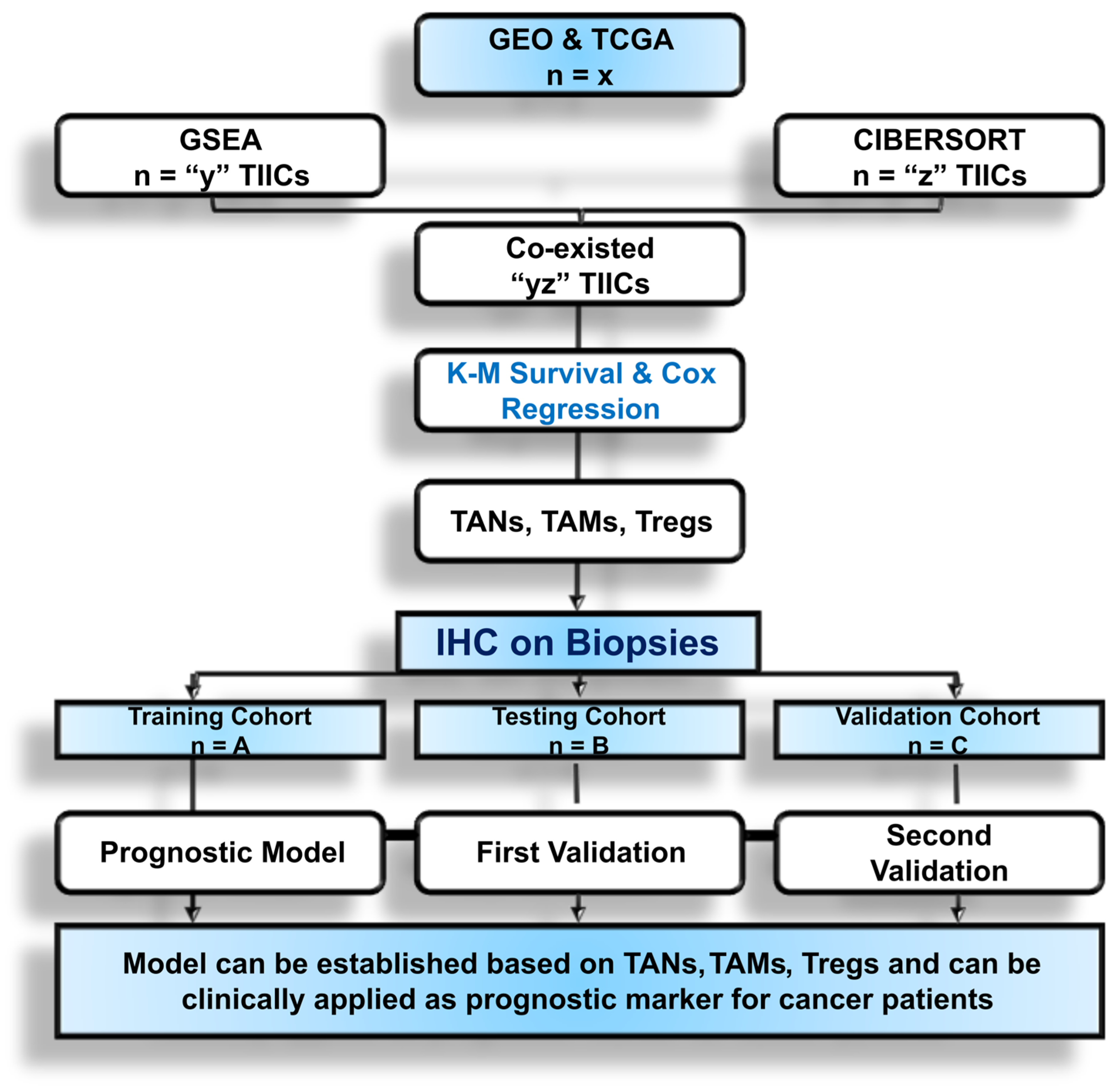
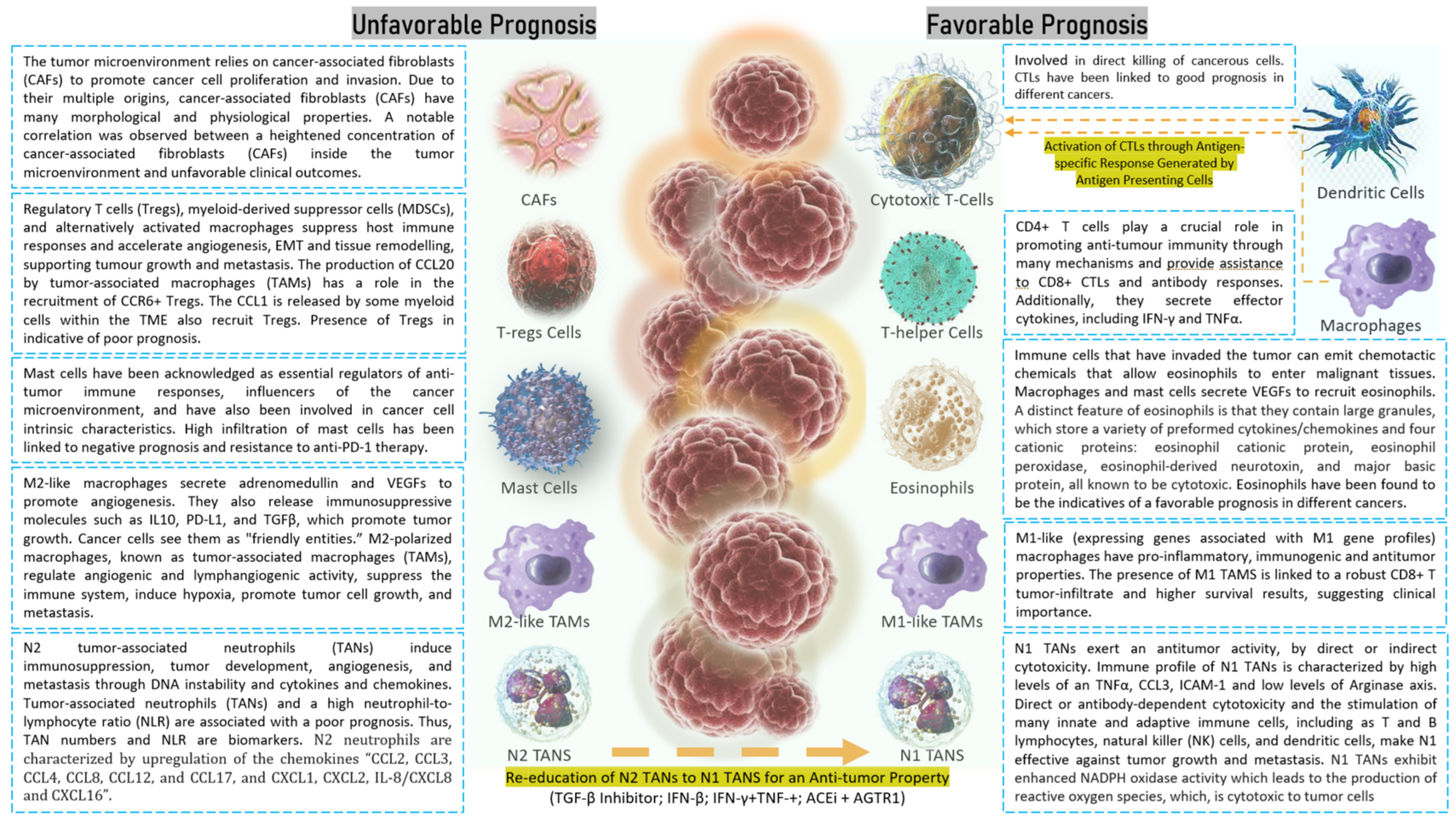
TIICs are critical components of the TME and are used to estimate prognostic and treatment responses in many malignancies. TIICs in the tumor microenvironment are assessed and quantified by categorizing immune cells into three subtypes: CD66b+ tumor-associated neutrophils (TANs), FoxP3+ regulatory T cells (Tregs), and CD163+ tumor-associated macrophages (TAMs). In addition, many cancers have tumor-infiltrating M1 and M2 macrophages, neutrophils (Neu), CD4+ T cells (T-helper), CD8+ T cells (T-cytotoxic), eosinophils, and mast cells. A variety of clinical treatments have linked tumor immune cell infiltration (ICI) to immunotherapy receptivity and prognosis. To improve the therapeutic effectiveness of immune-modulating drugs in a wider cancer patient population, immune cells and their interactions in the TME must be better understood. This study examines the clinicopathological effects of TIICs in overcoming tumor-mediated immunosuppression to boost antitumor immune responses and improve cancer prognosis. We successfully analyzed the predictive and prognostic usefulness of TIICs alongside TMB and ICI scores to identify cancer’s varied immune landscapes. Traditionally, immune cell infiltration was quantified using flow cytometry, immunohistochemistry, gene set enrichment analysis (GSEA), CIBERSORT, ESTIMATE, and other platforms that use integrated immune gene sets from previously published studies. We have also thoroughly examined traditional limitations and newly created unsupervised clustering and deconvolution techniques (SpatialVizScore and ProTICS). These methods predict patient outcomes and treatment responses better. These models may also identify individuals who may benefit more from adjuvant or neoadjuvant treatment. Overall, we think that the significant contribution of TIICs in cancer will greatly benefit postoperative follow-up, therapy, interventions, and informed choices on customized cancer medicines.