Brain Tumor Characterization Using Radiogenomics in Artificial Intelligence Framework
by
 , , ,
, , ,
Biswajit Jena
1 ,
,
Sanjay Saxena
1 ,
,
Gopal Krishna Nayak
1,
Antonella Balestrieri
2,
Neha Gupta
3,
Narinder N. Khanna
4,
John R. Laird
5,
Manudeep K. Kalra
6,
Mostafa M. Fouda
7 ,
,
Luca Saba
2 and 
Jasjit S. Suri
8,* 
1
Department of CSE, International Institute of Information Technology, Bhubaneswar 751003, India
2
Department of Radiology, AOU, University of Cagliari, 09124 Cagliari, Italy
3
Department of IT, Bharati Vidyapeeth’s College of Engineering, New Delhi 110056, India
4
Department of Cardiology, Indraprastha APOLLO Hospitals, New Delhi 110076, India
5
Heart and Vascular Institute, Adventist Health St. Helena, St. Helena, CA 94574, USA
6
Department of Radiology, Massachusetts General Hospital, 55 Fruit Street, Boston, MA 02114, USA
7
Department of Electrical and Computer Engineering, Idaho State University, Pocatello, ID 83209, USA
8
Stroke Diagnosis and Monitoring Division, AtheroPoint™, Roseville, CA 95661, USA
*
Author to whom correspondence should be addressed.
Cancers 2022, 14(16), 4052; https://doi.org/10.3390/cancers14164052
Submission received: 15 July 2022
/
Revised: 17 August 2022
/
Accepted: 19 August 2022
/
Published: 22 August 2022
Simple Summary
Radiogenomics is a relatively new advancement in the understanding of the biology and behaviour of cancer in response to conventional treatments. One of the most terrible types of cancer, brain cancer, must be targeted in light of the current advancements in therapies. Even though several recent studies on brain cancer have shown promising outcomes when employing the radiogenomics concept, a cutting-edge review of research has been required. In this research review, we provide a 360-degree aspect of brain tumor diagnosis and prognosis employing the new era technology of radiogenomics. The review provides information to the reader about the various aspects that should be considered as accomplishments, opportunities, and limitations in the current therapeutic procedures.
Abstract
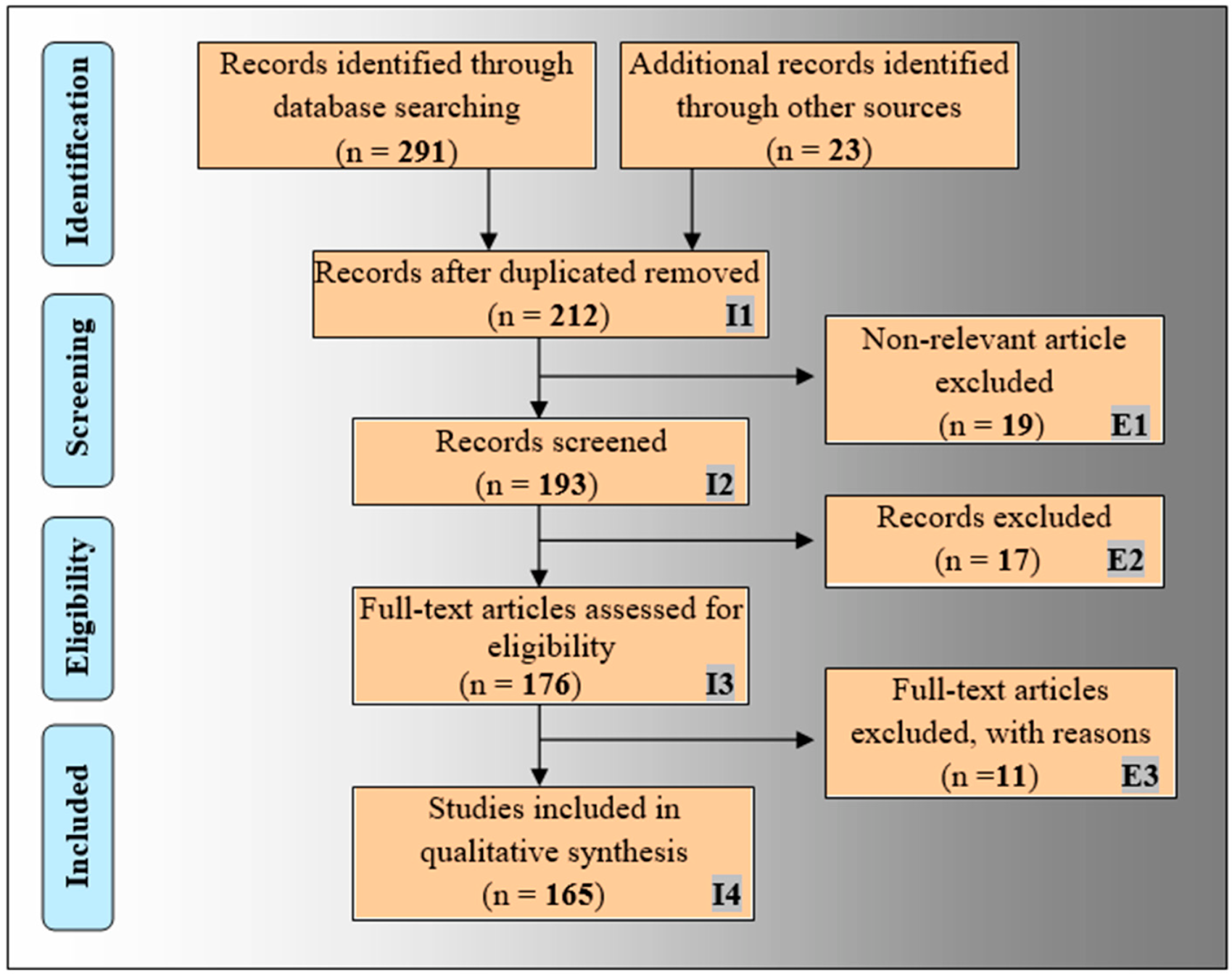
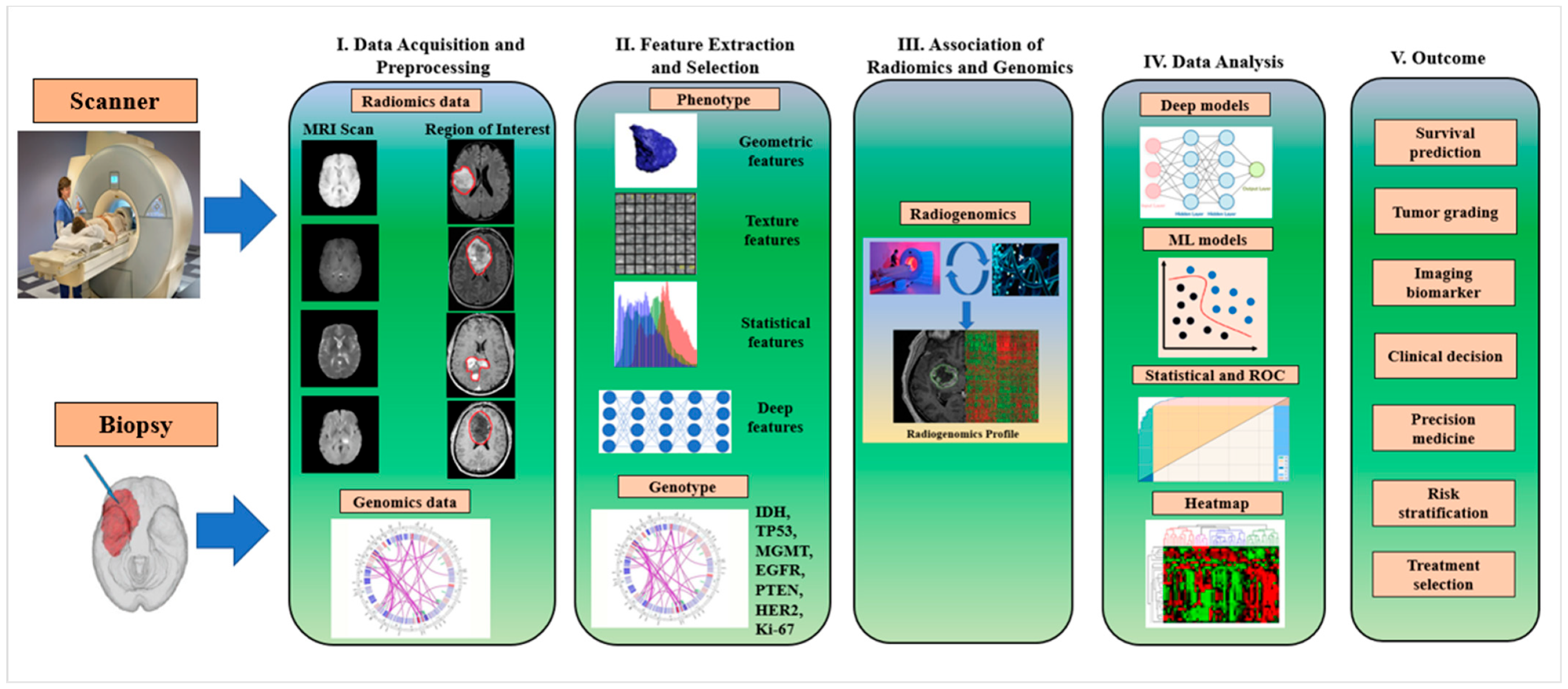
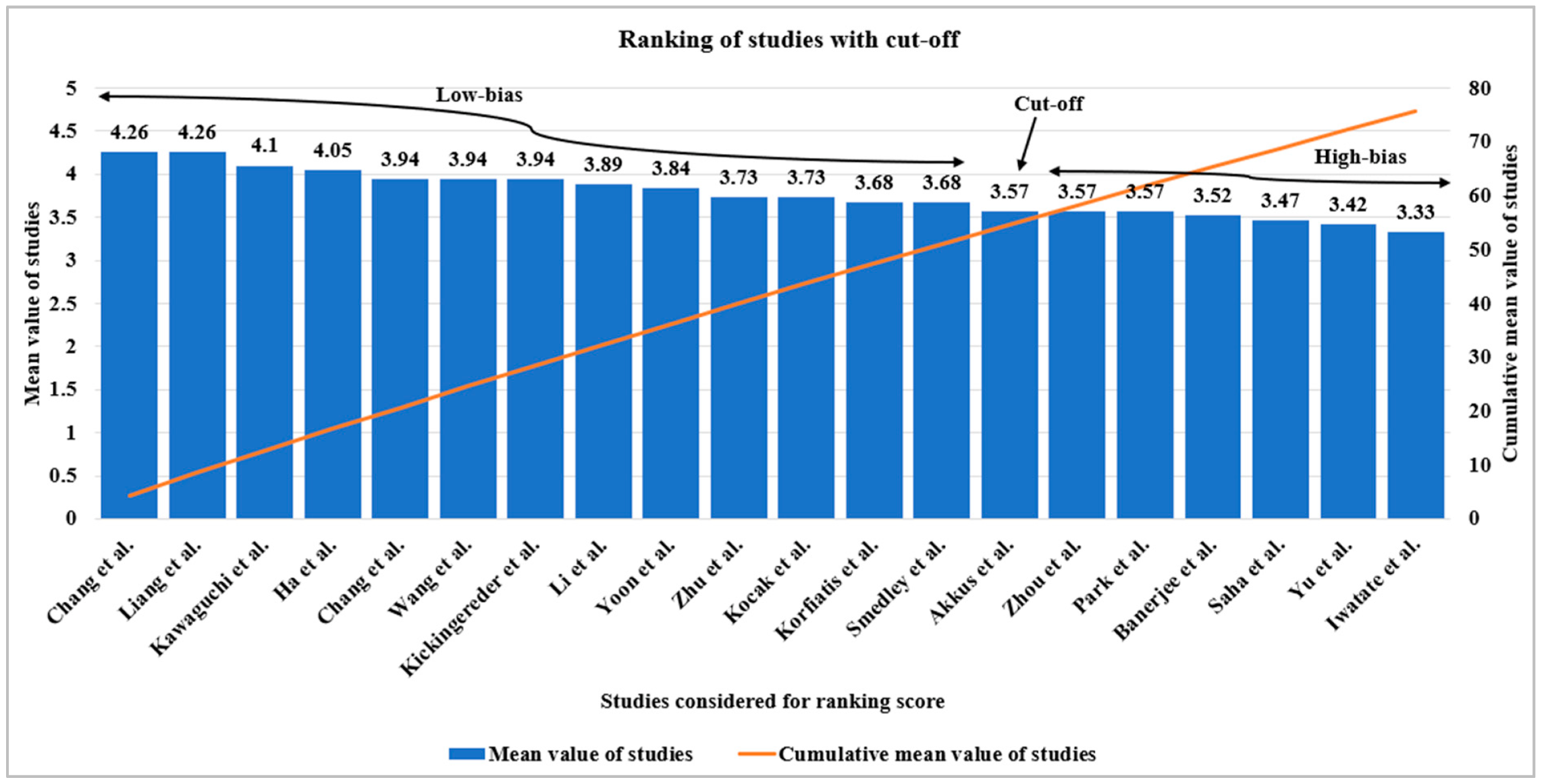
Brain tumor characterization (BTC) is the process of knowing the underlying cause of brain tumors and their characteristics through various approaches such as tumor segmentation, classification, detection, and risk analysis. The substantial brain tumor characterization includes the identification of the molecular signature of various useful genomes whose alteration causes the brain tumor. The radiomics approach uses the radiological image for disease characterization by extracting quantitative radiomics features in the artificial intelligence (AI) environment. However, when considering a higher level of disease characteristics such as genetic information and mutation status, the combined study of “radiomics and genomics” has been considered under the umbrella of “radiogenomics”. Furthermore, AI in a radiogenomics’ environment offers benefits/advantages such as the finalized outcome of personalized treatment and individualized medicine. The proposed study summarizes the brain tumor’s characterization in the prospect of an emerging field of research, i.e., radiomics and radiogenomics in an AI environment, with the help of statistical observation and risk-of-bias (RoB) analysis. The PRISMA search approach was used to find 121 relevant studies for the proposed review using IEEE, Google Scholar, PubMed, MDPI, and Scopus. Our findings indicate that both radiomics and radiogenomics have been successfully applied aggressively to several oncology applications with numerous advantages. Furthermore, under the AI paradigm, both the conventional and deep radiomics features have made an impact on the favorable outcomes of the radiogenomics approach of BTC. Furthermore, risk-of-bias (RoB) analysis offers a better understanding of the architectures with stronger benefits of AI by providing the bias involved in them.