High Accuracy Indicators of Androgen Suppression Therapy Failure for Prostate Cancer—A Modeling Study
by
 , ,
, ,
William Meade
1,†, 
Allison Weber
2,3,†,
Tin Phan
4,†,
Emily Hampston
5,
Laura Figueroa Resa
1 ,
,
John Nagy
1,6 and
Yang Kuang
1,*
1
School of Mathematical and Statistical Sciences, Arizona State University, Tempe, AZ 85281, USA
2
School of Computing and Augmented Intelligence, Arizona State University, Tempe, AZ 85281, USA
3
College of Computing, Georgia Institute of Technology, Atlanta, GA 30332, USA
4
Theoretical Biology and Biophysics Group, Los Alamos National Laboratory, Los Alamos, NM 87545, USA
5
Department of Mathematics, State University of New York, Buffalo, NY 14260, USA
6
Department of Life Sciences, Scottsdale Community College, Scottsdale, AZ 85256, USA
*
Author to whom correspondence should be addressed.
†
These authors contributed equally to this work.
Cancers 2022, 14(16), 4033; https://doi.org/10.3390/cancers14164033
Submission received: 15 July 2022
/
Revised: 13 August 2022
/
Accepted: 18 August 2022
/
Published: 20 August 2022
(This article belongs to the Special Issue Integrating Tumor Evolution Dynamics into the Treatment of Cancer)
Simple Summary
Hormonal therapy for prostate cancer is often applied past the point of resistance, hence losing any future clinical value to the evolution of resistant strains. If the undesirable outcome of the treatment is forewarned, then clinicians can have an opportunity to adjust the treatment, which can result in better management of the cancer. Using a mechanistic mathematical model, we introduce two methods to enhance the accuracy of classical biomarkers for hormonal therapy failure. Our results show the value in measuring both prostate-specific antigen and androgen during hormonal treatment, which can potentially allow for better management of prostate cancer.
Abstract
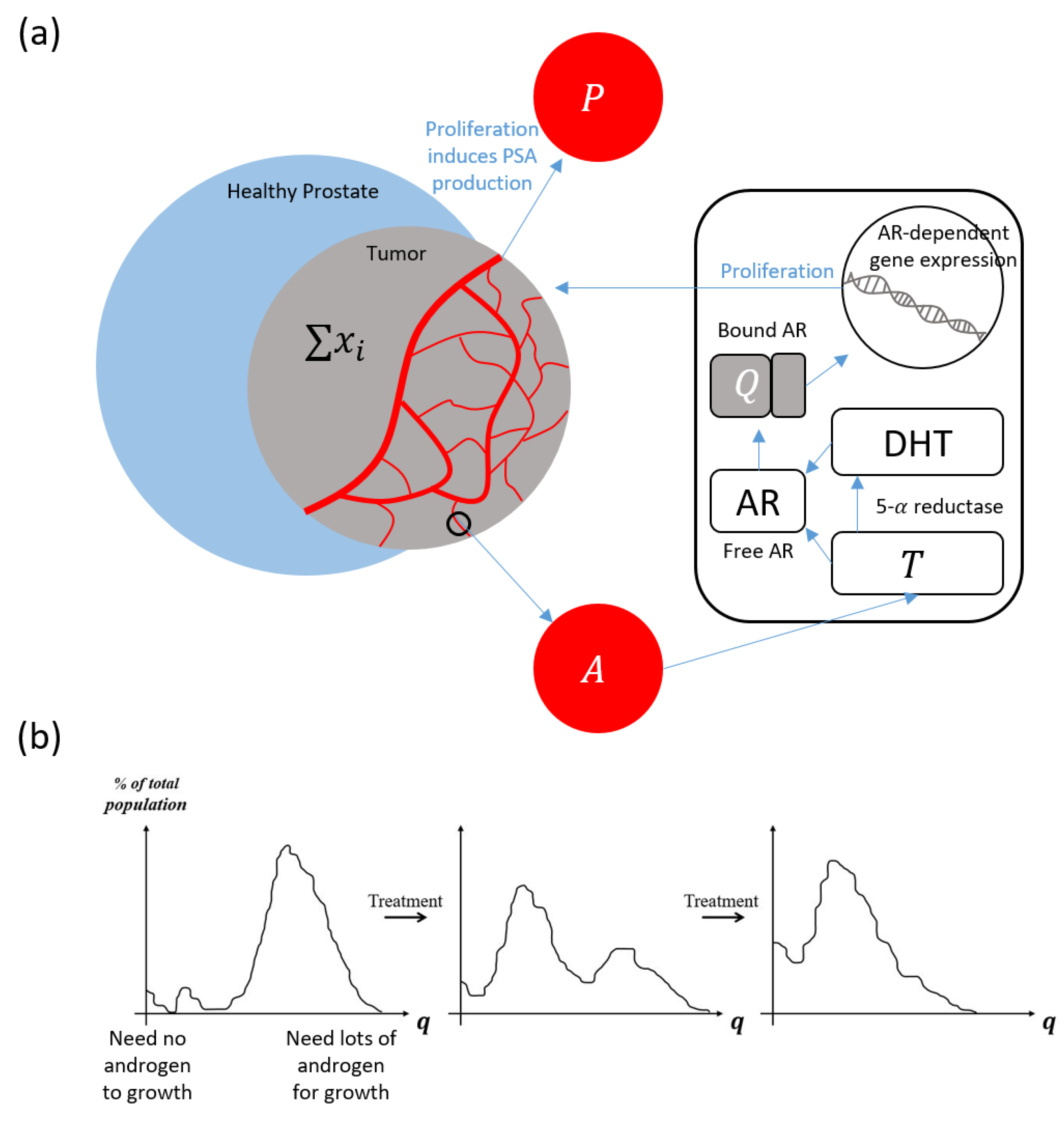
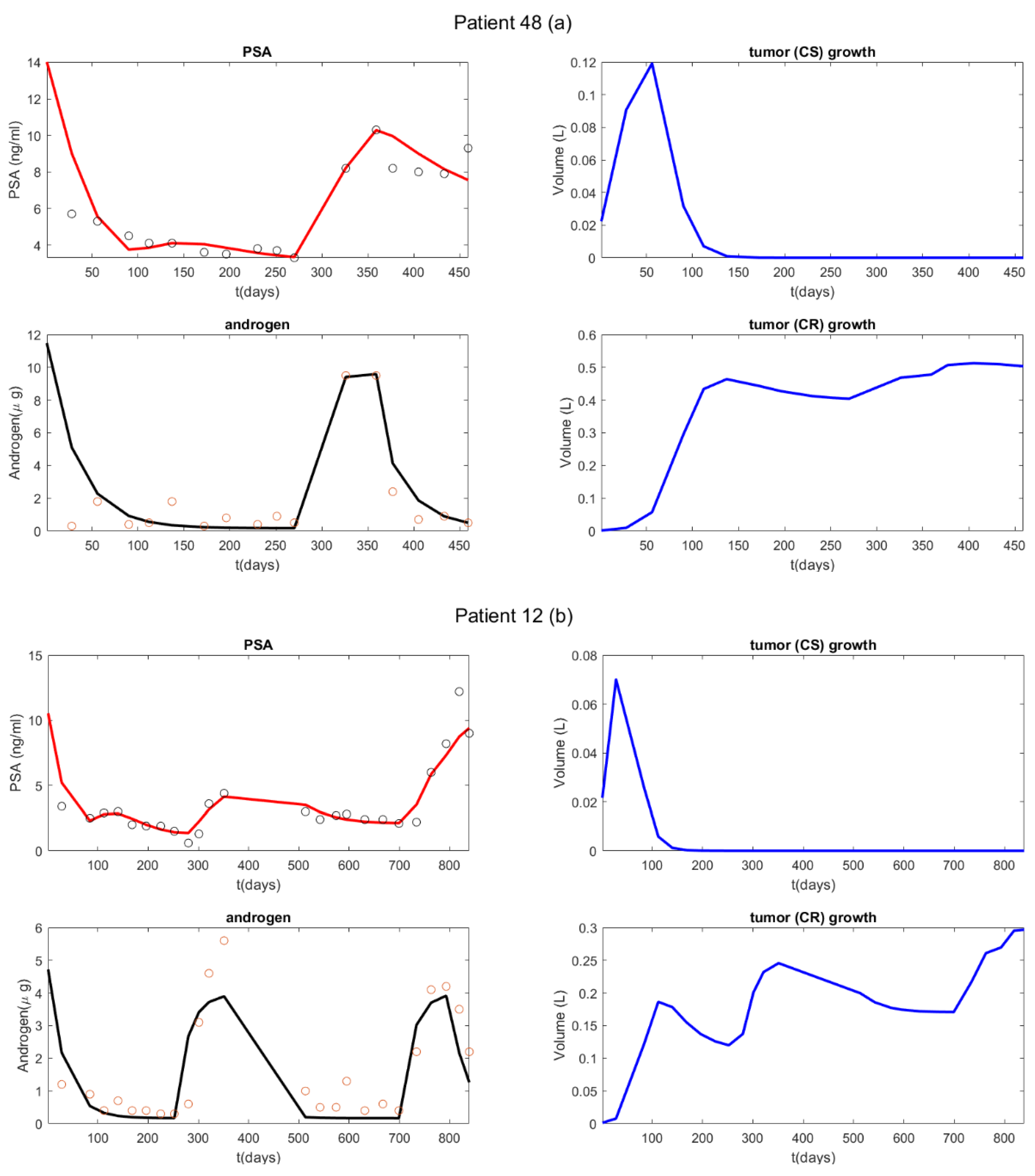
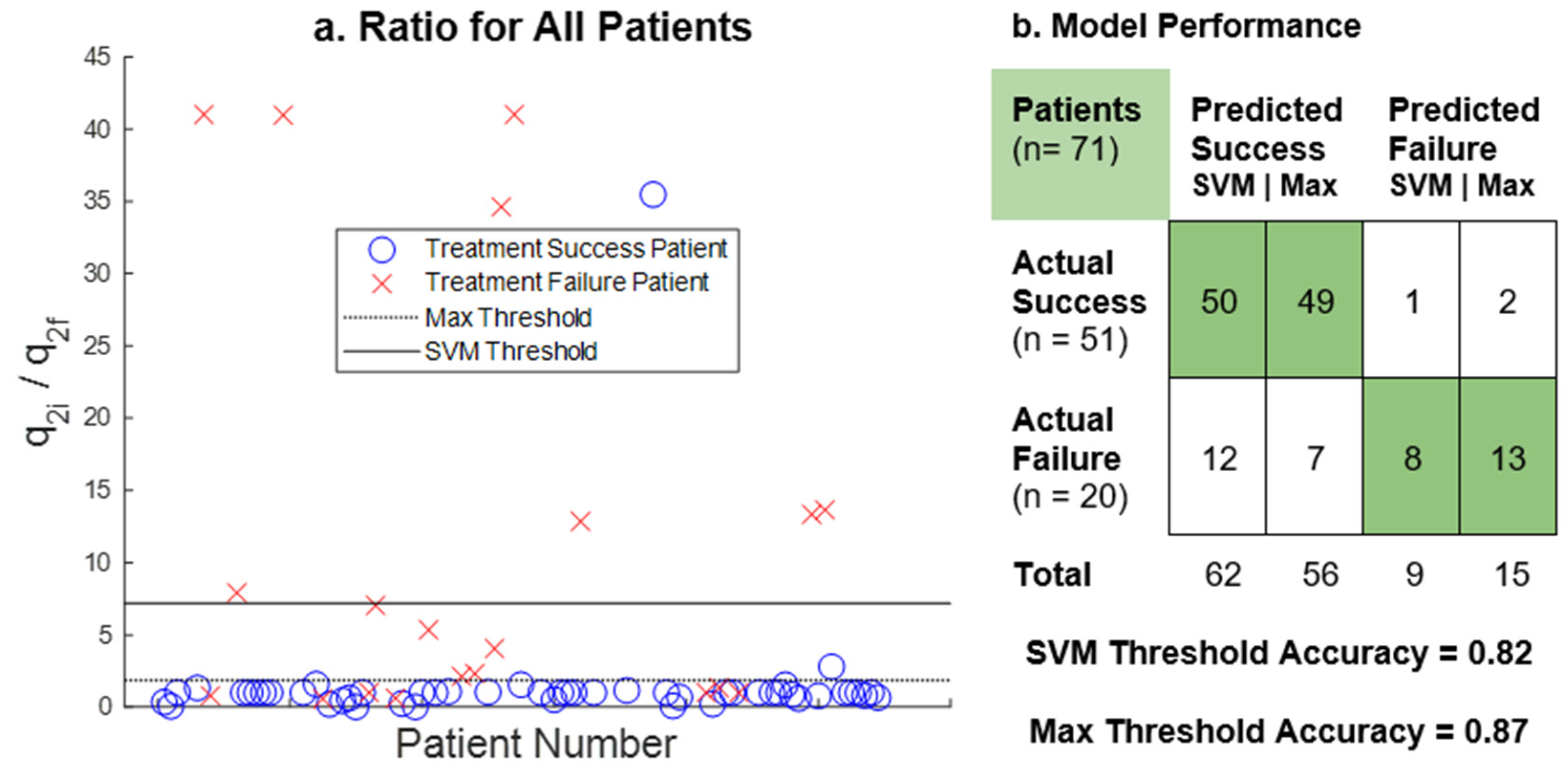
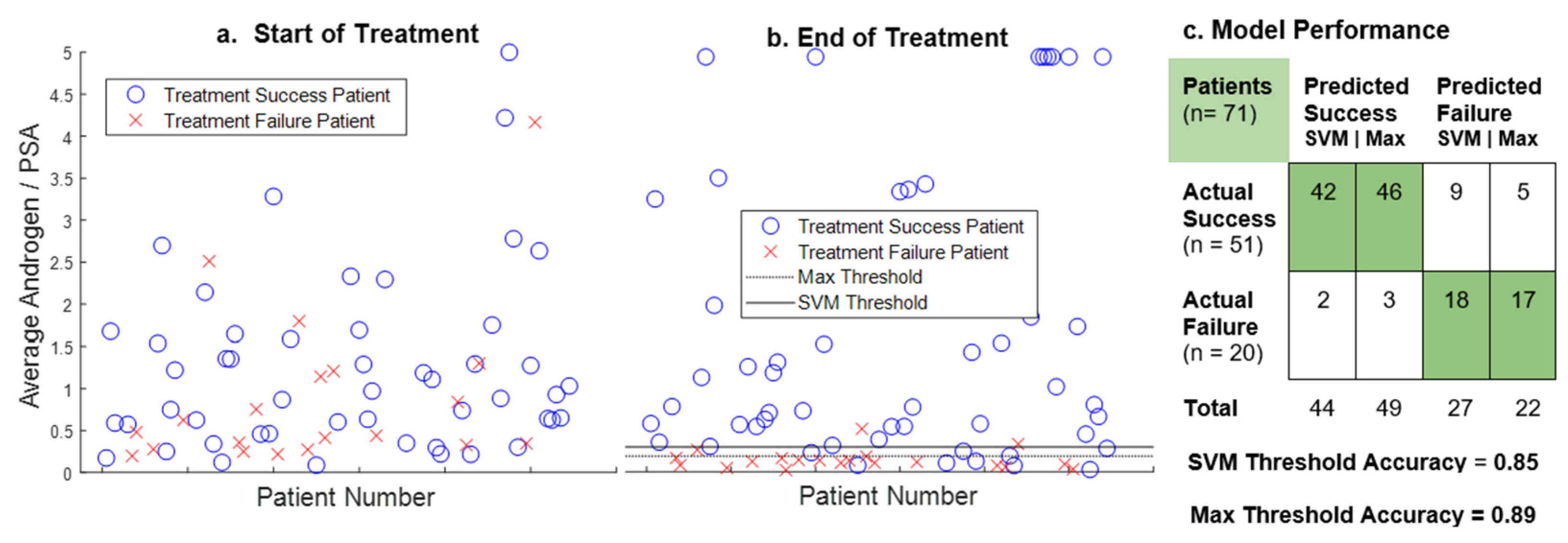
Prostate cancer is a serious public health concern in the United States. The primary obstacle to effective long-term management for prostate cancer patients is the eventual development of treatment resistance. Due to the uniquely chaotic nature of the neoplastic genome, it is difficult to determine the evolution of tumor composition over the course of treatment. Hence, a drug is often applied continuously past the point of effectiveness, thereby losing any potential treatment combination with that drug permanently to resistance. If a clinician is aware of the timing of resistance to a particular drug, then they may have a crucial opportunity to adjust the treatment to retain the drug’s usefulness in a potential treatment combination or strategy. In this study, we investigate new methods of predicting treatment failure due to treatment resistance using a novel mechanistic model built on an evolutionary interpretation of Droop cell quota theory. We analyze our proposed methods using patient PSA and androgen data from a clinical trial of intermittent treatment with androgen deprivation therapy. Our results produce two indicators of treatment failure. The first indicator, proposed from the evolutionary nature of the cancer population, is calculated using our mathematical model with a predictive accuracy of 87.3% (sensitivity: 96.1%, specificity: 65%). The second indicator, conjectured from the implication of the first indicator, is calculated directly from serum androgen and PSA data with a predictive accuracy of 88.7% (sensitivity: 90.2%, specificity: 85%). Our results demonstrate the potential and feasibility of using an evolutionary tumor dynamics model in combination with the appropriate data to aid in the adaptive management of prostate cancer.