Prognostic Value of Hybrid PET/MR Imaging in Patients with Differentiated Thyroid Cancer
by
 , , , , and
Leandra Piscopo
1, 
Carmela Nappi
1,
Fabio Volpe
1,
Valeria Romeo
1,
Emanuele Nicolai
2,
Rosj Gallicchio
3,
Alessia Giordano
3,
Giovanni Storto
3,
Leonardo Pace
4,* ,
,
Carlo Cavaliere
2, 
Marco Salvatore
2,
Alberto Cuocolo
1 and
and
Michele Klain
1 1
Department of Advanced Biomedical Sciences, University Federico II, 80131 Naples, Italy
2
IRCCS Synlab SDN, 80143 Naples, Italy
3
IRCCS CROB, Referral Cancer Center of Basilicata, 85028 Rionero in Vulture, Italy
4
Department of Medicine, Surgery and Dentistry, University of Salerno, 84084 Fisciano, Italy
*
Author to whom correspondence should be addressed.
Cancers 2022, 14(12), 2958; https://doi.org/10.3390/cancers14122958
Submission received: 14 April 2022
/
Revised: 13 June 2022
/
Accepted: 15 June 2022
/
Published: 15 June 2022
(This article belongs to the Topic MRI and PET/MRI in Hematology and Oncology)
Simple Summary
Hybrid positron emission tomography (PET)/magnetic resonance (MR) is an emerging imaging modality with great potential to provide complementary data acquired at the same time, under the same physiological conditions. We evaluated the prognostic value of hybrid 18F-fluorodeoxyglucose (FDG) PET/MR in patients with differentiated thyroid cancer (DTC) who underwent total thyroidectomy and radioactive iodine therapy for suspicion of disease relapse. Our findings suggest that hybrid PET/MR imaging may have the potential to improve the information content of one modality with the other and would offer new opportunities in patients with DTC. However, there is need of more clinical studies to understand the additional value of 18F-FDG PET/MR in patients with DTC.
Abstract
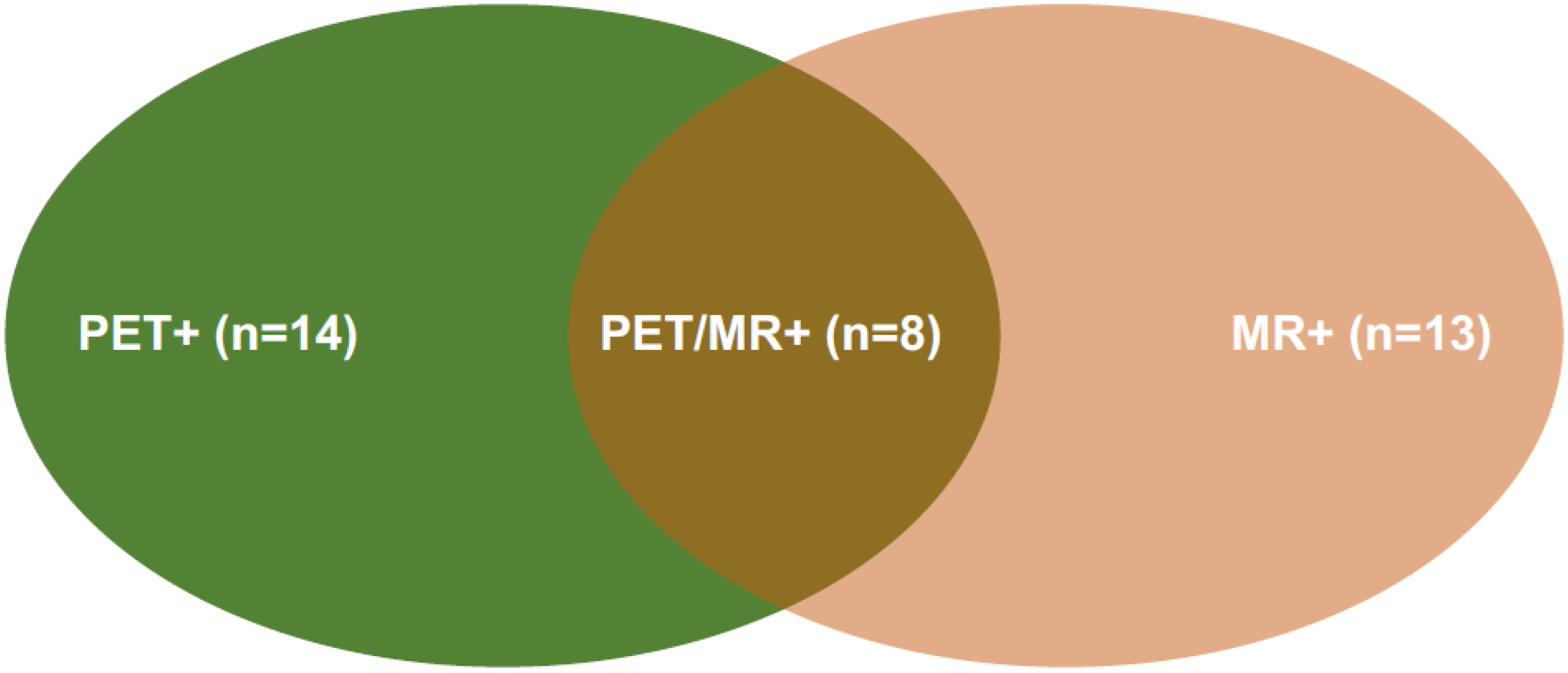
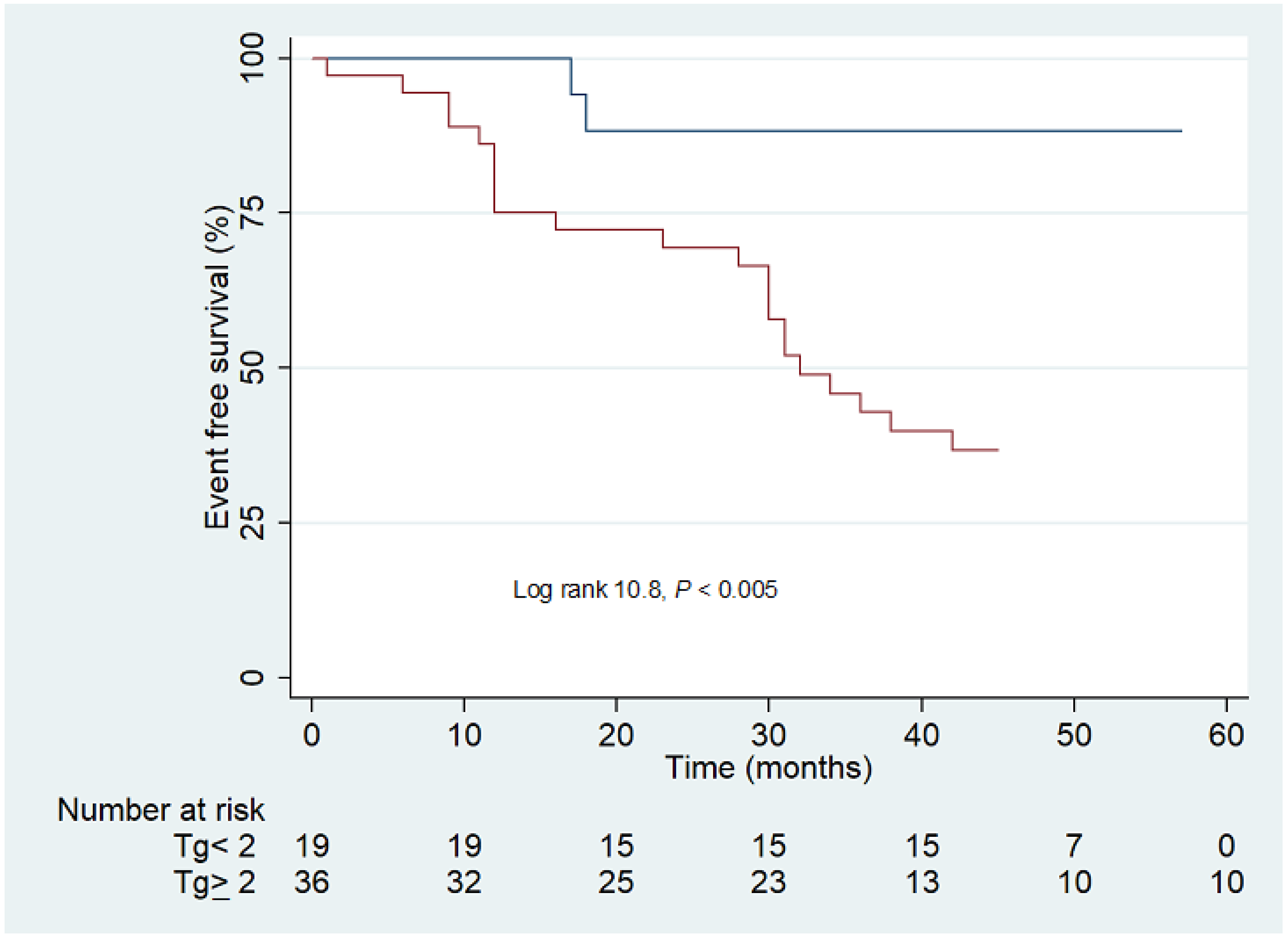
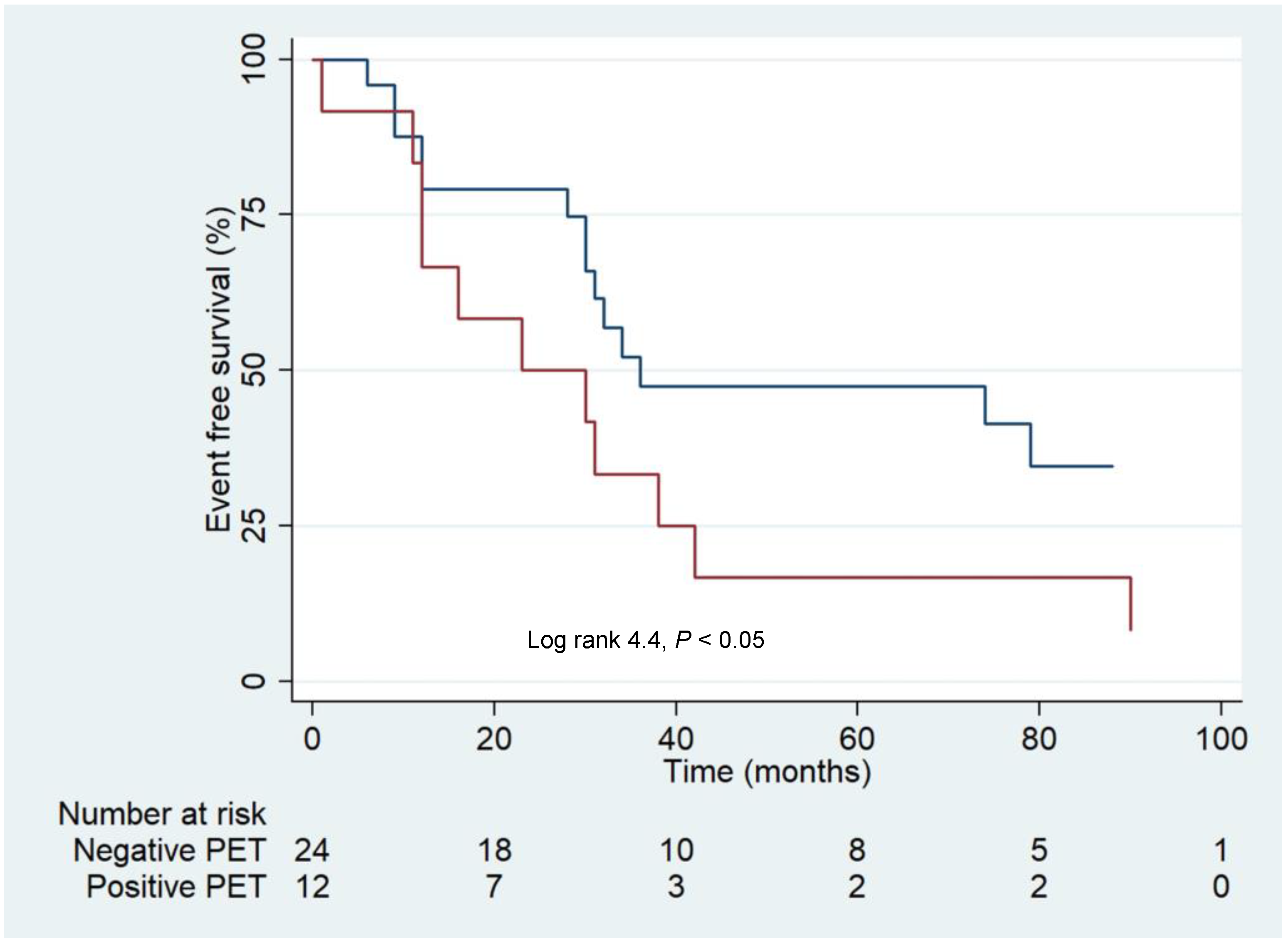
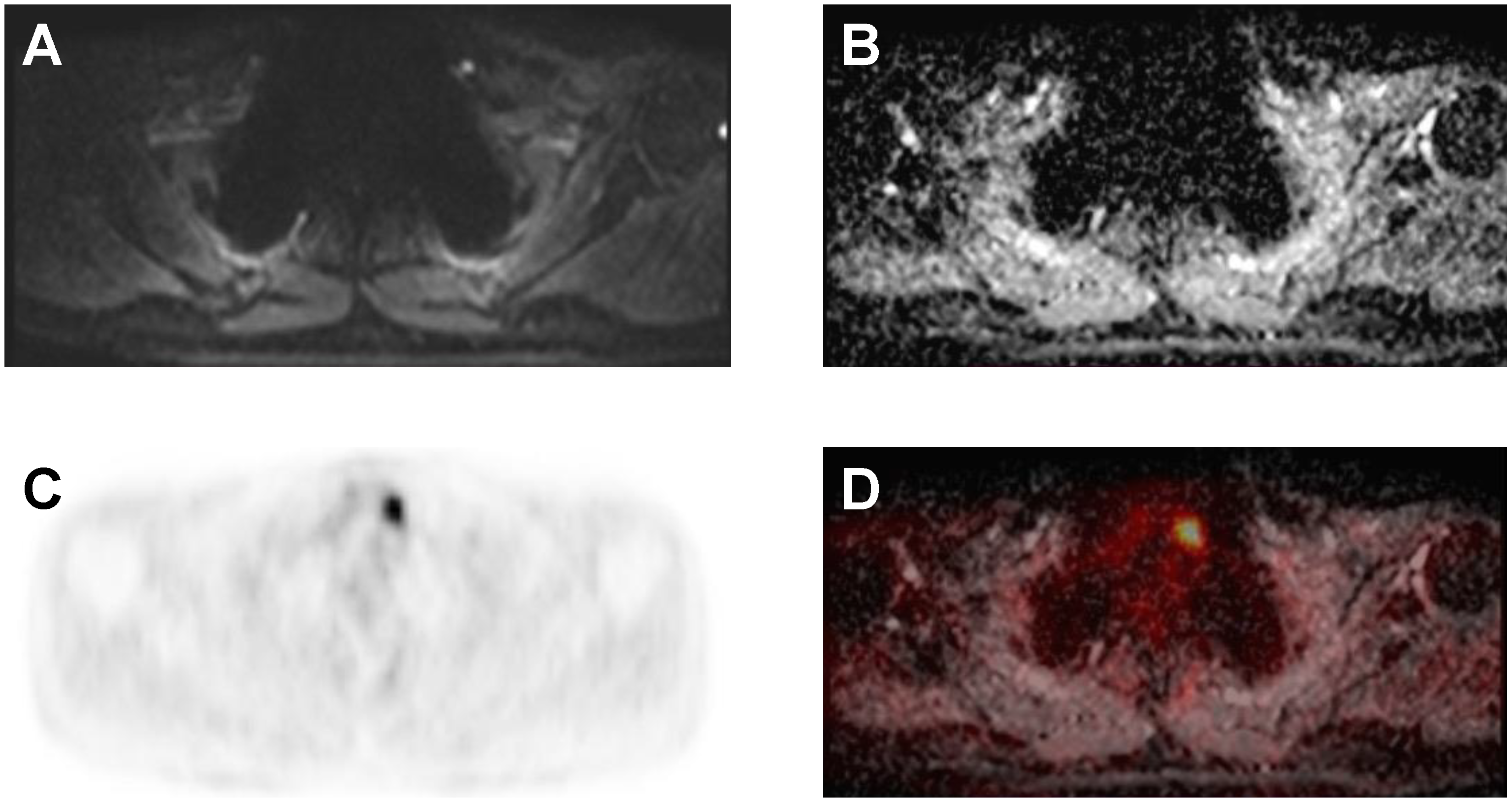
Background: Hybrid positron emission tomography (PET)/magnetic resonance (MR) is an emerging imaging modality with great potential to provide complementary data acquired at the same time, under the same physiological conditions. The aim of this study was to evaluate the prognostic value of hybrid 18F-fluorodeoxyglucose (FDG) PET/MR in patients with differentiated thyroid cancer (DTC) who underwent total thyroidectomy and radioactive iodine therapy for suspicion of disease relapse. Methods: Between November 2015 and February 2017, 55 patients underwent hybrid 18F-FDG PET/MR. Assessment of positive MR was made considering all sequences in terms of malignancy based on the morphological T2-weighted features and the presence of restricted diffusivity on diffusion-weighted imaging images and both needed to be positive on the same lesion. Both foci with abnormal 18F-FDG uptake, which corresponded to tissue abnormalities on the MR, and tracer accumulation, which did not correspond to normal morphological structures, were considered positive. Results: During follow-up (mean 42 ± 27 months), 29 patients (53%) had disease recurrence. In the Cox univariate regression analysis age, serum Tg level ≥ 2 ng/mL, positive short tau inversion recovery (STIR), and positive PET were significant predictors of DTC recurrence. Kaplan–Meier survival analyses showed that patients with Tg ≥ 2 ng/mL had poorer outcomes compared to those with serum Tg level < 2 ng/mL (p < 0.05). Similarly, patients with positive STIR and positive PET had a worst outcome compared to those with negative STIR (p < 0.05) and negative PET (p < 0.005). Survival analysis performed in the subgroup of 36 subjects with Tg level ≥ 2 ng/mL revealed that patients with positive PET had a worst outcome compared to those with negative PET (p < 0.05). Conclusions: Age, serum Tg level ≥ 2 ng/mL, positive STIR, and positive 18F-FDG PET were significant predictors of DTC recurrence. However, the serum Tg level was the only independent predictor of DTC. Hybrid PET/MR imaging may have the potential to improve the information content of one modality with the other and would offer new opportunities in patients with DTC. Thus, further studies in a larger patient population are needed to understand the additional value of 18F-FDG PET/MR in patients with DTC.
Keywords:
differentiated thyroid carcinoma; PET/MR; hybrid imaging; prognosis