Analysis of TERT Isoforms across TCGA, GTEx and CCLE Datasets

1
Department of Physiology and Pharmacology, The University of Western Ontario, London, ON N6A 5C1, Canada
2
Ontario Institute for Cancer Research, Toronto, ON M5G 0A3, Canada
3
Department of Pathology and Laboratory Medicine, The University of Western Ontario, London, ON N6A 5C1, Canada
4
Department of Computer Science, The University of Western Ontario, London, ON N6A 5C1, Canada
5
The Children’s Health Research Institute—Lawson Health Research Institute, London, ON N6C 2R5, Canada
6
Department of Obstetrics and Gynaecology, The University of Western Ontario, London, ON N6A 5C1, Canada
*
Author to whom correspondence should be addressed.
Cancers 2021, 13(8), 1853; https://doi.org/10.3390/cancers13081853
Submission received: 1 March 2021
/
Revised: 1 April 2021
/
Accepted: 8 April 2021
/
Published: 13 April 2021
(This article belongs to the Special Issue The Role of Telomeres and Telomerase in Cancer)
Simple Summary
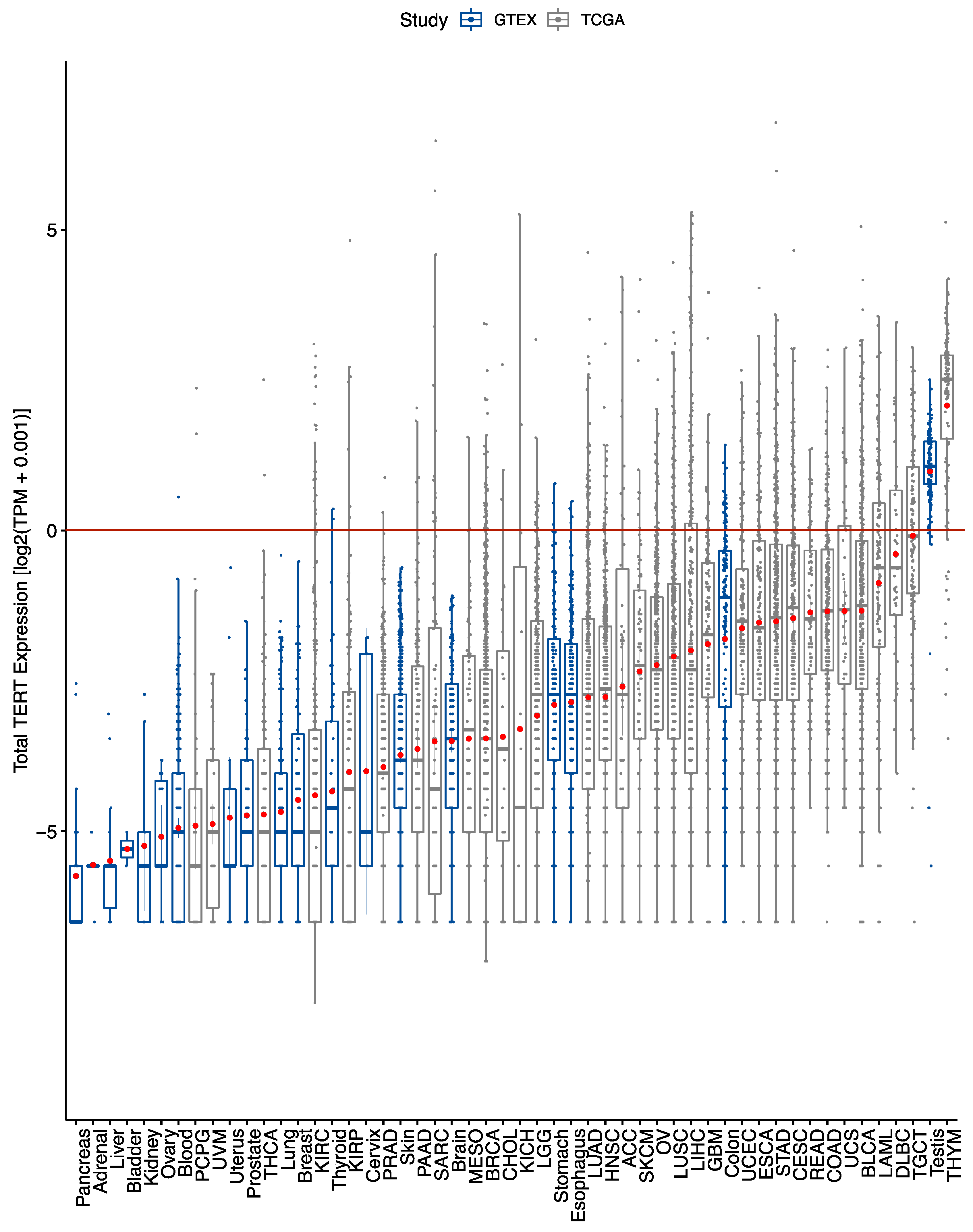
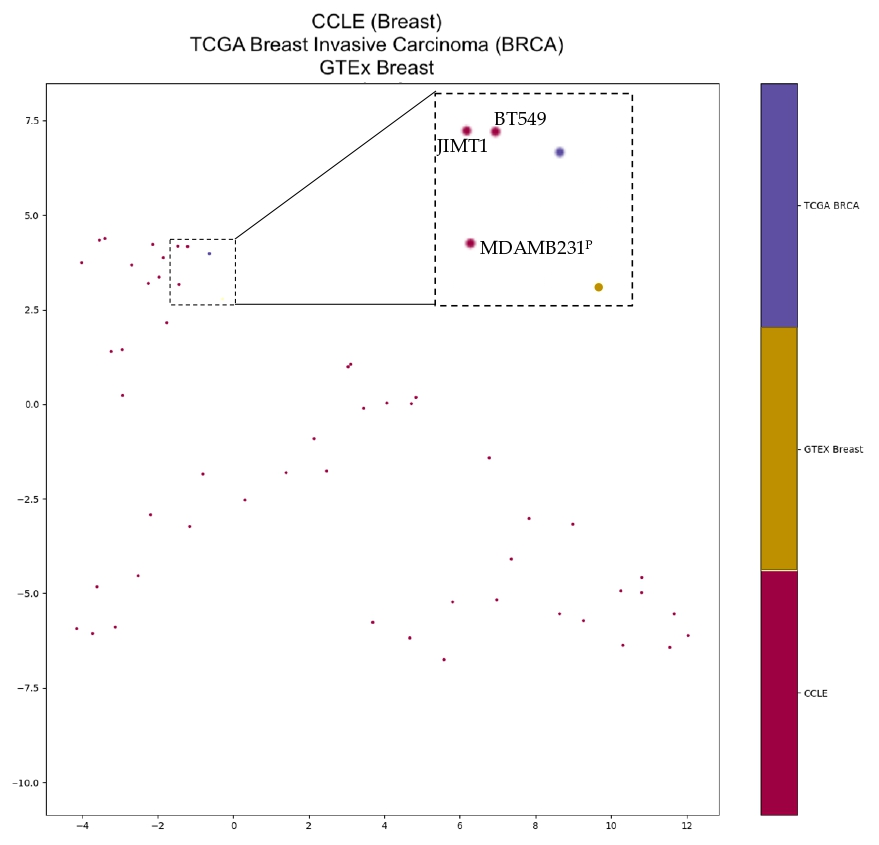
All cancers must maintain telomere length to achieve immortality and around 80% do so by reactivating the enzyme complex telomerase. The diverse regulatory mechanisms surrounding the enzymatic component, telomerase reverse transcriptase (TERT), are often exploited during tumorigenesis to achieve reactivation. Since TERT isoform expression and regulation is heterogenous in nature, we assessed changes in TERT alternative splicing patterns between the normal and neoplastic states across tissue subtypes. We confirmed gene-level TERT overexpression, as well as splicing shifts away from enzymatically non-functional isoforms in neoplastic tissue. Analysis of tissue and cancer-subtype specific TERT expression patterns uncovered heterogenous expression, regulation, and the potential impact of variable telomere maintenance on tumorigenesis. To guide future studies, we clustered cancer cell lines with tumors from related origin based on TERT isoform expression patterns.
Abstract
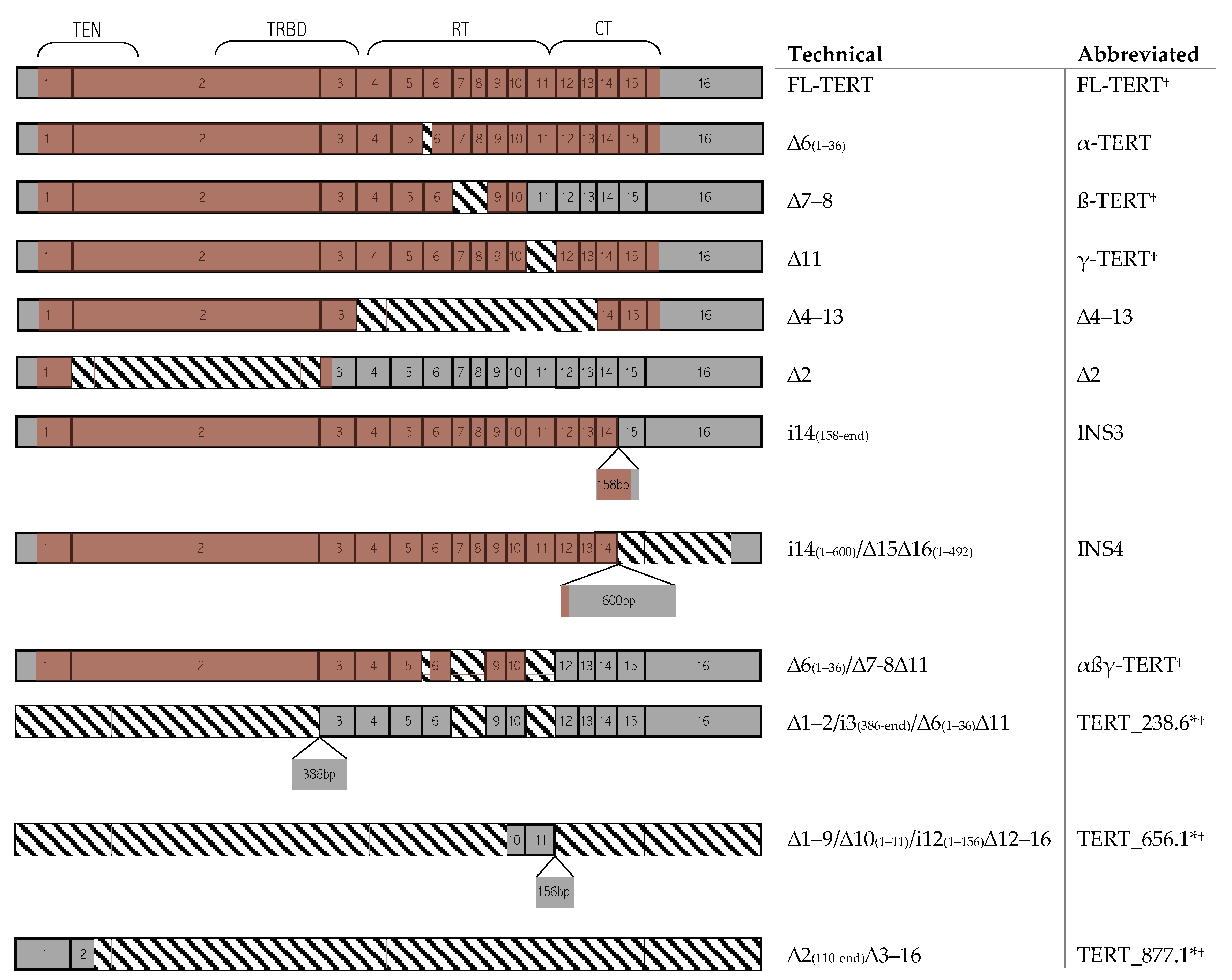
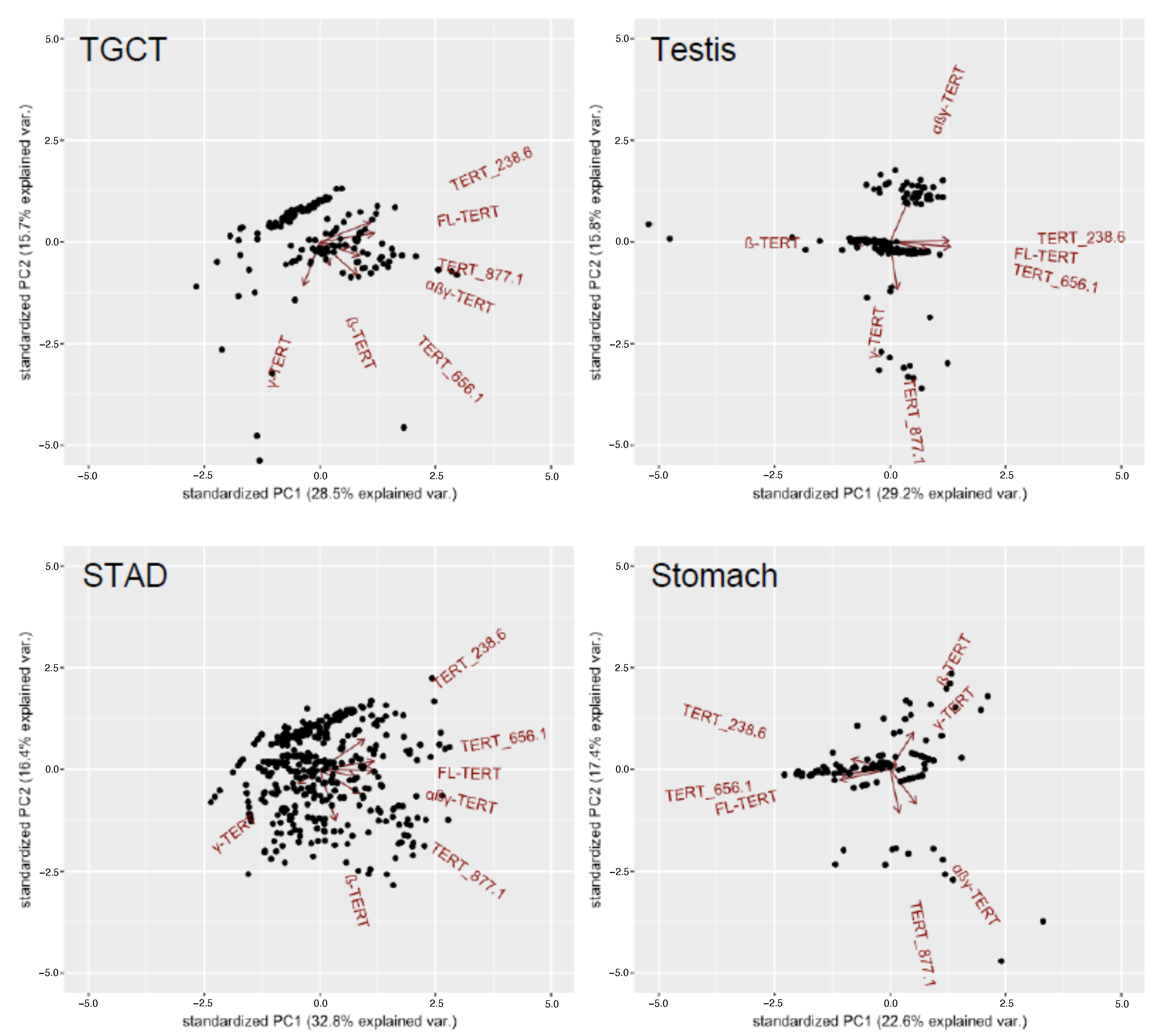
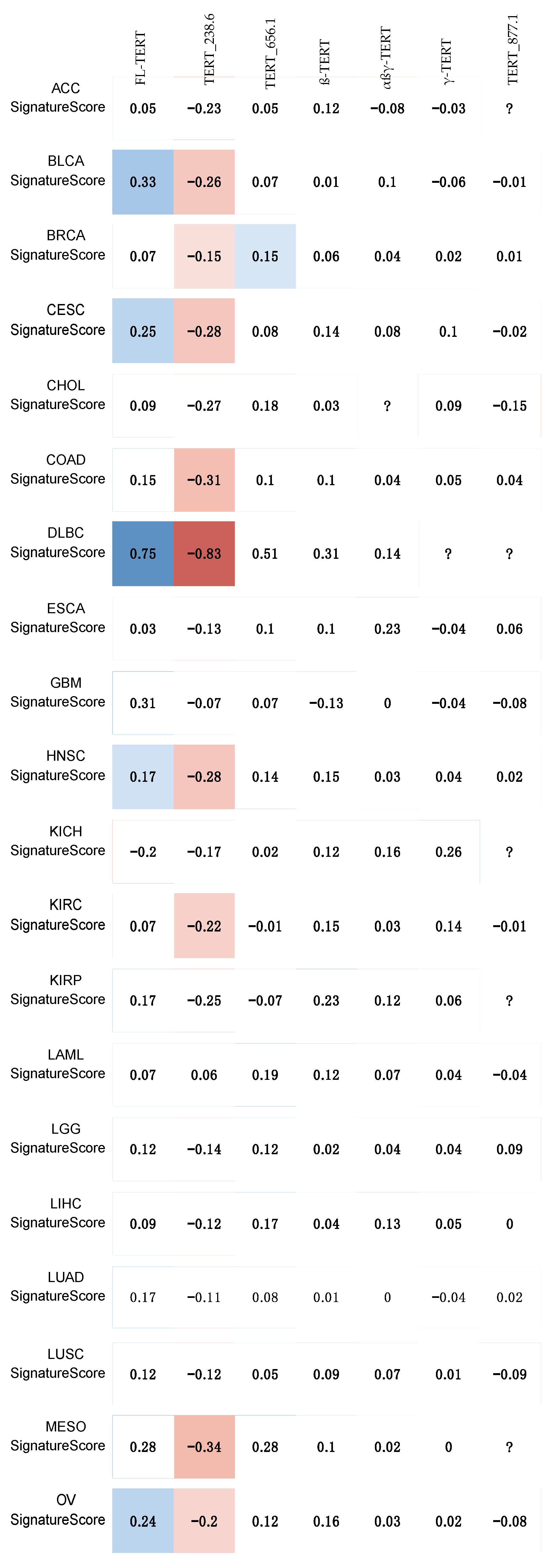
Reactivation of the multi-subunit ribonucleoprotein telomerase is the primary telomere maintenance mechanism in cancer, but it is rate-limited by the enzymatic component, telomerase reverse transcriptase (TERT). While regulatory in nature, TERT alternative splice variant/isoform regulation and functions are not fully elucidated and are further complicated by their highly diverse expression and nature. Our primary objective was to characterize TERT isoform expression across 7887 neoplastic and 2099 normal tissue samples using The Cancer Genome Atlas (TCGA) and the Genotype-Tissue Expression Project (GTEx), respectively. We confirmed the global overexpression and splicing shift towards full-length TERT in neoplastic tissue. Stratifying by tissue type we found uncharacteristic TERT expression in normal brain tissue subtypes. Stratifying by tumor-specific subtypes, we detailed TERT expression differences potentially regulated by subtype-specific molecular characteristics. Focusing on β-deletion splicing regulation, we found the NOVA1 trans-acting factor to mediate alternative splicing in a cancer-dependent manner. Of relevance to future tissue-specific studies, we clustered cancer cell lines with tumors from related origin based on TERT isoform expression patterns. Taken together, our work has reinforced the need for tissue and tumour-specific TERT investigations, provided avenues to do so, and brought to light the current technical limitations of bioinformatic analyses of TERT isoform expression.