DNA Damage Response during Replication Correlates with CIN70 Score and Determines Survival in HNSCC Patients
by
 , ,
, ,
Ioan T. Bold
1,†, 
Ann-Kathrin Specht
1,†,
Conrad F. Droste
2,
Alexandra Zielinski
1,
Felix Meyer
1,
Till S. Clauditz
3,
Adrian Münscher
4,
Stefan Werner
5,
Kai Rothkamm
1 ,
,
Cordula Petersen
6 and
Kerstin Borgmann
1,* 
1
Laboratory of Radiobiology & Experimental Radiooncology, Center of Oncology, University Medical Center Hamburg-Eppendorf, 20246 Hamburg, Germany
2
University Cancer Center Hamburg (UCCH), University Medical Center Hamburg-Eppendorf, 20246 Hamburg, Germany
3
Department of Pathology, University Medical Center Hamburg-Eppendorf, 20246 Hamburg, Germany
4
Department of Otorhinolaryngology and Head and Neck Surgery, University Medical Center Hamburg-Eppendorf, 20246 Hamburg, Germany
5
Department of Tumorbiology, University Medical Center Hamburg-Eppendorf, 20246 Hamburg, Germany
6
Department of Radiotherapy and Radiation Oncology, University Medical Center Hamburg-Eppendorf, 20246 Hamburg, Germany
*
Author to whom correspondence should be addressed.
†
Both authors contributed equally.
Cancers 2021, 13(6), 1194; https://doi.org/10.3390/cancers13061194
Submission received: 2 February 2021
/
Revised: 3 March 2021
/
Accepted: 5 March 2021
/
Published: 10 March 2021
(This article belongs to the Special Issue Chromosome Instability – Implications in Disease Pathogenesis, Health Outcomes and Therapeutic Targeting)
Simple Summary
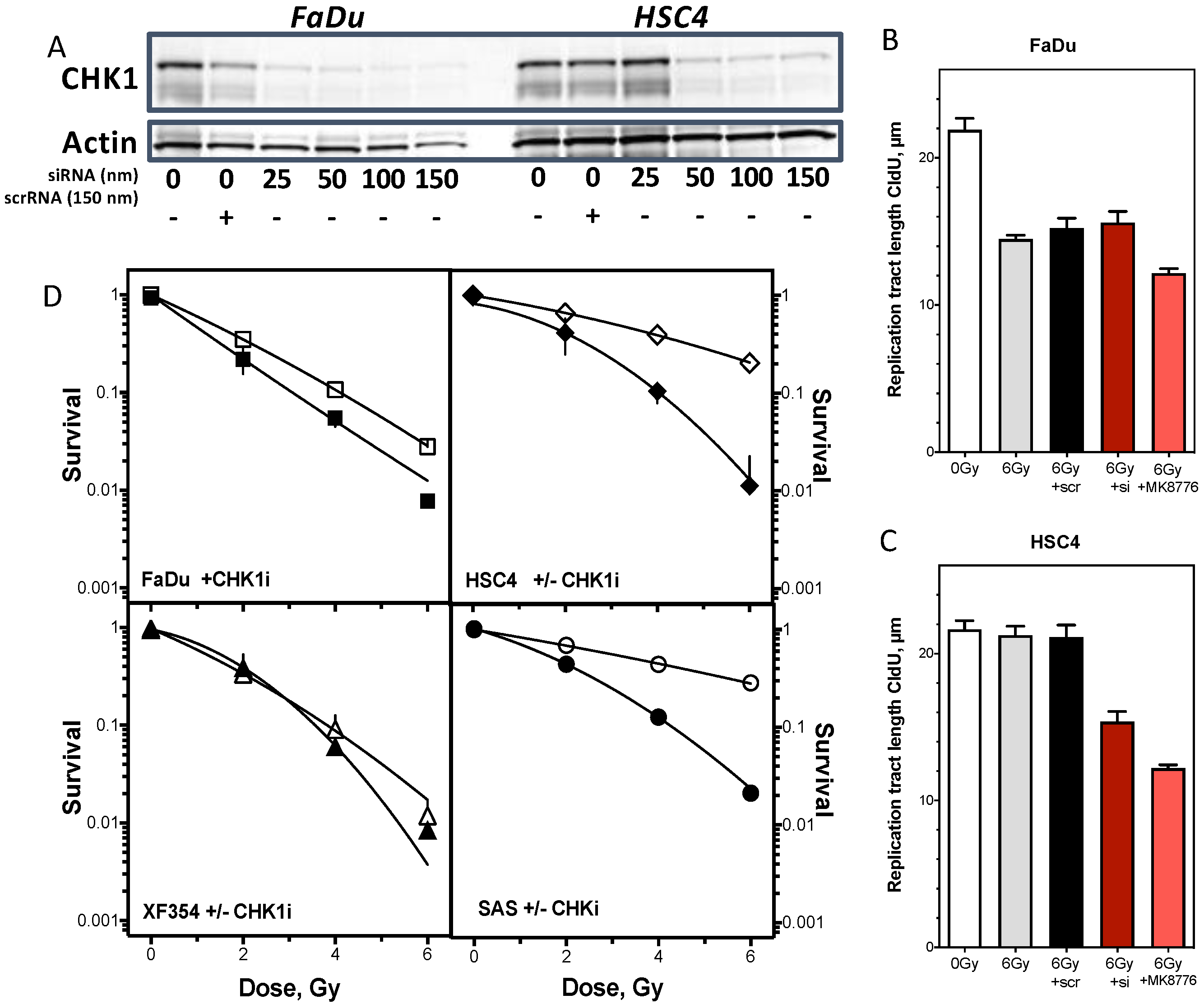
Functional aneuploidy as determined by expression of the 70 genes of the CIN70 score, influences prognosis. The importance of DNA repair protein expression and activity in this context is unclear. We can show here that a high CIN70 score is associated with increased expression of 44 proteins of the known DNA repair complexes. Among these, an association with survival was only observed for 12 proteins of DNA replication and replication-associated DNA repair. This suggests that it is not the expression of individual DNA repair proteins of a DNA repair complex that causes resistance to therapy, but rather a balanced expression and coordinated activation of corresponding signaling cascades. Inhibitors to generally block the S-phase DNA damage response should therefore be used to develop therapeutic strategies in the future.
Abstract
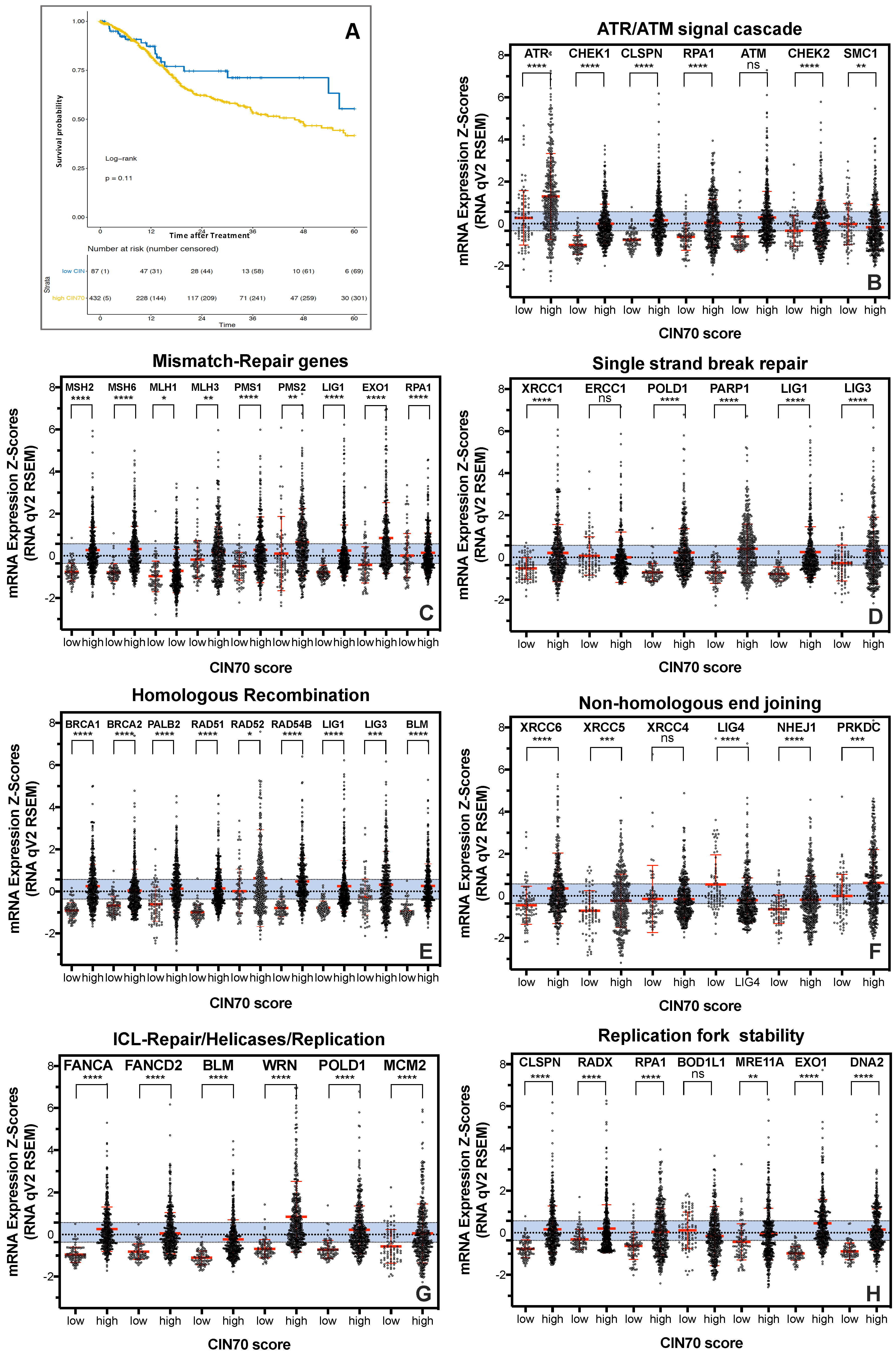
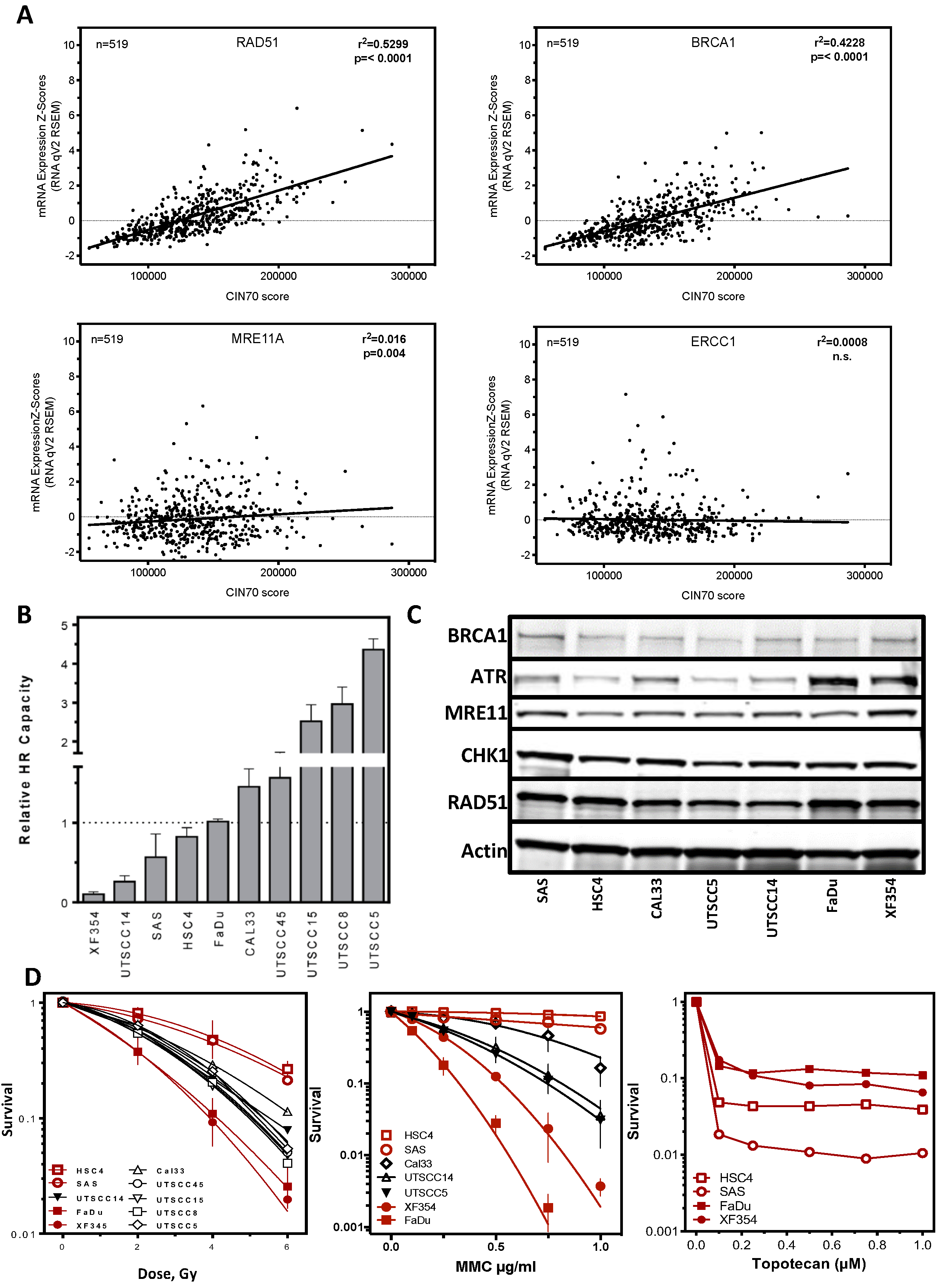
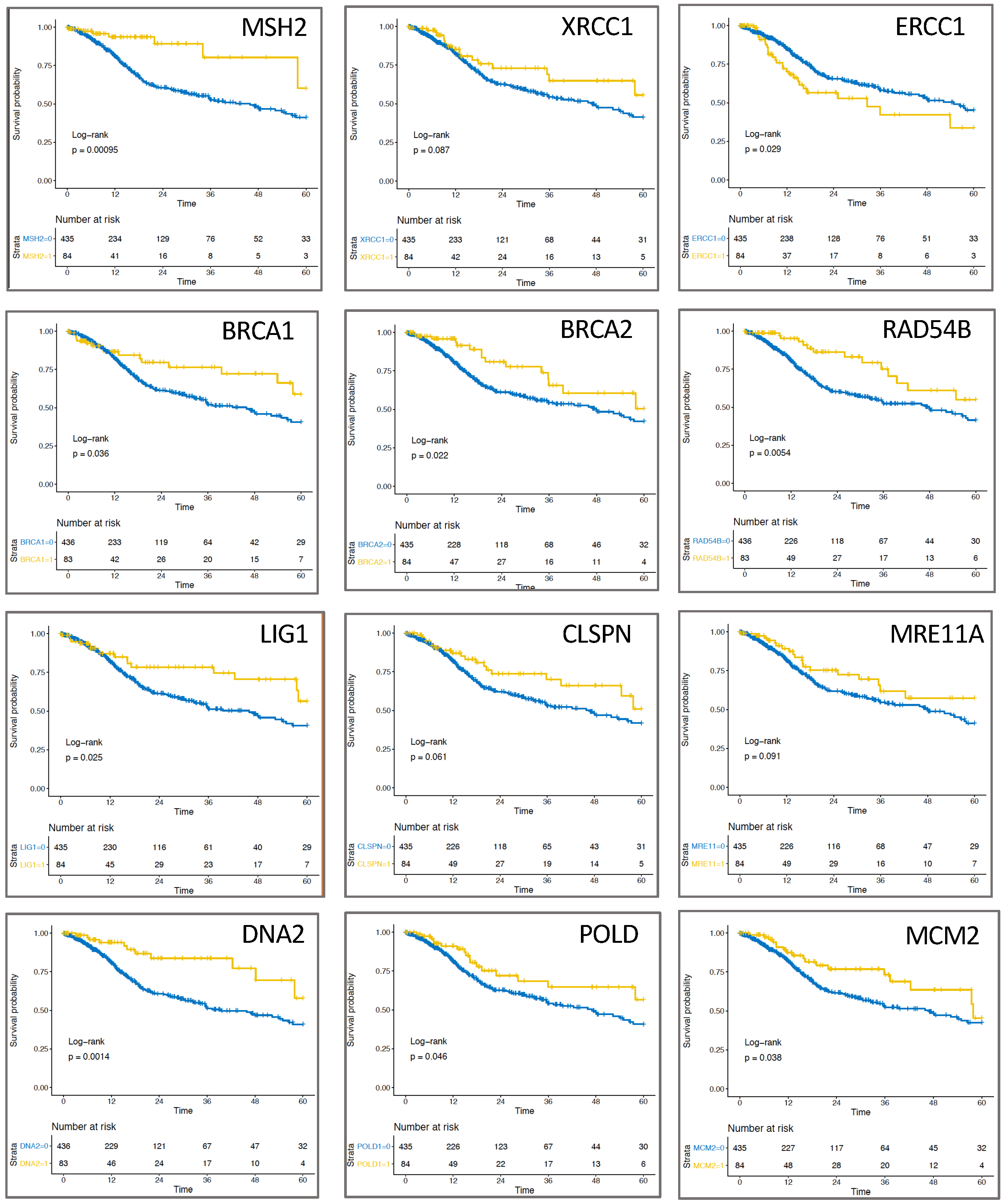
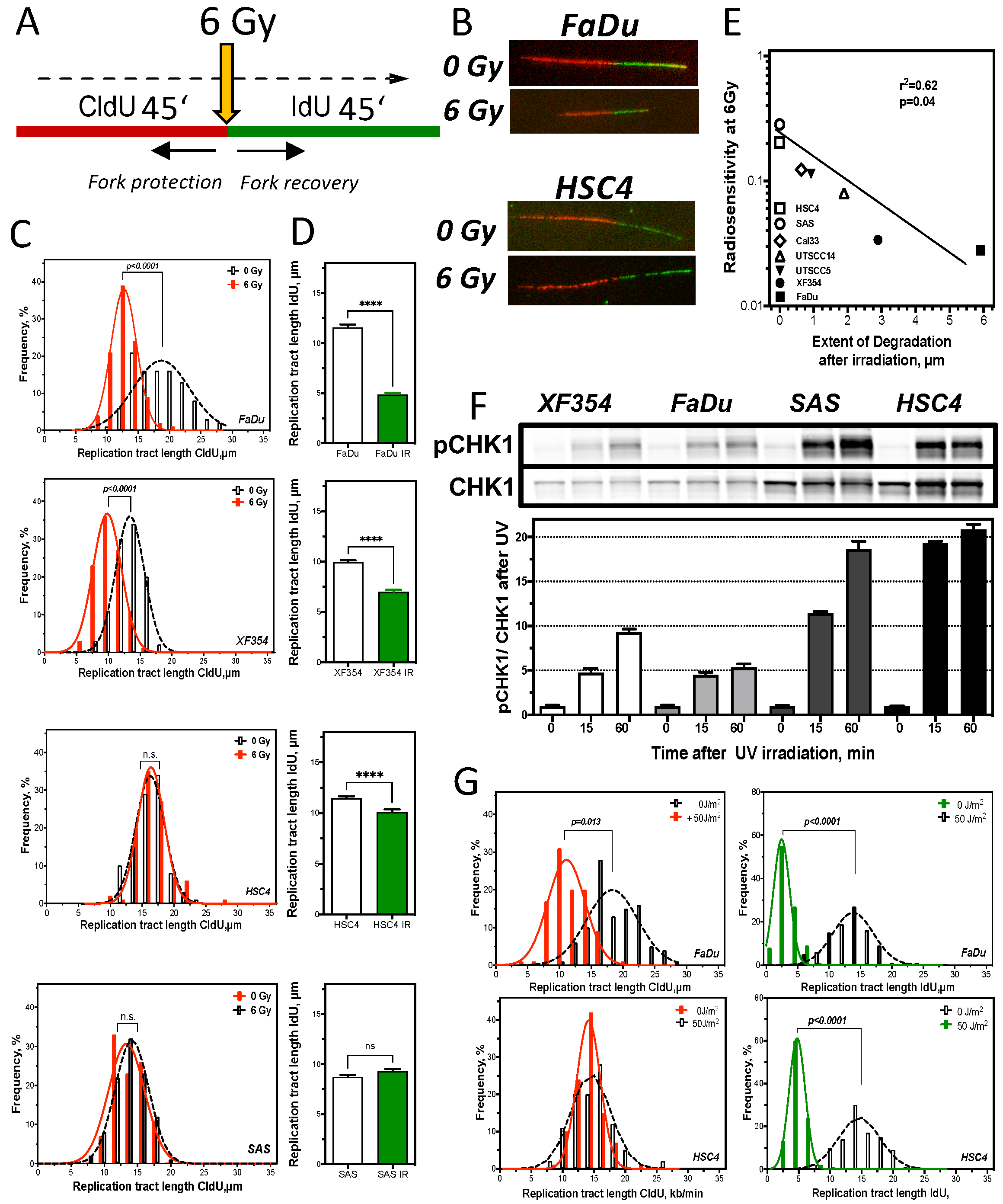
Aneuploidy is a consequence of chromosomal instability (CIN) that affects prognosis. Gene expression levels associated with aneuploidy provide insight into the molecular mechanisms underlying CIN. Based on the gene signature whose expression was consistent with functional aneuploidy, the CIN70 score was established. We observed an association of CIN70 score and survival in 519 HNSCC patients in the TCGA dataset; the 15% patients with the lowest CIN70 score showed better survival (p = 0.11), but association was statistically non-significant. This correlated with the expression of 39 proteins of the major repair complexes. A positive association with survival was observed for MSH2, XRCC1, MRE11A, BRCA1, BRCA2, LIG1, DNA2, POLD1, MCM2, RAD54B, claspin, a negative for ERCC1, all related with replication. We hypothesized that expression of these factors leads to protection of replication through efficient repair and determines survival and resistance to therapy. Protein expression differences in HNSCC cell lines did not correlate with cellular sensitivity after treatment. Rather, it was observed that the stability of the DNA replication fork determined resistance, which was dependent on the ATR/CHK1-mediated S-phase signaling cascade. This suggests that it is not the expression of individual DNA repair proteins that causes therapy resistance, but rather a balanced expression and coordinated activation of corresponding signaling cascades.