Functional States in Tumor-Initiating Cell Differentiation in Human Colorectal Cancer
by
 , , , , , , and add
Show full author list
, , , , , , and add
Show full author list
Martina K. Zowada
1,2,3,† ,
,
Stephan M. Tirier
4,5,6,†,
Sebastian M. Dieter
1,2,7,†,
Teresa G. Krieger
4,5,8,
Ava Oberlack
1,
Robert Lorenz Chua
4,5,8,
Mario Huerta
1,2,
Foo Wei Ten
4,5,8,
Karin Laaber
1,2,3,
Jeongbin Park
4,8,
Katharina Jechow
4,5,8,
Torsten Müller
9,10,
Mathias Kalxdorf
9,10,
Mark Kriegsmann
11 ,
,
Katharina Kriegsmann
12,
Friederike Herbst
1,2,
Jeroen Krijgsveld
9,10, 
Martin Schneider
13,
Roland Eils
4,5,8,14,
Hanno Glimm
1,2,15,16,*,‡,
Christian Conrad
4,5,8,*,‡ and
Claudia R. Ball
1,2,15,16,*,‡add
Show full author list
1
Translational Functional Cancer Genomics, National Center for Tumor Diseases (NCT) Heidelberg and German Cancer Research Center (DKFZ) Heidelberg, 69120 Heidelberg, Germany
2
Department of Translational Medical Oncology, NCT Dresden and DKFZ, 01307 Dresden, Germany
3
Faculty of Biosciences, Heidelberg University, 69120 Heidelberg, Germany
4
Division of Theoretical Bioinformatics, DKFZ Heidelberg, 69120 Heidelberg, Germany
5
Center for Quantitative Analysis of Molecular and Cellular Biosystems (BioQuant), Heidelberg University, 69120 Heidelberg, Germany
6
Division of Chromatin Networks, DKFZ Heidelberg, 69120 Heidelberg, Germany
7
German Cancer Consortium (DKTK), 69120 Heidelberg, Germany
8
Digital Health Center, Berlin Institute of Health (BIH) and Charité-Universitätsmedizin Berlin, 10117 Berlin, Germany
9
Division of Proteomics of Stem Cells and Cancer, DKFZ Heidelberg, 69120 Heidelberg, Germany
10
Medical Faculty, Heidelberg University, 69120 Heidelberg, Germany
11
Institute of Pathology, Heidelberg University Hospital, 69120 Heidelberg, Germany
12
Department of Hematology, Oncology and Rheumatology, Heidelberg University Hospital, 69120 Heidelberg, Germany
13
Department of General, Visceral and Transplantation Surgery, Heidelberg University Hospital, 69120 Heidelberg, Germany
14
Department for Bioinformatics and Functional Genomics, Institute for Pharmacy and Molecular Biotechnology (IPMB), Heidelberg University, 69120 Heidelberg, Germany
15
Center for Personalized Oncology, University Hospital Carl Gustav Carus Dresden at Technische Universität (TU) Dresden, 01307 Dresden, Germany
16
DKTK, 01307 Dresden, Germany
*
Authors to whom correspondence should be addressed.
†
Shared first authorship.
‡
Shared last authorship.
Cancers 2021, 13(5), 1097; https://doi.org/10.3390/cancers13051097
Submission received: 12 February 2021
/
Accepted: 28 February 2021
/
Published: 4 March 2021
(This article belongs to the Special Issue In Vitro and In Vivo Models of Colorectal Cancer for Clinical Application)
Simple Summary
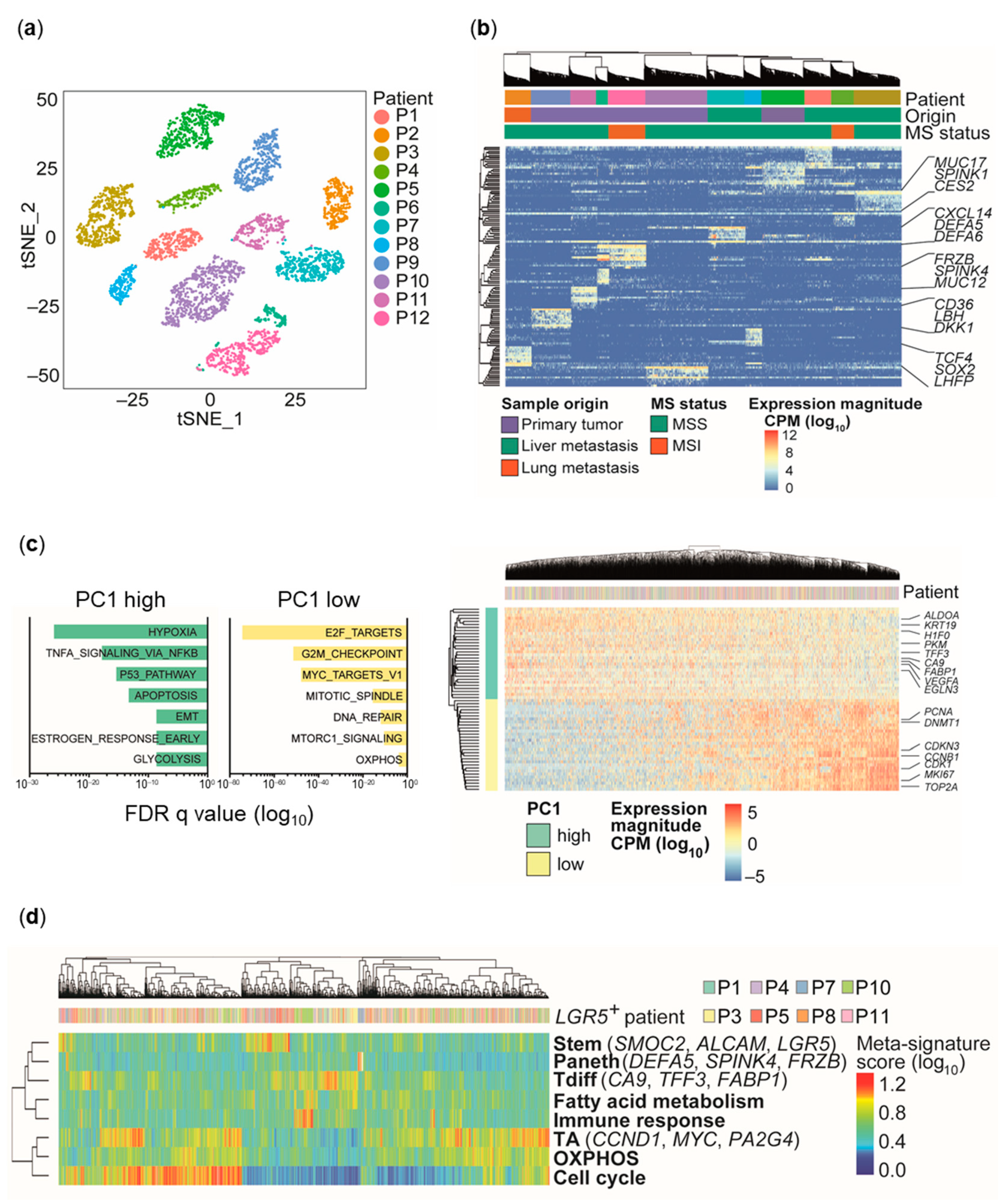
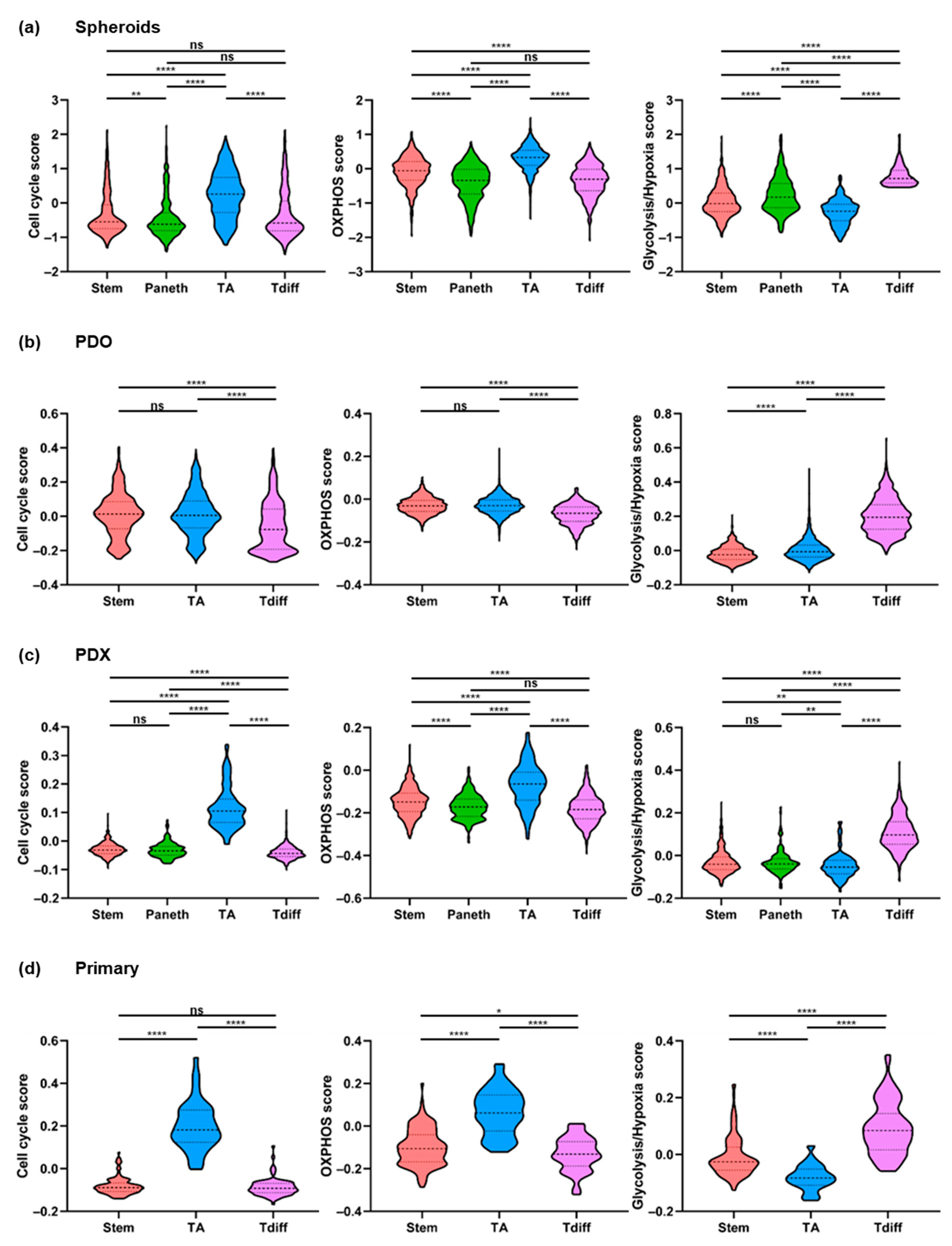
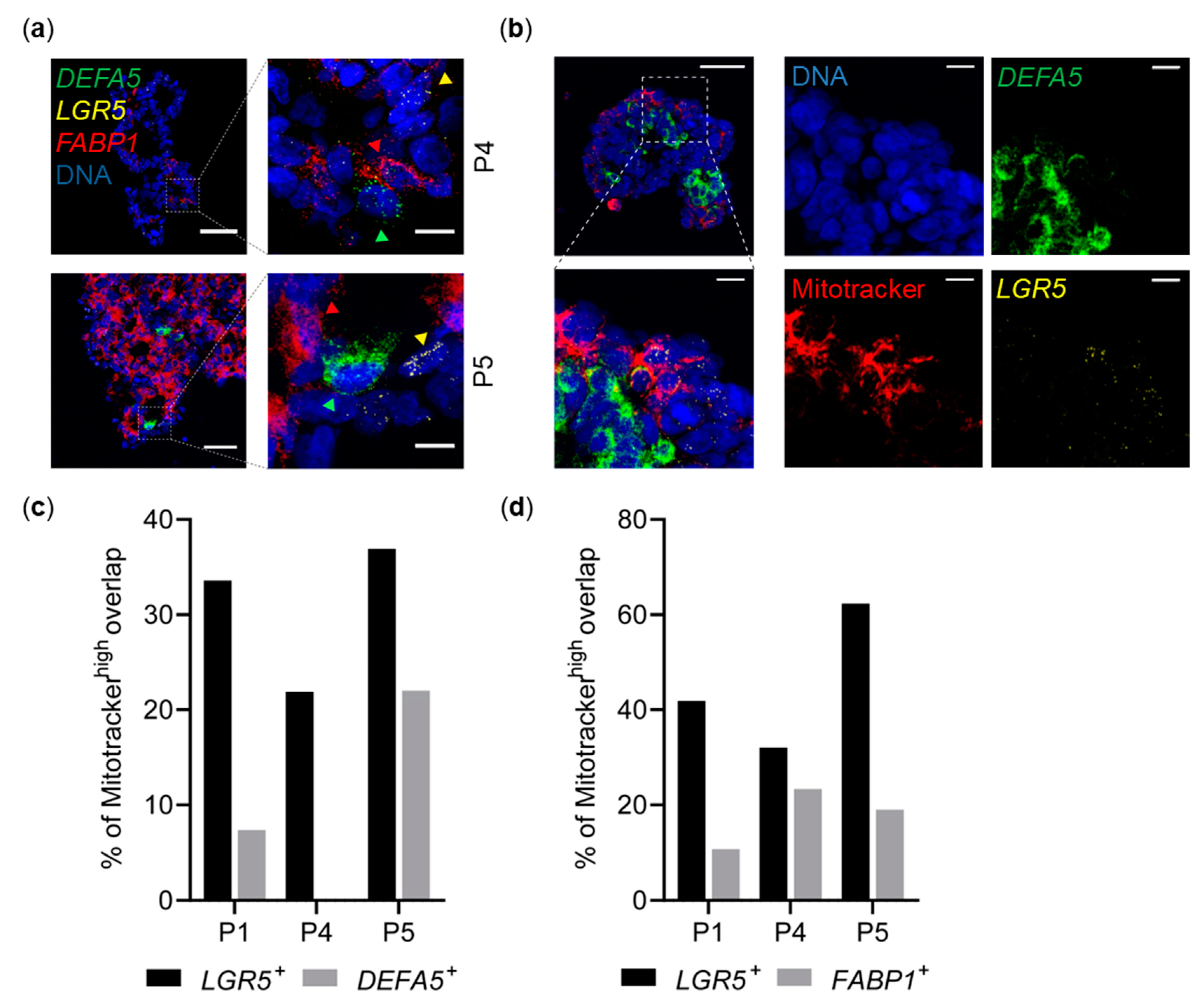
Different types of cells with tumor-initiating cell (TIC) activity contribute to colorectal cancer (CRC) progression and resistance to anti-cancer treatment. In this study, we aimed to understand whether different cell types exist within a patient-derived tumor culture, distinguishable by different patterns of their gene expression. By mRNA sequencing of patient-derived CRC cultures at the single-cell level, we defined expression programs that closely resemble differentiated cell populations of the normal intestine. Here, cell type-associated subpopulations showed differences in functional properties such as cell growth and energy metabolism. Subsequent functional analyses in vitro and in vivo demonstrated that metabolic states are linked to TIC activity in primary CRC cultures. We also show that TIC activity is dependent on oxidative phosphorylation, which may therefore represent a target for novel therapies.
Abstract
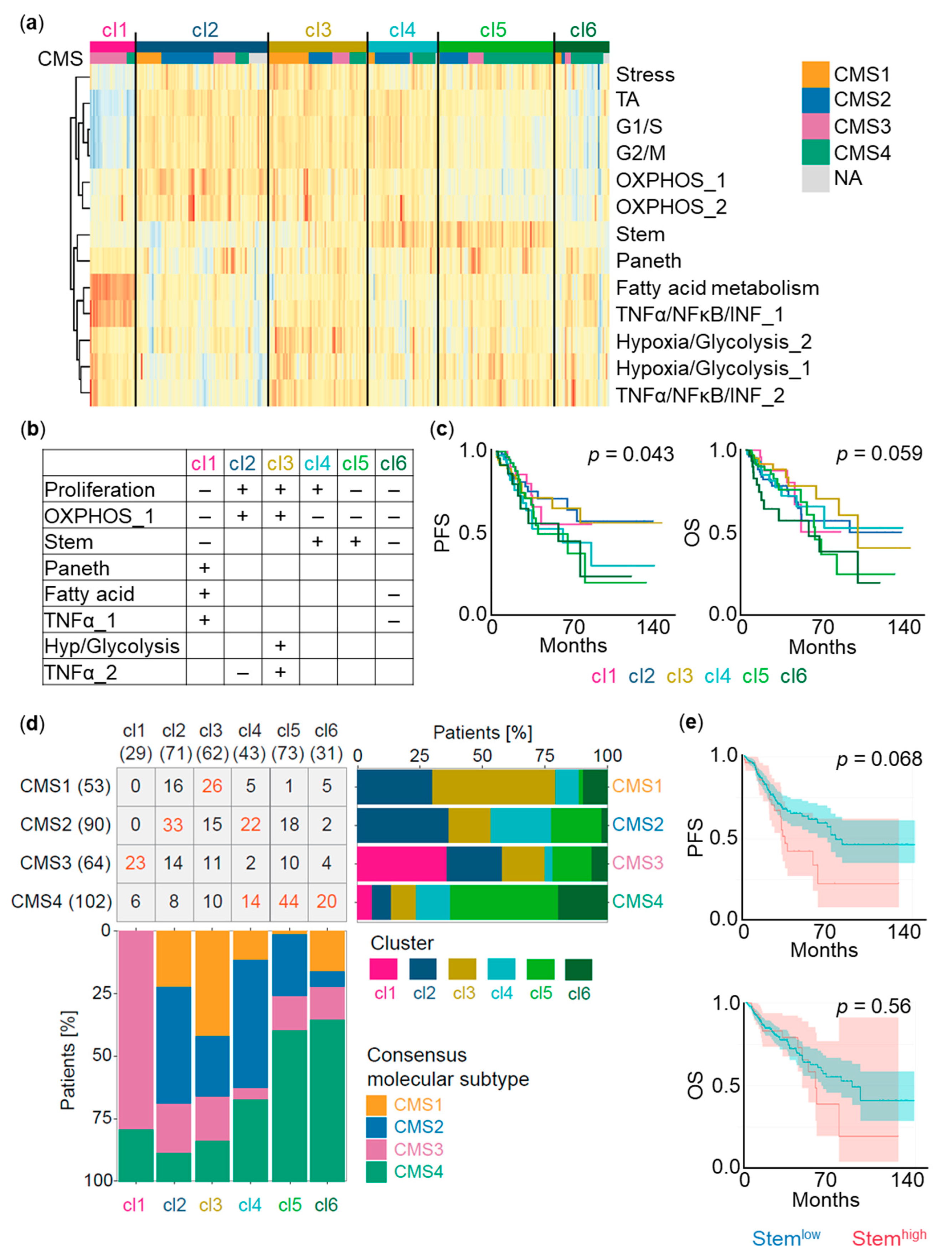
Intra-tumor heterogeneity of tumor-initiating cell (TIC) activity drives colorectal cancer (CRC) progression and therapy resistance. Here, we used single-cell RNA-sequencing of patient-derived CRC models to decipher distinct cell subpopulations based on their transcriptional profiles. Cell type-specific expression modules of stem-like, transit amplifying-like, and differentiated CRC cells resemble differentiation states of normal intestinal epithelial cells. Strikingly, identified subpopulations differ in proliferative activity and metabolic state. In summary, we here show at single-cell resolution that transcriptional heterogeneity identifies functional states during TIC differentiation. Furthermore, identified expression signatures are linked to patient prognosis. Targeting transcriptional states associated to cancer cell differentiation might unravel novel vulnerabilities in human CRC.