Heme Biosynthesis mRNA Expression Signature: Towards a Novel Prognostic Biomarker in Patients with Diffusely Infiltrating Gliomas
by
 , , , , and
Mario Mischkulnig
1,2 ,
,
Barbara Kiesel
1,2,
Daniela Lötsch
1,2, 
Thomas Roetzer
2,3,
Martin Borkovec
1,
Lisa I. Wadiura
1,2,
Karl Roessler
1,2 ,
,
Shawn Hervey-Jumper
4,
Josef M. Penninger
5,6,
Mitchel S. Berger
4,
Georg Widhalm
1,2,* and
Friedrich Erhart
1,2 1
Department of Neurosurgery, Medical University of Vienna, Währinger Gürtel 18–20, 1090 Vienna, Austria
2
Comprehensive Cancer Center—Central Nervous System Tumours Unit, Medical University of Vienna, Währinger Gürtel 18–20, 1090 Vienna, Austria
3
Department of Neurology, Division of Neuropathology and Neurochemistry, Medical University of Vienna, Währinger Gürtel 18–20, 1090 Vienna, Austria
4
Department of Neurological Surgery, University of California San Francisco, 505 Parnassus Ave, San Francisco, CA 94143, USA
5
Institute of Molecular Biotechnology of the Austrian Academy of Sciences, Dr.-Bohr-Gasse 3, 1030 Vienna, Austria
6
Department of Medical Genetics, Life Sciences Institute, University of British Columbia, C201–4500 Oak Street, Vancouver, BC V6H 3N1, Canada
*
Author to whom correspondence should be addressed.
Cancers 2021, 13(4), 662; https://doi.org/10.3390/cancers13040662
Submission received: 9 January 2021
/
Revised: 30 January 2021
/
Accepted: 2 February 2021
/
Published: 7 February 2021
(This article belongs to the Section Cancer Biomarkers)
Simple Summary
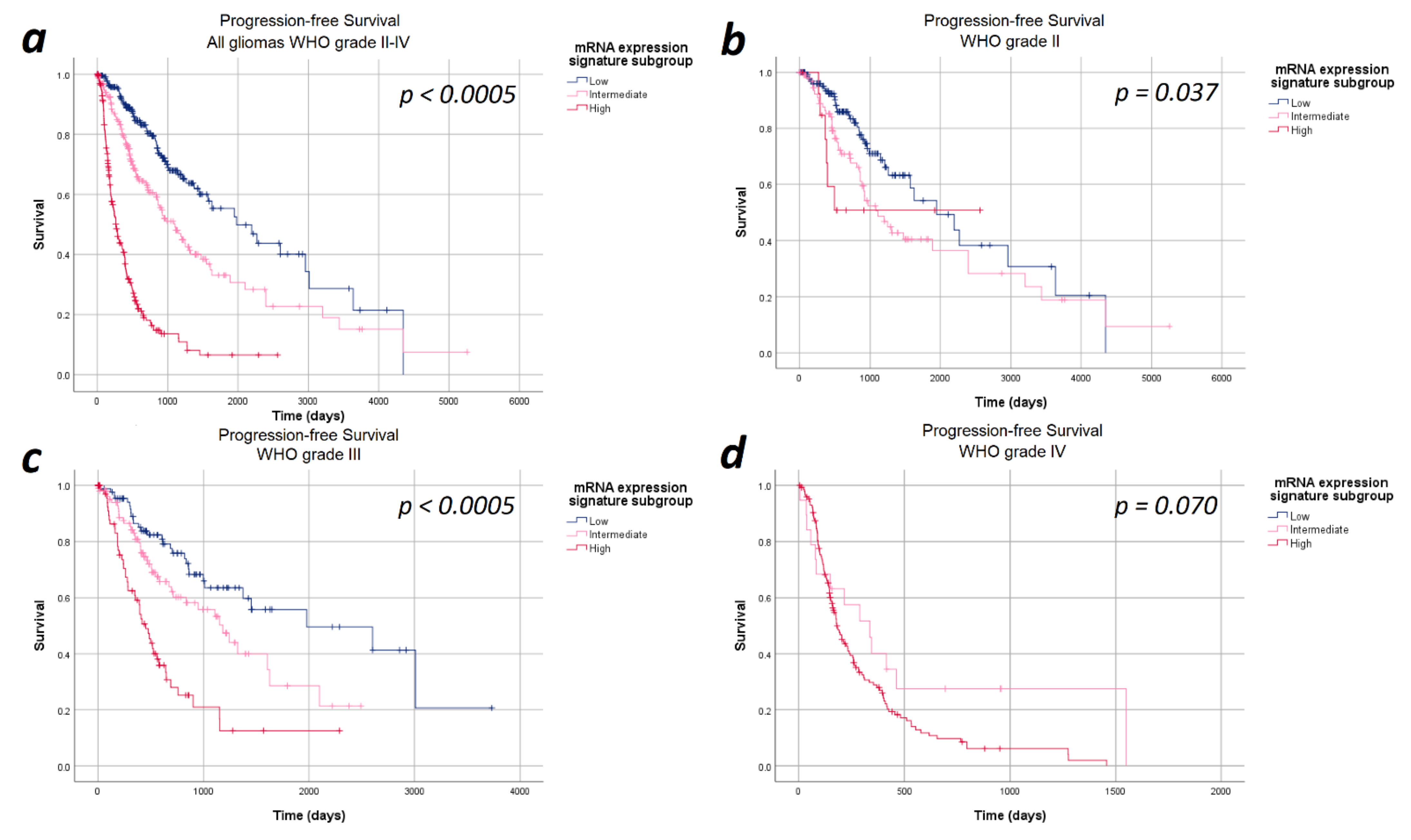
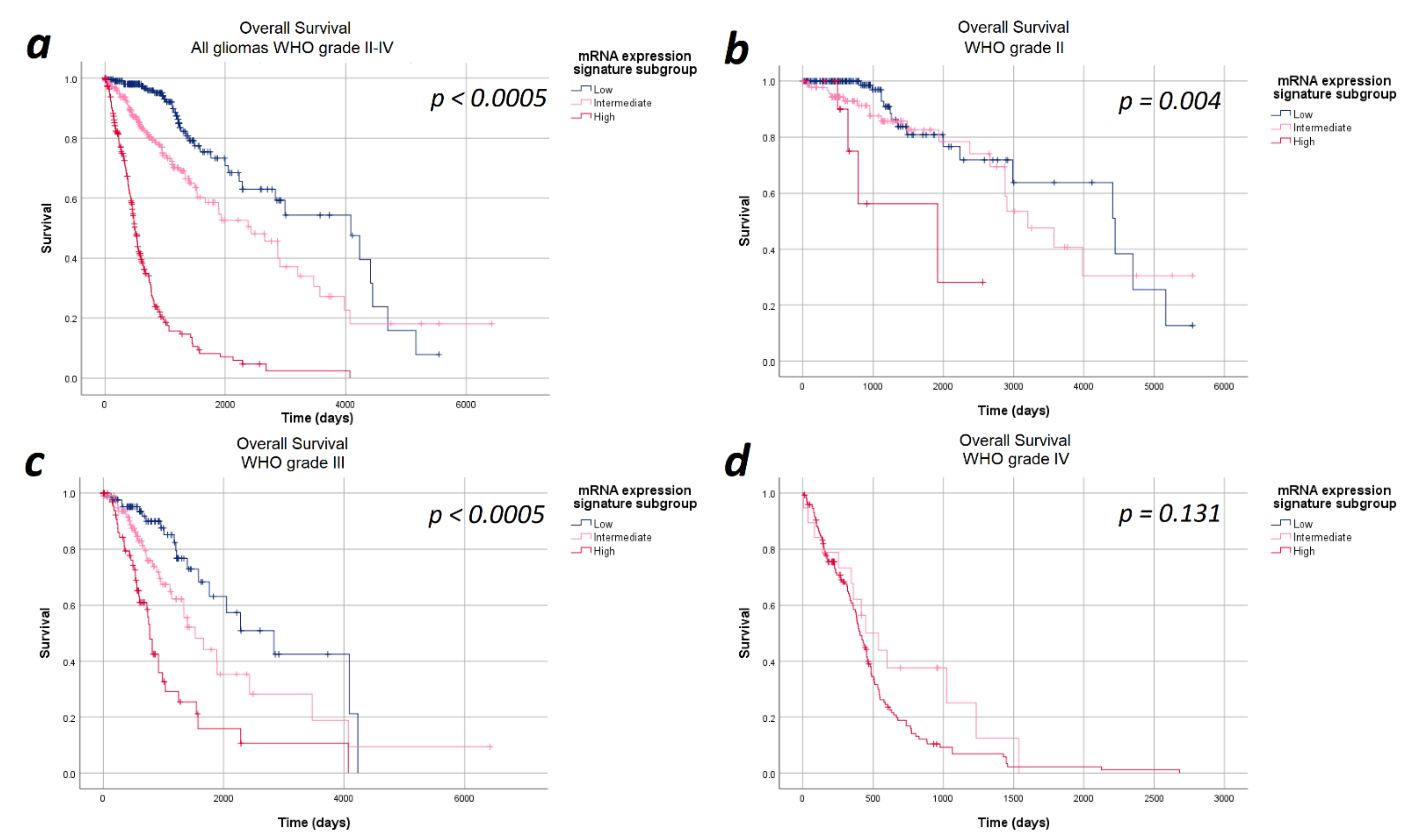
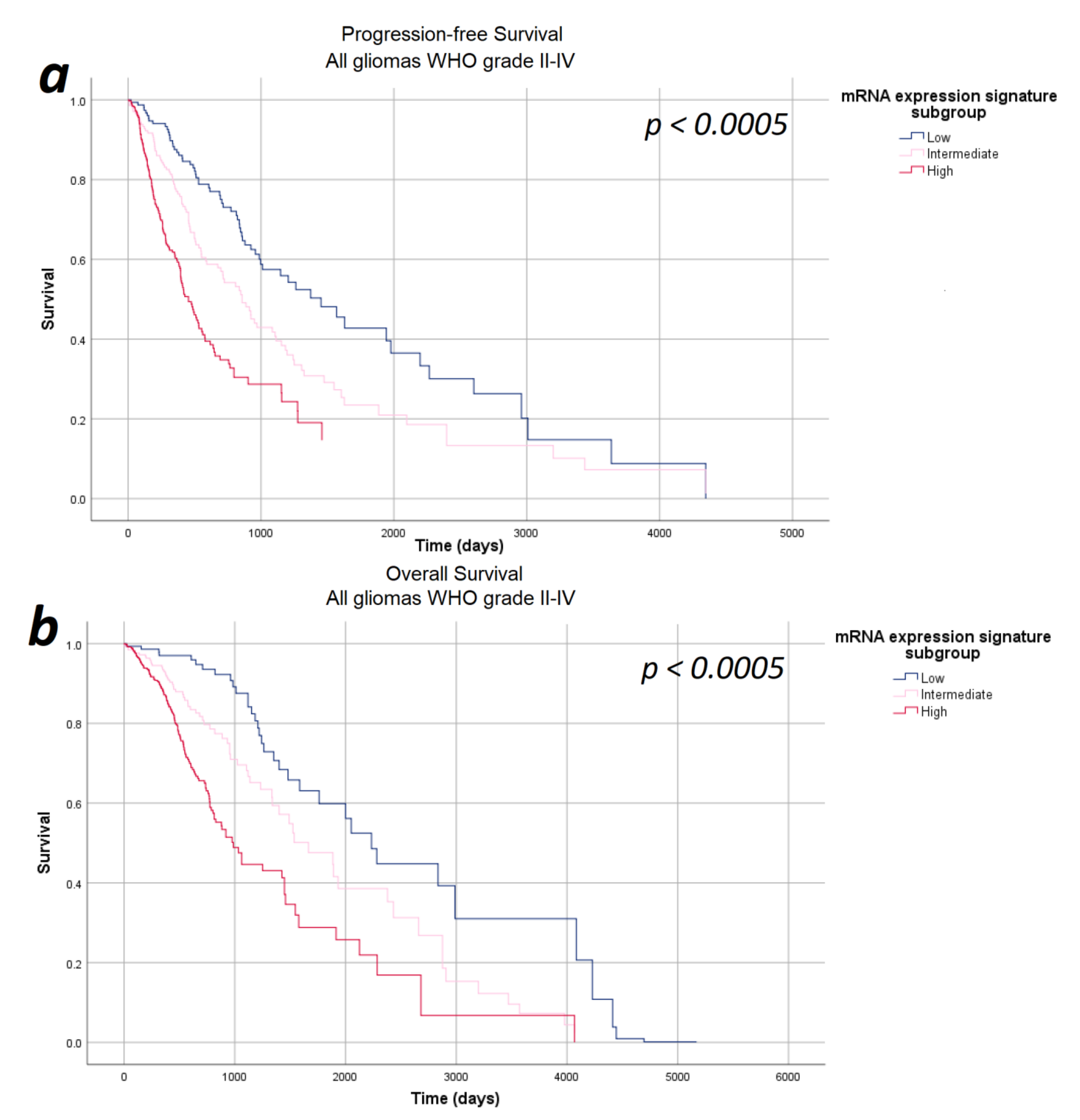
Diffusely infiltrating gliomas are frequent brain tumors with variable prognosis. In addition to the blood pigment’s role of oxygen transportation, the metabolic pathway synthesizing heme has been shown to play a role in the biochemistry of various tumors. In this study we thus investigated the impact of heme biosynthesis factors mRNA expression on the survival in glioma patients and observed a progressive decrease in survival time with increasing mRNA expression signature. This association was present for overall as well as progression-free survival and remained statistically significant after correction for established prognostic factors such as patient age and tumor grade.
Abstract
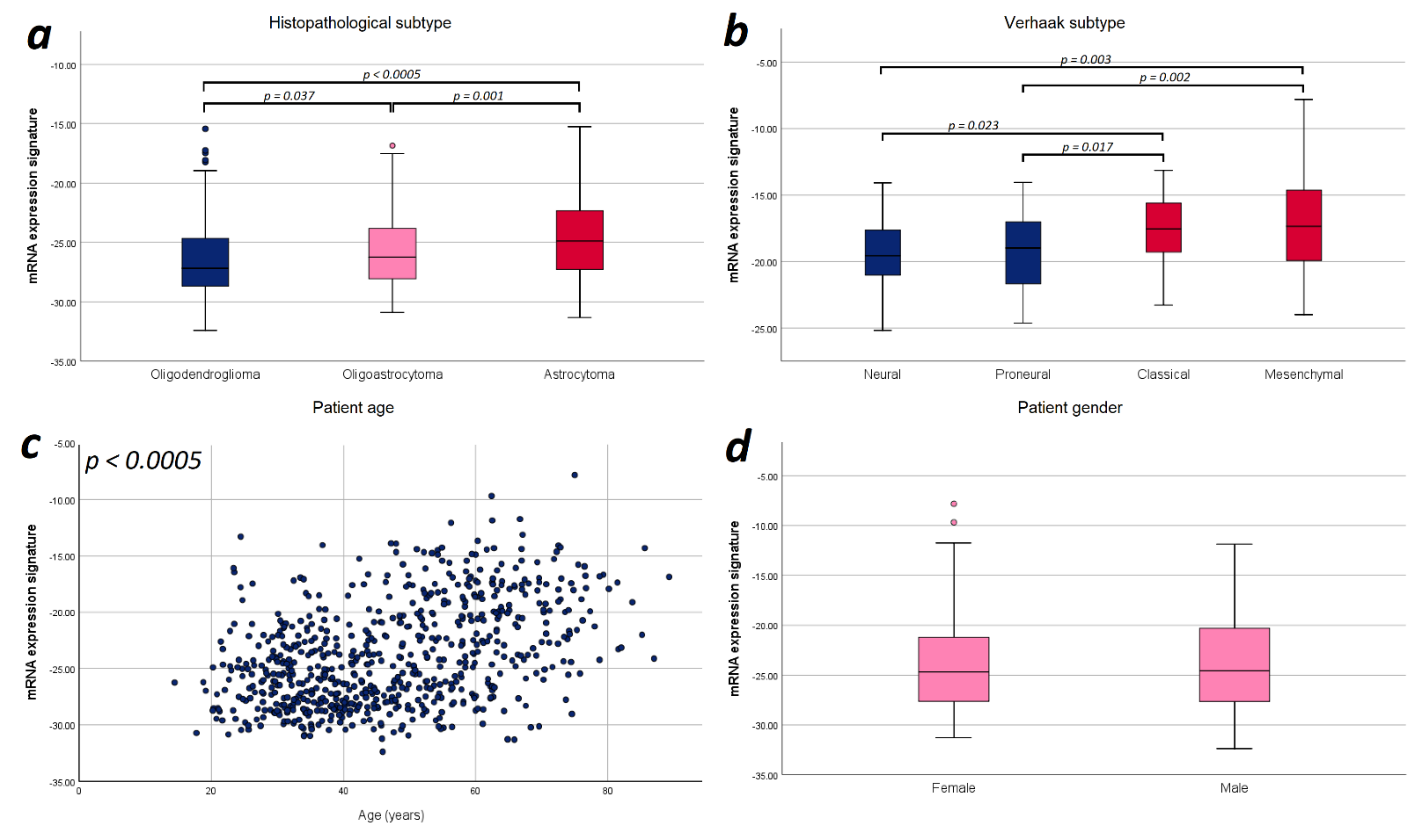
Diffusely infiltrating gliomas are characterized by a variable clinical course, and thus novel prognostic biomarkers are needed. The heme biosynthesis cycle constitutes a fundamental metabolic pathway and might play a crucial role in glioma biology. The aim of this study was thus to investigate the role of the heme biosynthesis mRNA expression signature on prognosis in a large glioma patient cohort. Glioma patients with available sequencing data on heme biosynthesis expression were retrieved from The Cancer Genome Atlas (TCGA). In each patient, the heme biosynthesis mRNA expression signature was calculated and categorized into low, medium, and high expression subgroups. Differences in progression-free and overall survival between these subgroups were investigated including a multivariate analysis correcting for WHO grade, tumor subtype, and patient age and sex. In a total of 693 patients, progression-free and overall survival showed a strictly monotonical decrease with increasing mRNA expression signature subgroups. In detail, median overall survival was 134.2 months in the low, 79.9 months in the intermediate, and 16.5 months in the high mRNA expression signature subgroups, respectively. The impact of mRNA expression signature on progression-free and overall survival was independent of the other analyzed prognostic factors. Our data indicate that the heme biosynthesis mRNA expression signature might serve as an additional novel prognostic marker in patients with diffusely infiltrating gliomas to optimize postoperative management.
Keywords:
glioma; heme biosynthesis; TCGA; gene expression; survival