Plasma Proteome Signature to Predict the Outcome of Breast Cancer Patients Receiving Neoadjuvant Chemotherapy
by
 , , , , and
Sungchan Gwark
1,† ,
,
Hee-Sung Ahn
2,3,†,
Jeonghun Yeom
3,
Jiyoung Yu
2,
Yumi Oh
2,4,
Jae Ho Jeong
5,
Jin-Hee Ahn
5,
Kyung Hae Jung
5,
Sung-Bae Kim
5,
Hee Jin Lee
6,
Gyungyub Gong
6,
Sae Byul Lee
7,
Il Yong Chung
7,
Hee Jeong Kim
7,
Beom Seok Ko
7,
Jong Won Lee
7,
Byung Ho Son
7,
Sei Hyun Ahn
7,
Kyunggon Kim
2,3,4,8,9,* and
Jisun Kim
7,* 1
Department of Surgery, Ewha Womans University Mokdong Hospital, Ewha Womans University College of Medicine, Seoul 07985, Korea
2
Asan Institute for Life Sciences, Asan Medical Center, Seoul 05505, Korea
3
Convergence Medicine Research Center, Asan Institute for Life Sciences, Asan Medical Center, Seoul 05505, Korea
4
Department of Biomedical Sciences, University of Ulsan College of Medicine, Seoul 05505, Korea
5
Department of Oncology, Asan Medical Center, University of Ulsan College of Medicine, Seoul 05505, Korea
6
Department of Pathology, Asan Medical Center, University of Ulsan College of Medicine, Seoul 05505, Korea
7
Department of Surgery, Asan Medical Center, University of Ulsan College of Medicine, Seoul 05505, Korea
8
Clinical Proteomics Core Laboratory, Convergence Medicine Research Center, Asan Medical Center, Seoul 05505, Korea
9
Bio-Medical Institute of Technology, Asan Medical Center, Seoul 05505, Korea
*
Authors to whom correspondence should be addressed.
†
These authors contributed equally to this work.
Cancers 2021, 13(24), 6267; https://doi.org/10.3390/cancers13246267
Submission received: 5 November 2021
/
Revised: 7 December 2021
/
Accepted: 10 December 2021
/
Published: 14 December 2021
(This article belongs to the Special Issue Breast Cancer: Novel Histological and Molecular Markers for Diagnosis, Prognosis, Therapeutic Prediction, and Drug Resistance)
Simple Summary
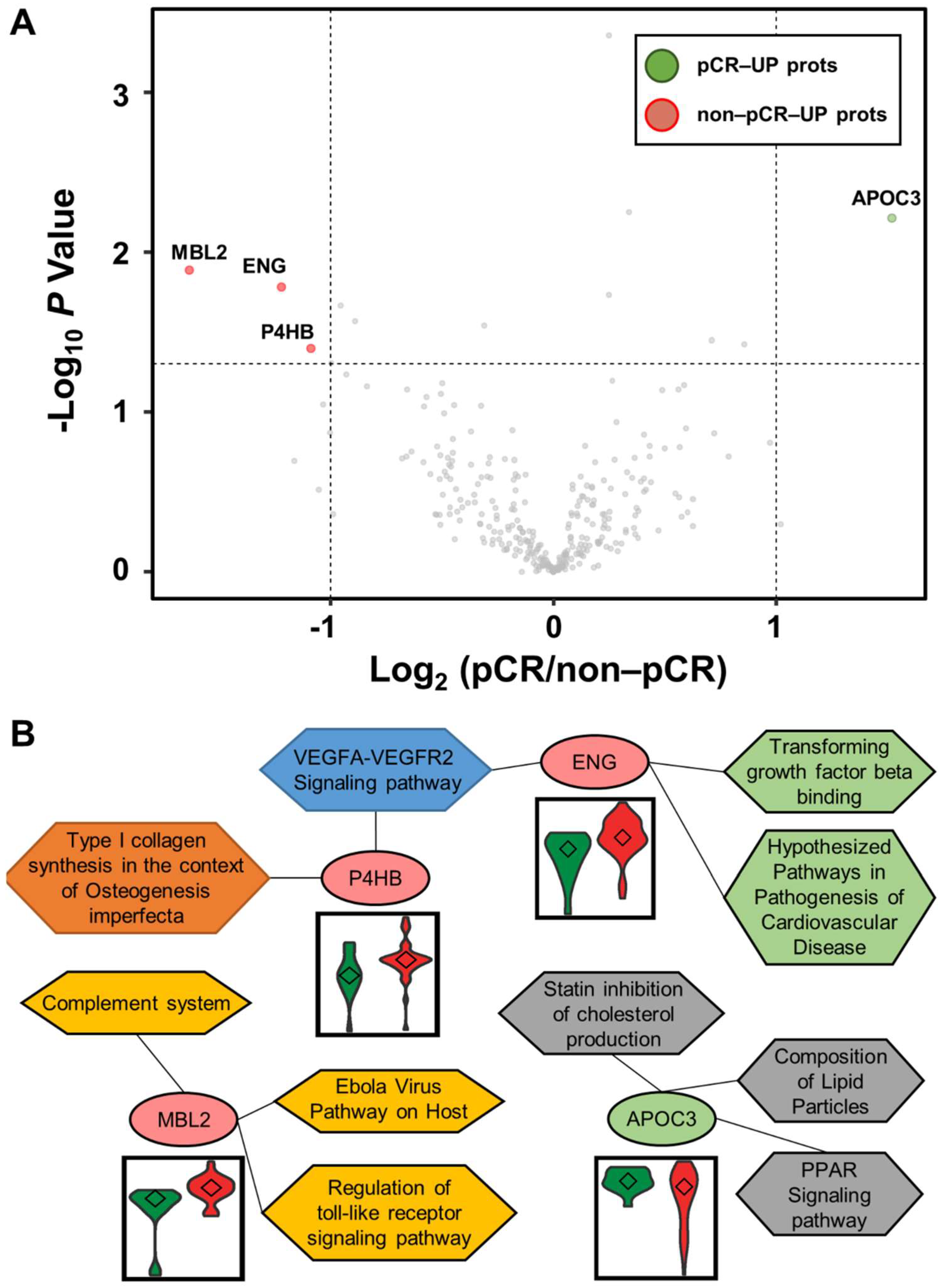
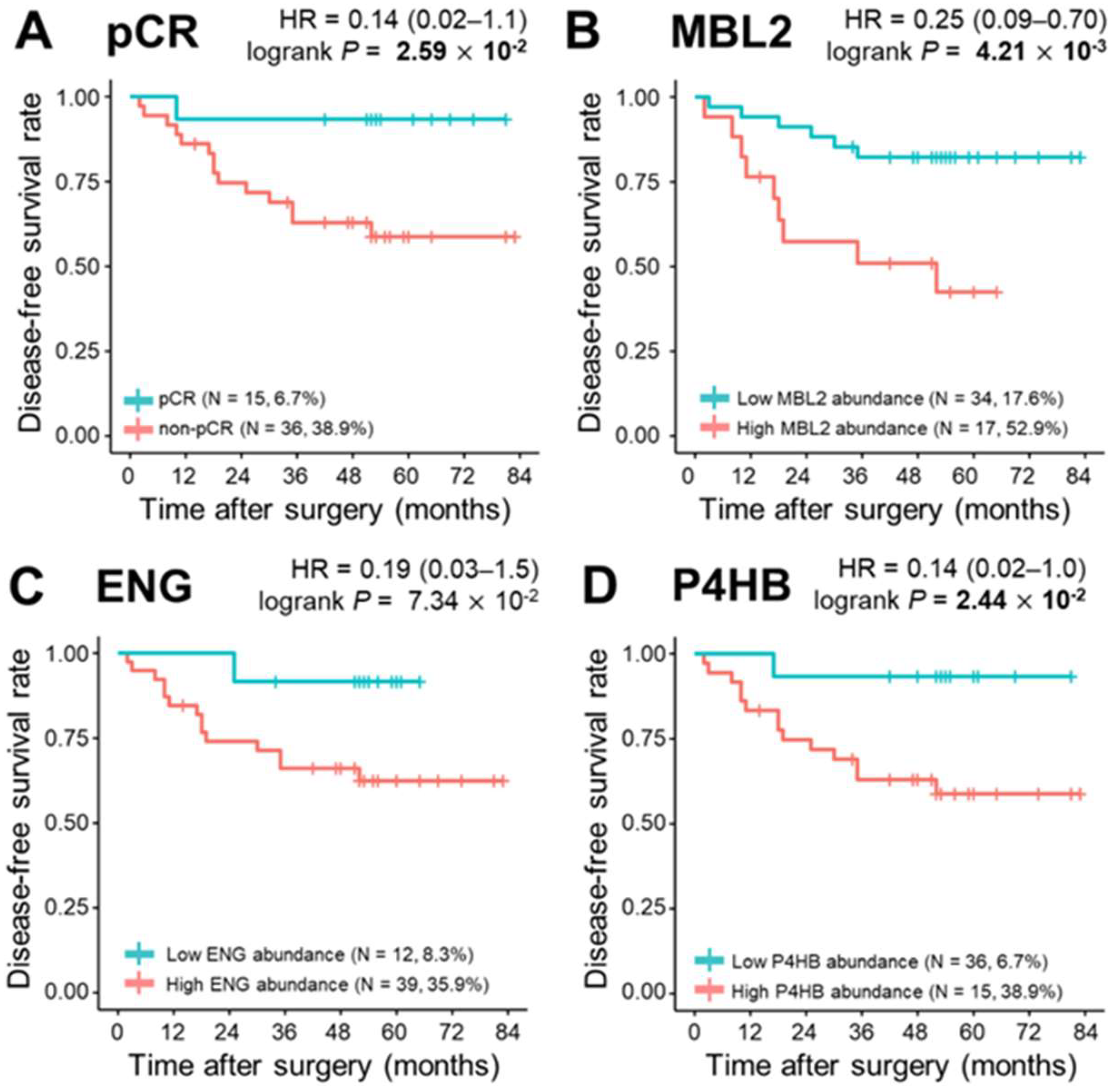
The prognostic impact of plasma protein biomarkers in breast cancer patients treated with neoadjuvant chemotherapy (NCT) was evaluated using a proteomics approach. Three biomarkers were identified among differentially expressed proteins. The plasma concentration of APOC3 was higher in the pathological complete response (pCR) group, whereas MBL2, ENG, and P4HB were upregulated in the non-pCR group. Univariate survival analysis was performed to identify protein biomarkers that could classify patients into low- and high-risk groups. The results showed that MBL2 and P4HB were statistically significantly associated with disease-free survival (log-rank test p < 0.05); P4HB was statistically significantly associated with overall survival (log-rank test p < 0.05), whereas MBL2 was statistically significantly associated with distant metastasis-free survival (log-rank test p < 0.05). The results demonstrated that protein markers from non-invasive liquid biopsy sampling correlate with pCR and survival in breast cancer patients receiving NCT. Further investigation of these protein markers may help clarify their role in predicting prognosis and thus their therapeutic potential for preventing metastasis.
Abstract
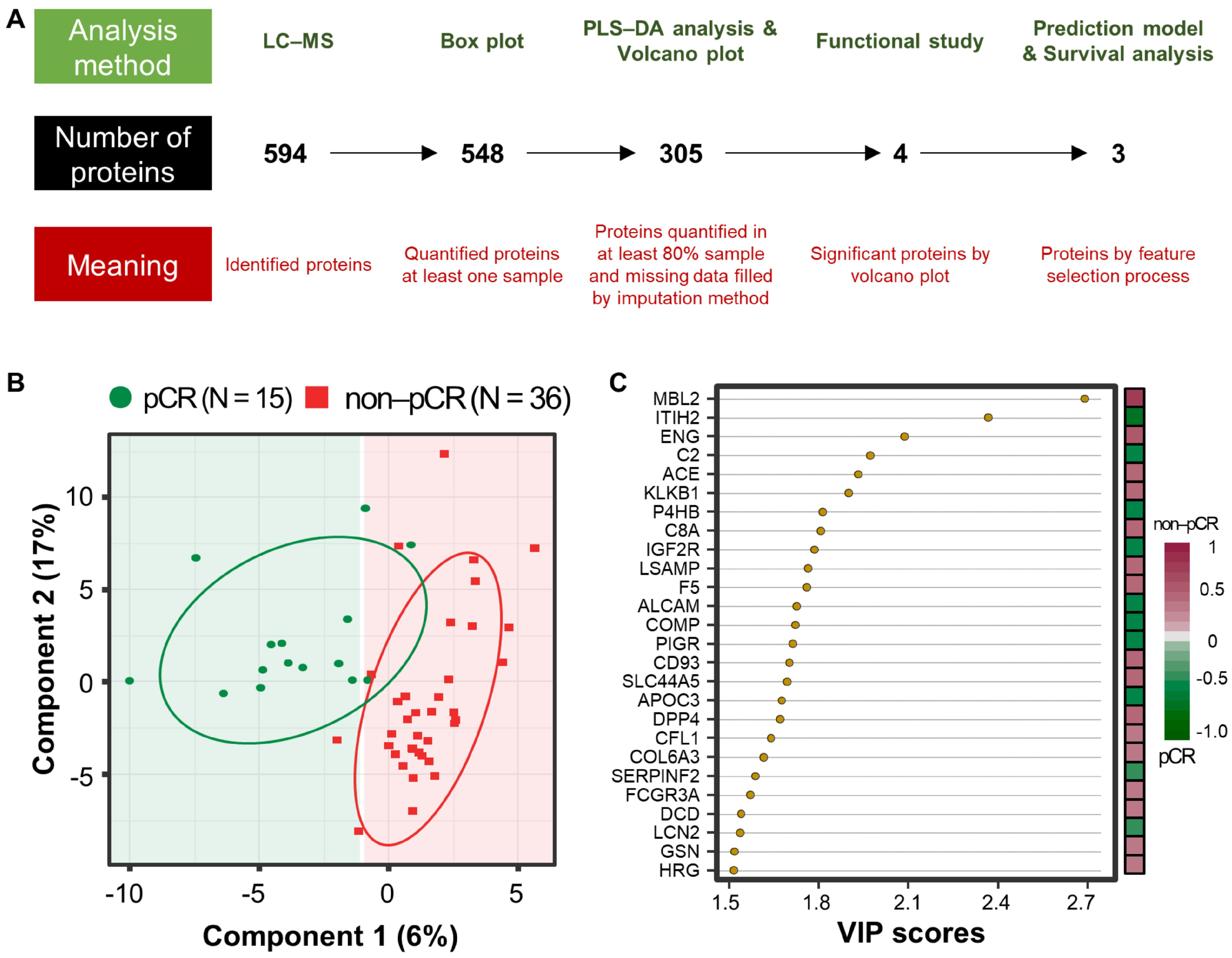
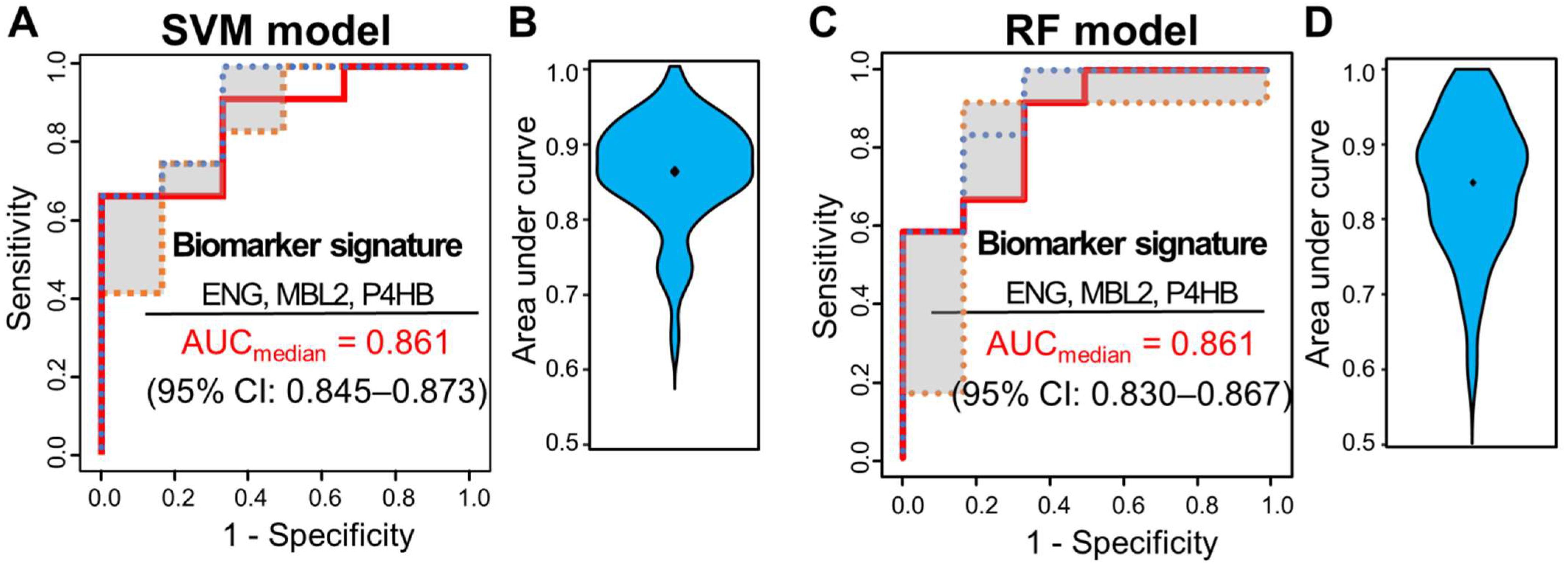
The plasma proteome of 51 non-metastatic breast cancer patients receiving neoadjuvant chemotherapy (NCT) was prospectively analyzed by high-resolution mass spectrometry coupled with nano-flow liquid chromatography using blood drawn at the time of diagnosis. Plasma proteins were identified as potential biomarkers, and their correlation with clinicopathological variables and survival outcomes was analyzed. Of 51 patients, 20 (39.2%) were HR+/HER2-, five (9.8%) were HR+/HER2+, five (9.8%) were HER2+, and 21 (41.2%) were triple-negative subtype. During a median follow-up of 52.0 months, there were 15 relapses (29.4%) and eight deaths (15.7%). Four potential biomarkers were identified among differentially expressed proteins: APOC3 had higher plasma concentrations in the pathological complete response (pCR) group, whereas MBL2, ENG, and P4HB were higher in the non-pCR group. Proteins statistically significantly associated with survival and capable of differentiating low- and high-risk groups were MBL2 and P4HB for disease-free survival, P4HB for overall survival, and MBL2 for distant metastasis-free survival (DMFS). In the multivariate analysis, only MBL2 was a consistent risk factor for DMFS (HR: 9.65, 95% CI 2.10–44.31). The results demonstrate that the proteomes from non-invasive sampling correlate with pCR and survival in breast cancer patients receiving NCT. Further investigation may clarify the role of these proteins in predicting prognosis and thus their therapeutic potential for the prevention of recurrence.
Keywords:
liquid biopsy; breast cancer; neoadjuvant chemotherapy; proteome; LC-MS/MS