European Multicenter Study on Degradable Starch Microsphere TACE: The Digestible Way to Conquer HCC in Patients with High Tumor Burden
by
 , and
, and
Johannes M. Ludwig
1,†, 
Roberto Iezzi
2,†, 
Jens M. Theysohn
1,*,
Thomas Albrecht
3,
Alessandro Posa
2 and
and
Alexander Gross
3 1
Institute of Diagnostic and Interventional Radiology and Neuroradiology, Faculty of Medicine, University Duisburg-Essen, Hufeland Str. 55, 45147 Essen, Germany
2
Department of Bioimaging and Radiological Sciences, Institute of Radiology, Fondazione Policlinico Universitario Agostino Gemelli IRCCS, Università Cattolica del Sacro Cuore, 00168 Rome, Italy
3
Department of Radiology and Interventional Therapy, Vivantes-Klinikum Neukölln, Rudower Str. 48, 12351 Berlin, Germany
*
Author to whom correspondence should be addressed.
†
The authors J.M.L. and R.I. contributed equally to this work.
Cancers 2021, 13(20), 5122; https://doi.org/10.3390/cancers13205122
Submission received: 3 September 2021
/
Accepted: 9 October 2021
/
Published: 13 October 2021
(This article belongs to the Collection Advances in Diagnostic and Interventional Radiology in Oncology)
Simple Summary
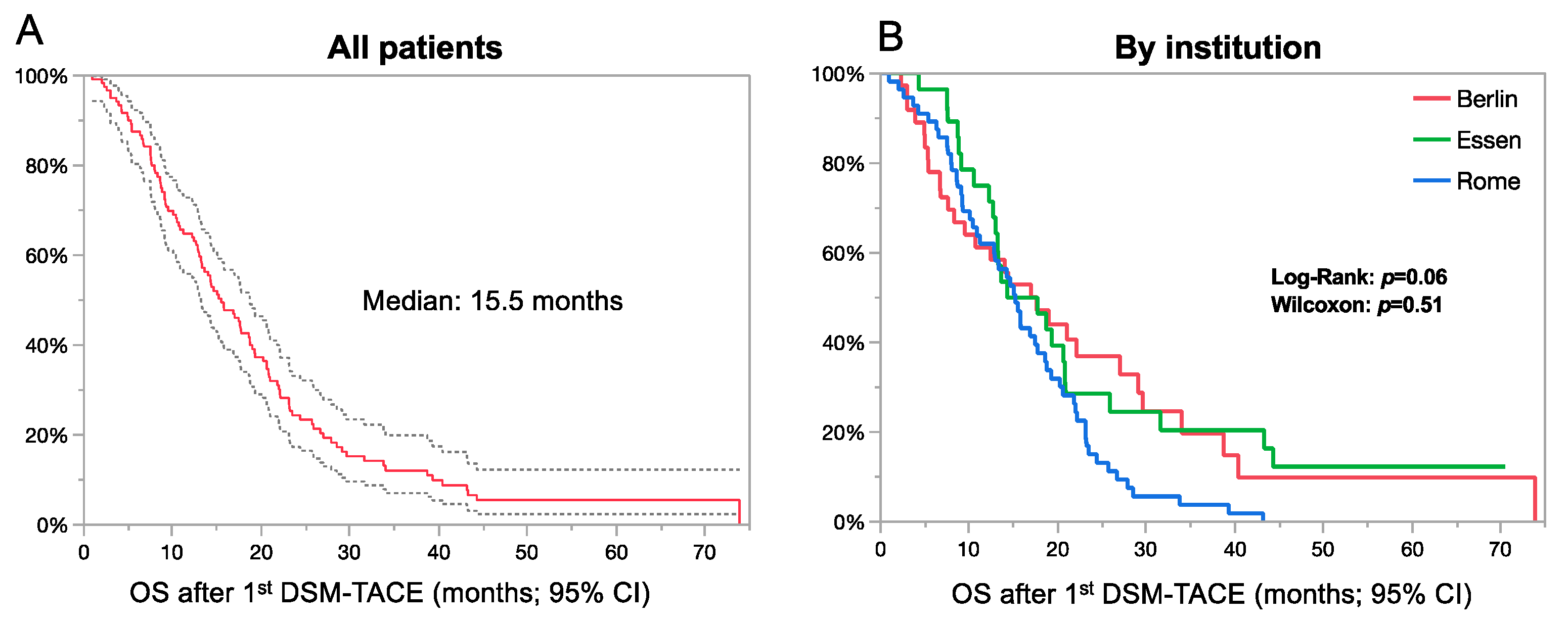
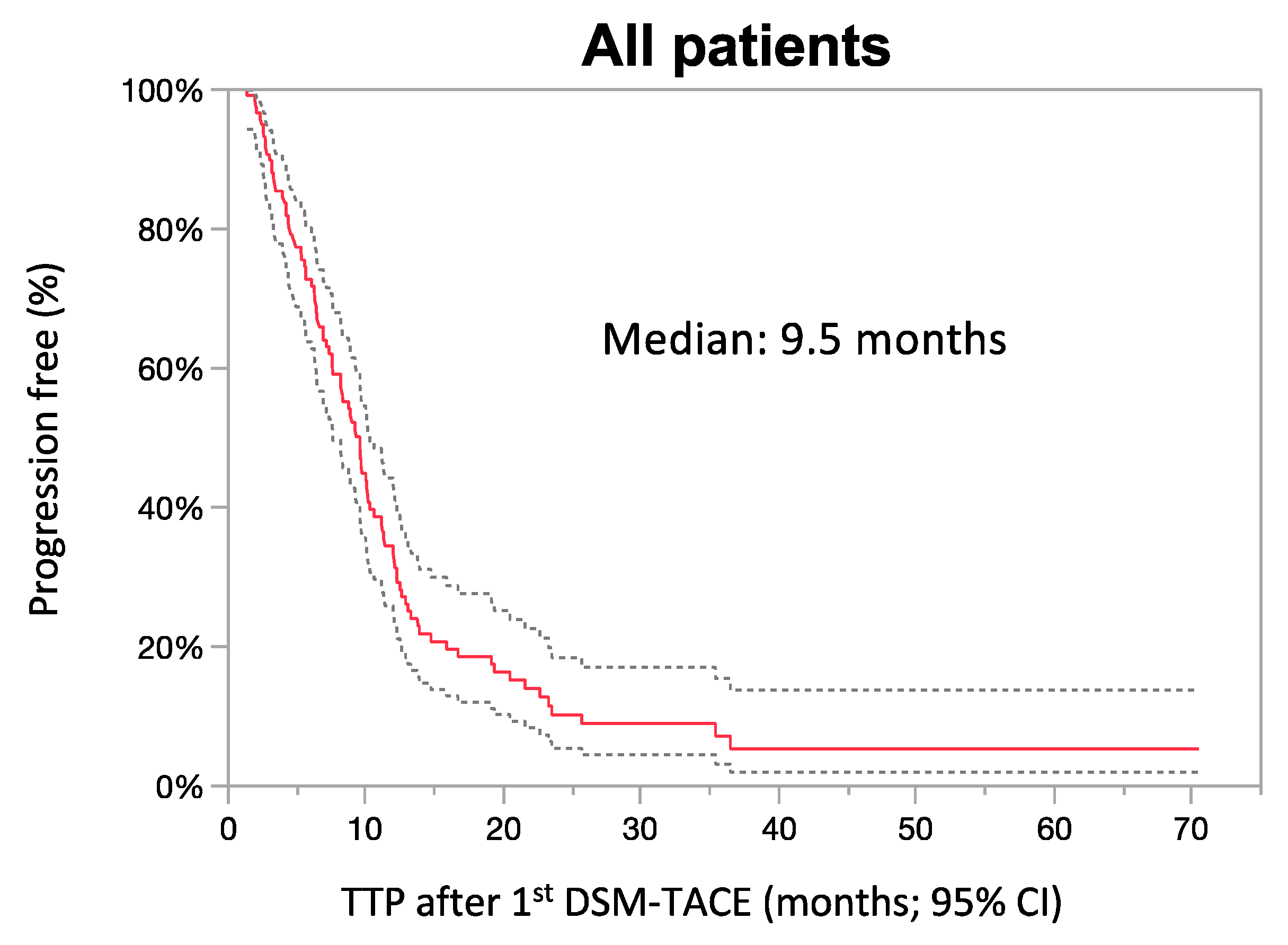
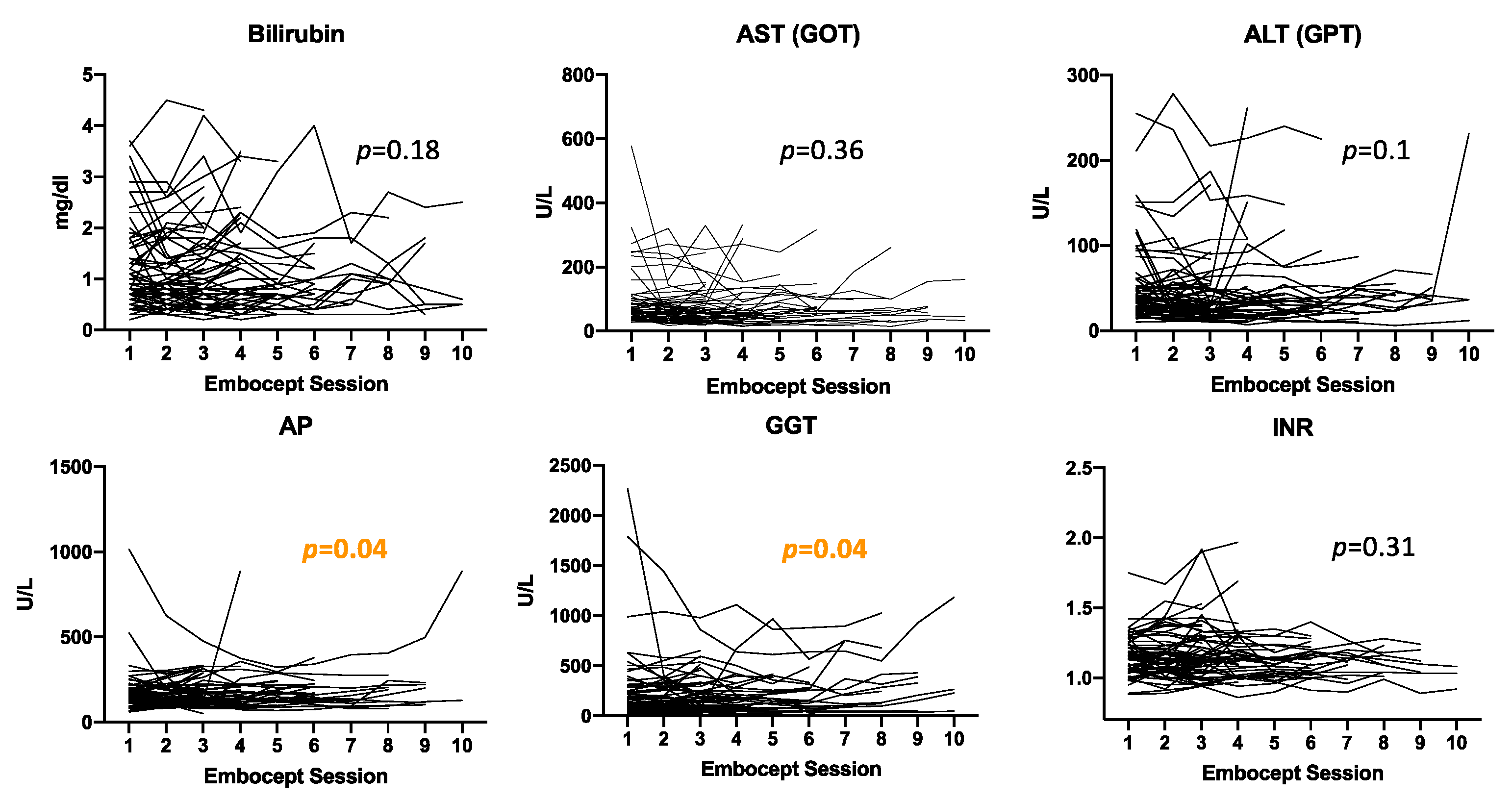
In this European multicenter study, we investigated the treatment efficacy and safety of degradable starch microsphere transarterial chemoembolization (DSM-TACE) for HCC treatment in 121 patients in whom other standard therapies failed or patients were not eligible. Patients survived a median of 15.5 months with a median time to tumor progression of 9.5 months and a disease control rate of 83.2%. The patients who survived longer had HCC lesions ≤10 cm, the involvement of one liver lobe only, lower Child–Pugh class and Barcelona Clinic Liver Cancer (BCLC) tumor stage, absence of vascular invasion, and the absence of extrahepatic metastases. Of these factors, a lesion of ≤10 cm and unilobar disease were identified as independent survival factors. Safety analysis revealed low rates of adverse events and maintained liver function after several treatments regardless of the treated liver volume. Thus, DSM-TACE is a veritable treatment alternative for unresectable HCC, where other treatments fail or cannot be offered due to contraindications.
Abstract
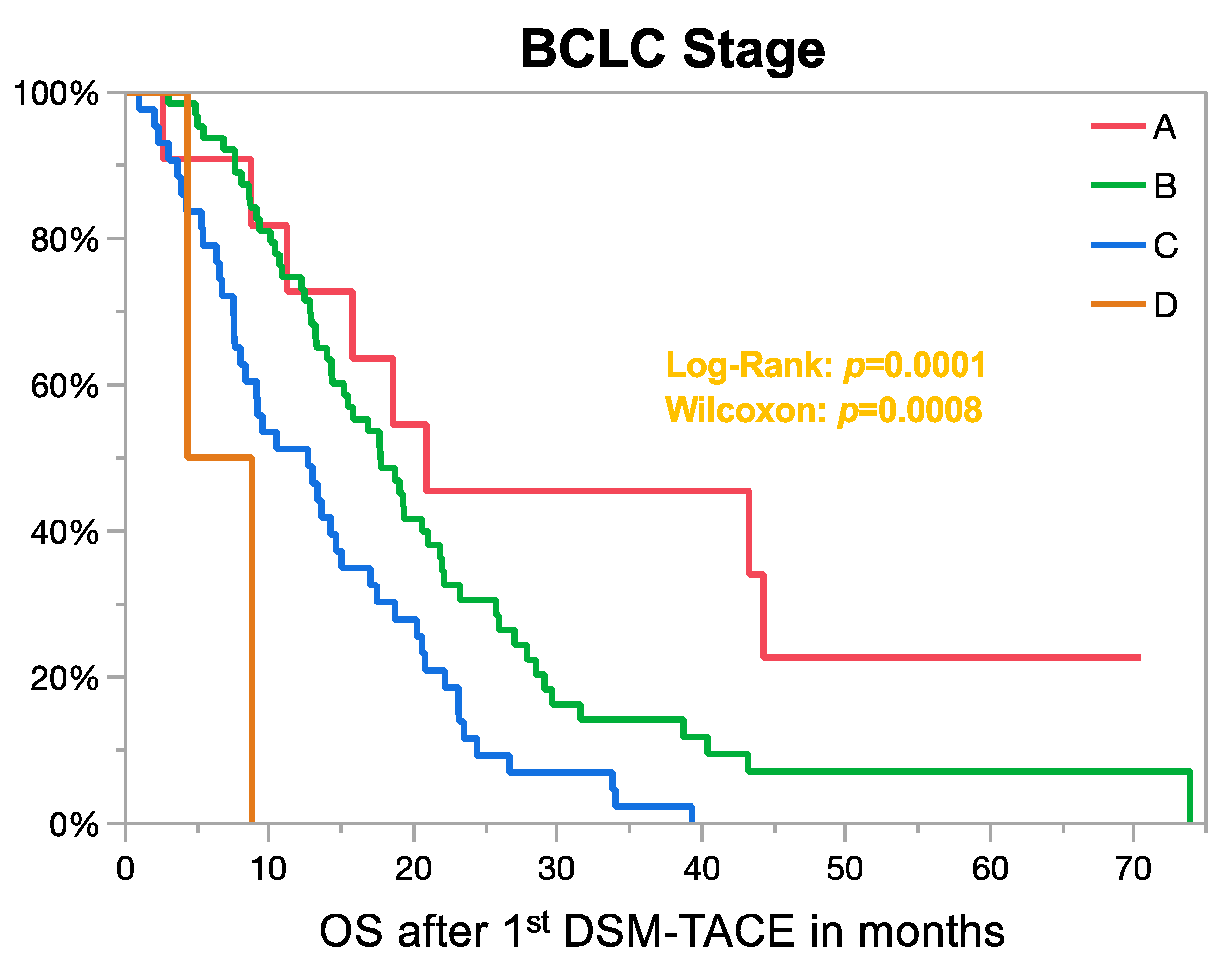
To evaluate the safety and efficacy of transarterial chemoembolization with degradable starch microspheres (DSM-TACE) for the treatment of hepatocellular carcinoma (HCC) with a high tumor burden ineligible for or failing other palliative therapies, 121 patients from three European centers were included. Kaplan–Meier analysis was used for median overall survival (OS) and time to progression (TTP, mRECIST criteria) in months with a 95% confidence interval (95% CI). Uni- (UVA) and multivariate (MVA) analyses were performed using the Cox Proportional Hazard Model. The median OS of the study cohort was 15.5 (13.3–18.7) months. The UVA identified HCC lesions ≤10 cm, unilobar involvement, lower Child–Pugh class and Barcelona Clinic Liver Cancer (BCLC) stage, absence of vascular invasion, and extrahepatic metastases as factors for prolonged survival. MVA confirmed lesions of ≤10 cm and unilobar disease as independent OS factors. Median TTP was 9.5 (7.6–10.3) months. The best response was achieved after a median of 3 (range: 1–6) treatments with CR/PR/SD/PD in 13.5%/44.5%/25.2%/16.8%, respectively. DSM-TACE was well tolerated with no major clinical adverse events and only limited major laboratory events. Preserved liver function was observed after repetitive DSM-TACE treatments. Repetitive DSM-TACE is a safe, well-tolerated and effective treatment option for HCC patients with high tumor burden ineligible or failing other palliative therapies.