Identification of a Dexamethasone Mediated Radioprotection Mechanism Reveals New Therapeutic Vulnerabilities in Glioblastoma
by
 , , , , , add
Show full author list
, , , , , add
Show full author list
Paula Aldaz
1,2, 
Jaione Auzmendi-Iriarte
3,
Maika Durántez
1,2,
Irene Lasheras-Otero
1,2,
Estefania Carrasco-Garcia
3,4,
M. Victoria Zelaya
2,5,
Laura Bragado
2,6,
Ana Olías-Arjona
1,2,
Larraitz Egaña
3,7,
Nicolás Samprón
3,7,
Idoia Morilla
1,2,8,
Marta Redondo-Muñoz
1,2,
Mikel Rico
2,9,
Massimo Squatrito
10,
Marta Maria-Alonso
2,11,12,
Joaquín Fernández-Irigoyen
2,13,14,
Enrique Santamaria
2,13,14 ,
,
Iñaki M. Larráyoz
15,
Claudia Wellbrock
1,2,
Ander Matheu
3,4,16 and 
Imanol Arozarena
1,2,*add
Show full author list
1
Cancer Signalling Unit, Navarrabiomed, Complejo Hospitalario de Navarra (CHN), Universidad Pública de Navarra (UPNA), 31008 Pamplona, Spain
2
Health Research Institute of Navarre (IdiSNA), 31008 Pamplona, Spain
3
Cellular Oncology Group, Biodonostia Health Research Institute, 20014 San Sebastian, Spain
4
CIBER de Fragilidad y Envejecimiento Saludable (CIBERfes), 28029 Madrid, Spain
5
Pathological Anatomy Department, CHN, IdiSNA, 31008 Pamplona, Spain
6
Department of Radiophysics and Radiological Protection, CHN, 31008 Pamplona, Spain
7
Biodonostia University Hospital, 20014 San Sebastian, Spain
8
Department of Oncology, CHN, IdiSNA, 31008 Pamplona, Spain
9
Radiotherapy Oncology Department, CHN, 31008 Pamplona, Spain
10
Seve-Ballesteros Foundation Brain Tumor Group, Cancer Cell Biology Program, Spanish National Cancer Research Centre (CNIO), 28029 Madrid, Spain
11
Program in Solid Tumours and Biomarkers, Foundation for Applied Medical Research, 31008 Pamplona, Spain
12
Department of Pediatrics, University Hospital of Navarre, 31008 Pamplona, Spain
13
Clinical Neuroproteomics Unit, Navarrabiomed, CHN, UPNA, IdiSNA, 31008 Pamplona, Spain
14
Proteored-ISCIII, Proteomics Platform, Navarrabiomed, CHN, UPNA, IdiSNA, 31008 Pamplona, Spain
15
Center for Biomedical Research of La Rioja (CIBIR), Neurodegeneration Area, Biomarkers and Molecular Signaling Group, 26006 Logroño, Spain
16
IKERBASQUE, Basque Foundation for Science, 48013 Bilbao, Spain
*
Author to whom correspondence should be addressed.
Cancers 2021, 13(2), 361; https://doi.org/10.3390/cancers13020361
Submission received: 9 November 2020
/
Revised: 13 January 2021
/
Accepted: 14 January 2021
/
Published: 19 January 2021
(This article belongs to the Section Molecular Cancer Biology)
Simple Summary
The standard of care for patients with newly diagnosed glioblastoma (GBM) comprises surgery followed by radio- and chemotherapy. In addition, dexamethasone is used to manage the development of inflammation within the brain in general, and particularly during treatment. The effects of dexamethasone on patient survival however remain controversial because several clinical studies suggest that dexamethasone could potentially restrict effective radiotherapy. With the idea to improve GBM therapy, we set out to identify small molecule inhibitors that could improve the killing of GBM cells when applied together with radiotherapy. We have identified a novel dexamethasone-induced mechanism that can directly protect GBM cells from radiotherapy and thus may contribute to the adverse effects observed in the clinic. Strikingly, this mechanism also sensitises GBM cells to tyrosine kinase inhibitors, thus encouraging the revision of the use of these inhibitors for the treatment of GBM, potentially in an adjuvant setting.
Abstract
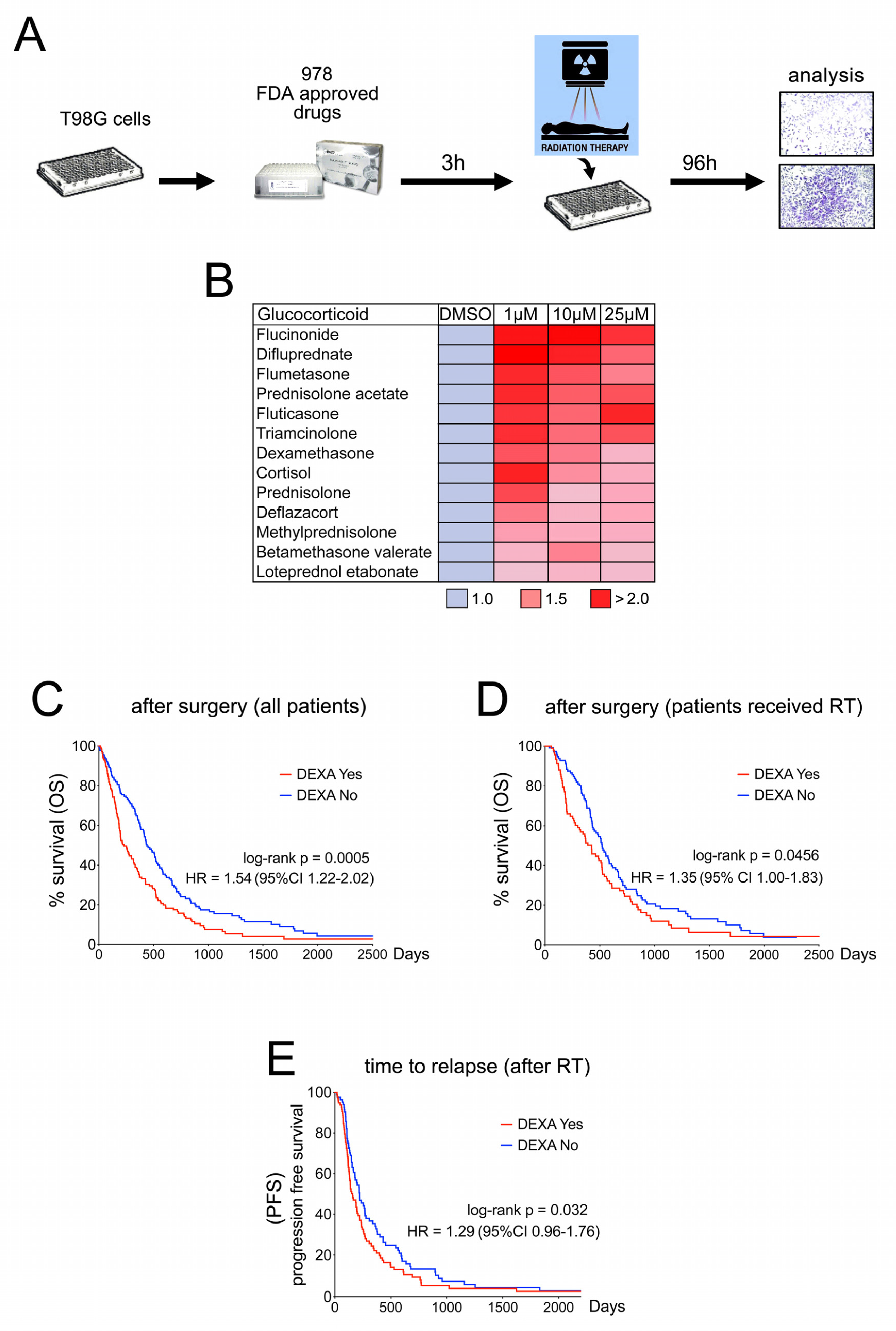
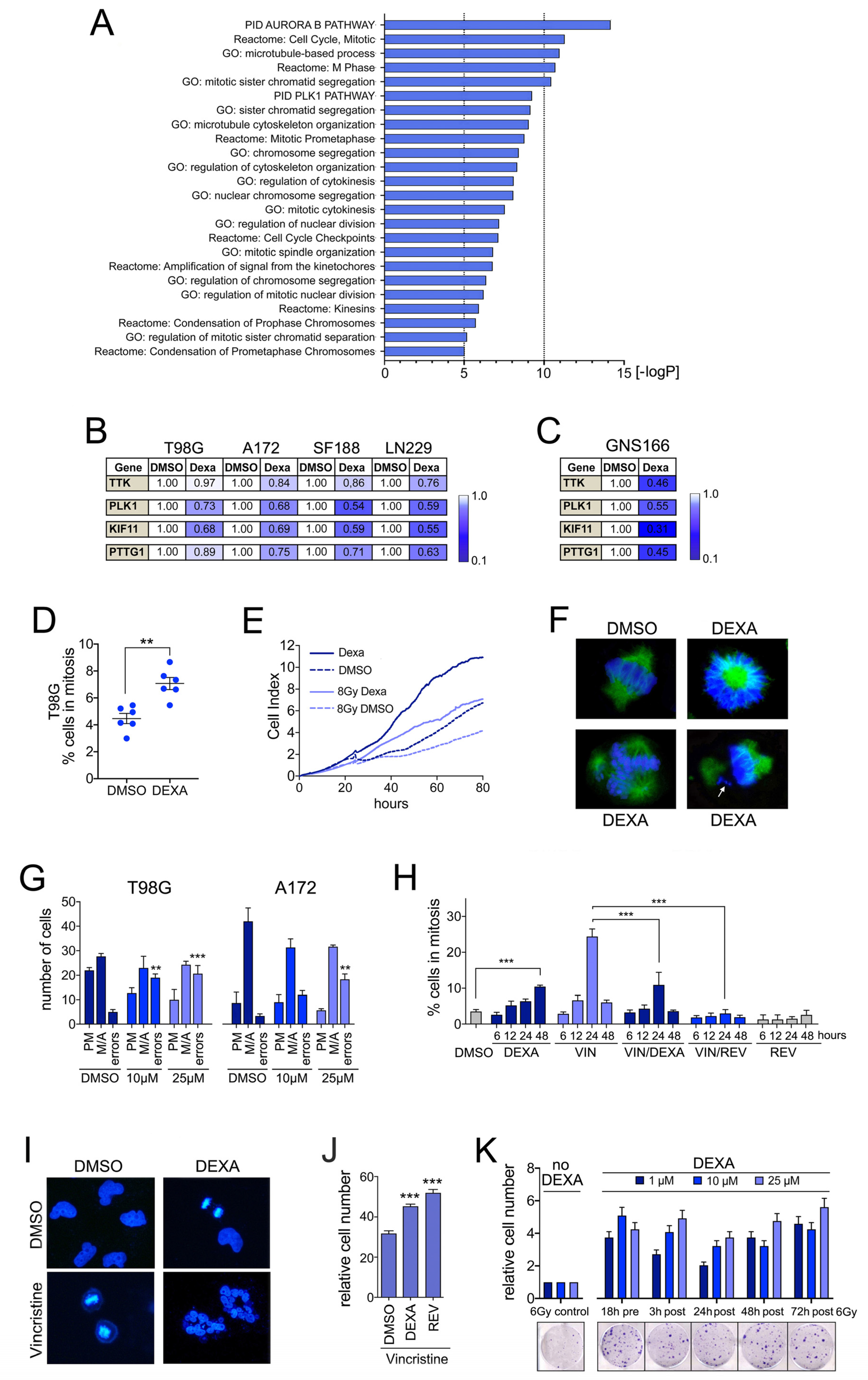
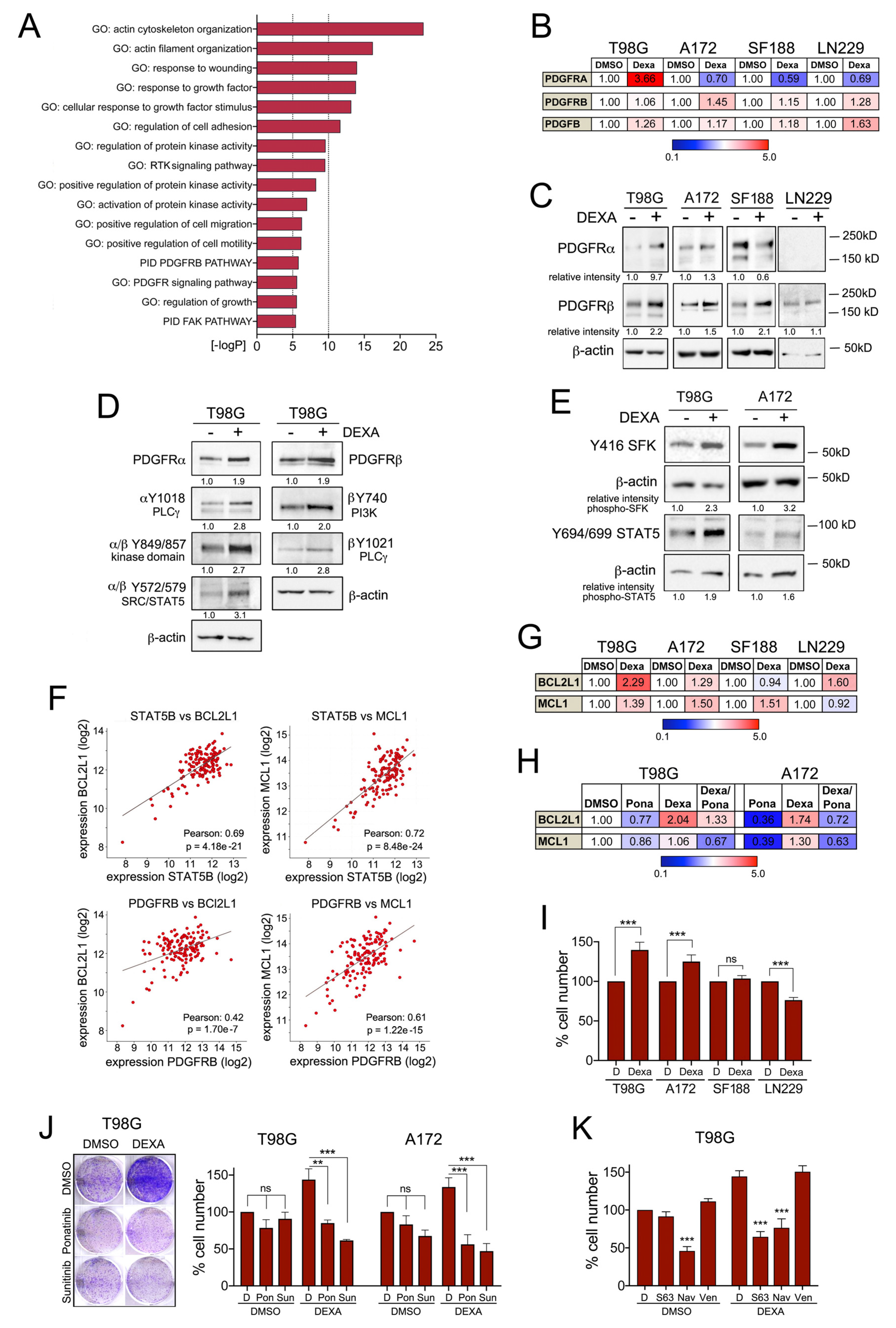
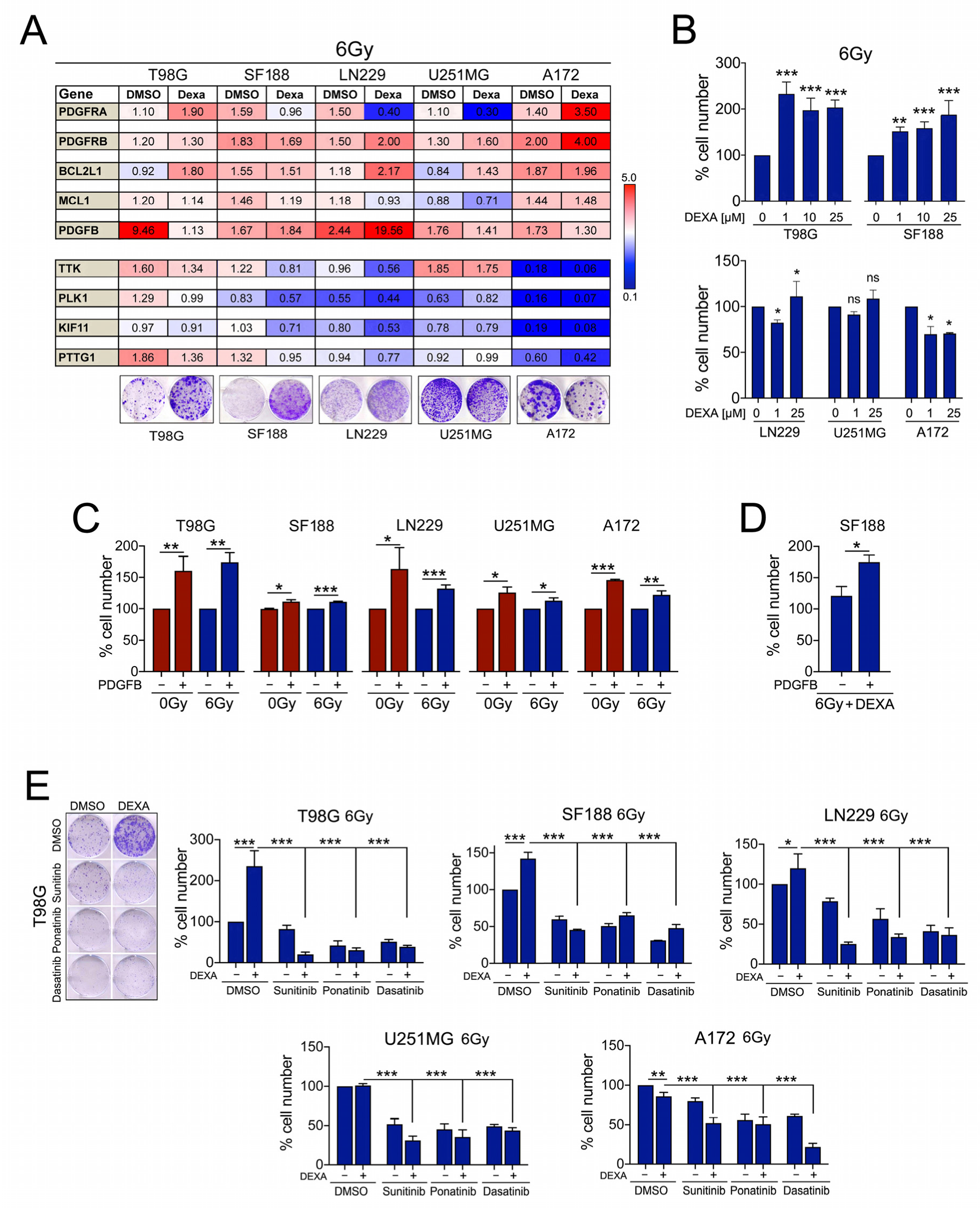
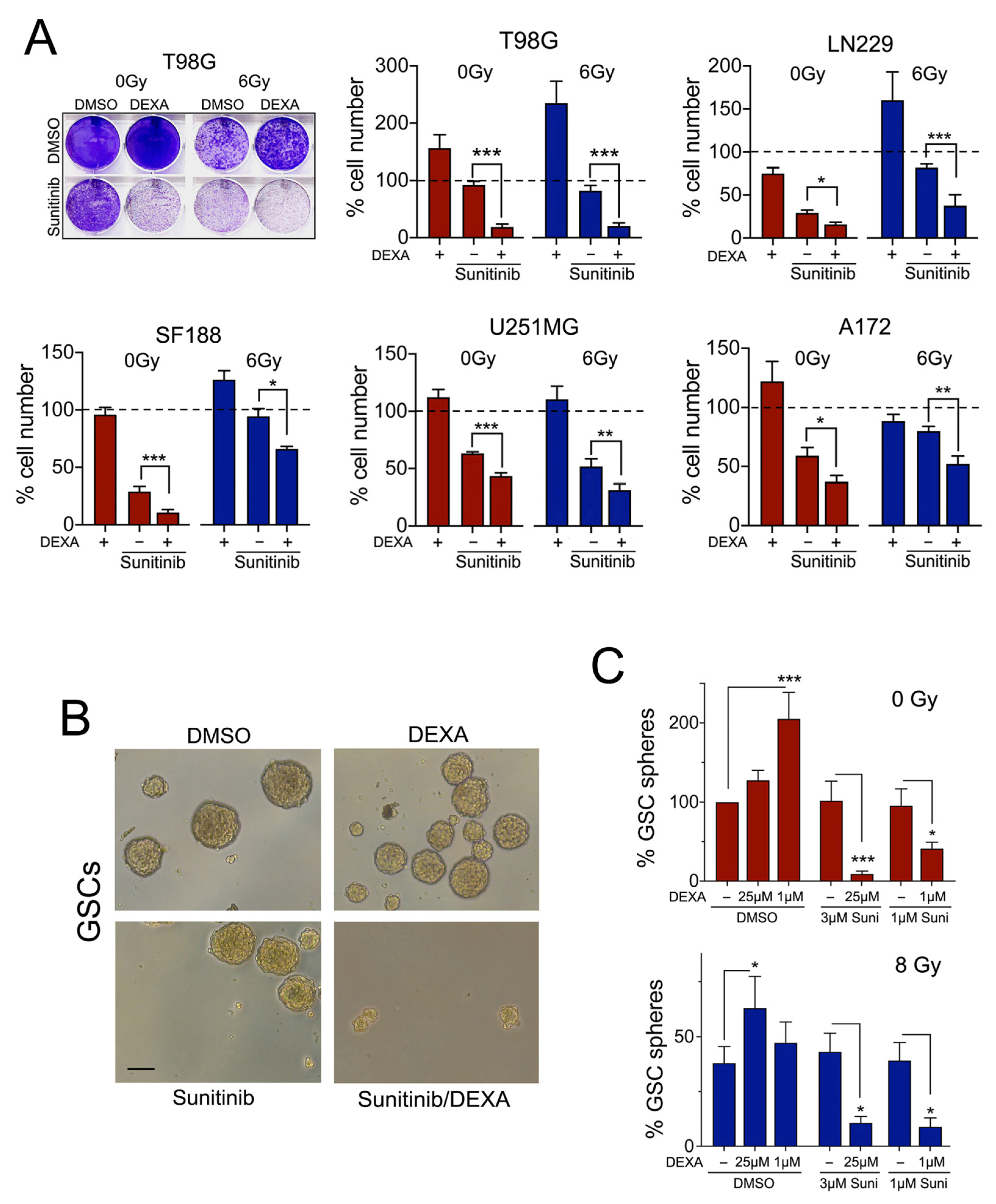
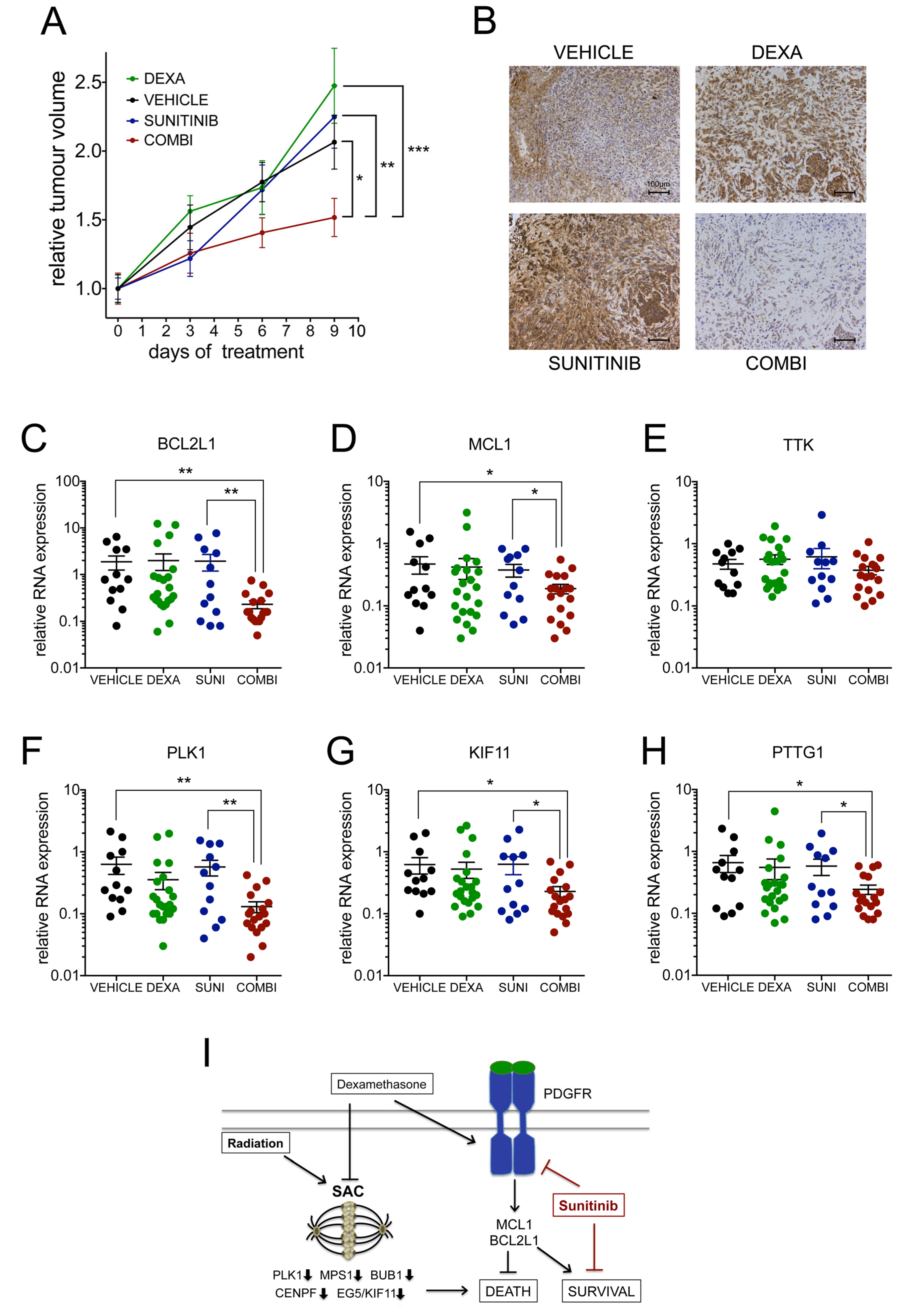
(1) Background: Despite the indisputable effectiveness of dexamethasone (DEXA) to reduce inflammation in glioblastoma (GBM) patients, its influence on tumour progression and radiotherapy response remains controversial. (2) Methods: We analysed patient data and used expression and cell biological analyses to assess effects of DEXA on GBM cells. We tested the efficacy of tyrosine kinase inhibitors in vitro and in vivo. (3) Results: We confirm in our patient cohort that administration of DEXA correlates with worse overall survival and shorter time to relapse. In GBM cells and glioma stem-like cells (GSCs) DEXA down-regulates genes controlling G2/M and mitotic-spindle checkpoints, and it enables cells to override the spindle assembly checkpoint (SAC). Concurrently, DEXA up-regulates Platelet Derived Growth Factor Receptor (PDGFR) signalling, which stimulates expression of anti-apoptotic regulators BCL2L1 and MCL1, required for survival during extended mitosis. Importantly, the protective potential of DEXA is dependent on intact tyrosine kinase signalling and ponatinib, sunitinib and dasatinib, all effectively overcome the radio-protective and pro-proliferative activity of DEXA. Moreover, we discovered that DEXA-induced signalling creates a therapeutic vulnerability for sunitinib in GSCs and GBM cells in vitro and in vivo. (4) Conclusions: Our results reveal a novel DEXA-induced mechanism in GBM cells and provide a rationale for revisiting the use of tyrosine kinase inhibitors for the treatment of GBM.
Keywords:
glioblastoma; dexamethasone; PDGFR; mitosis checkpoint; sunitinib