Blocking Estrogen Synthesis Leads to Different Hormonal Responses in Canine and Human Triple Negative Inflammatory Breast Cancer
by
 , ,
, ,
Sara Caceres
1,* ,
,
Beatriz Monsalve
1, 
Angela Alonso-Diez
2,
Belén Crespo
1,
Maria Jose Illera
1,
Paloma Jimena de Andres
2,
Gema Silvan
1 and
Juan Carlos Illera
1 1
Department of Animal Physiology, Veterinary Medicine School, Complutense University of Madrid (UCM), 28040 Madrid, Spain
2
Department of Animal Medicine, Surgery and Pathology, Veterinary Medicine School, Complutense University of Madrid (UCM), 28040 Madrid, Spain
*
Author to whom correspondence should be addressed.
Cancers 2021, 13(19), 4967; https://doi.org/10.3390/cancers13194967
Submission received: 26 August 2021
/
Revised: 27 September 2021
/
Accepted: 30 September 2021
/
Published: 2 October 2021
Simple Summary
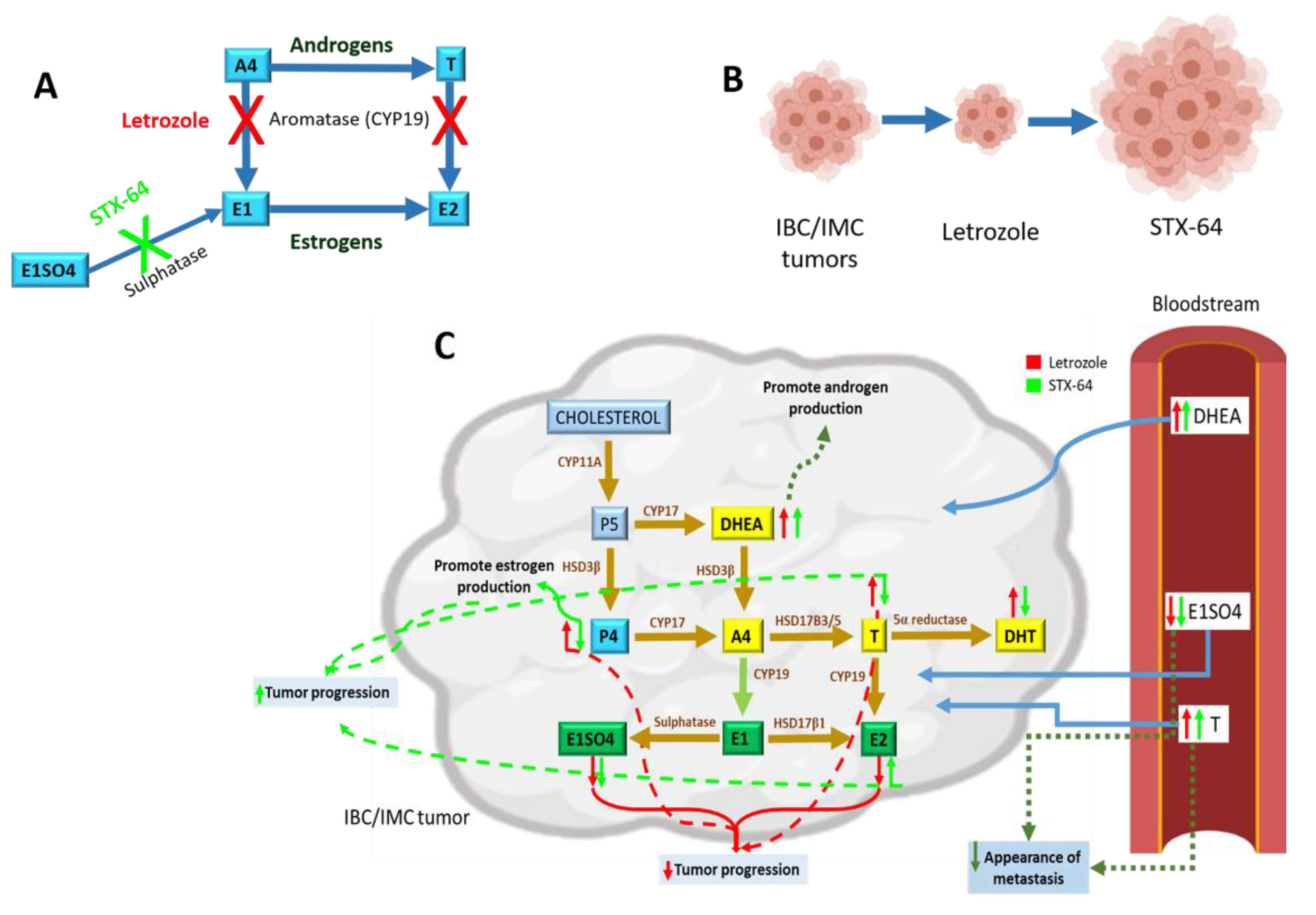
Estrogen is responsible for tumor progression, and blocking its synthesis is effective in certain breast cancers. Therefore, the aim of this study is to determine the effect of letrozole (anti-aromatase) and STX-64 (anti-sulfatase) in canine and human inflammatory breast cancer cell lines and xenografts. The results reveal that letrozole blocks estrogen synthesis, reducing tumor progression. However, STX-64 increases estradiol synthesis, increasing tumor progression. In summary, letrozole may be an effective treatment for canine and human inflammatory breast cancer.
Abstract
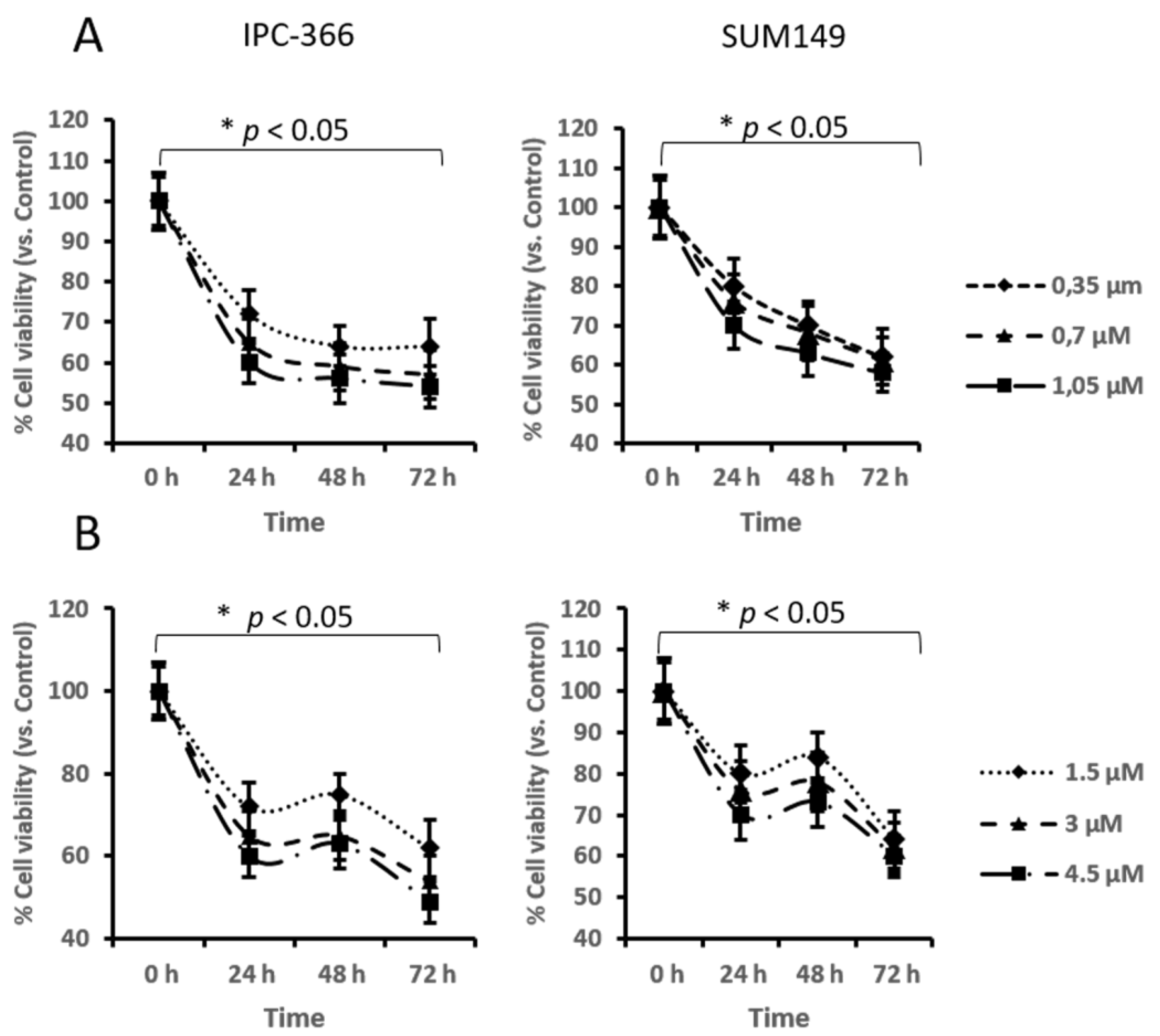
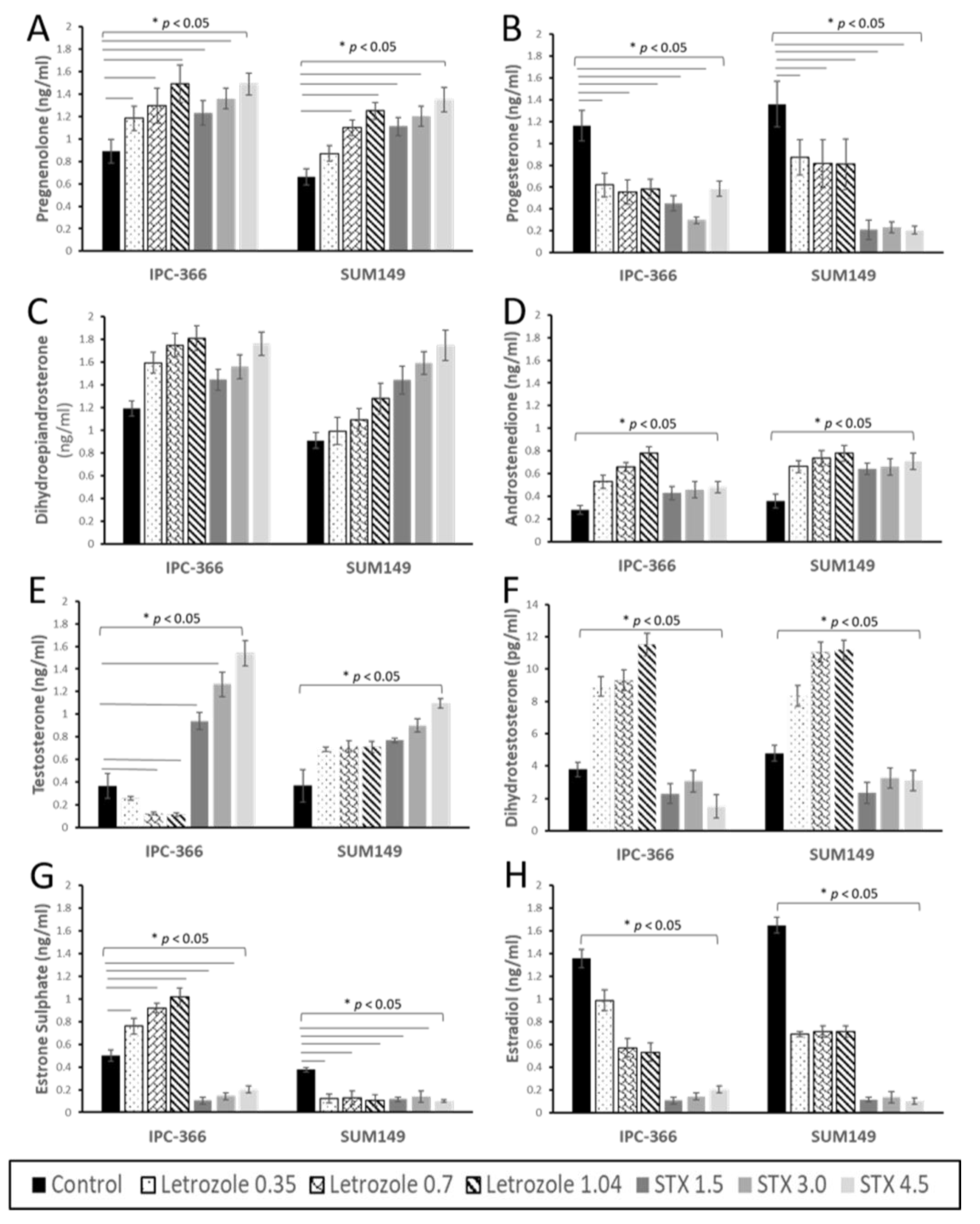
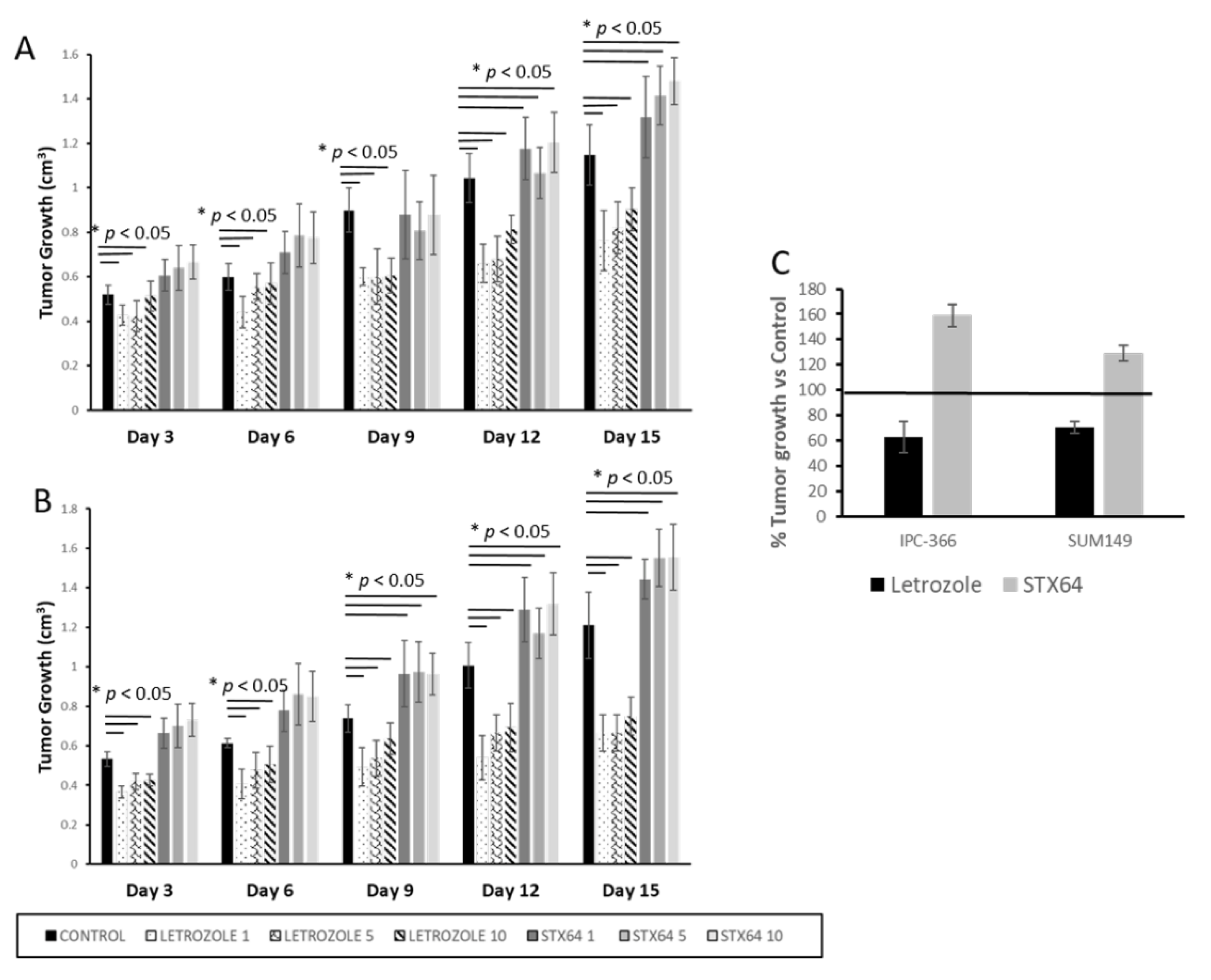
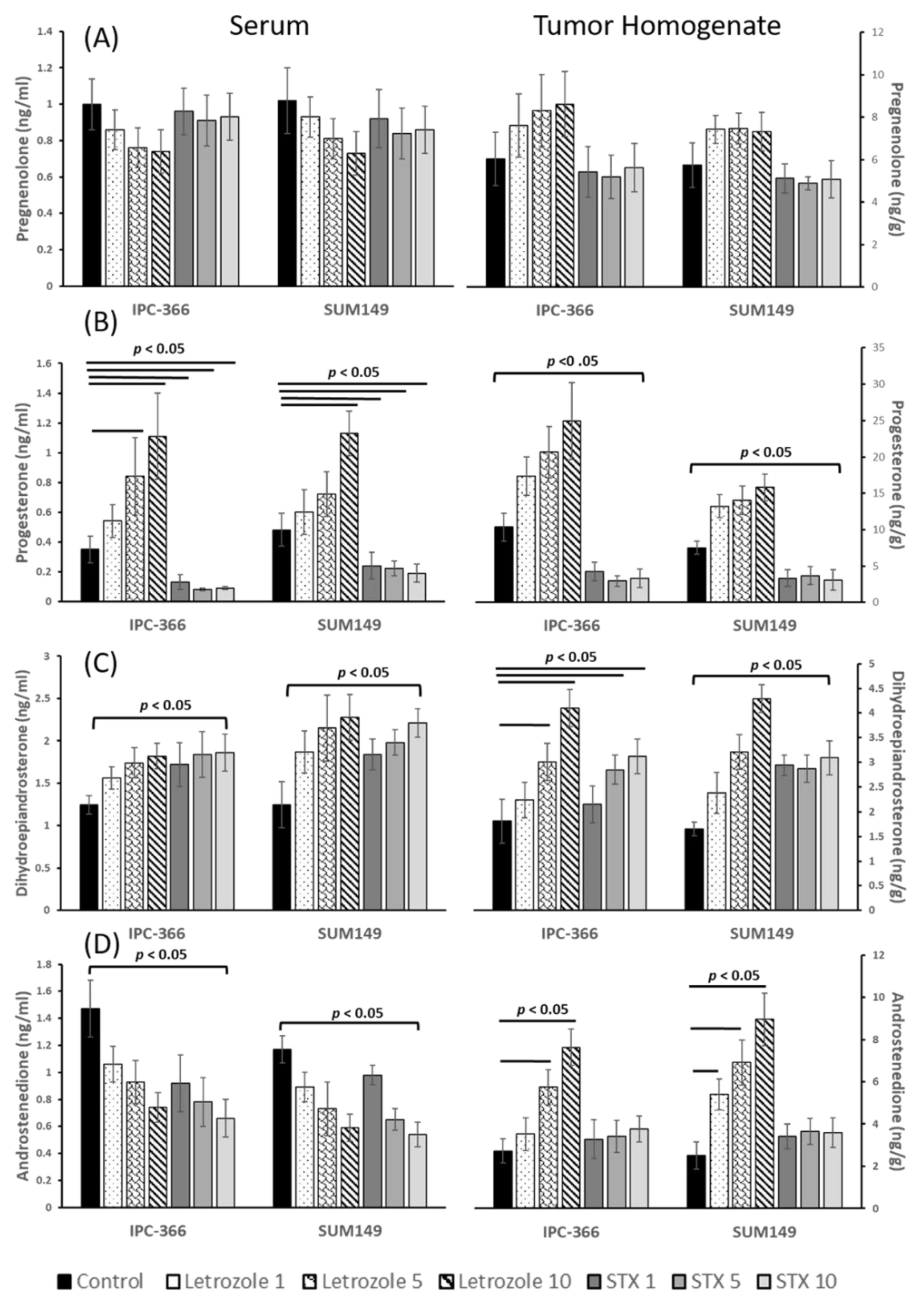
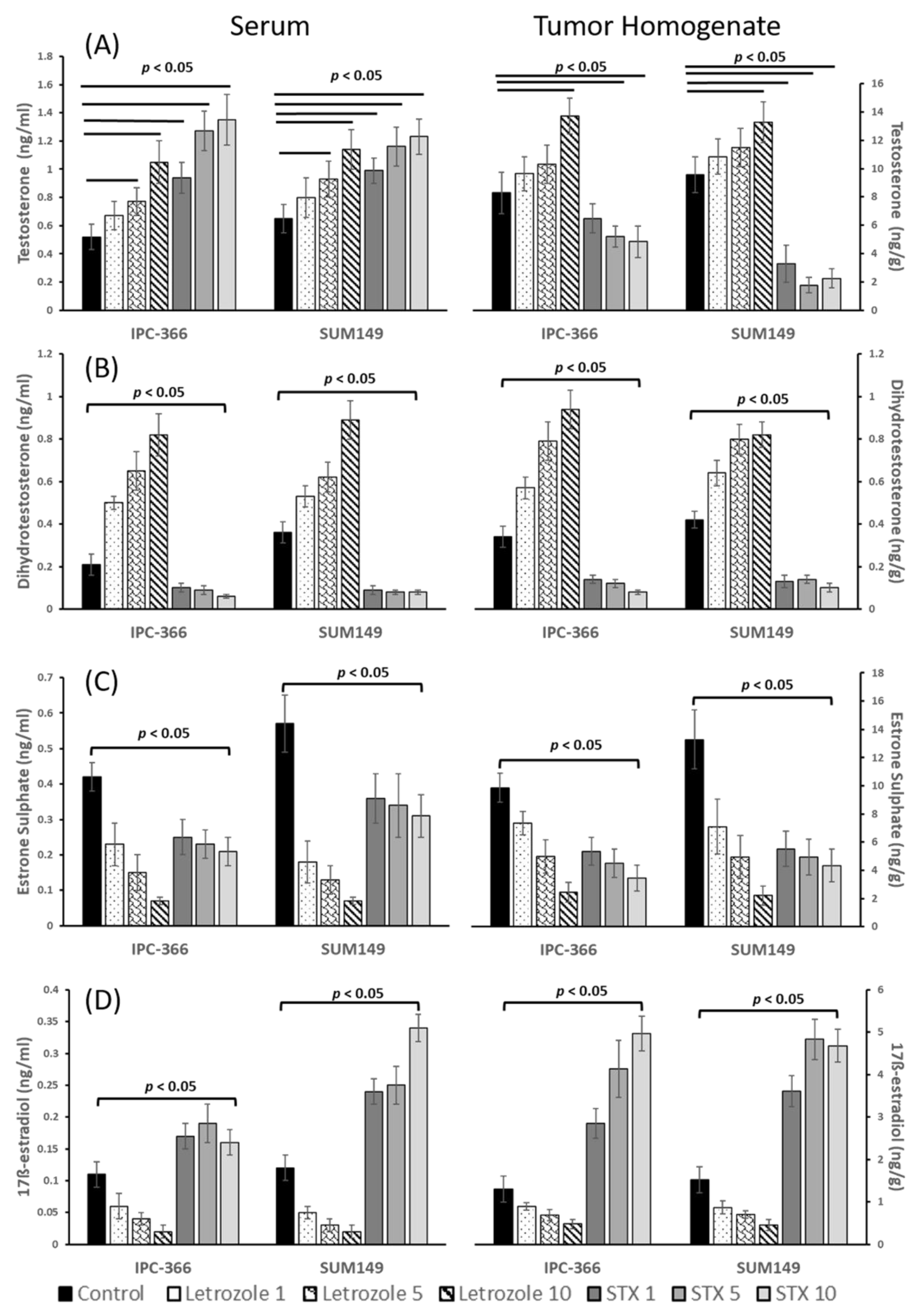
Blocking estrogen synthesis by inhibitors of estrogen synthesis is a widely used therapy against estrogen receptor-positive tumors. However, these therapies are less effective in negative expression tumors. Therefore, this study determined the effectiveness of anti-aromatase and anti-sulfatase therapies in canine and human inflammatory breast cancer. Cell cultures and xenografts from IPC-366 and SUM149 were treated with different doses of letrozole (anti-aromatase) and STX-64 (anti-sulfatase), in order to observe their effectiveness in terms of cell proliferation, tumor progression, and the appearance of metastases and hormonal profiles. The results revealed that both treatments are effective in vitro since they reduce cell proliferation and decrease the secreted estrogen levels. In xenograft mice, while treatment with letrozole reduces tumor progression by 30–40%, STX-64 increases tumor progression by 20%. The hormonal results obtained determined that STX-64 produced an increase in circulating and intratumoral levels of estradiol, which led to an increase in tumor progression. However, letrozole was able to block estrogen synthesis by decreasing the levels of circulating and intratumoral estrogen and thus slowing down tumor progression. In conclusion, letrozole can be an effective treatment for canine and human inflammatory breast cancer. The knowledge of the hormonal profile of breast tumors reflects useful information on the effectiveness of different endocrine treatments.