HPV Status as Prognostic Biomarker in Head and Neck Cancer—Which Method Fits the Best for Outcome Prediction?
by
 , , , ,
Jan Philipp Kühn
1, 
Wendelin Schmid
1,
Sandrina Körner
1,
Florian Bochen
1,
Silke Wemmert
1,
Hugo Rimbach
1,
Sigrun Smola
2,
Julia Caroline Radosa
3,
Mathias Wagner
4,
Luc G.T. Morris
5,6,
Victoria Bozzato
1,
Alessandro Bozzato
1,
Bernhard Schick
1 and
Maximilian Linxweiler
1,* 1
Department of Otorhinolaryngology, Saarland University Medical Center, D-66421 Homburg, Germany
2
Institute of Virology, Saarland University Medical Center, D-66421 Homburg, Germany
3
Department of Gynecology and Obstetrics, Saarland University Medical Center, D-66421 Homburg, Germany
4
Department of General and Surgical Pathology, Saarland University Medical Center, D-66421 Homburg, Germany
5
Immunogenomics and Precision Oncology Platform, Memorial Sloan Kettering Cancer Center, New York, NY 10065, USA
6
Department of Surgery, Memorial Sloan Kettering Cancer Center, New York, NY 10065, USA
*
Author to whom correspondence should be addressed.
Cancers 2021, 13(18), 4730; https://doi.org/10.3390/cancers13184730
Submission received: 16 August 2021
/
Revised: 11 September 2021
/
Accepted: 20 September 2021
/
Published: 21 September 2021
Simple Summary
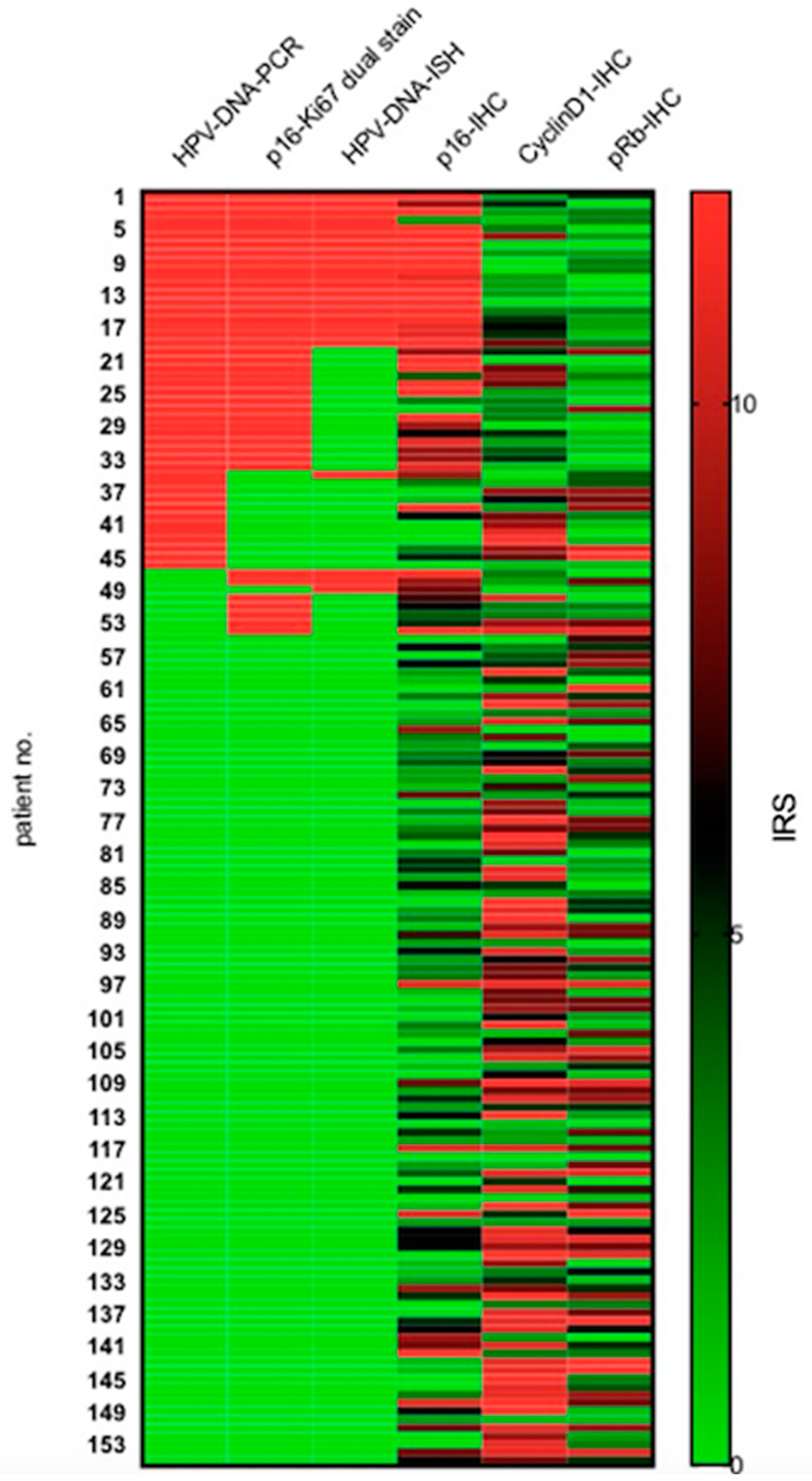
Head and neck cancer belongs to the six most common cancers worldwide, with the majority of cases being associated with chronic alcohol and/or tobacco consumption. Over the past years, a rising proportion of those cancer cases are rather caused by a mucosal infection with high-risk human papillomavirus (HPV). In general, those patients are younger and respond better to different treatment options, which results in an overall better prognosis. Despite this high importance of HPV status in head and neck cancer, there is no established standard biomarker for the detection of HPV-related tumor biology. In our study, we tested six different detection methods that are currently used and compared their diagnostic and prognostic validity in a collective of 153 head and neck cancer patients. Thereby, immunohistochemical staining of p16—a protein biomarker that is overexpressed in HPV-related cancers—showed the best performance as prognostic biomarker and should be combined with a direct detection of HPV-DNA in case of therapeutic consequences.
Abstract
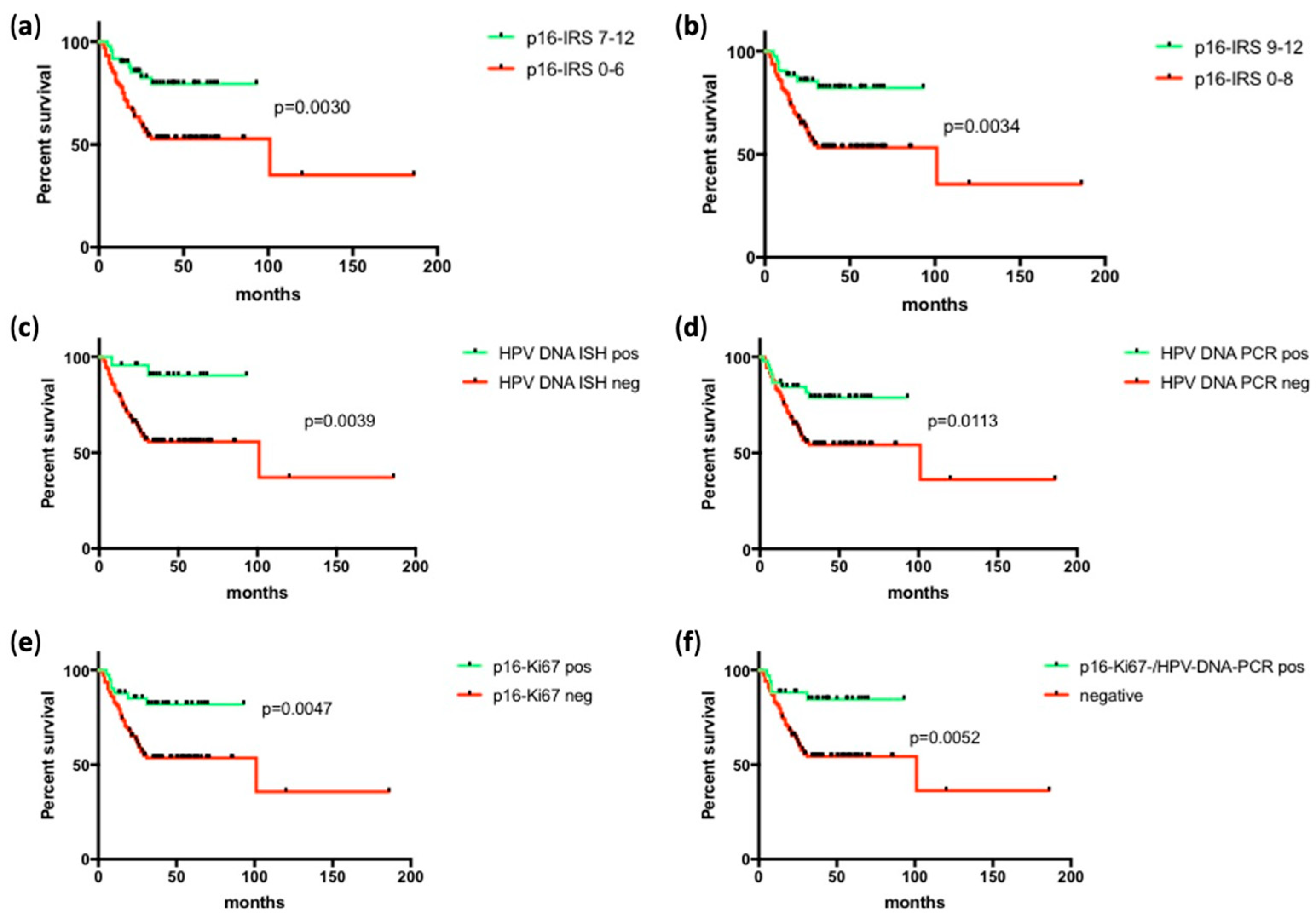
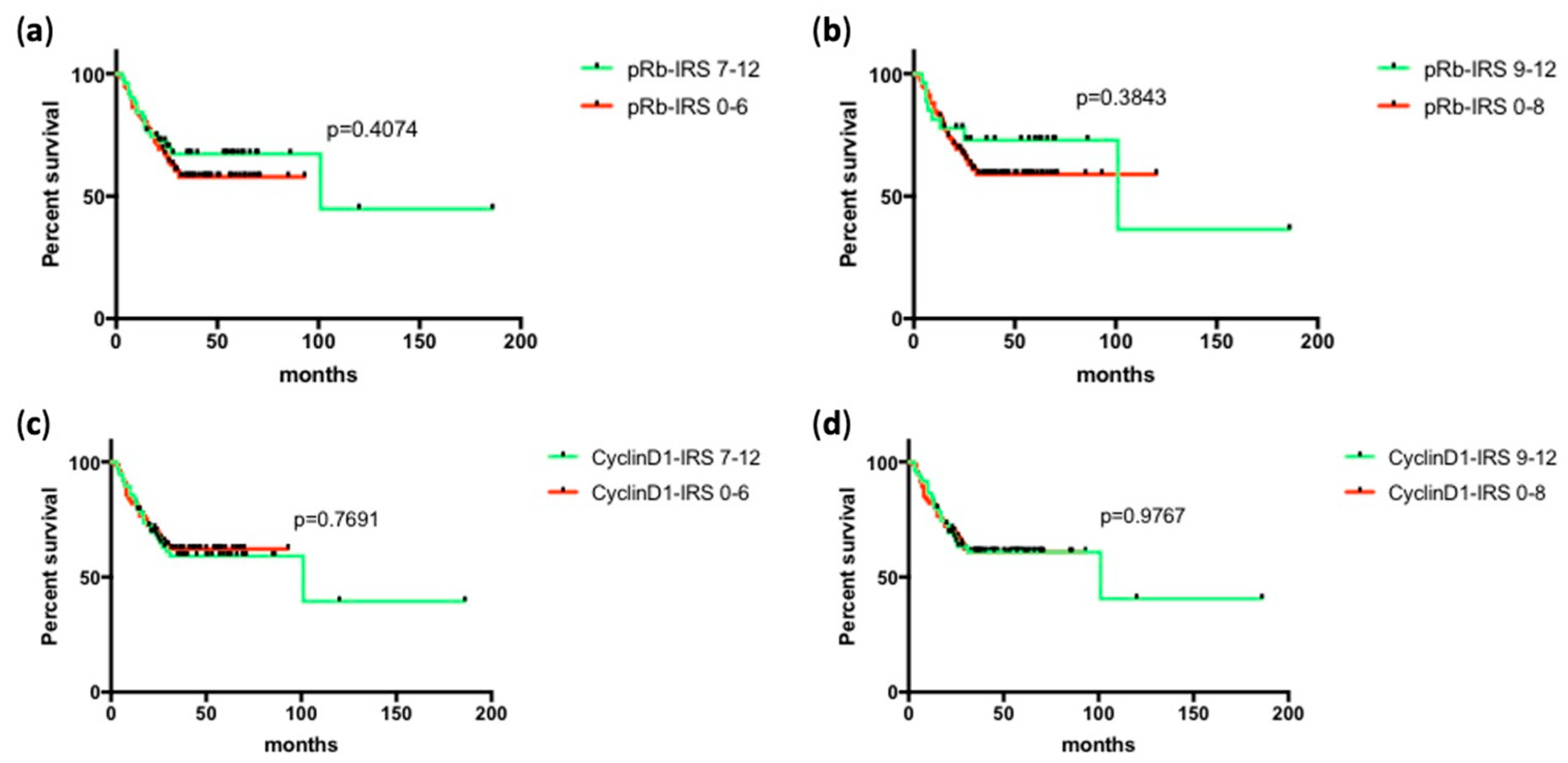
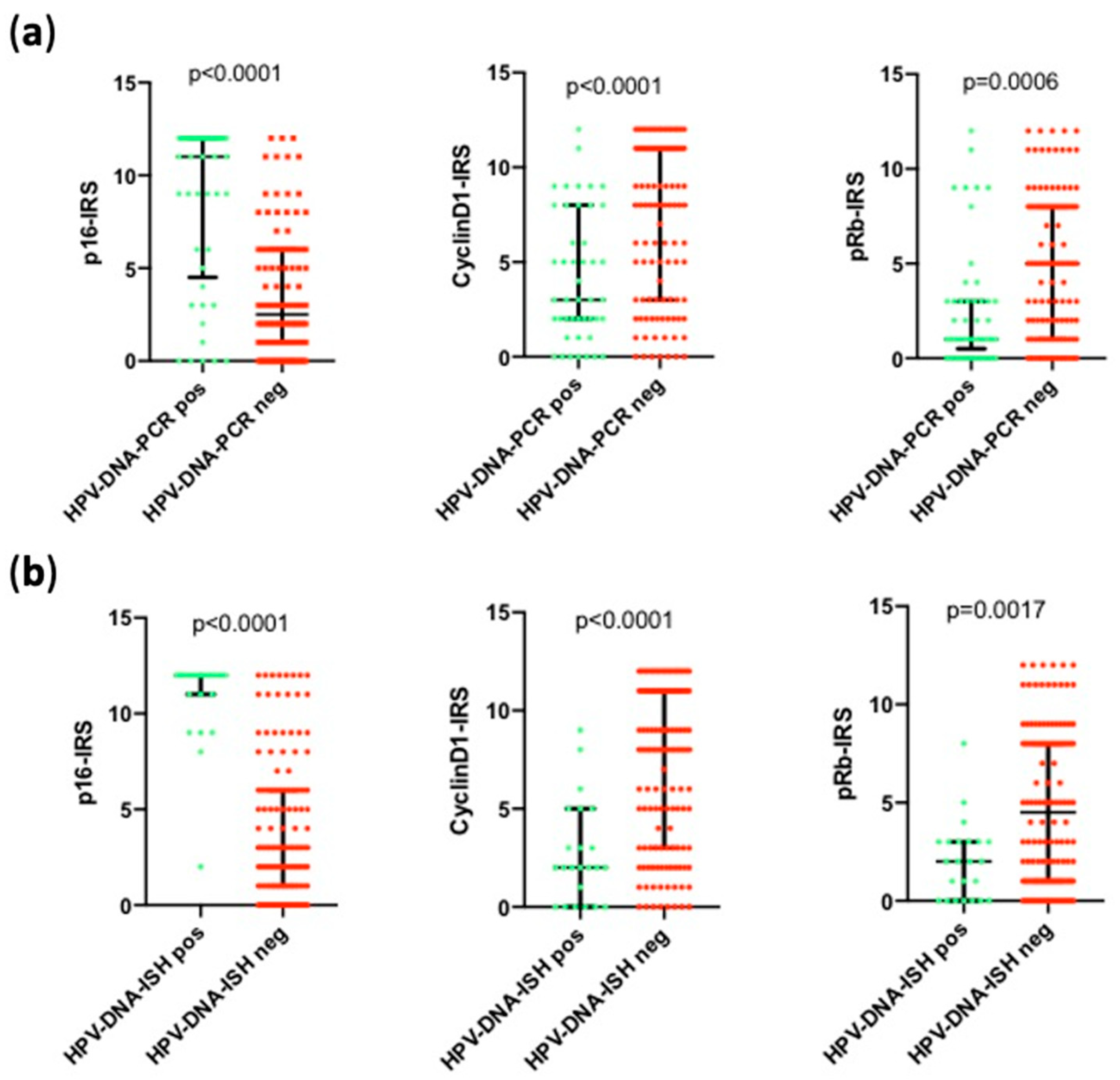
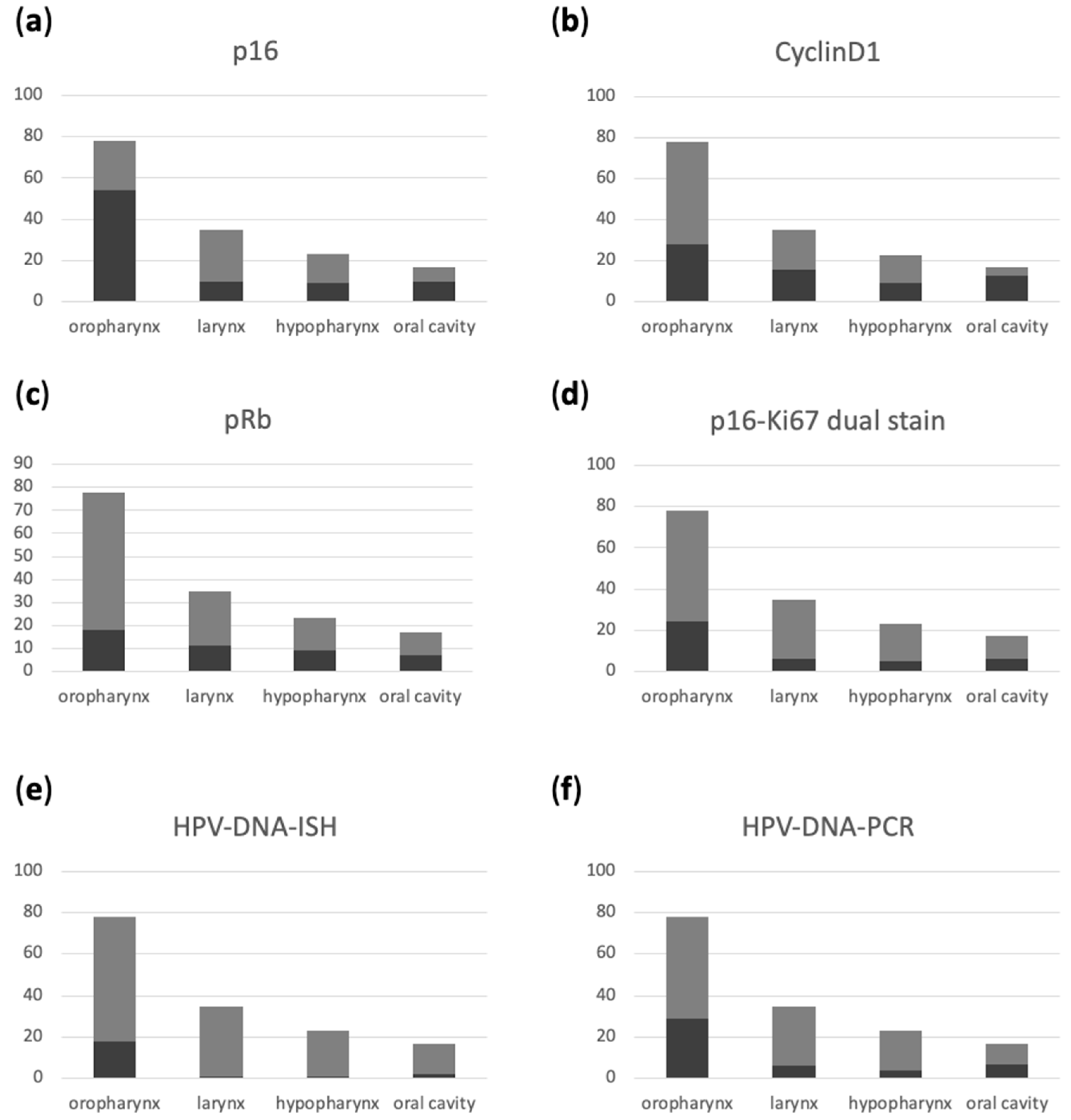
The incidence of human papillomavirus (HPV)-related head and neck cancer (HNSCC) is rising globally, presenting challenges for optimized clinical management. To date, it remains unclear which biomarker best reflects HPV-driven carcinogenesis, a process that is associated with better therapeutic response and outcome compared to tobacco/alcohol-induced cancers. Six potential HPV surrogate biomarkers were analyzed using FFPE tissue samples from 153 HNSCC patients (n = 78 oropharyngeal cancer (OPSCC), n = 35 laryngeal cancer, n = 23 hypopharyngeal cancer, n = 17 oral cavity cancer): p16, CyclinD1, pRb, dual immunohistochemical staining of p16 and Ki67, HPV-DNA-PCR, and HPV-DNA-in situ hybridization (ISH). Biomarkers were analyzed for correlation with one another, tumor subsite, and patient survival. P16-IHC alone showed the best performance for discriminating between good (high expression) vs poor outcome (low expression; p = 0.0030) in OPSCC patients. Additionally, HPV-DNA-ISH (p = 0.0039), HPV-DNA-PCR (p = 0.0113), and p16-Ki67 dual stain (p = 0.0047) were significantly associated with prognosis in uni- and multivariable analysis for oropharyngeal cancer. In the non-OPSCC group, however, none of the aforementioned surrogate markers was prognostic. Taken together, P16-IHC as a single biomarker displays the best diagnostic accuracy for prognosis stratification in OPSCC patients with a direct detection of HPV-DNA by PCR or ISH as well as p16-Ki67 dual stain as potential alternatives.
Keywords:
head and neck cancer; HPV; prognosis; biomarker; p16