Review

Enhancing the Efficacy of CAR T Cells in the Tumor Microenvironment of Pancreatic Cancer

1
University Medical Center Göttingen, Translational Molecular Imaging, Institute for Diagnostic and Interventional Radiology & Clinic for Hematology and Medical Oncology, 37075 Göttingen, Lower Saxony, Germany
2
Miltenyi Biotec B.V. & Co. KG, R&D Reagents, 51429 Bergisch Gladbach, North Rhine-Westphalia, Germany
3
Charité University Medicine Berlin, Dept of Hepatology & Gastroenterology, 13353 Berlin, Germany
4
Max Planck Institute for Experimental Medicine, Translational Molecular Imaging, 37075 Göttingen, Lower Saxony, Germany
*
Author to whom correspondence should be addressed.
Cancers 2020, 12(6), 1389; https://doi.org/10.3390/cancers12061389

Submission received: 24 April 2020 / Revised: 23 May 2020 / Accepted: 26 May 2020 / Published: 28 May 2020
(This article belongs to the Section Cancer Immunology and Immunotherapy)

Abstract

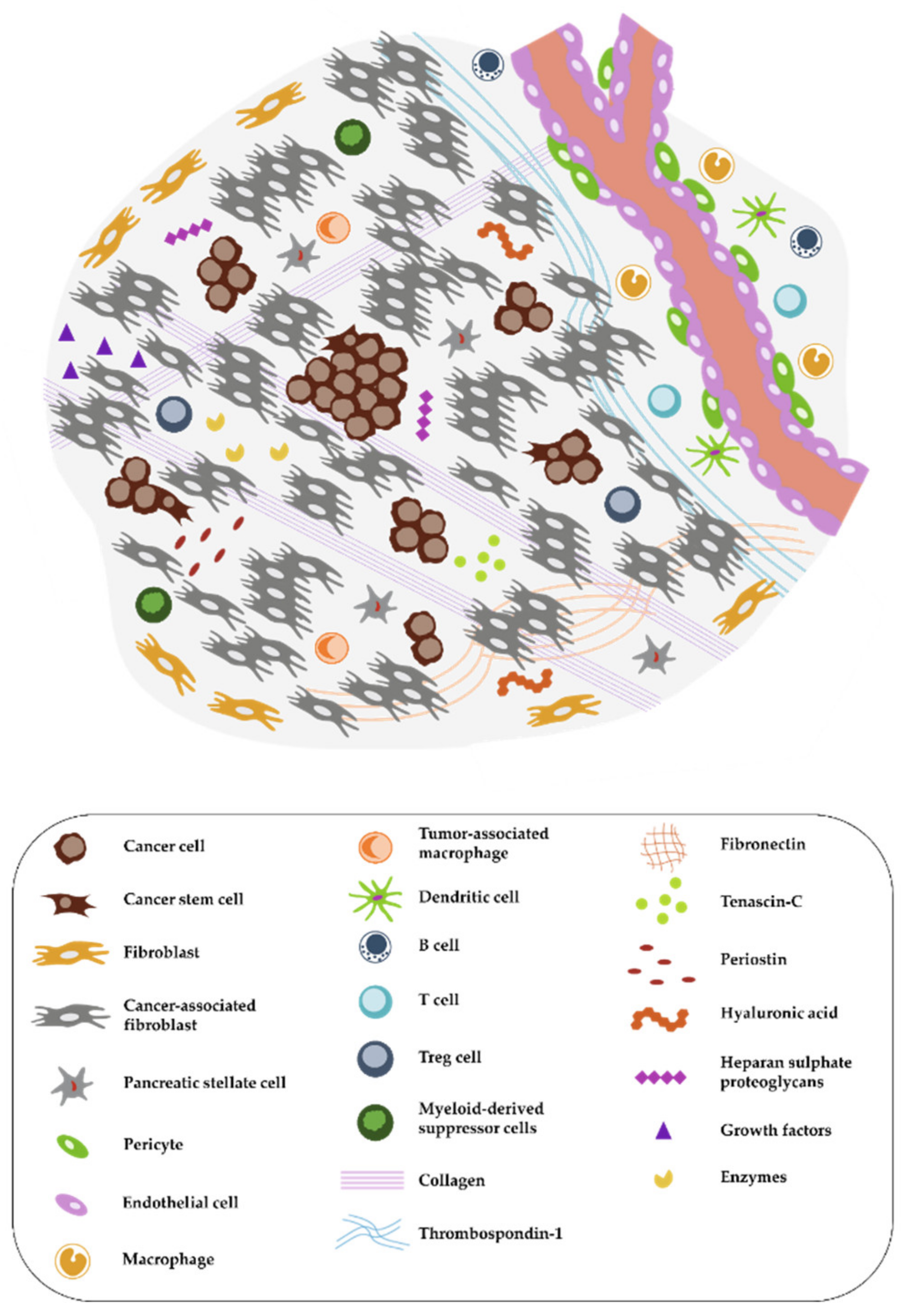
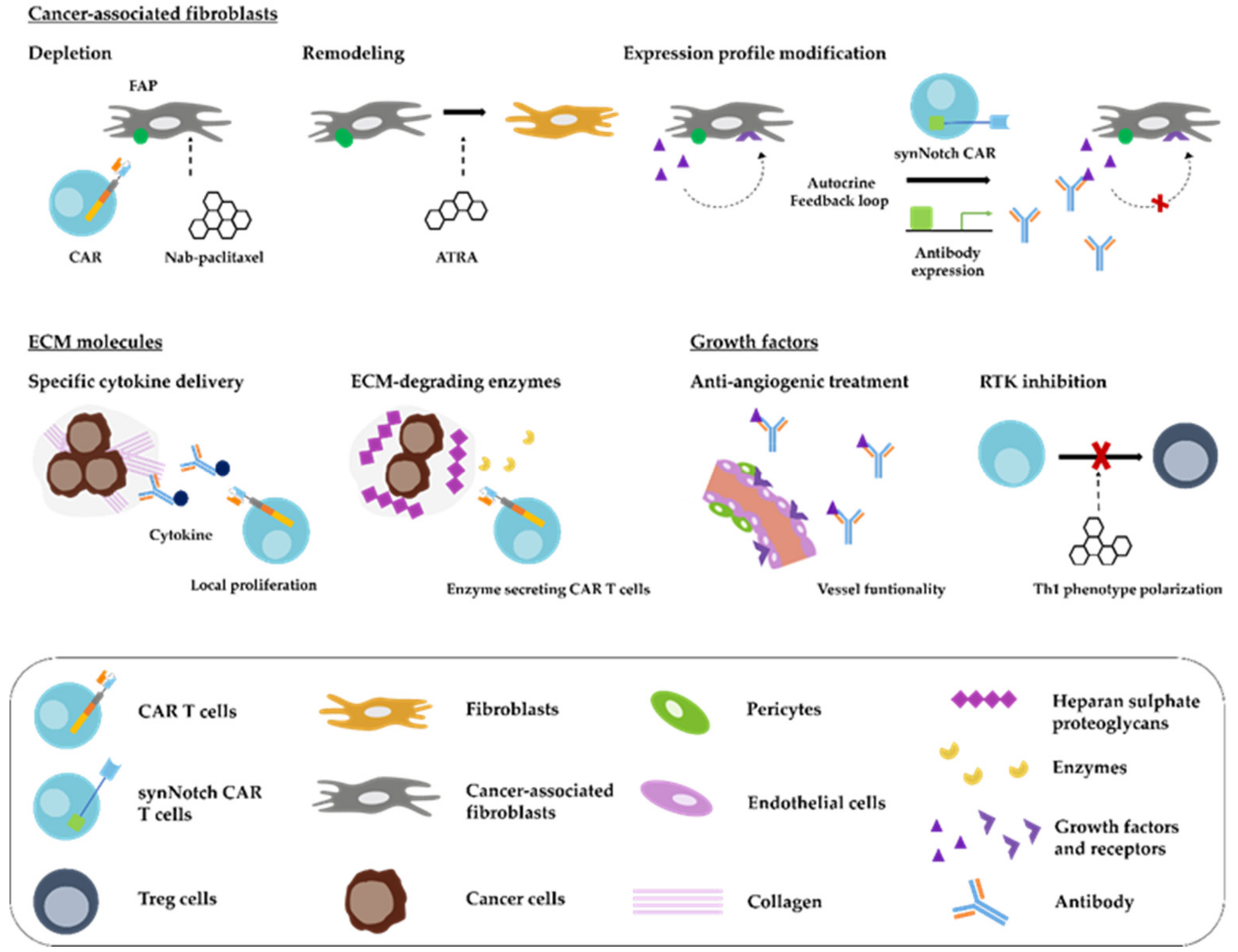
Pancreatic cancer has the worst prognosis and lowest survival rate among all types of cancers and thus, there exists a strong need for novel therapeutic strategies. Chimeric antigen receptor (CAR)-modified T cells present a new potential option after successful FDA-approval in hematologic malignancies, however, current CAR T cell clinical trials in pancreatic cancer failed to improve survival and were unable to demonstrate any significant response. The physical and environmental barriers created by the distinct tumor microenvironment (TME) as a result of the desmoplastic reaction in pancreatic cancer present major hurdles for CAR T cells as a viable therapeutic option in this tumor entity. Cancer cells and cancer-associated fibroblasts express extracellular matrix molecules, enzymes, and growth factors, which can attenuate CAR T cell infiltration and efficacy. Recent efforts demonstrate a niche shift where targeting the TME along CAR T cell therapy is believed or hoped to provide a substantial clinical added value to improve overall survival. This review summarizes therapeutic approaches targeting the TME and their effect on CAR T cells as well as their outcome in preclinical and clinical trials in pancreatic cancer.
Keywords: tumor microenvironment; pancreatic cancer; immunotherapy; CAR T cell therapy; extracellular matrix; cancer-associated fibroblasts tumor microenvironment; pancreatic cancer; immunotherapy; CAR T cell therapy; extracellular matrix; cancer-associated fibroblasts