The Association of Residential Altitude on the Molecular Profile and Survival of Melanoma: Results of an Interreg Study
by
 , , , , ,
Eleonora De Martino
1 ,
,
Davide Brunetti
1,
Vincenzo Canzonieri
1,2 ,
,
Claudio Conforti
1,3,
Klaus Eisendle
4 ,
,
Guido Mazzoleni
4,
Carla Nobile
4,
Federica Rao
2,
Johannes Zschocke
5,
Emina Jukic
5,
Wolfram Jaschke
6,
Georg Weinlich
6,
Bernhard Zelger
6, 
Matthias Schmuth
6,
Giorgio Stanta
1,
Fabrizio Zanconati
1,3,
Iris Zalaudek
1,3 and 
Serena Bonin
1,*
1
DSM-Department of Medical Sciences, University of Trieste, 34149 Trieste, Italy
2
Pathology Unit, IRCCS CRO Aviano-National Cancer Institute, 33081 Aviano, Italy
3
ASU GI-Azienda sanitaria universitaria Giuliano Isontina, 34128 Trieste, Italy
4
Azienda Sanitaria dell’Alto Adige, 39100 Bolzano, Italy
5
Institute for Human Genetics, Medical University of Innsbruck, 6020 Innsbruck, Austria
6
Department of Dermatology, Venereology and Allergology, Medical University of Innsbruck, 6020 Innsbruck, Austria
*
Author to whom correspondence should be addressed.
Cancers 2020, 12(10), 2796; https://doi.org/10.3390/cancers12102796
Submission received: 14 July 2020
/
Revised: 4 September 2020
/
Accepted: 22 September 2020
/
Published: 29 September 2020
(This article belongs to the Section Cancer Causes, Screening and Diagnosis)
Simple Summary
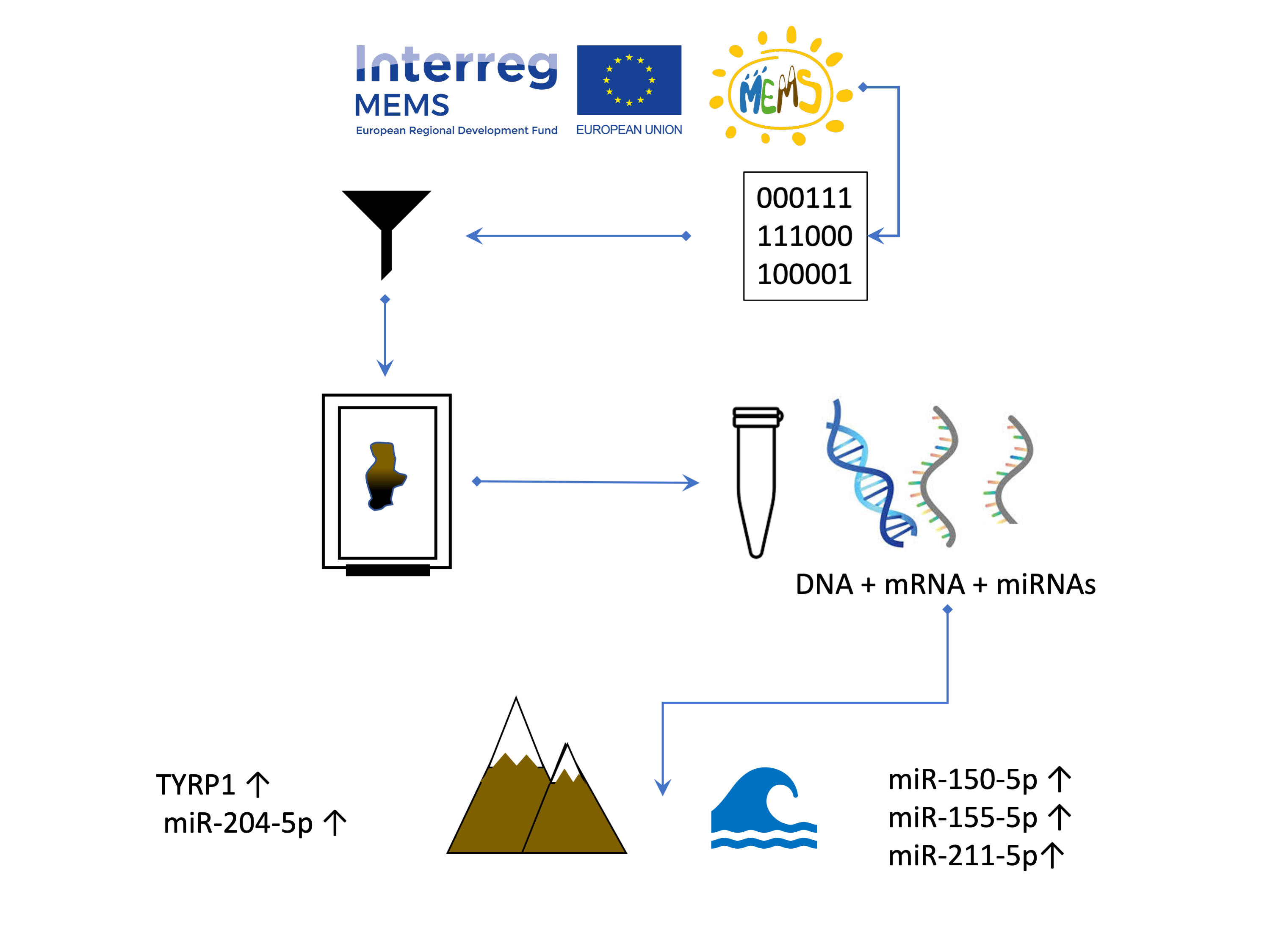
Environmental factors such as UVR exposure and altitude of residence can contribute to the development of cutaneous melanoma. We hereby report that altitude of residence significantly associates with the molecular profiling of CM and melanoma specific survival. The fact that different miRNAs and transcriptomic profile vary with different geographical areas and residences altitude could support for possible regulatory mechanisms induced by environmental conditions, such as hypoxic environment and/or higher UVR exposure.
Abstract
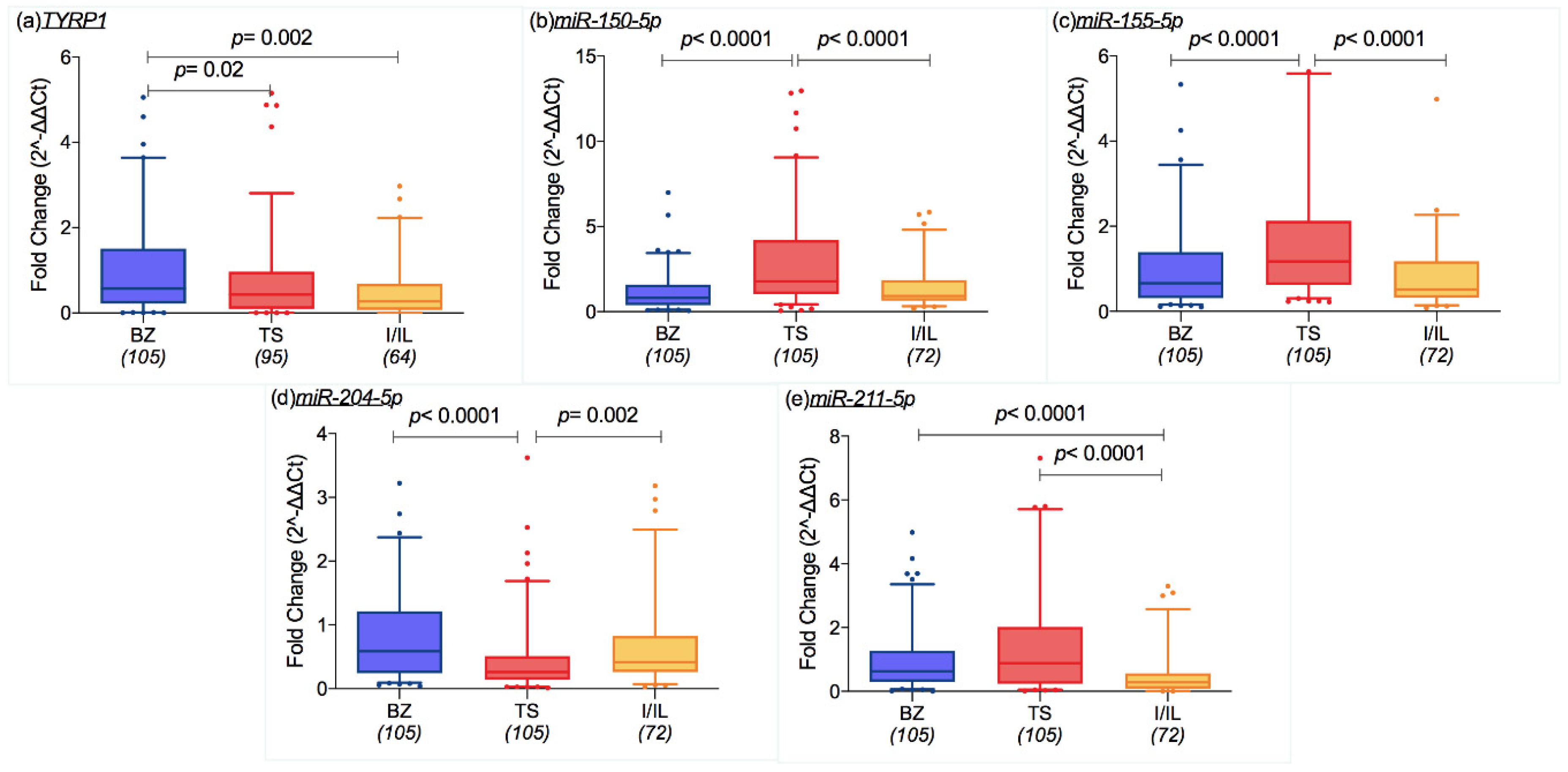
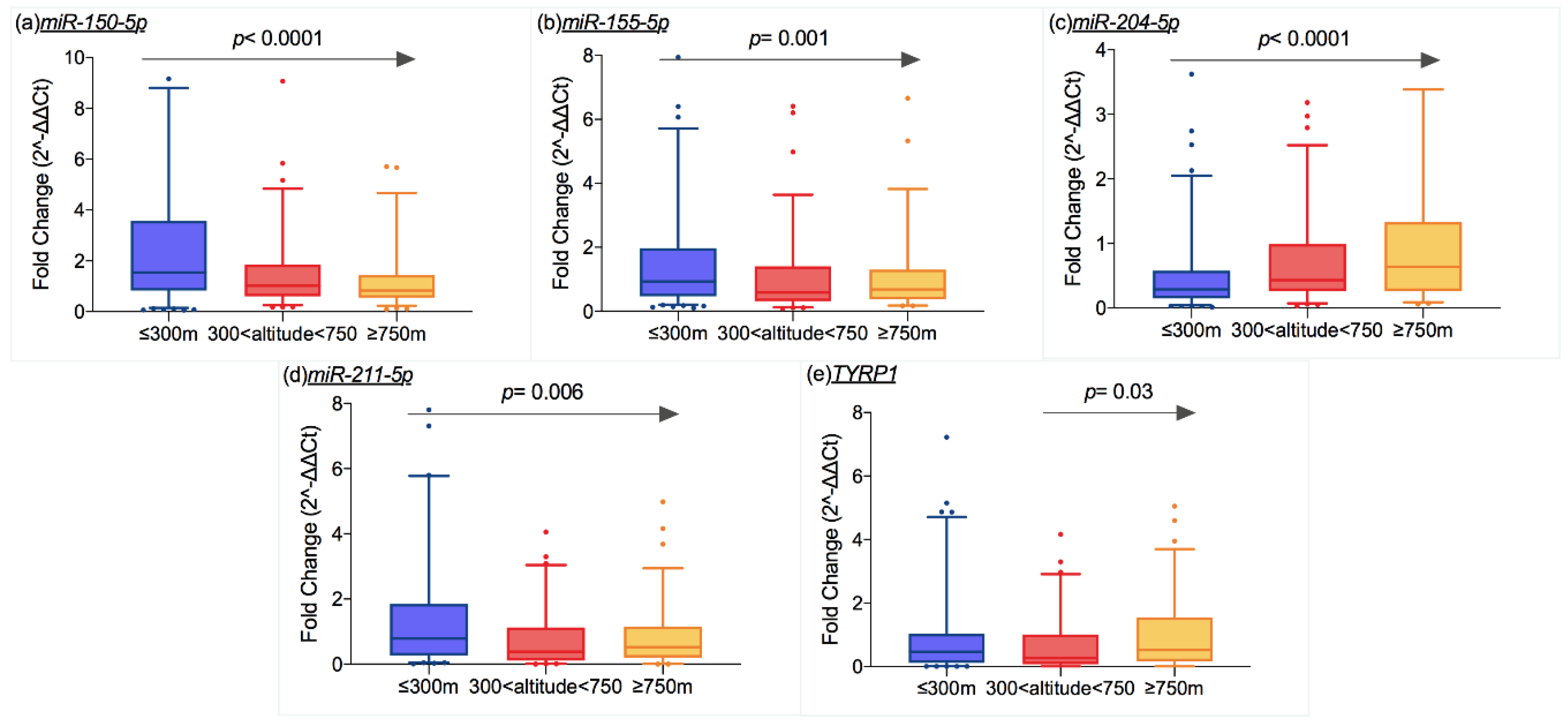
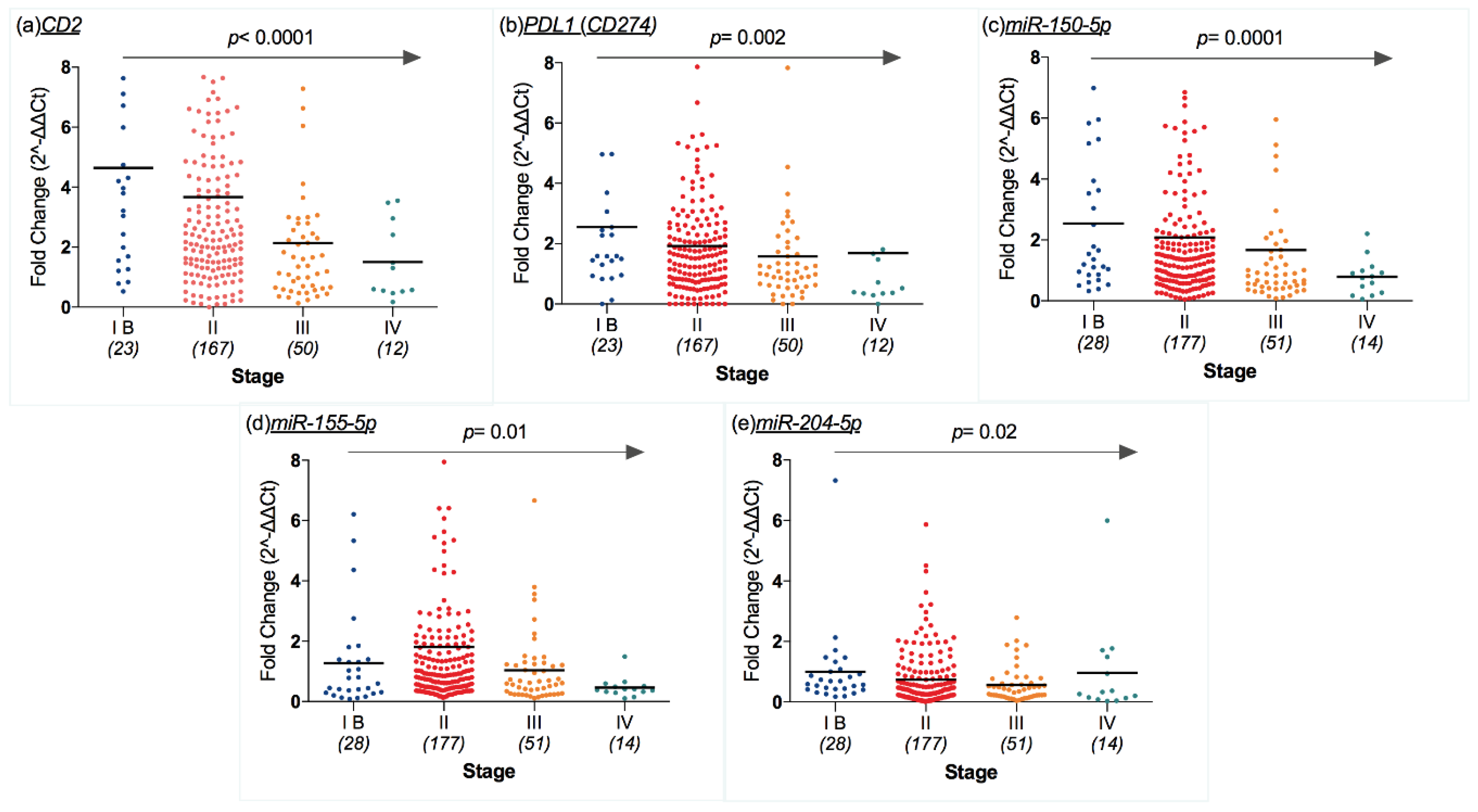
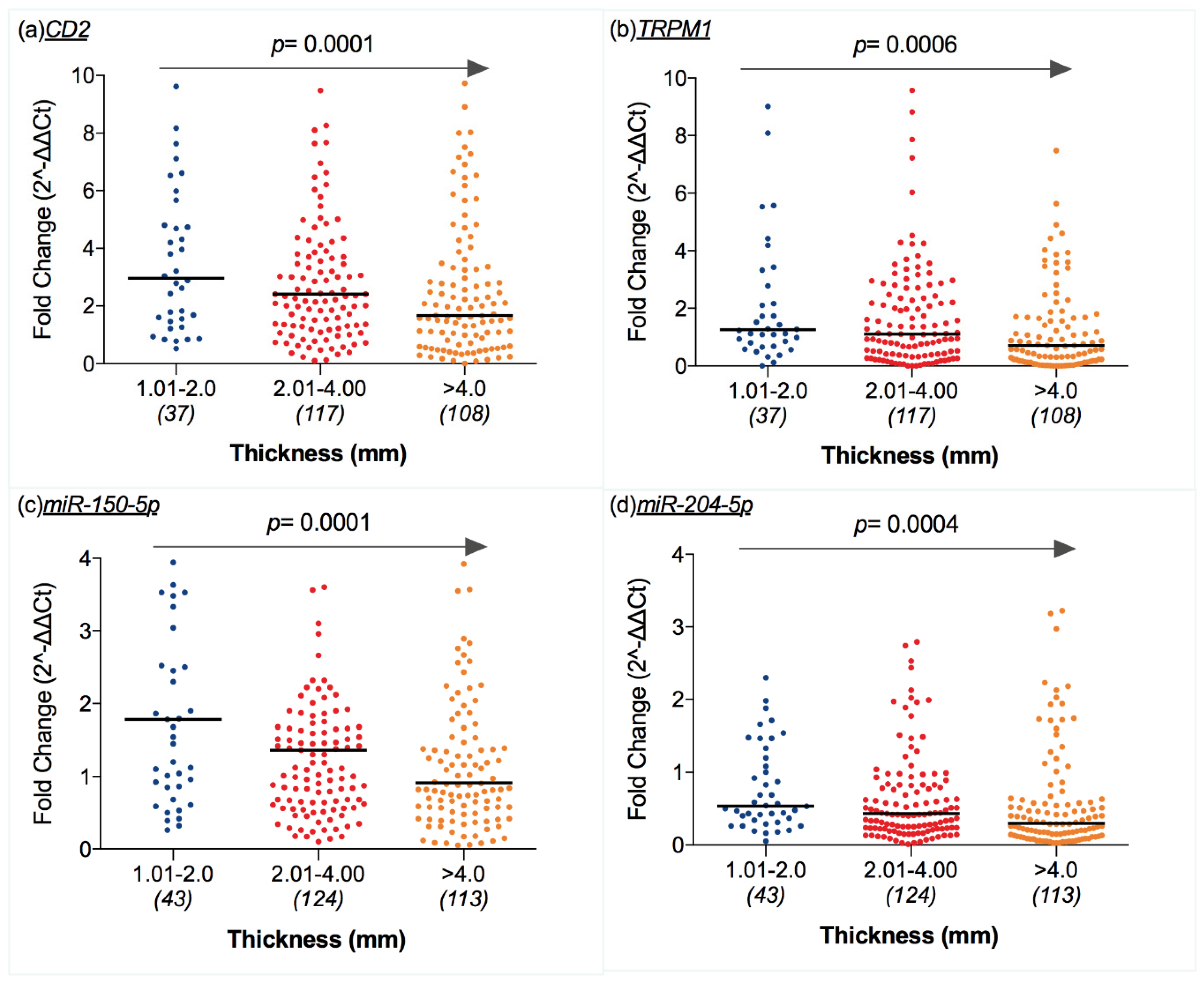
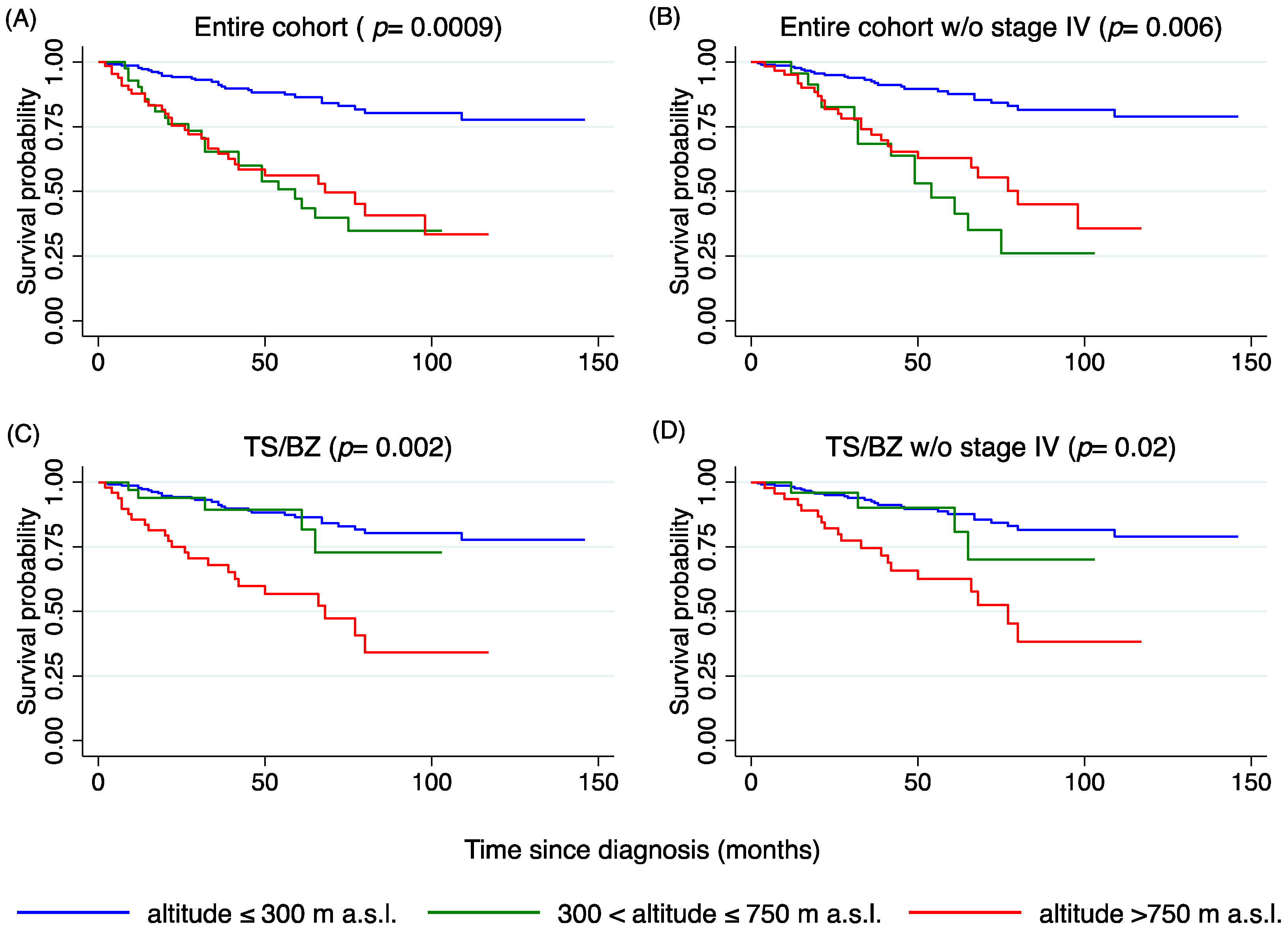
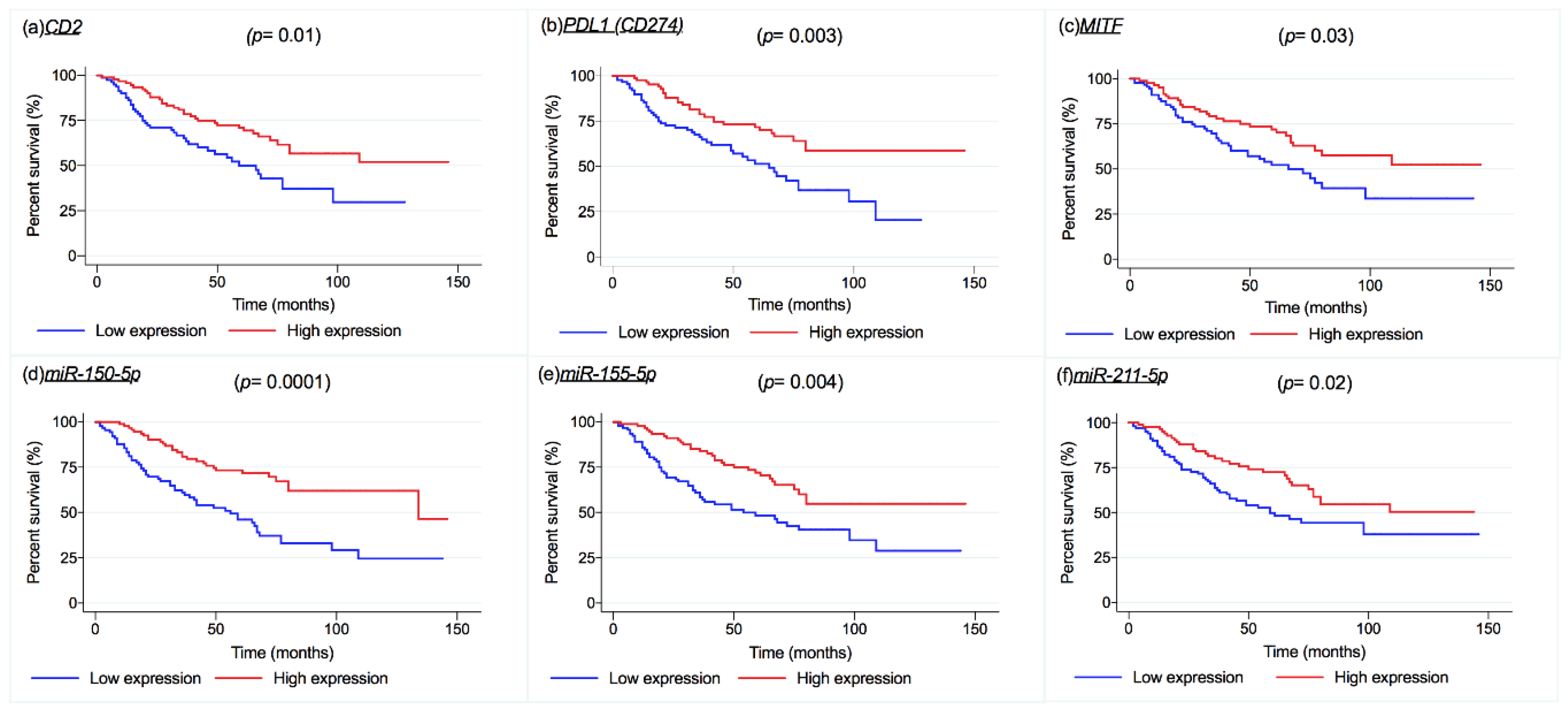
Cutaneous melanoma (CM) incidence is rising worldwide and is the primary cause of death from skin disease in the Western world. Personal risk factors linked to environmental ultraviolet radiation (UVR) are well-known etiological factors contributing to its development. Nevertheless, UVR can contribute to the development of CM in different patterns and to varying degrees. The present study aimed at investigating whether altitude of residence can contribute to the development of specific types of CM and/or influence its progression. To this aim, 306 formalin-fixed and paraffin-embedded (FFPE) tissues from primary CM diagnosed in different geographical areas were submitted to B-RAF proto-oncogene serine/threonine kinase (BRAF) and N-RAS proto-oncogene GTPase (NRAS) mutational status detection and mRNA and miRNA profiling by qPCR. Genes were chosen for their functions in specific processes, such as immune response (CD2, PDL1, or CD274) and pigmentation (MITF, TYRP1, and TRPM1). Furthermore, four microRNAs, namely miR-150-5p, miR-155-5p, miR-204-5p, and miR-211-5p, were included in the profiling. Our results highlight differences in the gene expression profile of primary CM with respect to the geographical area and the altitude of residence. Melanoma-specific survival was influenced by the gene expression of mRNA and miRNAs and varied with the altitude of patients’ residence. In detail, TYRP1 and miR-204-5p were highly expressed in patients living at higher altitudes, unlike miR-150-5p, miR-155-5p, and miR-211-5p. Since miRNAs are highly regulated by reactive oxygen species, it is possible that different regulatory mechanisms characterize CMs at different altitudes due to the different environment and UVR intensity.
Keywords:
cutaneous melanoma; altitude; miRNA; molecular profiling