Review

Clinical Diagnosis of Gastrointestinal Stromal Tumor (GIST): From the Molecular Genetic Point of View


1
GIST Team, Division of Hematology-Oncology, Department of Internal Medicine, Chang Gung Memorial Hospital, Linkou branch, Chang Gung University, Taoyuan 333, Taiwan
2
Forlab Clinic, F2, No 14, Sec 2, Zhongxiao East Rd, Taipei 100, Taiwan
3
GIST Team, Department of Surgery, Chang Gung Memorial Hospital, Chang Gung University, Taoyuan 333, Taiwan
*
Author to whom correspondence should be addressed.
Cancers 2019, 11(5), 679; https://doi.org/10.3390/cancers11050679

Submission received: 15 April 2019 / Revised: 13 May 2019 / Accepted: 15 May 2019 / Published: 16 May 2019

Abstract

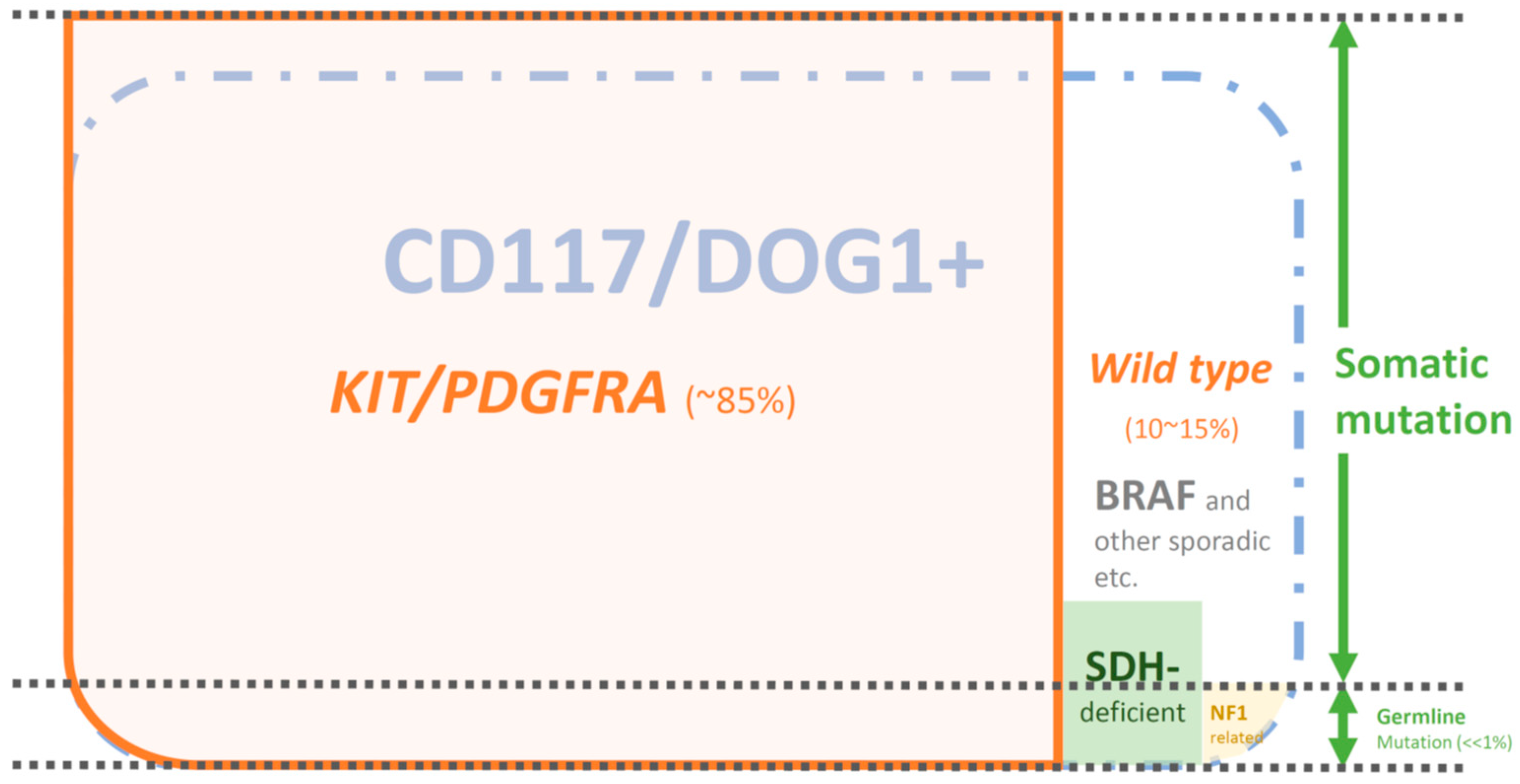
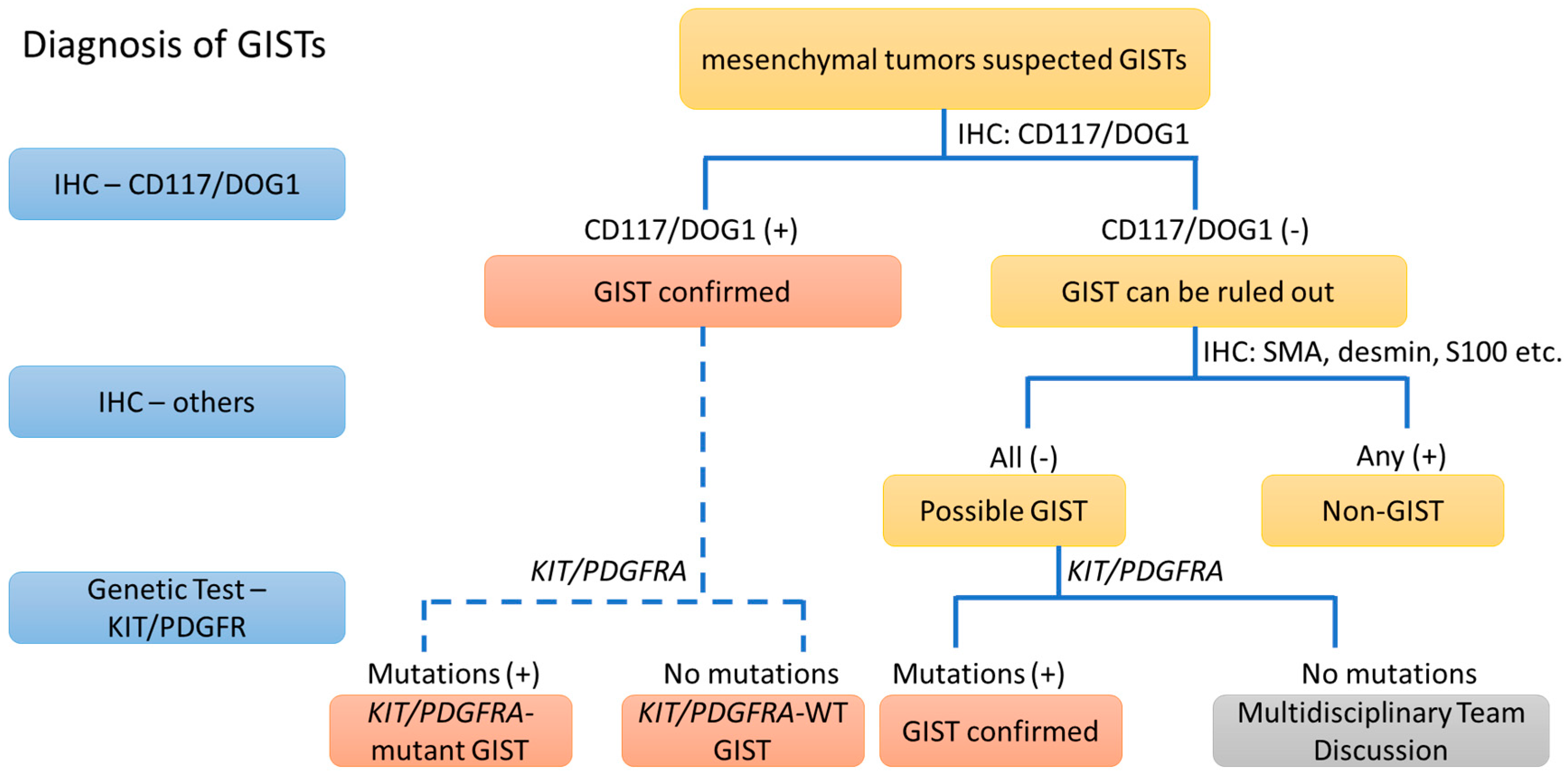
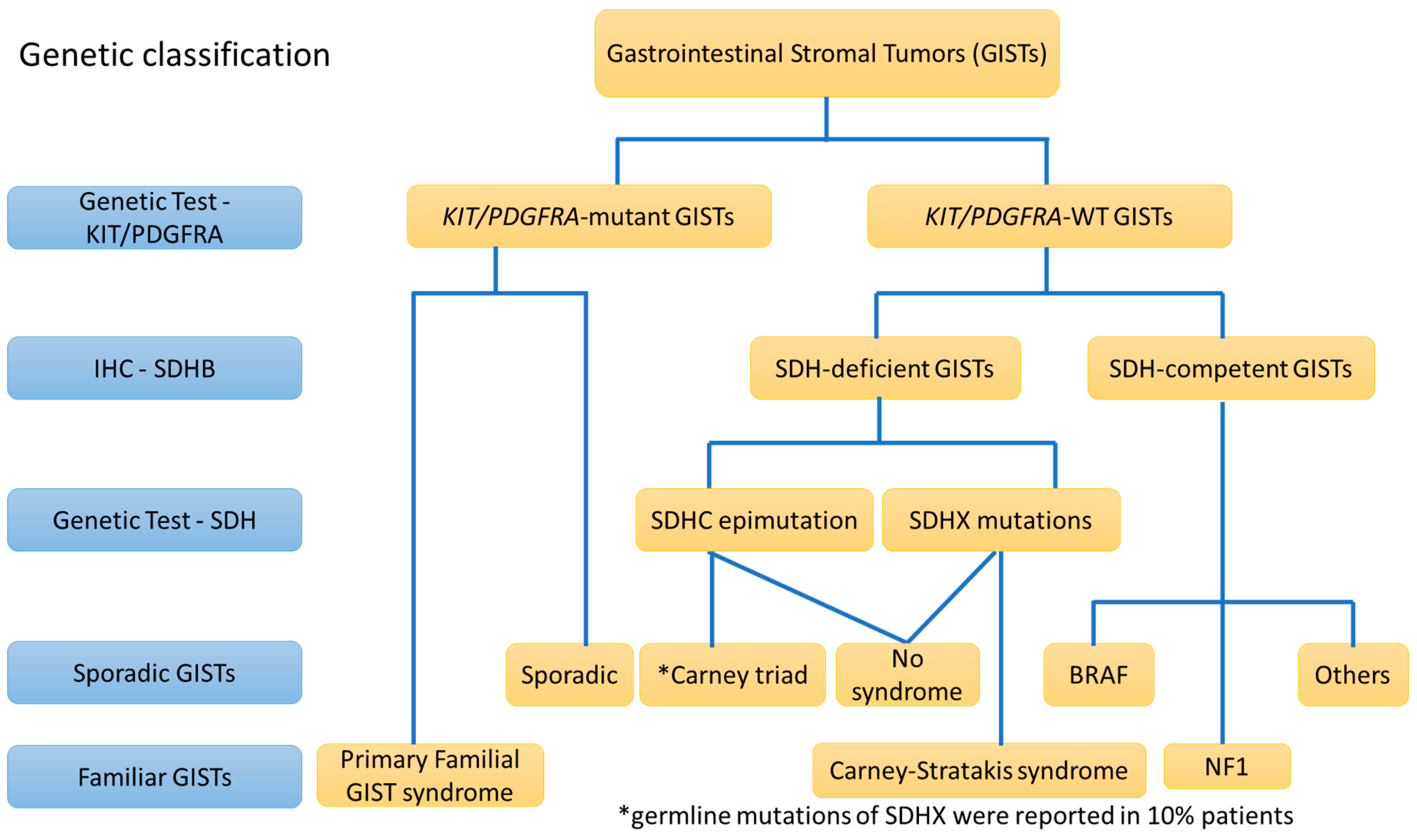
Gastrointestinal stromal tumors (GISTs) originating from the interstitial cells of Cajal are mesenchymal tumors of the gastrointestinal tract and have been found to harbor c-KIT mutations and KIT (CD117) expression since 1998. Later, PDGFRA mutations, SDH alterations, and other drive mutations were identified in GISTs. In addition, more and more protein markers such as DOG1, PKCθ were found to be expressed in GISTs which might help clinicians diagnose CD117-negative GISTs. Therefore, we plan to comprehensively review the molecular markers and genetics of GISTs and provide clinicians useful information in diagnostic and therapeutic strategies of GISTs. Twenty years after the discovery of KIT in GISTs, the diagnosis of GISTs became much more accurate by using immunohistochemical (IHC) panel (CD117/DOG1) and molecular analysis (KIT/PDGFRA), both of which constitute the gold standard of diagnosis in GISTs. The accurately molecular diagnosis of GISTs guides clinicians to precision medicine and provides optimal treatment for the patients with GISTs. Successful treatment in GISTs prolongs the survival of GIST patients and causes GISTs to become a chronic disease. In the future, the development of effective treatment for GISTs resistant to imatinib/sunitinib/regorafenib and KIT/PDGFRA-WT GISTs will be the challenge for GISTs.
Keywords: diagnosis; gastrointestinal stromal tumor; GIST; molecular genetic diagnosis; gastrointestinal stromal tumor; GIST; molecular genetic