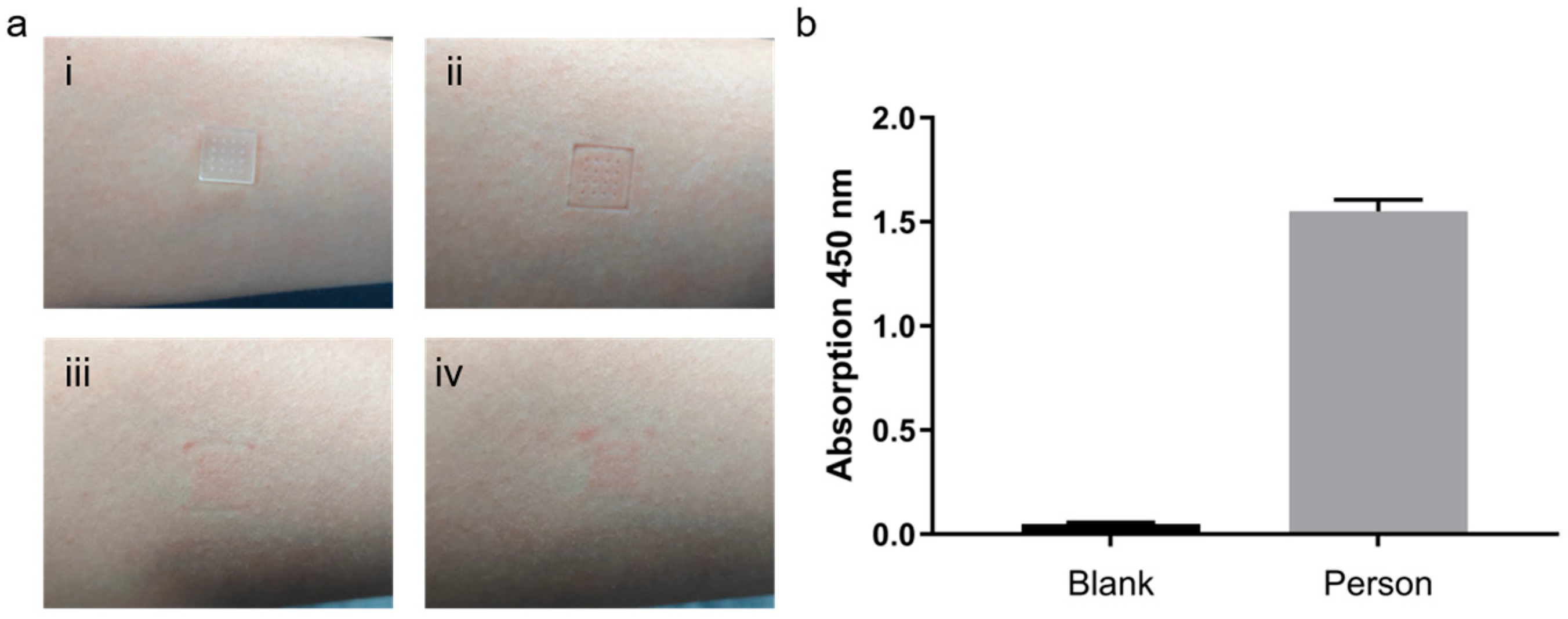

A 3D-Printed PMMA Microneedle-Based TSA-ELISA Platform for Noninvasive Inflammatory Biomarker Detection


Abstract
1. Introduction
2. Materials and Methods
2.1. Fabrication and Mechanical Characterization of PMMA Microneedles
2.2. Surface Functionalization and TNF-α Capture Antibody Immobilization
2.3. Evaluation of PMMA Microneedle ELISA Performance
2.4. Tyramide Signal Amplification Optimization
2.5. Optimization of Microneedle Insertion Time and Length
2.6. Ex Vivo Detection Using Porcine Skin Models
2.7. Cytotoxicity Assessment of PMMA Microneedles
2.8. Human-Based Validation Study
2.9. ELISA System Optimization and Multi-Target Detection Validation
2.10. Clinical Validation in an Eczema Patient
3. Results
3.1. Fabrication and Mechanical Characterization of PMMA Microneedles
3.2. Surface Functionalization and TNF-α Antibody Immobilization
3.3. Evaluation of PMMA Microneedle Sensor Performance
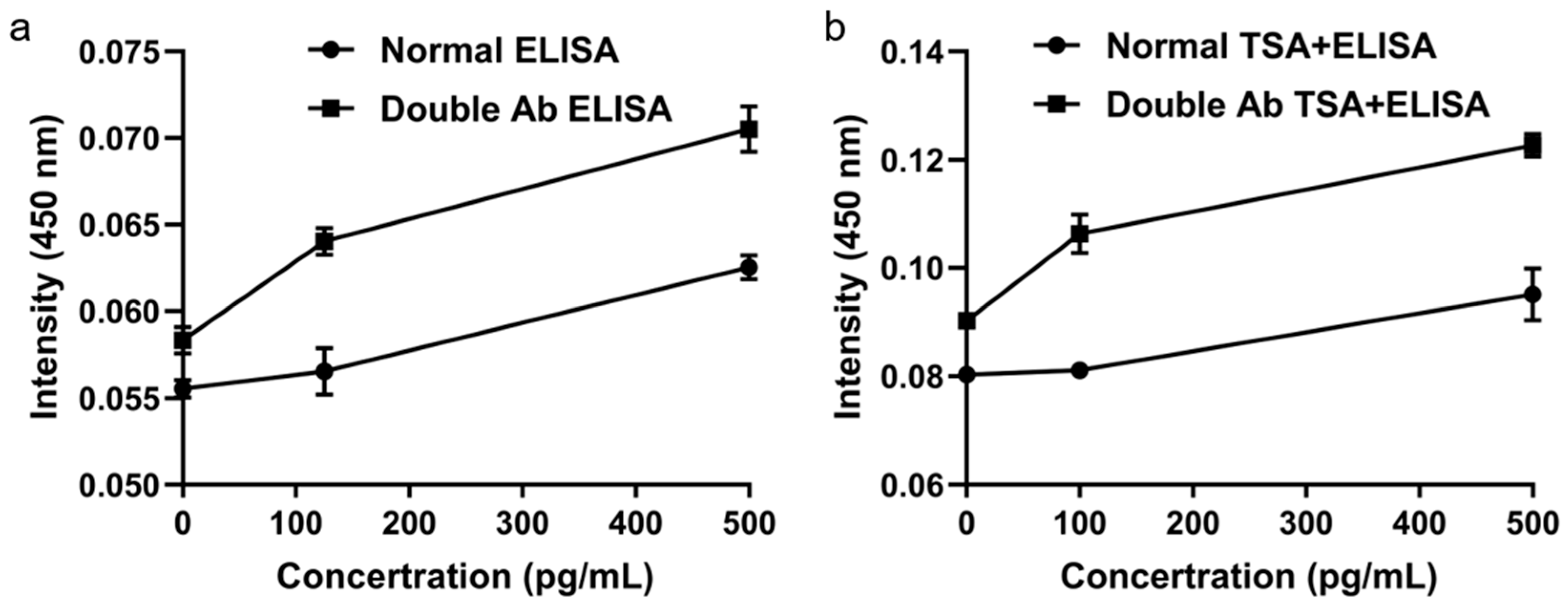
3.4. Tyramide Signal Amplification Enhancement
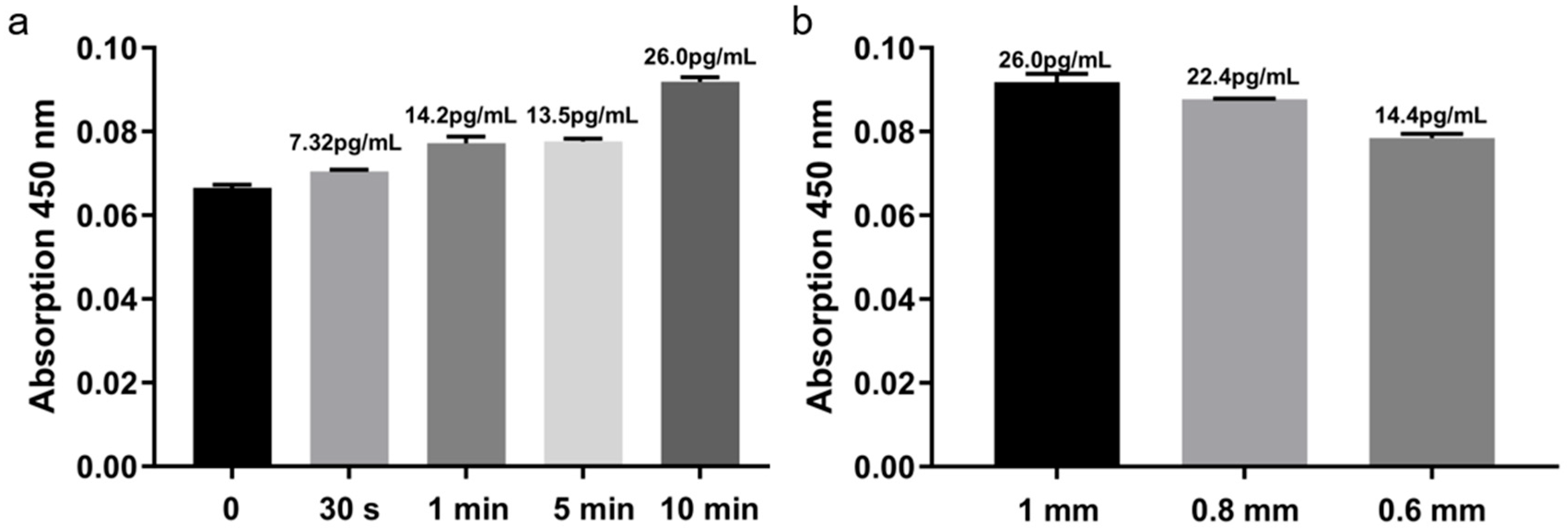
3.5. Optimization of Microneedle Insertion Time and Length
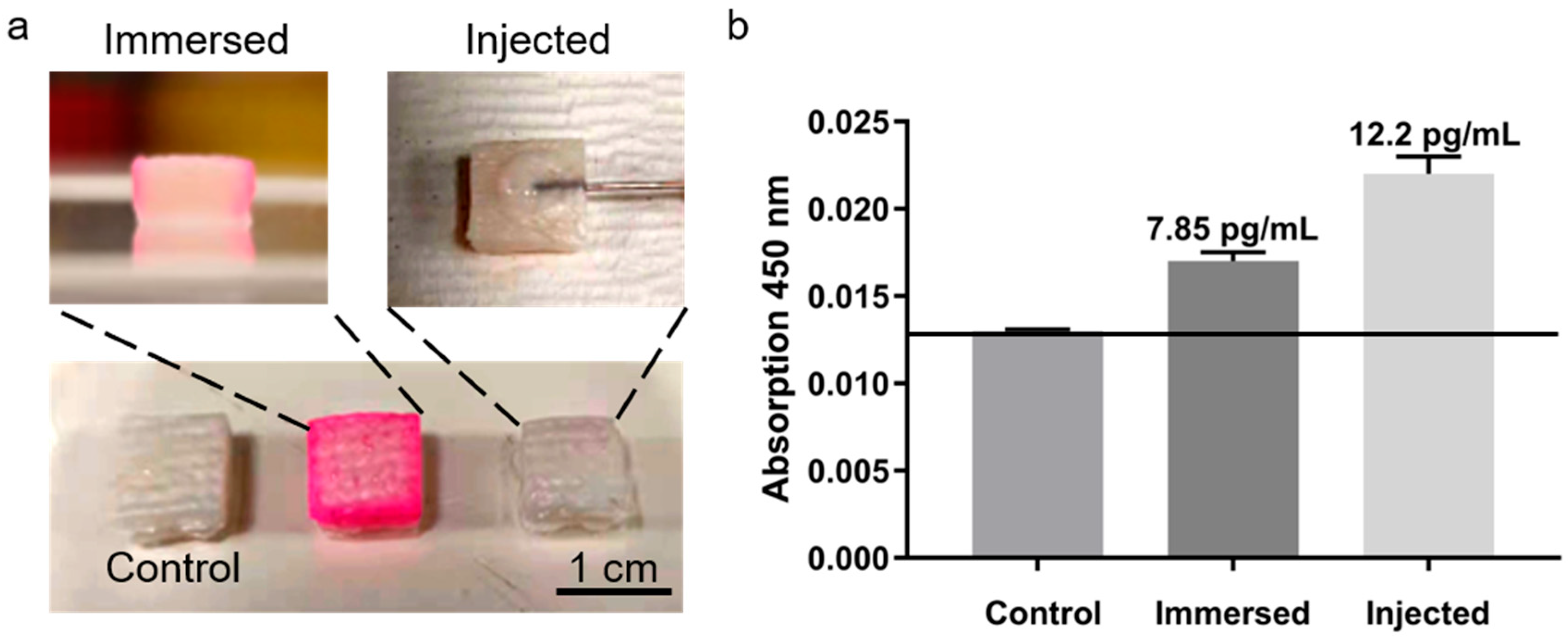
3.6. Ex Vivo Detection Using Porcine Skin Models
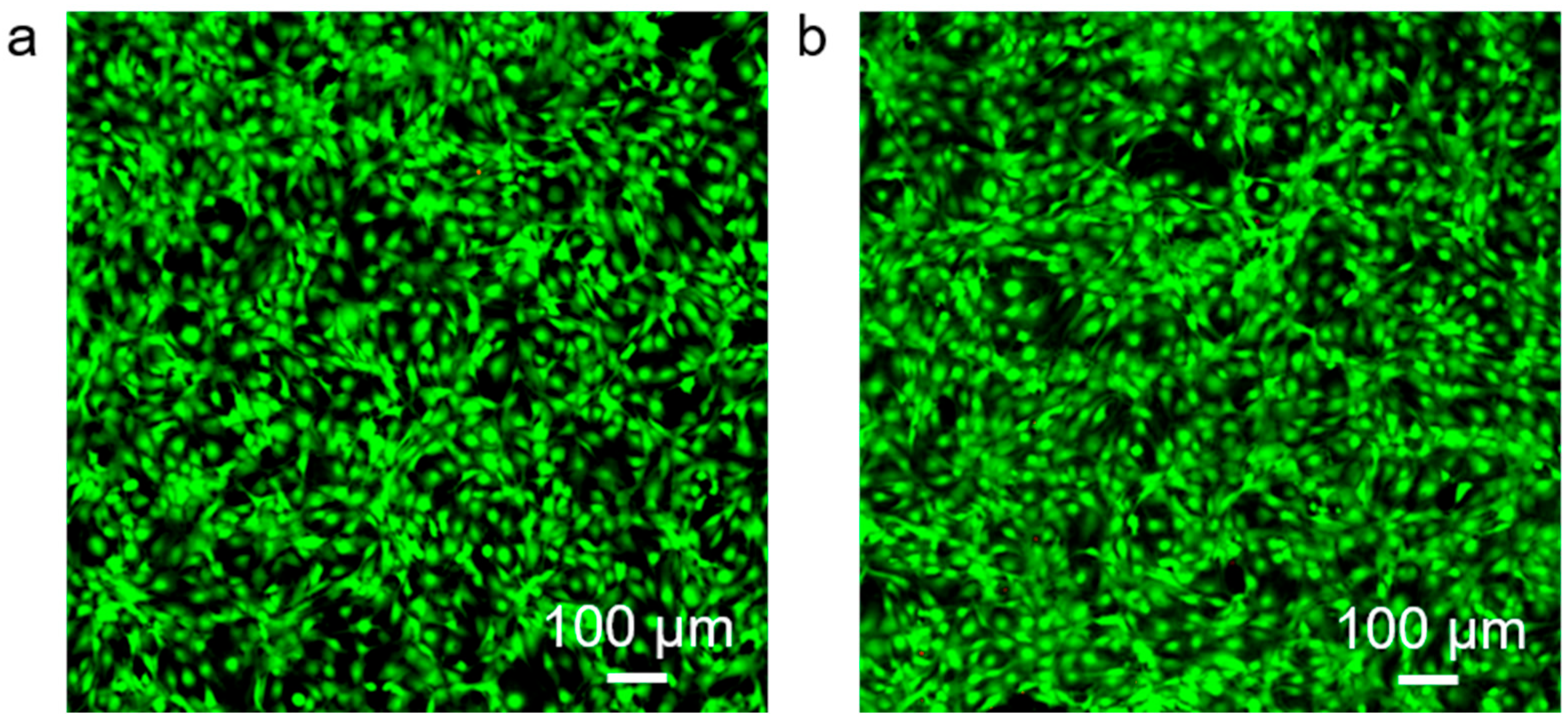
3.7. Cytotoxicity Assessment of PMMA Microneedles
3.8. Optimization of the ELISA System and Validation for Multi-Target Detection
3.9. Clinical Validation in Eczema Patients
3.10. TNF-α Levels in Patient Skin: Comparison with Literature

| Study | Sample Type & Region | TNF-α Level | Notes |
|---|---|---|---|
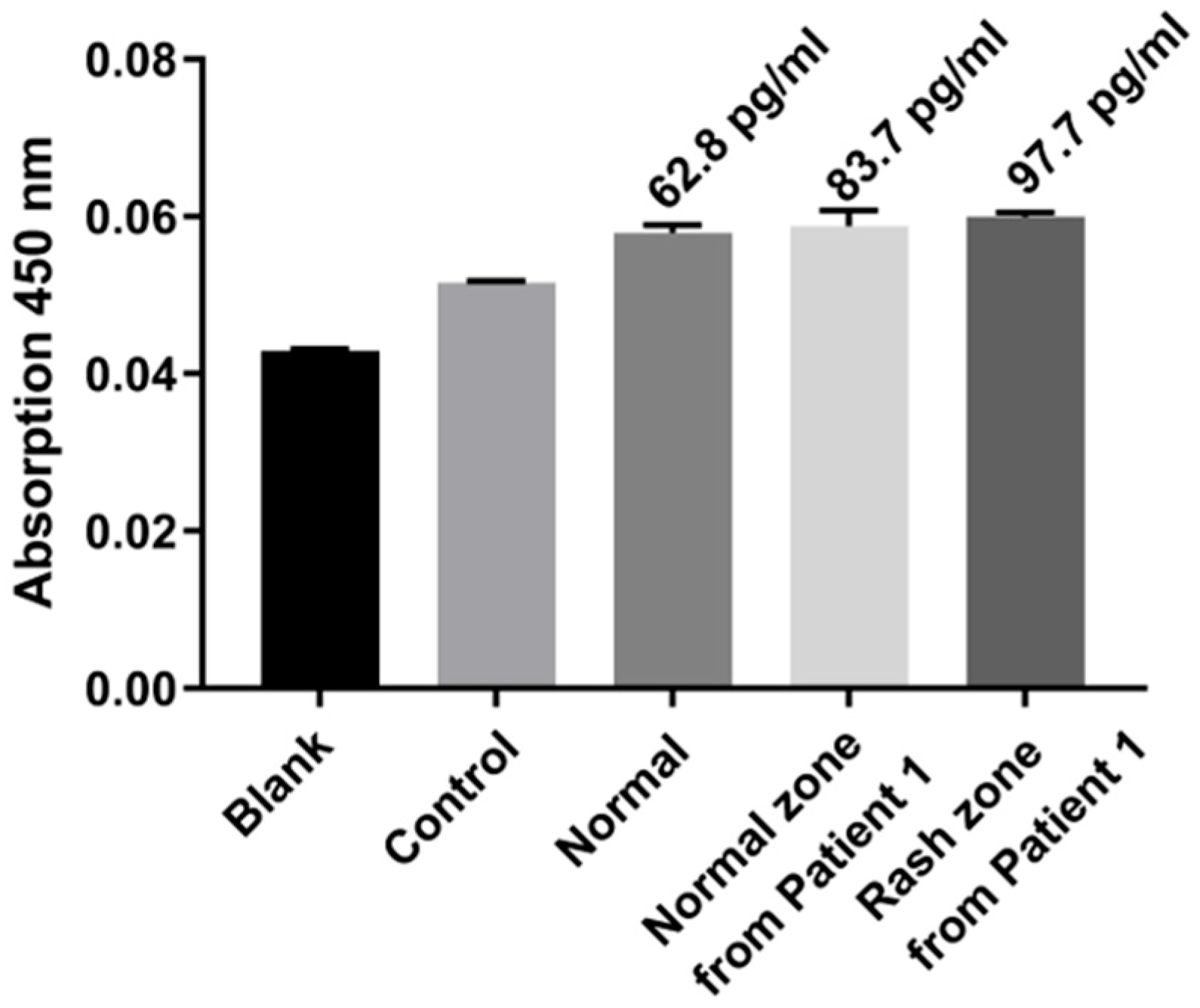
| This study | Patient—healthy skin region | 83.7 pg/mL | Non-invasive skin assay, patient unaffected region |
| This study | Patient—lesion skin region | 97.7 pg/mL | Non-invasive skin assay, patient disease region |
| This study | Healthy individual skin | 62.8 pg/mL | Non-invasive skin assay, control healthy skin |
| Kato et al. [41]. | Serum, patients with Lichen planus vs. healthy controls | Patients: 128.20 ± 19.63 pg/mL; Controls: 0.135 ± 0.08 pg/mL | Serum sample, different disease (lichen planus) |
| Matusiak et al. [42]. | Serum, patients with Hidradenitis suppurativa vs. healthy volunteers | Patients: 5.5–35.6 pg/mL; Healthy: <0.1–17.1 pg/mL | Serum sample, range rather than mean |
| Pirowska et al. [43]. | Serum in Psoriasis patients vs. controls | Patients: 1.98 ± 1.50 pg/mL; Controls: 1.13 ± 0.42 pg/mL | Serum sample, lower absolute values, different disease |
4. Discussion
Supplementary Materials
Author Contributions
Funding
Data Availability Statement
Conflicts of Interest
References
- Ghazizadeh, E.; Naseri, Z.; Deigner, H.P.; Rahimi, H.; Altintas, Z. Approaches of Wearable and Implantable Biosensors towards Developing Precision Medicine. Front. Med. 2024, 11, 1390634. [Google Scholar] [CrossRef]
- Mishra, A.; Singh, P.K.; Chauhan, N.; Roy, S.; Tiwari, A.; Gupta, S.; Tiwari, A.; Patra, S.; Das, T.R.; Mishra, P.; et al. Emergence of Integrated Biosensing-Enabled Digital Healthcare Devices. Sens. Diagn. 2024, 3, 718–744. [Google Scholar] [CrossRef]
- Rajput, A.; Patil, A.; Kandhare, P.; Pawar, A. Application of Microneedle Arrays in Cosmetics: Promises, Advances, and Challenges. Med. Nov. Technol. Devices 2024, 24, 100325. [Google Scholar] [CrossRef]
- Khalil, O.S. Non-Invasive Glucose Measurement Technologies: An Update from 1999 to the Dawn of the New Millennium. Diabetes Technol. Ther. 2004, 6, 660–697. [Google Scholar] [CrossRef]
- Wang, Q.; Molinero-Fernandez, Á.; Wei, Q.; Xuan, X.; Konradsson-Geuken, Å.; Cuartero, M.; Crespo, G.A. Intradermal Lactate Monitoring Based on a Microneedle Sensor Patch for Enhanced In Vivo Accuracy. ACS Sens. 2024, 9, 3115–3125. [Google Scholar] [CrossRef] [PubMed]
- Huang, L.; Luo, Y.; Kuai, L.; Zhang, X.; Zhang, Y.; Yang, Z.; Fei, X.; Sun, J.; Luo, Y.; Zhao, Y.; et al. An Approach for Psoriasis Using a Microneedle Patch Simultaneously Targeting Multiple Inflammatory Cytokines and Relapse-Related T Cells. Biomaterials 2025, 318, 123120. [Google Scholar] [CrossRef]
- Rajendran, P.; Chen, Y.F.; Chen, Y.F.; Chung, L.C.; Tamilselvi, S.; Shen, C.Y.; Day, C.H.; Chen, R.J.; Viswanadha, V.P.; Kuo, W.W.; et al. The Multifaceted Link between Inflammation and Human Diseases. J. Cell. Physiol. 2018, 233, 6458–6471. [Google Scholar] [CrossRef] [PubMed]
- Grivennikov, S.I.; Greten, F.R.; Karin, M. Immunity, Inflammation, and Cancer. Cell 2010, 140, 883–899. [Google Scholar] [CrossRef]
- Hanahan, D.; Weinberg, R.A. Hallmarks of Cancer: The Next Generation. Cell 2011, 144, 646–674. [Google Scholar] [CrossRef]
- Liu, C.; Chu, D.; Kalantar-Zadeh, K.; George, J.; Young, H.A.; Liu, G. Cytokines: From Clinical Significance to Quantification. Adv. Sci. 2021, 8, 2004433. [Google Scholar] [CrossRef]
- Engvall, E.; Perlmann, P. Enzyme-Linked Immunosorbent Assay (ELISA) Quantitative Assay of Immunoglobulin G. Immunochemistry 1971, 8, 871–874. [Google Scholar] [CrossRef]
- Liu, H.; Lei, Y. A Critical Review: Recent Advances in “Digital” Biomolecule Detection with Single Copy Sensitivity. Biosens. Bioelectron. 2021, 177, 112901. [Google Scholar] [CrossRef]
- Gubala, V.; Harris, L.F.; Ricco, A.J.; Tan, M.X.; Williams, D.E. Point of Care Diagnostics: Status and Future. Anal. Chem. 2012, 84, 487–515. [Google Scholar] [CrossRef]
- Zhu, J.; Zhou, X.; Libanori, A.; Sun, W. Microneedle-Based Bioassays. Nanoscale Adv. 2020, 2, 4295–4304. [Google Scholar] [CrossRef] [PubMed]
- Poudineh, M. Microneedle Assays for Continuous Health Monitoring: Challenges and Solutions. ACS Sens. 2024, 9, 535–542. [Google Scholar] [CrossRef]
- Ranamukhaarachchi, S.A.; Padeste, C.; Häfeli, U.O.; Stoeber, B.; Cadarso, V.J. Design Considerations of a Hollow Microneedle-Optofluidic Biosensing Platform Incorporating Enzyme-Linked Assays. J. Micromech. Microeng. 2017, 28, 024002. [Google Scholar] [CrossRef]
- Prausnitz, M.R. Engineering Microneedle Patches for Vaccination and Drug Delivery to Skin. Annu. Rev. Chem. Biomol. Eng. 2017, 8, 177–200. [Google Scholar] [CrossRef]
- Müller, A.C.; Breitwieser, F.P.; Fischer, H.; Schuster, C.; Brandt, O.; Colinge, J.; Superti-Furga, G.; Stingl, G.; Elbe-Bürger, A.; Bennett, K.L. A Comparative Proteomic Study of Human Skin Suction Blister Fluid from Healthy Individuals Using Immuno-Depletion and iTRAQ Labeling. J. Proteome Res. 2012, 11, 3715–3727. [Google Scholar] [CrossRef] [PubMed]
- Sasongko, L.; Williams, K.M.; Day, R.O.; McLachlan, A.J. Human Subcutaneous Tissue Distribution of Fluconazole: Comparison of Microdialysis and Suction Blister Techniques. Br. J. Clin. Pharmacol. 2003, 56, 551–561. [Google Scholar] [CrossRef]
- Prausnitz, M.R. Microneedles for Transdermal Drug Delivery. Adv. Drug Deliv. Rev. 2004, 56, 581–587. [Google Scholar] [CrossRef] [PubMed]
- McAllister, D.V.; Wang, P.M.; Davis, S.P.; Park, J.H.; Canatella, P.J.; Allen, M.G.; Prausnitz, M.R. Microfabricated Needles for Transdermal Delivery of Macromolecules and Nanoparticles: Fabrication Methods and Transport Studies. Proc. Natl. Acad. Sci. USA 2003, 100, 13755–13760. [Google Scholar] [CrossRef]
- Omar, R.; Zheng, Y.; Wang, J.; Haick, H. Microneedle Sensors for Multiplex Applications: Toward Advanced Biomedical and Environmental Analysis. Adv. Sens. Res. 2023, 3, 2200032. [Google Scholar] [CrossRef]
- Chien, M.N.; Fan, S.H.; Huang, C.H.; Wu, C.C.; Huang, J.T. Continuous Lactate Monitoring System Based on Percutaneous Microneedle Array. Sensors 2022, 22, 1468. [Google Scholar] [CrossRef]
- Tehrani, F.; Teymourian, H.; Wuerstle, B.; Kavner, J.; Patel, R.; Furmidge, A.; Aghavali, R.; Hosseini-Toudeshki, H.; Brown, C.; Zhang, F.; et al. An Integrated Wearable Microneedle Array for the Continuous Monitoring of Multiple Biomarkers in Interstitial Fluid. Nat. Biomed. Eng. 2022, 6, 1214–1224. [Google Scholar] [CrossRef] [PubMed]
- Pere, C.P.P.; Economidou, S.N.; Lall, G.; Ziraud, C.; Boateng, J.S.; Alexander, B.D.; Lamprou, D.A.; Douroumis, D. 3D-Printed Microneedles for Insulin Skin Delivery. Int. J. Pharm. 2018, 544, 425–432. [Google Scholar] [CrossRef]
- Ghazizadeh, E.; Deigner, H.P.; Al-Bahrani, M.; Muzammil, K.; Daneshmand, N.; Naseri, Z. DNA Bioinspired by Polyvinyl Alcohol-MXene-Borax Hydrogel for Wearable Skin Sensors. Sens. Actuators A Phys. 2025, 386, 116331. [Google Scholar] [CrossRef]
- Ali, U.; Karim, K.J.B.A.; Buang, N.A. A Review of the Properties and Applications of Poly(Methyl Methacrylate) (PMMA). Polym. Rev. 2015, 55, 678–705. [Google Scholar] [CrossRef]
- Zhou, X.Y.; Li, Y.J.; Wu, H.P.; Huang, W.; Ju, H.X.; Ding, S.J. A Amperometric Immunosensor for Sensitive Detection of Circulating Tumor Cells Using a Tyramide Signal Amplification-Based Signal Enhancement System. Biosens. Bioelectron. 2019, 130, 88–94. [Google Scholar] [CrossRef]
- Yuan, L.; Xu, L.L.; Liu, S.Q. Integrated Tyramide and Polymerization-Assisted Signal Amplification for a Highly Sensitive Immunoassay. Anal. Chem. 2012, 84, 10737–10744. [Google Scholar] [CrossRef] [PubMed]
- Yamauchi, K.; Okamoto, S.; Ishida, Y.; Konno, K.; Hoshino, K.; Furuta, T.; Takahashi, M.M.; Koike, M.; Isa, K.; Watanabe, M.; et al. Fluorochromized Tyramide-Glucose Oxidase as a Multiplex Fluorescent Tyramide Signal Amplification System for Histochemical Analysis. Sci. Rep. 2022, 12, 14807. [Google Scholar] [CrossRef]
- Vorontsova, E.O.; Yurchenko, D.A.; Shilova, N.V. Tyramide Signal Amplification: New Opportunities for DNA In Situ Hybridization. Cell Tissue Biol. 2023, 65, 313–322. [Google Scholar] [CrossRef]
- Liu, H.; Lei, Y. Dual Amplification Enabled Counting-Based Ultrasensitive Enzyme-Linked Immunosorbent Assay. Anal. Chim. Acta 2022, 1198, 339510. [Google Scholar] [CrossRef]
- Liu, J.; Pang, S.; Wang, M.; Yu, H.; Ma, P.; Dong, T.; Zheng, Z.; Jiao, Y.; Zhang, Y.; Liu, A. An Ultrasensitive ELISA to Assay Femtomolar Level SARS-CoV-2 Antigen Based on Specific Peptide and Tyramine Signal Amplification. Sens. Actuators B Chem. 2023, 387, 133746. [Google Scholar] [CrossRef]
- Nguyen, T.; Jung, S.H.; Lee, M.S.; Park, T.E.; Ahn, S.K.; Kang, J.H. Robust Chemical Bonding of PMMA Microfluidic Devices to Porous PETE Membranes for Reliable Cytotoxicity Testing of Drugs. Lab Chip 2019, 19, 3706–3713. [Google Scholar] [CrossRef]
- Ge, Z.; Guo, W.; Tao, Y.; Sun, H.; Meng, X.; Cao, L.; Zhang, S.; Liu, W.; Akhtar, M.L.; Li, Y.; et al. Wireless and Closed-Loop Smart Dressing for Exudate Management and On-Demand Treatment of Chronic Wounds. Adv. Mater. 2023, 35, 2304005. [Google Scholar] [CrossRef]
- Ebrahiminejad, V.; Prewett, P.D.; Davies, G.J.; Faraji Rad, Z. Microneedle Arrays for Drug Delivery and Diagnostics: Toward an Optimized Design, Reliable Insertion, and Penetration. Adv. Mater. Interfaces 2022, 9, 2101856. [Google Scholar] [CrossRef]
- Roque, A.C.; Silva, C.S.; Taipa, M.Á. Affinity-Based Methodologies and Ligands for Antibody Purification: Advances and Perspectives. J. Chromatogr. A 2007, 1160, 44–55. [Google Scholar] [CrossRef]
- Mateo, C.; Fernández-Lorente, G.; Abian, O.; Fernández-Lafuente, R.; Guisán, J.M. Multifunctional Epoxy Supports: A New Tool to Improve the Covalent Immobilization of Proteins. Biomacromolecules 2000, 1, 739–745. [Google Scholar] [CrossRef] [PubMed]
- Valaperti, A.; Li, Z.; Vonow-Eisenring, M.; Probst-Müller, E. Diagnostic Methods for the Measurement of Human TNF-α in Clinical Laboratory. J. Pharm. Biomed. Anal. 2020, 179, 113010. [Google Scholar] [CrossRef] [PubMed]
- Richens, J.L.; Urbanowicz, R.A.; Metcalf, R.; Corne, J.; O’Shea, P.; Fairclough, L. Quantitative Validation and Comparison of Multiplex Cytokine Kits. J. Biomol. Screen. 2010, 15, 562–568. [Google Scholar] [CrossRef] [PubMed]
- Kato, A.M.; Hegab, D.S.; Sweilam, M.A.E.R.; Abd El Gaffar, E.S. Serum Levels of Tumor Necrosis Factor-α in Patients with Lichen Planus. Egypt. J. Dermatol. Venerol. 2014, 34, 102–106. [Google Scholar] [CrossRef]
- Matusiak, L.; Bieniek, A.; Szepietowski, J.C. Increased Serum Tumour Necrosis Factor-α in Hidradenitis Suppurativa Patients: Is There a Basis for Treatment with Anti-TNF-α Agent? Acta Derm. Venereol. 2009, 89, 601–603. [Google Scholar] [CrossRef] [PubMed]
- Pirowska, M.; Podolec, K.; Lipko-Godlewska, S.; Sułowicz, J.; Brzewski, P.; Obtułowicz, A.; Pastuszczak, M.; Wojas-Pelc, A. Level of Inflammatory Cytokines Tumour Necrosis Factor-α, Interleukins 12, 23 and 17 in Patients with Psoriasis in the Context of Metabolic Syndrome. Adv. Dermatol. Allergol. 2019, 36, 70–75. [Google Scholar] [CrossRef]
- Gera, A.K.; Burra, R.K. Design of Hollow Tapered PMMA Polymeric Microneedles for Enhanced Structural Stability and Drug Delivery Efficiency. AIP Adv. 2025, 15, 015034. [Google Scholar] [CrossRef]
- Ita, K. Ceramic microneedles and hollow microneedles for transdermal drug delivery: Two decades of research. J. Drug Deliv. Sci. Technol. 2018, 44, 314–322. [Google Scholar] [CrossRef]


Disclaimer/Publisher’s Note: The statements, opinions and data contained in all publications are solely those of the individual author(s) and contributor(s) and not of MDPI and/or the editor(s). MDPI and/or the editor(s) disclaim responsibility for any injury to people or property resulting from any ideas, methods, instructions or products referred to in the content. |
© 2025 by the authors. Licensee MDPI, Basel, Switzerland. This article is an open access article distributed under the terms and conditions of the Creative Commons Attribution (CC BY) license (https://creativecommons.org/licenses/by/4.0/).
Share and Cite
Xu, M.; Ruan, Q.; Ren, Y. A 3D-Printed PMMA Microneedle-Based TSA-ELISA Platform for Noninvasive Inflammatory Biomarker Detection. Micromachines 2025, 16, 1286. https://doi.org/10.3390/mi16111286
Xu M, Ruan Q, Ren Y. A 3D-Printed PMMA Microneedle-Based TSA-ELISA Platform for Noninvasive Inflammatory Biomarker Detection. Micromachines. 2025; 16(11):1286. https://doi.org/10.3390/mi16111286
Chicago/Turabian StyleXu, Minghui, Qingyu Ruan, and Yukun Ren. 2025. "A 3D-Printed PMMA Microneedle-Based TSA-ELISA Platform for Noninvasive Inflammatory Biomarker Detection" Micromachines 16, no. 11: 1286. https://doi.org/10.3390/mi16111286
APA StyleXu, M., Ruan, Q., & Ren, Y. (2025). A 3D-Printed PMMA Microneedle-Based TSA-ELISA Platform for Noninvasive Inflammatory Biomarker Detection. Micromachines, 16(11), 1286. https://doi.org/10.3390/mi16111286