
Article

Synergistic Driver-Laser/Modulator Co-Design with Versatile Output Stage: A Unified Optical Transmitter EIC Design Approach

Faculty of Electronic and Information Engineering, Xi’an Jiaotong University, Xi’an 710049, China
*
Author to whom correspondence should be addressed.
Micromachines 2025, 16(11), 1262; https://doi.org/10.3390/mi16111262
Submission received: 9 October 2025 / Revised: 3 November 2025 / Accepted: 3 November 2025 / Published: 6 November 2025

Abstract

With the rapid deployment of artificial intelligence (AI) data centers, demand for optical modules surges—alongside faster upgrades and stricter low-power requirements. However, traditional optical driver integrated circuits (ICs) rely on device-specific customization, which lengthens driver design cycles, delays module deployment, and raises costs, becoming a bottleneck for optical module evolution. To address these issues, this work proposes a unified optical transmitter electronic integrated circuit (EIC) design approach featuring synergistic driver-laser/modulator co-design and a versatile output driver (VOD). The VOD can be configured into three output impedance states (open-drain, differential 50- Ω , or differential 100- Ω ), enabling it to drive various optical devices like distributed feedback lasers (DFBs), vertical-cavity surface-emitting lasers (VCSELs), electro-absorption modulated lasers (EMLs), and Mach-Zehnder modulators (MZMs) with a single design, minimizing device-specific customization. Meanwhile, its power consumption is also adjustable to maximize the power efficiency. The proposed design approach demonstrates the potential to address the critical interoperability, cost, and power challenges faced by AI data centers, providing a scalable template for next-generation coherent and 4-level pulse amplitude modulation systems and facilitating rapid deployment.

1. Introduction

Optical communication systems have become the backbone of modern high-speed communication networks, owing to their exceptional advantages including ultra-high bandwidth capacity, extremely low transmission loss, and superior immunity to electromagnetic interference. These systems are extensively deployed in various applications ranging from long-haul fiber-optic backbones to data center interconnects and 5G fronthaul/backhaul networks [1,2,3,4,5].
In particular, the rapid expansion of artificial intelligence (AI) data centers—driven by exponentially growing computational demands—imposes two critical challenges on optical interconnect technologies: increasingly accelerated deployment cycles for optical modules and a stringent need for lower power consumption. These systems must not only support higher data rates and greater port densities but also comply with strict thermal and energy constraints. Effectively addressing both performance and efficiency is therefore essential to sustain the development of next-generation AI infrastructure.
At the heart of these systems, optical transmitters serve as critical components that convert electrical signals into optical signals. Within the transmitter architecture, the driver circuit plays a pivotal role in ensuring optimal performance. Its primary functions include:
(1)
Signal amplification: The driver significantly boosts the amplitude of the input electrical signal to meet the driving voltage/current swing requirements of the subsequent optical modulator.
(2)
Impedance matching: It carefully maintains proper impedance matching throughout the signal path to minimize reflections and inter-symbol interference (ISI) and ensure maximum power transfer.
(3)
Signal conditioning: The driver often incorporates additional features such as signal shaping and pre-emphasis to compensate for bandwidth limitations in the transmission path.
The design of the driver circuit must be meticulously tailored to the specific characteristics of the optical modulator it interfaces with, including the modulator type, the packaging forms, the required driving voltage/current swing and the bandwidth specifications.
Previous research has primarily focused on optimizing optical transmitters within specific domains—such as power efficiency enhancement [6], linearity improvement [7], and bandwidth expansion [8]—with each typically tailored to a single application scenario. However, these designs often suffer from strong dependencies on specific optical devices, which result in extended design cycles, slow iteration, and limited scalability. Their inability to adapt to varying voltage, current, and impedance requirements across different modulators further leads to suboptimal power efficiency and increased operational power consumption. Additionally, the lack of reconfigurability impedes hardware reuse, elevating both development costs and system complexity. Therefore, a versatile transmitter architecture is highly desirable in modern optical communication systems.
To address the impedance matching issues of different optical devices, this paper presents a versatile output driver (VOD) integrated circuit (IC) design approach that respectively adopts passive (PBT) and active back termination (ABT) techniques. The proposed architecture supports three manually selectable impedance modes—open-drain, differential 50- Ω , and differential 100- Ω back termination—enabling optimized driving of both directly and externally modulated lasers with diverse packaging requirements. Two 10-Gbps driver prototypes implementing the PBT and ABT schemes have been fabricated in a standard 180-nm complementary metal-oxide-semiconductor (CMOS) process, demonstrating cost-effective manufacturability while ensuring compatibility with various optical transceivers.

2. Conventional Driver Design

As mentioned above, conventional driver designs must be meticulously tailored to the specific characteristics of the optical modulator it interfaces with. This section will briefly introduce the customized design requirements for drivers from the aspects of the modulator types and the packaging forms.
Modulators are generally categorized into two types: direct modulation and indirect (or external) modulation. Directly-modulated lasers DMLs, such as distributed feedback lasers (DFBs) and vertical-cavity surface-emitting lasers (VCSELs), operate by modulating the current supplied to the laser diode, causing the output light intensity to vary with the electrical signal. They are widely used in short-reach optical communication systems, like local area networks (LANs) and data centers, where simplicity, low cost, and compact design are prioritized [9]. In contrast, externally-modulated lasers, including electroabsorption modulated lasers (EMLs) and Mach-Zehnder modulators (MZMs), employ a continuous-wave (CW) laser operating at a constant power, while an external modulator driven by voltage is used to encode the data onto the laser. Externally-modulated lasers are preferred for long-distance communication in metropolitan or long-haul networks, where the signal integrity and stability are essential [10]. Table 1 summarizes the similarities and differences in the typical characteristics of these modulators [11]. In simple terms, a directly-modulated laser is generally driven by a current-mode driver, while an externally-modulated laser is generally driven by a voltage-mode driver. Furthermore, the required driving swing amplitude varies across different devices, imposing distinct requirements on the output stage of the driver.
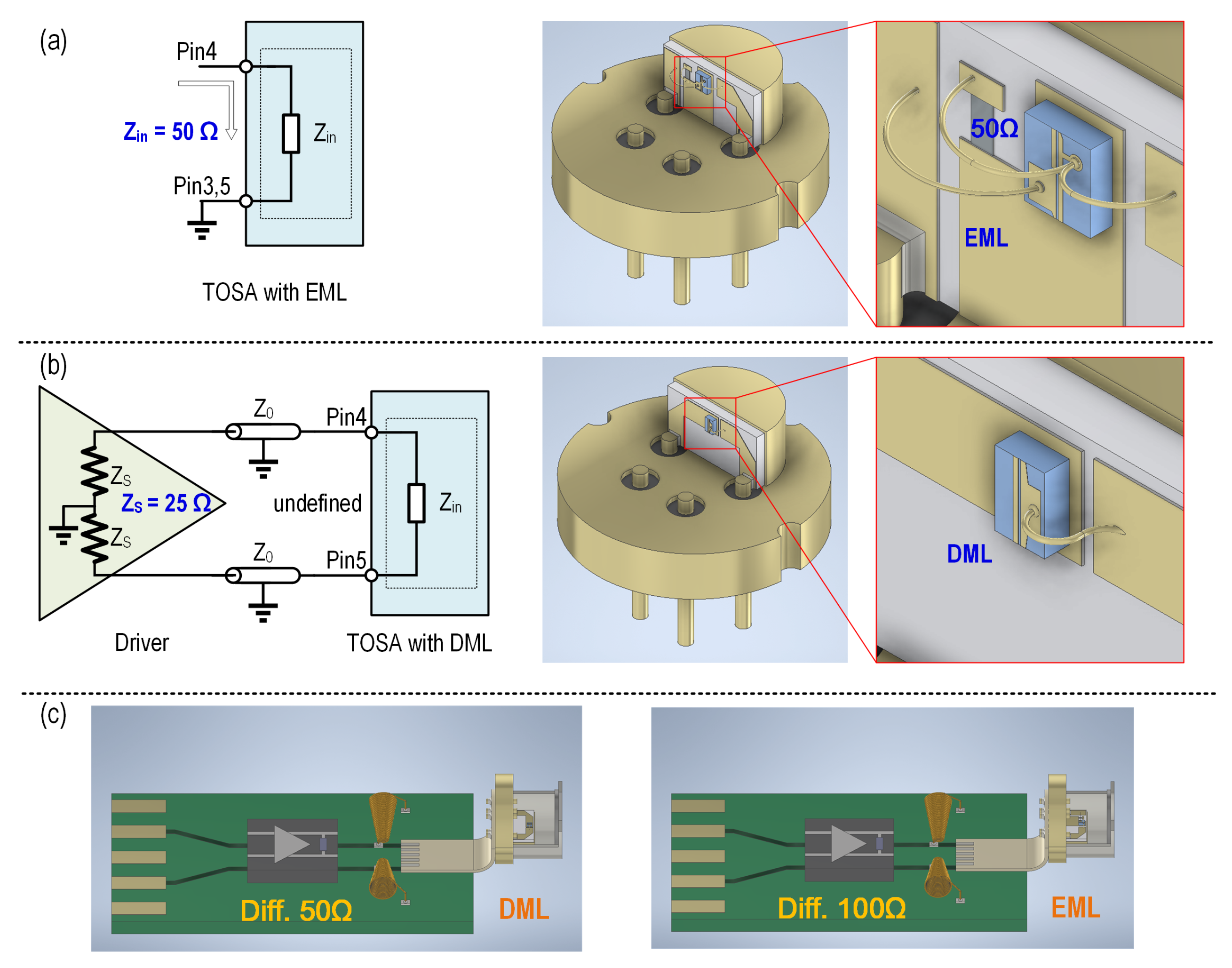
Packaging is another consideration. Vendors often package lasers and modulators within a Transmitter Optical Sub-Assembly (TOSA) due to its compact design and robustness. To facilitate ease of use and interchangeability, users and suppliers have established a Multi-Source Agreement (MSA) defining the dimensions, pin configurations, and impedance control demands for TOSA [12]. As shown in Figure 1a, the input impedance of an EML-based TOSA is defined as a single-ended 50 Ω . In contrast, for a DML-based TOSA, the driver output impedance is specified as a single-ended 25 Ω or differential 50 Ω , while the TOSA input impedance and transmission line characteristic impedance are left undefined, as shown in Figure 1b. This flexibility enables vendors to optimize performance across different DML implementations. For specific optical device packaging, transistor outline (TO) packages are widely adopted, offering advantages such as low cost, hermetic sealing, efficient thermal dissipation, and precise optical alignment capabilities.
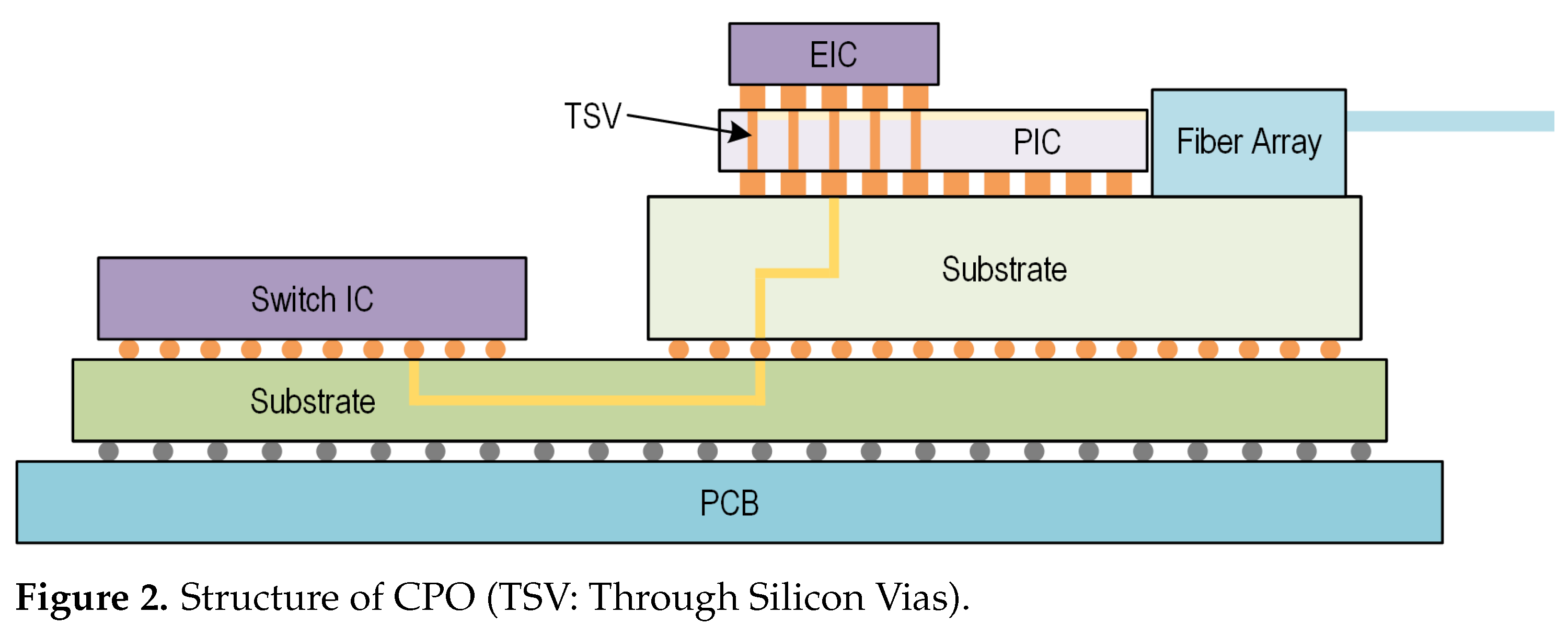
Besides the TOSA package, co-packaged optics (CPO) is another approach for packaging lasers and modulators, as shown in Figure 2, and is regarded a development trend for data center optical interconnects due to its higher bandwidth and lower power consumption. By integrating photonic integrated circuits (PICs) and electronic integrated circuits (EICs) on a shared substrate, the CPO solution enables shorter electrical interconnection lengths, allowing for impedance mismatch between the driver and modulator [13].

3. Versatile Output Driver Design

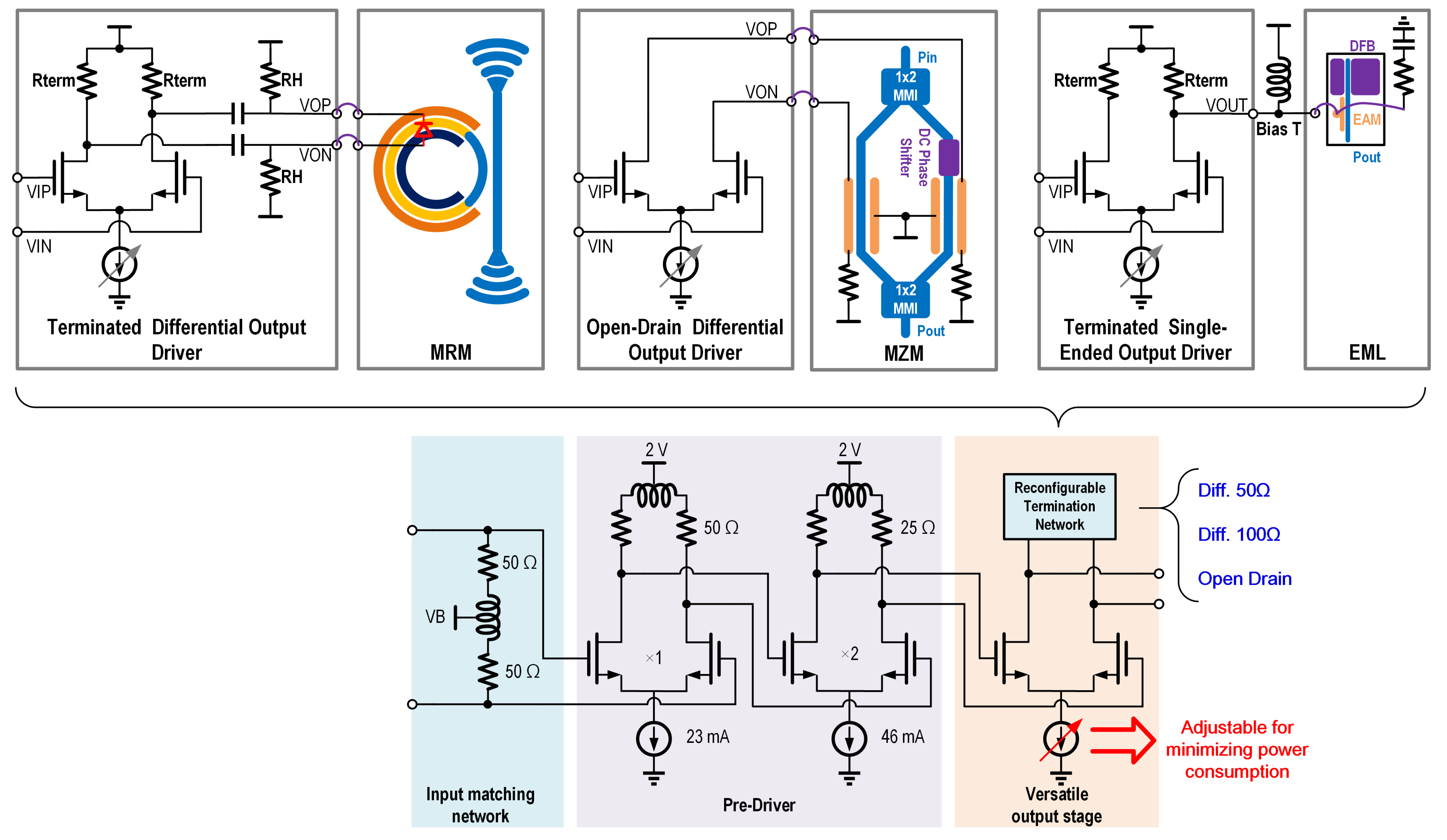
Based on the distinct output impedance requirements of conventional drivers for different optical devices—such as 25 Ω for DMLs, 50 Ω for EMLs, and open-drain (OD) driving for some MZMs—we have developed a VOD design, illustrated in Figure 3, capable of supporting multiple types of optical devices.
The versatile output driver consists of an input matching network, a pre-driver and a versatile output stage. The pre-driver employs a two-stage amplifier configuration with uniform gain. To adequately drive the substantial capacitive load of the output stage, the second stage is designed with twice the transistor size and current consumption of the first. This scaling halves the output impedance of the second stage, thereby pushing the pole associated with its output resistor and the input capacitor of the output stage to a higher frequency. Furthermore, the bandwidth is extended toward the process limit of the 180 nm node by incorporating a shunt-peaking inductor. The versatile output stage supports switching among multiple output impedance modes, including open drain (OD), differential 50 Ω , and differential 100 Ω , while also allowing tail current adjustment to achieve the required output swing and maintain low power consumption. It can be implemented using two approaches: passive back termination (PBT) and active back termination (ABT). The designs utilizing these two approaches will be presented in the following sections.

3.1. PBT Based VOD

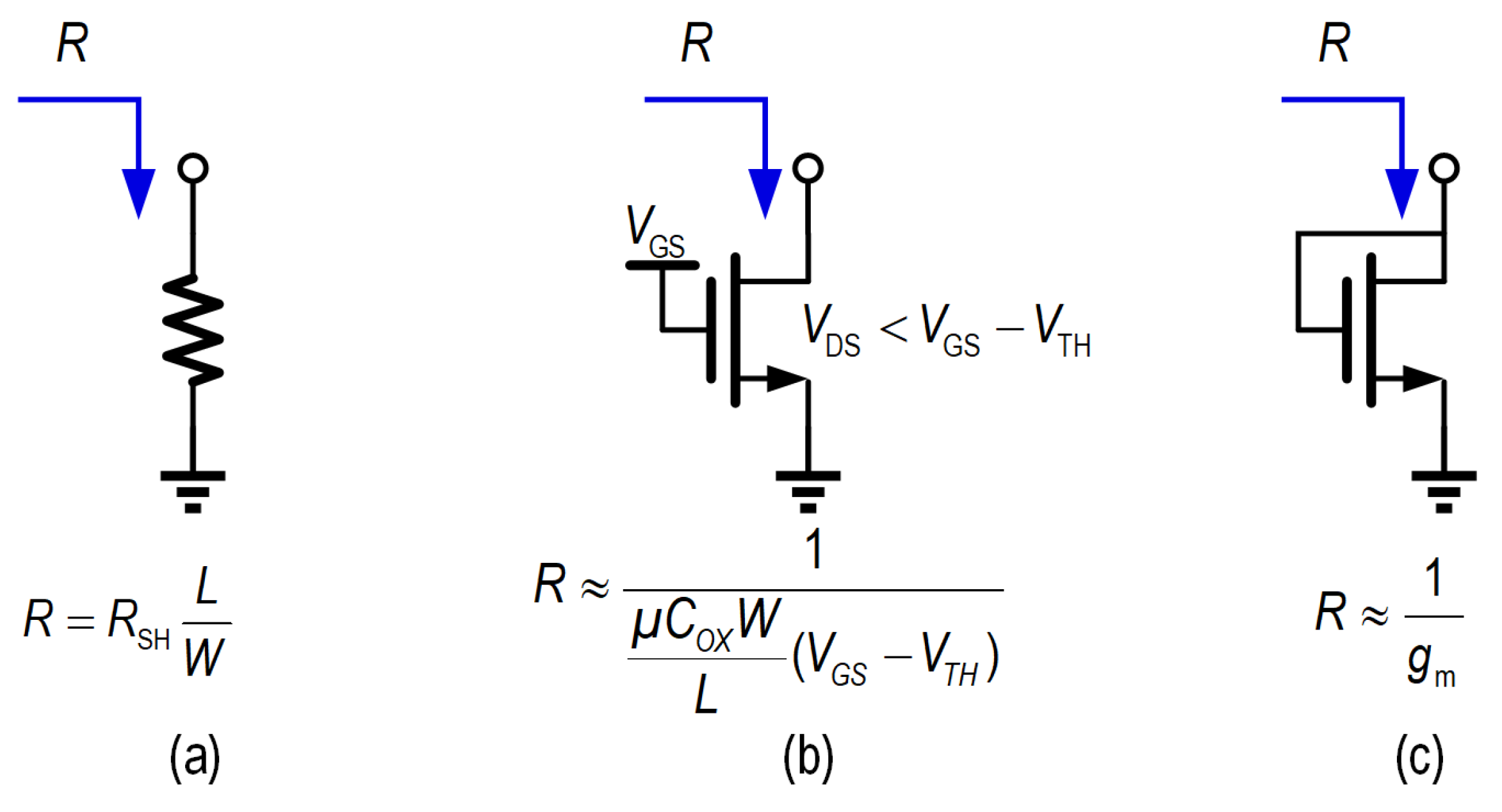
As illustrated in Figure 4, passive back termination can be achieved using various components, including a diffused/polysilicon/metal resistor, a metal-oxide-semiconductor field-effect transistor (MOSFET) operating in the linear region, or a diode-connected MOSFET.
The resistor’s linear model is particularly convenient because its resistance is easily calculated from the foundry’s sheet resistance parameter and the designer-specified length and width dimensions. When making a specific selection, the primary considerations are its temperature dependence, relative accuracy, and the area required to meet current density limits. Table 2 compares the essential characteristics of the three resistor types.
Generally, silicided diffused resistors, with a typical sheet resistance of approximately 20 Ω per square, are suitable for implementing low-value resistors, offering high current density tolerance and inherent isolation via reverse-biased p-n junctions, enabling multiple resistors within a single tub for area efficiency.
Unsilicided polysilicon resistors provide higher sheet resistance, lower temperature drift, and better accuracy [14], making them ideal for high-value resistors, though their limited current tolerance restricts high-current use.
Metal resistors excel in precision and stability, with laser trimming further enhancing accuracy. Nevertheless, their inherently low sheet resistance makes them unsuitable for high-value resistor implementation. Even when realizing a modest 50- Ω resistor, the required area becomes prohibitively large to maintain adequate current density tolerance.
A MOSFET operating in the linear region can also serve as a passive back termination load, yet its low resistance is constrained by operating conditions. Its limited drain-to-source voltage ( V DS ) restricts the achievable output swing while maintaining proper back termination, while pronounced nonlinearity makes it unsuitable for high-linearity applications.
The diode-connected MOSFET provides an alternative, with termination defined by its transconductance ( g m ), offering improved linearity by tracking the gain transistor’s g m . However, it introduces an inevitable voltage drop of gate-to-source voltage V GS and suffers from breakdown voltage limitations, constraining output swing. Moreover, its impedance varies with drive current, potentially impairing matching under large-signal operations.
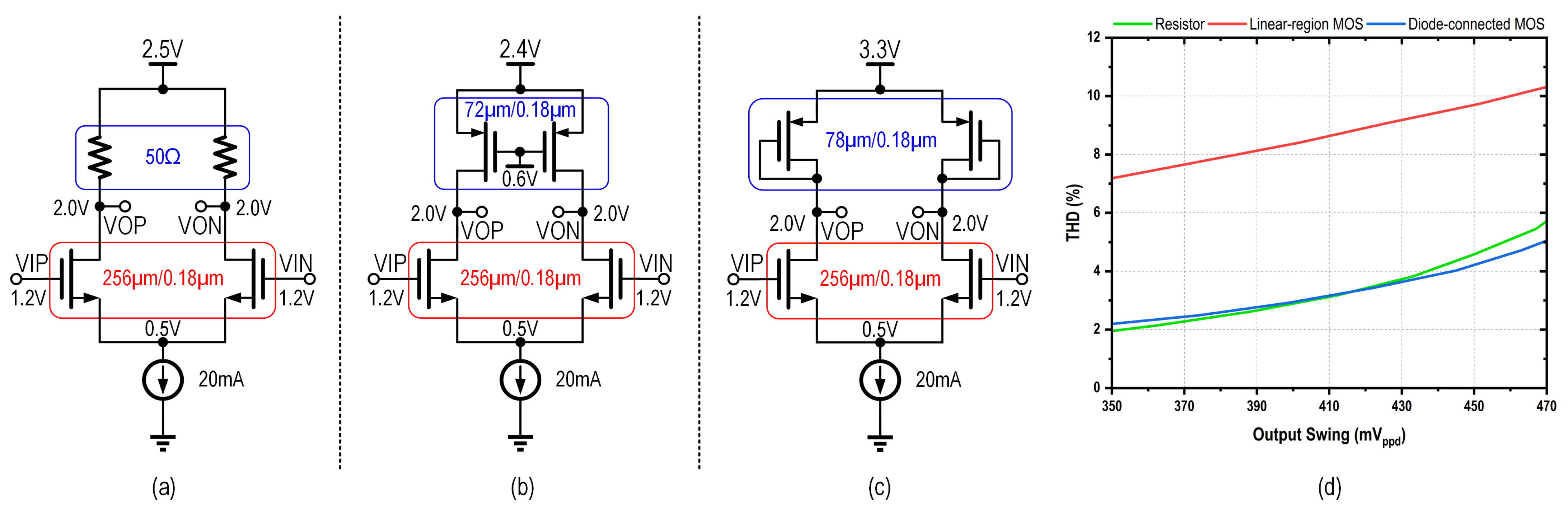
Figure 5 shows a 6-dB-gain amplifier with various load configurations and their DC operating points. The simulated 3-dB bandwidths are 6.1 GHz, 5.5 GHz, and 5.4 GHz, respectively, reflecting the increased parasitic capacitance from MOSFET-based loads. The simulated total harmonic distortion (THD) versus output swing is also provided in Figure 5d. The load employing linear-region MOSFETs achieves the lowest power consumption but exhibits the highest THD. In contrast, while the diffused resistor and diode-connected MOSFET loads yield comparable THD performance, the latter consumes more power with higher power supply requirement shown in Figure 5c, confirming prior analysis. Despite process and temperature sensitivity, diffused resistors maintain the best linearity–efficiency trade-off among passive termination options.
The first design implements passive back termination, as illustrated in Figure 6. To minimize power dissipation, an external bias-T network is used to supply DC bias to the output stage, thereby avoiding additional on-chip power consumption. The reconfigurable output impedance is achieved through a network of P-channel MOSFET (PMOS) switches that selectively connect or disconnect termination resistors. By controlling the ON/OFF state of these switches, the effective termination resistance can be digitally adjusted to support multiple operating modes.
In MOSFET-based differential pair amplifiers operating in saturation region, the square-law behavior yields the following analytical expressions:
G a i n = 2 g m R L 1 2 I ss = 1 2 K W L V OD 2 g m = K W L V OD S w i n g = 2 I ss R L
G a i n = 2 K W L I ss R L S w i n g = 2 I ss R L
where K is is a coefficient determined by the type of MOSFET and the process node, W and L are respectively the channel width and length of the MOSFET, I ss is the tail current, and R L is the load of differential pair.
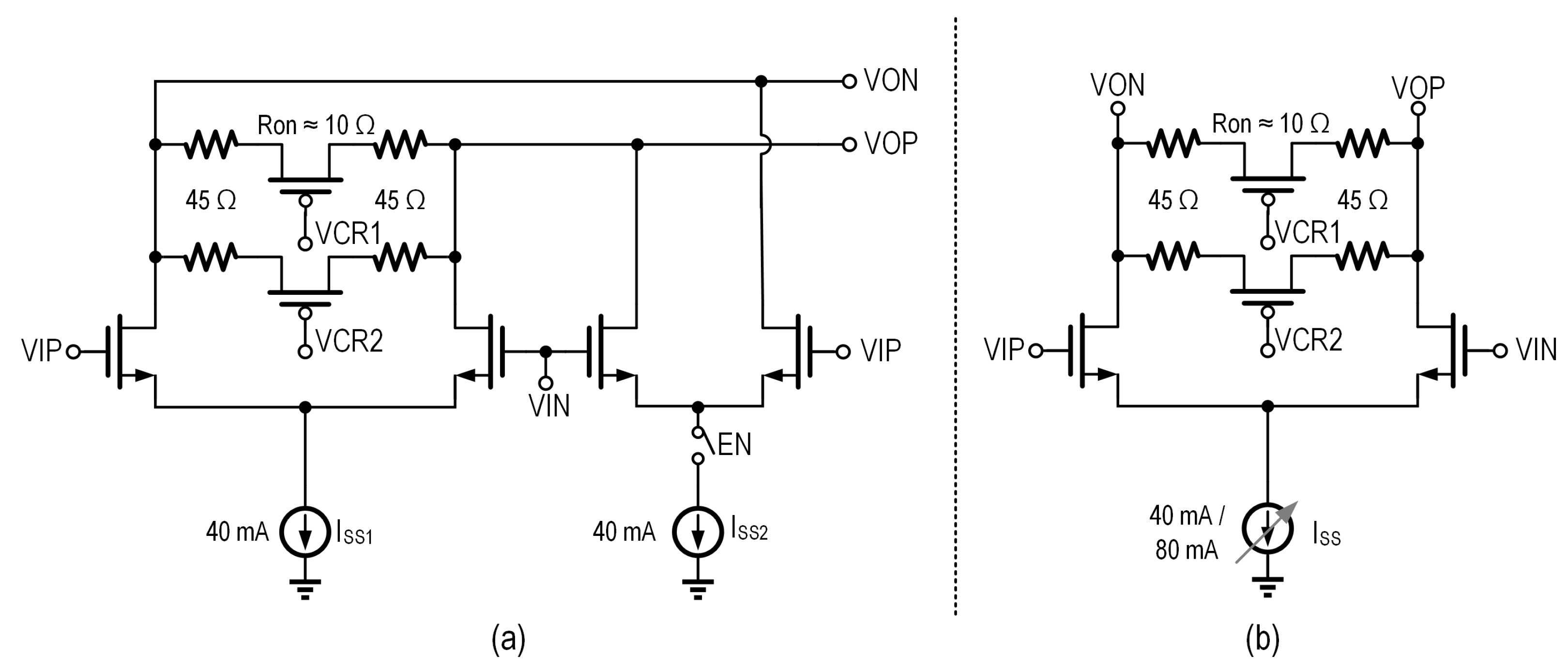
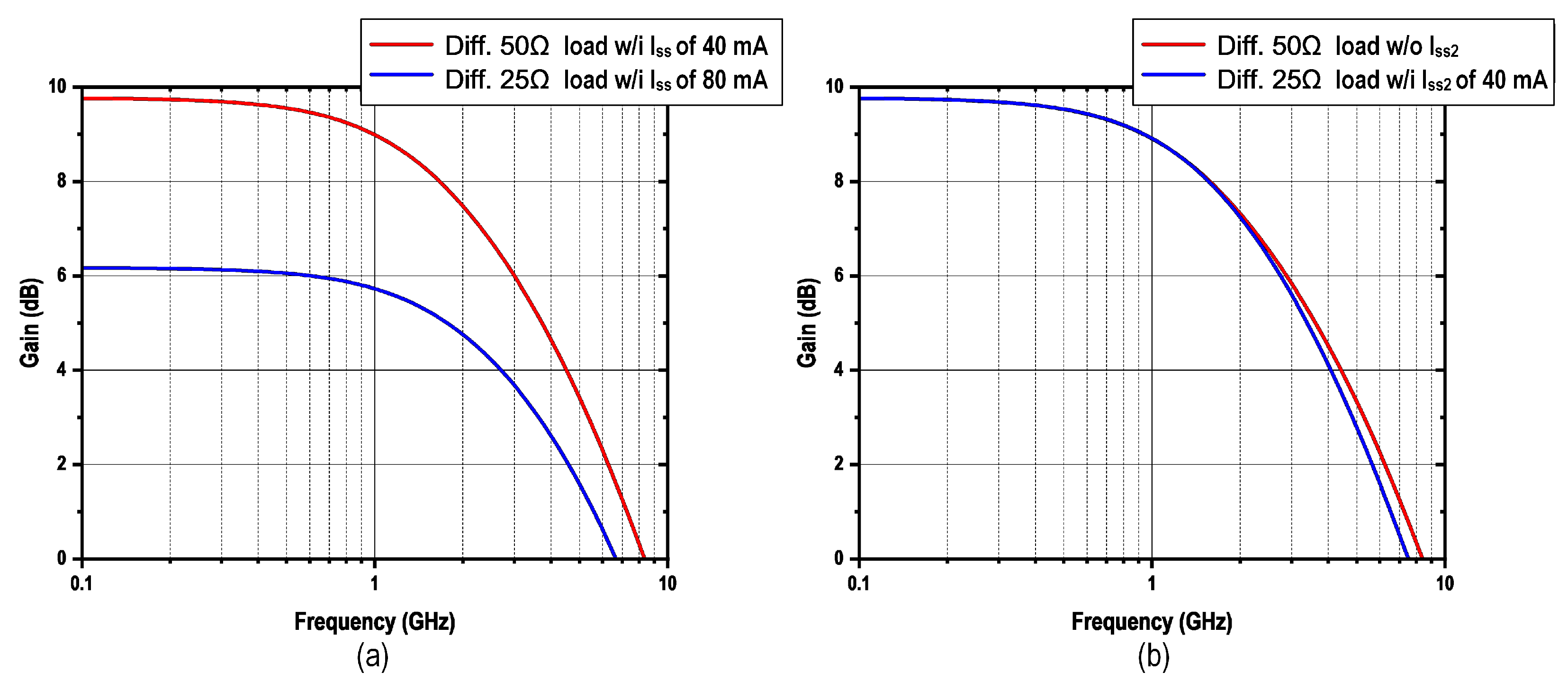
From Equation (2), modifying the terminal resistances without compensatory circuit adjustments inherently affects both the output swing amplitude and voltage gain characteristics. To address this, we can maintain a consistent swing by modifying the tail current I SS , as demonstrated in Figure 6b. By scaling I SS proportionally with R L variations, we maintain constant swing amplitude. Nevertheless, adjusting the tail current I SS alone does not keep the consistent gain, as shown in Figure 7a. If the same gain is required to avoid imposing higher swing requirements on the signal source, additional gain must be introduced at the pre-driver stage. This approach, however, not only increases system complexity and undermines low-power operation, but also further constrains the maximum achievable bandwidth of the entire driver.
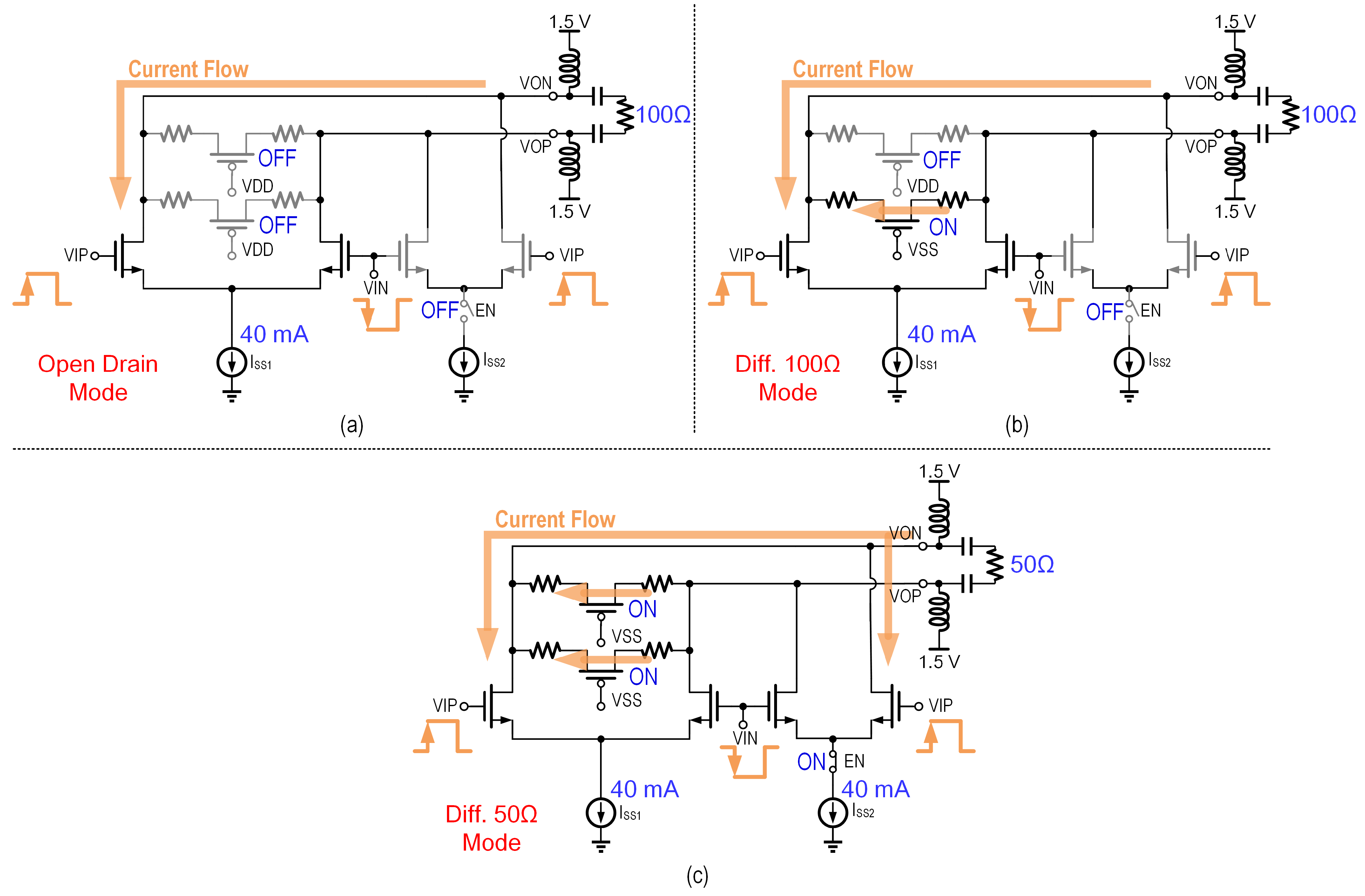
To ensure both consistent swing and gain, the NMOS width (W) must be simultaneously adjusted to preserve a constant current density. Therefore, the circuit topology shown in Figure 6a is preferred, where the input differential pair is divided into two sections, and the tail current is distributed according to the current density at the peak transit frequency of the NMOS. The three operating modes are illustrated in Figure 8. This approach effectively maintains consistent gain and swing, as shown in Figure 7b, while preserving the maximum achievable bandwidth of the system, ensuring optimal performance under varying conditions.
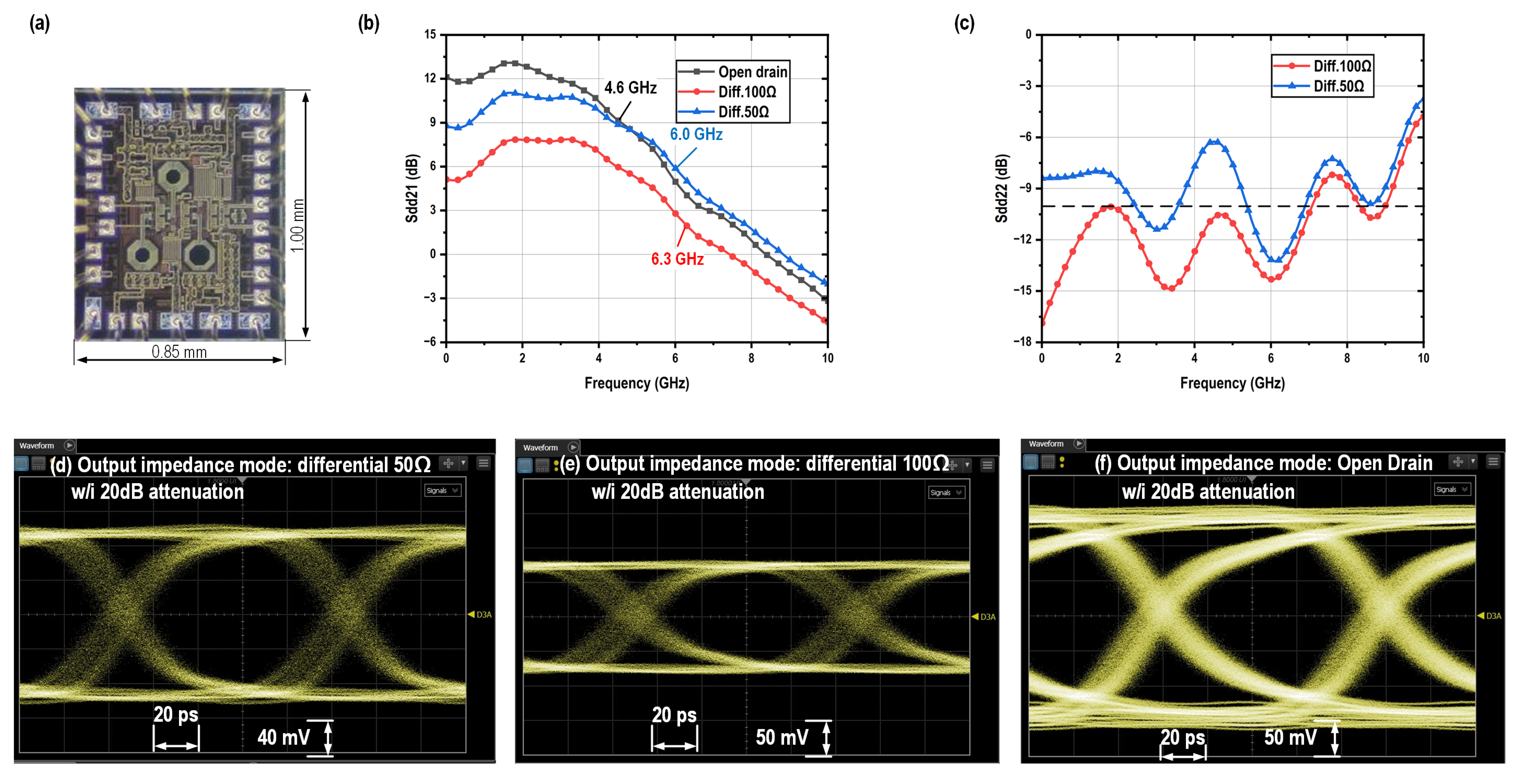
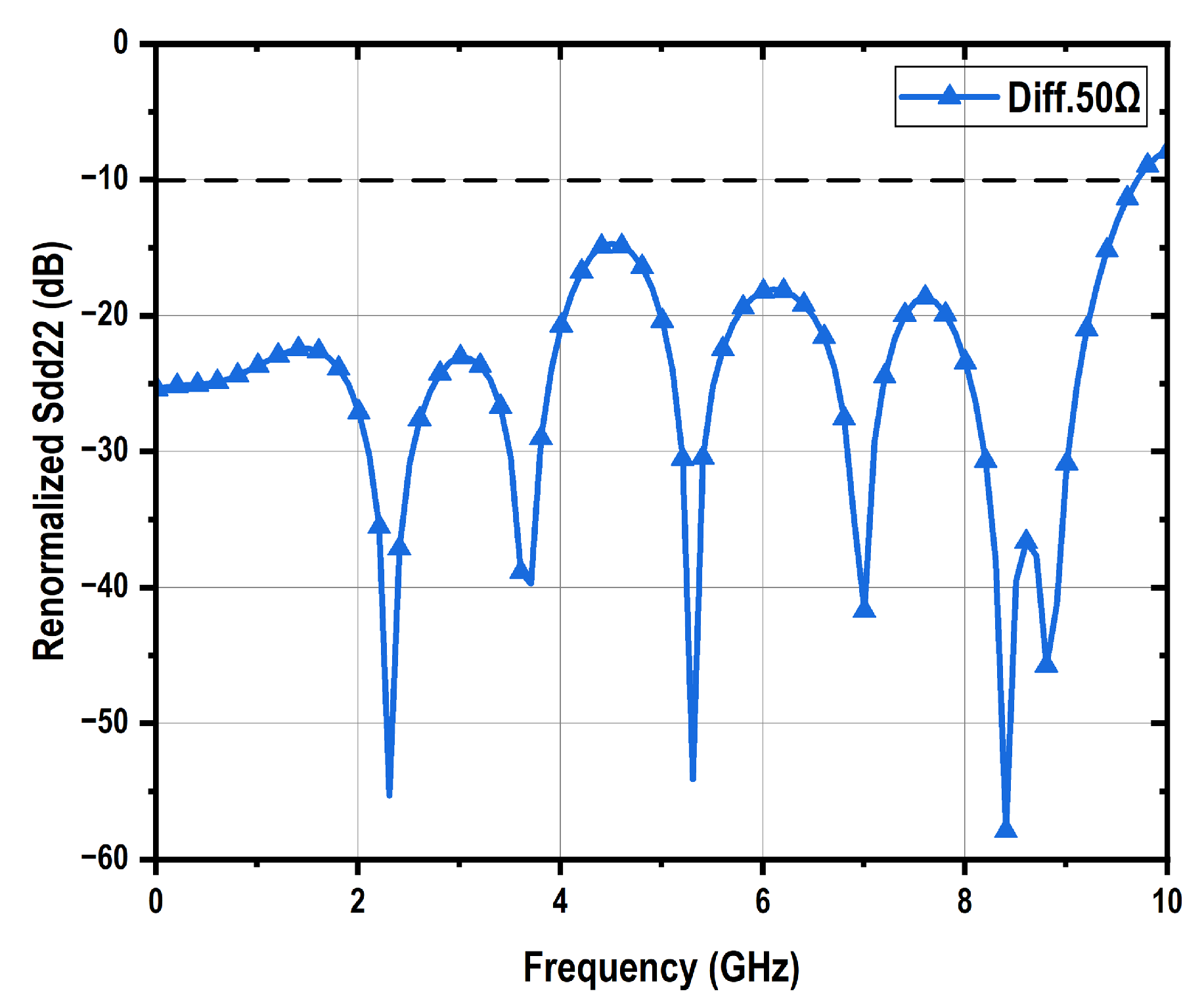
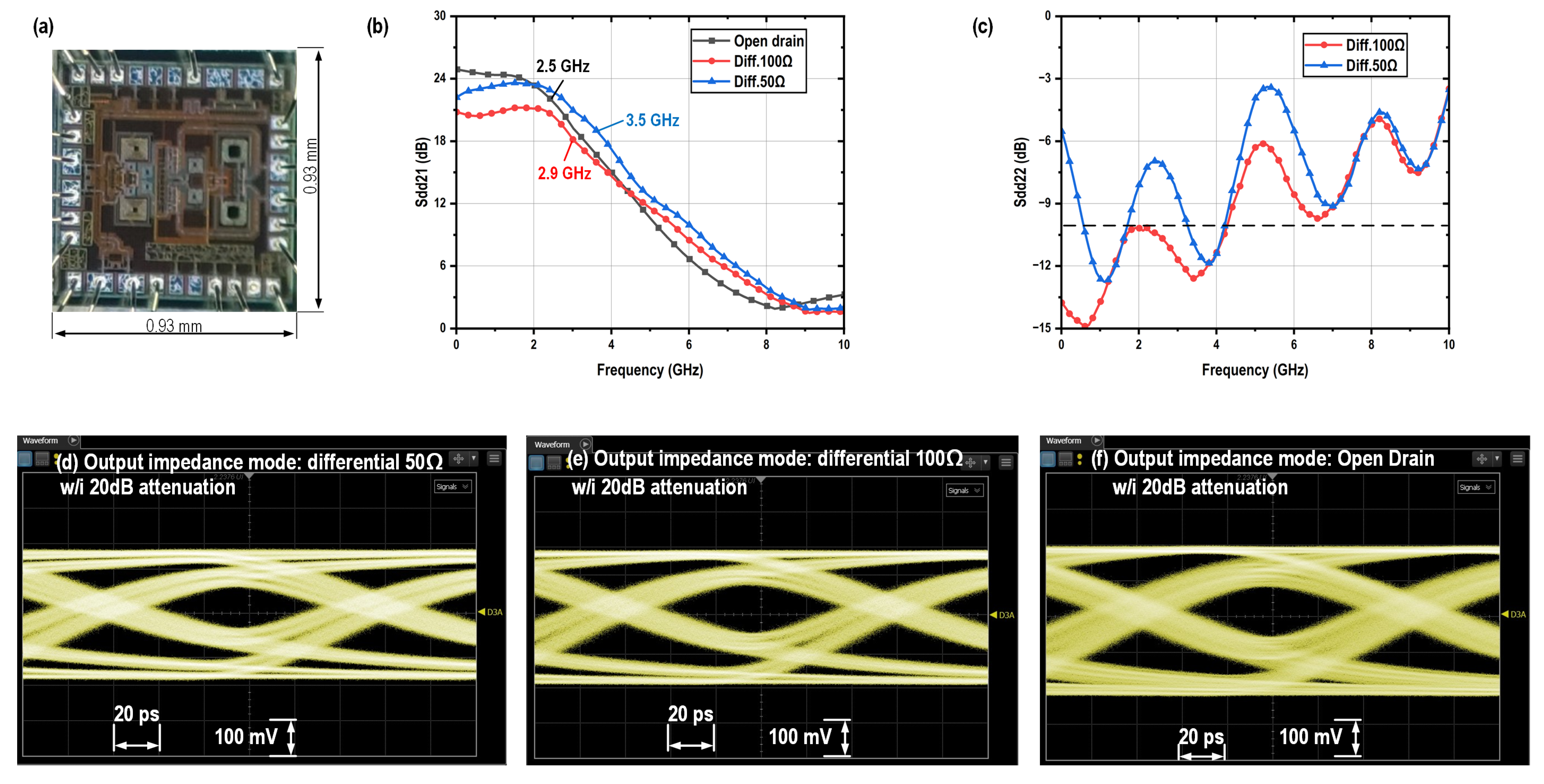
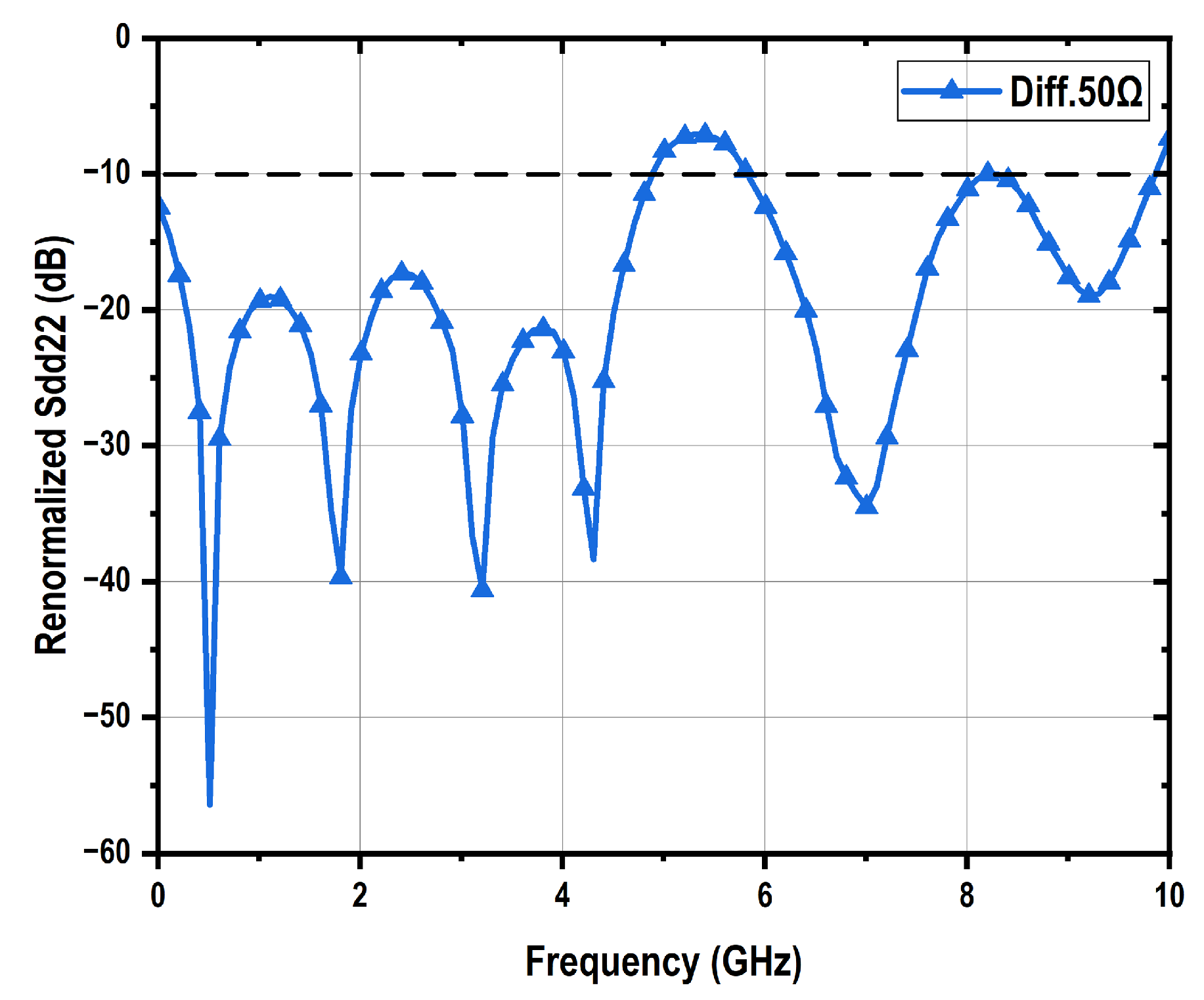
The performance of the driver with PBT is demonstrated in Figure 9. The open-drain mode presents the lowest bandwidth of 4.6 GHz, which is caused by its highest total load impedance, while delivering the largest differential peak-to-peak output swing of 3 Vppd with a input swing of 800 mVppd and a power consumption of 180 mW. The differential 50- Ω mode exhibits approximately 3 dB higher gain than the differential 100- Ω mode. This difference arises because the vector network analyzer (VNA) presents a differential 100- Ω load for the driver, rather than a differential 50- Ω termination. In terms of output swing, the 50- Ω mode reaches 2.0 Vppd, compared to 1.5 Vppd for the 100- Ω mode. Additionally, the 50- Ω mode consumes 240 mW of power, whereas the 100- Ω mode consumes 180 mW. The originally measured differential to differential S22 parameters under the VNA’s differential 100- Ω loading condition are shown in Figure 9c for both the differential 50- Ω and 100- Ω modes, with the results consistent with their respective output impedance characteristics. The 100- Ω mode demonstrates good impedance matching, achieving a return loss better than 10 dB across a 7-GHz bandwidth. The differential-to-differential output return loss scattering parameter S22 of the 50- Ω mode under a 50- Ω differential load can be renormalized using Equation (3), as illustrated in Figure 10, which also demonstrates good impedance matching.
Z d d 22 = 100 1 + S d d 22 100 Ω 1 S d d 22 100 Ω S d d 22 50 Ω = Z d d 22 50 Z d d 22 + 50
where S d d 22 100 Ω is the measured differential-to-differential output return loss scattering parameter, Z d d 22 is the calculated differential-to-differential output impedance, and S d d 22 50 Ω is the resulted output return loss scattering parameter under a 50- Ω differential load.

3.2. ABT Based VOD

Passive back termination offers a simple and broadband termination solution. However, it consumes twice the power to achieve the same swing. As reported in [6], active back termination provides effective back-termination without reducing the output swing, potentially saving up to 50% of power.
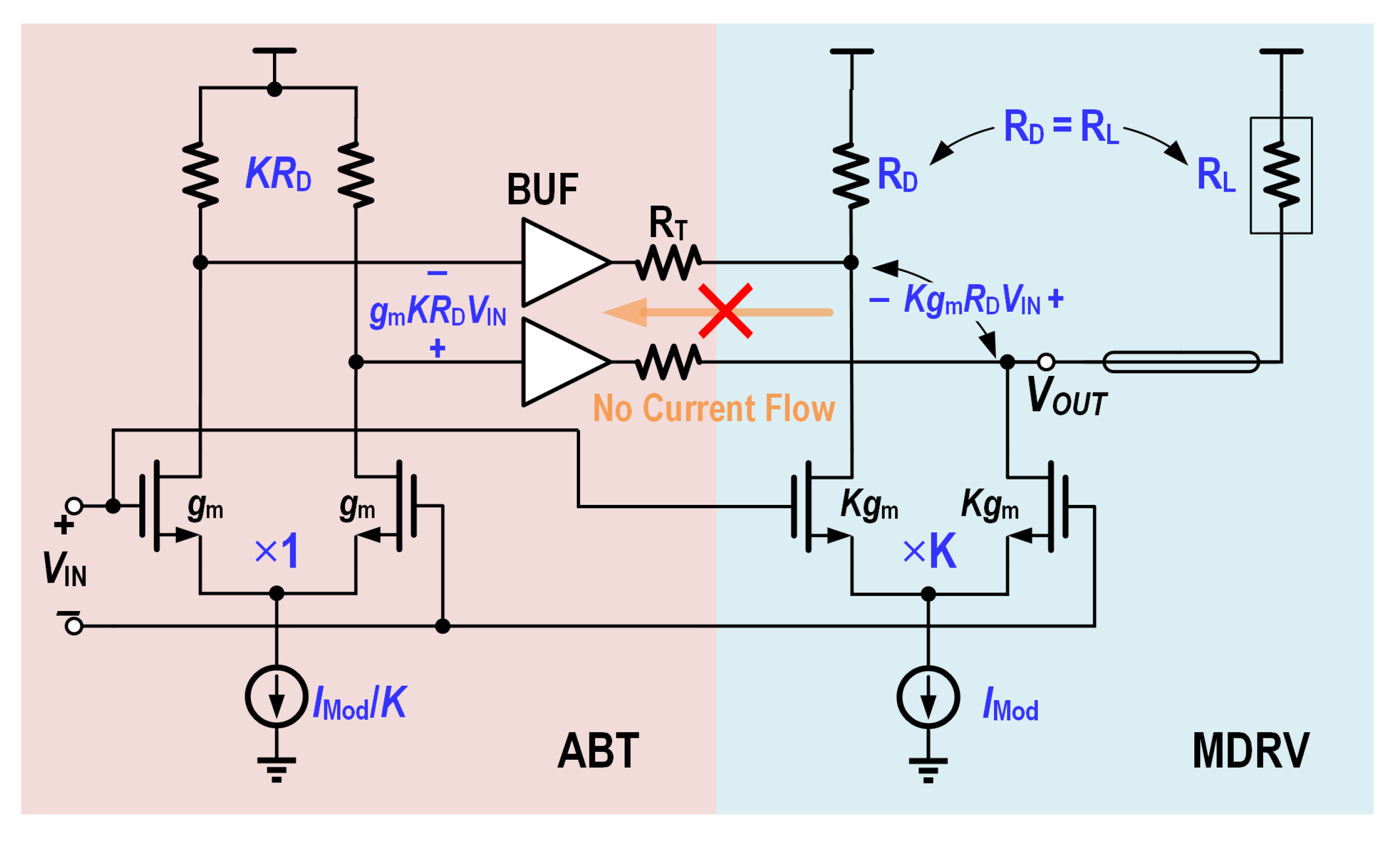
The fundamental implementation of the driver output stage with ABT circuit is illustrated in Figure 11, which consists of:
(1)
An open-drain main driver (MDRV) with tail current I mod ;
(2)
An ABT circuit comprising: A reduced tail current amplifier ( I mod / K ); Raised resistive loads ( K R D ) to maintain equivalent voltage swing; And a low-output-impedance buffer (BUF) with termination resistor R T .
The design ensures no forward output current flows through R T during operation. Only reflected signals are absorbed by the termination resistor R T . While increasing the proportional coefficient K improves driving efficiency, this enhancement directly trades off against bandwidth reduction, necessitating careful optimization between these competing parameters. Under nominal operating conditions, the proportional coefficient K is typically set to approximately 10 to optimize power efficiency while maintaining acceptable bandwidth. This method is well-suited for future high-density interconnect networks, where power consumption is a critical concern.
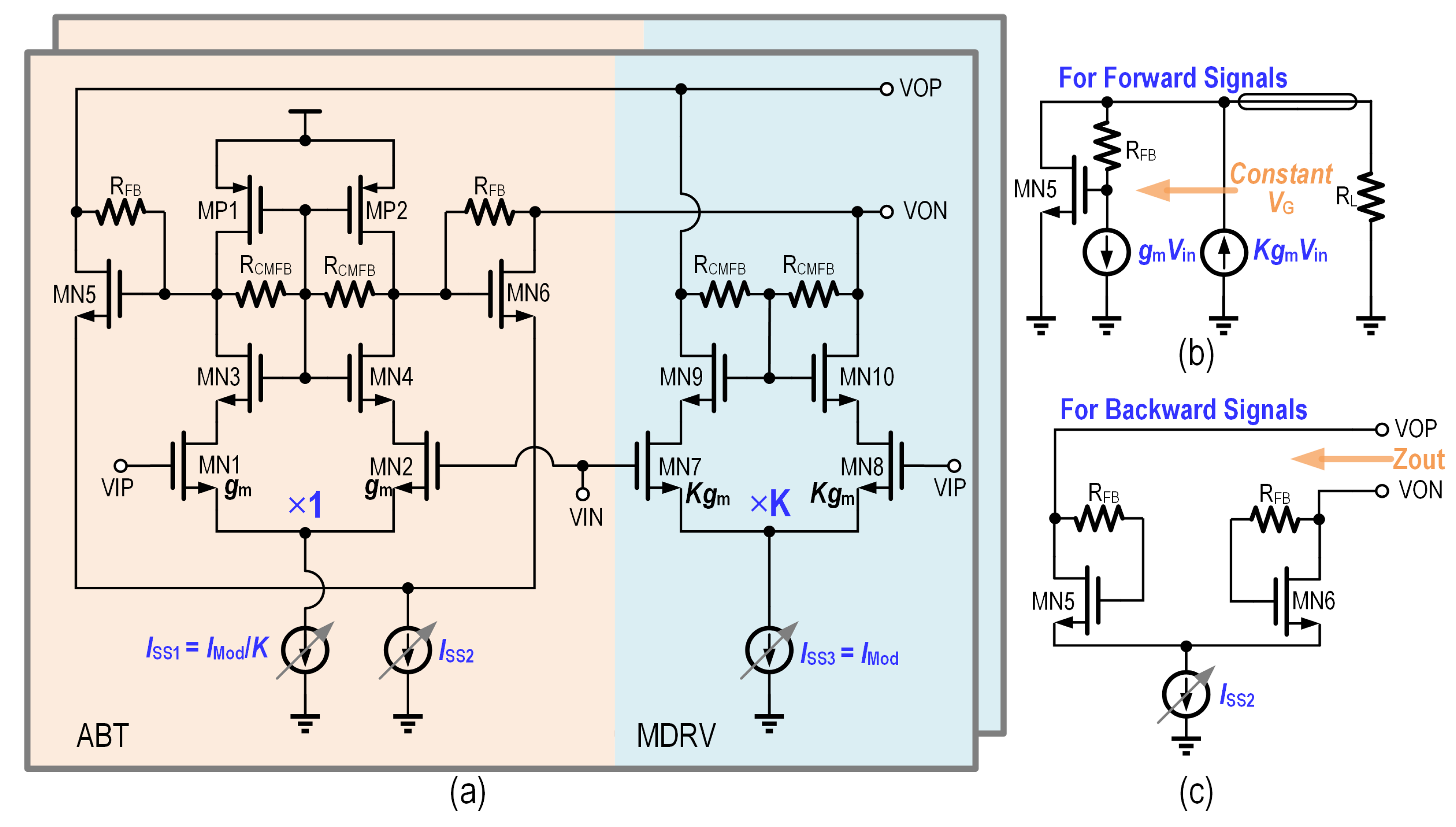
The schematic of the proposed reconfigurable output stage with ABT is shown in Figure 12, consisting of a MDRV and an Cherry-Hopper-based active back termination cicuitry.
Ignoring the common mode feedback resistors ( R CMFB ), the drain-to-source resistance ( r ds , M P 1 , 2 ) and the output resistance of casode transistors MN1-MN4 which are sufficiently large, the differential output impedance Z d d 22 can be approximated as
Z d d 22 2 g m , M N 5 , 6
where the g m , M N 5 , 6 is the transconductance of transitors MN5 and MN6, which corresponds to the size of transitors MN5 and MN6 and their tail current. Thus, the output impedance can be adjusted by tuning the tail current I S S 2 .
Additionally, the tail current I S S 1 and I S S 3 need to be set proportionally based on the desired output impedance Z 0 and the feedback resistors R FB , as shown in the following Equation (5).This configuration maintains constant gate voltages for transistors MN5 and MN6, enabling high driving efficiency. The driving efficiency η can be calculated using Equation (6).
K = I S S 3 I S S 1 = 1 + R FB Z 0
where K is the proportion of I S S 3 and I S S 1
η = I S S 3 I S S 1 I S S 3 = R FB R FB + Z 0
A larger R FB improves driving efficiency. However, it comes with a trade-off in bandwidth. In this work, the proportion K is set to 12, achieving a driving efficiency of up to 91.6%. And the tail current I S S 2 is set to approximately 25% of the maximum tail current I S S 3 , contributing to a maximum total efficiency of 77.4% for the output stage.
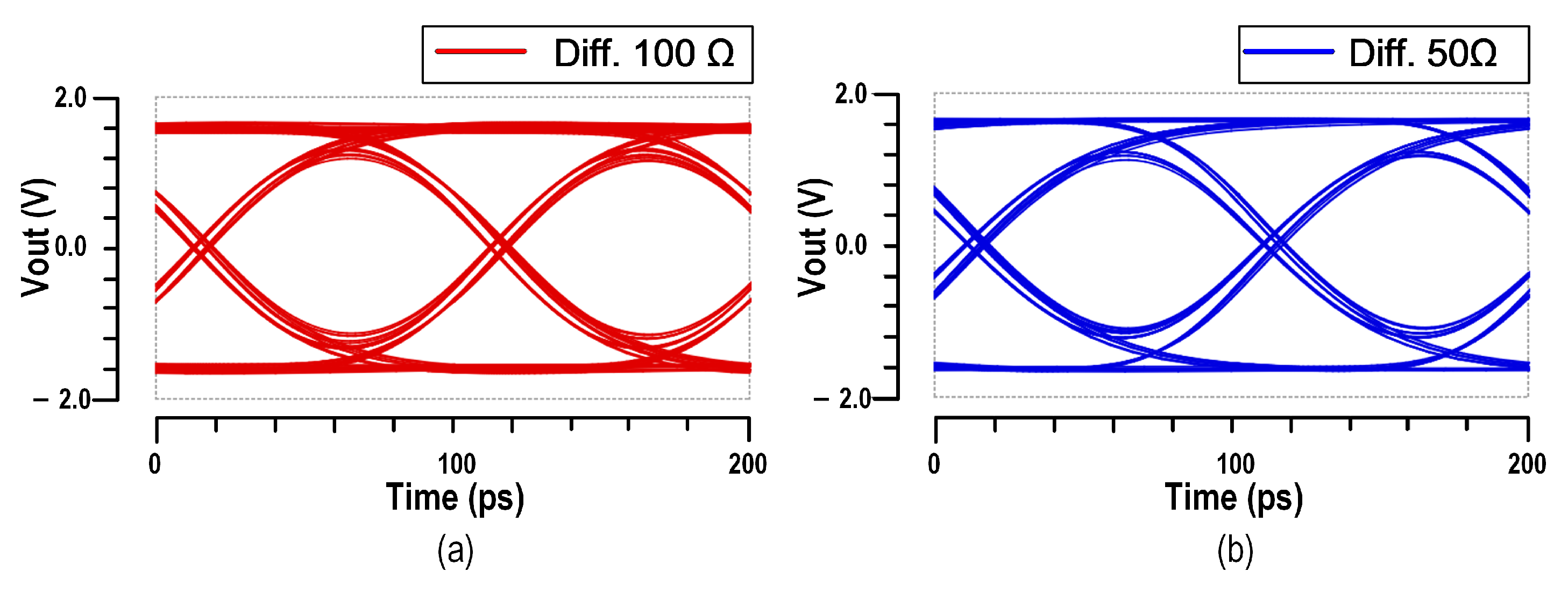
Figure 13 shows the simulated result of the proposed ABT based versatile output driver. This confirms the previous analysis of ABT, which changes the output impedance without affecting the output swing.
The driver performance incorporating ABT is shown in Figure 14. Compared to the PBT based VOD, the ABT based design exhibits lower bandwidth, which can be attributed to its more complex circuitry and associated parasitic capacitance. Nevertheless, the independence between output swing and output impedance is clearly validated by eye diagram measurements, with the ABT-based VOD achieving 3.4 Vppd in differential 50- Ω mode, 3.6 Vppd in differential 100- Ω mode, and 4.0 Vppd in open-drain mode. Impedance matching performance is confirmed through S22 measurements. The differential-to-differential S22 parameter of the 50- Ω mode under a 50- Ω differential load is also renormalized using Equation (3), as shown in Figure 15, demonstrating good impedance matching performance.
Although the ABT-based VOD exhibits a narrower matching bandwidth due to increased parasitic effects, its superior power efficiency makes it particularly suitable for high-density, power-sensitive systems implemented in advanced processes with adequate transit frequency.

4. Discussions

The previous section has introduced the design of two versatile output drivers (VODs) based on PBT and ABT architectures, demonstrating a unified optical transmitter EIC approach that supports three impedance modes and enables interoperability across various optical transmitter types without requiring device-specific customization. A comparative analysis of these two VOD implementations and their application scenatios will be presented in the following section.
As shown in Table 3, the PBT-based versatile output driver offers programmable output swing, simple design, and wide bandwidth, demonstrated by 10-Gbps clear eye diagrams across all impedance modes. Its reconfigurable termination resistor network and fixed current density design of the output stage maintain consistent gain and swing. However, it suffers from a fundamental 50% power efficiency limit due to power dissipation in the termination resistor. Thus, it is best suited for high-speed or long-reach interconnects where bandwidth is prioritized over power efficiency.
In contrast, the ABT-based driver achieves significantly higher power efficiency, with a total output stage efficiency of up to 77.4%, by employing a Cherry-Hooper active termination that only dissipates power for reflected signals. It also maintains a nearly constant output swing across modes. The primary trade-offs are increased circuit complexity and reduced bandwidth. Consequently, ABT is ideal for power-sensitive and high-density applications where sufficient bandwidth is available.
The choice between PBT and ABT thus involves a direct trade-off among power efficiency, bandwidth, and design complexity. For systems targeting the highest possible data rates with simpler implementation, PBT remains a robust and reliable choice. For systems where power consumption is the dominant constraint, such as in next-generation AI cluster interconnects and CPO-based switches, ABT offers a compelling advantage, albeit with more stringent design and stability considerations.
Furthermore, the reconfigurable core presented in this work—supporting open-drain (OD), differential 50- Ω , or differential 100- Ω modes—proves adaptable to both termination styles. This demonstrates the viability of a unified driver platform that can be tailored towards either efficiency or bandwidth supremacy based on the termination methodology. The open-drain mode, usable with both PBT and ABT, is particularly future-proof for CPO and short-reach scenarios where impedance mismatch can be tolerated, enabling further power savings.
Table 4 summarizes the performances comparison with the state of the art. To quantify the output efficiency, we introduce the following figure of merit (FoM):
FoM = I mod , max P
where I mod , max is the maximum output current to the matching load, P represents the total power consumption. Despite fabrication process limitations, our design achieves competitive performance metrics and introduces a versatile output driver architecture suitable for multi-scenario optical communication systems.
Based on the performance summary in Table 4, the proposed PBT-based driver exhibits competitive power efficiency and compact chip area compared to prior PBT implementations. Fabricated in a 180 nm CMOS process and operating at 10 Gbps, it achieves a modulation current of up to 40 mA pp with a power consumption as low as 260 mW in differential 50- Ω mode—significantly lower than the 1116 mW reported in [17]. Furthermore, it supports three impedance modes compared to the single-mode operation of conventional PBT drivers, improving flexibility without incurring area overhead.
The proposed ABT driver also demonstrates notable advantages over existing ABT designs. It delivers a higher maximum modulation current of 80 mA pp , outperforming the 60 mA pp in [18] and 5 mA pp in [19], while maintaining competitive power consumption between 340 mW and 460 mW. With the smallest reported area among cited ABT designs and a peak FoM exceeding 0.174 in differential 50- Ω mode, it achieves an effective balance between performance, configurability, and integration cost.
Although implemented in a mature 180 nm CMOS process, the proposed driver architectures are highly portable to advanced technology nodes, where higher transit frequencies would further unlock the bandwidth potential of both PBT and ABT topologies. This scalability, combined with multi-mode reconfigurability and broad compatibility with diverse optical devices, enables flexible deployment in AI-driven optical interconnects that demand adaptive, high-throughput, and energy-efficient transmitter solutions.

5. Conclusions

In conclusion, this work presents a versatile output driver IC design approach that respectively adopts passive (PBT) and active back termination (ABT) techniques. Fabricated in a standard 180-nm CMOS process, the two driver implementations respectively support three manually selectable impedance modes–open-drain, differential 50- Ω , and differential 100- Ω back termination–enabling broad compatibility with various optical modulators. Measurements show the effectiveness of both the passive and active back termination topologies, each providing specific advantages in terms of bandwidth, power efficiency, and output swing. These features enhance the driver’s adaptability, making it well-suited for diverse optical communication applications.

Author Contributions

Conceptualization, D.L. and R.Y.; methodology, D.L. and R.Y.; software, R.Y. and Y.X.; validation, R.Y. and C.L.; formal analysis, R.Y. and Y.Y.; investigation, R.Y. and C.L.; writing—original draft preparation, R.Y.; writing—review and editing, R.Y. and D.L.; visualization, R.Y. and C.L.; supervision, L.G. and D.L.; project administration, D.L.; funding acquisition, D.L. All authors have read and agreed to the published version of the manuscript.

Funding

This research was funded by the National Key Research and Development Plan under Grant 2022YFB2803301 and the Natural Science Foundation of China under Grant 62074126.

Institutional Review Board Statement

Not applicable.

Informed Consent Statement

Not applicable.

Data Availability Statement

Data are contained within the article.

Conflicts of Interest

The authors declare no conflicts of interest.

References

  1. Pires, J.J.O. On the Capacity of Optical Backbone Networks. Network 2024, 4, 114–132. [Google Scholar] [CrossRef]
  2. Sadot, D.; Dorman, G.; Gorshtein, A.; Sonkin, E.; Vidal, O. Single channel 112Gbit/sec PAM4 at 56Gbaud with digital signal processing for data centers applications. Opt. Express 2015, 23, 991–997. [Google Scholar] [CrossRef] [PubMed]
  3. Xin, H.; Zhang, K.; He, H.; Hu, W.; Zhang, M. Fidelity enhancement in high-data-rate digital mobile fronthaul with sample bits interleaving and unequally-spaced PAM4. Opt. Express 2017, 25, 5559–5570. [Google Scholar] [CrossRef] [PubMed]
  4. Winzer, P.J.; Neilson, D.T. From scaling disparities to integrated parallelism: A decathlon for a decade. J. Light. Technol. 2017, 35, 1099–1115. [Google Scholar] [CrossRef]
  5. Liu, X.; Li, J.; Wu, X.; Zhu, J.; Zeng, Y.; Liu, D.; Wang, X.; Zhang, D. Fiber-to-the-room (FTTR) technologies for the 5th generation fixed network (F5G) and beyond. In Proceedings of the 2022 IEEE Future Networks World Forum (FNWF), Montreal, QC, Canada, 10–14 October 2022; IEEE: Piscataway, NJ, USA, 2022; pp. 351–354. [Google Scholar] [CrossRef]
  6. Morley, S. A 3 V 10.7 Gb/s differential laser diode driver with active back-termination output stage. In Proceedings of the ISSCC, 2005 IEEE International Digest of Technical Papers, Solid-State Circuits Conference, San Francisco, CA, USA, 10 February 2005; IEEE: Piscataway, NJ, USA, 2025; pp. 220–594. [Google Scholar] [CrossRef]
  7. Li, H.; Balamurugan, G.; Sakib, M.; Kumar, R.; Jayatilleka, H.; Rong, H.; Jaussi, J.; Casper, B. 12.1 A 3D-integrated microring-based 112 Gb/s PAM-4 silicon-photonic transmitter with integrated nonlinear equalization and thermal control. In Proceedings of the 2020 IEEE International Solid-State Circuits Conference-(ISSCC), San Francisco, CA, USA, 16–20 February 2020; IEEE: Piscataway, NJ, USA, 2020; pp. 208–210. [Google Scholar] [CrossRef]
  8. Mondal, S.; Qiu, J.; Krishnamurthy, S.; Kennedy, J.; Bose, S.; Acikalin, T.; Yamada, S.; Jaussi, J.; Mansuri, M. 18.2 A 4 × 64 Gb/s NRZ 1.3 pJ/b Co-Packaged and Fiber-Terminated 4-Ch VCSEL-Based Optical Transmitter. In Proceedings of the 2024 IEEE International Solid-State Circuits Conference (ISSCC), San Francisco, CA, USA, 18–22 February 2024; IEEE: Piscataway, NJ, USA, 2024; Volume 67, pp. 340–342. [Google Scholar] [CrossRef]
  9. Zhang, K.; Zhuge, Q.; Xin, H.; Hu, W.; Plant, D.V. Performance comparison of DML, EML and MZM in dispersion-unmanaged short reach transmissions with digital signal processing. Opt. Express 2018, 26, 34288–34304. [Google Scholar] [CrossRef] [PubMed]
  10. Dai, X.; Debregeas, H.; Da Rold, G.; Carrara, D.; Louarn, K.; Valdeiglesias, E.D.; Lelarge, F. Versatile externally modulated lasers technology for multiple telecommunication applications. IEEE J. Sel. Top. Quantum Electron. 2020, 27, 1–12. [Google Scholar] [CrossRef]
  11. Yang, R.; Dang, Y.; Chen, J.; Li, D.; Svelto, F. CMOS Low-Power Optical Transceiver for Short Reach. Micromachines 2025, 16, 587. [Google Scholar] [CrossRef] [PubMed]
  12. XLMD2 Multi-Source Agreement Documents. 2013. Available online: https://xlmd-msa.org/ (accessed on 1 October 2025).
  13. Knickerbocker, J.U.; Herou, J.B.; Ramos, A.P.; Hsu, H.; Liu, N.; Taira, Y.; Marushima, C.; Kohara, S.; Mori, H.; Schultz, M.; et al. Co-Packaged Optics (CPO) Technology Full Module Test Vehicle Demonstrations. In Proceedings of the 2025 IEEE 75th Electronic Components and Technology Conference (ECTC), Dallas, TX, USA, 27–30 May 2025; IEEE: Piscataway, NJ, USA, 2025; pp. 274–281. [Google Scholar] [CrossRef]
  14. Chuang, H.M.; Thei, K.B.; Tsai, S.F.; Liu, W.C. Temperature-dependent characteristics of polysilicon and diffused resistors. IEEE Trans. Electron Devices 2003, 50, 1413–1415. [Google Scholar] [CrossRef]
  15. Dawei, Z.; Yingmei, C.; Ling, T.; Li, Z. Design of a 10 Gb/s laser diode voltage driver in 0.18 μm CMOS technology. In Proceedings of the 2012 IEEE MTT-S International Microwave Workshop Series on Millimeter Wave Wireless Technology and Applications, Nanjing, China, 18–20 September 2012; IEEE: Piscataway, NJ, USA, 2012; pp. 1–4. [Google Scholar] [CrossRef]
  16. Savoj, J.; Hsieh, K.; Upadhyaya, P.; An, F.T.; Bekele, A.; Chen, S.; Jiang, X.; Lai, K.W.; Poon, C.F.; Sewani, A.; et al. A wide common-mode fully-adaptive multi-standard 12.5 Gb/s backplane transceiver in 28 nm CMOS. In Proceedings of the 2012 Symposium on VLSI Circuits (VLSIC), Honolulu, HI, USA, 13–15 June 2012; pp. 104–105. [Google Scholar] [CrossRef]
  17. Koizumi, H.; Togashi, M.; Nogawa, M.; Ohtomo, Y. A 10 Gb/s burst-mode laser diode driver for burst-by-burst power saving. In Proceedings of the 2012 IEEE International Solid-State Circuits Conference, San Francisco, CA, USA, 19–23 February 2012; pp. 414–416. [Google Scholar] [CrossRef]
  18. Yin, B.; Qi, N.; Shi, J.; Xiao, X.; Chen, D.; Li, M.; Li, Z.; Du, J.; He, Z.; Bai, R.; et al. A 32 Gb/s-NRZ, 15GBaud/s-PAM4 DFB laser driver with active back-termination in 65 nm CMOS. In Proceedings of the 2017 IEEE Radio Frequency Integrated Circuits Symposium (RFIC), Honolulu, HI, USA, 4–6 June 2017; pp. 264–267. [Google Scholar] [CrossRef]
  19. Ho, W.-H.; Hsieh, Y.-H.; Murmann, B.; Chen, W.-Z. A 32 Gb/s PAM-4 Optical Transceiver with Active Back Termination in 40 nm CMOS Technology. In Proceedings of the 2020 IEEE International Symposium on Circuits and Systems (ISCAS), Seville, Spain, 10–21 October 2020; pp. 1–4. [Google Scholar] [CrossRef]
Figure 1. MSA definition of TOSA impedance control demands and TO package of (a) EML and (b) DML with (c) their application structure diagrams.
Micromachines 16 01262 g001
Figure 2. Structure of CPO (TSV: Through Silicon Vias).
Micromachines 16 01262 g002
Figure 3. Schematic of the proposed versatile output driver.
Micromachines 16 01262 g003
Figure 4. Components for passive back termination: (a) Resistor; (b) Linear-region MOSFET; (c) Diode-connected MOSFET.
Micromachines 16 01262 g004
Figure 5. Schematic of the 6-dB-gain amplifier with different types of loads: (a) Diffused resistor; (b) Linear-region MOSFET; (c) Diode-connected MOSFET; (d) their simulated THD versus output swing.
Micromachines 16 01262 g005
Figure 6. Schematics of the reconfigurable output stage with PBT, employing N-channel MOSFET (NMOS) with (a) constant (b) variable current density.
Micromachines 16 01262 g006
Figure 7. Simulated AC transfer function of the reconfigurable PBT output stage with (a) variable current density and (b) constant current density.
Micromachines 16 01262 g007
Figure 8. Switch status of different modes of the versatile output stage with PBT: (a) open-drain mode; (b) differential 100- Ω mode; (c) differential 50- Ω mode.
Micromachines 16 01262 g008
Figure 9. (a) Micro photograph of the PBT based VOD and its measurement results: (b,c) S parameters and (df) eye diagrams.
Micromachines 16 01262 g009
Figure 10. Renormalized Sdd22 of PBT based VOD under differential 50- Ω mode.
Micromachines 16 01262 g010
Figure 11. Schematic of the driver output stage with ABT.
Micromachines 16 01262 g011
Figure 12. (a) Schematics of the reconfigurable output stage with ABT and its equivalent half circuit for (b) forward and (c) backward signals.
Micromachines 16 01262 g012
Figure 13. Simulated results of eye diagrams of the ABT based VOD: (a) differential 100- Ω mode; (b) differential 50- Ω mode.
Micromachines 16 01262 g013
Figure 14. (a) Micro photograph of the ABT based VOD and its measurement results: (b,c) S parameters and (df) eye diagrams.
Micromachines 16 01262 g014
Figure 15. Renormalized Sdd22 of ABT based VOD under differential 50- Ω mode.
Micromachines 16 01262 g015
Table 1. Comparison of Direct and External Modulation Devices.
DeviceVCSELDFBEMLMZM
Modulation TypeDirectDirectExternalExternal
Impedance Requirement *-25 Ω 50 Ω 50 Ω
Drive Swing<10 mA∼40 mA1–2 V3–5 V
Power ConsumptionVery LowLowModerateHigh
ChirpModerateHighLowVery Low
Launch PowerLowMediumMediumHigh
Transmission Range<2 km∼10 km∼40 km>100 km
* For single-ended driving TOSA packaging.
Table 2. Performance Comparison of Resistor Types for Passive Back Termination.
Resistor TypeDiffusedPolysiliconMetal
Sheet Resistance ( Ω /sq)∼20 ∼600 <1
Temperature StabilityPoorGoodPoor
Process VariationLargeModerateSmall
AccuracyLowModerateHigh
Current Density Tolerance (mA/ μ m)∼5 ∼0.4 ∼1
Area Efficiency *GoodPoorPoor
With silicide; Without silicide; * For 50- Ω resistors with current density tolerance of 10 mA.
Table 3. Performance and Application Comparison: ABT vs. PBT.
PBTABT
Power EfficiencyMicromachines 16 01262 i001 Low (Theoretical max ≤ 50%) High (>77% total output stage efficiency in this work)
Bandwidth High (Simple structure, lower parasitics)Micromachines 16 01262 i001 Medium (Limited by active circuitry and efficiency-bandwidth trade-off)
Output SwingMicromachines 16 01262 i001 Varies with operating mode Stable across different impedance modes
Design Complexity Low (Simple structure, easy implementation)Micromachines 16 01262 i001 High (Complex design, requires stability consideration)
Typical ApplicationUltra high speed, long-reach systemsHigh-density, power-sensitive systems
Key AdvantageBandwidth, Design SimplicityPower Efficiency, Stable Output Swing
Table 4. Comparison with the state of the art.
[15][16][17][18][19]This Work
Process180 nm
CMOS
28 nm
CMOS
180 nm
SiGe
65 nm
CMOS
40 nm
CMOS
180 nm
CMOS
Modulation FormatNRZNRZNRZNRZPAM4NRZ
Data Rate (Gbps)12.512.510323210
Termination TypePBTPBTPBTABTABTPBTABT
Impedance Mode111113
50 Ω 100 Ω OD50 Ω 100 Ω OD
I mod , max ( mA pp )  #12N.A.N.A.60540204080
Area ( mm 2 )0.213.76 *2.851.200.870.850.87
Power (mW) 1423351116 550146.8260200200460400340
FoM (A/W)0.085N.A.N.A.0.1090.0340.1540.1000.2000.1740.2000.235
* Quad area. Laser diode on. # With a load matching the driver’s output impedance. With maximum I mod . NRZ: Non-Return-to-Zero.
Disclaimer/Publisher’s Note: The statements, opinions and data contained in all publications are solely those of the individual author(s) and contributor(s) and not of MDPI and/or the editor(s). MDPI and/or the editor(s) disclaim responsibility for any injury to people or property resulting from any ideas, methods, instructions or products referred to in the content.