Article

High-Aperture-Ratio Dual-View Integral Imaging Display

1
School of Information Engineering, Chengdu Aeronautic Polytechnic, Chengdu 610218, China
2
Chengdu Institute of Computer Application, Chinese Academy of Sciences, Chengdu 610041, China
3
School of Electronic Engineering, Chengdu Technological University, Chengdu 610073, China
*
Authors to whom correspondence should be addressed.
Micromachines 2022, 13(12), 2213; https://doi.org/10.3390/mi13122213
Submission received: 24 October 2022 / Revised: 4 December 2022 / Accepted: 13 December 2022 / Published: 14 December 2022
(This article belongs to the Special Issue Three-Dimensional Display Technologies)

Abstract

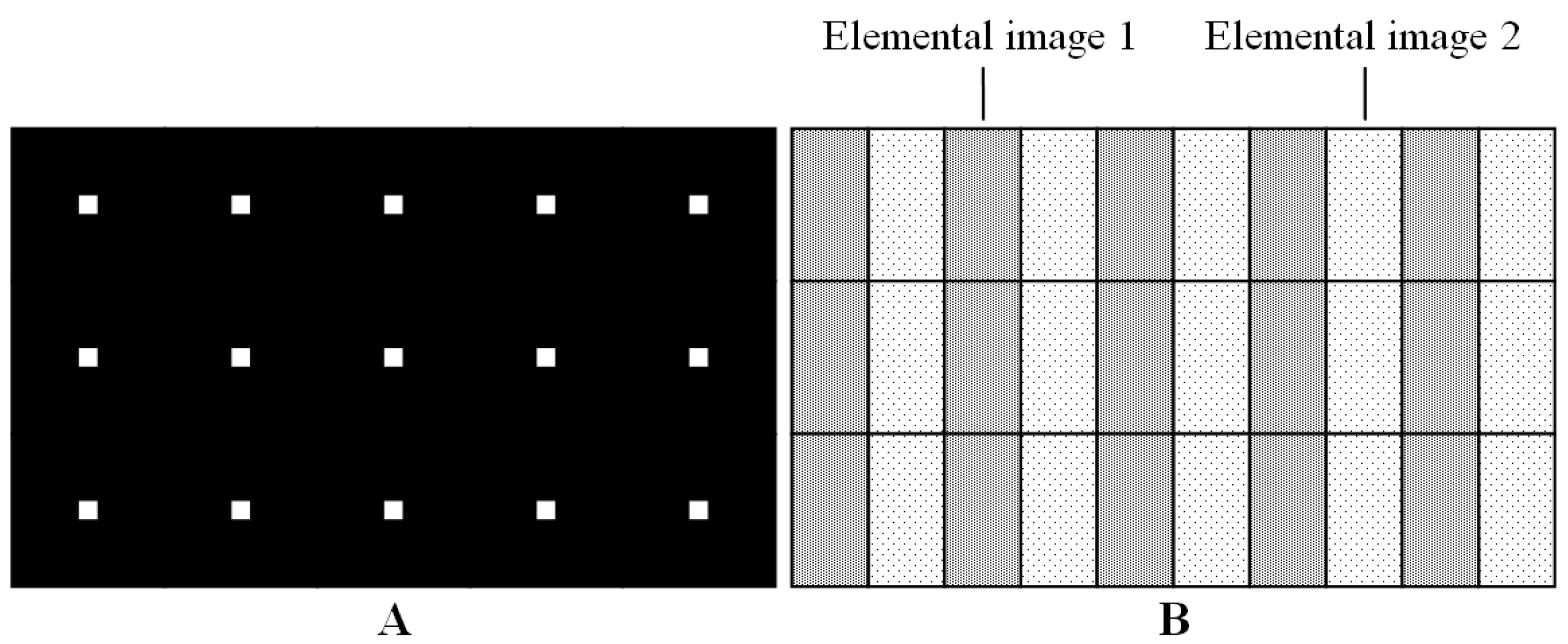
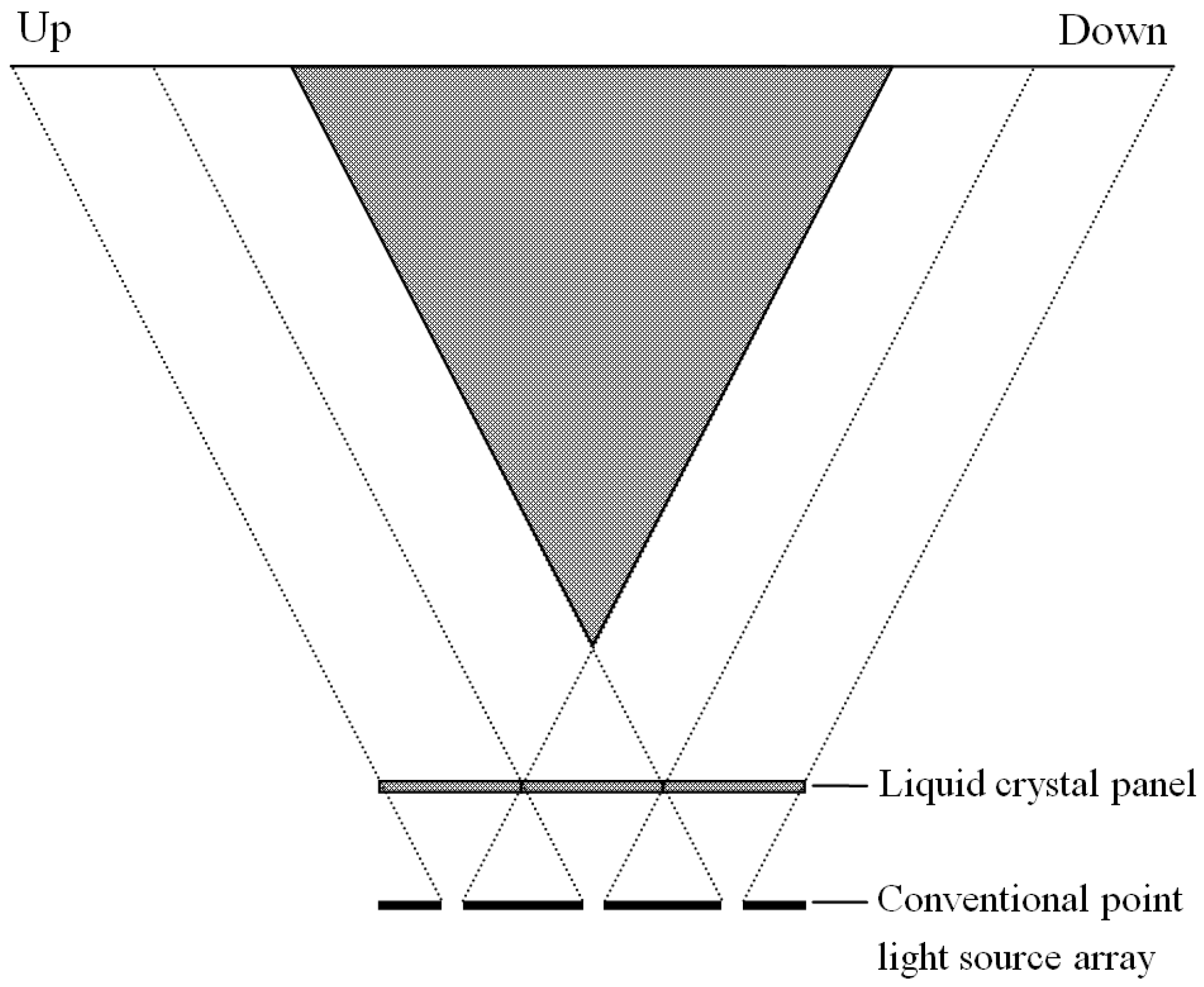
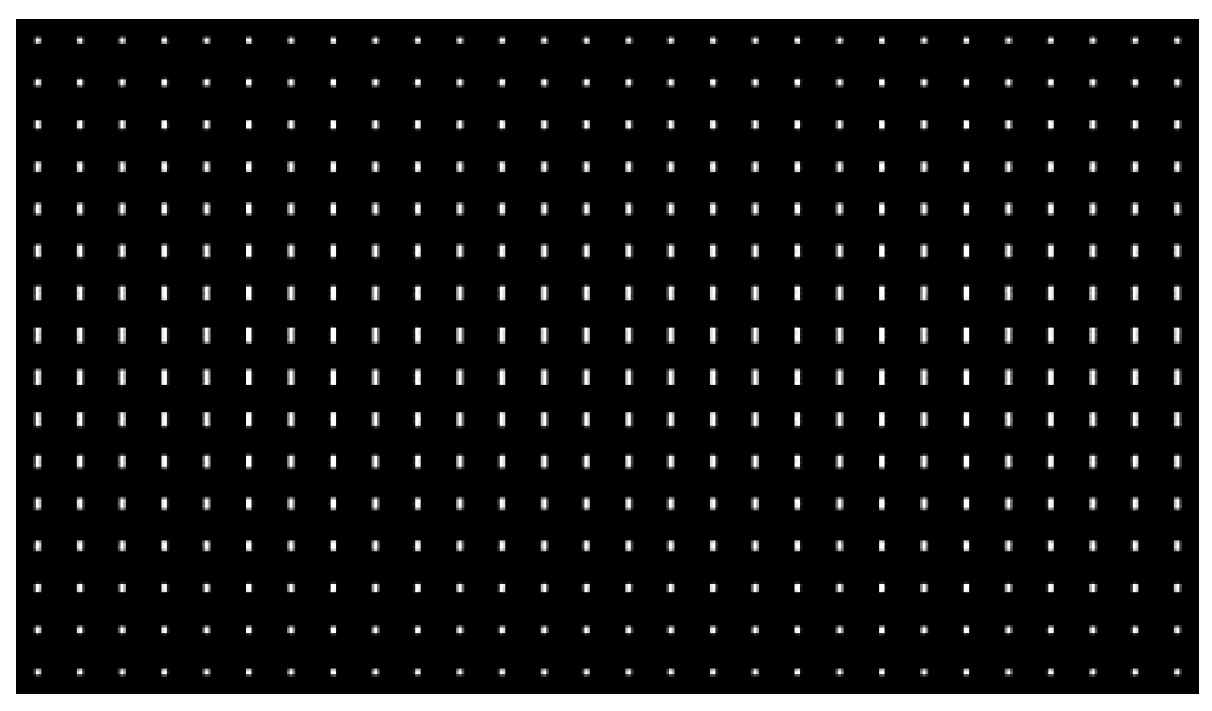
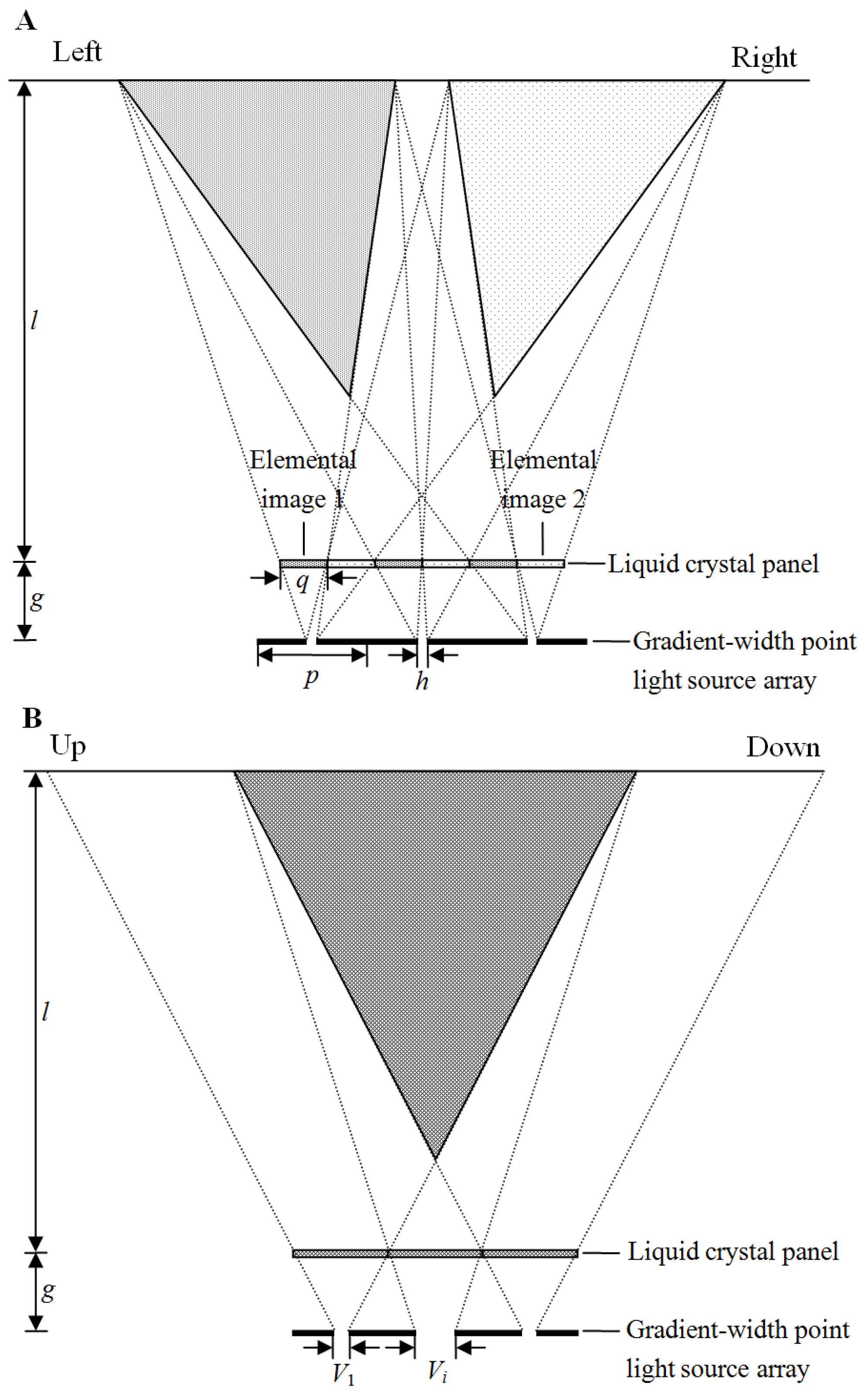
Low aperture ratio is a problem in the conventional dual-view integral imaging (DVII) display using a point light source array. A high-aperture-ratio DVII display using a gradient width point light source array is reported in this work. The elemental Images 1 and 2, which are alternatively aligned on a liquid crystal panel, are illuminated by the light rays emitted from an assigned point light source. The optical path is optimized by optimizing the widths of the point light sources. The aperture ratio of the proposed DVII display was demonstrated as 1.88 times the conventional DVII display. Experiments showed that the vertical viewing range is related to the vertical width of the first row point light source, whereas the aperture ratio is related to the vertical widths of all point light sources. By optimizing the widths of the point light sources, the aperture ratio is enhanced without loss of viewing range.
Keywords: high-aperture ratio; dual-view; integral imaging high-aperture ratio; dual-view; integral imaging