Article

Surface Modification of PDMS-Based Microfluidic Devices with Collagen Using Polydopamine as a Spacer to Enhance Primary Human Bronchial Epithelial Cell Adhesion

by
Mohammadhossein Dabaghi
1,
Shadi Shahriari
2,
Neda Saraei
1,
Kevin Da
3,
Abiram Chandiramohan
1,
Ponnambalam Ravi Selvaganapathy
2,4 and
Jeremy A. Hirota
1,4,5,6,*
1
Firestone Institute for Respiratory Health–Division of Respirology, Department of Medicine, McMaster University, Hamilton, ON L8N 4A6, Canada
2
Department of Mechanical Engineering, McMaster University, Hamilton, ON L8S 4L7, Canada
3
Department of Chemical Engineering, McMaster University, Hamilton, ON L8S 4L7, Canada
4
School of Biomedical Engineering, McMaster University, Hamilton, ON L8S 4K1, Canada
5
Division of Respiratory Medicine, Department of Medicine, University of British Columbia, Vancouver, BC V6H 3Z6, Canada
6
Department of Biology, University of Waterloo, Waterloo, ON N2L 3G1, Canada
*
Author to whom correspondence should be addressed.
Micromachines 2021, 12(2), 132; https://doi.org/10.3390/mi12020132
Submission received: 6 January 2021 / Revised: 22 January 2021 / Accepted: 23 January 2021 / Published: 26 January 2021
(This article belongs to the Special Issue Biomedical Microfluidic Devices 2021)

Abstract

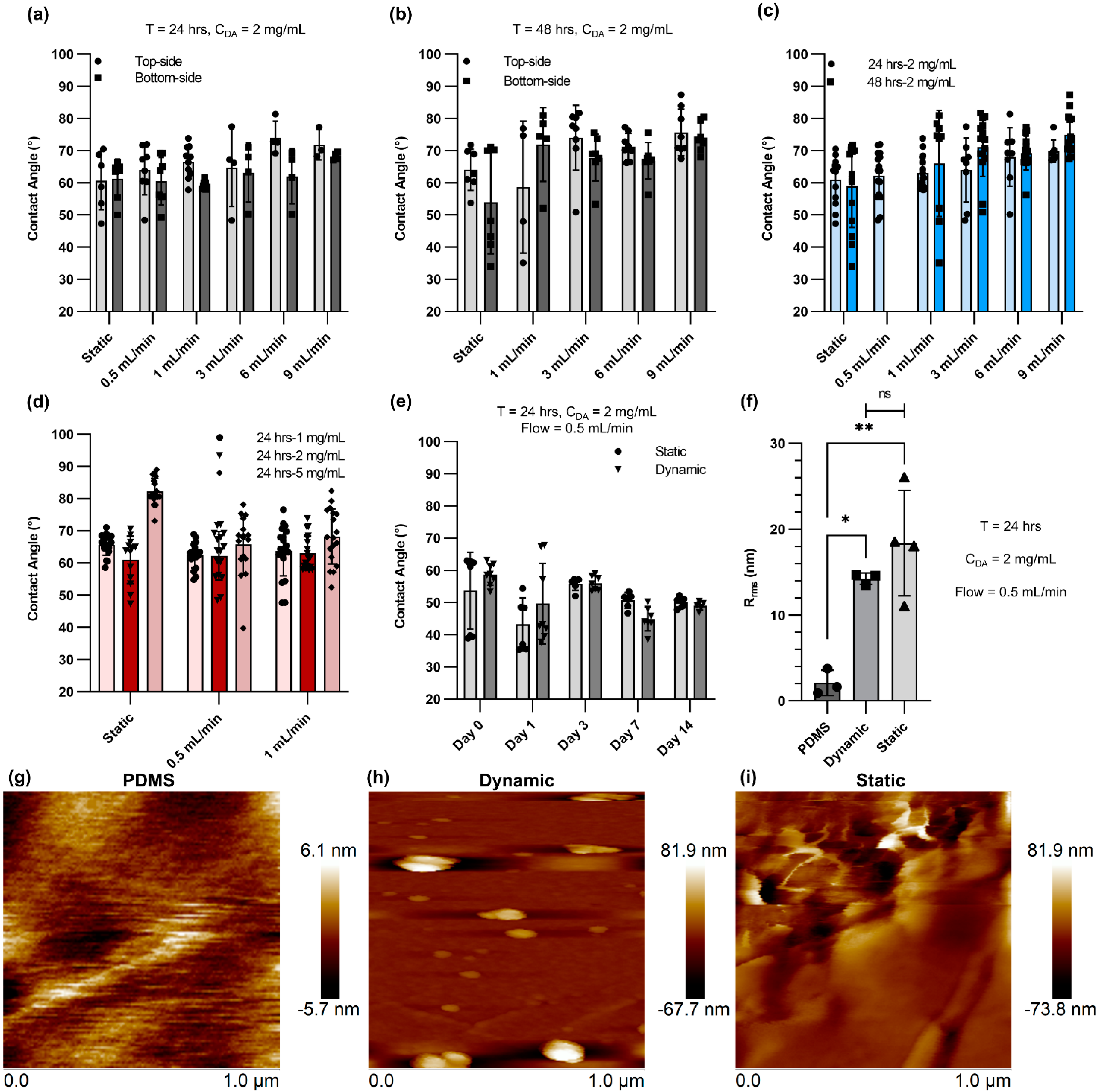
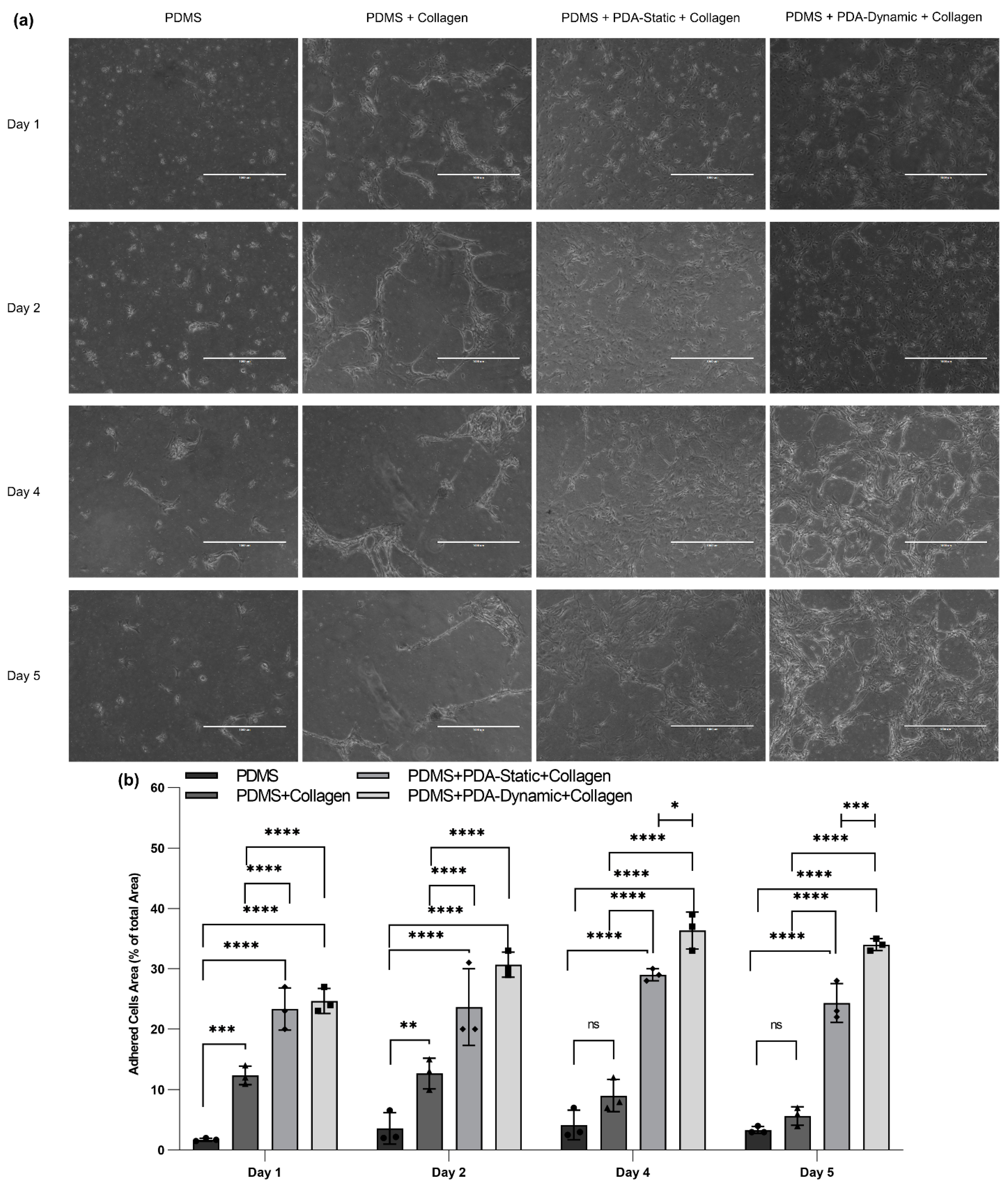
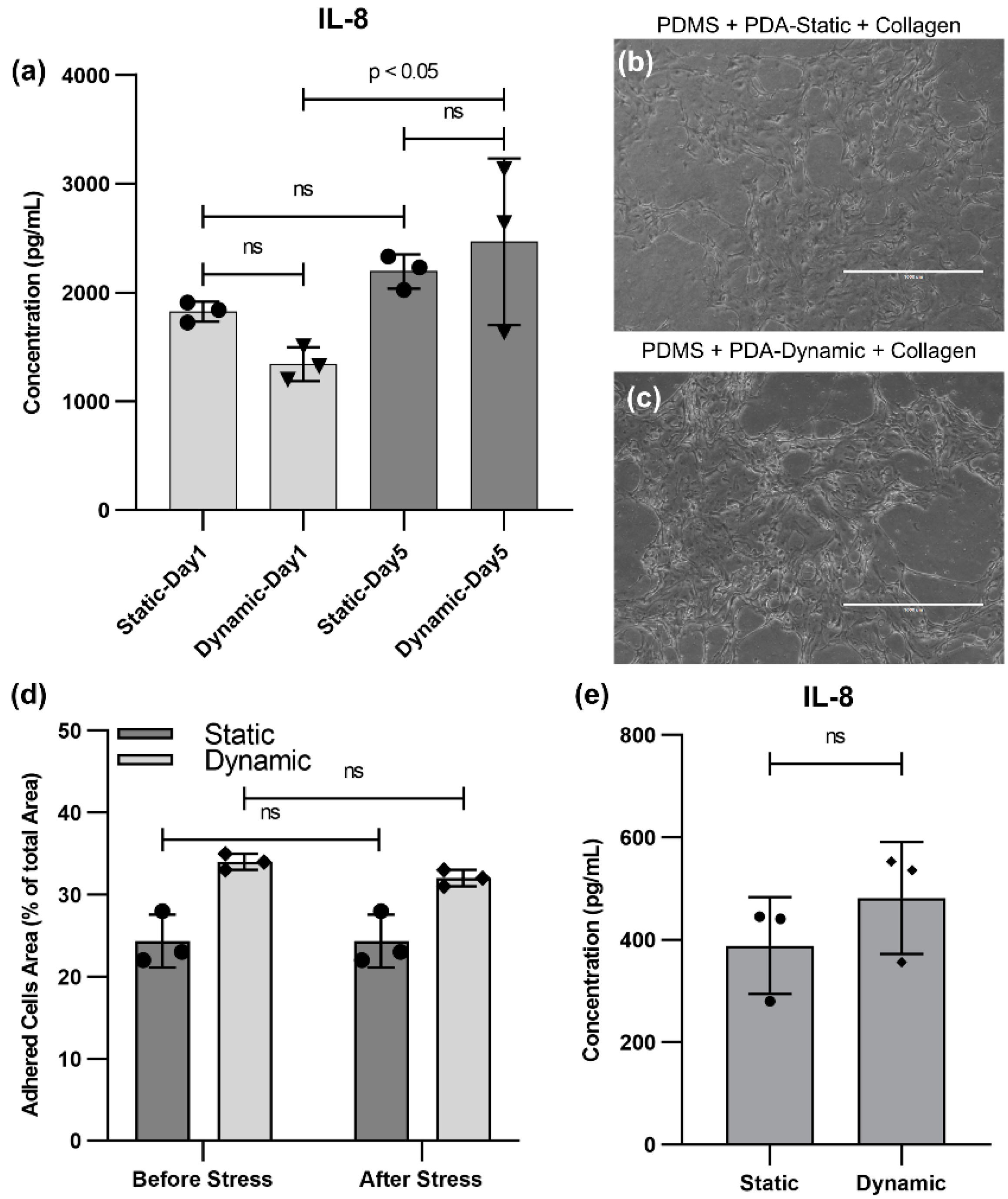
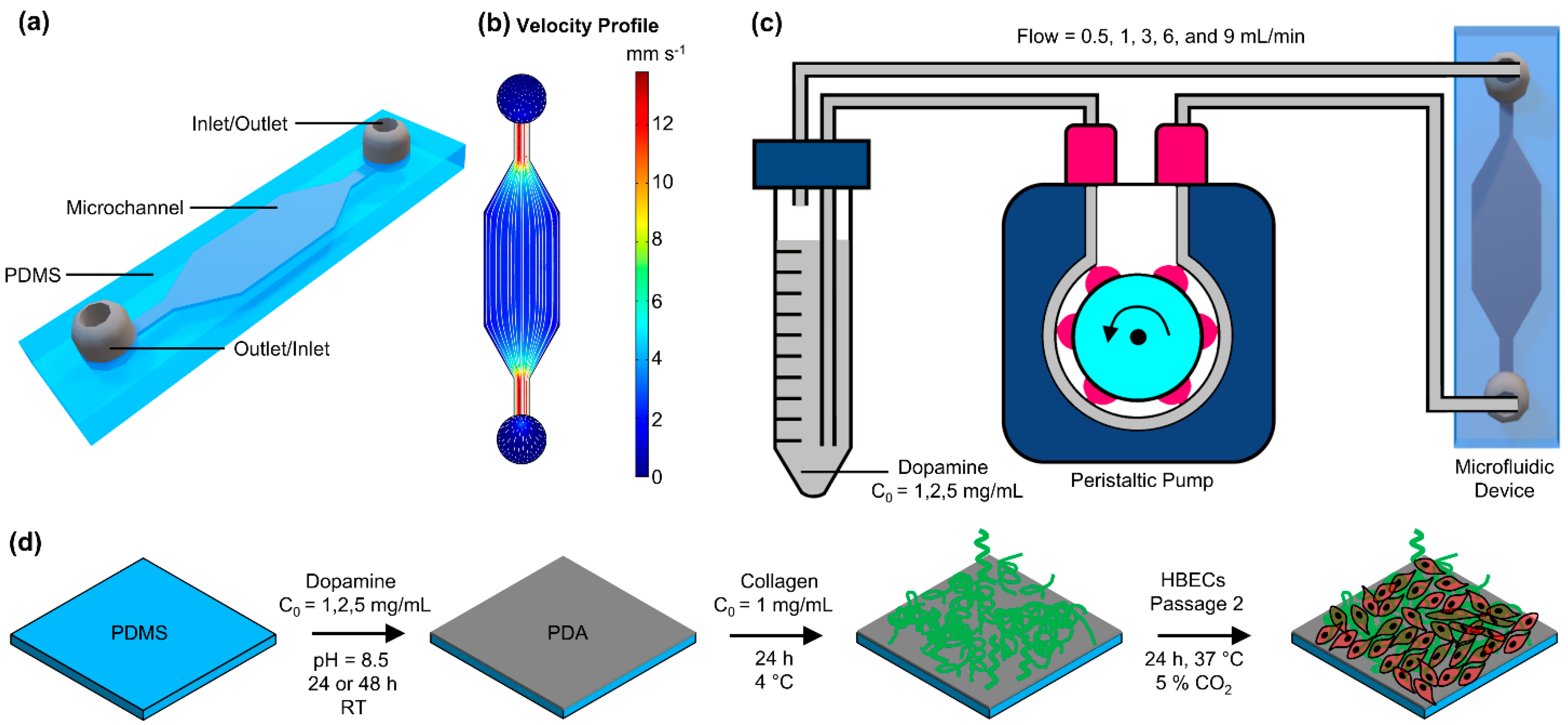
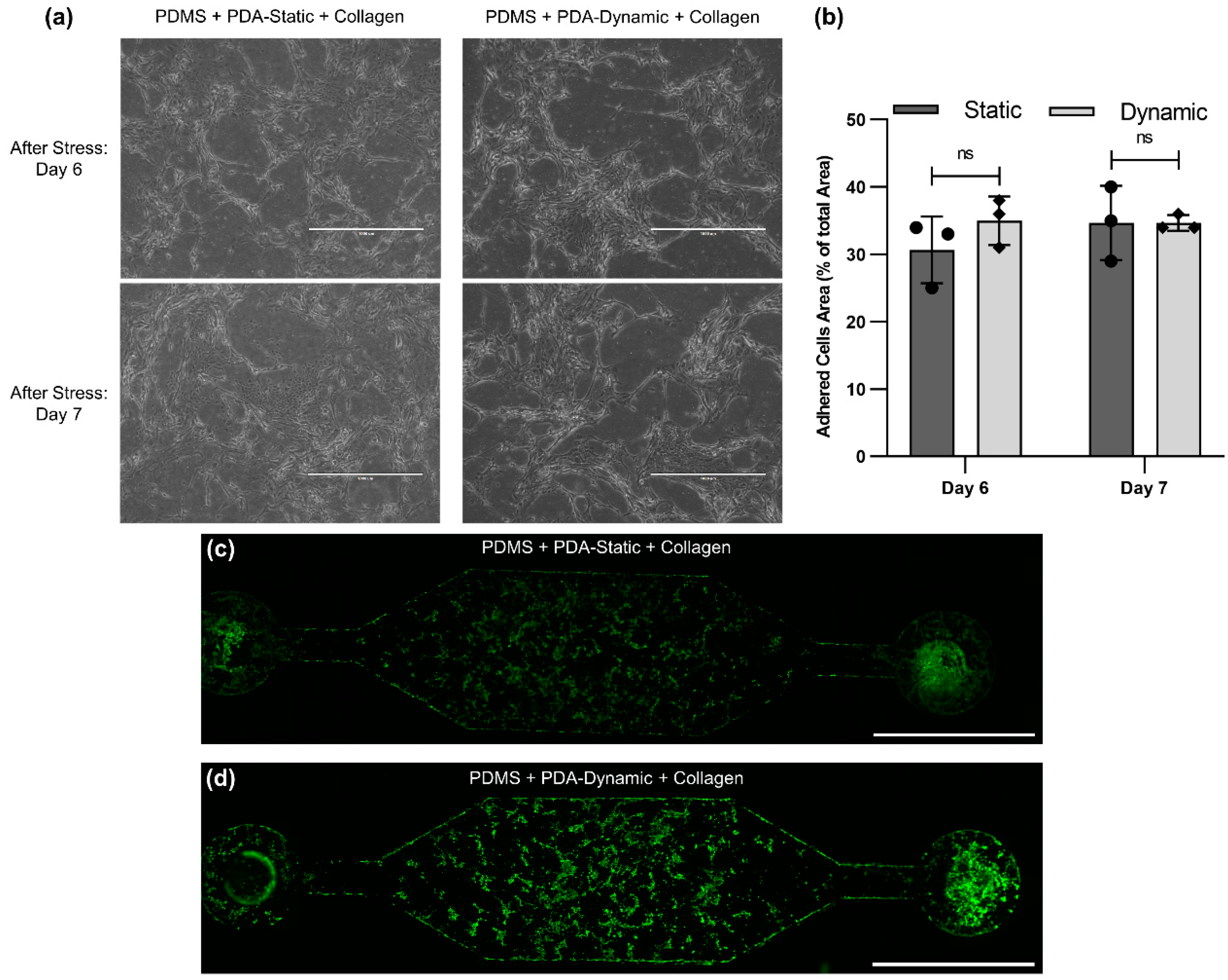
Polydimethylsiloxane (PDMS) is a silicone-based synthetic material used in various biomedical applications due to its properties, including transparency, flexibility, permeability to gases, and ease of use. Though PDMS facilitates and assists the fabrication of complicated geometries at micro- and nano-scales, it does not optimally interact with cells for adherence and proliferation. Various strategies have been proposed to render PDMS to enhance cell attachment. The majority of these surface modification techniques have been offered for a static cell culture system. However, dynamic cell culture systems such as organ-on-a-chip devices are demanding platforms that recapitulate a living tissue microenvironment’s complexity. In organ-on-a-chip platforms, PDMS surfaces are usually coated by extracellular matrix (ECM) proteins, which occur as a result of a physical and weak bonding between PDMS and ECM proteins, and this binding can be degraded when it is exposed to shear stresses. This work reports static and dynamic coating methods to covalently bind collagen within a PDMS-based microfluidic device using polydopamine (PDA). These coating methods were evaluated using water contact angle measurement and atomic force microscopy (AFM) to optimize coating conditions. The biocompatibility of collagen-coated PDMS devices was assessed by culturing primary human bronchial epithelial cells (HBECs) in microfluidic devices. It was shown that both PDA coating methods could be used to bind collagen, thereby improving cell adhesion (approximately three times higher) without showing any discernible difference in cell attachment between these two methods. These results suggested that such a surface modification can help coat extracellular matrix protein onto PDMS-based microfluidic devices.
Keywords: microfluidic; polydopamine; collagen; polydimethylsiloxane (PDMS); organ-on-a-chip microfluidic; polydopamine; collagen; polydimethylsiloxane (PDMS); organ-on-a-chip