A Comprehensive Experimental and Finite Element Analysis Study on the Bonding Strength Evaluation of Wafer-to-Wafer Hybrid Bonding with Polyimide Film Dielectrics

Abstract
1. Introduction
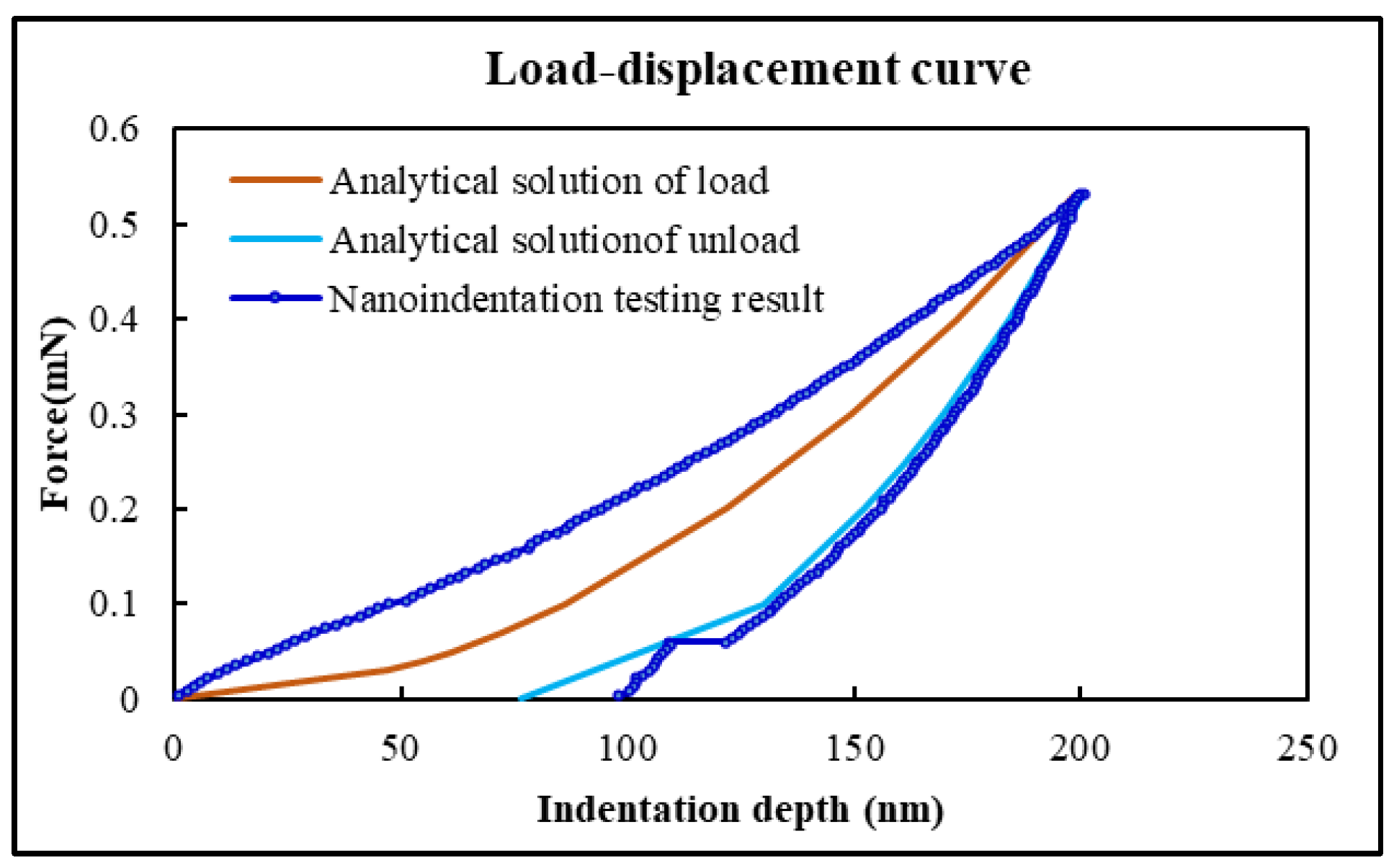
2. Nanoindentation Testing and Finite Element Simulation of PI Films
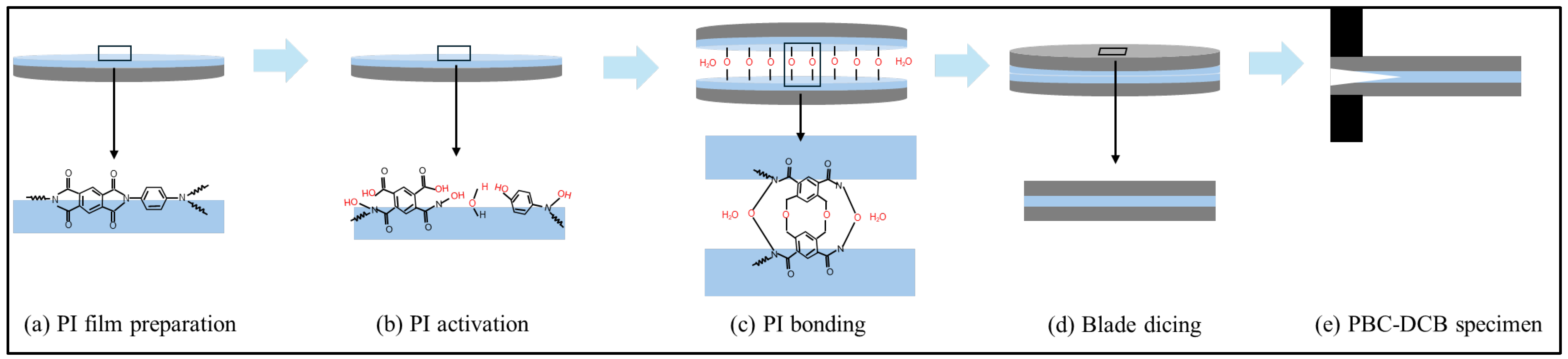
2.1. PI Film Preparation
2.2. Nanoindentation Testing
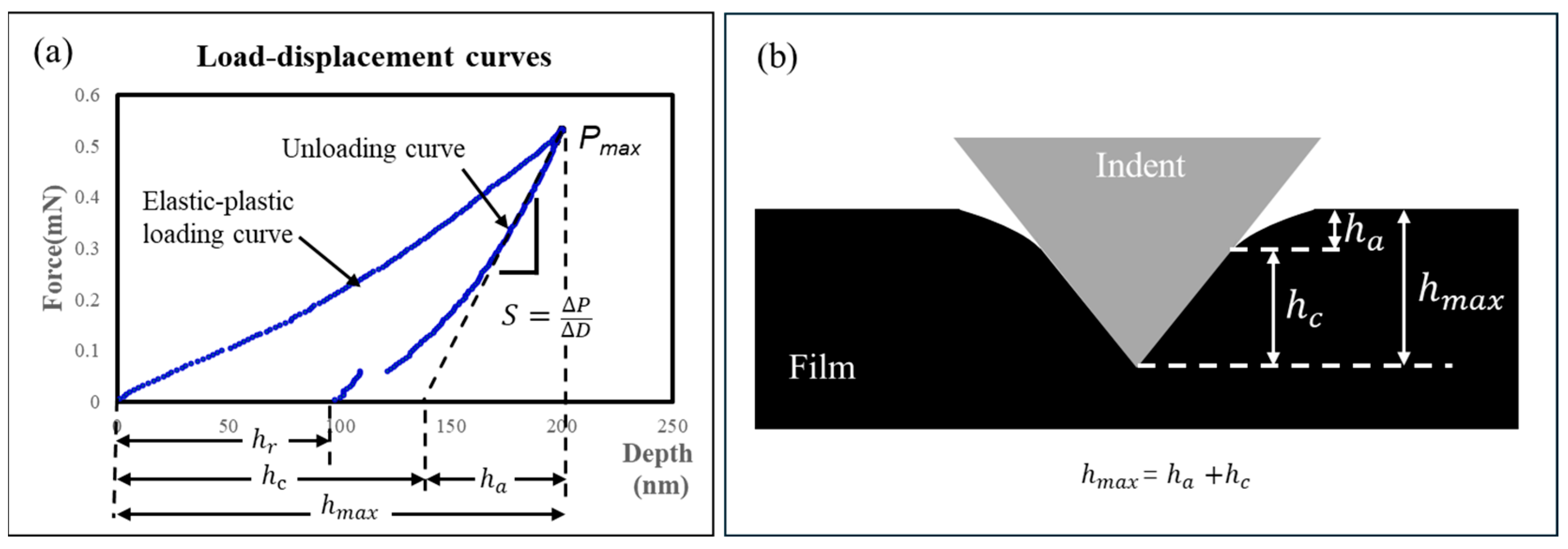
2.3. Nanoindentation Analytical Solution [20]
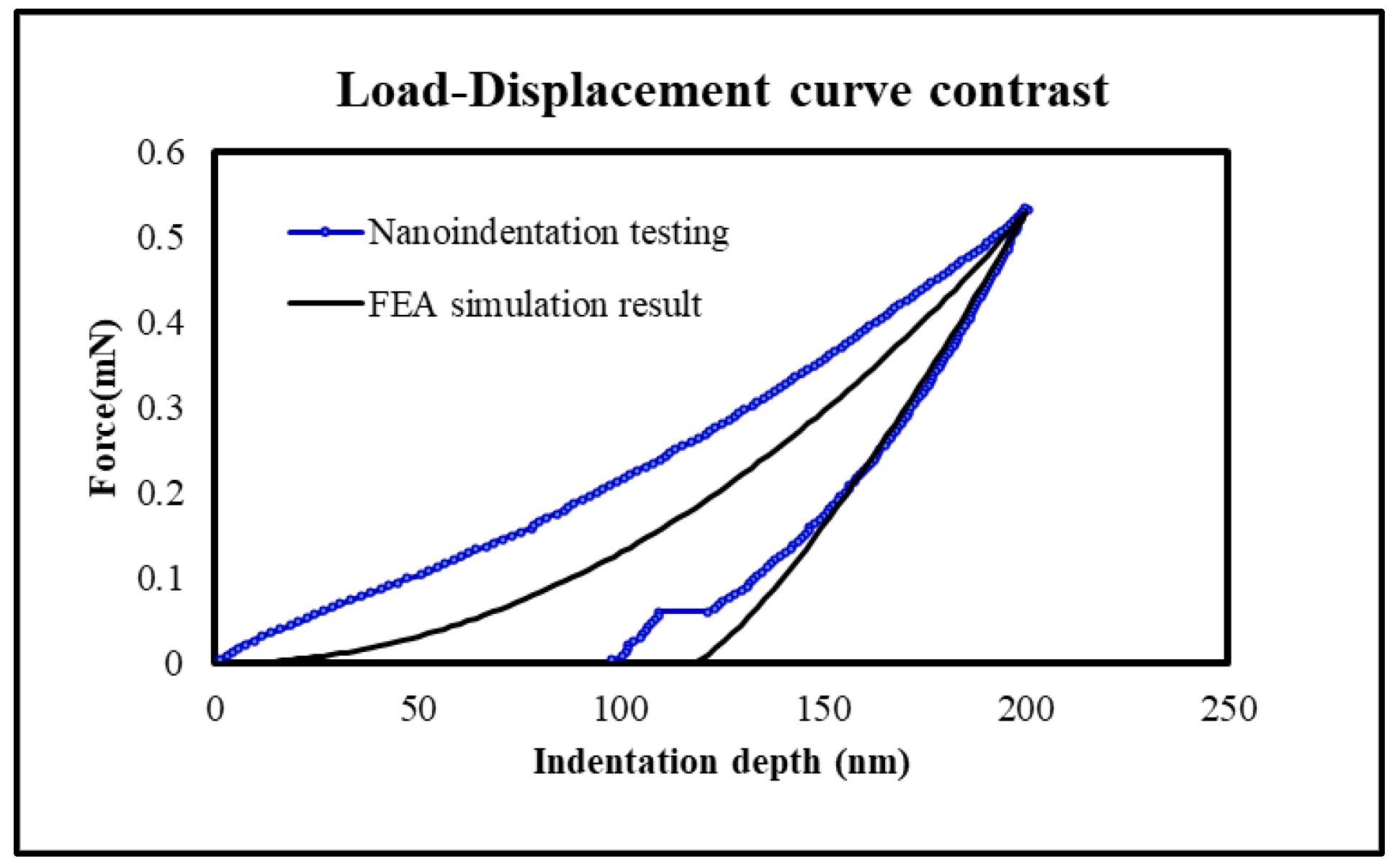
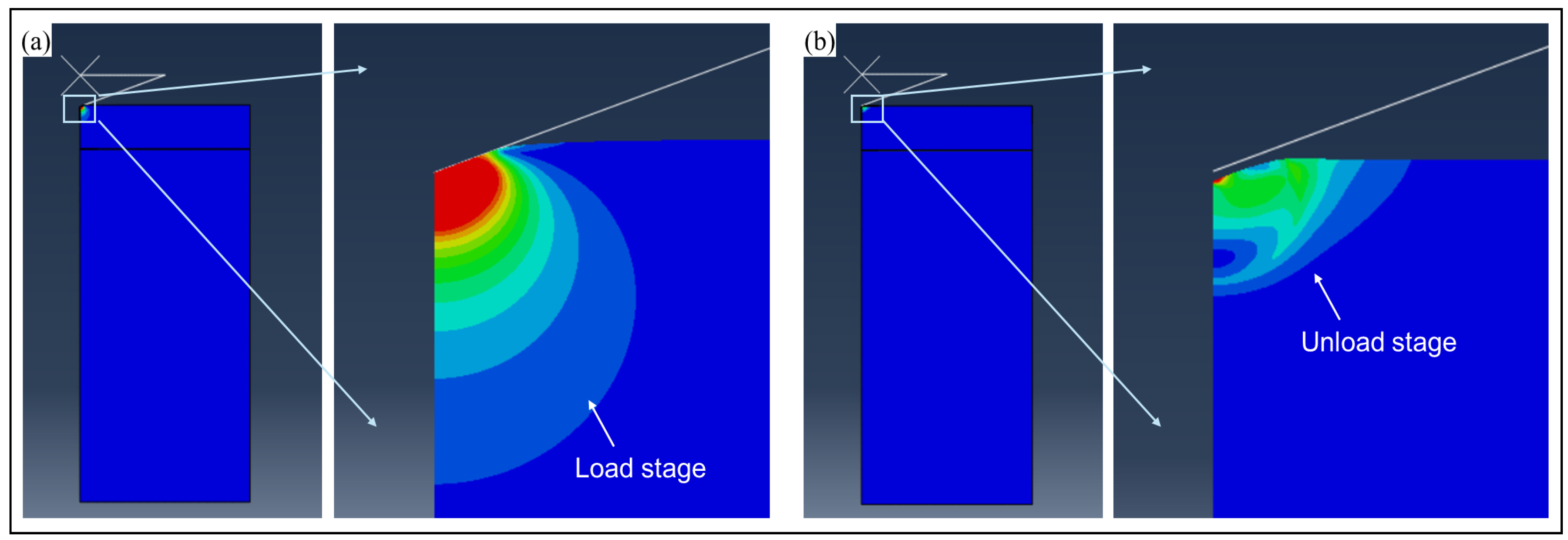
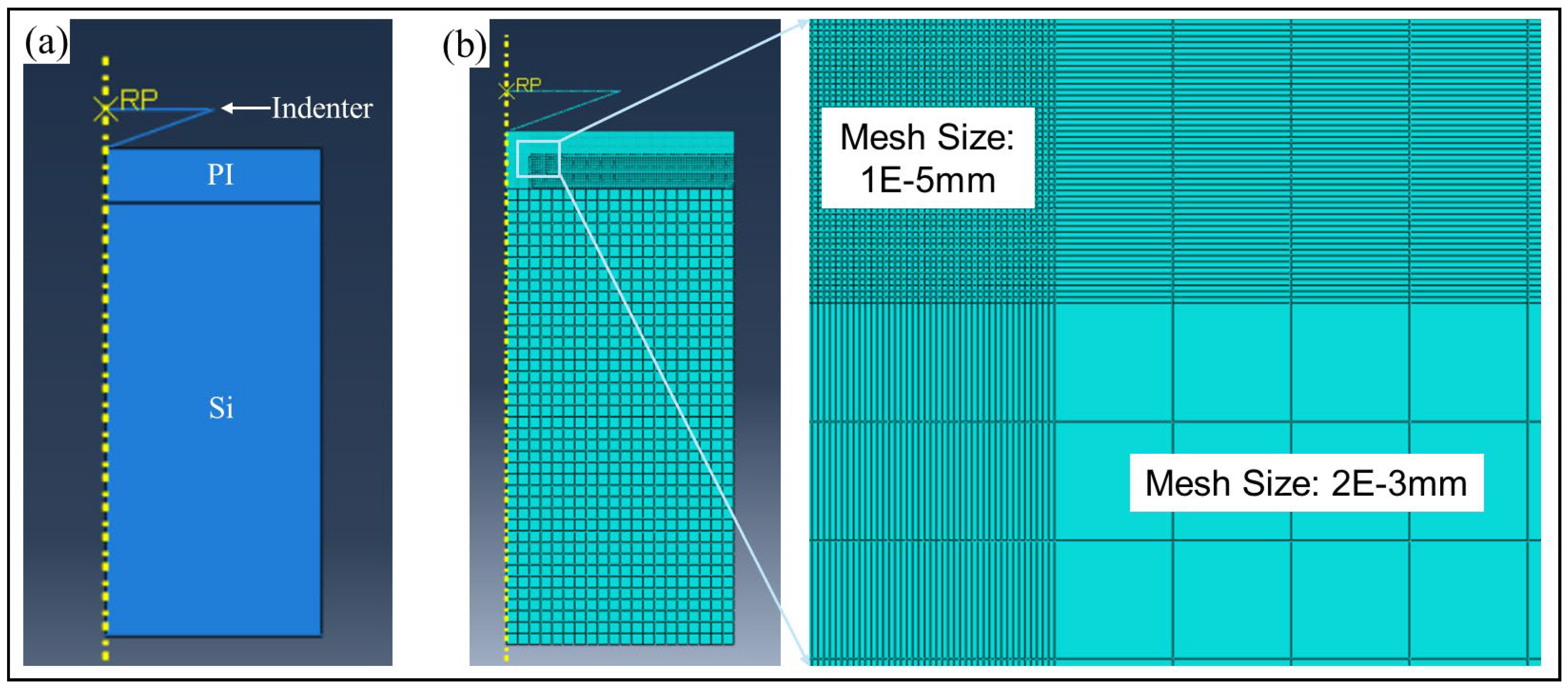
2.4. Finite Element Analysis of Nanoindentation Testing
3. PBC-DCB Testing of PI Film Bonding
3.1. The Sample Preparation of PI-PI Bonding
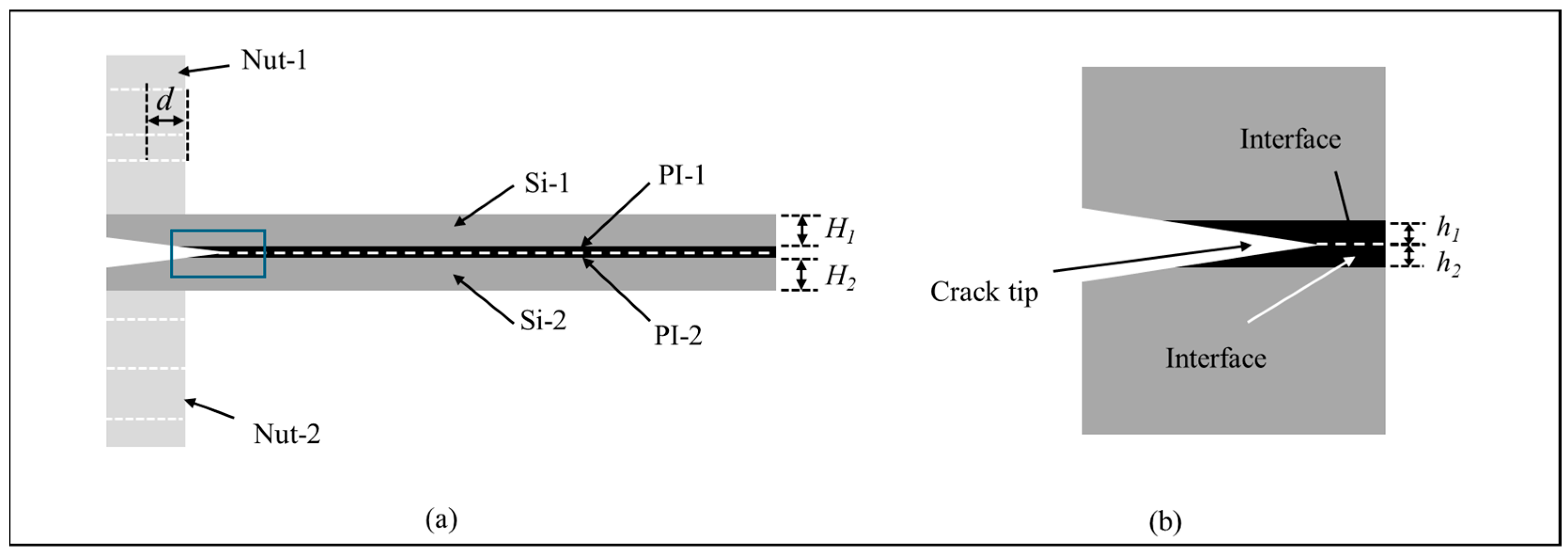
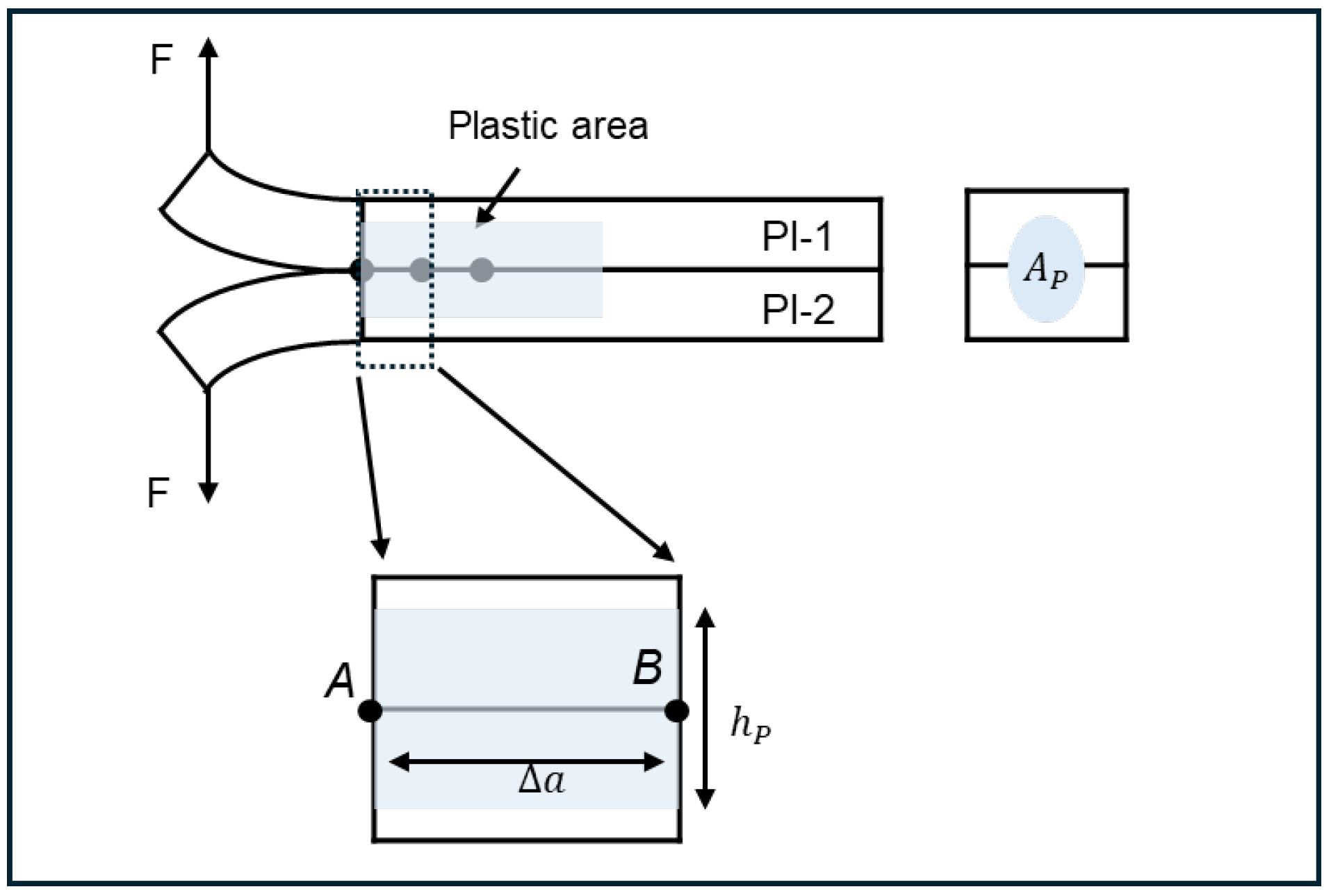
3.2. PBC-DCB Model of PI-PI Bonding
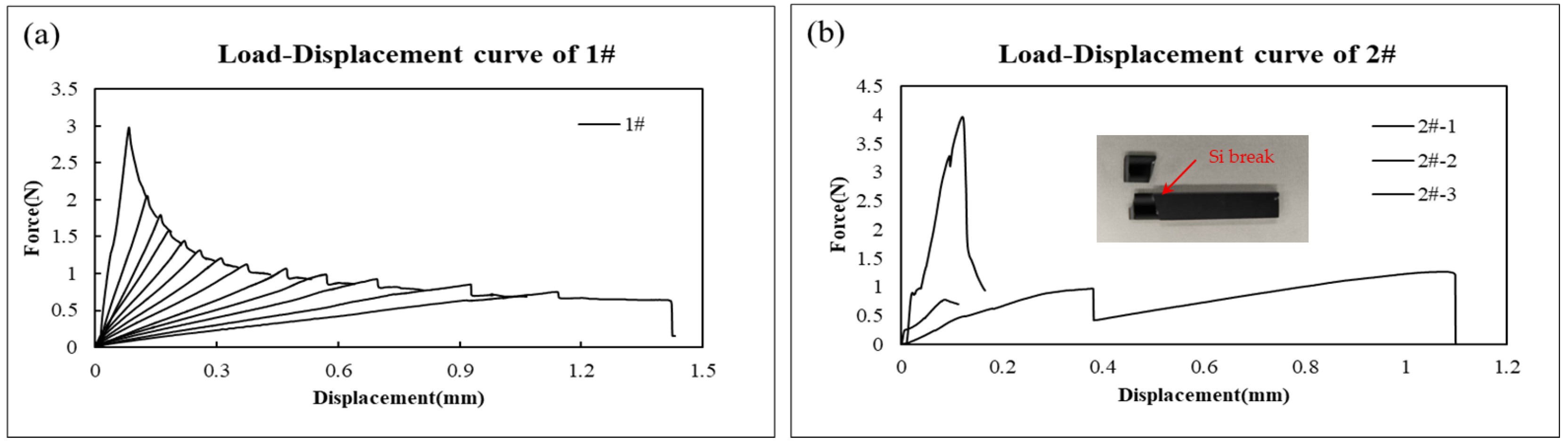
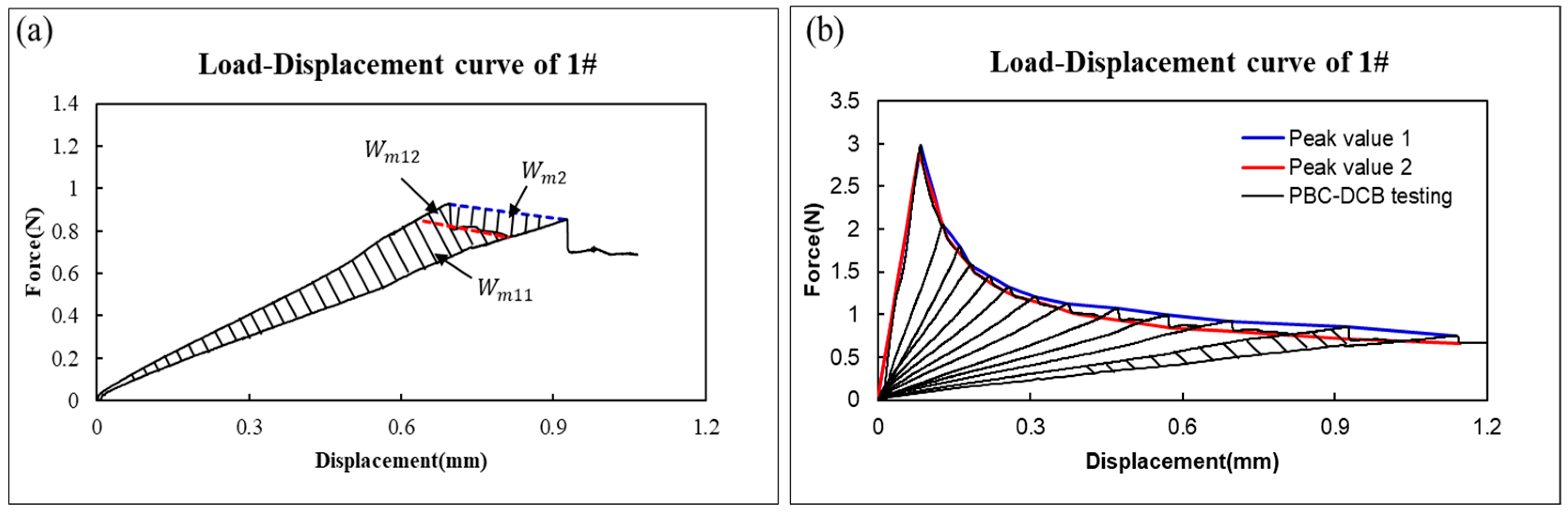
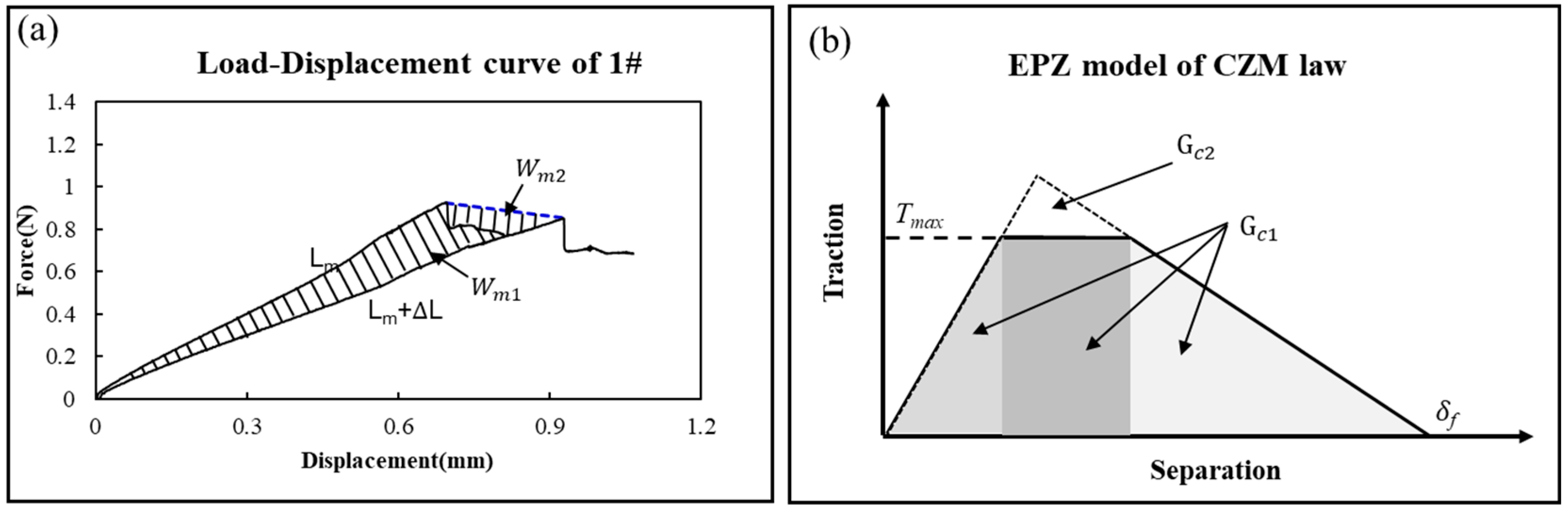
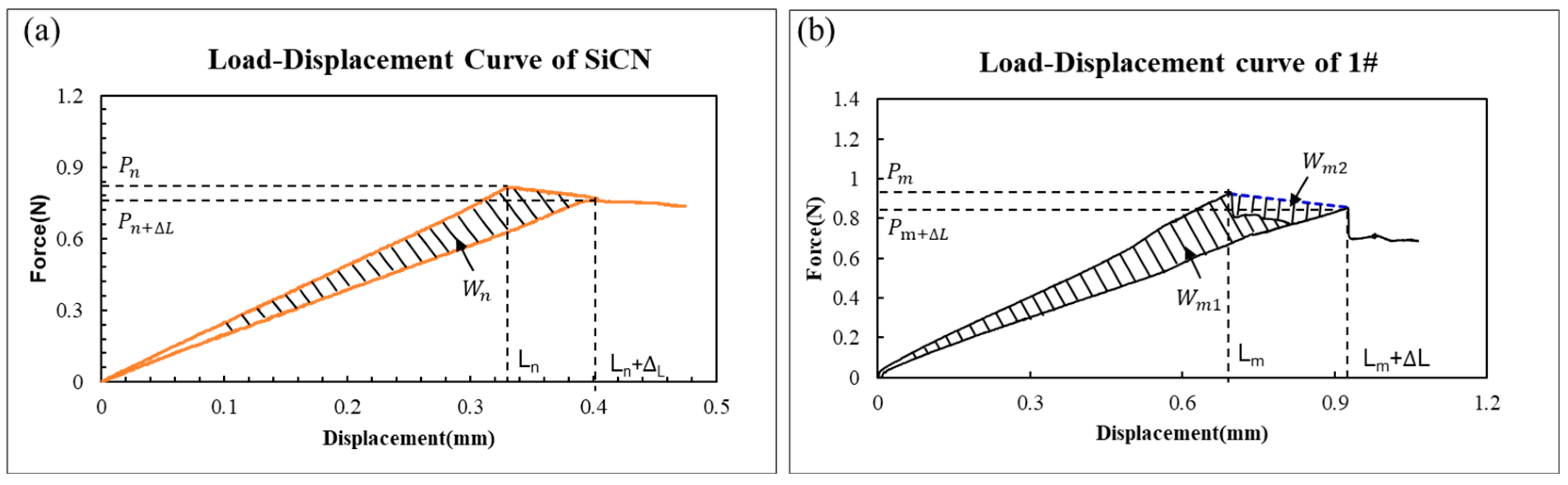
3.3. PBC-DCB Testing of PI-PI Bonding
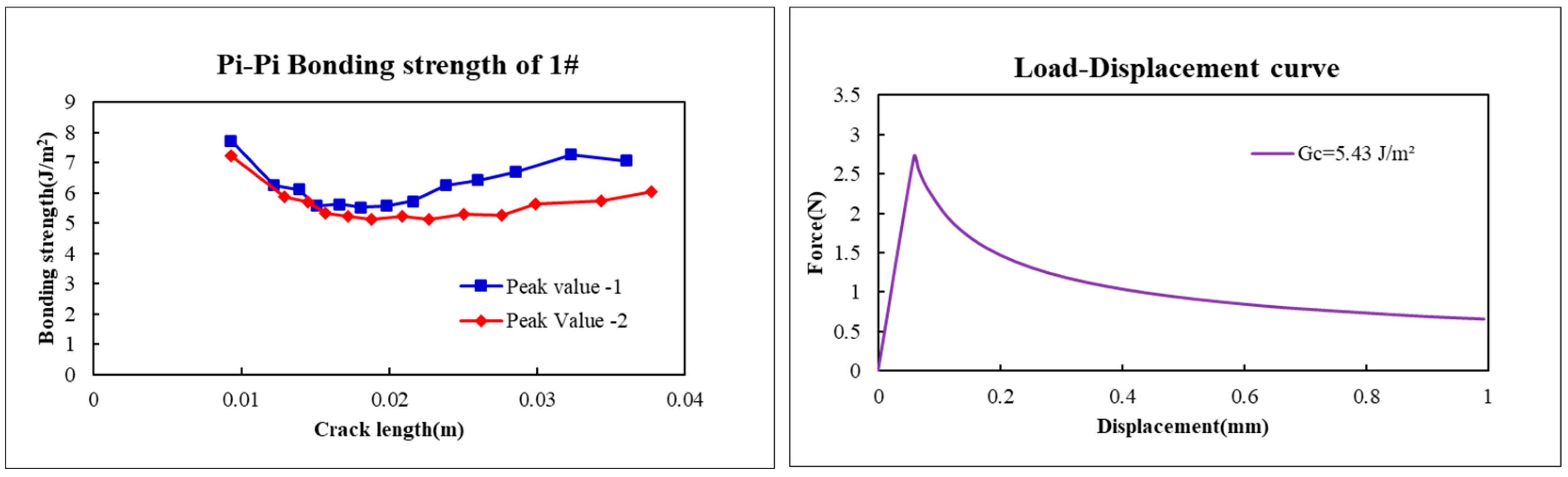
4. Finite Element Analysis of PI-PI PBC-DCB Testing
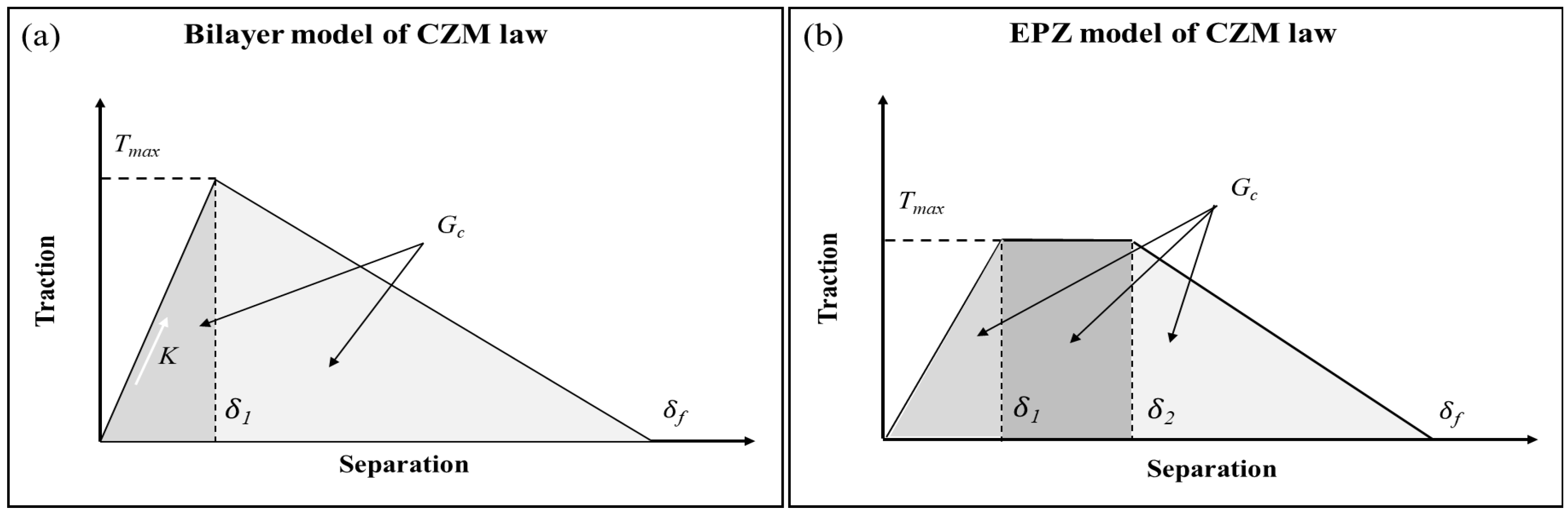
4.1. Cohesive Zone Model (CZM) Law
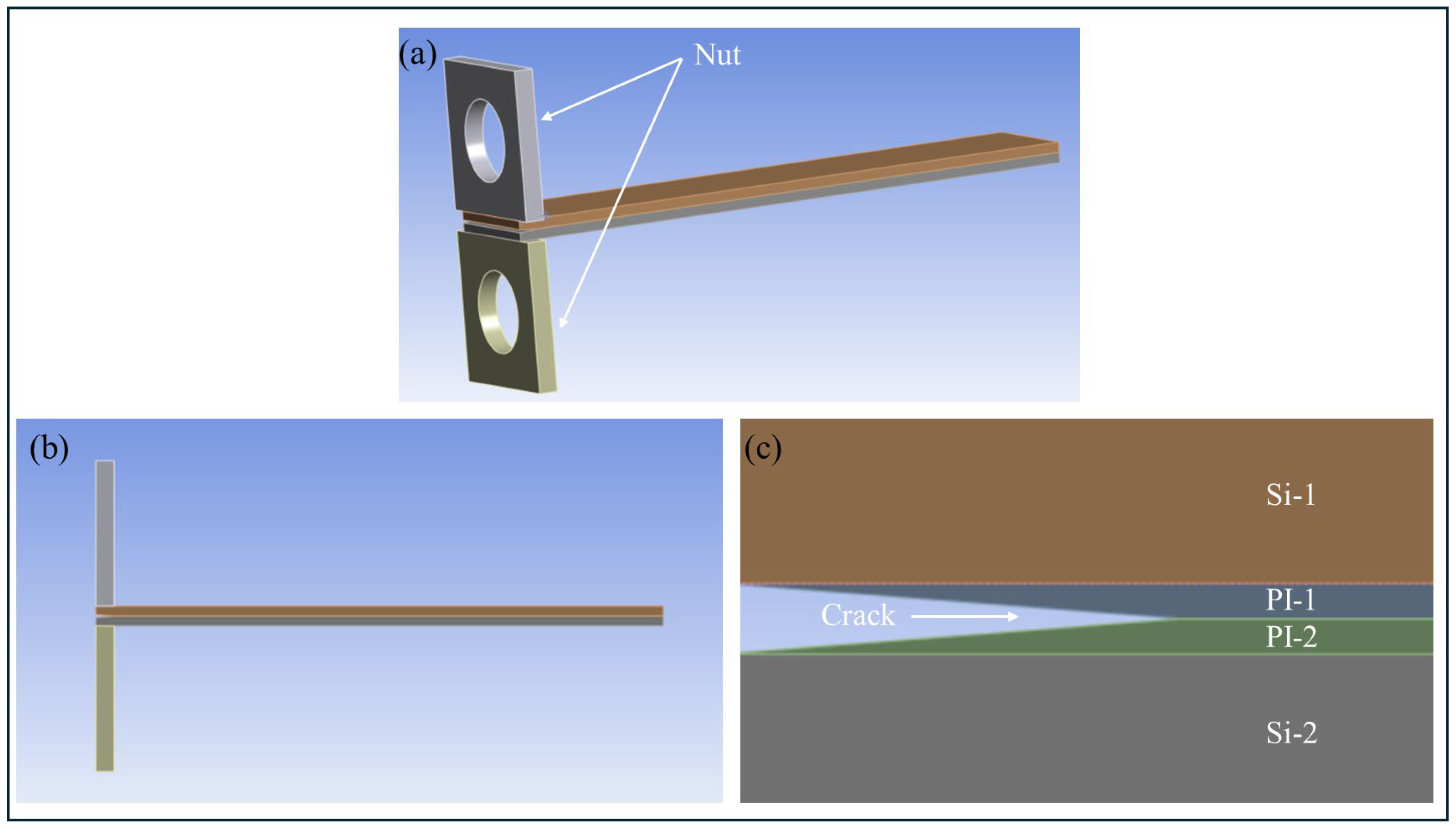
4.2. Finite Element Model of PBC-DCB Test
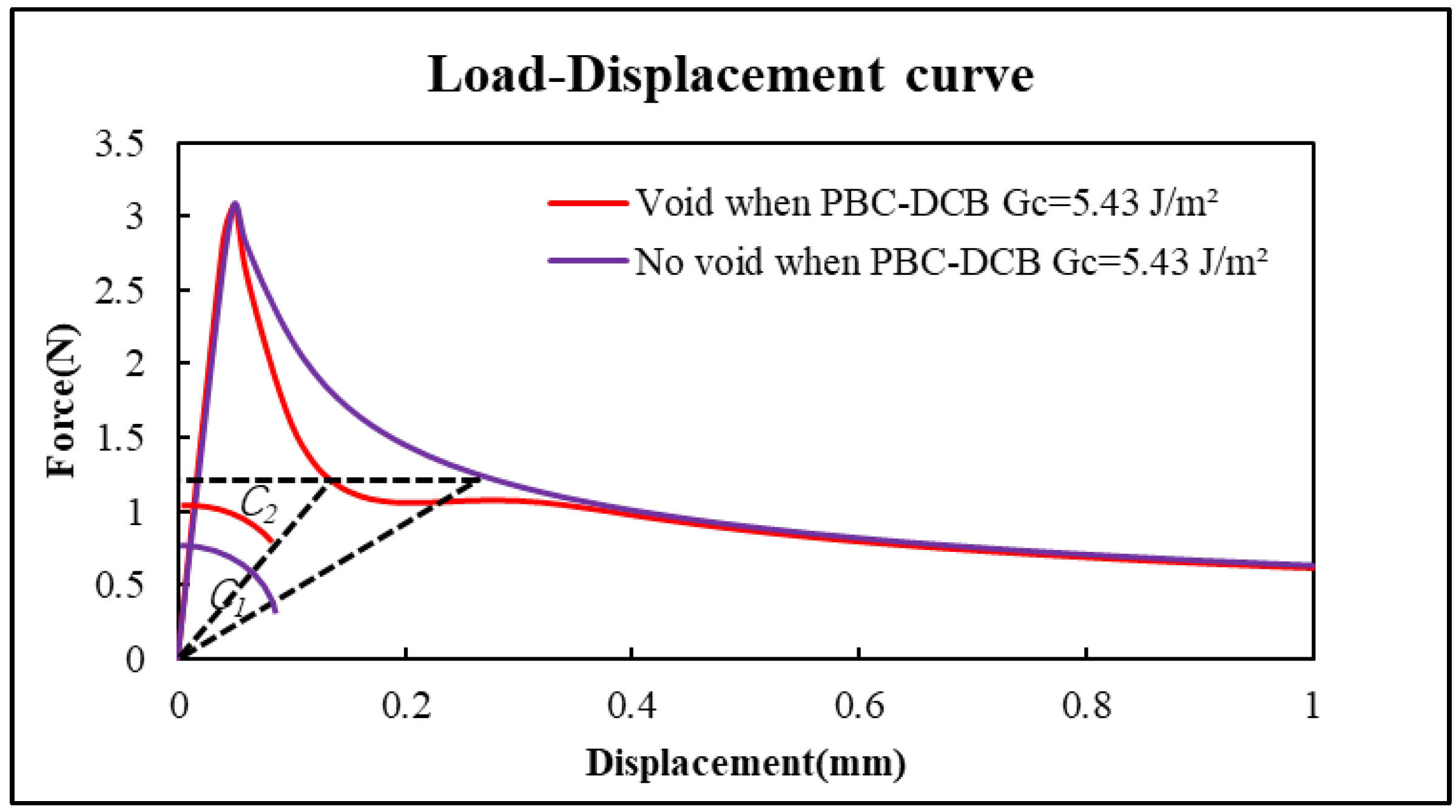
4.3. FEA of PBC-DCB Specimen with Bonding Void
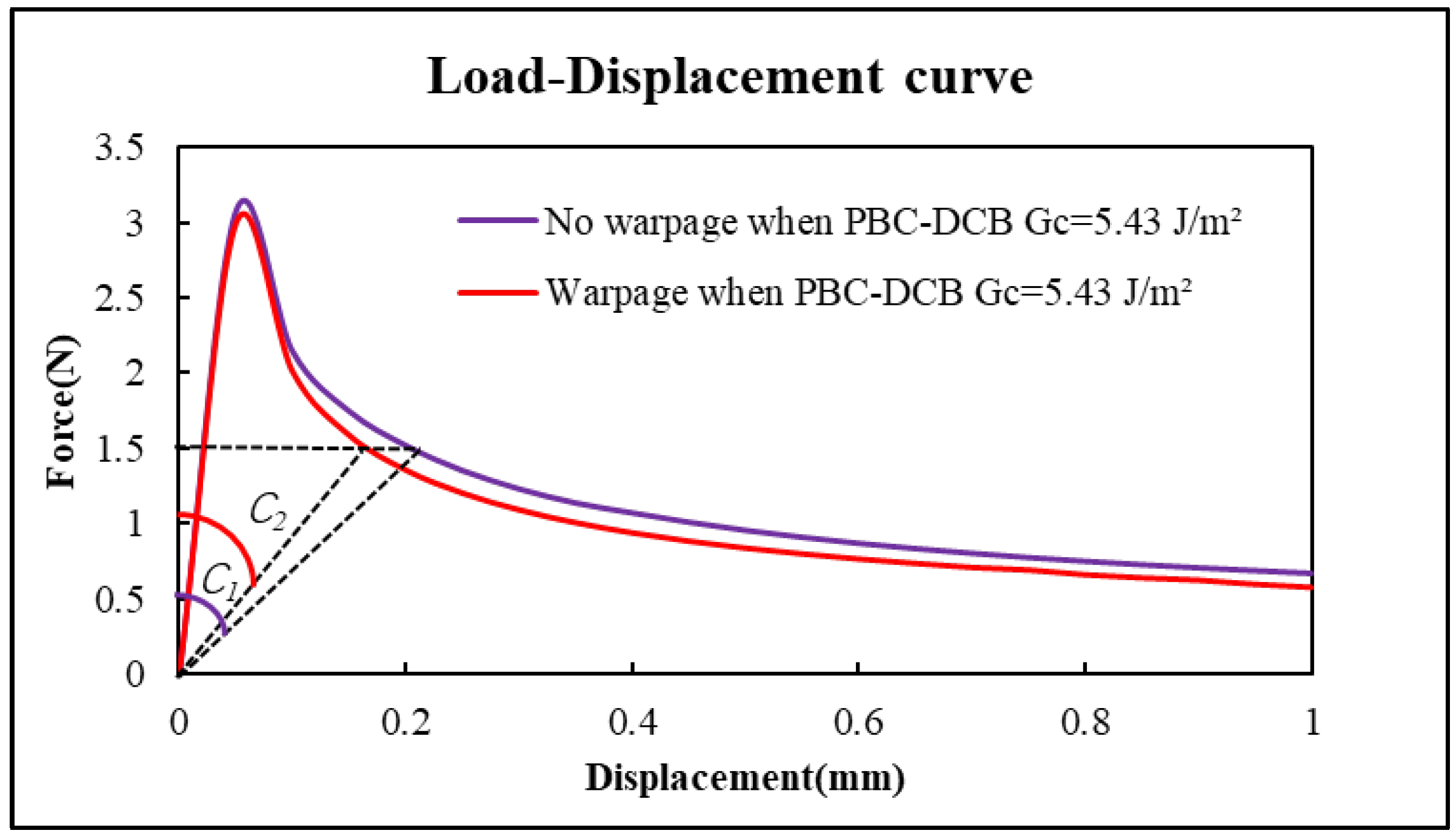
4.4. FEA of PBC-DCB Specimen with Warpage
5. Conclusions
- (1)
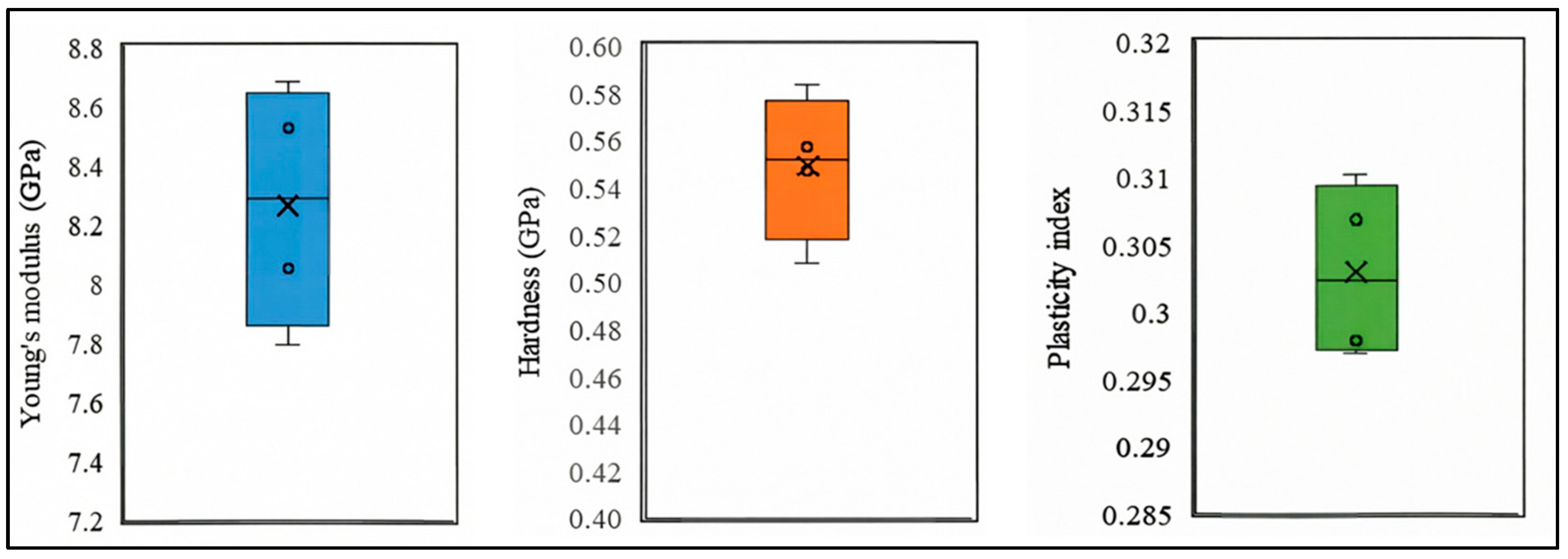
- By nanoindentation and FEA, polyimide (PI) exhibits obvious elastoplastic mechanical behavior, which is significantly different from inorganic dielectric materials (SiO2, SiCN) that follow linear elasticity. The Young ‘s Modulus and yield stress of prepared PI film are 8.076 GPa and 0.458 GPa, respectively.
- (2)
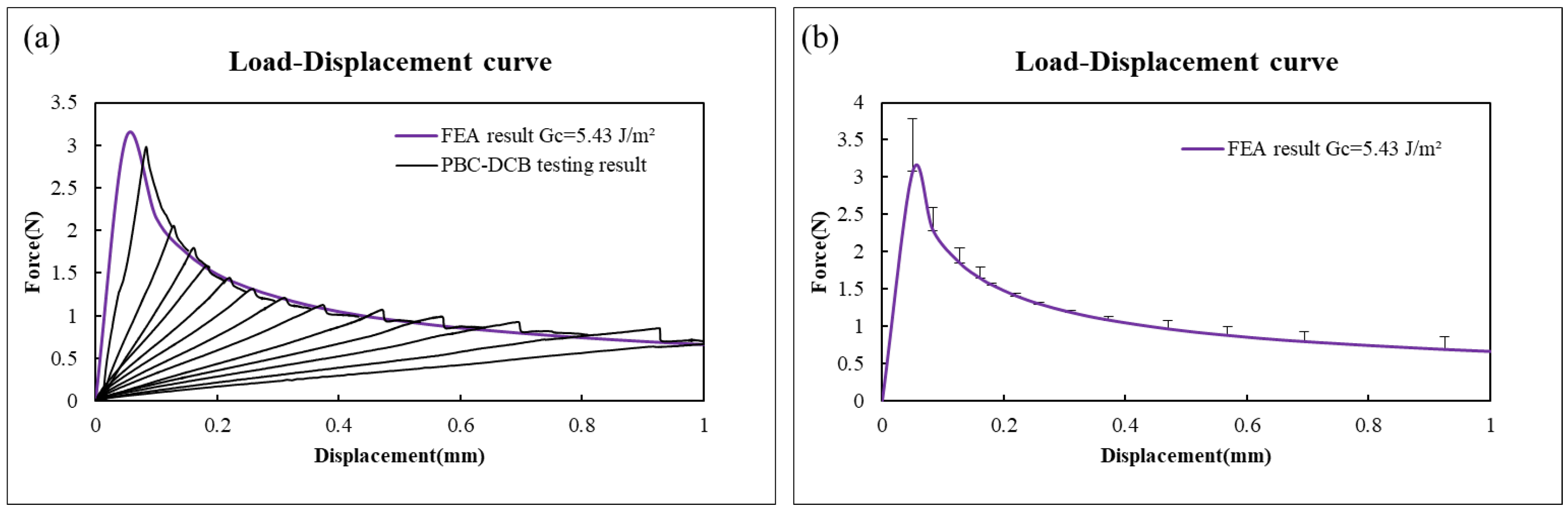
- A PBC-DCB test method is proposed to characterize the bonding strength of PI-PI. Theoretical and experimental results show that the plasticity of PI causes energy dissipation during stretching, resulting in a deviation of approximately 2.51% when compared with pure-elasticity bonding strength.
- (3)
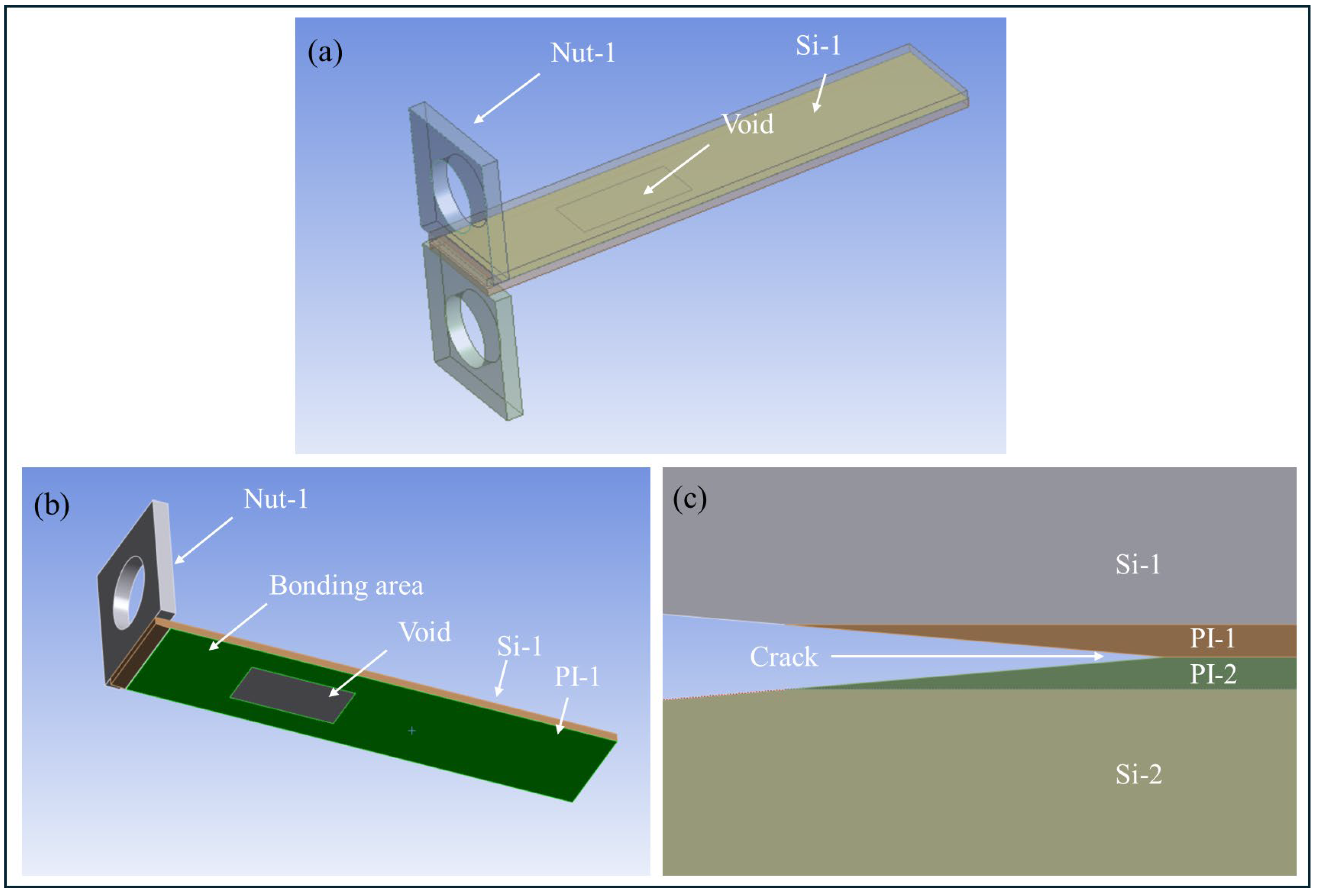
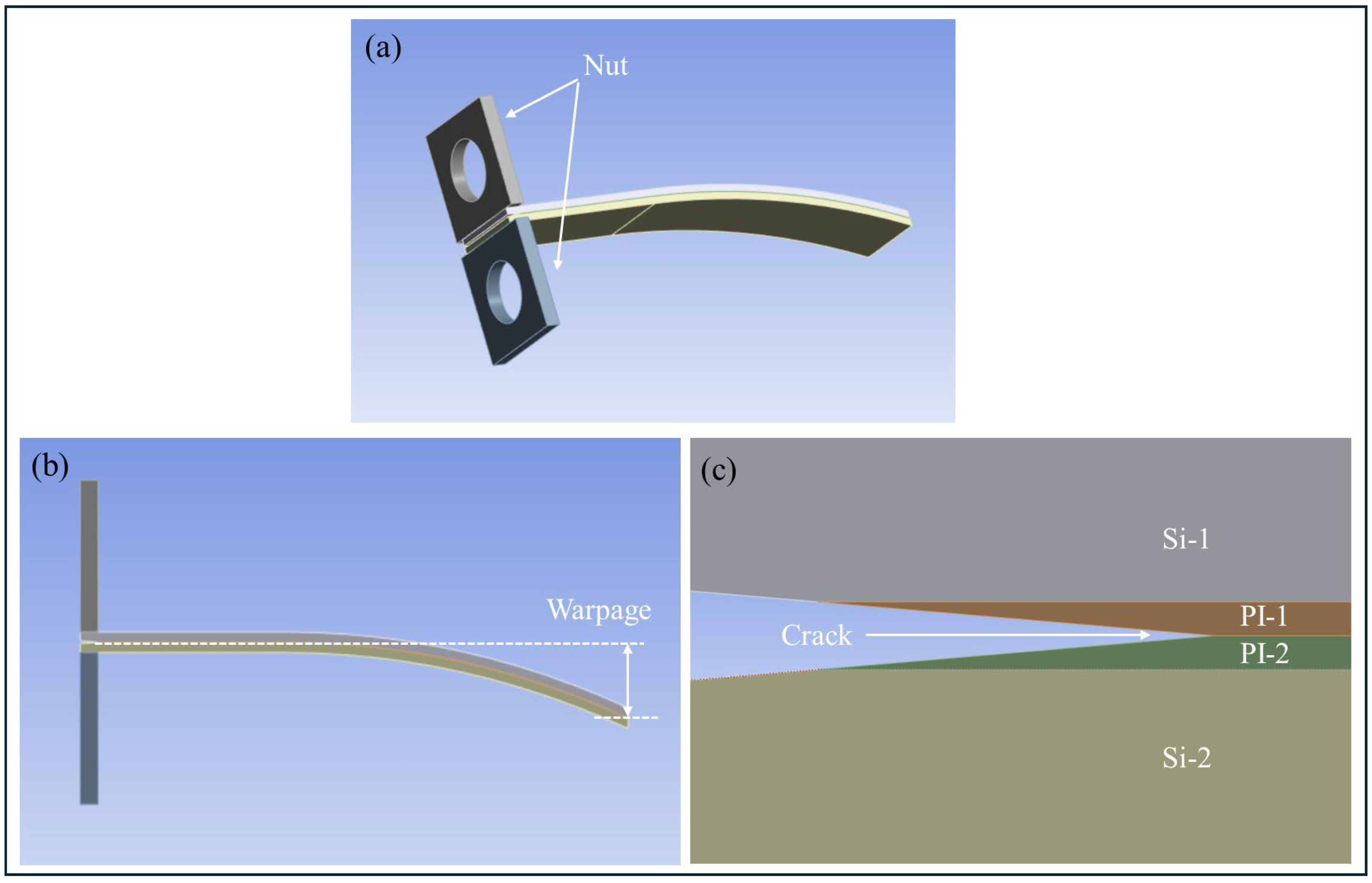
- Based on experimental data, a Cohesive Zone Model (CZM) FEA method is used to simulate crack propagation. The results indicate that the EPZ model can accurately describe crack initiation and delamination behavior. Finally, defects from factors such as bonding voids and wafer warpage were further discussed in relation to the bonding strength measurement. Void and warpage will lead to lower testing results.
Author Contributions
Funding
Data Availability Statement
Acknowledgments
Conflicts of Interest
References
- Zhou, A.; Zhang, Y.; Ding, F.; Jin, R.; Wang, Q.; Cao, L. Investigation of Dielectric Materials in D2W Bonding: SiO2-SiO2, SiO2-SiCN, and SiCN-SiCN. In Proceedings of the 26th International Conference on Electronic Packaging Technology (ICEPT), Shanghai, China, 5–7 August 2025. [Google Scholar]
- Chang, L.; Yang, G.; Xu, Y.; Ma, Z.; Tong, K.; Cheng, L.; Li, L. Surface Activation and Bonding Mechanisms of SiCN and TEOS Dielectrics for Low-Temperature Hybrid Bonding. In Proceedings of the 2025 IEEE 27th Electronics Packaging Technology Conference (EPTC), Singapore, 2–5 December 2025; pp. 1–5. [Google Scholar]
- Chen, M.; Chen, F.; Chiou, W.; Yu, D. System on Integrated Chips (SoIC (TM) for 3D Heterogeneous Integration. In Proceedings of the 2019 IEEE 69th Electronic Components and Technology Conference (ECTC), Las Vegas, NV, USA, 28–31 May 2019; pp. 594–599. [Google Scholar]
- Chen, Y.; Yang, C.; Kuo, C.; Chen, M.; Tung, C.; Chiou, W.; Yu, D. Ultra high density SoIC with sub-micron bond pitch. In Proceedings of the 2020 IEEE 70th Electronic Components and Technology Conference (ECTC), Orlando, FL, USA, 3–30 June 2020; pp. 576–581. [Google Scholar]
- Xu, Y.; Zeng, Y.; Zhao, Y.; Lee, C.; He, M.; Liu, Z. A Review of Mechanism and Technology of Hybrid Bonding. J. Electron. Packag. 2024, 147, 010801. [Google Scholar] [CrossRef] [Scilit]
- Ong, J.; Chiu, W.; Lee, O.; Chiang, C.; Chang, H.; Wang, C.; Shie, K.; Yang, S.; Tran, D.; Tu, K.-N.; et al. Low-Temperature Cu/SiO2 Hybrid Bonding with Low Contact Resistance Using (111)-Oriented Cu Surfaces. Materials 2022, 15, 1888. [Google Scholar] [CrossRef] [Scilit] [PubMed]
- Kim, Y.; Nguyen, T.; Choa, S. Enhancement of the Bond Strength and Reduction of Wafer Edge Voids in Hybrid Bonding. Micromachines 2022, 13, 537. [Google Scholar] [CrossRef] [Scilit] [PubMed]
- Tomikawa, M.; Nomura, K.; Jukei, M.; Fujiwara, T.; Araki, H.; Shoji, Y. Development of Polymer Base Hybrid Bonding Process. In Proceedings of the 2024 19th International Microsystems, Packaging, Assembly and Circuits Technology Conference (IMPACT), Taipei, Taiwan, 22–25 October 2024; pp. 42–45. [Google Scholar]
- Chen, T.; Liu, Y.; Chen, K. Advanced CMP Optimization for Enhanced Cu/Polymer Hybrid Bonding in 3D IC. In Proceedings of the 2025 IEEE International Interconnect Technology Conference (IITC), Busan, Republic of Korea, 2–5 June 2025; pp. 1–3. [Google Scholar]
- Liu, Y.L.; Chen, T.Y.; Ebisawa, K.; Irie, M.; Li, C.T.T.; Lin, J.R.R. Ultra-Fast Cu/Polymer Hybrid Bonding with Electroless Passivation Layer for Cost-Effective High I/O Interconnection Stacking. In Proceedings of the 2025 IEEE 75th Electronic Components and Technology Conference (ECTC), Dallas, TX, USA, 27–30 May 2025; pp. 1302–1307. [Google Scholar]
- Lin, J.; Chen, Y.; Huang, Y.; Fujikata, J.; Abe, K.; Araki, N.; Ohba, T.; Chen, K. Low-Temperature Epoxy-based Cu/Polymer Hybrid Bonding for 3D IC Packaging with Optimized CMP. In Proceedings of the 2025 IEEE International Interconnect Technology Conference (IITC), Busan, Republic of Korea, 2–5 June 2025; pp. 1–3. [Google Scholar]
- Zheng, T.; Xu, Y.; Mei, C.; Chen, Y.; Chang, L.; Yang, G.; Hu, Q.; Shi, T.; Yuan, Y.; Yu, Z.; et al. Post-Bonding Crack-Induced Di-Cantilever Bending (PBC-DCB): A Novel Method for Quantitative Evaluation of Bonding Strength for Wafer-to-Wafer and Die-to-Wafer Hybrid Bonding. Micromachines 2025, 16, 1304. [Google Scholar] [CrossRef] [Scilit] [PubMed]
- Mei, C.; Zheng, T.; Hu, Q.; Chen, Y.; Xu, Y.; Zhao, H.; Chang, L.; Yuan, Y.; Yu, Z.; Li, L. Analysis of Post-Bonding Crack-Induced Double Cantilever Bending (PDC-DCB) Method for Hybrid Bonding Strength Measurement. Materials 2025, 18, 5480. [Google Scholar] [CrossRef] [Scilit] [PubMed]
- Zhao, G.; Zhao, Y. Finite Element Modeling of the Effects of Copper Density on Bonding Area and Interfacial Stress in 1 μm Pitch Hybrid Bonding. In Proceedings of the 2025 26th International Conference on Electronic Packaging Technology (ICEPT), Shanghai, China, 5–7 August 2025; pp. 1–5. [Google Scholar]
- Fuse, J.; Yoshihara, Y.; Sano, M.; Inoue, F. Bond Strength Measurement for Wafer-Level and Chip-Level Hybrid Bonding. In Proceedings of the 2024 IEEE 10th Electronics System-Integration Technology Conference (ESTC), Berlin, Germany, 11–13 September 2024; pp. 1–5. [Google Scholar]
- Kobayashi, D.; Teranishi, S.; Yoshihara, Y.; Sano, M.; Inoue, F. Statistical Evaluation of Bond Strength Variation in Hybrid Bonding Interfaces. In Proceedings of the 2025 IEEE 27th Electronics Packaging Technology Conference (EPTC), Singapore, 2–5 December 2025; pp. 1–5. [Google Scholar]
- Sarkar, P.; Pant, P.; Nanavati, H. Physical phenomena during nanoindentation deformation of amorphous glassy polymers. Polymer 2024, 312, 127597. [Google Scholar] [CrossRef] [Scilit]
- Long, X.; Dong, R.; Su, Y.; Chang, C. Critical Review of Nanoindentation-Based Numerical Methods for Evaluating Elastoplastic Material Properties. Coatings 2023, 13, 1334. [Google Scholar] [CrossRef] [Scilit]
- Arora, G.; Pathak, H. Nanoindentation characterization of polymer nanocomposites for elastic and viscoelastic properties: Experimental and mathematical approach. Compos. Part C Open Access 2021, 4, 100103. [Google Scholar] [CrossRef] [Scilit]
- Pshyk, O.; Nakonechna, O.; Coy, E. Current View of Nanoindentation: Recent Developments and Application in Material Characterization. ACS Appl. Mater. Interfaces 2025, 17, 36275–36300. [Google Scholar] [CrossRef] [Scilit]
- Wu, M.; Gao, X.; Lin, H. Simulation analysis of the deformation behavior of nanoindentation based on elastoplastic constitutive model. Polym. Bull. 2023, 80, 4879–4889. [Google Scholar] [CrossRef] [Scilit]
- Dai, X.; Brillhart, M.V.; Ho, P.S. Adhesion measurement for electronic packaging applications using double cantilever beam method. IEEE Trans. Compon. Packag. Technol. 2000, 23, 101–116. [Google Scholar]
- Park, K.; Paulino, G.H. Cohesive zone models: A critical review of traction-separation relationships across fracture surfaces. Appl. Mech. Rev. 2015, 64, 1002. [Google Scholar] [CrossRef] [Scilit]
- Khosrozadeh, A.; Khosravifard, A.; Rajabi, I. Inverse identification of material constants of various cohesive laws for delamination of composites using experimental results. Compos. Struct. 2023, 303, 116241. [Google Scholar] [CrossRef] [Scilit]
- Oliveira, L.A.D.; Donadon, M.V. Delamination analysis using cohesive zone model: A discussion on traction-separation law and mixed-mode criteria. Eng. Fract. Mech. Rev. 2020, 228, 106922. [Google Scholar] [CrossRef] [Scilit]
- Raghavan, S.; Schmadlak, I.; Leal, G.; Sitaraman, S.K. Framework to extract cohesive zone parameters using double cantilever beam and four-point bend fracture tests. In Proceedings of the IEEE 15th International Conference on Thermal, Mechanical and Mulit-Physics Simulation and Experiments in Microelectronics and Microsystems (EuroSimE), Ghent, Belgium, 7–9 April 2014. [Google Scholar]











| No. | Max Depth (nm) | Plastic Depth (nm) | Max Load (mN) | Hardness (GPa) | Er (GPa) | Es (GPa) | |
|---|---|---|---|---|---|---|---|
| 1 | 200.563 | 140.836 | 0.531 | 0.547 | 9.371 | 8.52791 | 0.298 |
| 2 | 201.282 | 141.538 | 0.521 | 0.557 | 9.544 | 8.684681 | 0.297 |
| 3 | 201.346 | 138.887 | 0.535 | 0.508 | 8.5634 | 7.792911 | 0.310 |
| 4 | 201.872 | 139.936 | 0.525 | 0.583 | 8.847 | 8.050826 | 0.307 |
| Material Parameters of PI Film | Value |
|---|---|
| Young’s Modulus (GPa) | 8.264 |
| Poisson’s ratio | 0.3 |
| Hardness (GPa) | 0.549 |
| Yield stress (GPa) | 0.458 |
| No. | Bonding Condition | Annealing |
|---|---|---|
| 1# | 150 °C, 2.5 MPa and 5 min | 60 S |
| 2# | 250 °C, 8.0 MPa and 5 min | 60 S |
| Parameter | Symbol (Unit) | Value |
|---|---|---|
| Young’s Modulus of Si | Es (GPa) | 166 |
| Poisson’s ratio of Si | vs | 0.28 |
| Young’s Modulus of PI | Ec (GPa) | 8.264 |
| Poisson’s ratio of PI | vc | 0.3 |
| Yield of PI | Y (GPa) | 0.549 |
| The thickness of Si-1 | H1 (mm) | 0.675 |
| The thickness of Si-2 | H2 (mm) | 0.675 |
| The thickness of PI-1 | h1 (mm) | 0.005 |
| The thickness of PI-2 | h2 (mm) | 0.005 |
| The width of wafer | w (mm) | 8 |
| Half-length of nut | d (mm) | 0.65 |
| Parameter | Symbol (Unit) | Value |
|---|---|---|
| Bonding strength (J/m2) | 5.43 | |
| Separation 1 (mm) | 0.0046 | |
| Separation 2 (mm) | 0.0052 | |
| Normal Separation Across the Interface (mm) | 0.023 | |
| Maximum Normal Traction (MPa) | Tmax | 0.5 |
Disclaimer/Publisher’s Note: The statements, opinions and data contained in all publications are solely those of the individual author(s) and contributor(s) and not of MDPI and/or the editor(s). MDPI and/or the editor(s) disclaim responsibility for any injury to people or property resulting from any ideas, methods, instructions or products referred to in the content. |
© 2026 by the authors. Licensee MDPI, Basel, Switzerland. This article is an open access article distributed under the terms and conditions of the Creative Commons Attribution (CC BY) license.
Share and Cite
Mei, C.; Zheng, T.; Ding, Z.; Zhang, D.; Xu, Y.; Zhao, H.; Chang, L.; Hu, Q.; Xia, C.; Liu, S.; et al. A Comprehensive Experimental and Finite Element Analysis Study on the Bonding Strength Evaluation of Wafer-to-Wafer Hybrid Bonding with Polyimide Film Dielectrics. Micromachines 2026, 17, 625. https://doi.org/10.3390/mi17050625
Mei C, Zheng T, Ding Z, Zhang D, Xu Y, Zhao H, Chang L, Hu Q, Xia C, Liu S, et al. A Comprehensive Experimental and Finite Element Analysis Study on the Bonding Strength Evaluation of Wafer-to-Wafer Hybrid Bonding with Polyimide Film Dielectrics. Micromachines. 2026; 17(5):625. https://doi.org/10.3390/mi17050625
Chicago/Turabian StyleMei, Cong, Tianze Zheng, Ziyang Ding, Dan Zhang, Yuan Xu, Huiyao Zhao, Liu Chang, Qiuhan Hu, Chenhui Xia, Shuli Liu, and et al. 2026. "A Comprehensive Experimental and Finite Element Analysis Study on the Bonding Strength Evaluation of Wafer-to-Wafer Hybrid Bonding with Polyimide Film Dielectrics" Micromachines 17, no. 5: 625. https://doi.org/10.3390/mi17050625
APA StyleMei, C., Zheng, T., Ding, Z., Zhang, D., Xu, Y., Zhao, H., Chang, L., Hu, Q., Xia, C., Liu, S., & Li, L. (2026). A Comprehensive Experimental and Finite Element Analysis Study on the Bonding Strength Evaluation of Wafer-to-Wafer Hybrid Bonding with Polyimide Film Dielectrics. Micromachines, 17(5), 625. https://doi.org/10.3390/mi17050625