Article

Phase-Controlled Tunable Unconventional Photon Blockade in a Single-Atom-Cavity System

1
State Key Laboratory on Integrated Optoelectronics and College of Electronic Science and Engineering, Jilin University, Changchun 130012, China
2
Institute for Interdisciplinary Quantum Information Technology, Jilin Engineering Normal University, Changchun 130052, China
*
Author to whom correspondence should be addressed.
Micromachines 2023, 14(11), 2123; https://doi.org/10.3390/mi14112123
Submission received: 17 October 2023 / Revised: 7 November 2023 / Accepted: 17 November 2023 / Published: 19 November 2023
(This article belongs to the Special Issue Chip Scale Quantum Technologies)

Abstract

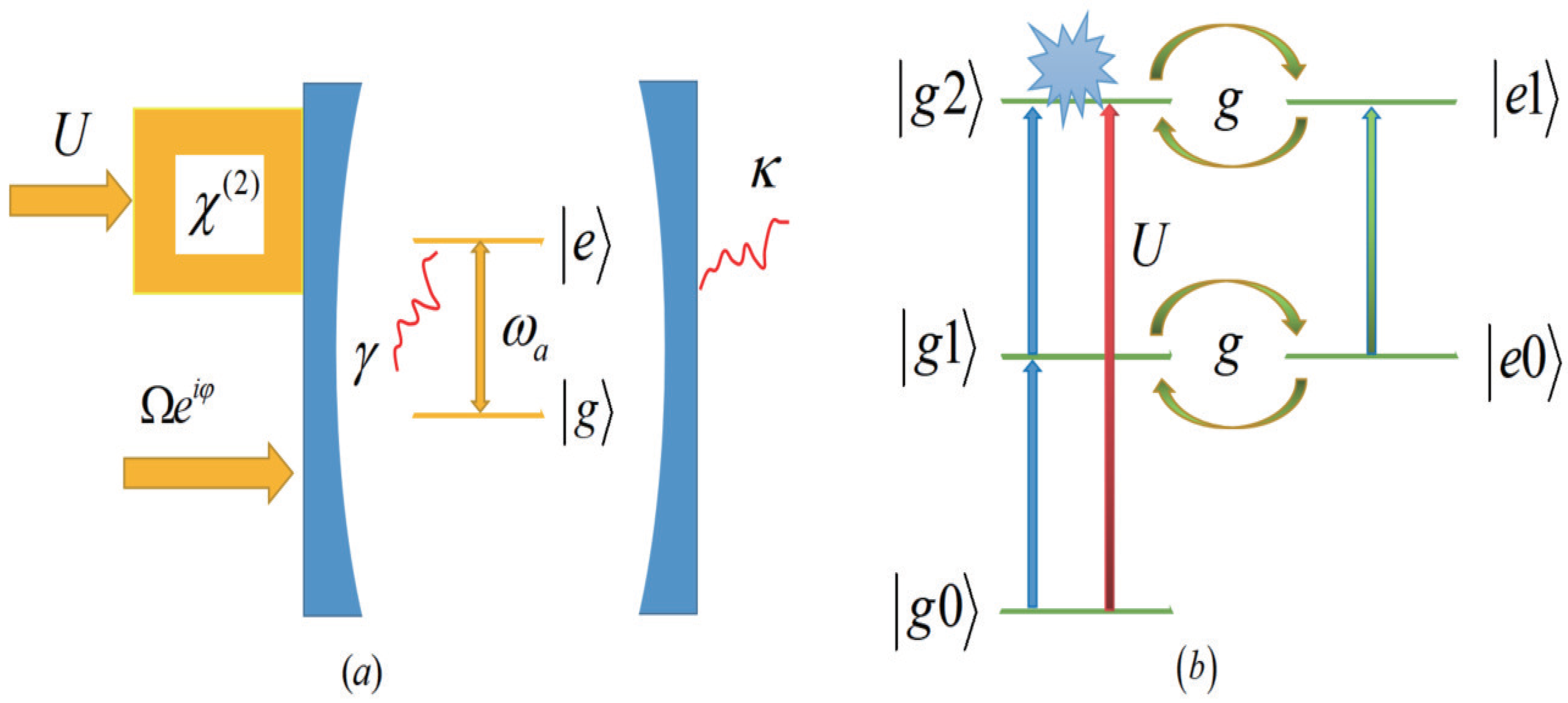
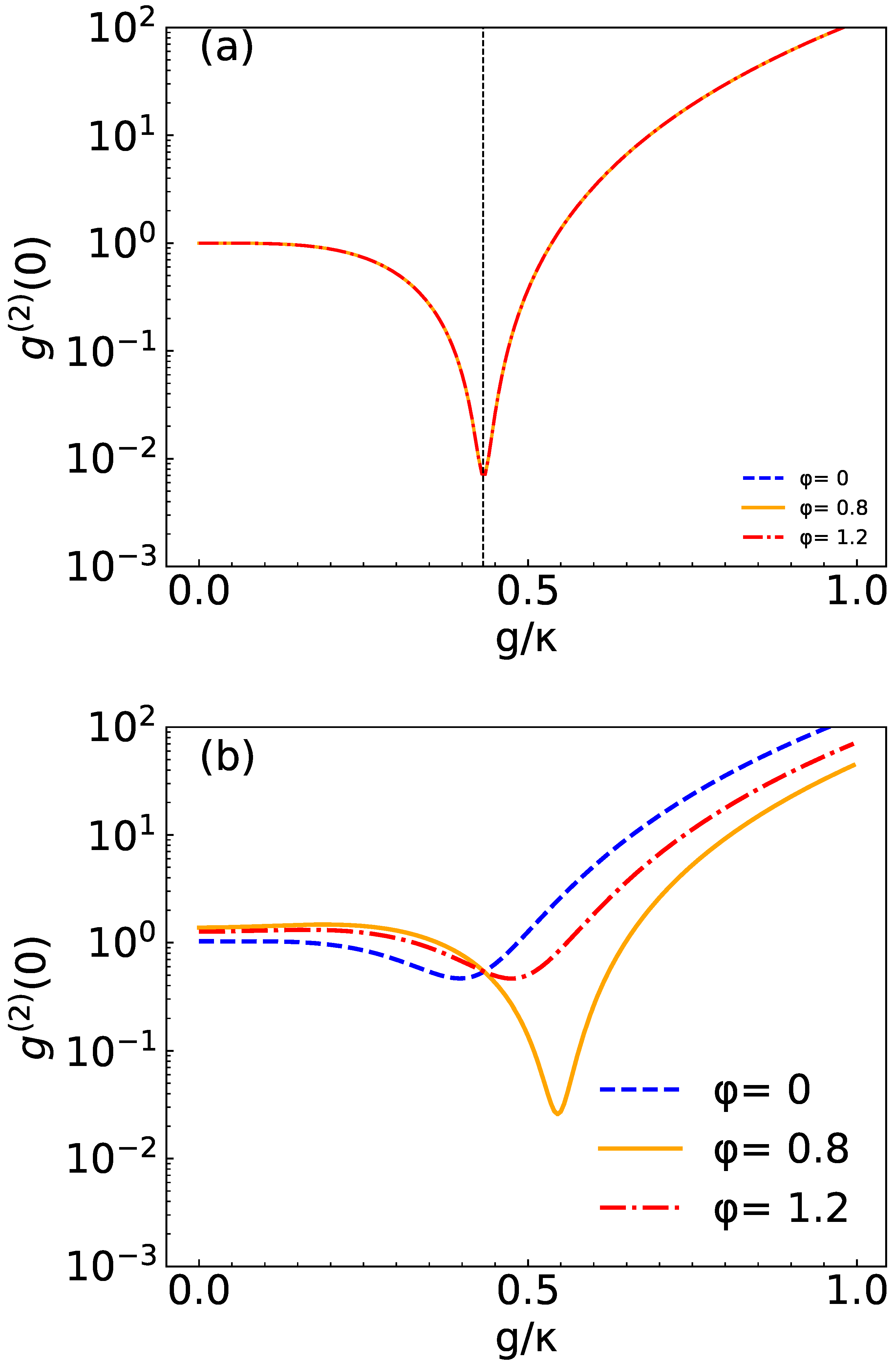
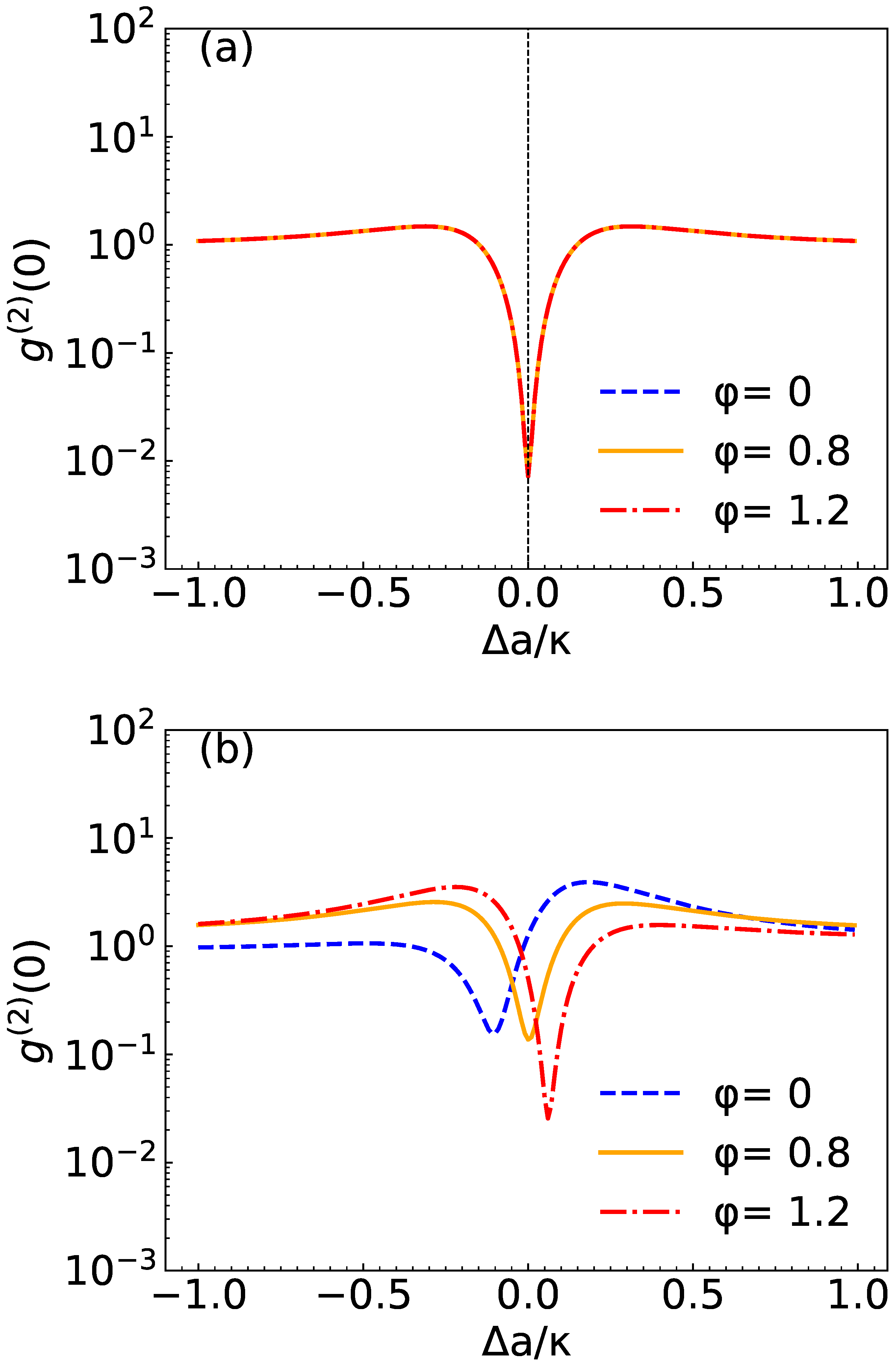
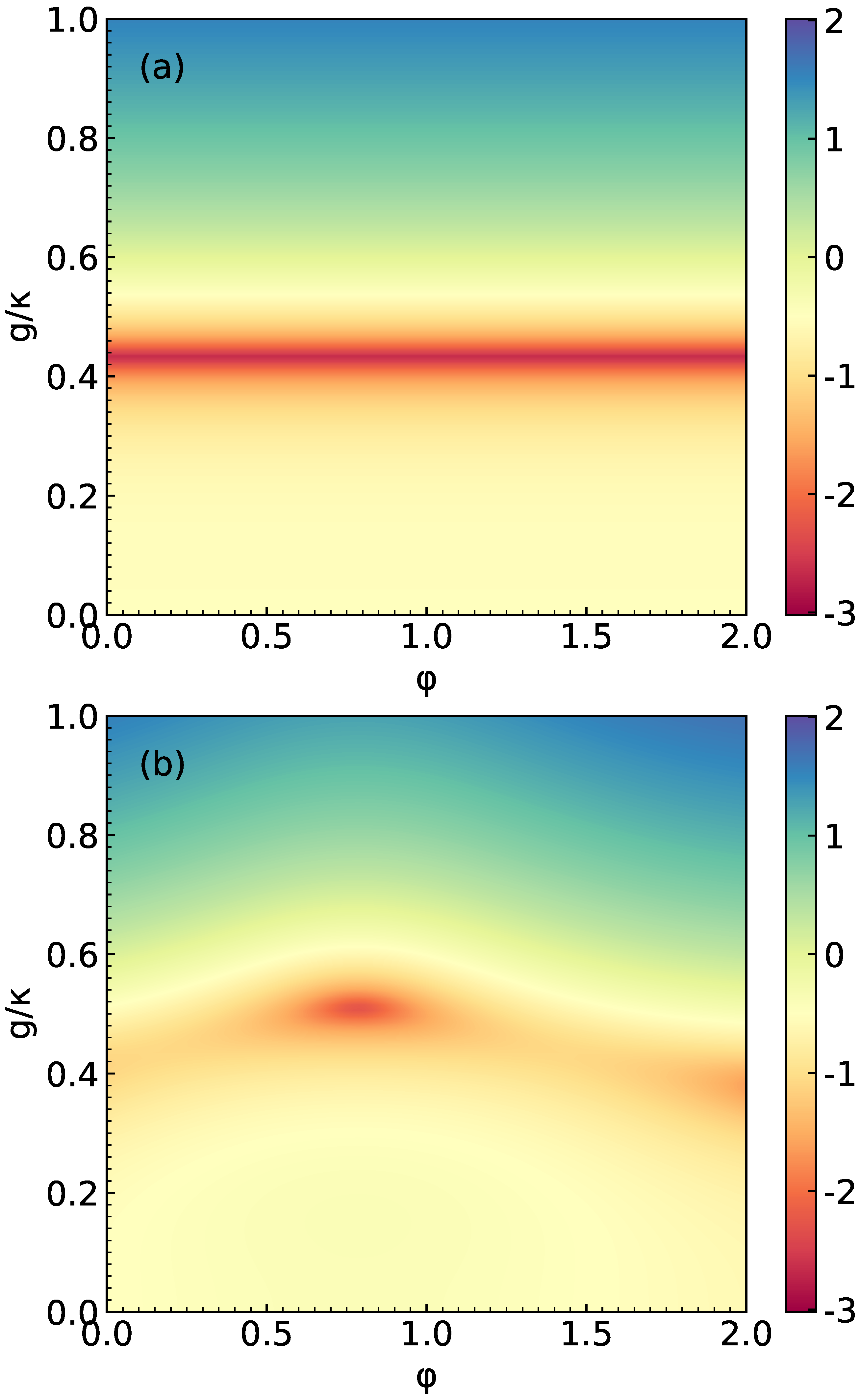
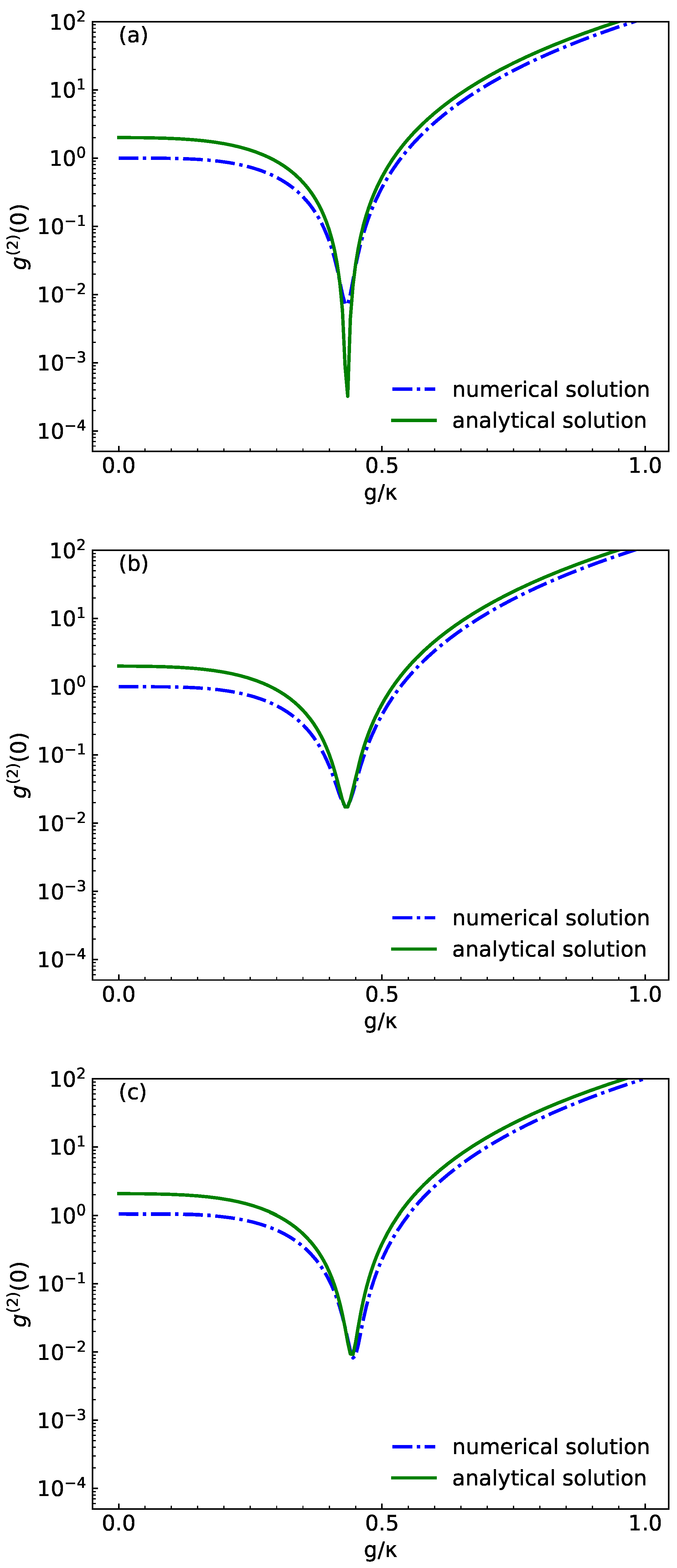
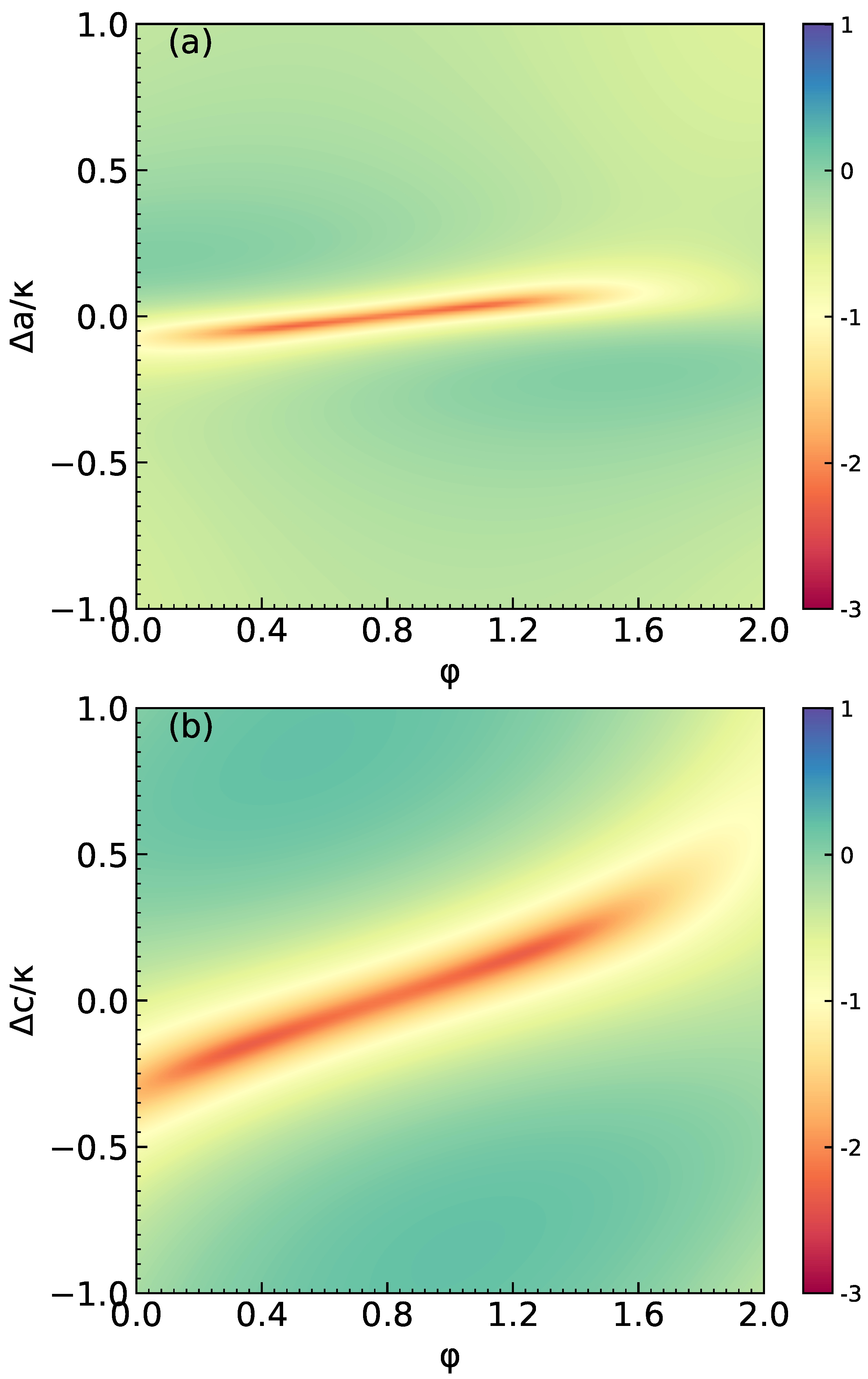
In the past few years, cavity optomechanical systems have received extensive attention and research and have achieved rapid development both theoretically and experimentally. The systems play an important role in many fields, such as quantum information processing, optomechanical storage, high-precision measurement, macroscopic entanglement, ultrasensitive sensors and so on. Photon manipulation has always been one of the key tasks in quantum information science and technology. Photon blockade is an important way to realize single photon sources and plays an important role in the field of quantum information. Due to the nonlinear coupling of the optical force system, the energy level is not harmonic, resulting in a photon blockade effect. In this paper, we study the phase-controlled tunable unconventional photon blockade in a single-atom-cavity system, and the second-order nonlinear crystals are attached to the cavity. The cavity interacts with squeezed light, which results in a nonlinear process. The system is driven by a complex pulsed laser, and the strength of the coherent driving contains the phase. We want to study the effect of squeezed light and phase. We use the second-order correlation function to numerically and theoretically analyze the photon blockade effect. We show that quantum interference of two-photon excitation between three different transition pathways can cause a photon blockade effect. When there is no squeezed light, the interference pathways becomes two, but there are still photon blockade effects. We explore the influence of the tunable phase and second-order nonlinear strength on the photon blockade effect. We calculate the correlation function and compare the numerical results with the analytical results under certain parameters and find that the agreement is better.
Keywords: phase; photon blockade; second-order correlation function; single-atom-cavity system phase; photon blockade; second-order correlation function; single-atom-cavity system