Article

Topological and Mechanical Properties of Different Lattice Structures Based on Additive Manufacturing
1
School of Mechanical and Power Engineering, Harbin University of Science and Technology, 52 Xuefu Road, Nangang District, Harbin 150000, China
2
Harbin Shipbuilding Boiler and Turbine Research Institute, 35 Honghu Road, Daoli District, Harbin 150010, China
3
School of Mechatronics Engineering, Harbin Institute of Technology, 92 West Dazhi Street, Nangang District, Harbin 150000, China
*
Author to whom correspondence should be addressed.
Micromachines 2022, 13(7), 1017; https://doi.org/10.3390/mi13071017
Submission received: 15 June 2022 / Revised: 23 June 2022 / Accepted: 25 June 2022 / Published: 27 June 2022

Abstract

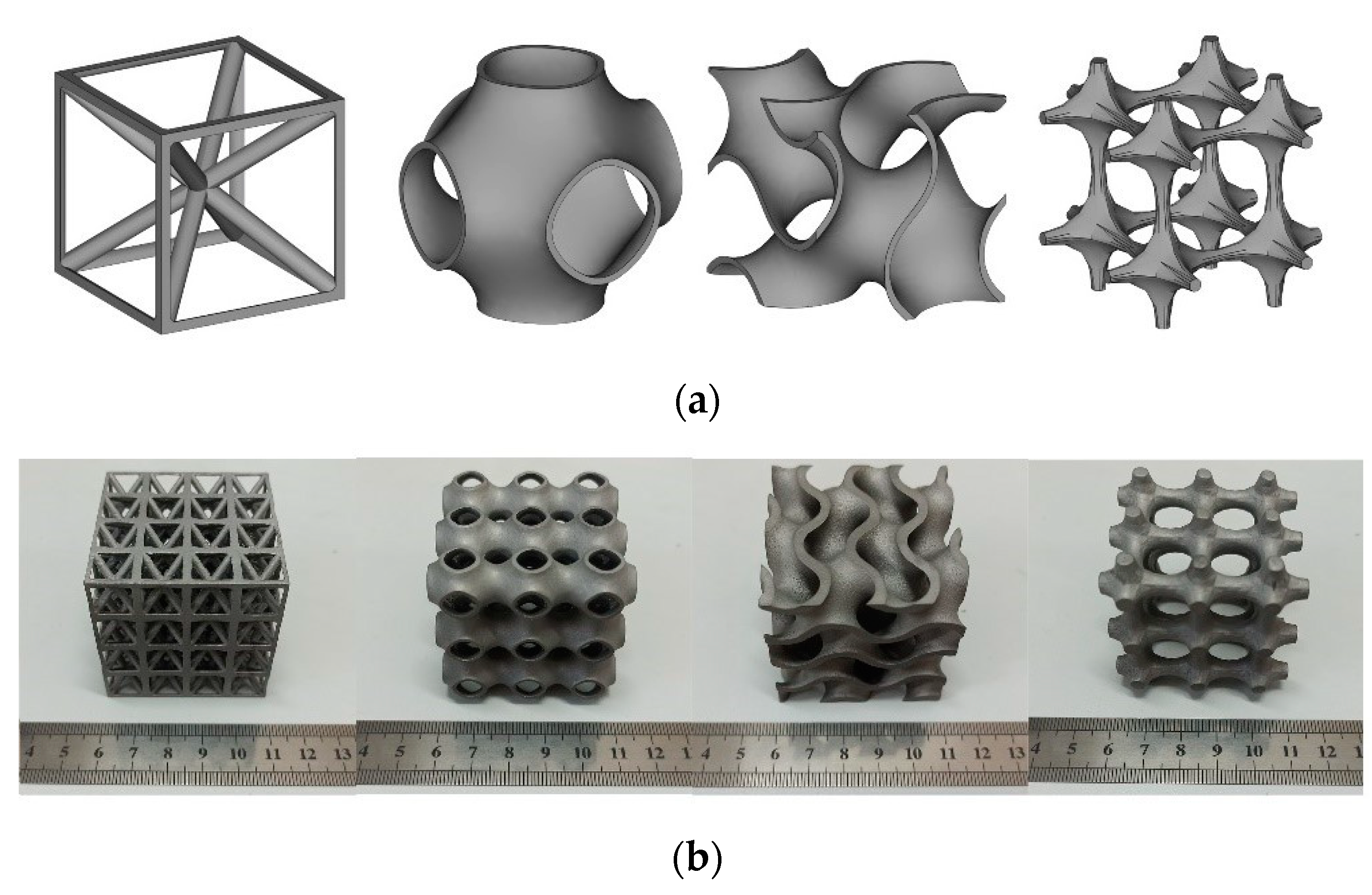
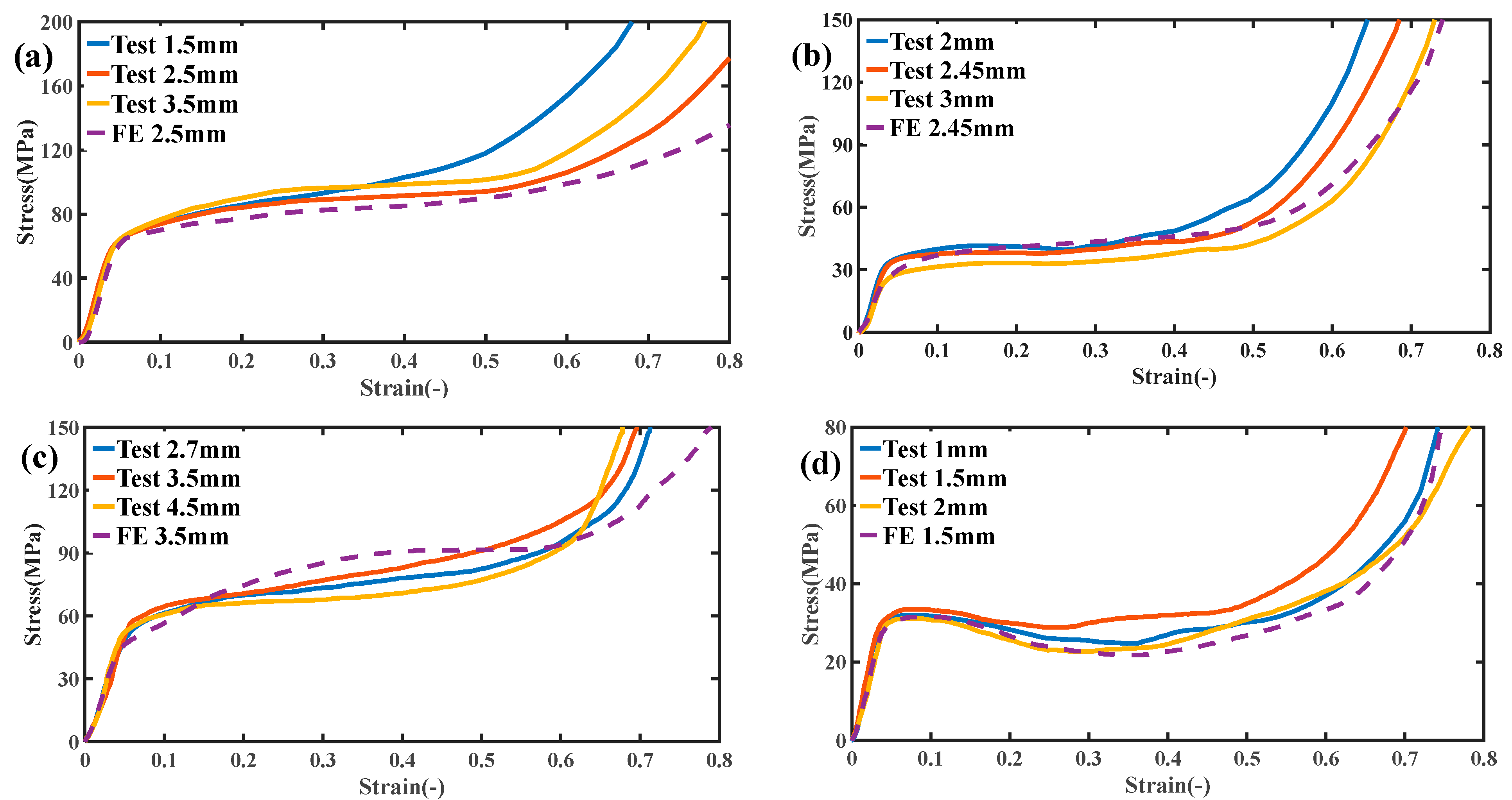
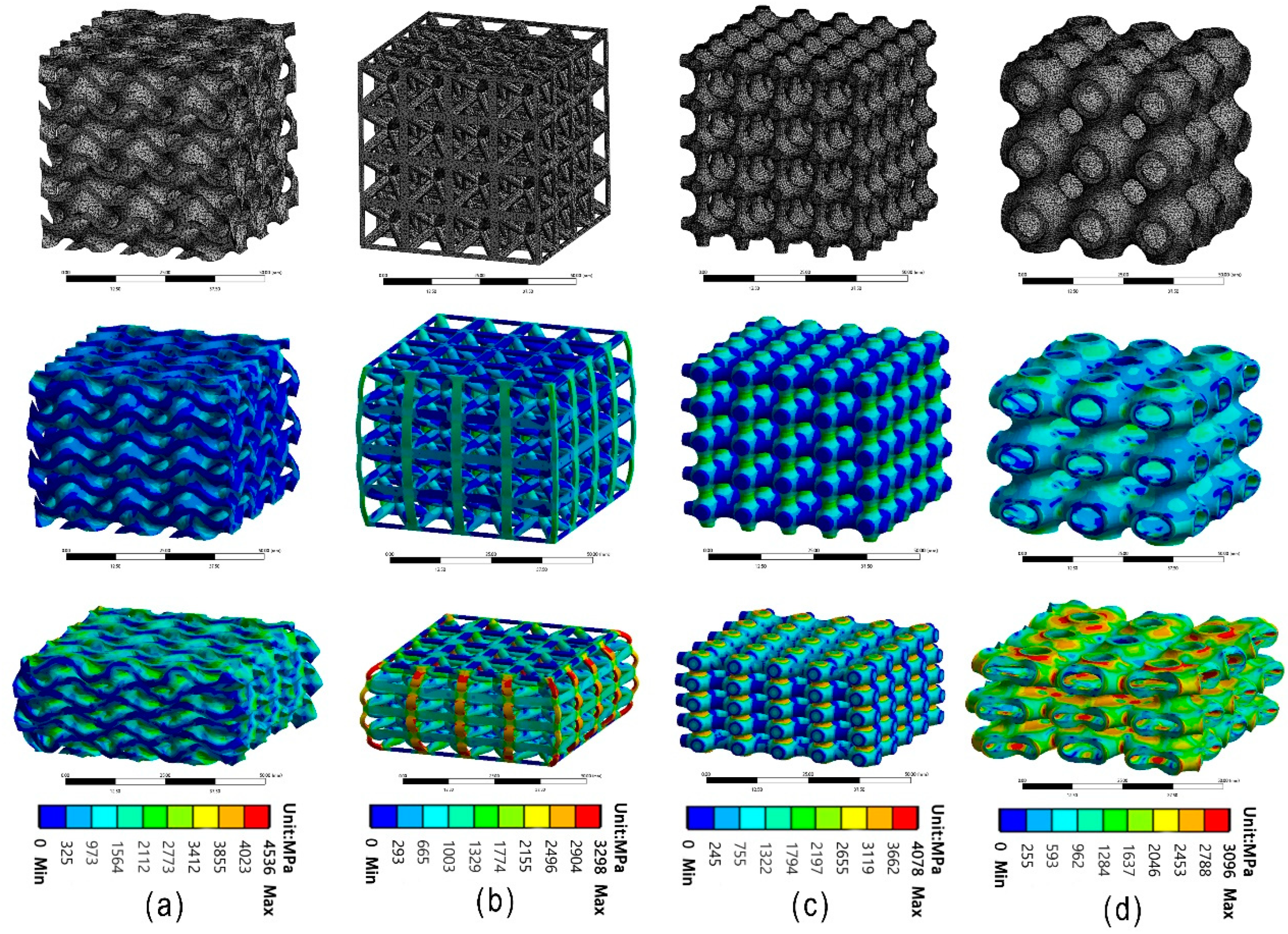
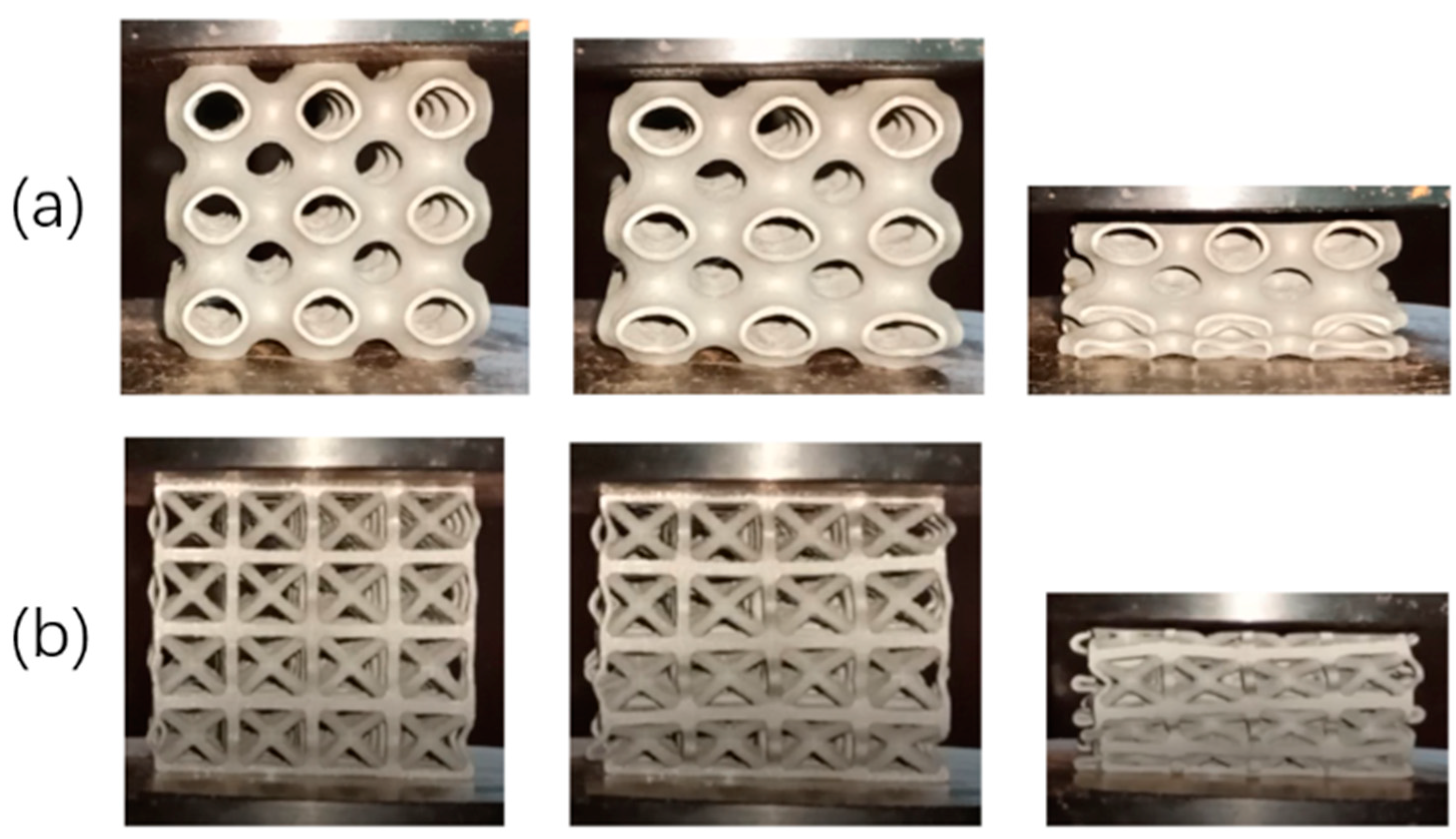
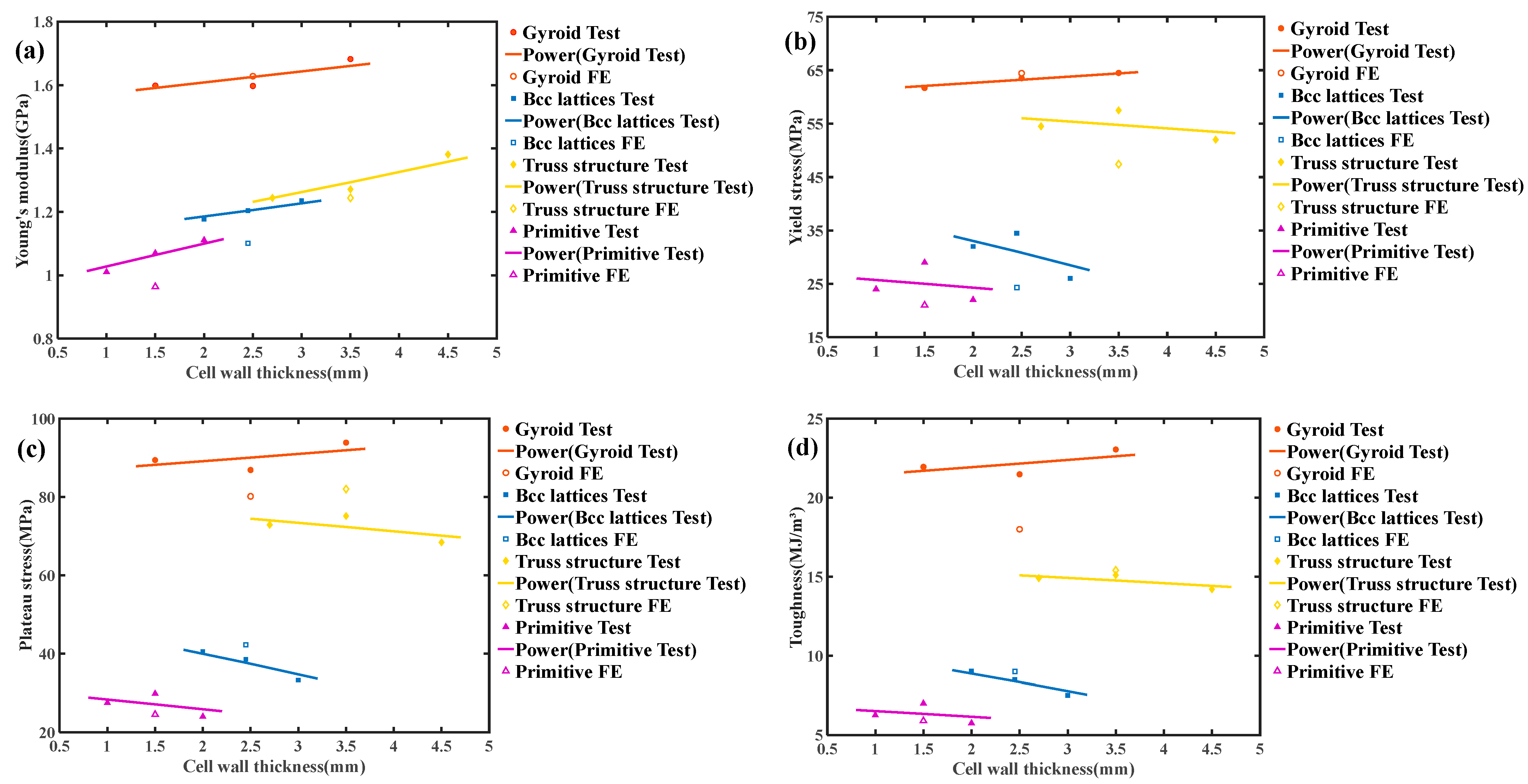
The appearance and development of additive manufacturing technology promotes the production and manufacture of parts with more complex designs and smaller sizes and realizes the complex topology that cannot be made by equal-material manufacturing and submanufacturing. Nowadays, the application of tri-periodic minimal surface (TPMS) in topology optimization design has become a new choice, and, because of its excellent structure and properties, has gradually become mainstream. In this paper, the mechanical properties of four different topologies prepared by selective laser melting (SLM) using 316L stainless steel powder were investigated, including two TPMS sheet structures (Primitive surface, Gyroid surface) and two common lattice structures (Bcc lattice, truss lattice). The mechanical properties (Young’s modulus, yield stress, plateau stress, and toughness) were compared by numerical simulation and compression experiment. It can be concluded from the results that the mechanical properties and deformation mechanism of the specimen are mainly related to the type of lattice, though have little relationship with unit thickness at the same relative density. The Gyroid curved structure showed the best mechanical properties and energy absorption capacity, followed by the truss lattice structure. By comparison, the mechanical properties of the traditional Bcc lattice structure and the Primitive surface structure are poor, and the deformation mechanism of these two structures is uncertain and difficult to control.
Keywords: additive manufacturing; numerical simulation; compression experiment; selective laser melting; triply periodic minimal surface (TPMS) additive manufacturing; numerical simulation; compression experiment; selective laser melting; triply periodic minimal surface (TPMS)