Micromachining of Transparent Biocompatible Polymers Applied in Medicine Using Bursts of Femtosecond Laser Pulses



Abstract
1. Introduction
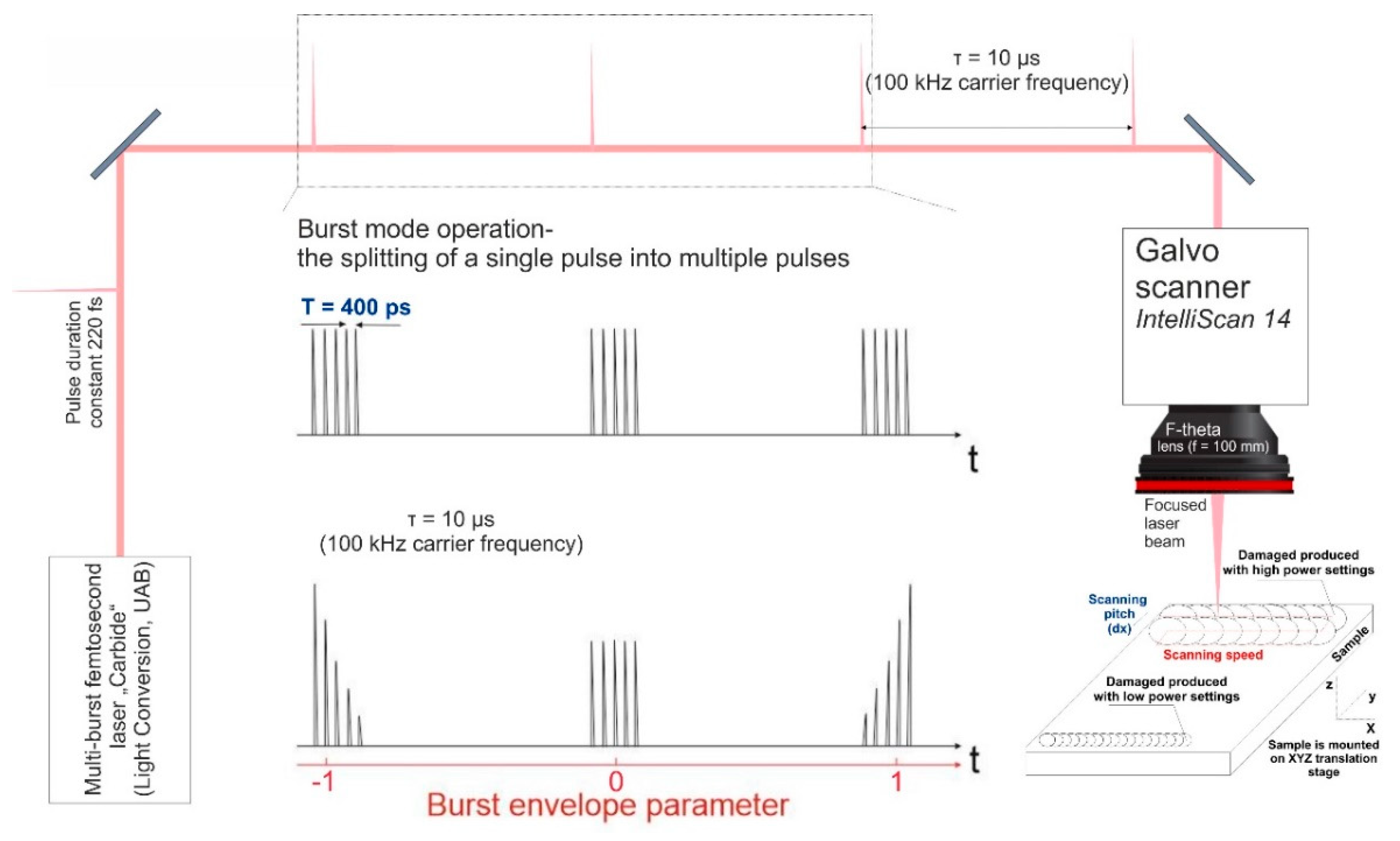
2. Materials and Methods
3. Results and Discussion
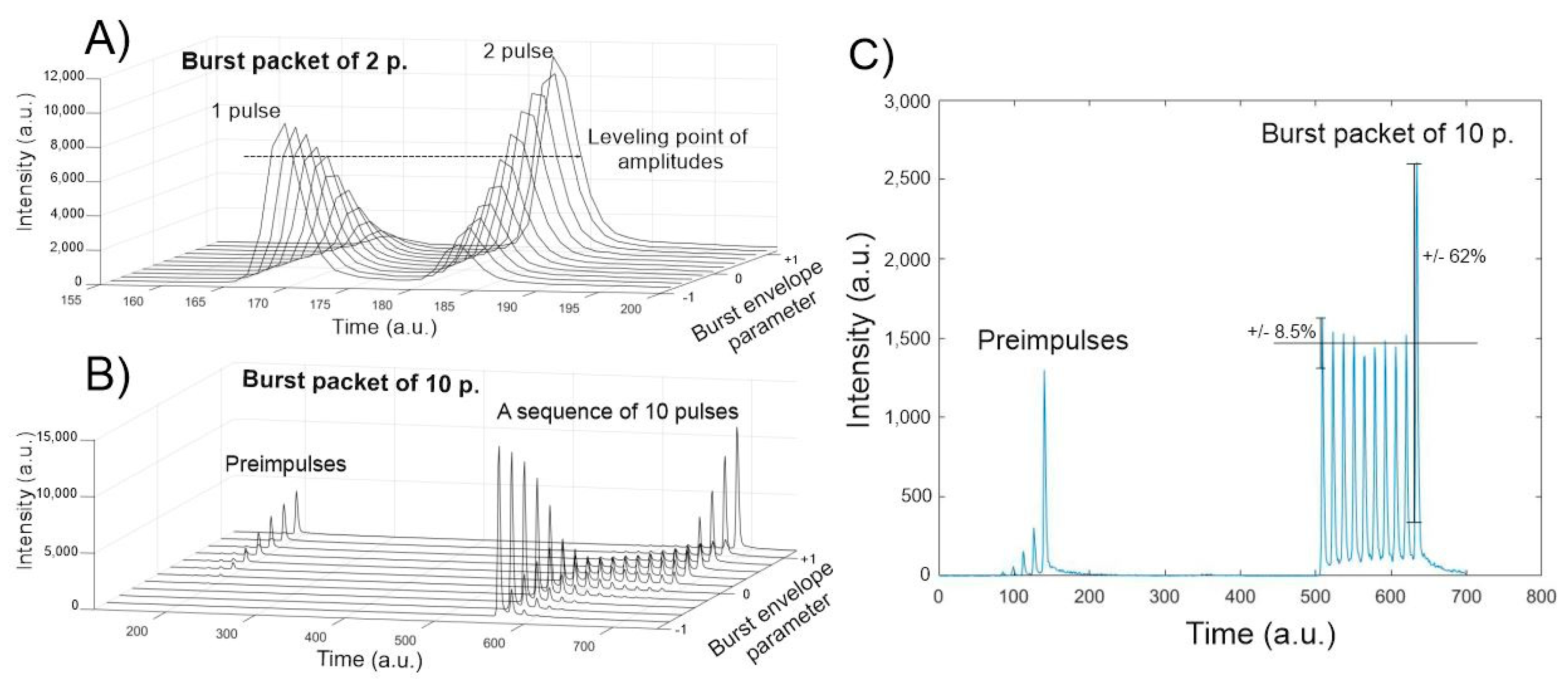
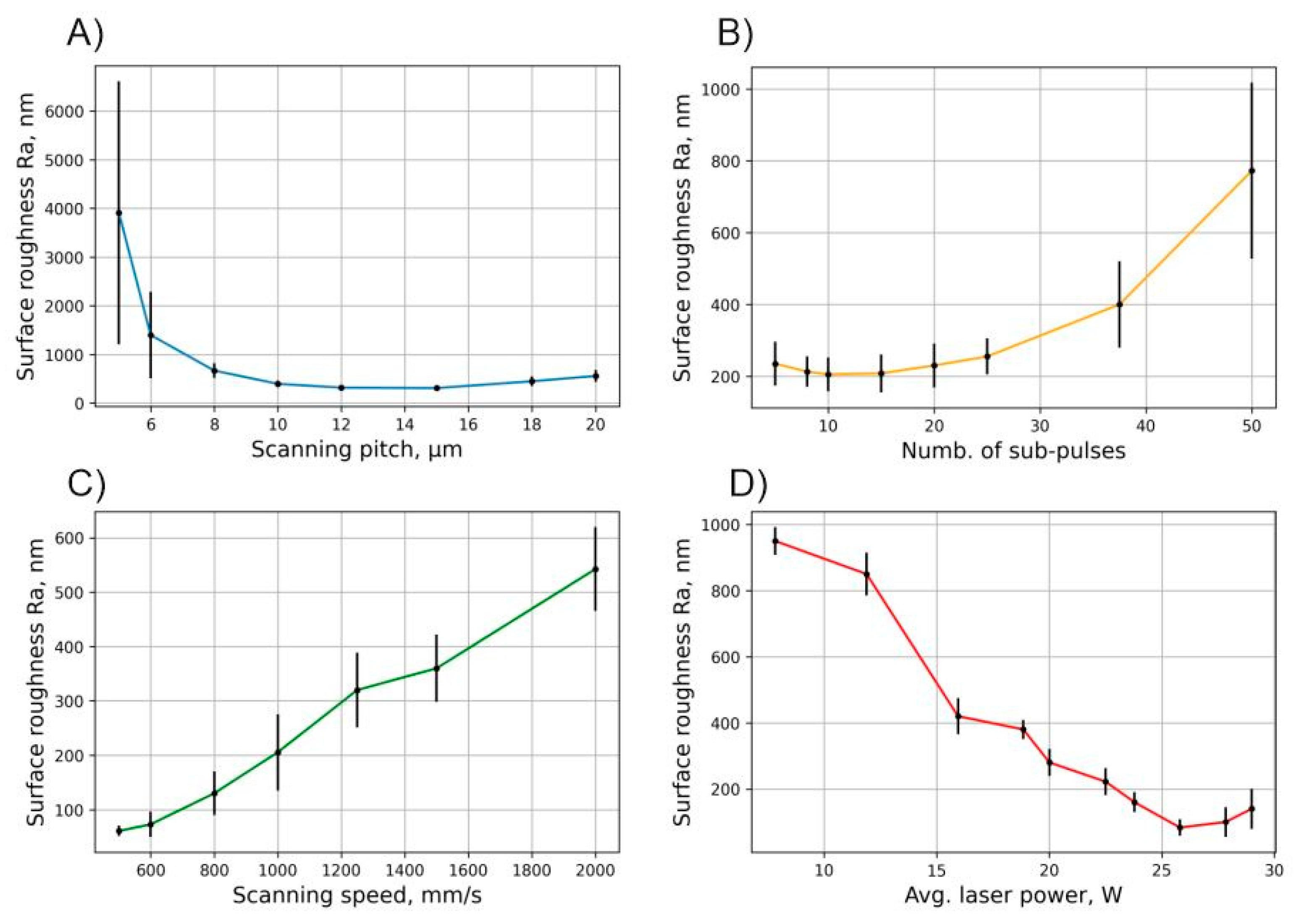
3.1. Burst Investigation Results
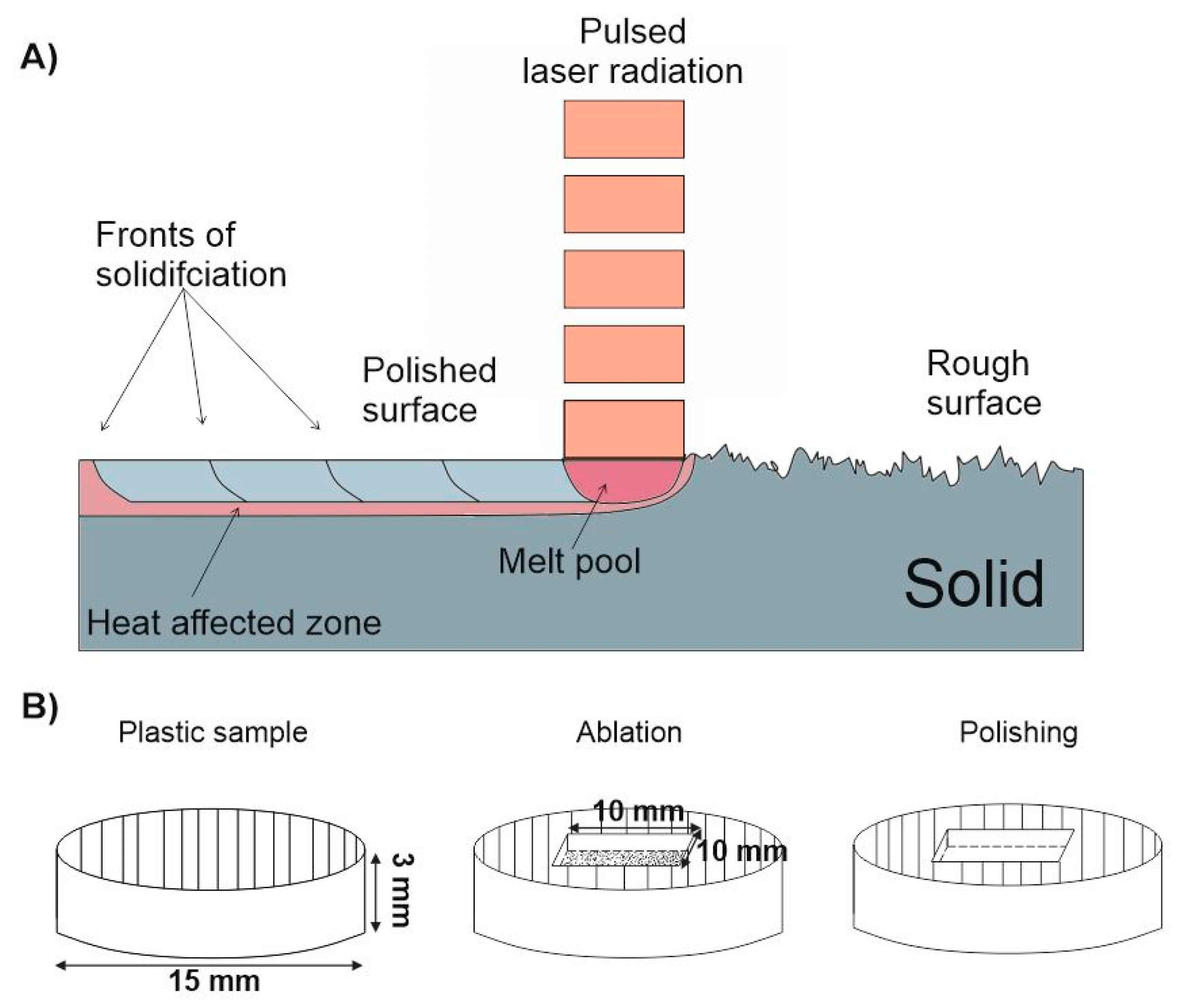
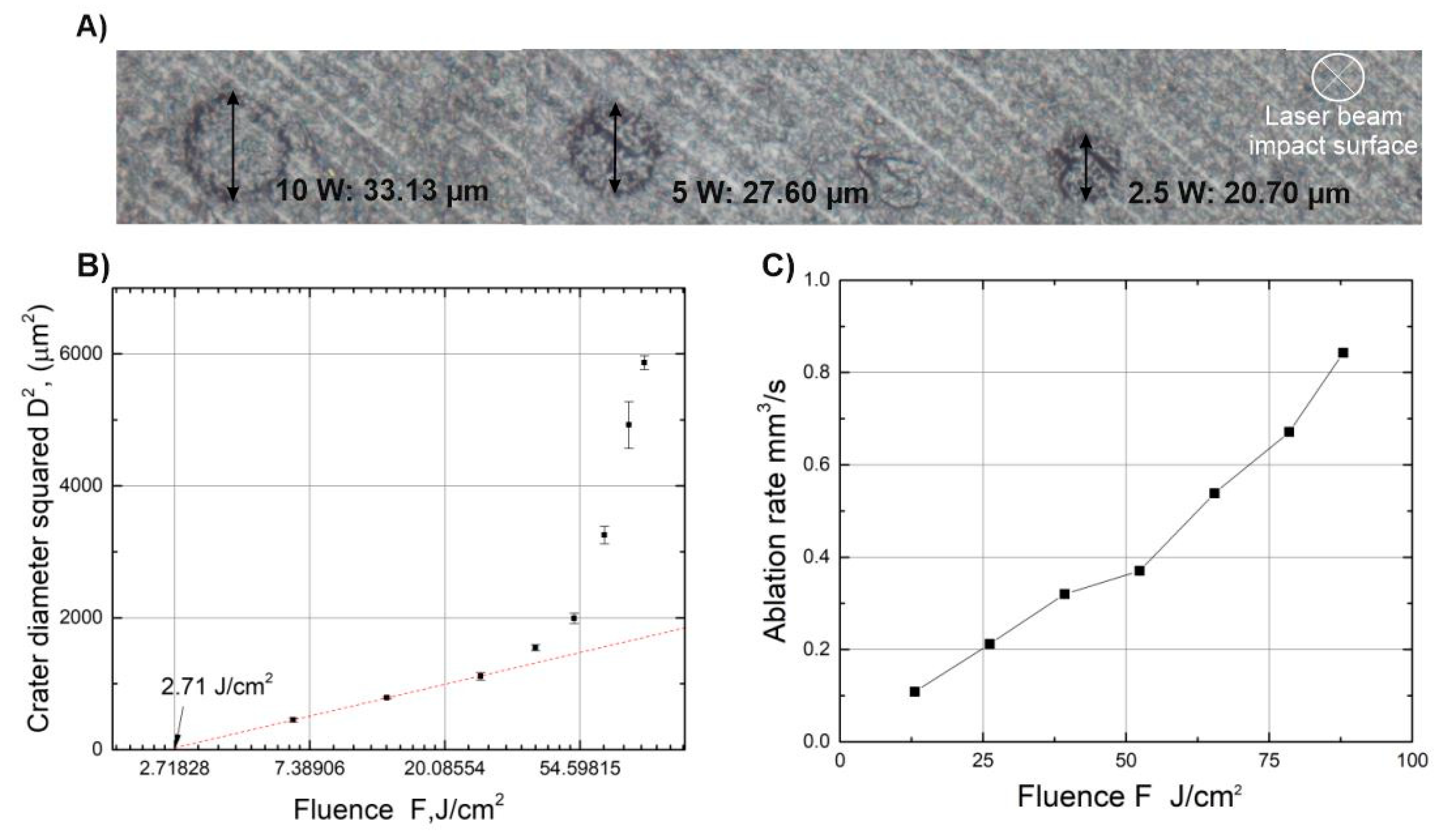
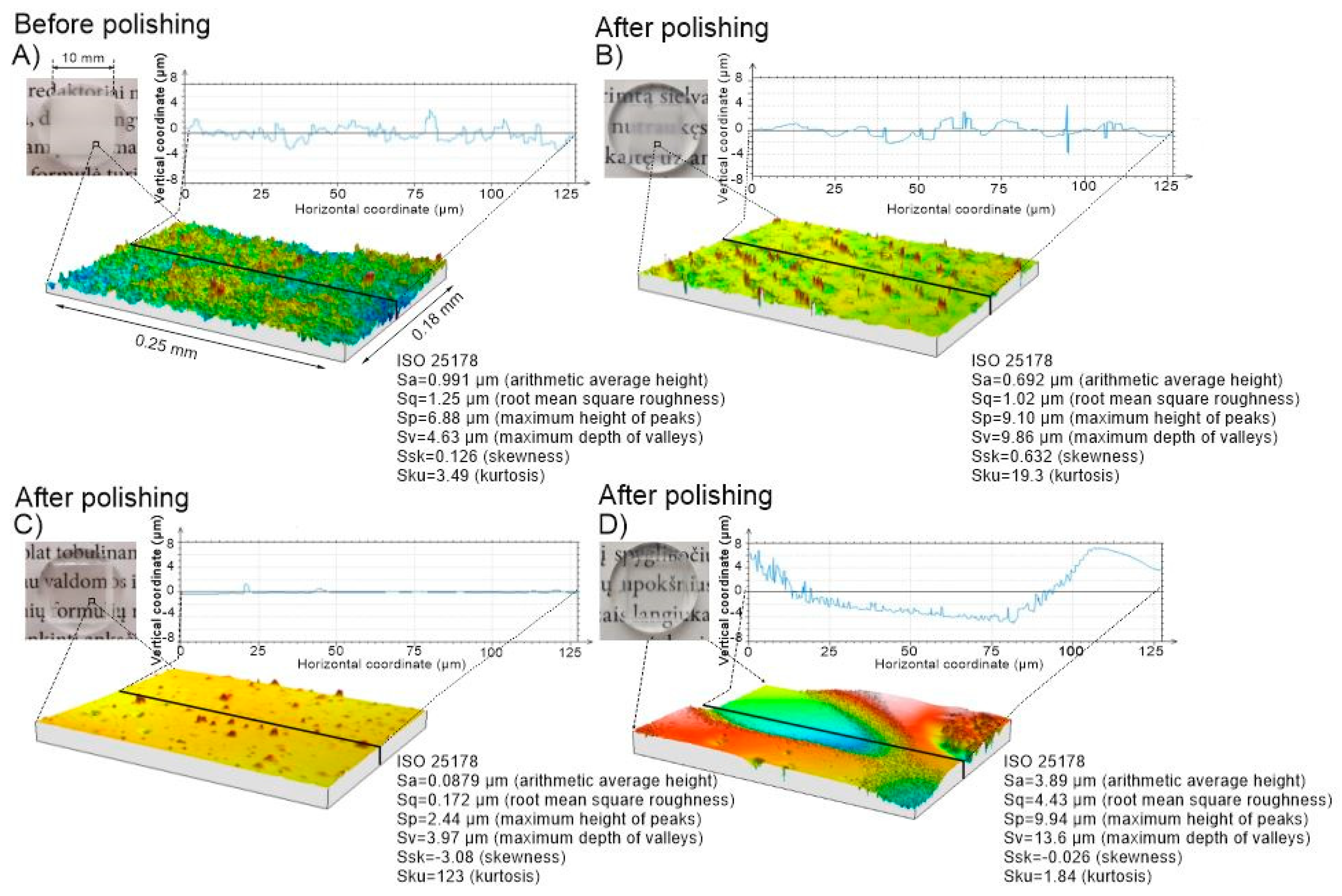
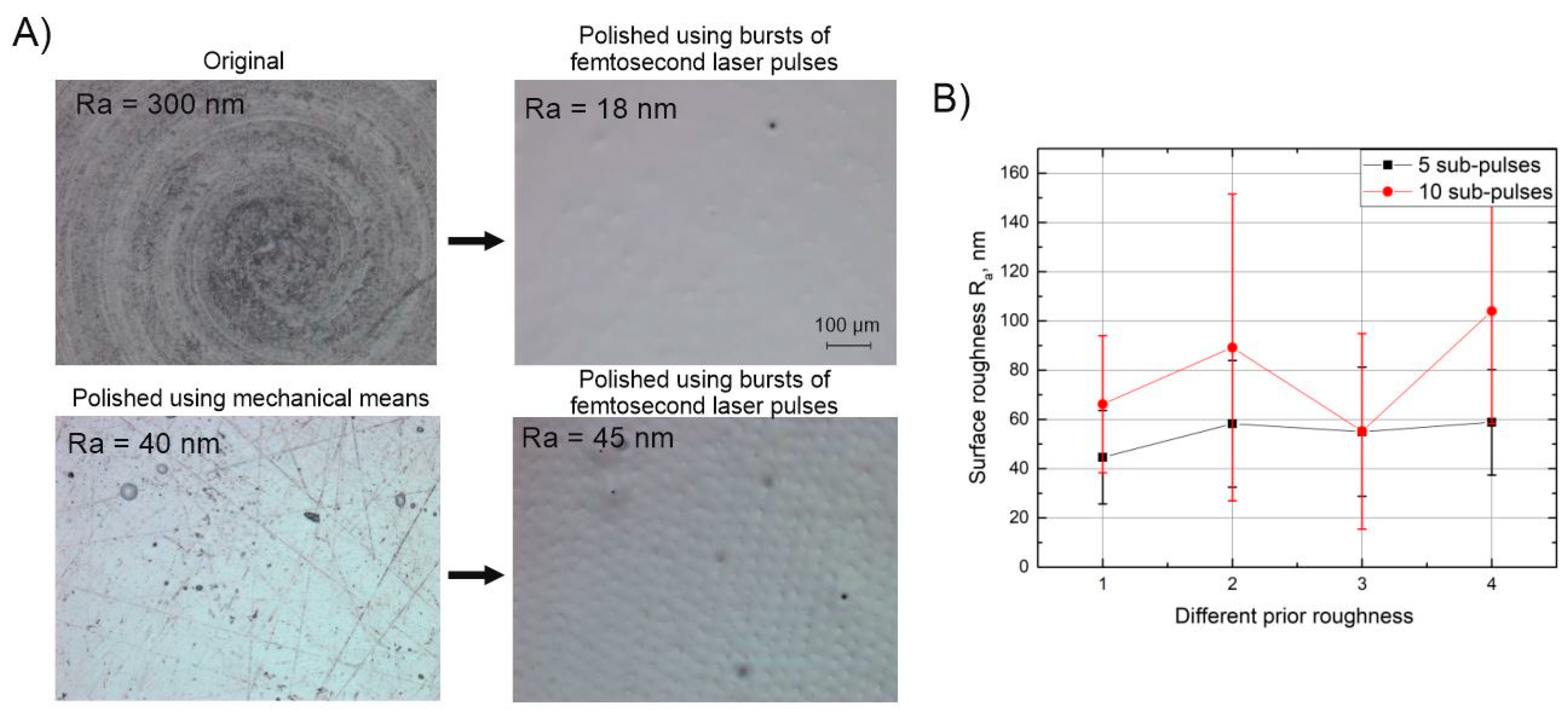
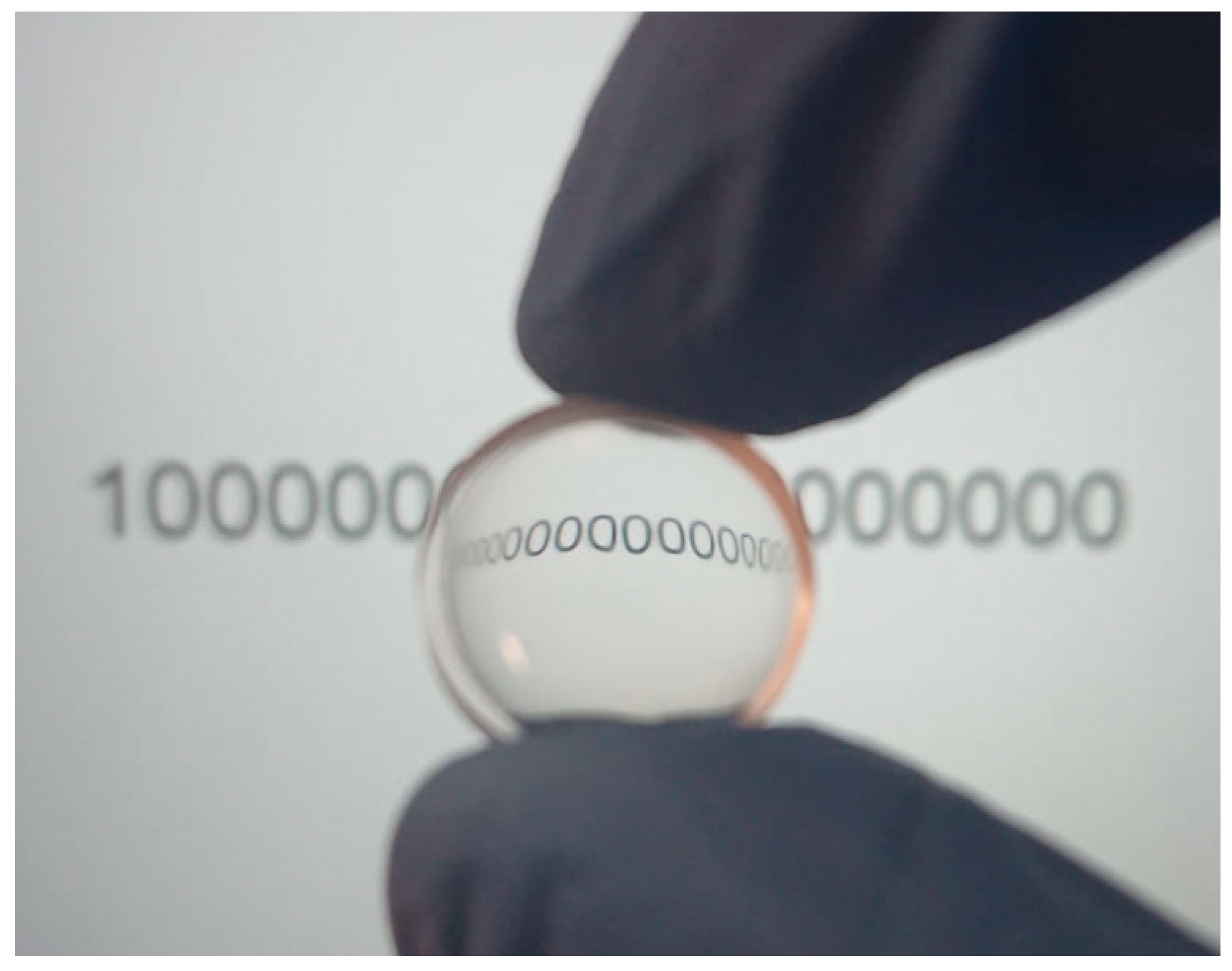
3.2. Plastic Ablation Results and Polishing Capabilities of Bursts of Femtosecond Laser Pulses
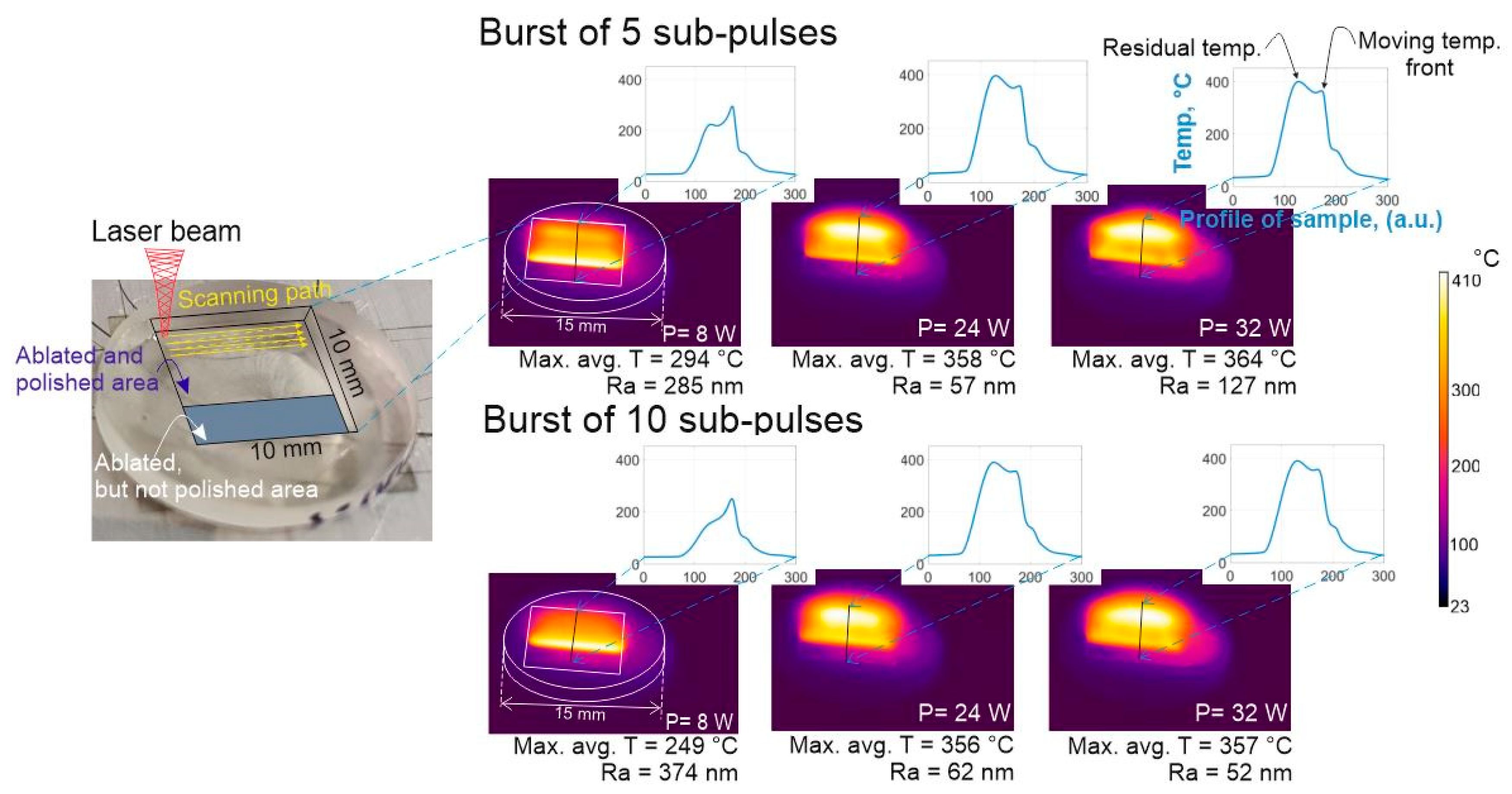
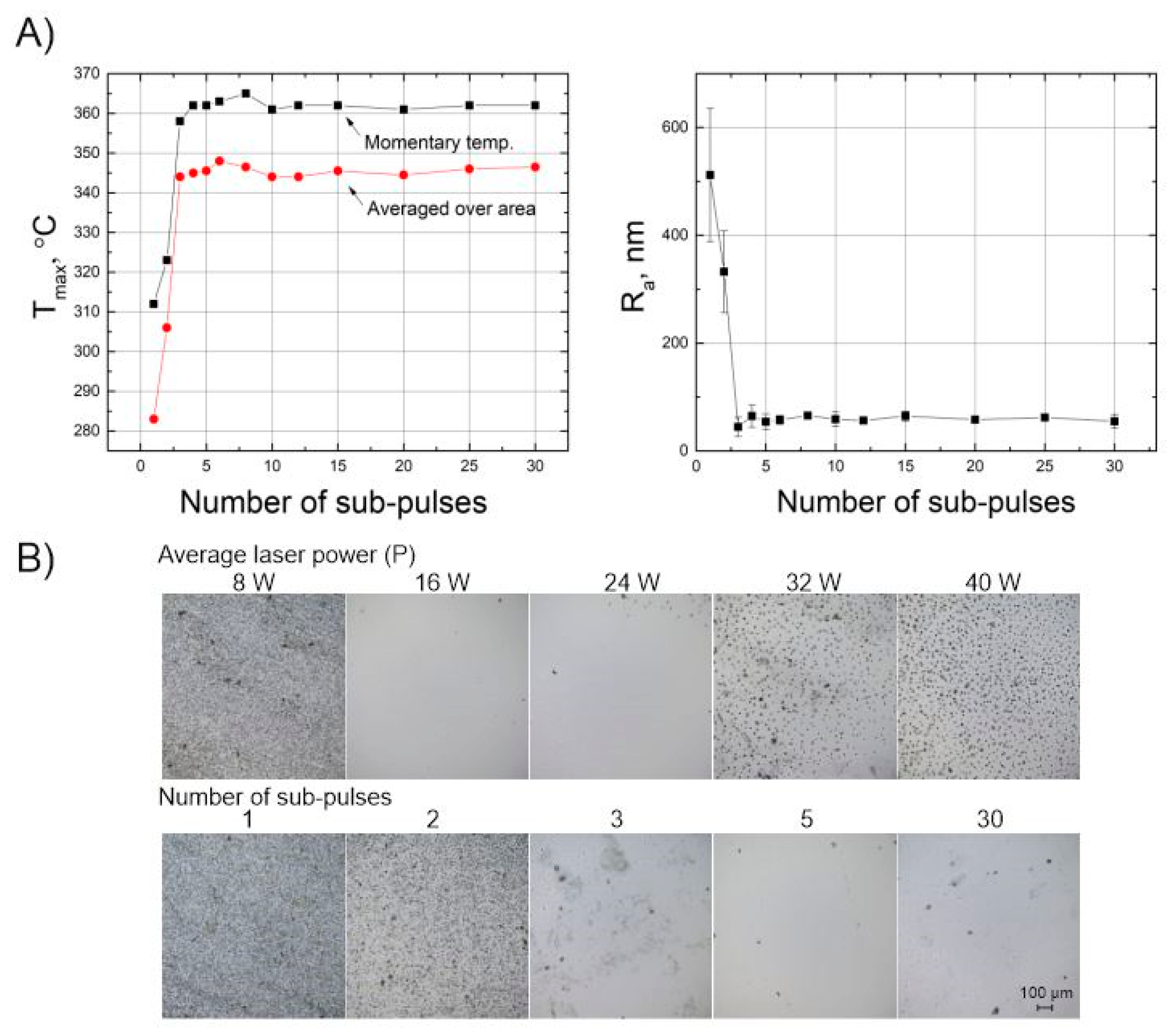
3.3. Investigation of Temperature Relation to Surface Roughness
4. Conclusions
Author Contributions
Funding
Conflicts of Interest
References
- Congdon, N. Prevalence of Cataract and Pseudophakia/Aphakia among Adults in the United States. Arch. Ophthalmol. 2004, 122, 487–494. [Google Scholar] [CrossRef] [Scilit] [PubMed]
- Raport ot the Joint World Health Organization-Brien Holden Vision Institute Global Scientific Meeting on Myopia. Available online: https://www.who.int/blindness/causes/MyopiaReportforWeb.pdf (accessed on 4 December 2020).
- Leonard, P.; Rommel, J. Lens Implantation: Thirty Years of Progress, 1st ed.; Springer: Berlin/Heidelberg, Germany, 1982. [Google Scholar]
- Heberle, J.; Häfner, T.; Schmidt, M. Efficient and damage-free ultrashort pulsed laser cutting of polymer intraocular lens implants. CIRP Ann. 2018. [Google Scholar] [CrossRef] [Scilit]
- Yu, N.; Fang, F.; Wu, B.; Zeng, L.; Cheng, Y. State of the art of intraocular lens manufacturing. Int. J. Adv. Manuf. Technol. 2018. [Google Scholar] [CrossRef] [Scilit]
- Schwertz, K. An Introduction to the Optics Manufacturing Process. OptoMechanics. 2008. Available online: https://wp.optics.arizona.edu/optomech/wp-content/uploads/sites/53/2016/10/Katie_Introduction-to-the-Optics-Manufacturing-Process.pdf (accessed on 4 December 2020).
- Yamakawa, N.; Tanaka, T.; Shigeta, M.; Hamano, M.; Usui, M. Surface roughness of intraocular lenses and inflammatory cell adhesion to lens surfaces. J. Cataract Refract. Surg. 2003. [Google Scholar] [CrossRef] [Scilit]
- Valle, M.; Yamada, A.; James, R. Intraocular Lens Tumbling Rpocess Using Coated Beads. U.S. Patent 5,961,370, 5 October 1999. [Google Scholar]
- Xia, B.; Jiang, L.; Li, X.; Yan, X.; Zhao, W.; Lu, Y. High aspect ratio, high-quality microholes in PMMA: A comparison between femtosecond laser drilling in air and in vacuum. Appl. Phys. A Mater. Sci. Process. 2015. [Google Scholar] [CrossRef] [Scilit]
- Heberle, J.; Klämpfl, F.; Alexeev, I.; Schmidt, M. Ultrafast laser surface structuring of intraocular lens polymers. J. Laser Micro Nanoeng. 2013. [Google Scholar] [CrossRef] [Scilit]
- Tonshoff, H.K.; Ostendorf, A.; Nolte, S.; Korte, F.; Bauer, T. Micro-machining using Femtosecond Lasers. In Proceedings of the First International Symposium on Laser Precision Microfabrication, Saitama, Japan, 14–16 June 2000; Volume 4088, pp. 136–139. [Google Scholar]
- Bauer, S.; Schmuki, P.; von der Mark, K.; Park, J. Engineering biocompatible implant surfaces: Part I: Materials and surfaces. Prog. Mater. Sci. 2013, 58, 261–326. [Google Scholar] [CrossRef] [Scilit]
- Louropoulou, A.; Slot, D.E.; Van der Weijden, F. Influence of mechanical instruments on the biocompatibility of titanium dental implants surfaces: A systematic review. Clin. Oral Implant. Res. 2015. [Google Scholar] [CrossRef] [Scilit]
- Boswald, M.; Girisch, M.; Greil, J.; Spies, T.; Stehr, K.; Krall, T.; Guggenbichler, J.P. Antimicrobial activity and biocompatibility of polyurethane and silicone catheters containing low concentrations of Silver: A new perspective in prevention of polymer-associated foreign-body-infections. Zent. Bakteriol. 1995. [Google Scholar] [CrossRef] [Scilit]
- Mukherjee, R.; Chaudhury, K.; Das, S.; Sengupta, S.; Biswas, P. Posterior capsular opacification and intraocular lens surface micro-roughness characteristics: An atomic force microscopy study. Micron 2012. [Google Scholar] [CrossRef] [Scilit] [PubMed]
- Hendow, S.; Kosa, N. Bursting improves laser material processing. SPIE Newsroom 2014. [Google Scholar] [CrossRef] [Scilit]
- Gaudiuso, C.; Kämmer, H.; Dreisow, F.; Ancona, A.; Tünnermann, A.; Nolte, S. Ablation of silicon with bursts of femtosecond laser pulses. In Proceedings of the Photonics West 2016—Frontiers in Ultrafast Optics: Biomedical, Scientific, and Industrial Applications XVI, San Francisco, CA, USA, 9 March 2016; Volume 9740. [Google Scholar]
- Kerse, C.; Kalaycloĝ Lu, H.; Elahi, P.; Çetin, B.; Kesim, D.K.; Akçaalan, Ö.; Yavaş, S.; Aşlk, M.D.; Öktem, B.; Hoogland, H.; et al. Ablation-cooled material removal with ultrafast bursts of pulses. Nature 2016. [Google Scholar] [CrossRef] [Scilit] [PubMed]
- Knappe, R.; Haloui, H.; Seifert, A.; Weis, A.; Nebel, A. Scaling ablation rates for picosecond lasers using burst micromachining. In Proceedings of the SPIE LASE, Laser-based Micro- and Nanopackaging and Assembly IV, San Francisco, CA, USA, 23 February 2010; Volume 7585. [Google Scholar]
- Mayerhofer, R. Ultrashort-pulsed laser material processing with high repetition rate burst pulses. In Proceedings of the SPIE LASE, Laser Applications in Microelectronic and Optoelectronic Manufacturing (LAMOM) XXII, San Francisco, CA, USA, 20 February 2017; Volume 10091. [Google Scholar]
- Butkus, S.; Jukna, V.; Paipulas, D.; Barkauskas, M.; Sirutkaitis, V. Micromachining of invar foils with GHz, MHz and kHz femtosecond burst modes. Micromachines 2020, 11, 733. [Google Scholar] [CrossRef] [Scilit] [PubMed]
- Žemaitis, A.; Gečys, P.; Barkauskas, M.; Račiukaitis, G.; Gedvilas, M. Highly-efficient laser ablation of copper by bursts of ultrashort tuneable (fs-ps) pulses. Sci. Rep. 2019. [Google Scholar] [CrossRef] [Scilit]
- Barkauskas, M.; Neimontas, K.; Butkus, V. Device and Method for Generation of High Repetition Rate Laser Pulse Bursts. U.S. Patent 2020/0067260 A1, 27 February 2020. [Google Scholar]
- Becker, W. Advanced Time-Correlated Single Photon Counting Techniques, 1st ed.; Springer: Berlin/Heidelberg, Germany, 2005. [Google Scholar]
- Bonse, J.; Rudolph, P.; Krüger, J.; Baudach, S.; Kautek, W. Femtosecond pulse laser processing of TiN on silicon. Appl. Surf. Sci. 2000. [Google Scholar] [CrossRef] [Scilit]
- Temmler, A.; Willenborg, E.; Wissenbach, K. Laser Polishing. In Proceedings of the SPIE LASE, Laser Applications in Microelectronic and Optoelectronic Manufacturing (LAMOM) XVII, San Francisco, CA, USA, 15 February 2012; Volume 8243. [Google Scholar]
- Perry, T.L.; Werschmoeller, D.; Li, X.; Pfefferkorn, F.E.; Duffie, N.A. Pulsed laser micro polishing of microfabricated nickel and Ti6Al4V samples. In Proceedings of the ASME International Manufacturing Science and Engineering Conference, MSEC2008, Evanston, IL, USA, 7–10 October 2008. [Google Scholar]
- Temmler, A.; Willenborg, E.; Wissenbach, K. Design surfaces by laser remelting. In Proceedings of the Sixth International WLT Conference on Lasers in Manufacturing, Munich, Germany, 23–26 May 2011. [Google Scholar]
- Nüsser, C.; Wehrmann, I.; Willenborg, E. Influence of intensity distribution and pulse duration on laser micro polishing. In Proceedings of the Sixth International WLT Conference on Lasers in Manufacturing, Munich, Germany, 23–26 May 2011. [Google Scholar]
- Mai, T.A.; Lim, G.C. Micromelting and its effects on surface topography and properties in laser polishing of stainless steel. J. Laser Appl. 2004. [Google Scholar] [CrossRef] [Scilit]
- Temmler, A.; Graichen, K.; Donath, J. Laser Polishing in Medical Engineering. Laser Tech. J. 2010. [Google Scholar] [CrossRef] [Scilit]
- Reeber, R.R. Surface Engineering of Structural Ceramics. J. Am. Ceram. Soc. 1993. [Google Scholar] [CrossRef] [Scilit]
- Bereznai, M.; Pelsöczi, I.; Tóth, Z.; Turzó, K.; Radnai, M.; Bor, Z.; Fazekas, A. Surface modifications induced by ns and sub-ps excimer laser pulses on titanium implant material. Biomaterials 2003. [Google Scholar] [CrossRef] [Scilit]
- Gadelmawla, E.S.; Koura, M.M.; Maksoud, T.M.A.; Elewa, I.M.; Soliman, H.H. Roughness parameters. J. Mater. Process. Technol. 2002. [Google Scholar] [CrossRef] [Scilit]
- Nam, J.R.; Kim, C.H.; Jeoung, S.C.; Lim, K.S.; Kim, H.M.; Jeon, S.J.; Cho, B.R. Measurement of two-photon absorption coefficient of dye molecules doped in polymer thin films based on ultrafast laser ablation. Chem. Phys. Lett. 2006. [Google Scholar] [CrossRef] [Scilit]
- Baudach, S.; Bonse, J.; Krüger, J.; Kautek, W. Ultrashort pulse laser ablation of polycarbonate and polymethylmethacrylate. Appl. Surf. Sci. 2000. [Google Scholar] [CrossRef] [Scilit]
- Pinel, N.; Bourlier, C.; Saillard, J. Degree of roughness of rough layers: Extensions of the rayleigh roughness criterion and some applications. Prog. Electromagn. Res. B 2010. [Google Scholar] [CrossRef] [Scilit]
- Hernandez-Rueda, J.; Puerto, D.; Siegel, J.; Galvan-Sosa, M.; Solis, J. Plasma dynamics and structural modifications induced by femtosecond laser pulses in quartz. Appl. Surf. Sci. 2012, 258, 9389–9393. [Google Scholar] [CrossRef] [Scilit]
- Metzner, D.; Lickschat, P.; Weißmantel, S. High-quality surface treatment using GHz burst mode with tunable ultrashort pulses. Appl. Surf. Sci. 2020. [Google Scholar] [CrossRef] [Scilit]
- Metzner, D.; Lickschat, P.; Weißmantel, S. Influence of heat accumulation during laser micromachining of CoCrMo alloy with ultrashort pulses in burst mode. Appl. Phys. A Mater. Sci. Process. 2020. [Google Scholar] [CrossRef] [Scilit]
- Pfefferkorn, F.E.; Duffie, N.A.; Li, X.; Vadali, M.; Ma, C. Improving surface finish in pulsed laser micro polishing using thermocapillary flow. CIRP Ann. Manuf. Technol. 2013. [Google Scholar] [CrossRef] [Scilit]
- Huang, Y.; Liu, S.; Yang, W.; Yu, C. Surface roughness analysis and improvement of PMMA-based microfluidic chip chambers by CO 2 laser cutting. Appl. Surf. Sci. 2010. [Google Scholar] [CrossRef] [Scilit]



Publisher’s Note: MDPI stays neutral with regard to jurisdictional claims in published maps and institutional affiliations. |
© 2020 by the authors. Licensee MDPI, Basel, Switzerland. This article is an open access article distributed under the terms and conditions of the Creative Commons Attribution (CC BY) license (http://creativecommons.org/licenses/by/4.0/).
Share and Cite
Kažukauskas, E.; Butkus, S.; Tokarski, P.; Jukna, V.; Barkauskas, M.; Sirutkaitis, V. Micromachining of Transparent Biocompatible Polymers Applied in Medicine Using Bursts of Femtosecond Laser Pulses. Micromachines 2020, 11, 1093. https://doi.org/10.3390/mi11121093
Kažukauskas E, Butkus S, Tokarski P, Jukna V, Barkauskas M, Sirutkaitis V. Micromachining of Transparent Biocompatible Polymers Applied in Medicine Using Bursts of Femtosecond Laser Pulses. Micromachines. 2020; 11(12):1093. https://doi.org/10.3390/mi11121093
Chicago/Turabian StyleKažukauskas, Evaldas, Simas Butkus, Piotr Tokarski, Vytautas Jukna, Martynas Barkauskas, and Valdas Sirutkaitis. 2020. "Micromachining of Transparent Biocompatible Polymers Applied in Medicine Using Bursts of Femtosecond Laser Pulses" Micromachines 11, no. 12: 1093. https://doi.org/10.3390/mi11121093
APA StyleKažukauskas, E., Butkus, S., Tokarski, P., Jukna, V., Barkauskas, M., & Sirutkaitis, V. (2020). Micromachining of Transparent Biocompatible Polymers Applied in Medicine Using Bursts of Femtosecond Laser Pulses. Micromachines, 11(12), 1093. https://doi.org/10.3390/mi11121093