Communication

Sorption of Ochratoxin A from Aqueous Solutions Using β-Cyclodextrin-Polyurethane Polymer


by
Michael Appell
1,* and
Michael A. Jackson
2
1
Bacterial Foodborne Pathogens and Mycology Research Unit, United States Department of Agriculture, Agricultural Research Service, National Center for Agricultural Utilization Research, 1815 N. University St., Peoria, IL 61604, USA
2
Renewable Product Technology Research Unit, United States Department of Agriculture, Agricultural Research Service, National Center for Agricultural Utilization Research, 1815 N. University St., Peoria, IL 61604, USA
*
Author to whom correspondence should be addressed.
Toxins 2012, 4(2), 98-109; https://doi.org/10.3390/toxins4020098
Submission received: 14 November 2011 / Revised: 14 December 2011 / Accepted: 31 January 2012 / Published: 6 February 2012
(This article belongs to the Special Issue Ochratoxins 2011-2012)

Abstract

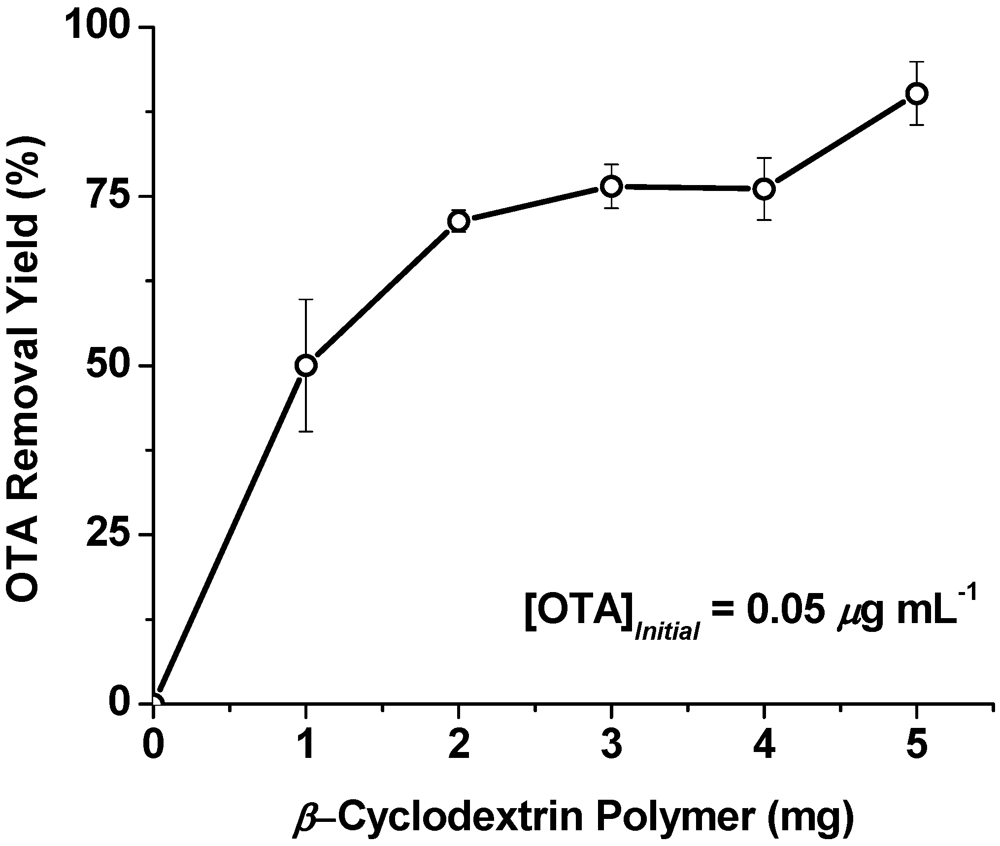
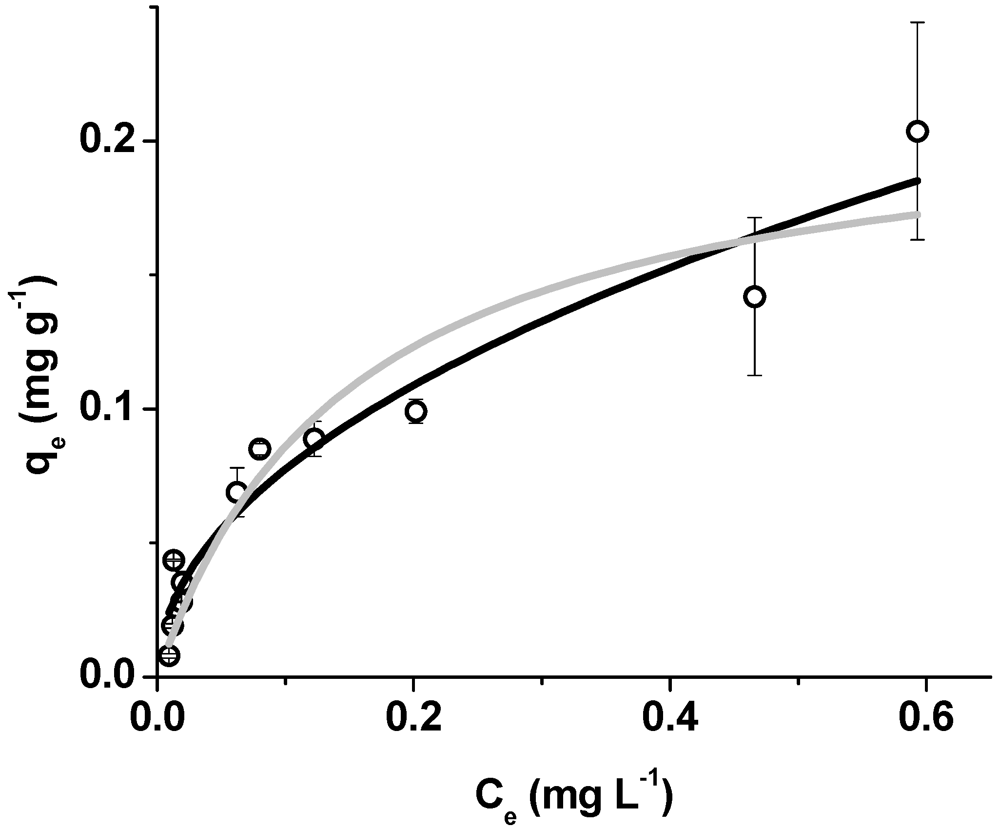
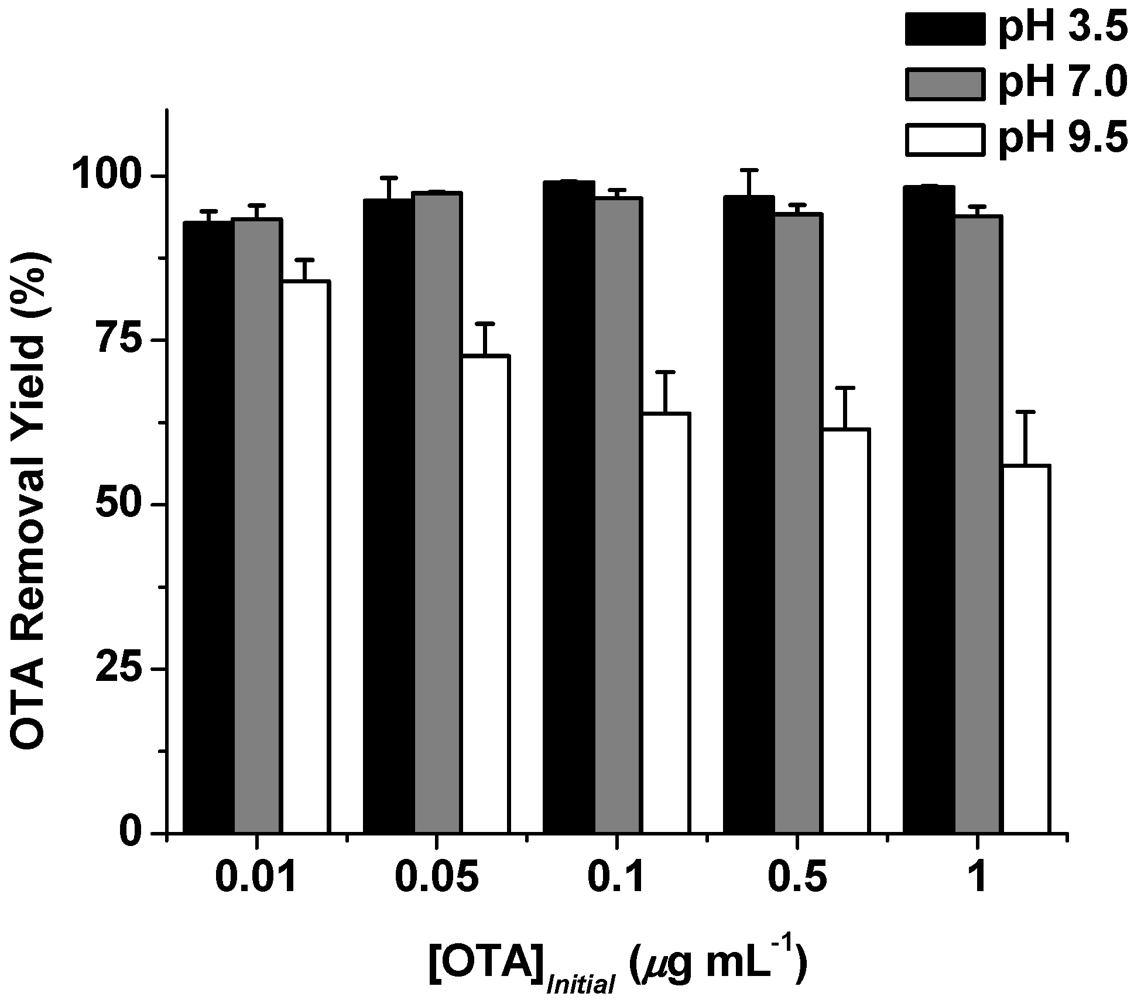
The ability of a cyclodextrin-polyurethane polymer to remove ochratoxin A from aqueous solutions was examined by batch rebinding assays. The results from the aqueous binding studies were fit to two parameter models to gain insight into the interaction of ochratoxin A with the nanosponge material. The ochratoxin A sorption data fit well to the heterogeneous Freundlich isotherm model. The polymer was less effective at binding ochratoxin A in high pH buffer (9.5) under conditions where ochratoxin A exists predominantly in the dianionic state. Batch rebinding assays in red wine indicate the polymer is able to remove significant levels of ochratoxin A from spiked solutions between 1–10 μg·L−1. These results suggest cyclodextrin nanosponge materials are suitable to reduce levels of ochratoxin A from spiked aqueous solutions and red wine samples.
Keywords: ochratoxin A; nanosponge; isotherm analysis; red wine; decontamination ochratoxin A; nanosponge; isotherm analysis; red wine; decontamination