Enhancing Neuronal Networks with Rhinella schneideri Skin Secretion Molecules: Implications for Neurodegenerative Disorders

 ,
,  , and
, and
Abstract
1. Introduction
2. Results
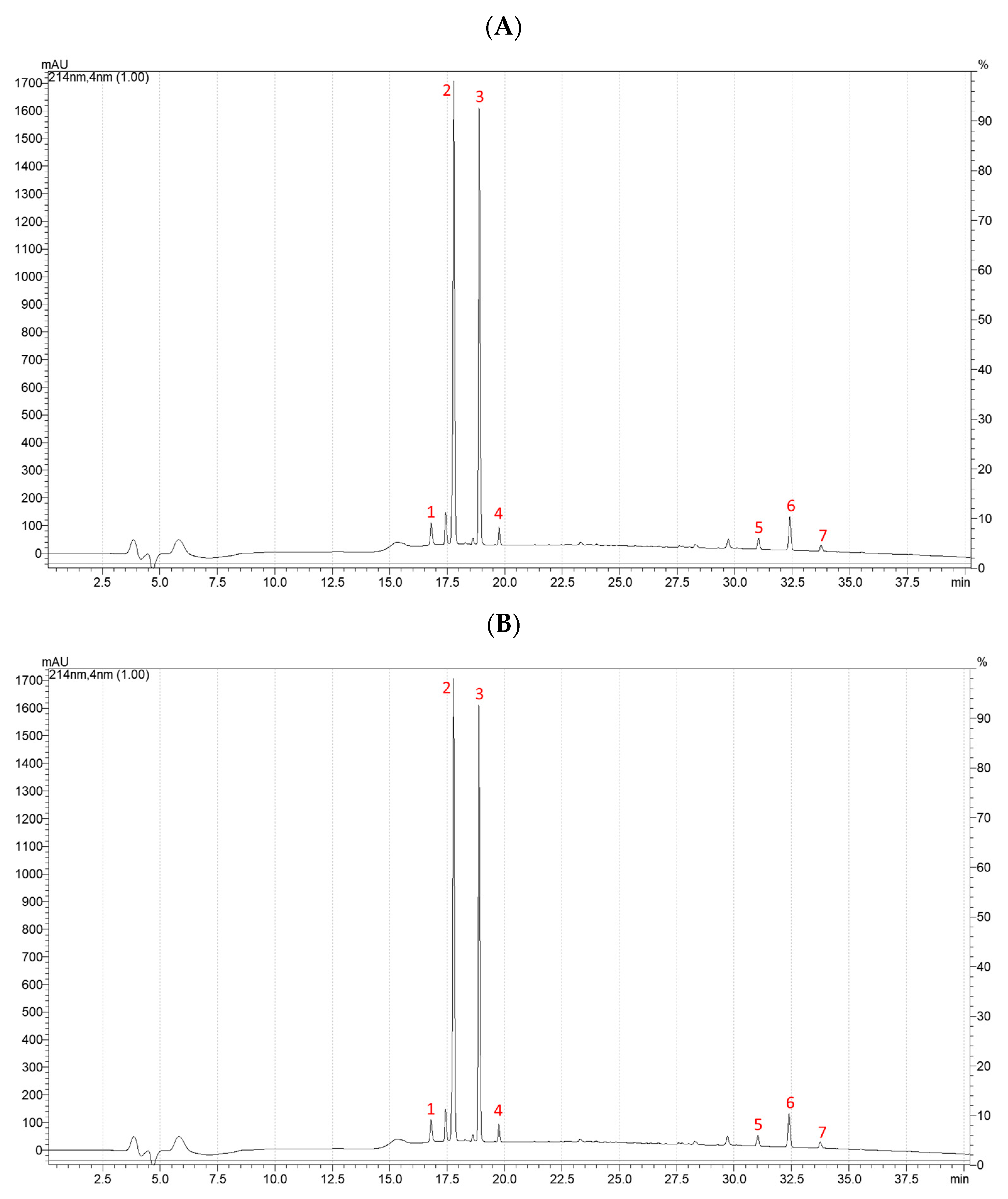
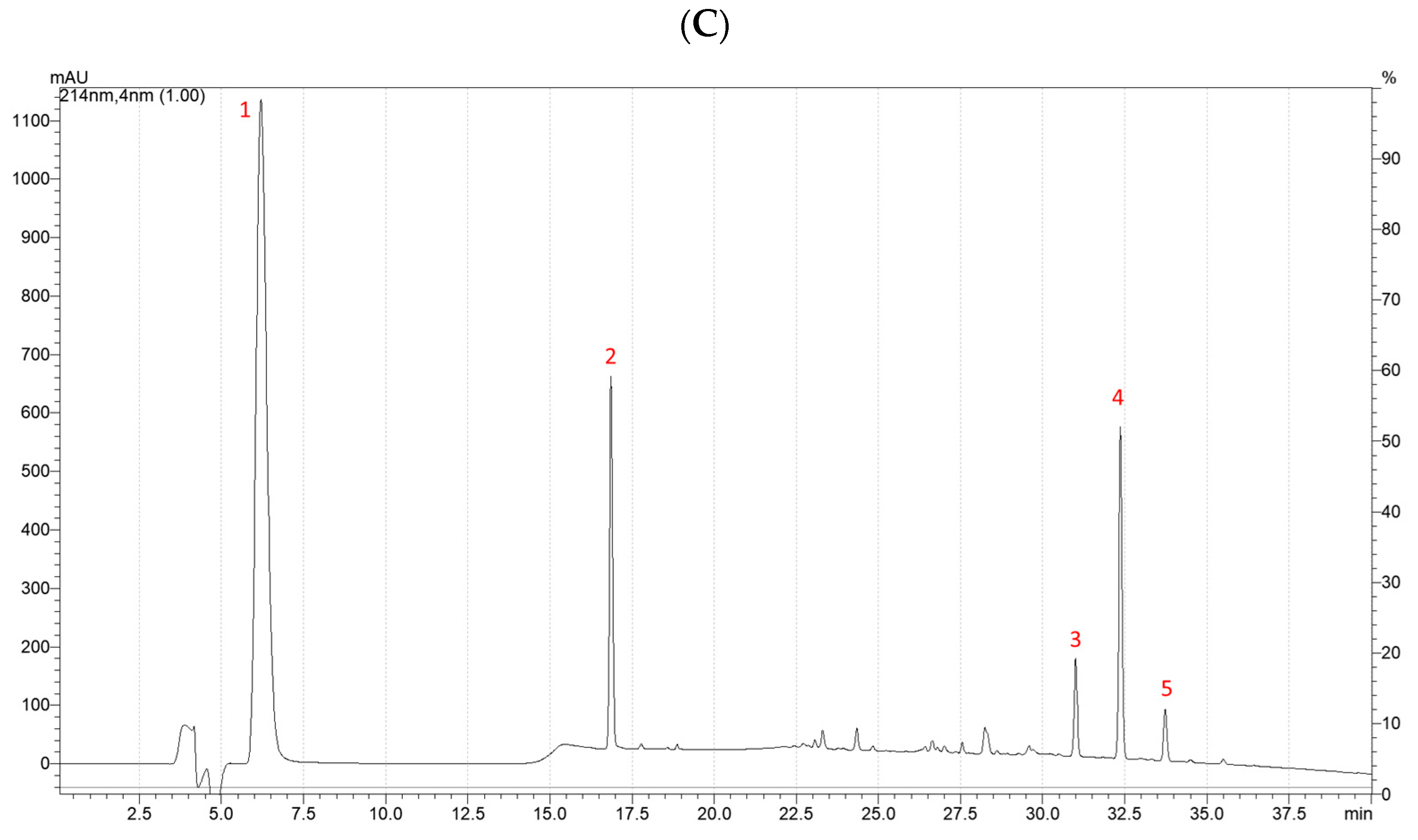
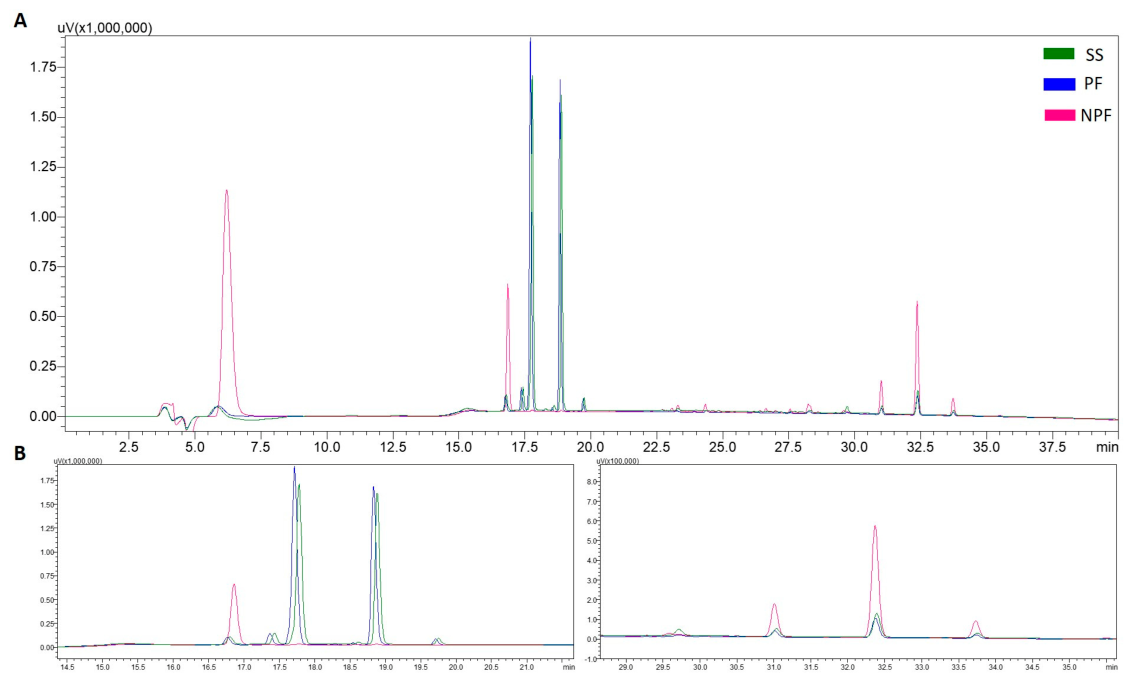
2.1. The Liquid–Liquid Partition Is Capable of Concentrating the Polar and Nonpolar Molecules from Total Skin Secretion
2.2. Molecules Identified in the SS by Mass Spectrometry
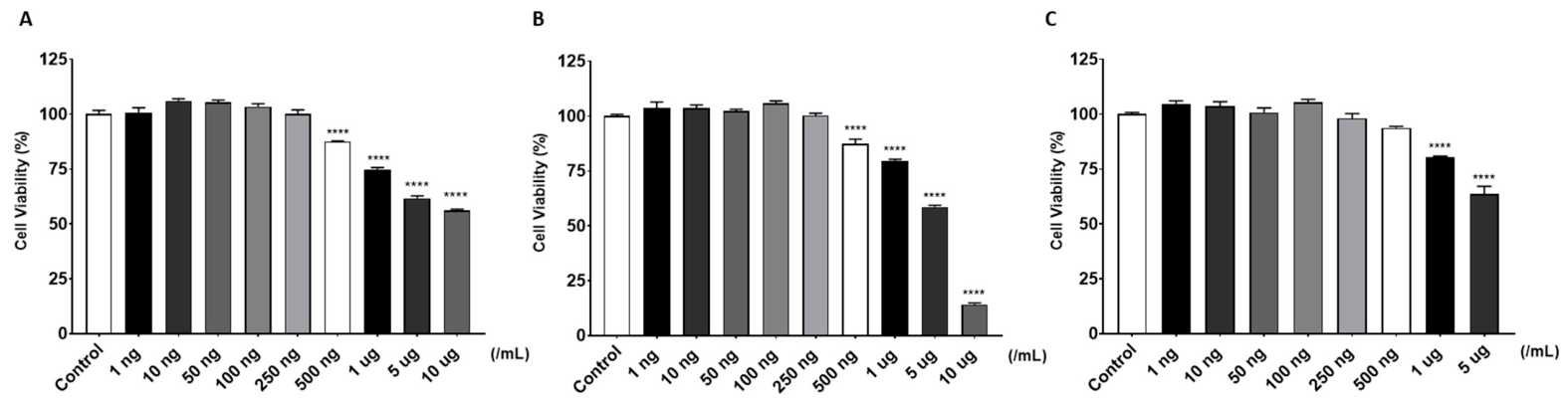
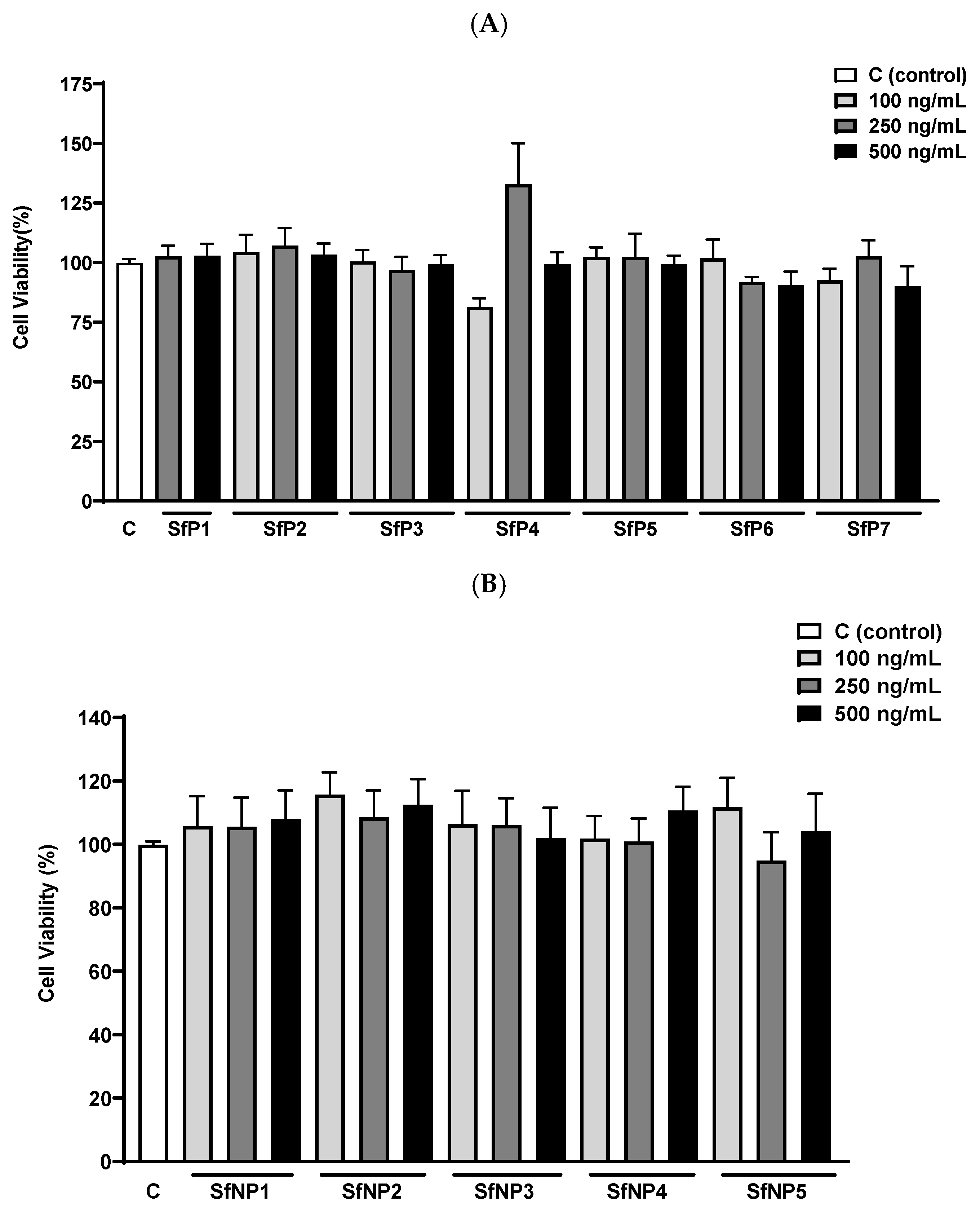
2.3. Cytotoxic Assay
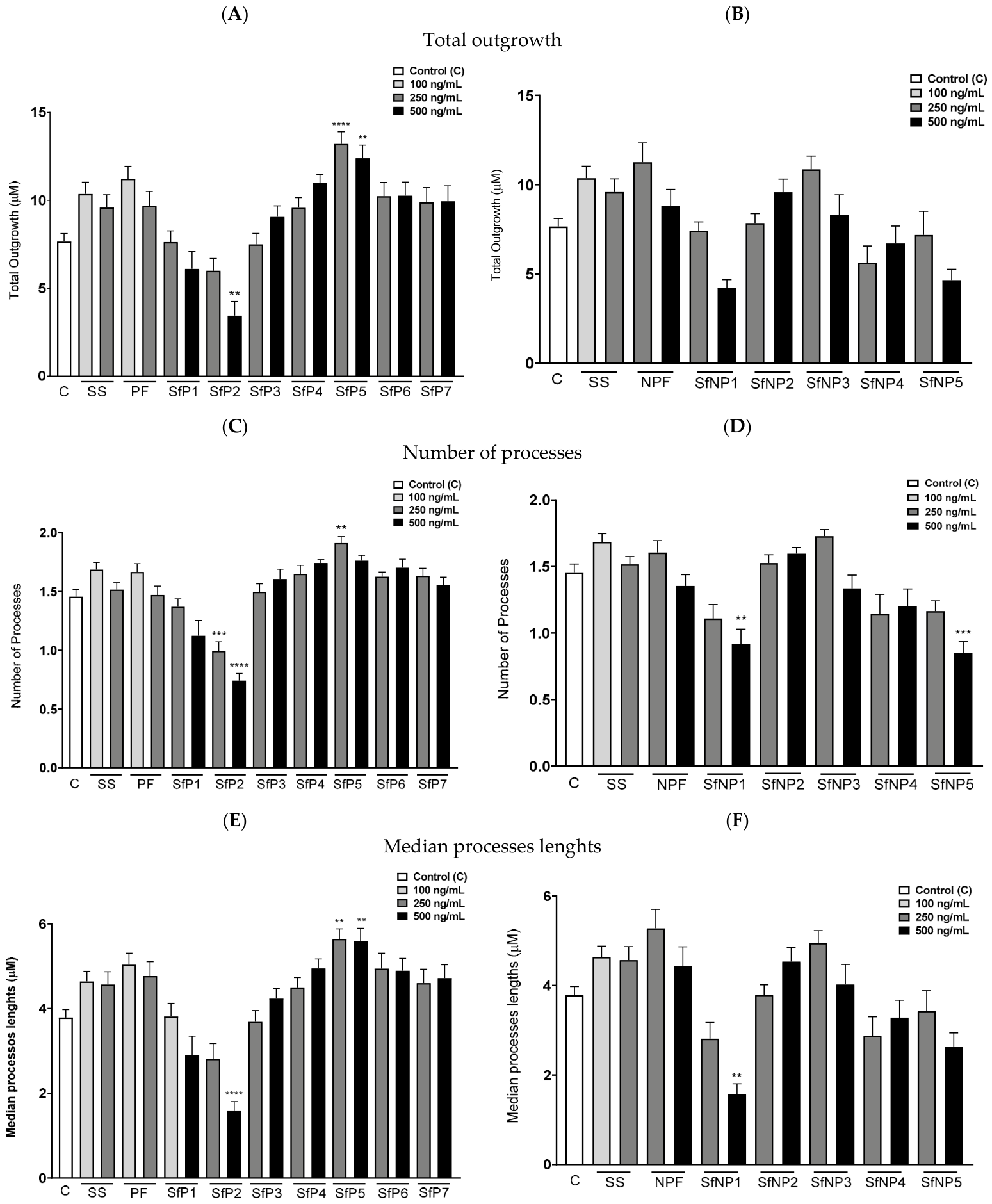
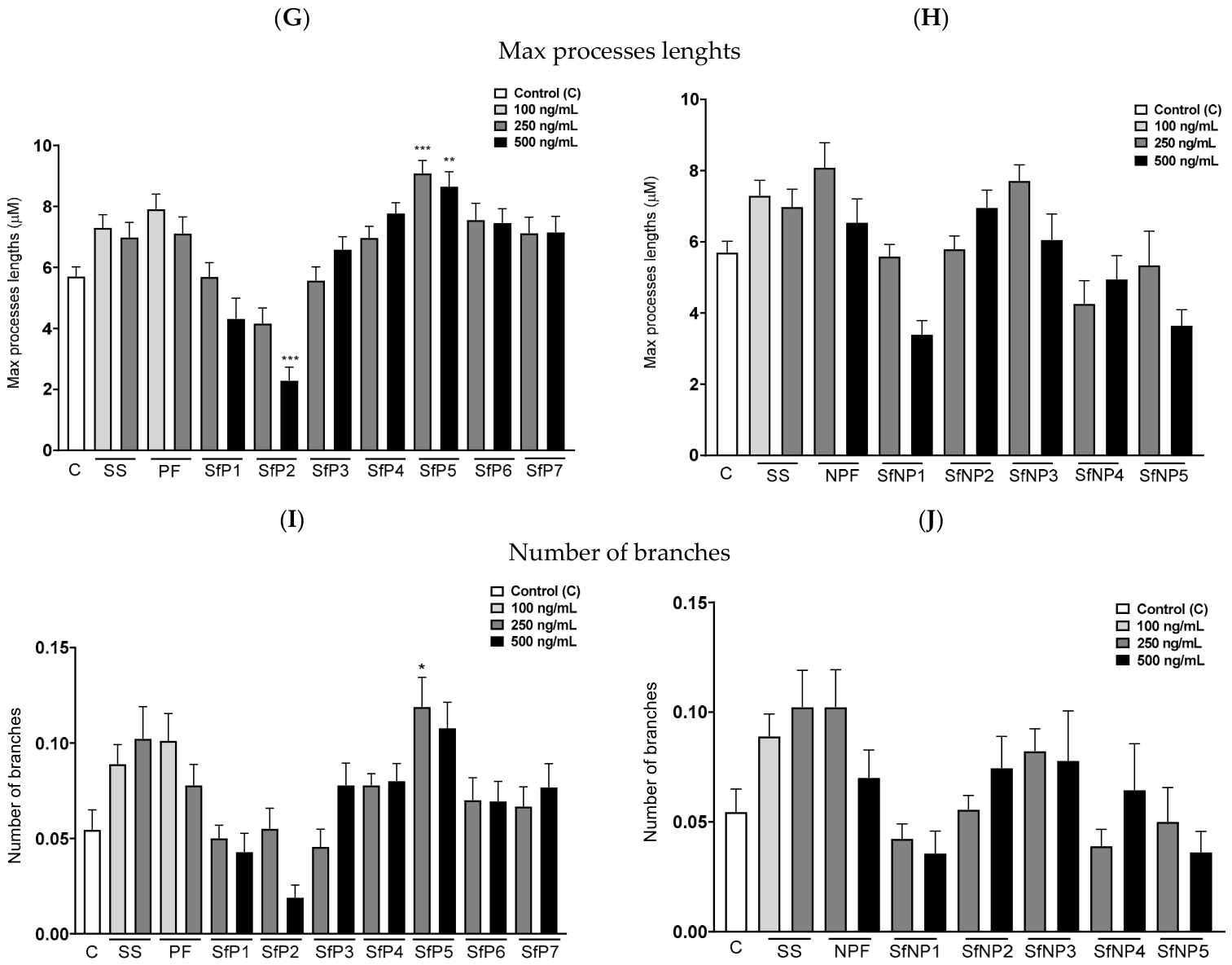
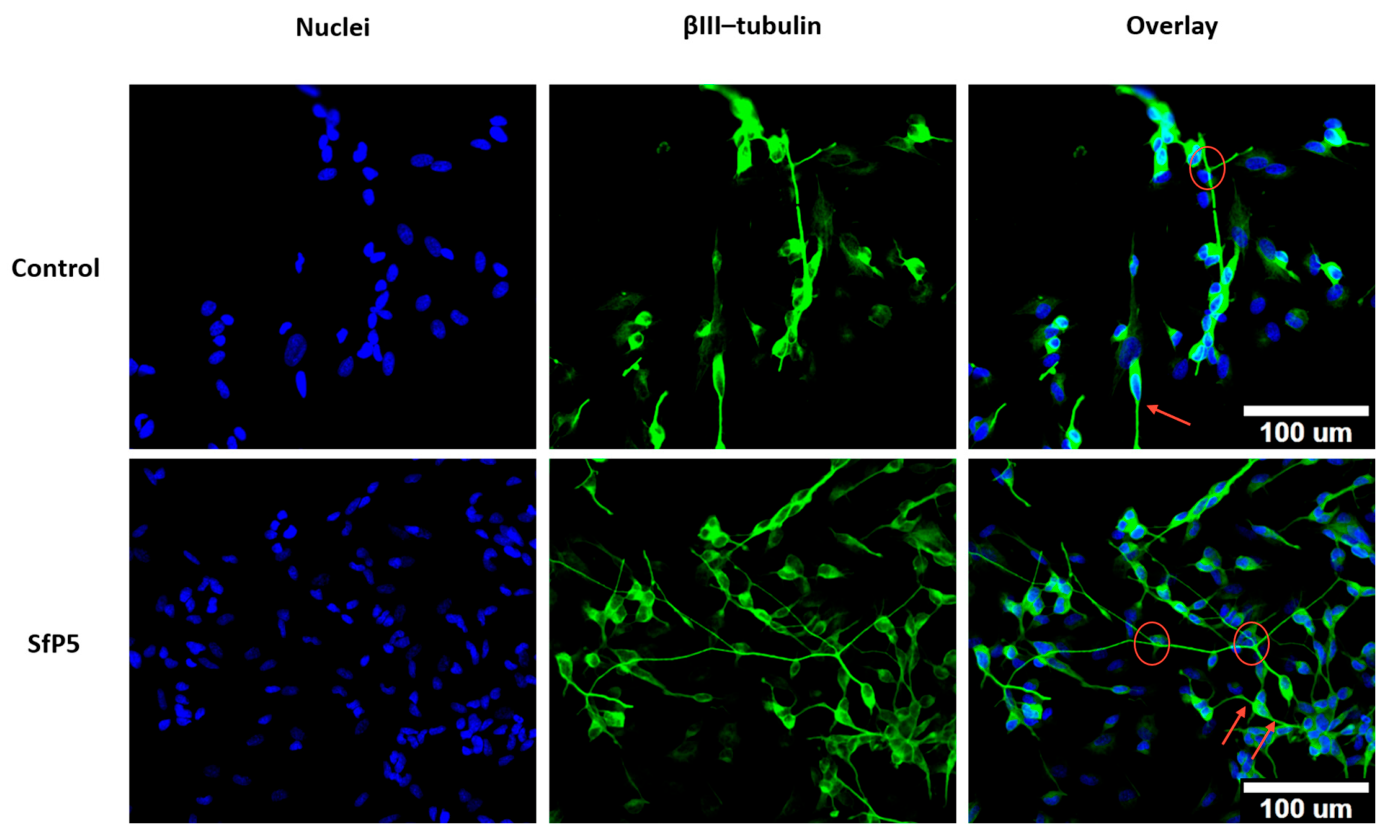
2.4. SfP5 Is Capable of Improving the Analysis Parameters of the Neuronal Network in Neuron-like Cells
2.5. Chemical Profiling of the Active SfP5 Fraction
3. Discussion
4. Conclusions
5. Materials and Methods
5.1. Fractionation of Rhinella schneideri Skin Secretion by HPLC
5.2. Mass Spectrometry
5.3. Cell Culture and Differentiation Protocol for Neuron-like Cells
5.4. Cell Viability
5.5. Neuron-like Cells Morphological Analysis by HCS
5.6. Statistical Analysis
Supplementary Materials
Author Contributions
Funding
Institutional Review Board Statement
Informed Consent Statement
Data Availability Statement
Acknowledgments
Conflicts of Interest
References
- King, G.F. Venoms as a Platform for Human Drugs: Translating Toxins into Therapeutics. Expert Opin. Biol. Ther. 2011, 11, 1469–1484. [Google Scholar] [CrossRef] [PubMed]
- Robinson, S.D.; Undheim, E.A.B.; Ueberheide, B.; King, G.F. Venom Peptides as Therapeutics: Advances, Challenges and the Future of Venom-Peptide Discovery. Expert Rev. Proteom. 2017, 14, 931–939. [Google Scholar] [CrossRef] [PubMed]
- Meng, Z.; Yang, P.; Shen, Y.; Bei, W.; Zhang, Y.; Ge, Y.; Newman, R.A.; Cohen, L.; Liu, L.; Thornton, B.; et al. Pilot Study of Huachansu in Patients with Hepatocellular Carcinoma, Nonsmall-Cell Lung Cancer, or Pancreatic Cancer. Cancer 2009, 115, 5309–5318. [Google Scholar] [CrossRef] [PubMed]
- Reid, P.F. PART II. Toxins as Therapeutic Agents Alpha-Cobratoxin as a Possible Therapy for Multiple Sclerosis: A Review of the Literature Leading to Its Development for This Application. Crit. Rev. Immunol. 2007, 27, 291–302. [Google Scholar] [CrossRef] [PubMed]
- Li, C.; Hashimi, S.M.; Cao, S.; Mellick, A.S.; Duan, W.; Good, D.; Wei, M.Q. The Mechanisms of Chansu in Inducing Efficient Apoptosis in Colon Cancer Cells. Evid.-Based Complement. Altern. Med. 2013, 2013, 849054. [Google Scholar] [CrossRef] [PubMed]
- Mendes, V.A.; Barbaro, K.C.; Sciani, J.M.; Vassão, R.C.; Pimenta, D.C.; Jared, C.; Antoniazzi, M.M. The Cutaneous Secretion of the Casque-Headed Tree Frog Corythomantis Greeningi: Biochemical Characterization and Some Biological Effects. Toxicon 2016, 122, 133–141. [Google Scholar] [CrossRef] [PubMed]
- Hao, Y.; Luo, X.; Ba, X.; Wang, J.; Zhou, S.; Yang, S.; Fang, C.; Jiang, C.; Sun, W. Huachansu Suppresses TRPV1 Up-Regulation and Spinal Astrocyte Activation to Prevent Oxaliplatin-Induced Peripheral Neuropathic Pain in Rats. Gene 2019, 680, 43–50. [Google Scholar] [CrossRef] [PubMed]
- Tempone, A.G.; Pimenta, D.C.; Lebrun, I.; Sartorelli, P.; Taniwaki, N.N.; de Andrade, H.F.; Antoniazzi, M.M.; Jared, C. Antileishmanial and Antitrypanosomal Activity of Bufadienolides Isolated from the Toad Rhinella Jimi Parotoid Macrogland Secretion. Toxicon 2008, 52, 13–21. [Google Scholar] [CrossRef] [PubMed]
- Kim, M.; Lyu, J.H.; Lyu, S.A.; Hong, S.H.; Kim, W.L.; Yoon, H.J.; Ko, W.S. Inhibitory Effect of Chan-Su on the Secretion of PGE2 and NO in LPS-Stimulated BV2 Microgial Cells. Korean J. Orient. Physiol. Pathol. 2008, 22, 1315–1321. [Google Scholar]
- Neerati, P. Detection of Antidiabetic Activity by Crude Paratoid Gland Secretions from Common Indian Toad (Bufo melanostictus). J. Nat. Sci. Biol. Med. 2015, 6, 429. [Google Scholar] [CrossRef] [PubMed]
- Abdel-Rahman, M.A.; Ahmed, S.H.; Nabil, Z.I. In Vitro Cardiotoxicity and Mechanism of Action of the Egyptian Green Toad Bufo viridis Skin Secretions. Toxicol. Vitr. 2010, 24, 480–485. [Google Scholar] [CrossRef] [PubMed]
- Zulfiker, A.H.M.; Hashimi, S.M.; Good, D.A.; Grice, I.D.; Wei, M.Q. Cane Toad Skin Extract-Induced Upregulation and Increased Interaction of Serotonin 2A and D2 Receptors via Gq/11 Signaling Pathway in CLU213 Cells. J. Cell. Biochem. 2017, 118, 979–993. [Google Scholar] [CrossRef] [PubMed]
- Vigerelli, H.; Sciani, J.M.; Eula, M.A.C.; Sato, L.A.; Antoniazzi, M.M.; Jared, C.; Pimenta, D.C. Biological Effects and Biodistribution of Bufotenine on Mice. Biomed Res. Int. 2018, 2018, 1032638. [Google Scholar] [CrossRef] [PubMed]
- Vigerelli, H.; Sciani, J.M.; Pereira, P.M.C.; Lavezo, A.A.; Silva, A.C.R.; Collaço, R.C.O.; Rocha, T.; Bueno, T.C.; Pimenta, D.C. Bufotenine, a Tryptophan-Derived Alkaloid, Suppresses the Symptoms and Increases the Survival Rate of Rabies-Infected Mice: The Development of a Pharmacological Approach for Rabies Treatment. J. Venom. Anim. Toxins Incl. Trop. Dis. 2020, 26, e20190050. [Google Scholar] [CrossRef] [PubMed]
- Centeno, F.C.; Antoniazzi, M.M.; Andrade, D.V.; Kodama, R.T.; Sciani, J.M.; Pimenta, D.C.; Jared, C. Anuran Skin and Basking Behavior: The Case of the Treefrog Bokermannohyla Alvarengai (Bokermann, 1956). J. Morphol. 2015, 276, 1172–1182. [Google Scholar] [CrossRef] [PubMed]
- Mariano, D.O.; Sciani, J.M.; Antoniazzi, M.M.; Jared, C.; Conceição, K.; Pimenta, D.C. Quantity-But Not Diversity-But Secreted Peptides and Proteins Increases with Age in the Tree Frog Pithecopus Nordestinus. J. Venom. Anim. Toxins Incl. Trop. Dis. 2021, 27, e20200105. [Google Scholar] [CrossRef] [PubMed]
- Sakate, M.; Oliveira, P.C.L. DE Toad Envenoming in Dogs: Effects and Treatment. J. Venom. Anim. Toxins 2000, 6, 52–62. [Google Scholar] [CrossRef]
- Neumann, J.; Schulz, N.; Fehse, C.; Azatsian, K.; Čináková, A. Cardiovascular Effects of Bufotenin on Human 5-HT 4 Serotonin Receptors in Cardiac Preparations of Transgenic Mice and in Human Atrial Preparations. Naunyn Schmiedebergs Arch. Pharmacol. 2023, 396, 1471–1485. [Google Scholar] [CrossRef] [PubMed]
- Ly, C.; Greb, A.C.; Cameron, L.P.; Wong, J.M.; Eden, V.; Wilson, P.C.; Burbach, K.F.; Zarandi, S.S.; Paddy, M.R.; Duim, W.C.; et al. Psychedelics Promote Structural and Functional Neural Plasticity. Cell Rep. 2018, 23, 3170–3182. [Google Scholar] [CrossRef] [PubMed]
- Xie, Z.; Askari, A. Na+/K+-ATPase as a Signal Transducer. Eur. J. Biochem. 2002, 2439, 2434–2439. [Google Scholar] [CrossRef] [PubMed]
- Schoner, W.; Scheiner-bobis, G. Endogenous and Exogenous Cardiac Glycosides: Their Roles in Hypertension, Salt Metabolism, and Cell Growth. Am. J. Physiol. Cell Physiol. 2007, 293, C509–C536. [Google Scholar] [CrossRef] [PubMed]
- Petroselli, G.; Raices, M.; Jungblut, L.D.; Pozzi, A.G.; Erra-Balsells, R. MALDI-MS Argininyl Bufadienolide Esters Fingerprint from Parotoid Gland Secretions of Rhinella Arenarum: Age, Gender, and Seasonal Variation. J. Mass Spectrom. 2018, 53, 465–475. [Google Scholar] [CrossRef] [PubMed]
- Schmeda-Hirschmann, G.; Quispe, C.; Theoduloz, C.; de Sousa, P.T.; Parizotto, C. Antiproliferative Activity and New Argininyl Bufadienolide Esters from the “Cururú” Toad Rhinella (Bufo) Schneideri. J. Ethnopharmacol. 2014, 155, 1076–1085. [Google Scholar] [CrossRef] [PubMed]
- Finger Banfi, F.; Camila Krombauer, G.; Luisa da Fonseca, A.; Rachide Nunes, R.; Nunes Andrade, S.; Alves de Rezende, M.; Helena Chaves, M.; dos Santos Monção Filho, E.; Guterres Taranto, A.; de Jesus Rodrigues, D.; et al. Dehydrobufotenin Extracted from the Amazonian Toad Rhinella Marina (Anura: Bufonidae) as a Prototype Molecule for the Development of Antiplasmodial Drugs. J. Venom. Anim. Toxins Incl. Trop. Dis. 2021, 27, e20200073. [Google Scholar] [CrossRef] [PubMed]
- Engert, F.; Bonhoeffer, T. Dendritic Spine Changes Associated with Hippocampal Long-Term Synaptic Plasticity. Nature 1999, 399, 66–70. [Google Scholar] [CrossRef] [PubMed]
- Hayashi, Y.; Shi, S.; Esteban, J.A.; Piccini, A.; Poncer, J.-C.; Malinow, R. Driving AMPA Receptors into Synapses by LTP and CaMKII: Requirement for GluR1 and PDZ Domain Interaction. Science 2000, 287, 2262–2267. [Google Scholar] [CrossRef] [PubMed]
- Hsieh, H.; Boehm, J.; Sato, C.; Iwatsubo, T.; Tomita, T.; Sisodia, S.; Malinow, R. AMPAR Removal Underlies Abeta-Induced Synaptic Depression and Dendritic Spine Loss. Neuron 2006, 52, 831–843. [Google Scholar] [CrossRef] [PubMed]
- Maletic-Savatic, M.; Malinow, R.; Svoboda, K. Rapid Dendritic Morphogenesis in CA1 Hippocampal Dendrites Induced by Synaptic Activity. Science 1999, 283, 1923–1927. [Google Scholar] [CrossRef] [PubMed]
- Shi, S.-H.; Hayashi, Y.; Esteban, J.A.; Malinow, R. Subunit-Specific Rules Governing AMPA Receptor Trafficking to Synapses in Hippocampal Pyramidal Neurons. Cell 2001, 105, 331–343. [Google Scholar] [CrossRef] [PubMed]
- Anelli, T.; Mannello, F.; Salani, M.; Tonti, G.A.; Poiana, G.; Biagioni, S. Acetylcholine Induces Neurite Outgrowth and Modulates Matrix Metalloproteinase 2 and 9. Biochem. Biophys. Res. Commun. 2007, 362, 269–274. [Google Scholar] [CrossRef] [PubMed]
- Lopes, F.M.; Schröder, R.; da Frota, M.L., Jr.; Zanotto-Filho, A.; Müller, C.B.; Pires, A.S.; Meurer, R.T.; Colpo, G.D.; Gelain, D.P.; Kapczinski, F.; et al. Comparison between Proliferative and Neuron-like SH-SY5Y Cells as an in Vitro Model for Parkinson Disease Studies. Brain Res. 2010, 1337, 85–94. [Google Scholar] [CrossRef] [PubMed]



| Fraction | m/z | Tentative Identification | Reference |
|---|---|---|---|
| 1 | 303 m/z | Adipoyl arginine | PETROSELLI et al., 2018 [22] |
| 2 | 205 m/z and 219 m/z | Bufotenine (205 m/z) and bufotenidine (219 m/z) | SCHMEDA-HIRSCHMANN et al., 2014 [23] |
| 3 | 203 m/z and 405 m/z | Dehydrobufotenine (203 m/z) and 405 m/z are not identified in the literature | SCHMEDA-HIRSCHMANN et al., 2014 [23] |
| 4 | 331 m/z | Suberoyl arginine | PETROSELLI et al., 2018 [22] |
| 5 | 403 m/z and 425 m/z | Telocinobufagin and its adduct | PETROSELLI et al., 2018 [22] |
| 6 | 401 m/z and 423 m/z | Marinobufagin and its adduct | PETROSELLI et al., 2018 [22] |
| 7 | 387 m/z and 358 m/z | Bufalin and 358 m/z are not identified in the literature | SCHMEDA-HIRSCHMANN et al., 2014 [23] |
Disclaimer/Publisher’s Note: The statements, opinions and data contained in all publications are solely those of the individual author(s) and contributor(s) and not of MDPI and/or the editor(s). MDPI and/or the editor(s) disclaim responsibility for any injury to people or property resulting from any ideas, methods, instructions or products referred to in the content. |
© 2026 by the authors. Licensee MDPI, Basel, Switzerland. This article is an open access article distributed under the terms and conditions of the Creative Commons Attribution (CC BY) license.
Share and Cite
Caires, G.A.; Pereira, I.S.; DeOcesano-Pereira, C.; Pimenta, D.C.; Kerkis, I.; Sciani, J.M.; Vigerelli, H. Enhancing Neuronal Networks with Rhinella schneideri Skin Secretion Molecules: Implications for Neurodegenerative Disorders. Toxins 2026, 18, 271. https://doi.org/10.3390/toxins18060271
Caires GA, Pereira IS, DeOcesano-Pereira C, Pimenta DC, Kerkis I, Sciani JM, Vigerelli H. Enhancing Neuronal Networks with Rhinella schneideri Skin Secretion Molecules: Implications for Neurodegenerative Disorders. Toxins. 2026; 18(6):271. https://doi.org/10.3390/toxins18060271
Chicago/Turabian StyleCaires, Giovanna Arruda, Isabela Souza Pereira, Carlos DeOcesano-Pereira, Daniel Carvalho Pimenta, Irina Kerkis, Juliana Mozer Sciani, and Hugo Vigerelli. 2026. "Enhancing Neuronal Networks with Rhinella schneideri Skin Secretion Molecules: Implications for Neurodegenerative Disorders" Toxins 18, no. 6: 271. https://doi.org/10.3390/toxins18060271
APA StyleCaires, G. A., Pereira, I. S., DeOcesano-Pereira, C., Pimenta, D. C., Kerkis, I., Sciani, J. M., & Vigerelli, H. (2026). Enhancing Neuronal Networks with Rhinella schneideri Skin Secretion Molecules: Implications for Neurodegenerative Disorders. Toxins, 18(6), 271. https://doi.org/10.3390/toxins18060271