Article

Biopesticidal Properties of the Probiotic Brevibacillus laterosporus Strain B.O.D.


Department of Agricultural Sciences, University of Sassari, 07100 Sassari, Italy
*
Author to whom correspondence should be addressed.
These authors contributed equally to this work.
Toxins 2026, 18(6), 251; https://doi.org/10.3390/toxins18060251
Submission received: 17 April 2026 / Revised: 25 May 2026 / Accepted: 28 May 2026 / Published: 31 May 2026
(This article belongs to the Section Bacterial Toxins)

Abstract

Brevibacillus laterosporus strain B.O.D. is a well-established commercial probiotic and antimicrobial microorganism that finds use in human health and in agriculture as a biofertilizer. On the other hand, while B. laterosporus is a well-known entomopathogenic species, the possible insecticidal potential of strain B.O.D. remains unexplored. To address this knowledge gap, this study combined genome sequencing and comparative analysis with other B. laterospours strains and insect bioassays. The genome of B. laterosporus B.O.D. was found to harbor a wide range of genes related to entomopathogenicity encoding putative proteases, chitinases, collagenase-like proteases, mosquitocidal proteins, bacillolysin, and spore-surface proteins. Antimicrobial compounds such as gramicidin and surfactin were also found. Sequence alignment with other well-characterized B. laterosporus strains and analysis revealed significant differences, which support the corresponding differences in insecticidal activity observed when comparing strain B.O.D. with others against a variety of lepidopteran and dipteran pest species. This study reports for the first time the genome of strain B.O.D., providing a comparative analysis and highlighting its insecticidal properties, which appear more moderate compared to previously characterized entomopathogenic strains of the same species. Everything considered, B. laterosporus strain B.O.D. appears to be remarkably versatile, underscoring wide biotechnological potential.
Key Contribution: Brevibacillus laterosporus strain B.O.D., known and commercially employed for its probiotic properties in animals and humans, shares genetic and phenotypic traits with biopesticidal strains.

Graphical Abstract

1. Introduction

Brevibacillus laterosporus is a spore-forming bacterial species with a distinctive spore shape, having a lateral position in the sporangium due to the presence of a canoe-shaped parasporal body attached to one side of the spore coat [1]. Beyond this unique morphology, this species appears to have evolved multifunctional roles in nature, leveraging its probiotic, antimicrobial, biofertilizer, and biopesticidal potential [2]. Accordingly, for instance, strains B.O.D. [3,4], PBC01 [5], and BL1 [6] show probiotic properties contributing to maintaining human and animal gut flora balance and favoring growth and health, while strains OSY-I [7], TSA31-5 [8], and GI-9 [9] produce antibiotics conferring strong antimicrobial properties against human pathogens, and strains BPM3 and A060 are active against plant pathogens [10]. On the other hand, strains K75 [11] and YS-13 [12] were reported to be plant growth promoters. Furthermore, several strains of B. laterosporus, such as strains 615 and 621 [13], strain UNISS 18 [14], and strains LMG 15441 and SAM19 [15], have been studied to highlight their insecticidal properties. Although such functional diversity is often linked to specific strains, several traits are highly conserved across the species [16,17], which may enable the discovery of multifunctional strains or strains initially thought to serve a single purpose but possessing broader capabilities. Many of these properties, particularly the insecticidal potential of entomopathogenic bacteria, are related to the insecticidal proteins they produce, which belong to a wide variety of classes [18].
Although the mechanism of the insecticidal action of B. laterosporus is not fully understood, and differences between strains are expected, several studies have demonstrated an insecticidal effect resulting from the ingestion of spores or cells. Spores, in particular, appear to be the most active bacterial component; their ingestion leads to the development of ultrastructural damage to the intestinal epithelium, including alterations in microvilli, the appearance of vesicles in the cytoplasm, and ultimately cell lysis. This is followed by deterioration of the intestinal mucosa, leading to paralysis and death of the host [19]. This activity appears to be mediated by bacterial virulence factors, including enzymes such as chitinases and proteases, Mpp toxins, proteins of the spore coat-canoe-shaped parasporal body complex (SC-CSPB), and S-layer proteins of the vegetative cells [17,20,21].
Brevibacillus laterosporus strain B.O.D. is a well-established commercial probiotic known for its effectiveness against human microbial pathogens, including fungal species in the Candida genus, according to documented antimicrobial properties [3]. This strain is also known for its probiotic benefits on human gut health through antimicrobial and immunomodulatory activities [22]. Accordingly, the safety of this strain for human use can be inferred from its deployment in the commercial drug Flora BalanceTM as a spore-based formulation to be taken orally [4].
Beyond these roles in human health, B. laterosporus strain B.O.D. has been evaluated for use in agriculture as a biofertilizer and against plant pathogens [3]. Consistent with findings from other B. laterosporus strains known to produce a diverse array of bioactive compounds, such as antibiotics and enzymes, strain B.O.D. may also be remarkably versatile, underscoring a wider biotechnological potential. At the species level, B. laterosporus exhibits a rich repertoire of antimicrobial and insecticidal compounds, which raises the possibility that strain B.O.D. may also harbor such biosynthetic potential [16]. Although the use of B. laterosporus strain B.O.D. is established in agriculture for its antimicrobial and biofertilizing properties [23], its insecticidal potential remains unexplored. Moreover, according to the available public scientific literature, B.O.D. itself has not yet undergone comprehensive genomic or functional characterization.
Therefore, this study aims to address this knowledge gap by combining genome sequencing and comparative analysis with insect bioassays. Accordingly, we (i) sequenced the whole genome of strain B.O.D. and identified genes related to the biopesticidal potential and (ii) evaluated the insecticidal and antimicrobial properties via laboratory bioassays. This dual approach clarifies that the known probiotic, antimicrobial, and biofertilizer functions of strain B.O.D. conceal an underrecognized biopesticidal potential, thereby enhancing our understanding of the versatility and practical applications of this commercially significant strain while also contributing to a broader understanding of the ecology of this bacterial species.

2. Results

2.1. Brevibacillus laterosporus Strain B.O.D. Genome

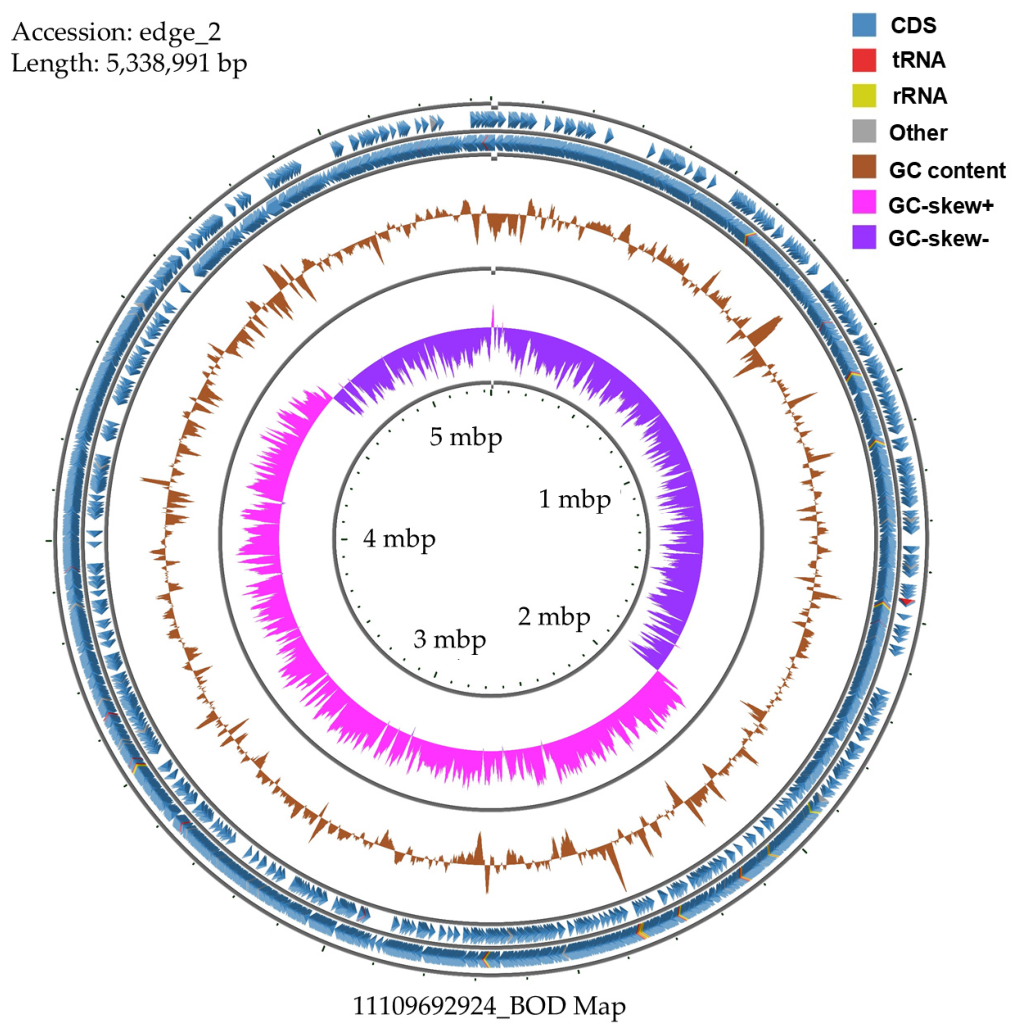
According to long-read sequencing, B. laterosporus B.O.D. whole genome assembly resulted in two contigs, corresponding to the chromosome (5,325,807 bp) and a plasmid (13,184 bp), respectively, for a total assembly length of 5,338,991 bp. The assembly has a GC content of 40.41% and was generated from 57,118 reads totaling 287.26 Mb, with an estimated coverage depth of 54×. Annotation of the genome revealed 112 tRNAs, 36 rRNAs, 20 ncRNAs, 4793 protein-coding sequences (CDSs), and 22 pseudogenes. The circular map of the B. laterosporus B.O.D. genome is shown in Figure 1. Several genes putatively involved in the insecticidal action were found in the genome of this B. laterosporus strain. These included genes encoding proteases, such as chitinase A (ChiA), chitodextrinase (ChiD), collagenase-like protease (PrtC), and thermophilic serine proteinase (Tsp). Among other factors contributing to virulence against insects, spore surface protein A (CpbA), exosporium protein C (ExsC), and cell wall proteins were identified. The gene encoding the insecticidal protein Mpp75Ab1 was also detected.
Moreover, compounds with antimicrobial action, such as gramicidin and surfactin, were included. Polyketides such as basiliskamide types A and B; non-ribosomal peptide synthetase clusters encoding bogorol A, brevibacillin, surfactin, gramicidin, and ulbactin; and the siderophore petrobactin were identified with AntiSMASH [24].
The genome sequence of B. laterosporus strain B.O.D. has been deposited in the NCBI database under accession number JBWXXF000000000.
Figure 1. Circular genome map of B. laterosporus strain B.O.D. generated with CGView v2.0.3 to illustrate genomic features, GC skew, and sequencing coverage [25]. The two outer rings depict coding regions on the forward and reverse strands, as well as tRNA, rRNA, and other annotated features, as indicated in the legend. The GC content track shows the deviation from the genome-wide average, while the GC skew track provides insights into the replicon’s replication origin and terminus, supporting assessment of assembly completeness.
Toxins 18 00251 g001

2.2. Genomic Comparisons

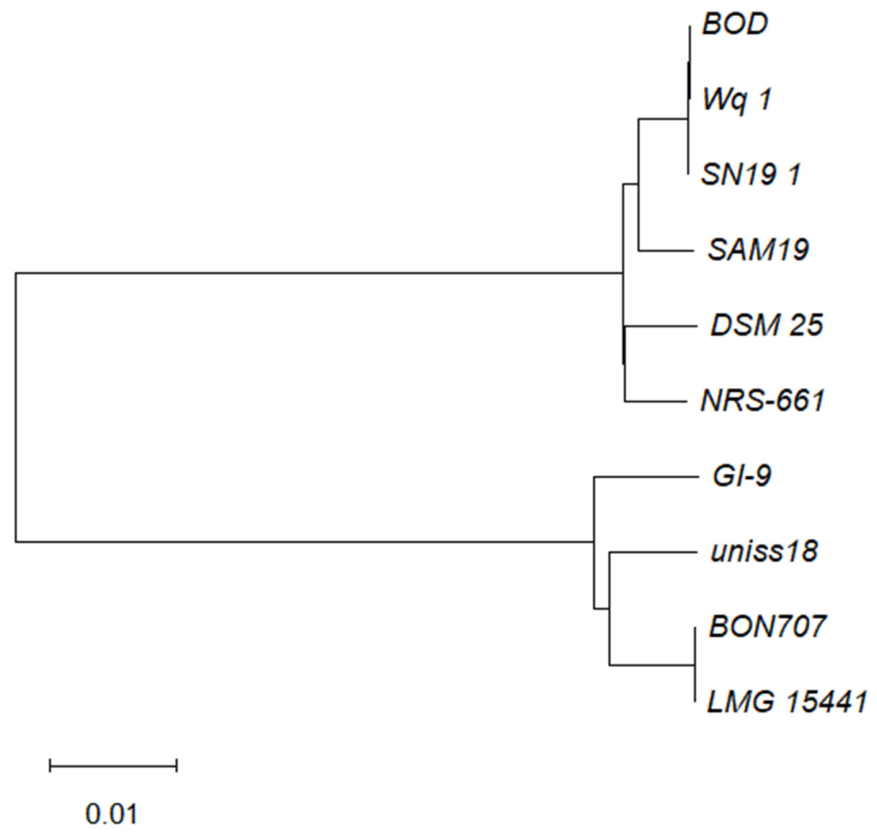
According to ANI calculations, B. laterosporus strain B.O.D. presents a high similarity with strains Wq_1 and SN19_1 (>99%), suggesting that these isolates actually correspond to the same strain. Strains NRS-661 and DSM_25 were similar to each other and close to strain B.O.D. (>98%). On the other hand, strains LMG_15441, BON707, UNISS18, and GI-9 clustered far from the other strains with less than 90% similarity. Genomic relationships are represented by a Neighbor-Joining tree constructed based on the ANI matrix. Overall, the combined ANI and phylogenetic clustering provide a clear view of genomic similarity and divergence patterns among the various B. laterosporus strains (Figure 2 and Table A1).

2.3. Multi-Gene Phylogeny

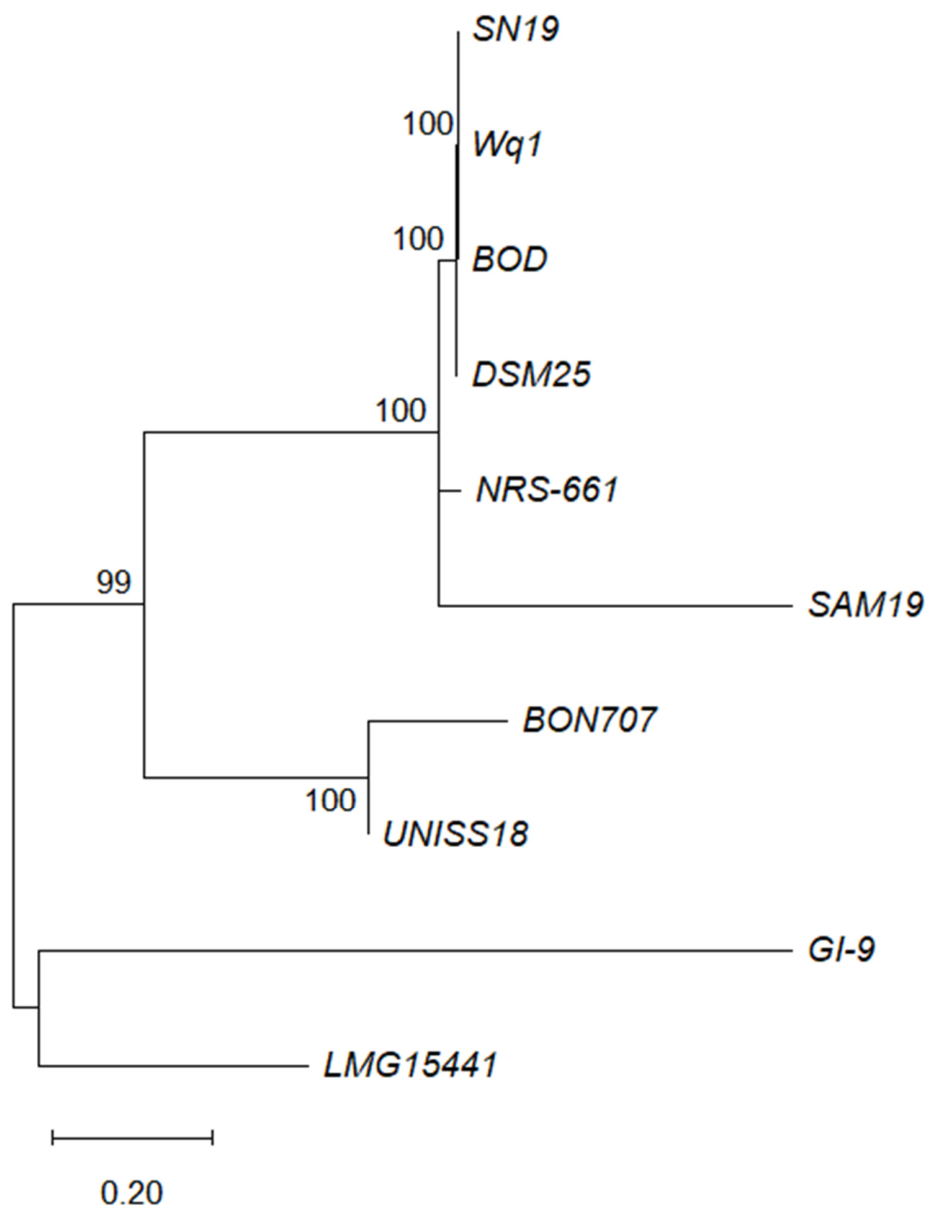
A phylogenetic tree was constructed using concatenated sequences of genes associated with biopesticidal activity from different B. laterosporus strains (Figure 3). The sequences of these genes in the B. laterosporus strain B.O.D. have been deposited in NCBI, and the corresponding accession numbers are provided in Table A2, along with the percentage identity of homologous sequences in other strains relative to B.O.D. Similar to the ANI analysis, strains B.O.D., Wq_1, and SN19_1 consistently group together, while strains SAM19, NRS-661, and DSM-25 are located in sub-branches. Strains LMG_15441 and GI-9 group together with UNISS18 and BON707 in the same cluster.

2.4. Insect Bioassays

Bioassays comparing the entomopathogenic activity of B. laterosporus strains B.O.D. and UNISS18 against insects of the orders Lepidoptera and Diptera showed that strain B.O.D. exhibits a wide range of insecticidal activity, being slightly less toxic than strain UNISS18 against L. dispar (F2,21 = 148.8; p < 0.001), H. armigera (F2,21 = 503.4; p < 0.001), M. domestica (F2,21 = 447.5; p < 0.001), L. caesar (F2,21 = 216.9; p < 0.001), A. albopictus (F2,21 = 544.7; p < 0.001), and C. pipiens (F2,21 = 1030.0; p < 0.001) (Table 1).
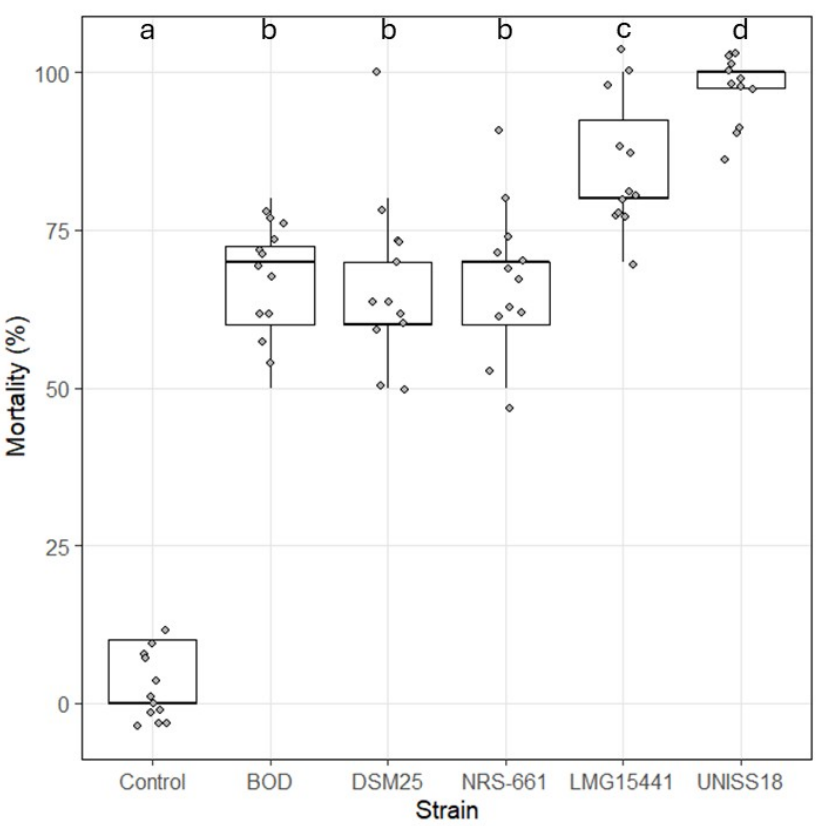
To further investigate the effect of strain B.O.D. against Musca domestica, in comparison to other B. laterosporus strains, bioassays were performed with a standard concentration of 108 spores/mL. Results showed that strain B.O.D. has a moderate toxicity comparable to NRS-661 and DSM25 strains, while strains UNISS18 and LMG15441 are more virulent (F5,66 = 137.6; p < 0.001) (Figure 4).
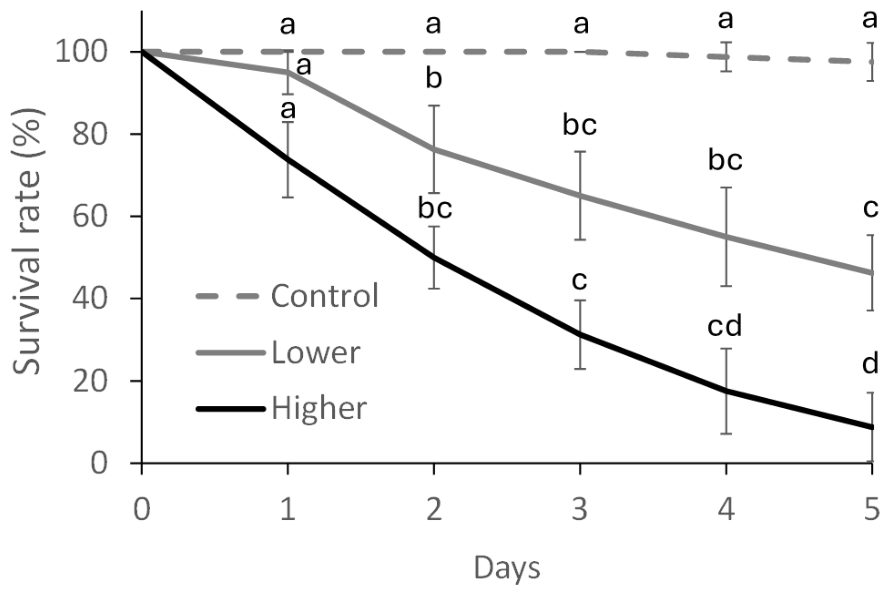
For a more in-depth evaluation of the effects of strain B.O.D. on M. domestica, adults were exposed to different concentrations of spore suspension, and mortality over time was registered. Both higher (109 spores/mL) and lower (107 spores/mL) concentrations had negative effects on the survival of M. domestica adults after 5 days of treatment (F2,27 = 24.23, p < 0.001). The higher concentration resulted in faster mortality, reaching approximately 50% by day 2 and 90% by day 5, while the lower concentration reached 50% mortality only after 5 days (Figure 5).
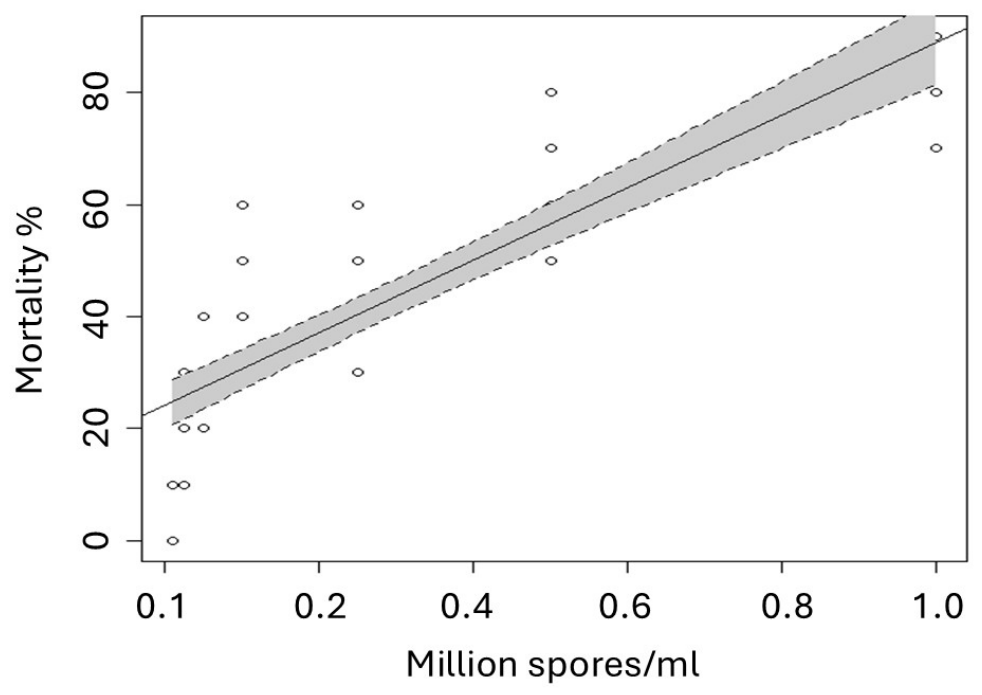
Entomopathogenic activity of strain B.O.D. against Dipterans was further assessed by studying its toxicity against A. albopictus larvae exposed to different spore concentrations. Linear regression was significant (F1,82 = 184.0, p < 0.001, R2 = 0.692), with the concentration of B. laterosporus strain B.O.D. spores showing a positive effect on A. albopictus larval mortality (β = 6.49 × 10⁻⁵ ± 4.78 × 10⁻⁶ SE, t = 13.57, p < 0.001) (Figure 6). According to probit analysis, the estimated median lethal concentration (LC50) was 1.83 × 10⁵ spores/mL (95% CI: 9.86 × 10⁴–3.39 × 10⁵ spores/mL) (β = 1.14 ± 0.25 SE, z = 4.55, p < 0.001).

2.5. Antifungal Bioassays

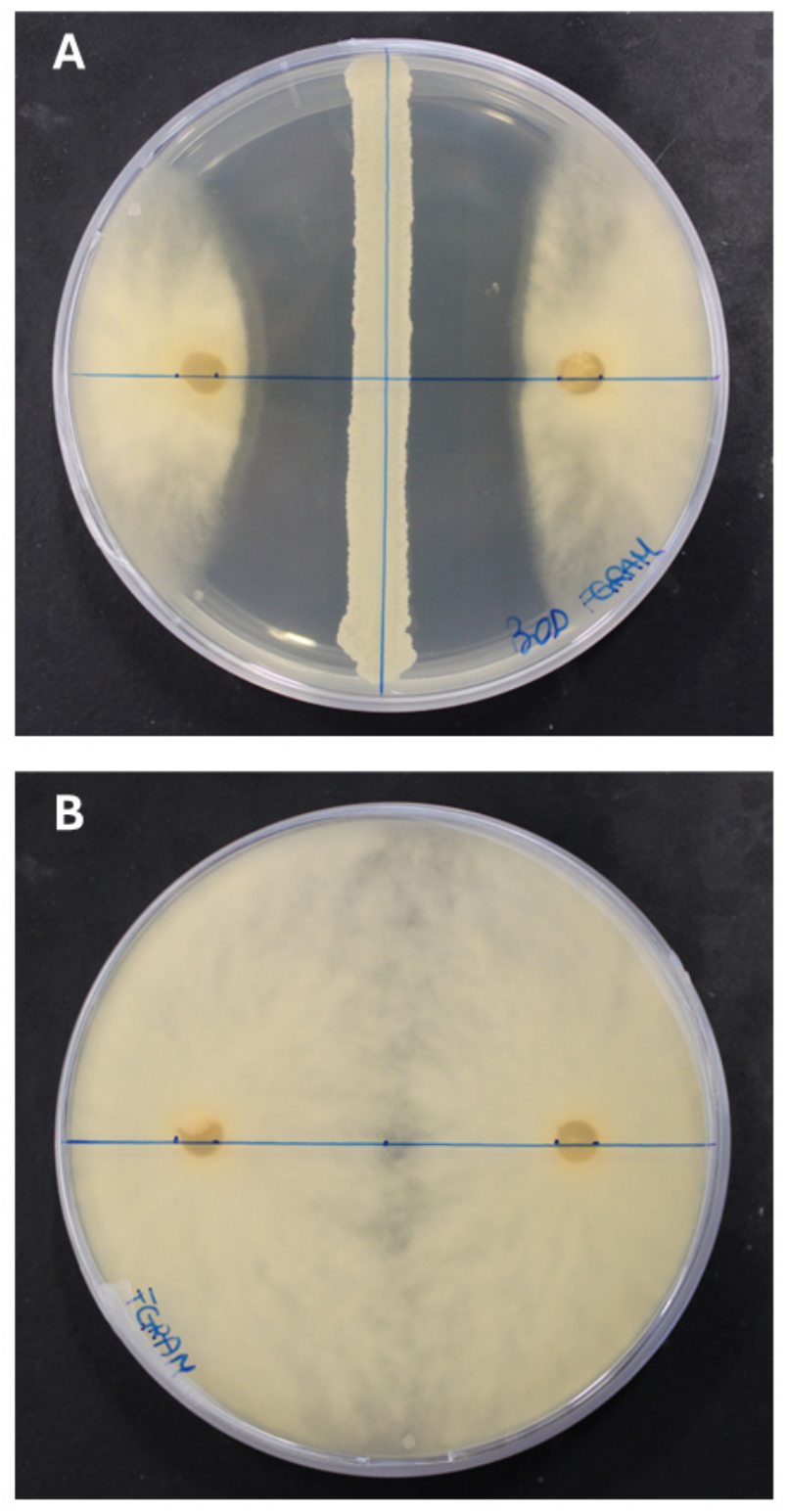
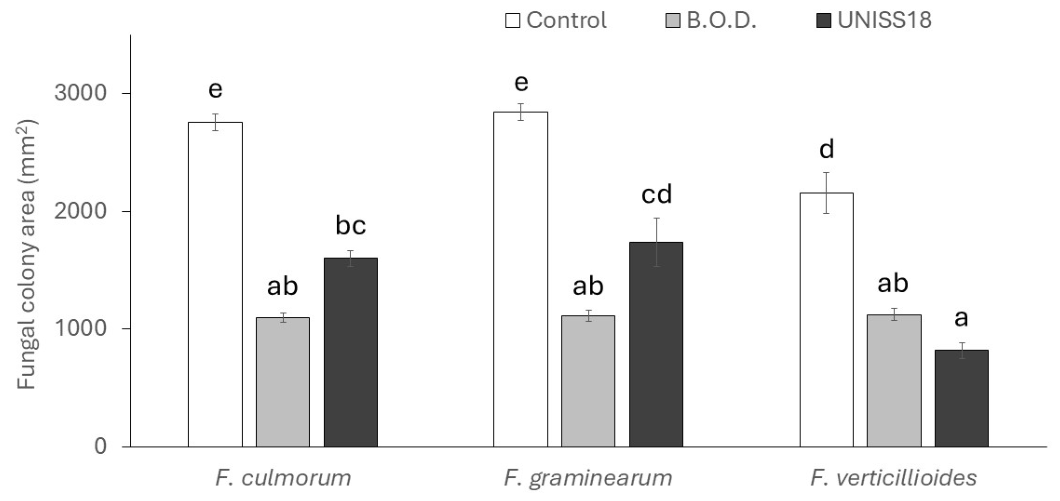
The antimicrobial properties of B. laterosporus strain B.O.D. in comparison with strain UNISS18 were assessed in vitro on fungal phytopathogens of different species (Fusarium culmorum, Fusarium graminearum, and Fusarium verticillioides). For this purpose, the inhibitory effects of bacterial colonies streaked at the center of potato dextrose agar (PDA) plates were estimated by measuring the growth area of each fungus inoculated as a mycelial plug (Figure 7). Both B. laterosporus strains showed a significant inhibitory effect compared to the control (F2,43 = 160.9, p < 0.001), with strain B.O.D. showing a significantly stronger action on F. graminearum (F2,43 = 16.4, p < 0.001) (Figure 8).

3. Discussion

Brevibacillus laterosporus is a ubiquitous bacterial species known for producing different bioactive compounds across diverse strains. Several studies have highlighted the role of B. laterosporus as a probiotic, fertilizer, and biocontrol agent against bacteria, fungi, and invertebrates harmful to animals and plants. Although this species is quite versatile, phylogenetic studies show that specific phenotypic traits are not conserved across strains. Accordingly, while genomes might share some putative toxicity-related genes, many specific genes are found in limited strains [17].
B. laterosporus B.O.D. has been commercialized as a probiotic product (i.e., Flora-Balance, Latero-Flora) for more than 25 years [5]. Its antimicrobial and biofertilizer properties are also known [3]. Nevertheless, traits potentially related to the insecticidal activity of this strain have not yet been investigated, thus overlooking its entomopathogenic potential.
In the present study, genome sequencing of B. laterosporus B.O.D., followed by whole-genome Average Nucleotide Identity (ANI) comparison with other strains, was performed. Typically, genomes within the same species have an ANI value above 95%, while genomes from different species usually have an ANI value below 90%, although this “between-species” cutoff might change in each genus [28]. ANI calculations showed a close relationship (>99.99%) to strains Wq-1 and SN19-1, clearly indicating that these isolates from China are likely to be the same strain. Both Wq-1 and SN19-1 have been reported to produce antimicrobial compounds, specifically bacteriostatic substances [29,30]. These two strains were isolated from environmental sources, and given their similarity to strain B.O.D., we cannot exclude the possibility that they may have been isolated from soils in which strain B.O.D. was applied as a biofertilizer.
The expected antimicrobial activity of B.O.D. [3] was experimentally confirmed in this study, highlighting its potential against plant pathogenic fungi and aligning with the broad-spectrum antimicrobial properties of the species [2]. Accordingly, genome annotation revealed that it harbors a wide arsenal of putative genes encoding potential antimicrobial compounds. Consistently, non-ribosomal peptide synthetase clusters encoding bogorol A, brevibacillin, surfactin, gramicidin, ulbactin, and petrobactin were detected. Bogorols present a broad-spectrum activity against pathogenic fungi, in addition to their well-known antibacterial properties. Bogorol A is an antibacterial peptide originally isolated and identified from the marine bacterial isolate B. laterosporus PNG276 and has been reported to be useful against methicillin-resistant Staphylococcus aureus (MRSA) strains and vancomycin-resistant Enterococcus (VRE) [30], while Bogorol B, produced by B. laterosporus JX-5, is highly active against F. oxysporum [31]. Studies reported by Yang [32] and Wu [33] demonstrated that the antimicrobial lipopeptide brevibacillin, produced by different isolates of B. laterosporus, showed antimicrobial activity against Gram-positive, Gram-negative bacteria, and fungal species in the genera Fusarium and Aspergillus. Surfactin, mainly produced by Bacillus isolates, has been extensively reported as an efficient antifungal compound with inhibitory effects against phytopathogenic fungi belonging to the genus Fusarium [34,35,36,37]. Petrobactin is an iron-scavenging siderophore that has usually been associated with Bacillus anthracis str. Sterne virulence. Nevertheless, both pathogenic and non-pathogenic isolates of the Bacillus cereus group can produce petrobactin [38]. Among other bioactive molecule-related genes found in B. laterosporus B.O.D. are basiliskamide A and B, polyketide compounds exhibiting antifungal activity against Aspergillus fumigatus and Candida albicans [39]. According to our results, this antimicrobial profile appears effective against phytopathogens, suggesting its potential application as a biocontrol agent in agricultural contexts. Similarly, several B. laterosporus isolates are strongly active against various Fusarium species [40,41].
The genome of B. laterosporus B.O.D. harbors a wide range of genes encoding putative toxins, enzymes, and virulence factors associated with entomopathogenic activity. Genes encoding homologous spore coat and canoe-shaped parasporal body (SC-CSPB) complex proteins were found in the genome, specifically spore surface protein A (CpbA) and exosporium protein C (ExsC). Both proteins were reported by Marche et al. [42] as virulence factors contributing to the insecticidal action of B. laterosporus strain UNISS 18 against the house fly. Multiple BLAST+ v2.17.0 (NCBI) analyses showed that strain B.O.D. also encodes several proteins sharing varying degrees of homology (85.10—100%) with other entomopathogenic B. laterosporus strains [17,43]. This set of proteins includes chitinase (ChiA), chitodextrinase (ChiD), collagenase-like protease (PrtC), thermophilic serine proteinase (Tsp), bacillolysin BL18 (Bl18), GlcNAc-binding protein A (Gbp), protective antigen domain protein (Pa1), and the insecticidal toxin Mpp75Ab1 [20]. Despite this similarity, the sequences of these homologous genes differed significantly, supporting variation in the insecticidal potential associated with different B. laterosporus strains.
Strain B.O.D. was found to be significantly active as an entomopathogen against the different insect species on which it was tested. While on one hand, this increases our knowledge of this strain, on the other, it is consistent with what is known in scientific literature on this bacterial species [2]. Accordingly, different strains are expected to exhibit varying degrees of toxicity against different targets. Hence, in our bioassays, strain B.O.D. generally showed activity comparable to strains NRS-661 and DSM25, while it was less active than strains UNISS18 and LMG 15441, which are known to be fully validated and characterized bioinsecticides [43,44,45]. Hence, bioassay results of B. laterosporus against Lepidoptera are inconsistent due to substantial variability among strains. Rivers et al. [46] reported that 28 B. laterosporus strains lacked pathogenic activity against the lepidopteran species Ostrinia nubilalis or Manduca sexta. In the present study, strain B.O.D. exhibited 53% and 75% mortality against L. dispar and H. armigera, respectively, at a concentration of 1 × 10⁸ spores/mL. On the other hand, B. laterosporus strain V12/001946, isolated from hybrid cabbage seed, exhibited a strong lethal effect against several Lepidopteran pests at a concentration of 1010 cells/mL [47]. Moreover, strain UNISS18 displayed a 100% mortality rate after 48 h when larvae of Galleria melonella, L. dispar, and Malacosoma neustria were injected with a suspension of exponential vegetative cells [48]. Initial evidence of the insecticidal properties of B. laterosporus came from studies on mosquitoes when Favret and Yousten [49] demonstrated the pathogenicity of 29 strains against larvae of Culex quinquefasciatus, Aedes aegypti, and the black fly Simulium vittatum. In the present study, strain B.O.D. exhibited approximately 20% lower toxicity than UNISS18 against various dipteran species. However, when comparing the different target species, the differences in mortality within the same strain (B.O.D. or UNISS18) were minimal, which supports the broad spectrum of activity known for this bacterium [2]. On the other hand, slight differences between target species might be expected in relation to specific factors such as insect physiology, gut environment, feeding behavior, and susceptibility to bacterial toxins.
It is noteworthy that the variation in bioinsecticidal potential of different B. laterosporus strains is consistent with the clustering patterns derived from genetic analyses, especially those based on comparisons of gene sequences involved in insecticidal activity. At the genetic level as well, strain B.O.D. shows greater similarity to strains NRS-661 and DSM25, which cluster closely together, whereas UNISS18 and LMG 15441 form a separate, closely related cluster that is more distant from B.O.D. Therefore, this comparative genetic analysis, integrated with the phenotypic data (bioinsecticidal potential), helps to characterize strain B.O.D. in terms of its versatility.
At present, there are no commercial products based on B. laterosporus being used as biopesticides. One aspect that makes it particularly interesting is its broad spectrum of activity, which represents a competitive advantage over other bacterial bioinsecticides that have specific modes of action against certain species but are ineffective against others [50]. Although the spectrum of activity is broad, its safety towards beneficial entomofauna and non-target organisms makes this bacterial species particularly promising [51]. Furthermore, the unique characteristics of the BOD strain, used as a probiotic in warm-blooded animals, constitute a further aspect of mitigating the risks normally associated with the use of plant protection products.

4. Conclusions

This study reports, for the first time, the genome of the probiotic B. laterosporus strain B.O.D., providing a comparative analysis and highlighting its insecticidal properties, which appear moderate relative to previously characterized entomopathogenic strains of the same species. Sequence alignment with other well-characterized B. laterosporus strains and analysis revealed significant differences, which support the corresponding differences in insecticidal activity observed when comparing strain B.O.D. with others against different lepidopteran and dipteran pest species. According to these findings, B. laterosporus strain B.O.D. appears to be remarkably versatile, underscoring its wide biotechnological potential. Among its potential applications, its antimicrobial activity against plant pathogens and its insecticidal properties make it suitable for managing a variety of targets.

5. Materials and Methods

5.1. Bacterial Strains and Culture Conditions

Brevibacilus laterosporus strain B.O.D. was isolated from the commercial product Flora-BalanceTM Powder (O’Donnell Formula Inc., San Marcos, CA, USA). Strain UNISS18 (=NCIMB41419) is maintained in the culture collection of the University of Sassari (Italy) [20]. Strains LMG 15441 (=ATCC 9141), NRS-661 (=ATCC 6456), and DSM25 (=ATCC 64) were originally provided by the Bacillus Genetic Stock Center (BGSC, Columbus, OH, USA).
Bacteria were routinely cultured in LB agar at 30 °C to maintain pure colonies. Liquid cultures were prepared in conical flasks containing LB broth at 30 °C while shaking at 180 rpm. To facilitate culture synchronization, an LB broth pre-culture at the exponential phase, started with heat-activated spores, was inoculated into CCY sporulation medium as described in Ruiu et al. [14]. Pure spore suspensions used in bioassays were harvested and washed by centrifugation before being serially diluted and quantified by counting the number of colony-forming units (CFU) on LB agar plates, according to Marche et al. [20]. Bacterial suspensions were adjusted with sterile water to achieve the concentration required for the bioassays.

5.2. Sequencing of B. laterosporus Strain B.O.D. Genome

DNA from B. laterosporus strain B.O.D. was extracted from a pure culture using the DNeasy Blood and Tissue Kits (Qiagen, Hilden, Germany) according to the manufacturer’s instructions. Genome analysis was performed using long-read sequencing data generated with Oxford Nanopore Technologies (Oxford, UK) (ONT) and carried out by Eurofins Genomics (Ebersberg, Germany) according to the following pipeline: Raw reads were quality-filtered using Filtlong v0.2.1 [52] to remove low-quality and very short reads, retaining only high-quality sequences for further analysis. Read quality metrics, including length distribution and quality score profiles, were assessed using NanoPlot v1.40.2 [53]. To optimize assembly performance and computational efficiency, reads were further downsampled using Filtlong v0.2.1. De novo genome assembly was conducted with Flye v2.9.3 [54], and the resulting assembly was polished with Medaka v1.8 [55] to improve base-level accuracy. Quality-filtered and downsampled reads were then aligned back to the polished assembly using Minimap2 v2.28 [56] to support downstream analyses. Variant calling was conducted using Clair3 v1.0.4 [57]. Detected variants, including SNPs and indels, were filtered and incorporated into the assembly using bcftools v1.10.2 [58], generating a high-confidence consensus sequence. Bakta v1.8.2 [59] was used for genome annotation so as to identify coding sequences, rRNAs, tRNAs, and other genomic features. Assembly quality was evaluated with QUAST v5.2.0 [60] to assess metrics such as N50, total genome length, and GC content, alongside CheckM2 v1.0.1 [61] to estimate genome completeness and contamination. Mash v2.3 [62] was used for comparative genomic analysis and taxonomic placement, calculating genomic distances against reference databases. Circular genome visualization was generated with CGView v2.0.3 [63], illustrating genomic features, GC skew, and coverage. Secondary metabolite biosynthesis gene clusters were predicted using the antiSMASH online platform version 8.0.2. [24].

5.3. Comparative Analysis

To perform genome-level comparative analyses, the genome sequences of nine B. laterosporus strains with documented insecticidal activity were retrieved from the NCBI database (Table A3). Average Nucleotide Identity (ANI) was calculated using FastANI (version 1.3) [64] on the European Galaxy server [65] with the B.O.D. genome as the reference. The distance matrix derived from ANI comparisons was used to construct a phylogenetic tree using the Neighbor-Joining method implemented in MEGA version 12.0.14 [27].

5.4. Multi-Gene Phylogeny

Gene prediction and annotation were performed with Bakta (Bakta v1.8.2 DB: v5.0—Light Proksee tool version 1.1.0) [60]. The genome was subsequently analyzed to identify genes associated with potential insecticidal activity based on available literature data. To assess the degree of homology, sequence alignments were conducted between selected B.O.D. genes related to insecticidal properties and those of all strains included in this study using the NCBI BLAST+ 2.17.0 suite [66]. A set of 13 genes (Table A2) was concatenated and used to construct a multi-gene phylogenetic tree using the Maximum Likelihood method and the Tamura–Nei model in MEGA version 12.0.14 [25,26] with 1000 bootstrap replicates.

5.5. Insect Bioassays

A group of experiments was conducted to assess the lethal effects of B. laterosporus strain B.O.D. on insects from different orders, including Lepidoptera and Diptera, in comparison with B. laterosporus strain UNISS18, well-known for its insecticidal potential.
Larvae of the gypsy moth Lymantria dispar L. (Lepidoptera: Erebidae) and of the cotton bollworm Helicoverpa armigera Hübner (Lepidoptera: Noctuidae) were field-collected and maintained in the laboratory on fresh cork oak and tomato leaves, respectively, until reaching the third instar. These larvae, being acclimatized to laboratory conditions, were then directly used in bioassays.
Adults of the house fly Musca domestica L. (Diptera: Muscidae) and of the green bottle fly Lucilia caesar (Diptera: Calliphoridae) were provided by the entomology laboratory of the Department of Agricultural Sciences of the University of Sassari (Italy). Eggs of the Asian tiger mosquito Aedes albopictus Skuse (Diptera: Culicidae) and of the common house mosquito Culex pipiens L. (Diptera: Culicidae) were provided by the Zooprophylactic Institute of Sardinia (Italy). All Diptera specimens were derived from colonies established in the laboratory several years earlier.
Bioassays were conducted under controlled conditions in a bioassay room at 25 °C with a 14:10 h (light–dark) photoperiod.
In the case of L. dispar and H. armigera, groups of third instar larvae (n = 10) were kept inside sterile Petri dishes and provided ad libitum with fresh leaves of Quercus suber L. or tomato, respectively, previously treated by spraying with bacterial spore suspension at a concentration of 108 spores/mL or with water only (control), according to Ruiu et al. [48]. Insects were then inspected daily, and mortality was recorded. The experimental design involved four replicates and was repeated twice. For M. domestica and L. caesar, newly emerged fly adults (n = 10) were instead reared inside transparent boxes (10 × 10 × 10 cm) where liquid food was provided by two 50 μL capillary tubes refreshed daily (10 μL/fly/day). This liquid consisted of a 30% sucrose solution containing 108 bacterial spores/mL (treated) or plain juice (control). Cages were inspected daily for 72 h to record insect mortality.
Mosquito bioassays were conducted with third instar larvae that were maintained in groups of 10 inside plastic cups containing 50 mL sterile water with 106 spores/mL (treated) or left untreated (control). Cups were maintained inside an incubator at 25 °C for daily inspections, and mortality was assessed after 48 h. The experimental design involved four replicates and was repeated three times.
Additional experiments were conducted with M. domestica adults according to the previously described protocol to compare the lethal effects determined by different B. laterosporus strains (B.O.D., UNISS18, LMG15441, NRS-661, and DSM25) when exposed to a standard concentration of spores (108/mL).
In another experiment, following the same methodology, house fly adults were instead exposed to a higher (109 spores/mL) and a lower (107 spores/mL) concentration of B. laterosporus strain B.O.D. spores, and mortality was assessed daily in comparison with a control.
Another experiment was conducted with A. albopictus following the previously described protocol to determine the median lethal concentration (LC50) of B. laterosporus strain B.O.D. spores. For this purpose, third instar larvae were exposed to the following range of concentrations: 1.0 × 10⁶, 0.5 × 10⁶, 0.25 × 10⁶, 0.1 × 10⁶, 0.5 × 10⁵, 0.25 × 10⁵, and 0.1 × 10⁵ spores/mL.
All the concentrations selected for testing were based on previous knowledge of the activity of other B. laterosporus strains against the various targets, which has enabled comparisons to be made with the B.O.D. strain under investigation in this study [2].

5.6. Antifungal Bioassays

A set of bioassays was conducted to evaluate the antimicrobial properties of B. laterosporus strain B.O.D. in comparison with strain UNISS18 against phytopathogenic fungi, including Fusarium graminearum, F. culmorum, and F. verticillioides, obtained from the Laboratory of Plant Pathology (University of Sassari, Italy). The fungal pathogens were preliminarily cultured on 90 mm diameter potato dextrose agar (PDA; VWR International, Radnor, PA, USA) at 25 °C for 7 days. Bacteria were streaked onto the center of new PDA plates and incubated at 28 °C for 48 h. Two agar plugs from 7-day-old fungal cultures were positioned perpendicular to the bacterial streak, 1.5 cm from the plate edge. Co-cultures were incubated in a growth chamber at 28 °C for 7 days. Fungal colonies were photographed, and images were taken on day 5 and analyzed using ImageJ v1.54 (NIH, Bethesda, MD, USA) to calculate colony diameter (mm) and area [67].

5.7. Statistical Analysis

R software, version 4.4.3, was used for statistical analysis [68]. One-way analysis of variance (ANOVA) (factor: treatment) followed by a Tukey post hoc test [69] was used to analyze insect mortality data. The assumption of homogeneity of variance across groups was verified by Levene’s test. Insect survival over time was analyzed using a linear mixed-effects model (LMM) to account for repeated measures. The model was fitted using restricted maximum likelihood (REML), and estimated marginal means (EMMs) with Tukey-adjusted pairwise comparisons were computed to assess group differences. The relationship between mosquito larval mortality and bacterial concentration was assessed using linear regression, while probit regression with a binomial error distribution and log-transformed concentration as a predictor was used to calculate the median lethal concentration (LC50). The effects of bacterial strains and fungal species on the area of mycelial growth on plates were assessed by two-way ANOVA followed by Tukey’s post hoc test for pairwise comparisons.

Author Contributions

Methodology and investigation, M.F.G., A.V., M.C., L.R.; validation, formal analysis and data curation, M.F.G., A.V., M.C., L.R.; writing—original draft preparation, M.F.G., A.V., L.R.; writing—review and editing, L.R.; conceptualization, supervision, funding acquisition and project administration, L.R. All authors have read and agreed to the published version of the manuscript.

Funding

This research received no external funding.

Institutional Review Board Statement

Not applicable.

Informed Consent Statement

Not applicable.

Data Availability Statement

Bacterial genomes and annotated genes are deposited in GenBank, and accession numbers are provided in the text.

Conflicts of Interest

The authors declare no conflicts of interest.

Abbreviations

The following abbreviations are used in this manuscript:
PDAPotato Dextrose Agar
LBLuria Bertani
ANIEAverage Nucleotide Identity
ONTOxford Nanopore Technologies
LCLethal Concentrations
ANOVAAnalysis of Variance
EMMsEstimated Marginal Means
LMMLinear Mixed-Effects Model
REMLRestricted Maximum Likelihood

Appendix A

Table A1. Percentage of Average Nucleotide Identity (ANI) in Brevibacillus laterosporus strains, calculated using FastANI.
B.O.D.DSM_25SN19_1SAM19Wq_1BON707LMG_
15441
UNISS18GI-9NRS-661
B.O.D. 98.940199.992599.121199.994889.348889.441889.282489.294999.0022
DSM_25 98.895598.811398.902489.305989.384989.379289.240998.9142
SN19_1 99.139499.992189.308989.407489.260489.247199.0001
SAM19 99.161389.329989.30289.262689.326198.9106
Wq_1 89.317889.437589.259389.296199.0032
BON707 99.969598.663798.425289.2813
LMG_15441 98.631898.39889.2754
UNISS18 98.341889.4306
GI-9 89.2995
NRS-661
Table A2. Selection of insecticidal genes in Brevibacillus laterosporus strain B.O.D. and their sequence homology across related strains. The first column lists genes associated with insecticidal activity, followed by their accession numbers in strain B.O.D. Subsequent columns report the percentage of sequence homology of each gene in the corresponding strains relative to strain B.O.D.
Gene Accession No
(Strain B.O.D.)
Other Strains (% Identity)
Wq-1SN19-1SAM19NRS-661DSM 25GI-9UNISS18BON707LMG 15441
Chitinase A (chiA)PZ232209100.00100.00100.0099.7499.8490.1489.6289.8389.83
Chitodextrinase (chiD)PZ232210100.00100.0099.6199.9299.5388.5088.5088.4388.43
Collagenase-like protease (PrtC)PZ232211100.00100.0099.8499.9299.9294.6194.3094.3094.30
Thermophilic serine proteinase (tsp)PZ232212100.00100.00100.0099.7399.7987.7387.6687.8687.86
Spore surface protein A (cpbA)PZ232213100.00100.0099.7499.7499.7490.8990.8990.8990.89
Exosporium protein C (exsC) PZ232214100.00100.00100.0099.0798.6187.9688.1988.1988.19
Gramicidin S synthase 1 (grsA)PZ232215100.00100.0099.8199.1398.9485.9585.4985.7785.82
Bacillolysin BL18 (bl18)PZ232216100.00100.0099.8899.8899.8891.4491.3891.2091.20
Surfactin synthase subunit 1 (srfAA)PZ232217100.00100.0099.7199.6899.6885.1085.4285.2985.29
GlcNAc-binding protein A (gbp)PZ232218100.00100.00100.0099.5299.6689.8089.7389.4689.46
Hexagonal wall protein (hwp)PZ232219100.00100.0099.8798.6999.5393.5994.2594.0994.06
Protective antigen domain protein (pa1)PZ23222098.7898.6294.4896.5597.3086.8687.0387.1987.19
Mpp75Ab1ON007247.199.0099.0098.0098.3298.5498.4298.3298.2198.21
Table A3. Brevibacillus laterosporus strains used in this study for comparative genomic analysis. Genome sequences were retrieved from the NCBI database and used as references for comparison with strain B.O.D. investigated in this study.
Brevibacillus laterosporus StrainAccession No.
DSM 25 (=ATCC64)ASM270679v1
SN19-1ASM4152996v1
SAM19ASM1690490v1
Wq-1ASM3319267v1
BON707ASM359476v1
LMG 15441 (=ATCC9141)ASM21953v3
UNISS18ASM169670v1
NRS-661 (=ATCC6456)ASM5047598v1
GI-9ASM23700v2

References

  1. Fitz-James, P.C.; Young, I.E. Morphological and chemical studies of the spores and parasporal bodies of Bacillus laterosporus. J. Cell Biol. 1958, 4, 639–650. [Google Scholar] [CrossRef]
  2. Ruiu, L. Brevibacillus laterosporus, a pathogen of invertebrates and a broad-spectrum antimicrobial species. Insects 2013, 4, 476–492. [Google Scholar] [CrossRef] [PubMed]
  3. O’Donnell, B.J. Method of Inhibiting Fungi by Bacillus laterosporus. U.S. Patent No. 5,455,028, 3 October 1995. [Google Scholar]
  4. Sanders, M.E.; Morelli, L.; Tompkins, T.A. Sporeformers as human probiotics: Bacillus, Sporolactobacillus, and Brevibacillus. Compr. Rev. Food Sci. Food Saf. 2003, 2, 101–110. [Google Scholar] [CrossRef]
  5. Cao, Y.; Wang, Z.; Dai, X.; Zhang, D.; Zeng, Y.; Ni, X.; Pan, K. Evaluation of probiotic properties of a Brevibacillus laterosporus strain. FASEB J. 2024, 38, e23530. [Google Scholar] [CrossRef]
  6. Weng, G.; Huang, J.; Ma, X.; Song, M.; Yin, Y.; Deng, D.; Deng, J. Brevibacillus laterosporus BL1, a promising probiotic, prevents obesity and modulates gut microbiota in mice fed a high-fat diet. Front. Nutr. 2022, 9, 1050025. [Google Scholar] [CrossRef] [PubMed]
  7. Yang, X.; Huang, E.; Yuan, C.; Zhang, L.; Yousef, A.E. Isolation and structural elucidation of brevibacillin, an antimicrobial lipopeptide from Brevibacillus laterosporus that combats drug-resistant Gram-positive bacteria. Appl. Environ. Microbiol. 2016, 82, 2763–2772. [Google Scholar] [CrossRef] [PubMed]
  8. Kim, J.; Kim, J.; Yun, H.; Ganbaatar, B.; Tahmasebi, A.; Seo, S.I.; Kim, P.I.; Lee, C.W. New strain Brevibacillus laterosporus TSA31-5 produces both brevicidine and brevibacillin, exhibiting distinct antibacterial modes of action against Gram-negative and Gram-positive bacteria. PLoS ONE 2024, 19, e0294474. [Google Scholar] [CrossRef]
  9. Singh, P.K.; Chittpurna, A.; Sharma, V.; Patil, P.B.; Korpole, S. Identification, purification and characterization of laterosporulin, a novel bacteriocin produced by Brevibacillus sp. strain GI-9. PLoS ONE 2012, 7, e31498. [Google Scholar] [CrossRef]
  10. Prasanna, L.; Eijsink, V.G.; Meadow, R.; Gaseidnes, S. A novel strain of Brevibacillus laterosporus produces chitinases that contribute to its biocontrol potential. Appl. Microbiol. Biotechnol. 2013, 97, 1601–1611. [Google Scholar] [CrossRef]
  11. Świątczak, J.; Kalwasińska, A.; Wojciechowska, A.; Brzezinska, M.S. Physiological properties and genomic insights into the plant growth-promoting rhizobacterium Brevibacillus laterosporus K75 isolated from maize rhizosphere. J. Sci. Food Agric. 2023, 103, 1432–1441. [Google Scholar] [CrossRef]
  12. Zhang, W.; Sun, X.; Wang, Z.; Li, J.; Zhang, Y.; Zhang, W.; Zhang, J.; Cheng, X.; Song, P. Screening, Identification, and Fermentation of Brevibacillus laterosporus YS-13 and Its Impact on Spring Wheat Growth. Microorganisms 2025, 13, 1244. [Google Scholar] [CrossRef]
  13. Orlova, M.V.; Smirnova, T.A.; Ganushkina, L.A.; Yacubovich, V.Y.; Azizbekyan, R.R. Insecticidal activity of Bacillus laterosporus. Appl. Environ. Microbiol. 1998, 64, 2723–2725. [Google Scholar] [CrossRef]
  14. Ruiu, L.; Floris, I.; Satta, A.; Ellar, D.J. Toxicity of a Brevibacillus laterosporus strain lacking parasporal crystals against Musca domestica and Aedes aegypti. Biol. Control 2007, 43, 136–143. [Google Scholar] [CrossRef]
  15. Barbieri, G.; Ferrari, C.; Mamberti, S.; Gabrieli, P.; Castelli, M.; Sassera, D.; Ursino, E.; Scoffone, V.C.; Radaelli, G.; Clementi, E.; et al. Identification of a novel Brevibacillus laterosporus strain with insecticidal activity against Aedes albopictus Larvae. Front. Microbiol. 2021, 12, 624014. [Google Scholar] [CrossRef]
  16. Baindara, P.; Dinata, R. Brevibacillus laterosporus: A co-evolving machinery of diverse antimicrobial agents. Crit. Rev. Microbiol. 2026, 52, 84–103. [Google Scholar] [CrossRef]
  17. Glare, T.R.; Durrant, A.; Berry, C.; Palma, L.; Ormskirk, M.M.; Cox, M.P. Phylogenetic determinants of toxin gene distribution in genomes of Brevibacillus laterosporus. Genomics 2020, 112, 1042–1053. [Google Scholar] [CrossRef] [PubMed]
  18. Crickmore, N.; Berry, C.; Panneerselvam, S.; Mishra, R.; Connor, T.R.; Bonning, B.C. A structure-based nomenclature for Bacillus thuringiensis and other bacteria-derived pesticidal proteins. J. Invertebr. Pathol. 2021, 186, 107438. [Google Scholar] [CrossRef]
  19. Ruiu, L.; Satta, A.; Floris, I. Observations on house fly larvae midgut ultrastructure after Brevibacillus laterosporus ingestion. J. Invertebr. Pathol. 2012, 111, 211–216. [Google Scholar] [CrossRef] [PubMed]
  20. Marche, M.G.; Camiolo, S.; Porceddu, A.; Ruiu, L. Survey of Brevibacillus laterosporus insecticidal protein genes and virulence factors. J. Invertebr. Pathol. 2018, 155, 38–43. [Google Scholar] [CrossRef] [PubMed]
  21. Ruiu, L. Multiple S-Layer Proteins of Brevibacillus laterosporus as Virulence Factors against Insects. Int. J. Mol. Sci. 2023, 24, 1781. [Google Scholar] [CrossRef]
  22. Hong, H.A.; Duc, L.H.; Cutting, S.M. The use of bacterial spore formers as probiotics. FEMS Microbiol. Rev. 2005, 29, 813–835. [Google Scholar] [CrossRef] [PubMed]
  23. Liu, Y.; Zai, X.; Weng, G.; Ma, X.; Deng, D. Brevibacillus laterosporus: A Probiotic with Important Applications in Crop and Animal Production. Microorganisms 2024, 12, 564. [Google Scholar] [CrossRef] [PubMed]
  24. Blin, K.; Shaw, S.; Vader, L.; Szenei, J.; Reitz, Z.L.; Augustijn, H.E.; Cediel-Becerra, J.D.D.; de Crécy-Lagard, V.; Koetsier, R.A.; Williams, S.E.; et al. antiSMASH 8.0: Extended gene cluster detection capabilities and analyses of chemistry, enzymology, and regulation. Nucleic Acids Res. 2025, 53, W32–W38. [Google Scholar] [CrossRef]
  25. Tamura, K.; Nei, M. Estimation of the number of nucleotide substitutions in the control region of mitochondrial DNA in humans and chimpanzees. Mol. Biol. Evol. 1993, 10, 512–526. [Google Scholar] [CrossRef]
  26. Kumar, S.; Stecher, G.; Suleski, M.; Sanderford, M.; Sharma, S.; Tamura, K. MEGA12: Molecular evolutionary genetic analysis version 12 for adaptive and green computing. Mol. Biol. Evol. 2024, 41, msae263. [Google Scholar] [CrossRef]
  27. Cortimiglia, C.; Alonso-Del-Real, J.; Belloso Daza, M.V.; Querol, A.; Iacono, G.; Cocconcelli, P.S. Evaluating the Genome-Based Average Nucleotide Identity Calculation for Identification of Twelve Yeast Species. J. Fungi 2024, 10, 646. [Google Scholar] [CrossRef] [PubMed]
  28. Shuai, Y.; Langbo, Y.; Yi, Y.; Danni, C.; Qingzhong, P. Purification and expression of a novel bacteriocin, JUQZ-1, against Pseudomonas syringae pv. Actinidiae (PSA), secreted by Brevibacillus laterosporus Wq-1, isolated from the rhizosphere soil of healthy kiwifruit. Front. Microbiol. 2025, 15, 1477320. [Google Scholar] [CrossRef]
  29. Su, X.X.; Wan, T.T.; Gao, Y.D.; Zhang, S.H.; Chen, X.; Huang, L.Q.; Wang, W. Action mechanism of the potential biocontrol agent Brevibacillus laterosporus SN19-1 against Xanthomonas oryzae pv. oryzae causing rice bacterial leaf blight. Arch. Microbiol. 2023, 206, 40. [Google Scholar] [CrossRef]
  30. Barsby, T.; Kelly, M.T.; Gagné, S.M.; Andersen, R.J. Bogorol A produced in culture by a marine Bacillus sp. reveals a novel template for cationic peptide antibiotics. Org. Lett. 2001, 3, 437–440. [Google Scholar] [CrossRef]
  31. Jiang, H.; Wang, X.; Xiao, C.; Wang, W.; Zhao, X.; Sui, J.; Sa, R.; Guo, T.L.; Liu, X. Antifungal activity of Brevibacillus laterosporus JX-5 and characterization of its antifungal components. World J. Microbiol. Biotechnol. 2015, 31, 1605–1618. [Google Scholar] [CrossRef]
  32. Yang, X.; Huang, E.; Yousef, A.E. Brevibacillin, a cationic lipopeptide that binds to lipoteichoic acid and subsequently disrupts cytoplasmic membrane of Staphylococcus aureus. Microbiol. Res. 2017, 195, 18–23. [Google Scholar] [CrossRef] [PubMed]
  33. Wu, Y.; Zhou, L.; Lu, F.; Bie, X.; Zhao, H.; Zhang, C.; Lu, Z.; Lu, Y. Discovery of a Novel Antimicrobial Lipopeptide, Brevibacillin V, from Brevibacillus laterosporus fmb70 and Its Application on the Preservation of Skim Milk. J. Agric. Food Chem. 2019, 67, 12452–12460. [Google Scholar] [CrossRef]
  34. Almeida, L.S.; Inoue, S.K.G.; Marques, J.M.; da Silva, J.K.R. A review of antifungal activity of bacterial strains and their secondary metabolites against Fusarium species. Rev. Environ. Sci. Biotechnol. 2025, 24, 695–732. [Google Scholar] [CrossRef]
  35. Jiang, J.; Gao, L.; Bie, X.; Lu, Z.; Liu, H.; Zhang, C.; Lu, F.; Zhao, H. Identification of novel surfactin derivatives from NRPS modification of Bacillus subtilis and its antifungal activity against Fusarium moniliforme. BMC Microbiol. 2016, 16, 31. [Google Scholar] [CrossRef]
  36. Krishnan, N.; Velramar, B.; Velu, R.K. Investigation of antifungal activity of surfactin against mycotoxigenic phytopathogenic fungus Fusarium moniliforme and its impact in seed germination and mycotoxicosis. Pestic. Biochem. Physiol. 2019, 155, 101–107. [Google Scholar] [CrossRef]
  37. Chen, L.; Xu, X.-X.; Sun, Y.-X.; Xin, Q.-H.; Lv, Y.-Y.; Hu, Y.-S.; Bian, K. Surfactin inhibits Fusarium graminearum by accumulating intracellular ROS and inducing apoptosis mechanisms. World J. Microbiol. Biotechnol. 2023, 39, 340. [Google Scholar] [CrossRef]
  38. Koppisch, A.T.; Dhungana, S.; Hill, K.K.; Boukhalfa, H.; Heine, H.S.; Colip, L.A.; Romero, R.B.; Shou, Y.; Ticknor, L.O.; Marrone, B.L.; et al. Petrobactin is produced by both pathogenic and non-pathogenic isolates of the Bacillus cereus group of bacteria. Biometals Int. J. Role Met. Ions Biol. Biochem. Med. 2008, 21, 581–589. [Google Scholar] [CrossRef]
  39. Barsby, T.; Kelly, M.T.; Andersen, R.J. Tupuseleiamides and basiliskamides, new acyldipeptides and antifungal polyketides produced in culture by a Bacillus laterosporus isolate obtained from a tropical marine habitat. J. Nat. Prod. 2002, 65, 1447–1451. [Google Scholar] [CrossRef] [PubMed]
  40. Joo, H.J.; Kim, H.Y.; Kim, L.H.; Lee, S.; Ryu, J.G.; Lee, T. A Brevibacillus sp. antagonistic to mycotoxigenic Fusarium spp. Biol. Control 2015, 87, 64–70. [Google Scholar] [CrossRef]
  41. Saikia, R.; Gogoi, D.K.; Mazumder, S.; Yadav, A.; Sarma, R.K.; Bora, T.C.; Gogoi, B.K. Brevibacillus laterosporus strain BPM3, a potential biocontrol agent isolated from a natural hot water spring of Assam, India. Microbiol. Res. 2011, 166, 216–225. [Google Scholar] [CrossRef]
  42. Marche, M.G.; Mura, M.E.; Falchi, G.; Ruiu, L. Spore surface proteins of Brevibacillus laterosporus are involved in insect pathogenesis. Sci. Rep. 2017, 7, 43805. [Google Scholar] [CrossRef]
  43. Djukic, M.; Poehlein, A.; Thürmer, A.; Daniel, R. Genome sequence of Brevibacillus laterosporus LMG 15441, a pathogen of invertebrates. J. Bacteriol. 2011, 193, 19. [Google Scholar] [CrossRef]
  44. Mura, M.E.; Ruiu, L. Brevibacillus laterosporus pathogenesis and local immune response regulation in the house fly midgut. J. Invertebr. Pathol. 2017, 145, 55–61. [Google Scholar] [CrossRef]
  45. Hamze, R.; Ruiu, L. Brevibacillus laterosporus as a natural biological control agent of soil-dwelling nematodes. Agronomy 2022, 12, 2686. [Google Scholar] [CrossRef]
  46. Rivers, D.B.; Vann, C.N.; Zimmack, H.L.; Dean, D.H. Mosquitocidal activity of Bacillus laterosporus. J. Invertebr. Pathol. 1991, 58, 444–447. [Google Scholar] [CrossRef]
  47. Glare, T.R.; Hampton, J.G.; Cox, M.P.; Bienkowski, D.A. Novel strains of Brevibacillus laterosporus as biocontrol agents against plant pests, particularly Lepidoptera and Diptera. International Patent AU20130319915, 22 September 2016. [Google Scholar]
  48. Ruiu, L.; Virdis, B.; Mura, M.E.; Floris, I.; Satta, A.; Tarasco, E. Oral insecticidal activity of new bacterial isolates against insects in two orders. Biocontrol Sci. Technol. 2017, 27, 886–902. [Google Scholar] [CrossRef]
  49. Favret, E.M.; Yousten, A.A. Insecticidal activity of Bacillus laterosporus. J. Invertebr. Pathol. 1985, 45, 195–203. [Google Scholar] [CrossRef] [PubMed]
  50. Ruiu, L.; Jehle, J.A.; Moraga, E.Q.; Tarasco, E.; Benelli, G. Entomopathogens: Theory and practice. Crop Prot. 2024, 184, 106813. [Google Scholar] [CrossRef]
  51. Ruiu, L.; Lazzeri, A.M.; Nuvoli, M.T.; Floris, I.; Satta, A. Safety evaluation of the entomopathogenic bacterium Brevibacillus laterosporus for the green lacewing Chrysoperla agilis (Neuroptera: Chrysopidae). J. Invertebr. Pathol. 2020, 169, 107281. [Google Scholar] [CrossRef]
  52. Wick, R.R. 2019. Filtlong. Available online: https://github.com/rrwick/Filtlong (accessed on 30 March 2026).
  53. De Coster, W.; D’Hert, S.; Schultz, D.T.; Cruts, M.; Van Broeckhoven, C. NanoPack: Visualizing and processing long-read sequencing data. Bioinformatics 2018, 34, 2666–2669. [Google Scholar] [CrossRef] [PubMed]
  54. Kolmogorov, M.; Yuan, J.; Lin, Y.; Pevzner, P.A. Assembly of long, error-prone reads using repeat graphs. Nat. Biotechnol. 2019, 37, 540–546. [Google Scholar] [CrossRef] [PubMed]
  55. Oxford Nanopore Technologies. Medaka (v1.8). Available online: https://github.com/nanoporetech/medaka (accessed on 30 March 2026).
  56. Li, H. Minimap2: Pairwise alignment for nucleotide sequences. Bioinformatics 2018, 34, 3094–3100. [Google Scholar] [CrossRef]
  57. Zheng, Z.; Li, S.; Su, J.; Leung, A.W.S.; Lam, T.W.; Luo, R. Symphonizing pileup and full-alignment for deep learning–based long-read variant calling. Nat. Comput. Sci. 2022, 2, 797–803. [Google Scholar] [CrossRef]
  58. Li, H.; Handsaker, B.; Wysoker, A.; Fennell, T.; Ruan, J.; Homer, N.; Marth, G.; Abecasis, G.; Durbin, R. 1000 Genome Project Data Processing Subgroup. The sequence alignment/map format and SAMtools. Bioinformatics 2009, 25, 2078–2079. [Google Scholar] [CrossRef]
  59. Schwengers, O.; Jelonek, L.; Dieckmann, M.A.; Beyvers, S.; Blom, J.; Goesmann, A. Bakta: Rapid and standardized annotation of bacterial genomes. Microb. Genom. 2021, 7, 000685. [Google Scholar] [CrossRef]
  60. Gurevich, A.; Saveliev, V.; Vyahhi, N.; Tesler, G. QUAST: Quality assessment tool for genome assemblies. Bioinformatics 2013, 29, 1072–1075. [Google Scholar] [CrossRef]
  61. Chklovski, A.; Parks, D.H.; Woodcroft, B.J.; Tyson, G.W. CheckM2: A rapid, scalable and accurate tool for assessing microbial genome quality using machine learning. Nat. Methods 2023, 20, 1203–1212. [Google Scholar] [CrossRef]
  62. Ondov, B.D.; Treangen, T.J.; Melsted, P.; Mallonee, A.B.; Bergman, N.H.; Koren, S.; Phillippy, A.M. Mash: Fast genome and metagenome distance estimation using MinHash. Genome Biol. 2016, 17, 132. [Google Scholar] [CrossRef] [PubMed]
  63. Stothard, P.; Wishart, D.S. Circular genome visualization and exploration using CGView. Bioinformatics 2005, 21, 537–539. [Google Scholar] [CrossRef] [PubMed]
  64. Jain, C.; Rodriguez-R, L.M.; Phillippy, A.M.; Konstantinidis, K.T.; Aluru, S. High throughput ANI analysis of 90K prokaryotic genomes reveals clear species boundaries. Nat. Commun. 2018, 9, 5114. [Google Scholar] [CrossRef]
  65. Blankenberg, D.; Von Kuster, G.; Bouvier, E.; Baker, D.; Afgan, E.; Stoler, N.; Team, G.; Taylor, J.; Nekrutenko, A.; Nekrutenko, A. Dissemination of scientific software with Galaxy ToolShed. Genome Biol. 2014, 15, 403. [Google Scholar] [CrossRef] [PubMed]
  66. Camacho, C.; Coulouris, G.; Avagyan, V.; Ma, N.; Papadopoulos, J.; Bealer, K.; Madden, T.L. BLAST+: Architecture and applications. BMC Bioinform. 2009, 10, 412. [Google Scholar] [CrossRef]
  67. Schneider, C.A.; Rasband, W.S.; Eliceiri, K.W. NIH Image to ImageJ: 25 years of image analysis. Nat. Methods 2012, 9, 671–675. [Google Scholar] [CrossRef] [PubMed]
  68. R Core Team, 2026. R: A Language and Environment for Statistical Computing. R Foundation for Statistical Computing, Vienna, Austria. Available online: https://www.R-project.org/ (accessed on 30 March 2026).
  69. Keselman, H.J.; Rogan, J.C. The Tukey multiple comparison test: 1953–1976. Psychol. Bull. 1977, 84, 1050. [Google Scholar] [CrossRef]
Figure 2. Neighbor-Joining tree of different B. laterosporus strains based on whole-genome Average Nucleotide Identity (ANI) values. The tree illustrates the clustering of closely related strains.
Toxins 18 00251 g002
Figure 3. Maximum likelihood phylogenetic tree of different B. laterosporus strains based on a multi-gene alignment of 13 concatenated pesticidal gene sequences. The percentage of replicate trees in which the associated taxa clustered together (1.000 replicates) is shown next to the branches. The analysis was performed using MEGA 12 [26,27], and the genes included are listed in Table A2.
Toxins 18 00251 g003
Figure 4. Comparative mortality (mean ± SE) of M. domestica adults exposed to a standard concentration (108 spores/mL) of different B. laterosporus strains. Different letters above bars indicate significantly different means (1-way ANOVA followed by Tukey’s post hoc test, p < 0.05).
Toxins 18 00251 g004
Figure 5. Time-course survival rate (mean ± SE) of M. domestica adults exposed to higher (109 spores/mL) and lower (107 spores/mL) concentrations of B. laterosporus strain B.O.D. Different letters indicate significant differences (linear mixed-effects model (REML) with Tukey-adjusted pairwise comparisons; p < 0.05).
Toxins 18 00251 g005
Figure 6. Linear regression plot with 95% confidence intervals (shaded areas) illustrating the predicted relationship between A. albopictus larval mortality and B. laterosporus B.O.D. spore concentration.
Toxins 18 00251 g006
Figure 7. Growth inhibition of F. graminearum on PDA plates by B. laterosporus strain B.O.D.: (A) compared to the untreated control; (B) the bacterial streak is positioned in the center of the plate, where two fungal plugs were placed 1.5 cm from the plate’s edge.
Toxins 18 00251 g007
Figure 8. Effect of different B. laterosporus strains on the growth of diverse Fusarium species on LB agar plates. Bars represent mean ± SE. Different letters indicate significant differences among groups (two-way ANOVA followed by Tukey’s post hoc test, p < 0.05).
Toxins 18 00251 g008
Table 1. Comparative efficacy (mortality ± SE) of Brevibacillus laterosporus strains B.O.D. and UNISS18 against insect species in two orders.
Insect SpeciesMortality 1 (±SE)
Strain B.O.D. 2Strain UNISS18 2
Lepidoptera
Lymantria dispar53.2 ± 2.7 a 373.4 ± 4.3 b
Helicoverpa armigera74.7 ± 1.9 a92.4 ± 2.5 b
Diptera
Musca domestica63.3 ± 2.7 a88.6 ± 2.3 b
Lucilia caesar58.2 ± 3.0 a72.2 ± 2.5 b
Aedes albopictus77.2 ± 2.5 a91.1 ± 2.3 b
Culex pipiens89.9 ± 2.7 a98.7 ± 1.2 b
1 Mortality was calculated at 72 h for L. dispar, H. armigera, M. domestica, and L. caesar, and at 48 h for A. albopictus and C. pipiens. 2 Bacteria were administered at a concentration of 1 × 10⁸ spores/mL to L. dispar, H. armigera, M. domestica, and L. caesar and of 1 × 10⁶ spores/mL to A. albopictus and C. pipiens. 3 Different letters in a row indicate significantly different means (1-way ANOVA, followed by Tukey test, p < 0.05). Mortality in the control was always below 5%.
Disclaimer/Publisher’s Note: The statements, opinions and data contained in all publications are solely those of the individual author(s) and contributor(s) and not of MDPI and/or the editor(s). MDPI and/or the editor(s) disclaim responsibility for any injury to people or property resulting from any ideas, methods, instructions or products referred to in the content.