Development of an Automated Cell-Based Assay for the Detection of the Functional Activity of Saxitoxin

 , , and
Abstract
1. Introduction
2. Results
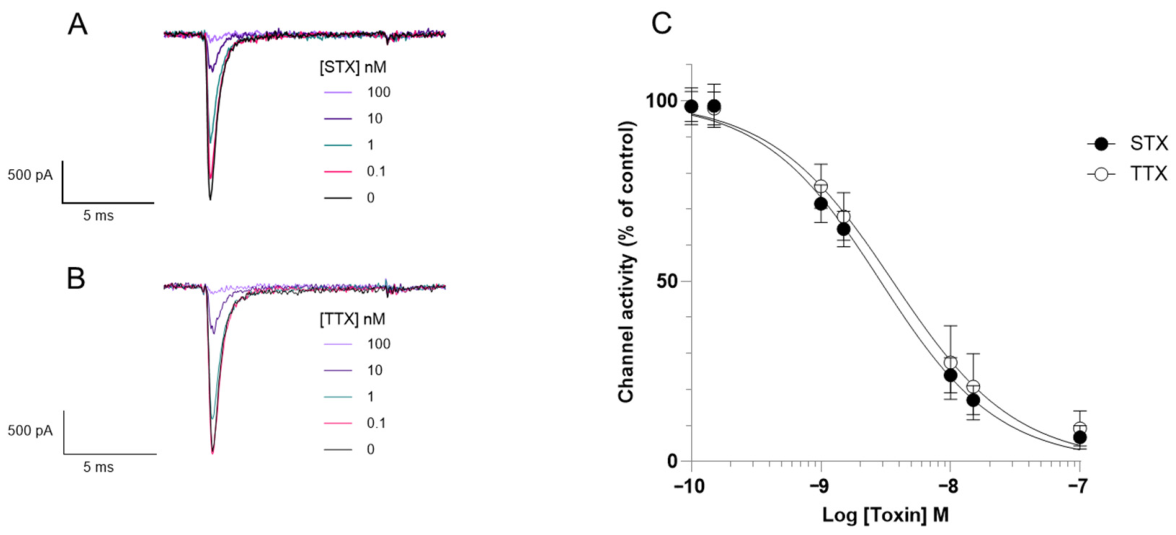
2.1. STX and Tetrodotoxin (TTX) Concentration–Response
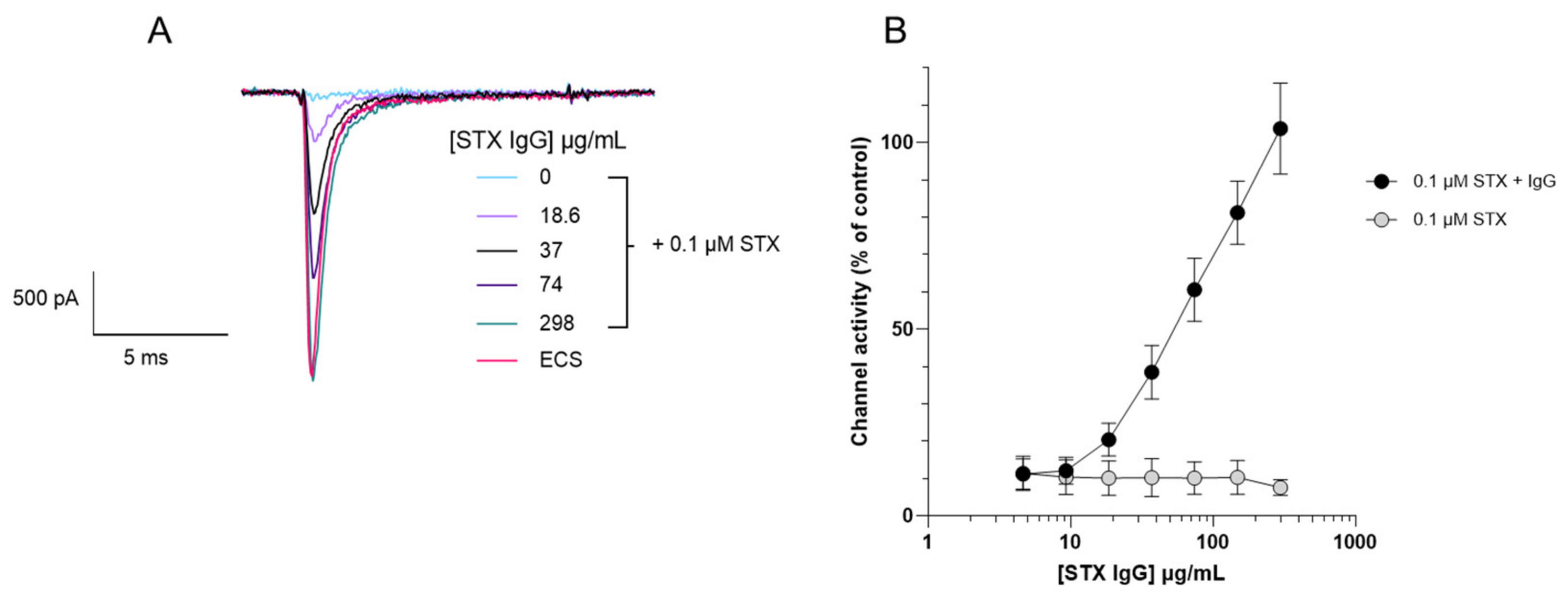
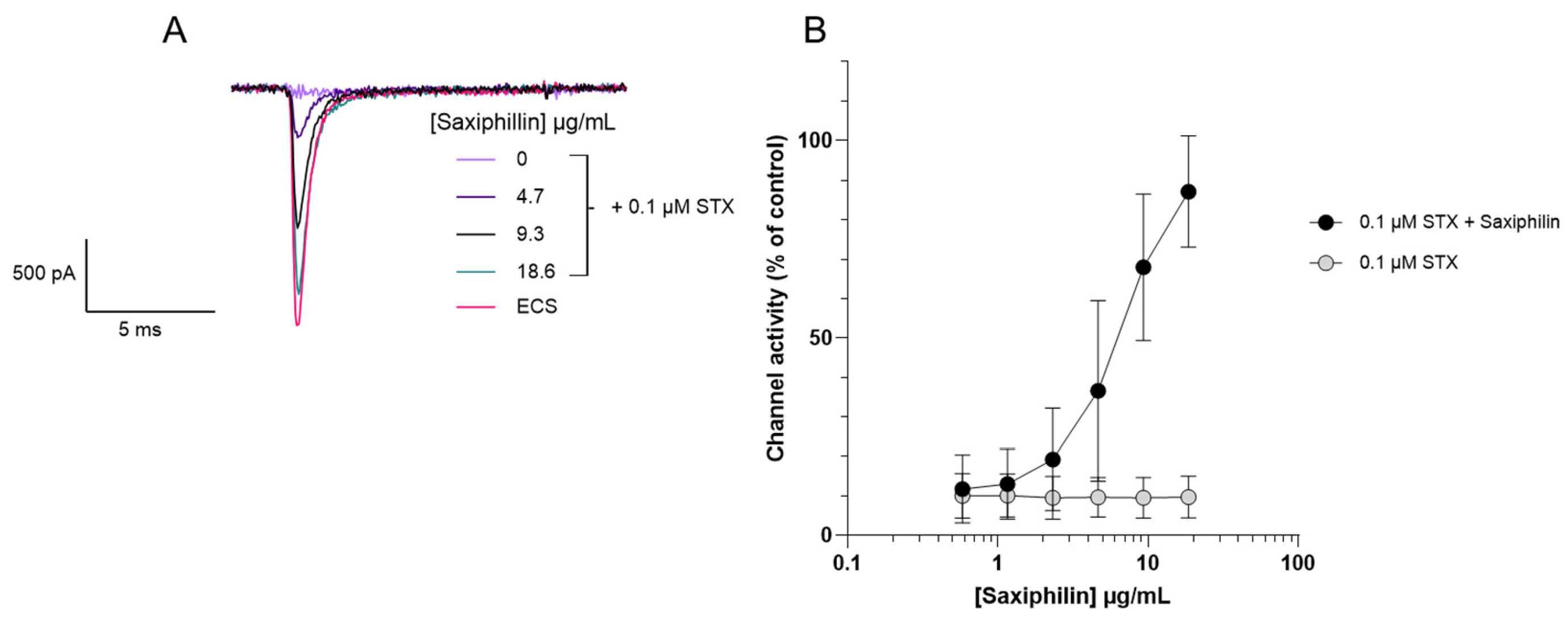
2.2. Assessment of Potential STX Neutralising Agents
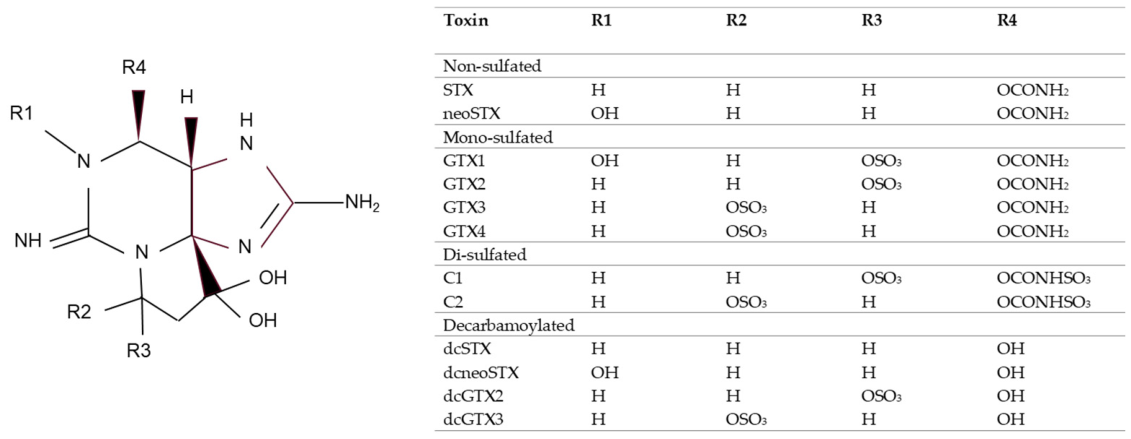
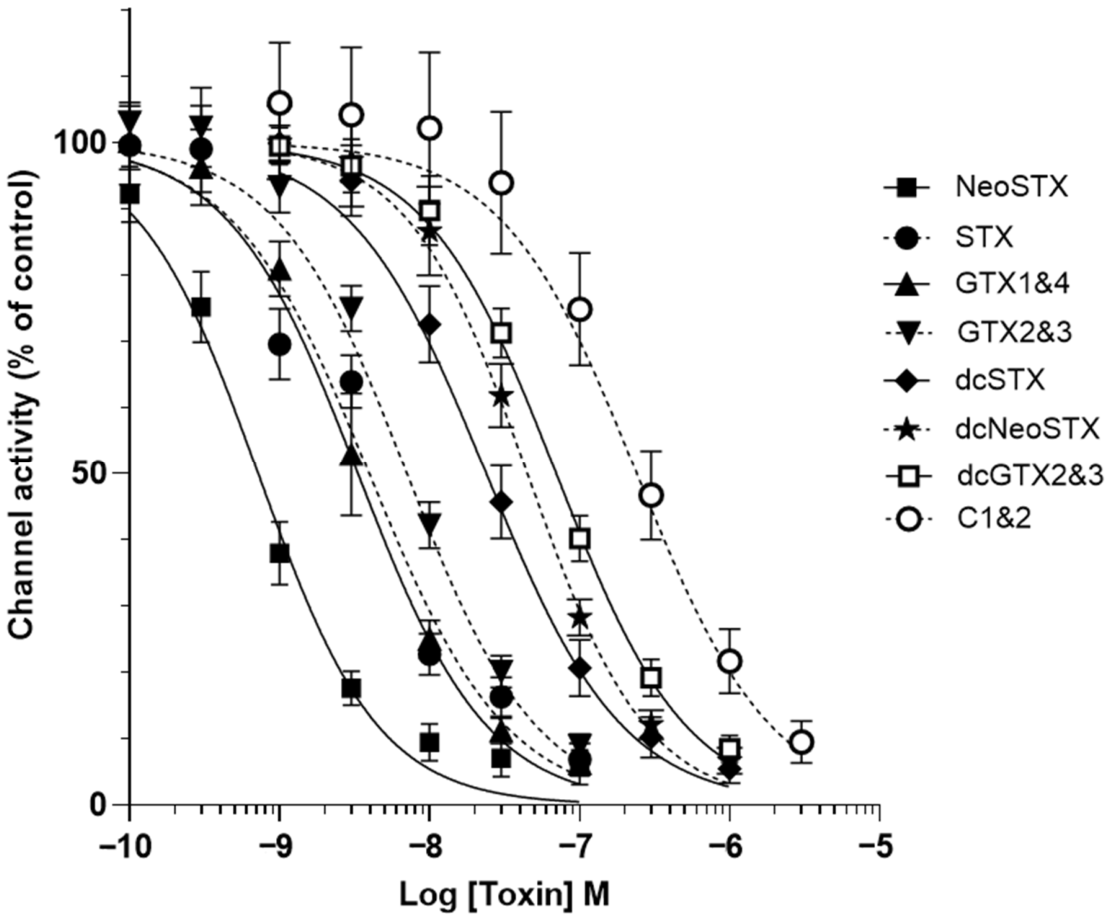
2.3. Detection of the STX Analogues Activity Within the Functional Assay
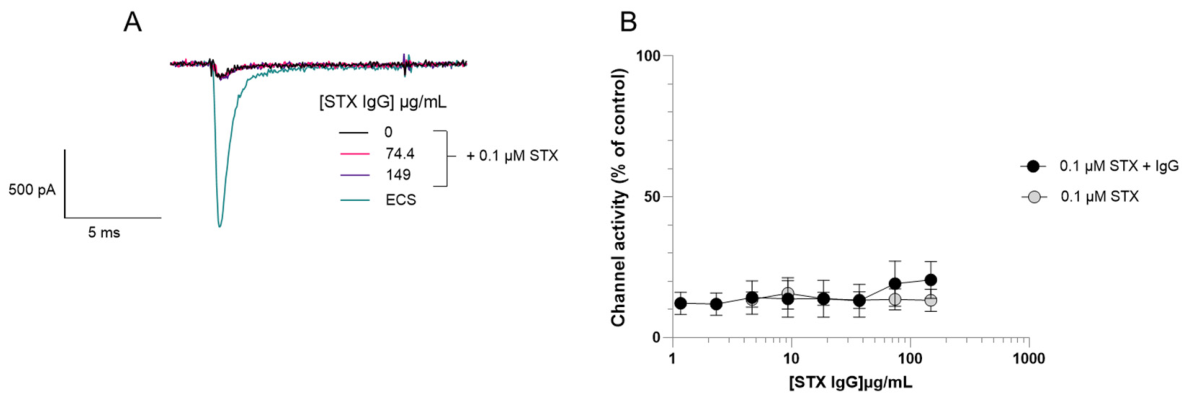
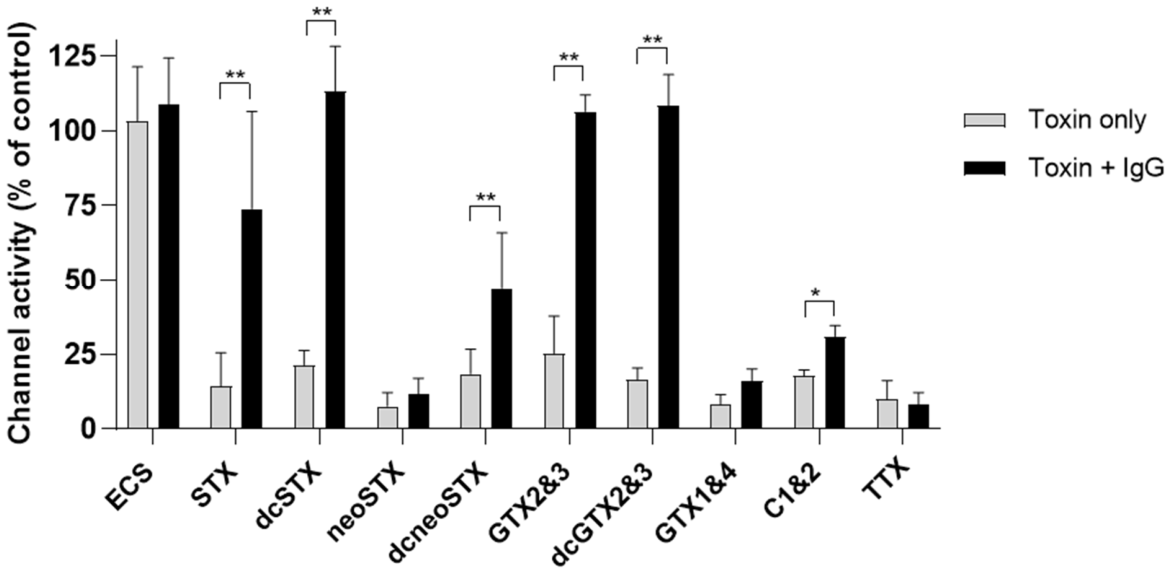
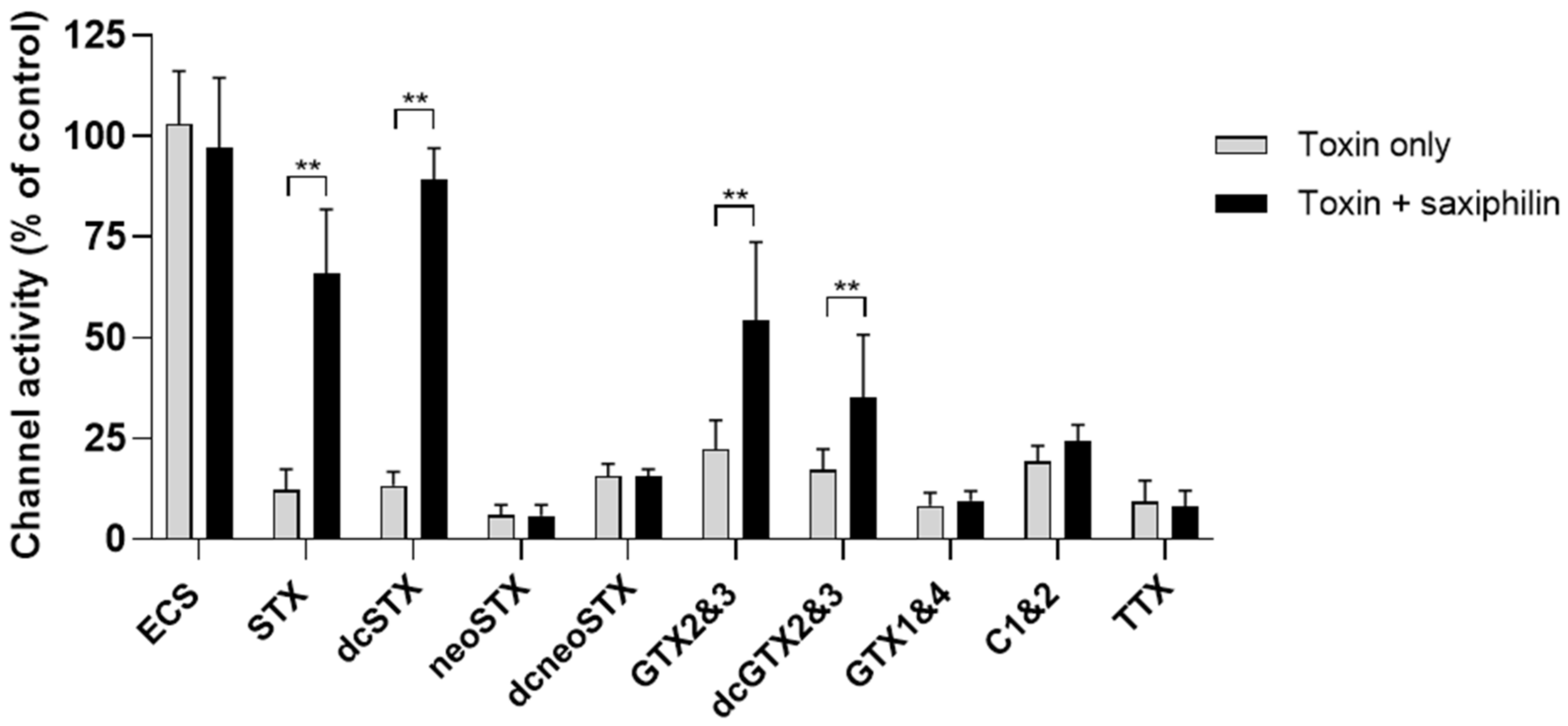
2.4. Assessment of Monoclonal IgG GT13-A and Saxiphilin Ability to Neutralise the Activity of STX Analogues and TTX Within the Functional Assay
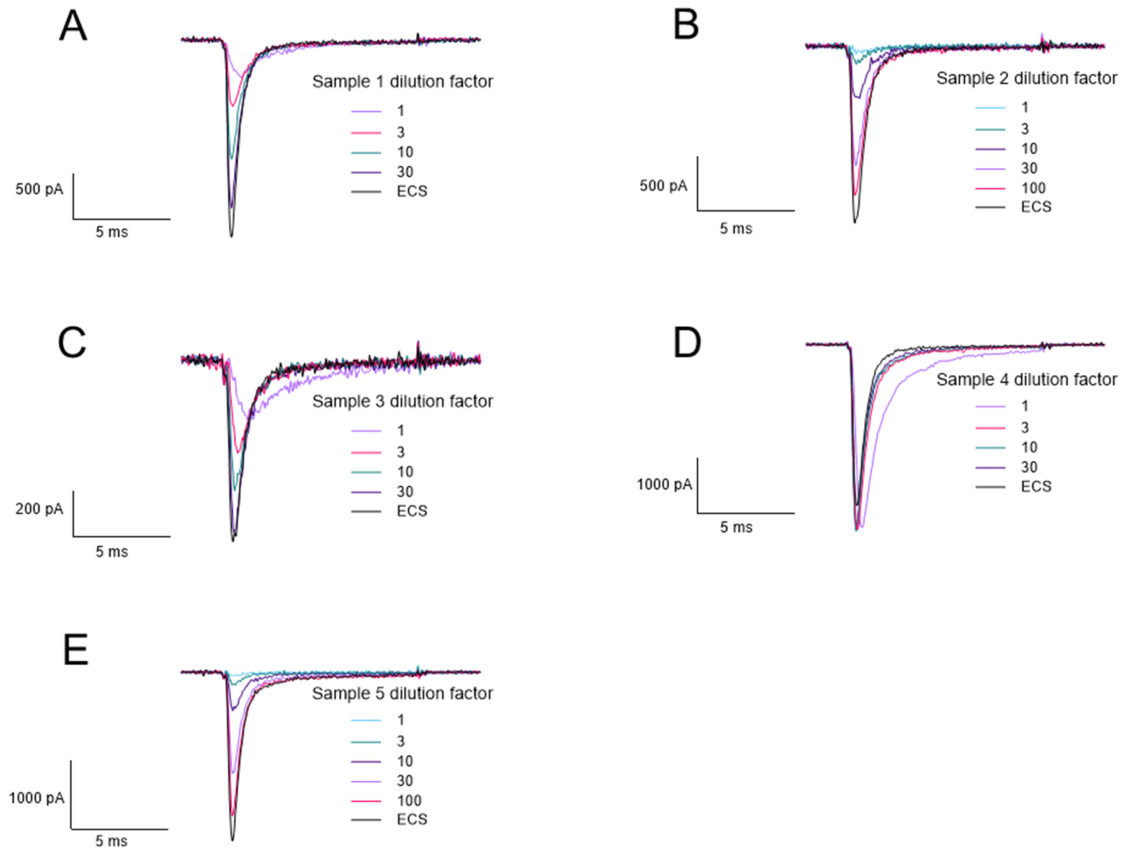
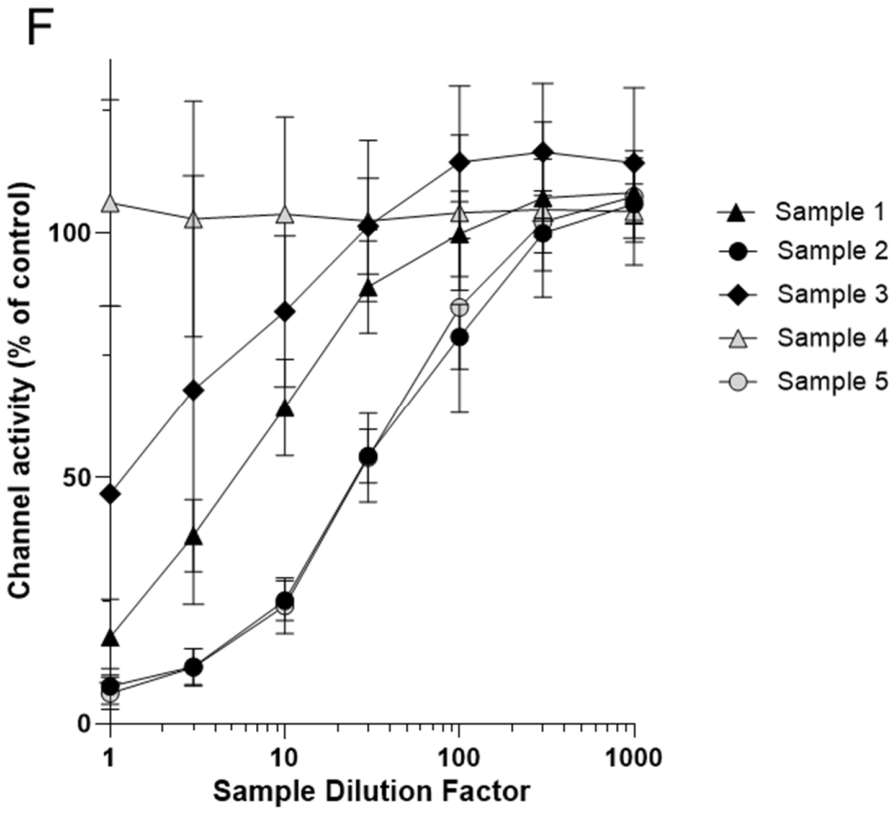
2.5. Assessment of the Functional Assay to Detect Saxitoxin Within OPCW Biotoxin Samples
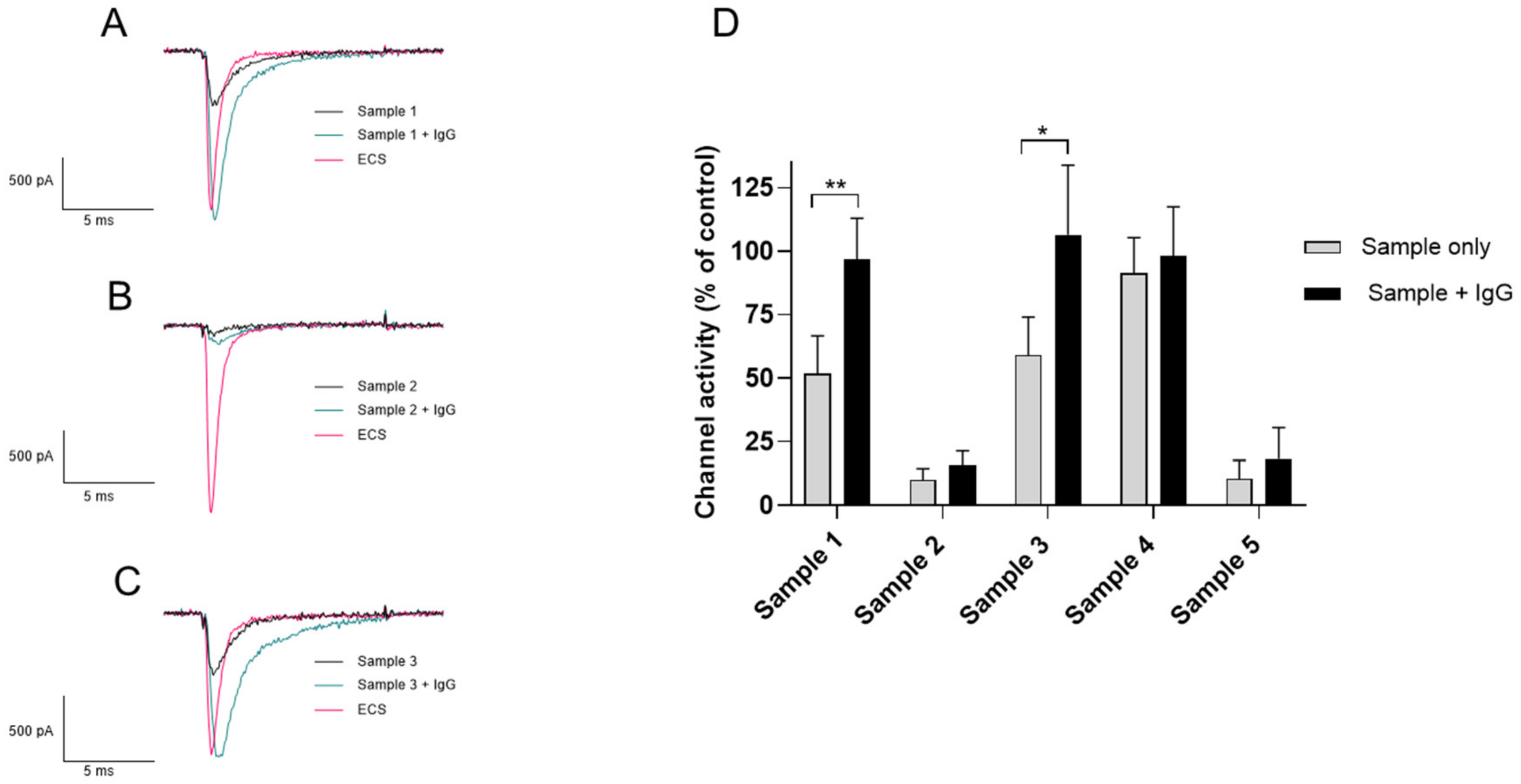
2.6. Use of Monoclonal IgG GT13-A to Specifically Identify STX or Related Molecules in Blinded Samples
3. Discussion
4. Conclusions
5. Materials and Methods
5.1. Materials
5.2. Nav1.6-HEK Cell Line Maintenance
5.3. Automated Patch Clamp Recording—Assessing the Ability of STX, STX Analogues and Biotoxin Exercise Samples to Block the Whole-Cell Current Measured Through Nav1.6 Channels
5.4. Automated Patch Clamp Recording—Assessment of Potential STX Neutralising Agents
5.5. Automated Patch Clamp Recording—Neutralisation Assay
5.6. Statistical Analyses
5.7. LC-MS Analysis of Biotoxin Exercise Samples
Supplementary Materials
Author Contributions
Funding
Institutional Review Board Statement
Informed Consent Statement
Data Availability Statement
Acknowledgments
Conflicts of Interest
Crown Copyright (2026)
Abbreviations
| APC | Automated patch clamp |
| C1&2 | N-sulfocarbamoyl analogues of STX |
| Dc | Decarbamoyl |
| Do | 13-deoxy-decarbamoyl analogues of STX |
| ECS | Extracellular solution |
| ELISA | Enzyme-linked immunosorbent assay |
| FBS | Foetal bovine serum |
| GTX | Gonyautoxin |
| HPLC-FLD | High-performance liquid chromatography with fluorescence detection |
| HEK | Human embryonic kidney |
| IC50 | Half-maximal inhibitory concentration |
| ICS | Intracellular solution |
| IP | Intraperitoneal |
| LC-MS | Liquid chromatography–mass spectrometry |
| Nav1.6 | Sodium channel Nav1.6 |
| MBA | Mouse bioassay |
| MEM | Minimum essential medium |
| NeoSTX | Neosaxitoxin |
| OPCW | Organisation for the Prohibition of Chemical Weapons |
| PRM | Parallel reaction monitoring |
| PSP | Paralytic shellfish poisoning |
| RBA | Radio-ligand receptor binding assay |
| SD | Standard deviation |
| STX | STX dihydrochloride |
| TEFs | Toxicity equivalence factors |
| TTX | Tetrodotoxin |
| VGSC | Voltage-gated sodium channels |
References
- McCall, J.R.; Holland, W.C.; Keeler, D.M.; Hardison, D.R.; Litaker, R.W. Improved Accuracy of Saxitoxin Measurement Using an Optimized Enzyme-Linked Immunosorbent Assay. Toxins 2019, 11, 632. [Google Scholar] [CrossRef] [Scilit] [PubMed]
- Llewellyn, L.E. Saxitoxin, a toxic marine natural product that targets a multitude of receptors. Nat. Prod. Rep. 2006, 23, 200–222. [Google Scholar] [CrossRef] [Scilit]
- Etheridge, S.M. Paralytic shellfish poisoning: Seafood safety and human health perspectives. Toxicon 2010, 56, 108–122. [Google Scholar] [CrossRef] [Scilit]
- Sierra, M.A.; Martínez-Álvarez, R. Ricin and saxitoxin: Two natural products that became chemical weapons. J. Chem. Educ. 2020, 97, 1707–1714. [Google Scholar] [CrossRef] [Scilit]
- Thottumkara, A.P.; Parsons, W.H.; Du Bois, J. Saxitoxin. Angew. Chem. Int. Ed. Engl. 2014, 53, 5760–5784. [Google Scholar] [CrossRef] [Scilit]
- Durán-Riveroll, L.M.; Cembella, A.D. Guanidinium Toxins and Their Interactions with Voltage-Gated Sodium Ion Channels. Mar. Drugs 2017, 15, 303. [Google Scholar] [CrossRef] [Scilit]
- Catterall, W.A.; Cestèle, S.; Yarov-Yarovoy, V.; Yu, F.H.; Konoki, K.; Scheuer, T. Voltage-gated ion channels and gating modifier toxins. Toxicon 2007, 49, 124–141. [Google Scholar] [CrossRef] [Scilit]
- Stevens, M.; Peigneur, S.; Tytgat, J. Neurotoxins and their binding areas on voltage-gated sodium channels. Front. Pharmacol. 2011, 2, 71. [Google Scholar] [CrossRef] [Scilit] [PubMed]
- Alonso, E.; Alfonso, A.; Vieytes, M.R.; Botana, L.M. Evaluation of toxicity equivalent factors of paralytic shellfish poisoning toxins in seven human sodium channels types by an automated high throughput electrophysiology system. Arch. Toxicol. 2016, 90, 479–488. [Google Scholar]
- Campàs, M.; Reverté, J.; Tudó, À.; Alkassar, M.; Diogène, J.; Sureda, F.X. Automated Patch Clamp for the Detection of Tetrodotoxin in Pufferfish Samples. Mar. Drugs 2024, 22, 176. [Google Scholar] [CrossRef] [Scilit] [PubMed]
- Dillon, M.; Zaczek-Moczydlowska, M.A.; Edwards, C.; Turner, A.D.; Miller, P.I.; Moore, H.; McKinney, A.; Lawton, L.; Campbell, K. Current Trends and Challenges for Rapid SMART Diagnostics at Point-of-Site Testing for Marine Toxins. Sensors 2021, 21, 2499. [Google Scholar] [CrossRef] [Scilit] [PubMed]
- Alkassar, M.; Tudó, À.; Rambla-Alegre, M.; Ferreres, L.; Diogène, J.; Sureda, F.X.; Campàs, M. First record of paralytic shellfish toxins in marine pufferfish from the Spanish Mediterranean coast using cell-based assay, automated patch clamp and HPLC-FLD. Chemosphere 2024, 364, 143053. [Google Scholar] [CrossRef] [Scilit] [PubMed]
- Yue, Y.; Zhu, B.; Lun, L.; Xu, N. Quantifications of saxitoxin concentrations in bivalves by high performance liquid chromatography-tandem mass spectrometry with the purification of immunoaffinity column. J. Chromatogr. B 2020, 1147, 122133. [Google Scholar] [CrossRef] [Scilit]
- Odehnalová, K.; Přibilová, P.; Maršálek, B.; Babica, P. A fast and reliable LC-MS-MS method for the quantification of saxitoxin in blood plasma samples. J. Anal. Toxicol. 2024, 48, 119–125. [Google Scholar] [CrossRef] [Scilit]
- Naouli, J.; Abouabdellah, R.; Bennouna, A.; Laissaoui, A.; Swarzenski, P.W.; Ait Bouh, H.; Mesfioui, A.; Benbrahim, M.S.; Dechraoui Bottein, M.Y. Using the radioligand-receptor binding assay for paralytic shellfish toxins: A case study on shellfish from Morocco. J. Environ. Radioact. 2018, 192, 485–490. [Google Scholar] [CrossRef] [Scilit]
- Wiese, M.; D’Agostino, P.M.; Mihali, T.K.; Moffitt, M.C.; Neilan, B.A. Neurotoxic alkaloids: Saxitoxin and its analogs. Mar. Drugs 2010, 8, 2185–2211. [Google Scholar] [CrossRef] [Scilit]
- Llewellyn, L.E.; Bell, P.M.; Moczydlowski, E.G. Phylogenetic survey of soluble saxitoxin-binding activity in pursuit of the function and molecular evolution of saxiphilin, a relative of transferrin. Proc. Biol. Sci. 1997, 264, 891–902. [Google Scholar] [CrossRef] [Scilit]
- Morabito, M.A.; Moczydlowski, E. Molecular cloning of bullfrog saxiphilin: A unique relative of the transferrin family that binds saxitoxin. Proc. Natl. Acad. Sci. USA 1994, 91, 2478–2482. [Google Scholar] [CrossRef] [Scilit]
- Mahar, J.; Lukács, G.L.; Li, Y.; Hall, S.; Moczydlowski, E. Pharmacological and biochemical properties of saxiphilin, a soluble saxitoxin-binding protein from the bullfrog (Rana catesbeiana). Toxicon 1991, 29, 53–71. [Google Scholar] [CrossRef] [Scilit]
- Chen, Z.; Zakrzewska, S.; Hajare, H.S.; Alvarez-Buylla, A.; Abderemane-Ali, F.; Bogan, M.; Ramirez, D.; O’Connell, L.A.; Du Bois, J.; Minor, D.L., Jr. Definition of a saxitoxin (STX) binding code enables discovery and characterization of the anuran saxiphilin family. Proc. Natl. Acad. Sci. USA 2022, 119, e2210114119. [Google Scholar] [CrossRef] [Scilit] [PubMed]
- Yen, T.J.; Lolicato, M.; Thomas-Tran, R.; Du Bois, J.; Minor, D.L., Jr. Structure of the saxiphilin:saxitoxin (STX) complex reveals a convergent molecular recognition strategy for paralytic toxins. Sci. Adv. 2019, 5, eaax2650. [Google Scholar] [CrossRef] [Scilit]
- Lewis, P.; Fritsch, I.; Gawley, R.E.; Henry, R.; Kight, A.; Lay, J.O., Jr.; Liyanage, R.; McLachlin, J. Dynamics of saxitoxin binding to saxiphilin c-lobe reveals conformational change. Toxicon 2008, 51, 208–217. [Google Scholar] [CrossRef] [Scilit]
- Caldwell, J.H.; Schaller, K.L.; Lasher, R.S.; Peles, E.; Levinson, S.R. Sodium channel Na(v)1.6 is localized at nodes of ranvier, dendrites, and synapses. Proc. Natl. Acad. Sci. USA 2000, 97, 5616–5620. [Google Scholar] [CrossRef] [Scilit] [PubMed]
- Zakrzewska, S.; Nixon, S.A.; Chen, Z.; Hajare, H.S.; Park, E.R.; Mulcahy, J.V.; Arlinghaus, K.M.; Neu, E.; Konovalov, K.; Provasi, D.; et al. Structural basis for saxitoxin congener binding and neutralization by anuran saxiphilins. Nat. Commun. 2025, 16, 3885. [Google Scholar] [CrossRef] [Scilit]
- Wharton, R.E.; Feyereisen, M.C.; Gonzalez, A.L.; Abbott, N.L.; Hamelin, E.I.; Johnson, R.C. Quantification of saxitoxin in human blood by ELISA. Toxicon 2017, 133, 110–115. [Google Scholar] [CrossRef] [Scilit]
- Eangoor, P.; Indapurkar, A.S.; Vakkalanka, M.D.; Knaack, J.S. Multiplexed ELISA screening assay for nine paralytic shellfish toxins in human plasma. Analyst 2019, 144, 4702–4707. [Google Scholar] [CrossRef] [Scilit] [PubMed]
- Harju, K.; Rapinoja, M.L.; Avondet, M.A.; Arnold, W.; Schär, M.; Burrell, S.; Luginbühl, W.; Vanninen, P. Optimization of Sample Preparation for the Identification and Quantification of Saxitoxin in Proficiency Test Mussel Sample using Liquid Chromatography-Tandem Mass Spectrometry. Toxins 2015, 7, 4868–4880. [Google Scholar] [CrossRef] [Scilit]
- Bustillos-Guzmán, J.J.; Band-Schmidt, C.J.; Durán-Riveroll, L.M.; Hernández-Sandoval, F.E.; López-Cortés, D.J.; Núñez-Vázquez, E.J.; Cembella, A.; Krock, B. Paralytic toxin profile of the marine dinoflagellate Gymnodinium catenatum Graham from the Mexican Pacific as revealed by LC-MS/MS. Food Addit. Contam. Part A 2015, 32, 381–394. [Google Scholar] [CrossRef] [Scilit]
- Finch, S.C.; Harwood, D.T. Past, Current and Future Techniques for Monitoring Paralytic Shellfish Toxins in Bivalve Molluscs. Toxins 2025, 17, 105. [Google Scholar] [CrossRef] [Scilit]
- eBioMedicine. The 3Rs of Animal Research. eBioMedicine 2022, 76, 103900. [Google Scholar] [CrossRef] [Scilit]
- Van Dolah, F.M.; Leighfield, T.A.; Doucette, G.J.; Bean, L.; Niedzwiadek, B.; Rawn, D.F. Single-laboratory validation of the microplate receptor binding assay for paralytic shellfish toxins in shellfish. J. AOAC Int. 2009, 92, 1705–1713. [Google Scholar] [PubMed]
- Perez, S.; Vale, C.; Botana, A.M.; Alonso, E.; Vieytes, M.R.; Botana, L.M. Determination of toxicity equivalent factors for paralytic shellfish toxins by electrophysiological measurements in cultured neurons. Chem. Res. Toxicol. 2011, 24, 1153–1157. [Google Scholar] [CrossRef] [Scilit]
- Vale, C.; Alfonso, A.; Vieytes, M.R.; Romarís, X.M.; Arévalo, F.; Botana, A.M.; Botana, L.M. In vitro and in vivo evaluation of paralytic shellfish poisoning toxin potency and the influence of the pH of extraction. Anal. Chem. 2008, 80, 1770–1776. [Google Scholar] [CrossRef] [Scilit]
- Wade, J.; Rimbault, C.; Ali, H.; Ledsgaard, L.; Rivera-de-Torre, E.; Abou Hachem, M.; Boddum, K.; Mirza, N.; Bohn, M.F.; Sakya, S.A.; et al. Generation of Multivalent Nanobody-Based Proteins with Improved Neutralization of Long α-Neurotoxins from Elapid Snakes. Bioconjugate Chem. 2022, 33, 1494–1504. [Google Scholar] [CrossRef] [Scilit]
- Miersch, S.; de la Rosa, G.; Friis, R.; Ledsgaard, L.; Boddum, K.; Laustsen, A.H.; Sidhu, S.S. Synthetic antibodies block receptor binding and current-inhibiting effects of α-cobratoxin from Naja kaouthia. Protein Sci. 2022, 31, e4296. [Google Scholar] [PubMed]
- Ledsgaard, L.; Wade, J.; Jenkins, T.P.; Boddum, K.; Oganesyan, I.; Harrison, J.A.; Villar, P.; Leah, R.A.; Zenobi, R.; Schoffelen, S.; et al. Discovery and optimization of a broadly-neutralizing human monoclonal antibody against long-chain α-neurotoxins from snakes. Nat. Commun. 2023, 14, 682. [Google Scholar] [PubMed]
- Ledsgaard, L.; Laustsen, A.H.; Pus, U.; Wade, J.; Villar, P.; Boddum, K.; Slavny, P.; Masters, E.W.; Arias, A.S.; Oscoz, S.; et al. In vitro discovery of a human monoclonal antibody that neutralizes lethality of cobra snake venom. mAbs 2022, 14, 2085536. [Google Scholar] [CrossRef] [Scilit] [PubMed]
- Restano-Cassulini, R.; Garcia, W.; Paniagua-Solís, J.F.; Possani, L.D. Antivenom Evaluation by Electrophysiological Analysis. Toxins 2017, 9, 74. [Google Scholar] [CrossRef] [Scilit]
- Abderemane-Ali, F.; Rossen, N.D.; Kobiela, M.E.; Craig, R.A.; Garrison, C.E.; Chen, Z.; Colleran, C.M.; O’Connell, L.A.; Du Bois, J.; Dumbacher, J.P.; et al. Evidence that toxin resistance in poison birds and frogs is not rooted in sodium channel mutations and may rely on “toxin sponge” proteins. J. Gen. Physiol. 2021, 153, e202112872. [Google Scholar] [CrossRef] [Scilit]
- Kawatsu, K.; Hamano, Y.; Sugiyama, A.; Hashizume, K.; Noguchi, T. Development and application of an enzyme immunoassay based on a monoclonal antibody against gonyautoxin components of paralytic shellfish poisoning toxins. J. Food Prot. 2002, 65, 1304–1308. [Google Scholar] [CrossRef] [Scilit]
- Aballay-González, A.; Gallardo-Rodriguez, J.J.; Silva-Higuera, M.; Rivera, A.; Ulloa, V.; Delgado-Rivera, L.; Rivera-Belmar, A.; Astuya, A. Neuro-2a cell-based assay for toxicity equivalency factor—Proposal and evaluation in Chilean contaminated shellfish samples. Food Addit. Contam. Part A 2020, 37, 162–173. [Google Scholar] [CrossRef] [Scilit]
- Campbell, K.; Stewart, L.D.; Doucette, G.J.; Fodey, T.L.; Haughey, S.A.; Vilariño, N.; Kawatsu, K.; Elliott, C.T. Assessment of specific binding proteins suitable for the detection of paralytic shellfish poisons using optical biosensor technology. Anal. Chem. 2007, 79, 5906–5914. [Google Scholar] [CrossRef] [Scilit]
- Fonfría, E.S.; Vilariño, N.; Campbell, K.; Elliott, C.; Haughey, S.A.; Ben-Gigirey, B.; Vieites, J.M.; Kawatsu, K.; Botana, L.M. Paralytic shellfish poisoning detection by surface plasmon resonance-based biosensors in shellfish matrixes. Anal. Chem. 2007, 79, 6303–6311. [Google Scholar] [CrossRef] [Scilit]
- Organisation for the Prohibition of Chemical Weapons. New Methods for the Detection, and Confirmation of the Detection of Saxitoxin in Environmental Samples; OPCW: Hague, The Netherlands, 2021. [Google Scholar]
- Organisation for the Prohibition of Chemical Weapons. Guidelines for the Seventh Biotoxin Analysis Exercise; OPCW: Hague, The Netherlands, 2022. [Google Scholar]





| Sample Number | Indicative Sample Composition | Actual Sample Composition (ng/mL) | Is the Functional Assay Output Consistent with Sample Identification and Activity? |
|---|---|---|---|
| 1 | STX, dcSTX, GTX2&3 dcGTX2&3 | STX (50) | Yes |
| 2 | Active blocker but not neutralised | neoSTX (50) | Yes |
| 3 | STX, dcSTX, GTX2&3 dcGTX2&3 | STX (30) | Yes |
| 4 | No active blocker | Matrix only | Yes |
| 5 | Active blocker but not neutralised | STX (20), neoSTX (50) | Yes |
Disclaimer/Publisher’s Note: The statements, opinions and data contained in all publications are solely those of the individual author(s) and contributor(s) and not of MDPI and/or the editor(s). MDPI and/or the editor(s) disclaim responsibility for any injury to people or property resulting from any ideas, methods, instructions or products referred to in the content. |
© 2026 by the authors. Licensee MDPI, Basel, Switzerland. This article is an open access article distributed under the terms and conditions of the Creative Commons Attribution (CC BY) license.
Share and Cite
Whiting, R.; Picken, I.; Howells, G.; Green, A.C.; Elliott, C.; Clark, G.C. Development of an Automated Cell-Based Assay for the Detection of the Functional Activity of Saxitoxin. Toxins 2026, 18, 206. https://doi.org/10.3390/toxins18050206
Whiting R, Picken I, Howells G, Green AC, Elliott C, Clark GC. Development of an Automated Cell-Based Assay for the Detection of the Functional Activity of Saxitoxin. Toxins. 2026; 18(5):206. https://doi.org/10.3390/toxins18050206
Chicago/Turabian StyleWhiting, Rachel, Isobel Picken, Grace Howells, A. Christopher Green, Chris Elliott, and Graeme C. Clark. 2026. "Development of an Automated Cell-Based Assay for the Detection of the Functional Activity of Saxitoxin" Toxins 18, no. 5: 206. https://doi.org/10.3390/toxins18050206
APA StyleWhiting, R., Picken, I., Howells, G., Green, A. C., Elliott, C., & Clark, G. C. (2026). Development of an Automated Cell-Based Assay for the Detection of the Functional Activity of Saxitoxin. Toxins, 18(5), 206. https://doi.org/10.3390/toxins18050206