Article

Design and Characterization of Recombinant and Chimeric BoNT/A Neurotoxins with Receptor-Binding Domain Grafting


1
School of Biology and Biological Engineering, South China University of Technology, Guangzhou 510006, China
2
Guangdong Provincial Key Laboratory of Fermentation and Enzyme Engineering, South China University of Technology, Guangzhou 510006, China
*
Author to whom correspondence should be addressed.
Toxins 2026, 18(5), 205; https://doi.org/10.3390/toxins18050205

Submission received: 1 April 2026 / Revised: 24 April 2026 / Accepted: 26 April 2026 / Published: 29 April 2026
(This article belongs to the Section Bacterial Toxins)

Abstract

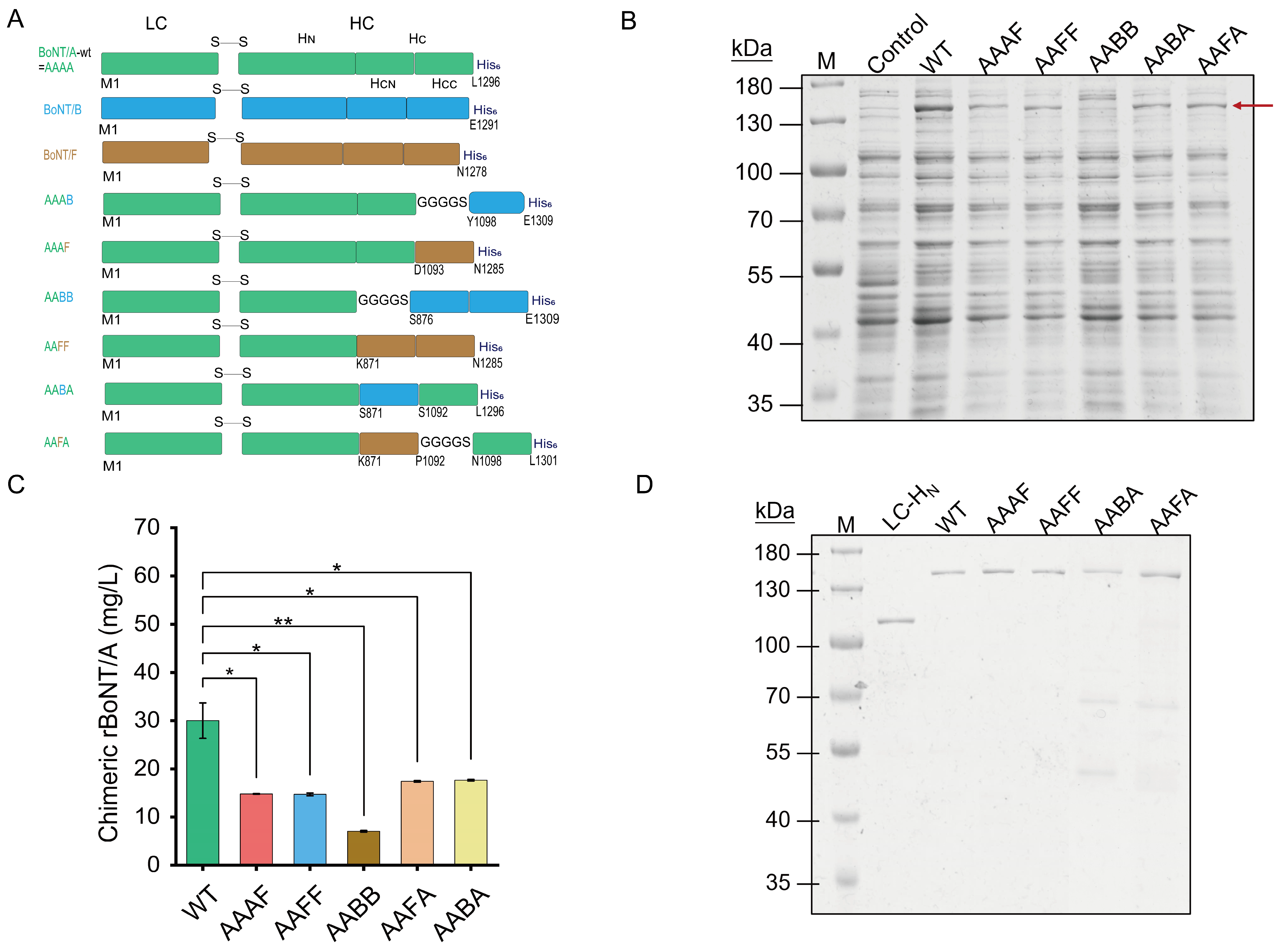
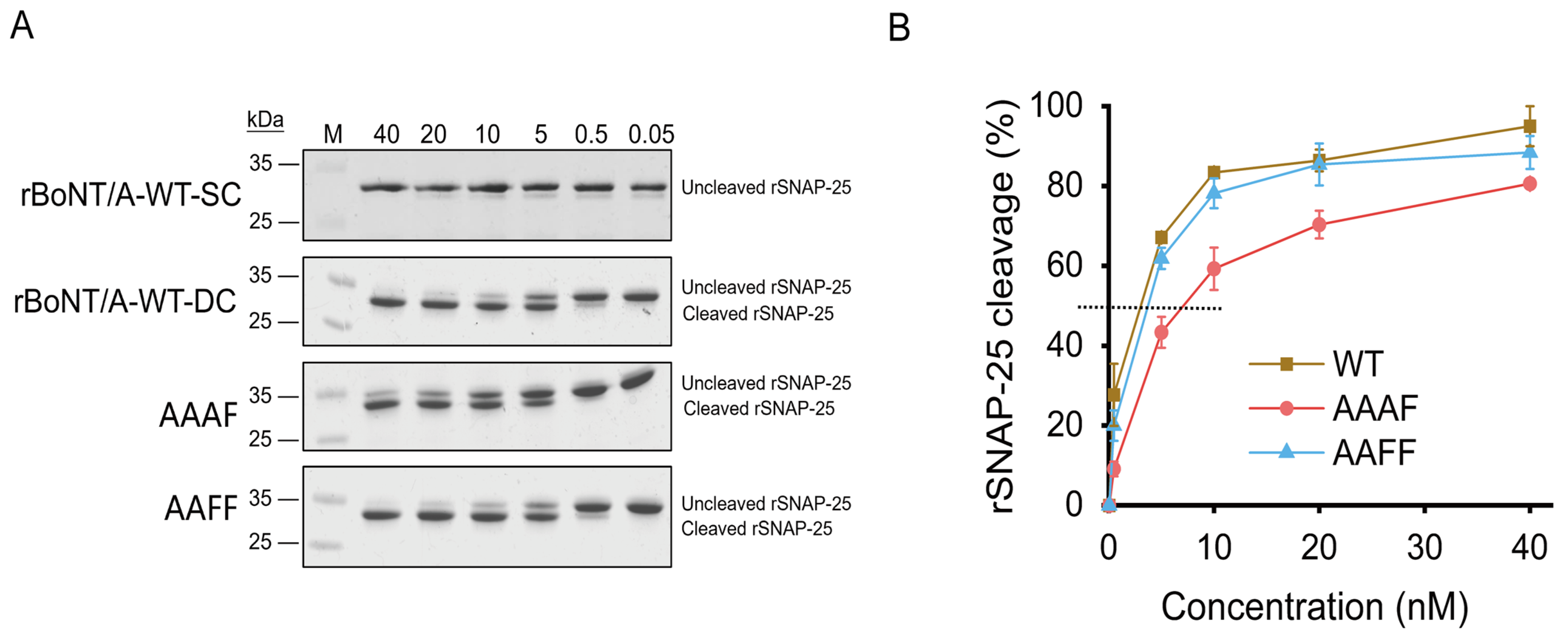
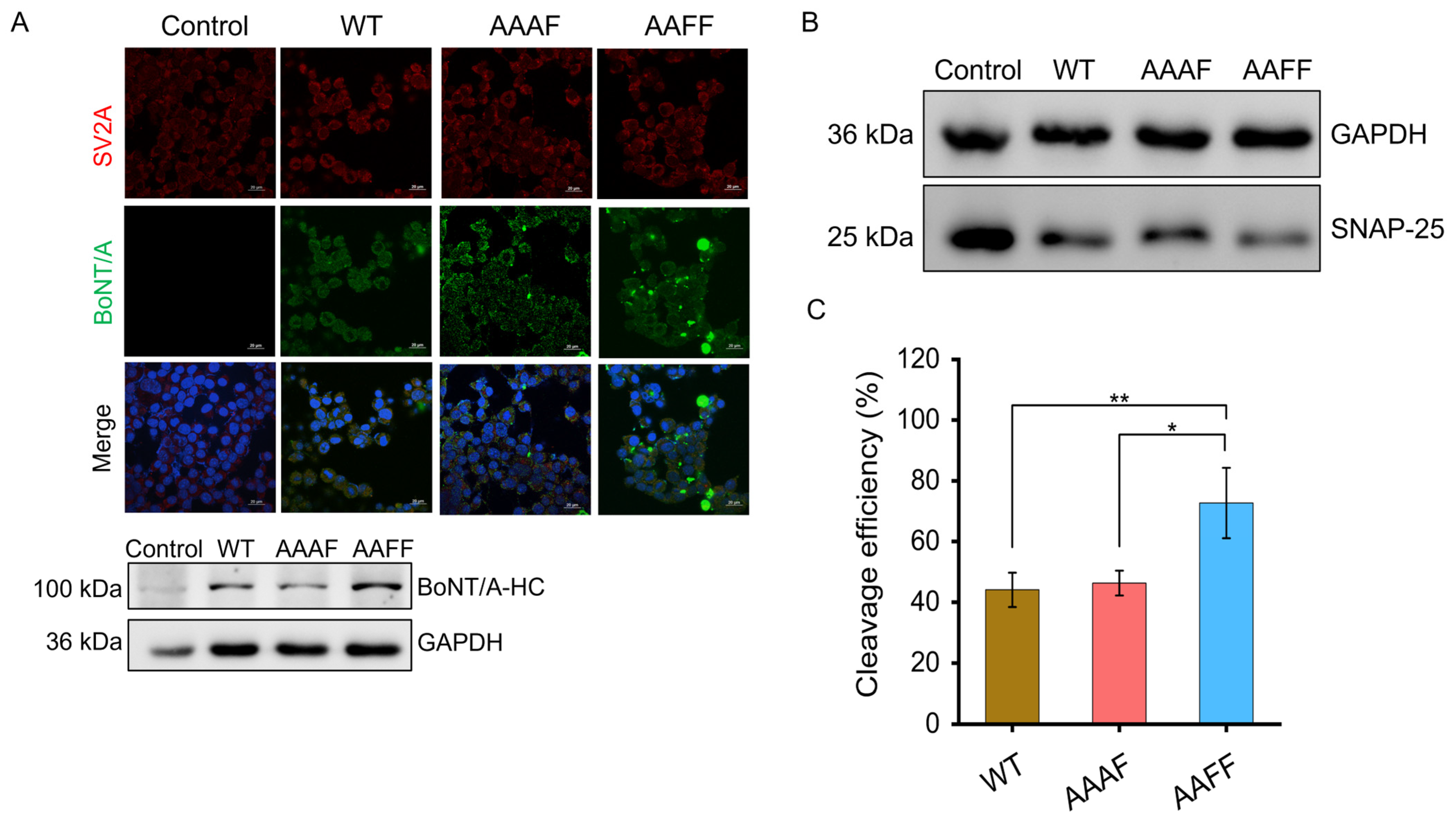
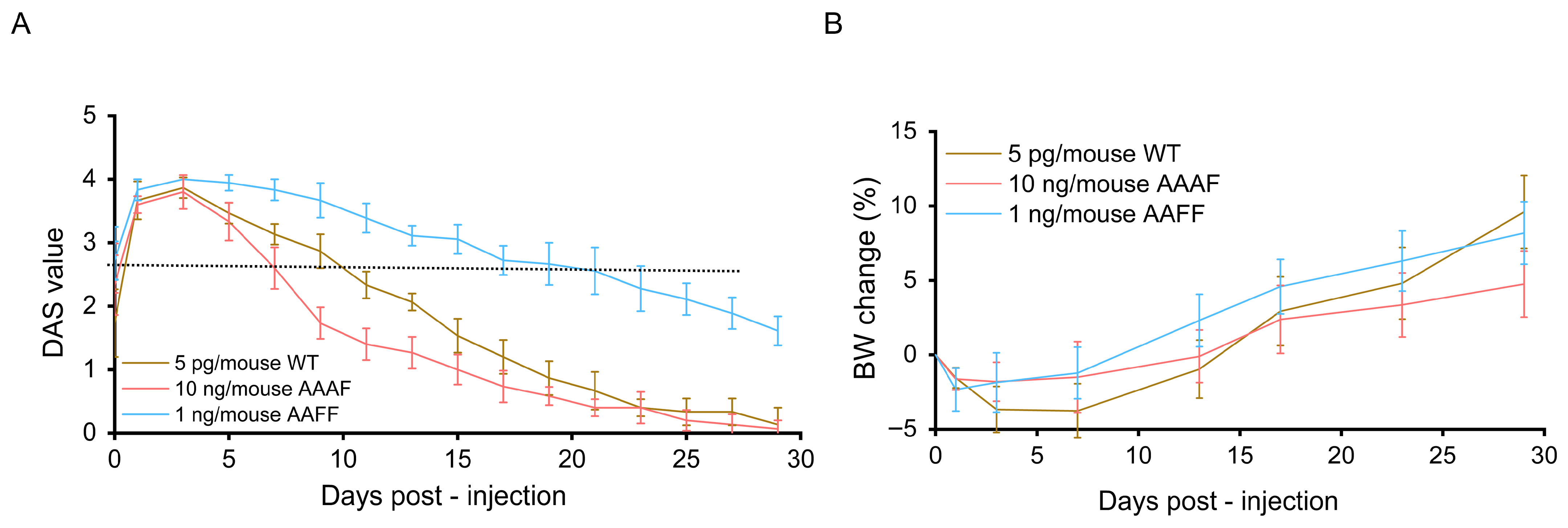
Botulinum neurotoxins (BoNTs) act on peripheral cholinergic nerve terminals, inducing reversible muscle paralysis and profound therapeutic effects. However, their limited cell-type specificity and narrow therapeutic window have motivated the development of engineered variants. Here, a modular strategy was employed to construct full-length chimeric BoNTs, grafting receptor-binding segments from BoNT/B or BoNT/F onto the BoNT/A framework. The novel chimeras AAAF and AAFF efficiently cleaved rSNAP-25 in cell-free assays. Firstly, both toxins showed effective cellular uptake and cleaved endogenous SNAP-25 in Neuro-2a cells, with cleavage efficiencies of approximately 46% for AAAF and 73% for AAFF, highlighting the enhanced activity of AAFF. Secondly, AAAF induced faster recovery from reversible muscle paralysis compared to rBoNT/A-WT, whereas AAFF produced more sustained paralysis, with both exhibiting reduced systemic toxicity. Despite these altered pharmacological profiles, the chimeras required higher doses than rBoNT/A-WT to induce neuromuscular effects. Collectively, this study presents the design of novel chimeric BoNT/A-F proteins, characterizes their functional activities, and provides a preliminary exploration of how domain grafting affects cellular uptake, enzymatic activity, and neuromuscular pharmacodynamics.
Keywords: botulinum toxin type A; drug design; chimeric protein; neurotoxin potency; duration botulinum toxin type A; drug design; chimeric protein; neurotoxin potency; duration