Article

Occurrence of Co-Contamination and Interaction of Multi-Mycotoxins in Dairy Cow Feed in China


1
School of Health Science and Engineering, University of Shanghai for Science and Technology, Shanghai 200093, China
2
Institute for Agro-Food Standards and Testing Technology, Shanghai Academy of Agricultural Sciences, Shanghai 201403, China
3
Xining Agricultural Product Quality and Safety Testing Center, Xining 810003, China
4
Institute of Animal Science and Veterinary Medicine, Shanghai Academy of Agricultural Sciences, Shanghai 201106, China
*
Authors to whom correspondence should be addressed.
Toxins 2025, 17(3), 137; https://doi.org/10.3390/toxins17030137

Submission received: 19 February 2025 / Revised: 11 March 2025 / Accepted: 12 March 2025 / Published: 14 March 2025
(This article belongs to the Section Mycotoxins)

Abstract

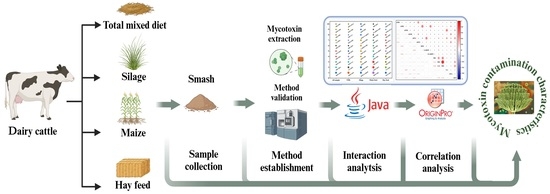
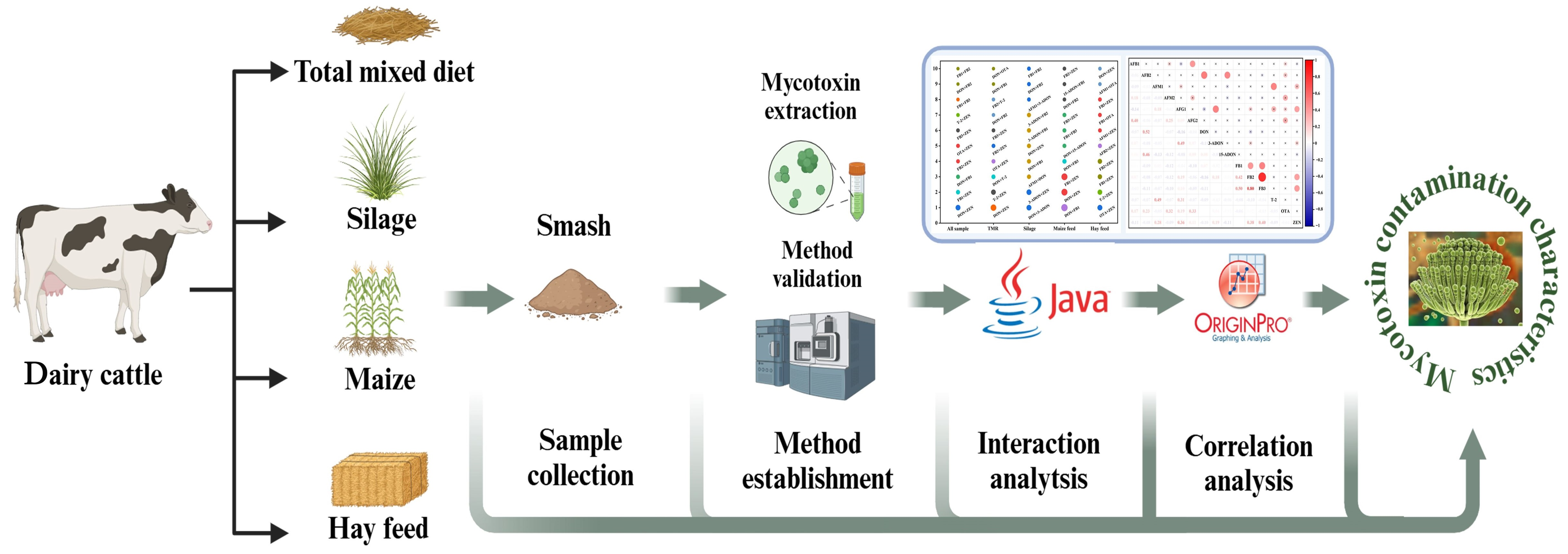
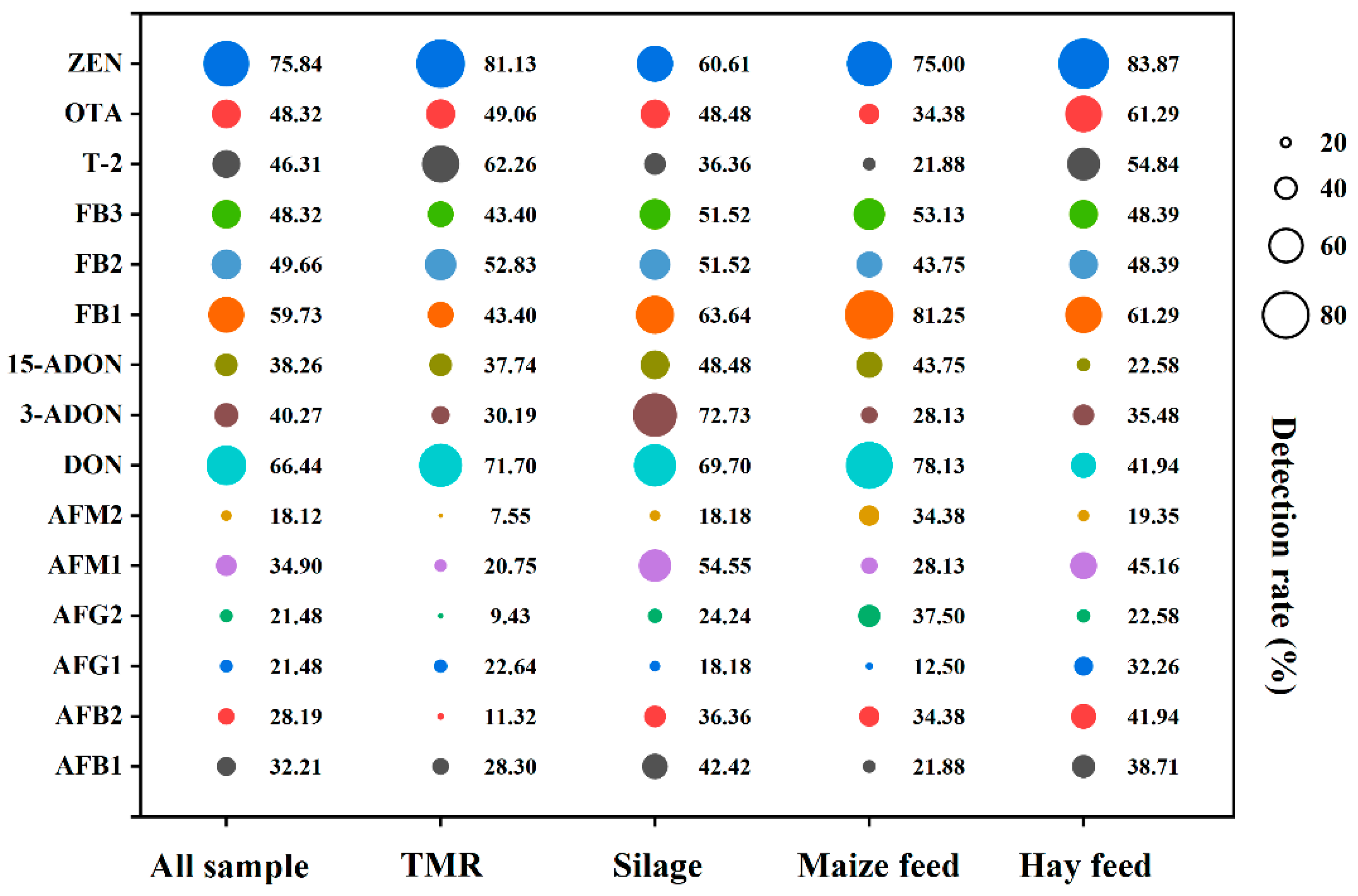
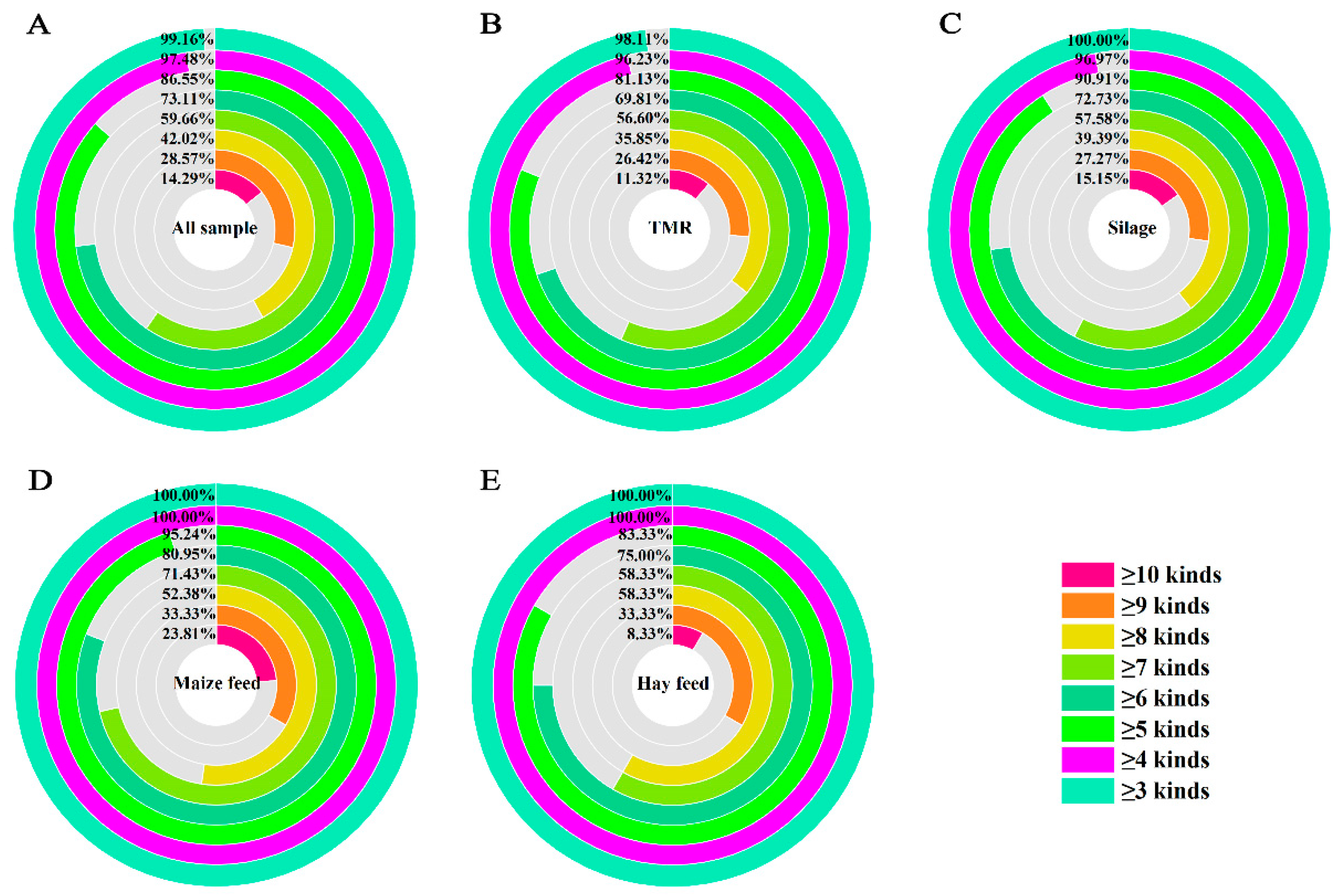
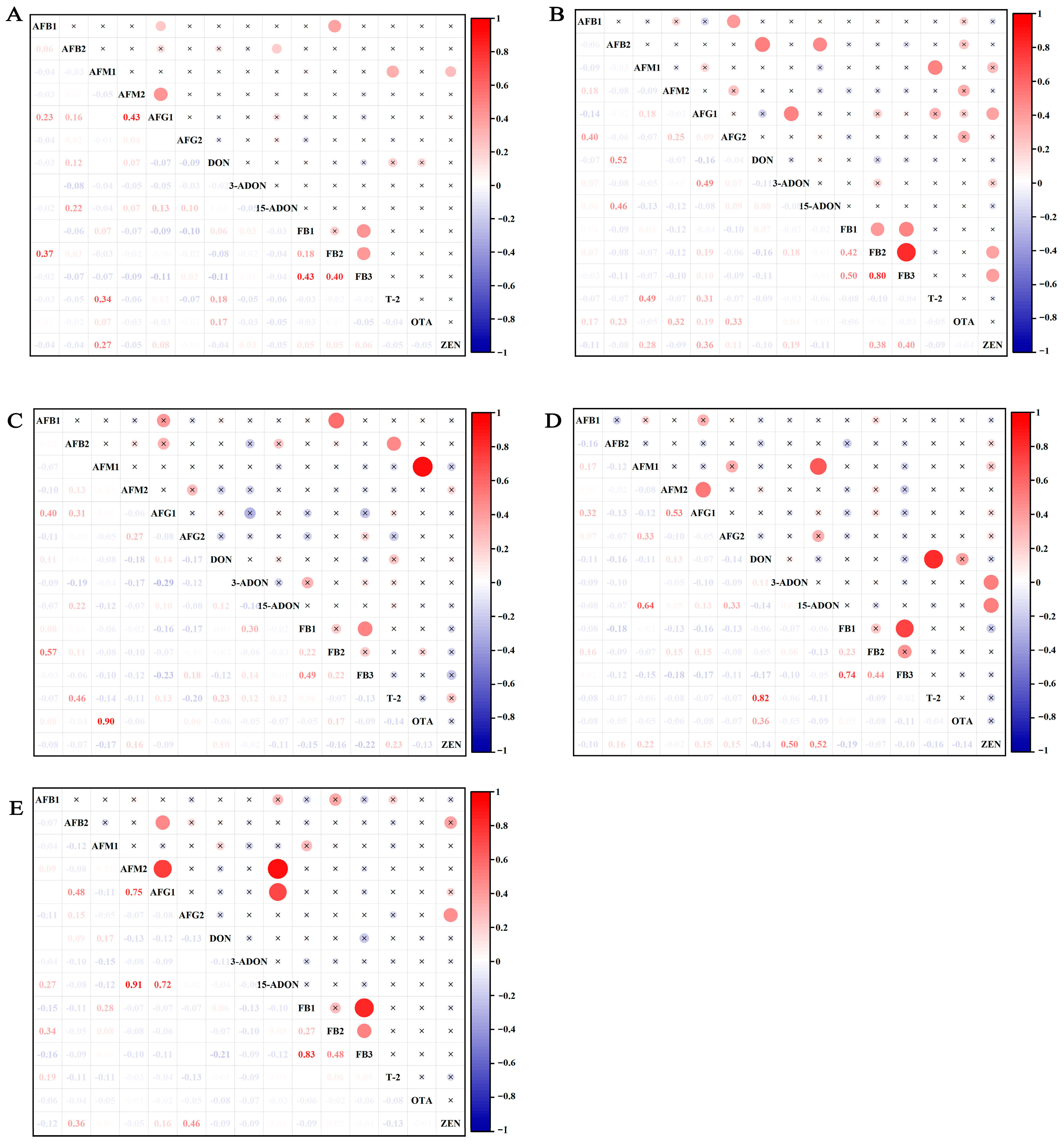
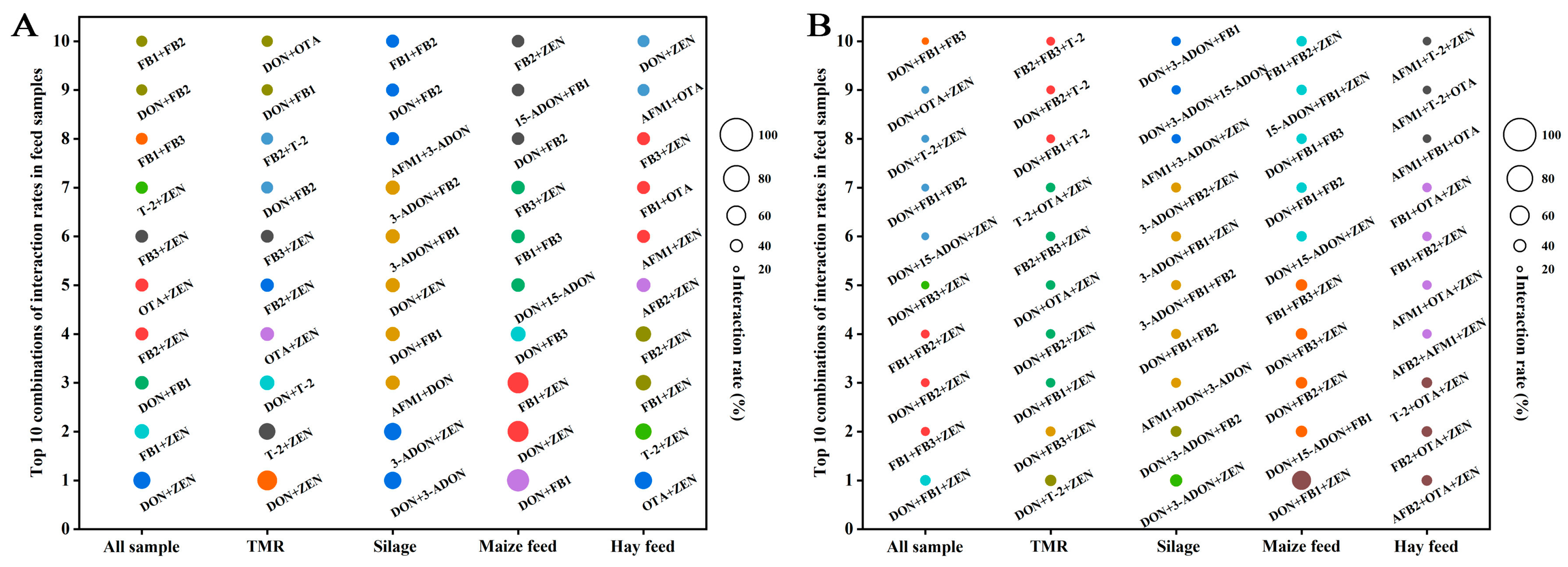
Co-contamination of multiple mycotoxins in feed has become one of the most important issues in the world. In this study, the characteristics and interactions of co-contamination among 15 mycotoxins were explored in dairy cow feed, including total mixed ration (TMR), silage, maize, and hay feed. The results showed that four dairy cow feeds were constantly contaminated with mycotoxins, including zearalenone (ZEN), fumonisins (FBs), deoxynivalenol (DON), ochratoxin A (OTA), T-2 toxin (T-2), and aflatoxins (AFs). The contamination level of each mycotoxin was low, but the probability of co-contamination by three or more mycotoxins in one sample was very high. Between DON and aflatoxin B2 (AFB2), between aflatoxin M1 (AFM1) and OTA, between FB2 and aflatoxin B1 (AFB1), between 15-acetyl-deoxynivalenol (15-ADON) and ZEN, and between fumonisin B1 (FB1) and fumonisin B3 (FB3), and between aflatoxin M2 (AFM2) and aflatoxin G2 (AFG2), there were significant and strong correlations. Among the four typical feed samples, the combinations DON + ZEN, DON + FB1, FB1 + ZEN, OTA + ZEN, DON + 3-acetyl-deoxynivalenol (3-ADON), 3-ADON + ZEN, T-2 + ZEN, fumonisin B2 (FB2) + ZEN, and DON + FB3 had higher interaction rates than the other combinations (≥43.75%). Our study not only reveals that co-contamination with multiple mycotoxins is relatively common in dairy cow feed but also highlights the significant correlations between various mycotoxins and assesses the likelihood of their interactions. These findings are crucial for ensuring feed safety and safeguarding animal health.
Keywords: feed; mycotoxin; co-contamination; correlation; interaction feed; mycotoxin; co-contamination; correlation; interaction
Graphical Abstract