Article

Multi-Mycotoxin Contamination of Aquaculture Feed: A Global Survey


by
Christiane Gruber-Dorninger
1,*,
Anneliese Müller
2 and
Roy Rosen
1
1
dsm-firmenich, Animal Nutrition and Health R&D Center Tulln, Technopark 1, 3430 Tulln, Austria
2
dsm-firmenich, ANH Performance Solutions, Erber Campus 1, 3131 Getzersdorf, Austria
*
Author to whom correspondence should be addressed.
Toxins 2025, 17(3), 116; https://doi.org/10.3390/toxins17030116

Submission received: 11 December 2024 / Revised: 20 February 2025 / Accepted: 24 February 2025 / Published: 1 March 2025
(This article belongs to the Section Mycotoxins)

Abstract

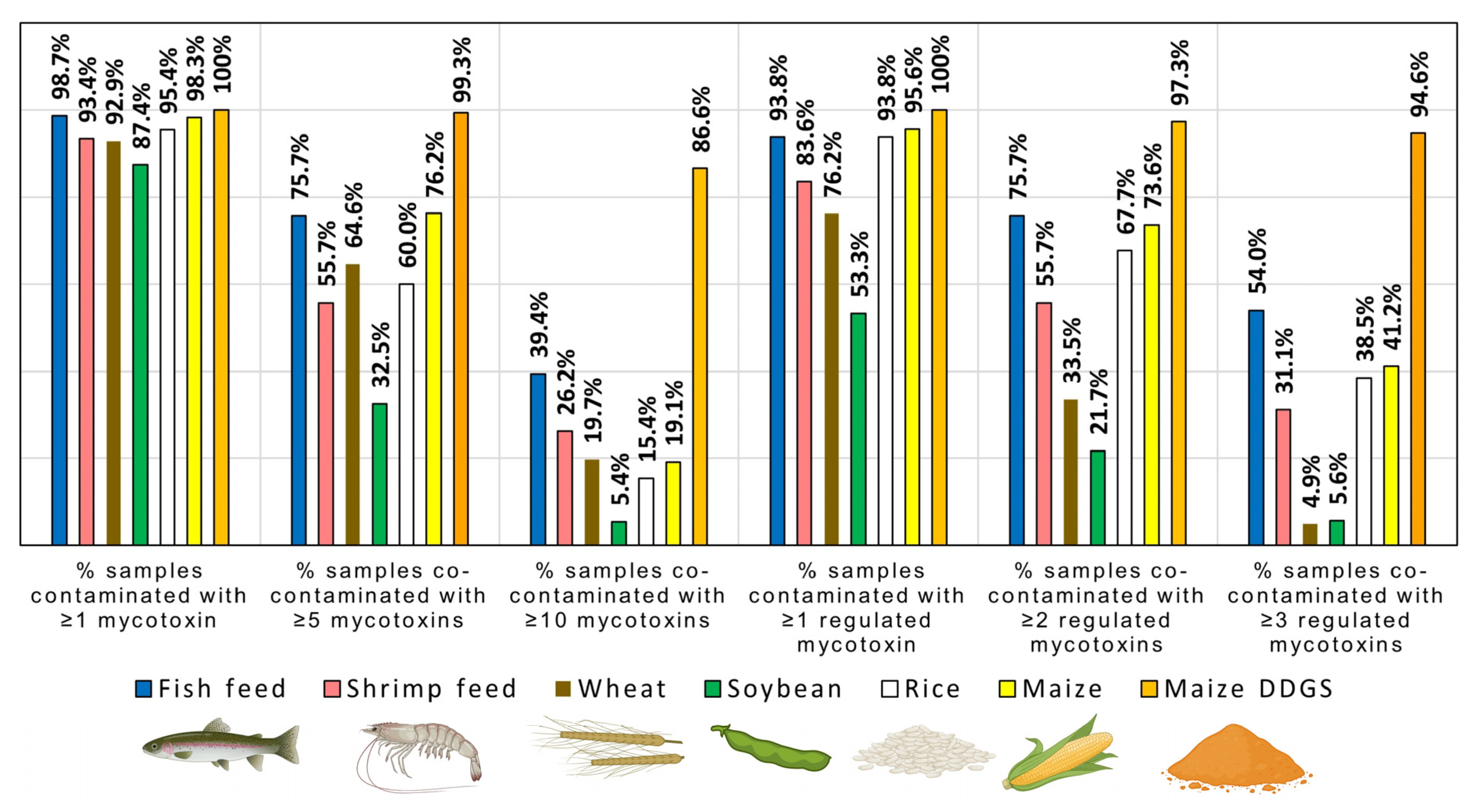
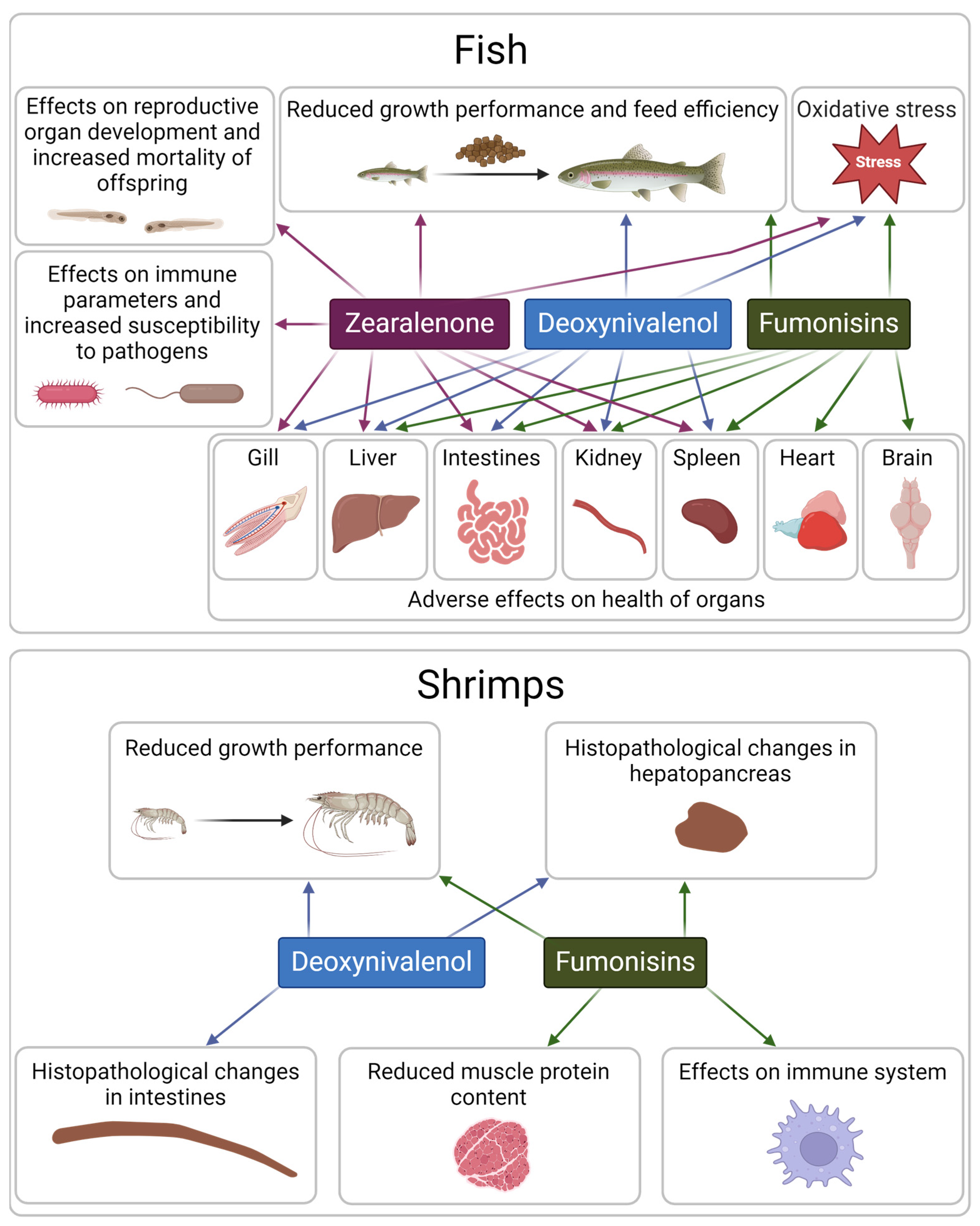
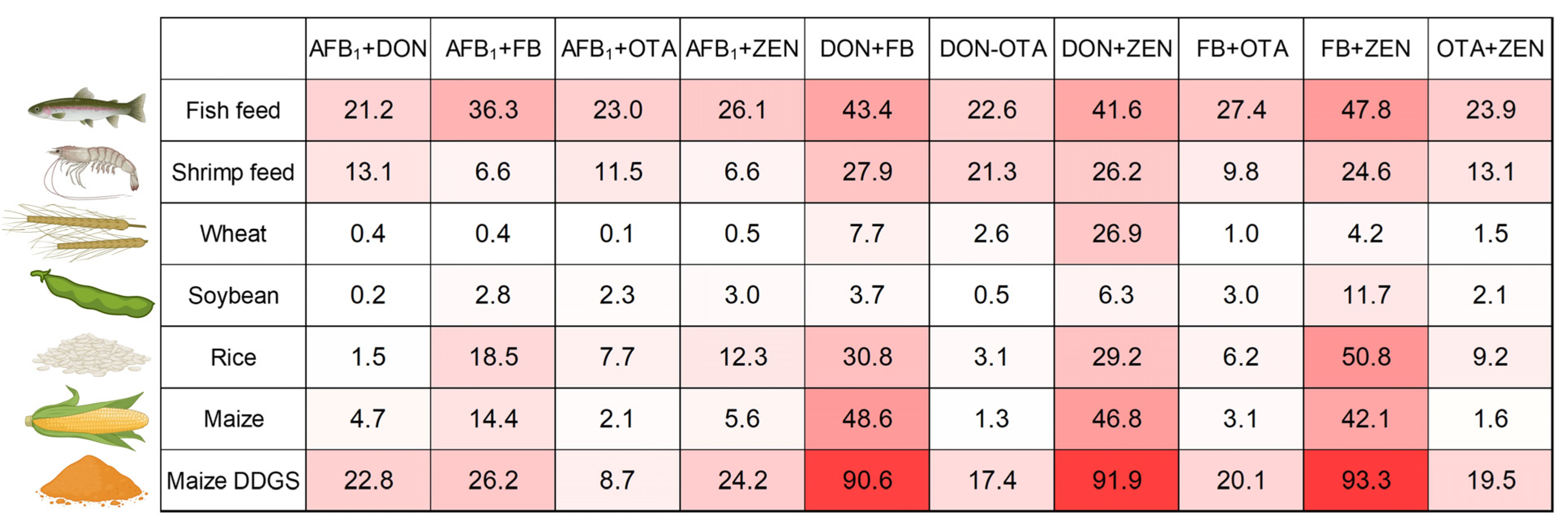
Plant-based materials are increasingly being used as ingredients of aquaculture feed. These materials are prone to mycotoxin contamination, as mycotoxigenic fungi infest crop plants in the field and agricultural products during storage. As mycotoxins can cause toxic effects in aquatic animals, their occurrence in feedstuffs should be monitored. To this end, we performed an extensive global survey of mycotoxin contamination in aquaculture feed and plant-based feed raw materials. We collected samples of compound feed for fish (n = 226) and shrimps (n = 61), maize (n = 3448), maize DDGS (n = 149), wheat (n = 1578), soybean (n = 428), and rice (n = 65). We analyzed concentrations of 51 mycotoxins, emerging mycotoxins, masked mycotoxins, and mycotoxin metabolites. Mycotoxins were almost ubiquitously present in compound feed, as >90% of samples were contaminated with at least one mycotoxin. Feed raw materials exhibited distinct mycotoxin occurrence patterns consistent with known susceptibility to fungal pathogens and with their production process. Unsafe concentrations of aflatoxin B1 exceeding the EU maximum level were detected in 7.2% of fish feed samples. While most feedstuffs complied with EU guidance values for deoxynivalenol, zearalenone, and fumonisins, a comparison of detected concentrations with dietary concentrations reported to cause adverse effects in fish and shrimps in published studies indicated that significant fractions of samples contained potentially harmful levels of these mycotoxins. In addition to regulated mycotoxins, several emerging mycotoxins (e.g., enniatins, beauvericin, alternariol, moniliformin) were prevalent. Feed was frequently co-contaminated with multiple mycotoxins indicating a risk of combined effects. In conclusion, mycotoxin contamination was common in aquaculture feed and fractions of samples were contaminated with mycotoxin levels known to exert adverse effects in aquaculture species. Results of this survey highlight the necessity for targeted studies on the effects of frequently detected mycotoxin mixtures and emerging mycotoxins in fish and shrimp.
Keywords: mycotoxin; deoxynivalenol; fumonisin; zearalenone; aflatoxin; fish; shrimp; aquaculture; feed mycotoxin; deoxynivalenol; fumonisin; zearalenone; aflatoxin; fish; shrimp; aquaculture; feed