Article

Metabolome-Based Classification of Snake Venoms by Bioinformatic Tools


1
Division of BioAnalytical Chemistry, Amsterdam Institute of Molecular and Life Sciences, Vrije Universiteit Amsterdam, De Boelelaan 1085, 1081 HV Amsterdam, The Netherlands
2
Centre for Analytical Sciences Amsterdam (CASA), 1012 WX Amsterdam, The Netherlands
3
Centre for Snakebite Research and Interventions, Liverpool School of Tropical Medicine, Pembroke Place, Liverpool L3 5QA, UK
4
Van ‘t Hof Institute for Molecular Sciences, University of Amsterdam, Science Park 904, 1098 XH Amsterdam, The Netherlands
*
Authors to whom correspondence should be addressed.
Toxins 2023, 15(2), 161; https://doi.org/10.3390/toxins15020161

Submission received: 15 December 2022 / Revised: 31 January 2023 / Accepted: 10 February 2023 / Published: 15 February 2023
(This article belongs to the Section Animal Venoms)

Abstract

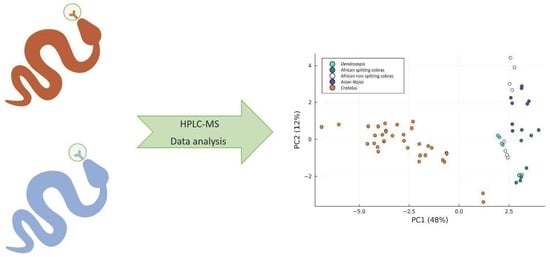
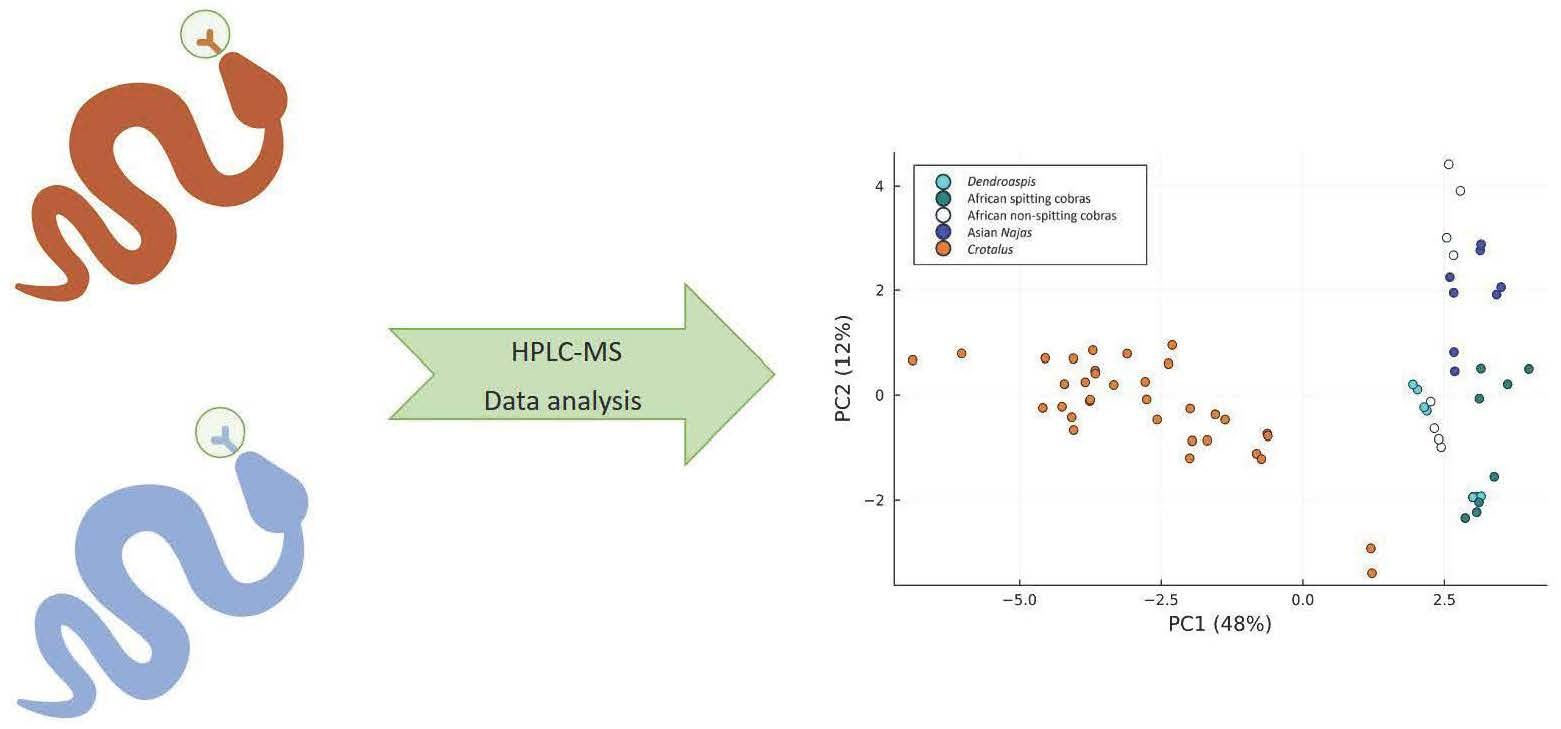
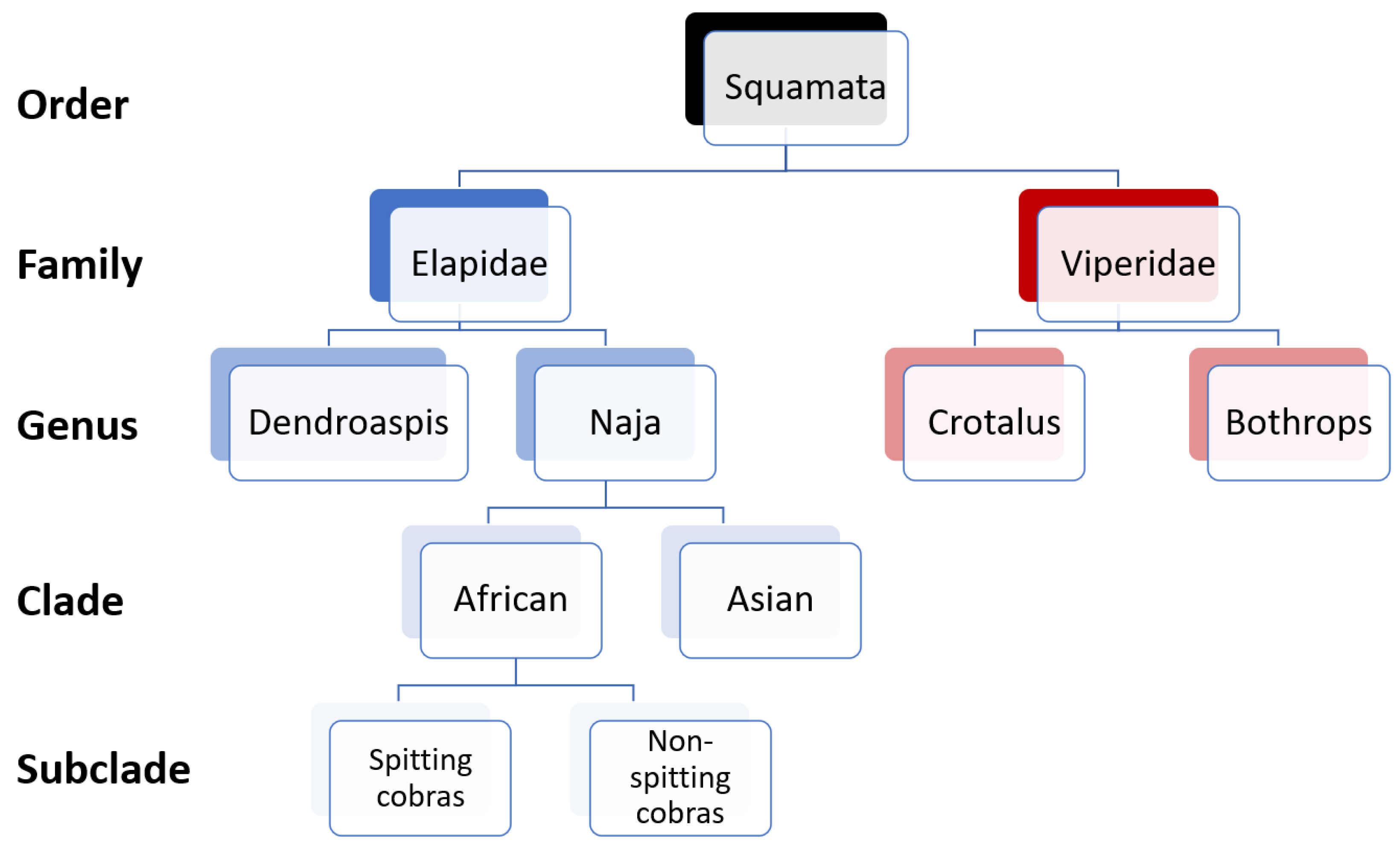
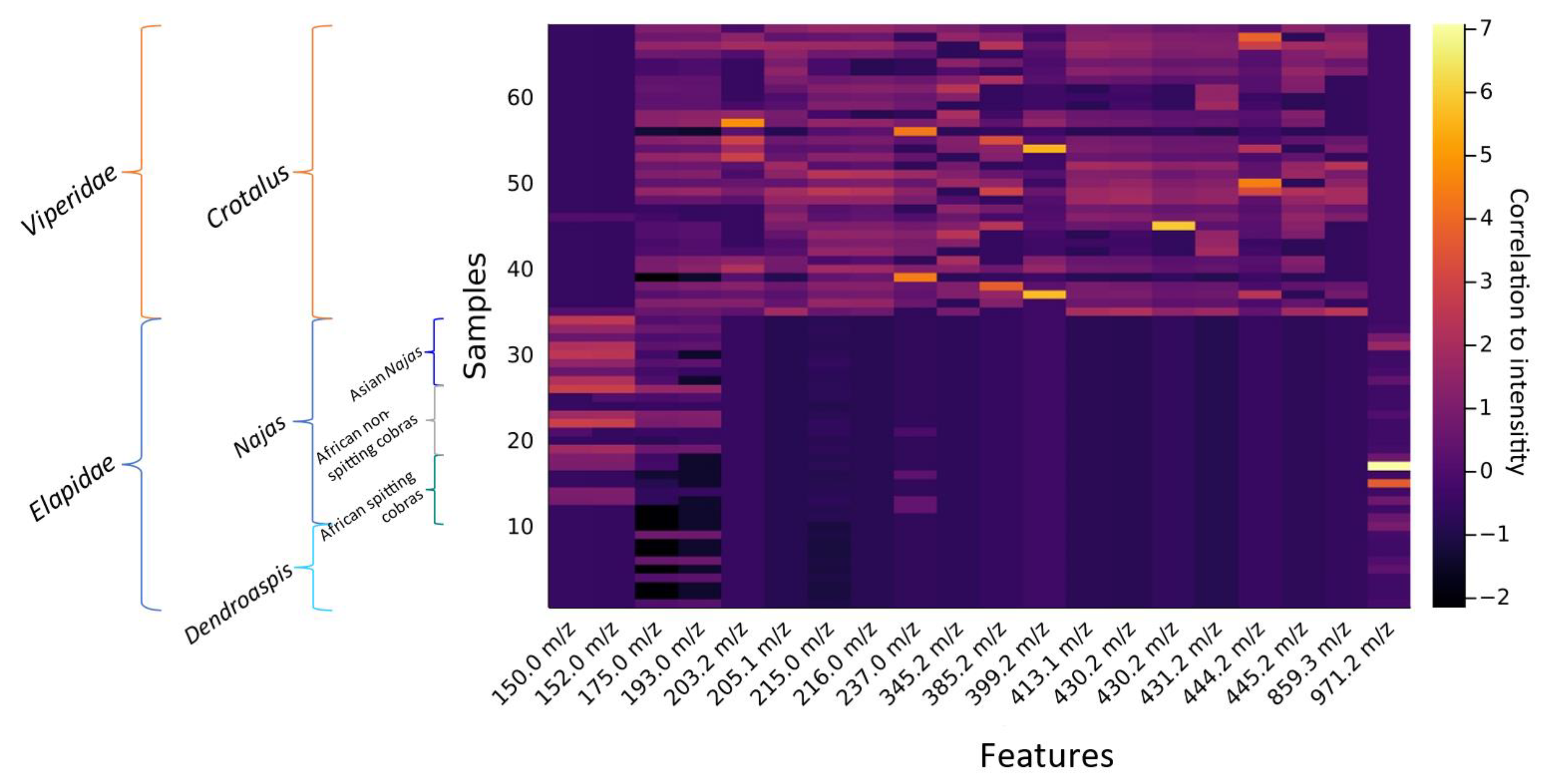
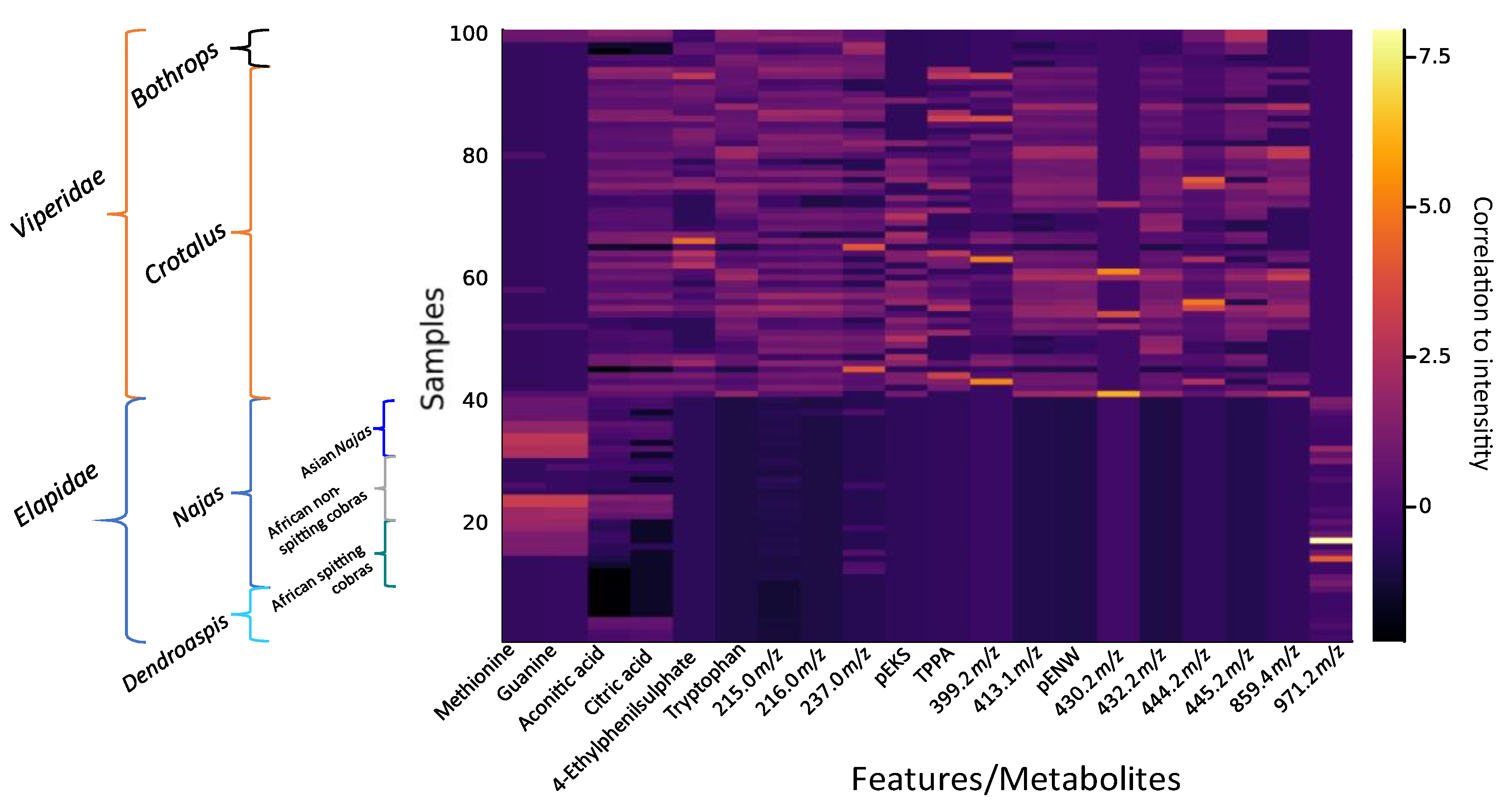
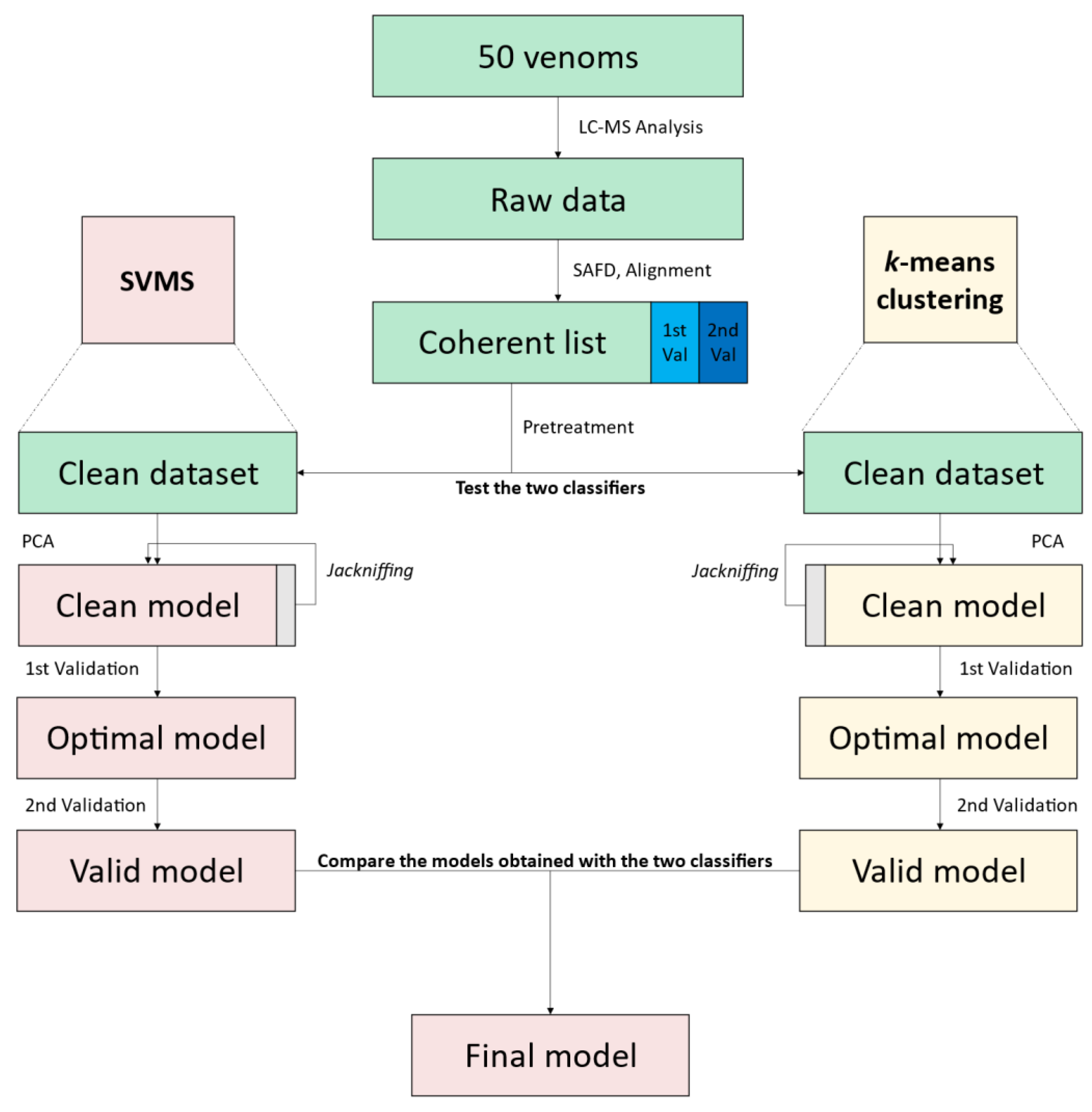
Snakebite is considered a neglected tropical disease, and it is one of the most intricate ones. The variability found in snake venom is what makes it immensely complex to study. These variations are present both in the big and the small molecules found in snake venom. This study focused on examining the variability found in the venom’s small molecules (i.e., mass range of 100–1000 Da) between two main families of venomous snakes—Elapidae and Viperidae—managing to create a model able to classify unknown samples by means of specific features, which can be extracted from their LC–MS data and output in a comprehensive list. The developed model also allowed further insight into the composition of snake venom by highlighting the most relevant metabolites of each group by clustering similarly composed venoms. The model was created by means of support vector machines and used 20 features, which were merged into 10 principal components. All samples from the first and second validation data subsets were correctly classified. Biological hypotheses relevant to the variation regarding the metabolites that were identified are also given.
Keywords: venom variation; metabolomics; data analysis; script-controlled peak integration venom variation; metabolomics; data analysis; script-controlled peak integration
Graphical Abstract