Bifidobacterium animalis subsp. lactis CECT 8145 BPL1® Laxative Effects in Loperamide-Induced Constipated SD Rats

 , , , , , , , ,
  , , , , and
Abstract
1. Introduction
2. Materials and Methods
2.1. Loperamide-Induced Constipation Model in Rats
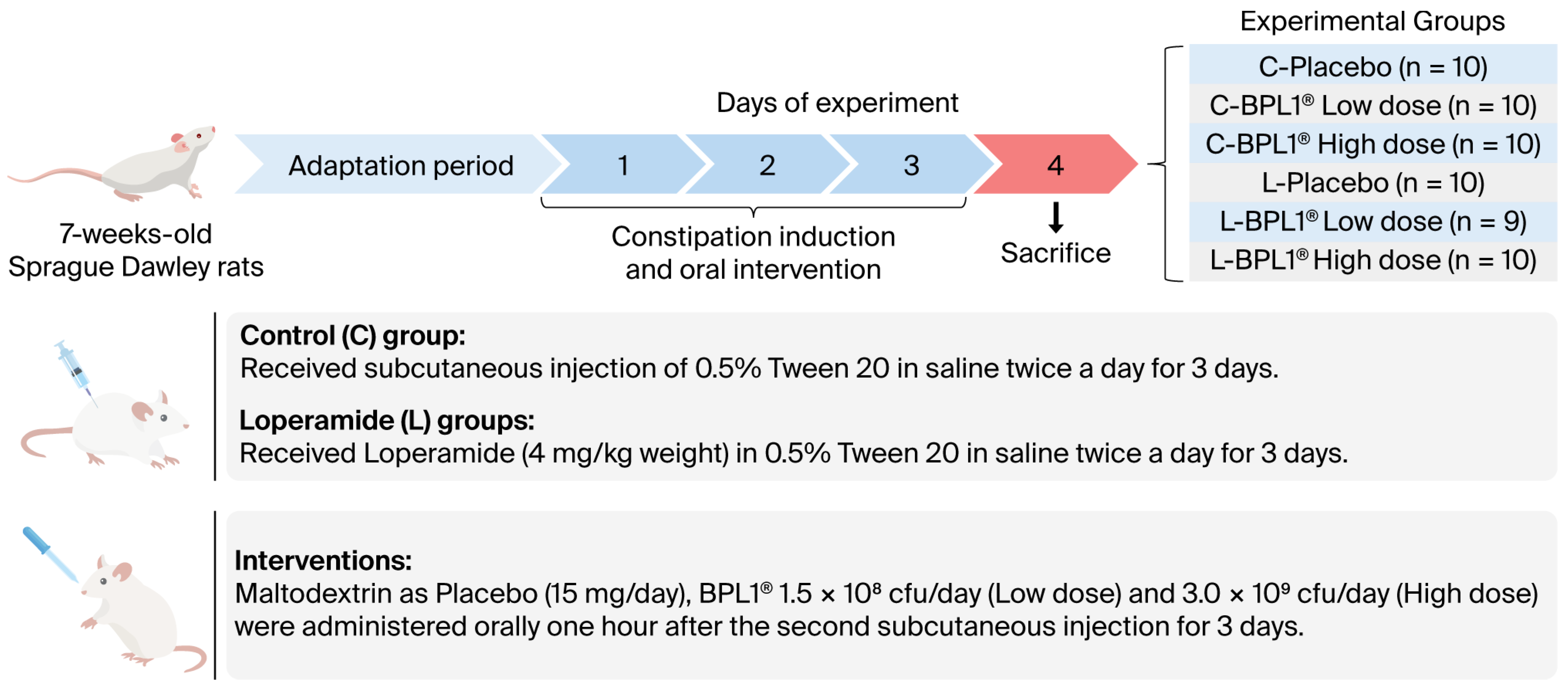
2.1.1. Experimental Design for the Animal Study
2.1.2. Measurement of Stool Parameters
Consistency and Water Content
Number, Weight and Frequency of Depositions
Gastrointestinal Transit Time (GTT) Analysis
2.1.3. Endpoint Analyses: Histopathology, Gene Expression, and Microbiota Analysis
Histopathology
Gene Expression
Microbiota Analysis
2.2. Statistical Analysis
2.2.1. Clinical Parameters
2.2.2. Metagenomic Analysis
3. Results
3.1. In Vivo Evaluation of Potential Laxative Effects of Bifidobacterium animalis subsp. lactis BPL1® in Loperamide-Induced Constipated Rats
3.1.1. Effect of BPL1® on Feeding Behavior and Body Weight
3.1.2. Effect of BPL1® on Stool Parameters
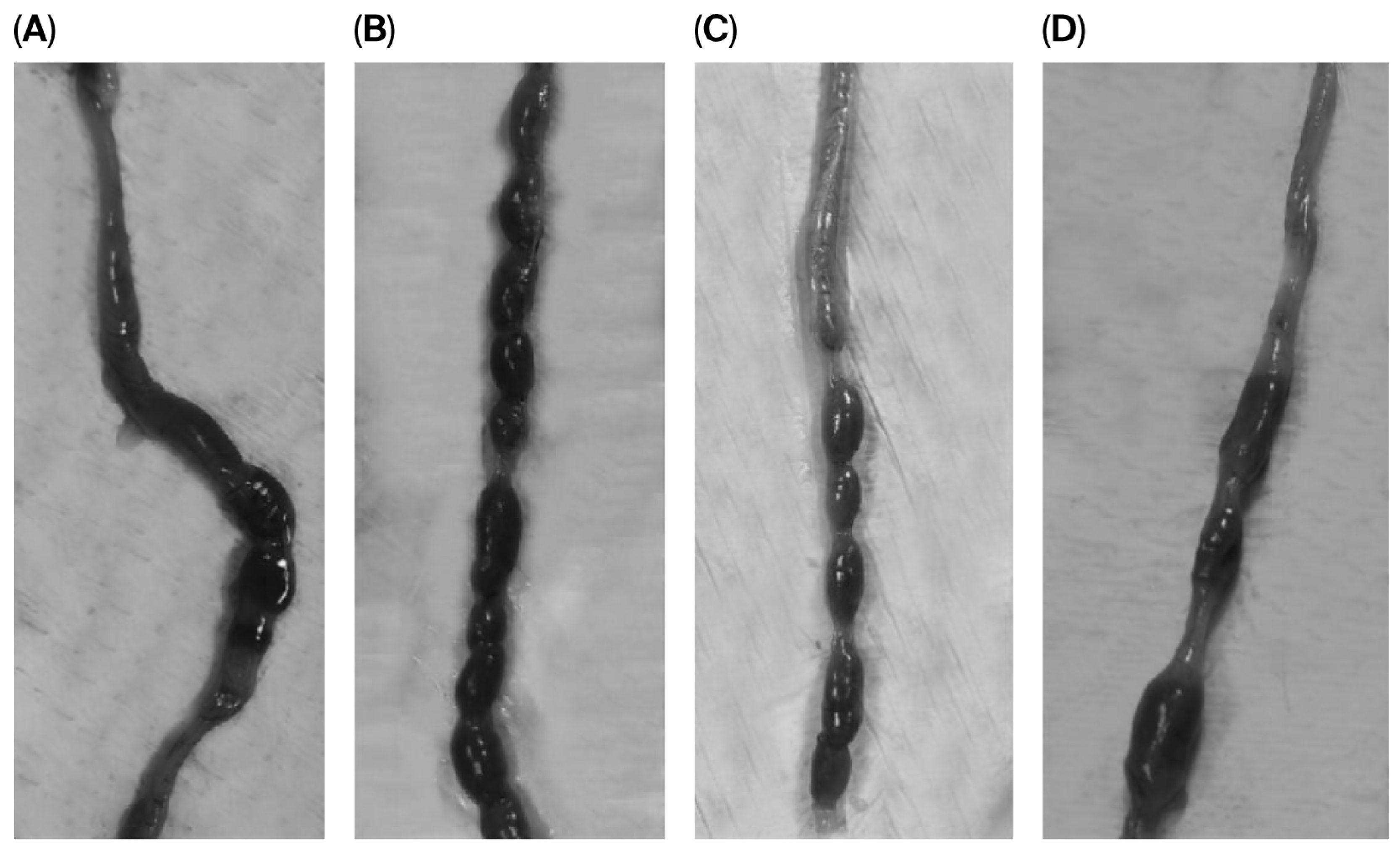
3.1.3. Effect of BPL1® on Ultrastructure of the Transverse Colon
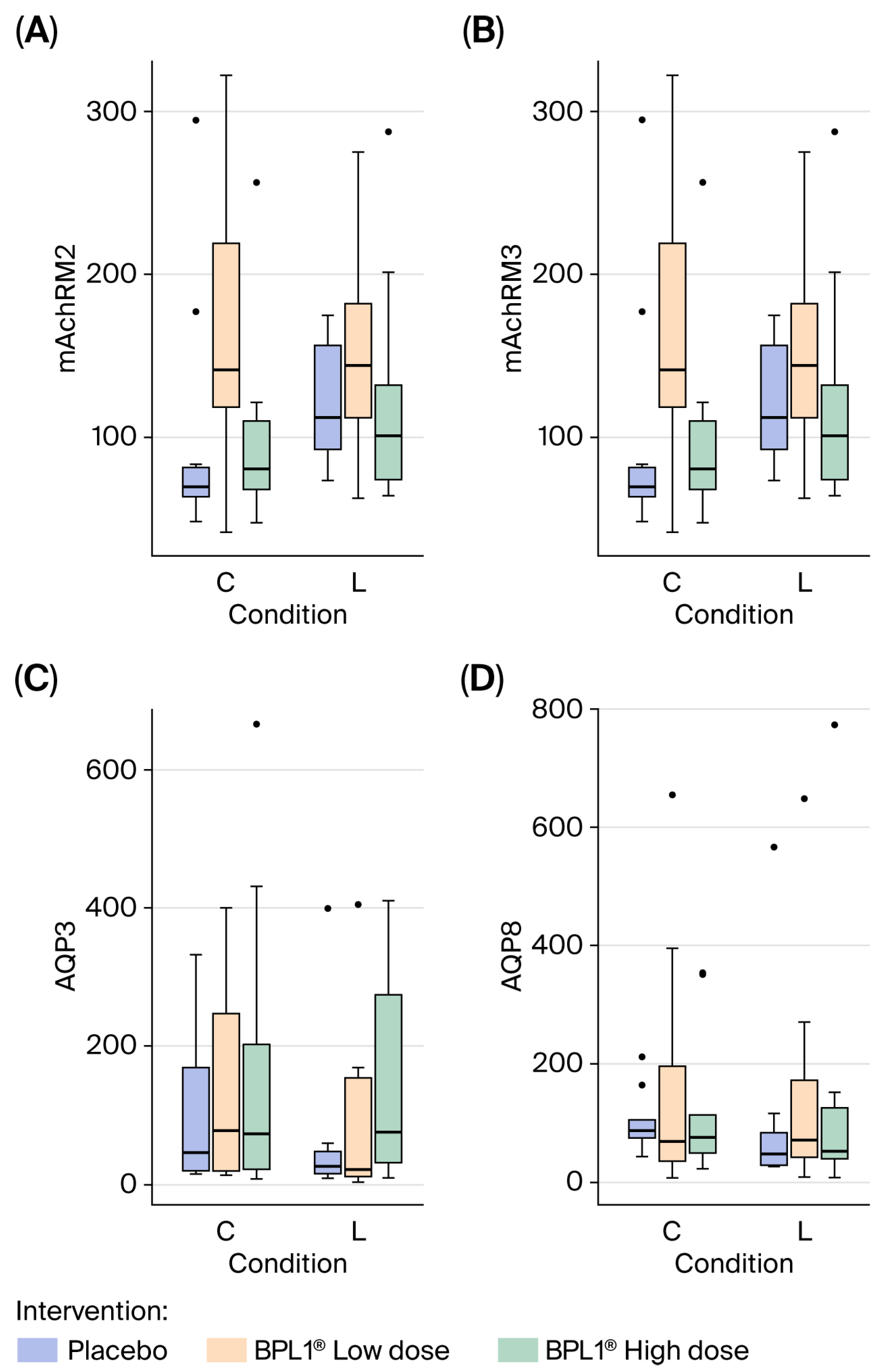
3.2. Association Between the Laxative Effects of BPL1® and Downstream Signaling Pathway of mAChRMs and AQPs
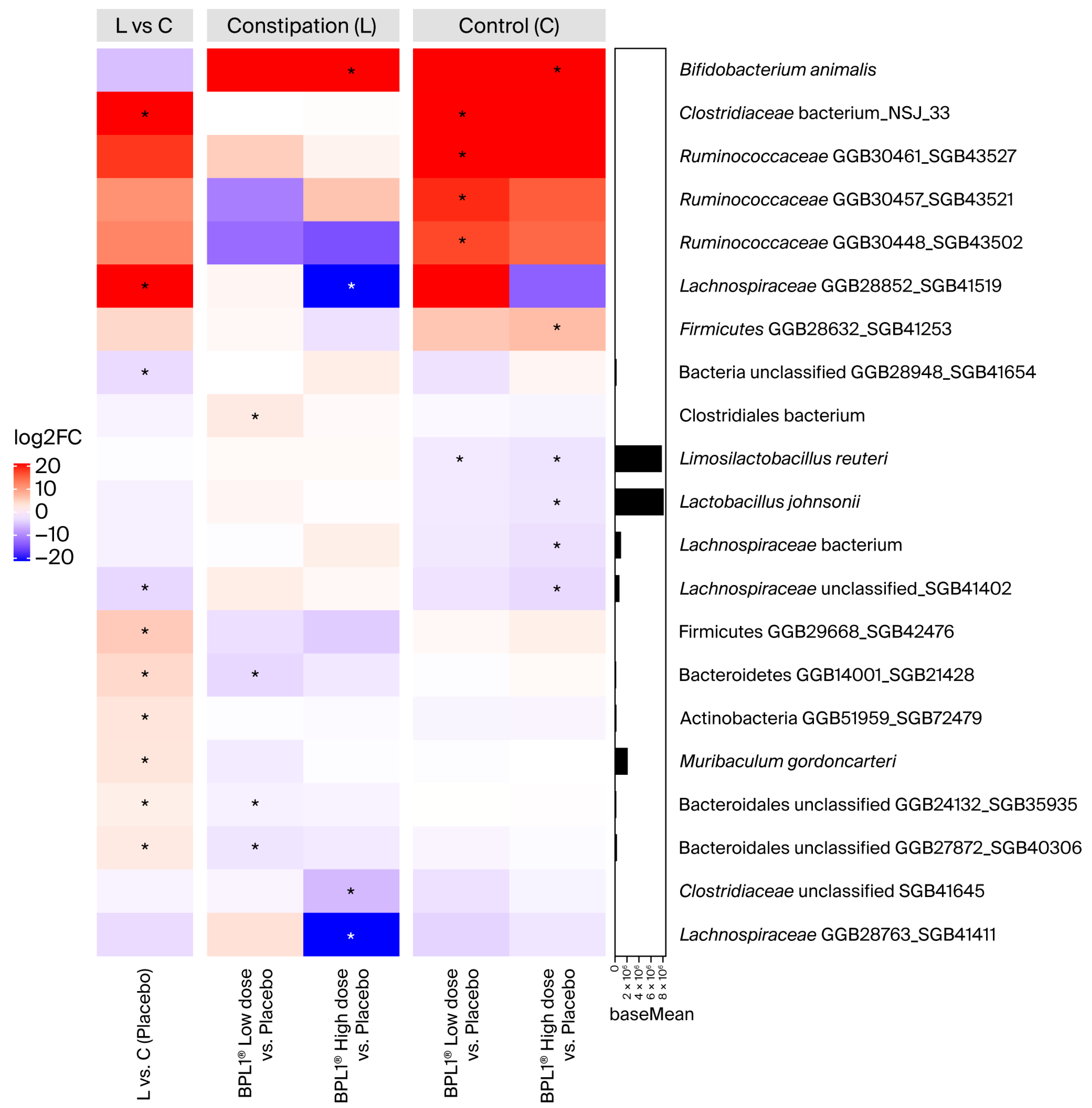
3.3. Gut Microbiota Modulation of BPL1® on Constipated Murine Model
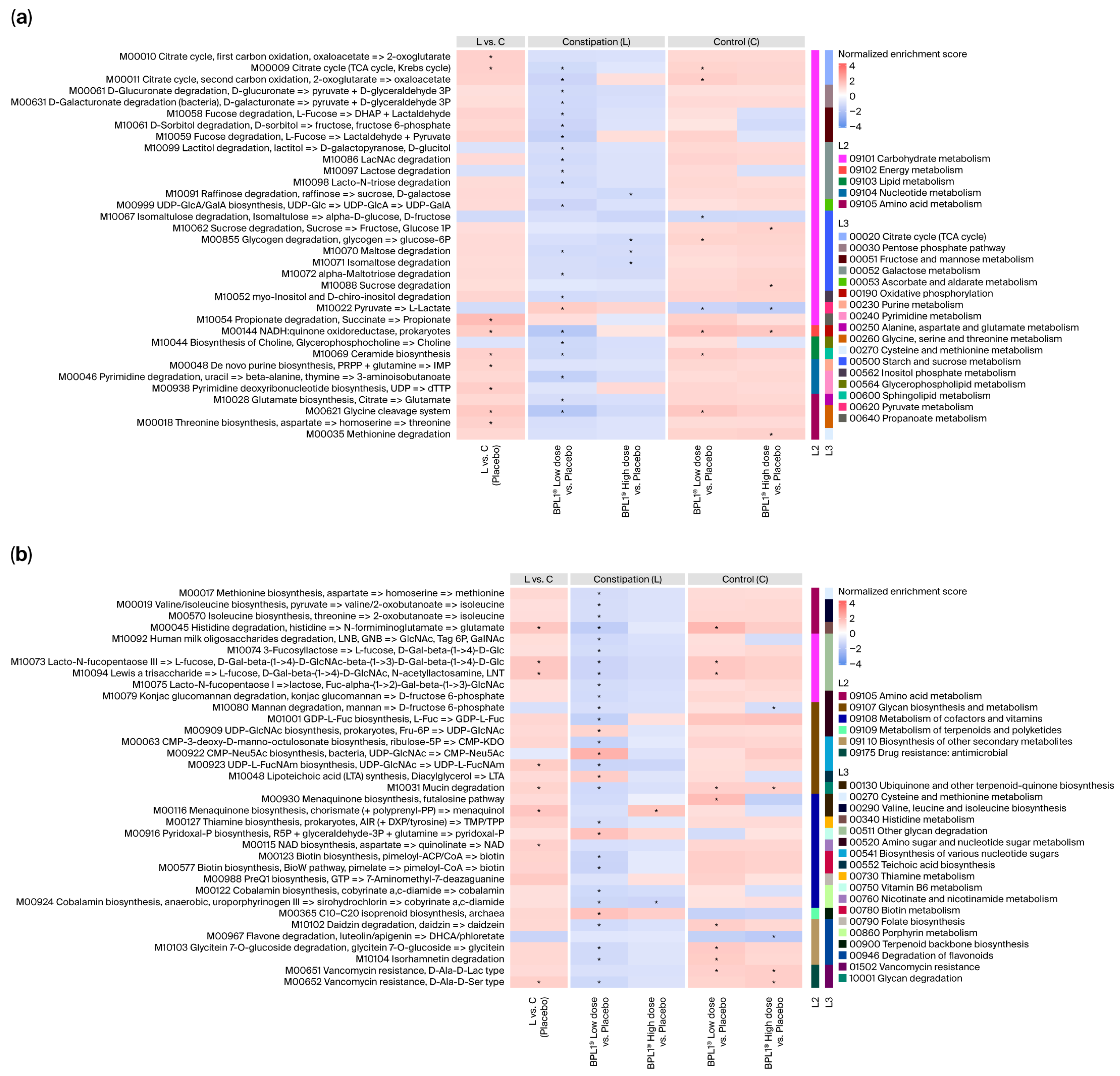
3.4. Impact of BPL1® on Gut Microbiota Functionality
4. Discussion
5. Conclusions
Supplementary Materials
Author Contributions
Funding
Institutional Review Board Statement
Informed Consent Statement
Data Availability Statement
Conflicts of Interest
Abbreviations
| ACh | Acetylcholine |
| AQP | Aquaporin |
| bw | Body weight |
| CAZy | Carbohydrate active enzymes |
| cDNA | Complementary DNA |
| CFU | Colony-forming unit |
| FDR | False discovery rate |
| GALT | Gut-associated lymphoid tissue |
| GI | Gastrointestinal |
| GSEA | Gene set enrichment analysis |
| GTT | Gastrointestinal transit time |
| H&E | Hematoxylin and eosin |
| mAChR(s) | Muscarinic acetylcholine receptor(s) |
| NES | Normalized enrichment score |
| ORF | Open reading frames |
| PCoA | Principal coordinates analysis |
| PPIA | Peptidylprolyl isomerase A |
| SCFAs | Short-chain fatty acids |
| SD | Sprague–Dawley |
| TGR-5 | Takeda G protein-coupled receptor 5 |
References
- Rao, S.S.; Rattanakovit, K.; Patcharatrakul, T. Diagnosis and management of chronic constipation in adults. Nat. Rev. Gastroenterol. Hepatol. 2016, 13, 295–305. [Google Scholar] [CrossRef]
- Bharucha, A.E.; Pemberton, J.H.; Locke, G.R., 3rd. American Gastroenterological Association technical review on constipation. Gastroenterology 2013, 144, 218–238. [Google Scholar] [CrossRef] [PubMed]
- Mugie, S.M.; Benninga, M.A.; Di Lorenzo, C. Epidemiology of constipation in children and adults: A systematic review. Best Pract. Res. Clin. Gastroenterol. 2011, 25, 3–18. [Google Scholar] [CrossRef]
- Suares, N.C.; Ford, A.C. Prevalence of, and risk factors for, chronic idiopathic constipation in the community: Systematic review and meta-analysis. Am. J. Gastroenterol. 2011, 106, 1582–1591; quiz 1581, 1592. [Google Scholar] [CrossRef]
- Barberio, B.; Judge, C.; Savarino, E.V.; Ford, A.C. Global prevalence of functional constipation according to the Rome criteria: A systematic review and meta-analysis. Lancet Gastroenterol. Hepatol. 2021, 6, 638–648. [Google Scholar] [CrossRef]
- Vriesman, M.H.; Koppen, I.J.N.; Camilleri, M.; Di Lorenzo, C.; Benninga, M.A. Management of functional constipation in children and adults. Nat. Rev. Gastroenterol. Hepatol. 2020, 17, 21–39. [Google Scholar] [CrossRef]
- Camilleri, M.; Ford, A.C.; Mawe, G.M.; Dinning, P.G.; Rao, S.S.; Chey, W.D.; Simren, M.; Lembo, A.; Young-Fadok, T.M.; Chang, L. Chronic constipation. Nat. Rev. Dis. Prim. 2017, 3, 17095. [Google Scholar] [CrossRef]
- Diaz, S.; Bittar, K.; Hashmi, M.F.; Mendez, M.D. Constipation; StatPearls: Treasure Island, FL, USA, 2023. [Google Scholar]
- Tanahashi, Y.; Komori, S.; Matsuyama, H.; Kitazawa, T.; Unno, T. Functions of Muscarinic Receptor Subtypes in Gastrointestinal Smooth Muscle: A Review of Studies with Receptor-Knockout Mice. Int. J. Mol. Sci. 2021, 22, 926. [Google Scholar] [CrossRef] [PubMed]
- Kim, J.E.; Go, J.; Koh, E.K.; Song, S.H.; Sung, J.E.; Lee, H.A.; Lee, Y.H.; Hong, J.T.; Hwang, D.Y. Gallotannin-Enriched Extract Isolated from Galla Rhois May Be a Functional Candidate with Laxative Effects for Treatment of Loperamide-Induced Constipation of SD Rats. PLoS ONE 2016, 11, e0161144. [Google Scholar] [CrossRef] [PubMed]
- Kim, J.E.; Go, J.; Sung, J.E.; Lee, H.A.; Yun, W.B.; Hong, J.T.; Hwang, D.Y. Uridine stimulate laxative effect in the loperamide-induced constipation of SD rats through regulation of the mAChRs signaling pathway and mucin secretion. BMC Gastroenterol. 2017, 17, 21. [Google Scholar] [CrossRef]
- Zhu, C.; Nie, X.; Lu, Q.; Bai, Y.; Jiang, Z. Roles and regulation of Aquaporin-3 in maintaining the gut health: An updated review. Front. Physiol. 2023, 14, 1264570. [Google Scholar] [CrossRef]
- Ikarashi, N.; Kon, R.; Sugiyama, K. Aquaporins in the Colon as a New Therapeutic Target in Diarrhea and Constipation. Int. J. Mol. Sci. 2016, 17, 1172. [Google Scholar] [CrossRef]
- Xu, X.; Wang, Y.; Long, Y.; Cheng, Y. Chronic constipation and gut microbiota: Current research insights and therapeutic implications. Postgrad. Med. J. 2024, 100, 890–897. [Google Scholar] [CrossRef]
- Khalif, I.L.; Quigley, E.M.; Konovitch, E.A.; Maximova, I.D. Alterations in the colonic flora and intestinal permeability and evidence of immune activation in chronic constipation. Dig. Liver Dis. 2005, 37, 838–849. [Google Scholar] [CrossRef]
- Zhang, T.; Lu, H.; Cheng, T.; Wang, L.; Wang, G.; Zhang, H.; Chen, W. Bifidobacterium longum S3 alleviates loperamide-induced constipation by modulating intestinal acetic acid and stearic acid levels in mice. Food Funct. 2024, 15, 6118–6133. [Google Scholar] [CrossRef] [PubMed]
- Qiu, B.; Zhu, L.; Zhang, S.; Han, S.; Fei, Y.; Ba, F.; Berglund, B.; Li, L.; Yao, M. Prevention of Loperamide-Induced Constipation in Mice and Alteration of 5-Hydroxytryotamine Signaling by Ligilactobacillus salivarius Li01. Nutrients 2022, 14, 4083. [Google Scholar] [CrossRef] [PubMed]
- Wang, L.; Chai, M.; Wang, J.; Yu, Q.; Wang, G.; Zhang, H.; Zhao, J.; Chen, W. Bifidobacterium longum relieves constipation by regulating the intestinal barrier of mice. Food Funct. 2022, 13, 5037–5049. [Google Scholar] [CrossRef]
- Makizaki, Y.; Uemoto, T.; Yokota, H.; Yamamoto, M.; Tanaka, Y.; Ohno, H. Improvement of loperamide-induced slow transit constipation by Bifidobacterium bifidum G9-1 is mediated by the correction of butyrate production and neurotransmitter profile due to improvement in dysbiosis. PLoS ONE 2021, 16, e0248584, Correction in PLoS ONE 2022, 17, e0267927. https://doi.org/10.1371/journal.pone.0267927. [Google Scholar] [CrossRef]
- Dimidi, E.; Christodoulides, S.; Scott, S.M.; Whelan, K. Mechanisms of Action of Probiotics and the Gastrointestinal Microbiota on Gut Motility and Constipation. Adv. Nutr. 2017, 8, 484–494. [Google Scholar] [CrossRef] [PubMed]
- Dey, N.; Wagner, V.E.; Blanton, L.V.; Cheng, J.; Fontana, L.; Haque, R.; Ahmed, T.; Gordon, J.I. Regulators of gut motility revealed by a gnotobiotic model of diet-microbiome interactions related to travel. Cell 2015, 163, 95–107. [Google Scholar] [CrossRef] [PubMed]
- Bharucha, A.E.; Lacy, B.E. Mechanisms, Evaluation, and Management of Chronic Constipation. Gastroenterology 2020, 158, 1232–1249.e1233. [Google Scholar] [CrossRef] [PubMed]
- Wen, Y.; Li, J.; Long, Q.; Yue, C.C.; He, B.; Tang, X.G. The efficacy and safety of probiotics for patients with constipation-predominant irritable bowel syndrome: A systematic review and meta-analysis based on seventeen randomized controlled trials. Int. J. Surg. 2020, 79, 111–119. [Google Scholar] [CrossRef] [PubMed]
- Chen, C.M.; Wu, C.C.; Huang, C.L.; Chang, M.Y.; Cheng, S.H.; Lin, C.T.; Tsai, Y.C. Lactobacillus plantarum PS128 Promotes Intestinal Motility, Mucin Production, and Serotonin Signaling in Mice. Probiotics Antimicrob. Proteins 2022, 14, 535–545. [Google Scholar] [CrossRef]
- Chenoll, E.; Codoñer, F.M.; Silva, A.; Martinez-Blanch, J.F.; Martorell, P.; Ramón, D.; Genovés, S. Draft Genome Sequence of Bifidobacterium animalis subsp. lactis Strain CECT 8145, Able To Improve Metabolic Syndrome In Vivo. Genome Announc. 2014, 2, e00183-14. [Google Scholar] [CrossRef]
- Pedret, A.; Valls, R.M.; Calderón-Pérez, L.; Llauradó, E.; Companys, J.; Pla-Pagà, L.; Moragas, A.; Martín-Luján, F.; Ortega, Y.; Giralt, M.; et al. Effects of daily consumption of the probiotic Bifidobacterium animalis subsp. lactis CECT 8145 on anthropometric adiposity biomarkers in abdominally obese subjects: A randomized controlled trial. Int. J. Obes. 2019, 43, 1863–1868. [Google Scholar] [CrossRef]
- Balaguer, F.; Barrena, M.; Enrique, M.; Maicas, M.; Álvarez, B.; Tortajada, M.; Chenoll, E.; Ramón, D.; Martorell, P. Bifidobacterium animalis subsp. lactis BPL1™ and Its Lipoteichoic Acid Modulate Longevity and Improve Age/Stress-Related Behaviors in Caenorhabditis elegans. Antioxidants 2023, 12, 2107. [Google Scholar] [CrossRef]
- Kim, J.E.; Lee, M.R.; Park, J.J.; Choi, J.Y.; Song, B.R.; Son, H.J.; Choi, Y.W.; Kim, K.M.; Hong, J.T.; Hwang, D.Y. Quercetin promotes gastrointestinal motility and mucin secretion in loperamide-induced constipation of SD rats through regulation of the mAChRs downstream signal. Pharm. Biol. 2018, 56, 309–317. [Google Scholar] [CrossRef]
- Sung, J.; Morales, W.; Kim, G.; Pokkunuri, V.; Weitsman, S.; Rooks, E.; Marsh, Z.; Barlow, G.M.; Chang, C.; Pimentel, M. Effect of repeated Campylobacter jejuni infection on gut flora and mucosal defense in a rat model of post infectious functional and microbial bowel changes. Neurogastroenterol. Motil. 2013, 25, 529–537. [Google Scholar] [CrossRef]
- Kakino, M.; Tazawa, S.; Maruyama, H.; Tsuruma, K.; Araki, Y.; Shimazawa, M.; Hara, H. Laxative effects of agarwood on low-fiber diet-induced constipation in rats. BMC Complement. Altern. Med. 2010, 10, 68. [Google Scholar] [CrossRef]
- van der Wulp, M.Y.; Cuperus, F.J.; Stellaard, F.; van Dijk, T.H.; Dekker, J.; Rings, E.H.; Groen, A.K.; Verkade, H.J. Laxative treatment with polyethylene glycol does not affect lipid absorption in rats. J. Pediatr. Gastroenterol. Nutr. 2012, 55, 457–462. [Google Scholar] [CrossRef] [PubMed]
- Bushnell, B. BBMap: A Fast, Accurate, Splice-Aware Aligner; LBNL Report #: LBNL-7065E 2014; Lawrence Berkeley National Laboratory: Berkeley, CA, USA, 2014. Available online: https://escholarship.org/uc/item/1h3515gn (accessed on 6 April 2026).
- Coelho, L.P.; Alves, R.; Monteiro, P.; Huerta-Cepas, J.; Freitas, A.T.; Bork, P. NG-meta-profiler: Fast processing of metagenomes using NGLess, a domain-specific language. Microbiome 2019, 7, 84. [Google Scholar] [CrossRef] [PubMed]
- Li, H. Seqtk: A Fast and Lightweight Tool for Processing FASTA or FASTQ Sequences; GitHub Repository. 2013. Available online: https://github.com/lh3/seqtk (accessed on 6 April 2026).
- Blanco-Miguez, A.; Beghini, F.; Cumbo, F.; McIver, L.J.; Thompson, K.N.; Zolfo, M.; Manghi, P.; Dubois, L.; Huang, K.D.; Thomas, A.M.; et al. Extending and improving metagenomic taxonomic profiling with uncharacterized species with MetaPhlAn 4. bioRxiv 2022. [Google Scholar] [CrossRef]
- Li, D.; Liu, C.M.; Luo, R.; Sadakane, K.; Lam, T.W. MEGAHIT: An ultra-fast single-node solution for large and complex metagenomics assembly via succinct de Bruijn graph. Bioinformatics 2015, 31, 1674–1676. [Google Scholar] [CrossRef]
- Hyatt, D.; Chen, G.L.; Locascio, P.F.; Land, M.L.; Larimer, F.W.; Hauser, L.J. Prodigal: Prokaryotic gene recognition and translation initiation site identification. BMC Bioinf. 2010, 11, 119. [Google Scholar] [CrossRef] [PubMed]
- Patro, R.; Duggal, G.; Love, M.I.; Irizarry, R.A.; Kingsford, C. Salmon provides fast and bias-aware quantification of transcript expression. Nat. Methods 2017, 14, 417–419. [Google Scholar] [CrossRef]
- Kanehisa, M.; Sato, Y.; Morishima, K. BlastKOALA and GhostKOALA: KEGG Tools for Functional Characterization of Genome and Metagenome Sequences. J. Mol. Biol. 2016, 428, 726–731. [Google Scholar] [CrossRef]
- Zheng, J.; Ge, Q.; Yan, Y.; Zhang, X.; Huang, L.; Yin, Y. dbCAN3: Automated carbohydrate-active enzyme and substrate annotation. Nucleic Acids Res. 2023, 51, W115–W121. [Google Scholar] [CrossRef] [PubMed]
- Camacho, C.; Coulouris, G.; Avagyan, V.; Ma, N.; Papadopoulos, J.; Bealer, K.; Madden, T.L. BLAST+: Architecture and applications. BMC Bioinf. 2009, 10, 421. [Google Scholar] [CrossRef] [PubMed]
- IBM Corp. IBM SPSS Statistics for Windows, Version 25.0; IBM Corp.: Armonk, NY, USA, 2017.
- Benjamini, Y.; Hochberg, Y. Controlling the false discovery rate: A practical and powerful approach to multiple testing. J. R. Stat. Soc. Ser. B (Methodol.) 1995, 57, 289–300. [Google Scholar] [CrossRef]
- Posit Team. RStudio: Integrated Development Environment for R; Posit Software, PBC: Boston, MA, USA, 2025. [Google Scholar]
- R-Project Core Team. R: A Language and Environment for Statistical Computing; R Foundation for Statistical Computing: Vienna, Austria, 2025. [Google Scholar]
- Wickham, H. ggplot2: Elegant Graphics for Data Analysis; The R Foundation: Vienna, Austria, 2025. [Google Scholar]
- McMurdie, P.J.; Holmes, S. phyloseq: An R package for reproducible interactive analysis and graphics of microbiome census data. PLoS ONE 2013, 8, e61217. [Google Scholar] [CrossRef]
- Oksanen, J.; Blanchet, F.G.; Kindt, R.; Legendre, P.; Minchin, P.R.; O’Hara, R.B.; Simpson, G.L.; Sólymos, P.; Stevens, M.H.H.; Wagner, H. Vegan: Community Ecology Package; R Package Version 2.6-6.1. Available online: https://github.com/vegandevs/vegan (accessed on 6 April 2026).
- Kassambara, A. ggpubr: ‘ggplot2′ Based Publication Ready Plots; The R Foundation: Vienna, Austria, 2025. [Google Scholar]
- R-Project Core Team. Stats: The R Stats Package, v3.6.0; R Foundation for Statistical Computing: Vienna, Austria, 2025.
- Love, M.I.; Huber, W.; Anders, S. Moderated estimation of fold change and dispersion for RNA-seq data with DESeq2. Genome Biol. 2014, 15, 550. [Google Scholar] [CrossRef]
- Mallick, H.; Rahnavard, A.; McIver, L.J.; Ma, S.; Zhang, Y.; Nguyen, L.H.; Tickle, T.L.; Weingart, G.; Ren, B.; Schwager, E.H.; et al. Multivariable association discovery in population-scale meta-omics studies. PLoS Comput. Biol. 2021, 17, e1009442. [Google Scholar] [CrossRef]
- Korotkevich, G.; Sukhov, V.; Budin, N.; Shpak, B.; Artyomov, M.N.; Sergushichev, A. Fast gene set enrichment analysis. bioRxiv 2021. [Google Scholar] [CrossRef]
- Gu, Z.; Eils, R.; Schlesner, M. Complex heatmaps reveal patterns and correlations in multidimensional genomic data. Bioinformatics 2016, 32, 2847–2849. [Google Scholar] [CrossRef]
- Inatomi, T.; Honma, M. Effects of probiotics on loperamide-induced constipation in rats. Sci. Rep. 2021, 11, 24098. [Google Scholar] [CrossRef]
- Tang, T.; Wang, J.; Jiang, Y.; Zhu, X.; Zhang, Z.; Wang, Y.; Shu, X.; Deng, Y.; Zhang, F. Bifidobacterium lactis TY-S01 Prevents Loperamide-Induced Constipation by Modulating Gut Microbiota and Its Metabolites in Mice. Front. Nutr. 2022, 9, 890314. [Google Scholar] [CrossRef]
- Xu, L.; Qiu, B.; Ba, F.; Zhang, S.; Han, S.; Chen, H.; Wu, Y.; Gao, W.; Xie, S.; Chen, Y.; et al. Synergistic effects of Ligilactobacillus salivarius Li01 and psyllium husk prevent mice from developing loperamide-induced constipation. Food Funct. 2024, 15, 11934–11948. [Google Scholar] [CrossRef] [PubMed]
- Kirindage, K.; Jayasinghe, A.M.K.; Jang, M.S.; Lee, K.J.; Yun, H.J.; Ahn, G.; Oh, J.Y. Kjellmaniella crassifolia Reduces Lipopolysaccharide-Induced Inflammation in Caco-2 Cells and Ameliorates Loperamide-Induced Constipation in Mice. J. Microbiol. Biotechnol. 2024, 34, 2565–2575. [Google Scholar] [CrossRef]
- Kim, J.E.; Lee, Y.J.; Kwak, M.H.; Ko, J.; Hong, J.T.; Hwang, D.Y. Aqueous extracts of Liriope platyphylla induced significant laxative effects on loperamide-induced constipation of SD rats. BMC Complement. Altern. Med. 2013, 13, 333. [Google Scholar] [CrossRef] [PubMed]
- Kim, G.B.; Lee, B.H. Genetic analysis of a bile salt hydrolase in Bifidobacterium animalis subsp. lactis KL612. J. Appl. Microbiol. 2008, 105, 778–790. [Google Scholar] [CrossRef] [PubMed]
- Jarocki, P.; Podleśny, M.; Glibowski, P.; Targoński, Z. A new insight into the physiological role of bile salt hydrolase among intestinal bacteria from the genus Bifidobacterium. PLoS ONE 2014, 9, e114379. [Google Scholar] [CrossRef]
- Alemi, F.; Poole, D.P.; Chiu, J.; Schoonjans, K.; Cattaruzza, F.; Grider, J.R.; Bunnett, N.W.; Corvera, C.U. The receptor TGR5 mediates the prokinetic actions of intestinal bile acids and is required for normal defecation in mice. Gastroenterology 2013, 144, 145–154. [Google Scholar] [CrossRef]
- Available online: https://www.ncbi.nlm.nih.gov/nuccore/JBTRIB010000001 (accessed on 18 March 2026).
- Sengkhim, R.; Peerakietkhajorn, S.; Jeanmard, N.; Pongparadon, S.; Khuituan, P.; Thitiphatphuvanon, T.; Surinlert, P.; Tipbunjong, C. Effects of Sargassum plagiophyllum extract pretreatment on tissue histology of constipated mice. Trop. J. Pharm. Res. 2021, 20, 2339–2346. [Google Scholar] [CrossRef]
- Wang, Y.; Jiang, H.; Wang, L.; Gan, H.; Xiao, X.; Huang, L.; Li, W.; Li, Z. Luteolin ameliorates loperamide-induced functional constipation in mice. Braz. J. Med. Biol. Res. 2023, 56, e12466. [Google Scholar] [CrossRef] [PubMed]
- Yibcharoenporn, C.; Kongkaew, T.; Worakajit, N.; Khumjiang, R.; Saetang, P.; Satitsri, S.; Rukachaisirikul, V.; Muanprasat, C. Inhibition of CFTR-mediated intestinal chloride secretion by nornidulin: Cellular mechanisms and anti-secretory efficacy in human intestinal epithelial cells and human colonoids. PLoS ONE 2024, 19, e0314723. [Google Scholar] [CrossRef] [PubMed]
- Wu, D.; Wang, X.; Zhou, J.; Yuan, J.; Cui, B.; An, R.; Hu, Z. Traditional Chinese formula, lubricating gut pill, improves loperamide-induced rat constipation involved in enhance of Cl− secretion across distal colonic epithelium. J. Ethnopharmacol. 2010, 130, 347–353. [Google Scholar] [CrossRef] [PubMed]
- Ramos-Romero, S.; Ponomarenko, J.; Amezqueta, S.; Hereu, M.; Miralles-Perez, B.; Romeu, M.; Mendez, L.; Medina, I.; Torres, J.L. Fiber-like Action of d-Fagomine on the Gut Microbiota and Body Weight of Healthy Rats. Nutrients 2022, 14, 4656. [Google Scholar] [CrossRef]
- Ma, T.; Yang, N.; Xie, Y.; Li, Y.; Xiao, Q.; Li, Q.; Jin, H.; Zheng, L.; Sun, Z.; Zuo, K.; et al. Effect of the probiotic strain, Lactiplantibacillus plantarum P9, on chronic constipation: A randomized, double-blind, placebo-controlled study. Pharmacol. Res. 2023, 191, 106755. [Google Scholar] [CrossRef]
- West, C.L.; Stanisz, A.M.; Mao, Y.K.; Champagne-Jorgensen, K.; Bienenstock, J.; Kunze, W.A. Microvesicles from Lactobacillus reuteri (DSM-17938) completely reproduce modulation of gut motility by bacteria in mice. PLoS ONE 2020, 15, e0225481. [Google Scholar] [CrossRef]
- Fukushima, Y.; Yamano, T.; Kusano, A.; Takada, M.; Amano, M.; Iino, H. Effect of Fermented Milk Containing Lactobacillus johnsonii La1 (LC1®) on Defecation in Healthy Japanese Adults—A Double Blind Placebo Controlled Study—. Biosci. Microflora 2004, 23, 139–147. [Google Scholar] [CrossRef]
- Gao, H.; He, C.; Xin, S.; Hua, R.; Du, Y.; Wang, B.; Gong, F.; Yu, X.; Pan, L.; Liang, C.; et al. Rhubarb extract rebuilding the mucus homeostasis and regulating mucin-associated flora to relieve constipation. Exp. Biol. Med. 2023, 248, 2449–2463. [Google Scholar] [CrossRef] [PubMed]
- Hong, H.J.; Hutchings, M.I.; Buttner, M.J.; Biotechnology and Biological Sciences Research Council. Vancomycin resistance VanS/VanR two-component systems. In Advances in Experimental Medicine and Biology (AEMB, Volume 631); Springer Nature: London, UK; Berlin, Germany, 2008; Volume 631, pp. 200–213. [Google Scholar] [CrossRef]
- Wang, J.; He, J.; Liu, D.; Zhang, T.; Wu, Y.; Xie, M. Gut Microbiota and Metabolite Profiles Associated With Functional Constipation Severity. Microbiol. Immunol. 2025, 69, 85–95. [Google Scholar] [CrossRef]
- Liu, X.; Zhao, Z.; Zhao, D.; Zhao, S.; Qin, X. Comprehensive microbiomes and fecal metabolomics combined with network pharmacology reveal the effects of Jichuanjian on aged functional constipation. Exp. Gerontol. 2023, 178, 112216. [Google Scholar] [CrossRef] [PubMed]
- Chouhan, U.; Gamad, U.; Choudhari, J.K. Metagenomic analysis of soybean endosphere microbiome to reveal signatures of microbes for health and disease. J. Genet. Eng. Biotechnol. 2023, 21, 84. [Google Scholar] [CrossRef]
- Pan, R.; Wang, L.; Xu, X.; Chen, Y.; Wang, H.; Wang, G.; Zhao, J.; Chen, W. Crosstalk between the Gut Microbiome and Colonic Motility in Chronic Constipation: Potential Mechanisms and Microbiota Modulation. Nutrients 2022, 14, 3704. [Google Scholar] [CrossRef]
- Tan, Q.; Hu, J.; Zhou, Y.; Wan, Y.; Zhang, C.; Liu, X.; Long, X.; Tan, F.; Zhao, X. Inhibitory Effect of Lactococcus lactis subsp. lactis HFY14 on Diphenoxylate-Induced Constipation in Mice by Regulating the VIP-cAMP-PKA-AQP3 Signaling Pathway. Drug. Des. Devel Ther. 2021, 15, 1971–1980. [Google Scholar] [CrossRef] [PubMed]
- Liu, X.; Liu, Y.; Shu, Y.; Tao, H.; Sheng, Z.; Peng, Y.; Cai, M.; Zhang, X.; Lan, W. Association between dietary vitamin B6 intake and constipation: A population-based study. Front. Nutr. 2024, 11, 1483515. [Google Scholar] [CrossRef] [PubMed]
- Vitellio, P.; Celano, G.; Bonfrate, L.; Gobbetti, M.; Portincasa, P.; De Angelis, M. Effects of Bifidobacterium longum and Lactobacillus rhamnosus on Gut Microbiota in Patients with Lactose Intolerance and Persisting Functional Gastrointestinal Symptoms: A Randomised, Double-Blind, Cross-Over Study. Nutrients 2019, 11, 886. [Google Scholar] [CrossRef] [PubMed]




| Gene | Forward Primer (5′ to 3′) | Reverse Primer (3′ to 5′) |
|---|---|---|
| mAChRM2 | CCAAAAGGGTGATGTGTGCA | AGCCAAGATTGTCCTGGTCA |
| mAChRM3 | AGCAGGAGTCAGAACCCTTC | GCCAGAAGAATGAGAGCAGC |
| AQP3 | ACCCAGGAGTGCGTTTCTAA | GGACTTTAGCCCCTCCCAAT |
| AQP8 | AGGGGAAGGAGACCAACATG | CACAGCAGGGTTGAAGTGTC |
| PPIA | CCAAACACAAATGGTTCCCAGT | ATTCCTGGACCCAAAACGCT |
| Feeding Behavior | |||
|---|---|---|---|
| Groups | Body Weight Gain (g) | Cumulative Food Intake (g) | Cumulative Liquid Intake (mL) |
| C-Placebo | 14.43 ± 0.94 | 54.85 ± 1.08 | 207.33 ± 16.34 |
| C-BPL1™ Low dose | 12.15 ± 1.17 | 52.66 ± 1.59 | 211.86 ± 20.11 |
| C-BPL1™ High dose | 12.03 ± 1.85 | 52.35 ± 1.37 | 218.43 ± 21.41 |
| L-Placebo | 11.48 ± 1.02 | 50.35 ± 1.75 | 201.28 ± 14.55 |
| L-BPL1™ Low dose | 11.79 ± 1.25 | 53.21 ± 1.45 | 243.38 ± 22.01 |
| L-BPL1™ High dose | 11.07 ± 1.84 | 49.63 ± 2.12 | 207.65 ± 22.51 |
| Water Content (%) | 0–2 h | 2–4 h | 4–6 h | 6–8 h |
|---|---|---|---|---|
| C-Placebo | 59.27 ± 6.03 | 53.49 ± 1.89 | 48.86 ± 8.09 | 47.11 ± 1.74 |
| C-BPL1® Low dose | 57.95 ± 1.35 | 54.90 ± 2.16 | 57.44 ± 3.07 | 53.15 ± 0.34 |
| C-BPL1® High dose | 56.67 ± 1.78 | 54.06 ± 2.53 | - | 68.84 ± 10.81 |
| L-Placebo | 46.51 ± 6.34 | 54.58 ± 3.34 | 48.13 ± 4.57 | - |
| L-BPL1® Low dose | 58.32 ± 2.90 | - | 48.19 ± 1.34 | - |
| L-BPL1® High dose | 56.94 ± 2.65 | 53.67 ± 3.02 | 49.11 ± 2.08 | - |
| Groups | GTT (Hours) |
|---|---|
| C-Placebo | 13.30 ± 0.47 |
| C-BPL1® Low dose | 12.60 ± 0.54 |
| C-BPL1® High dose | 12.60 ± 0.56 |
| L-Placebo | 14.30 ± 0.40 |
| L-BPL1® Low dose | 13.20 ± 0.44 |
| L-BPL1® High dose | 14.22 ± 0.43 |
| Groups | Goblet Cells (%) | GALT | Germinal Centers |
|---|---|---|---|
| C-Placebo | 64.10 ± 2.83 | 1.10 ± 0.31 | 0.60 ± 0.16 |
| C-BPL1® Low dose | 60.20 ± 2.78 | 0.90 ± 0.28 | 0.50 ± 0.17 |
| C-BPL1® High dose | 60.60 ± 1.34 | 0.70 ± 0.26 | 0.40 ± 0.16 |
| L-Placebo | 61.80 ± 1.31 | 0.80 ± 0.29 | 0.50 ± 0.17 |
| L-BPL1® Low dose | 67.70 ± 3.73 | 1.10 ± 0.31 | 0.60 ± 0.16 |
| L-BPL1®™ High dose | 67.60 ± 2.45 | 0.80 ± 0.33 | 0.40 ± 0.16 |
Disclaimer/Publisher’s Note: The statements, opinions and data contained in all publications are solely those of the individual author(s) and contributor(s) and not of MDPI and/or the editor(s). MDPI and/or the editor(s) disclaim responsibility for any injury to people or property resulting from any ideas, methods, instructions or products referred to in the content. |
© 2026 by the authors. Licensee MDPI, Basel, Switzerland. This article is an open access article distributed under the terms and conditions of the Creative Commons Attribution (CC BY) license.
Share and Cite
Rodenes-Gavidia, A.; Mas-Capdevilla, A.; Florit, A.; Enrique López, M.; González-Hedström, D.; Lamelas, A.; Martorell, P.; Chenoll, E.; Illescas-Armijo, V.; Martínez-Blanch, J.; et al. Bifidobacterium animalis subsp. lactis CECT 8145 BPL1® Laxative Effects in Loperamide-Induced Constipated SD Rats. Nutrients 2026, 18, 1237. https://doi.org/10.3390/nu18081237
Rodenes-Gavidia A, Mas-Capdevilla A, Florit A, Enrique López M, González-Hedström D, Lamelas A, Martorell P, Chenoll E, Illescas-Armijo V, Martínez-Blanch J, et al. Bifidobacterium animalis subsp. lactis CECT 8145 BPL1® Laxative Effects in Loperamide-Induced Constipated SD Rats. Nutrients. 2026; 18(8):1237. https://doi.org/10.3390/nu18081237
Chicago/Turabian StyleRodenes-Gavidia, Andrea, Anna Mas-Capdevilla, Adrián Florit, María Enrique López, Daniel González-Hedström, Araceli Lamelas, Patricia Martorell, Empar Chenoll, Vanessa Illescas-Armijo, Juan Martínez-Blanch, and et al. 2026. "Bifidobacterium animalis subsp. lactis CECT 8145 BPL1® Laxative Effects in Loperamide-Induced Constipated SD Rats" Nutrients 18, no. 8: 1237. https://doi.org/10.3390/nu18081237
APA StyleRodenes-Gavidia, A., Mas-Capdevilla, A., Florit, A., Enrique López, M., González-Hedström, D., Lamelas, A., Martorell, P., Chenoll, E., Illescas-Armijo, V., Martínez-Blanch, J., Antolín, A., Alcaide-Hidalgo, J. M., Mariné-Casadó, R., Rojas, A., & Rago, L. (2026). Bifidobacterium animalis subsp. lactis CECT 8145 BPL1® Laxative Effects in Loperamide-Induced Constipated SD Rats. Nutrients, 18(8), 1237. https://doi.org/10.3390/nu18081237